
News
Honor View 20 has a punch-hole display and 48MP camera
Honor wants to end the year with a bang!


The year is about to end and Honor has unveiled a smartphone that incorporates everything exciting about 2018. The phone has a punch-hole display, a huge camera on the rear, very flashy design, and the heart of a beast.
The View 20 (V20 in China) is a successor of the View 10, a midrange phone that performed significantly well in the competitive market. It has been launched in China only for now, but the company has already expressed its plans to launch it globally on January 22.
It starts at CNY 2,999 (US$ 435) for the 6GB RAM option and the second variant with 8GB RAM costs CNY 3,499 (US$ 505). Pre-orders have already started and the device is expected to ship by December 28. Honor has also announced a Moschino Edition that comes with 256GB internal storage and is marked at CNY 3,999 (US$ 580).
The first thing you’ll notice about the phone is its display. Unlike the usual trend, the View 20 skips the notch in favor of a punch-hole camera. The screen has eighteen layers, but drills just two of the bottom layers to make room for the camera. It sports a 6.4-inch Full HD+ LCD display with a 91.82 percent screen-to-body ratio thanks to a smaller 4.5mm key-hole.

The brand is positioning this phone as its flagship offering for the beginning of 2019 and has embedded a class-leading Kirin 980 chipset along with 6GB or 8GB of RAM. The internal storage is the same for both options at 128GB and is expandable via a microSD card.
Sitting within that cutout is a 25-megapixel selfie shooter, but the real story sits on the back. Using a Sony IMX586 sensor, Honor says the View 20’s camera will be able to deliver photos with 48 megapixels, with lots of detail even when zoomed in. The phone is also capable of shooting 960fps slow-motion videos.
Powering the phone is a 4000mAh battery that charges via Honor’s 4.5V/5A FastCharge technology. The brand claims it can charge 55 percent of the battery within 30 minutes.
Additionally, Honor will introduce Link Turbo, which again uses AI to assess the best network connection out of Wi-Fi and cellular, based on the signal, usage, and network conditions, and switches seamlessly between them.




Gaming
Infinix expands SEA footprint with more official MLBB tourney partnerships
Infinix becomes MPL Indonesia, MSL Thailand official partner


Infinix has announced a landmark expansion of its partnership with Mobile Legends: Bang Bang (MLBB) Esports.
As part of the strategic move, Infinix is now the official partner of various MLBB tournaments across Southeast Asia.
The smartphone brand is now the Presenting Partner of the MLBB Professional League (MPL) Indonesia, as well as the Titling Partner of the MLBB Development League (MDL) Indonesia.
Infinix also strengthens its regional footprint further as the Official Sponsor of the MLBB Super League (MSL) Thailand.
These partnerships build on successful collaborations with the Philippines and Malaysia, deepening Infinix’s commitment to the region’s most competitive markets.
Next-level fan, community engagement
As an official partner, Infinix will deliver comprehensive end-to-end support for the tournaments. This includes supplying tournament-grade hardware and executing localized fan engagement initiatives.
Infinix’s AIoT devices are also going to be on display at the tournaments. Moreover, their flagship regional esports IP, the Infinix Campus Cup, will bring the competition to campuses with offline matches played on Infinix gaming phones.
Uniting Southeast Asian markets
The 2026 MLBB Tournament Series officially kicks off on March 20, with the brand powering the opening matches of MPL Philippines and MSL Myanmar as their Official Gaming Phone.
On March 27, Infinix will debut its presence at MPL Indonesia Season 17, followed by the opening of MDL Indonesia three days after.
As a presenting partner, Infinix will also crown the MPL Indonesia season champions with the “KINGFINIX” title.
The regional expansion continues on April 3 with the start of MPL Malaysia and MPL Cambodia. Infinix’s strong presence across the region then culminates with MSL Thailand on April 18.

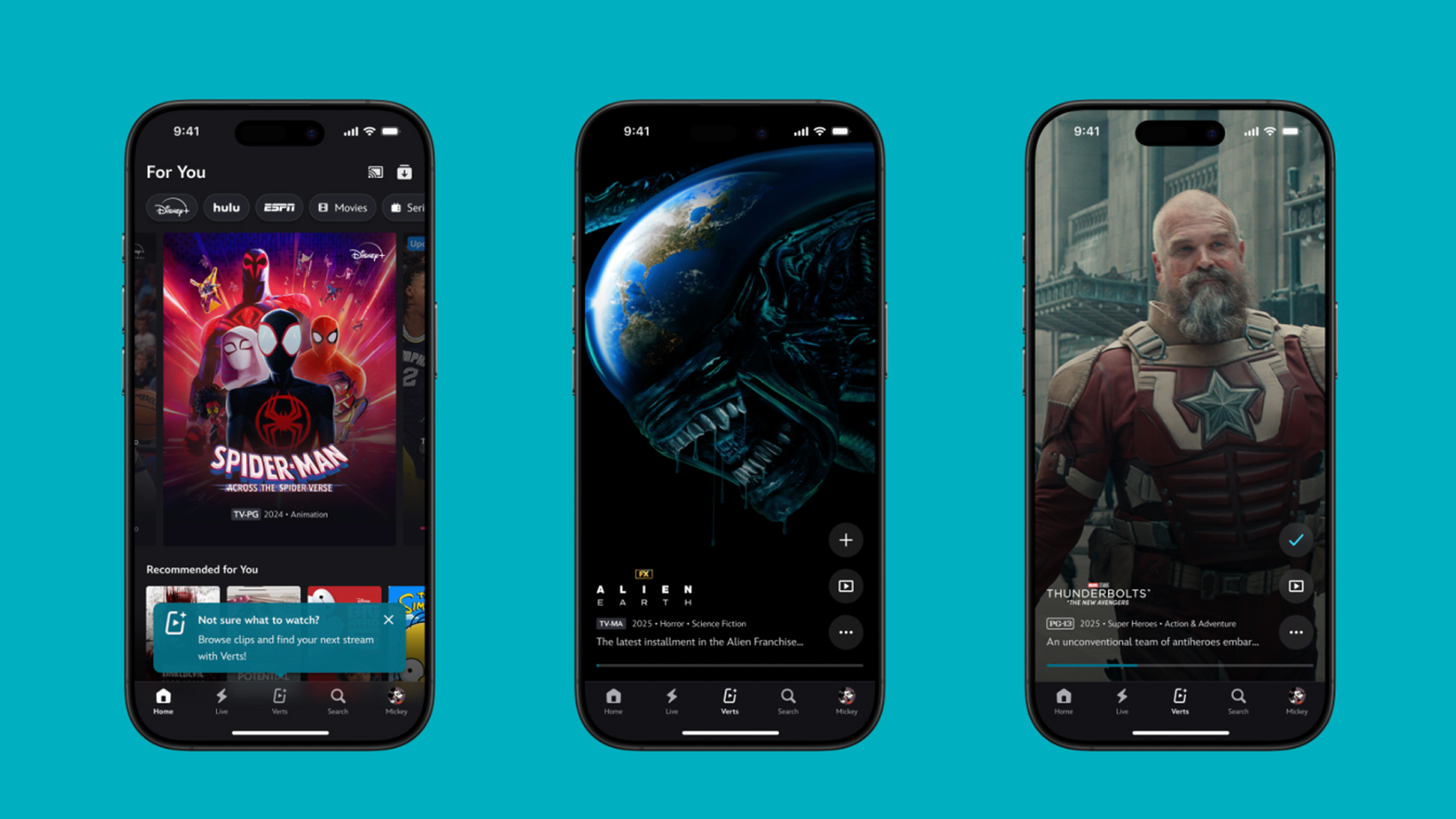
TikTok has changed how we consume media. Everything is now vertical. Even the most established streaming services, often a bastion for traditionally horizontal content, is adopting the different format. Now, Disney+ is getting a vertical feed called Verts.
Like its contemporaries, Verts presents a continuous feed of content but tailored to show the plethora of titles from the Disney+ library. This might include the first scenes of shows or notable highlights. The hope, of course, is to direct users to the longform content.
Directly from the Verts feed, users can easily add the respective title to their watchlist or go straight to the title’s page. In turn, the feed is accessible from the homepage since it has its own tab.
According to Disney, early experiments with the feature have driven engagement to available content. Right now, the feed is mostly for clipping enticing content from shows. However, the platform will experiment further with the format for new ways to tell stories.
Though Verts surely stands for “verticals” in this case, “adverts” might fit better as its full government name. Still, it might be a useful tool if you’re figuring out what to watch for the night.
Currently, Verts is available for Disney+ subscribers in the United States. Disney also has plans to expand the feature to ESPN for sports-related content.
SEE ALSO: Live NBA action on Disney Plus now available in the Philippines

Some of today’s navigation apps are living in the future. Instead of a two-dimensional map, these apps render the user’s surroundings in 3D. It’s a nifty upgrade that helps drivers more accurately visualize directions on the fly. Finally, Google Maps is getting a much-needed upgrade and will take navigation to the third dimension.
In a new update rolling out today, the new Immersive Navigation feature will bring your surroundings to life. The 3D view creates a render of the surrounding buildings, overpasses, and terrain around the car. It takes the guesswork out of navigation by showing precisely where to turn and what landmarks to look out for.
In the same vein, you can now use Street View to preview your destination before you arrive. Google Maps will also highlight your destination’s entrance, side of the street, and nearby parking.
Outside of how the map is visualized, Google Maps is also infusing its service with Gemini. The new Ask Maps feature will let you engage with the app in a conversational manner. For example, if you’re in the middle of a long drive, you can now ask Maps where the best place is to stop over and have a coffee break. Ask Maps will provide directions, a potential itinerary, and even helpful links to book a reservation ahead of time.
Now, availability for both of these features is still a bit limited. Immersive View is rolling out today to compatible devices and vehicles in the United States. Further, availability will expand over the coming months.
Meanwhile, Ask Maps is available now in the United States and India for Android and iOS. A desktop version is coming soon.
SEE ALSO: Google Maps is finally getting a power saving mode



Zenless Zone Zero Version 2.7 available on March 24

Infinix expands SEA footprint with more official MLBB tourney partnerships

Samsung Galaxy S26 Ultra review: A phone you live with

DJI’s Inspire 3 Basic Package make 8K aerial filmmaking more accessible

Disney+ launches a TikTok-coded vertical feed called Verts


-
 Reviews2 weeks ago
TECNO CAMON 50 Ultra review: End of an era?
-
 MWC 20262 weeks ago
Infinix NOTE 60 Ultra makes a motorsport-inspired debut
-
 MWC 20262 weeks ago
TECNO launches the all-new CAMON 50 series
-
 MWC 20262 weeks ago
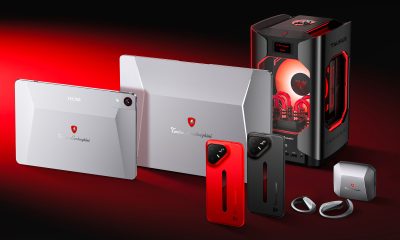
TECNO unleashes Tonino Lamborghini collection
-

 Computers2 weeks ago
AMD announces Ryzen AI 400, AI 400 PRO series at MWC 2026
-
 MWC 20262 weeks ago
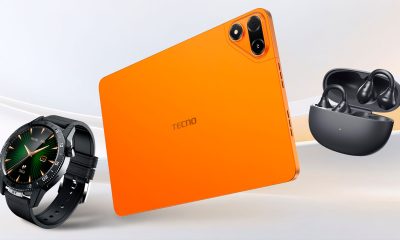
TECNO debuts latest devices, HiOS 16, upgraded Ella at MWC 2026
-

 Automotive2 weeks ago
Xiaomi Vision Gran Turismo makes global debut at MWC 2026
-

 Reviews1 week ago
The Xiaomi 17 shoots Leica dream