
Enterprise
Marvin Agustin shares secrets to business survival during the pandemic
The digital entrepreneur highlights the value of listening to people and health investments

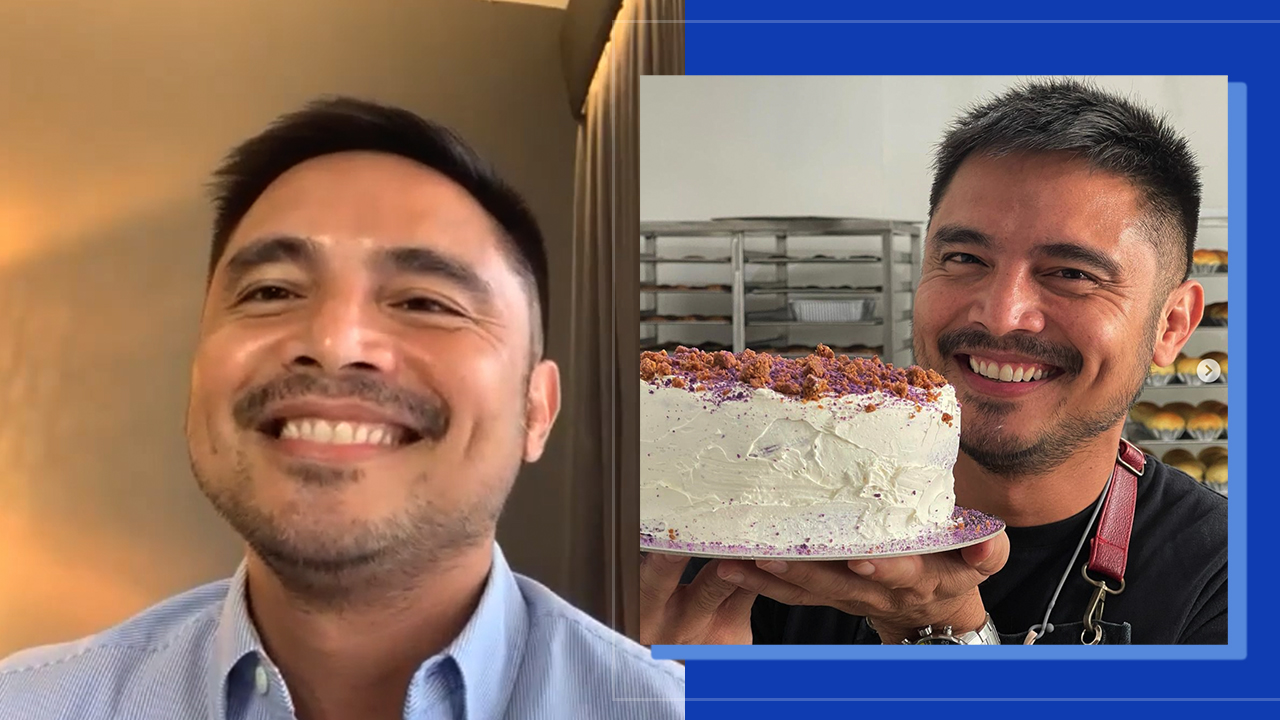
“Healthcare is expensive.”
A one-liner quote from Captain Raymond Holt from the comically epic Brooklyn Nine-Nine, which struck a chord to Gina Linetti as she decides to part with the precinct in season six.
In this era, healthcare is indeed expensive — passing off as an indispensable investment. For serial entrepreneurs, healthcare plans seemed like an extra expense. That’s what celebrity chef and digital entrepreneur Marvin Agustin thought of, like any other entrepreneur. Especially when your business doesn’t make enough profit during the pandemic.
But a dawning realization struck Agustin similar to how Gina Linetti had a light bulb moment the instance she realized that healthcare is indeed expensive. Agustin knows that well.
Having to follow safety protocols and being overly cautious about the threat of COVID are points that gave him an idea to provide healthcare plans to all his employees.
A people-first mindset
“We won’t be able to operate if people, your employees, and your staff would get sick, and also not safe for the customers,” said the celebrity chef.
People. Employees. Marvin Agustin understands that businesses won’t thrive without their people. Despite being an “extra cost,” health plans were a surefire investment to keep his people safe, functional, and happy. In the end, the cost won’t be as high as compared to when your employees get hospitalized.
What bugs entrepreneurs are the availability of quality healthcare at a reasonable price. Agustin had believed that only big companies get to provide health plans, not until he chanced upon Maxicare. Surprisingly, the celebrity chef found a credible company offering affordable and convenient health plans for both him and his employees.
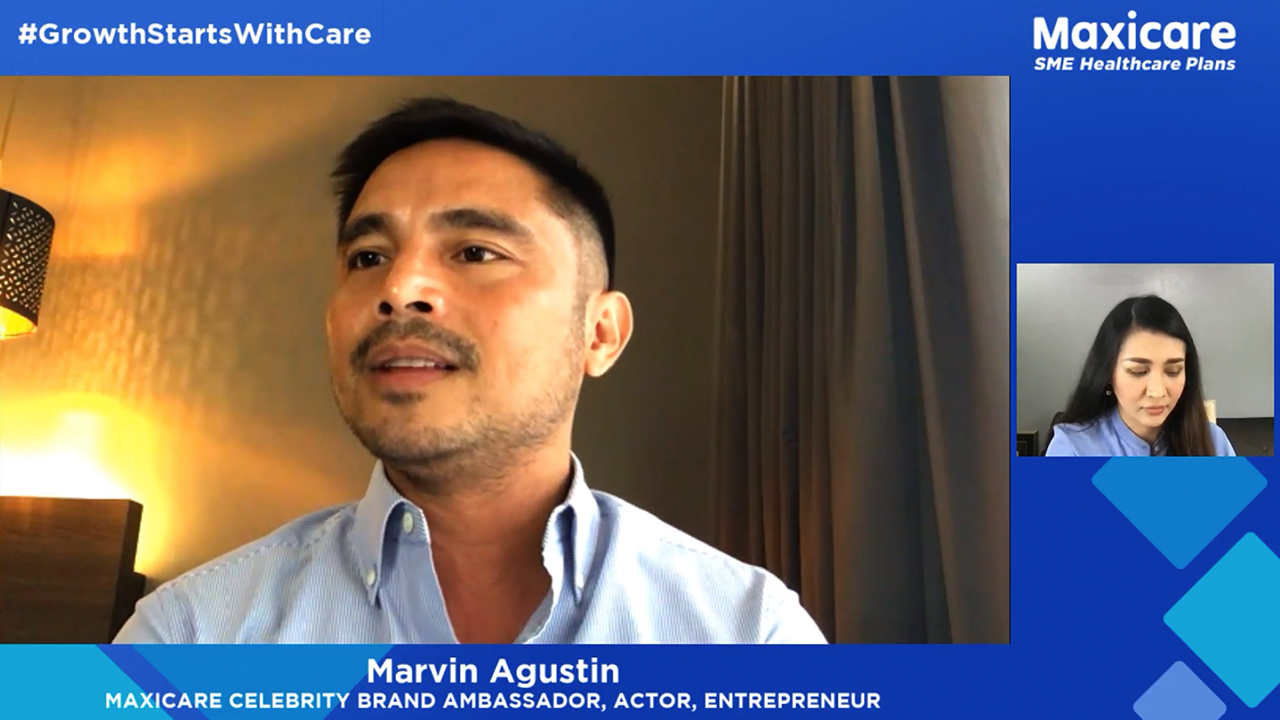
Not all quality healthcare is unreachable as many people perceived
Maxicare’s reputation has put off Agustin like many other entrepreneurs. The company seemed expensive and an extra expense — being 33 years in the business with over 1.6 million members, and widely accepted over 1,000 hospitals and clinics around the country.
But Maxicare has an array of healthcare plans, particularly tailored to small-to-medium enterprises. There are plans that are a lot less than PhP 21,000 — which is the average of healthcare expenses that SMEs spend on employees per year — and even as low as PhP 4,600 to PhP 6,000 per employee per year.
The computation can wrack a nerve as your expenses pile up which pushed most enterprises to shy away from healthcare plans. But in return, employees don’t get access to quality healthcare and businesses don’t get protection from unplanned expenses caused by unforeseen circumstances — diseases, pandemics, accidents, and so on.
The best investment for a growing business
Marvin Agustin understood this well: healthcare plans are an investment for employees and the business itself. The digital entrepreneur realized that when his employees are in tiptop shape, his businesses are more profitable.
Jennifer Haw, Operations Manager of Yummyverse Group and one of Agustin’s employees, revealed how relieved and happy she feels knowing she’s taken care of. She has highlighted the importance of having peace of mind brought by Maxicare through their affordable plans.
“We won’t be able to operate if people, your employees, and your staff would get sick.”
Haw advises not to be frugal to people since they’re the foundation of businesses. Haw even applauded Agustin, touting the healthcare plans as the celebrity chef’s best investment for his business so far.
And it has been paying off, especially in this pandemic where the food business has been disrupted and has taken on too many challenges that the industry is still trying to overcome. From the threat of contracting the virus in numerous transactions to the struggles of making a profit, to taking a toll on our mental health.
Surviving entrepreneurship
Despite the struggles Agustin has faced, he was glowing with optimism; seemingly ready to brave the future and whatever it holds. At least during the roundtable. I was giddy looking at his ostensibly never-aging face until a question sparked in my head: What would be his advice to entrepreneurs struggling in this pandemic, too?
Agustin brazenly responded to my question, hinting about the uncertainty of the future. “We don’t know what works. What we thought are our advantages? We’re all back to square one.”
“What is important now is we listen to the new challenges, to the people that we work with, to our audience — old and new. So that we will be able to navigate this pandemic and get out of it alive,” he added.
The celebrity chef highlighted the importance of patience and even asked people to meet him at the finish line, encouraging people to be strong so everyone can attain their goals.
He further added, “We have to listen. This is the perfect time to step back and really figure out anong importante sa inyo.” (We have to listen. This is the perfect time to step back and really figure out what’s important to you.)

Finding the right plan
Maxicare offers a variety of healthcare plans. There’s Maxicare Plus, a comprehensive HMO program for small businesses with 10-99 employees. For micro-businesses, there’s a Maxicare Starter Plan apt for 3-9 employees.
For a different kind of premium, Maxicare BusinessEssential is Maxicare SME’s most affordable offer. The plan has options to have an Outpatient Care Program or an Outpatient Care + Confinement Care HMO program for companies with 3-99 employees.
Maxicare understands that businesses are wary of its piling expenses, which is why they put it into consideration when they offered affordable premiums.
Micro-businesses can get a plan for as low as PhP 4,651 per employee per year. Meanwhile, small businesses can go as low as PhP 6,260 if they have 10-19 employees or PhP 5,301 for those with 20-99 employees.

Enterprise
ACMobility Launches ChargeFleet: Seamless solution for businesses
B2B solution for corporate fleets and transport groups


Ayala Group’s ACMobility has launched ChargeFleet, a new B2B digital solution for corporate fleets and transport groups.
The new service introduces a shareable digital wallet that streamlines charging expenses, reduces manual tracking, and improves cost control.
As more organizations explore electrifying their mobility operations, many continue to face operational challenges — including fragmented payment systems, reimbursement delays, and limited visibility over charging usage.
ChargeFleet addresses these gaps by introducing a centralized, shareable digital wallet. Here, fleet managers can allocate and monitor charging credits across multiple drivers across a single platform.
The system is a seamless process designed for long-term usage and easy deployment across any organization.
Once integrated, ACMobility assigns charging credits to the client’s fleet manager. The manager then can distribute these to multiple drivers. Meanwhile, the latter will be able to see and use their assigned credits via the Evro app.
ChargeFleet is available as a prepaid product through the ChargeFleet Store. Users can buy offers via GCash or credit card. No application process is required.
Looking ahead, ACMobility will continue to enhance the ChargeFleet experience with exclusive value-added perks integrated through Evro and Power on Wheels.
The upcoming features highlight ACMobility’s ongoing push to provide a future-proof support system for the evolving needs of their customers’ businesses.
Enterprise
Sony teams up with 13 companies for sustainable global supply chain
Sustainability through introduction of renewable plastics

Sony, along with several companies, have established the world’s first global supply chain for the production of renewable plastics that can be used in Sony’s high-performance audiovisual products.
The supply chain consists of 14 companies across five countries and regions. The various plastic materials manufacture through this supply are slated for use in Sony’s products that will launch worldwide.
High-performance products such as audiovisual equipment involve a wide variety of plastics. The result is a complex supply chain that makes it difficult to visualize and manage the entire flow.
Additionally, plastic components that require high performance in terms of flame resistance and optical properties cannot be fully replaced with plastics from material recycling.
To address these challenges, these 14 companies have collaborated to visualize the existing supply chain for Sony’s products:
- Sony Corporation
- Mitsubishi Corporation
- ADEKA CORPORATION
- CHIMEI Corporation
- ENEOS Corporation
- Formosa Chemicals & Fibre Corporation
- Hanwha Impact Corporation
- Idemitsu Kosan Co., Ltd.
- Mitsui Chemicals, Inc.
- Neste Corporation
- Qingdao Haier New Material Development Co.
- Ltd., SK Geo Centric Co., Ltd.
- Toray Industries, Inc.
- Toray Advanced Materials Korea Inc.
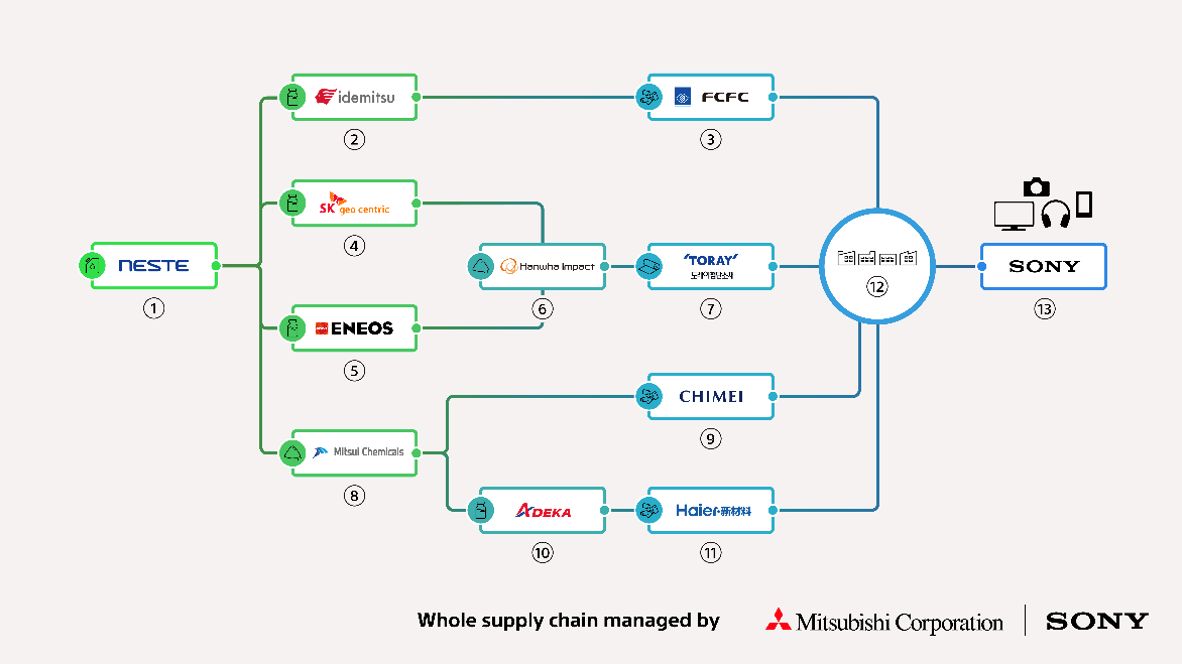
Sustainability through renewable plastics
The new supply chain created will enable the production of multiple types of renewable plastics from biomass resources with a mass balance approach.
This allows Sony to proactively source raw materials for its products with quality, as well as properties equivalent to virgin fossil-based plastics.
Defining the supply chain also helps the companies track and document GHG (Greenhouse Gas) emissions data in a verifiable way.
This allows participating companies to leverage the data to advance efforts to reduce their carbon footprint going forward.
Sony’s initiative with a wide range of global partners is part of the “Creating NEW from reNEWable materials” jointly launched by the electronics giant and Mitsubishi.
It aims to achieve zero usage of virgin fossil-based plastics through the introduction of renewable plastics.
Enterprise
realme is reportedly going back to being an OPPO sub-brand
All scheduled phones will still launch on time, though.

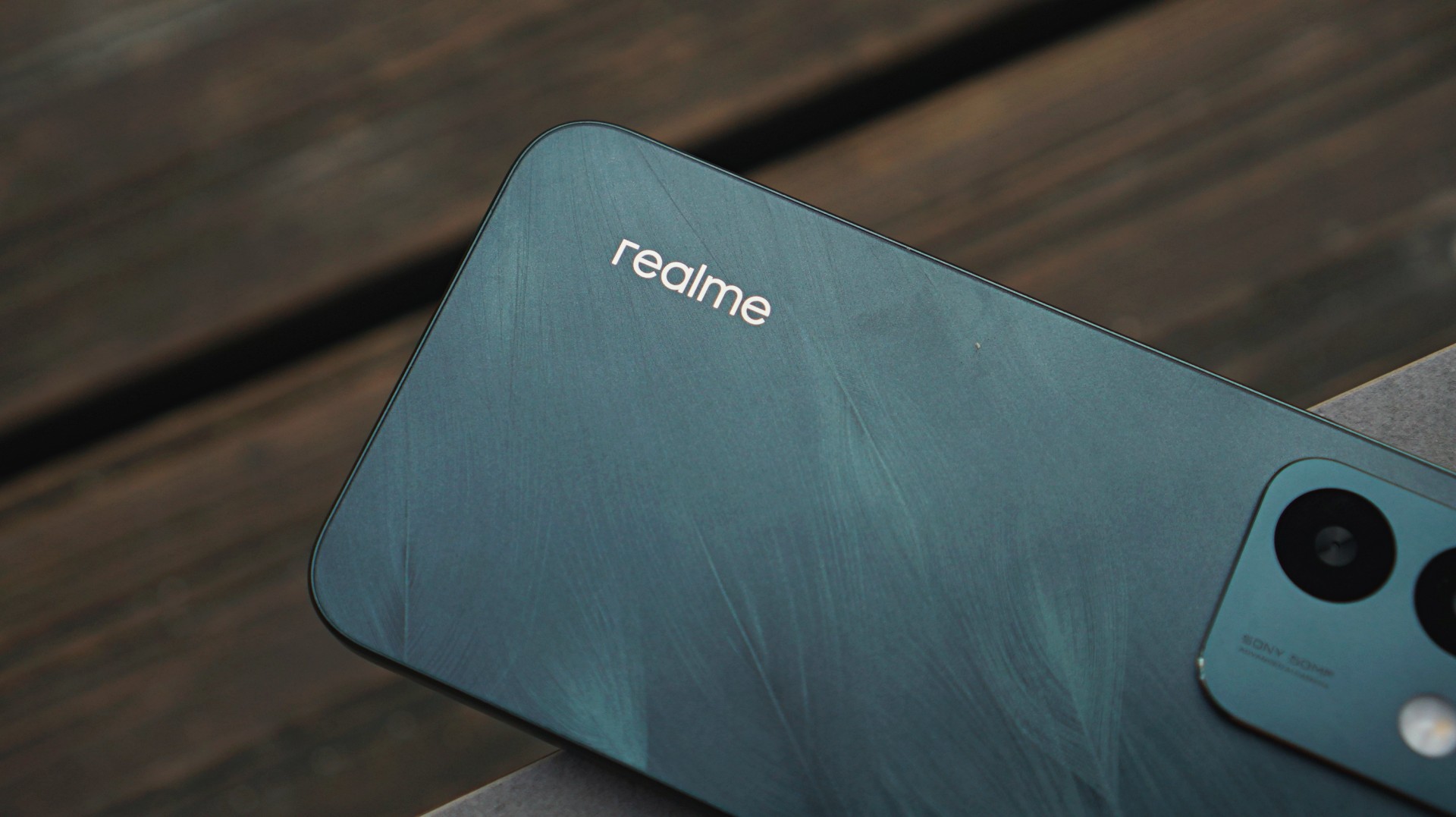
A popular story among Chinese smartphone brands is whenever a sub-brand spinning off into its own independent entity. A less common one is when an independent entity suddenly merges back into the main entity. And yet, that’s the story we have today. realme is reportedly going back to being a sub-brand of OPPO.
If you don’t remember realme’s time as a sub-brand, then it’s hardly your fault. It’s been a long while since realme was considered a sub-brand. In 2018, the brand spun off on its own to form one of the most popular names in the Chinese smartphone space.
Today, via Leiphone, realme will return to OPPO as a sub-brand. Current realme CEO Sky Li will still retain his responsibilities heading the brand. Plus, all products on the current release schedule will still come out as planned.
However, starting this year, realme will start reintegrating back into OPPO, particularly through the latter’s after-sales programs. OnePlus will also follow the same structure going forward.
Currently, realme has not officially announced the move. That said, we also don’t know how the brand will address the reported change. It’s possible that the shift is just internal and has no effect on how the brand faces the public. For now, only time will tell.
SEE ALSO: realme C85 with 7000mAh battery, 5G connectivity officially launches
-
 Reviews2 weeks ago
The art of being in and behind the frame
-

 Gaming2 weeks ago
New Resident Evil Requiem trailer teases a return to the RPD
-

 Accessories2 weeks ago
Apple AirTag 2 Review
-
 First Look1 week ago
Match Pulse: Infinix NOTE 60 Pro
-

 Cameras1 week ago
Osmo Pocket 4 makes a surprising appearance in public
-

 Entertainment2 weeks ago
Jason Momoa will star in upcoming Helldivers film adaptation
-

 Camera Walkthrough6 days ago
OPPO Reno15 Pro: Camera Review
-

 Gaming2 weeks ago
Star Wars: Galactic Racer shows off new gameplay at State of Play