

Automotive
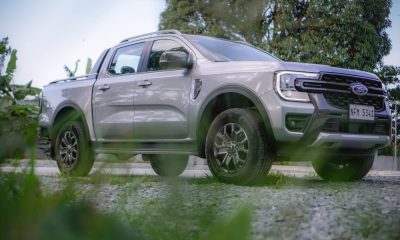
Tracing roots across Manila with the Next-Gen Ford Territory
Sometimes, you have to look back to enjoy the present and get excited about the future.

“He who does not look back from where he came will never reach his destination.”
That’s a Filipino proverb I kept hearing while I was growing up. Nearly three decades later, I started learning what that proverb really meant.
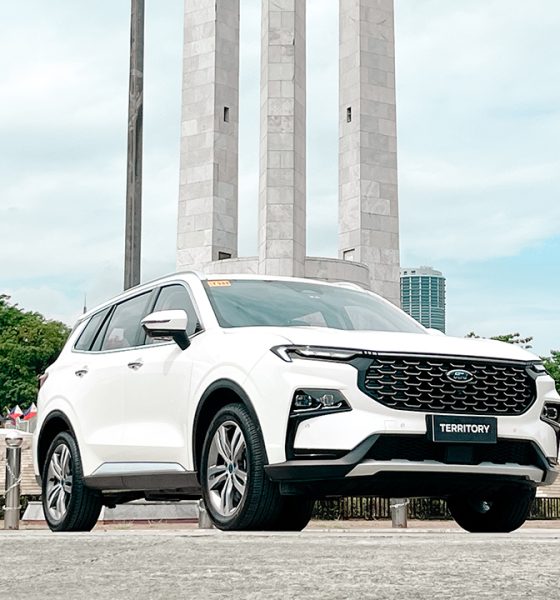
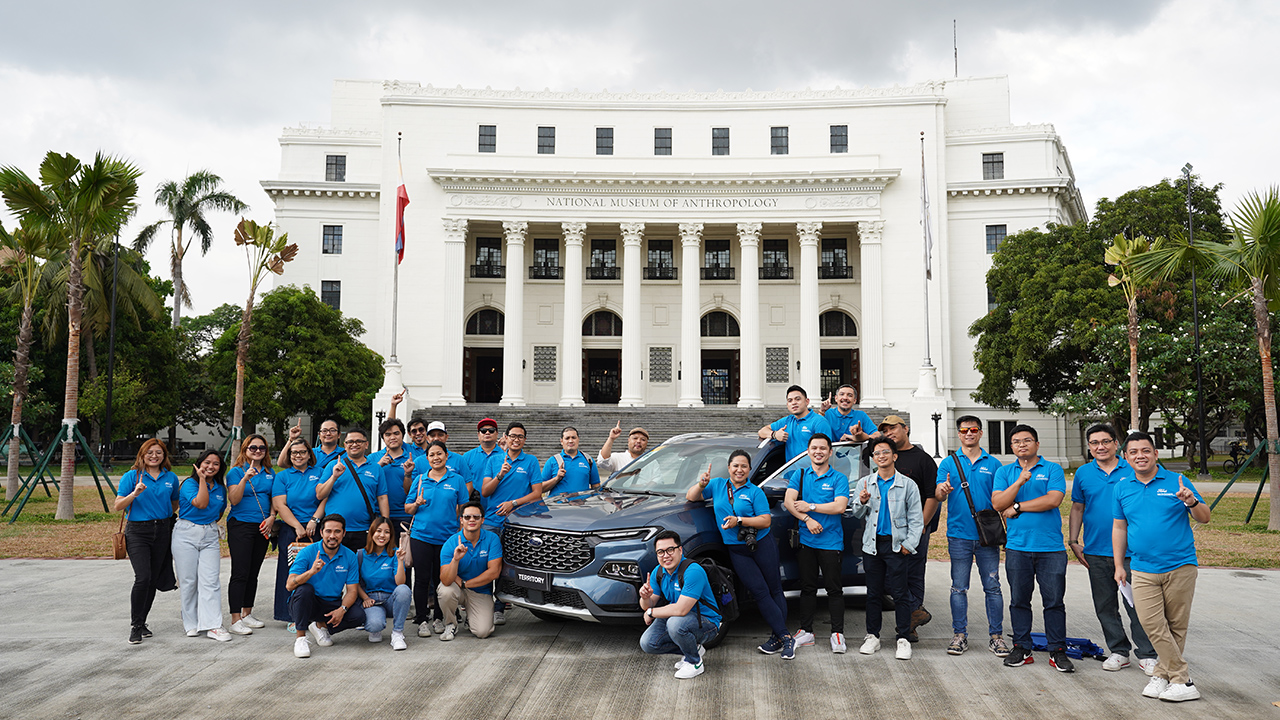
We have to look back in order to move forward. At least, that was one of my takeaways when Ford Philippines invited us to drive the Next-Gen Ford Territory and reimagine the way we tour our cities.
Along with media folks and members of the Ford Territory Club Philippines, we hopped between places that honor the roots of our heritage and culture.
The cars that Filipino presidents used
I was never fond of visiting museums. But there was something alluring in seeing pieces of history and knowing how it all contributed to the present we live in.
Our first stop was the Presidential Car Museum housing the old cars used by the former Philippine Presidents. It is located within the Quezon Memorial Circle in Quezon City, Metro Manila, Philippines.
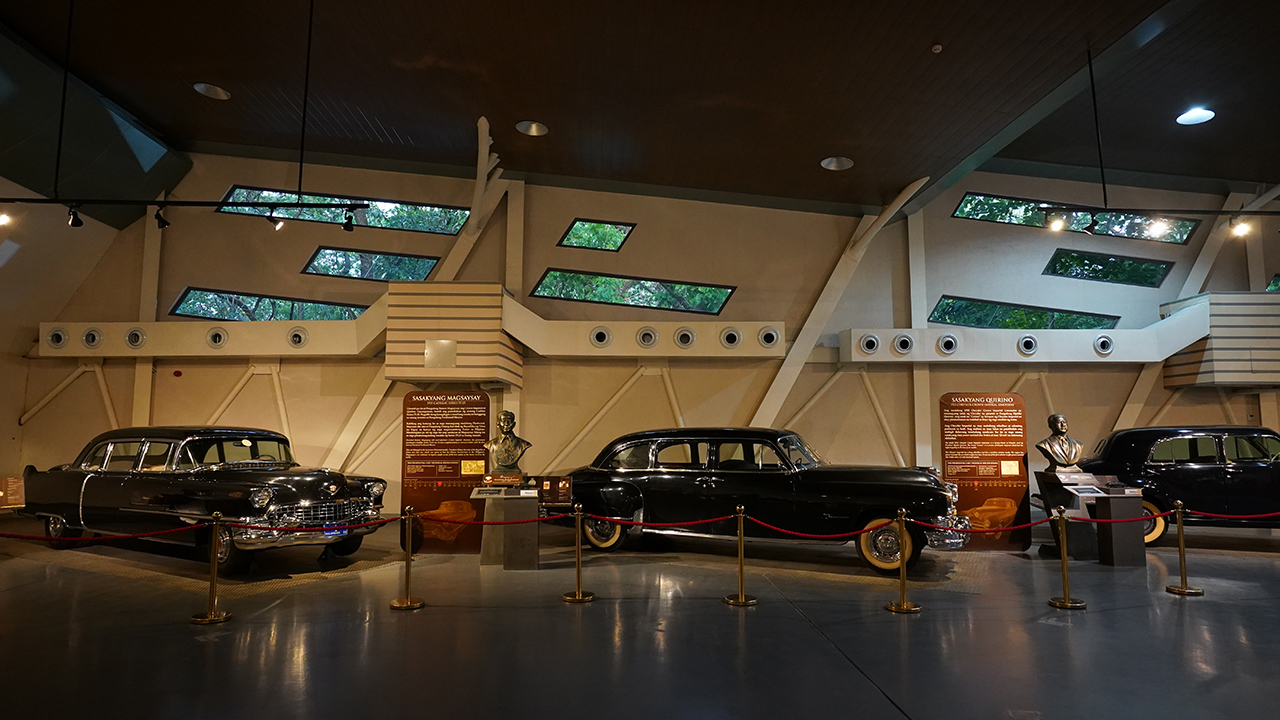
Inside, you can stumble upon the 1941 Packard 180 that both former President Jose P. Laurel and Sergio Osmena used. Former Presidents Roxas, Magsaysay, and Macapagal trusted a Cadillac, while Quirino used a Chrysler Crown Imperial.
View this post on Instagram
Former President Ferdinand Marcos’ Lincoln Continental Mark VI grabbed our attention, along with his First Lady’s car — an opulent Rolls Royce Phantom — which is a testament to the opulence and excessive grandeur they exhibited during their reign.
Meanwhile, Aquino up until Arroyo, the former presidents after Marcos Sr.’s regime have used a humbling yet trustworthy Mercedes-Benz instead.
Touring in the museum lit a fire inside that I didn’t know still existed. I thought I was already apolitical, but hearing the stories and reasonings behind the choice of presidential car sparked the angst I’ve long buried.
And if you’re that curious, it’s best to pay a visit to the museum. Maybe you can have a different perspective.

The Presidential Car Museum is open for public viewing between 9AM to 4PM on Tuesdays to Sundays.
Crafts, textiles, and the old script
After our active parking session at the Quezon Memorial Circle and relying on Adaptive Cruise Control while driving through the Skyway, I took the wheels as we approached the City of Manila and its never-ending stoplights.
I may hate Manila’s busy streets and traffic jams, but I know I’m well-equipped to navigate its roads (and find a way to overtake between humongous trucks) as we find our way to the National Museum of Anthropology.
Nestled beside the walled city of Intramuros, the museum found itself on a sweet, easy spot for city-dwellers, park visitors, and foreigners touring the historical city. It was easy to locate, which makes it inviting to a lot of visitors.

Inside, I was mesmerized by artifacts showcasing the chronicles of living in the Philippines — even from pre-historic times. I had a marvelous time staring at battle axes and bolos. I was incredibly drawn! Maybe, just maybe, I was a warrior in my past life.
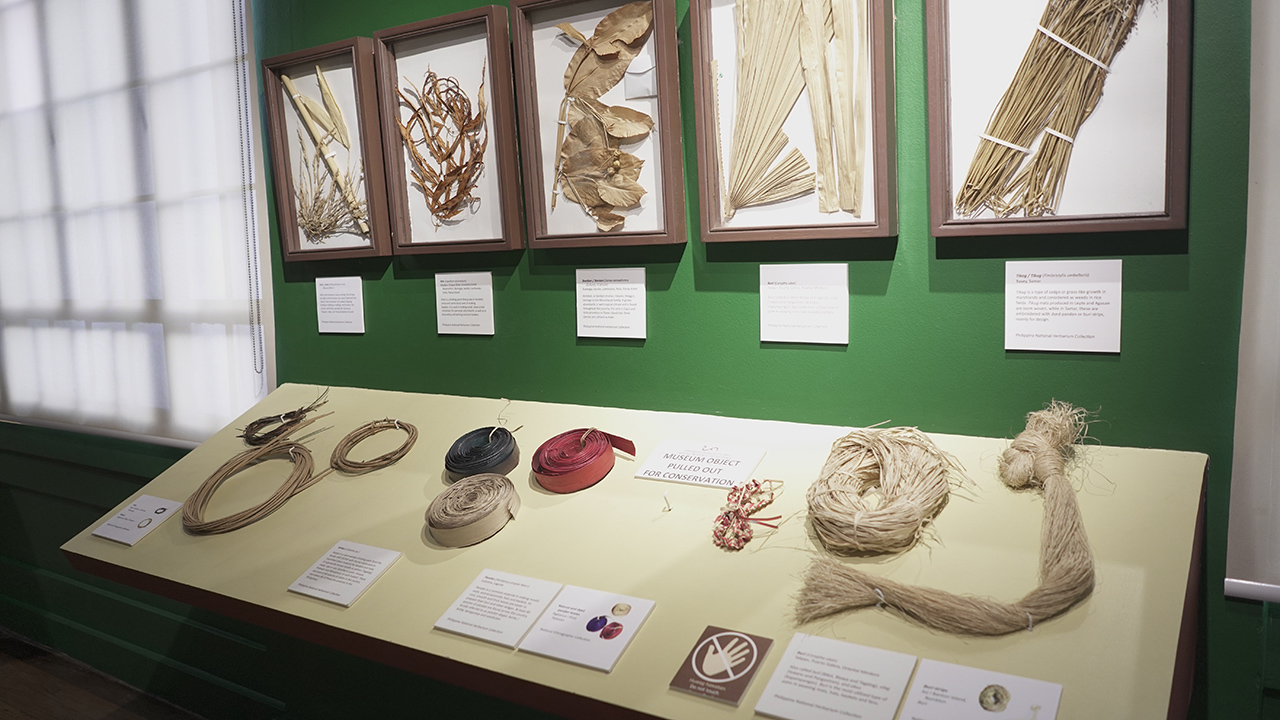
We also took some time exploring the “Hibla ng Lahing Filipino Gallery” which exhibits the traditional textiles created and worn across the Philippines.
On the next room beside the textile gallery, you’ll find the Baybayin Gallery, which was completed in 2014. The gallery houses the old writing systems used by ancient Filipinos, as well as the continued tradition of writing syllabic scripts.
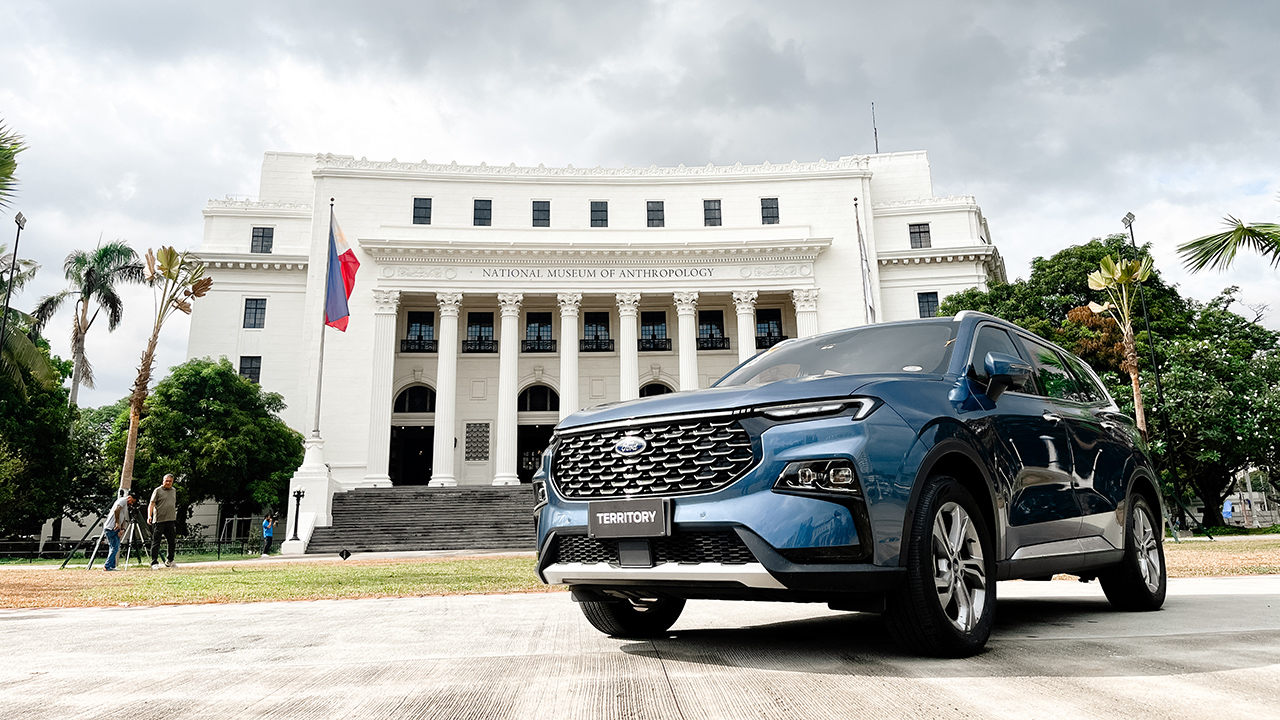
The National Museum of Anthropology is located in the Agrifina Circle, Rizal Park adjacent to the National Museum of Fine Arts building. It’s open from 9AM to 6PM on Tuesdays to Sundays.
Living like an Ilustrado
Our last stop for the day was Las Casas Filipinas de Acuzar in Quezon City. It’s a more accessible space housing replicas of famed Spanish-Filipino houses.
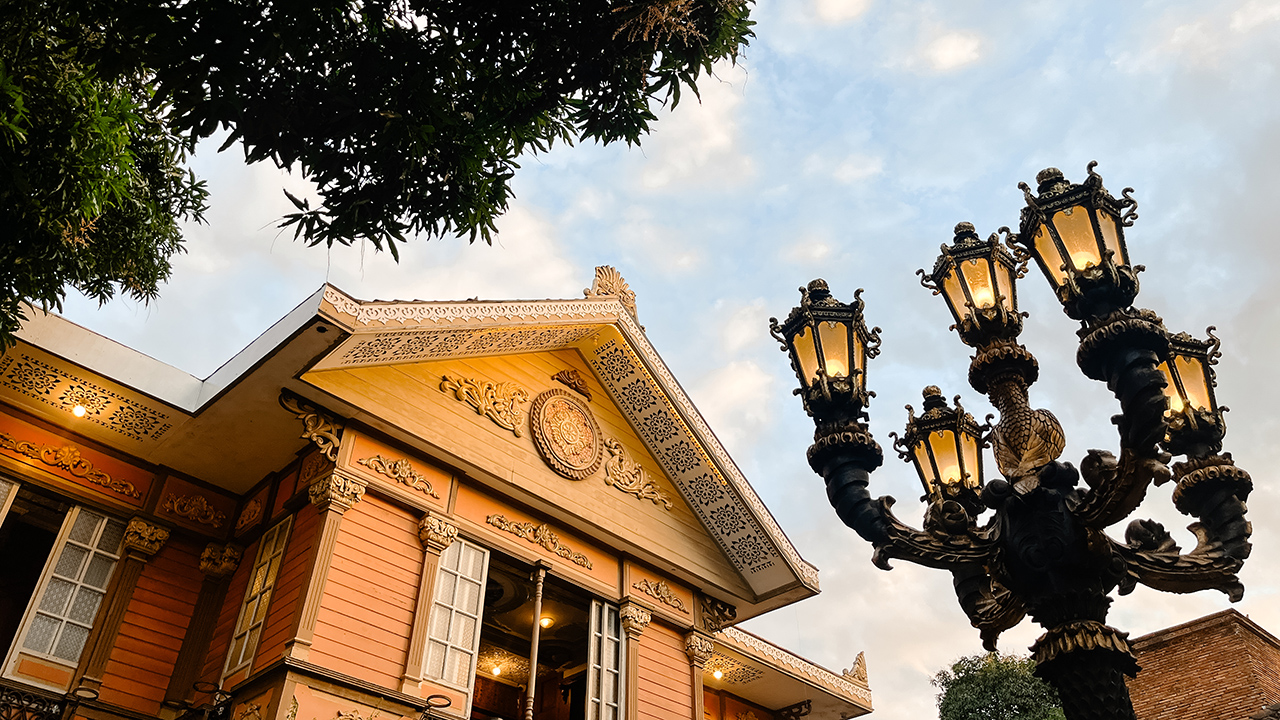
Originally, you can find it in Las Casas Filipinas de Acuzar where almost 40 Spanish-Filipino Colonial structures were collected and restored to showcase the heritage of the Philippines.

Upon entering, you’ll be transported back in time — as if you’re back in the 18th century. It wasn’t my first visit, though, as I’ve already tried to play like an Ilustrado a few years back.
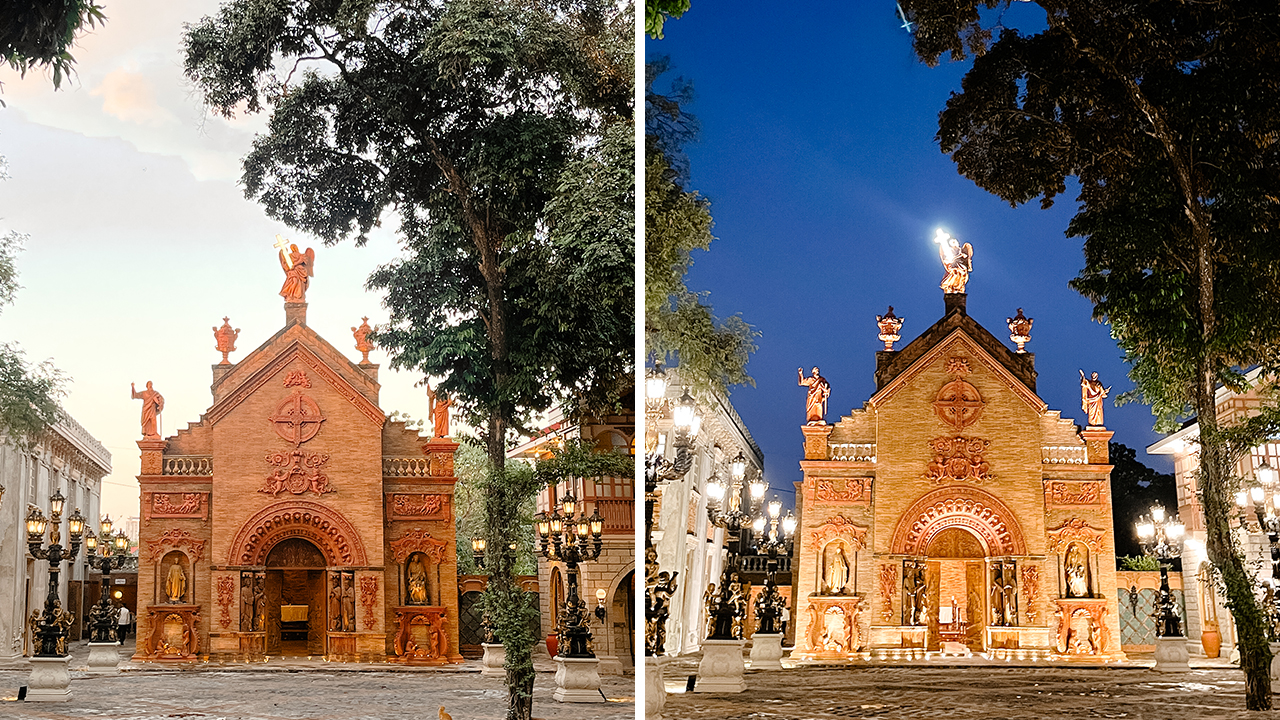
The place isn’t just offering a heritage tour, but also an Italian restaurant, a cafe, garden, and banquet hall.
It’s a fine way to experience dining in a Spanish stone house at the 2-storey replica of Casa Monroy, while looking at the beauty of St. Joseph Chapel brimming with intricate brick and woodworks.
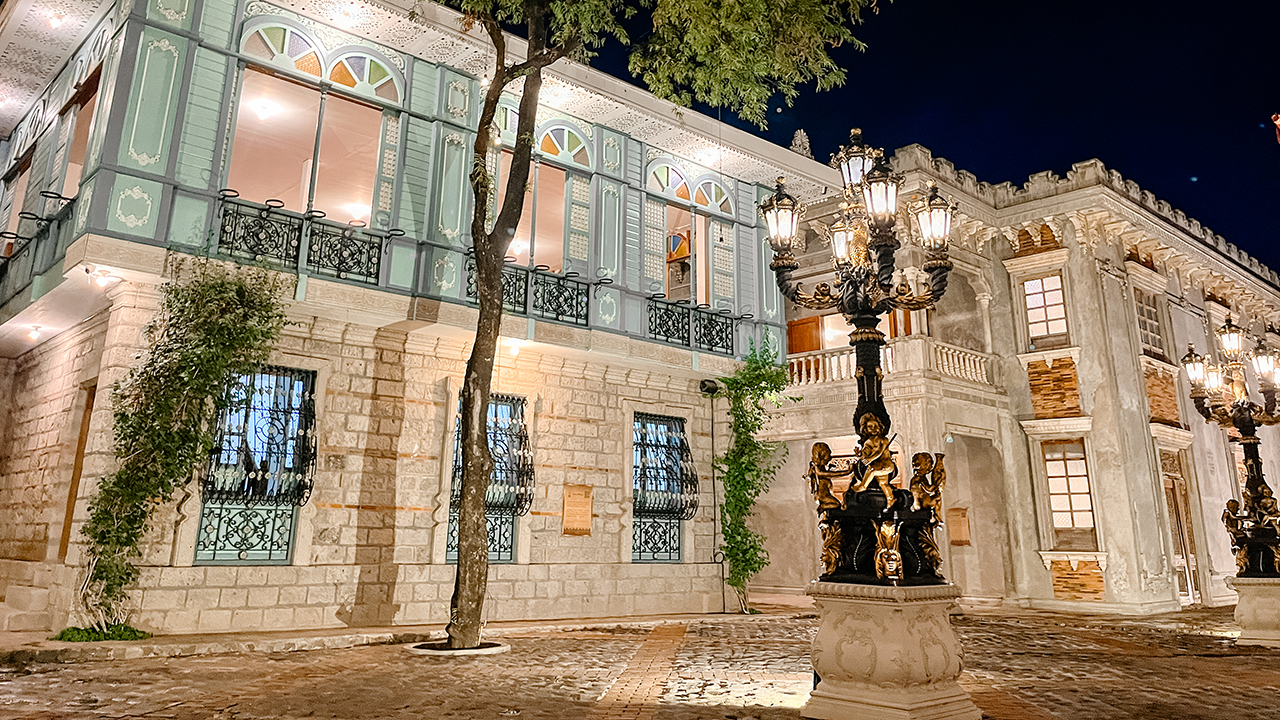
Las Casas Filipinas de Acuzar in Quezon City is located at 134 Roosevelt Avenue, San Francisco Del Monte, Quezon City, Philippines 1105. It’s open from 11AM to 9PM.
One step forward, three steps back
As the day ends, we drove back to Quezon Memorial Circle where we started. It was bewildering to bridge everything that happened — from looking back to learning how to appreciate the present, and becoming excited to what the future holds.
These were just my thoughts as we navigate the dimly lit roads with the help of the Next-Gen Ford Territory. We progressed so much that we’re enjoying a vehicle that can keep us comfortable in long rides. Imagine if we still have to travel by foot or by riding a calesa!

The museum-hopping tour around Manila made me appreciate riding a smart, safe, and feature-packed vehicle. It gives me the peace of mind needed to explore a vibrant, busy city.
For your peace of mind
Customers who purchase the Next-Gen Ford Territory will receive a complimentary Peace of Mind service package. This includes free inspection that can be availed within 2 months of 2,000 kms (whichever comes first). You also get two (2) free labor on periodic maintenance schedule (PMS) services.
This is on top of the 5-year warranty — ensuring a worry-free ownership experiences.
Customers can visit any Ford dealership to get more information on the available 5-year scheduled service plan (SSP) and a 5-year emergency roadside assistance with a Territory purchase.





Automotive
VinFast extends free unlimited charging in 3 markets amid rising fuel prices
Customers in India, Indonesia, and the Philippines to enjoy 3 years of free unlimited charging

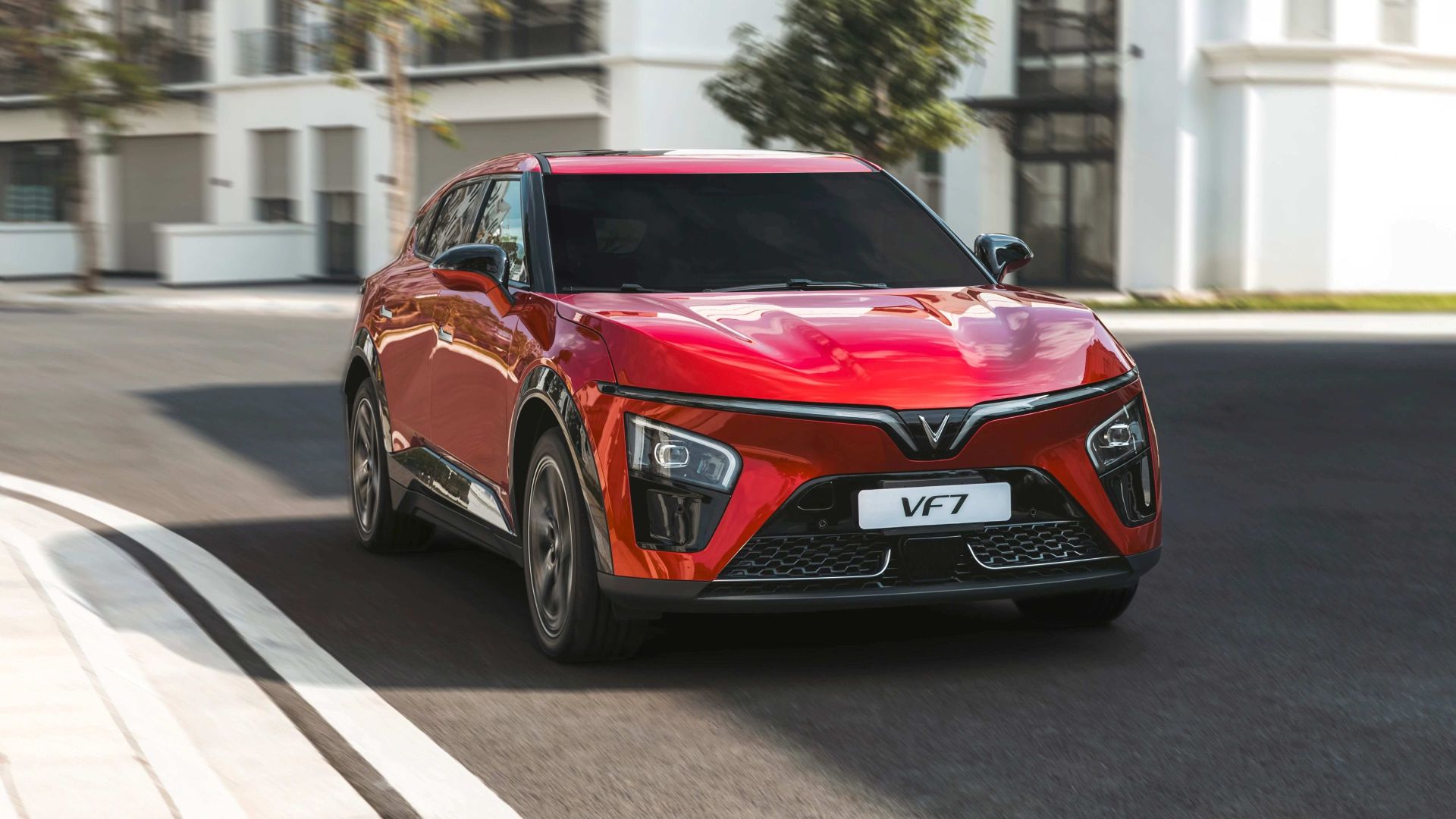
VinFast has announced the extension of its free unlimited charging program in three key Asian markets: India, Indonesia, and the Philippines.
Customers purchasing electric vehicles (EVs) in these countries (or currently own a VinFast EV) can enjoy the zero-fuel-cost advantage for three years, or until March 31, 2029.
This is amid the rising fuel costs in these countries, primarily due to the U.S./Israel-Iran war. Under the new policy, customers can charge for free at authorized V-Green charging stations.
By removing one of the largest operating costs of driving, VinFast aims to help motorists experience the economic advantages of electric vehicles (EVs) while supporting the countries’ transitions toward more sustainable mobility.
The program will be extended broadly to all customers, including both existing owners and future buyers. It will cover both private customers as well as those using their vehicles for transportation services, like the Green GSM EV taxi service network.
Alongside the free charging policy, the charging network developed and operated by V-Green is continuously expanding across the markets where VinFast operates.
This expansion helps create favorable conditions for consumers to confidently transition to greener and more sustainable transportation.
In addition to the free charging incentive, VinFast is already implementing multiple policies to promote the green transition in key Asian markets.
These include a battery subscription program that lowers upfront investment cost, a resale value guarantee policy, flexible payment options, and market-leading warranty coverage.

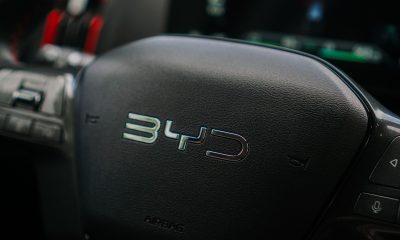
BYD is lighting up the electric vehicle segment. For a while now, the Chinese automotive brand has been offering affordable alternatives to the so-called giants of the market, in turn becoming a giant itself. The company has since entered other segments, including the luxury market, through its sub-brands Denza and Yangwang. Now, it’s reportedly considering an all-new venture: the world of Formula One.
The new Formula One season saw the debuts of Audi and Cadillac to the racing grid, proving that the sport isn’t averse to expanding beyond the usual ten teams. Naturally, entering the sport is not an easy process, but for the right brand, it could be a very lucrative opportunity.
According to a source from Bloomberg, BYD is currently evaluating an entry into Formula 1. Right now, the Chinese company has not made a decision, but it is an idea floating around.
Besides the rigorous entry process, owning an independent racing team can cost BYD hundreds of millions of dollars per year. It’s not a cheap sport.
That said, there are other ways for the brand to enter the grid. One of the more cost-effective options is to become a title sponsor of an existing team by providing funding and technical expertise without the stress of managing a team directly.
Alternatively, the brand can also skip the red tape by buying an existing team. Audi, for example, entered the current grid by buying the team from Sauber. Of the current grid, Alpine is reportedly considering putting the team up for sale, making it a potential target for newcomers.
Outside of F1, BYD might also have an easier time entering other competitions including the FIA World Endurance Championship.
SEE ALSO: This BYD car is now the world’s fastest car in the market
Automotive
Xiaomi Vision Gran Turismo makes global debut at MWC 2026
Tech giant becomes first technology brand in Vision GT program

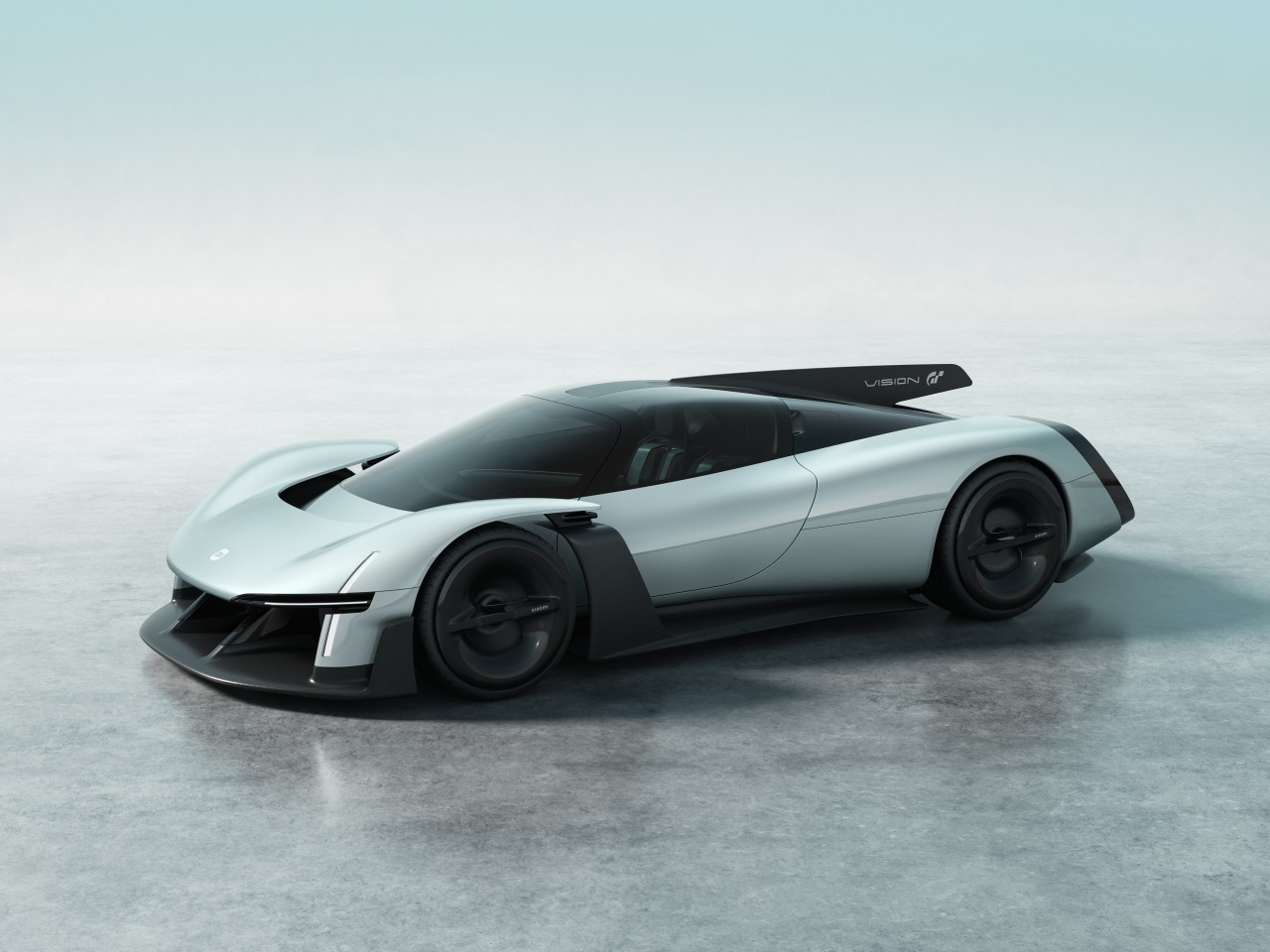
Xiaomi has unveiled the full-scale concept model of the Xiaomi Vision Gran Turismo or Xiaomi Vision GT at MWC 2026 in Barcelona, Spain. This marks the company’s official entry into the elite Vision Gran Turismo project.
Created for the legendary Gran Turismo franchise, the electric hypercar concept represents the first time a technology company has been invited to participate in the Vision GT program. Xiaomi now joins a select group of global automakers, becoming the 36th brand to take part and the creator of the 51st Vision Gran Turismo concept overall.
The project began at the GT World Series in London, where series producer Kazunori Yamauchi personally invited Xiaomi to design its own Vision GT car. For Xiaomi’s global EV design team, the opportunity meant rethinking hypercar development from a technology-first perspective, blending advanced aerodynamics with AI-driven intelligence.
Sculpted by the wind
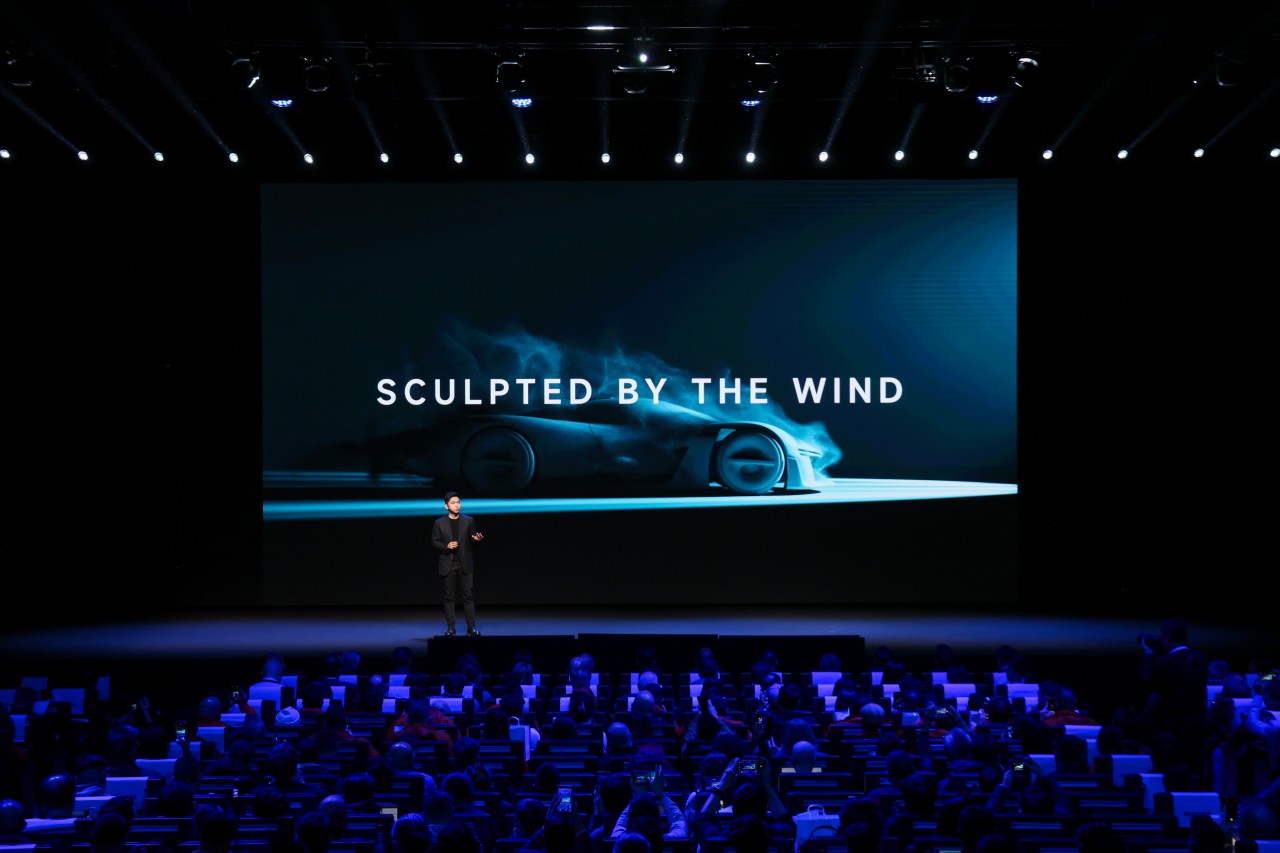
At the core of Xiaomi Vision Gran Turismo is aerodynamic balance. Instead of chasing extreme low drag or maximum downforce alone, Xiaomi pursued efficiency between the two.
The concept follows a “Sculpted by the Wind” philosophy. Its teardrop cockpit silhouette, integrated air ducts, and airfoil-shaped structural elements guide airflow seamlessly from front to rear. The body avoids excessive add-ons, relying instead on built-in aerodynamic solutions.
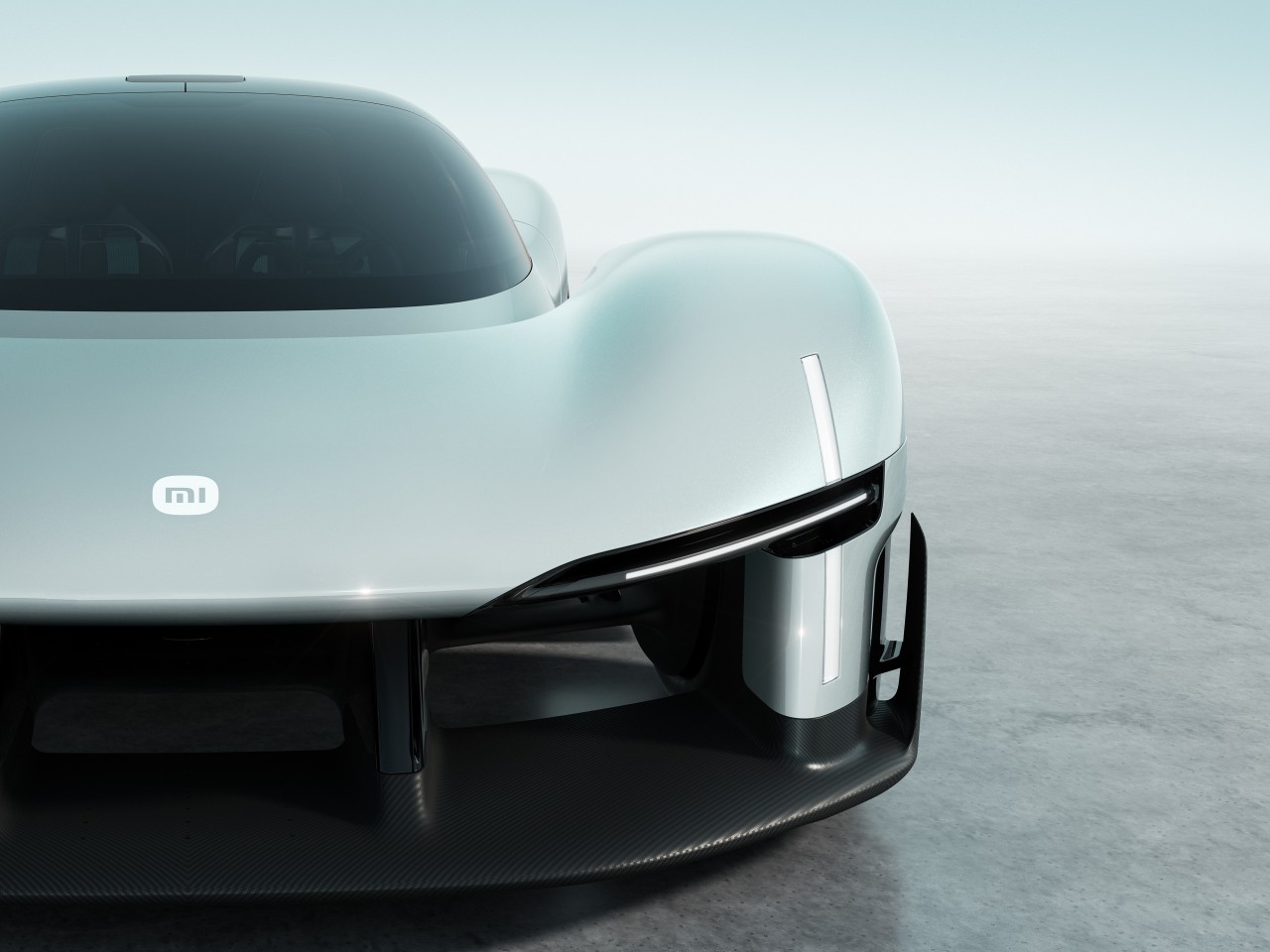
Signature design elements serve dual purposes. Cross-shaped headlights integrate into the airflow system, while the halo-shaped taillight sits within a massive rear air outlet. An Active Wake Control System surrounds the rear with micro-perforations that manage turbulent air using real-time speed and angle data.
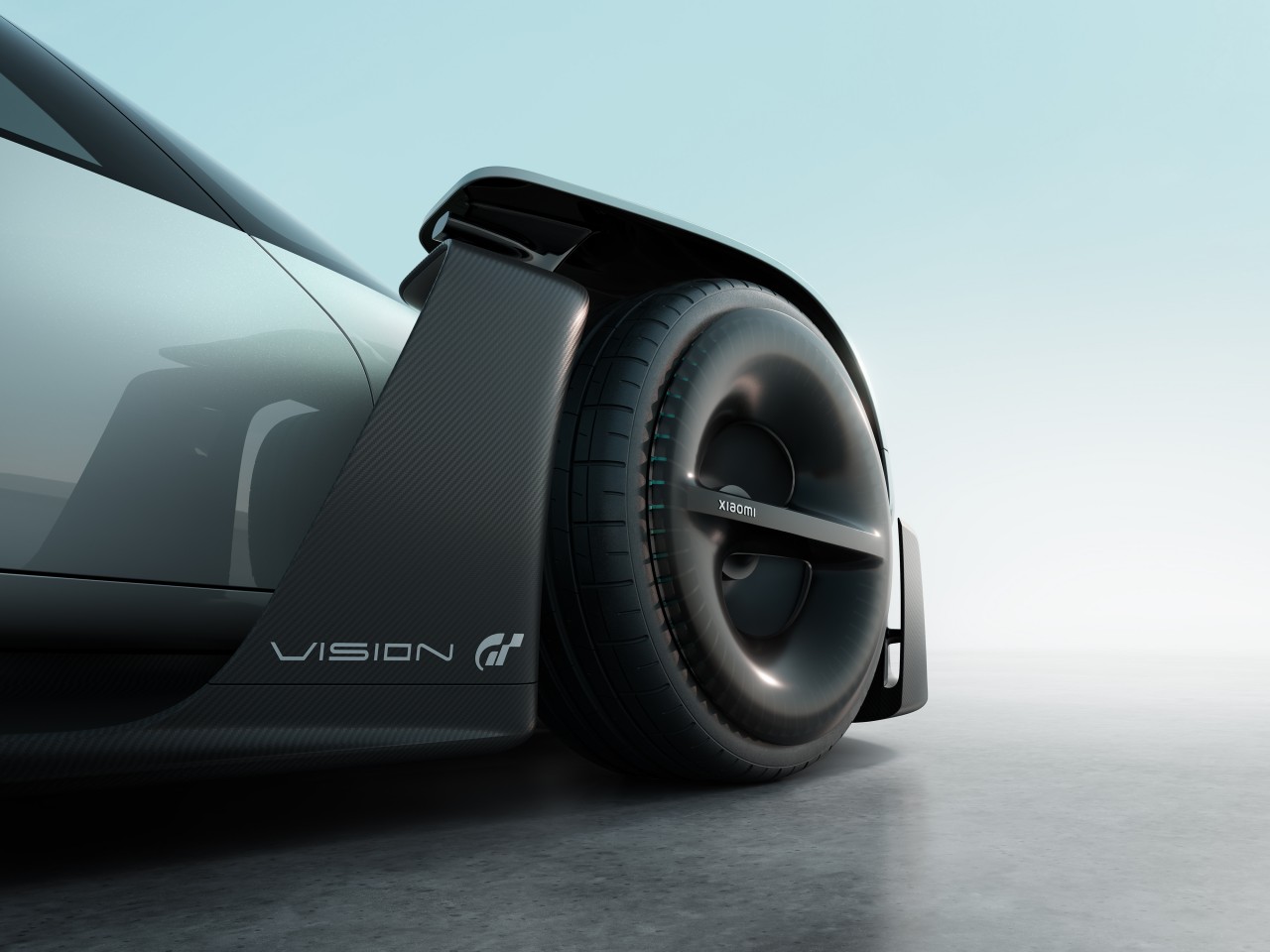
The Accretion Rims feature vortex-style wheel covers that remain visually stationary while the car is in motion, reducing drag from rotating surfaces. Internal turbine fins help cool the brakes during operation.
Through iterative simulation testing, Xiaomi says the concept achieves a drag coefficient of 0.29, downforce of negative 1.2, and an aerodynamic efficiency rating of 4.1 — figures that highlight balance rather than extremes.
A “sofa racer” interior
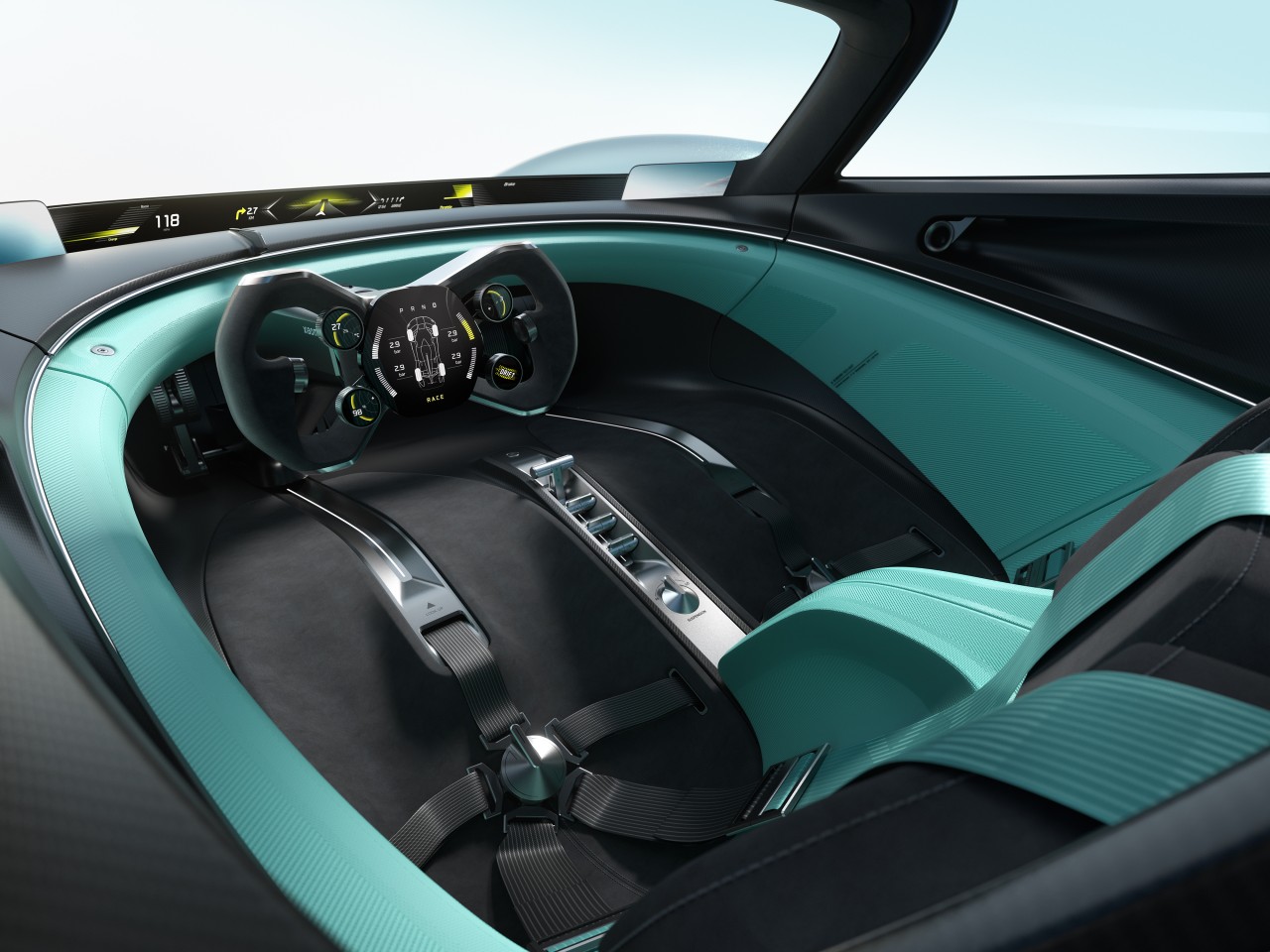
Inside, Xiaomi departs from the rigid, track-focused cabins typical of hypercars. The “Sofa Racer” concept emphasizes comfort without sacrificing control.
A ring-shaped cockpit architecture wraps around the driver, blending dashboard, doors, and seats into one continuous structure. Breathable 3D-knitted fabric materials aim to provide both support and warmth.
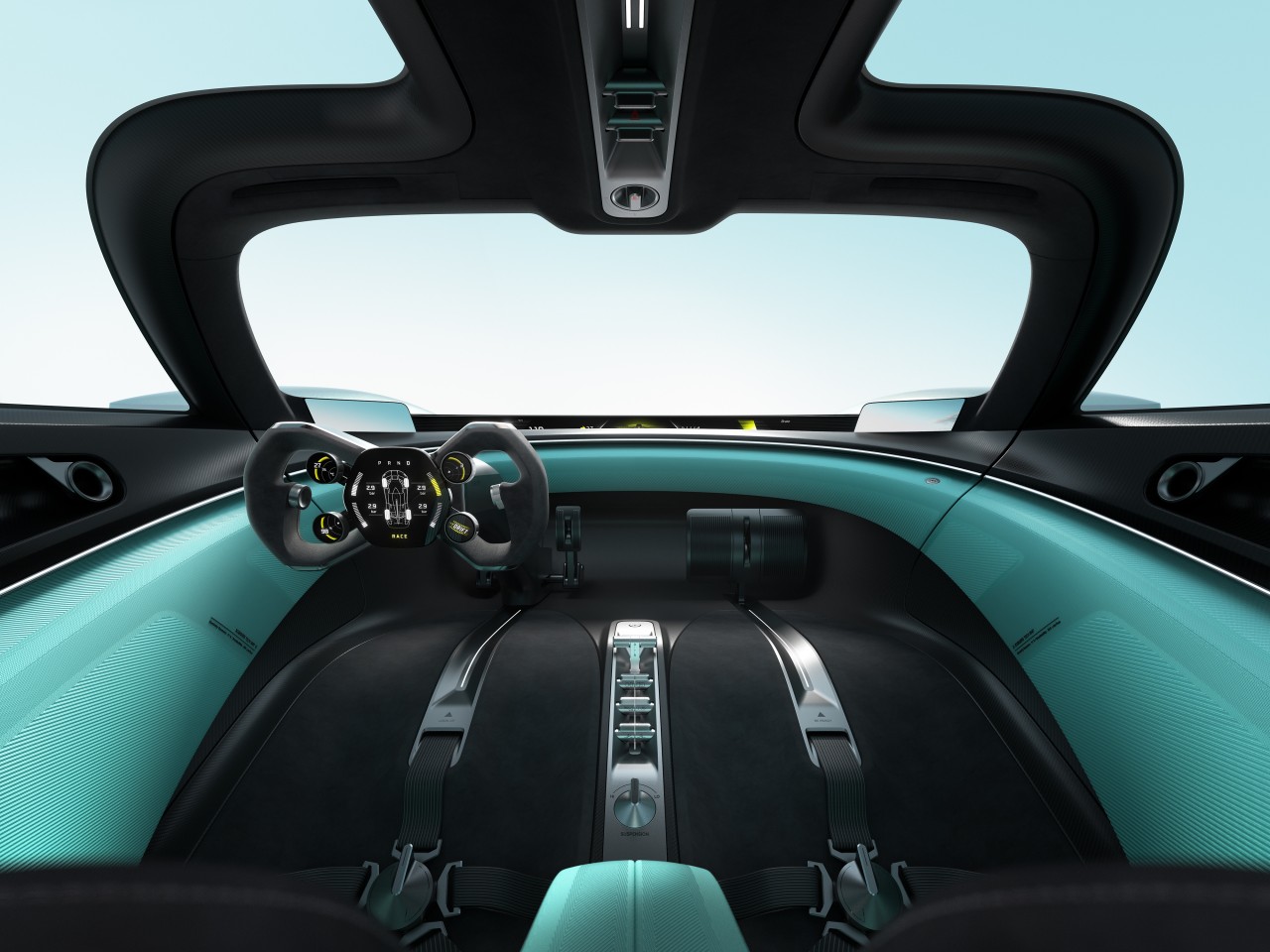
At the center is Xiaomi Pulse, an intelligent assistant integrated into the dashboard. Working alongside Xiaomi HyperVision and the company’s HyperOS platform, the system adapts displays and interactions based on driving mode and environmental data. Physical controls remain tactile and precise, including an infinite-shaped steer-by-wire wheel.
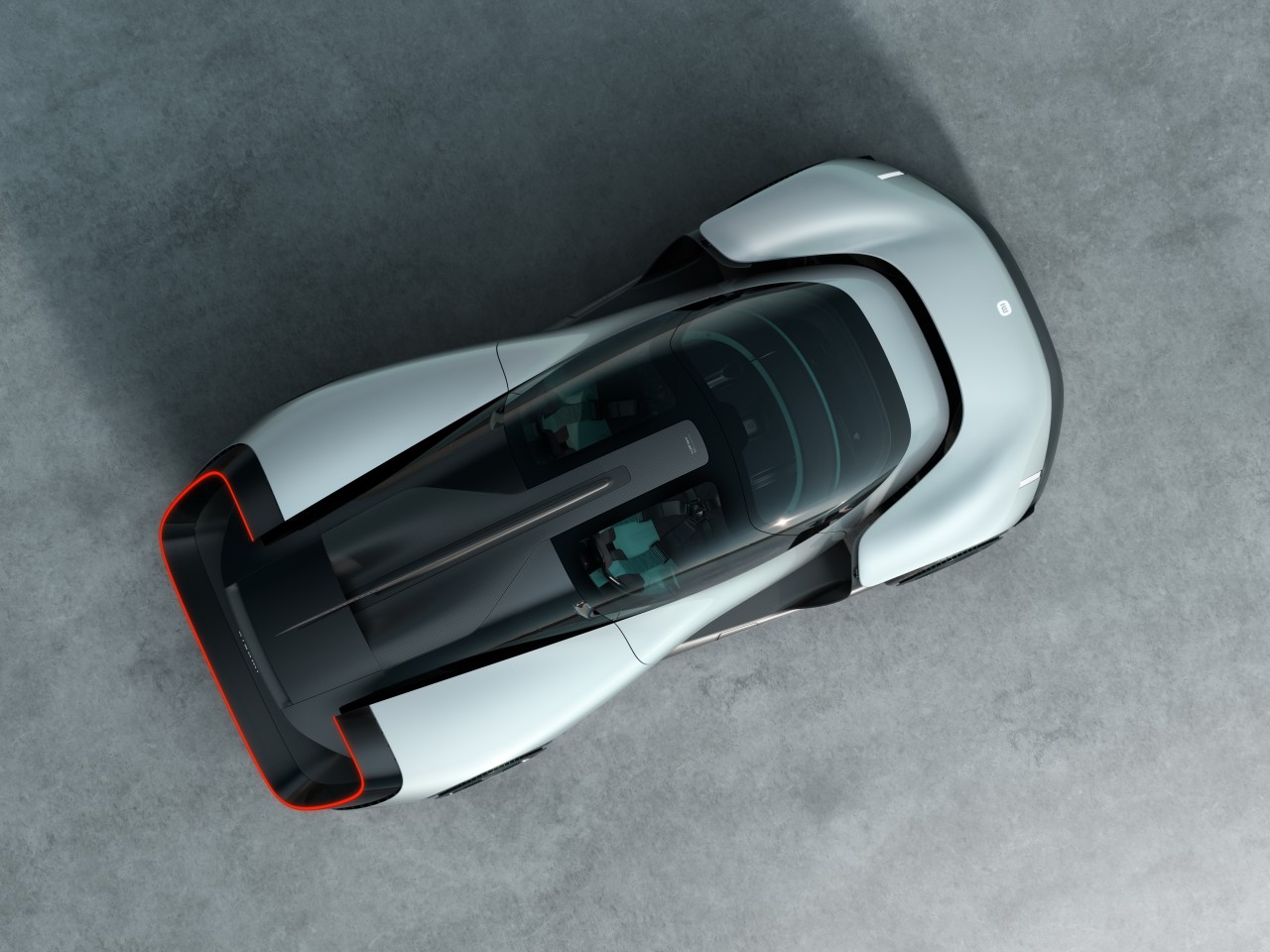
The concept also integrates into Xiaomi’s broader “Human × Car × Home” ecosystem. Powered by XiaoAi AI Assistant and the Xiaomi MiMo foundational model, the car connects with personal devices and smart home products, positioning itself as part of a unified digital lifestyle.
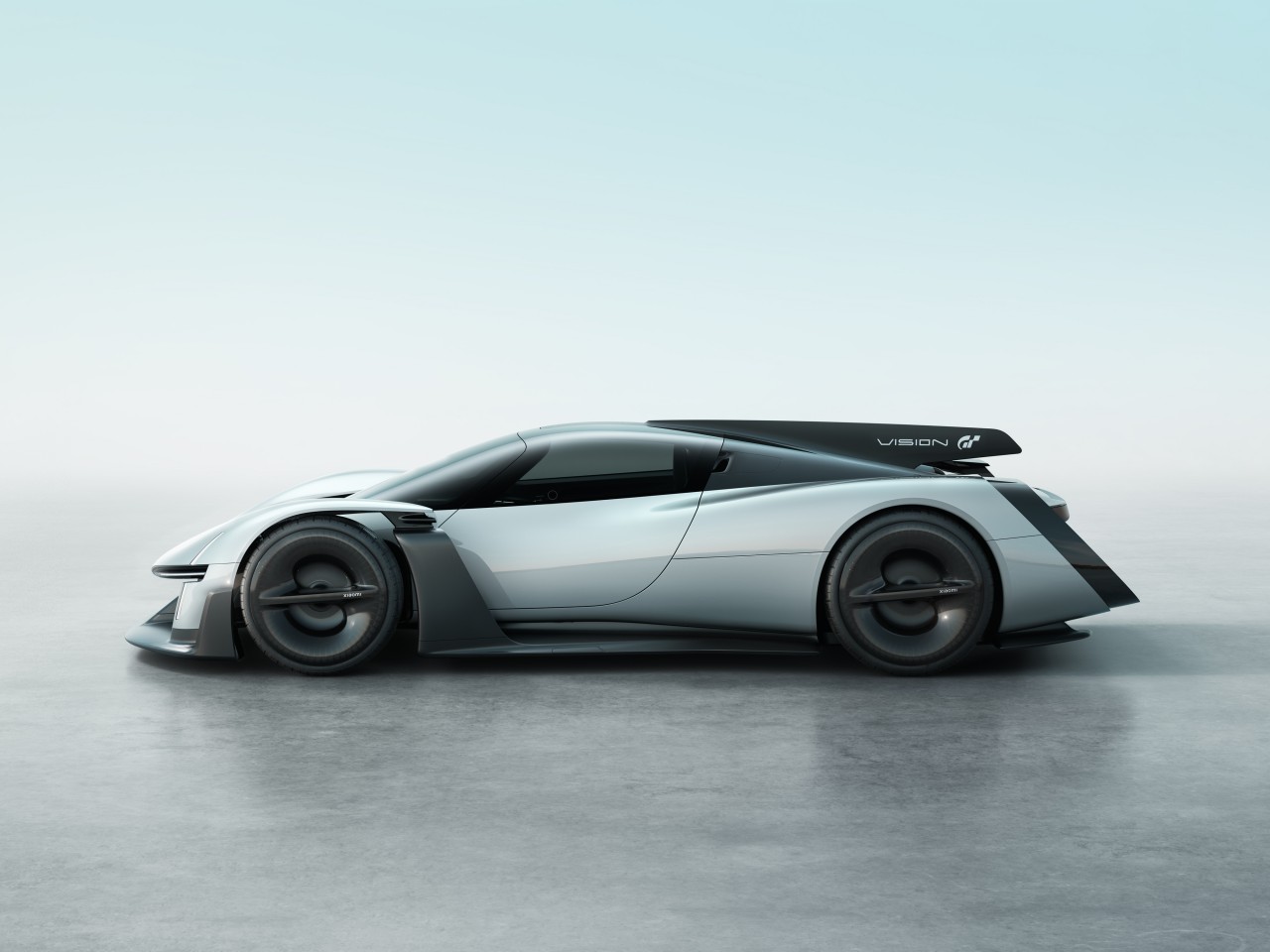
Xiaomi has also envisioned a companion driving simulator designed as furniture for the home, extending the Vision Gran Turismo experience beyond the vehicle itself.
Yamauchi praised the project, noting how the design successfully resolves the tension between low drag and high downforce. Further details about the car’s arrival in Gran Turismo 7 will be announced at a later date.
With its Vision Gran Turismo debut, Xiaomi signals a broader ambition: redefining the electric hypercar through AI integration, ecosystem connectivity, and aerodynamic precision.




Jackery SolarSaga series: Free power for small devices

UGREEN adds new Nexode Pro power bank, charger to lineup

nubia to launch new Neo 5 series gaming phones on March 28

SHINOBI: Art of Vengeance’s SEGA Villains Stage out on April 3

AMD poised to lead agentic AI era with high-performance CPUs


-

 Reviews5 days ago
POCO X8 Pro Max review: A new beast from the far east
-

 News5 days ago
POCO X8 Pro Series: Price, availability in the Philippines
-

 Laptops1 week ago
Apple MacBook Neo Review
-

 Computers2 weeks ago
GIGABYTE collaborates with Capcom for RE Requiem custom PC
-

 Apps1 week ago
Google Maps is finally getting a 3D mode
-

 Entertainment1 week ago
The internet is thirsting over the One Piece Season 2 cast
-

 Features1 week ago
Galaxy AI on the Samsung Galaxy S26 Ultra
-
 Automotive2 weeks ago
BYD is reportedly considering an F1 team