
Gaming
Nickelodeon All-Star Brawl then and now: A work in progress
It could be the perfect competitor for what it’s worth

Back in October 2021, our childhood came calling with the release of Nickelodeon All-Star Brawl for current and next-gen consoles. Safe to say, our favorite Nickelodeon stars want to step into the realm of fighting games that resemble something very familiar to everyone at this point. Of course, I even went out of my way to claim that this game is “Super Smash Bros. but with Spongebob and Patrick.”
Even early on, I wouldn’t be wrong about making that statement. From the gameplay, stage design, to battle strategies, it’s a Smash clone through and through. Yet, it supposedly finds ways to be a bit different than the very game it’s imitating. So, for this review, we’re doing things a bit differently to see whether this game truly is worth giving a shot.
Smashing your way to victory
In every basic aspect of platform fighting games, Nickelodeon All-Star Brawl is clearly much like Smash Bros. and I honestly don’t blame it for being that way. In terms of overall combat mechanics, it nails every basic command that seasoned Smash players know and love/hate. Of course, in both games, the aim of the game remains the same: fight to the death, last fighter standing wins… you know the drill.
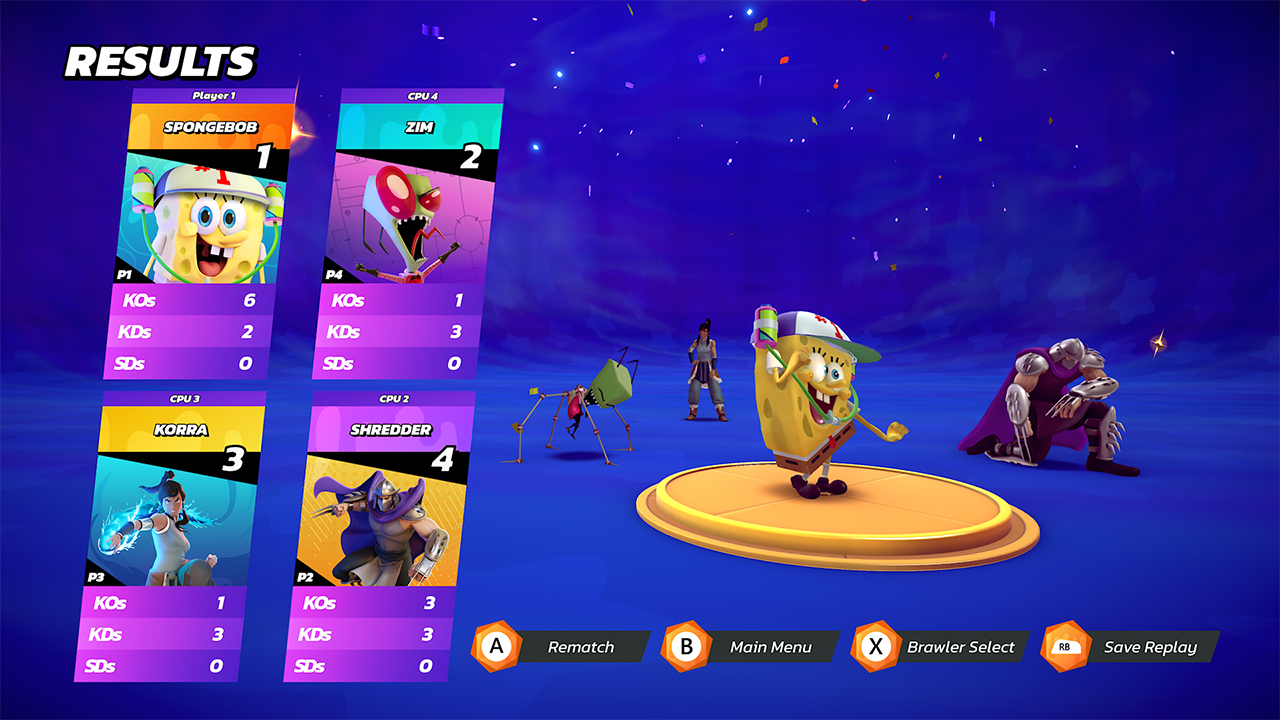
6 KOs, though!
Although, there are things that All-Star Brawl does differently that makes it rather beginner-friendly on the onset. For starters, I felt there was less RNG built into this game with the lack of objects you can throw at each other. Instead, this game opts to include the objects as individual character projectiles, which you can defend against rather easily.
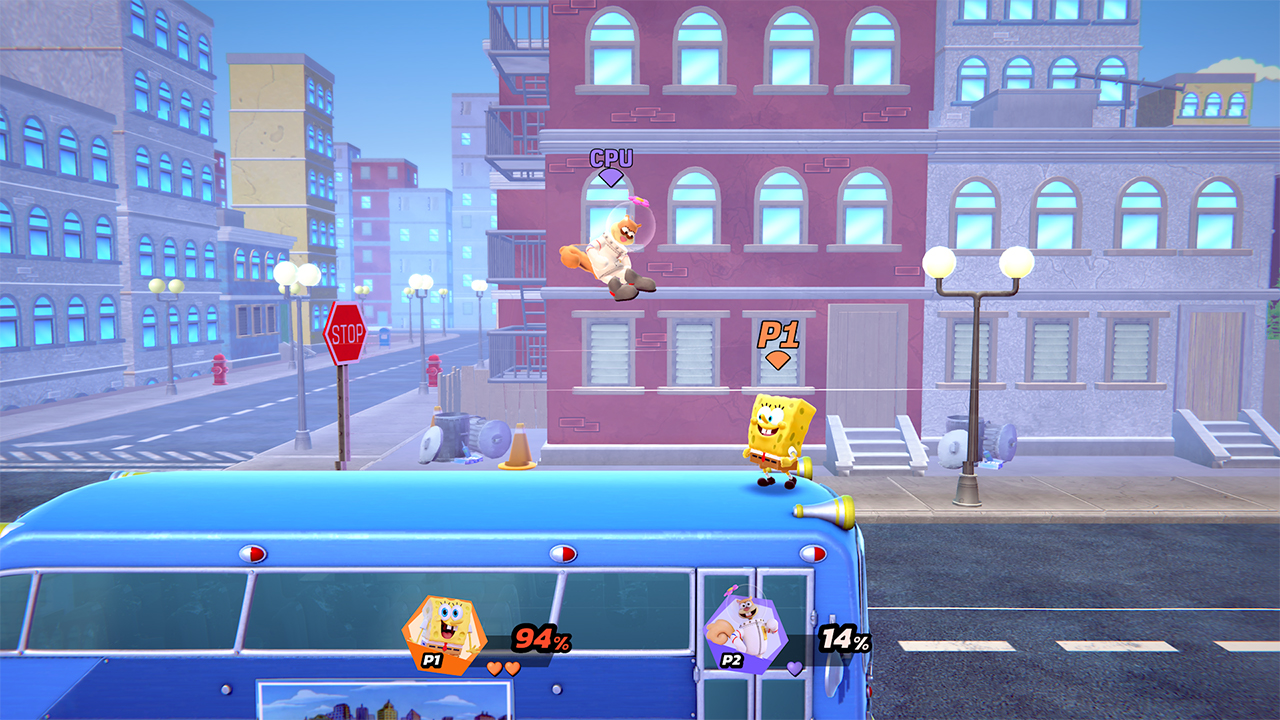
Who is the true master of karate?
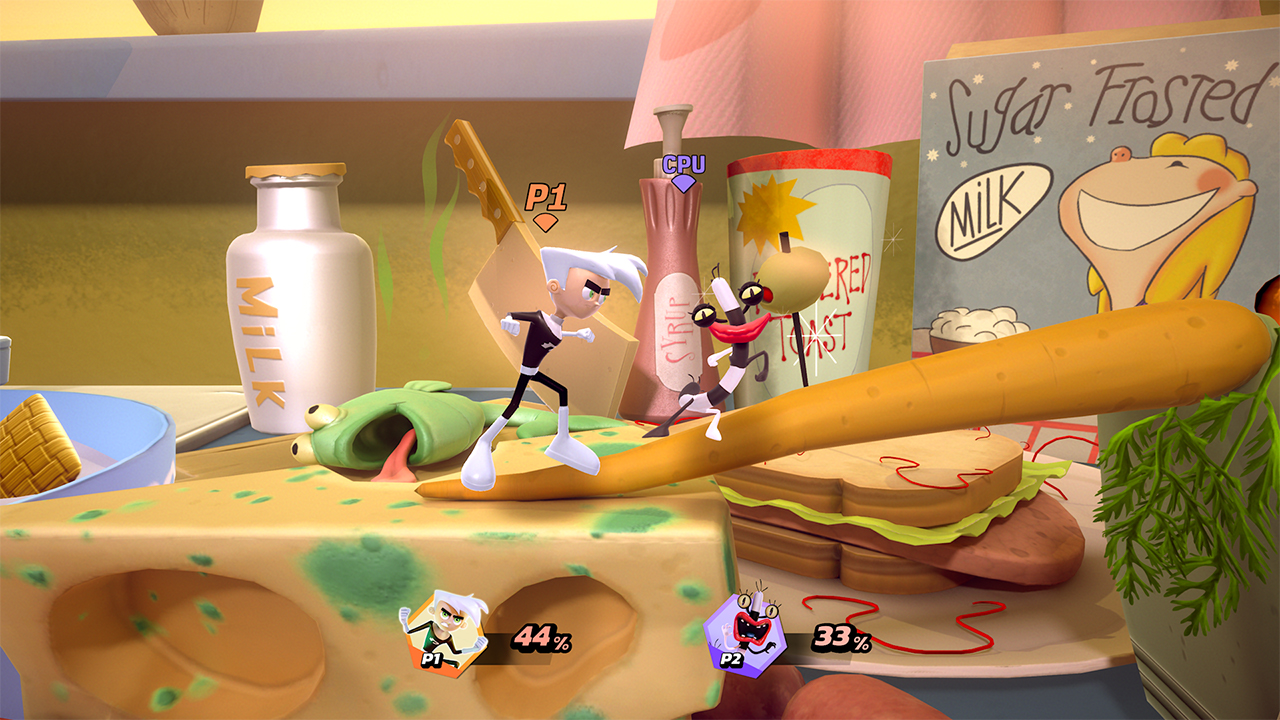
Secondly, the stages you play in also offer a variety of easy-to-move-around battlefields to areas where you will surely fall off if you’re not careful. Also, there are stages with elements that can affect you and your enemies, but don’t instantly kill you in the most random way possible. With all of these, it allows new players to try and learn the ins and outs of the game without being a total rage-fest from start to finish.
Familiar faces to the 90s Nick kids
This is, in my opinion, the biggest selling point of the game: the characters themselves. Honestly, this game brought back so many memories of my childhood that fighting as either SpongeBob SquarePants or Danny Phantom brought a smile to my face. During its launch, the game had 20 playable characters from across 13 different Nickelodeon-owned franchises, which is a good number to start.
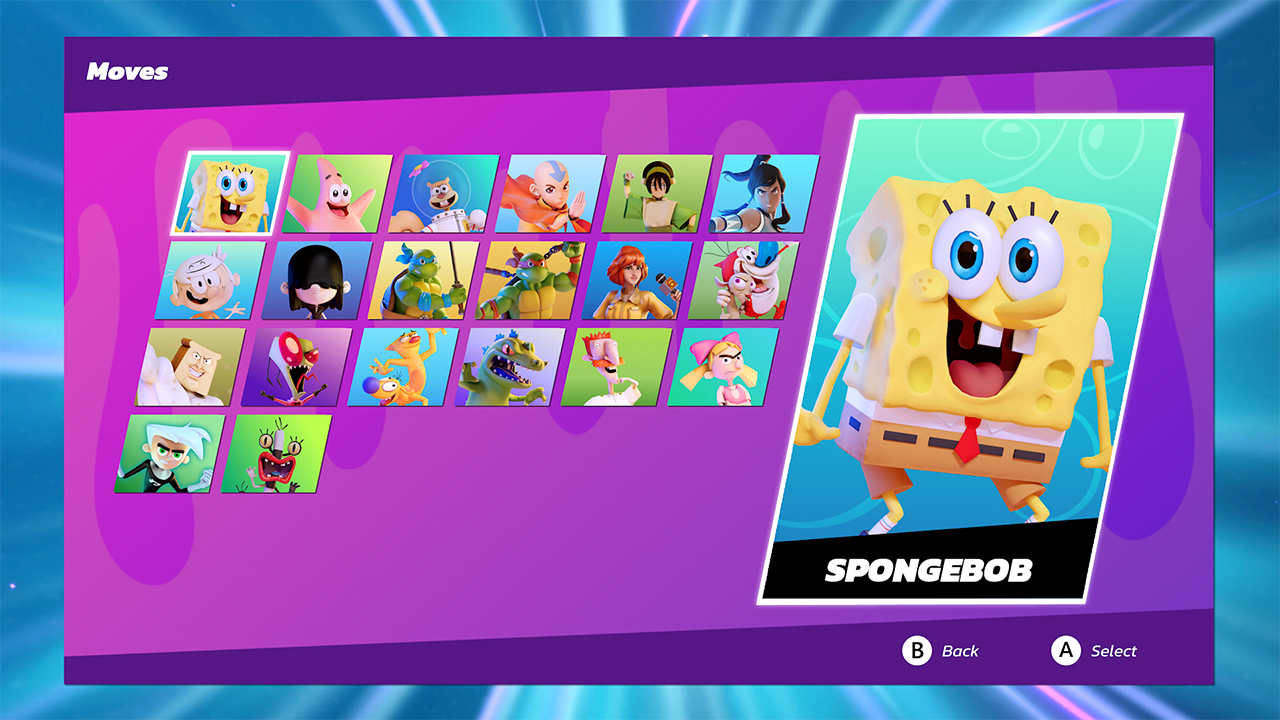
Original 20 characters from the game’s launch back in October
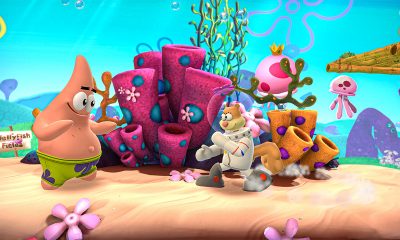
Each character has its own unique set of moves that reference their attitudes and behaviors in their own respective franchises. From Sandy Cheeks’ high-powered karate chop to Nigel Thornberry’s “mmm smashing, yes” techniques, the game represents these characters quite well. I mean, they even have that SpongeBob meme as a taunt, so that’s a win in my book!
Granted, of course, there are some characters from newer franchises added in there for a more diverse cast. After all, this is a kids game with the same premise as Smash Bros.; if kids grew up watching Nickelodeon instead of playing Nintendo games, this is one way to get them to play this game with their friends and family members.
Initial outlook after the hype
Overall, Nickelodeon All-Star Brawl provides a rather similar take on platform fighting games like Smash Bros., but it tries to be its own thing. When you look past all the glaring similarities in game mechanics and stage design, this game presents a different experience solely riding on the cast of characters you have at your disposal. Sure, it’s not Mario vs. Pikachu, but you can recreate that SpongeBob vs. Patrick fight over and over again.

You can mix Timed and Stock battle rules together for quicker matches
I’m not exactly as high on it with other games because of the other title it’s competing against. I know it has a long way to go if it wants to compete against something like Super Smash Bros. two weeks into release. However, I still think that this is a good start for a game that wants to rival arguably the most popular platform fighting game of this generation.
Although, this was two weeks since release. I decided to play this game again after a few months, not knowing if anything had changed since then.
Four months later, how does it stack up?
To this game’s credit, four months later, it maintained everything I noted on since its release. In essence, it’s still a platform fighting game with Nickelodeon characters at center stage. This time around, there are things I’d like to call out after this game gained numerous patch notes and underwent several changes along the way.
Improved gameplay with all the patches
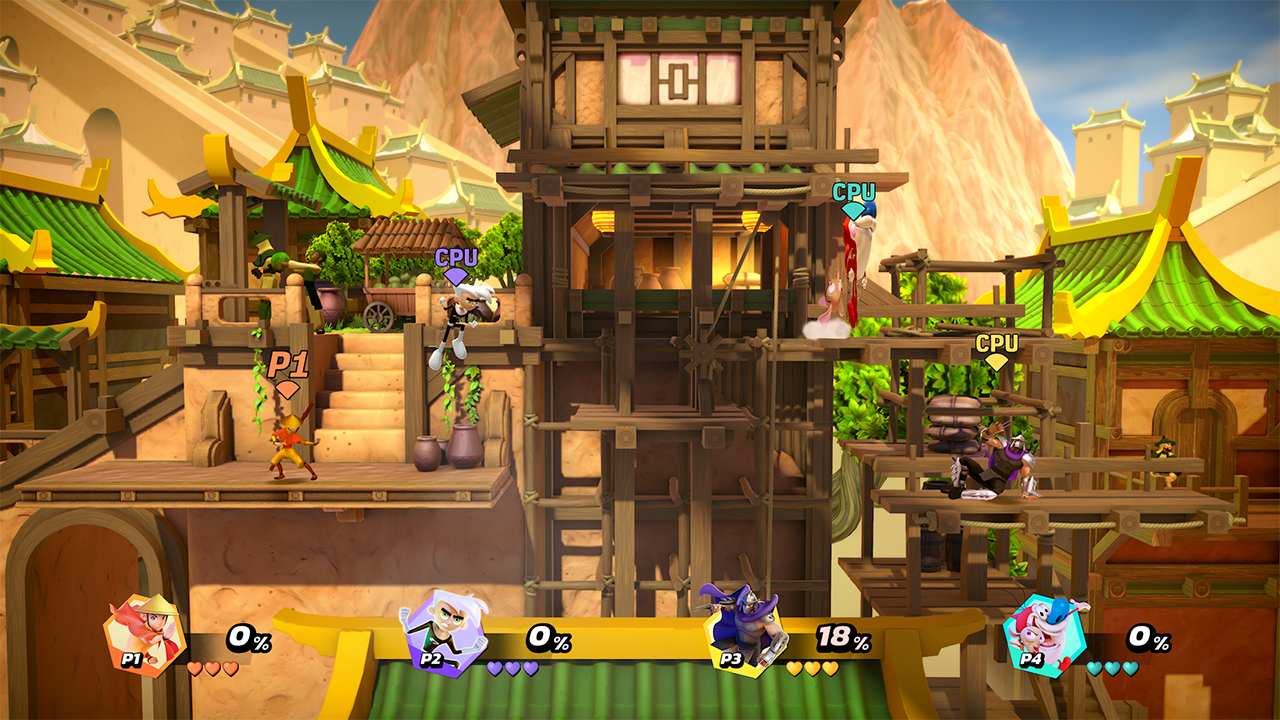
This game only allows a maximum of four players for all battle modes
If I’m being honest, early on, I felt that the games finished rather too easily or too quickly thanks in part to the gameplay mechanics. I noted several characters with attacks that seemed completely broken in terms of damage and hit boxes, that a timer simply didn’t matter. Also, some stages were not exactly easy to compete in, especially when literally anything can hit you (ehem, Powdered Toast Trouble).
With four months worth of patches, I genuinely felt the match times got a bit longer, the characters dealt balanced damage, but the maps still felt like a chore to move around. Of course, I felt this had to be done especially if there are characters that genuinely felt overpowered to use (SpongeBob and Ren and Stimpy, in my opinion).
Also, I want to touch on online play as well, considering I didn’t really do this within the first two weeks of launch. Honestly, I’m glad I started playing online now rather than before because of the gameplay improvements, plus I could actually queue with people this time.
But why keep the character count scarce all this time?
Although, one of the biggest gripes I had in the four months since I last played was the lack of new characters introduced. As of the time of writing, Nickelodeon All-Star Brawl added a grand total of TWO new characters for free via DLC: Garfield and Shredder from TMNT. I understand that they worked on everyone else in between, but there were so many opportunities to include other characters into the roster.
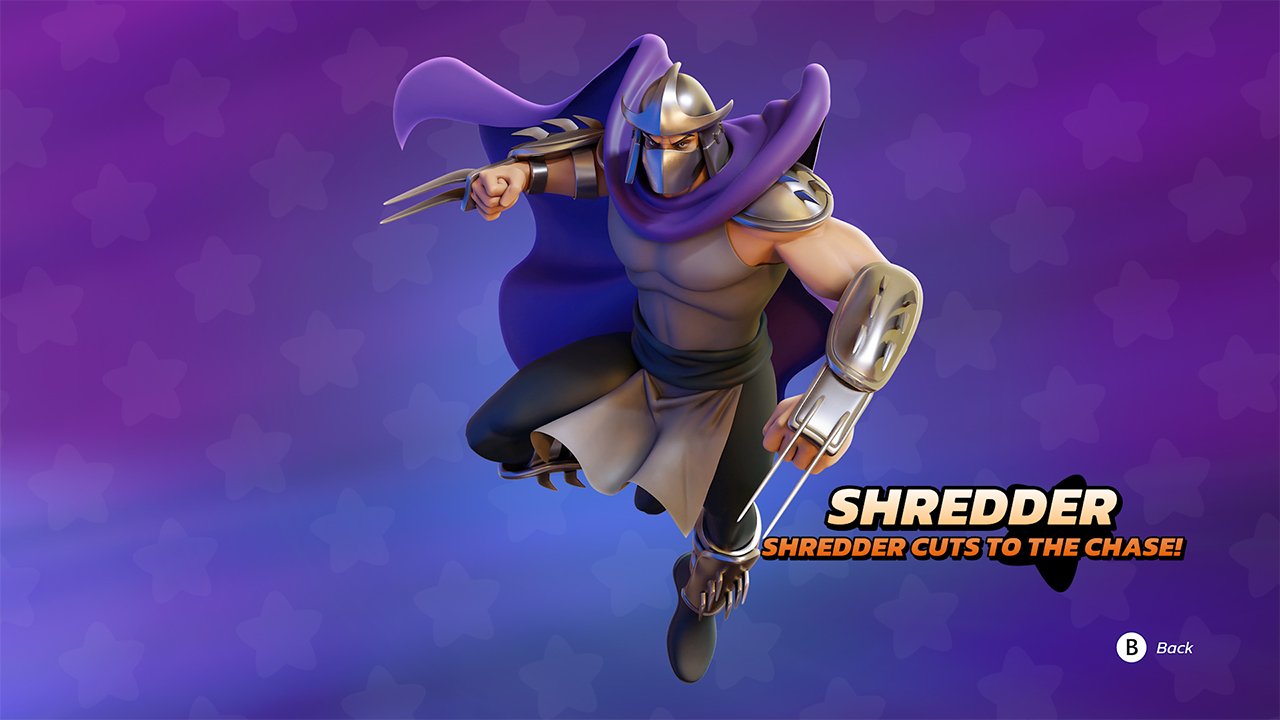
Shredder from Teenage Mutant Ninja Turtles; added to the game from the February update
On the top of my head, you can put Squidward Tentacles and Arnold in there, since they’re also iconic and rather popular Nickelodeon characters. Also, there are other storied franchises that deserve inclusion, with characters from The Fairly OddParents, The Adventures of Jimmy Neutron, Boy Genius, The Angry Beavers, and Chalkzone, among others.
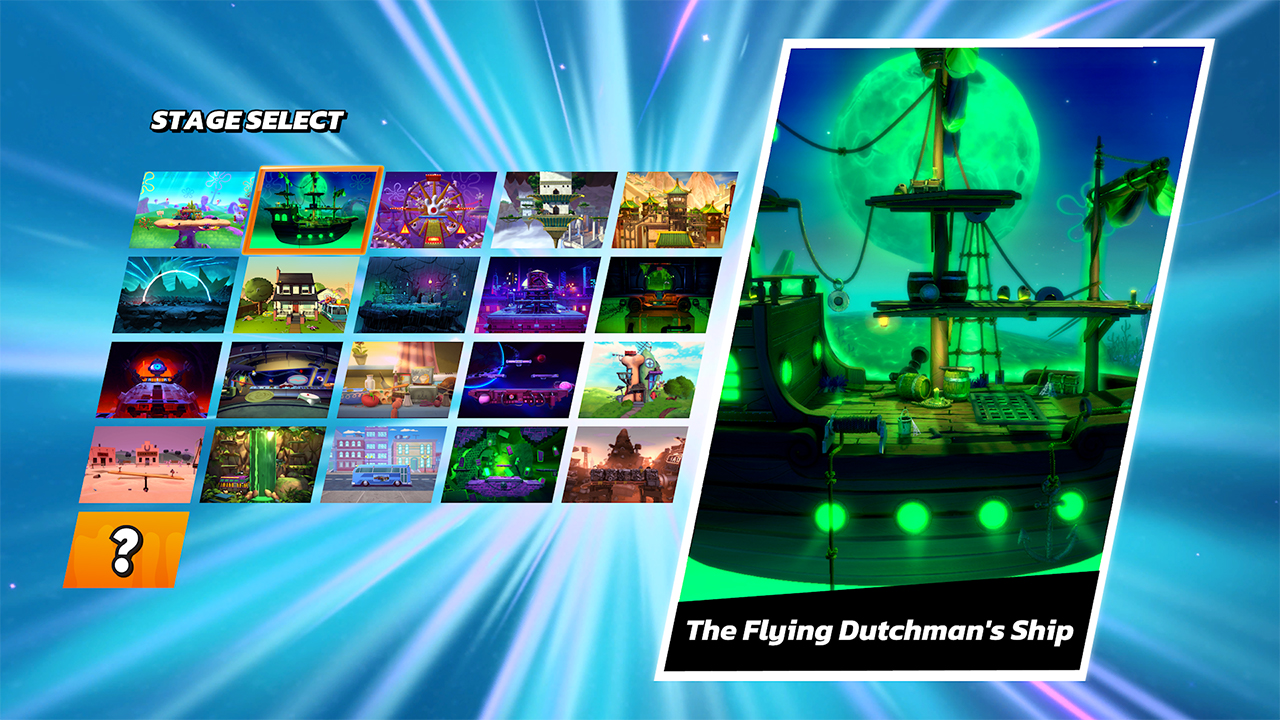
Initial selection of stages from the game’s launch; hope they could add more later on!
Sure, there will be future updates that might have these characters in the pipeline, but I honestly felt that they could have done so much in four months. If you want to rival Smash Bros., beef up the roster to add more madness to the brawl!
So, is it worth playing all this time?
I said it before, and I’ll say it again: Nickelodeon All-Star Brawl is a rather unique take on a platform fighting game mostly because of the characters you play with. In terms of the gameplay formula, Super Smash Bros. really set the tone for every other publisher out there that wants to create something similar. In essence, All-Star Brawl became another one of its clones that I still think comes close compared to others.
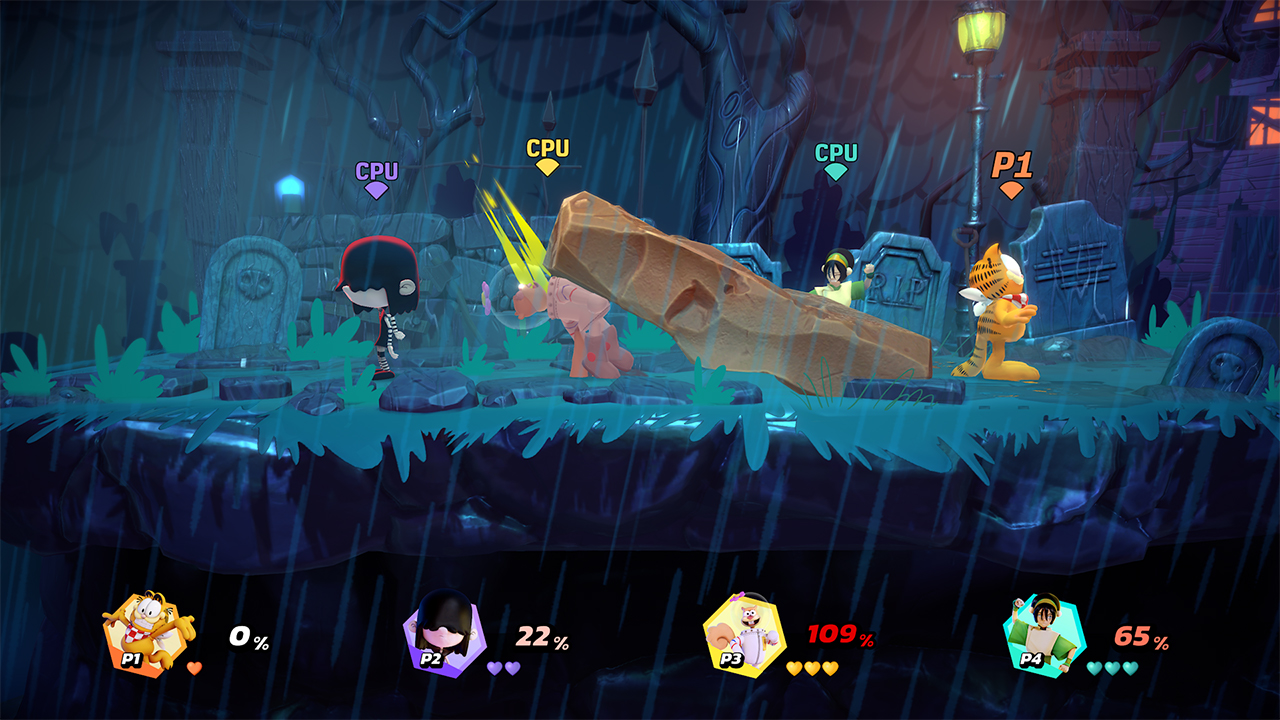
After playing this game again after four months, I would still call it a work in progress — and that’s a good thing. In terms of what it lacks compared to its rival, I think there’s still so much room to grow and so much time to do so. Gameplay-wise, it’s still exciting and heart-pounding (and possibly controller-smashing, too).
I still urge you to give this game a try, especially if you don’t have a Nintendo Switch and something like Brawlhalla doesn’t suit you. Yes, it still has a lot of catching up to do, but this game still deserves some recognition for doing things a bit differently.




Gaming
WWE 2K26 lets you live out all the fantasy matches you could want
But you have to play for hours and hours to unlock everyone.

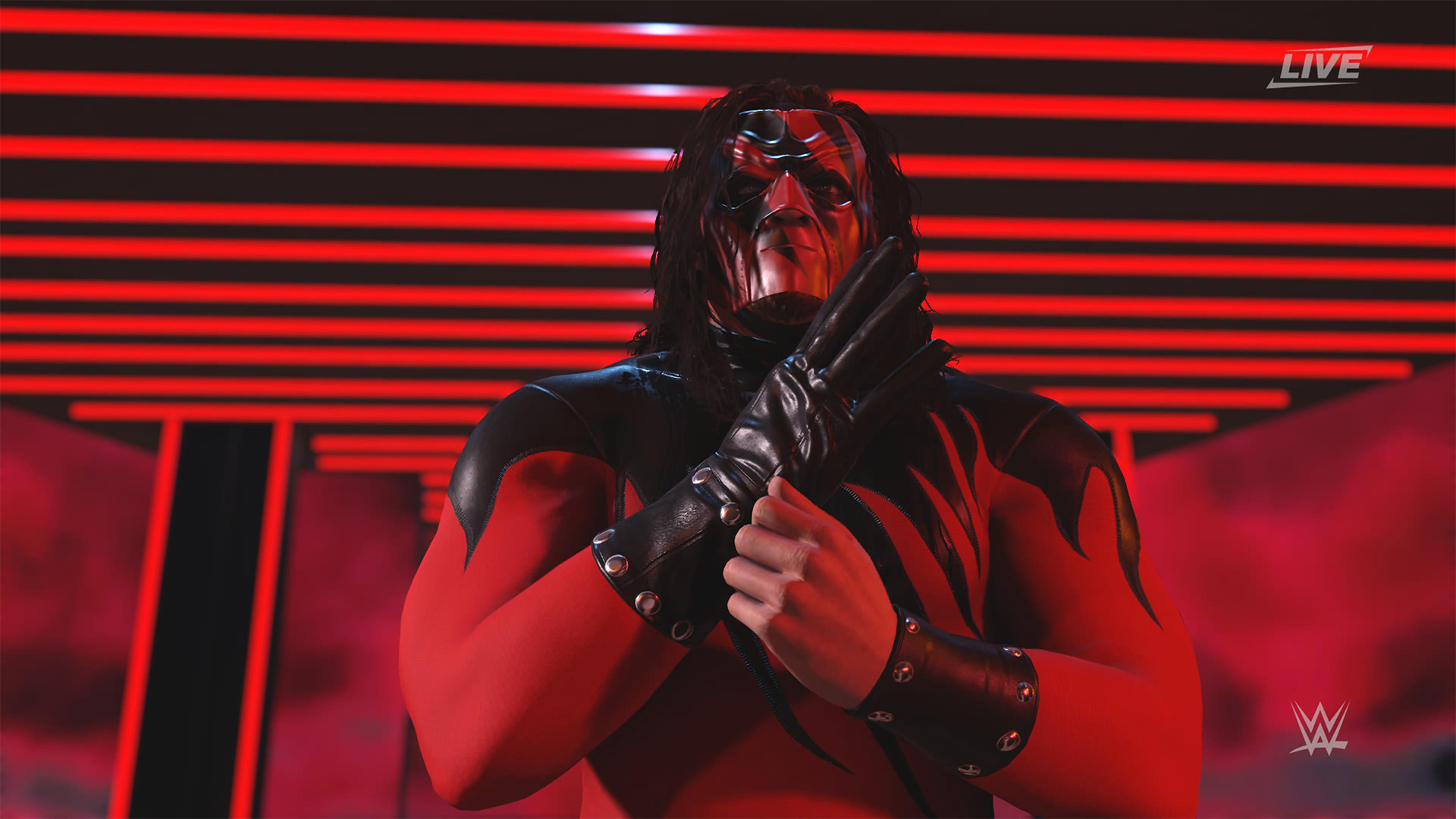
The old SmackDown vs. RAW games were some of the most fun I’ve had as a teenager. Though I didn’t own a PlayStation 2 or 3 then, I had a PlayStation Portable and the series’ corresponding version. Sure, it didn’t have the then-advanced graphics, but the games kept me company for many a day and night. And it all revolved around a simple premise: letting wrestling fans live out their fantasy matches.
Now, with over 400 playable characters on launch, WWE 2K26 hopes to rekindle that magic. Previously, 2K’s take on the wrestling simulator never really captivated me as much as the SvR series did. Though players still had a similarly large roster throughout the years, the series felt too homogenized, too riddled with microtransactions. This year, the series got me thinking again: Can sheer numbers singlehandedly usher a new renaissance for WWE gamers?
The good: Four hundred superstars under one banner
WWE 2K26 touts over four hundred playable characters on launch. With unannounced DLCs still on the horizon, this number will surely balloon further. Even for a dedicated WWE fan, having over four hundred playable characters is insane. Where else can I pit Joe Hendy against Andre the Giant and create my own WrestleMania III moment?
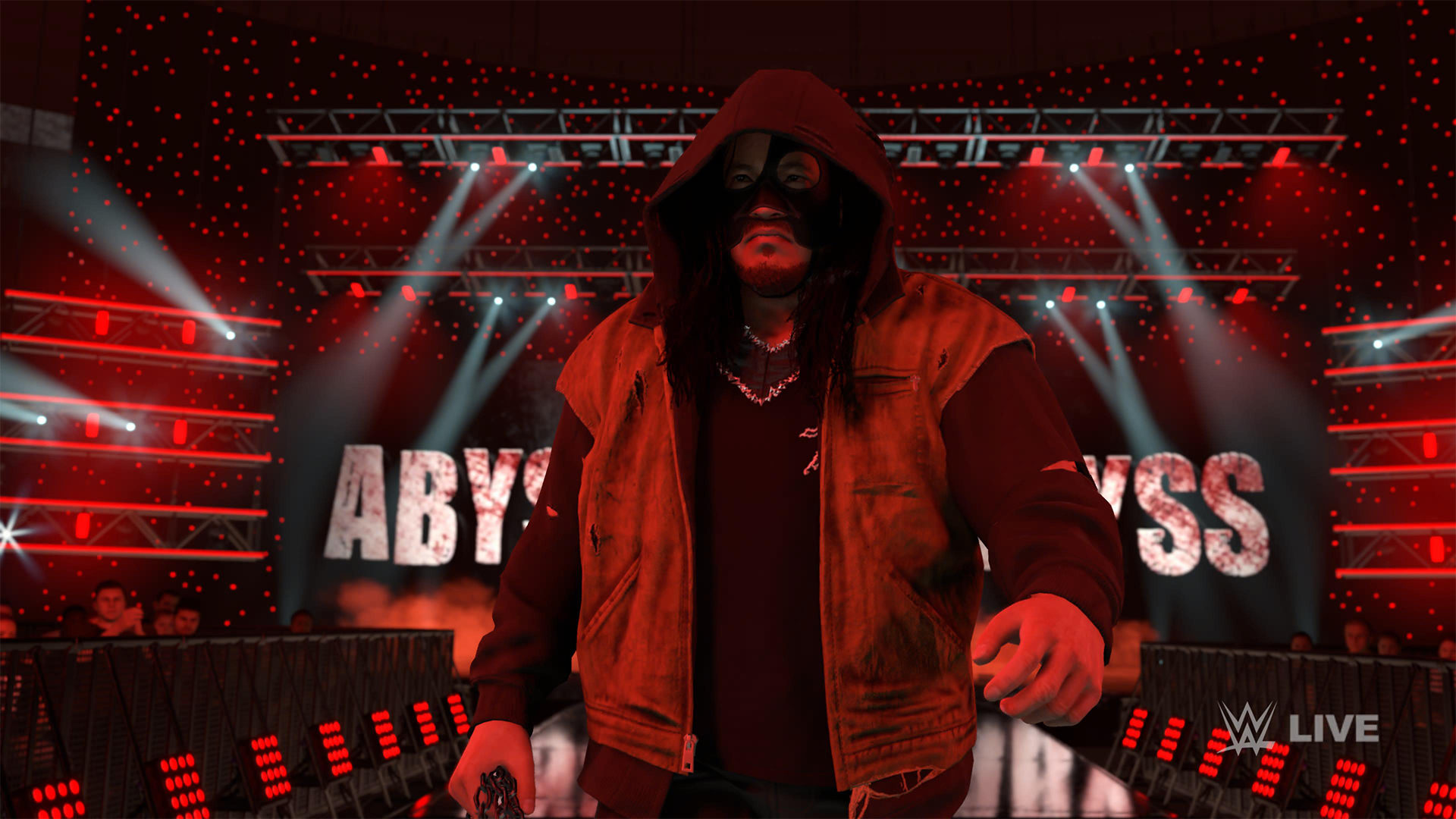
The only catch, however, is that the game did some stat padding to get to this enormous number. Besides having multiple personas for a single wrestler (and CM Punk alone has ten of these), the roster includes a platoon of fictional MyRISE characters, which comes off as distracting if you don’t particularly engage with the MyRISE mode.
Ironically, the game didn’t even need to pad its stats this way. For the first time in the series, the launch roster includes Superstars from the current WWE roster, TNA, AAA, and the Hall of Fame. I could spend hours just feeding a litany of Superstars to TNA legend Abyss. That’s something I could never have done in the old SvR days.
The good: A more fluid fighting system
It also helps that WWE 2K26’s fighting system is the most fluid that the series has been. Wrestlers no longer feel like wooden animatronics skipping from one animation to the next. Each punch flows smoothly into a clothesline, a grapple, a carry, or a finisher.
It is, of course, at the expense of a more complex control scheme where each input combination corresponds to its own move. A stray waggle of the right joystick, for example, can have your wrestler careening towards their opponent in ways you never intended.
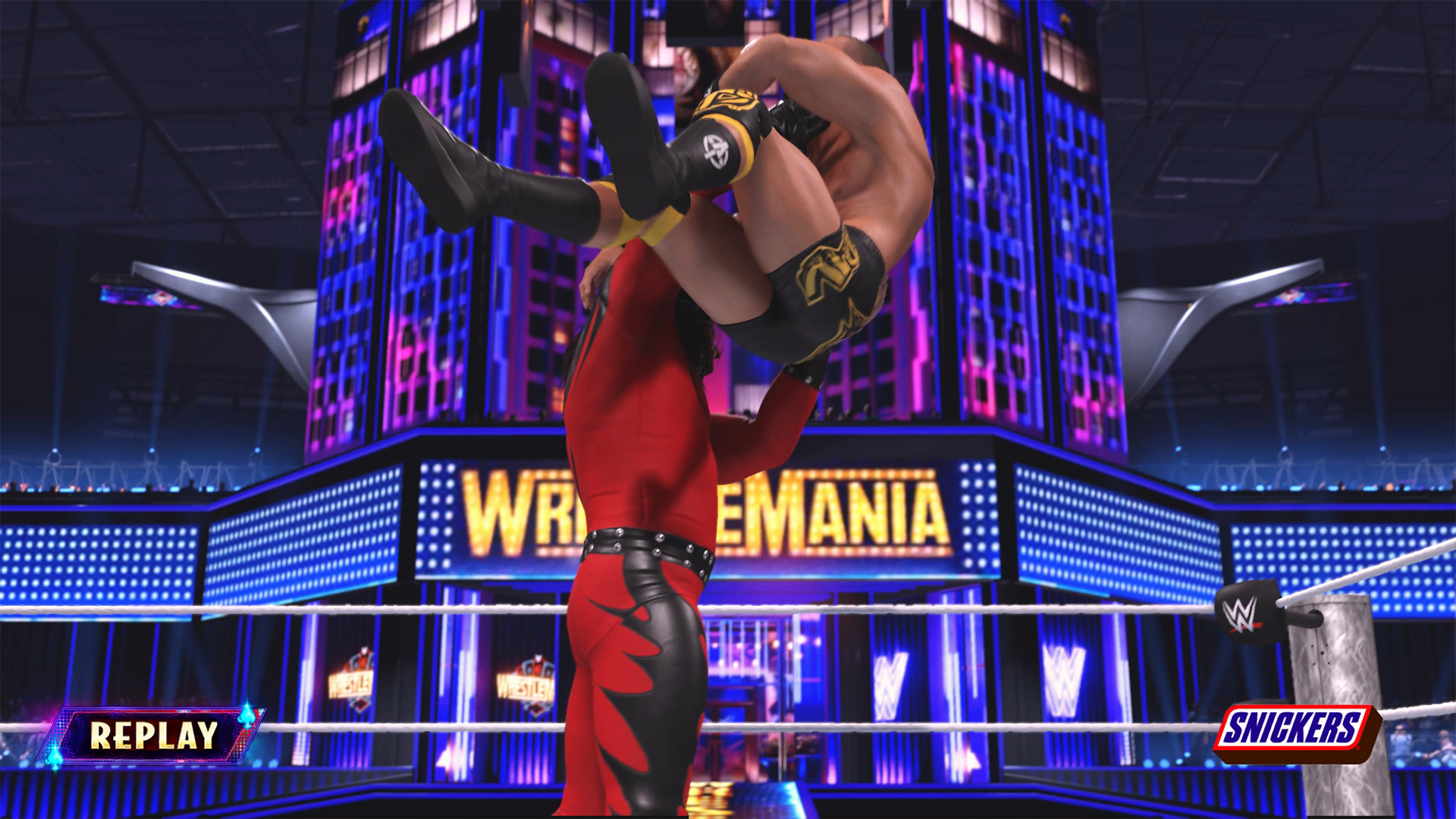
It takes some time to get used to. Every time I get a WWE 2K game, I always need a refresher course for the controls. Plus, each entry introduces something different. This year introduces rushing opponents to the corner and carrying opponents in different ways.
Another new addition is the new third-person camera which follows your character, rather than being locked to the ring. To me, this was a welcome feature. The original camera can often betray you by having various elements (other wrestlers, the ring itself) block your view of the action, thus preventing you from reacting correctly to your opponent. The dynamic third-person camera solves this and makes the fight more immersive.
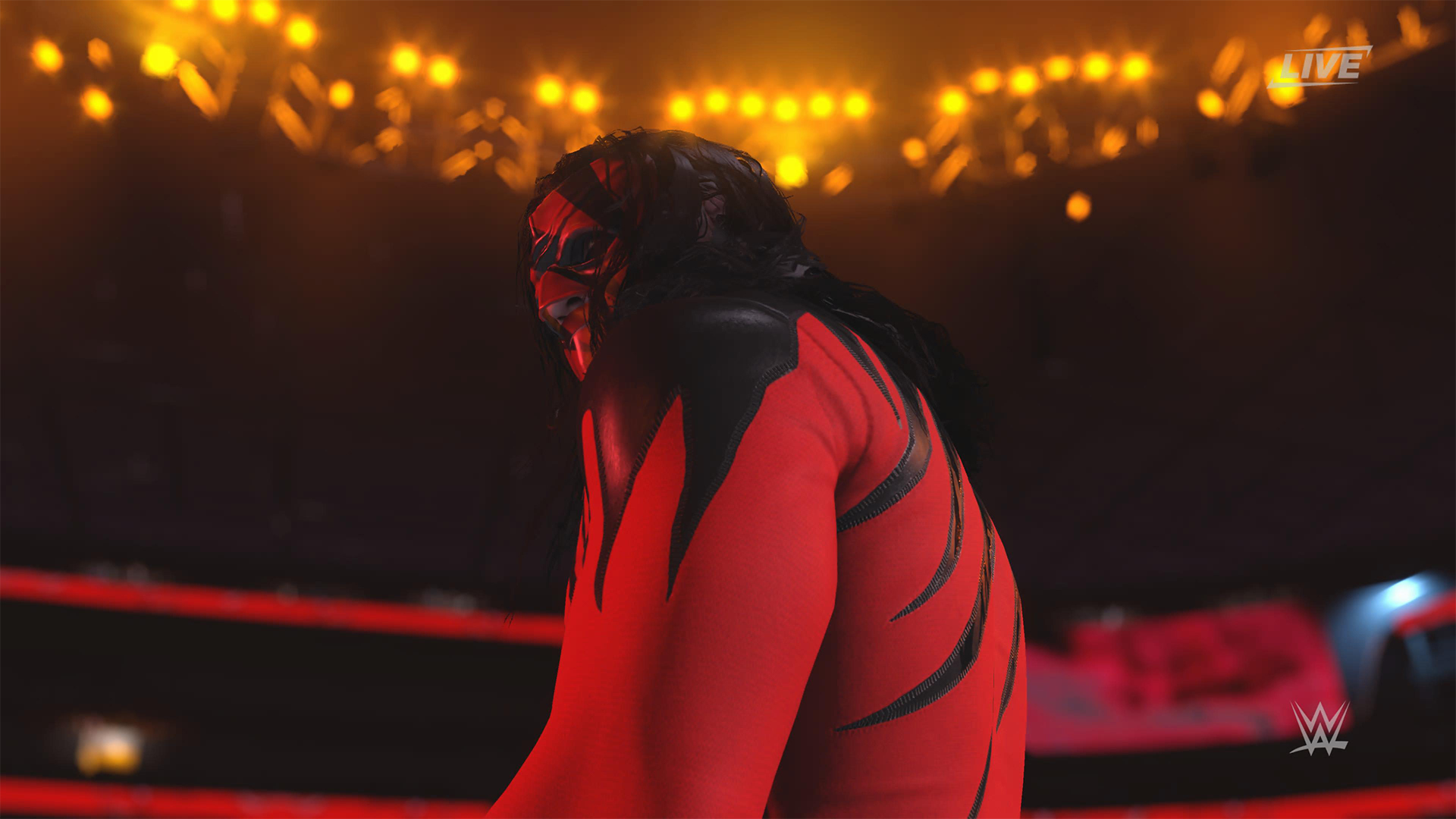
That said, the camera necessarily changes the controls a bit because you need the right joystick to look around. Because of that, I had to revert back to the original camera after a while. Regardless, this is a step in the right direction.
The improved fight scheme is also a step in the right direction. WWE 2K26 is the franchise’s most immersive entry to date because of how fluid the action plays out.
The meh: Iterative game modes
Every yearly sports simulator falls prey to the curse of iteration. Because it’s an annual release, every game needs to add something new for players. At the same time, the same game can’t iterate too much, or it might end up alienating fans of the previous title. Each WWE 2K title has to be the same but also a bit different.
WWE 2K26 goes through the same rigamarole. Most of the game’s different modes don’t offer a lot of improvements from last year. So, if you loved last year’s MyRISE, MyGM, and Universe Mode, you’ll likely find this year’s iteration inoffensive.
“Inoffensive,” however, isn’t the best way to sell a new game. At the very least, MyFACTION gets interesting improvements. For a mode I historically dislike every year, WWE 2K26’s MyFACTION ended up being the one I loved the most this year.
This year, the layout feels more intentional. Though it still lacks the exciting animations of NBA 2K, opening a pack no longer looks like a PowerPoint presentation. There’s also more ways to fight offline with the addition of a challenging World Tour mode. Plus, with intergender support and team chemistry, this feels like the update that MyFACTION needed.
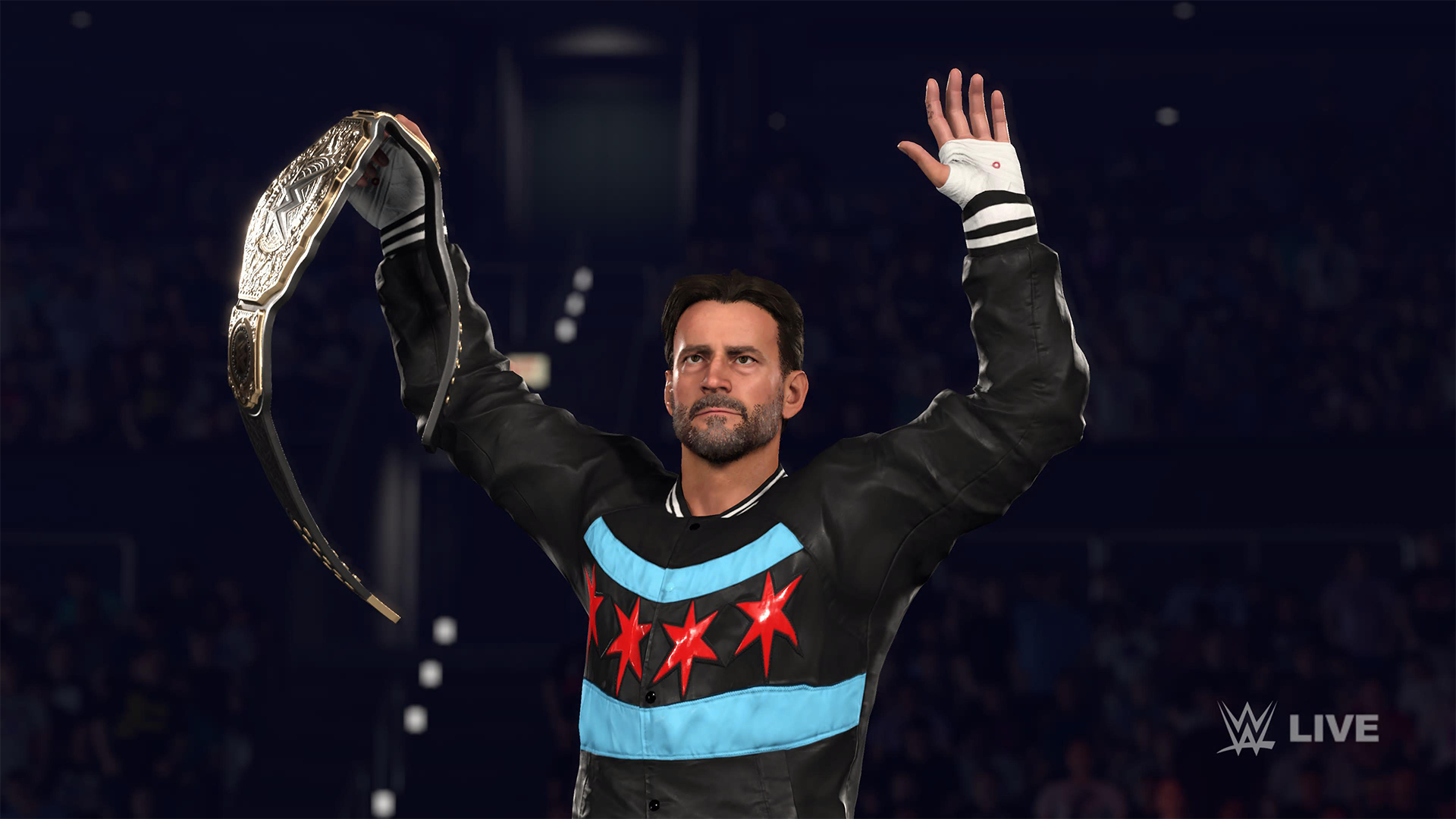
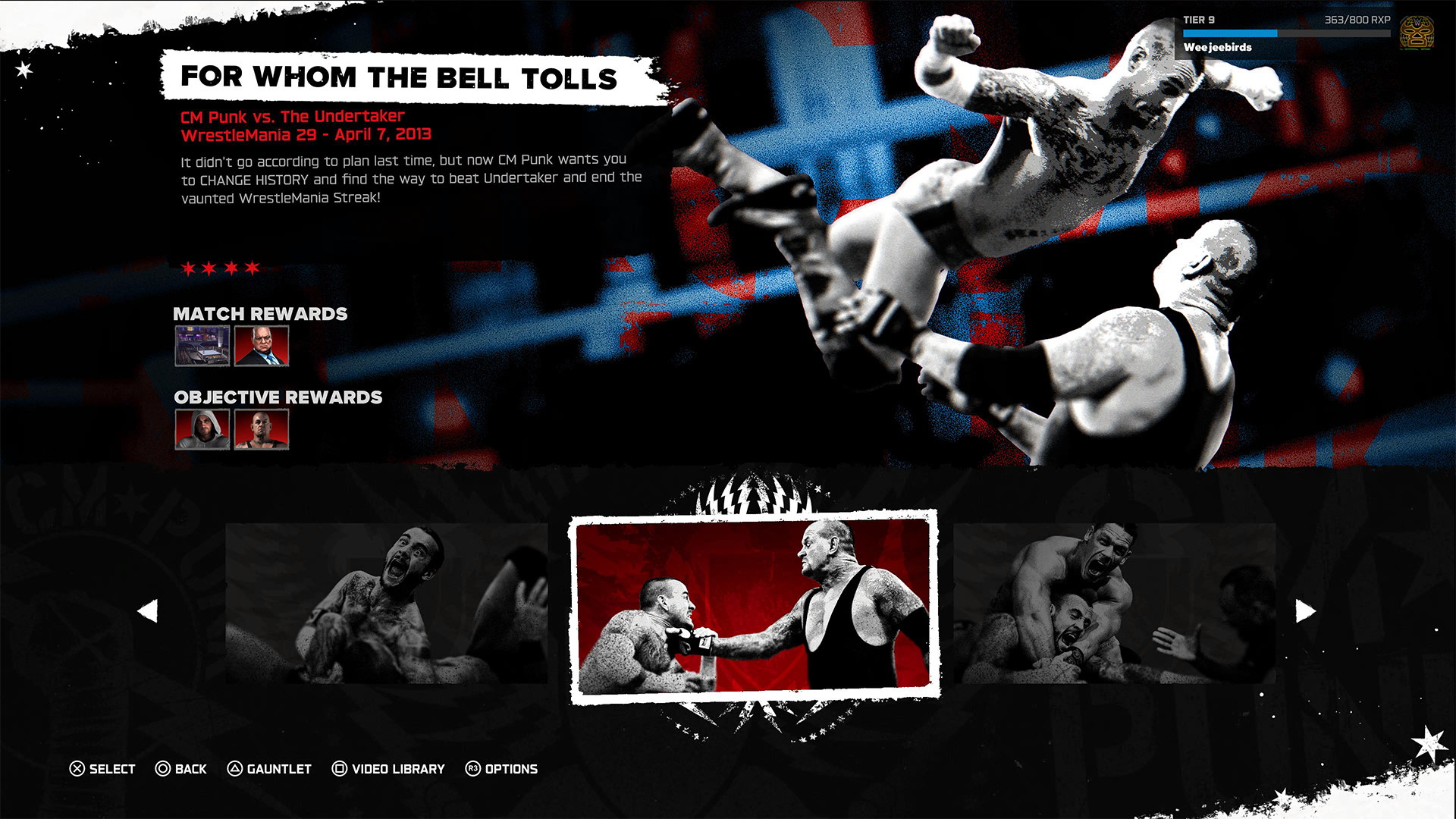
In another twist of fate, Showcase Mode ended up being the loser this year. WWE 2K26 rehashes last year’s schtick of having the star rewrite their history. Last year, this worked with Paul Heyman, a notorious bad guy. It doesn’t really stick with this year’s star, CM Punk, the so-called voice of the voiceless.
Punk could have shined with the traditional style of laying their commentaries over their past matches, especially with his shoot style. Instead, we got a series of what-ifs with practically no commentary. It’s just not what I expected from a firebrand like CM Punk.
The bad: The Ringside Pass
For the first time in the series, WWE 2K26 has a battle pass called the Ringside Pass. Like battle passes in other games, the Ringside Pass unlocks more content as you play through the game. However, unlike today’s standard which revolves mostly on cosmetics, this version locks a treasure trove of playable wrestlers behind an experience gate.
Even if you already paid for the game, WWE 2K26 asks you to play an inordinate number of hours just to unlock the best wrestlers in the game.
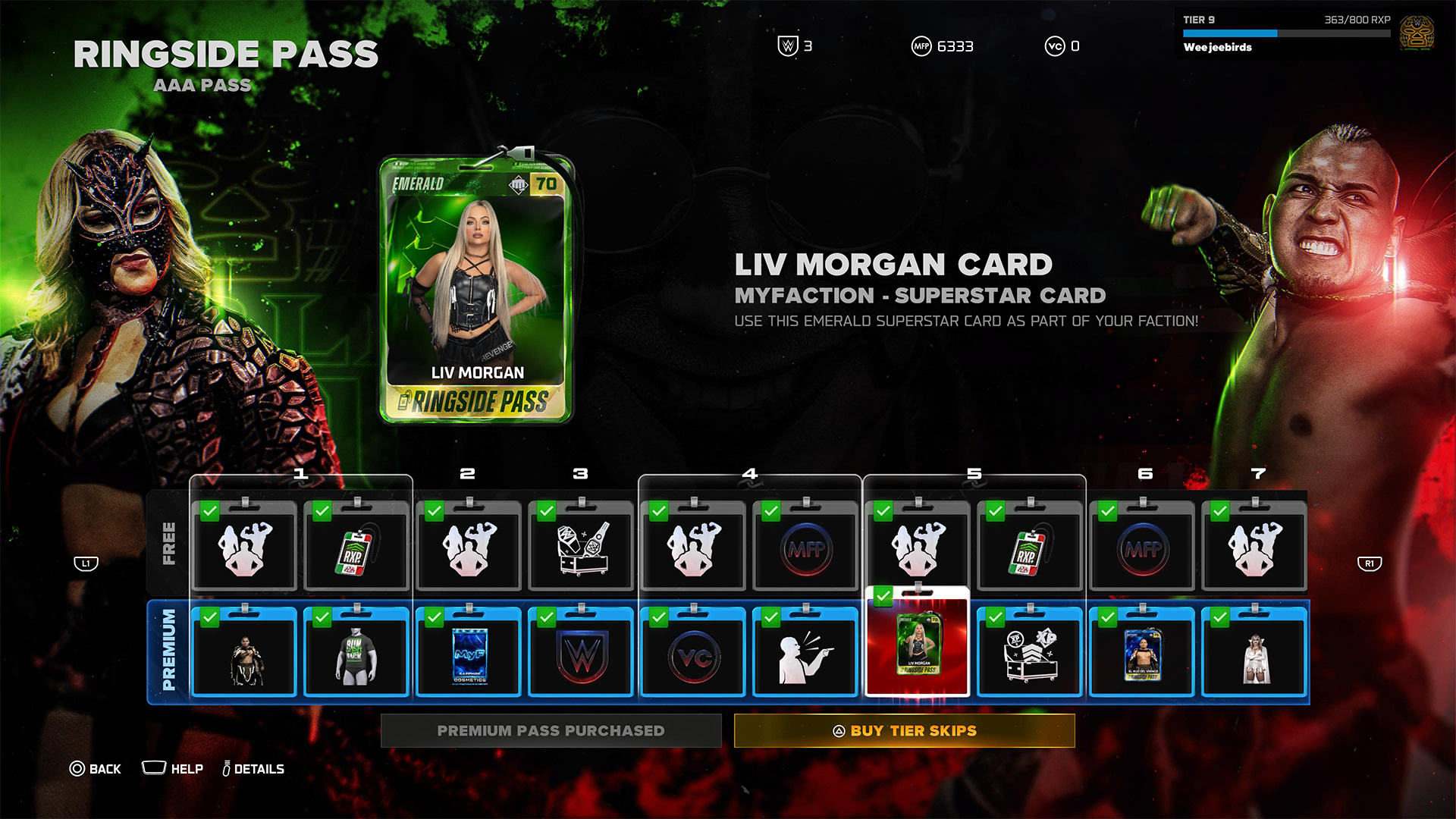
To be fair, it’s not all bad. Right out the gate, the game already gives you access to heavy hitters like CM Punk, Shawn Michaels, and John Cena. However, a lot of favorites are still unplayable including Bret Hart and Kurt Angle. This even includes the strongest version of Bray Wyatt, who’s locked under the last tier of the current pass.
Gaining experience isn’t an easy feat, either. After playing for hours and hours, I still haven’t unlocked more than half of the tiers. At the very least, there is no time limit, so I can play the game at my own pace.
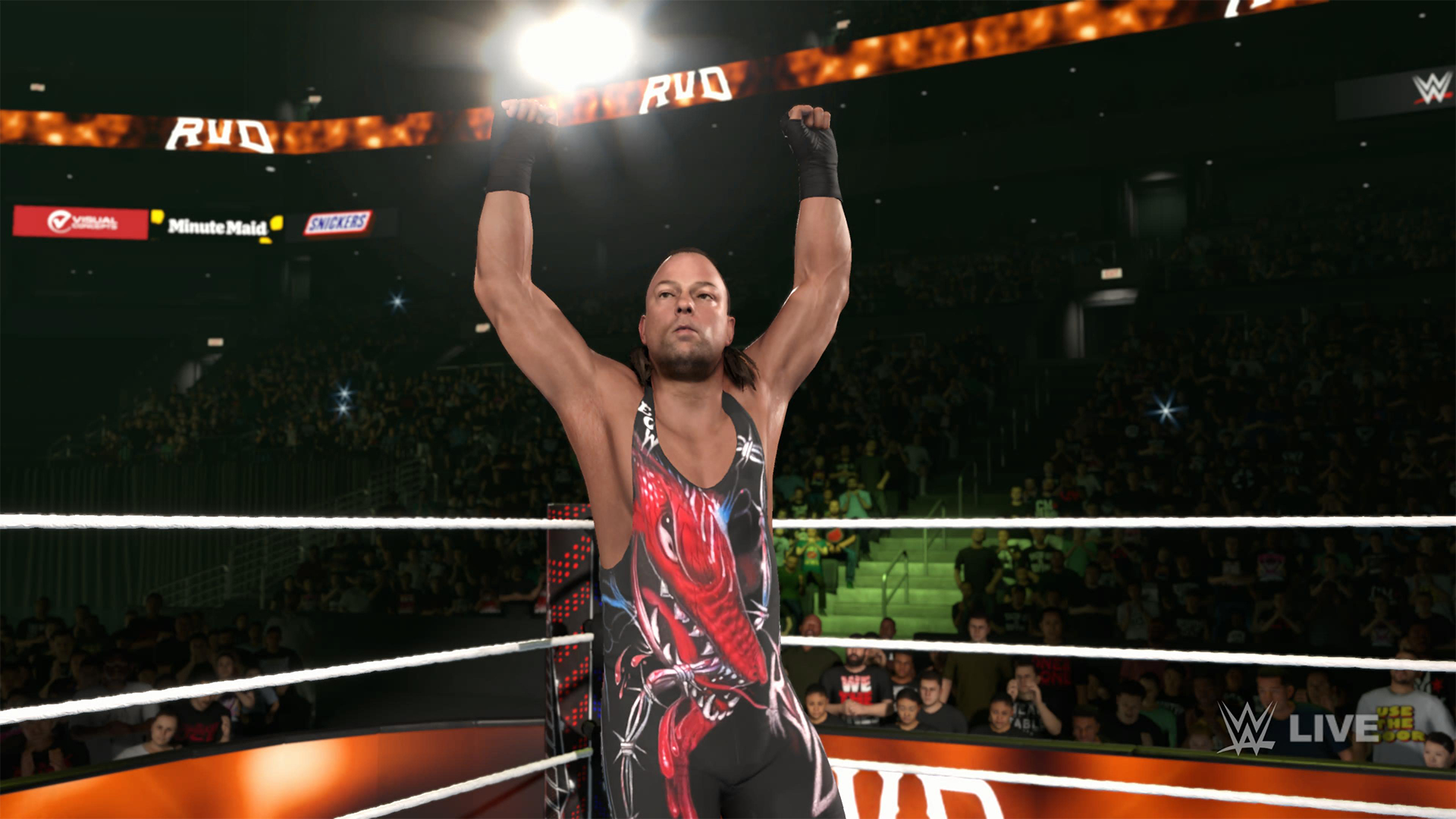
Props to WWE 2K26 for making its battle pass have fulfilling rewards, but it’s still unfortunate that significant elements of the game are locked behind hours and hours of playtime.
The gameplay loop is real and repetitive. And it all circles back to how iterative the game modes are. If only the game modes ended up being as exciting as they were last year, then it would have been exciting to play over and over again. Instead, WWE 2K26 prevents you from engaging in greatest strengths: an exciting roster and a fluid fighting system.
Is WWE 2K26 your PlayMatch?
Last year’s WWE 2K25 was an exciting period for the series. Though this year’s version keeps most of what made the previous game so exciting, WWE 2K26 also adds features, especially the Ringside Pass, that ultimately detract from the entire experience. It’s a small step back, which can hopefully be rectified next year, if not in future updates.
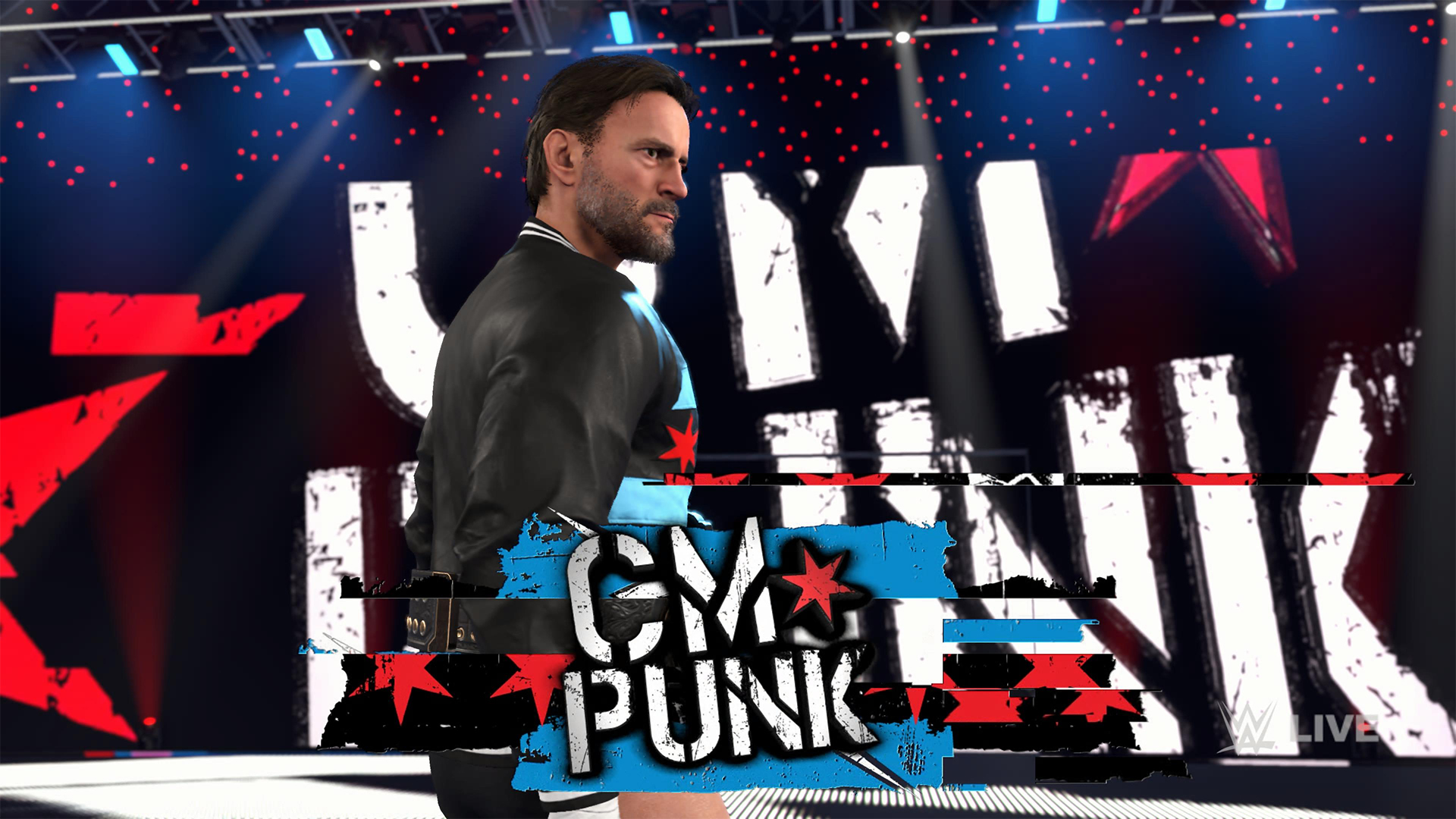
WWE 2K26 is a Swipe Left if you didn’t love last year’s game anyway. The game doesn’t add anything that might change your mind.
However, it’s a Swipe Right if you missed the pure joy of creating dream matches. The game’s massive roster allows for so many impossible matchups to happen, even if only in the digital realm. Just get ready to grind for a long time.
Gaming
God of War: Sons of Sparta takes a more contained approach to Kratos
Filipino devs were part of it.

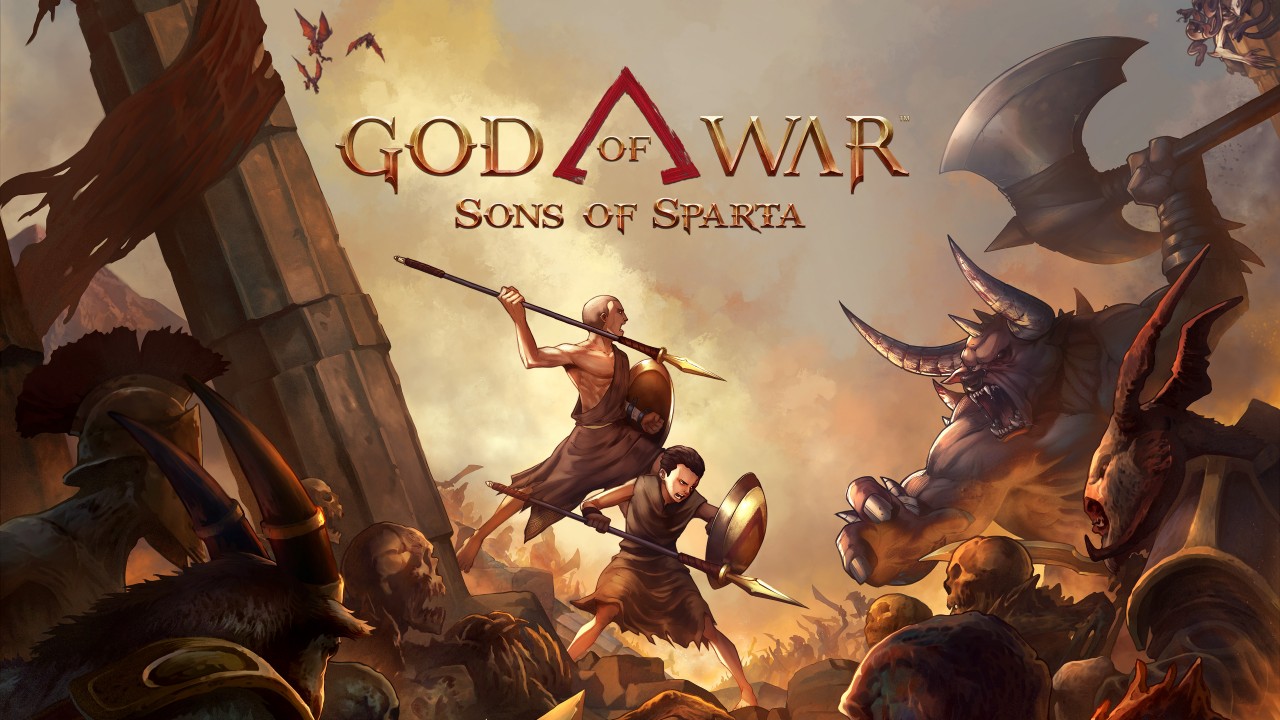
There’s a version of God of War that lives in most people’s heads. It’s loud. Cinematic. Heavy with consequence. The kind of game that feels bigger than you.
God of War: Sons of Sparta isn’t that. At least, not in the way you expect.
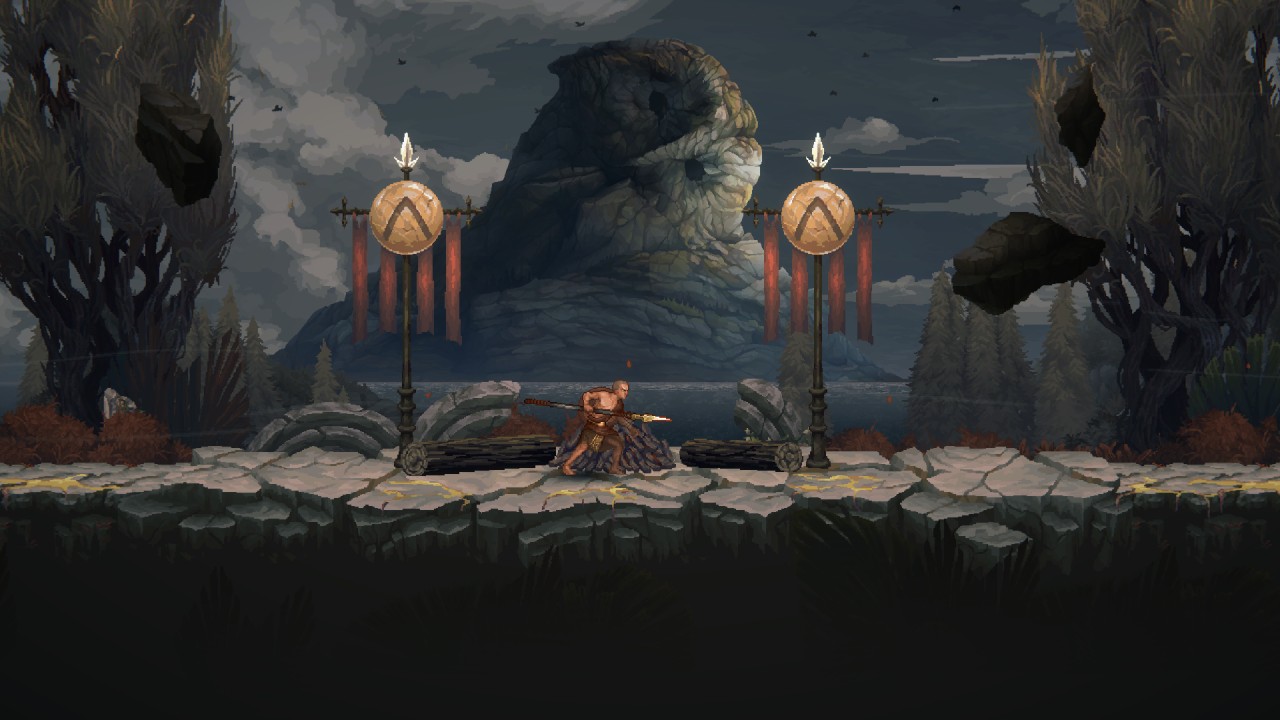
It’s more contained. 2D. Pixel art. But spend a little time with it, and you start to see what it’s trying to do. Not replace the modern games. Not outdo them.
Just… revisit something familiar from a different angle.
A different take on Kratos
Instead of gods and world-ending stakes, Sons of Sparta focuses on Kratos earlier in his life, training as a Spartan alongside Deimos. It’s more contained. More personal.
You’re still fighting through brutal encounters. But the framing feels different. Less about destiny, more about who Kratos was before everything spiraled. And somehow, even in pixel form, it still feels like God of War.
Where Filipino developers come in
One of the more interesting parts of this project is how it came together.
Mega Cat Studios worked closely with Santa Monica Studio to build the game. That includes a strong presence from their Philippine team.
But it’s not framed as a separate unit.
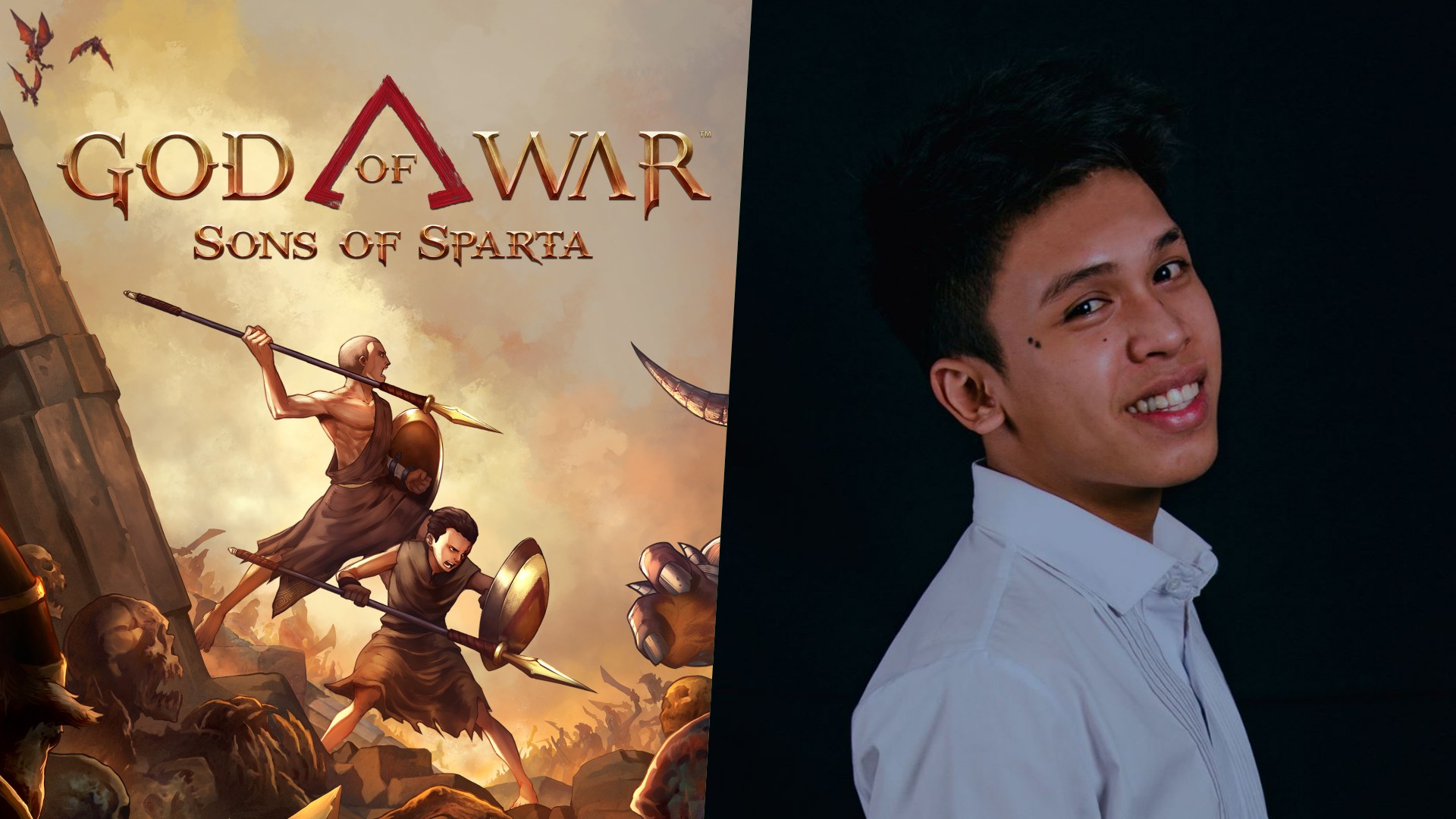
“There is no separation between Mega Cat Pittsburgh and Mega Cat Philippines,” says Art Director Janley Clavio.
“We operate as one phalanx, and were part of the game from the beginning.”
That last part shifts the narrative from “support work” to actual collaboration.
The kind of work you feel more than you see
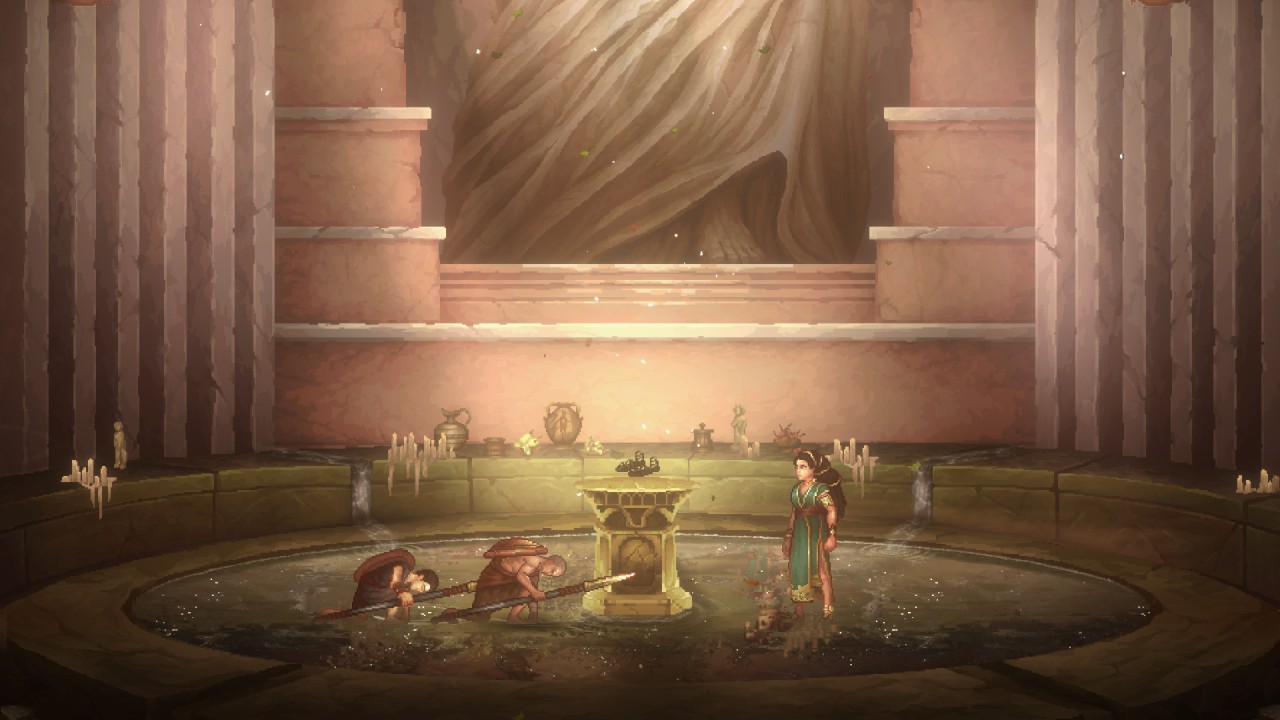
The team contributed to environment art, asset production, and overall polish across different areas of the game. Not the flashy headline stuff. But the kind that shapes how the game feels moment to moment.
“Our work supports the player experience without pulling attention away from the story,” Clavio explains.
Think temple interiors and ruined battlefields. Small details that hint at what happened in a place before you got there. It’s subtle. But it adds up.
Staying true to God of War—even in 2D
Working on God of War comes with a certain weight. Fans know how this world is supposed to look and feel. So, even if Sons of Sparta shifts genres, the expectation doesn’t really change.
“We had to make sure it wasn’t just any retro pixel art game—it had to be a God of War pixel art game,” Clavio says.
That meant studying the details. How materials look. How lighting behaves. How environments guide you. And then translating all of that into something simpler—but still recognizable.
A team that knows when to hold back
One thing that stands out from the conversation is restraint. There’s an understanding that when you’re working on something like God of War, you don’t need to reinvent everything. You just need to get it right.
“When you’re working on something fans already love, your job is to enhance it—not reinvent it.”
That mindset shows up across the game. It respects what came before, but still finds space to do its own thing.
Small details, personal touches
There are also a few quiet nods tucked into the game. Nothing too obvious. Nothing that breaks immersion. But enough for the team to leave their mark.
“For our Filipino artists, it’s a point of pride knowing that a little piece of our culture helped shape a world millions of players will explore.”
It’s not something the game calls attention to. But it’s there.
Not just another spin-off
Sons of Sparta is easy to label as a side project. And sure, it kind of is.
But it’s also a good example of what happens when different teams come together with a clear understanding of what they’re building.
A more contained God of War game that still feels like it belongs. A different perspective on a familiar story. And a project where Filipino developers weren’t just involved. They were part of the process from the start.
It doesn’t try to be the biggest entry in the series. And honestly, it doesn’t need to be.
Gaming
SHINOBI: Art of Vengeance’s SEGA Villains Stage out on April 3
Face off against legendary SEGA bosses from different franchises

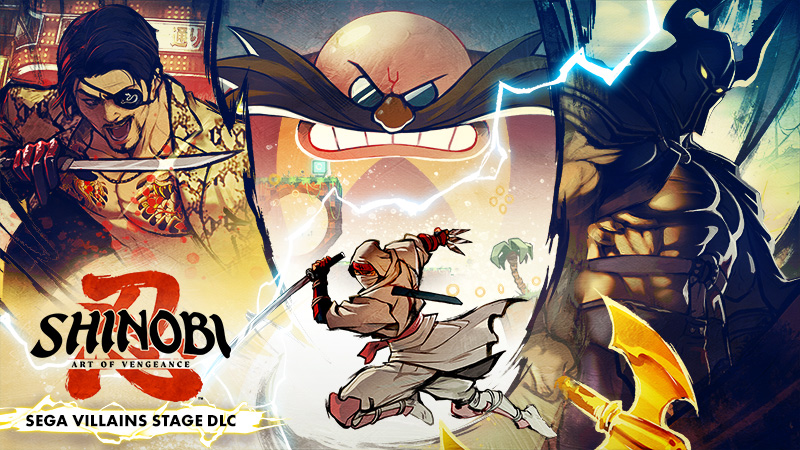
The SEGA Villains Stage DLC for SHINOBI: Art of Vengeance will release on April 3 for PlayStation 4 and 5, Xbox Series X|S, XBox One, Nintendo Switch, and Steam.
The DLC lets players face off against legendary SEGA bosses from different franchises: Like a Dragon and Yakuza, Golden Axe, and Sonic.
An animated trailer has been unveiled as part of the announcement. It features those franchises’ characters, Goro Majima, Death Adder, and Dr. Eggman.
There will be a total of five crossover stages, three bosses, and two Boss Rush modes featuring the bosses for the DLC.
In addition, there will be three more Ninpo, three new outfits, and six new music tracks. The SEGA Villains Stage DLC is a free update for all players.
Aside from the crossover, players can also try out a new Hardcore Mode which features changes in enemy placement and stronger boss attacks.
Additional combat settings also lets players adjust recovery frames, the flash effect, and camera shake. Various quality-of-life improvements are also planned for the 2D action-platformer.

WWE 2K26 lets you live out all the fantasy matches you could want
But you have to play for hours and hours to unlock everyone.

The HONOR X8d is serviceable
Steady but slow?

POCO X8 Pro Max review: A new beast from the far east
That "Pro Max" naming superlative is more than justified
WWE 2K26 lets you live out all the fantasy matches you could want

Shokz OpenFit Pro launches at Power Mac Center, brings open-ear noise reduction

How the Ford Ranger is powering community resilience

God of War: Sons of Sparta takes a more contained approach to Kratos

Samsung brings AirDrop support to Quick Share with Galaxy S26 series


-
Reviews6 days ago
POCO X8 Pro Max review: A new beast from the far east
-

 News6 days ago
POCO X8 Pro Series: Price, availability in the Philippines
-

 Laptops2 weeks ago
Apple MacBook Neo Review
-
 Apps2 weeks ago
Google Maps is finally getting a 3D mode
-
 Features2 weeks ago
Galaxy AI on the Samsung Galaxy S26 Ultra
-

 Entertainment2 weeks ago
The internet is thirsting over the One Piece Season 2 cast
-
 Automotive2 weeks ago
BYD is reportedly considering an F1 team
-
 Gaming2 weeks ago
Resident Evil Requiem will get a story expansion