

“Unbelievable sights, Indescribable feeling.”
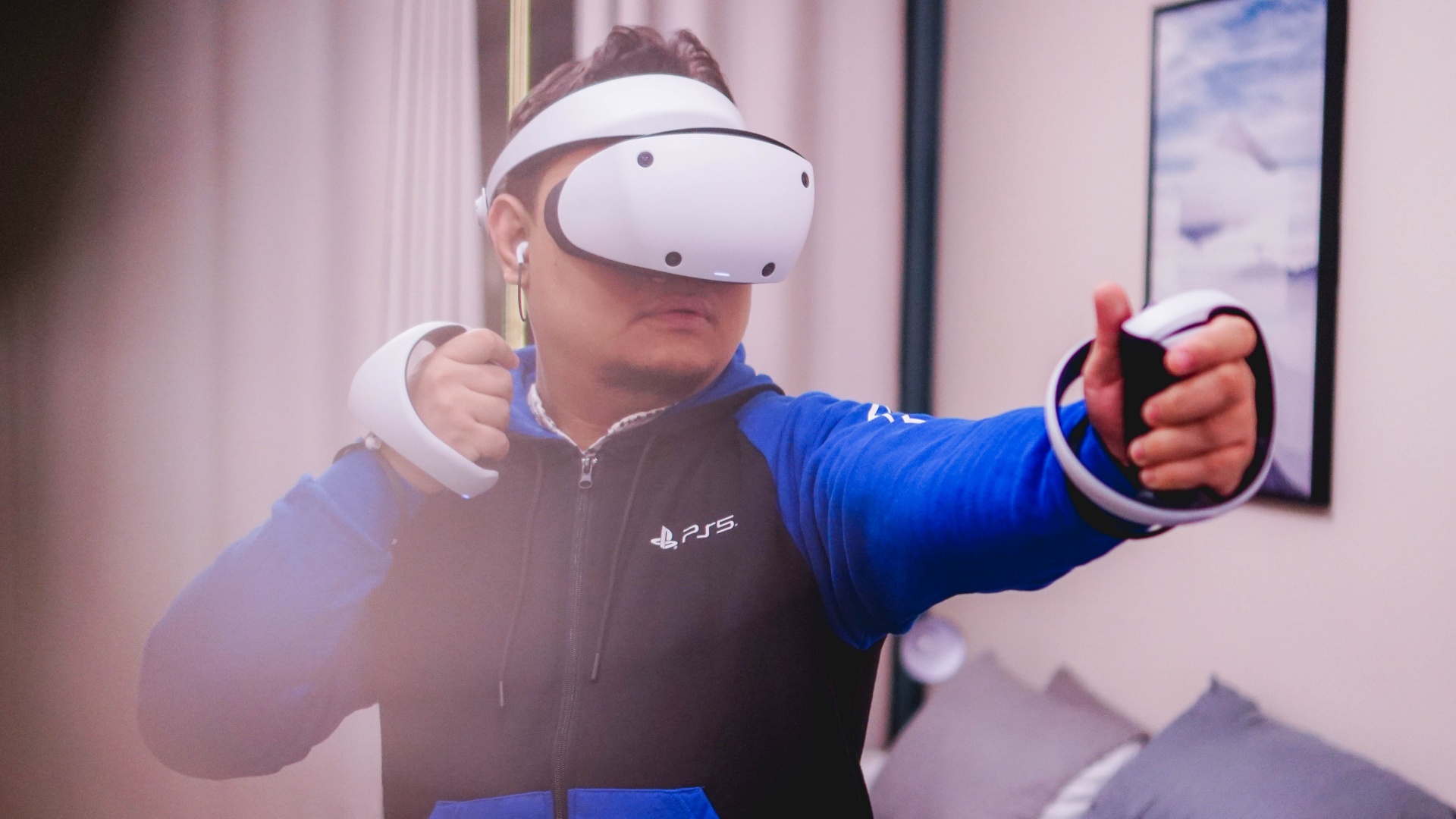
Yes, these are lines lifted from the Aladdin song A Whole New World. To a certain extent, that’s what diving into VR or virtual reality feels like. And the PSVR 2 feels a lot like that – entering a whole new world and feeling almost completely transported.

Before we dive into the whole experience of it all. Let’s first take a quick look at the hardware.
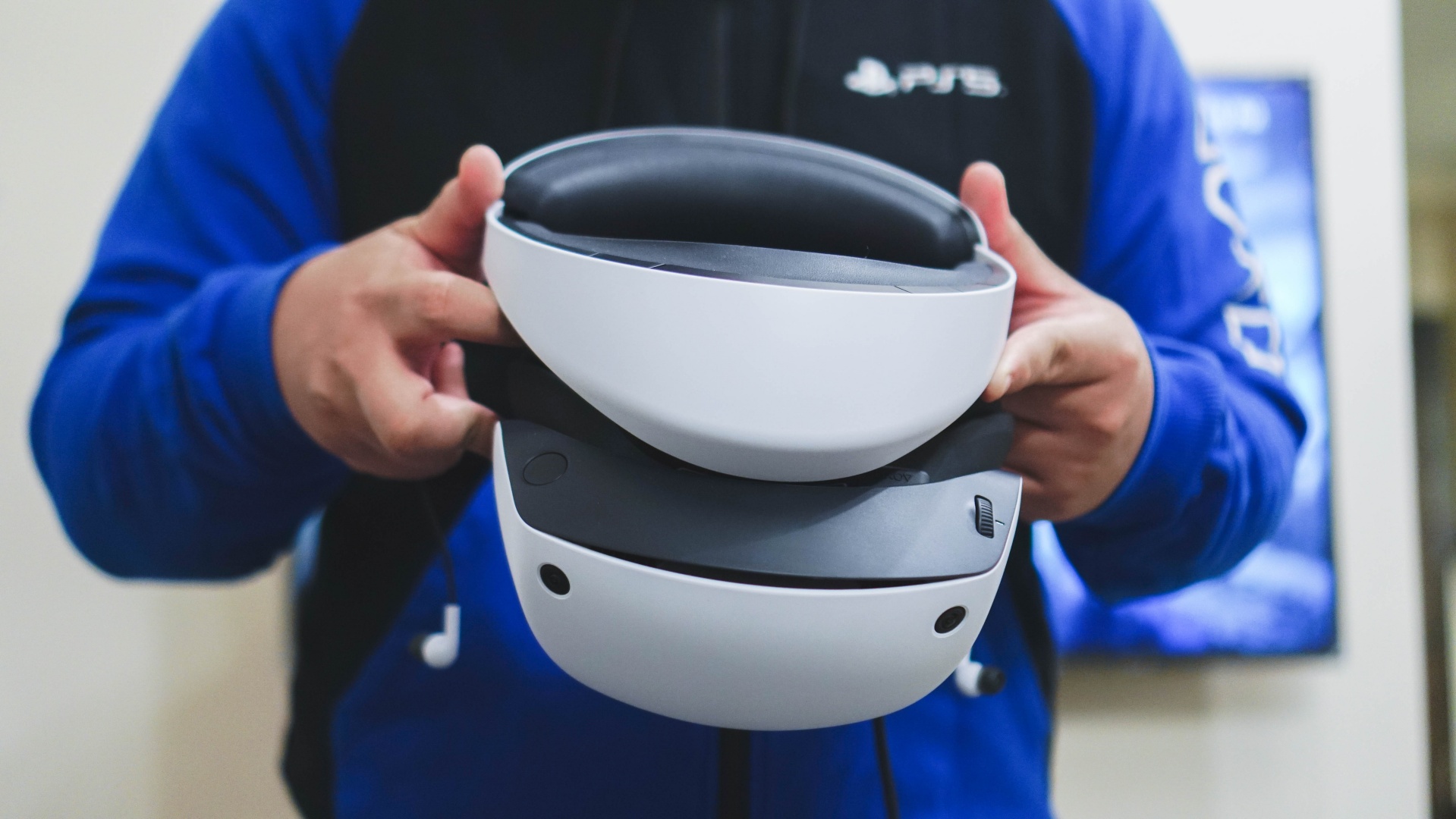
This is the PSVR 2 Headset.
Using this space to thank Sony PlayStation Asia for providing the PSVR 2 unit and game codes for this review.
Right under the headset, you’ll find these three buttons.

The one in the middle is the power button, while the other two are the function buttons. You’ll use the button on the left in this image more to reset the orientation of what you see in the headset when necessary.
When worn, that function button is on the right side.

Clicking this also gives you access to passthrough mode. It lets you see your surroundings in black and white through the headsets lenses.
On the top right of the headset is the button to loosen/tighten the headset.

You can adjust it any time before and during playing. Naturally, you should first pause whatever game you’re playing.
At the back of the headset is this button, also for loosening/tightening.

Both the button and the dial around it share the same function.

The dial offers a more precise tightening once you have the headset comfortably placed on your head.
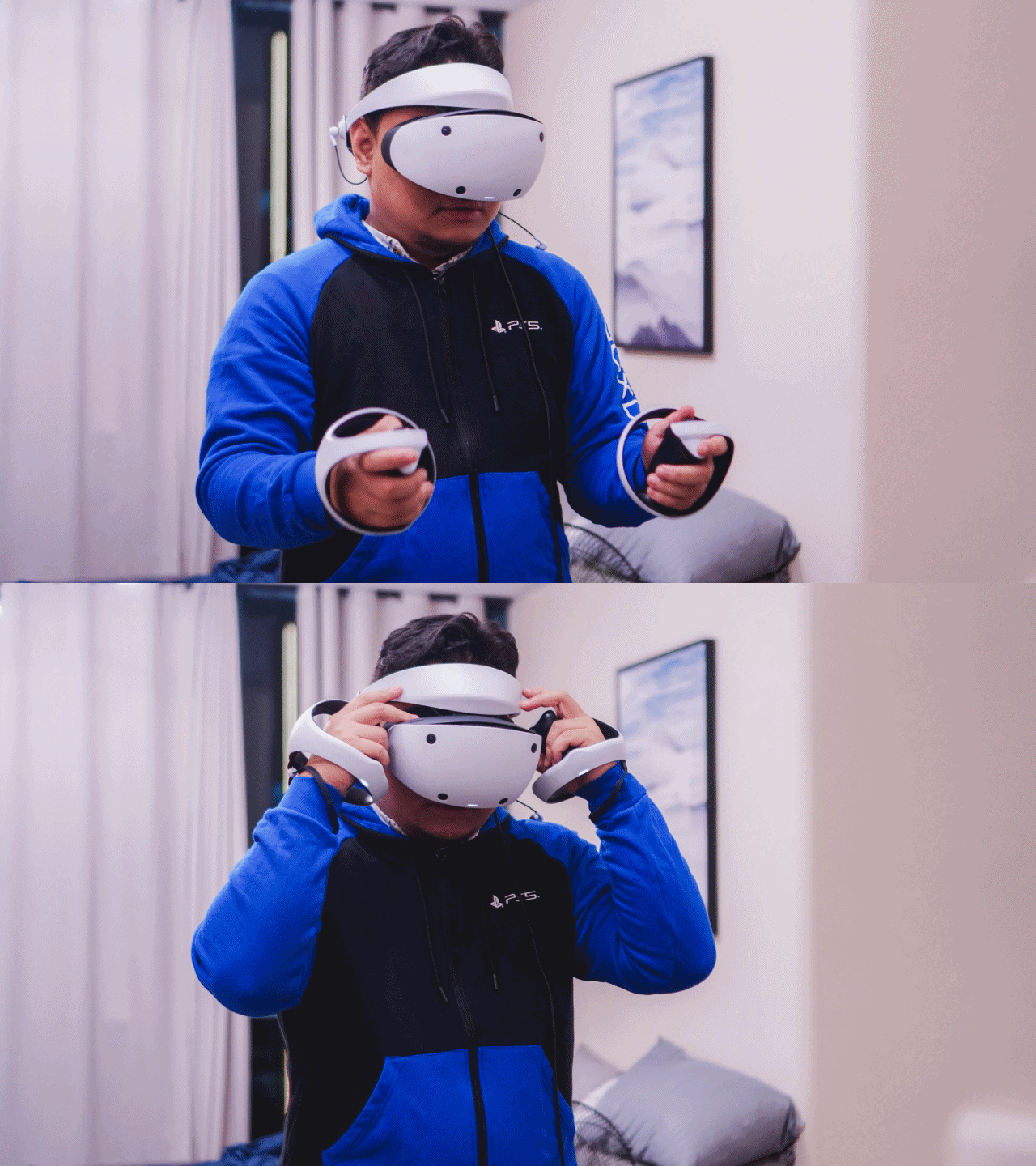
On the top left is another dial. This one’s for aligning the lenses to your eyes.
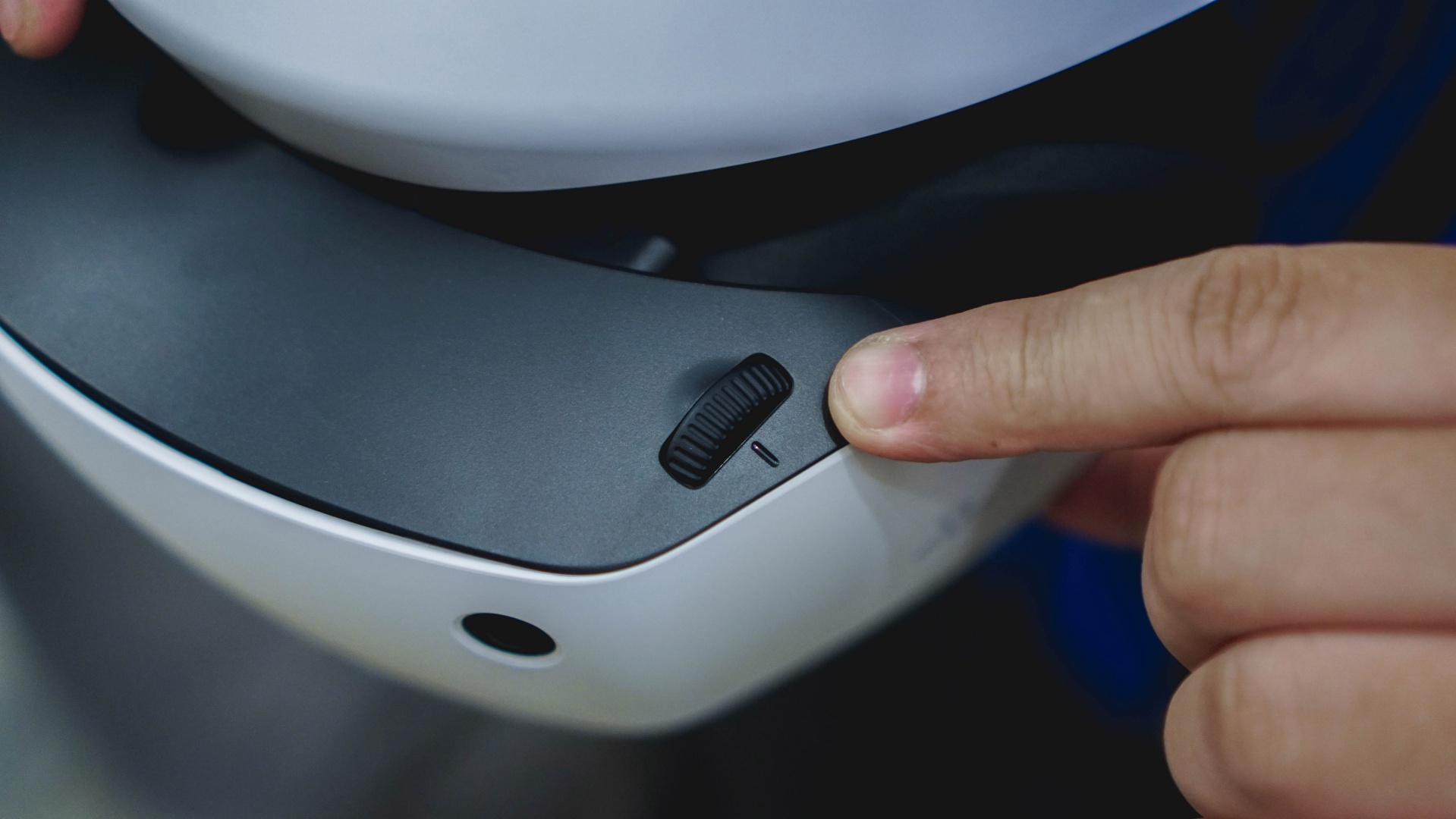
Here’s what the lenses inside look like.
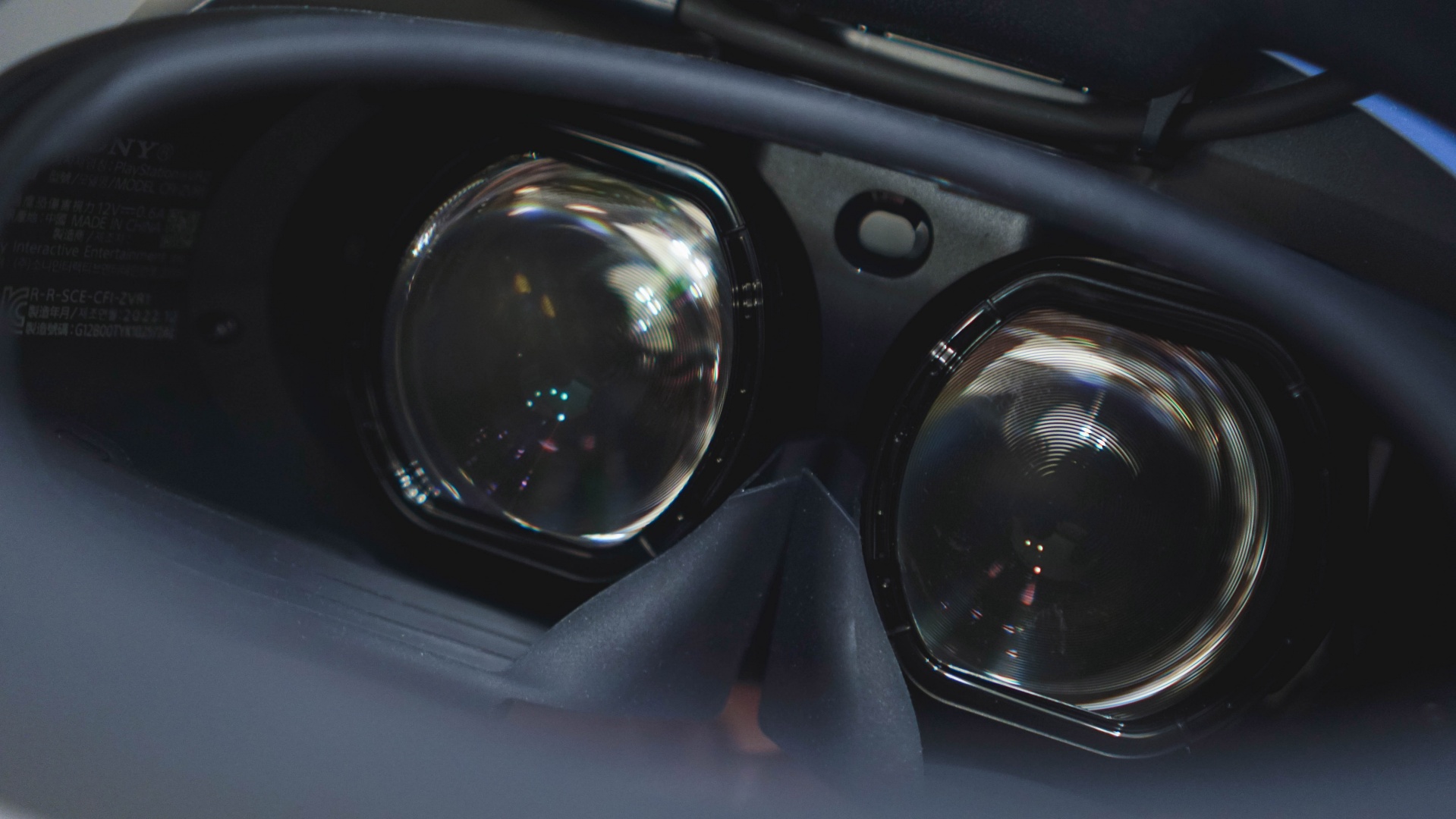
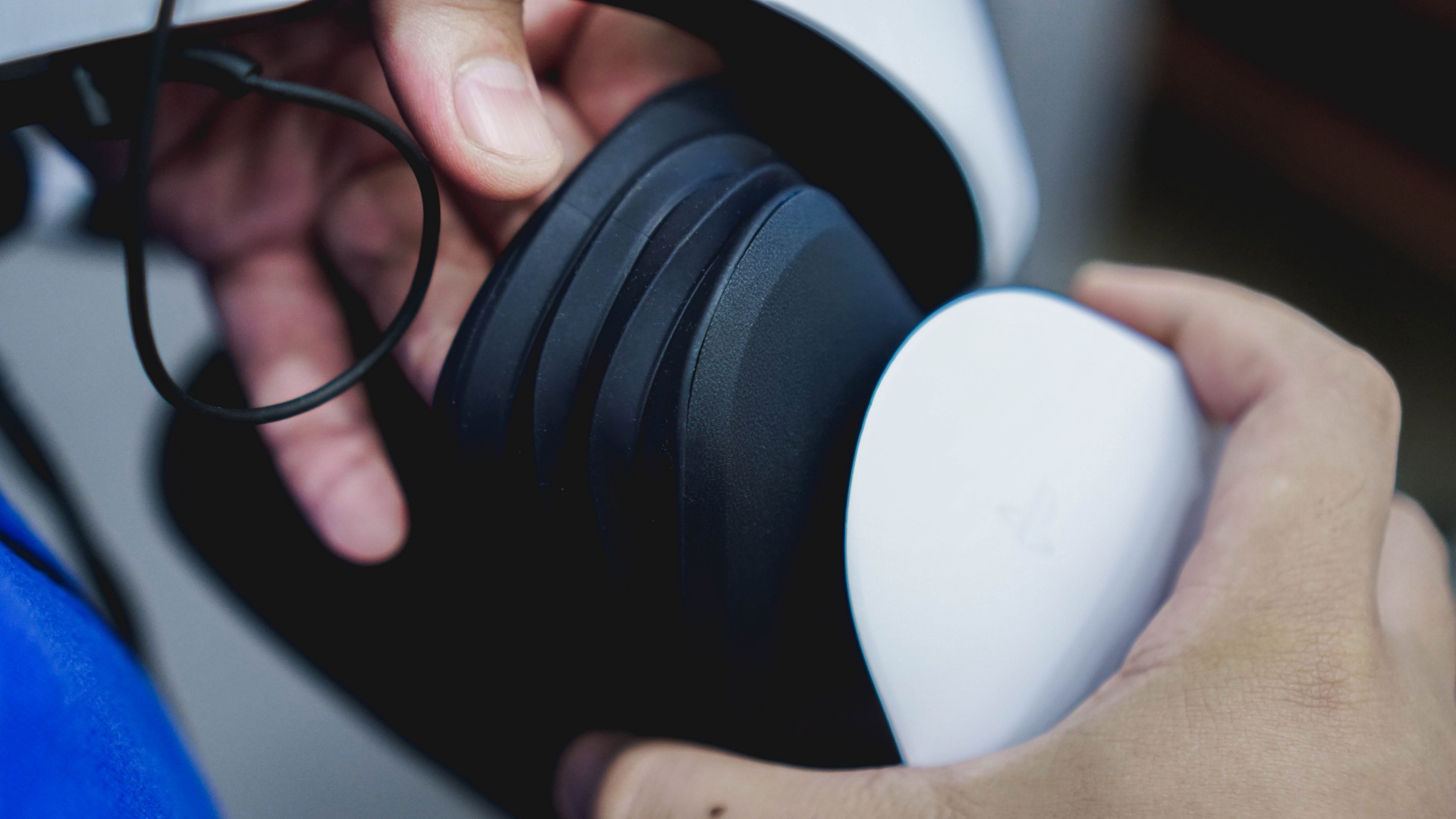
Surrounding the lens is an accordion-like flap that helps keep the lights out.
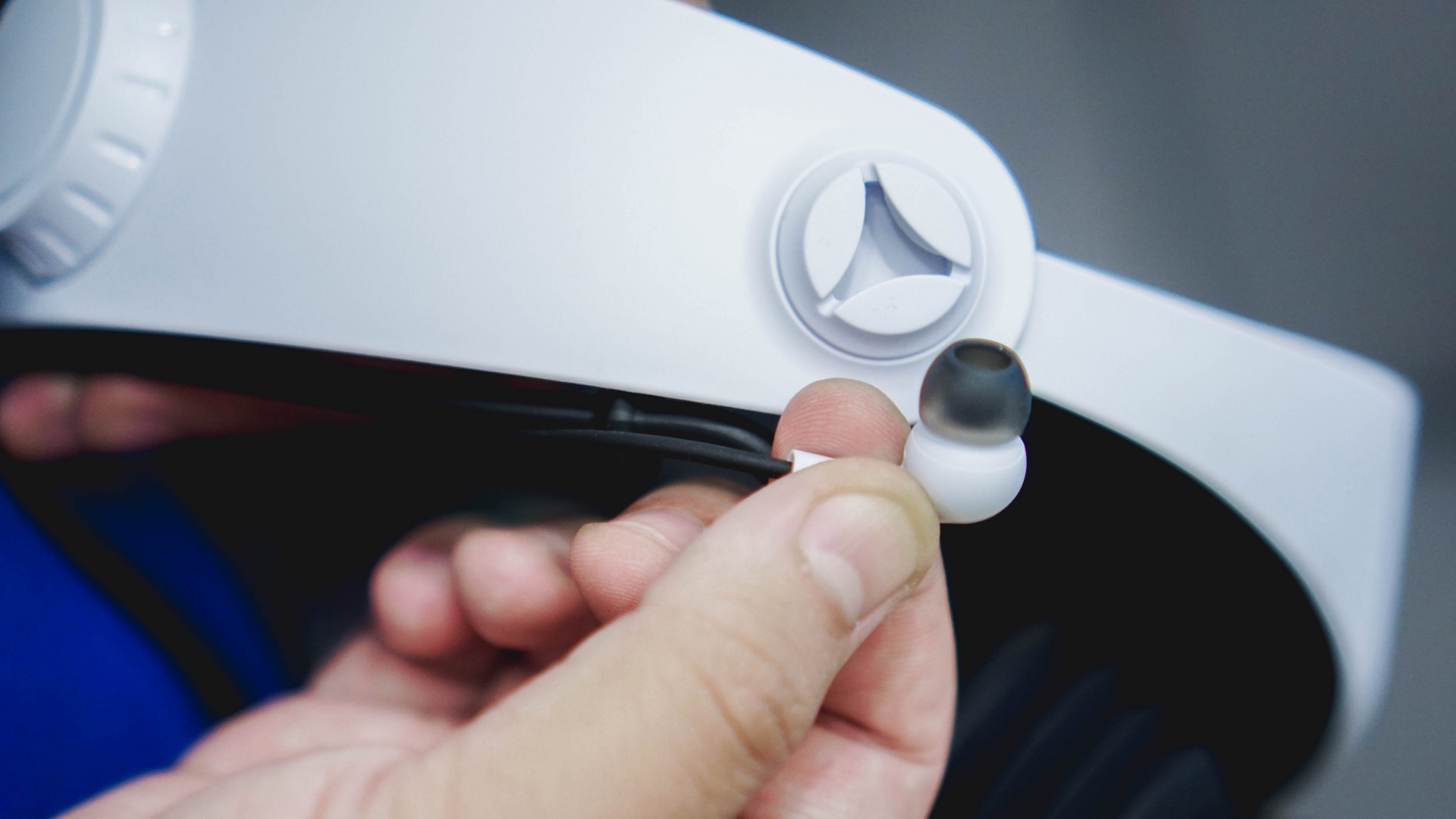
On the side, there’s a slot where you can park the included earbuds.
Controllers
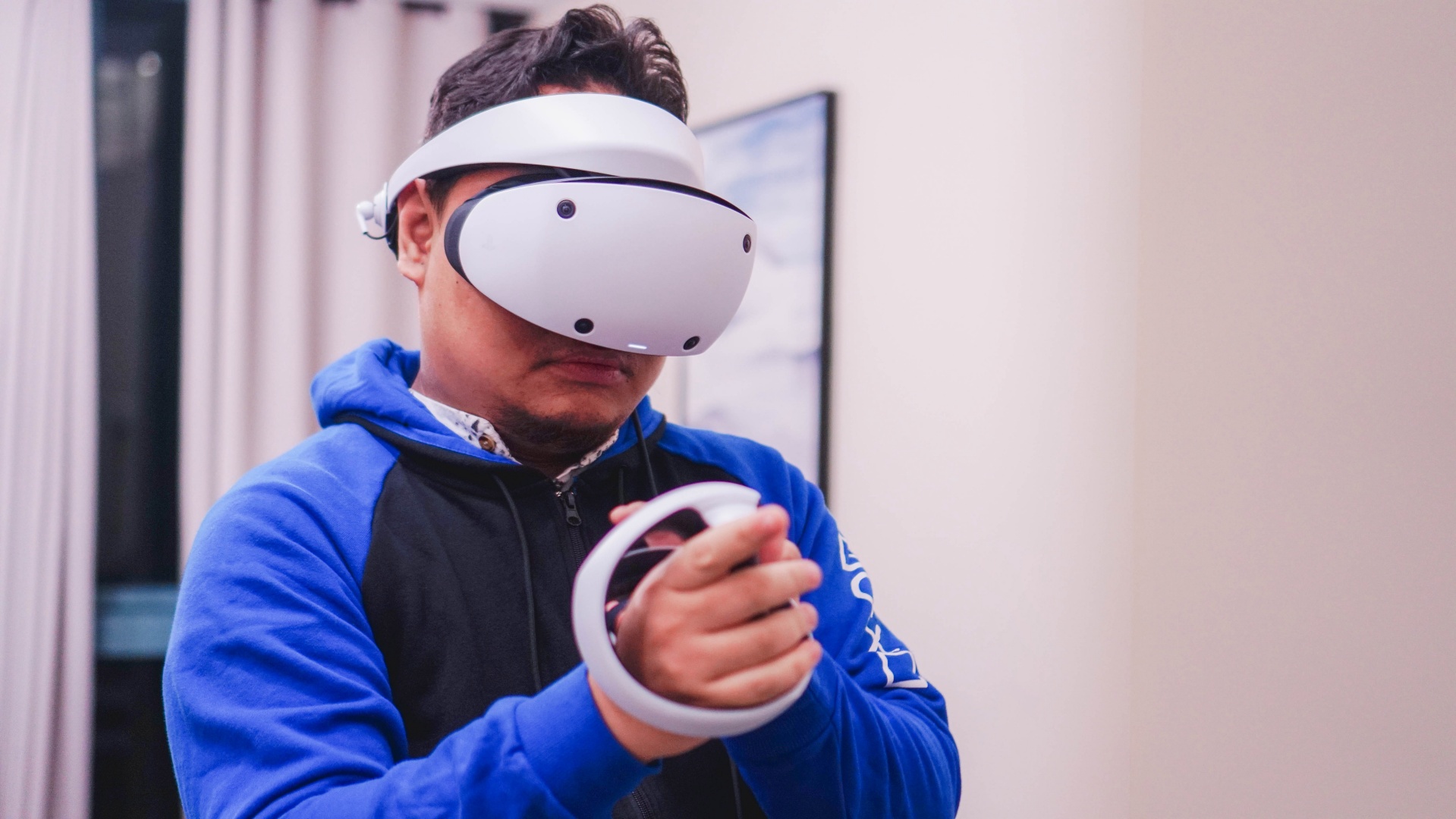
The controllers have this cord to keep them secure.

This is the left hand controller.

It has the triangle and square buttons along with a PS button and the Share button.
This is the right hand controller.

It has the circle and ‘X’ or ‘cross’ buttons along with the function/start button and also a PS button.
The shoulder buttons (R2 and L2) are up top, in white.

While the R1 and L1 buttons are closer to the grip, in black.
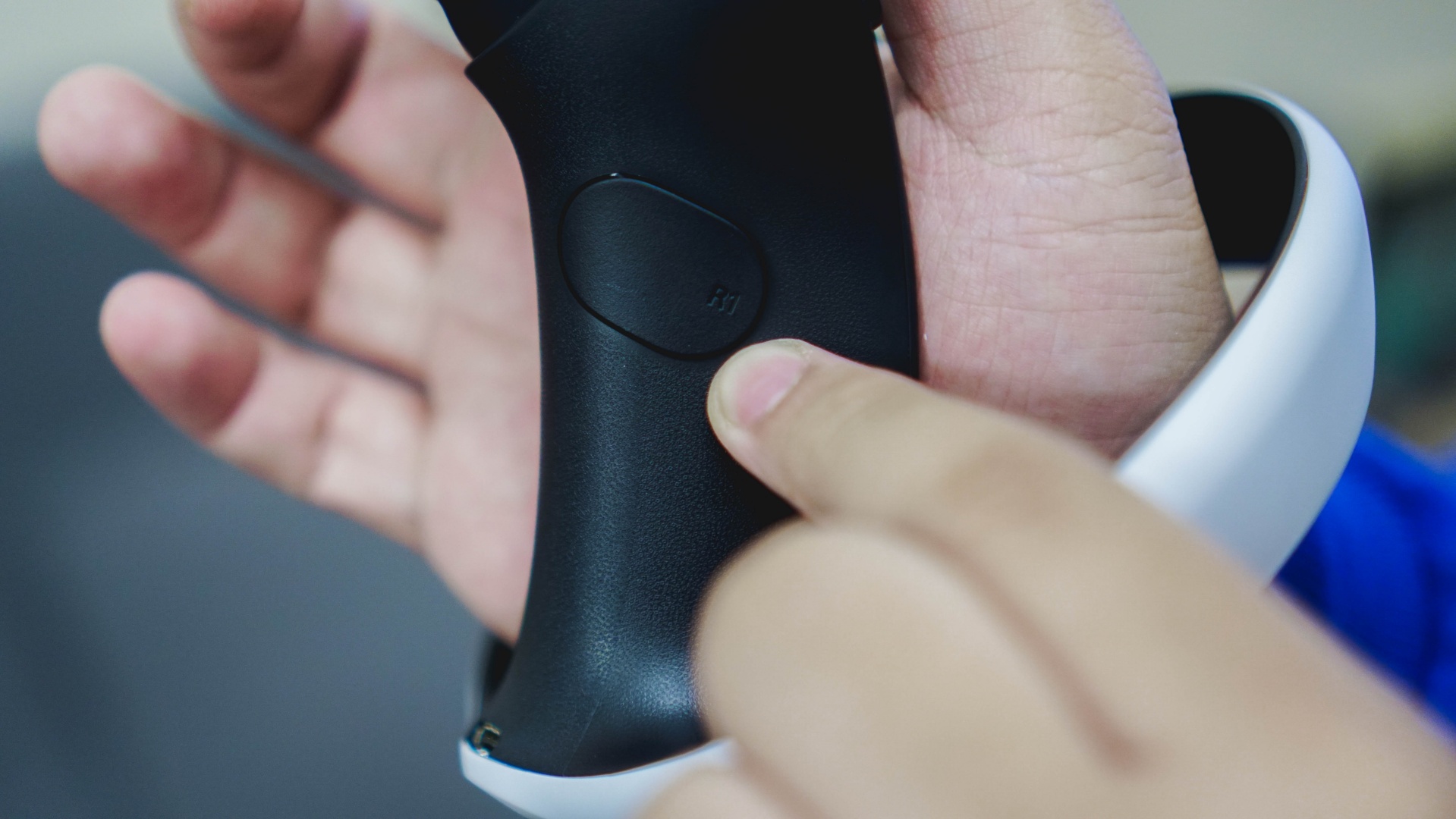
The USB-C port to charge the controllers are on the lower back part.

Set-up

Setting up is quite easy. You only need to follow the instructions on-screen. The general calibration only happens once. However, you can re-adjust your play space every time through the settings.
PlayStation recommends the following space requirements when playing:
- Roomscale – minimum play space of 2m × 2m (6 ft 7 in × 6 ft 7 in)
- Sitting – minimum play space of 1m × 1m (3 ft 4 in × 3 ft 4 in)
- Standing – minimum play space of 1m × 1m (3 ft 4 in × 3 ft 4 in)

It doesn’t have to be a perfect square, but you just have to make sure there are no obstructions that can cause any undue accidents while you’re playing.
You’ll get plenty of prompts guiding you through the whole process.
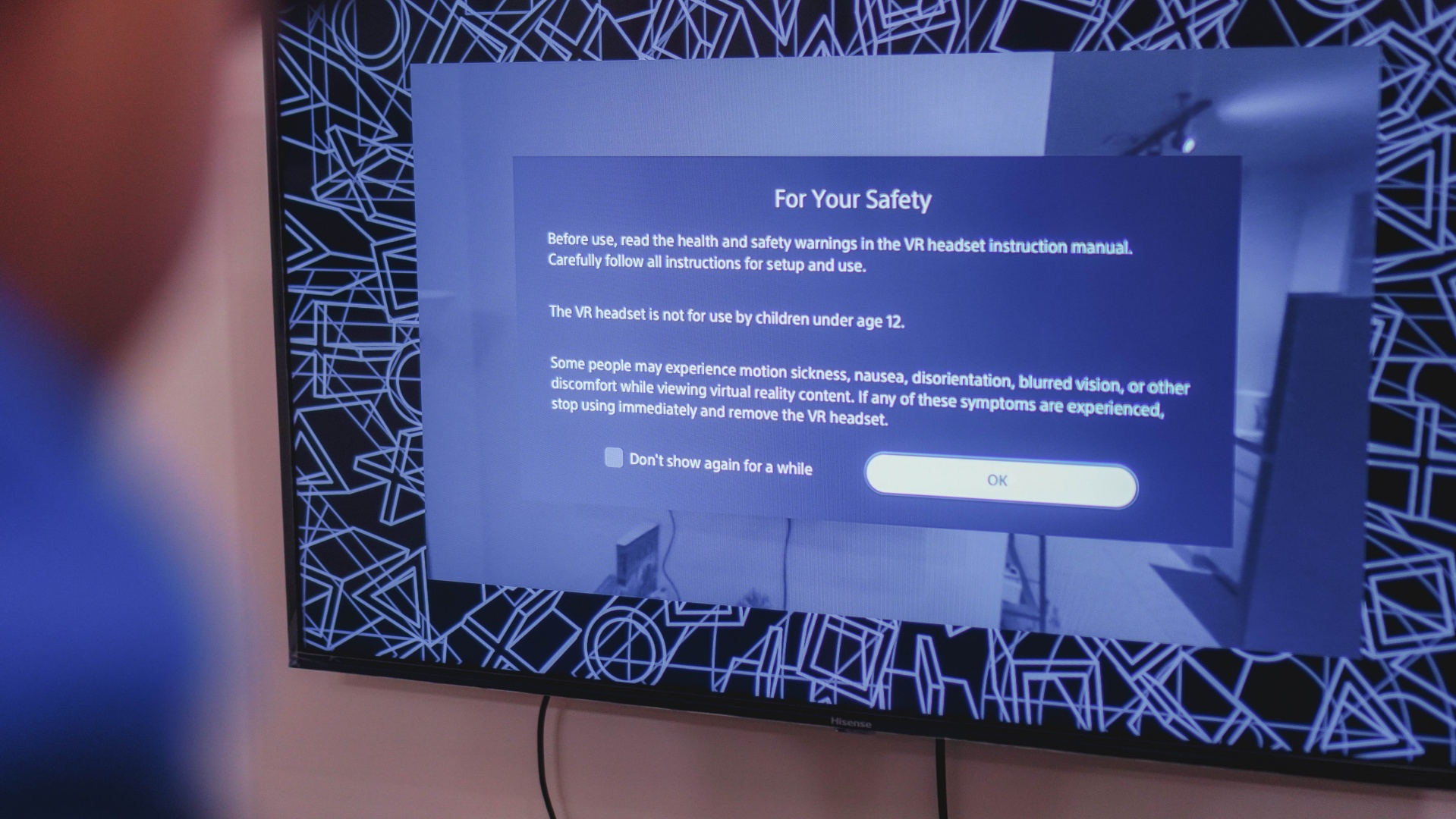
It’s pretty painless and the PSVR 2 “holds your hand” the entire time. ‘VRgins’ should have little to no trouble setting it up.
‘With new Horizons to pursue’

Horizon Call of the Mountain
The flagship game that came along with the PSVR 2 is Horizon Call of the Mountain. It’s based on the Horizon franchise with Aloy as its main character. However, in Call of the Mountain, you play not as Aloy but as Ryas.
Ryas is a disgraced former soldier. In the game, you’ll journey the towering peaks of the Carja Sundom and unravel a new mystery surrounding the machines to redeem yourself and save your people.

Horizon Call of the Mountain does for the PSVR 2 what Ratchet & Clank: Rift Apart did for the PS5. The game is a great showcase of what the PSVR 2 can do. You’ll get thrown into the breathtaking world of Horizon, seeing landscapes that you can stare at for hours and encountering mechanical beasts that give you a sense of wonder.
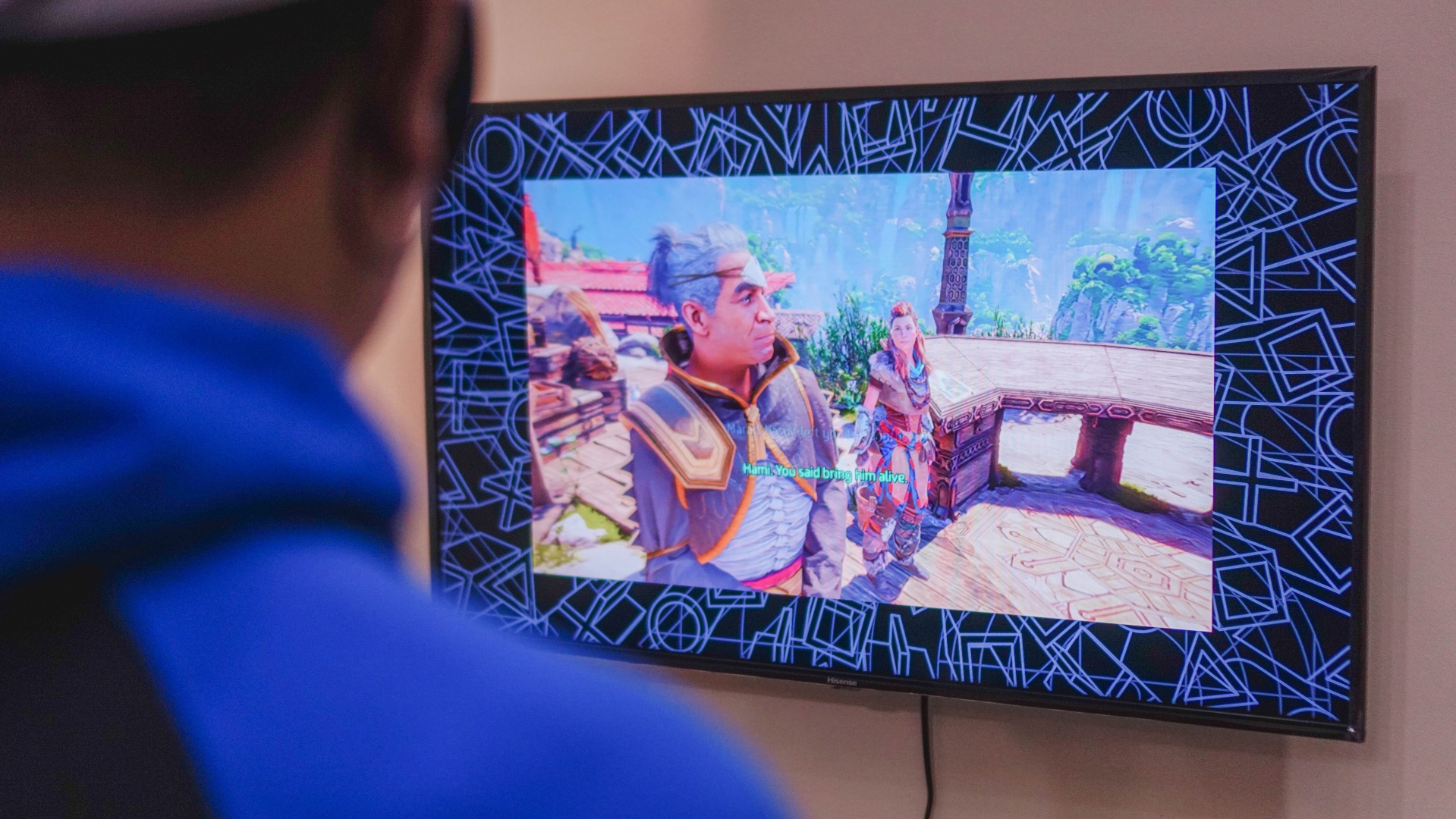
The eye tracking feature is phenomenal. Going through the menu just by looking took some getting used to but it was great to experience. The game itself also encourages movement. This isn’t always the case with the few other VR games I tried.
To get a more expansive view of both the PSVR 2 and Horizon Call of the Mountain, I asked a couple of VRgins to also play.
‘It allowed me to use my motor skills’ – MJ
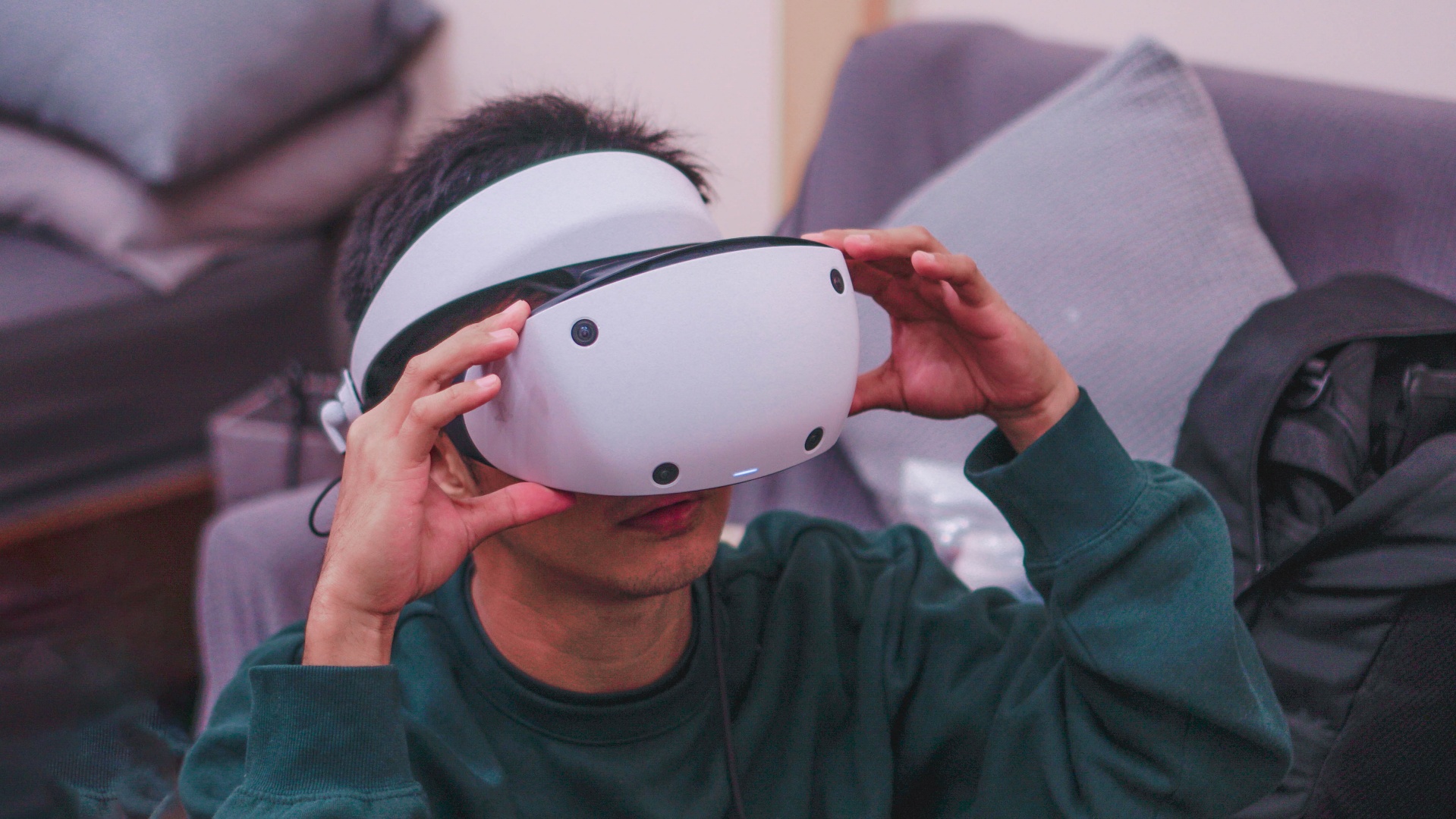
My foray into playing games through VR headsets stems back from my previous coverage at international tech shows. I didn’t have the chance to maximize the devices I’ve tried which is why the PSVR2 — when we got our hands on it — got me thrilled.
Playing Horizon Call of the Mountain on the PSVR2 felt magical. The gameplay was immersive, it seemed like I was in an entirely different world. The graphics and visual effects, which are already phenomenal, looked surreal.
What I loved the most about the action role-playing game is how it allowed me to use my motor skills. As an athlete, I’m used to throwing spears in my Spartan races so aiming and doing Archery inside the game came naturally to me.

It felt easier, thanks to my athletic abilities. However, if I played Horizon Forbidden West using a gaming console, I might struggle a bit in aiming and shooting since my fingers aren’t trained into playing games unlike a few years ago. (Total gaming nerd here from a few lifetimes ago!)
Somehow, the PSVR2 helped in connecting my athletic skills together with my gaming knowledge to provide an alluring and stellar experience. I’d probably do it again, perhaps, when playing Just Dance.
‘I love how I can explore the world of this game’ – Vincenz
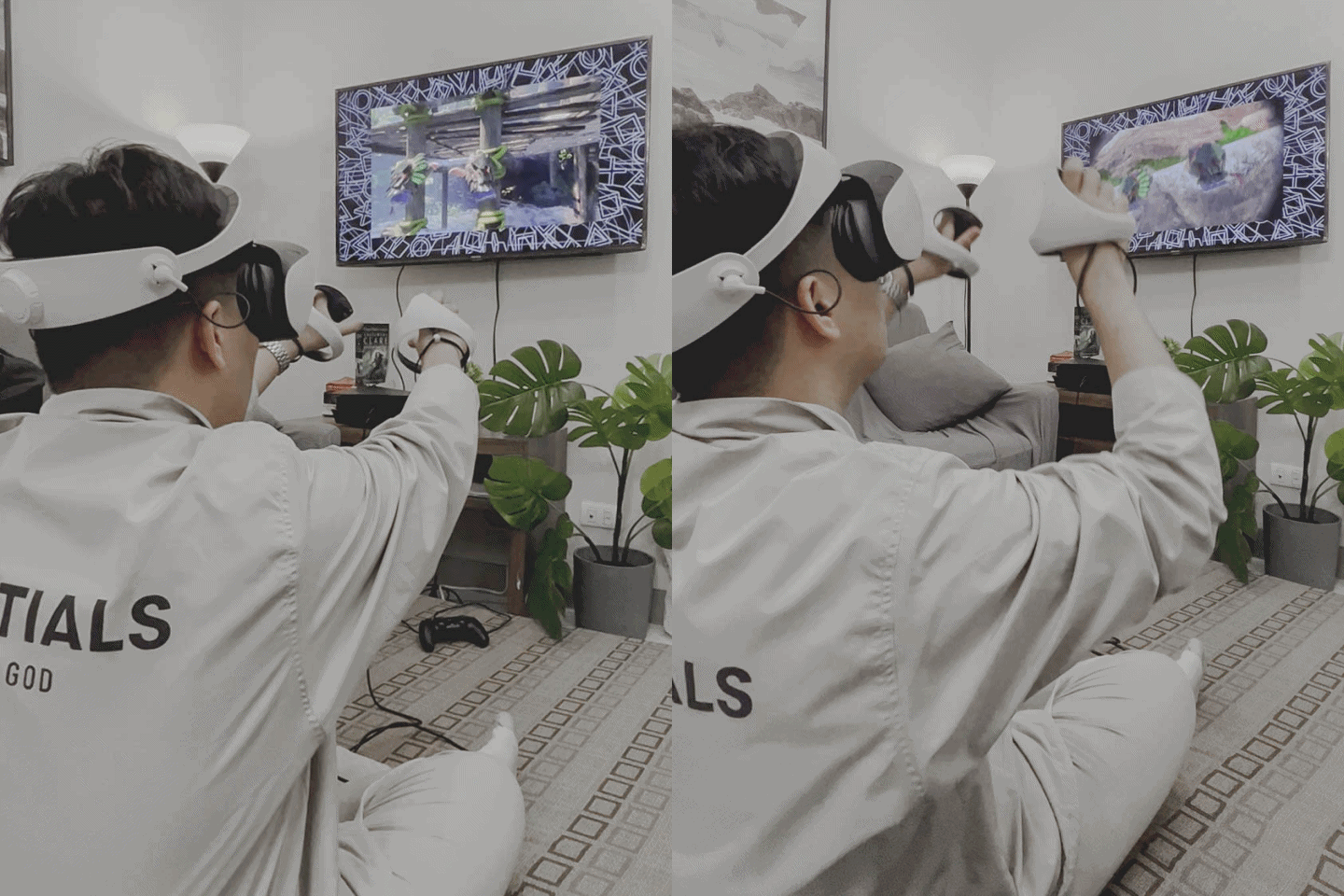
When I played the VR2-exclusive Horizon Call of the Mountain, I felt foolish at first.
I had to do all sorts of motions and gestures when climbing rocks, mountains, stairs, unlocking dusty and rusty doors, and most of all, using arrows to kill those robotic dinosaurs. Using the PSVR 2 controller is a steeper learning curve than using the regular Dual Sense controllers.
Being a real sucker for “open-world” games, I love how I can explore Horizon Call of the Mountain’s world, stop whenever I needed to, and just look at the majestic views of the luscious tropical rainforests along with falls, rivers, and even those high mountain alps.
Overall, as a first-timer, my mind was blown.
‘Over, sideways, and under’ — Gran Turismo 7 on VR
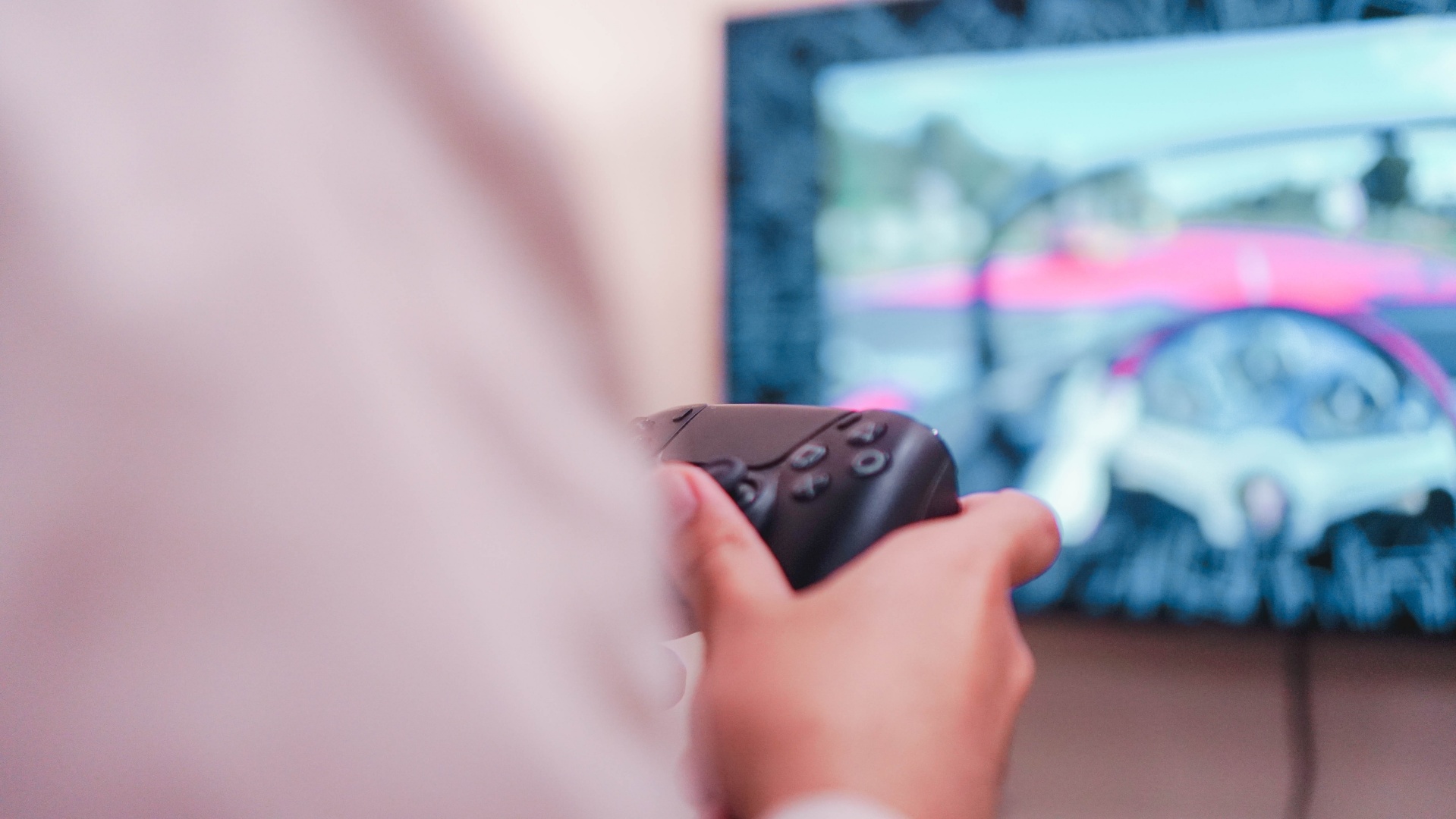
We also played Gran Turismo 7 on VR. Unfortunately, we didn’t have an actual steering wheel-like controller. So, while the visuals were impressive, the experience still felt antiquated having used only the DualSense Controller.
Why the DualSense? This was actually a hiccup that we haven’t figured out as of writing. The PSVR 2 controllers just stopped working once we fired up GT7. Hence why we were forced to use the DualSense.
Personally, I’m terrible at driving (both in real life and virtually), but I still found enjoyment in the VR version of GT7. If I ever move into a larger living space, I might consider getting one of those steering wheels.

Vincenz also played GT7 and said it felt like it’s more of an open-world game even if most tracks are restricted with barriers. The digital steering wheel is in front of you while tilting your head left or right feels like you’re in a real driving simulator.
He also added that the experience would have been a lot better if we used a racing wheel set like Logitech’s G920/G29 instead of the typical DualSense controller.
A few more PSVR 2 play time observations

It’ll vary for most users, but personally, I couldn’t play for more than an hour on the PSVR 2. During each playthrough, the headset started to weigh on me at around the 45 to 50-minute mark.
It also doesn’t help that my head sweats profusely. Ideally, you should play this in a room with air conditioning.
In case you’re wondering, you can play non-VR titles while wearing the headset. But due to the things mentioned above, I personally don’t recommend it.
The included earphones aren’t bad, but I hope there’s a way to integrate an even more immersive audio experience some time down the line. Adjusting the volume is also a bit cumbersome as you have to step out of the game and dive into settings to do so. Hopefully, PlayStation addresses this in a future software update.
In terms of games, I hope we get more games that involve using motor skills. Also, as noted by my colleagues MJ and Vincenz after playing, we hope to also get more relaxed ones where you can just take your time in exploring a vast, immersive, open-world environment.
Isekai’d

The PSVR 2 is about the closest thing you can get to getting Isekai’d from the comfort of your own home.
For the unfamiliar, Isekai is an anime sub genre where the main character is transported into another world. The arguably most popular example is Sword Art Online which is actually set in a Virtual Reality world accessed through a VR Headset. Not into anime? The closest mainstream examples are probably Alice in Wonderland and The Wizard of Oz.
If done right, the blend of the PSVR 2 hardware and the right kind of game can outright feel magical.
Is the PSVR 2 your GadgetMatch?

As of writing, Horizon Call of the Mountain is easily one of the best games you can play on the PSVR 2. GT7, if paired with a racing wheel set, and Resident Evil Village are close seconds.
That’s not a lot, but that’s a good start. The aforementioned games do enough to showcase what the PSVR 2 can do. But as a recent report from Bloomberg noted, the PSVR 2 isn’t exactly flying off the shelves.
PlayStation is gonna have to do more to get the PSVR 2 in more homes. At US$ 549.99/ PhP 34,790/ SG$ 869, the price is actually competitive relative to other VR options. But it’s still a generally high price, especially for more traditional gamers.
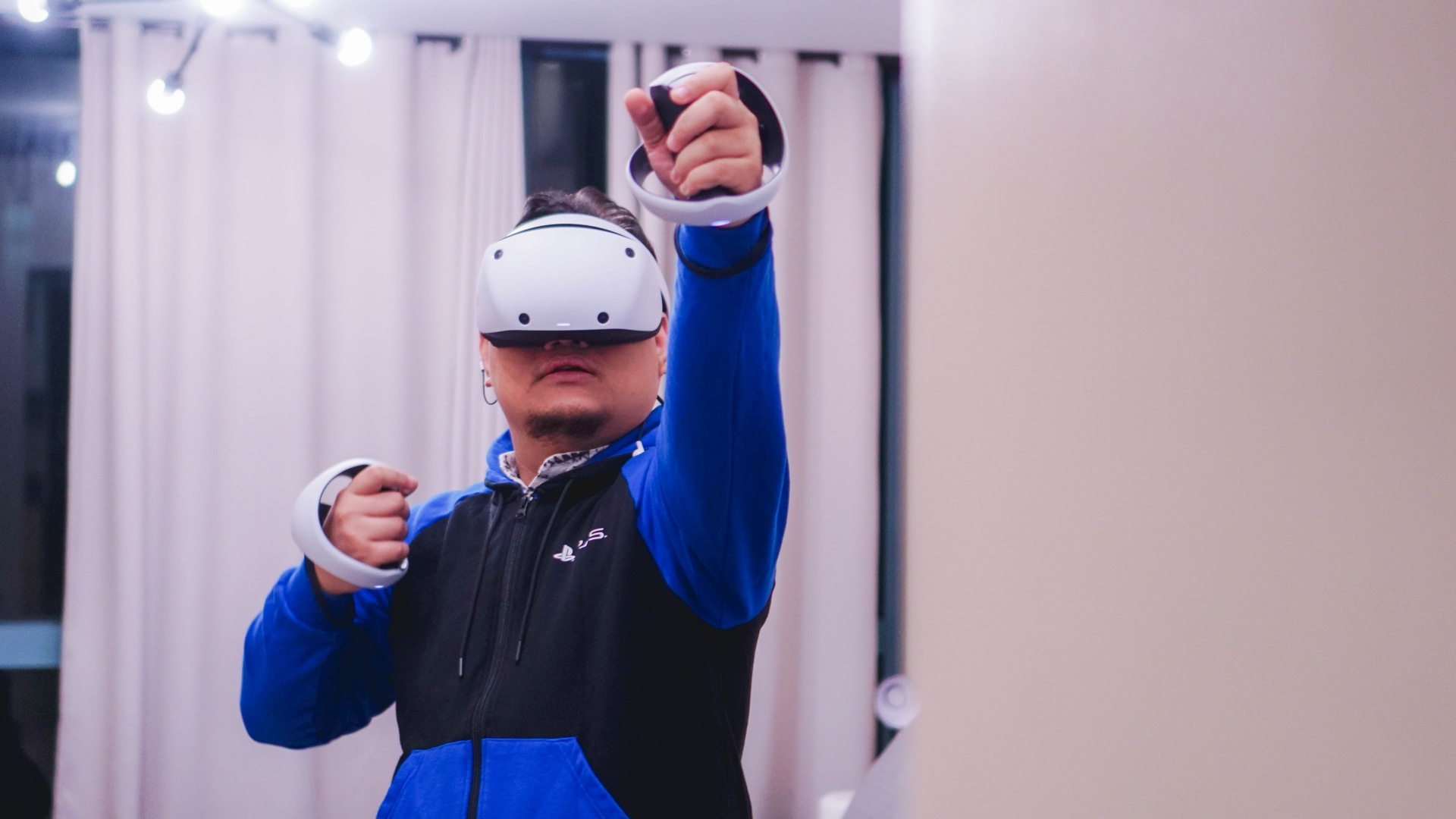
Make no mistake about it, the PSVR 2 is a fantastic VR experience. Set-up is quick and easy, the overall gaming experience is incredible, and there’s a decent selection of games a little over a month into release. However, PlayStation does need either a few more games or a bonafide system seller to get people hooked.
It’s a tough sell, but if you have the interest and the means, this is a hardware worth adding to your gaming collection.





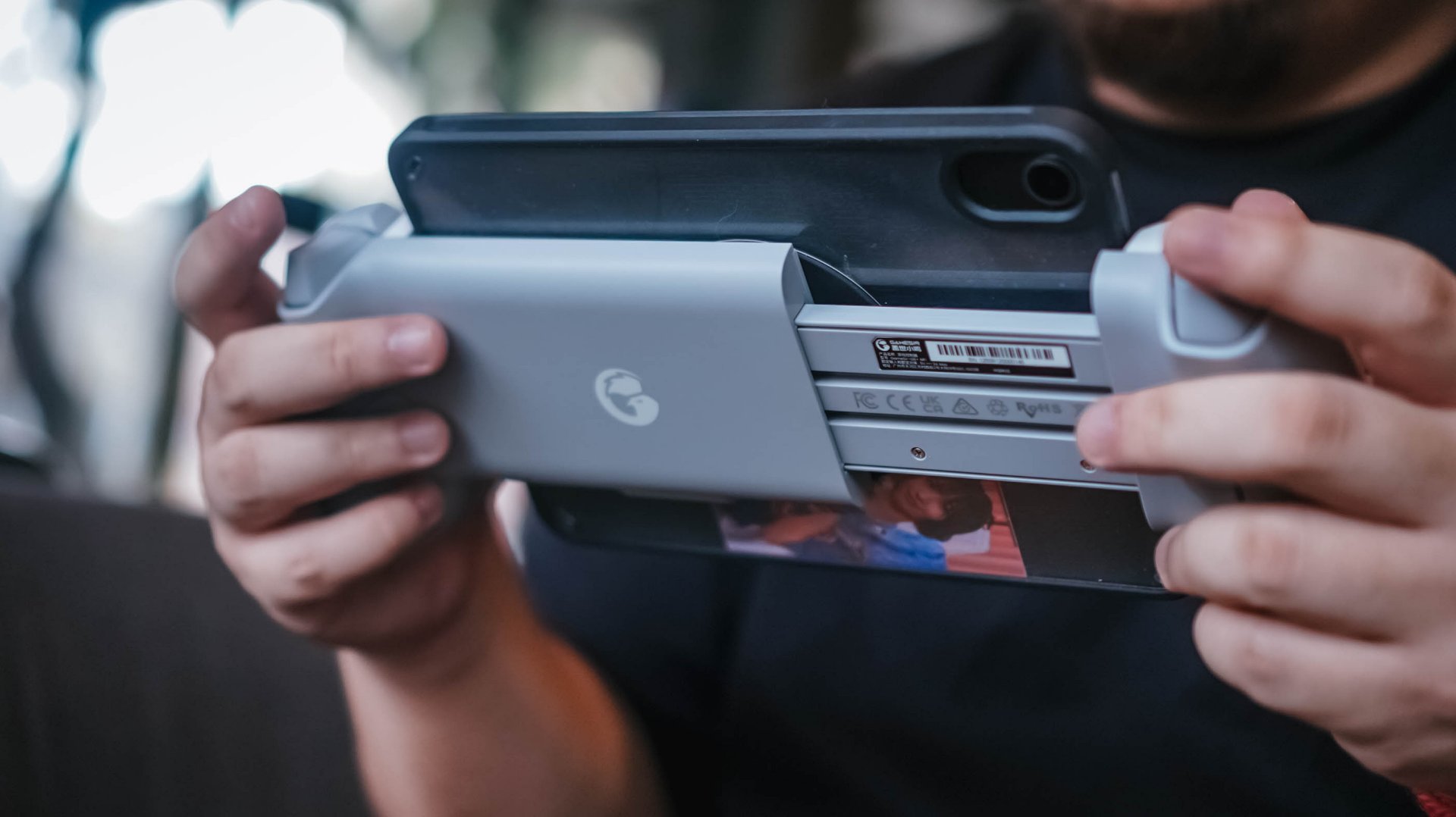
There’s a point where mobile gaming stops feeling like a compromise and starts feeling intentional. For the iPad mini, that moment usually comes when you stop treating it like a stretched-out phone and start using it like the compact gaming console that it can be. The GameSir G8+ MFi is designed precisely for that shift.
Designed like it belongs
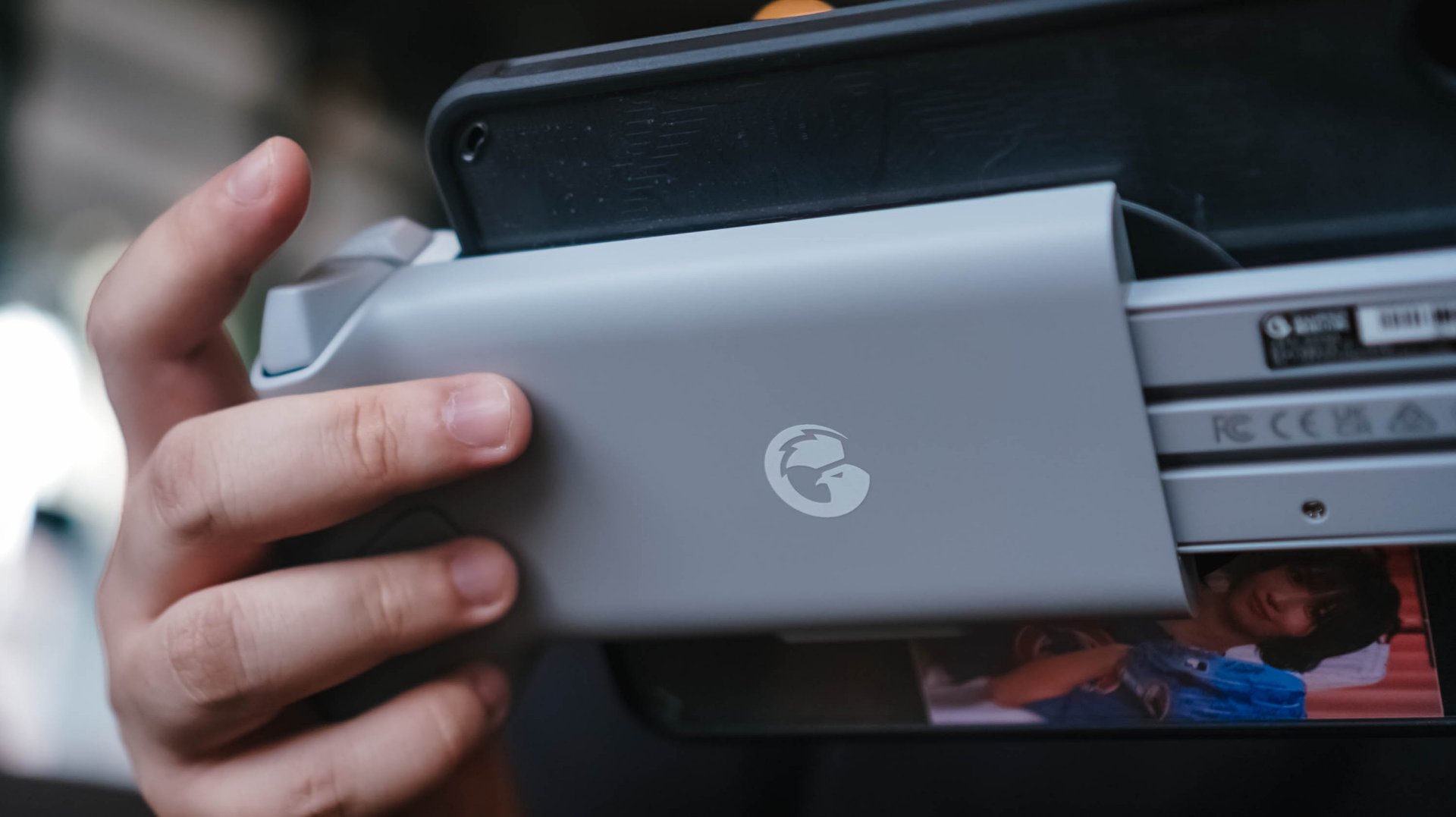
At first glance, the G8+ MFi looks like a premium console controller that’s been split down the middle. The gray-and-white colorway feels clean and understated, more lifestyle accessory than gamer toy.
It doesn’t scream for attention, but once your iPad mini snaps into place, it immediately reframes the entire experience. This isn’t just an add-on. It feels like a missing piece.
Plug-and-play, the iOS way
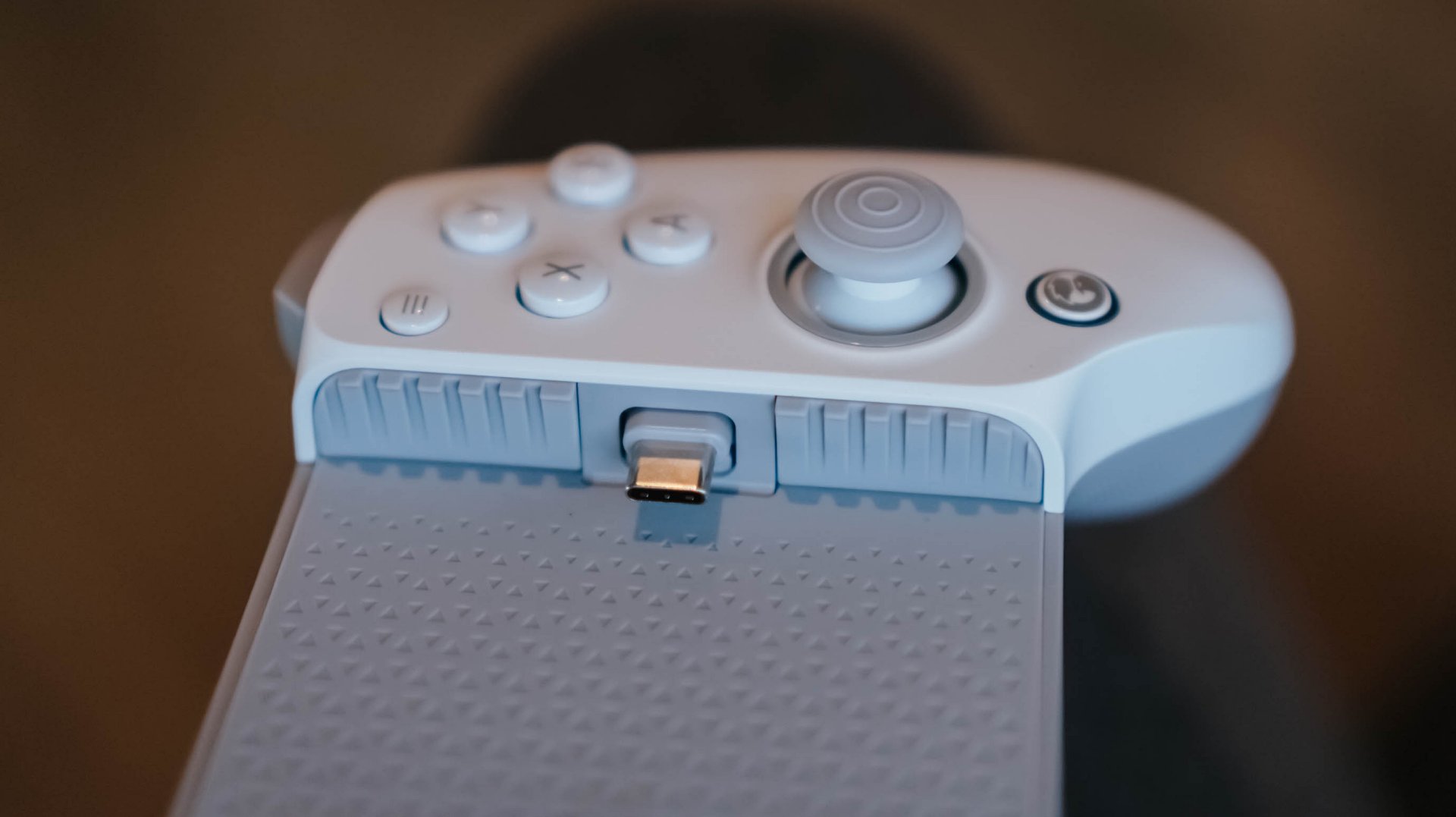
What makes the G8+ MFi instantly approachable is its official MFi certification. There’s no pairing process to fuss over, no settings rabbit hole to fall into. You plug it in through the built-in Type-C connector and it just works.
Inputs register instantly, games recognize it properly, and latency simply isn’t part of the conversation. That plug-and-play reliability is a big deal on iOS, where controller support can feel inconsistent depending on the accessory.
Built to fit more than phones
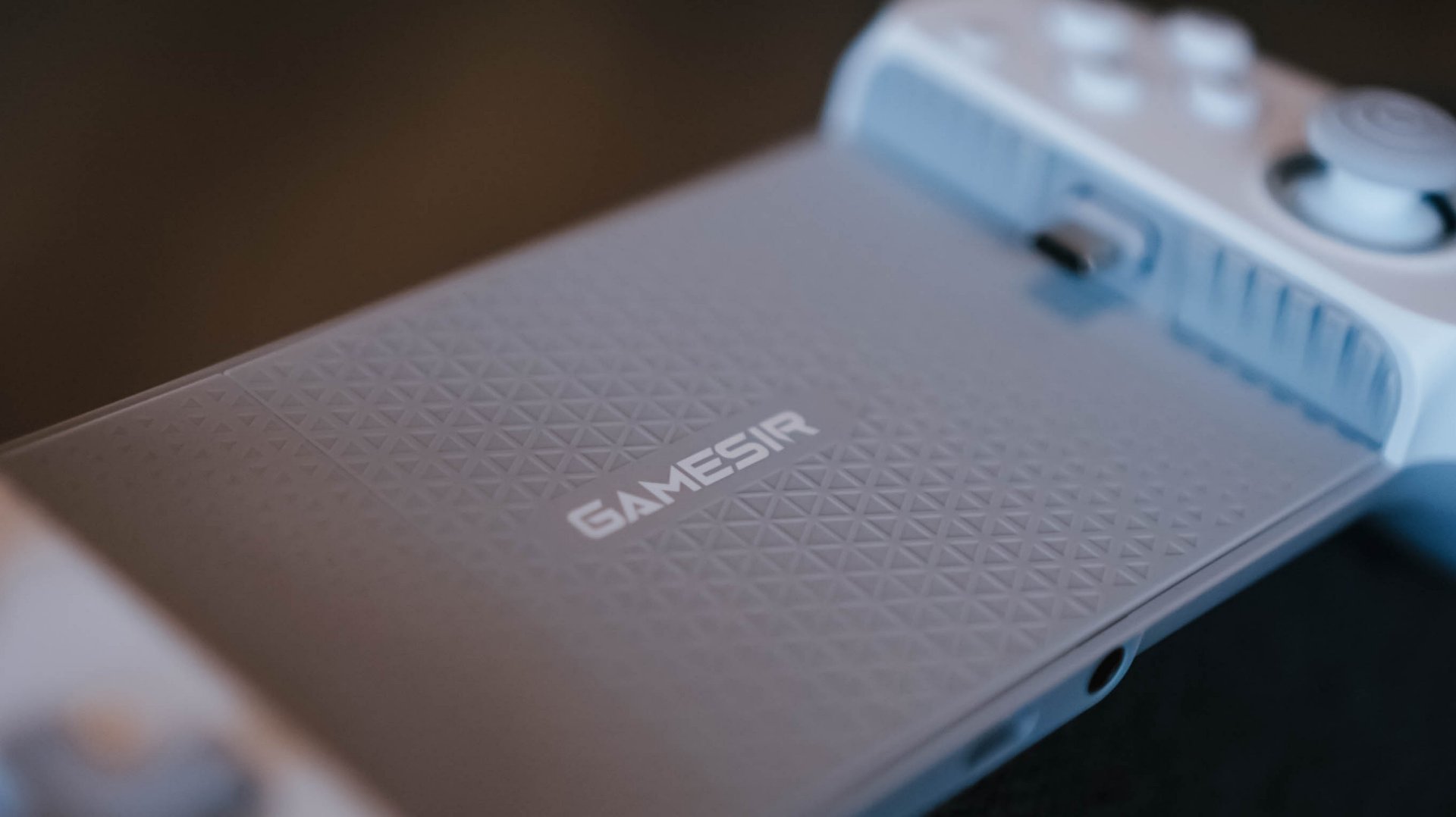
The ultra-wide stretch design is the other quiet hero here. With support for devices from 125mm to 215mm, the G8+ MFi holds the iPad mini securely without feeling overextended or awkward. It will work with any Type-C device that fits within that range, whether it’s a compact tablet or a larger smartphone.
Weight distribution matters when you’re gaming for longer sessions, and GameSir gets this right. The controller grips take the strain off your hands, so the iPad mini never feels top-heavy or uncomfortable, even after extended play.
Console-grade comfort and control
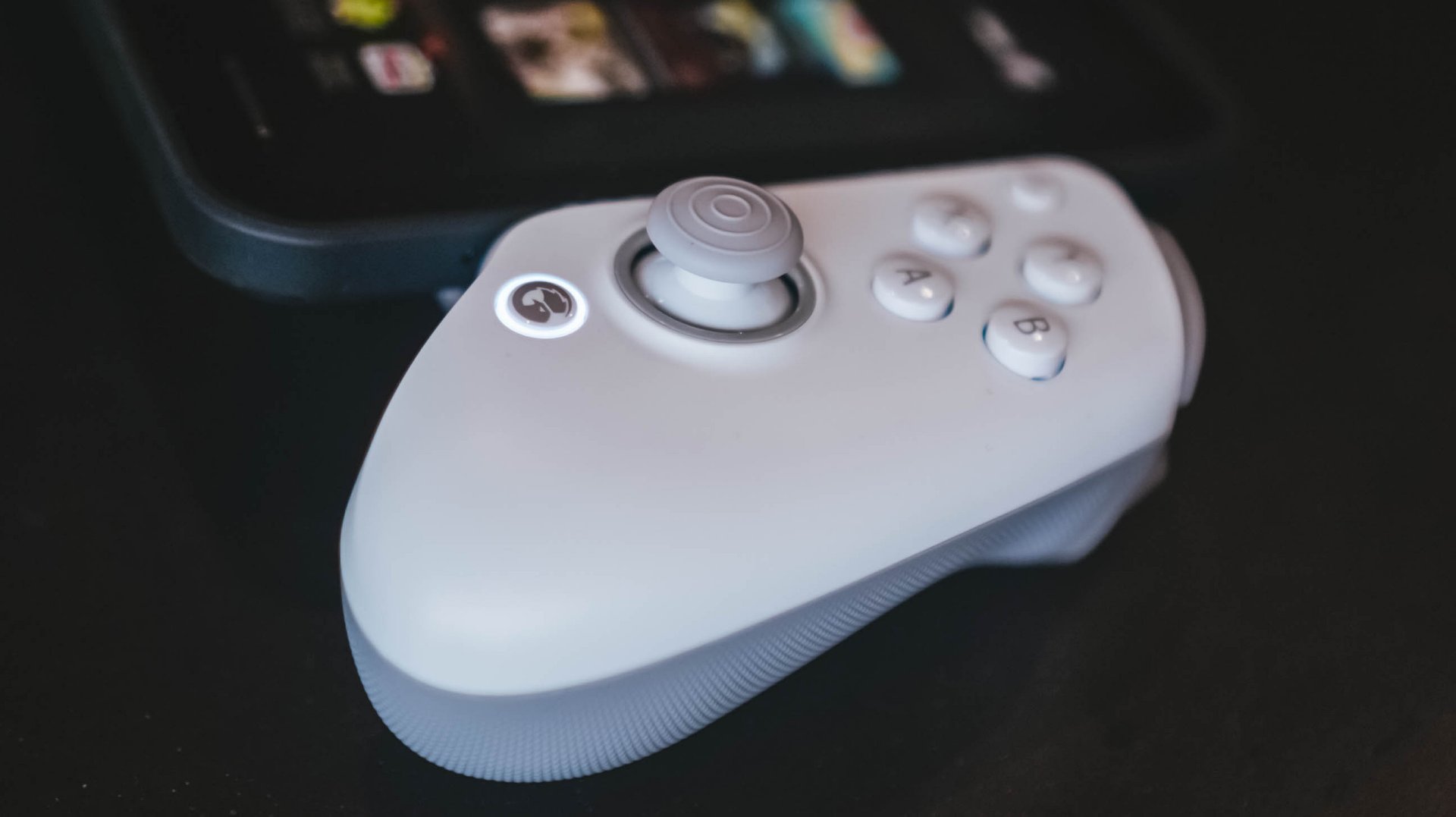
Once you start playing, the console-grade ambition of the G8+ MFi becomes obvious. The laser-textured grips add just enough friction to feel secure without being abrasive. The mechanical D-pad is crisp and responsive, especially noticeable in fighting games and platformers where precise inputs matter.
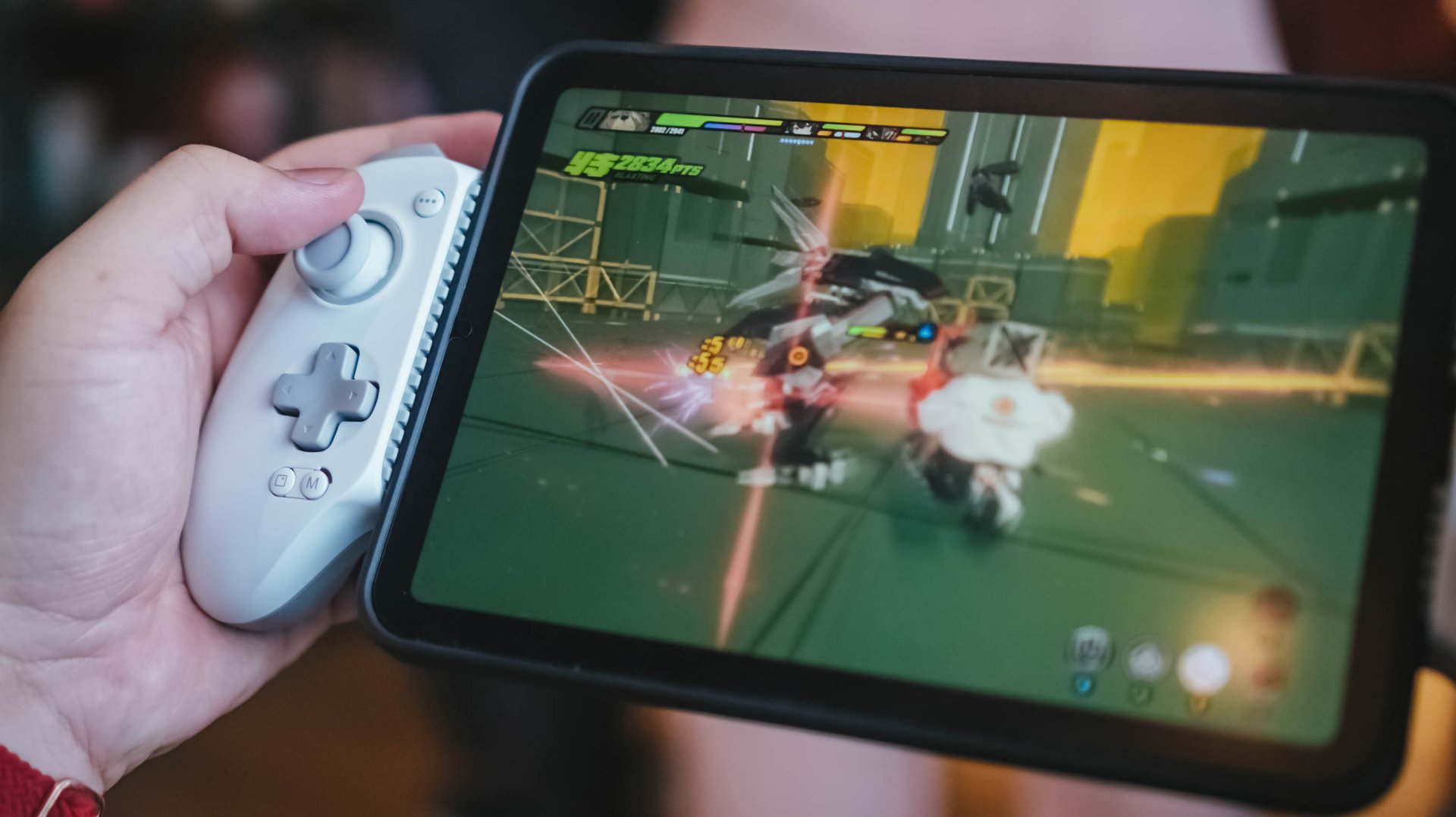
This made playing Zenless Zone Zero and NBA 2K26 Apple Arcade Edition even more engaging. Everything feels deliberate, as if the controller was tuned for real gameplay rather than quick demos.
Hall Effect precision, no drift
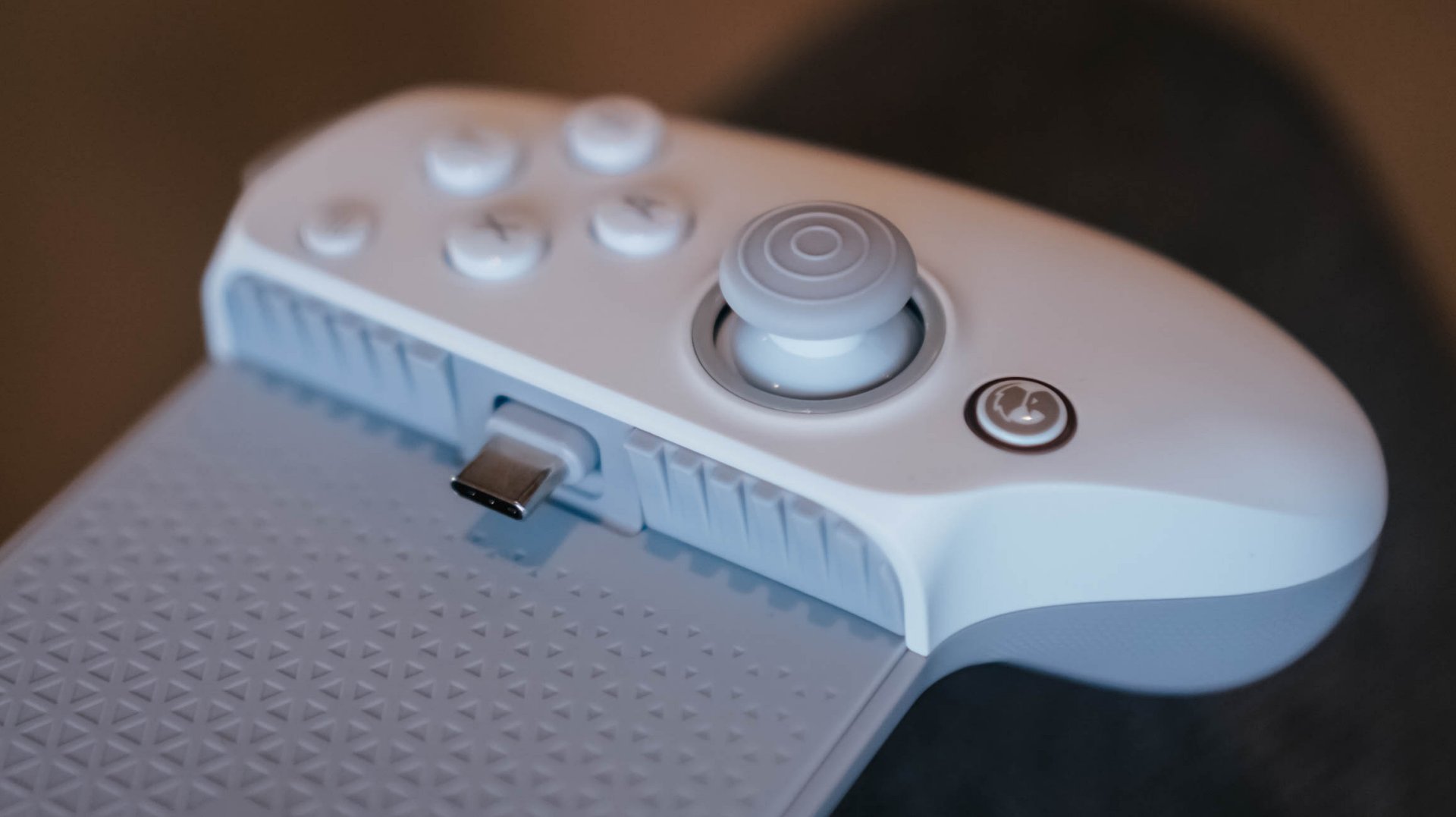
The Hall Effect sticks and triggers are the standout feature, and not just on paper. In use, the sticks feel smooth and consistent across their full range of motion, with none of the dead-zone uncertainty that cheaper mobile controllers suffer from.
Because they rely on non-contact magnetic sensors, stick drift isn’t something you have to worry about creeping in months down the line. The triggers mirror that same philosophy. They’re analog, smooth, and responsive, and with hair-trigger mode enabled, they snap into instant-response territory that works especially well for shooters and racing games.
Customization that actually matters
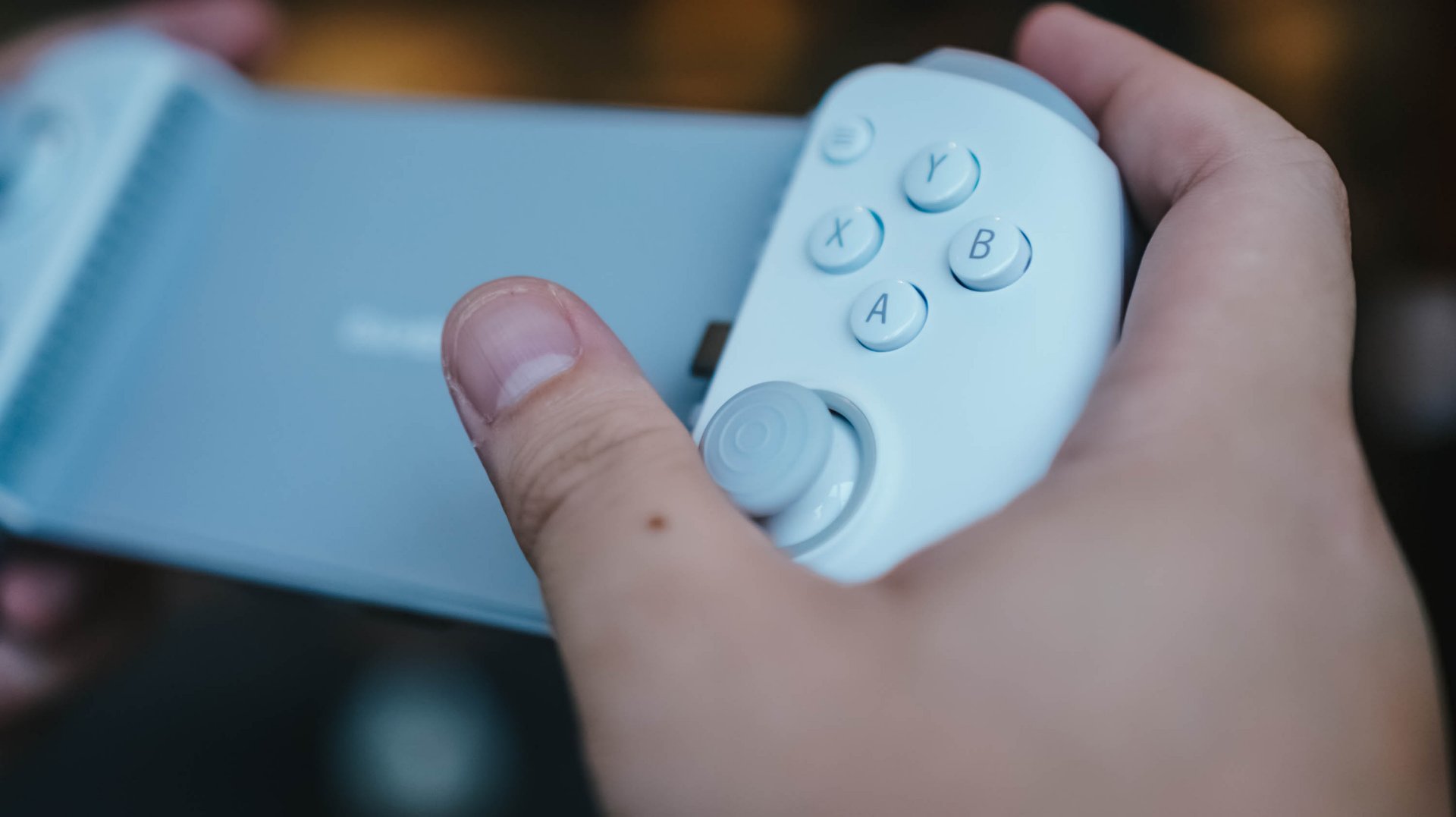
Customization is another area where the G8+ MFi leans into enthusiast territory without becoming overwhelming. The magnetic faceplate pops off easily, letting you swap ABXY layouts or thumbsticks depending on your preference.
Two rear buttons sit right where your fingers naturally rest, and they’re fully remappable for quick actions or shortcuts. It’s the kind of flexibility you appreciate more over time, especially when you start tailoring controls to specific games.
Immersion without compromise
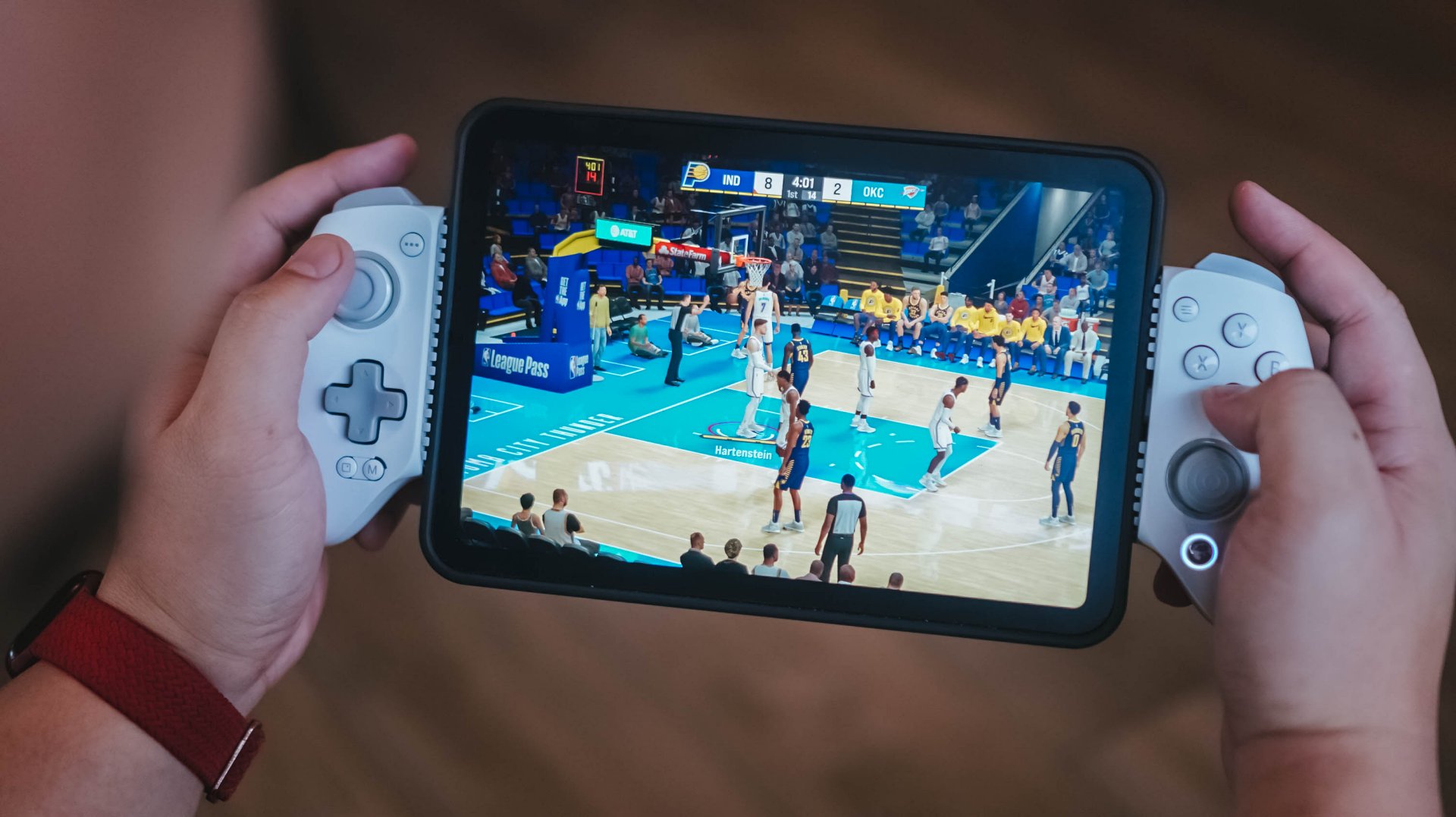
GameSir also didn’t skimp on immersion. Dual asymmetric vibration motors provide feedback that feels purposeful rather than noisy. Explosions, collisions, and subtle environmental cues come through clearly, adding texture to gameplay without becoming distracting.
Combined with the wired connection and pass-through charging, it encourages longer sessions without the usual battery anxiety.
After spending time with the GameSir G8+ MFi, it’s hard to go back to touch controls or generic Bluetooth pads. It turns the iPad mini into something closer to a dedicated handheld console—one that feels focused, comfortable, and capable.
For anyone serious about mobile gaming on iOS, this controller doesn’t just improve the experience. It completes it.

2025 has been a banger year in terms of quality and variety of games that have been launched. There’s literally too many to mention so here’s a list of Favorite Games of 2025 from the GadgetMatch team!
Clair Obscur: Expedition 33
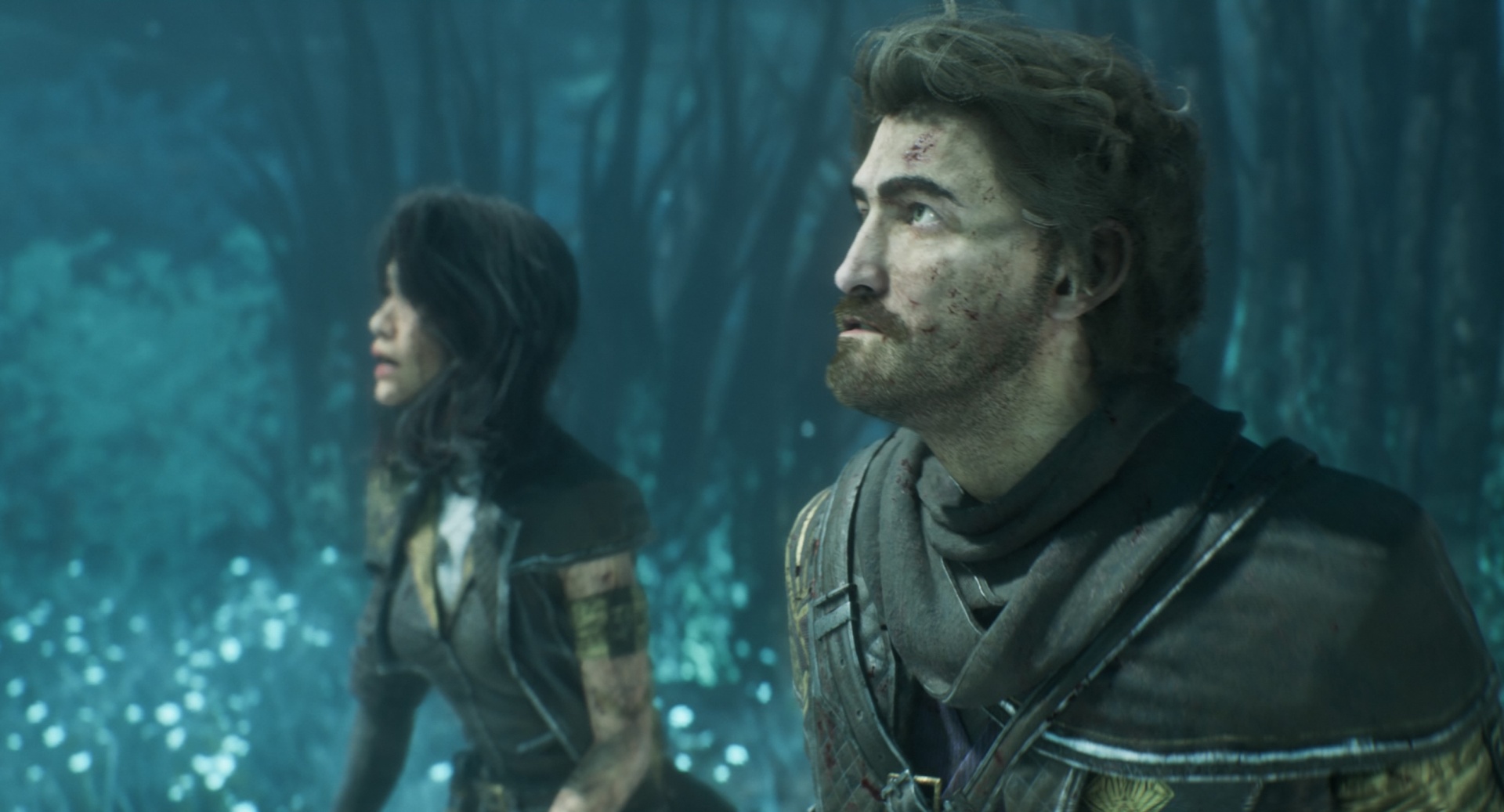
Rodneil: If the 9 trophies it bagged from The Game Awards 2025 wasn’t enough to convince you that Clair Obscur: Expedition 33 is a must-play, I don’t know what will.
The game will lure you in with its stunning visuals, grab you with its inciting incident, keep you focused during combat, endear you to its characters, and deliver gut-wrenching and awe-inspiring moments that will make you yearn for more.
Thankfully, it’s a 30–50-hour campaign with late game content that could double if you’re the completionist type.
Also, this scene:
Ghost of Yotei
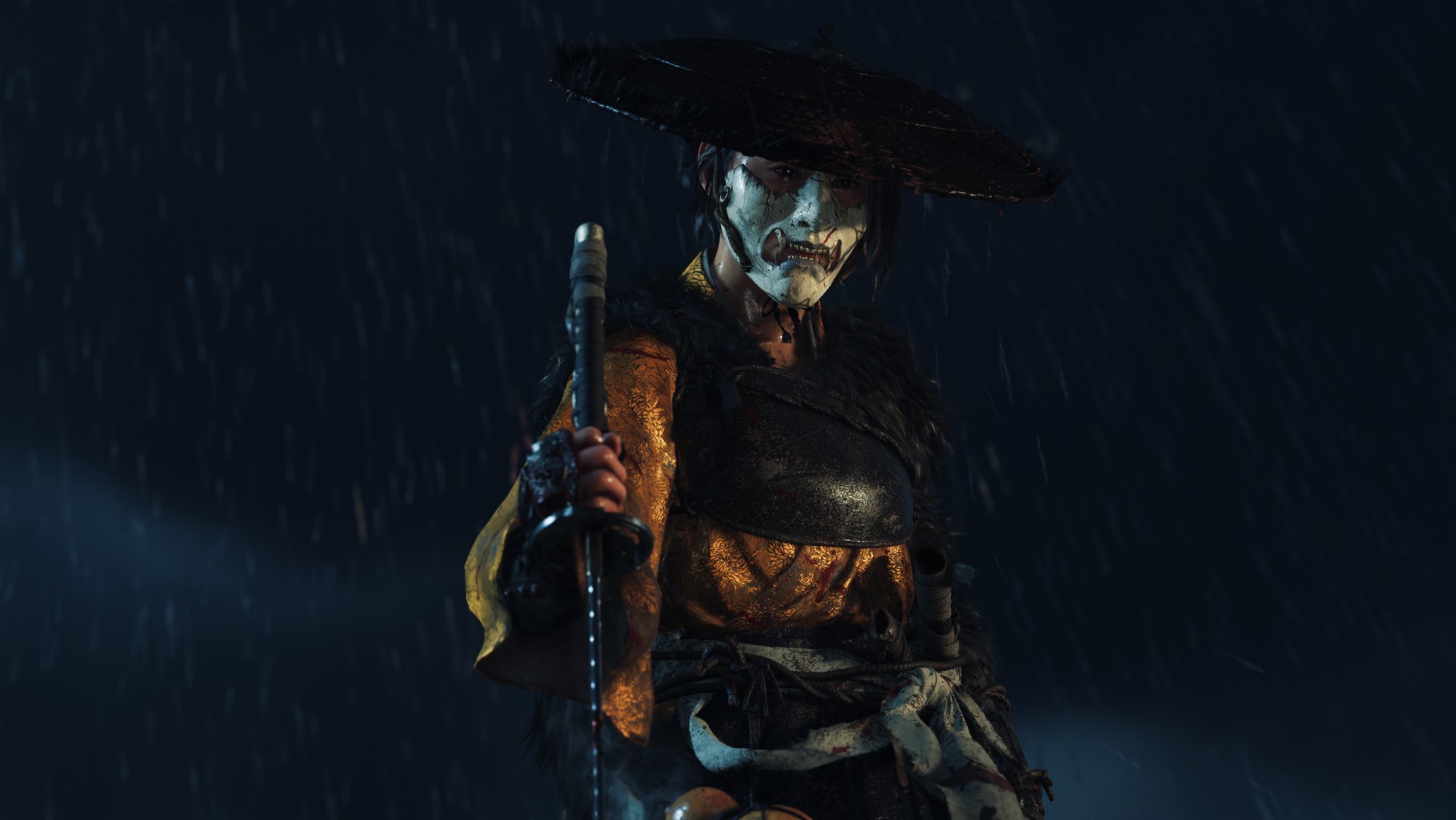
Rodneil: Ghost of Yotei builds on the gameplay and visuals established by Ghost of Tsushima. It’s an extension, refinement, and a bit of a remixed experience of Jin Sakkai’s tale. Except this time, you walk the path of vengeance with Atsu.
The game leaves you with something sharper than spectacle. Where Tsushima gave you the weight of history, Yotei carves its mark with intimacy. Revenge doesn’t need armies or nations to matter—it just needs a blade and a target.
That’s why Ghost of Yotei stands on its own. It may lack the grandeur of its predecessor, but it’s more cohesive, more personal, and more daring in how it tells its story. Atsu’s journey isn’t about how the world remembers her; it’s about how far vengeance will take her—and how much of herself she’ll lose along the way.
NBA 2K26
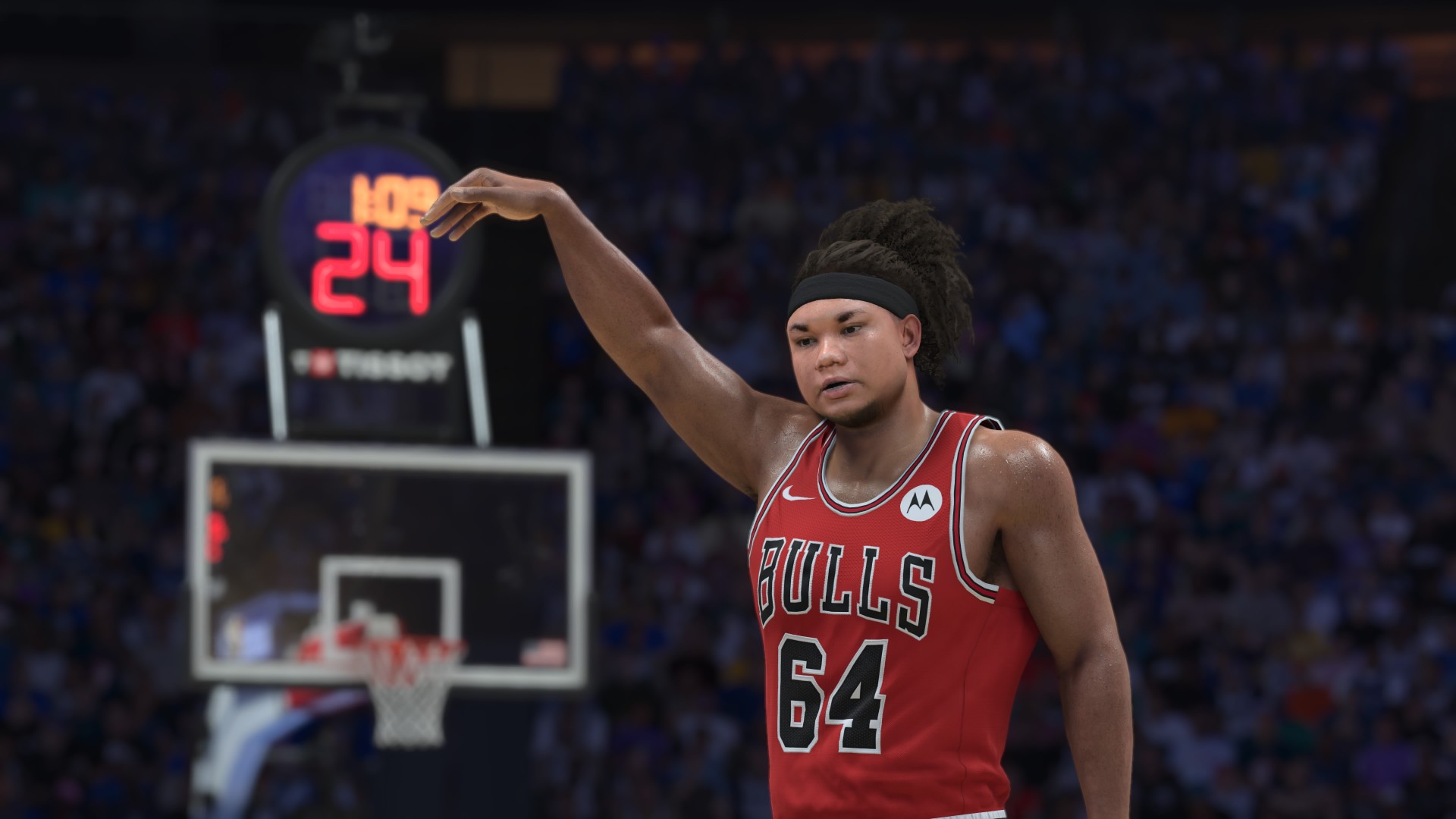
Rodneil: Consider this a sneak but NBA 2K is consistently my top played game year after year. You can say it’s my form of therapy – my way to relax and decongest.
Sure, the microtransactions still aren’t great and there’s always a missing historic player here and there. However, NBA 2K26 feels the most refined since the pandemic. The core gameplay feels fantastic and game modes like MyNBA, while largely unchanged, continue to deliver the kind of basketball video game simulation that I crave.
So, yeah. This one’s part of the list. It’s ‘favorite’ after all and not necessarily ‘best’.
SHINOBI: Art of vengeance
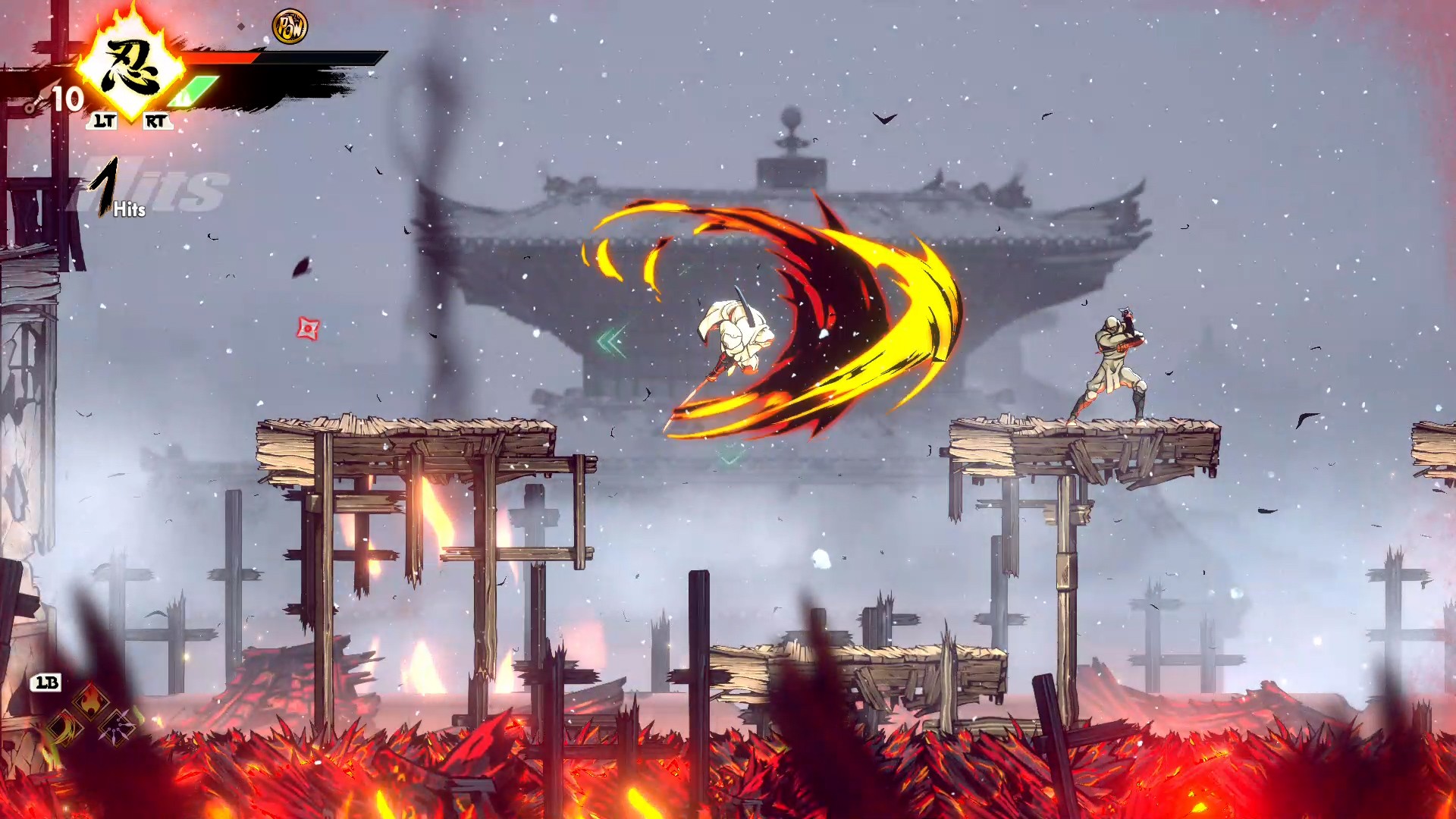
Rodneil: SHINOBI: Art of vengeance is one of the premiere side-scrolling action games in 2025. It scratched my “Zero in Megaman X4” itch and then some.
The art style is phenomenal. If you’re into that hand-drawn vibe, then this game is right up your alley. The gameplay also presents plenty of challenges and replayability. Even after clearing some stages, you’ll find yourself wanting to go back to make sure you get all the collectibles.
Overall, it’s just a downright good time. And it’s especially enjoyable on a gaming handheld.
Digimon Story: Time Stranger

Rodneil: Playing Digimon Story Time Stranger feels like reliving a summer memory — the excitement of discovery, the satisfaction of raising Digimon, and the pull of wanting to see what comes next.
It isn’t trying to reinvent anything, and that’s part of its charm. Instead, it offers a polished, nostalgia-driven JRPG that rewards the time you sink into it. The story pulls you in even without a standout cast. The monster-collecting systems are rich and addictive. And the combat strikes a balance between old-school comfort and modern convenience.
Hollow Knight: Silksong
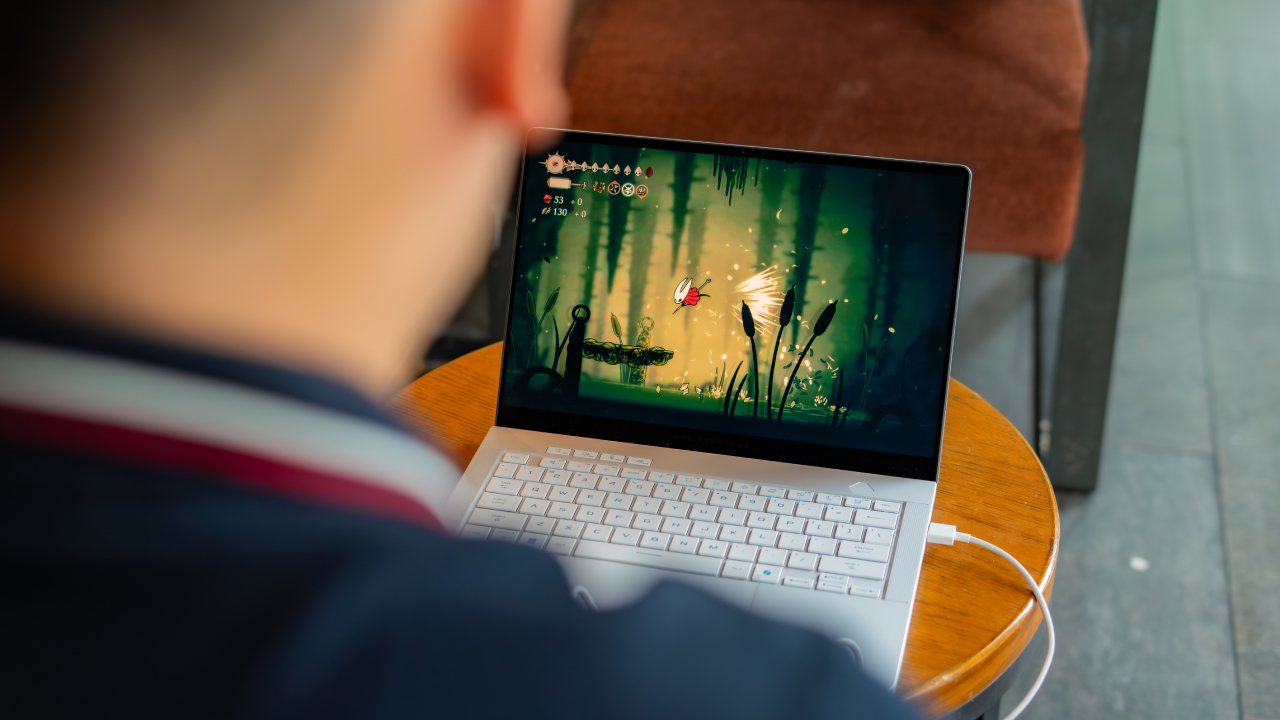
Luigi: Silksong was the holy grail of Metroidvania fans like me for years. Imagine our collective surprise when the mythical title was finally announced (and launched only a few weeks after the announcement). Silksong is real, and it’s here.
Silksong continues the saga started by the original Hollow Knight. Initially conceptualized as a second playable character for the first game, Hornet grew into her own game, filled with new enemies, abilities, and a much larger map. It retains the same formula that made the first great: tough fights but rewarding difficulty. There’s nothing more satisfying than figuring out how a boss here works and finally beating them after a hard fight.
Despite how huge it is, it only costs around US$ 20. At its core, it’s a true indie darling, and it still has free DLC coming!
Hades II
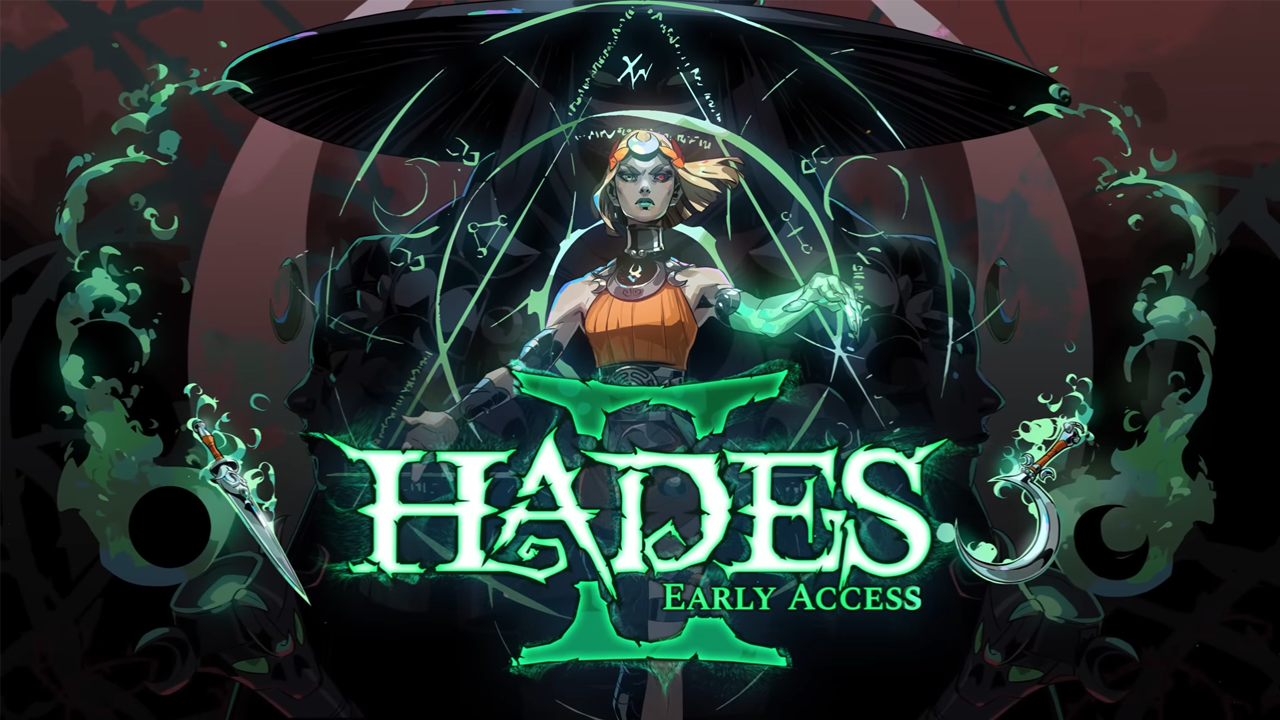
Luigi: In 2020, I played the first Hades. During a tenuous time like the pandemic, it was a huge lifesaver that helped me keep my sanity. Five years later, Hades 2 is here, and it’s just as epic.
A newly awakened Chronos has held Hades and his family captive. It’s up to Melinoë, Hades’s daughter, to rescue them from their prison. Much like the first one, the sequel has players go on runs to carve a little deeper into the Underworld.
Besides new weapons and tools to help go further, each run also unlocks new stories and relationships with other characters. It makes the game much more endearing, because you actually care for the characters and how they interact with Melinoë. Whether it’s a long marathon or just a run before bed, Hades II is the perfect game for a cozy time.
Death Stranding 2: On the Beach

Luigi: The original Death Stranding is a polarizing title, earning persistent japes of being just a glorified Uber simulator. Regardless of what you think of the first game, the sequel is much grander but has a tighter story.
Sam Porter Bridges is back to connect the entirety of Mexico and Australia. Familiar faces and new ones help (and hinder) Sam’s quest. And… that’s basically it. Recapping the story of Death Stranding 2 takes more than an essay. It’s just that epic.
Besides looking like an art film on steroids, Death Stranding 2 also features cozy gameplay where you can just sit back and deliver goods across Australia in between the bombastic setpieces. It’s definitely an experience worth playing.
Two Point Museum

Luigi: I always find management games relaxing. It’s nice to unwind and help build a museum from the ground up. It also helps if the game has the quirky humor to break the monotony of just management.
Two Point Museum is simple, then. Build a series of museums with differing themes. Every single exhibit is wacky, which adds to the flavor: literally frozen cavemen, actual ghosts, fish shaped like sushi. It has the same irreverent themes of the whole Two Point franchise.
And yet, it still has its challenges. For example, sometimes certain fish hate being paired with others, so it’s like a jigsaw puzzle of finding the best way to lay out your entire museum.
Sid Meier’s Civilization VII

Luigi: To be clear, Civilization VII didn’t launch in the most complete way. Even now, the game is still getting updates that tweak entire mechanics. Still, I can’t deny that I had fun trying out the seventh strategy game in the series. I recently got back into it, and I’m still having a blast for a run or two.
Civilization VII redefines the mechanics of the franchise by introducing eras that can drastically change how you take your chosen leader through the test of time. And as always, there’s so many ways to win: scientific, economic, cultural, and military. It suits all playstyles.
If you didn’t like Civilization VII on launch, Firaxis is thankfully making it so much better and more enjoyable. It’s time to take one more turn.
Donkey Kong Bananza
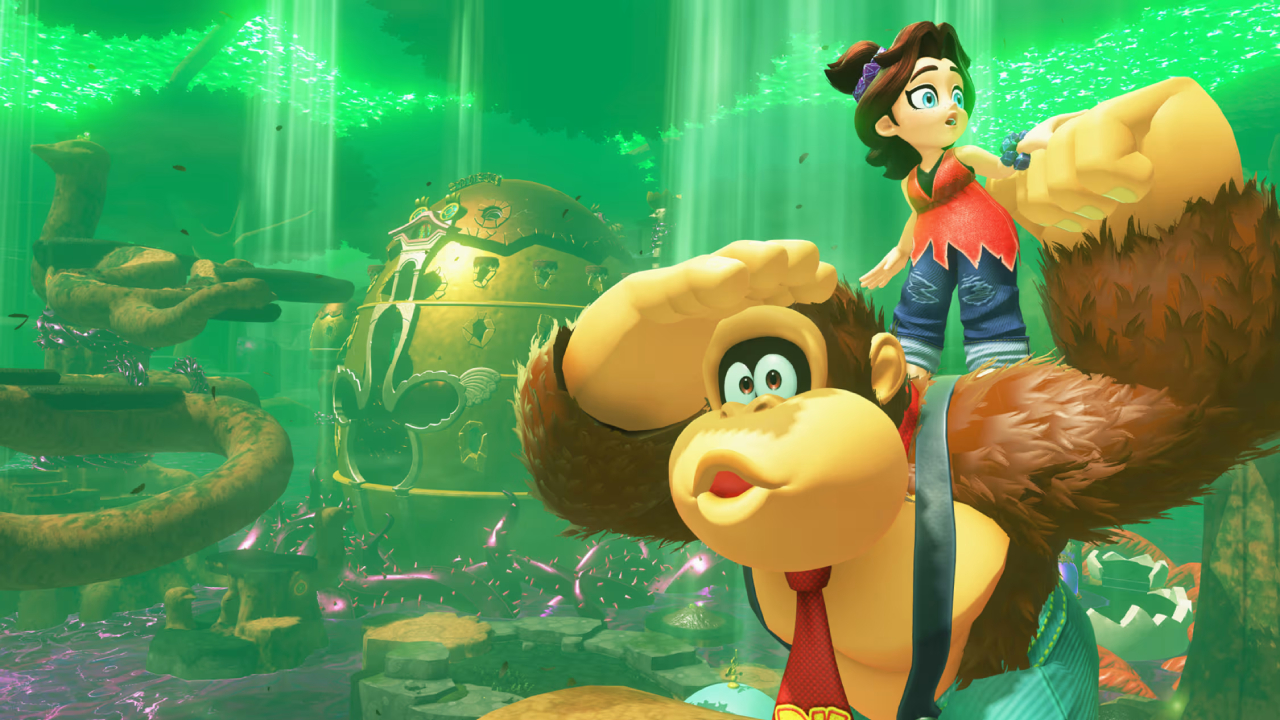
Luigi: In Super Mario Odyssey, players are dropped into fresh maps where there’s a set path and a few creative ways to get there. In contrast, Donkey Kong Bananza drops players intoa sandbox filled with beautiful sandcastles and tells them “go crazy.”
Making use of the Switch 2’s new hardware, Donkey Kong’s first 3D platformer in the modern age is a beautiful game with so many picturesque maps. What sets it apart from other platformers is the ability to destroy everything. Featuring destructible terrain, Donkey Kong Bananza wants you to have fun destroying all the pretty maps it built.
At first, I thought I was going to tire of this mechanic quickly, but every map has its own quirks that every level still feels like the first time.
R.E.P.O.
JP: R.E.P.O. is widely loved for its chaotic, funny co-op moments brought by a perfect mix of scary and goofy design. The strongest element for me, though, is sound design. Every audio cue feels satisfying.
The game’s systems thrive on repetition, with escalating threats and clear rules for how monsters behave and how they can be dealt with. That loop feels engaging, especially as the difficulty ramps up. The physics-driven interactions add another layer of enjoyment, often creating chaotic, genuinely funny moments when played in a full six-player lobby.
That said, I also enjoy playing R.E.P.O. solo, especially when friends are in the mood for other games, even though it can be quite challenging. My only real wish is for a roguelike-style progression system, where failed runs still contribute to long-term progress instead of a complete reset.
R.E.P.O. is clever in maintaining its simplicity, leans into its strengths, and listens to community feedback. Despite my one wish, it’s a game I keep coming back to, whether with a full lobby or on my own.
Gaming
PRAGMATA release date, Nintendo Switch 2 availability confirmed
Preorders now open, free demo available too

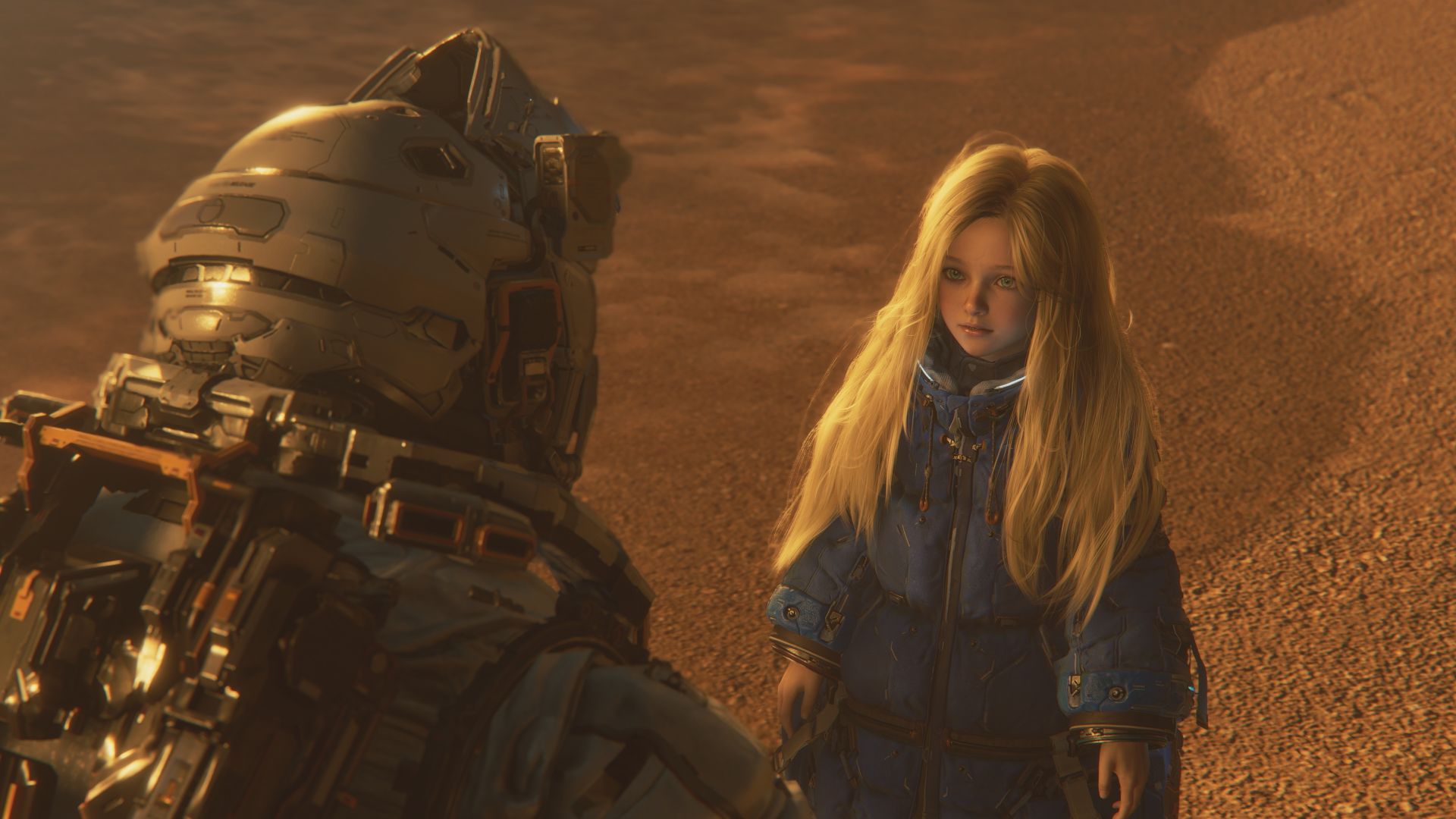
Capcom has announced the official release date for upcoming sci-fi action game PRAGMATA. The title will be available on April 24, 2026 on multiple platforms.
Aside from launching on PlayStation 5, Xbox Series X|S, and Steam, PRAGMATA will also be available on Nintendo Switch 2, as confirmed in a new trailer exploring the lunar cityscape.
Preorders are now available as well on all platforms. In addition, the Sketchbook Demo is now available on Steam and is coming to consoles soon.
The free public demo provides the opportunity to experience the title’s immersive setting and thrilling gameplay for the first time. It also includes fun extra surprises to challenge players.= and encourage repeat playthroughs.
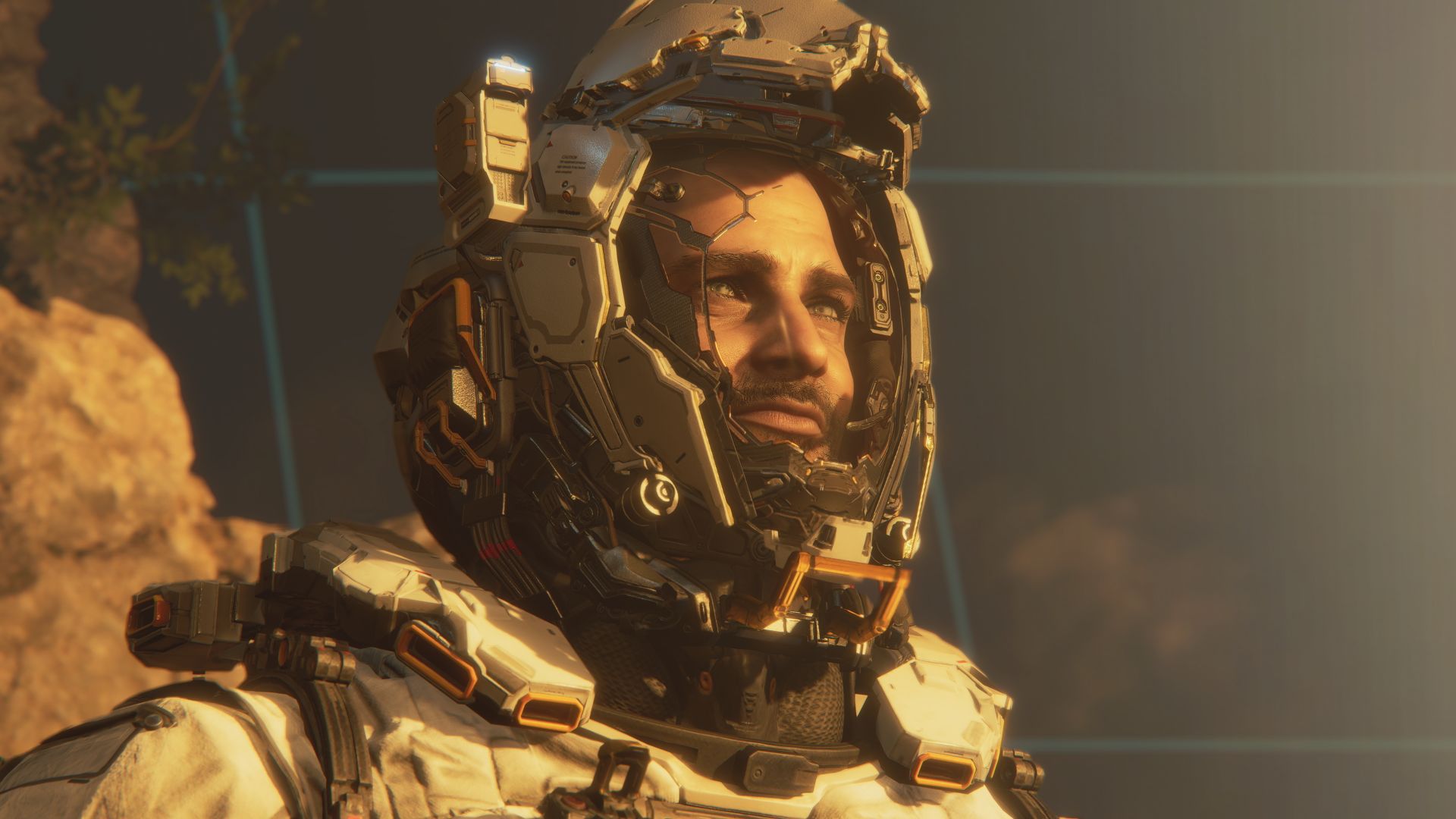
As a preorder bonus, players will receive Hugh’s samurai-styled Neo bushido outfit and Diana’s ninja-inspired Neo Kunoichi costume.
Alongside the standard version, a Deluxe Edition will be available. This includes the Shelter Variety Pack, an assortment of alternate outfits for the two characters.
The Deluxe Edition also includes a weapon skin, emotes, extra background music, and an in-game library with 75 digital artwork pieces.

The new trailer expands what players know of the game’s environment so far, with the protagonists in what seemingly looks like a futuristic dystopian city. It shows Hugh and Diana both being chased by various opponents, as well as a bit of their dynamic together.
As for its gameplay, PRAGMATA will feature a dual-character control, enabling players to control both Hugh and Diana simultaneously.
Central to the action is a “hacking” mechanic but Capcom will enrich combat with a more strategic and exciting element unique to the title.


Inside the Next-Gen Ford Ranger Wildtrak 4×4
A closer look at the cabin that makes this truck feel smarter and more comfortable than expected.

iQOO 15 review: Made for players who take performance seriously
For people with endless games in between
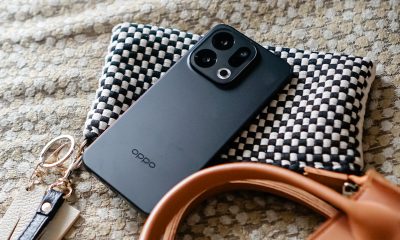

OPPO Find X9 review: Super Swipe material!
This is the flagship smartphone that's ready for anything, just like you~

HONOR WIN headlines the first 10,000mAh smartphone with built-in fan

Xiaomi 17 Ultra debuts as 2025’s last full-fledged flagship

Razer teams up with BLACKPINK for limited-edition gear

Trade doomscrolling for these 12 intentional New Year’s resolutions and side quests

Favorite Wearables of 2025


-
 Editors' Choice2 weeks ago
Best Budget Smartphones of 2025
-
 Editors' Choice2 weeks ago
Best Premium Smartphones of 2025
-
 Editors' Choice2 weeks ago
Best Midrange Smartphones of 2025
-
 Gaming2 weeks ago
The Razer BlackShark V3 Pro might be the comfiest headphones I’ve tried
-
 Accessories4 days ago
Razer teams up with BLACKPINK for limited-edition gear
-
Reviews2 weeks ago
OPPO Find X9 review: Super Swipe material!
-

 Editors' Choice1 week ago
2025 GadgetMatch Approved Devices
-

 Editors' Choice1 week ago
Favorite Laptops of 2025