

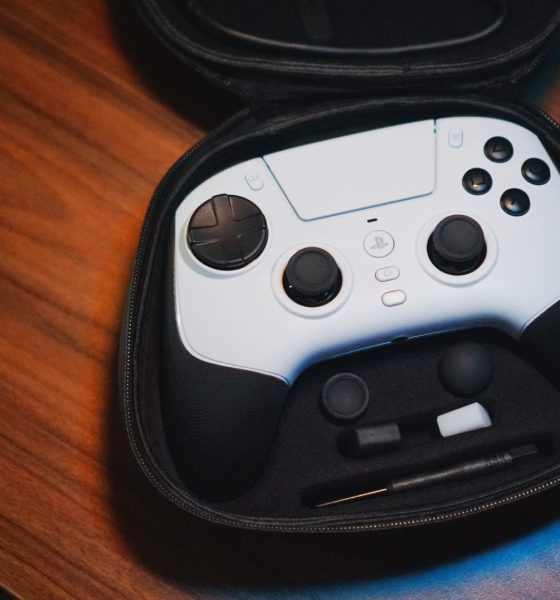

When I first unboxed the Razer Raiju V3 Pro, my brain immediately went: okay, this is exciting. It had that wow factor — that feeling of holding a piece of tech that’s meant to do something special. It’s the kind of controller that makes you want to jump straight into a game just to see what all the fuss is about.
Build and feel — familiar, but also very not
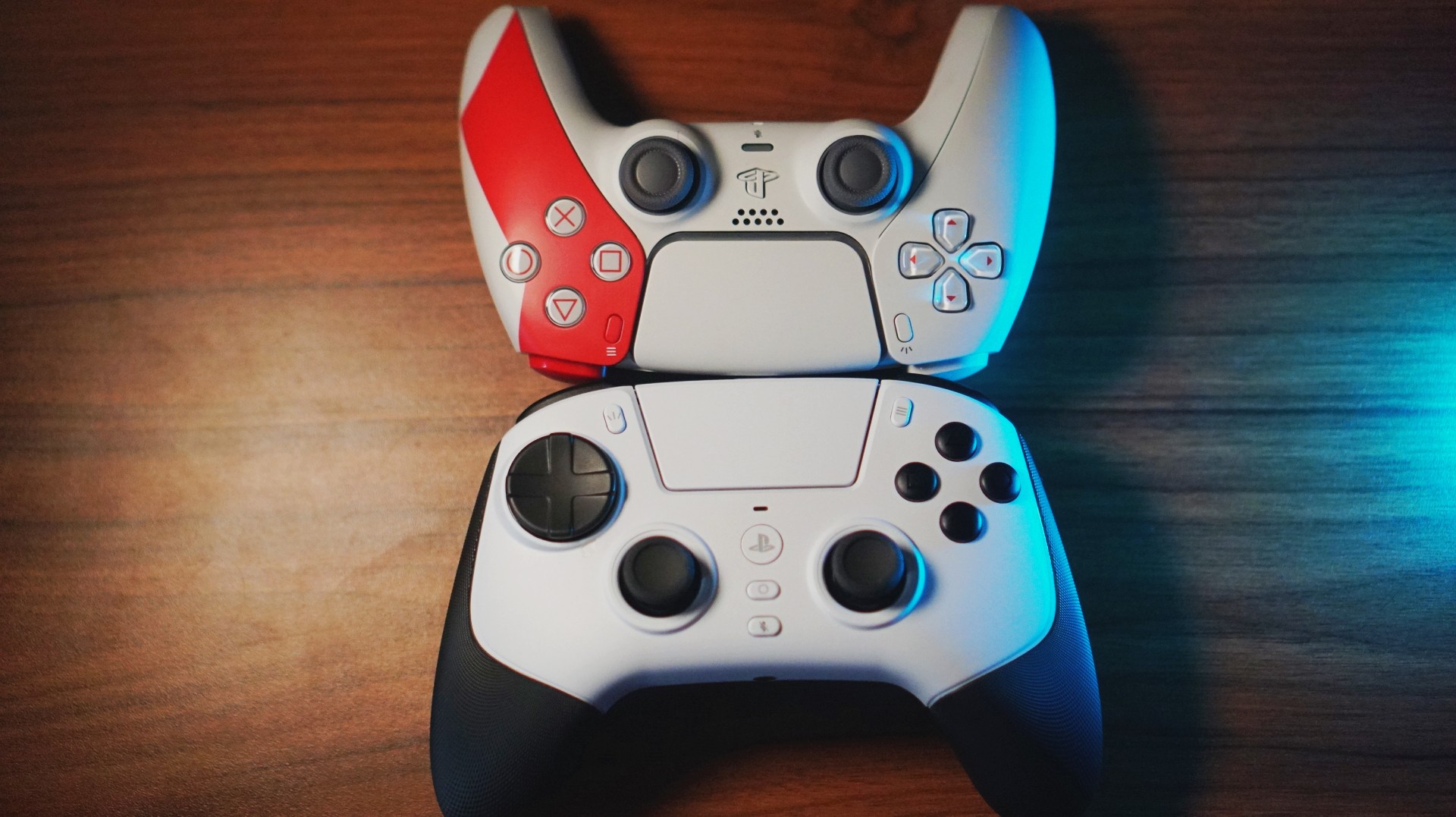
Coming from the DualSense, the first surprise is the weight. The Raiju V3 Pro is definitely lighter, but not in a cheap way. Holding it felt different, wider even, and my hands were a little more relaxed because of that added space.
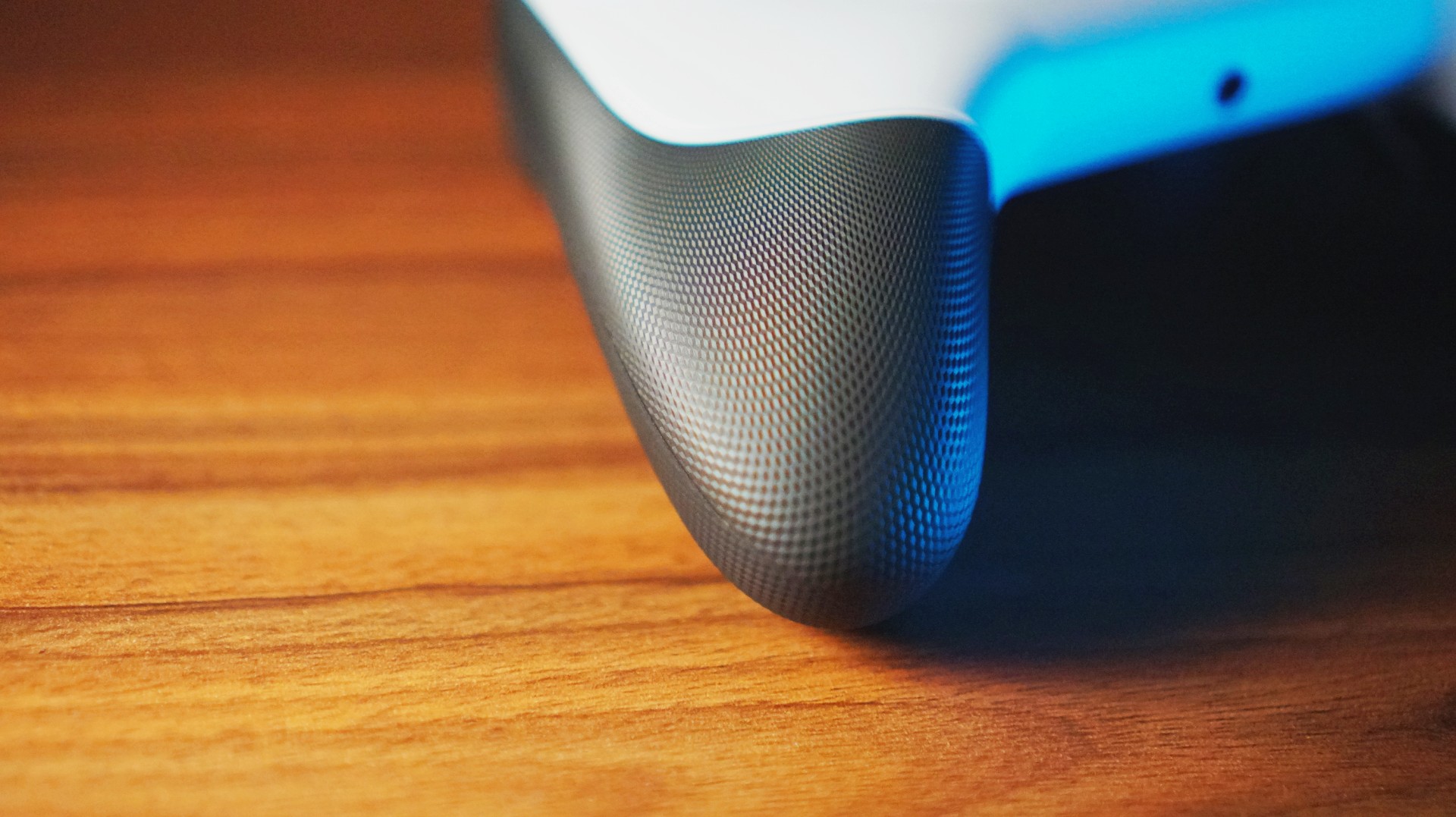
The grip texture is great — no fear of slipping, and it feels particularly good on the bottom of your palm.
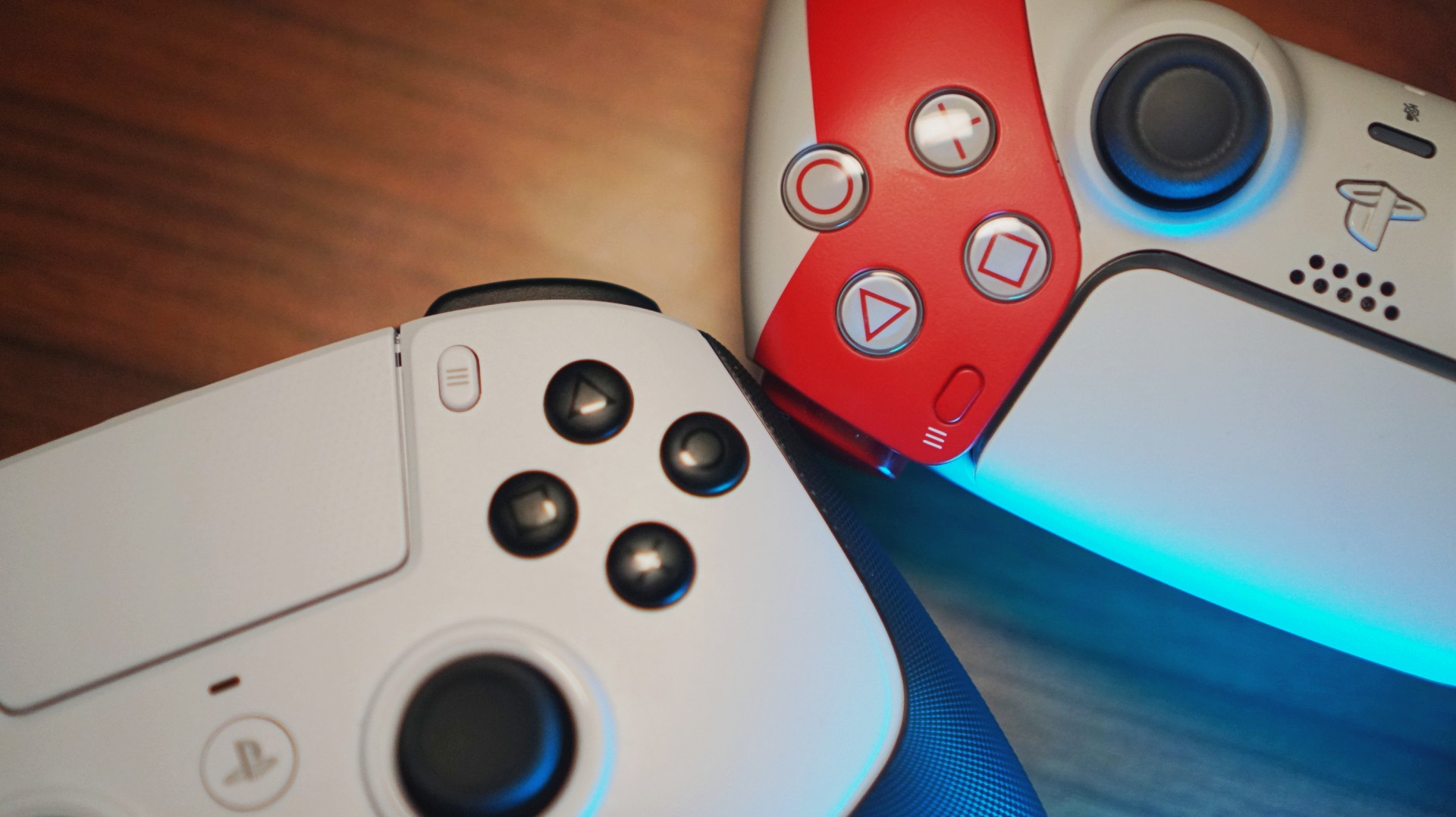
The face buttons? Smaller surface area, longer travel. Premium-feeling overall, though I’ll be honest: I’m not entirely convinced the Raiju V3 Pro’s feel matches its price tag. That’s mostly because I’ve tried some GameSir controllers that felt surprisingly similar for a fraction of the price. But still — this feels like a product built with intent.
Gameplay experience — where it actually comes alive
Most of my testing happened on NBA 2K26 because… well… that’s the game I always end up playing. And this was the moment the TMR thumbsticks flexed. I found myself doing more dribble combos and experimenting with shot styles using the right stick simply because I had zero fear of drift.
I also jumped into a few fighting games — TEKKEN 8 and My Hero One’s Justice 2 — then humbled myself in several Death Match sessions on Call of Duty Black Ops 7. I even swung through Spider-Man Remastered for a bit. Across all of these, the controller felt responsive, fast, and ready for whatever chaos I threw at it.
HyperTriggers and extra inputs — surprisingly useful

The triggers were most noticeable during my Call of Duty matches. I still sucked at it — let’s be real — but I can totally see how better players would squeeze more value out of the locked fast-trigger mode. The surprise twist was how useful the triggers were for fighting games. Having minimal travel made reaction-based inputs feel snappier and more controlled.
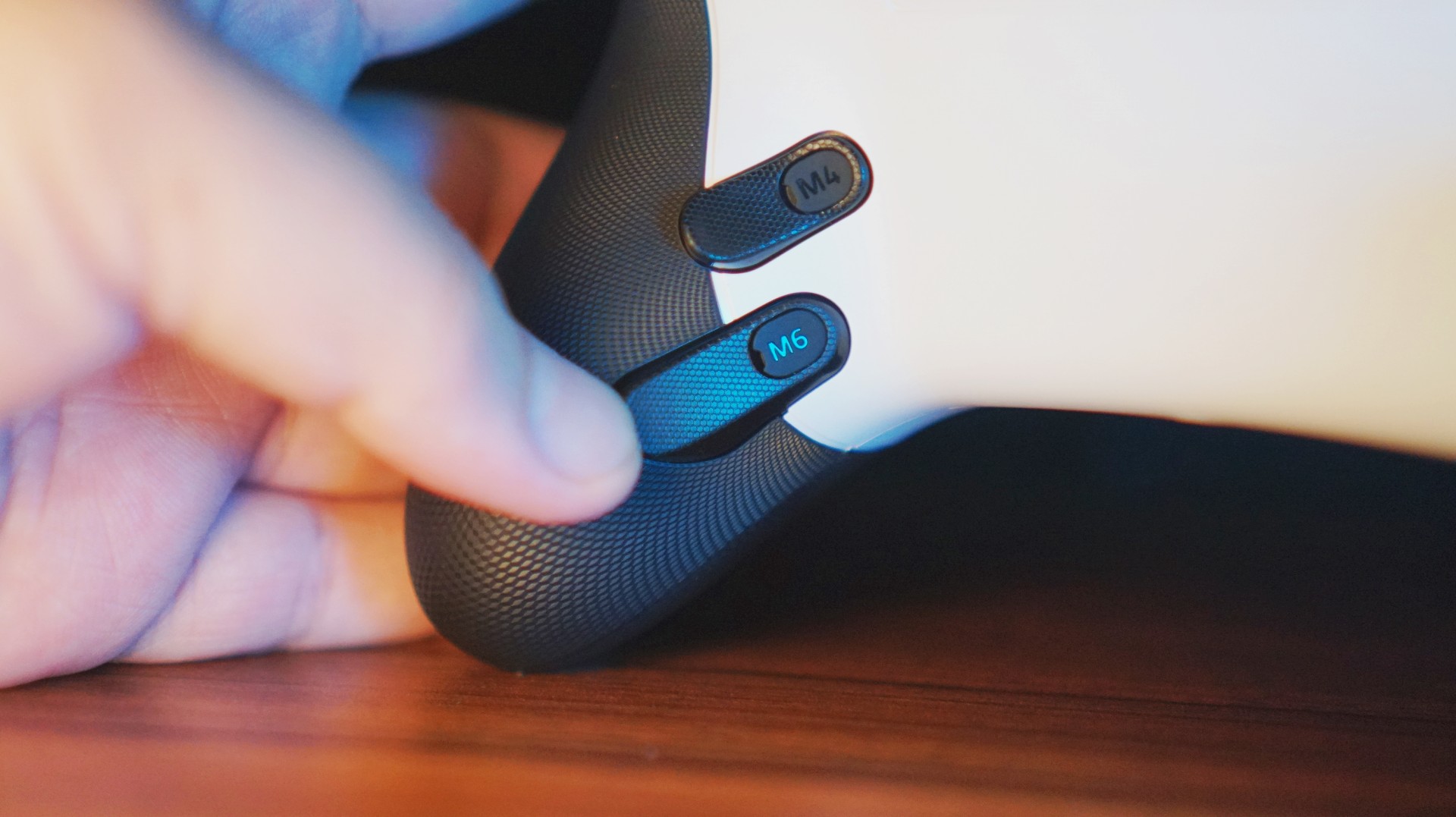
As for the back paddles and claw bumpers: I thought about taking some of them out, but ended up keeping everything on. Eventually, they became little fidget points that didn’t interfere with gameplay.
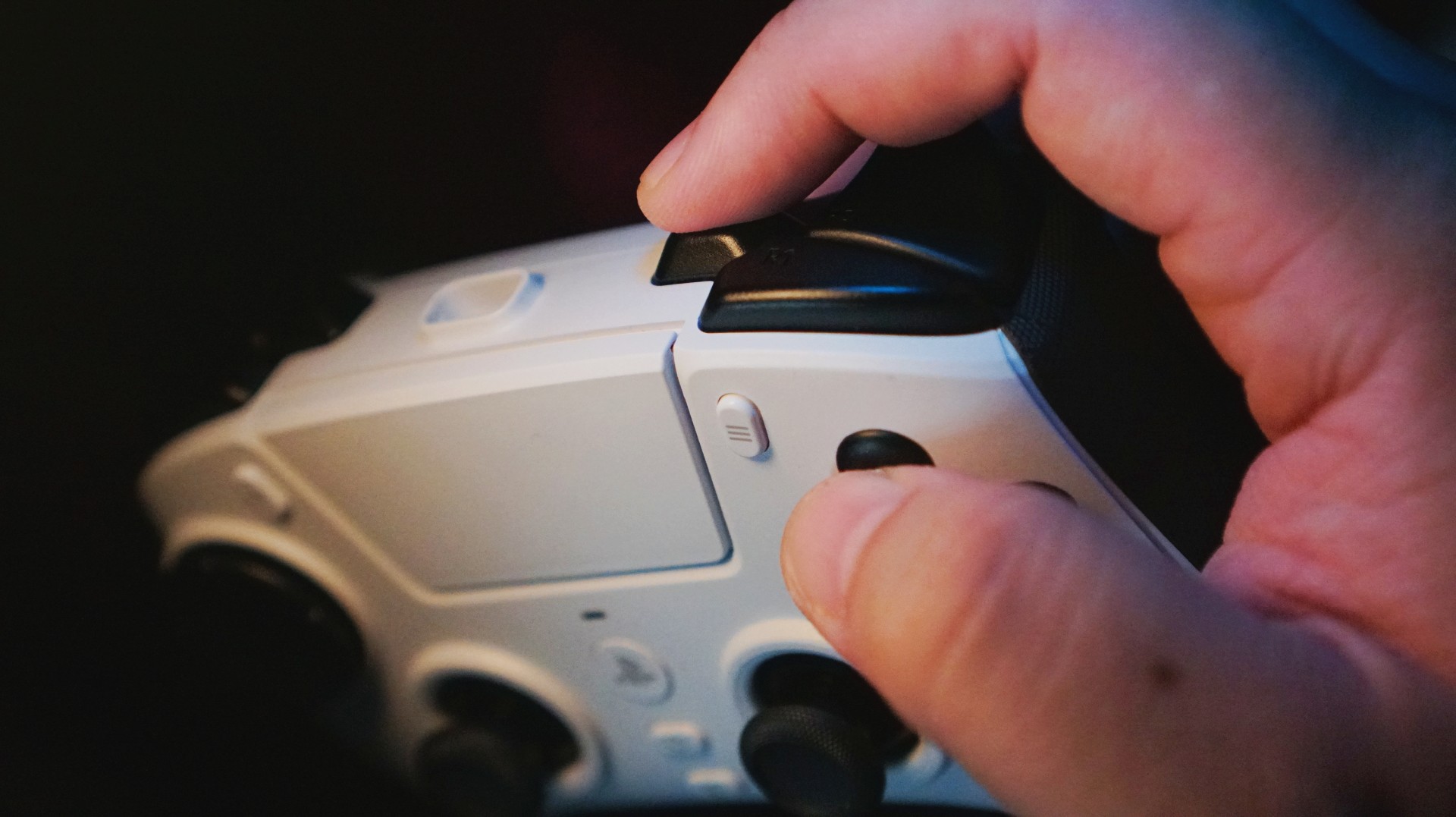
Mapped the extra trigger to Square to make it easier to hit the Triangle + Square combo for self alley-oops.
In practice, I rarely used them because I’m such a muscle-memory player… except in NBA 2K26. I mapped self alley-oops and flashy passing to the extra triggers, which helped because 2K moved those combos around this year.
Thumbsticks — the star of the show
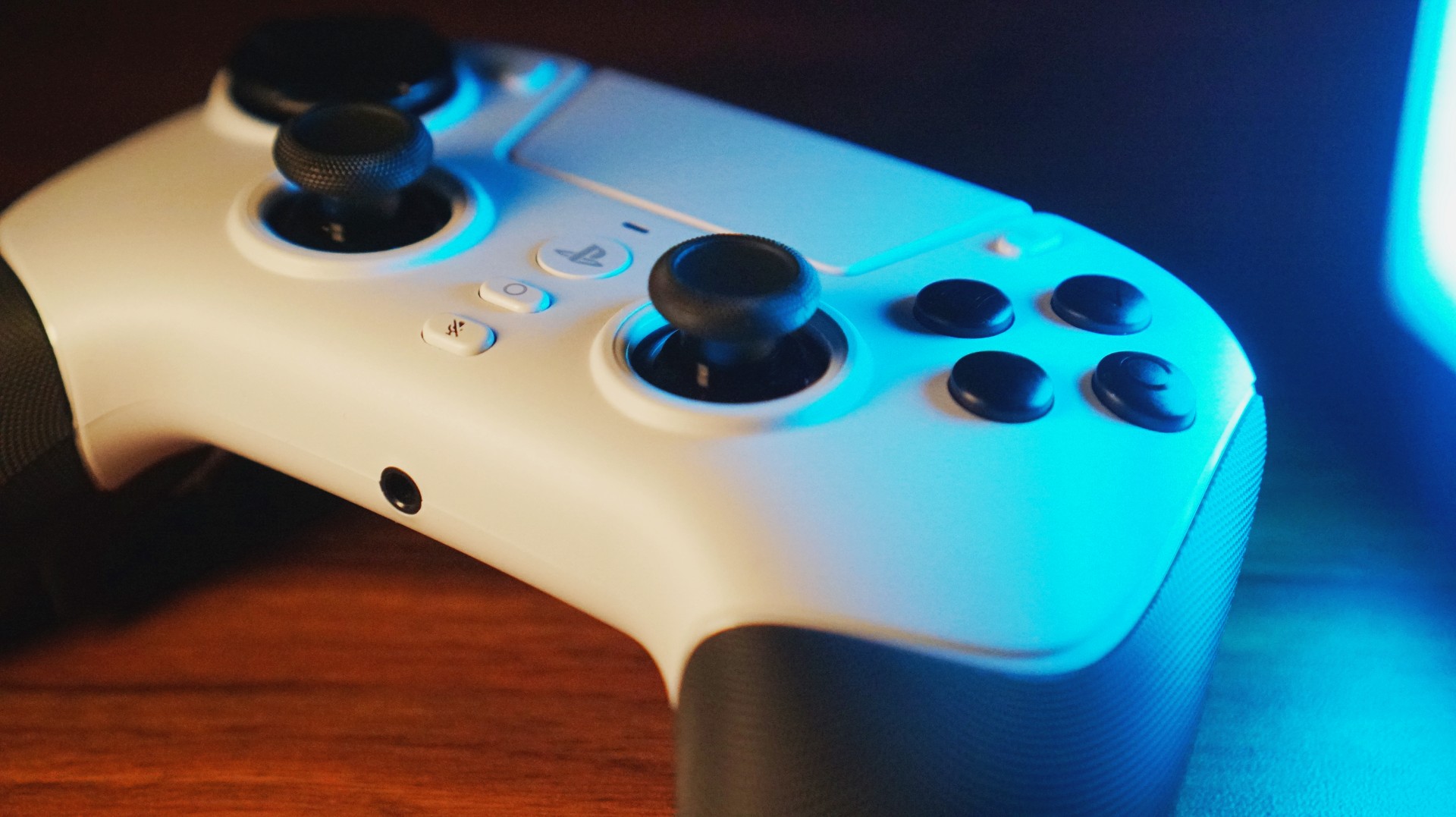
The TMR sticks? Excellent. Smooth, accurate, fluid — all of it. I had fun abusing them without worrying about drift, and NBA 2K26 really let me push them to their limit. COD: Black Ops 7 was harder, but I think that’s more on me than the controller. Maybe a sensitivity tweak or two will fix that over time.
Customization — only what I needed
I’m not the type who loves deep tweaking, so I mostly skipped Synapse. I only used the mobile Razer Controller app to remap the extra triggers. And honestly? That was enough. The controller already felt good out of the box.
Wireless performance — HyperSpeed does its job

No lag. No hiccups. No difference between wired and wireless — seriously. HyperSpeed Wireless worked wonders and felt as reliable as any cable-connected controller I’ve used.
Pain points — minor, but noticeable
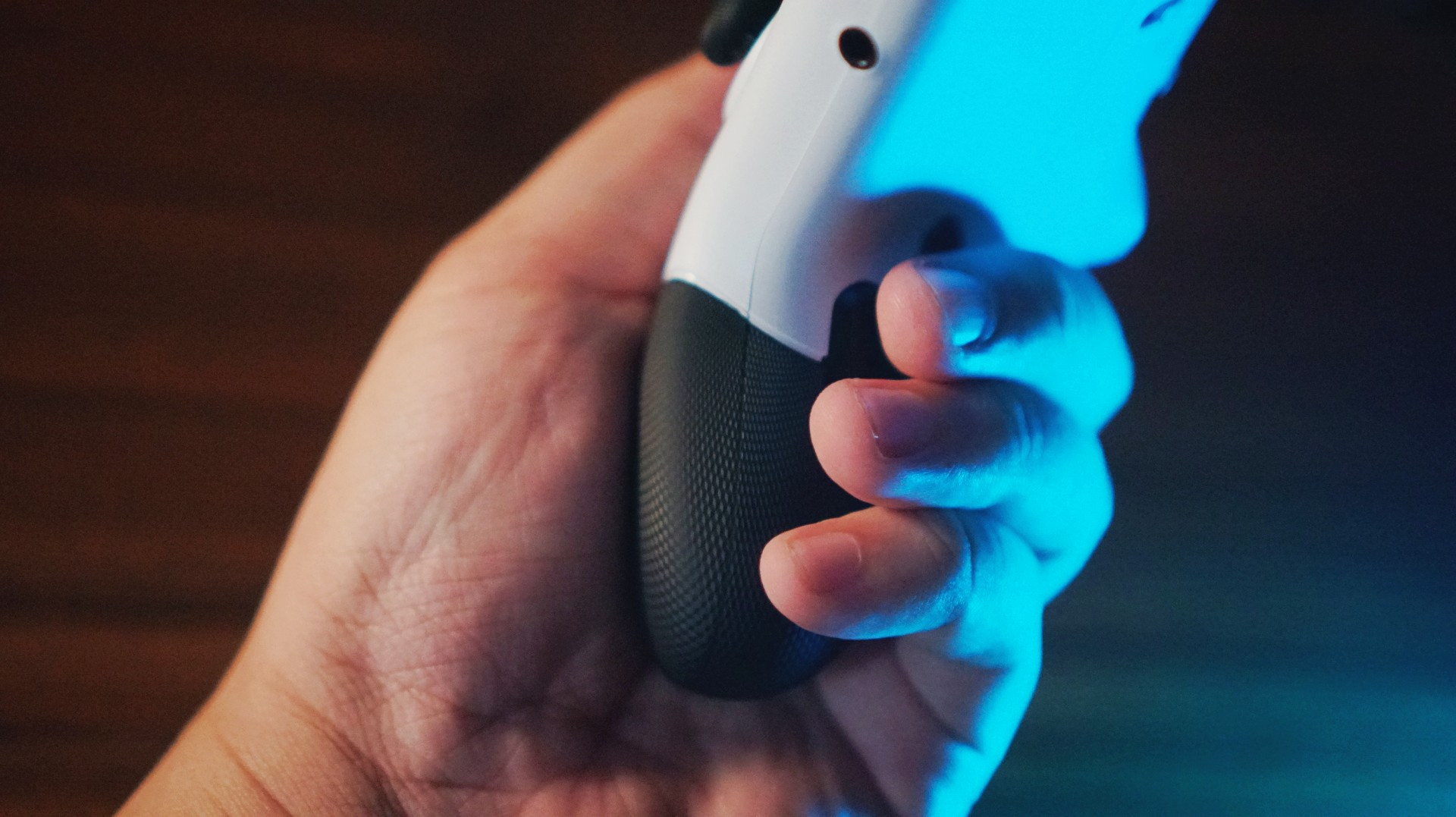
There are a couple of things worth noting.
The big one: no haptic feedback. The DualSense’s signature feature simply doesn’t exist here. Razer says this controller was designed with real pro players, and removing rumble seems to be one of those “it’s not needed in esports” decisions.
Honestly? After a while — especially during fast-paced games — I didn’t miss it. Haptics matter more in story-driven titles, and this controller isn’t really meant for those anyway.

One more thing: I couldn’t turn on the PlayStation with the Raiju V3 Pro. I still needed a DualSense for that.
Who is this for?

This controller is for people who play fast-paced, competitive games. Plain and simple.
But it’s also for players who want a controller built to take a beating — the kind that survives long sessions, intense button-mashing, and weekend-long gaming marathons. Its battery life is impressive, too, making it a great backup for when your DualSense suddenly taps out mid-game.
If you want a premium esports controller designed specifically for PS5, this is one of the best — if not the best — option right now.
If you want rumble, adaptive triggers, or a cinematic gaming experience? This isn’t it.
Is the Razer Raiju V3 Pro your GamingMatch?

If I had to describe the whole experience in one line: I’m swiping right because the Razer Raiju V3 Pro is an excellent piece of tech.
But it’s not for everyone, especially not for its asking price (EUR 209.99 / PHP 12,990). You can argue there are cheaper options — absolutely — but most of those lean heavily toward PC.
In the PS5 space, especially for competitive players, this is probably the strongest contender you can buy today.




Gaming
The hunt begins: The Witcher in Concert hits Manila with surprises in tow
The Continent comes alive


If you’ve ever heard a haunting chant echo through a battlefield or felt the weight of a choice that isn’t as simple as good or evil, then you already know—the Path has a way of calling you back.
And if you haven’t stepped into that world just yet, consider this your invitation.
With less than two weeks to go, The Witcher in Concert is set to take over Manila for a one-night-only performance. It’s happening on March 28, 2026 at The Theatre at Solaire—bringing with it not just the music of a beloved RPG, but a full-on return to the Continent.
Celebrating the 10th anniversary of The Witcher 3: Wild Hunt, the concert transforms one of gaming’s most iconic soundtracks into a live experience. Expect performances from selected musicians of the Filharmonika Orchestra alongside Percival Schuttenbach—the Polish folk-metal band whose distinct sound helped define the game’s identity. Paired with in-game visuals, it’s a show designed to feel both nostalgic and entirely new.
As the night draws closer, here are three things fans can look forward to:
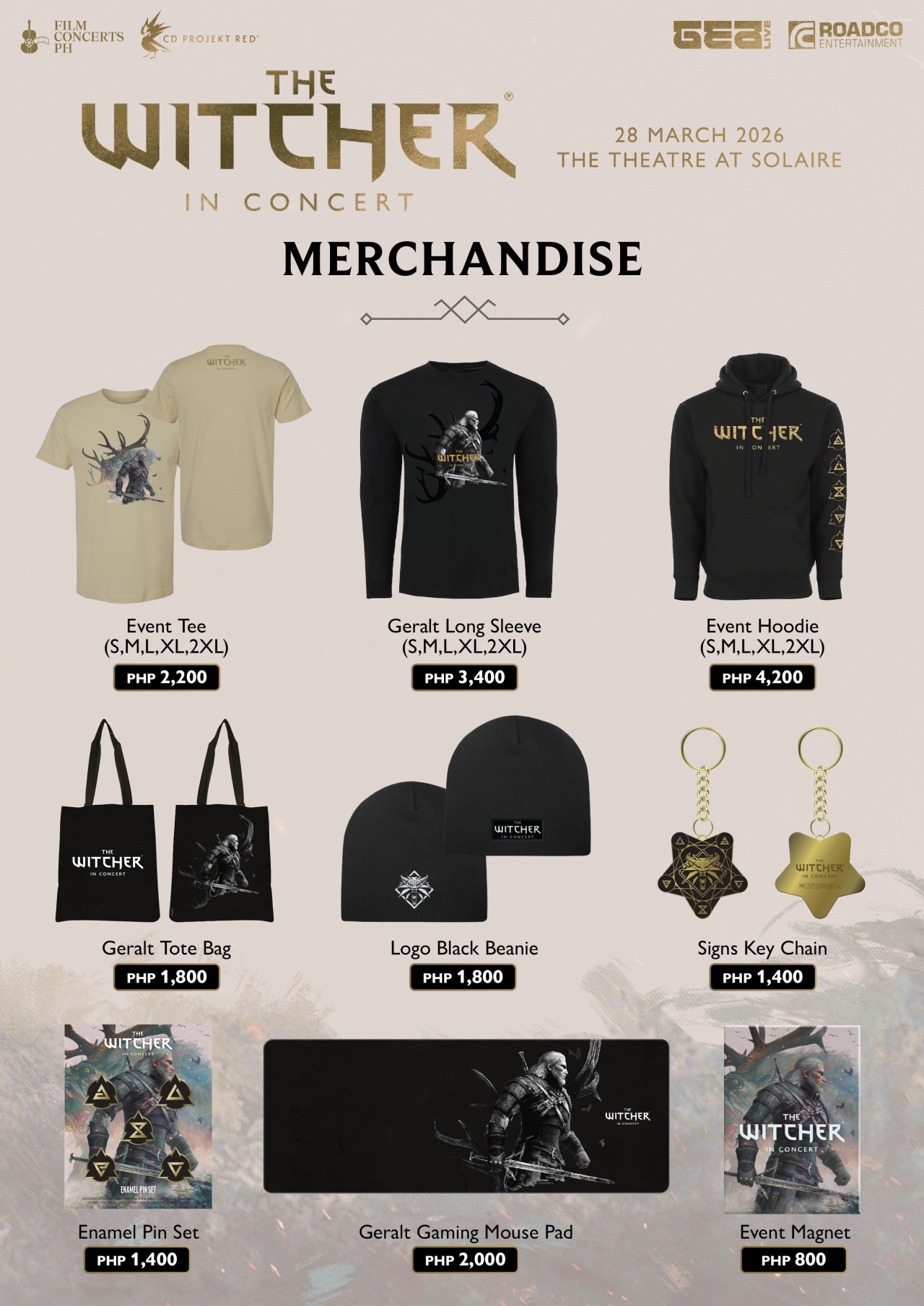
Relics from the Continent: official merchandise
For those who want to take a piece of the experience home, exclusive event merchandise will be available in limited quantities.
This includes the following:
- Event Tee (PhP2,200)
- Geralt Long Sleeve (PhP3,400)
- Event Hoodie (PhP4,200)
- Beanie (PhP1,800)
- Tote bag (PhP1,800)
- Key chain (PhP1,400)
- Enamel pin set (PhP1,400)
- Event magnet (PhP800)
- Geralt gaming mouse pad (PhP2,000)
It’s the kind of loot drop fans won’t want to miss.
The path to Solaire: getting there made easier
Getting to the venue is part of the journey—and this time, it’s a little easier. Attendees can use the Grab code FCPH2026 to get 20% off rides (up to PhP75). With the condition of a minimum fare of PhP250. The promo is valid for two rides per user and applies to trips to and from Solaire Entertainment City.
A rare encounter: meet Percival Schuttenbach
For a handful of lucky fans, the experience goes beyond the stage. Ten winners will get the chance to meet Percival Schuttenbach and receive an autographed CD.
To join, ticket holders need to share any official The Witcher in Concert post on their Instagram Story. They need to write what they’re most excited to hear live and tag @filmconcerts.ph. They need to submit their entry before March 24, 2026 at 5:00 PM. Winners will be announced on March 25.
Answer the call
As the Continent arrives in Manila, fans are encouraged to lean all the way in—whether that means coming in cosplay as a monster hunter, mage, bard, or something far more dangerous.
Tickets are available via TicketWorld and participating outlets nationwide.
The Path is open. The question is—will you answer the call?
Gaming
Monopoly: Star Wars Heroes vs. Villains launching on June 11
Introducing a team-based, cinematic twist to the classic board game
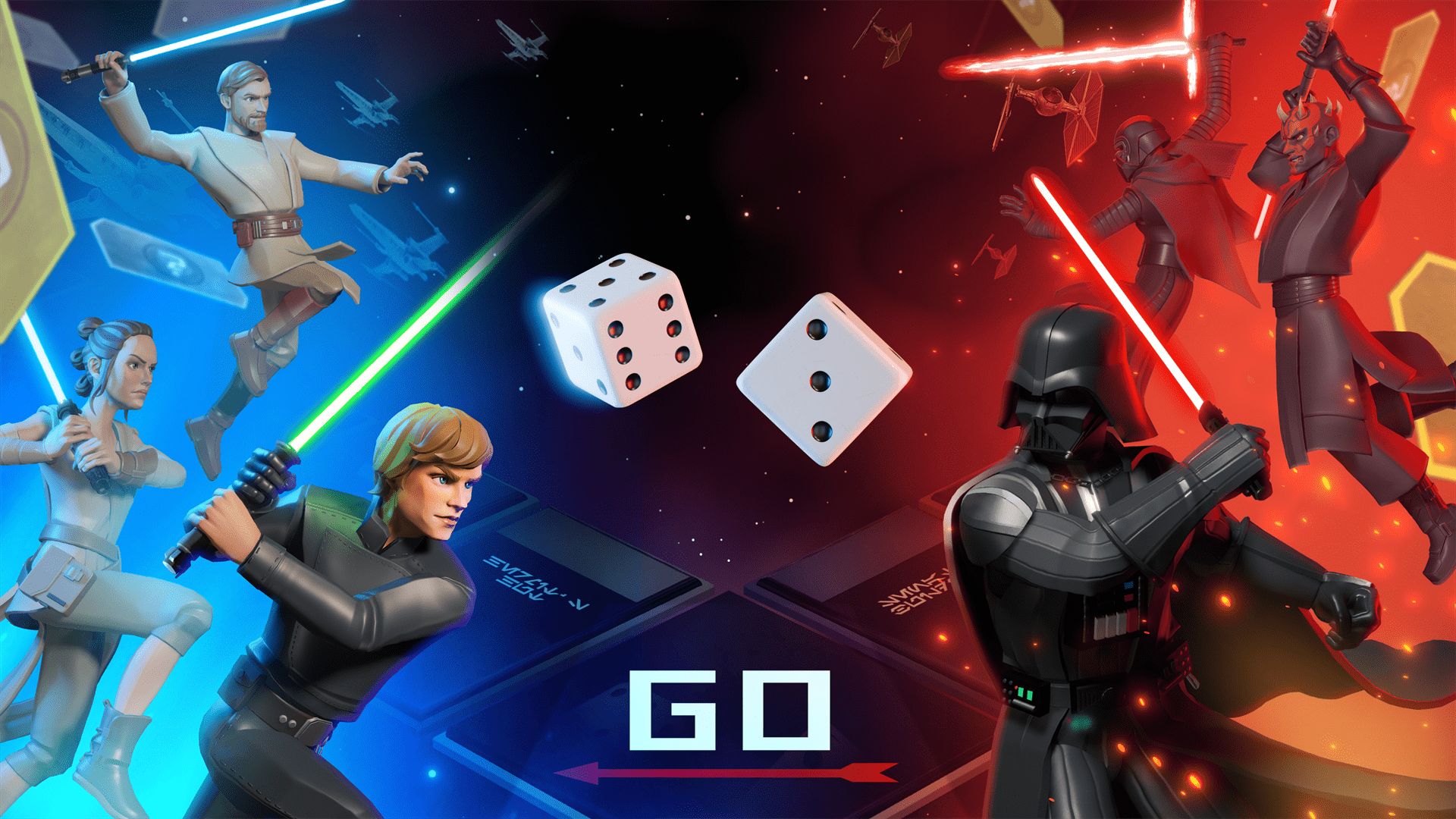
Monopoly: Star Wars Heroes vs. Villains will launch on June 11, Ubisoft has announced. It will debut on PlayStation 5, Xbox Series X|S, Nintendo Switch 1 and 2, GeForce Now, and PC through Steam, Epic Games, and the Ubisoft Store.
The Behavior Interactive title introduces a team-based combat twist to the traditional real estate board game. It includes competitive 2v2 and 3v3 modes, available online and through couch co-op.
This transforms the classic Monopoly gameplay into an action-packed, strategic showdown where teamwork and hero combinations matter.
Every turn carries high stakes as properties change hands in an instant. Dynamic GO events also introduce game-altering twists.
The full reveal will be on April 29.
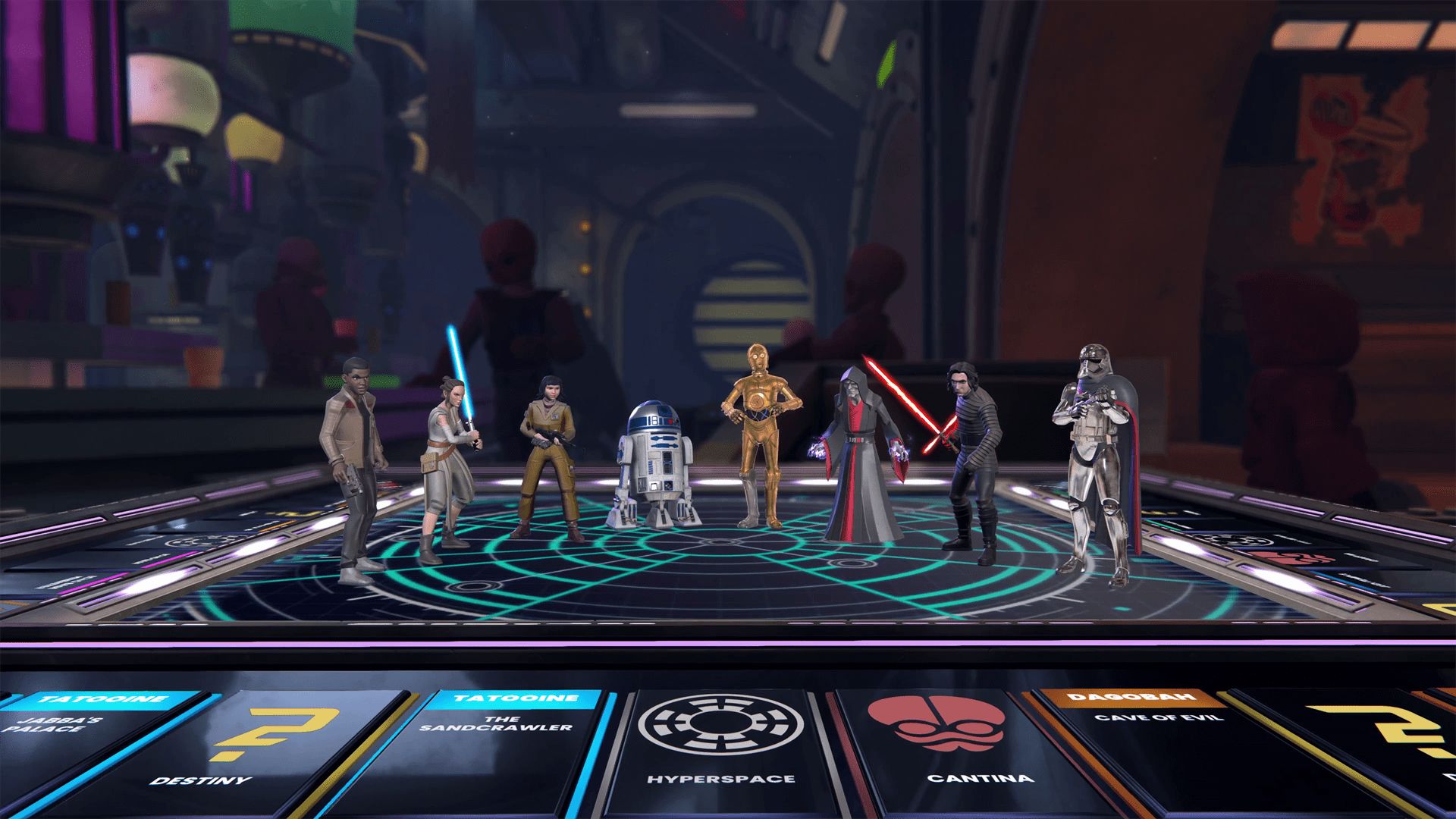
Monopoly: Star Wars Heroes vs. Villains transports players into the Star Wars galaxy with a custom Monopoly board, packed with iconic locations from across the saga.
The gameplay is reimagined with thrilling cinematic moments, themed spaces, and dynamic elements. These make up for a refreshed experience from start to finish.
Players can choose from a wide roster of Star Wars heroes and villains. There’s plenty of options, from Luke Skywalker and Princess Leia to Darth Vader and Darth Maul.
Each character brings unique abilities to shape the team’s strategy and affect the match’s complexion with every roll of the dice.
Gaming
Switch 2 now lets you play old games in 1080p
It tricks old games into thinking that the console is docked.

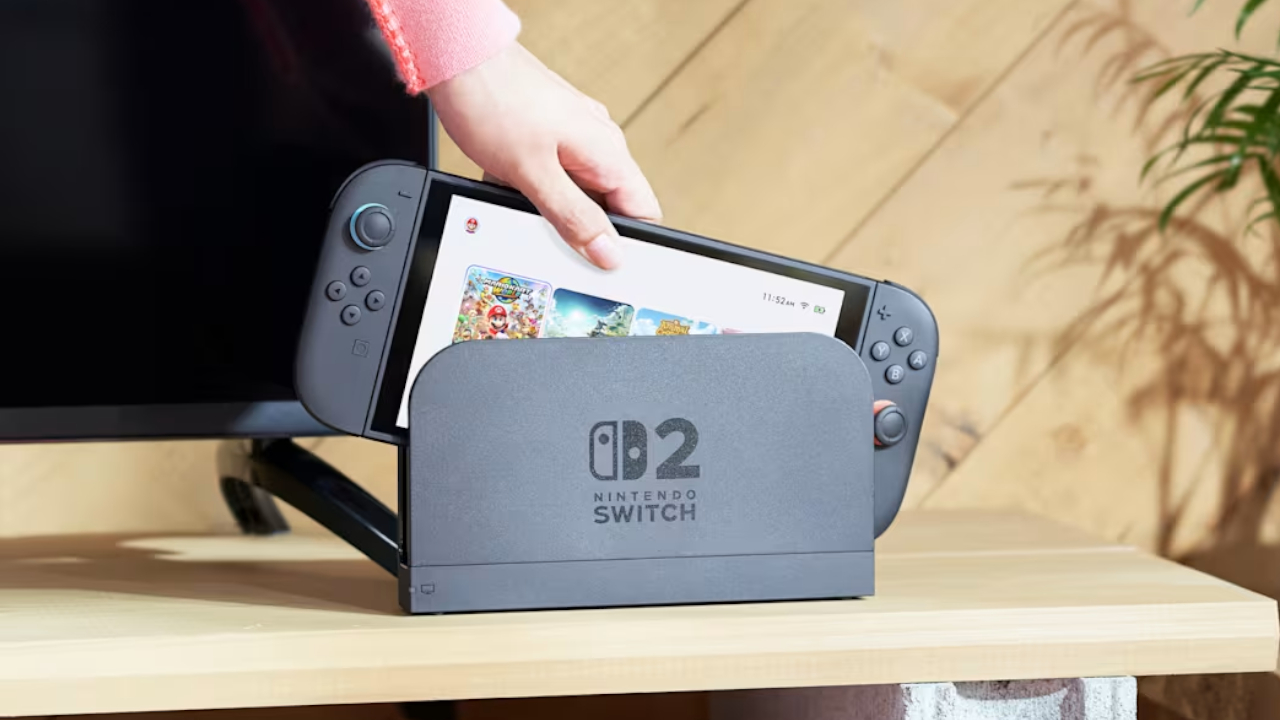
The Switch 2’s popularity is astonishing, to say the least. Just recently, a single game, Pokémon Pokopia, was responsible for taking the free times of over two million players on the Switch 2. Now, Nintendo has released a new feature which should make the console much more playable, especially for those who already had the original Switch.
Today, the Switch 2 received the 22.0.0 system update. Though the update is mostly a variety of smaller updates, one feature, called the Handheld Mode Boost, stands out among the rest. As per the patch notes, “Handheld Mode Boost will cause compatible Nintendo Switch software to run as if the console is being played in TV mode.” Put simply, the feature will unlock 1080p resolution for older games.
For gamers who had the original Switch, game resolution was a huge problem. The first console lived on a 720p screen, so the early games supported only lower resolutions. The only exception is when the console was docked, which allows 1080p resolution.
Now, the Switch 2 supports backwards compatibility. Players can access their older Switch games on the new console. The catch, however, is that these games are still stuck in 720p. Some titles, at least, have released an update to increase resolution on the new console.
Handheld Mode Boost tricks the console into thinking that it’s hooked up to the dock. In effect, the game will play in 1080p. The catch, however, is that it also thinks that the Joy-Cons are a single Pro controller, so players might lose some game features. It’s still a decent price to pay, though.
In other news, the update has also updated the naming of the “Hong Kong/Taiwan/South Korea” to “Hong Kong/Taiwan/South Korea/Southeast Asia,” potentially hinting that Southeast Asia might finally get an online store.
SEE ALSO: Now Playing: Yakuza 0 on Switch 2


Hermès launches a $5,000 MagSafe charger

REDMI Note 15 Series named Presenting Partner for Spartan Race Philippines 2026 season

Stylish, student-friendly HONOR X8d launches

The HONOR X8d is serviceable

Why the OPPO Reno15 5G series is a creator’s essential


-

 Reviews2 weeks ago
The Xiaomi 17 shoots Leica dream
-
 Reviews3 days ago
POCO X8 Pro Max review: A new beast from the far east
-

 News3 days ago
POCO X8 Pro Series: Price, availability in the Philippines
-

 Computers2 weeks ago
GIGABYTE collaborates with Capcom for RE Requiem custom PC
-

 Laptops1 week ago
Apple MacBook Neo Review
-

 Apps1 week ago
Google Maps is finally getting a 3D mode
-

 Entertainment1 week ago
The internet is thirsting over the One Piece Season 2 cast
-
 News2 weeks ago
Globe postpaid opens pre-orders for Samsung Galaxy S26 series