
News
realme GT 7 will launch with Dimensity 9400e, a 7000mAh battery
Plus 120W wired charging and a 120fps screen

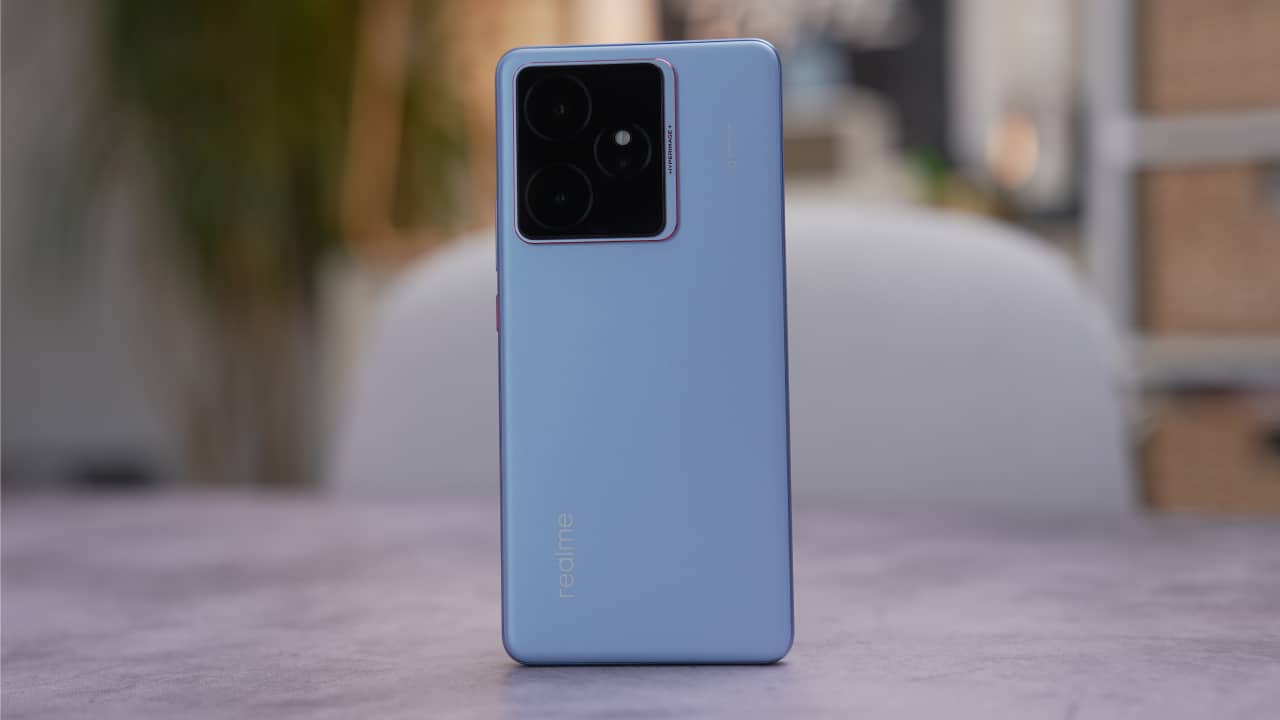
As of late, companies have begun divulging details about their upcoming products ahead of their official launches. For example, Google recently hosted an exclusive event for Android 16 ahead of next week’s annual Google I/O event. Today, realme is joining the early bird party by announcing more about the upcoming GT 7 series ahead of its launch in two weeks.
Based on what realme just released, the company is right to be excited. The realme GT 7 series is the first lineup to have the all-new Dimensity 9400e chipset. The company is so confident in the chipset that it’s calling the upcoming lineup a “flagship killer” for this year.

Introducing the Dimensity 9400e
Announced by MediaTek today, the Dimensity 9400e touts an All Big Core CPU structure. It has four Cortex-X4 3.4GHz cores and four Cortex-A729 2.0GHz cores. Further, the chipset comes with the Immortalis-G720, a twelve-core GPU built for today’s games. Coupled with MediaTek Adaptive Gaming Technology (or MAGT 2.0), the chipset is a true powerhouse for gaming.
According to realme, the chipset scored an astounding 2.25 million points at room temperature on AnTuTu. With power underneath, it’s no surprise that realme is high on the GT7 series.
Packing a beast of a battery and display
Besides the powerful chipset, the realme GT 7 series also carries a gigantic 7000mAh battery. It’s also compatible with 120W fast charging. The upcoming lineup offers one of the most impressive batteries on a smartphone today.
The smartphone also comes with a display that can supposedly run popular games continuously at 120 frames per second. The included GT Boost feature can also predict frames for smoother gameplay on the fly.
Launching on May 27
This isn’t the official launch of the GT 7 series yet. The company is scheduled to launch the new lineup on May 27.






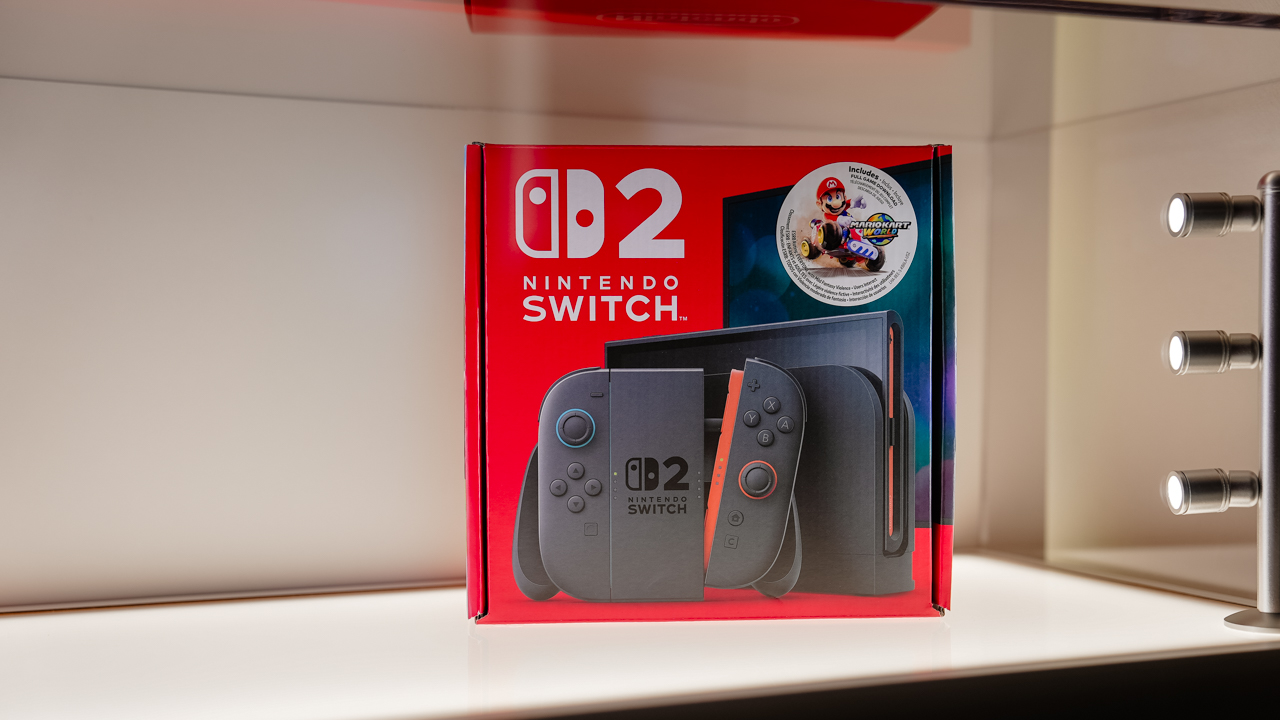
What happens when an unstoppable force meets an immovable object? After a year of wrestling through tariffs from the current American administration, Nintendo has decided to sue the United States.
Last year, the Trump administration was trigger-happy with implement tariffs on countries everywhere. Though the controversy mostly circulated around geopolitics, major corporations also found themselves on the receiving end of Trump’s ire. All over the world, the tariffs sparked product delays and price hikes.
Nintendo is no exception. As a result of the fiasco, the company had to delay the launch of the Switch 2, in anticipation of disruptions caused by the tariffs. First reported by Aftermath, the Japanese gaming giant is now going after the American government over refunds associated with the tariffs.
Now, the tariffs aren’t a big issue anymore. Notably, the Supreme Court scratched off the White House’s implementations that the former found illegal. While a big sigh of relief for future business, corporations like Nintendo have already paid duties and deposits in the past. As a result, Nintendo is now looking for recompense for what they paid before.
Nintendo isn’t the first company to seek restitution over the illegal tariffs. Others, including FedEx and Revlon, are also asking for refunds. However, the Japanese giant is certainly one of the biggest names to cross the government’s path. After all, the company is notoriously litigious over anything it considers as an affront to its business, including small streamers using Pokémon on their broadcasts.
With all its global resources, Nintendo likely won’t just give up without a fight.
SEE ALSO: The Nintendo Switch is now Nintendo’s best-selling console ever
Gaming
Project Helix is Xbox’s next console, and it plays PC games
It might be as powerful as a modern PC.

Among all the platforms in today’s generation of consoles, the Xbox has to be biggest loser. Compared to the PlayStation 5 and the Switch 2, the Xbox Series X|S isn’t as memorable. To rectify its position in the rankings, Xbox is heavily teasing its next console codenamed Project Helix.
As was hinted before, Xbox is trying something different with its next-generation console. Rather than just a simple iteration over the current-generation console, the upcoming one will reportedly double as a PC. Today, the company itself has confirmed that this is the case for Project Helix.
Through a post on X, Xbox CEO Asha Sharma said that the console will “lead in performance and play your Xbox and PC games.”
Great start to the morning with Team Xbox, where we talked about our commitment to the return of Xbox including Project Helix, the code name for our next generation console.
Project Helix will lead in performance and play your Xbox and PC games. Looking forward to chatting about… pic.twitter.com/Xx5rpVnAZI
— Asha (@asha_shar) March 5, 2026
There are two things to unpack here. Firstly, Project Helix will aim to bridge the perilous divide between console players and PC players. Unlike the past, there will be a way to play both platforms on both devices… except for games exclusive to the PlayStation and the Switch, that is.
Secondly, a “lead in performance” seems to indicate that this isn’t just a mini-PC. Most recently, Valve announced the Steam Machine. Though it offers a convenient way to play Steam games in one device, it doesn’t have the best specs. Project Helix, if Sharma’s words are to be believed, might be as powerful as a modern PC.
Xbox won’t wait long before revealing more details about the console. Sharma, who only recently started her post as CEO, will be at next week’s Game Developers Conference to explain Project Helix more.
SEE ALSO: AMD teases next-gen Xbox coming in 2027
News
Nothing adds color to its wearables with the Headphone (a)
The Pink and Yellow colors look great!

Last year, the Nothing Headphone (1) added a sense of fashion to the drab headphone market. Today, Nothing is adding a splash of color to its stylish lineup of headphones through the newly launched Headphone (a).
As with the (a) series of phones, the Headphone (a) melds fashion with affordability and performance. For quality, the wearable will have intelligent noise cancellation and sharper voice pick-ups with a 3-microphone Environmental Noise Cancellation system. It will also deliver rich immersive sound through Static Spatial Audio.
It’s only 310g light for easy use throughout the day.
For convenience, the Headphone (a) will have tactile gestures, such as a Button, Roller, and Paddle, to easily control the device without need of a phone. Users can integrate features like Channel Hop and Camera Shutter mode straight into the controls.
The headphones are designed for up to five days of battery life. Plus, a five-minute charge time can already provide five hours of playback. Finally, for durability, it is rated for IP52 resistance.
The Headphone (a) is available for preorders now. Starting March 13, it will be available in White, Black, and Pink. It will sell for EUR 159. Meanwhile, a limited-edition Yellow pair will be available starting April 6.


Nintendo sues the United States

OPPO Reno15 F 5G hands-on

Project Helix is Xbox’s next console, and it plays PC games

Nothing adds color to its wearables with the Headphone (a)

Nothing launches the Phone (4a) series

Xiaomi 17 Ultra is now available outside China

TECNO will showcase the CAMON 50 and POVA 8 series at MWC 2026

The art of being in and behind the frame

HUAWEI MatePad 11.5 S 2026: The better-than-ever 4-in-1 productivity tablet

TECNO MEGABOOK K16s 13th review: No-frills beneath those grills


-
 News7 days ago
Xiaomi 17 Ultra is now available outside China
-

 Camera Walkthrough2 weeks ago
OPPO Reno15 Pro: Camera Review
-

 MWC 20265 days ago
TECNO showcases cool concepts at MWC 2026
-

 MWC 20261 week ago
TECNO resurrects modular phones with this new concept
-

 Reviews7 days ago
Xiaomi Pad 8 review: Slab that slaps!
-
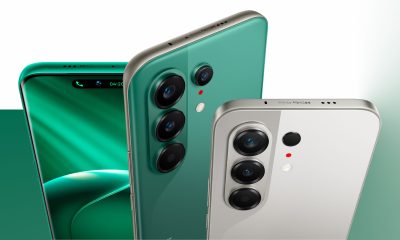
 MWC 20264 days ago
TECNO launches the all-new CAMON 50 series
-

 Events2 weeks ago
Capcom to hold Resident Evil Requiem launch event in Jakarta
-

 Reviews7 days ago
Forget the Phone: Xiaomi 17 Ultra Is A CAMERA!