

So, you’ve done the bare minimum of documenting your underwater adventures (a.k.a. using your smartphone or a GoPro) and now want to ramp up the quality of your photos? Professional underwater photographers use DSLR cameras, heavy-duty housing, and numerous accessories and apparel, and it can get very overwhelming.
Even if you’re familiar with DSLRs and are a pro at composition, understand that underwater photography is a different game altogether. On top of familiarizing yourself with the new tools of underwater photography, the terrain in which you operate in is also new and often unpredictable. If you’re not used to carrying bulky items (or anything at all) during a dive, then it’s important you take things slow.
Fortunately, taking things slow in underwater photography does not mean compromising quality nowadays. Today’s point-and-shoot cameras have become quite versatile and have upped the ante in quality. Point-and-shoot cameras available in the market, dare I say, are giving DSLRs a run for their money. And now, they even come with accessories fit for extreme shooting conditions.
A clear example? The Sony RX100 V and the Sony Underwater Housing.

My dive buddy exploring the beautiful table corals, 12 meters deep!


One of our more experienced divers and underwater photographers
Much has been said about the Sony RX100 series. Its key upgrades for Mark V (versus its predecessor) are a better sensor, faster image processing speed, a 24fps RAW burst with autofocus tracking for up to 150 shots, and a new AF-A mode to switch between single and continuous AF (a function usually found on DSLR systems). Bigger, better quality photos at faster rates? All these improvements are music to my ears when working in unpredictable conditions.

Safety stop time means photoshoot time. Making the most of our 10-minute stops before we surface from a dive!
It operates on a 24-70mm lens with a maximum aperture of up to f/1.8. Despite having a considerably smaller zoom range compared to other compact cameras of its caliber, its aperture stops at f/2.8 as soon as it reaches 35mm. In underwater conditions that required me to zoom in, I had to raise ISO significantly to avoid blur from camera movements which I had no control of given strong current.

Extremely impressed with the macro quality and speed of the camera!


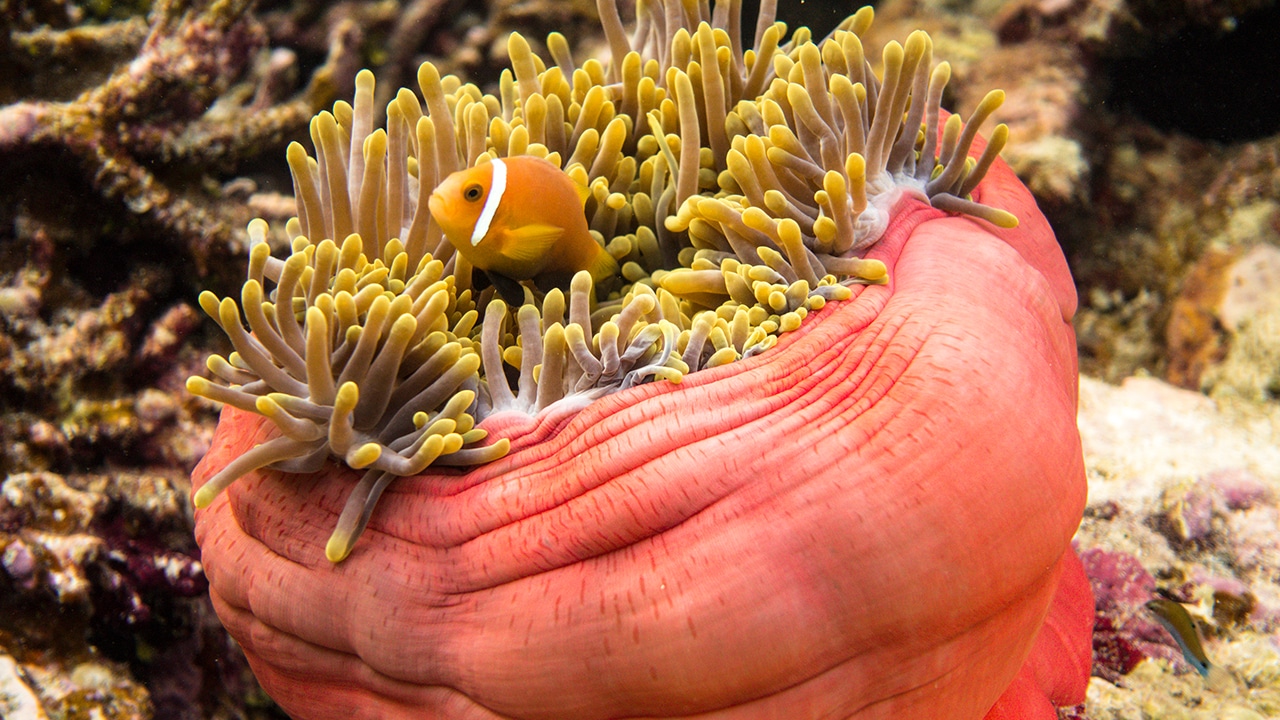
Obviously, I was also quite obsessed with the Maldives clownfish and anemones
At the beginning, there will be struggles in getting the white balance right. The deeper you go underwater, the more you lose sight of color, so what may look right for you onscreen underwater may not translate the same way when you’re back on the surface.
Looking back, carrying a white slate would have been ideal for me to correct color easier in post. I resorted to using the underwater housing’s white diffuser as reference. Color correcting is vital in underwater photography, and therefore, the availability of RAW and the speed of the image processing and burst come in handy. Compact cameras with these features — in this case, the Sony RX100 V — are the best stepping stones as you step up your underwater photography game.
I road tested (or should I say, water tested) the Sony RX100 V and its underwater housing in the beautiful deep south of Maldives. Diving in this region is most challenging due to its unpredictable conditions in terms of water current and the marine life you’ll be discovering. The expedition allowed us to dive up until a maximum depth of 30 meters (nearly 100 ft.) due to Maldivian laws.
The Sony Underwater Housing is fit for up to 40 meters depth — shallow compared to the maximum depths allowed by its more prime competitors, which go up to 60 meters. But (as a newbie), why would you do that, anyway? Sony’s housing is also considerably cheaper versus its alternatives, but does not negotiate on quality and still allows you to perfectly capture the detail and dynamic range that the Sony RX100 V boasts.
Here are even more photo snippets from our expedition using the Sony RX100 V and Sony Underwater Housing:

A school of Oriental Sweetlips are a sight to see!

These beautiful stingrays can get pretty close, but don’t usually attack

Reef sharks were such sights to behold

Occasionally, they’d pose for the camera

Remoras are rarely seen without a host (a shark or large fish), much more in a school, so this was quite a strange occurrence — one of my favorite photos from the trip!

Moray eels are very calm creatures, usually hanging out in corals with their heads peeked out

Eagle ray sightings!
My overall experience with the Sony RX100 V with its underwater housing felt like an easy transition (and wonderful upgrade) from working with both a GoPro and my iPhone (in a Nauticam housing). Simple and easy to carry around, I had it lugged in a simple rig for ease of handling and stability, and equipped it with a basic scuba torch.
Is this the match for a budding underwater photographer like you? This perfect underwater pair comes highly recommended.
Note: All photos were shot with the Sony RX100 V







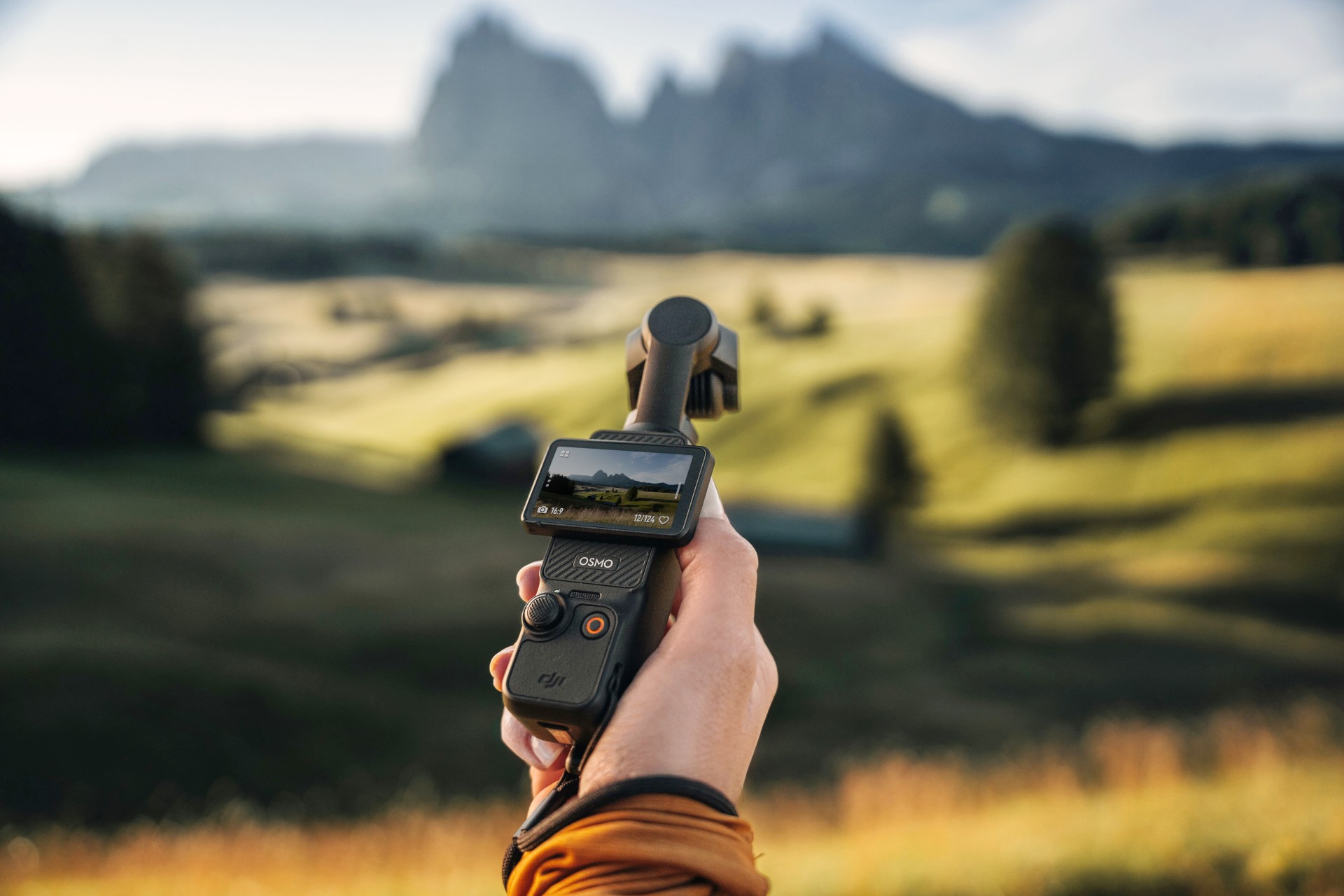
The DJI Osmo Pocket 3 might be the most popular camera in recent history. The tiny action camera constantly sells out, thanks to creators and would-be vloggers. Because of the current generation’s popularity, everyone is looking forward to the next-generation Osmo Pocket 4. Though it’s still unannounced, the new camera has suddenly made a surprising appearance out in the wild.
The leak shockingly comes from an authorized DJI retailer in Kuala Lumpur. Supposedly, a customer entered the store with what they claimed was an Osmo Pocket 4. The store, DronesKaki, even shot a now-deleted video of the unannounced camera, rescued by New Camera.
Based solely on the short video, the Osmo Pocket 4 looks and feels very familiar to those who’ve already used the Pocket 3. The three-axis gimbal system still keeps shots in place for taking videos while on the move. The 2-inch rotating screen looks identical to the current one, especially because of intuitive settings and controls.
However, the biggest standout is the built-in LED light sitting atop the camera. Despite how convenient and easy to use it is, the Pocket 3 doesn’t exactly shine in low-light conditions, prompting users to always bring an external flash. If the leak is true, the Osmo Pocket 4 cures this issue to some extent. (Built-in flashes aren’t usually standout solutions, but they can work in a pinch.)
Still, take the leak with a grain of salt. Though the store could have deleted the video because of a request from DJI, they could have also deleted it because it’s not the Osmo Pocket 4. At this point, we won’t know, but current rumors speculate that the camera is launching soon.
SEE ALSO: DJI Osmo Action 6 review: An adventurer’s best friend
Cameras
Canon PhotoMarathon returns, introduces video, open categories
Happening on April 18 in BGC, Taguig


The Canon PhotoMarathon is officially returning this year and is introducing more categories for enthusiasts to join in.
The 2026 edition, the 19th in the Philippines, will happen on April 18 at the BGC Amphitheater in Taguig City.
For the first time, Canon is opening the competition to non-Canon users. Even those with just smartphones can register. The brand has also added a video category.
Here’s a quick breakdown of the contest categories and their corresponding prizes:
Main Category (Photo)
- Open to Canon users only
- Prize: Canon EOS R6 Mark III with RF24-105mm f/4-7.1 IS STM
Open Category (Photo)
- Open to all camera brands
- Prize: Canon EOS R8 with 24-50mm
Video Category
- Open to all camera brands
- Canon Prize winner: Canon EOS R50 V
- Non-Canon Prize winner: Canon Powershot V1
The full mechanics will be announced on the day of the competition itself to make it even more challenging for those taking part.
To join, simply download the Canon PH Delightful app, create an account, go to the Events tab and select the Canon PhotoMarathon banner. Registration is already open.
To build up hype for the upcoming event, Canon will host photowalks, school tours, and regional tours leading up to the PhotoMarathon.
These are designed to engage photographers at every skill level. Admission is free and open to all digital camera users.
Cameras
Canon EOS C50 cinema camera price in the Philippines
Smallest, lightest cinema camera made for today’s filmmakers, creators

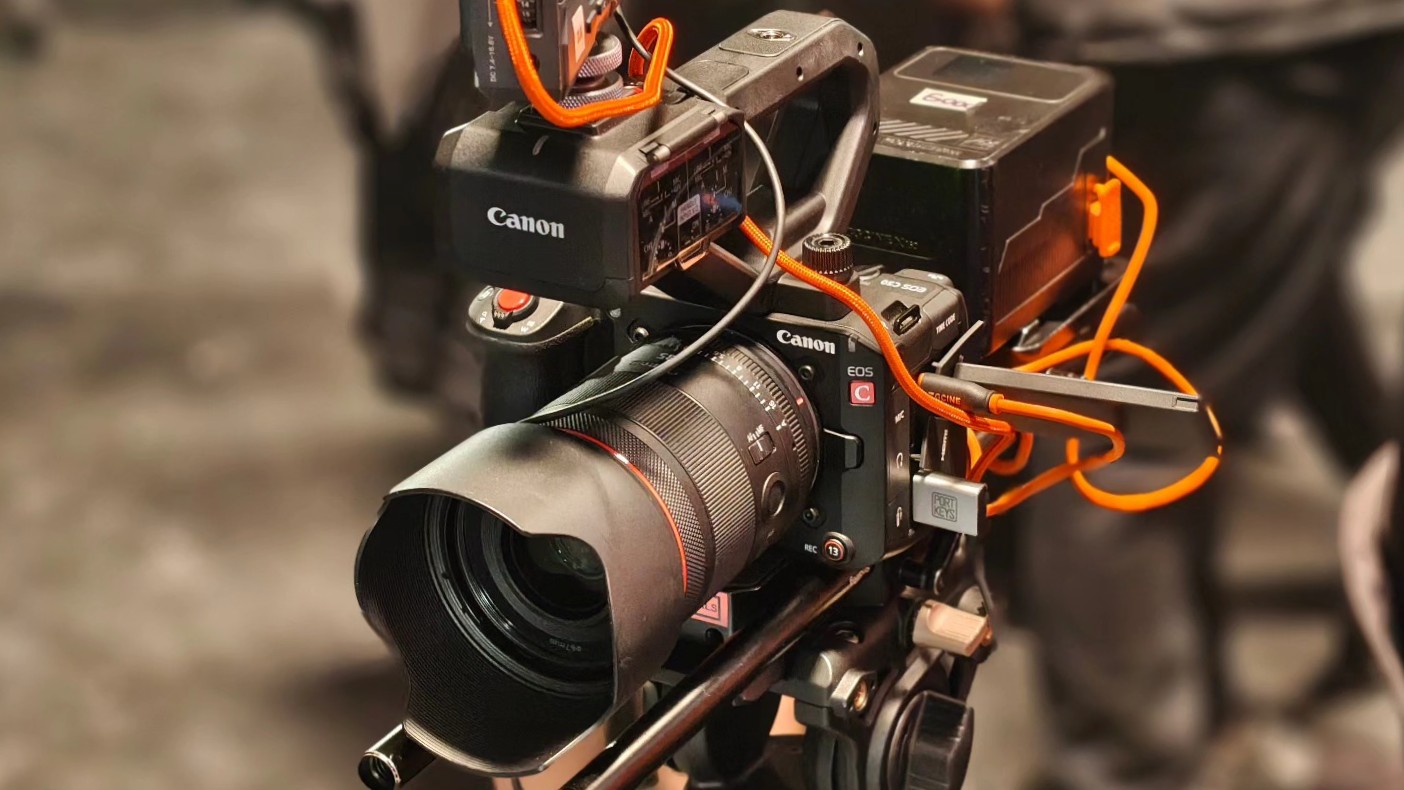
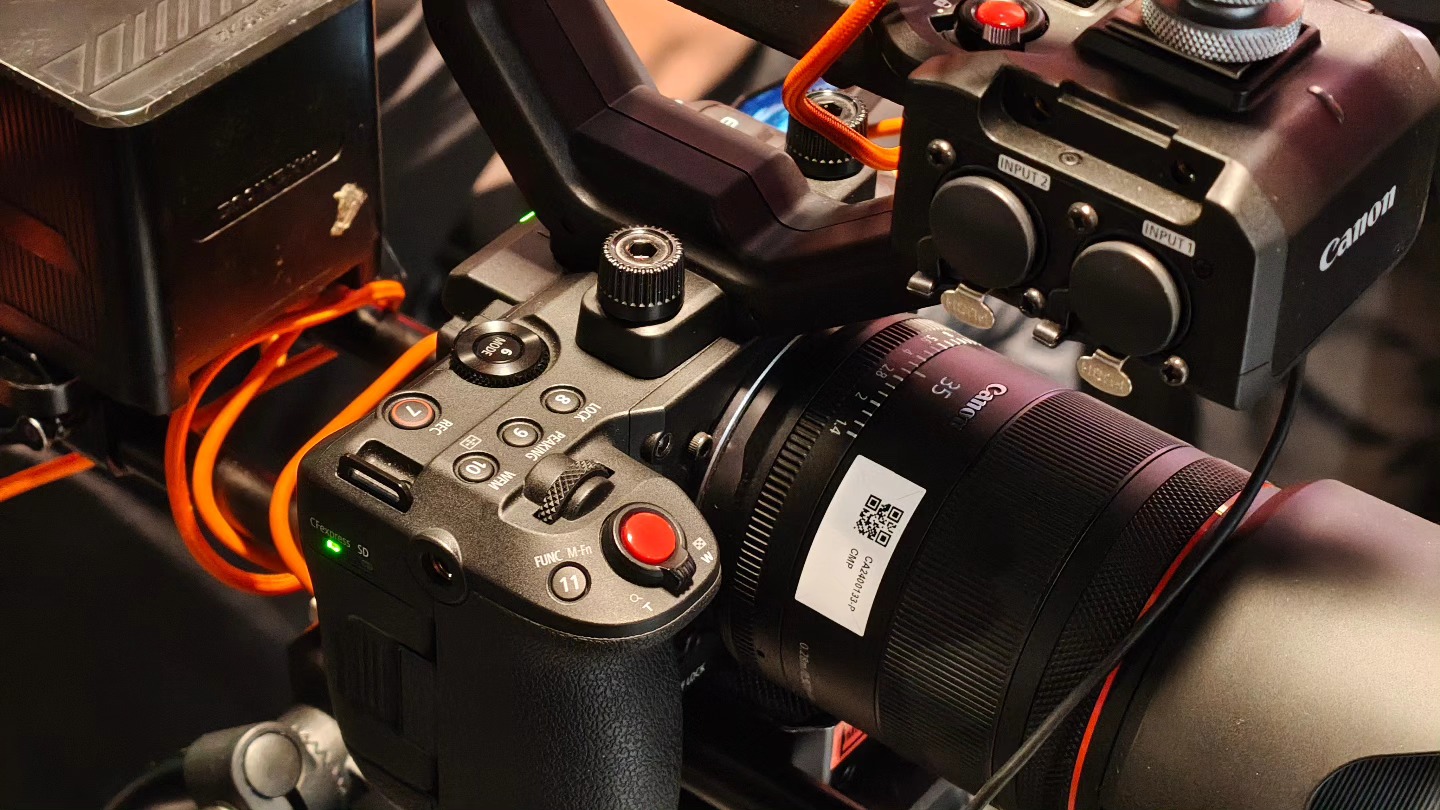
Canon Philippines is capping the year strong with the release of the Canon EOS C50 in the market. The cinema camera is priced at PhP 189,998 for the body along with an XLR handle.
The Canon EOS C50 is designed for both filmmakers and creators who need mobility and professional-grade quality.
It has the same 3:2 Open Gate recording feature also on the EOS R6 Mark III, which gives users flexibility for post-production.
Creators can extract full 4K footage along with cropped 2K vertical or square versions from the same capture with the Simultaneous Crop Recording feature.
This is ideal for producing multi-platform content, like 16:9 landscape videos for YouTube then vertical shortform videos for social media.
Also, an added edge is the up to 7K 60p RAW recording capability on the C50, compared to just 7K 30p for the Mark III.
Filmmakers can also record at up to 4K 120fps should they need high frame rate captures. Recording in 4:2:2 10-bit is also available for rich color and flexibility in post-production.
In addition, the EOS C50 features dual CFexpress and SD card slots. 7K RAW can be saved to CFexpress while other formats can be saved to the SD card.
Different format, resolutions, and color sampling can be assigned for backup, distribution, or quicker edit-ready files.
Photo performance
For stills, users can take advantage of the 32MP CMOS sensor for capturing up to 40 shots per second (with electronic shutter).
The camera also supports pre-continuous shooting and AF performance improvements with its Dual Pixel CMOS AF II.
Enhancements include Auto setting, animals, vehicle priority, and eye AF, as well as the new left/right priority.
Moreover, the camera features Dual-Base ISO with Auto Selection, automatically switching between ISO 400 and ISO 3200 depending on the scene.
This ensures the highest signal-to-noise ratio while maintaining a wide dynamic range. Users can also manual select the ISO to match lighting conditions.
Professional interface
Onto its controls, the EOS C50 has a TIME CODE terminal, which is perfect for seamless multi-camera setups. It also features two XLR terminals and a handy control dial for professional audio input.
There are 14 assignable buttons, each thoughtfully positioned for quick, instinctive access while filming. There are about 100 customizable functions available so the camera can match a user’s workflow.
During the launch event, Canon Philippines demonstrated a wide range of scenarios for the EOS C50, including multi-angle live broadcasts with just one camera.


Now Playing: Iron Lung
The premise will leave you wanting for more.


Infinix NOTE Edge: Stellar at street photography
Despite trailing in other specs, the Infinix NOTE Edge was built for point-and-shoot photography.


OPPO Reno15 Pro: Camera Review
Why is this even considered a "Reno"?

Resident Evil Requiem is out now

Unboxing: HONOR Magic8 Pro Photography Kit

Tales of Berseria Remastered is out now on consoles and PC

Pokémon Winds and Pokémon Waves will launch in 2027

ITZY’s YUNA is Infinix’s first ever global brand ambassador

Breaking up with Adobe Photoshop after 20 years

TECNO will showcase the CAMON 50 and POVA 8 series at MWC 2026

PlayStation, LE SSERAFIM Chaewon team for the ‘Love of Play’ campaign

VinFast updates battery subscription policy for large upfront savings

The art of being in and behind the frame


-

 Accessories2 weeks ago
Apple AirTag 2 Review
-

 First Look1 week ago
Match Pulse: Infinix NOTE 60 Pro
-
 Cameras1 week ago
Osmo Pocket 4 makes a surprising appearance in public
-
Camera Walkthrough7 days ago
OPPO Reno15 Pro: Camera Review
-

 Gaming2 weeks ago
Star Wars: Galactic Racer shows off new gameplay at State of Play
-

 News1 week ago
iPhone 17 Pro Max is somehow the most traded-in phone today
-

 Gaming1 week ago
LG unveils UltraGear evo, redefines 5K gaming with AI Upscaling
-

 News1 week ago
HUAWEI launches Mate X7, MatePad 11.5 S 2026, FreeClip 2