
Camera Walkthrough
vivo X200: Camera Review
X-traordinary cameras within your pocket’s reach

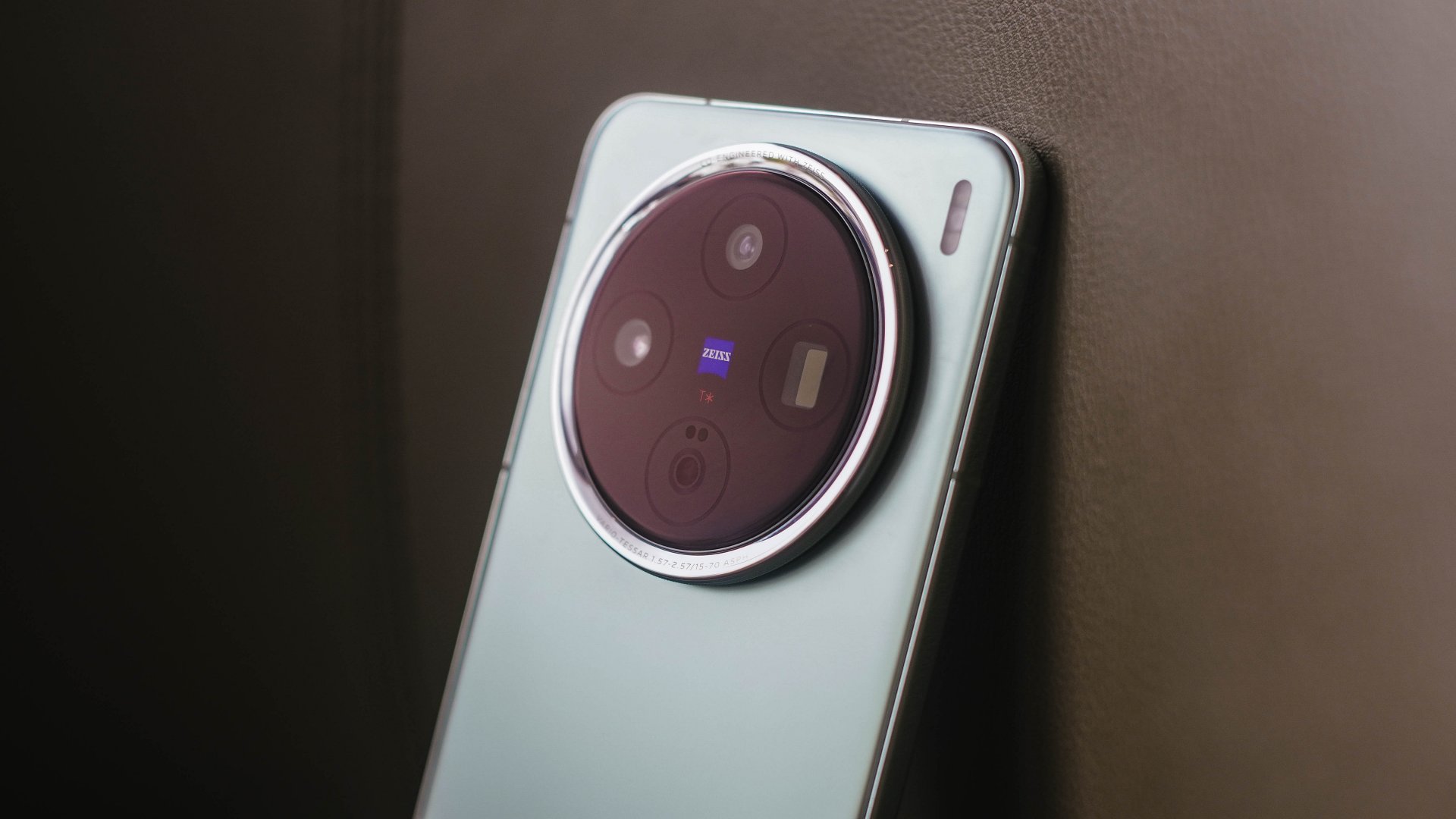
Around this time last year, I was in China. The moment I’m typing this part, an unsolicited memory then appeared in my head: those promotional materials of the vivo X100 almost everywhere in Shanghai and Guangzhou — subways, malls, even the airport’s concourse.
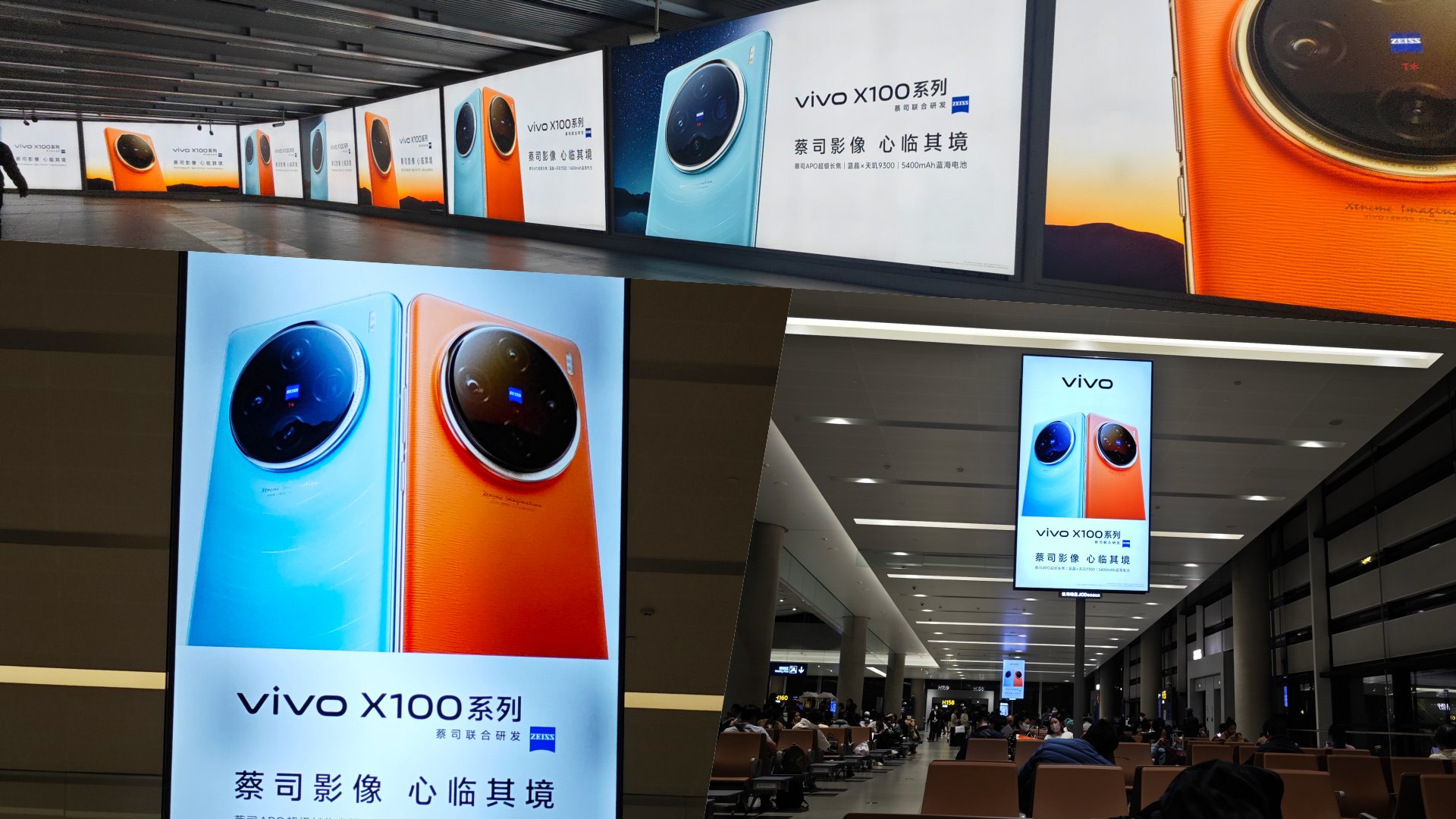
For me, the X100 series was vivo’s biggest leap forward in their smartphone-folio. The massive overhaul in camera hardware, software, and overall aesthetics made its predecessors look like they were produced as a result of an unforgiving trial and error.

vivo X100 Ultra | May 2024
Those countless camera reviews I’ve watched on YouTube made me want to own one — the X100 Pro and the much anticipated X100 Ultra to be very exact. Although some countries were able to sell it, vivo never made them available in the region where I reside.
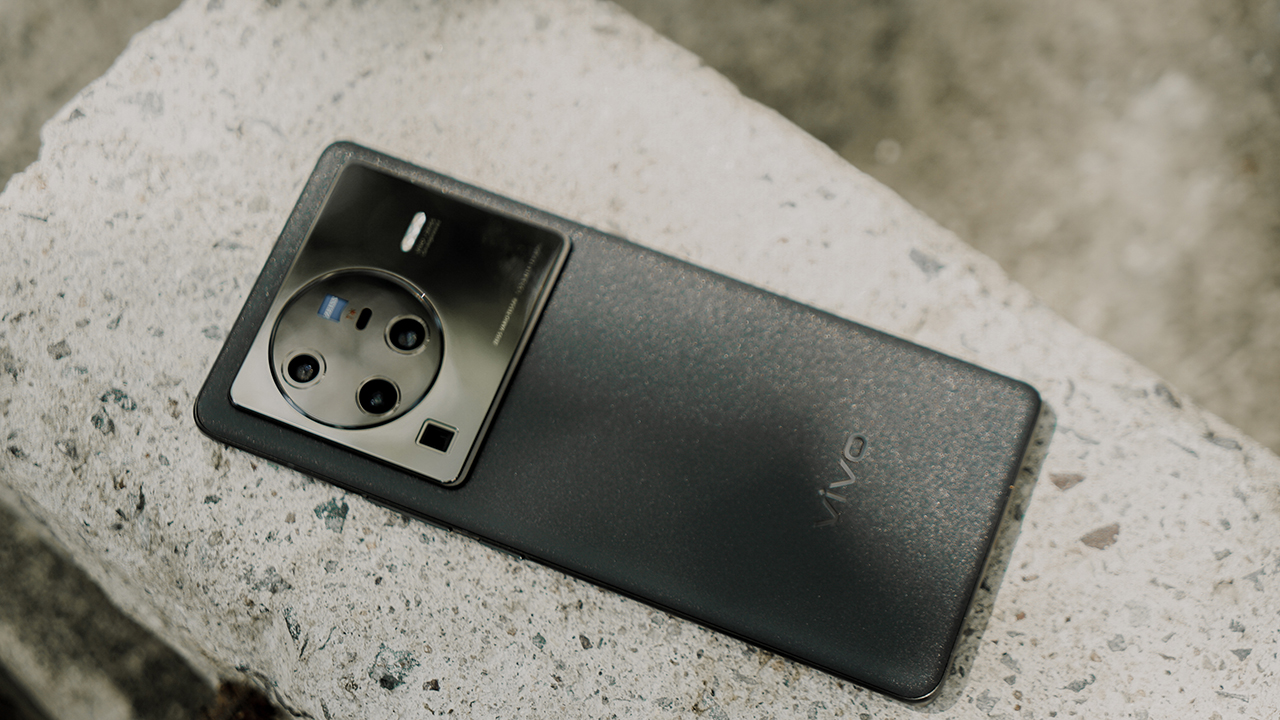
vivo X80 Pro | April 2022
This also reminded me that the last X-series phone I’ve held was the vivo X80 Pro from two years ago — which I still think was one of 2022’s underrated smartphone camera.
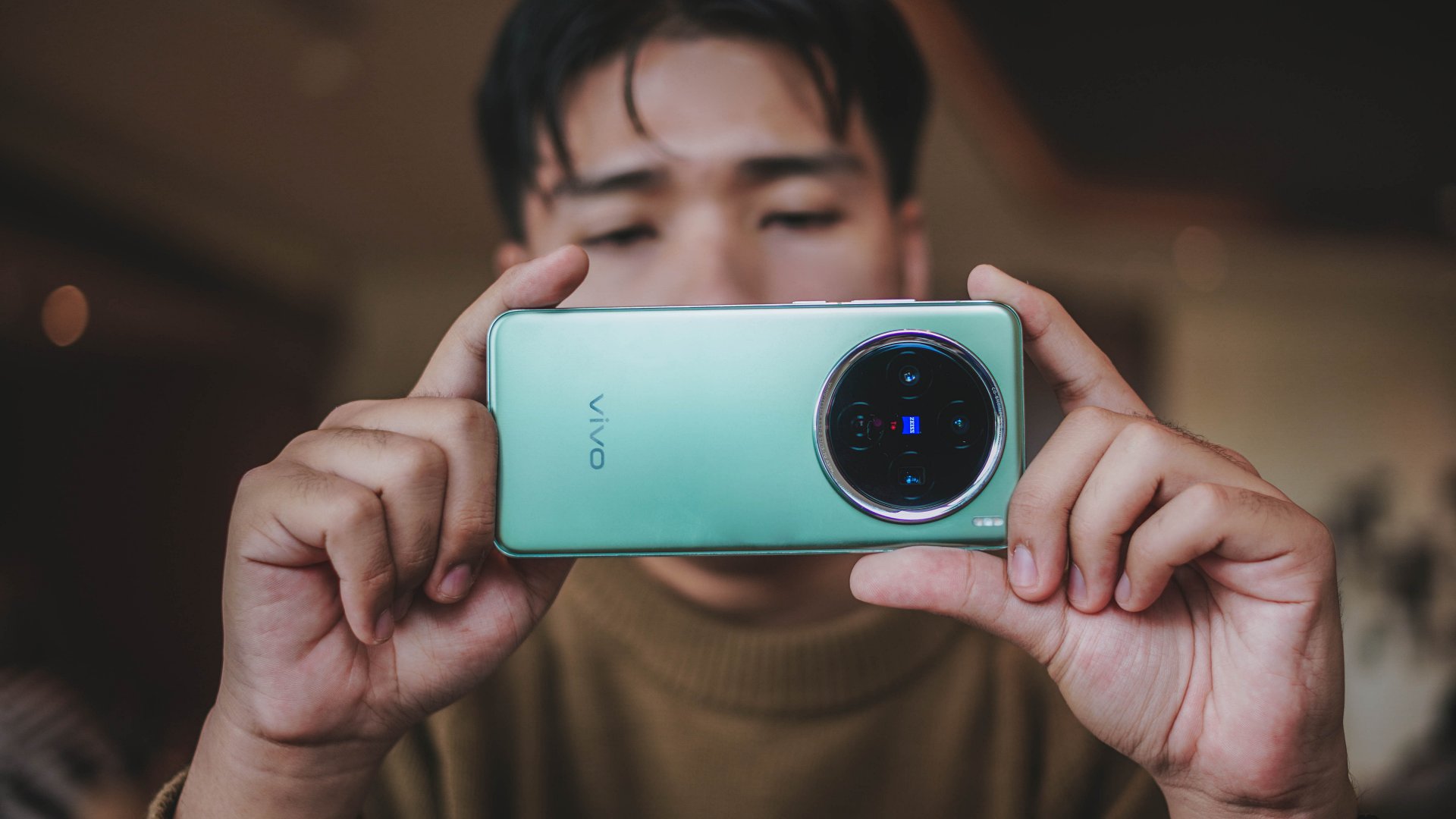
Finally, a year since the launch of the X100 series and two years after the X80, vivo has launched the X200 series not just here in the Philippines, but pretty much every major market they handle.
Barely Base
While this isn’t the Pro version I was hoping for, I’ve still decided to give it a try.
After all, it only has some minuscule differences compared to its Pro sibling.
| vivo X200 | vivo X200 Pro | |
| Wide | 50MP f/1.57 VCS True Color 1/1.56” Sony IMX921 sensor |
50MP f/1.57 ZEISS True Color 1/1.28” Sony LYT-818 sensor |
| Ultra-Wide | 50MP f/2.0 119º FoV (Field of View) |
50MP f/2.0 119º FoV (Field of View) |
| Periscope Telephoto | 50MP f/2.57 3x optical zoom (70mm) 1/1.95” Sony IMX882 sensor PDAF + OIS |
200MP f/2.67 ZEISS APO 3.7x optical zoom (85mm) 1/1.4” Samsung ISOCELL HP9 sensor Multi-directional PDAF + OIS |
| Selfie | 32MP f/2.0 | 32MP f/2.0 |
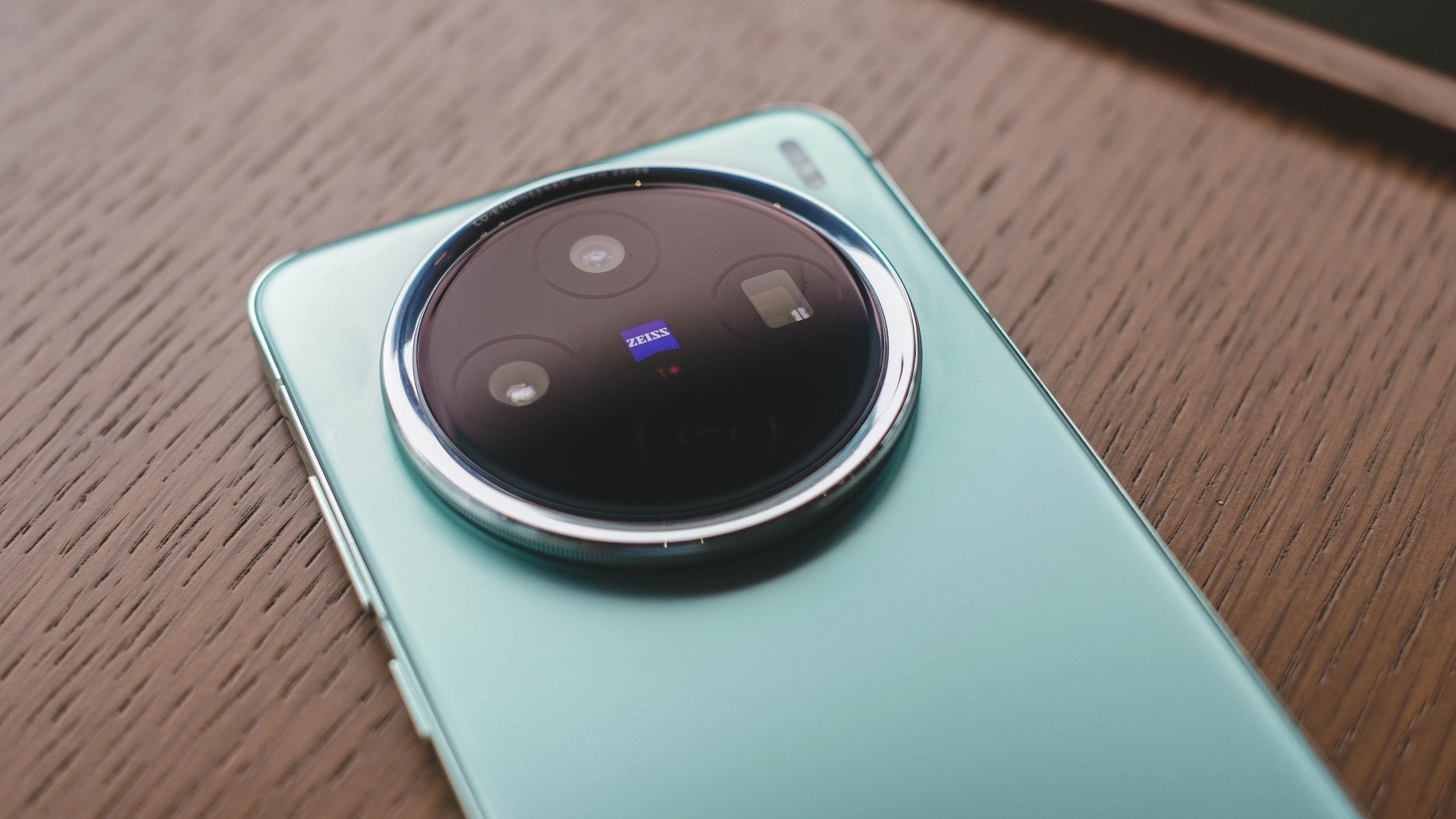
Interestingly, the X200 shares the same 50MP Sony IMX921 sensor found on the V40 Pro. But, that easily gets crushed by the Sony LYT-818 50MP sensor that’s closer to the 1-inch mark.
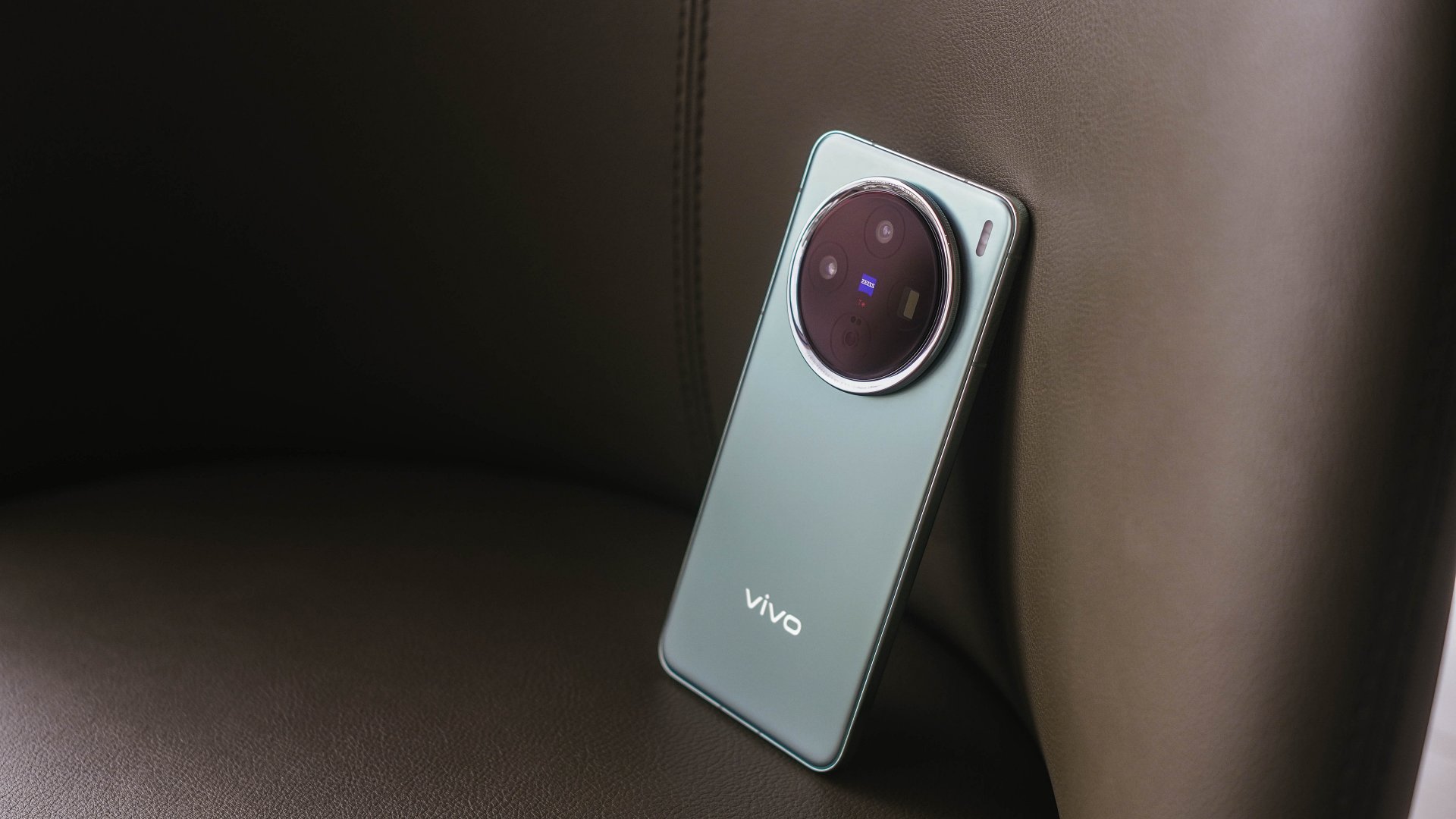
The biggest disparity? It’s none other than the massive 200MP periscope telephoto of the X200 Pro with its ZEISS APO floating design. Not only that, it also features a bigger and badder Samsung HP9 sensor, farther optical zoom length at 3.7x, and even a multi-directional PDAF (Phase Detection Auto Focus) in tow.
Ultra-wide and selfies barely differ. I suppose they’re also very similar to those found on both the vivo V40 duo.
Flexible Focal Length
With all that out of the table, let’s dive deeper into the camera prowess offered by the vivo X200.
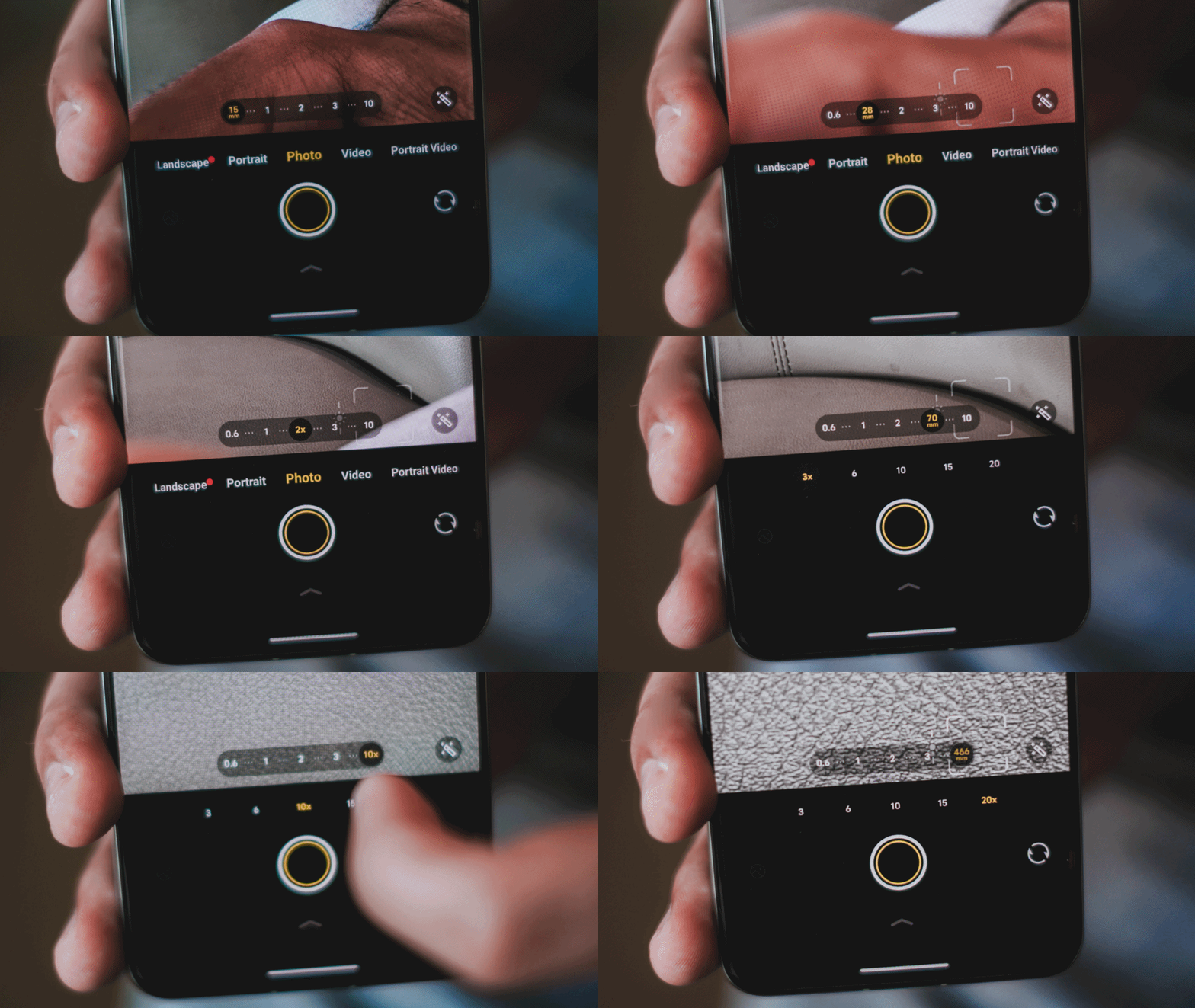
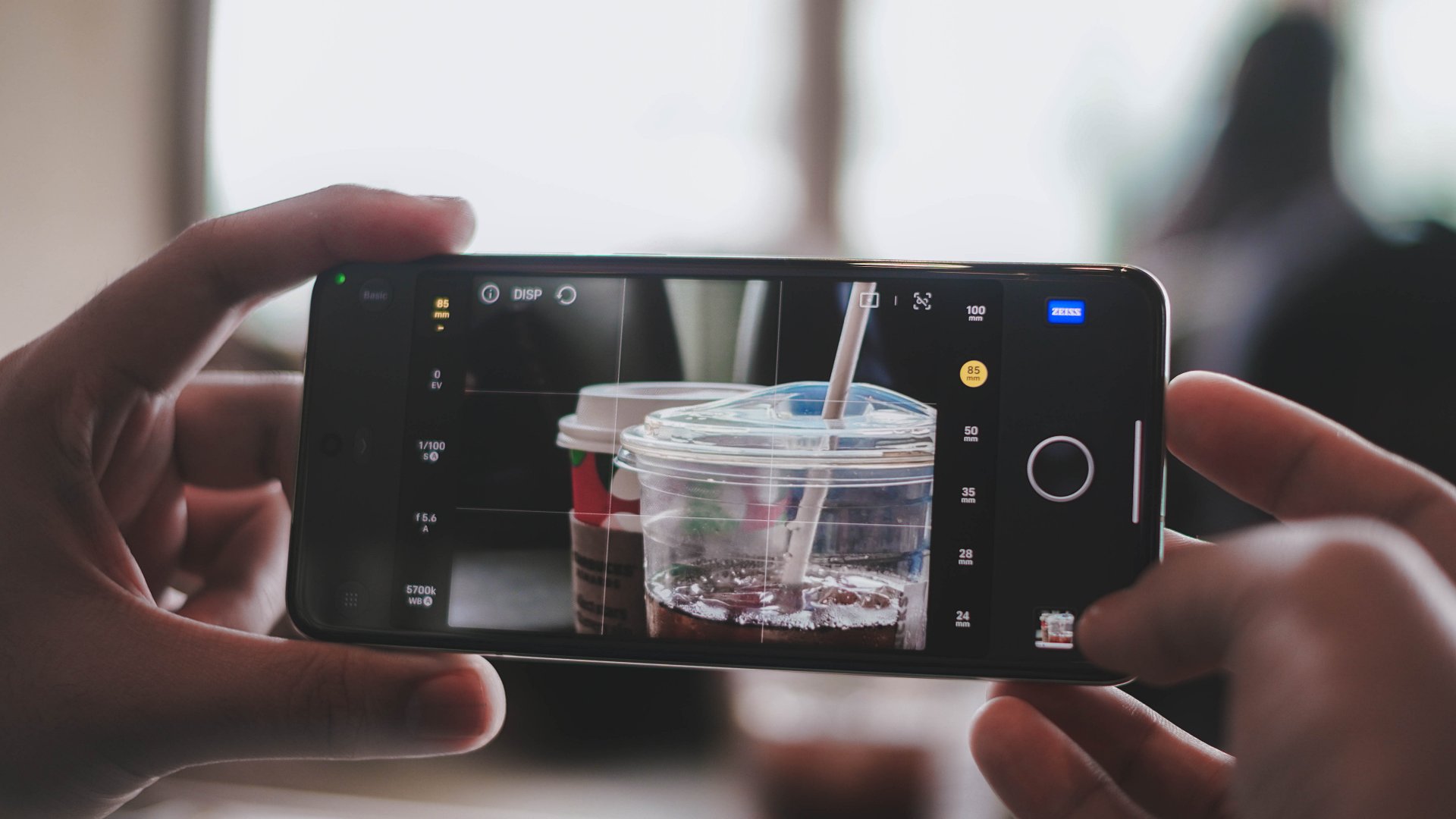
One thing I love about vivo’s new flagship camera phone is its plethora of focal length options — especially for the frustrated photographer in me.

Although the X200 wasn’t the first one to do so, I love how they also adapted this feature as it makes more sense in a camera-centric flagship like this.

Here’s a detailed list of X200’s flexible focal length range:
| Ultra-Wide | Wide (Main) | Lossless Zoom | Optical Zoom | HyperZoom |
| 15mm • 0.6x | 23mm • 1x | 46mm • 2x | 70mm • 3x | 230mm • 10x |
| 28mm • 1.2x | 50mm • 2.2x | 140mm • 6x | 350mm • 15x | |
| 35mm • 1.5x | 466mm • 20x |
One fine use of this was when I tried shooting this Christmas-studded decoration inside a mall.

I just thought that the default 23mm focal length looks a little bit too wide. But, with an easy tap of a finger, it gave me a better 35mm framing. Manually pinching in and out of the zoom range on most smartphones made me miss some subjects I’ve tried capturing.
More Room for Zoom
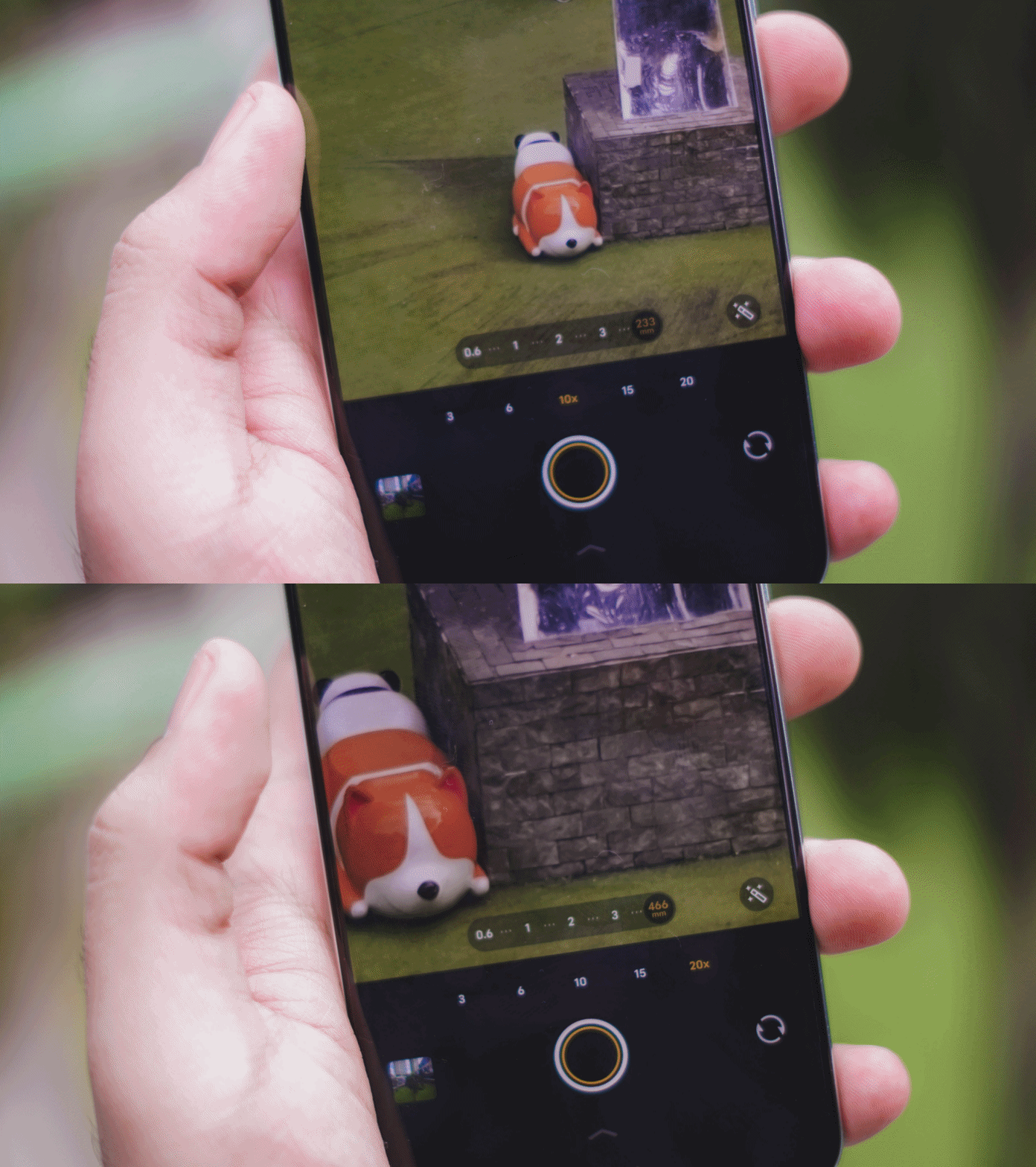
While we’re already on the topic, its worthy to point out that vivo decided to pack a periscope telephoto camera in the vanilla variant of the X200.
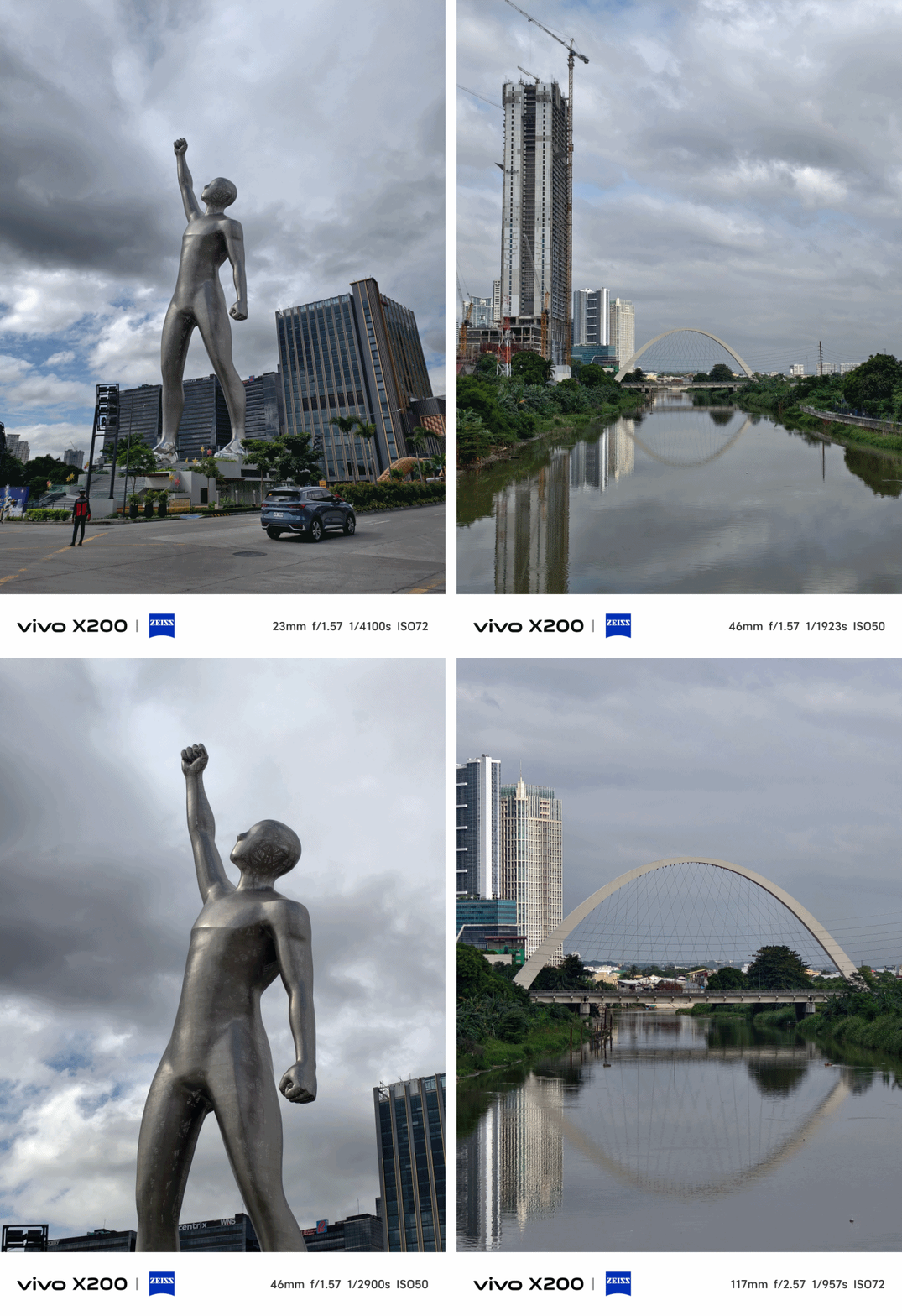
And I’m not speaking solely because of numbers. Hardware-wise, it’s already very capable especially because it packs a 3x shooter. I’ll just let some of these shots do the talking.


It’s given that shots taken below 3x are still clear and crisp since they were just digitally-cropped based on the phone’s 50MP sensor. But, what surprised me are those shots taken farther than 10x. The vivo X200 clearly captured shots with ample amount of detail.
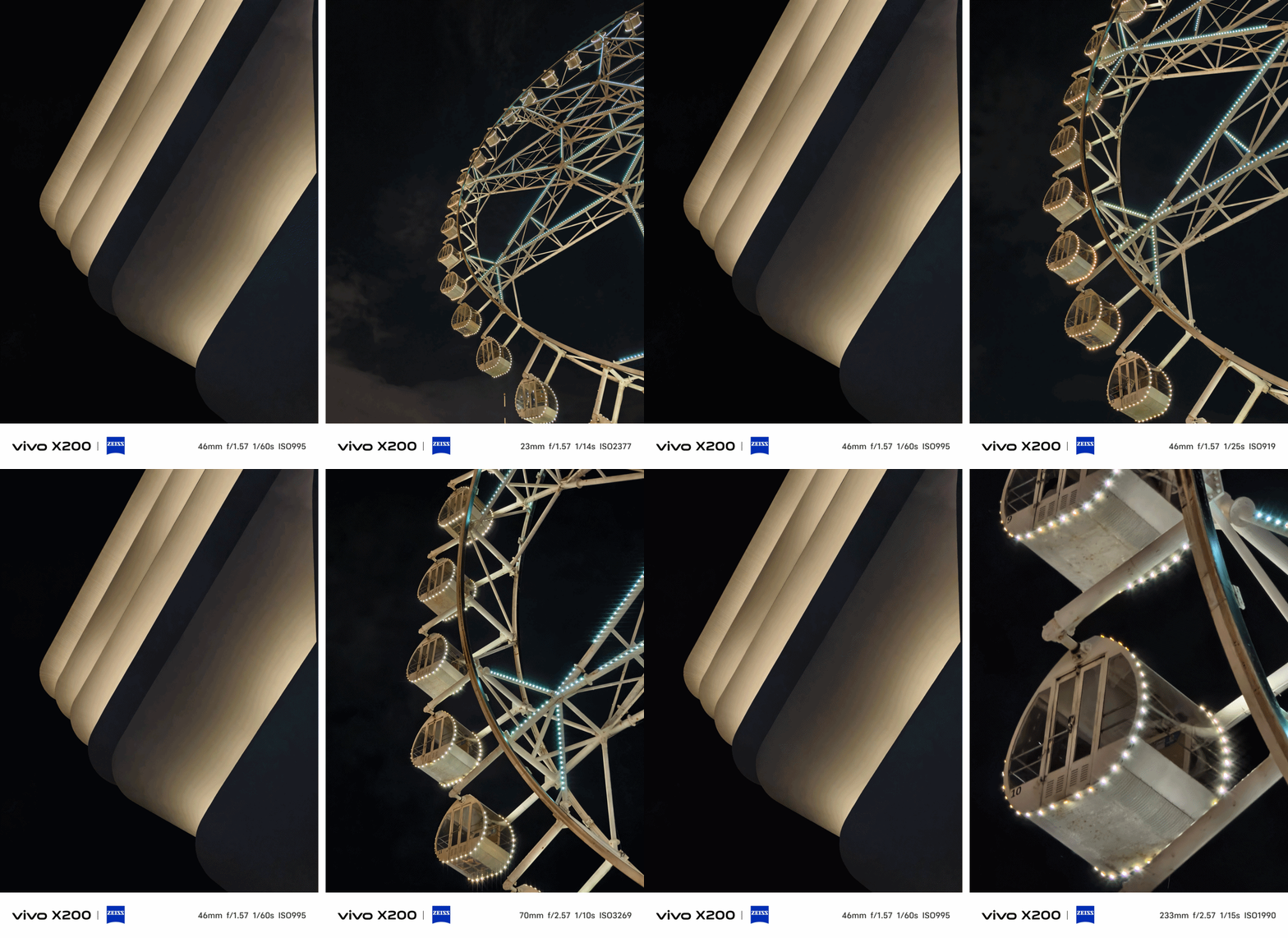
Let alone the fact that most of these samples I took were taken during the night — where there’s barely any presence of natural light around.
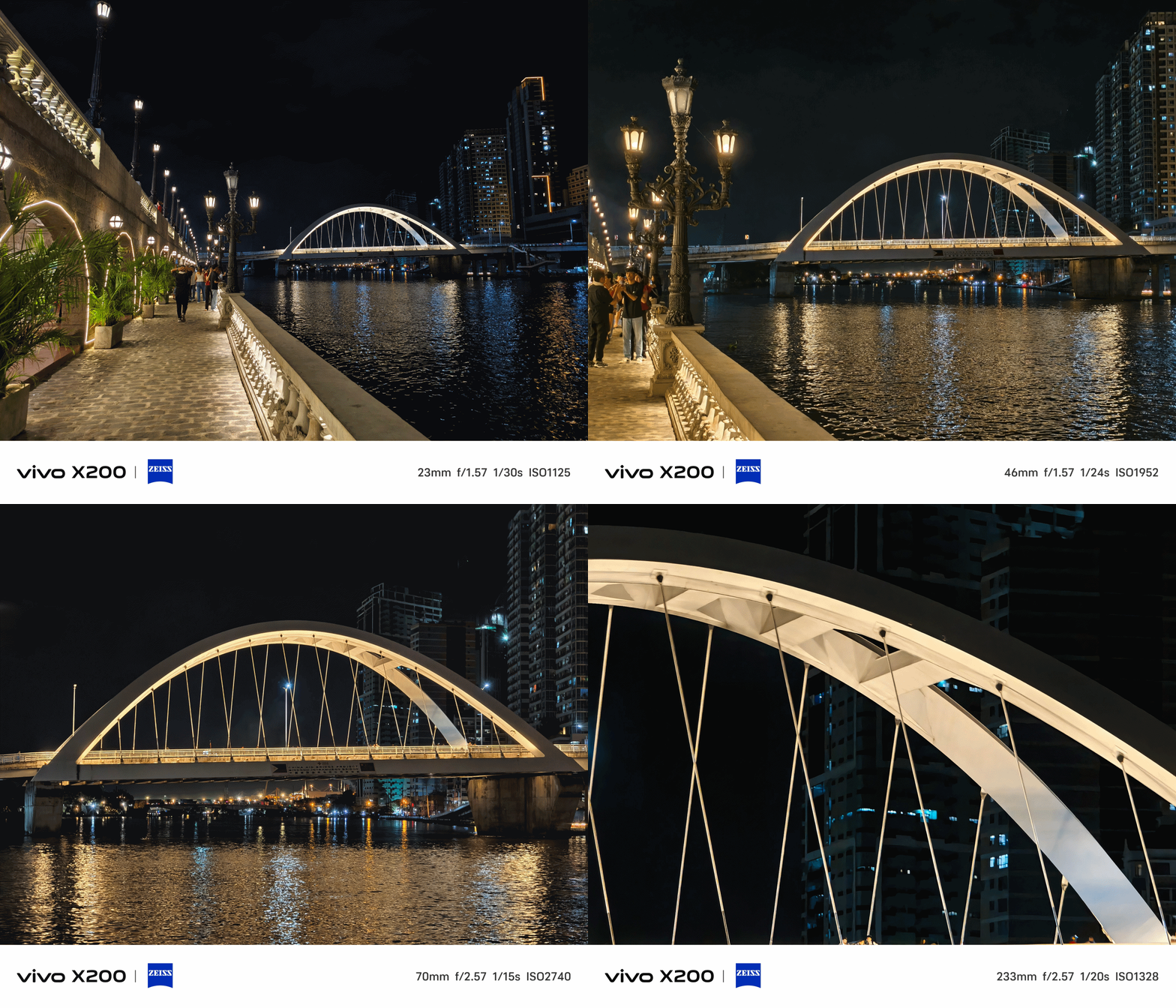
Just look at how consistent the colors are regardless of what type of mode or specific focal length you choose.

In times where the night sky is pitch dark, vivo’s Scene Detection in Auto Mode will fire up that Night Mode algorithm for 1 to 2 seconds.

Heck, even the earth’s moon isn’t an exemption to its periscope superiority — from 20x all the way to 100x HyperZoom (2333mm equivalent).

BONUS: You can toggle Super Macro Mode and zoom as far as you desire.

This mode simply lets you capture macro shots without going the extra mile of getting super duper close to your subject — which I honestly find stupid among phones that rely on ultra-wide angle lenses for their macro mode feature.
Color Galore
If you’re a long-time vivo user, this isn’t a new info to you.
But, if you’re clueless yet enticed to switch to a vivo camera phone (regardless if it’s the X200 series or the V40 series), there are three color profiles to choose from.
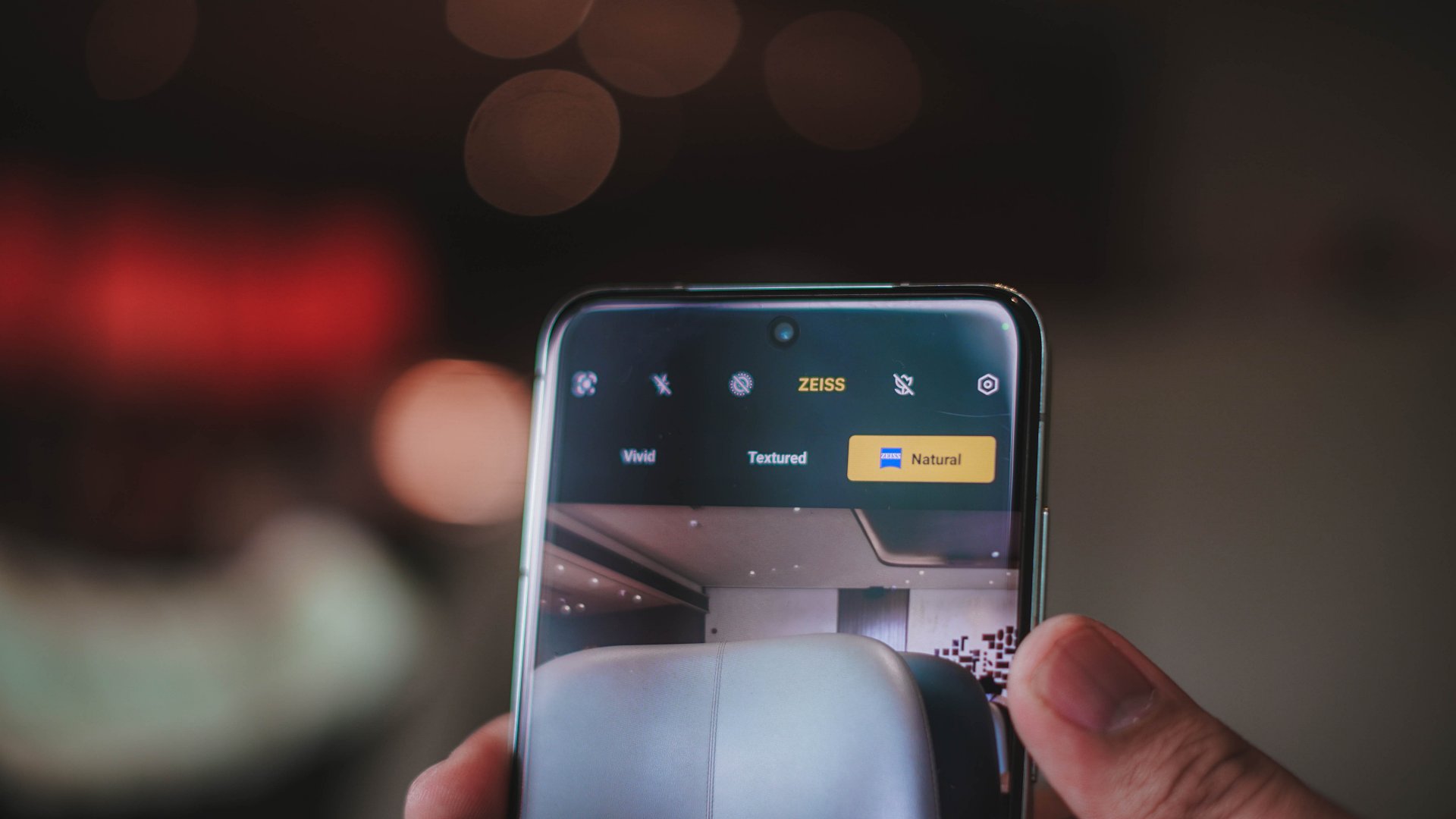
The default one is none other than the ZEISS Natural — which is based on the color calibration made by the aforementioned German optics maker.
Meanwhile, Textured color profile tones down some shadows and highlights while bumping up a li’l bit of contrast altogether.
Lastly, there’s Vivid that’s suitable for subjects that require those much needed pop of colors.
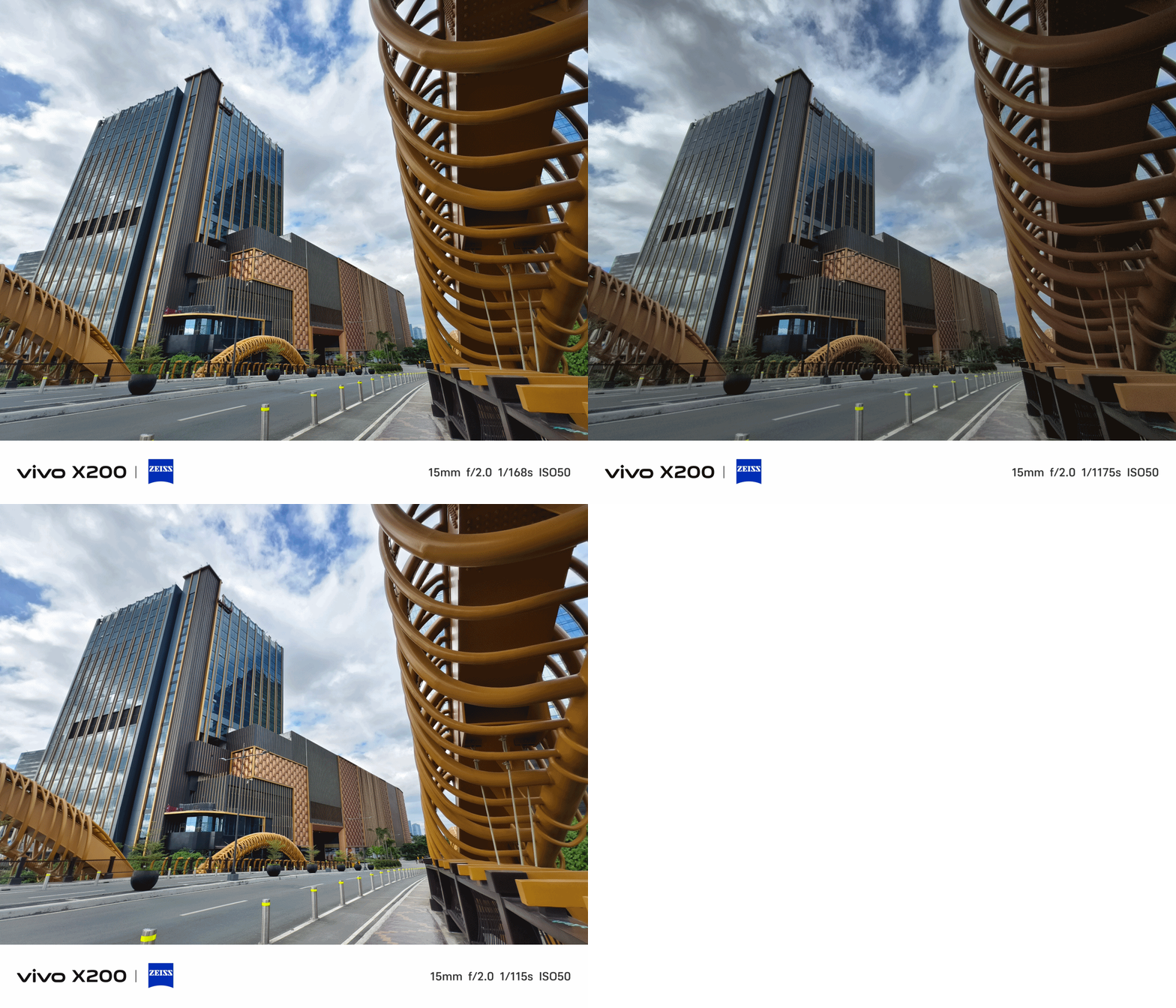
If the description isn’t clear enough for all profiles, there’s a GIF below for you to see and compare.
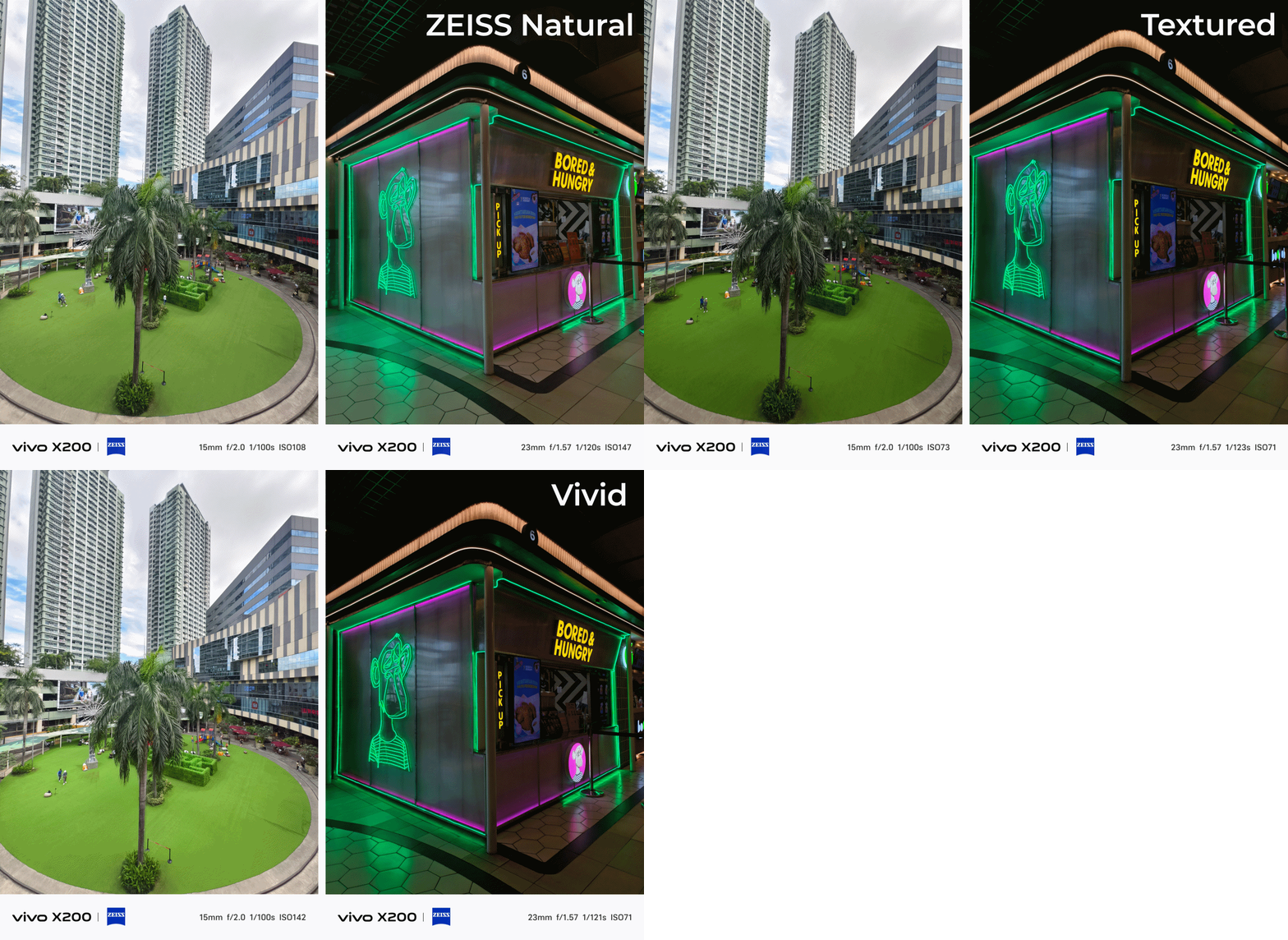
Personally, I just use either the ZEISS Natural and Textured which highly (and likely) depends on what subject I shoot. The least used one is obviously Vivid as I find the overall saturation and exposure a bit too much for my taste.
Portraits à la ZEISS
I’ve said this before in my vivo V30 Pro review and I’ll say it again: What I missed the most on vivo’s X-series (specifically when I used the vivo X80 Pro) are the special ZEISS Style Portraits.
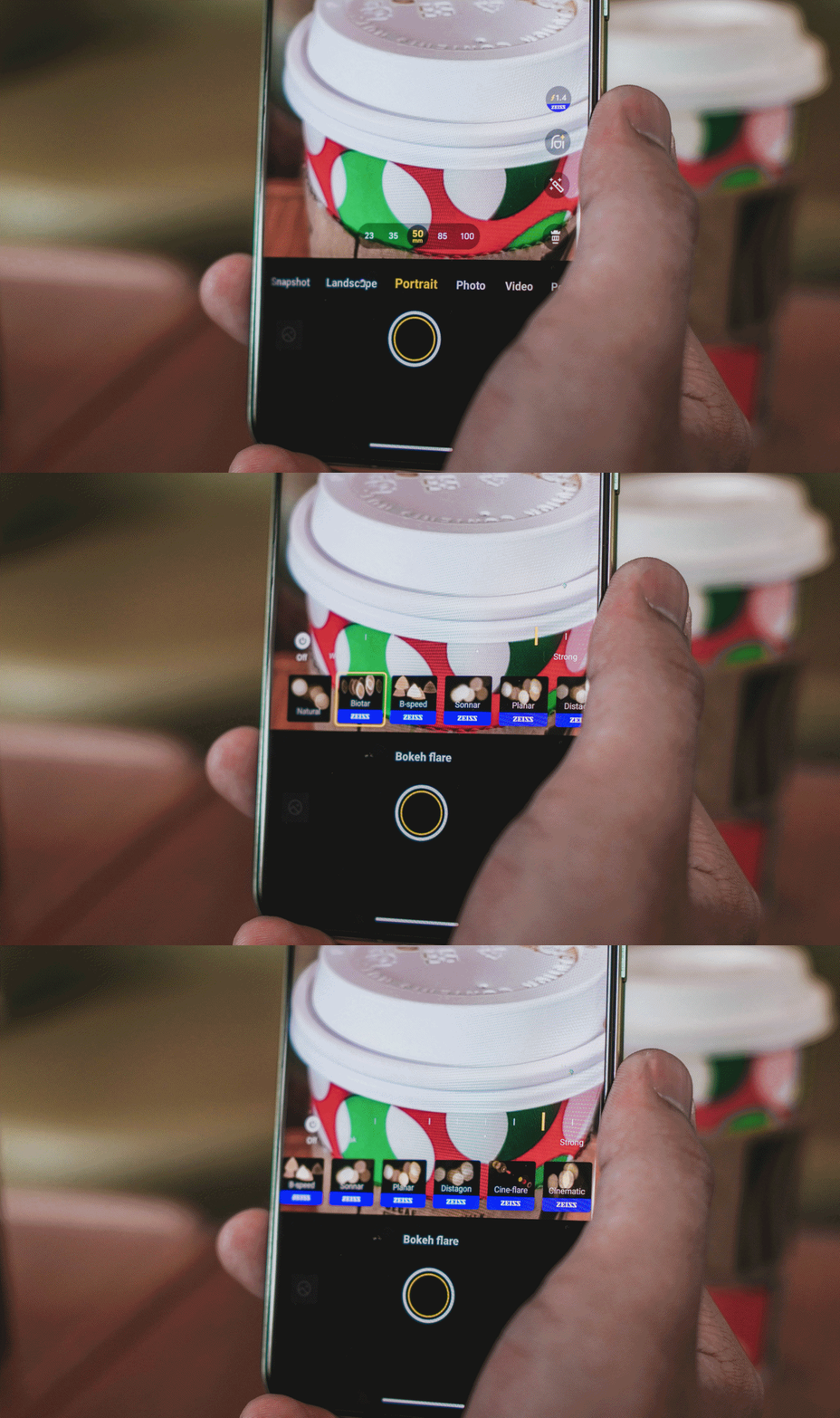
It would be a huge miss not to include this in this in-depth write-up.
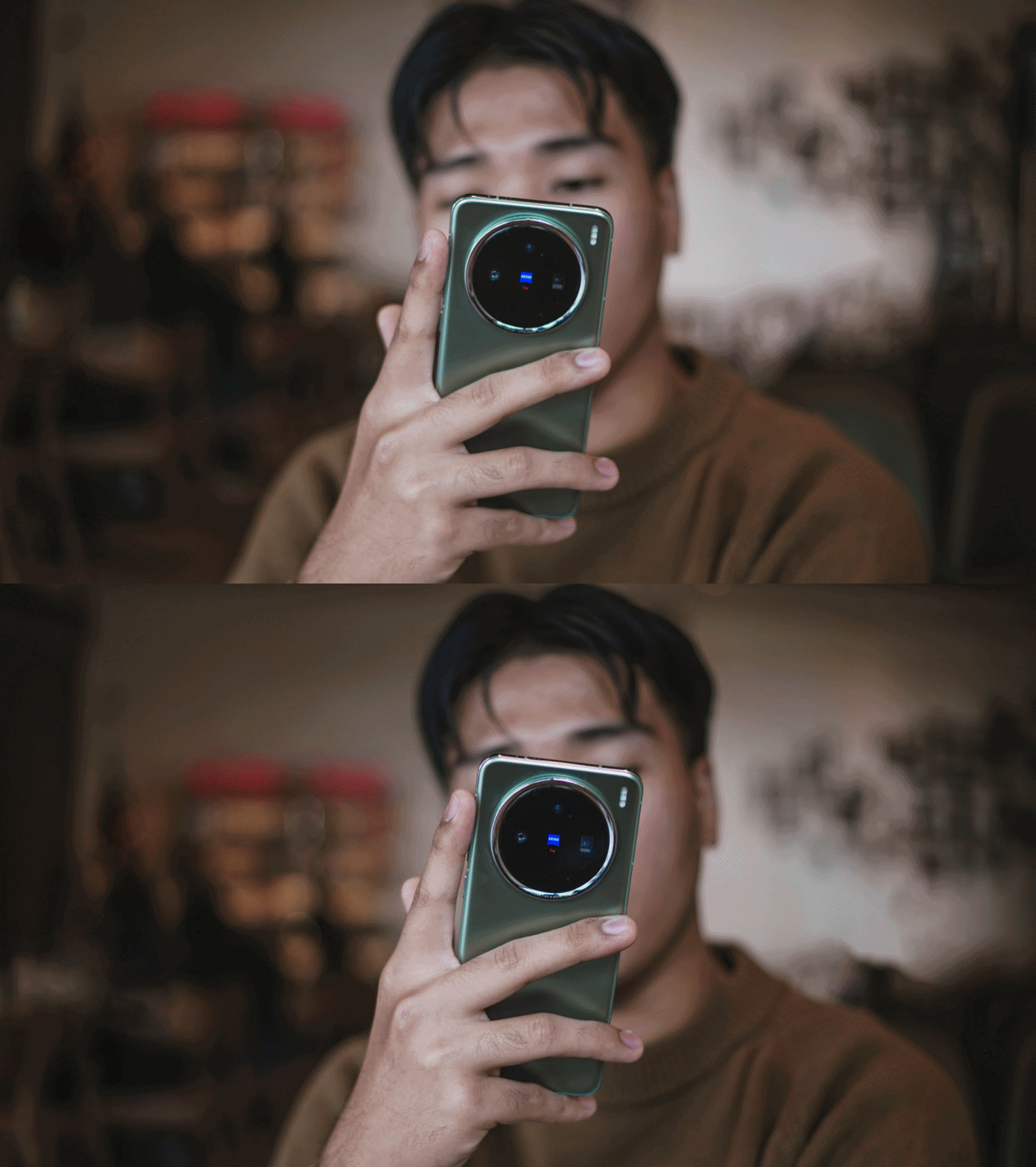
Aside from the default Natural, there are also more lens bokeh imitations such as B-Speed, Sonnar, Planar, Distagon, and my all-time fave, Biotar — which are all, then again, actual imitations of ZEISS classic lenses.
There are also additional Cinematic and Cine-flare choices for an even subdued look and feel.

If you’re in for some retouching, vivo gives you the right to activate it and adjust several levels of appearance gratification — just like how it works when taking front-camera selfies.
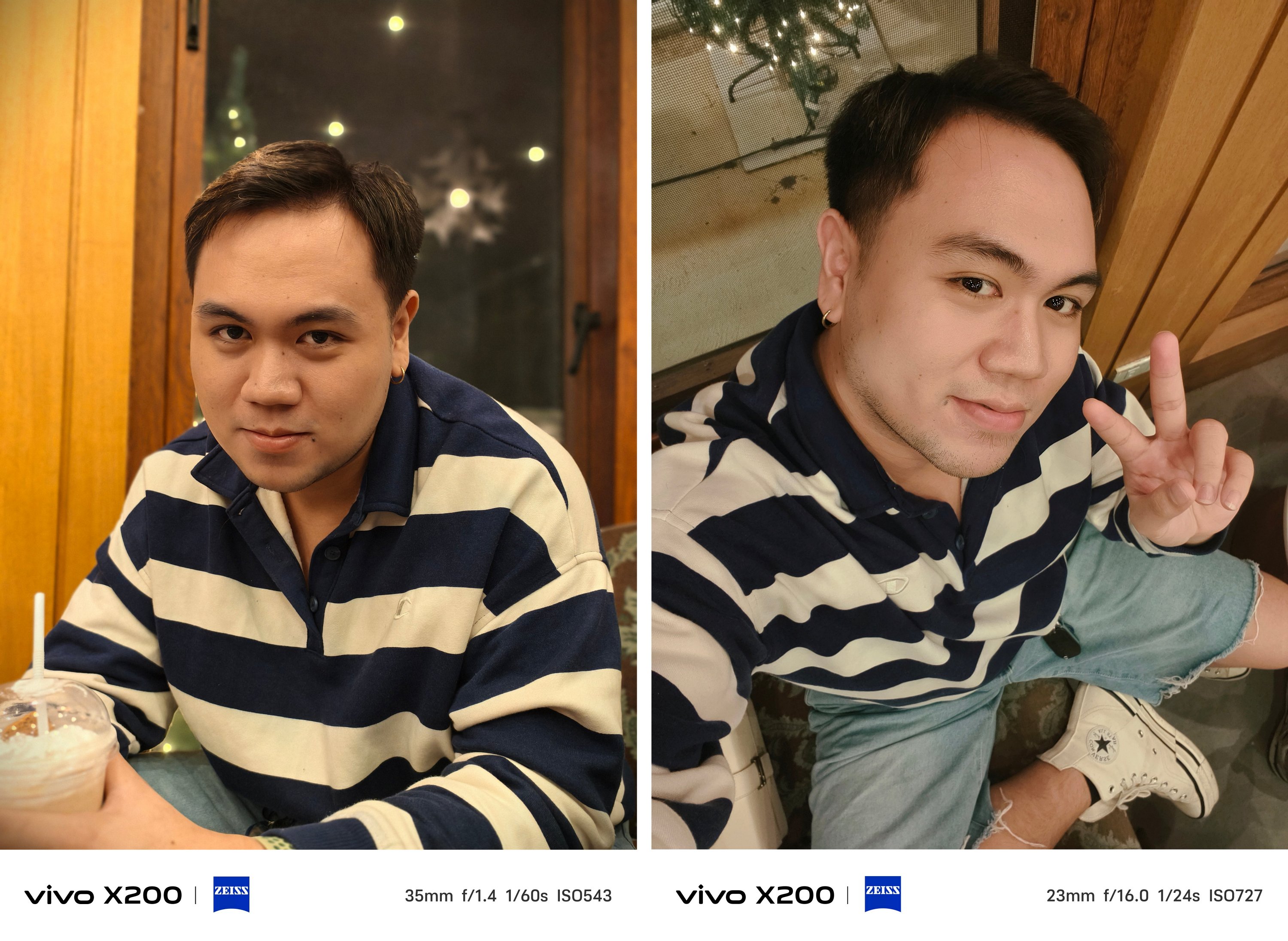
Mirror selfies? Not an exception!

It can also be toggled on and off for groufies — depending on your circle’s liking.

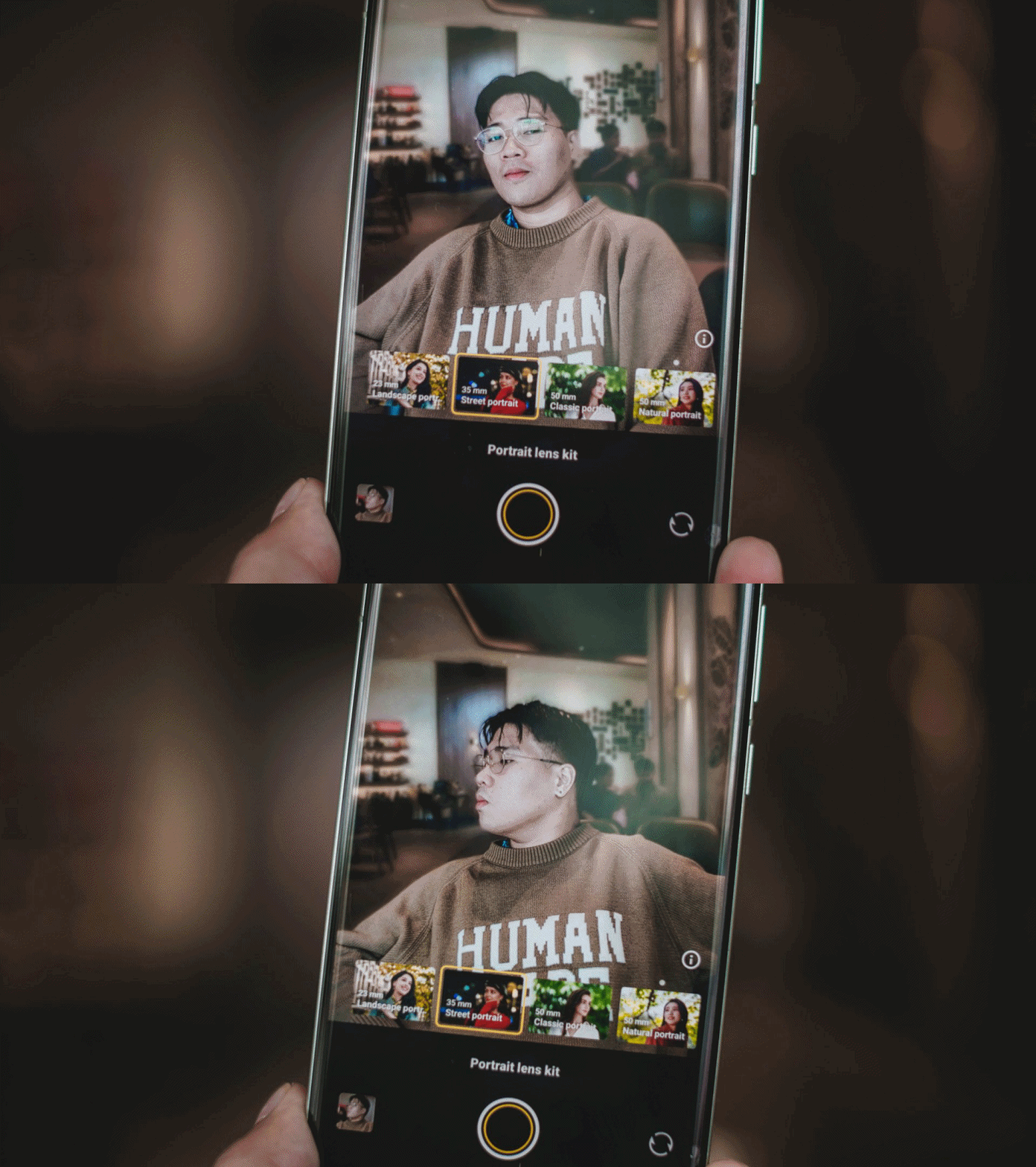
To make this more Pro-inclined, vivo X200 provides more portrait mode choices with the Portrait Lens Kit found at the lower right of the interface.

There are several choices including 23mm Landscape Portrait, 35mm Street Portrait, 50mm Classic Portrait, 50mm Natural Portrait, 85mm Cultural portrait, as well as 85mm Figure. Lastly, 100mm Close-up.
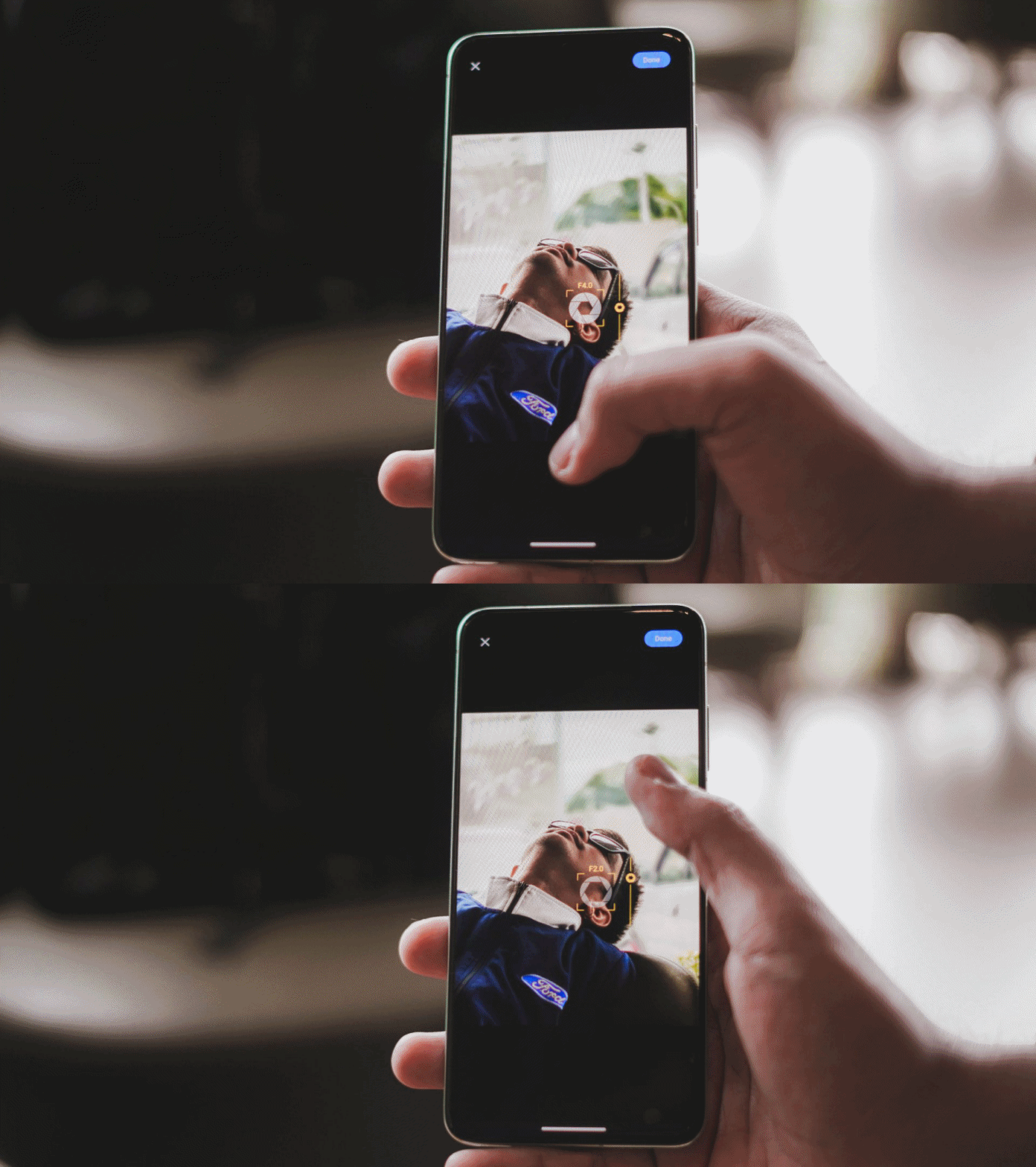
If ever you forgot to set the right aperture setting of the photo you’ve just captured, vivo enables you to adjust it after the fact.

f/4.0 Aperture vs f/2.0 Aperture
Classic or Humanistic?
The vivo X200 gives you another round of flexibility. This time, in terms of camera app look.
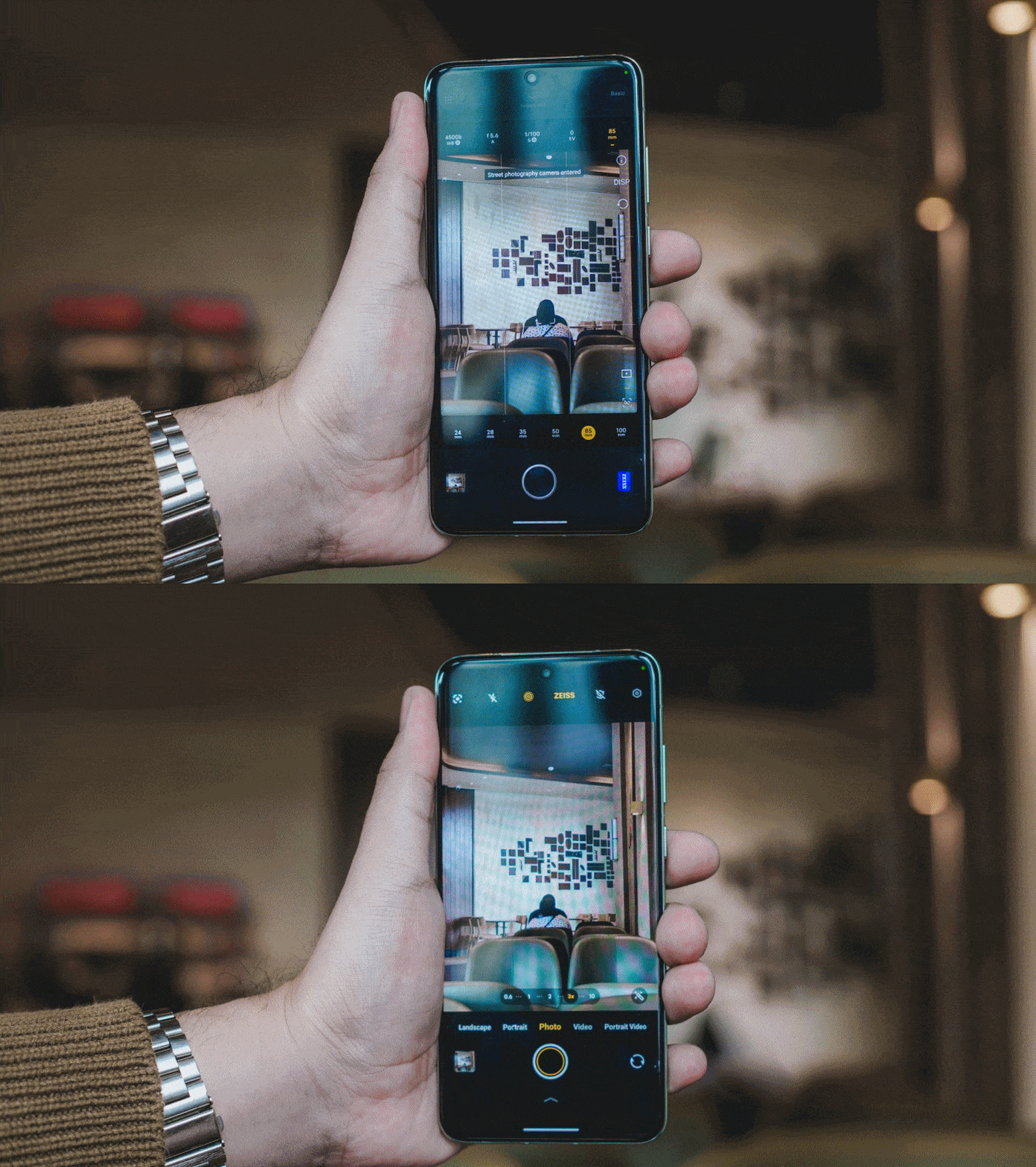
Classic vs Humanistic Camera UI
If you want to apply the existing color profiles whenever you want to take shots in Portrait Mode, the Humanistic Street Snap Camera User Interface is made for you. The classic Portrait Mode doesn’t allow you to apply those three color profiles.
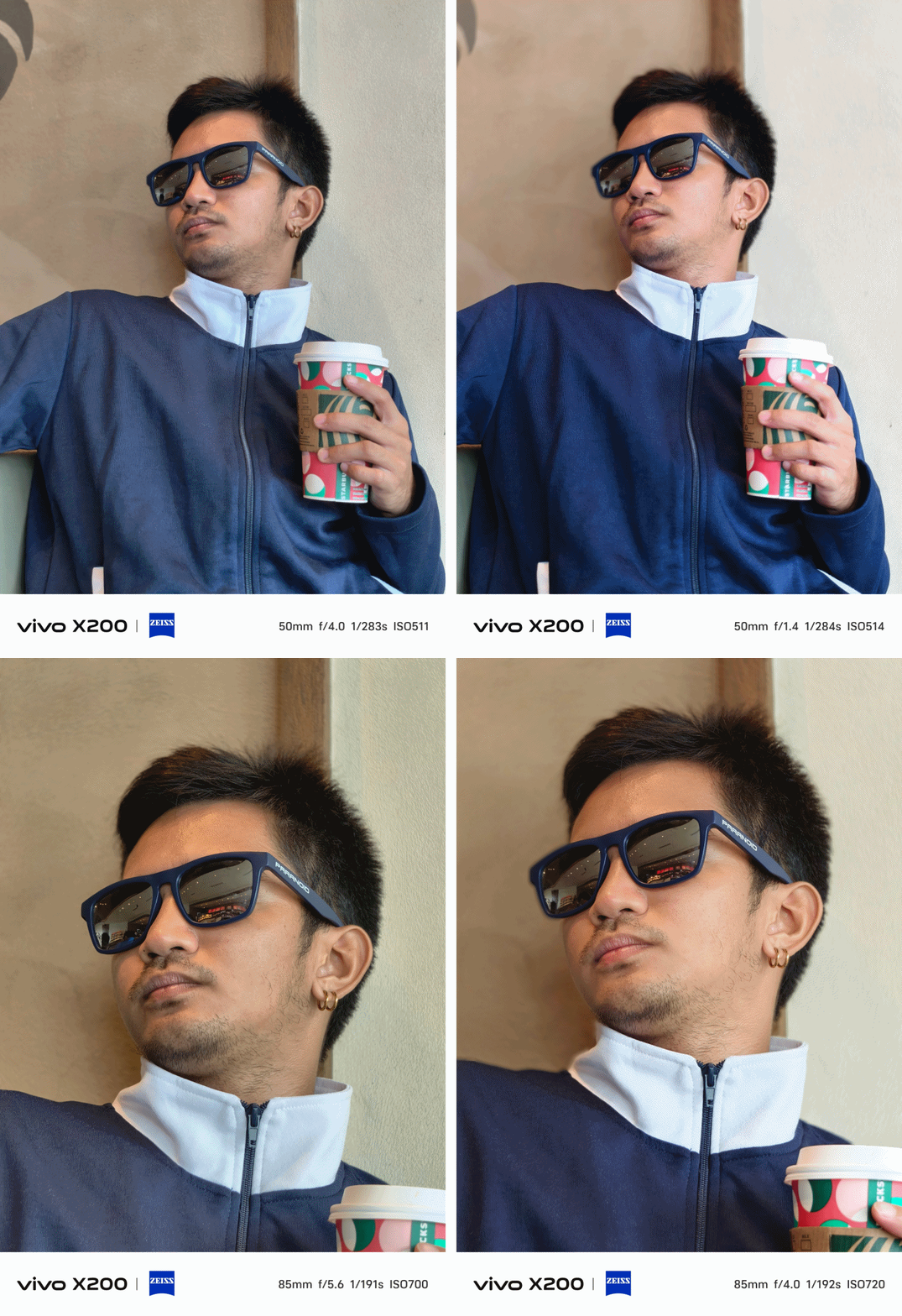
Humanistic + ZEISS Natural vs Classic Portrait Mode
But, the exclusive thing when using this mode that you cannot ever use in the classic interface is none other than the B/W profile.
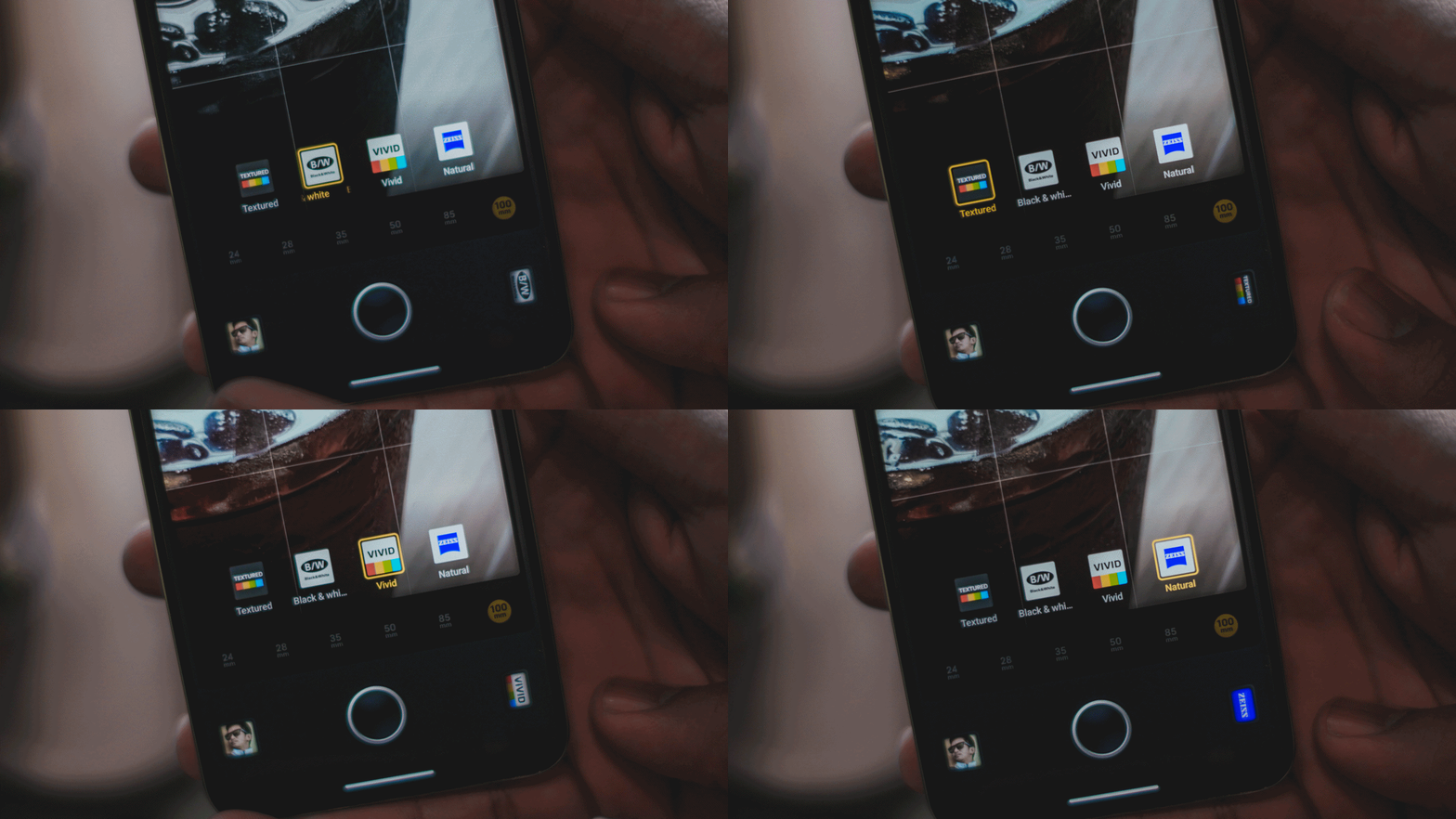
If you’re eager for that dramatic, monochrome shot with a touch of bokeh around, this special interface simply makes it possible for you.
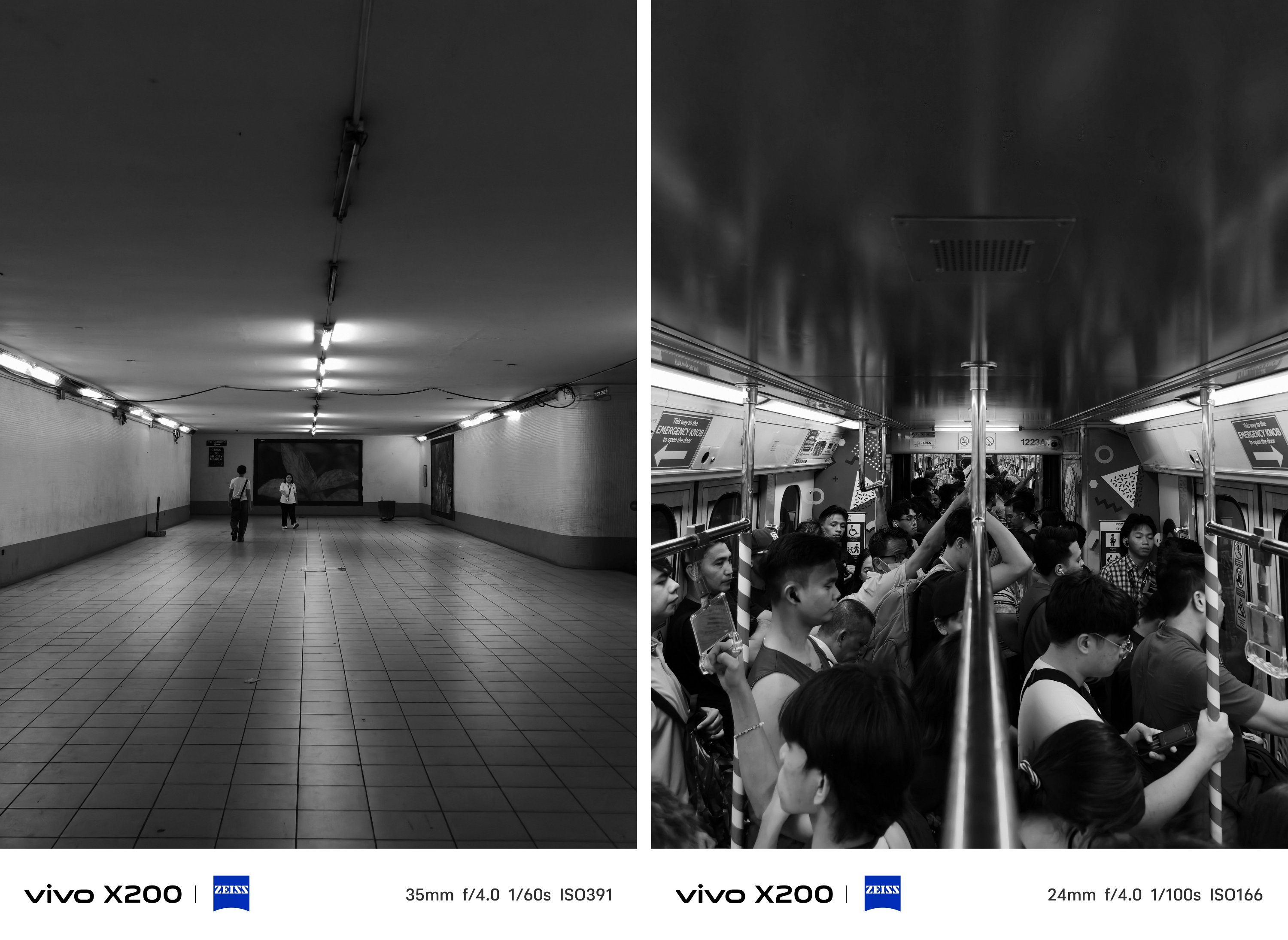
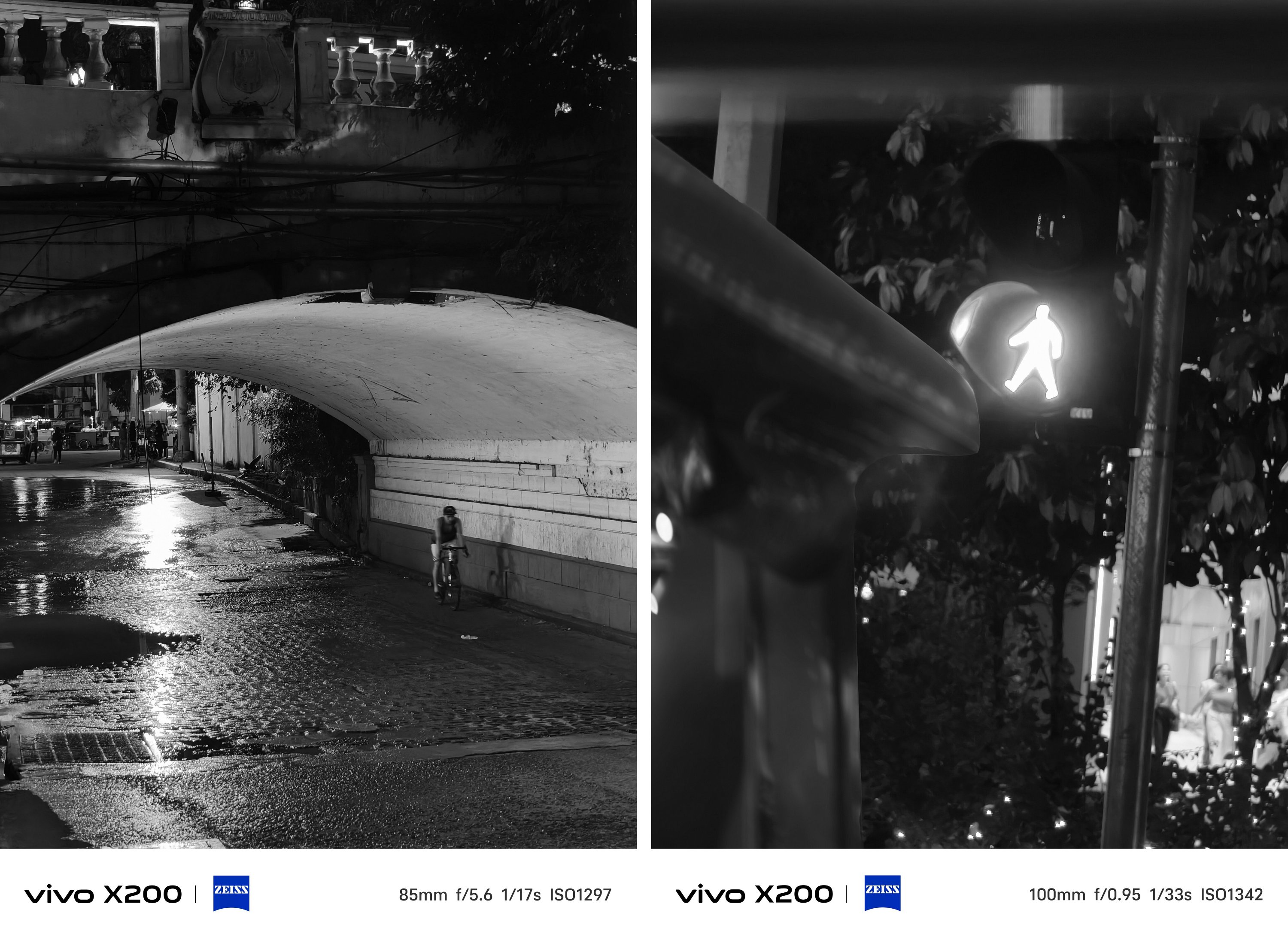
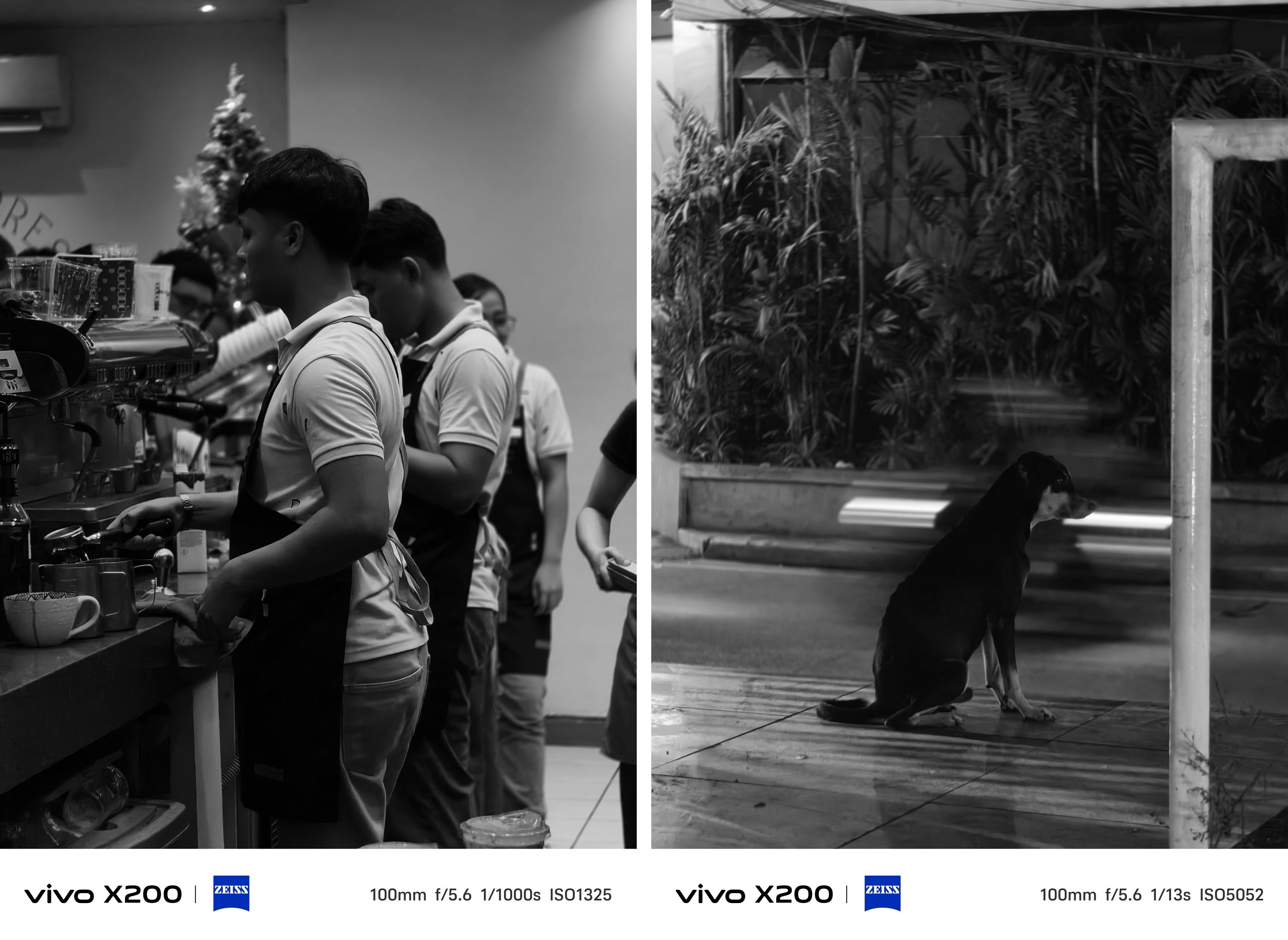
Just take good note that you are limited between the five default prime camera lens-like focal lengths: 24mm, 35mm, 50mm, 85mm, and 100mm.
From Sheets to Streets
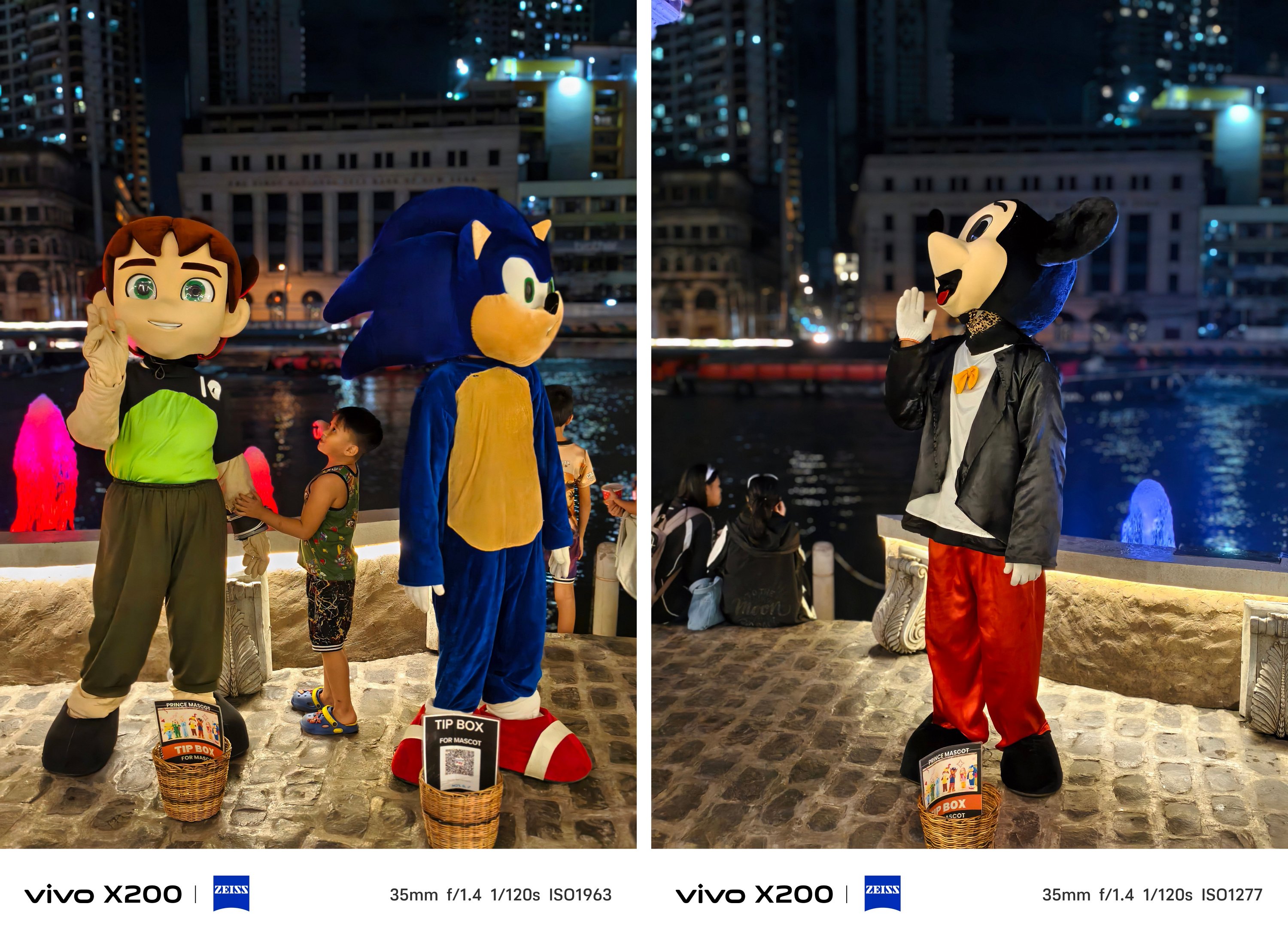
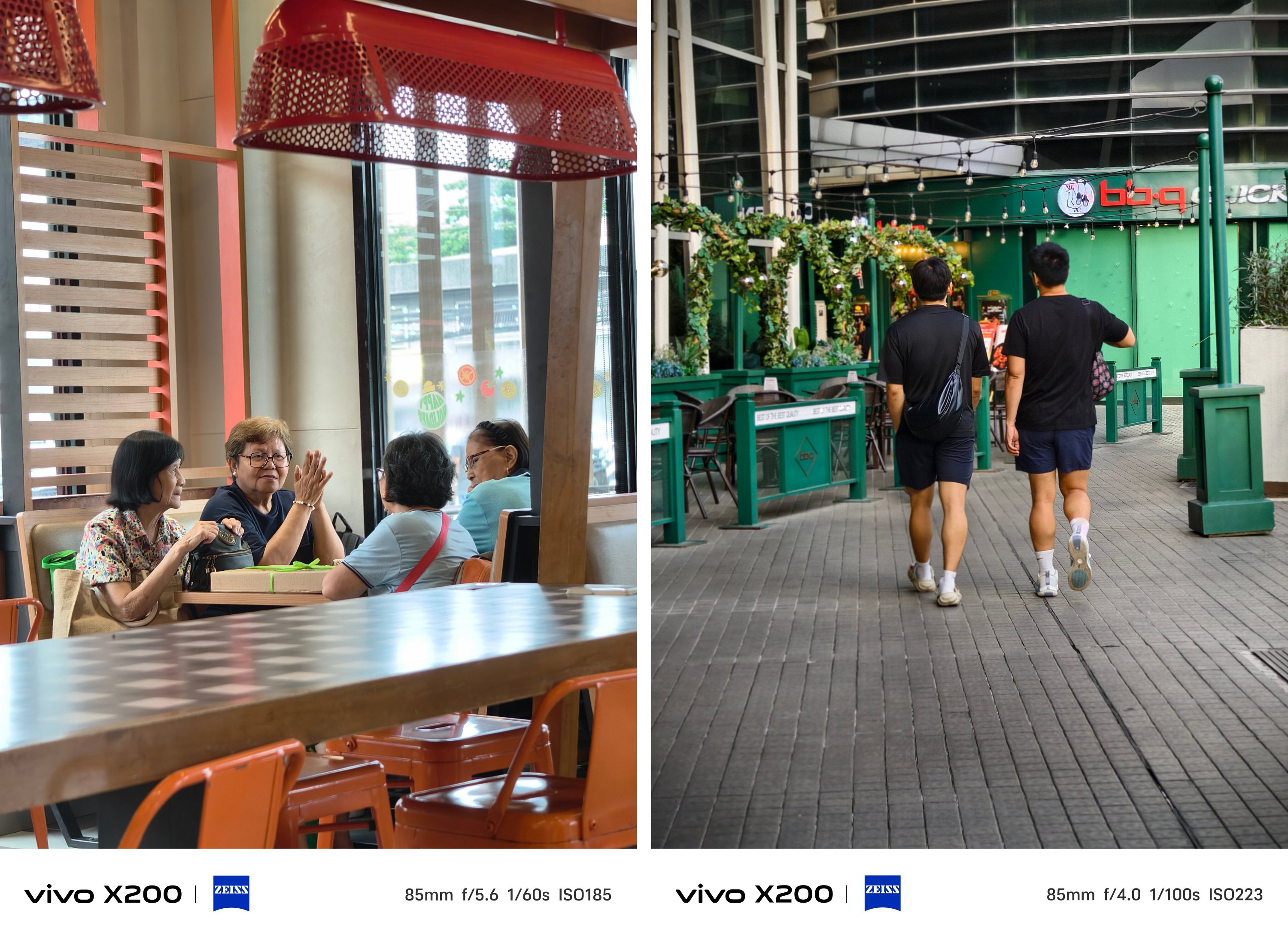
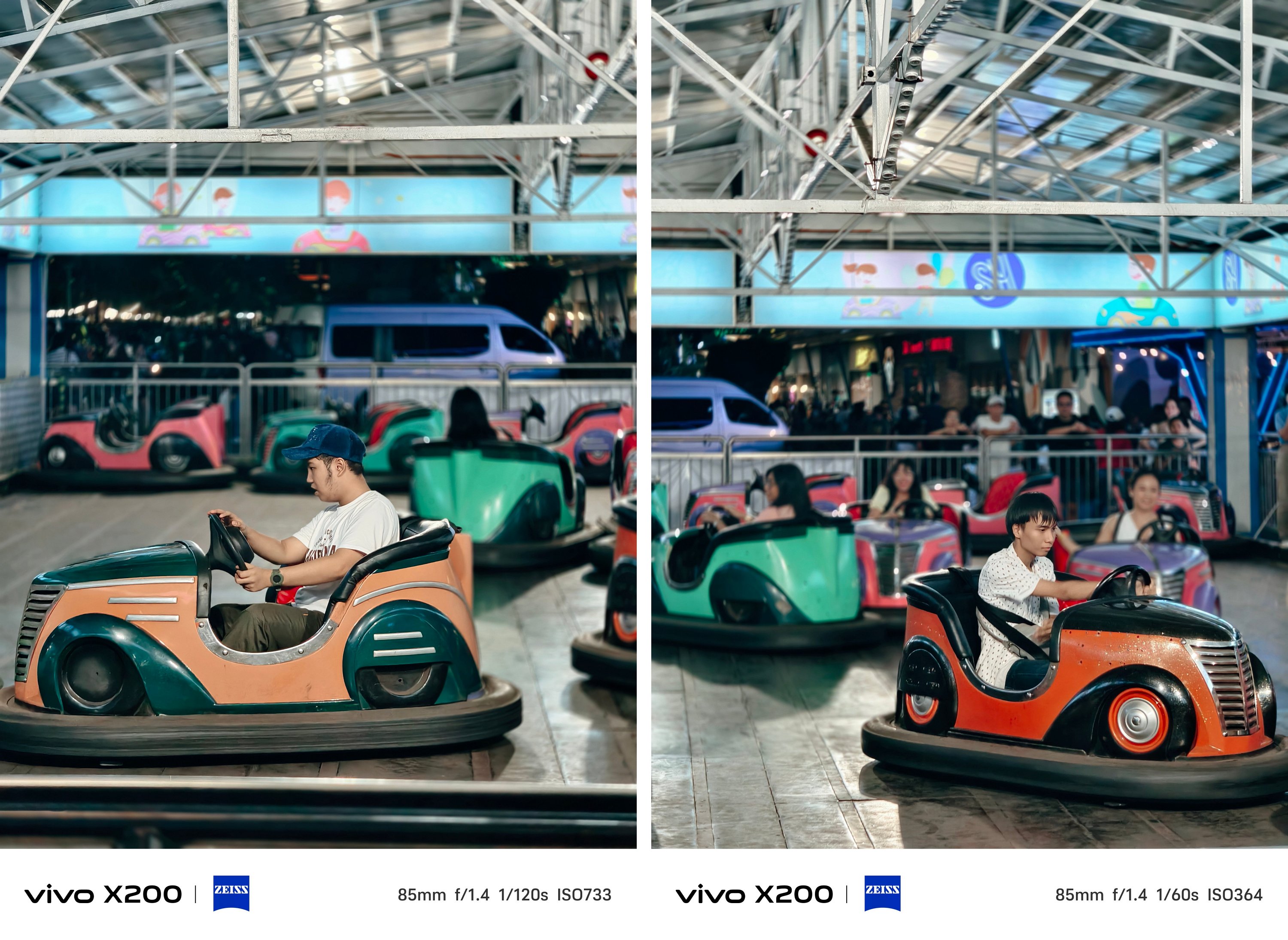
It’s high time to take the camera out of its spec sheet all the way to the streets — especially with a challenging low-light environment paired with the X200’s portrait mode supremacy.
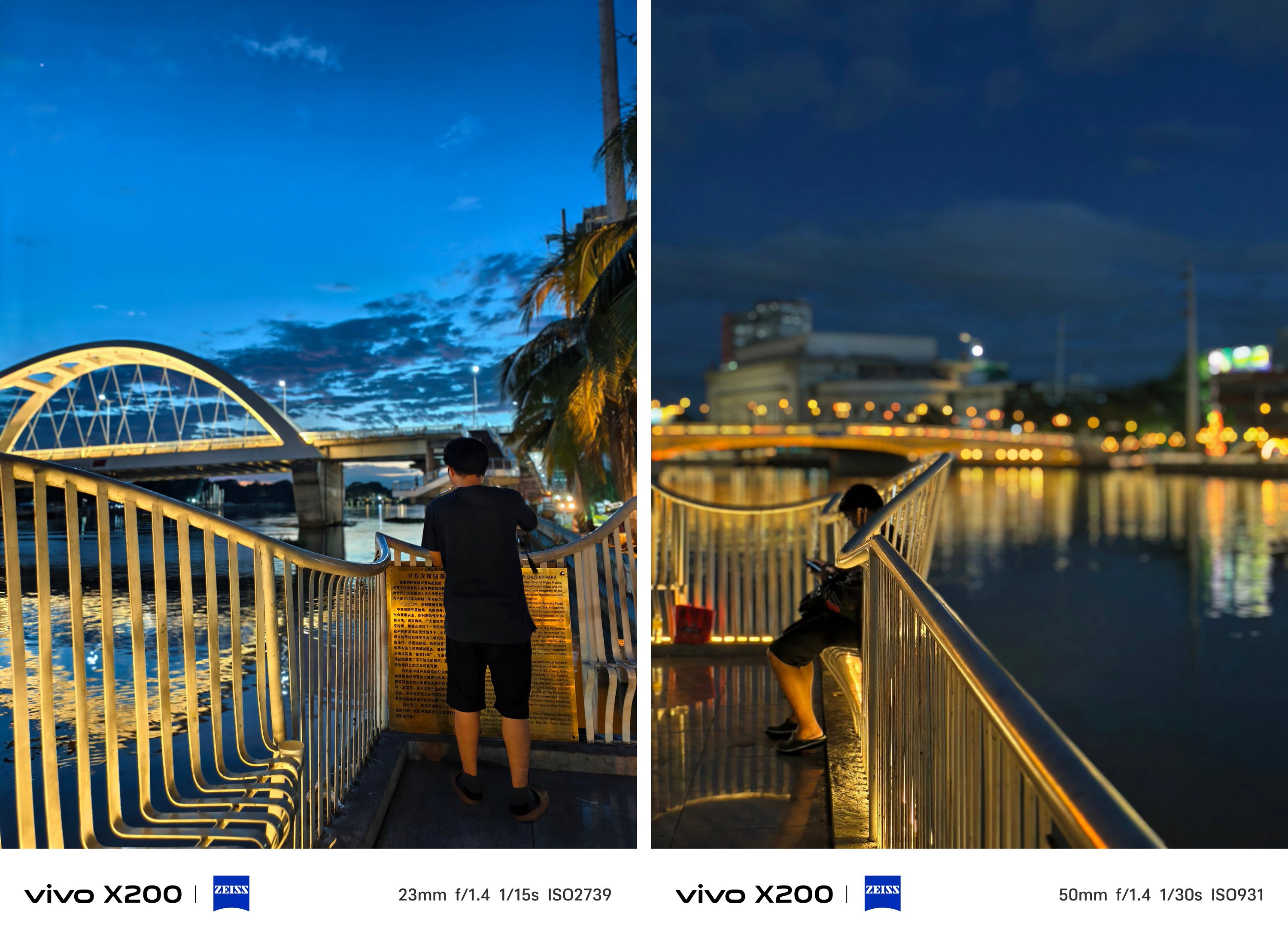
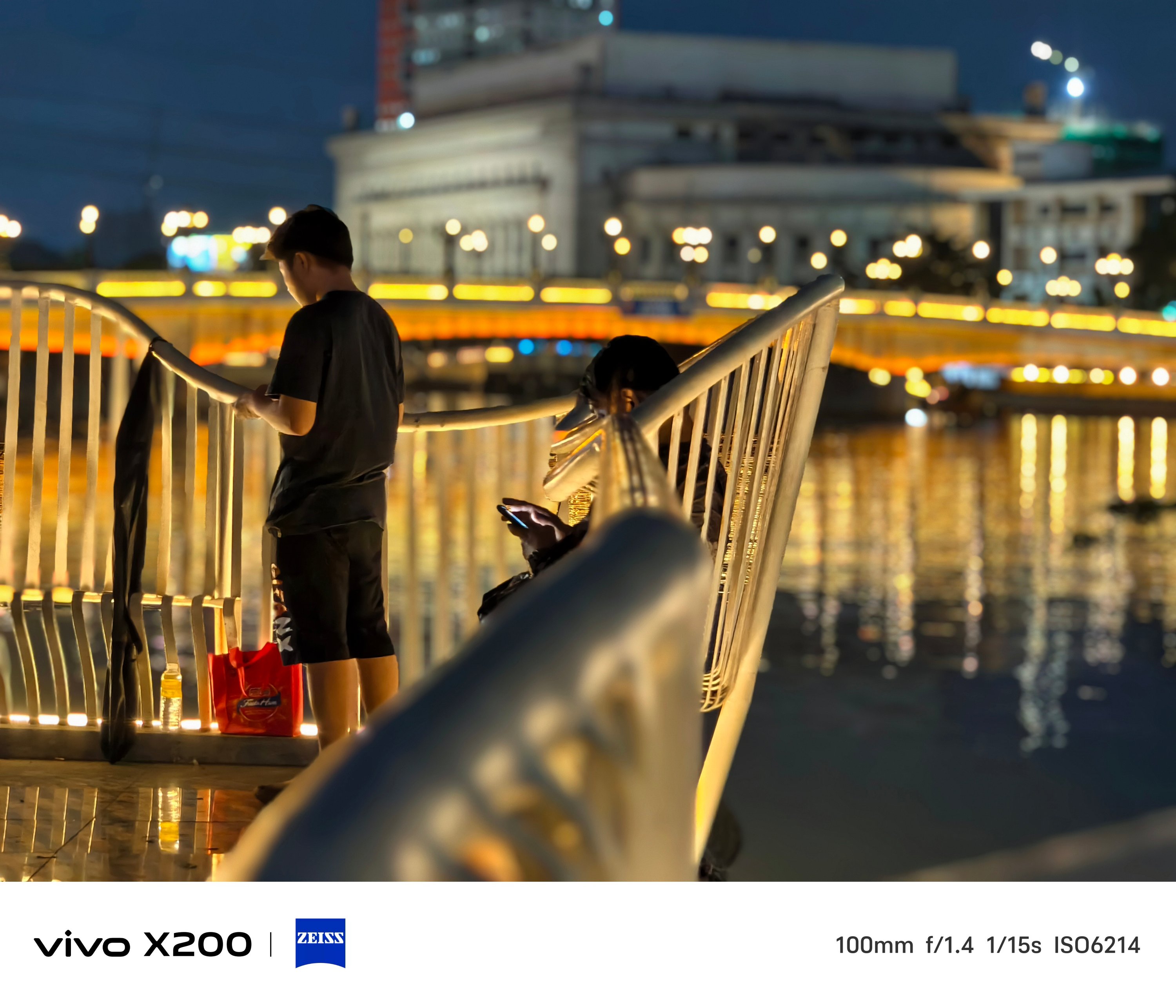
It might just be me but it shocked me how the 100mm photograph above has turned out.
The fact that we can now use Portrait Mode even in low-light zoomed shots simply made me question how far can we ever go in terms of smartphone photography.
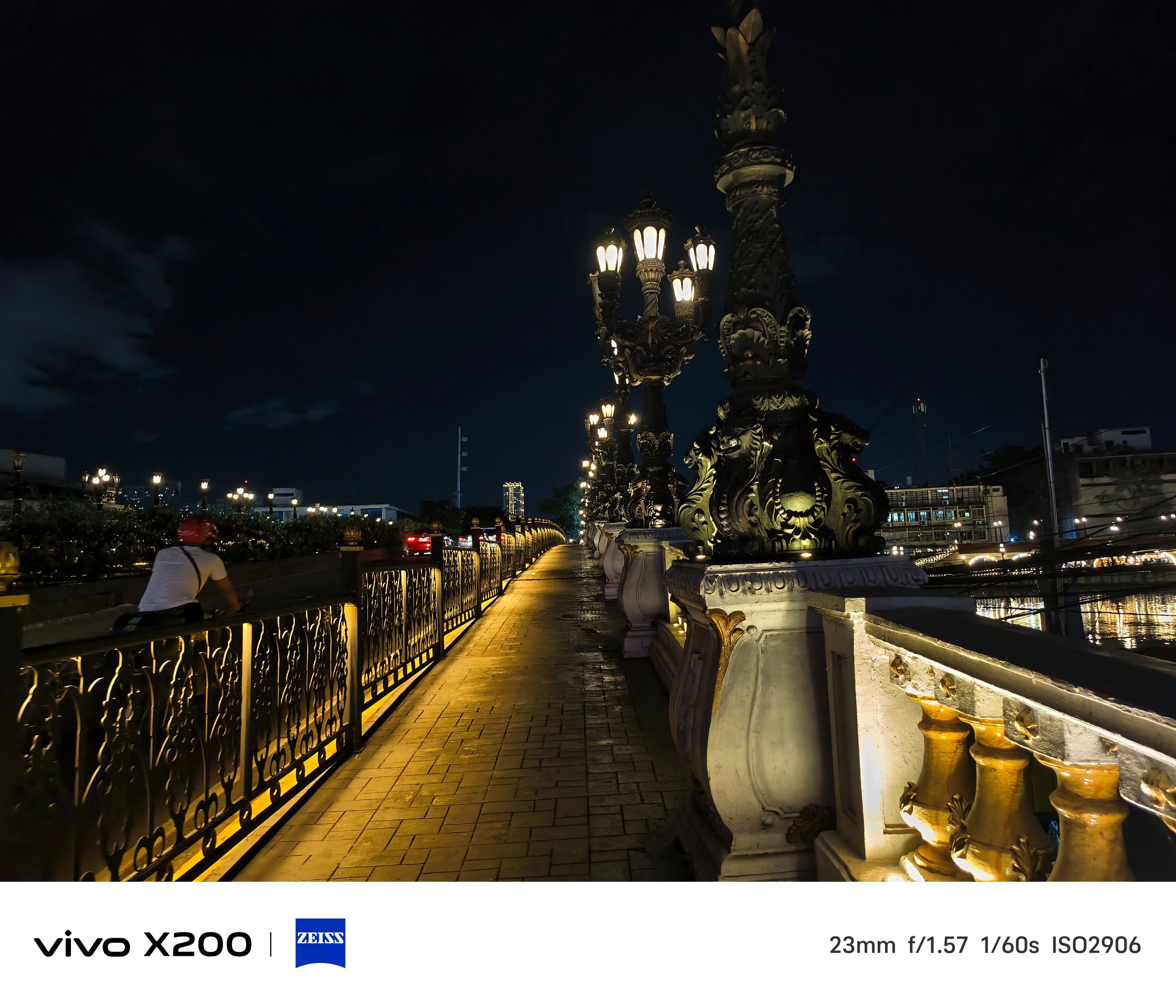
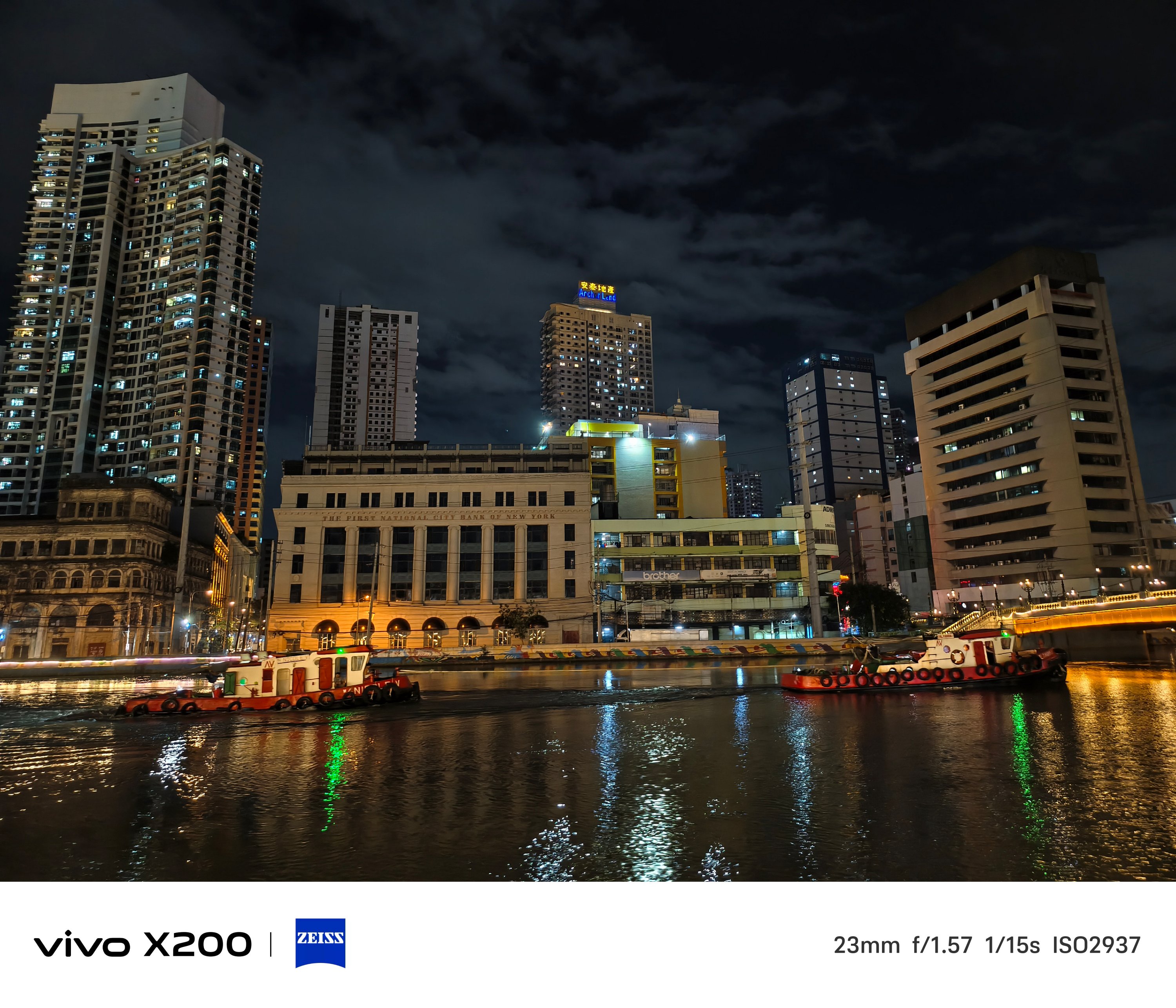
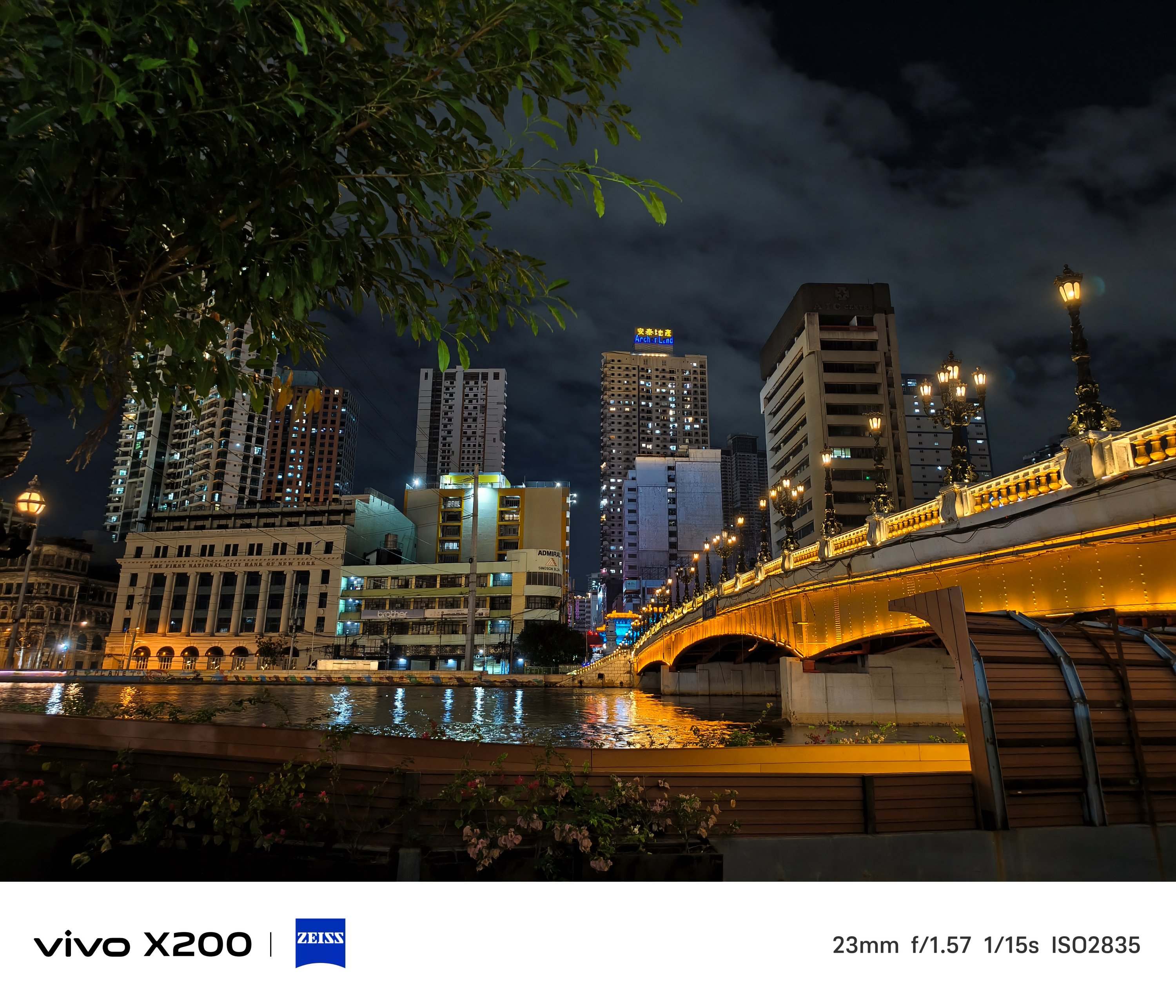
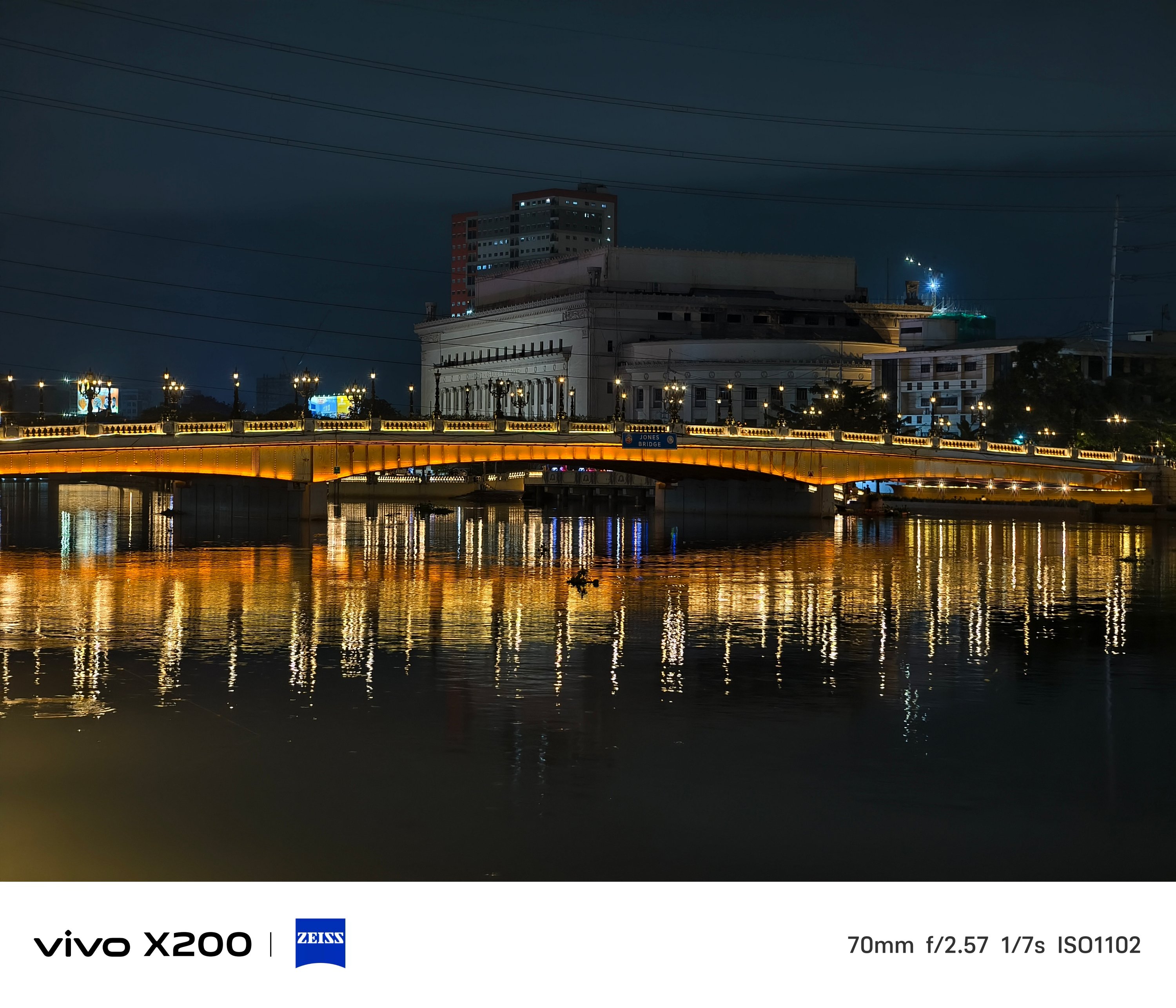
Again, notice how accurate and consistent the shots are regardless of what focal length you choose.
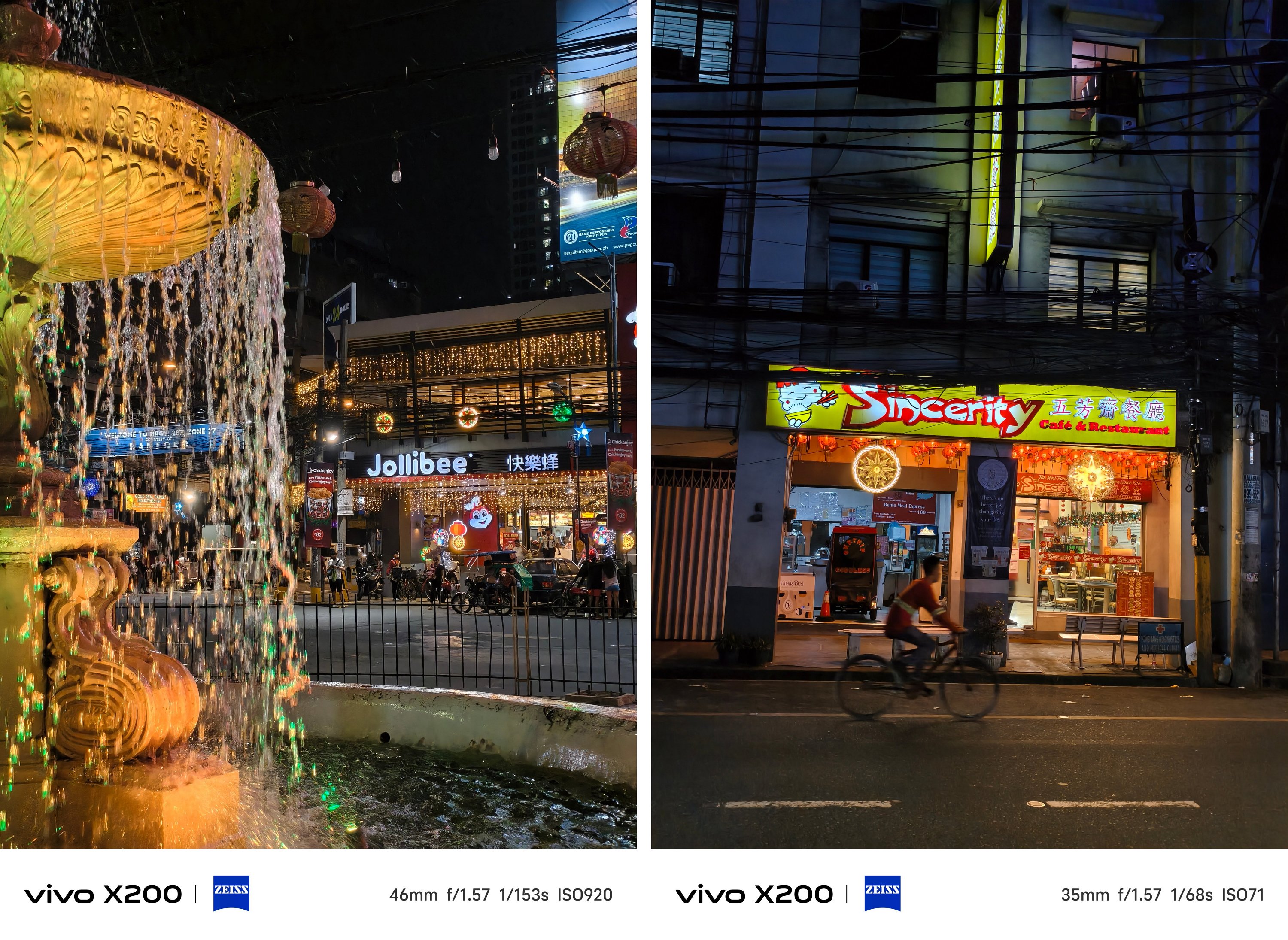
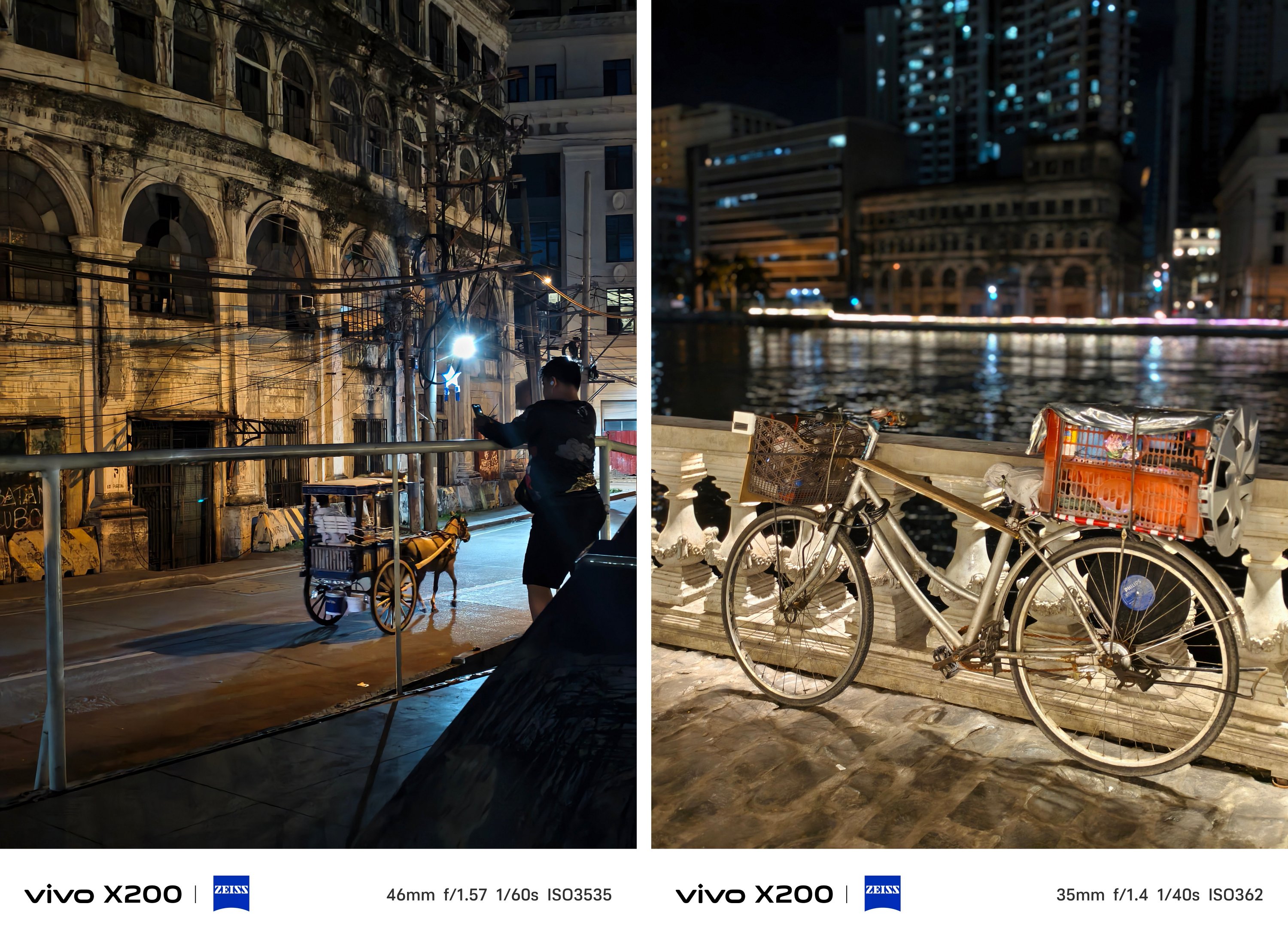
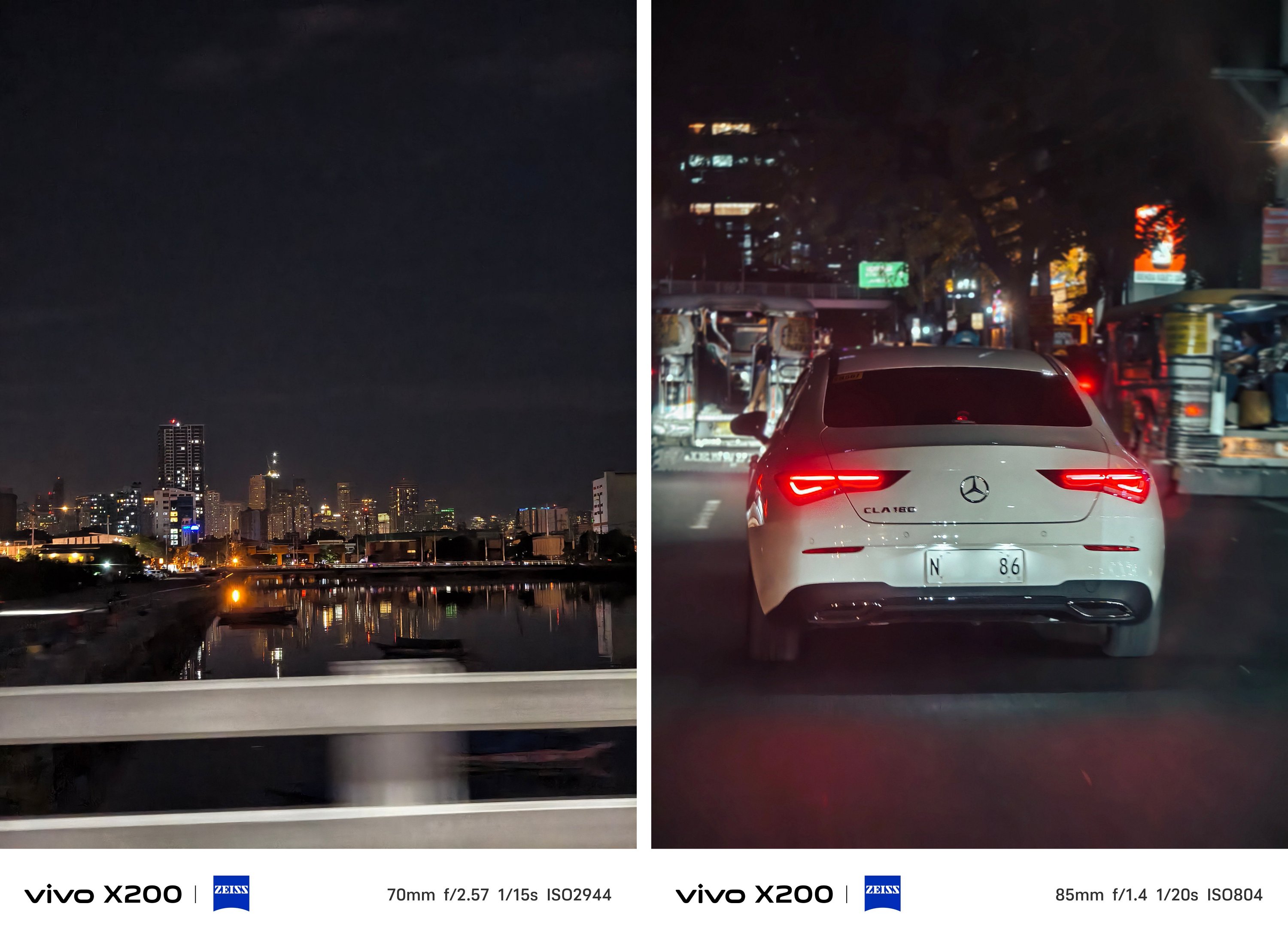
To put this part concisely, portrait mode works best day and night regardless if your subject involves inanimate objects, static or moving humans, speeding cars (and bump cars), bicycles, horse carriages, and more.
Feast for the Eyes
Just like choosing color profiles and desired focal length, our food tastes are also preferential. But sometimes, even with the best hardware, the color reproduction breaks the actual performance of a smartphone’s camera.

Fortunately, the vivo X200 produced mouthwatering shots regardless of what mode or focal length you choose.




However, upon my initial testing, photos taken in Portrait Mode tend to be less vibrant.
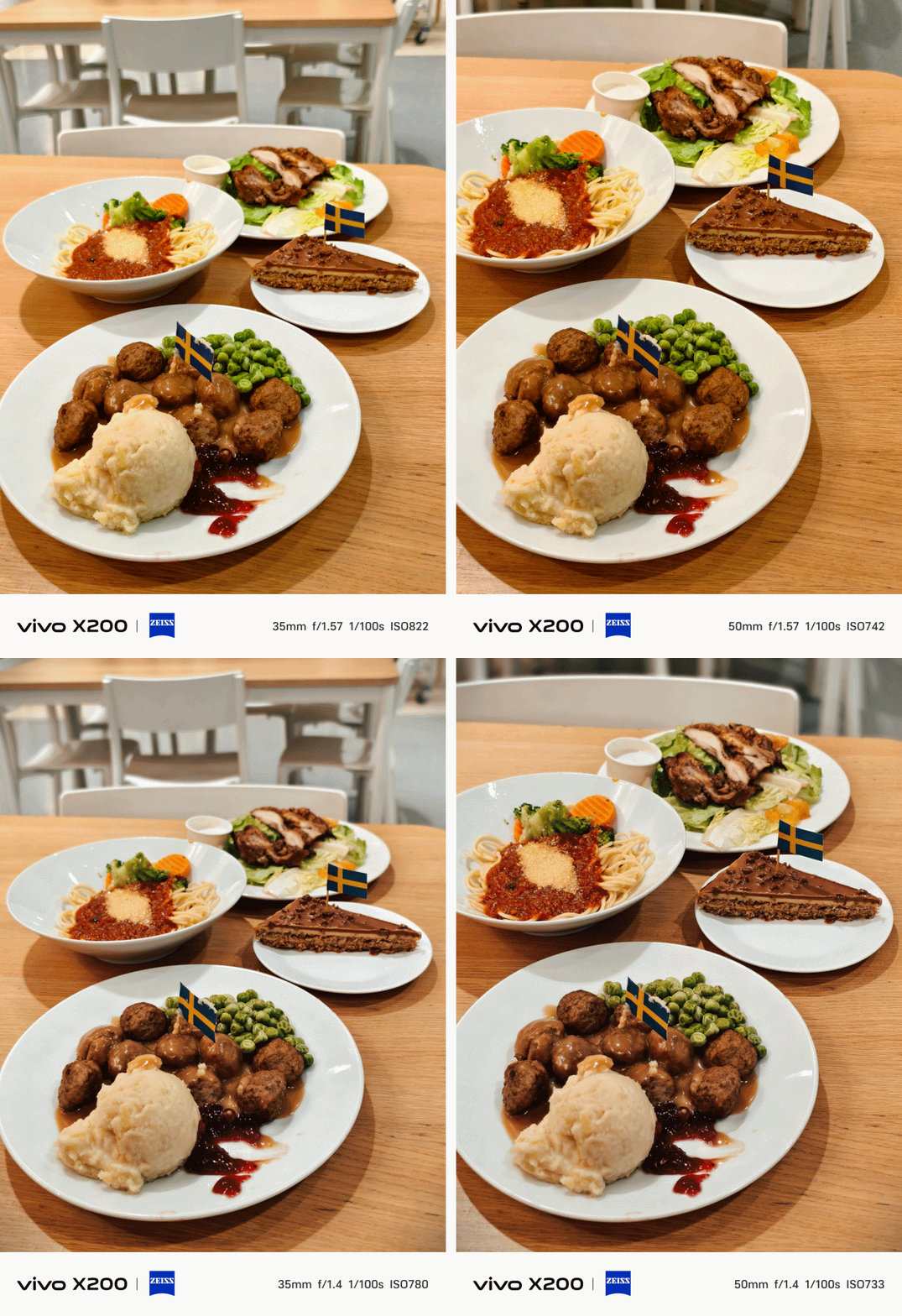
Auto Mode vs Portrait Mode
Nonetheless, I sometimes crave for bokeh in my shots and the only way to achieve that is through Portrait Mode or the more intrinsic Humanistic interface — just without the more appetizing touch of Food mode.

Battle that Razzle-Dazzle
A noteworthy flagship is not just about having the best in class camera hardware, it also means it can keep up with the fastest subjects around — animals notwithstanding.
Although my original plan was to take a quick visit to the zoo, my sensitive heart won’t make me handle the guilt and sorrow I feel for the animals locked in cages and other unsanitary and inhumane premises.
Instead, I just focused on taking plentiful photos of cats since they’re the most related subjects for the shoot I’ve first envisioned — obviously tigers and lions.
Maybe you can skip this part if you don’t want them (but, how dare you, though?).
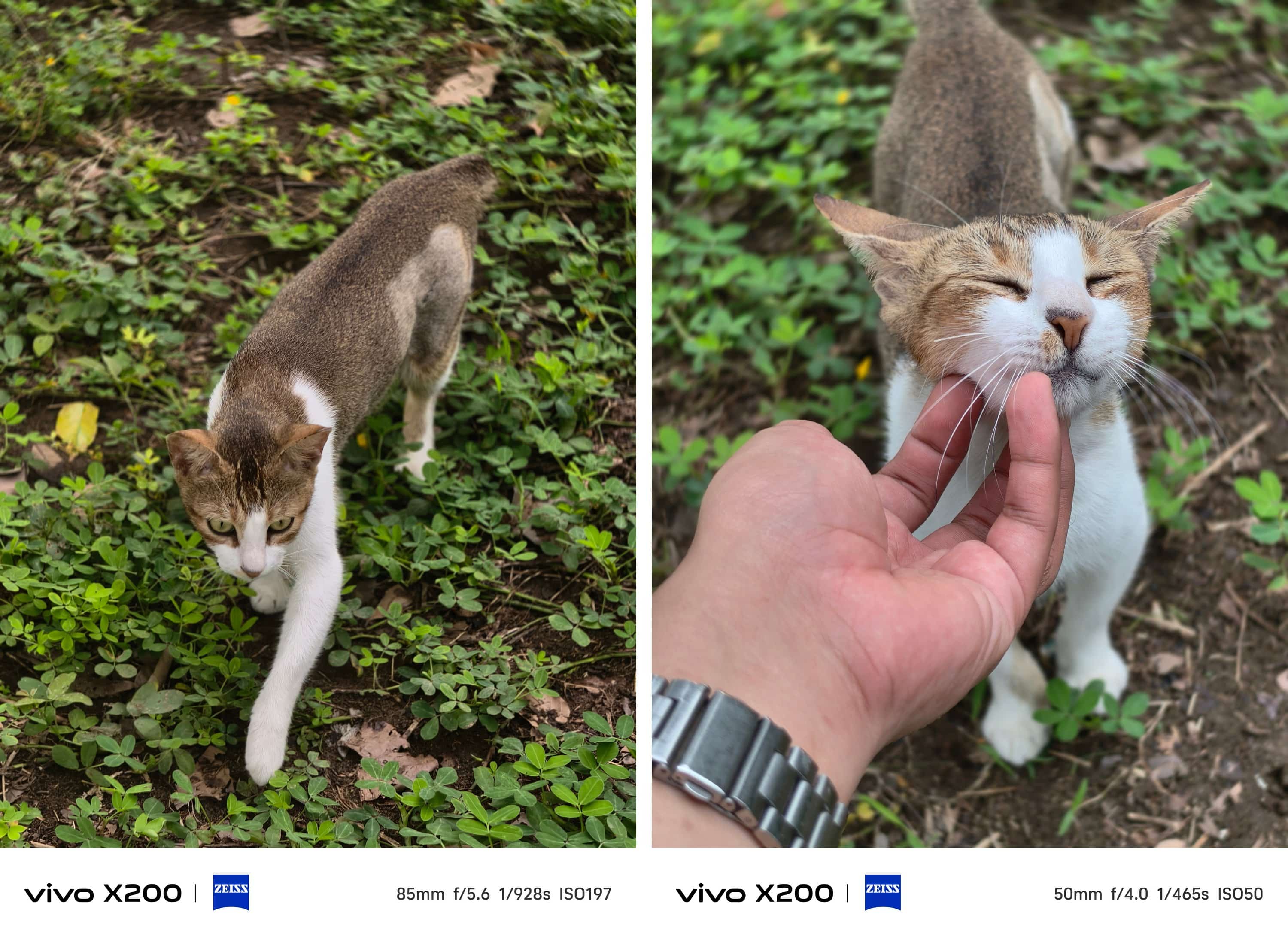
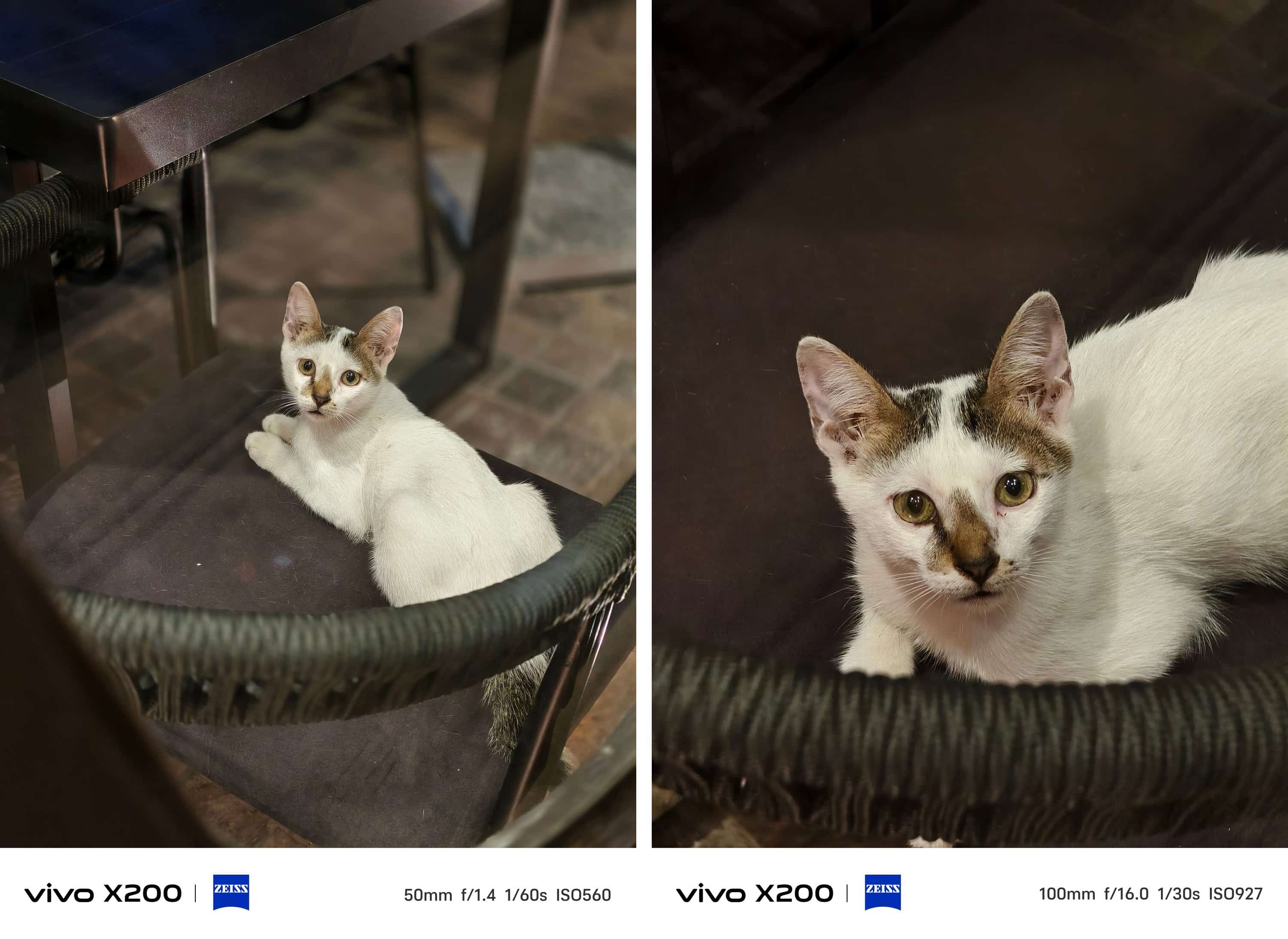
While the stray cats above are playful to me, my cats at home are of the opposite.

Judging by their faces, they’re less hyped and grateful to be with me.
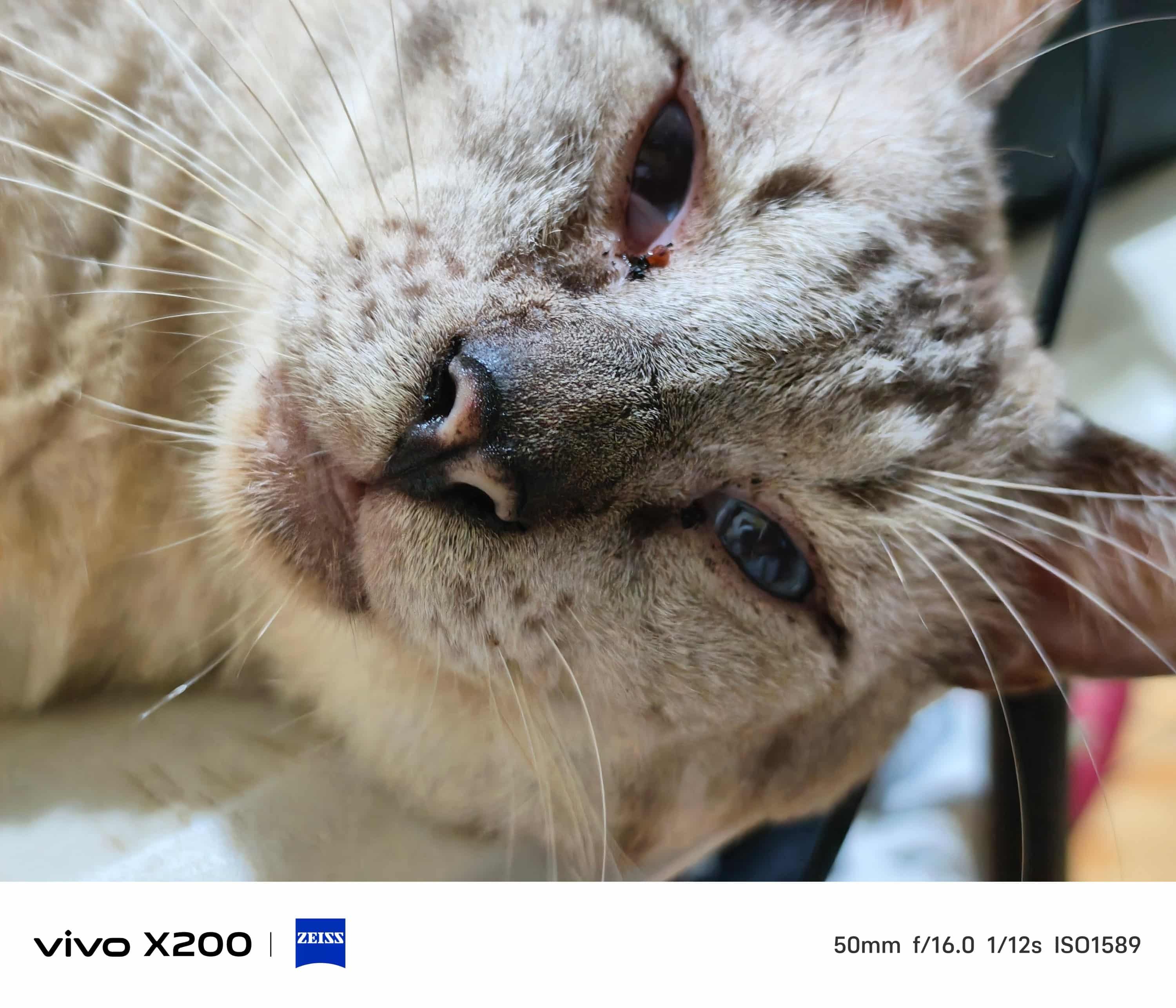

Regardless, the vivo X200 just proved the point of its presence and existence.
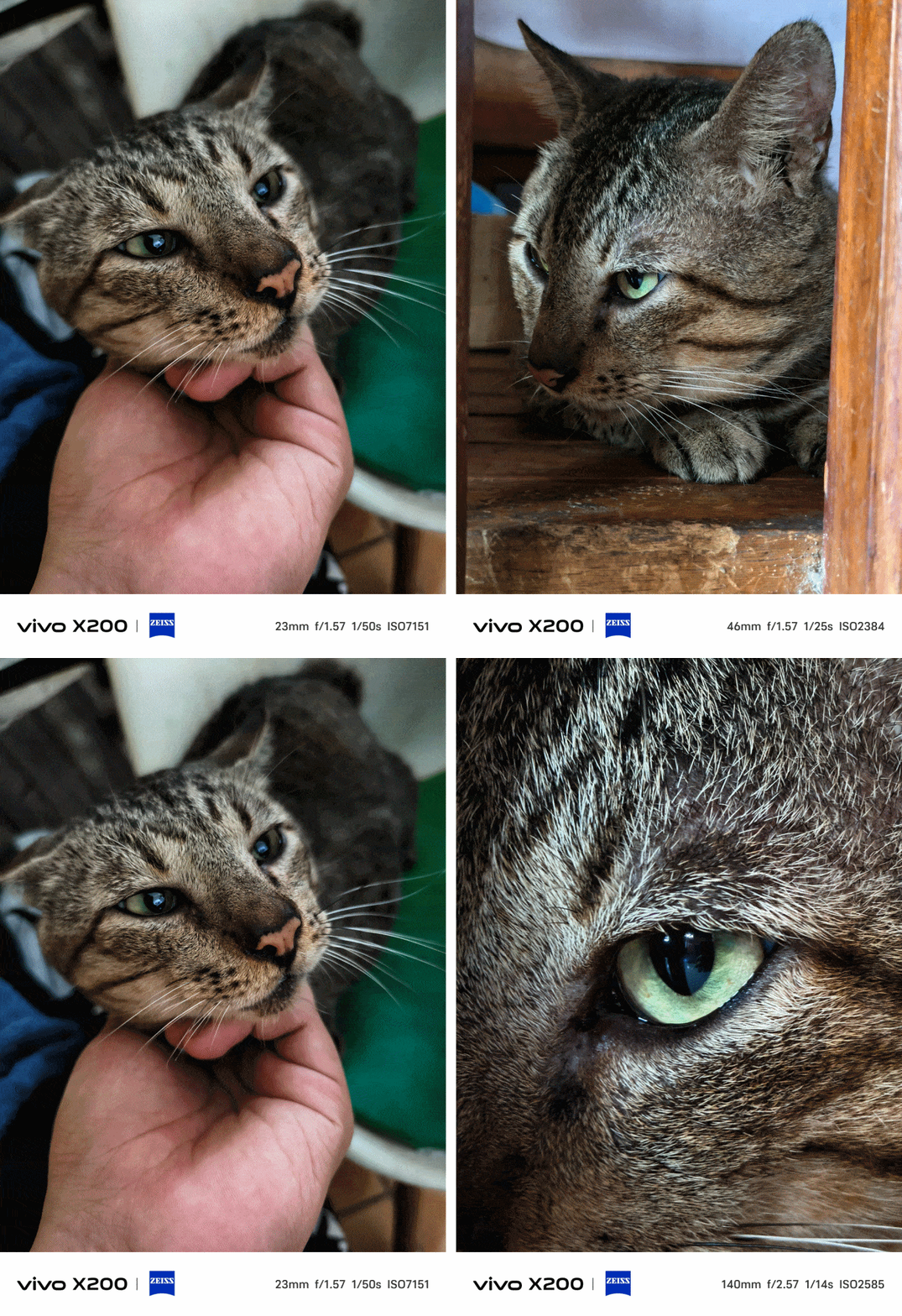
It’s the only phone I can say I enjoy using a lot when taking photos of cats (maybe dogs, and even other furry friends) simply because of its fast camera performance plus commendable background blur segmentation.
Moreover, the amount of detail I get regardless if I use the default 1x or 2x modes or zoom all the way I want — as long as I get unscathed from their bites and scratches.
Escape to Landscape
Another camera mode I’ve discovered is none other than the Landscape mode.

This doesn’t mean that shots in this mode restricts you to shoot in the landscape orientation. It’s all about enhancing sceneries through the harmony of a better color calibration paired with better AI algorithms and other software knick-knacks formulated by vivo.
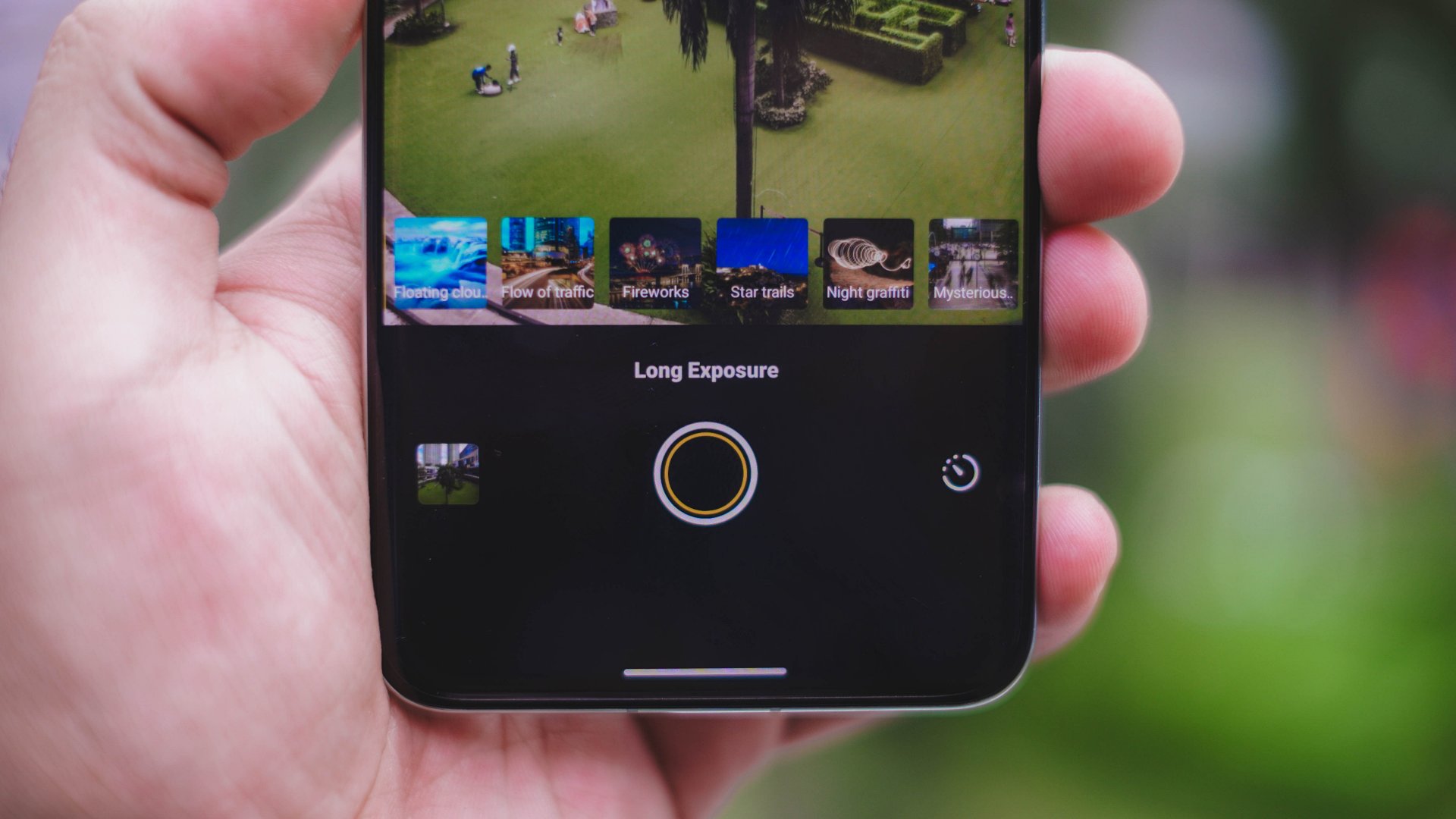
Floating clouds/flowing water, flow of traffic, fireworks, star trails, night graffiti, and mysterious mist
Seen in the photo above, there are six presets for you to pick based on what type of subject you wanted to shoot.
Enabling the flow of traffic feature imitates those hyperlapse-like shots taken usually in professional cameras with manual settings.
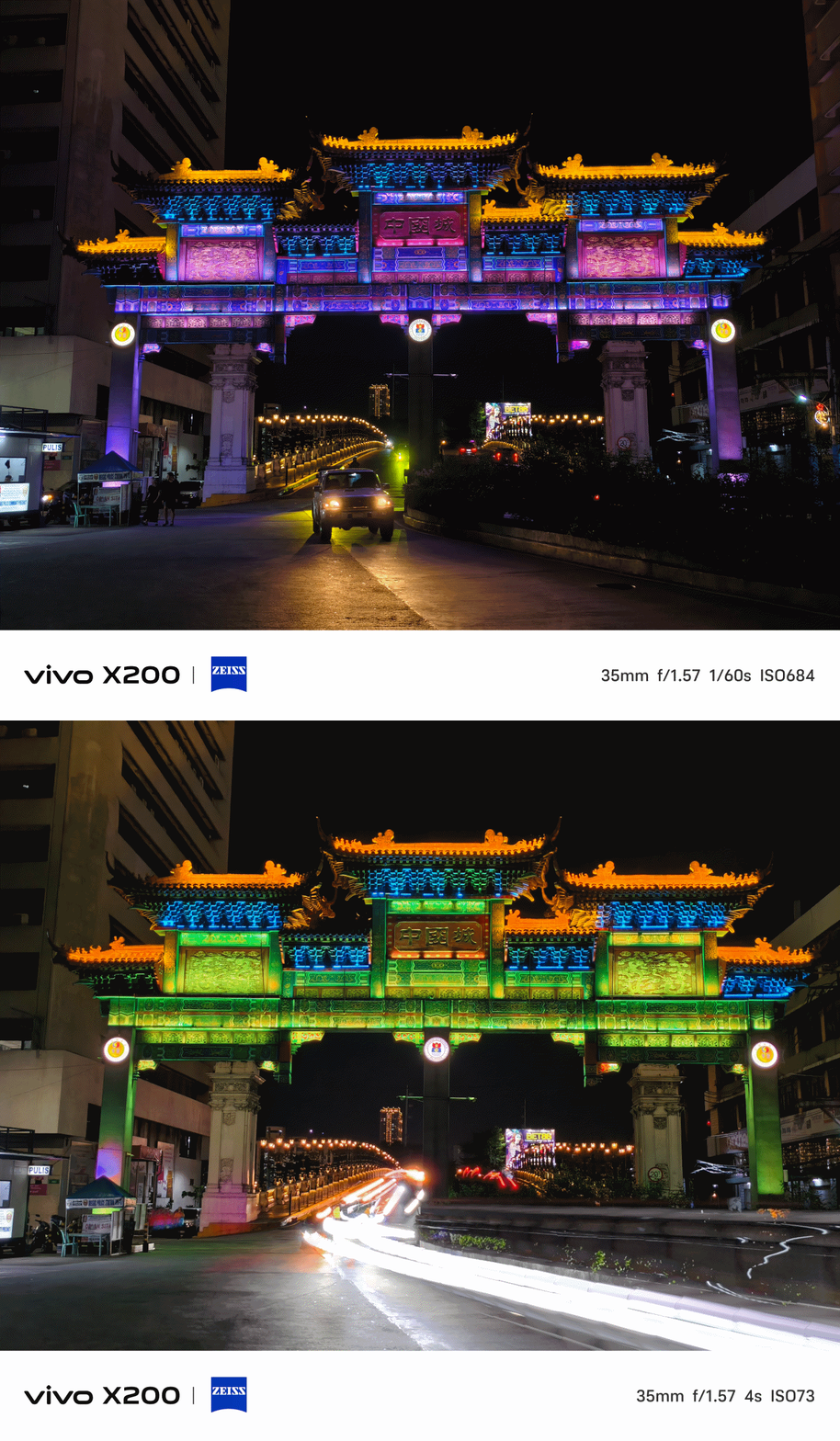
But the vivo X200 makes it a lot easier for users. This doesn’t even require any tripod or a stable surface whatsoever as I was able to take these just handheld.
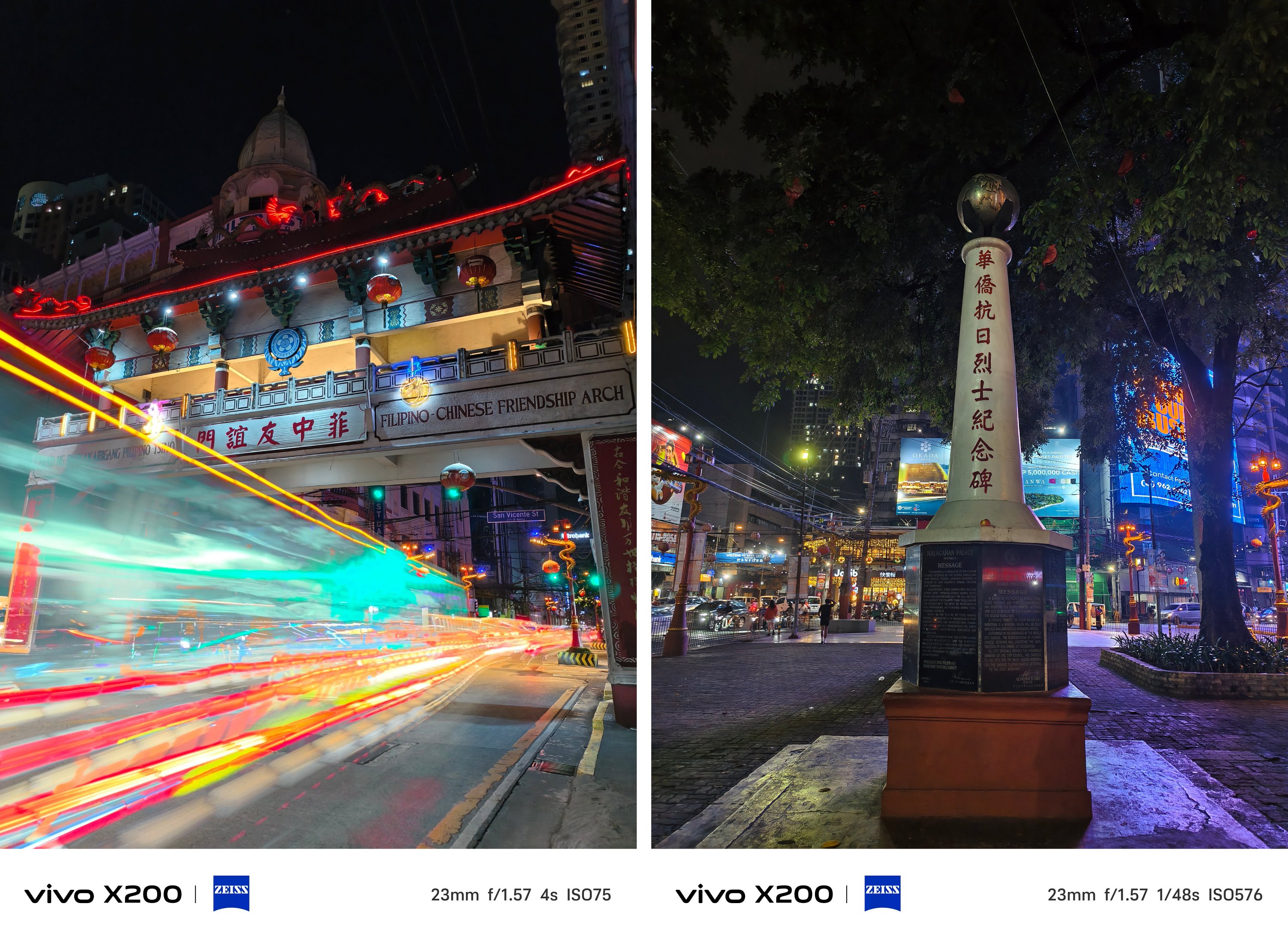

Auto Mode vs Landscape Mode
I also tried using the floating cloud/flowing water option on a pretty fountain I found at the city’s plaza.
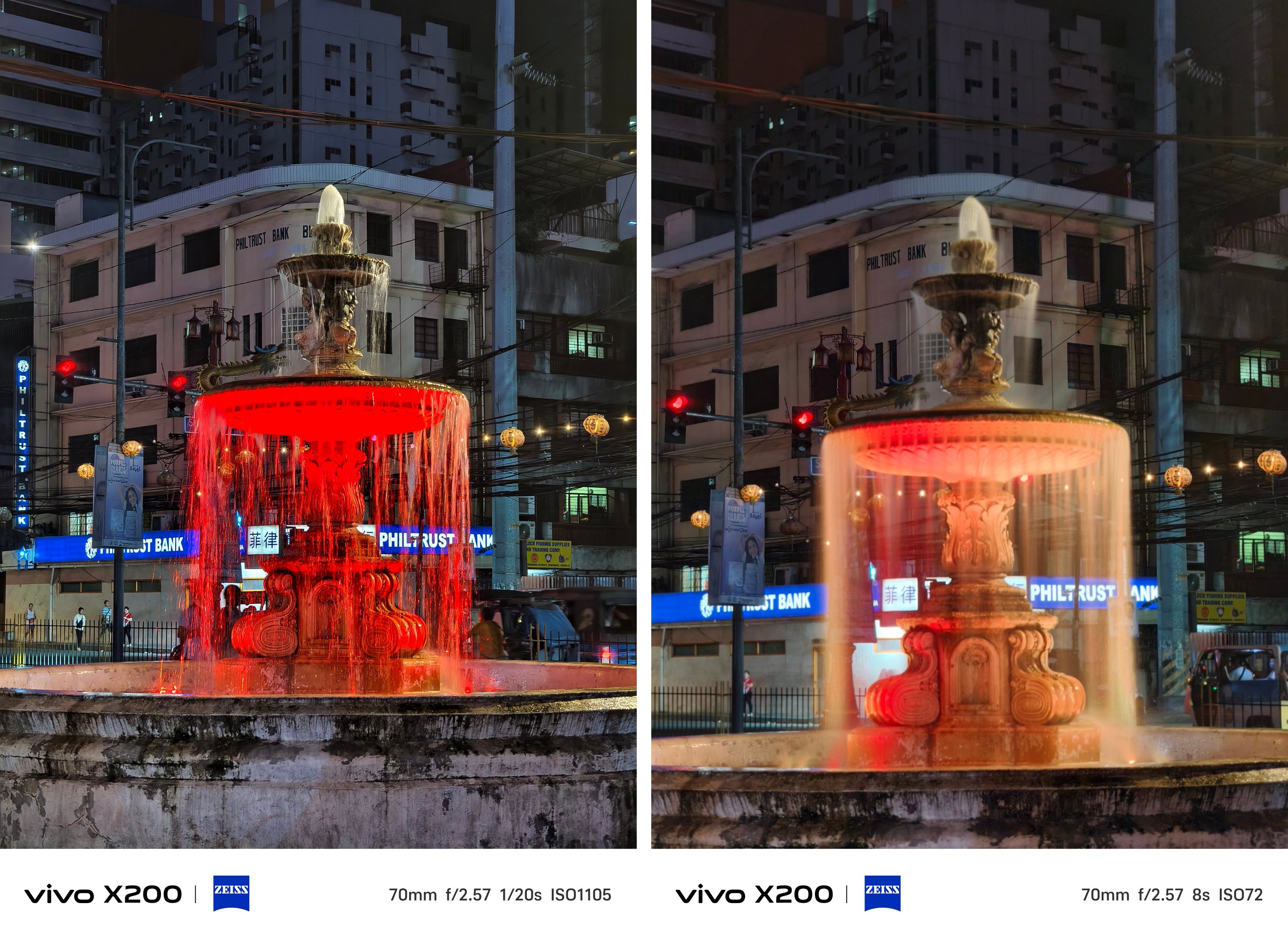
Auto Mode vs Landscape Mode
This mimics those seamlessly smooth waterfall shots achieved with a slower shutter speed.
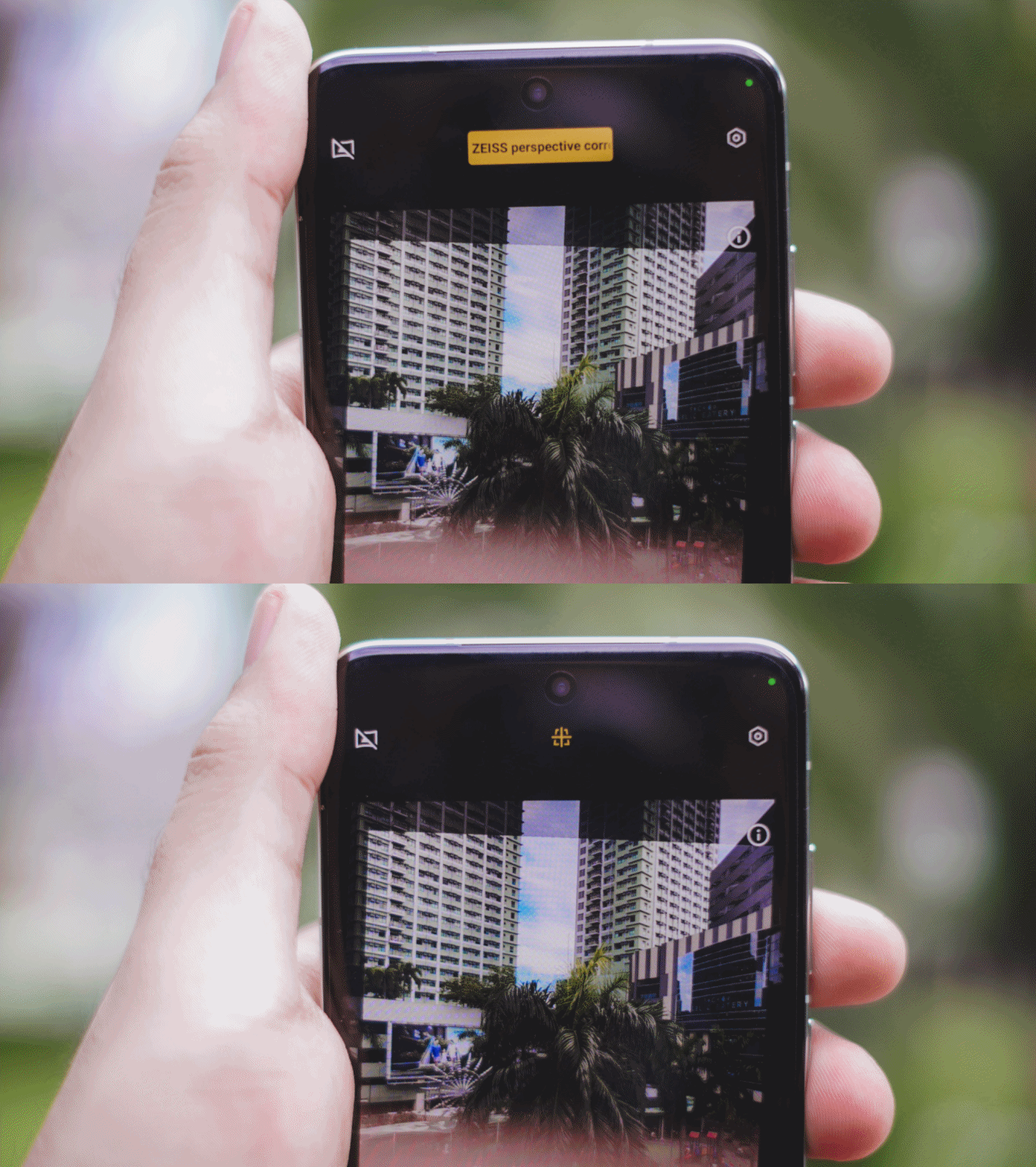
If you’re also a photographer who takes a lot of perspective photographs, the ZEISS Perspective Control might come in very handy in guiding you.
Lastly, I tried taking more moon shots using this particular mode.

As much as I love how these shots have turned out, vivo’s AI trickery simply made ’em less authentic. Albeit, it was able to detect the right moon phase.
AI-bracadabra
With vivo’s AI magic already out in the wild, its AI mastery is also notable to mention.
While the Magic Eraser tool isn’t, in any way, a brand new feature for smartphones, the continuous technological evolution and innovation have truly paid off and were able to make this AI-based feature faster and more accurate.

For instance, I wanted to remove the bag and coffee cup beside this wide shot of me. I then opened the native Gallery app of the vivo X200 and with some few taps and circling, its AI magic did all the trick flawlessly.

I can’t easily say this is the best AI eraser tool. Simply put, in comparison to Xiaomi 13 Pro, TECNO’s PHANTOM V Fold2/Flip2, and Samsung Galaxy S24 Ultra’s AI eraser tools, the vivo X200 simply beats them to the core.
Either of those just hits or misses all the human subjects I badly wanted to remove. If manually-erased, it’s barely effective and just distinguishable.

I even tried using the X200’s eraser feature on a shot of my friend I’ve taken with the V40 Pro.
Unlike my Xiaomi 13 Pro that limits itself on photos taken with the device itself, the X200 was able to do it without frills.
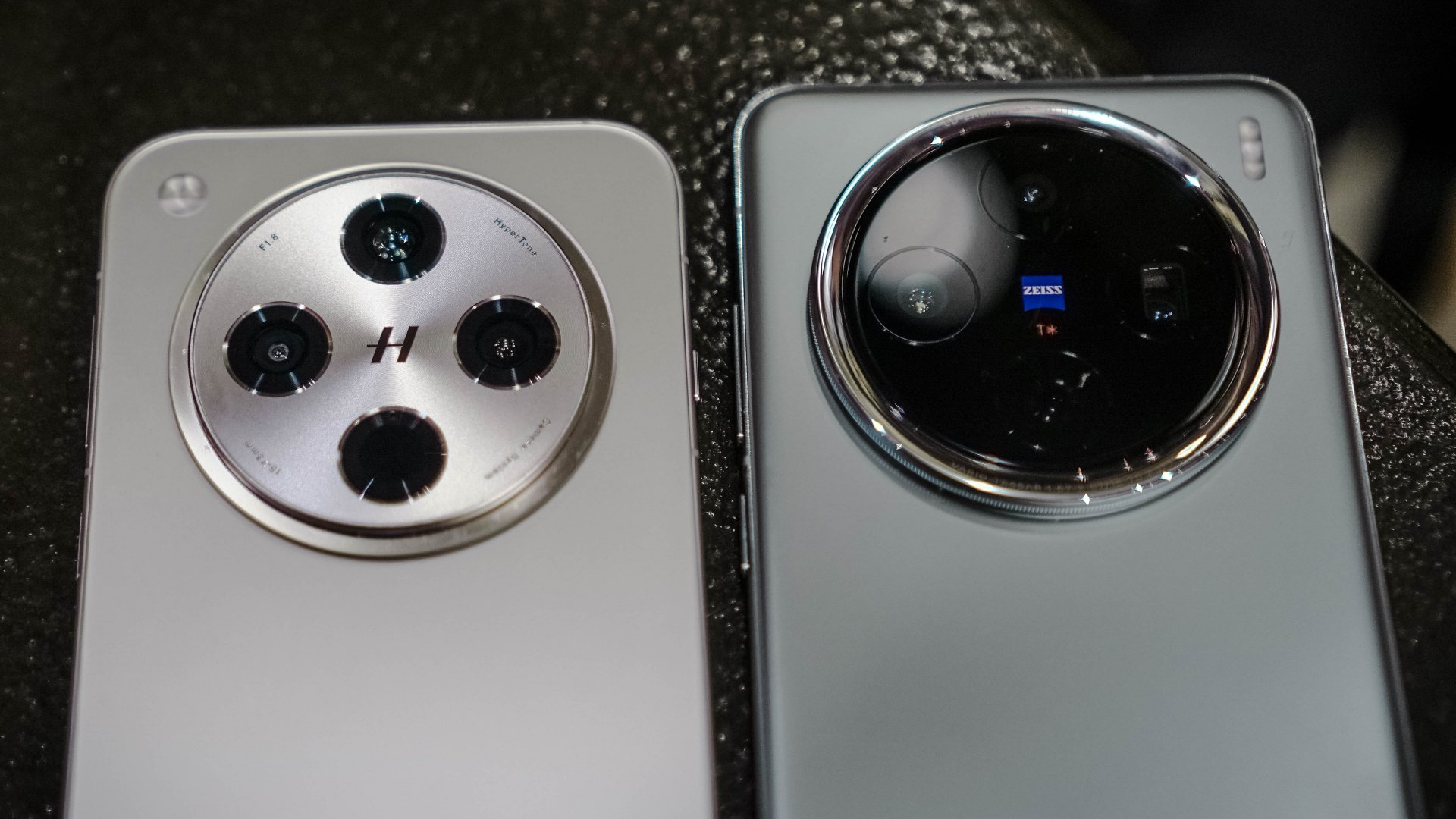
Most (if not all) of us know that vivo and OPPO are both under one parent company. Purely out of fun, me and my colleague, MJ, have tried using each phone’s AI eraser feature.
First, shot taken with the X200 itself…

Another, a shot taken with his aging iPhone 13.
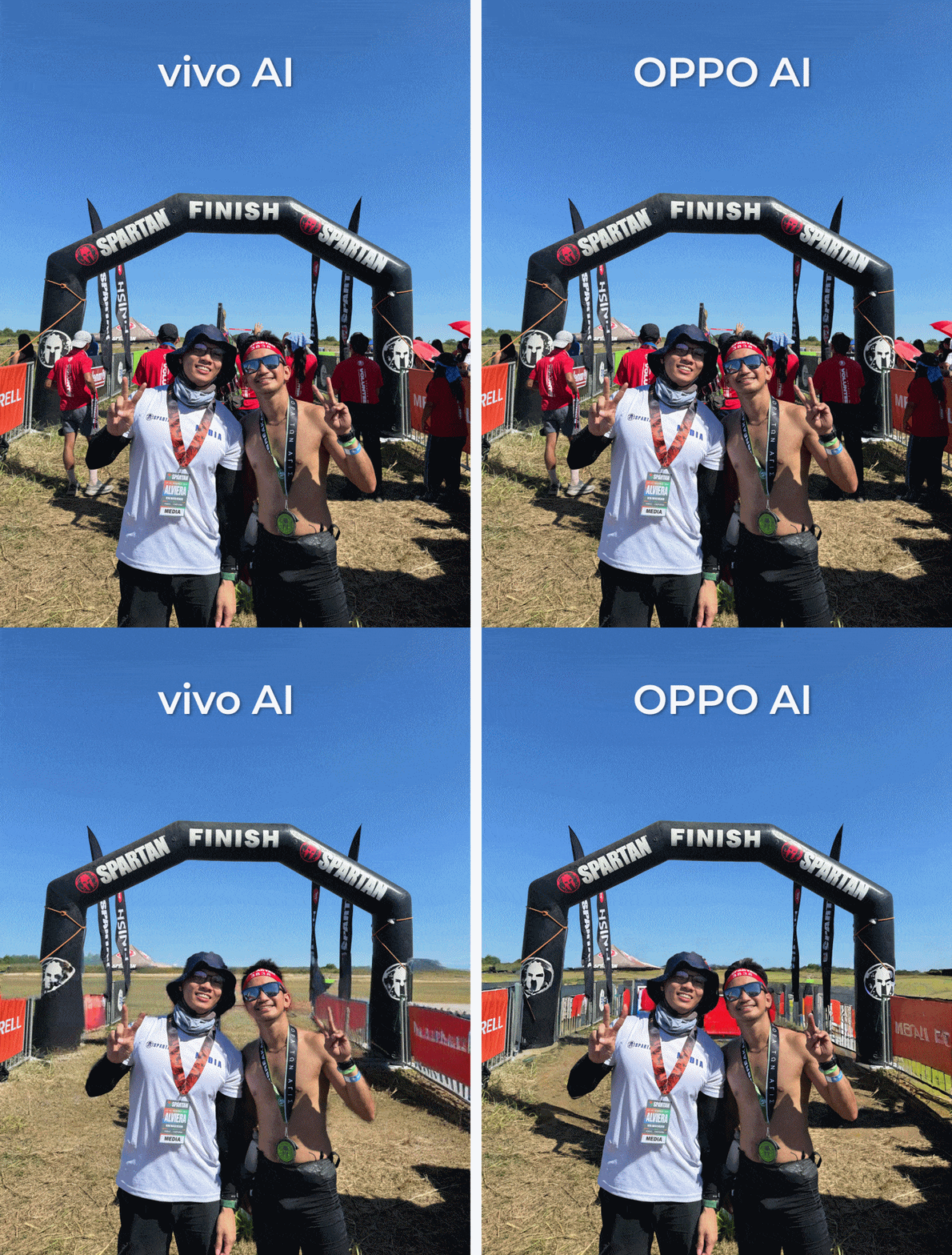
Notice how different these brands/phones are when it comes to AI eraser algorithms?
OPPO’s approach is all about adding more elements to the scene. Meanwhile, vivo’s implementation is removing as much artifacts as possible and replace it with less intrusive object/s.
What about video?!
Deny it or not, Android smartphones still have a long way to go when it comes to better video output.
But for the sake of this camera review, it’s also worth mentioning that the vivo X200 can shoot up to 4K/60fps — the video resolution I use the most.
Albeit, that comes with a “compromise” as Ultra Stabilization maxes out at 2.8K / 60fps.
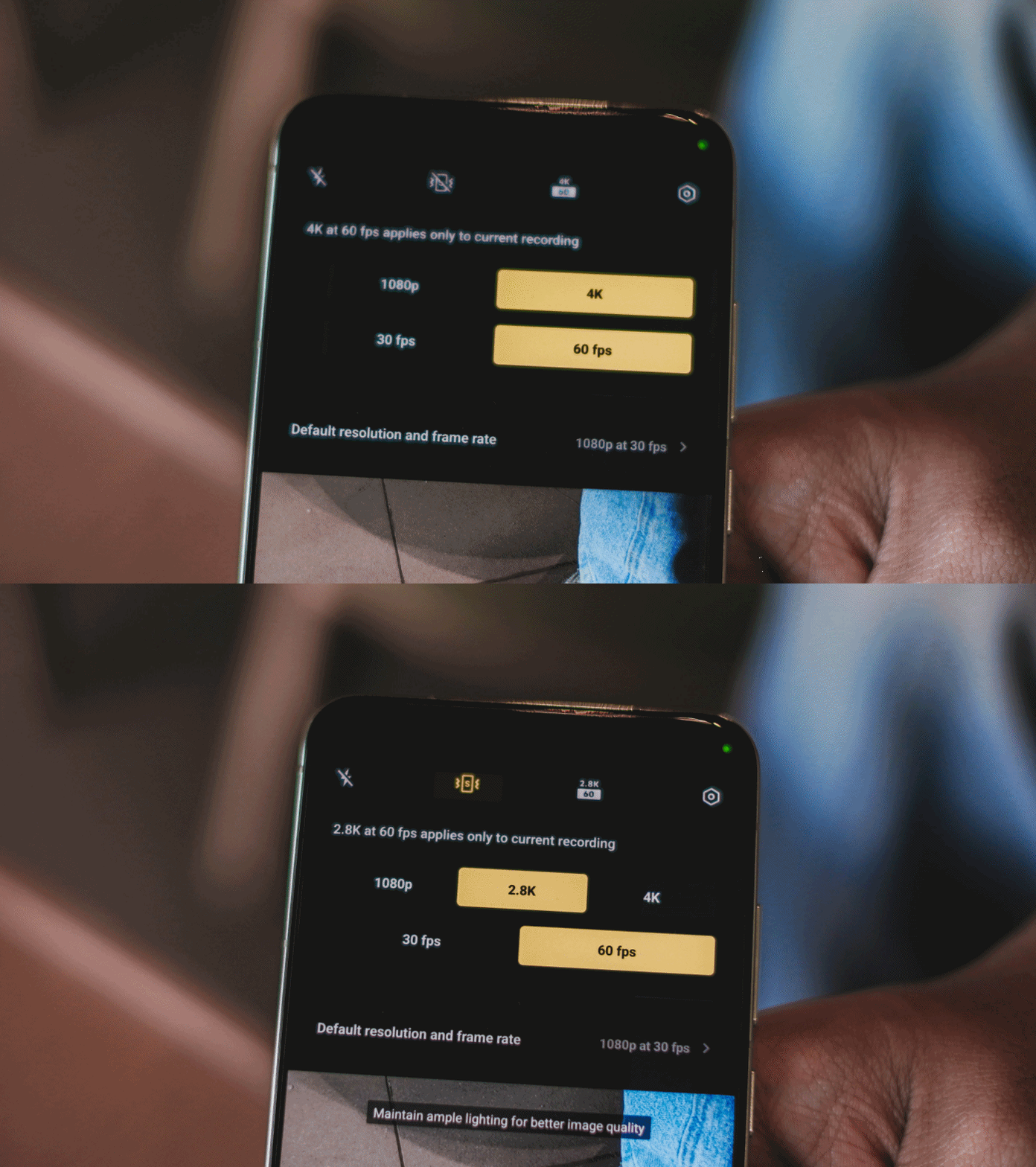
Honestly, standard stabilization seems fine for me.
This may be a result of me having more stable hands than the rest of the population but still, other phones tend to warp and jitter even when I have these fine hands with me.
Mind you, these were all shot during the night. And this is where I can confidently say that vivo has exceeded my expectations and managed to make the X200 a proper device for video shooting.
The Camera Verdict
With all the utmost abundance of samples I’ve provided in this camera review, there’s no doubt that the vivo X200 is one of the best smartphones you can purchase right now.
That’s more likely if you’re like me who heavily focuses on professional photography when trying to look for a shiny, new smartphone.
Even though it’s somewhat stuck between the X200 Pro and V40 Pro as it shares some similar hardware between the two, it’s also often overlooked at how the base flagship can still offer more than what meets the eye.
The vivo X200 is an overall worthy smartphone at this point. 2025 hasn’t even started yet I can definitely and firmly say that this is already one of 2025’s best smartphones dedicated to smartphone-tography.
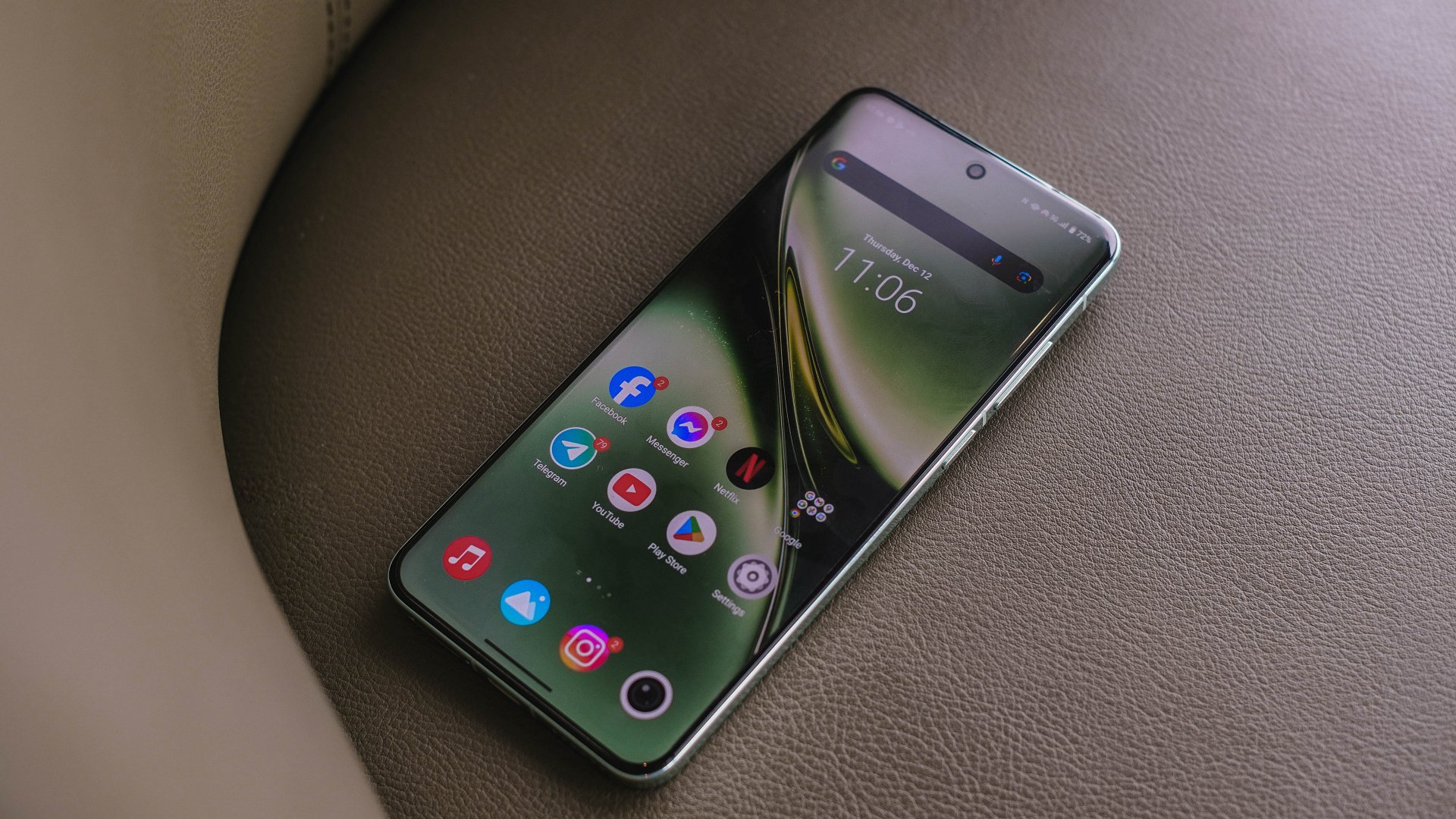
Not to mention, it’s beefed up with great internals such as the all-new MediaTek Dimensity 9400 based on the 3nm process, a 5800mAh Si/C battery, a speedy 90W FlashCharge support, and even a brilliant 6.67-inch AMOLED display.
X-traordinary cameras within pocket’s reach
Smartphone brands have slowly veered away their main focus of delivering the best of the best internals in lieu of professional photography within the reach of one’s pocket.
This also means that moving forward, brands are giving the best camera hardware, software, as well as imaging partnership they could ever provide for their next-gen flagships.
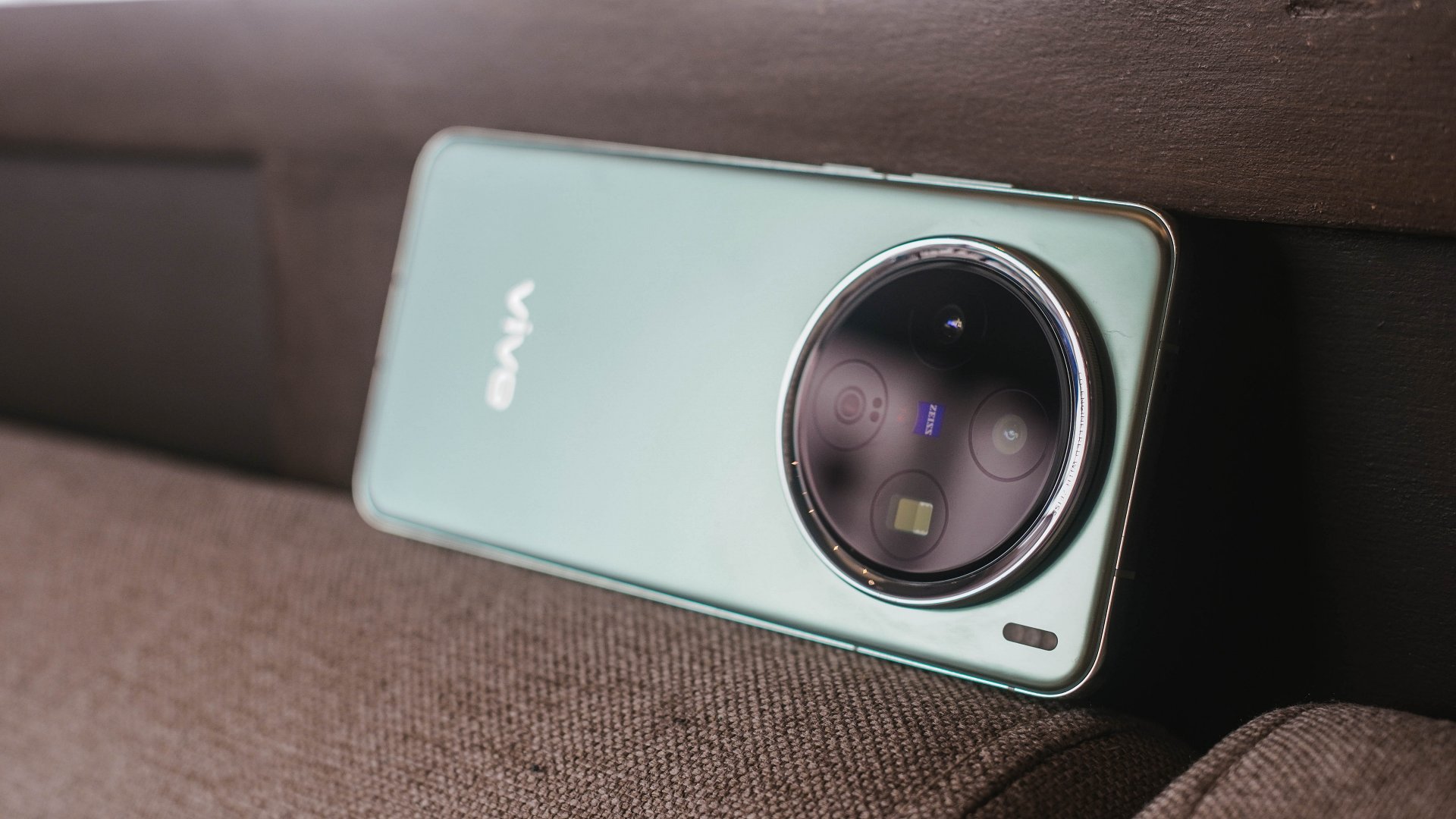
Still, we have to give props to vivo for being one of those pioneers in this segment.
Their steadfast relationship with ZEISS ever since the release of the X60 series makes existing users and prospective buyers enjoy the benefits of the German optics brand’s revolutionary T* coating, its naturalistic ZEISS Natural color profile, as well as all the lens imitations via ZEISS Style Portraits — that I always say I personally love over anyone else’s implementation.
Pricing and Availability
The vivo X200 in the Philippines has a competitive price of PhP 57,999. Meanwhile, its Pro sibling is pricier at PhP 69,999. Both models are only available in a lone 16+512GB configuration with only one colorway available for each: Aurora Green and Titanium Grey respectively.
Both phones are currently available in both Shopee as well as Lazada.






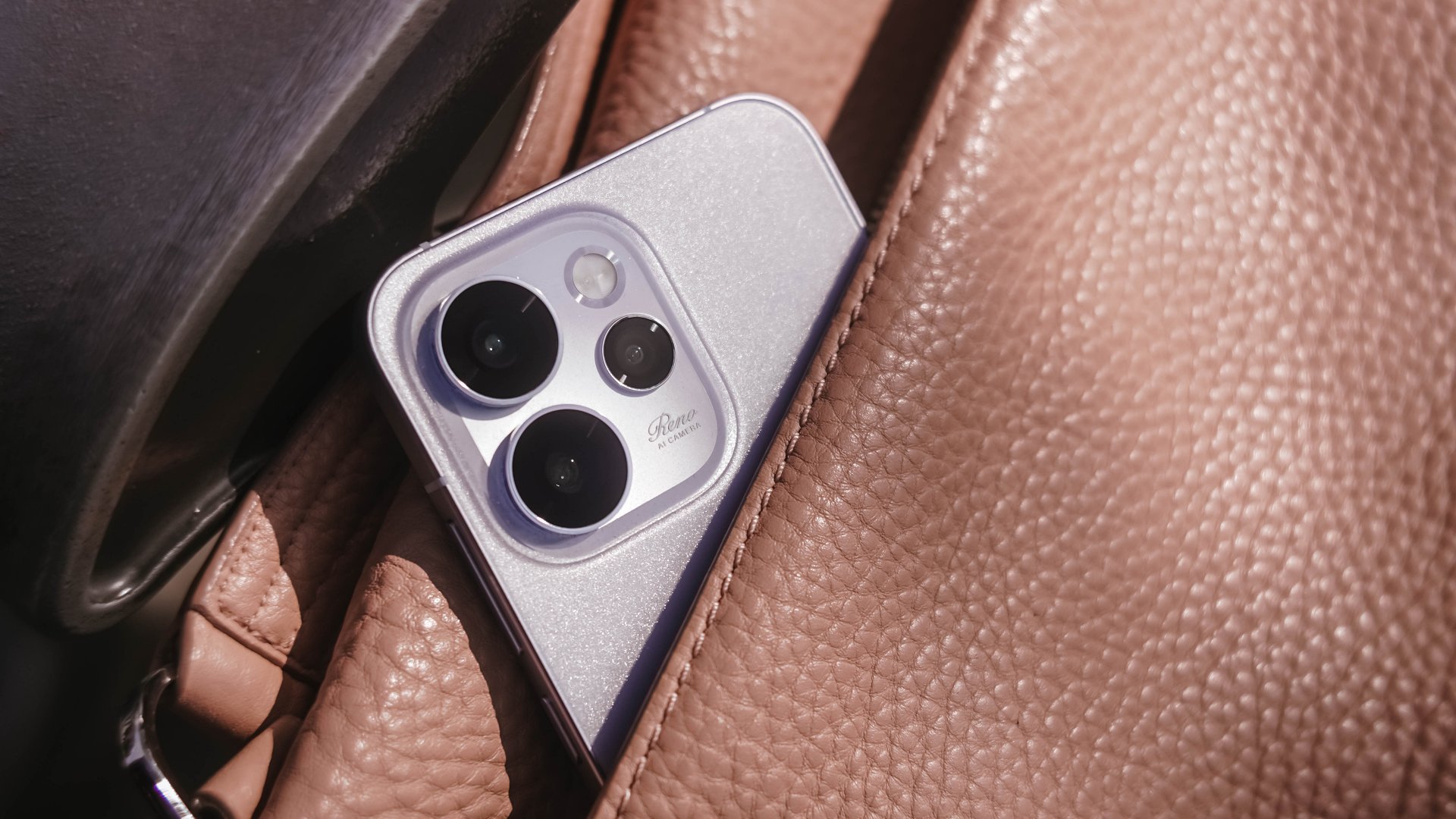
As GadgetMatch’s Creative Producer for 7+ years, I’ve had my fair share of review phones with me.
However, as I stated in my recent Reno15 Pro First Look, this is only my second time handling OPPO’s midranger.
Being the team’s full-fledged ~camera guy~, it’s the best time to shoot with this smartphone. Now, here’s my Camera Review of the all-new OPPO Reno15 Pro.
Hocus Focus
First in focus is none other than the Reno15 Pro’s main (1x) shooter. On paper, this has the biggest gap between the vanilla and Pro variants of the Reno15 series.
| OPPO Reno15 Pro | OPPO Reno15 | |
| Wide | 200MP f/1.8 1/1.56” Samsung ISOCELL HP5 sensor |
50MP f/1.8 1/1.95” Sony LYT-600 sensor |
| Ultra-Wide | 50MP f/2.0 116º FoV GalaxyCore GC50F6 |
8MP f/2.2 116º FoV OmniVision OV08D |
| Telephoto | 50MP f/2.8 1/2.75” Samsung ISOCELL JN5 sensor |
50MP f/2.8 1/2.75” Samsung ISOCELL JN5 sensor |
| Selfie | 50MP f/2.0 1/2.75” Samsung ISOCELL JN5 sensor |
50MP f/2.0 1/2.75” Samsung ISOCELL JN5 sensor |

That 200MP main camera not only has a larger megapixel count, but it also has a bigger sensor size, compared to what the base Reno15 has.
Right off the bat, the Reno15 Pro already serves with its superior image quality.
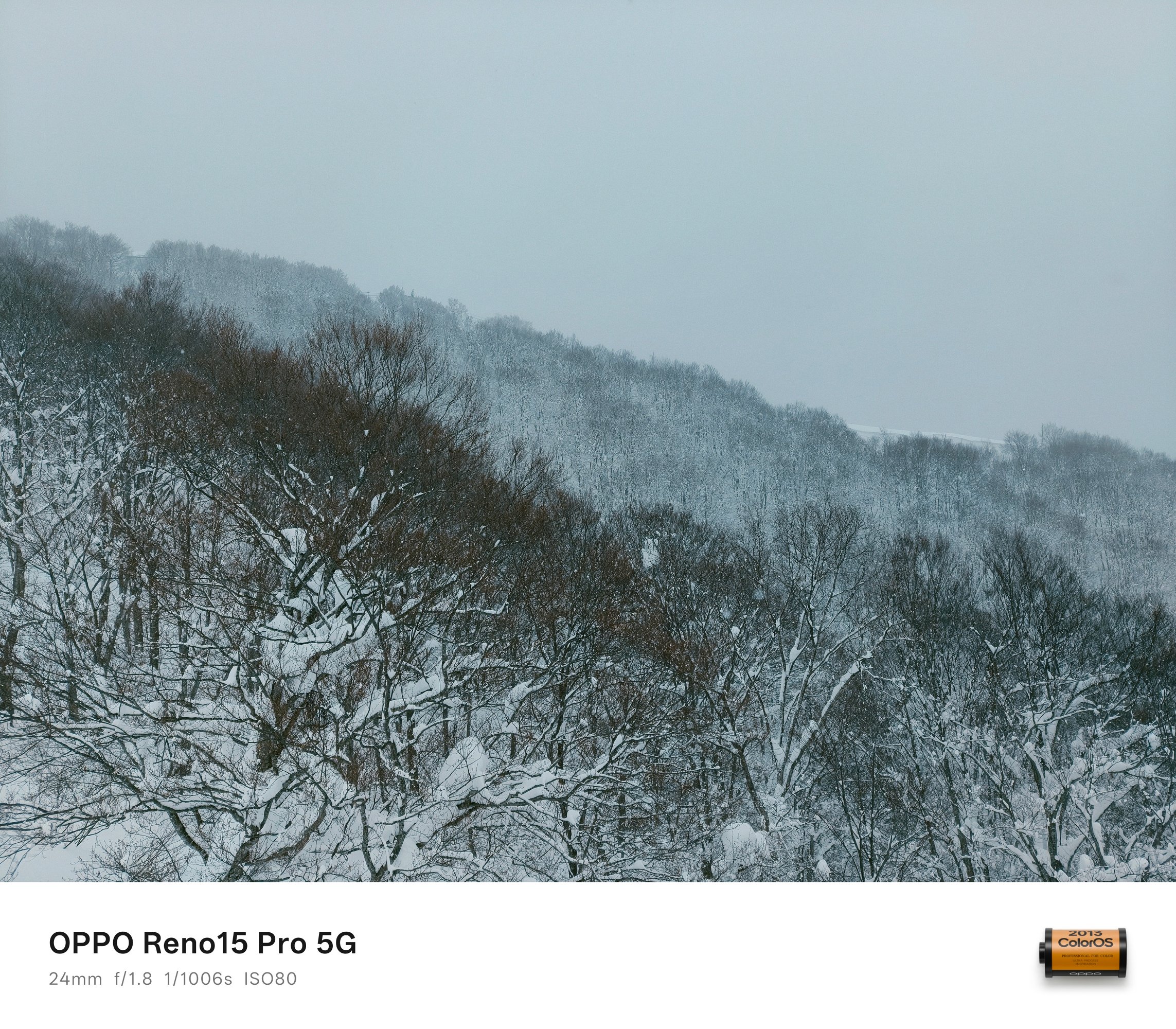
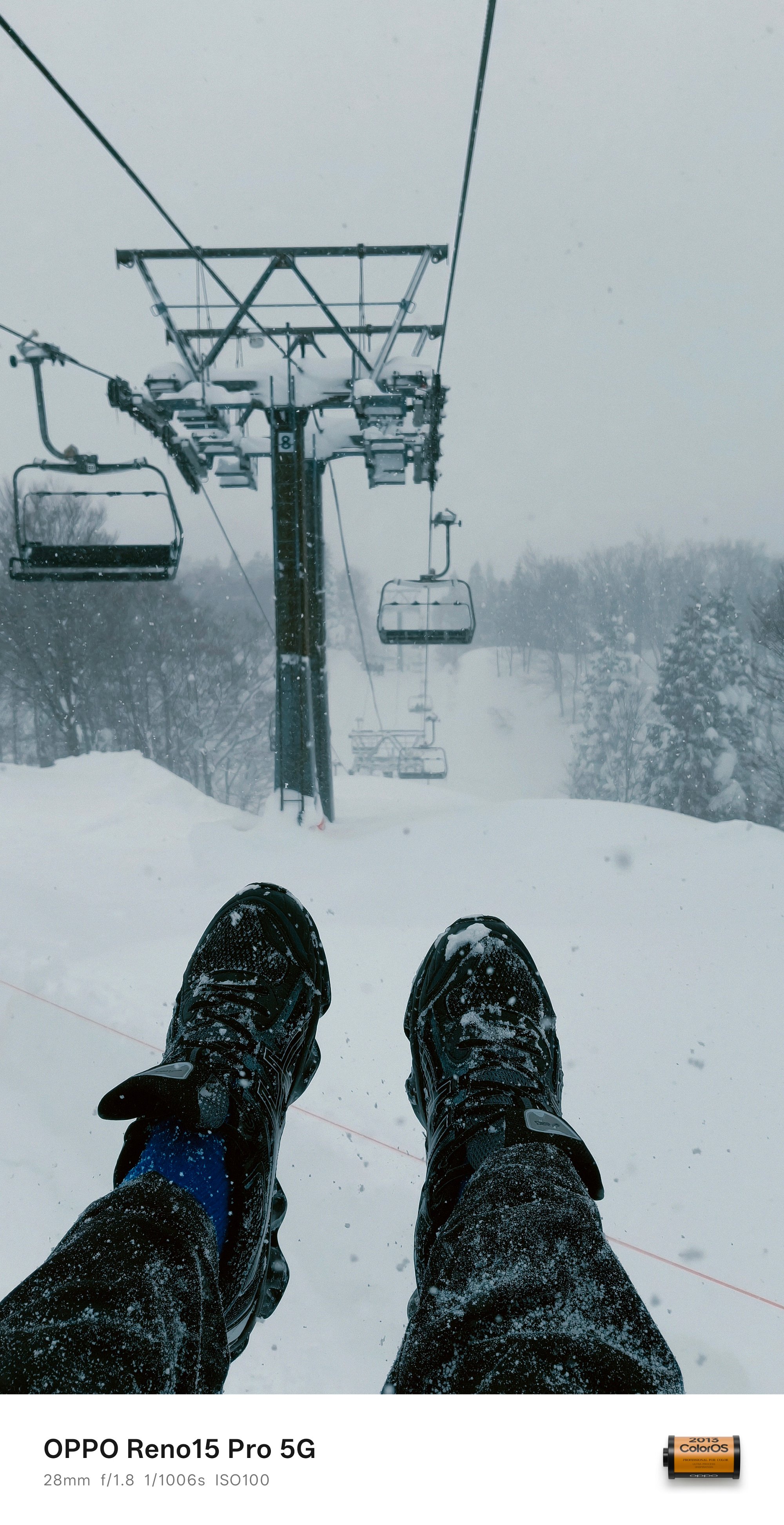
While color output is and will always be preferential, I prefer how the Reno15 Pro doesn’t produce photos that are looking too flat — with the fair share of balance in highlights, shadows, and contrast.




HDR scenes weren’t forgotten as well. There’s a good mix of everything in between despite capturing them against that harsh sunlight behind.


And before I forget, I just want to commend how fast the shutter response time is. Personally, I don’t use burst shooting and only relies on how fast my finger reflexes are when taking photos as fast as possible.
Good thing, the OPPO Reno15 Pro managed to capture this breezing train with ease.
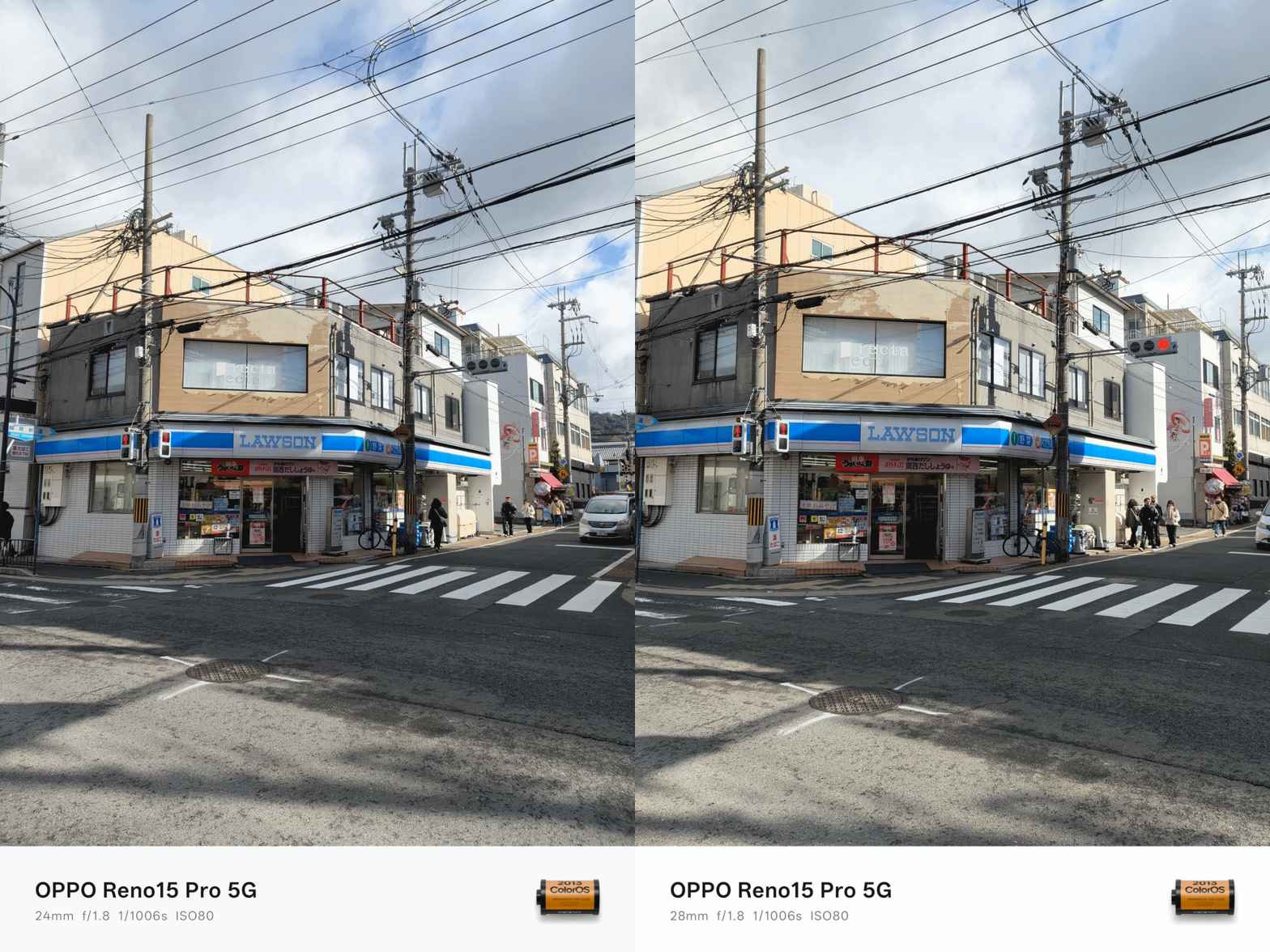

The ability to switch between 24mm, 28mm, and 35mm is also a great feature flexibility especially for users who want to frame their shots properly.
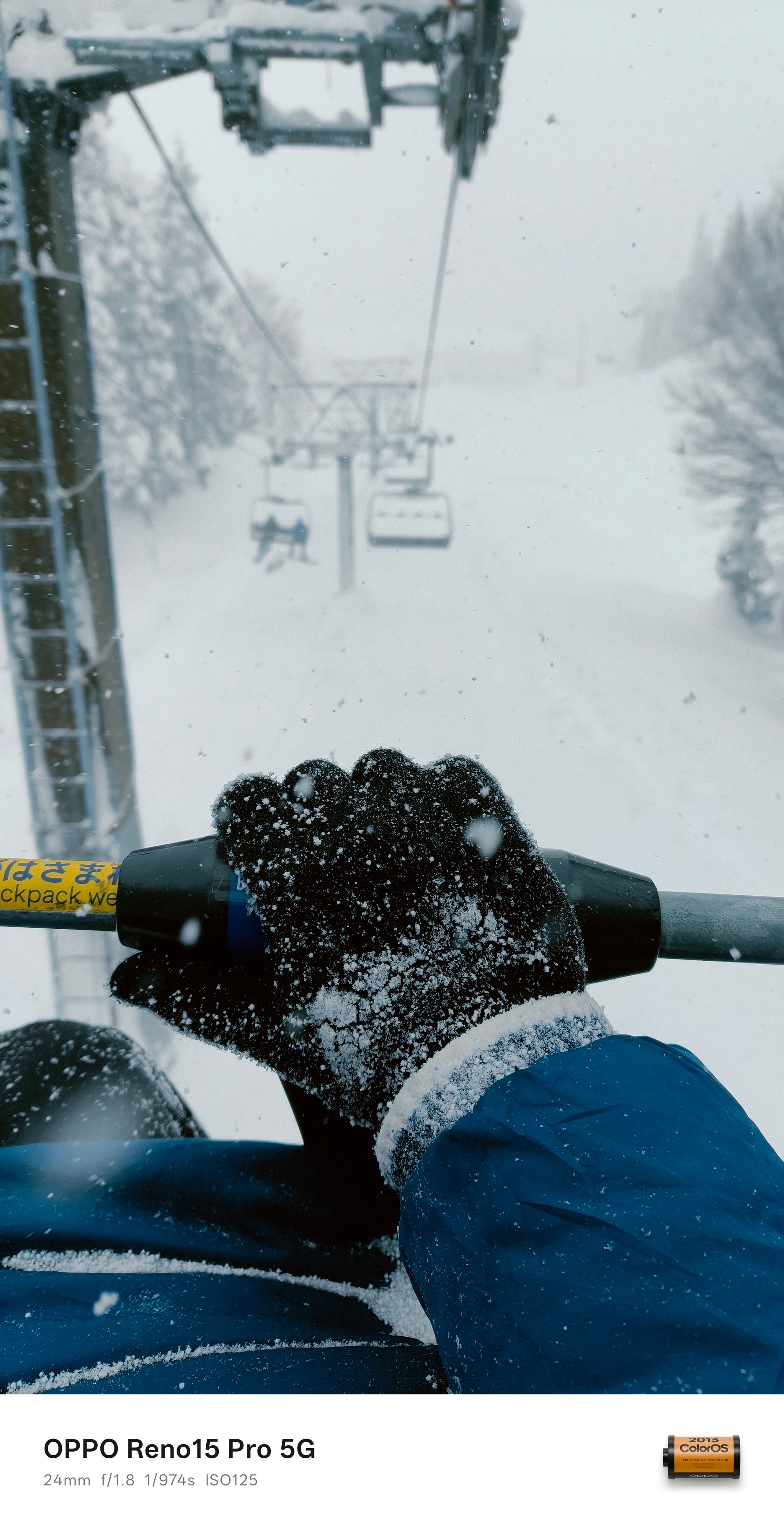
BONUS #1: It also captured my first snow fall experience in Osaka ❄️

Wider than wide
Usually, ultra-wide cameras are something that’s left behind among midrange phones. The case isn’t the same for the Reno15 Pro.
Although I cannot provide any comparison sample, that 50MP sensor obviously has the upper-hand versus the 8MP shooter found on the base Reno15.

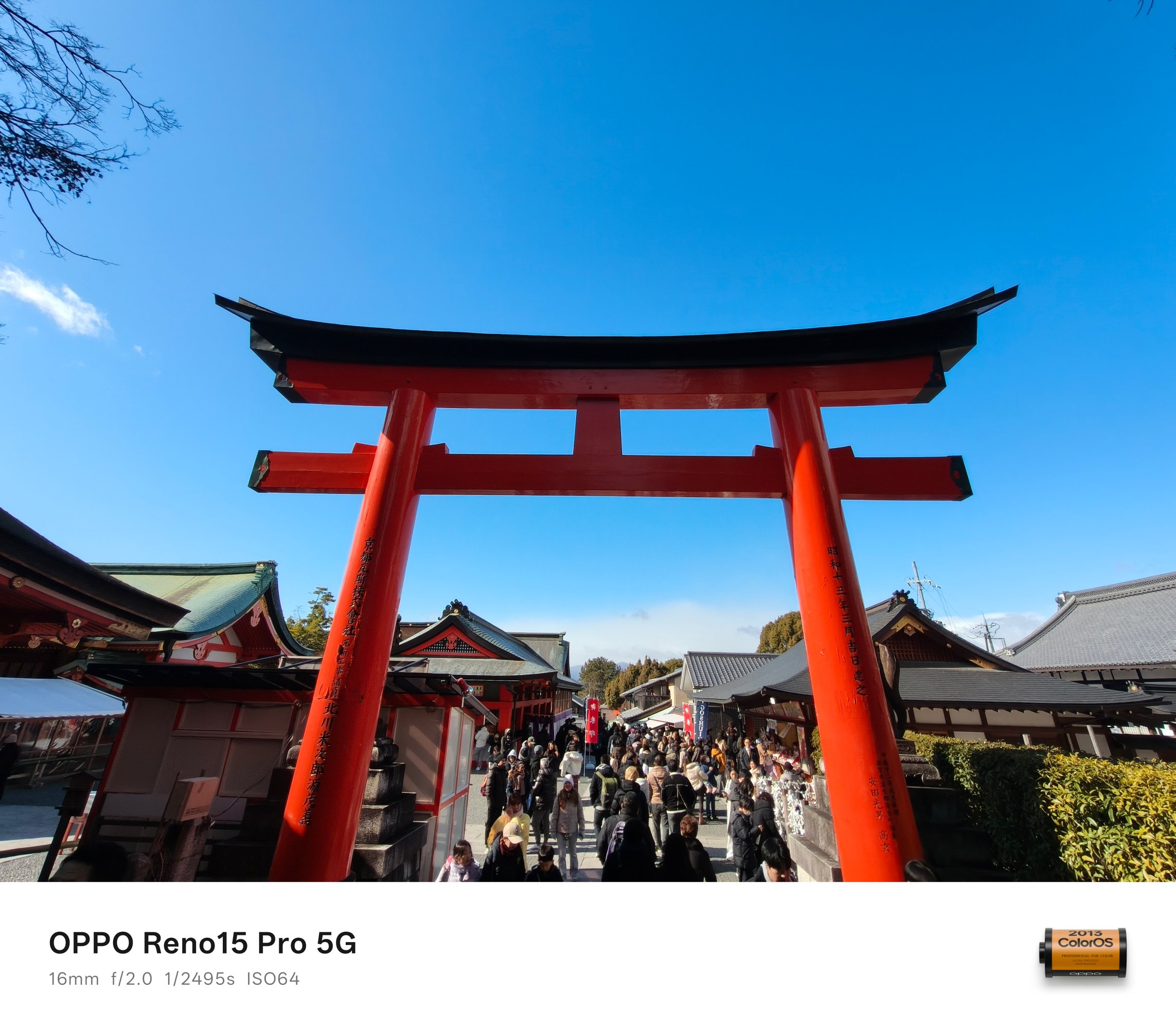
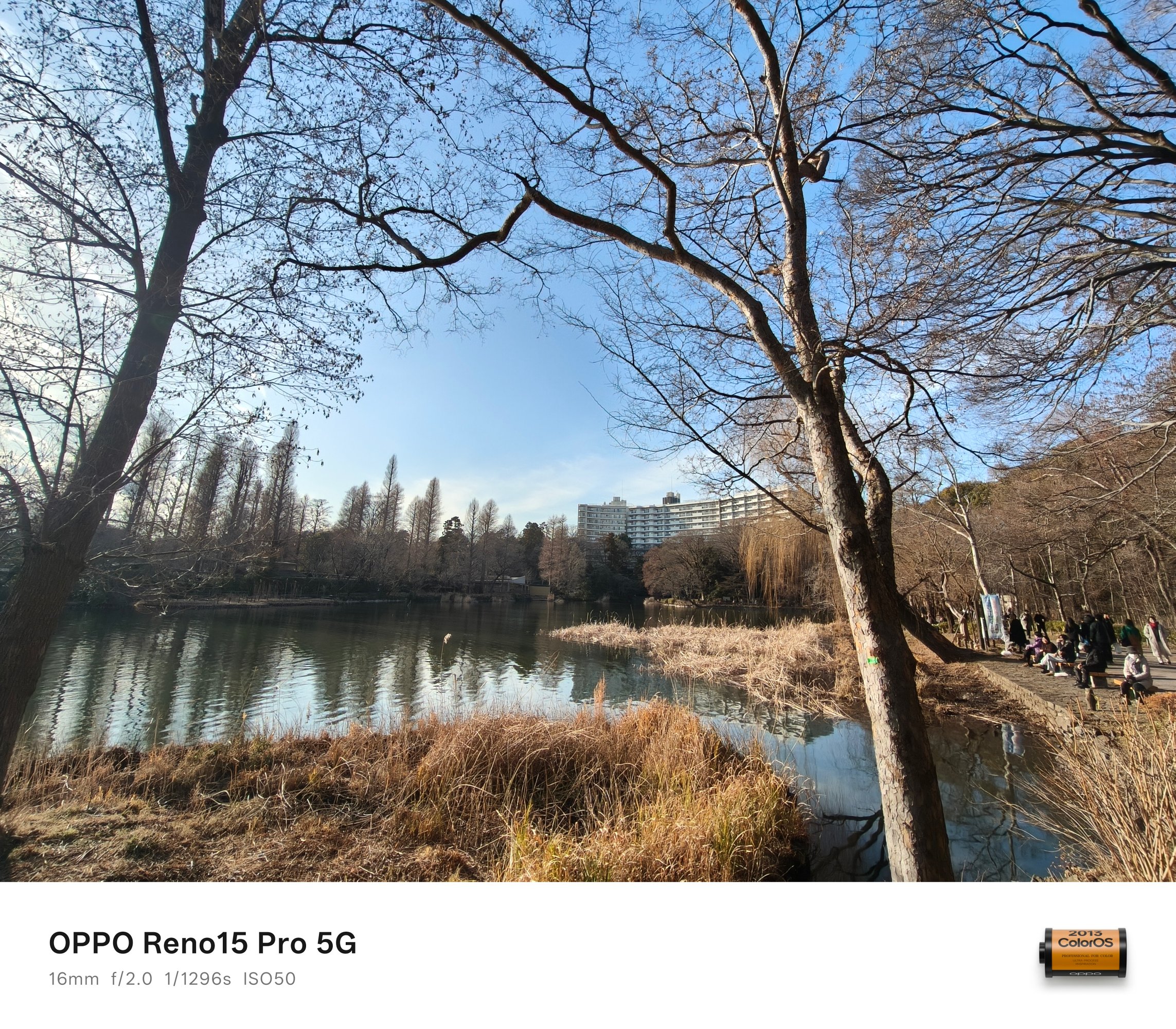
Shots taken in the UWA (Ultra-Wide Angle) mode look crisp and clear, no questions asked.
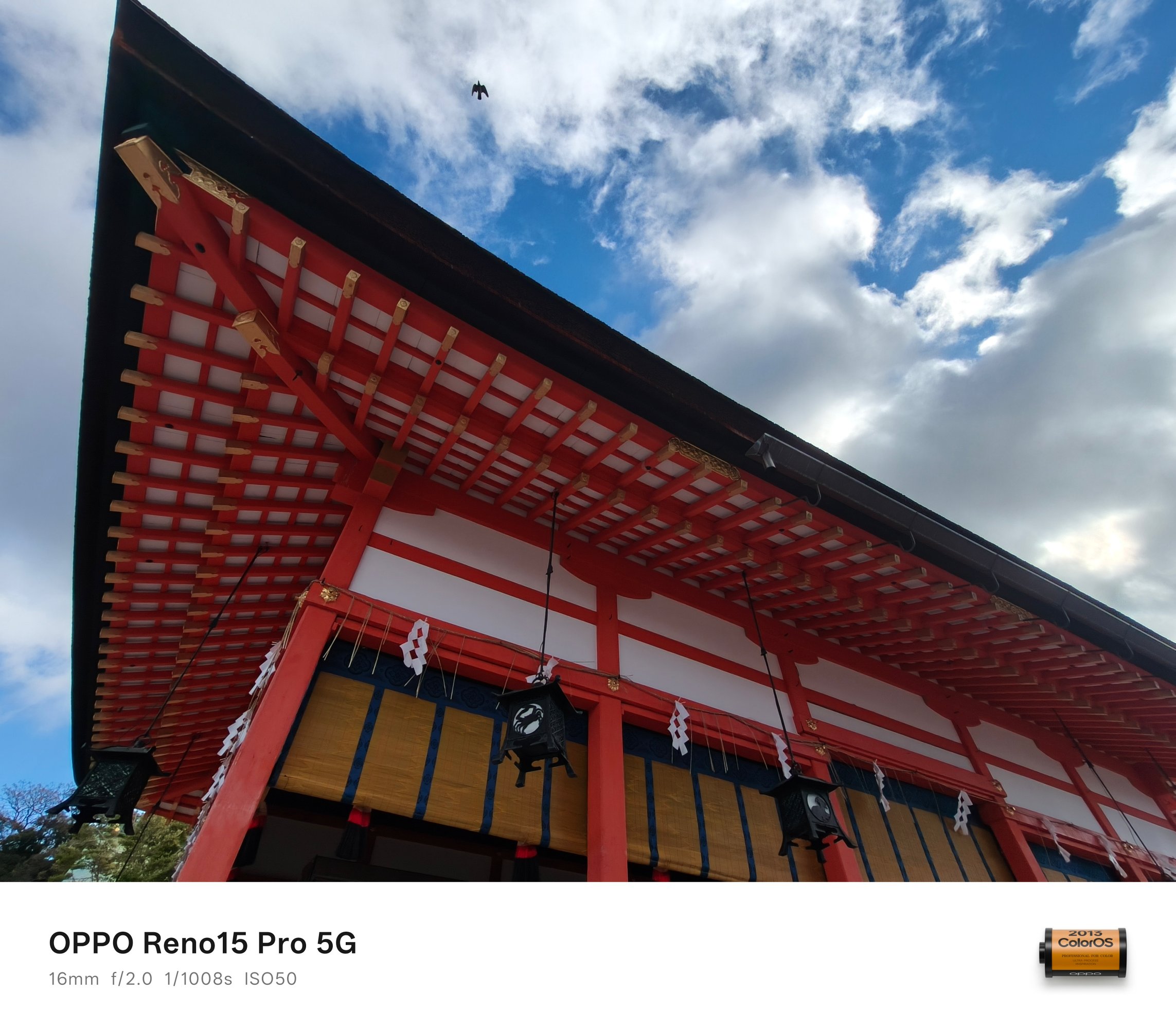
It even managed to snap that flying bird above like a fictional time freeze phenomenon.


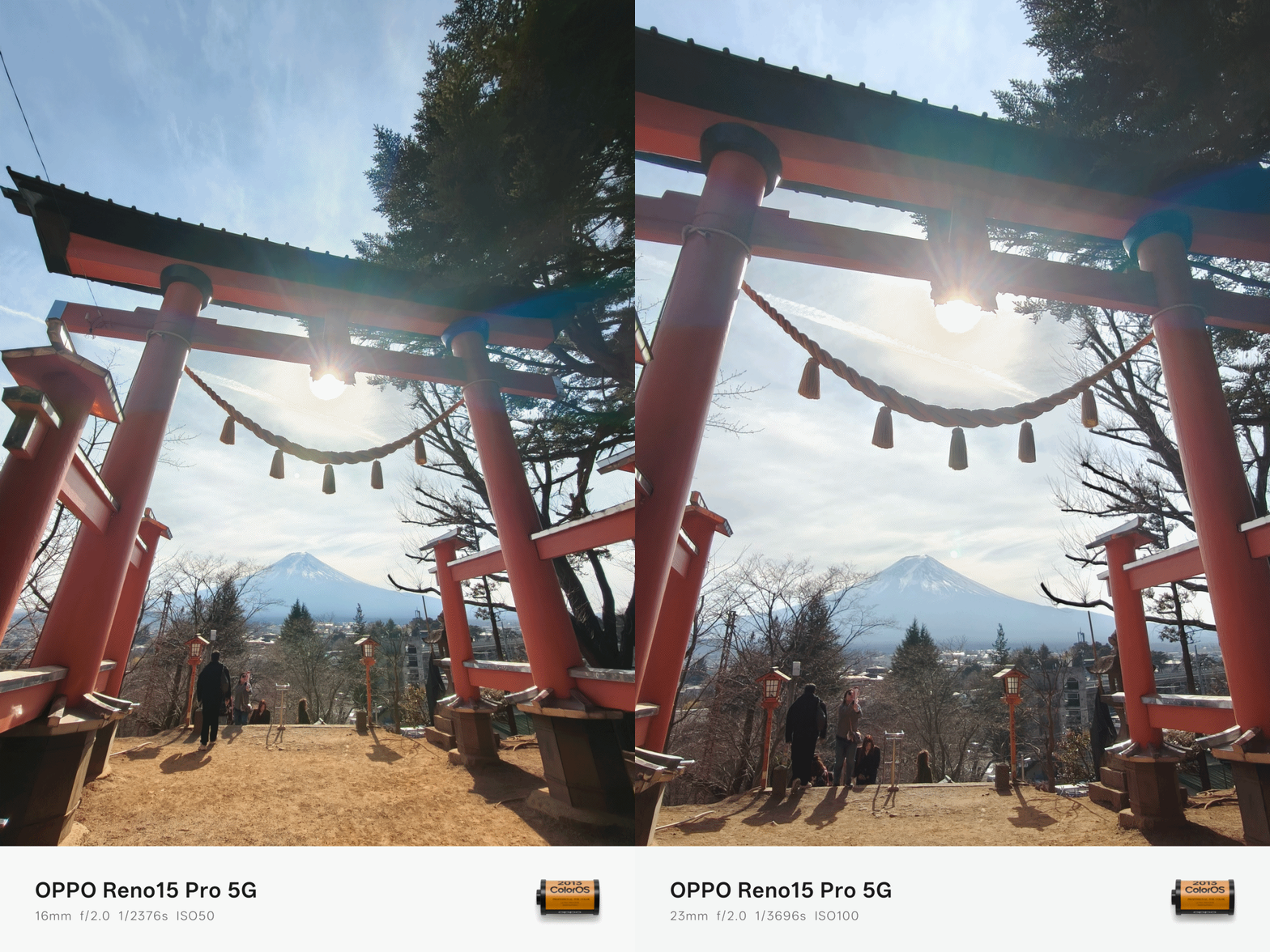
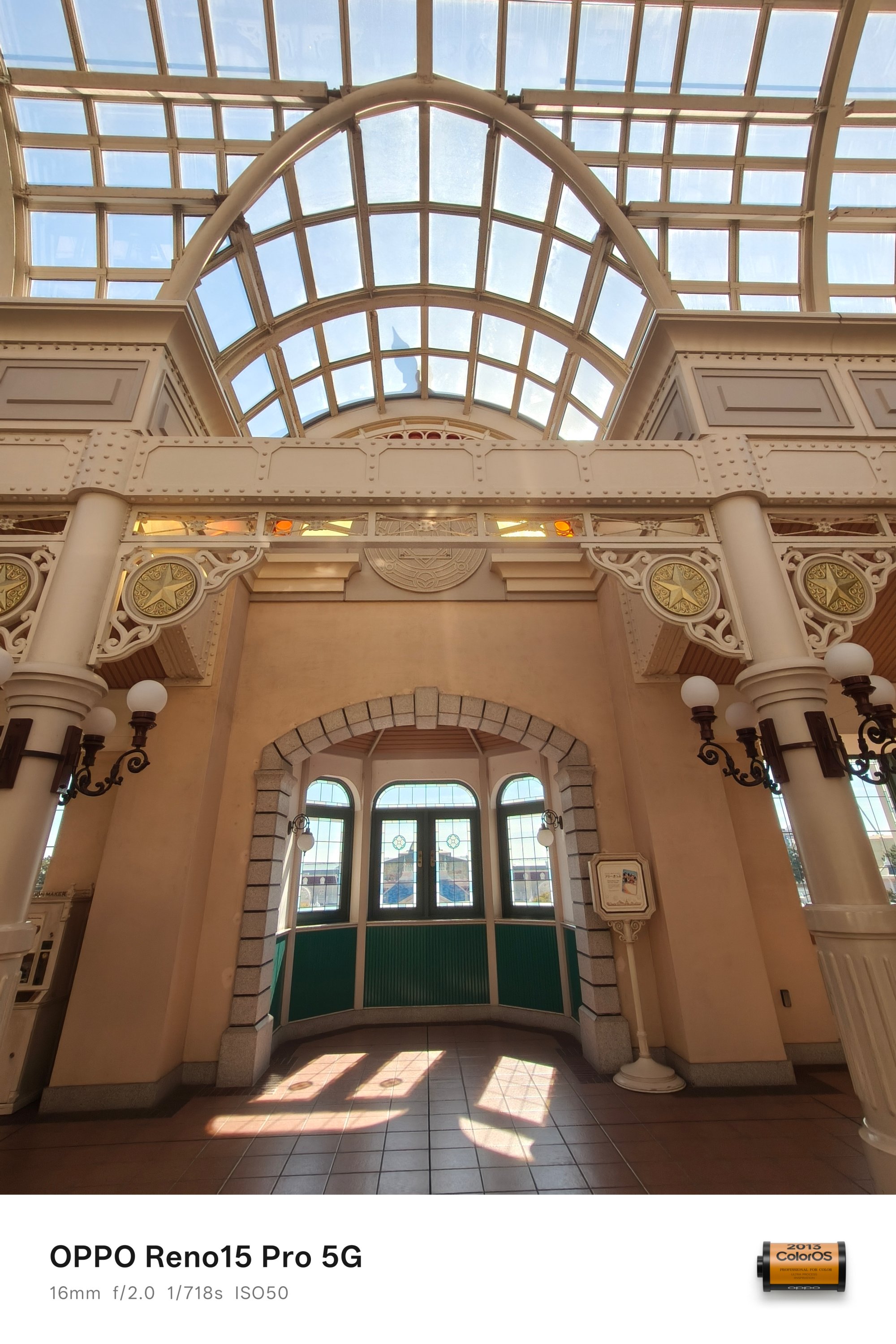
That 118-degree FoV squeezes in more details in the frame that cannot be captured by the regular 1x wide camera — unless you physically back off meters away from the subject.

In certain scenarios where cropping in is required, that larger megapixel count means it has gathered more image data — especially in restricting environments.

The Zoom Boom
If you’re coming from last year’s Reno, that 3.5x zoom shooter still remains.
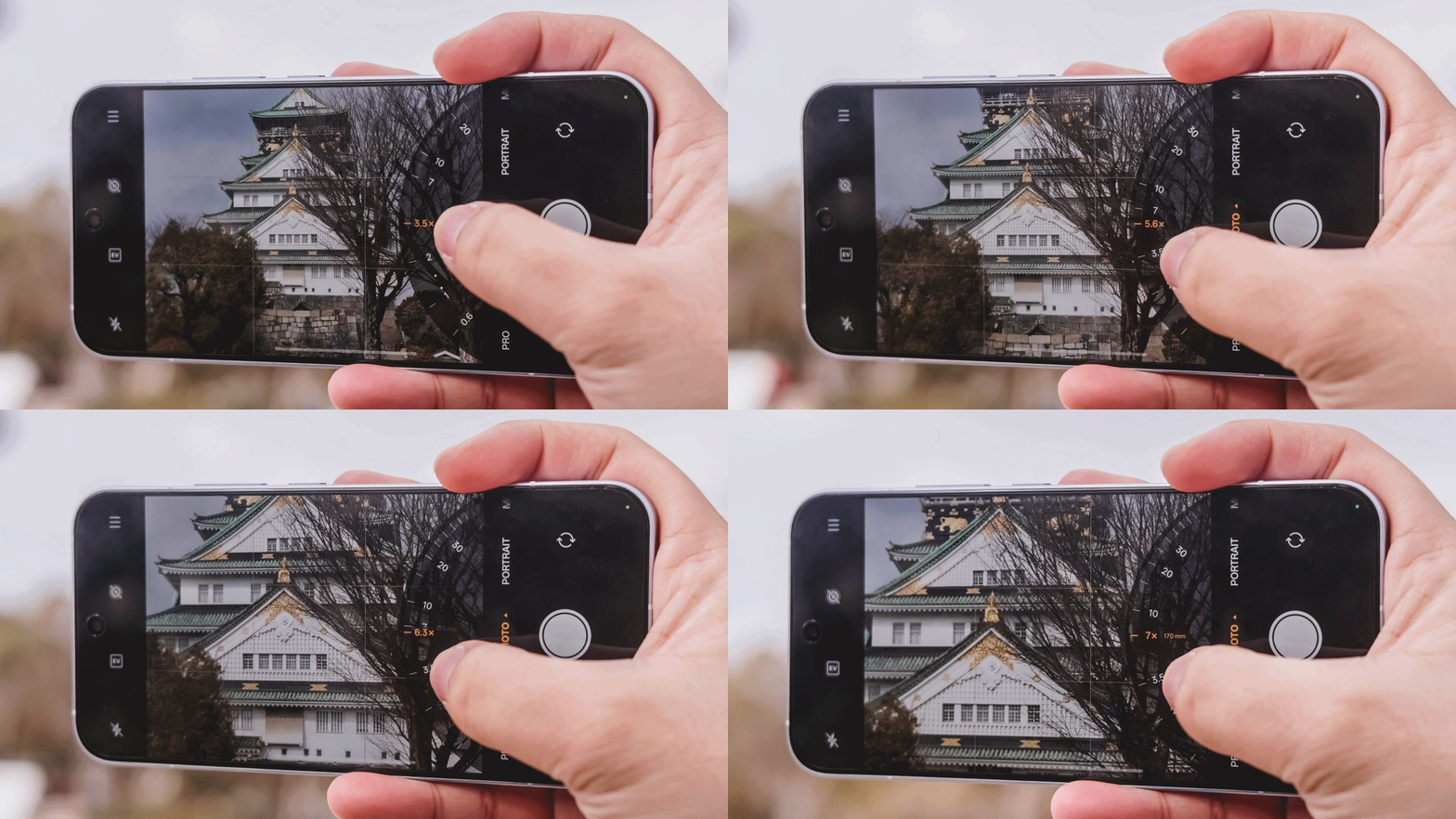
Albeit, from a periscope module, it was returned to a telephoto one (like what’s equipped in the Reno13 Pro). I’m quite unsure how massive or measly that change brings to the table.
And even if that 200MP can bring 2x zoom shots through in-sensor cropping, having a dedicated telephoto lens means clearer shots from afar.
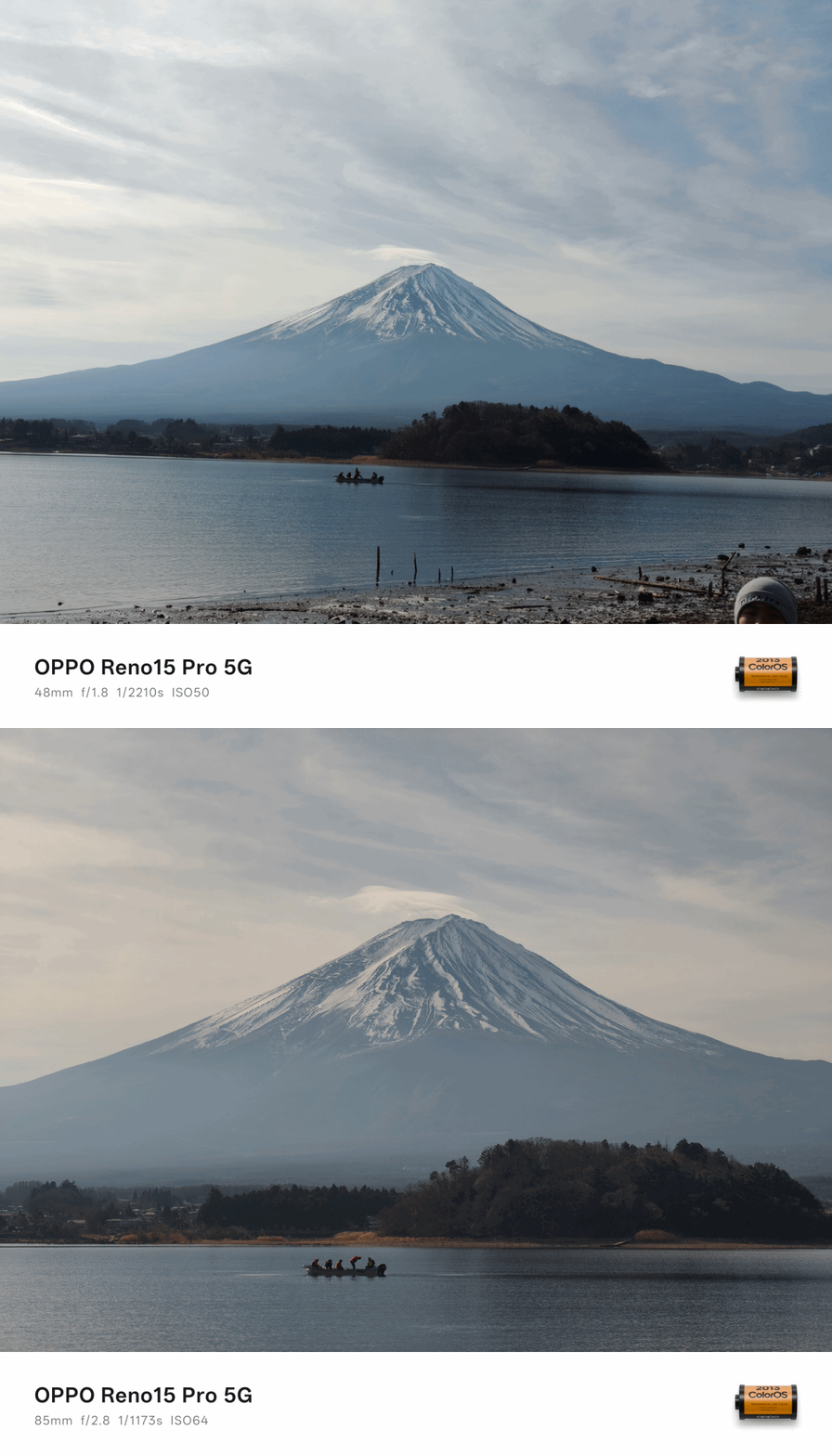
And it’s not just limited to 3.5x telephoto zoom per se (85mm). The OPPO Reno15 Pro can even take as far as 7x with optical-quality zoom (or lossless / hybrid, whatever the best term is). That’s an equivalent of 170mm in camera lens’ focal length.
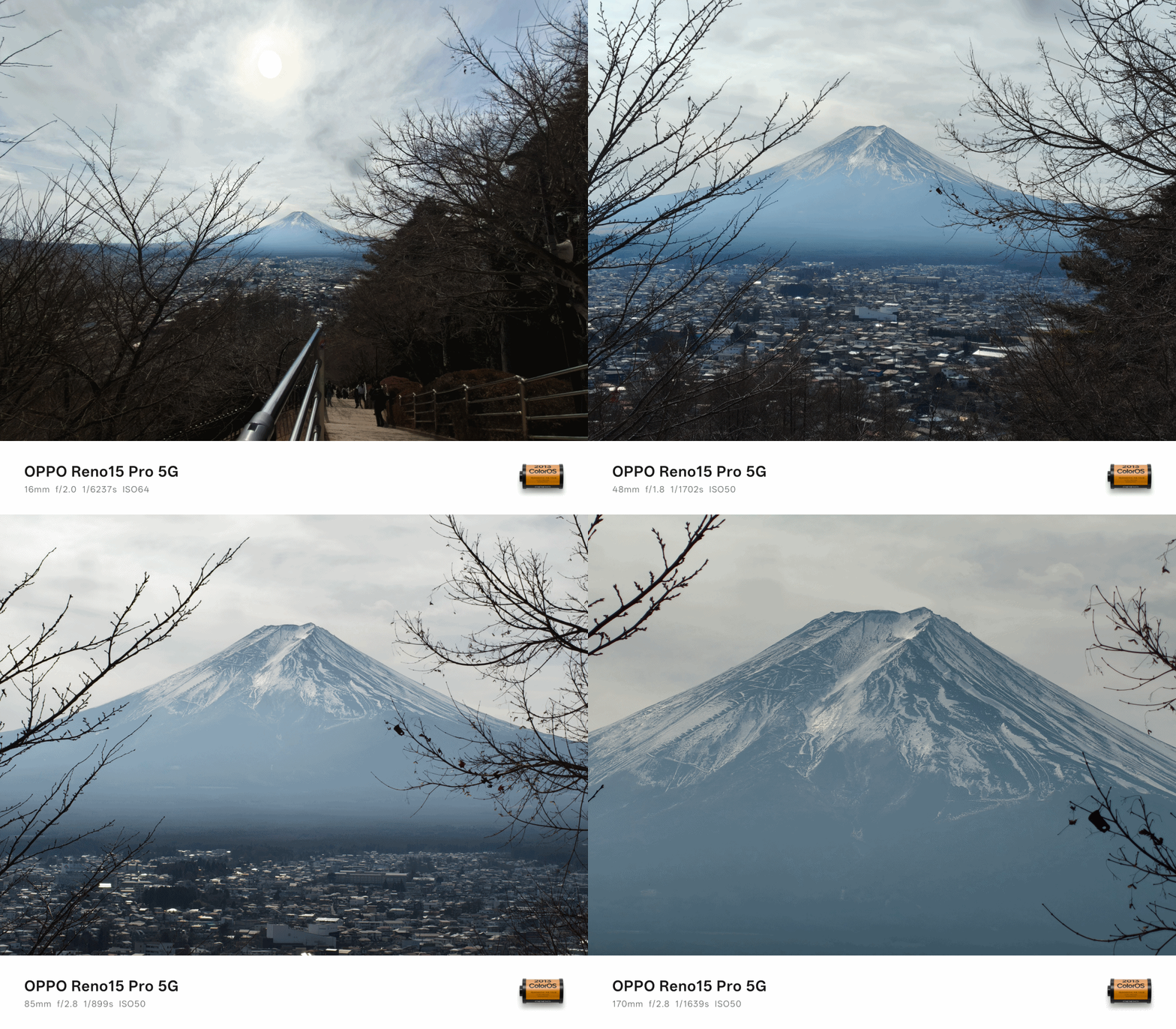
Good thing or not, it’s the same exact sensor found on the base Reno15 as well.



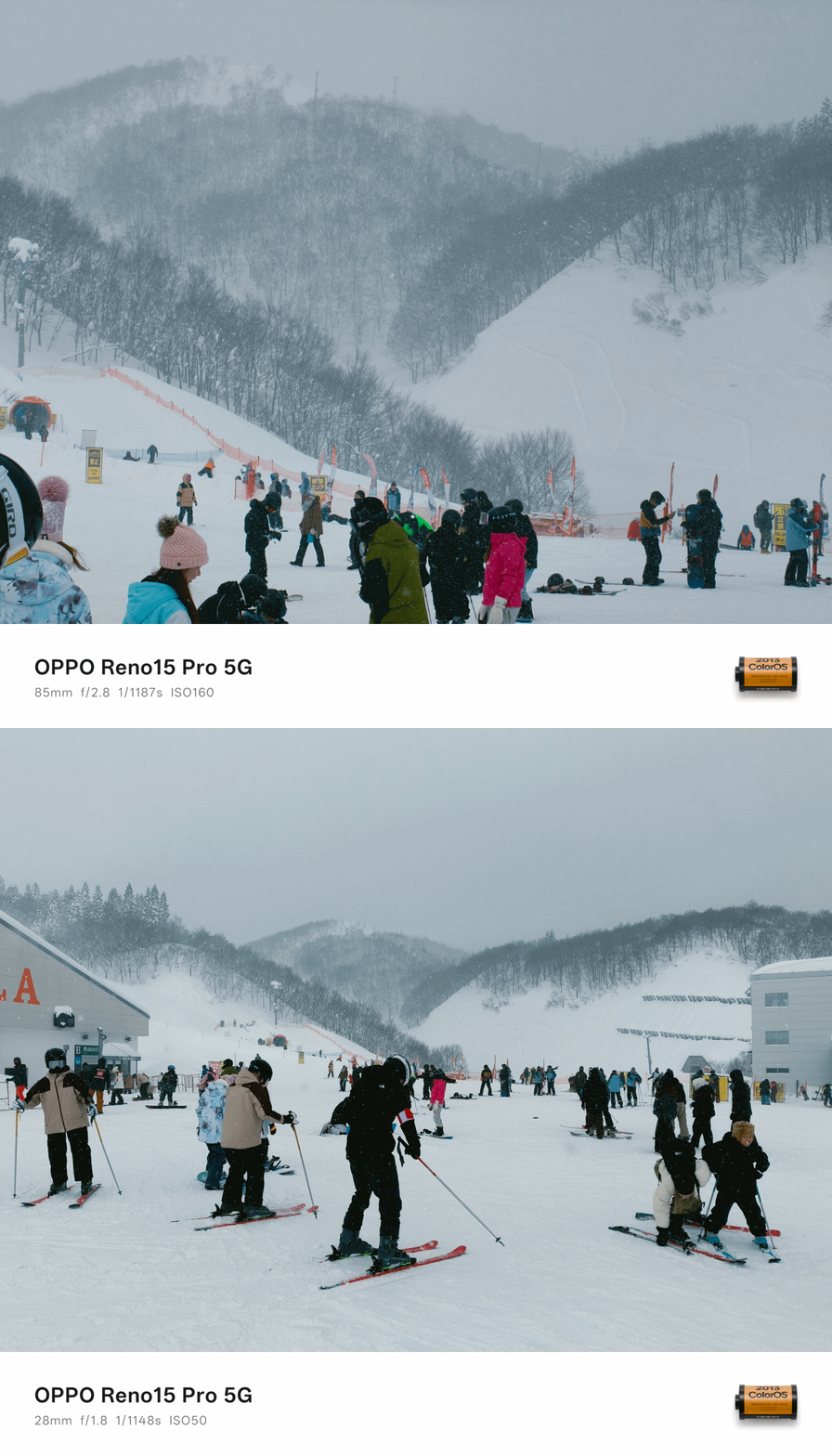
What matters the most is that I love how this zoom shooter performs.


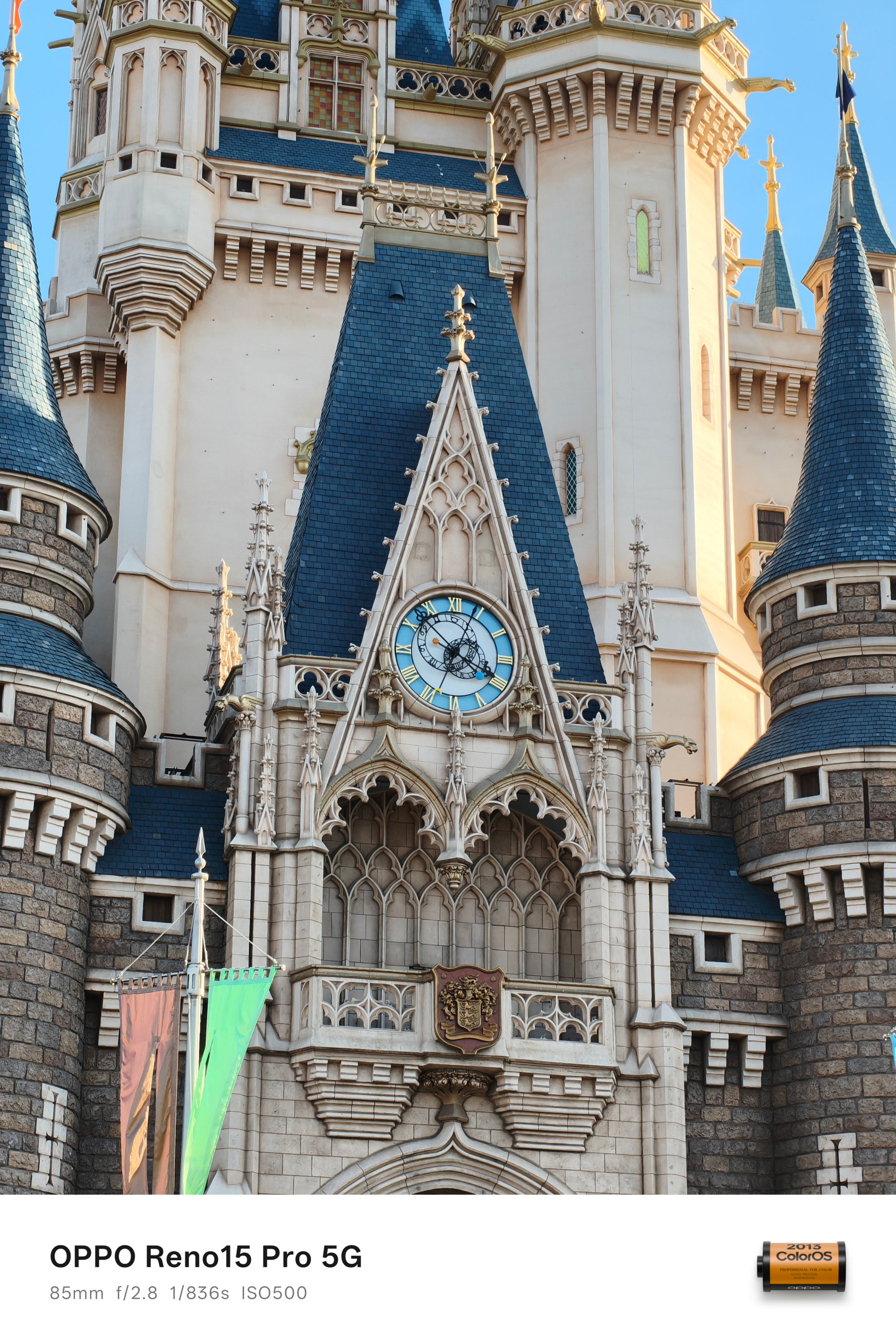



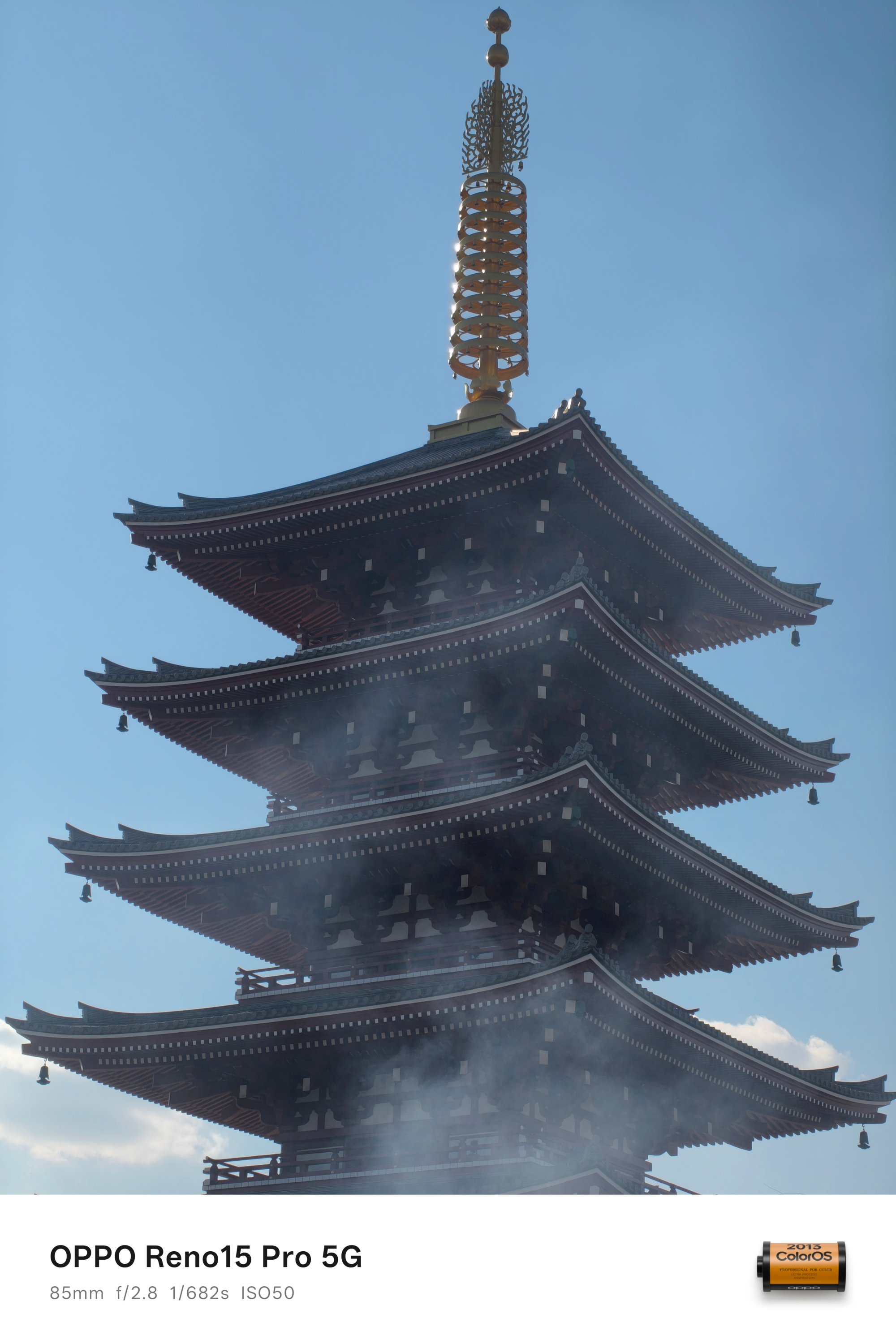
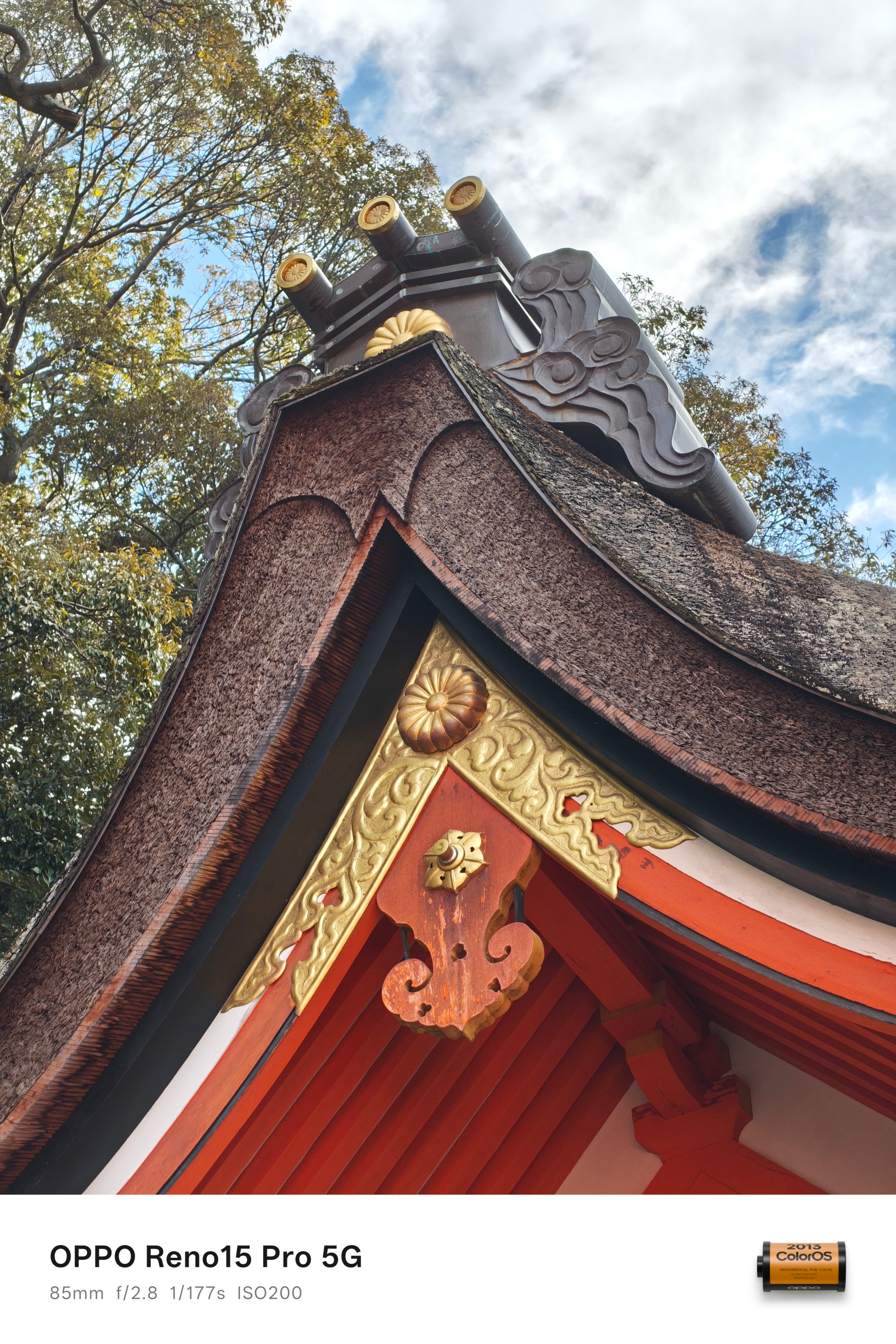
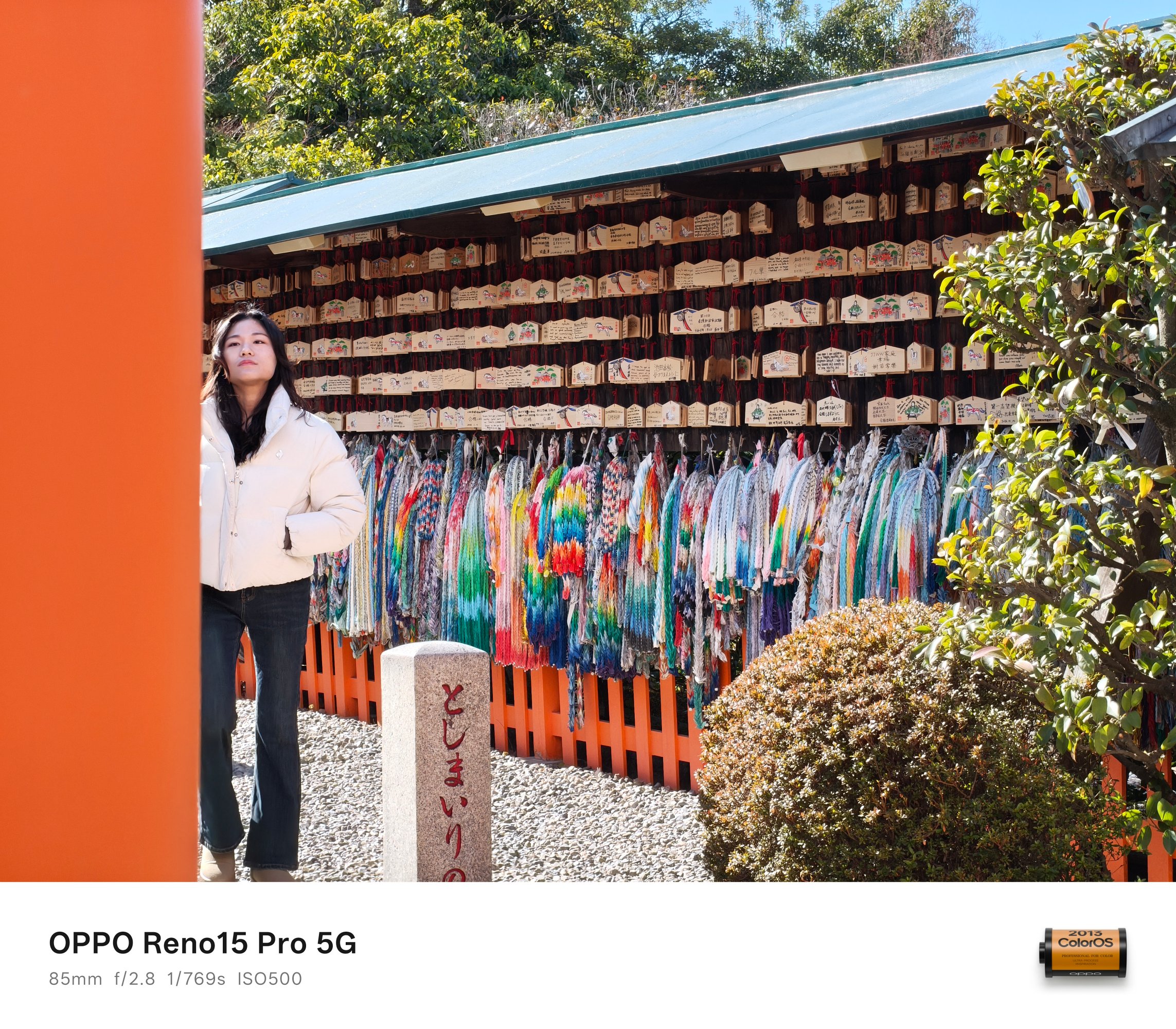
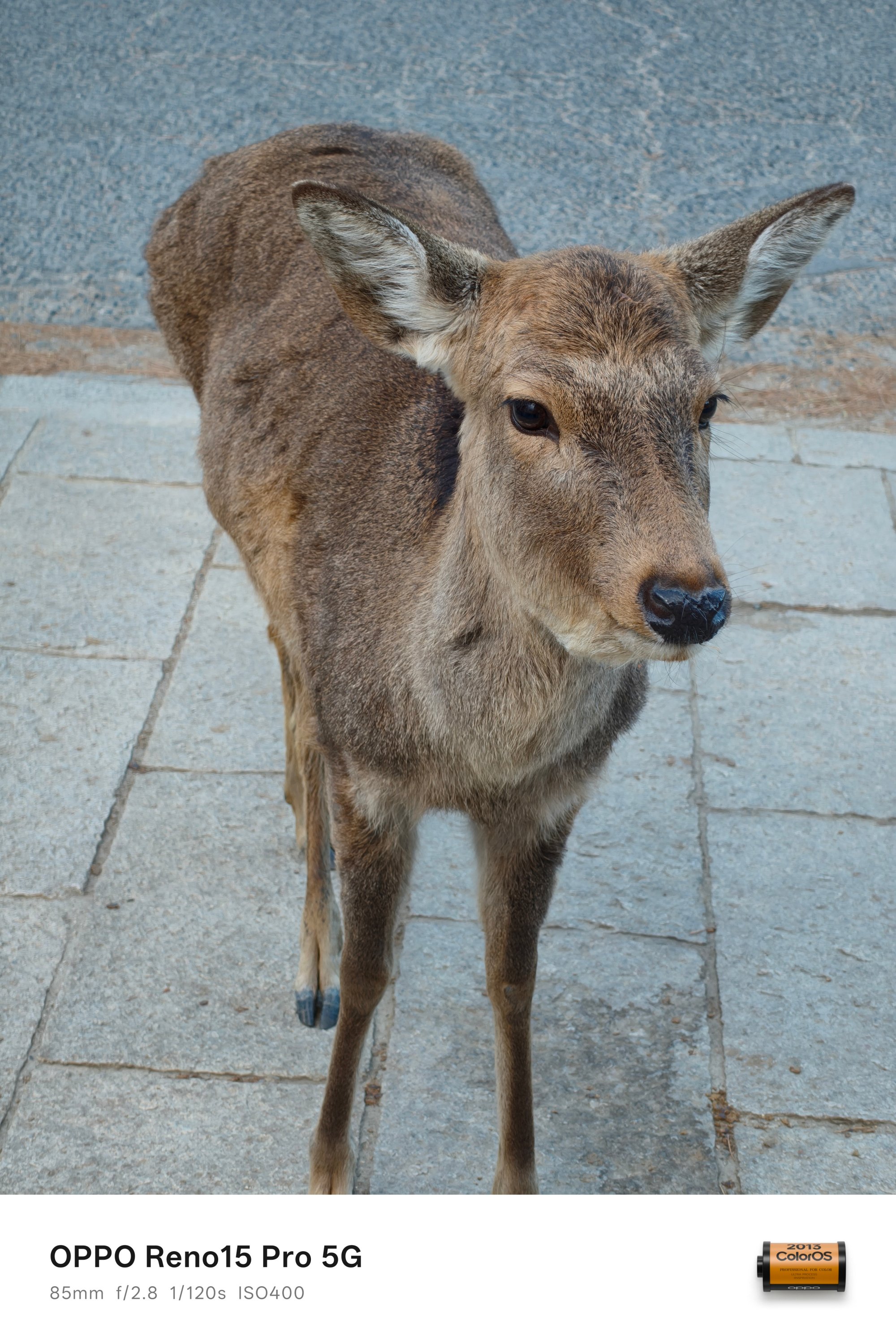
It even performs snappy when shooting moving subjects — like this deer and tux cat.

I am a firm believer of not taking food shots using the regular 1x view. Thankfully, the excellence of its 2x and 3.5x zoom modes made me capture these mouthwatering photos with enough segmentation.

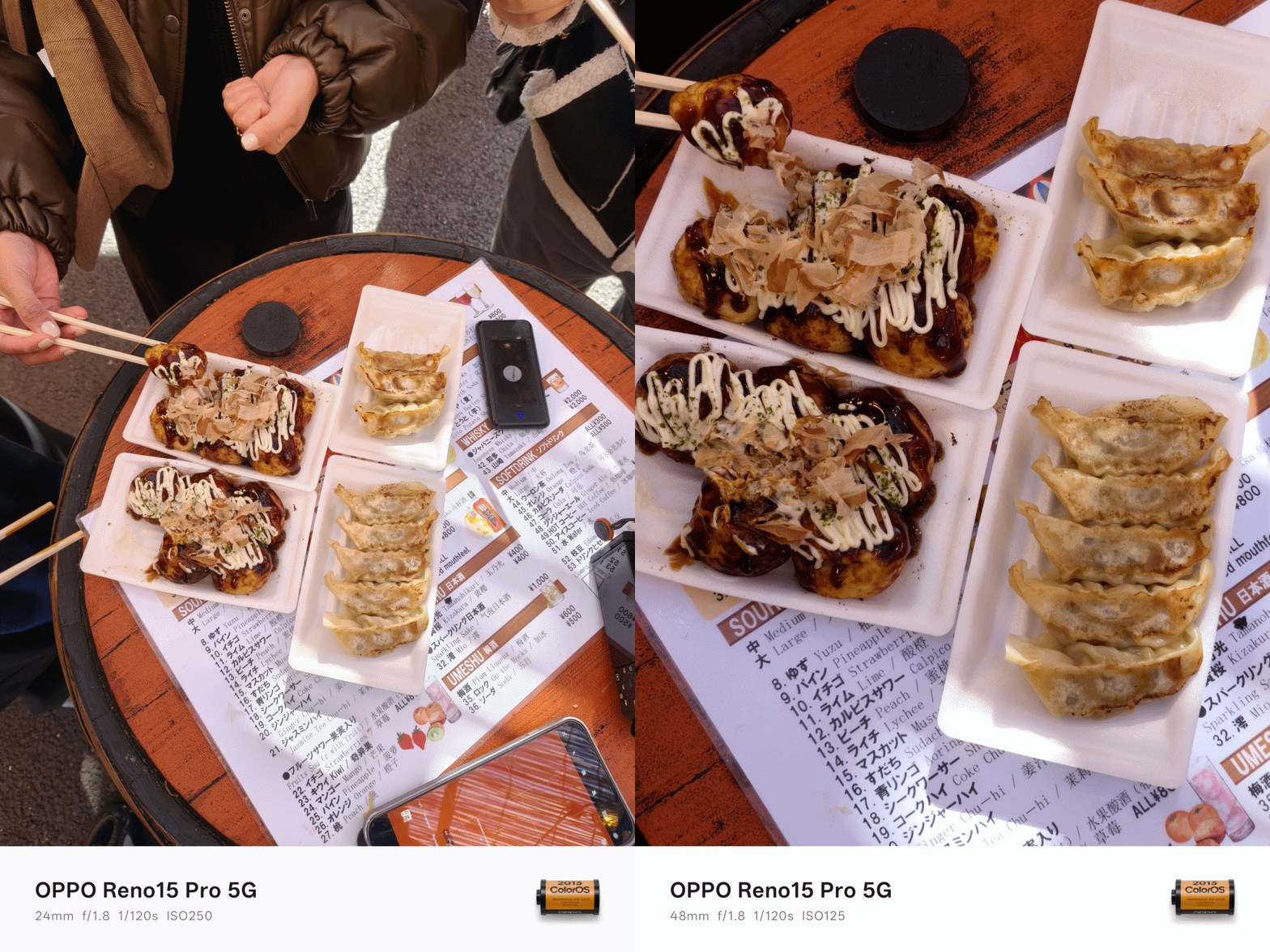

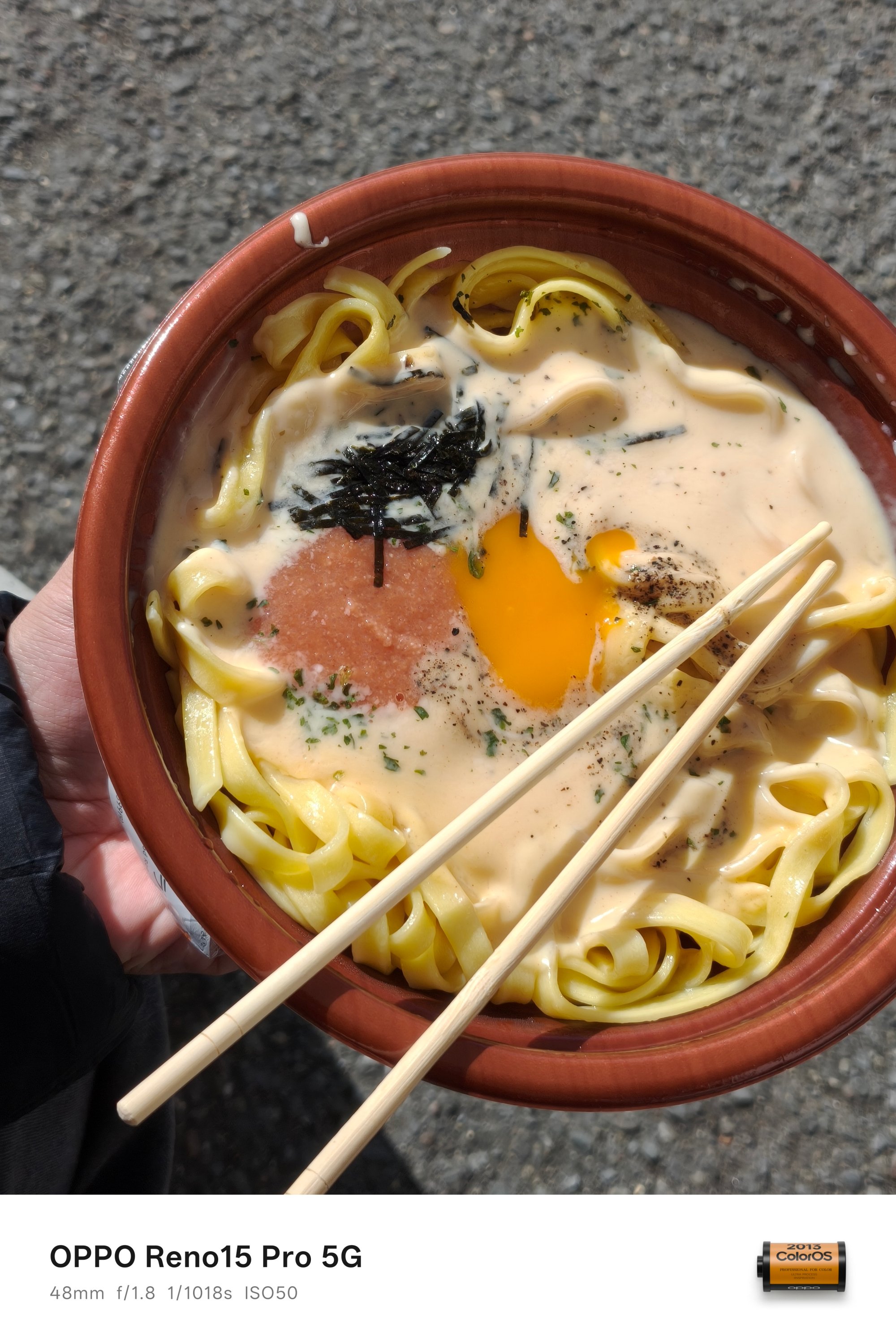

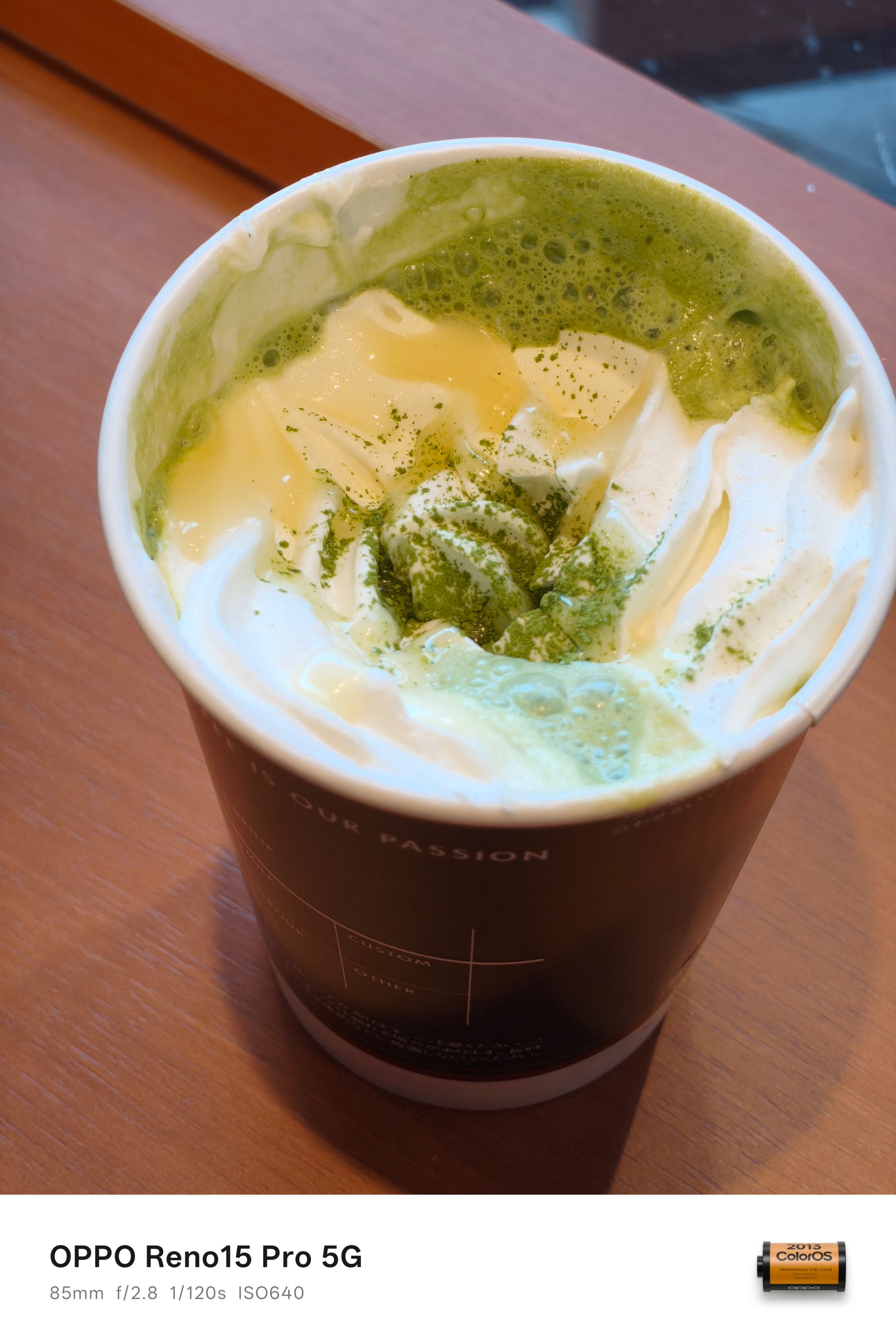
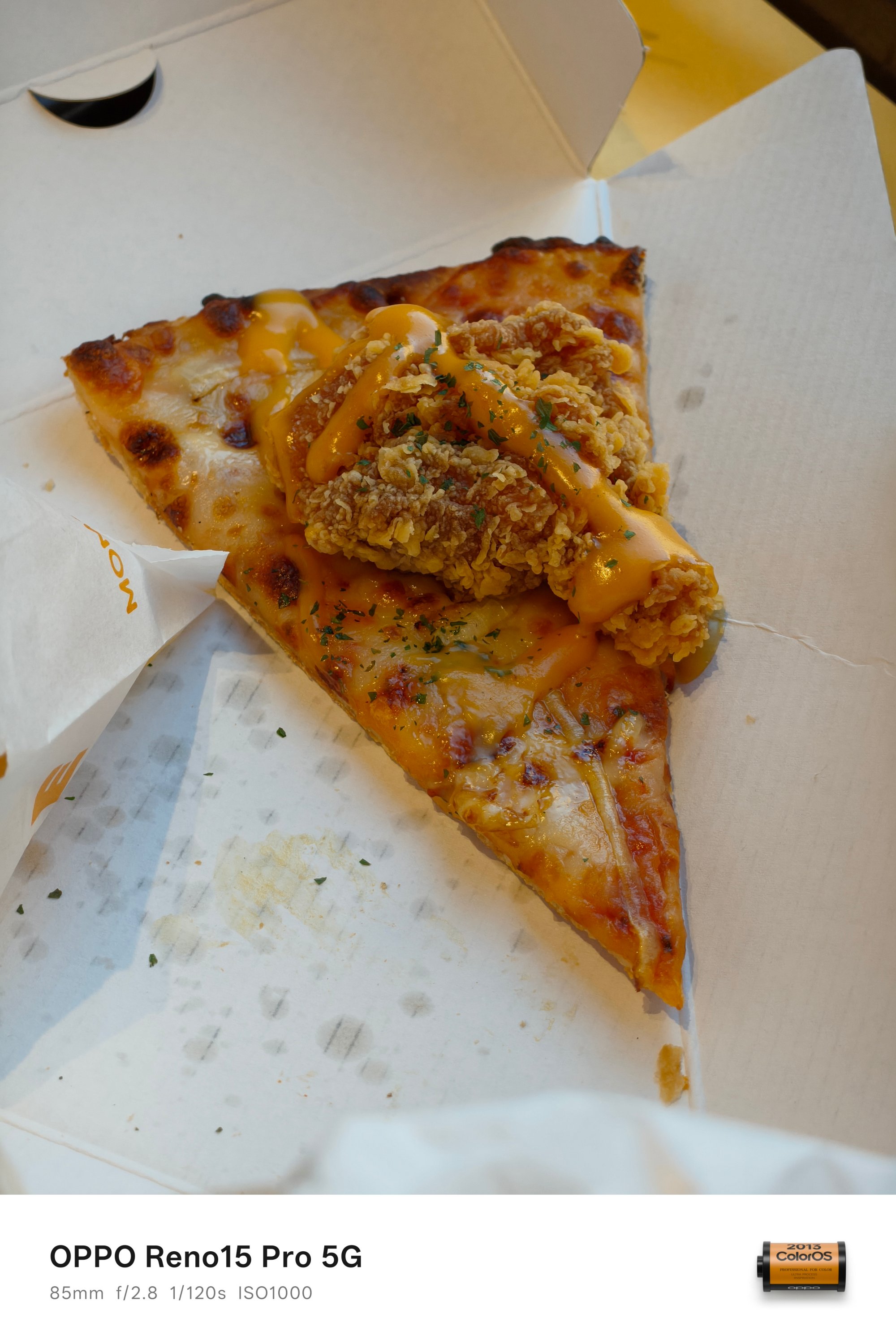

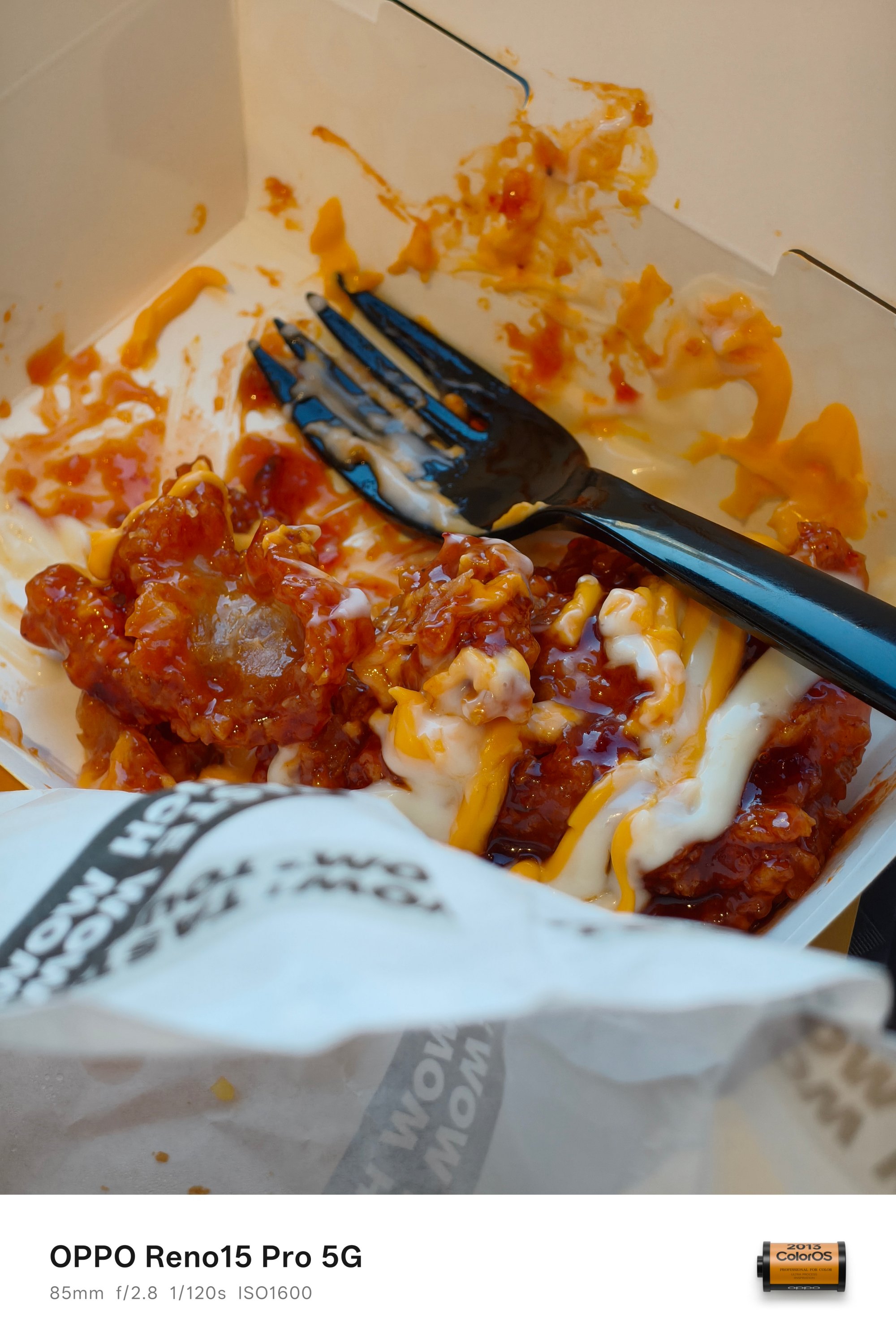
Also, my new obsession? Turning on the flash when capturing meals indoors for that ✨ 2000s digicam vibes 📸
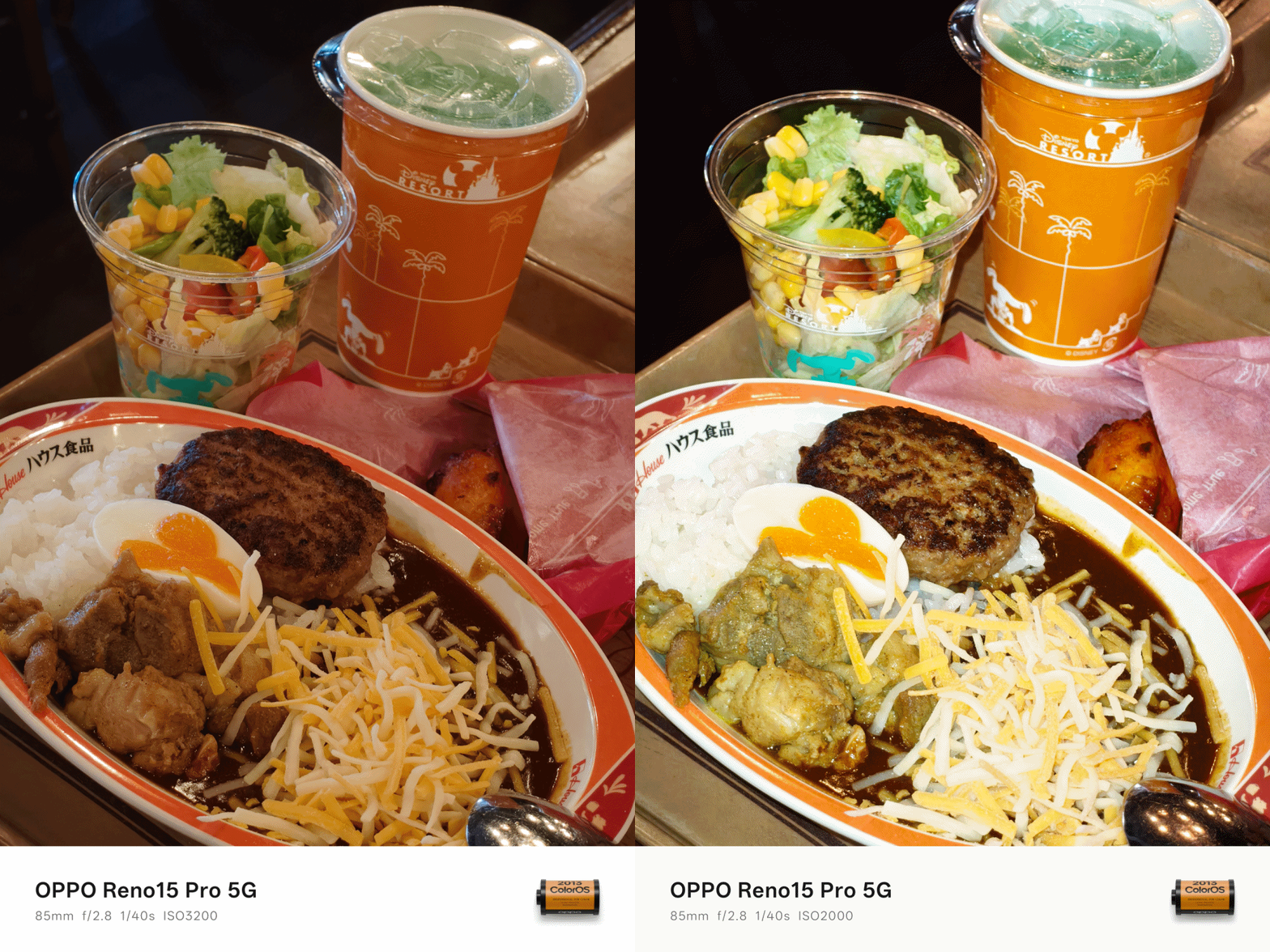

Low-light that looks right
As I always say, shots taken with no presence of natural and artificial light is what makes or breaks a smartphone’s camera performance.
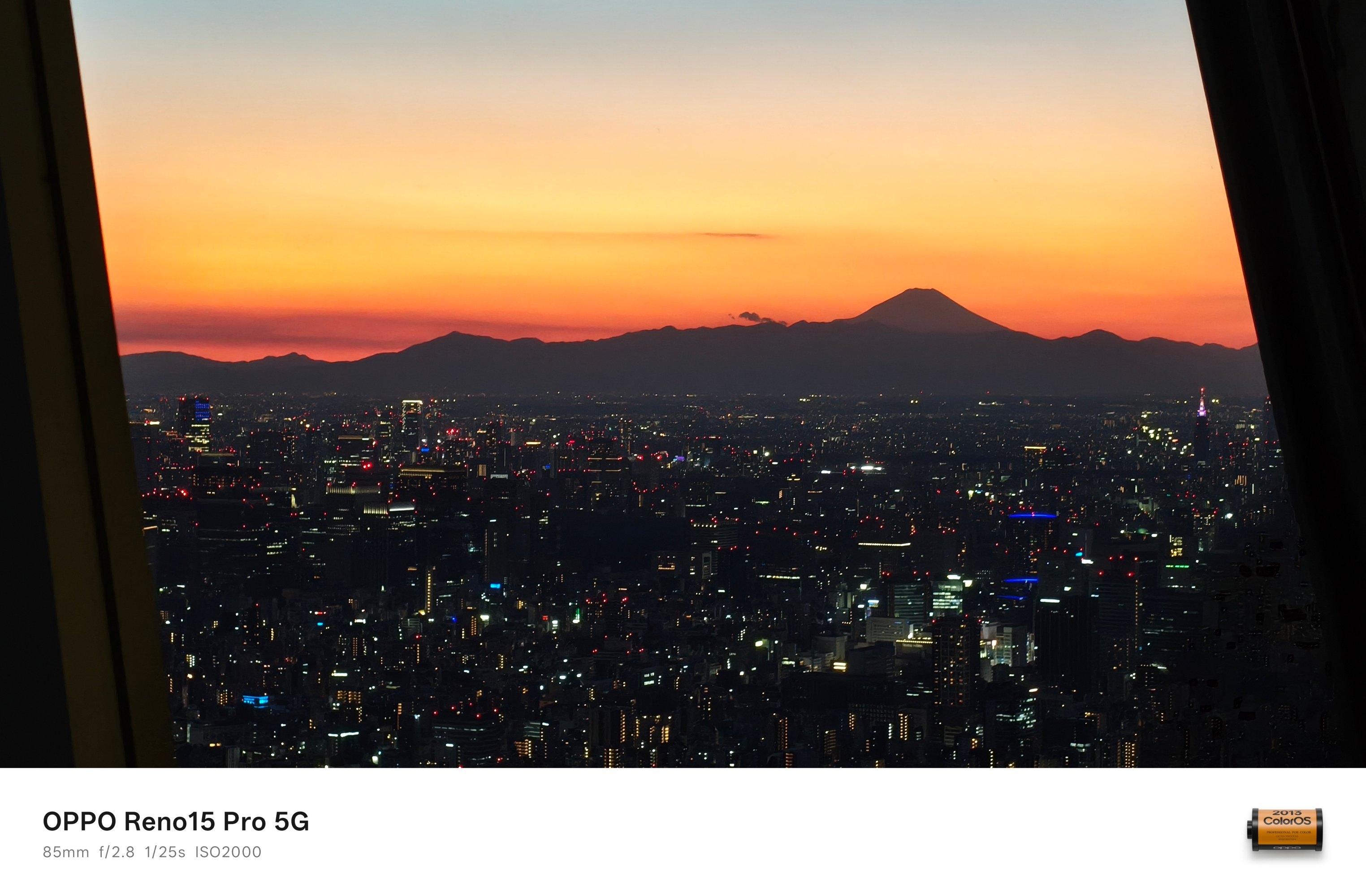
However, the OPPO Reno15 Pro dared. It was able to capture this Mt. Fuji scene at Tokyo Skytree even when the sun has already set.

With no surprise how it performs during the day, these evening photos provide more than satisfactory quality.


And just to be clear, I never actually switched to Night Mode.
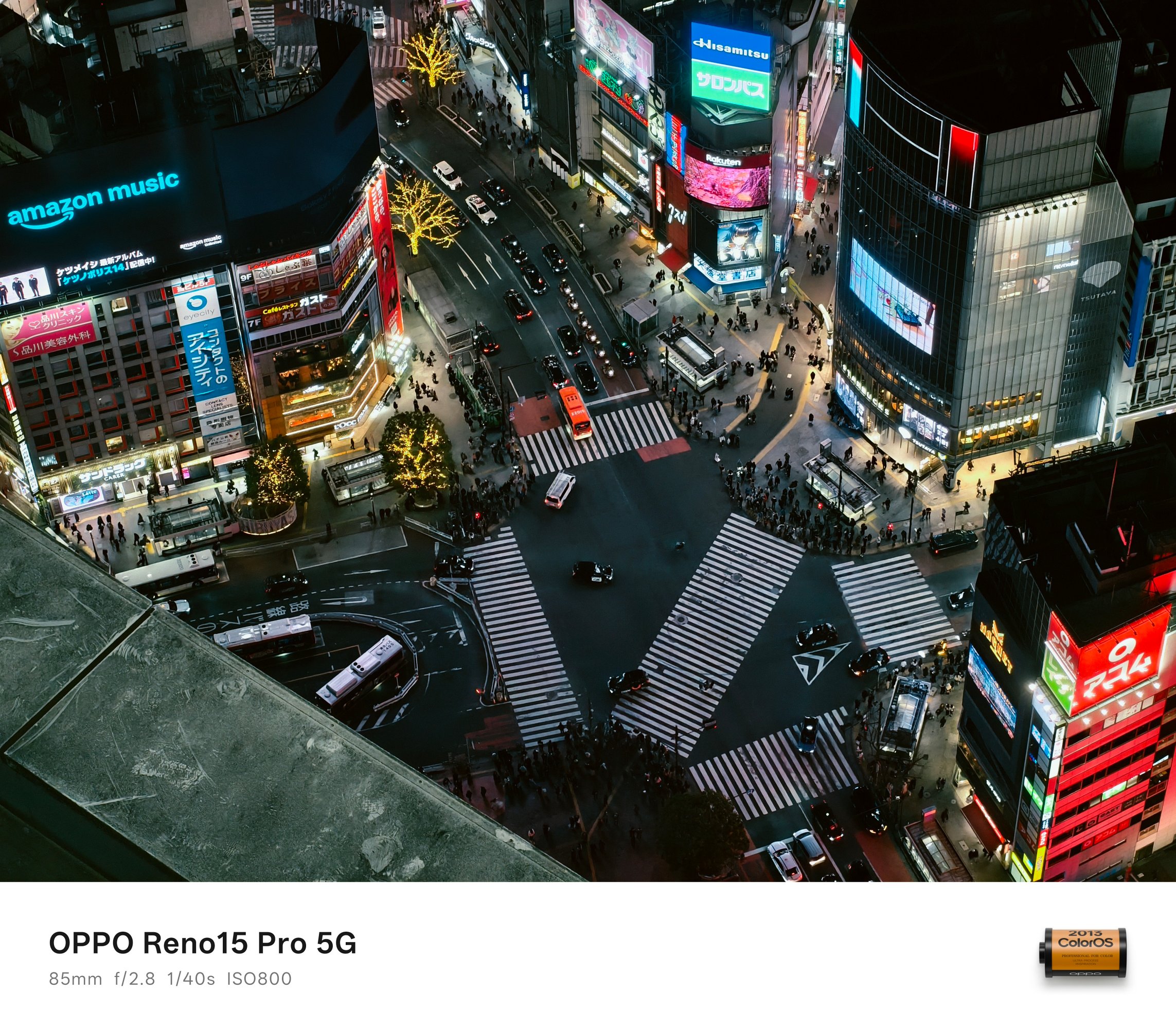
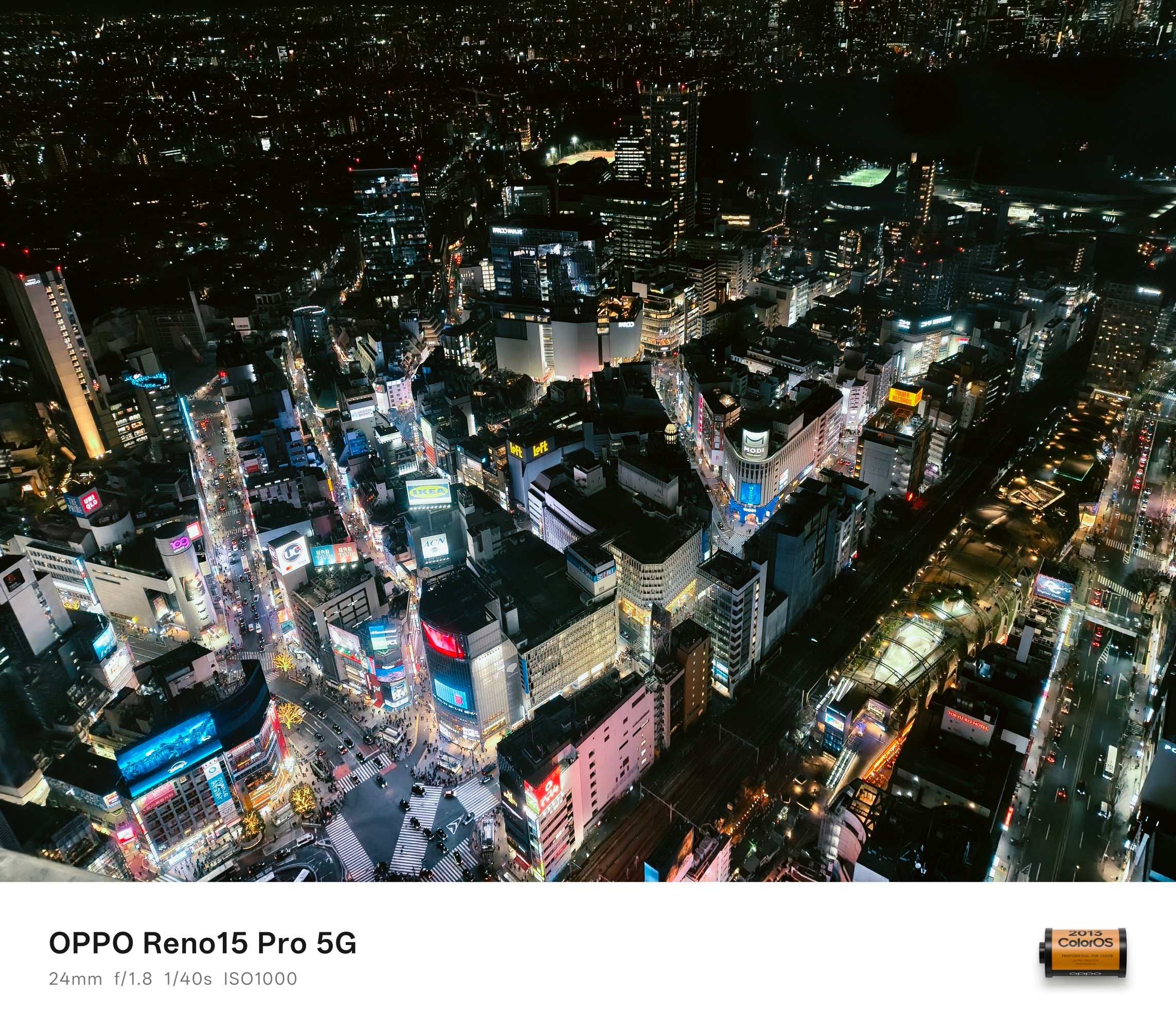


Regardless of the focal length you desire, the OPPO Reno15 Pro delivered well.
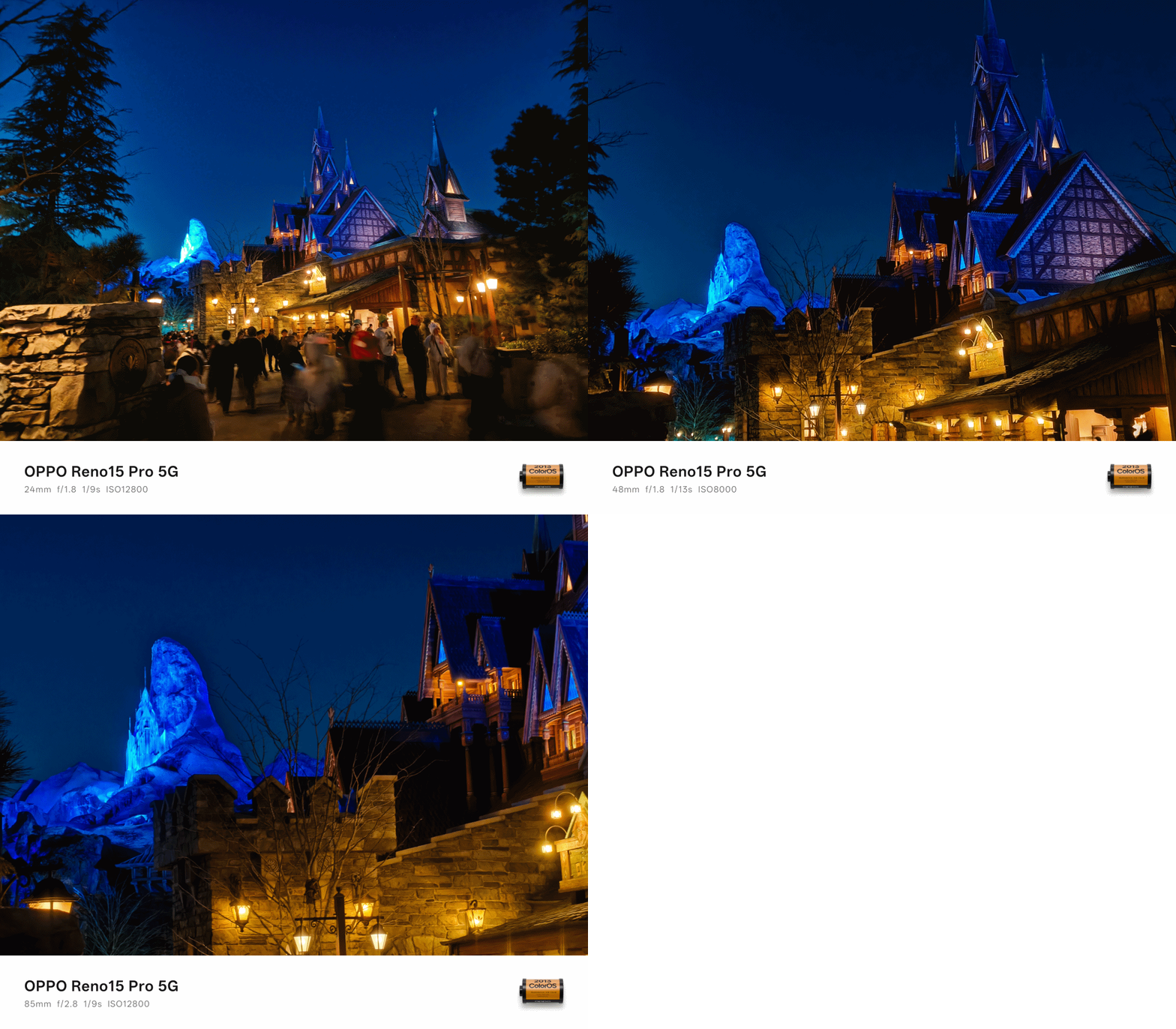
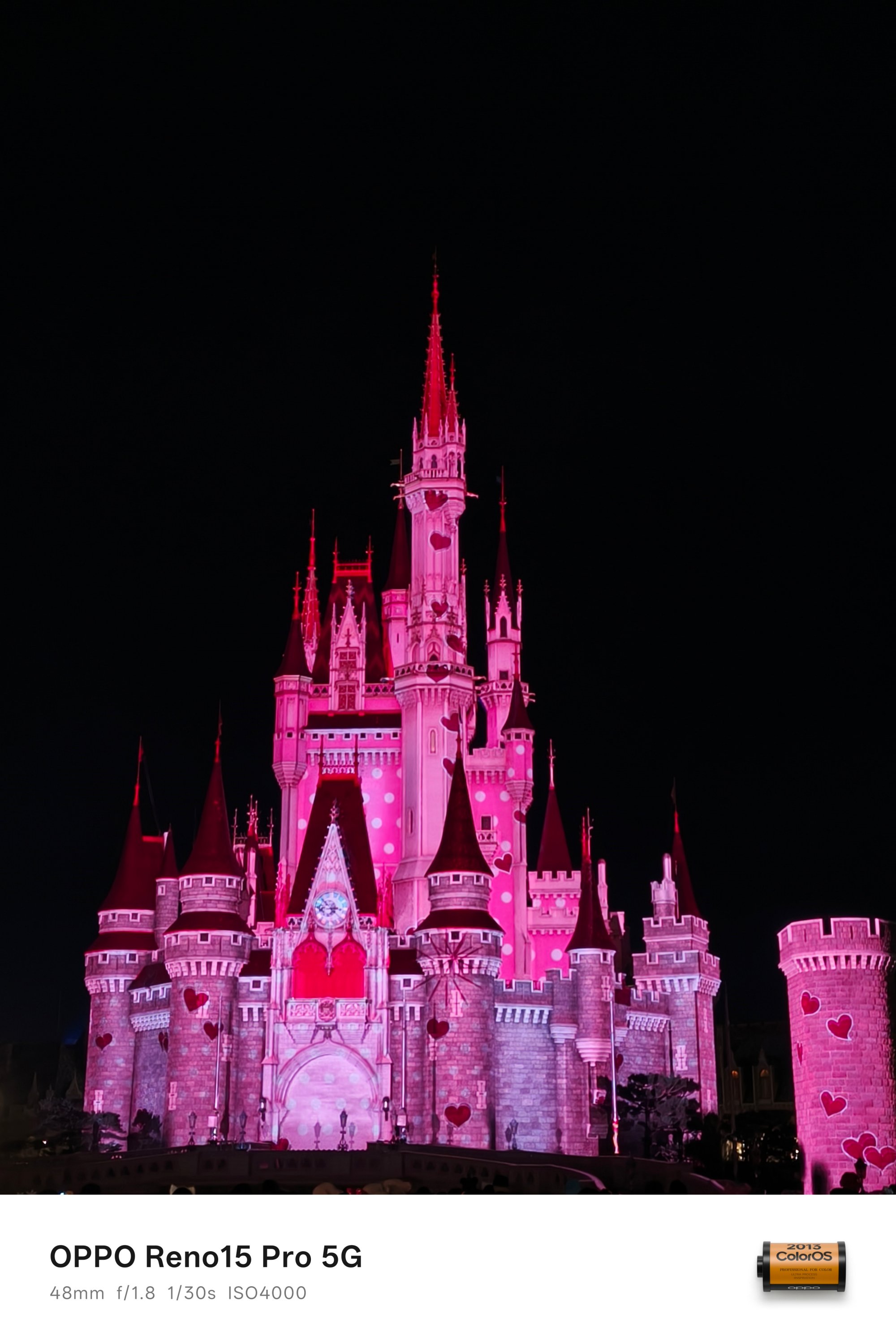


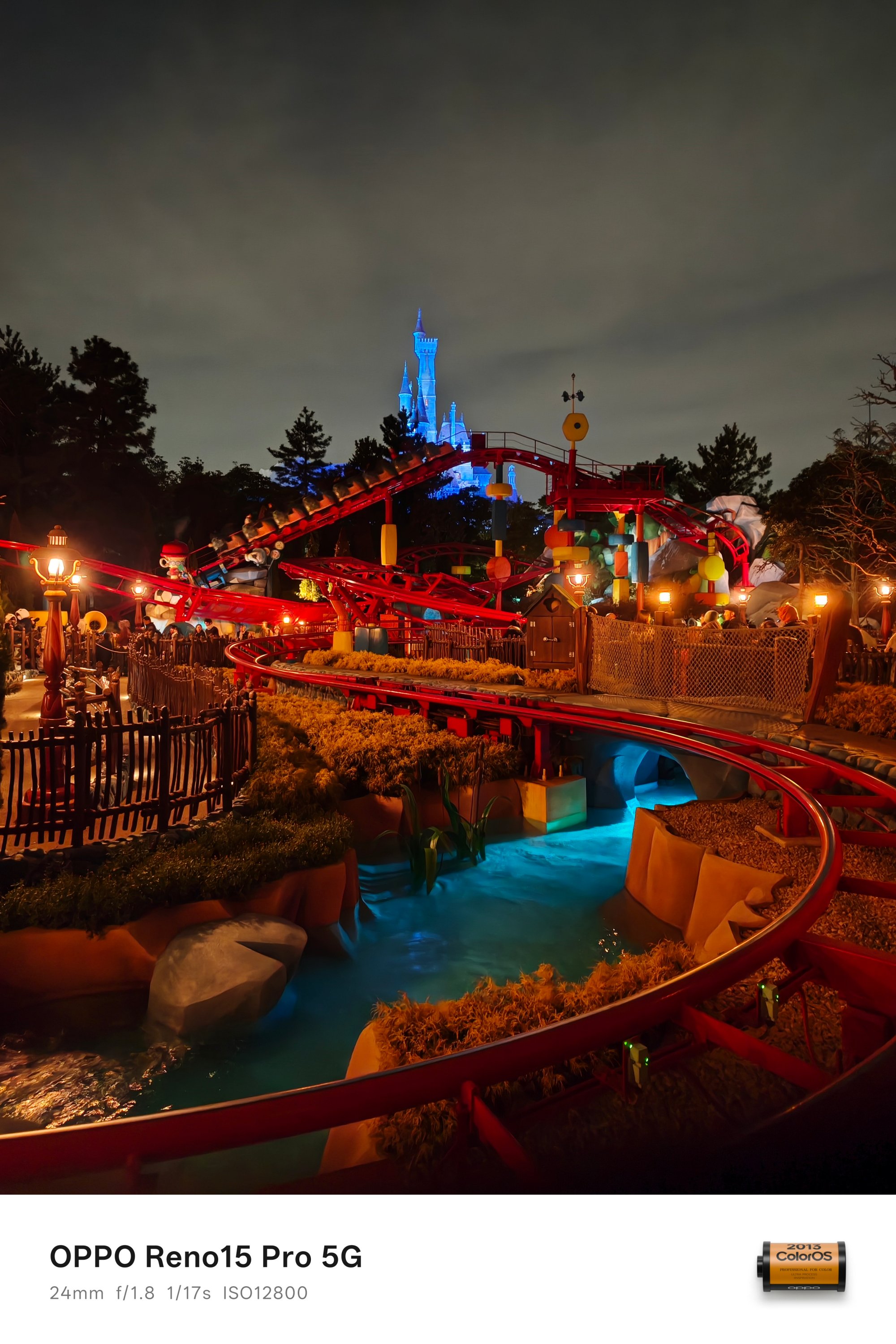


OPPO AI instantly detects the scene and kicks in that much-needed algorithm when capturing shots in the low-light. For instance, this part was so dark I didn’t even notice there’s a couple captured in the frame.

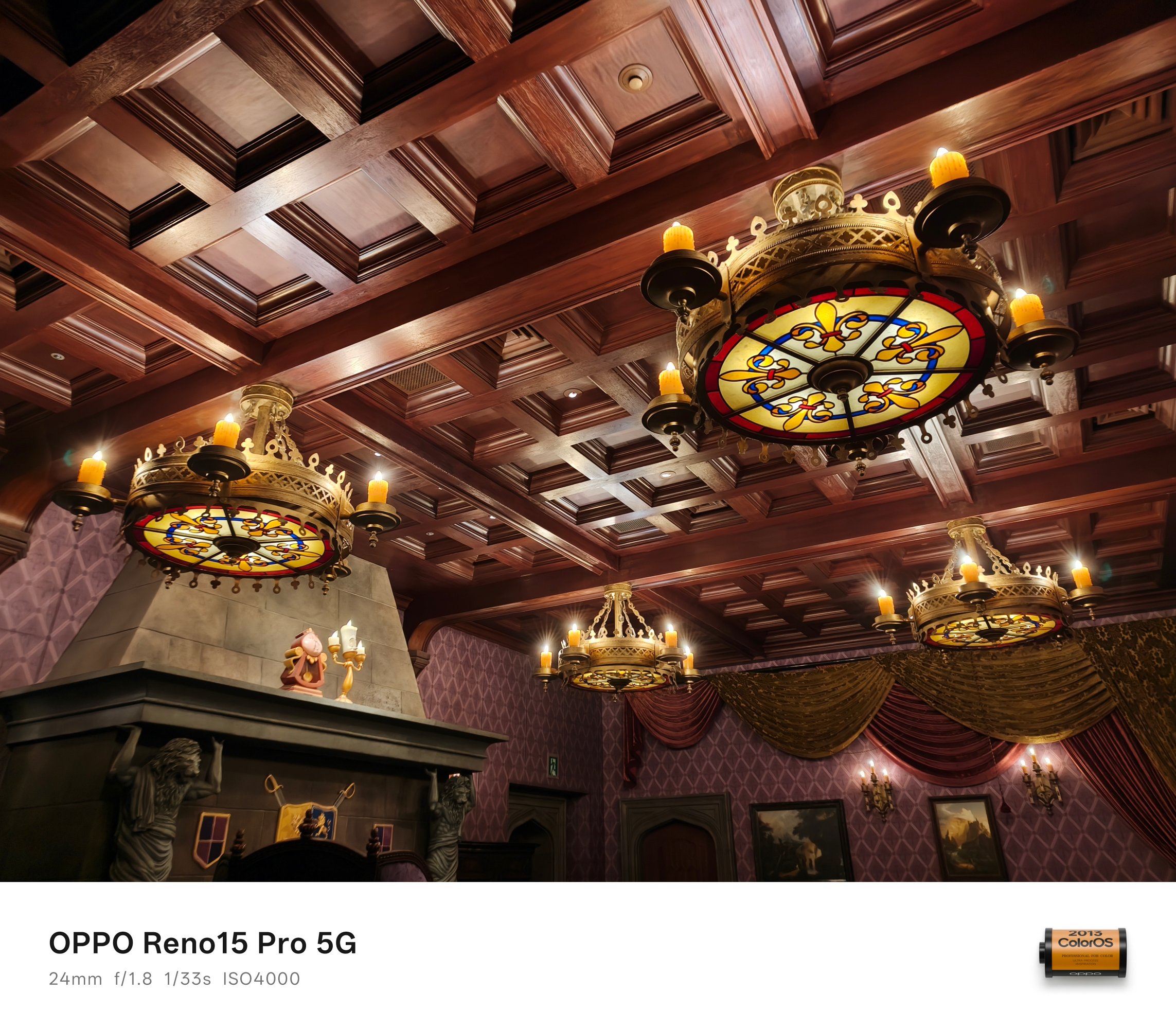
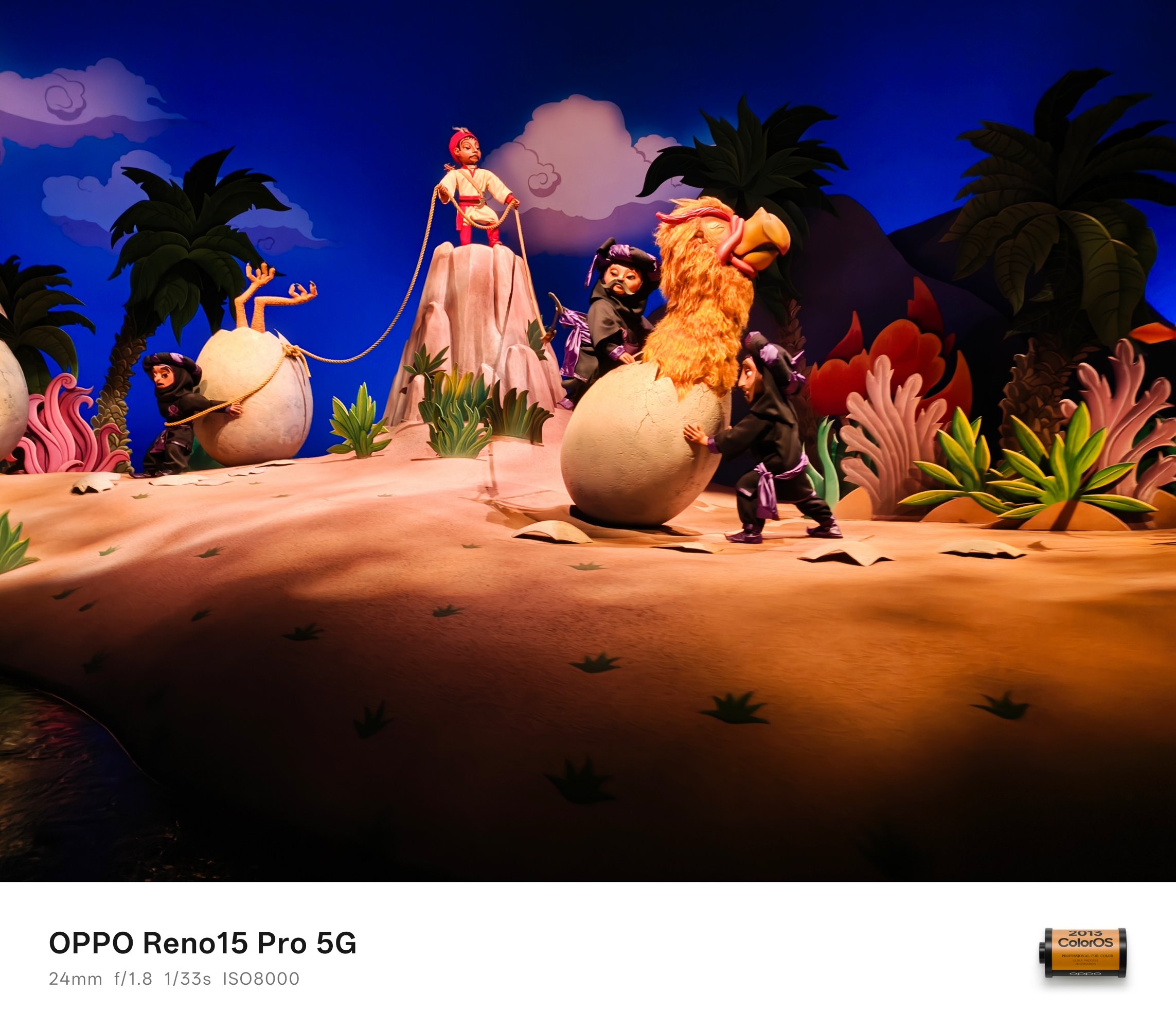
Indoor shots weren’t left out as well. Look at how clean these look despite capturing them while being in a ride full of twists and turns.
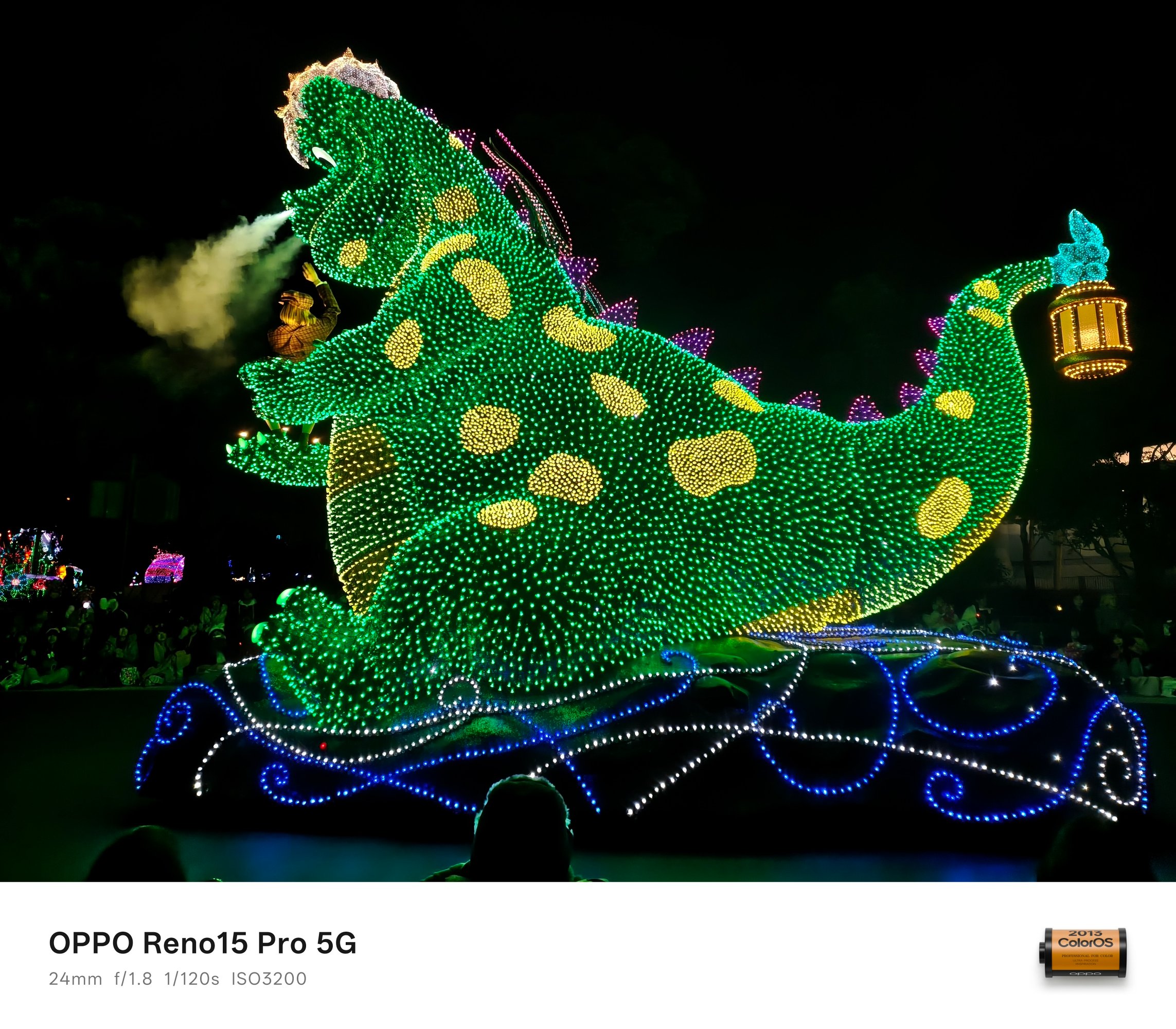
Speaking of, these two samples were also taken while the parade floats were in constant motion.

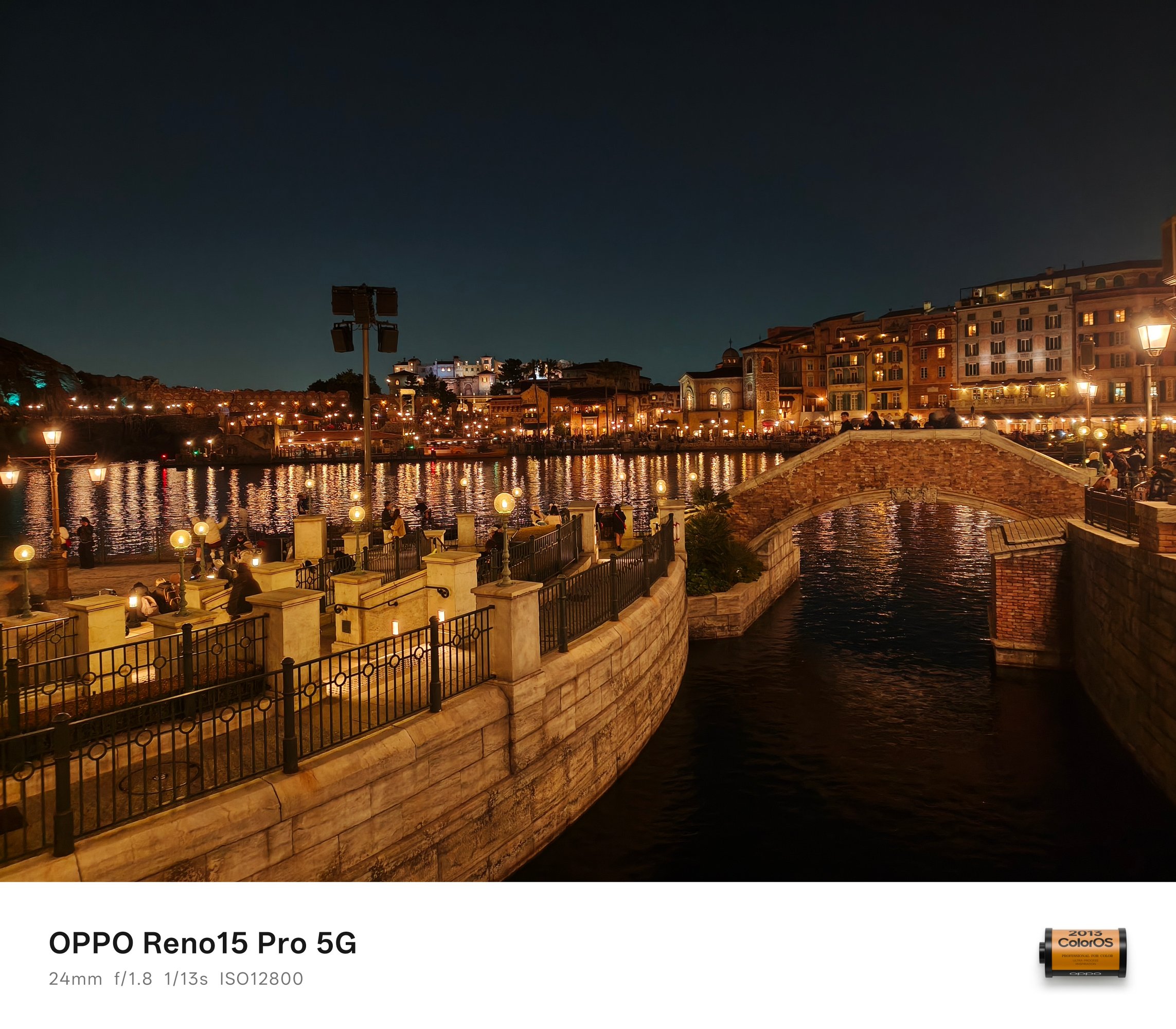
I didn’t fully intend to take as much low-light shots with the OPPO Reno15 Pro. Still, it would be a huge miss not to include these extras.


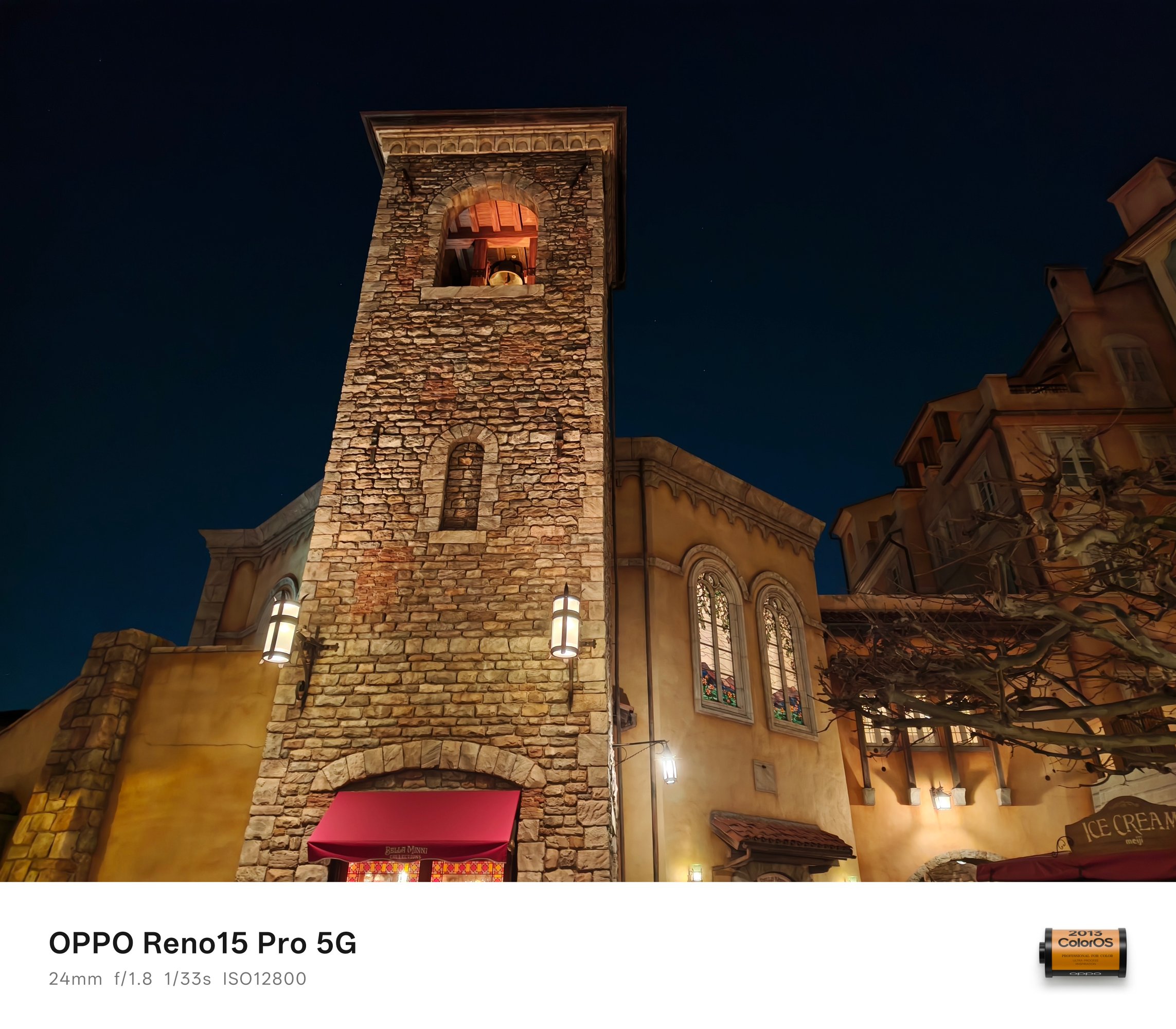

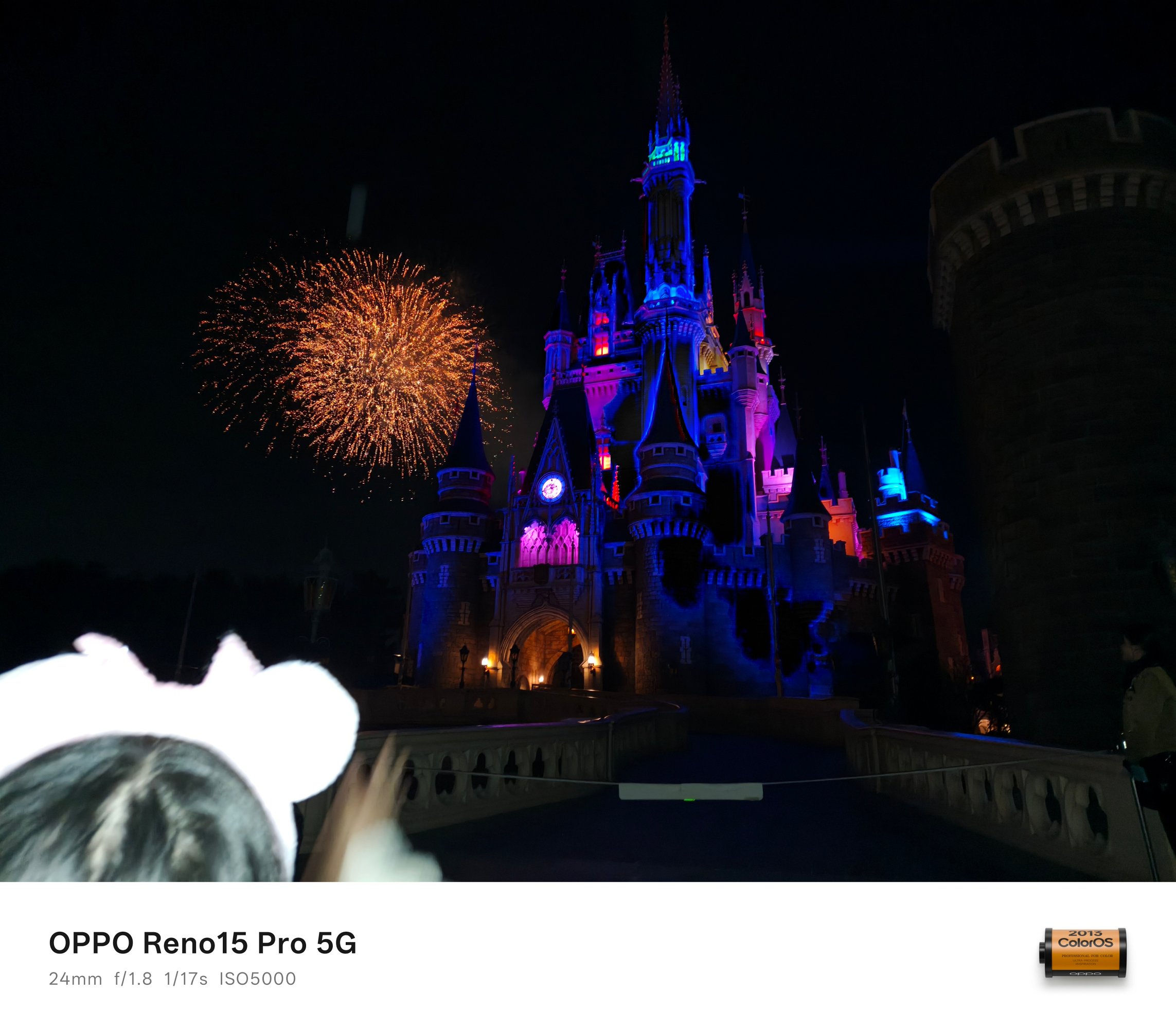
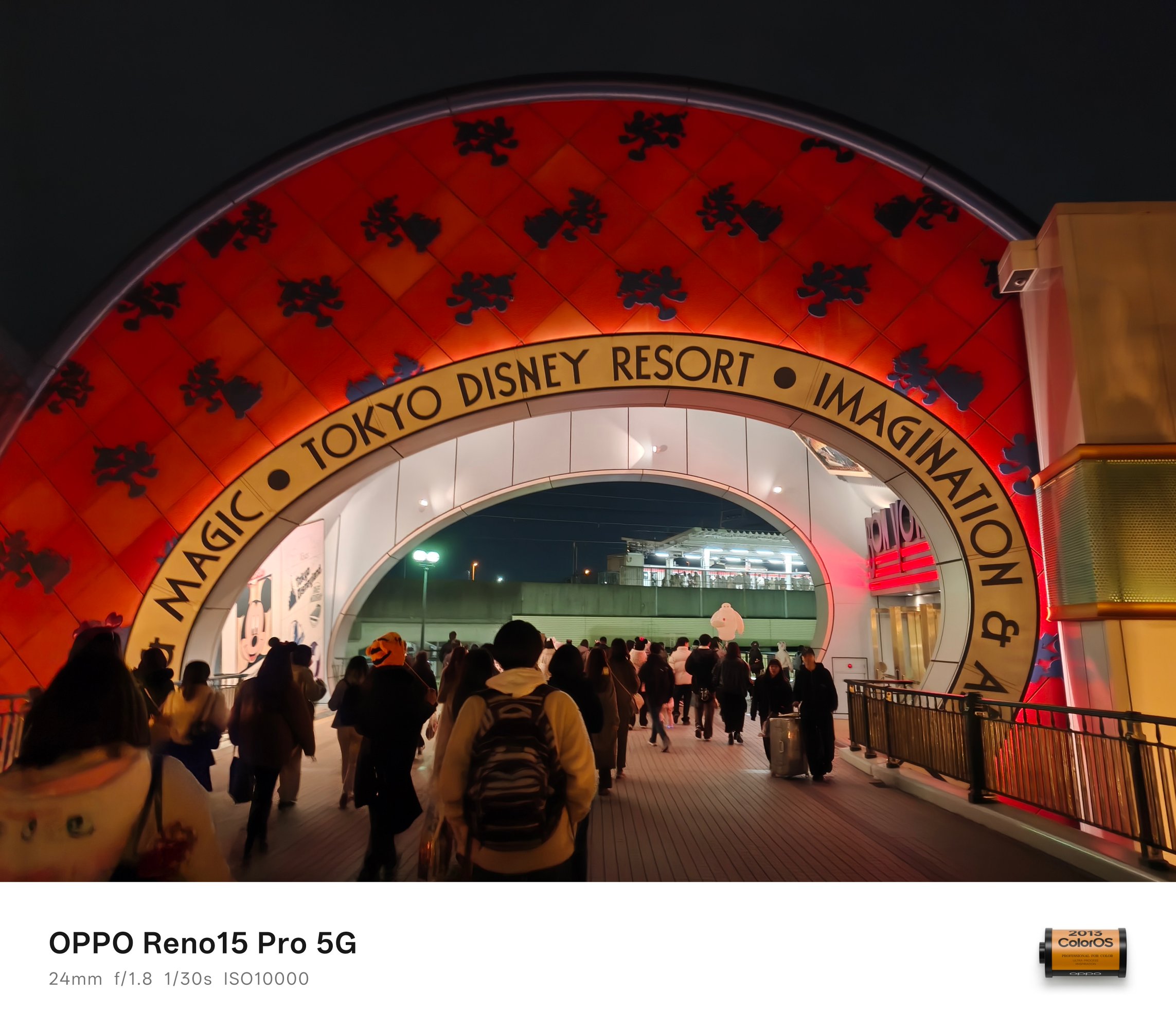 BONUS #2: I accidentally took this with the flash enabled so it didn’t truly capture the split-second moment of that fireworks. However, IMHO, it still looked postworthy.
Pro-trait Expert
Having a telephoto shooter isn’t just for capturing subjects from afar, it also means better portraits through fixed focal lengths à la prime lenses for professional cameras.


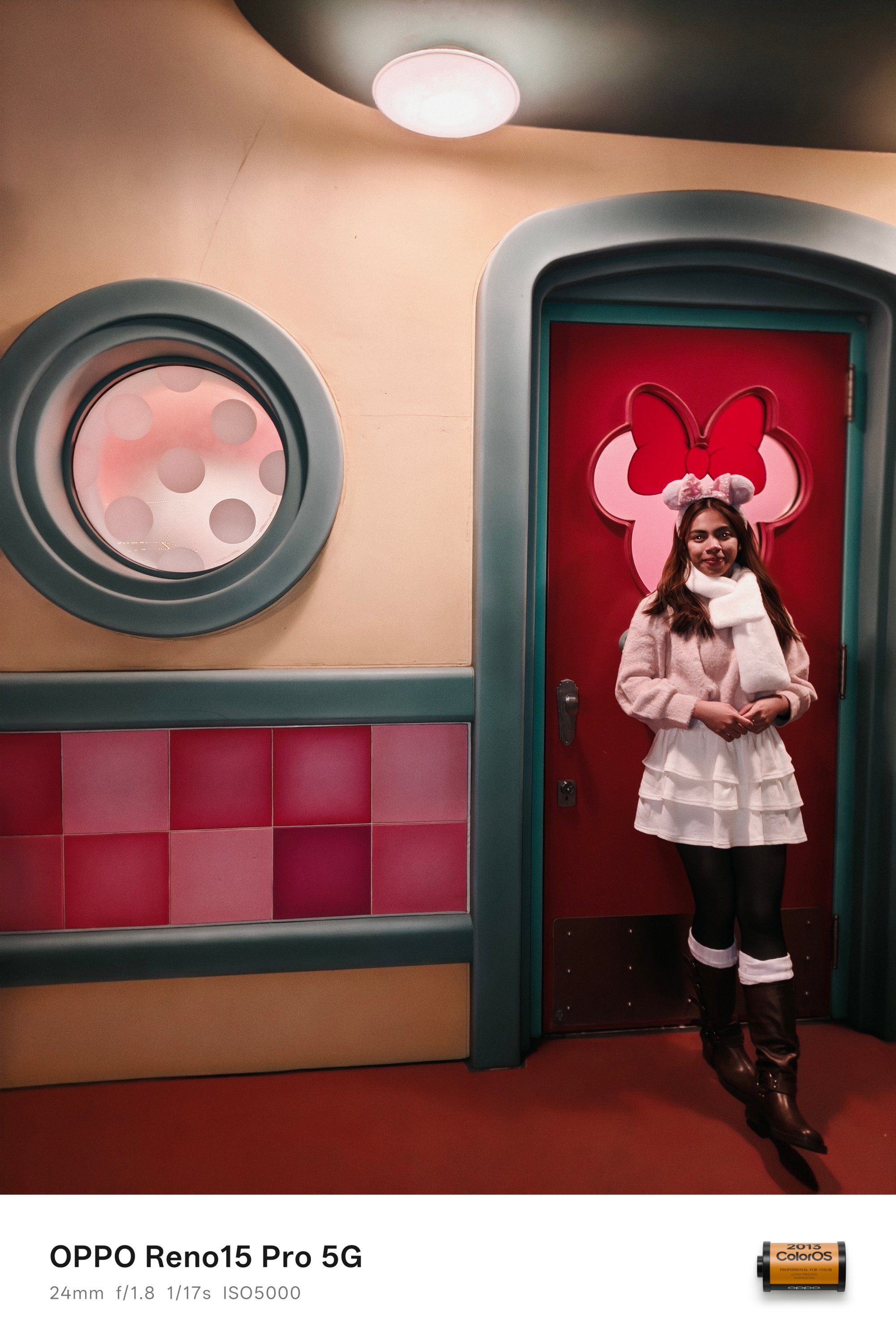
While portrait mode works in both 1x or 2x modes, that 3.5x (or 85mm equivalent) gives the best possible output.


Not only is the Depth of Field (DoF) based on the phone’s distance away from the person, but it also provides a more natural bokeh — even if that means faking the aperture from f/16 to as shallow as f/1.4.




And this expertise isn’t just found on the rear cameras. With the front camera sharing the same sensor as the telephoto camera, quality is more than justified.




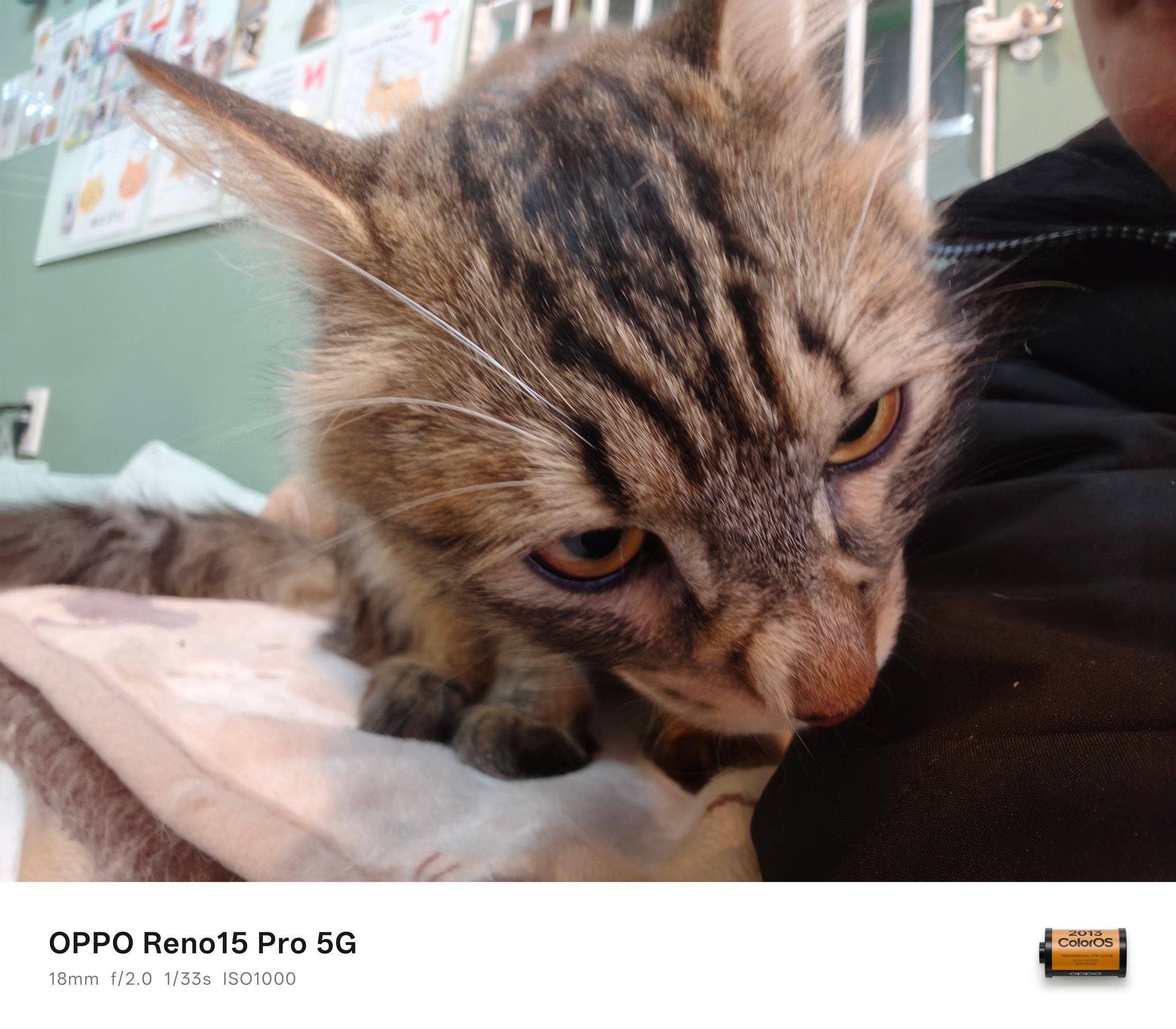
Same sensor found on the telephoto unit with a wider aperture clearly means the Depth of Field (DoF) is as natural as it can get.
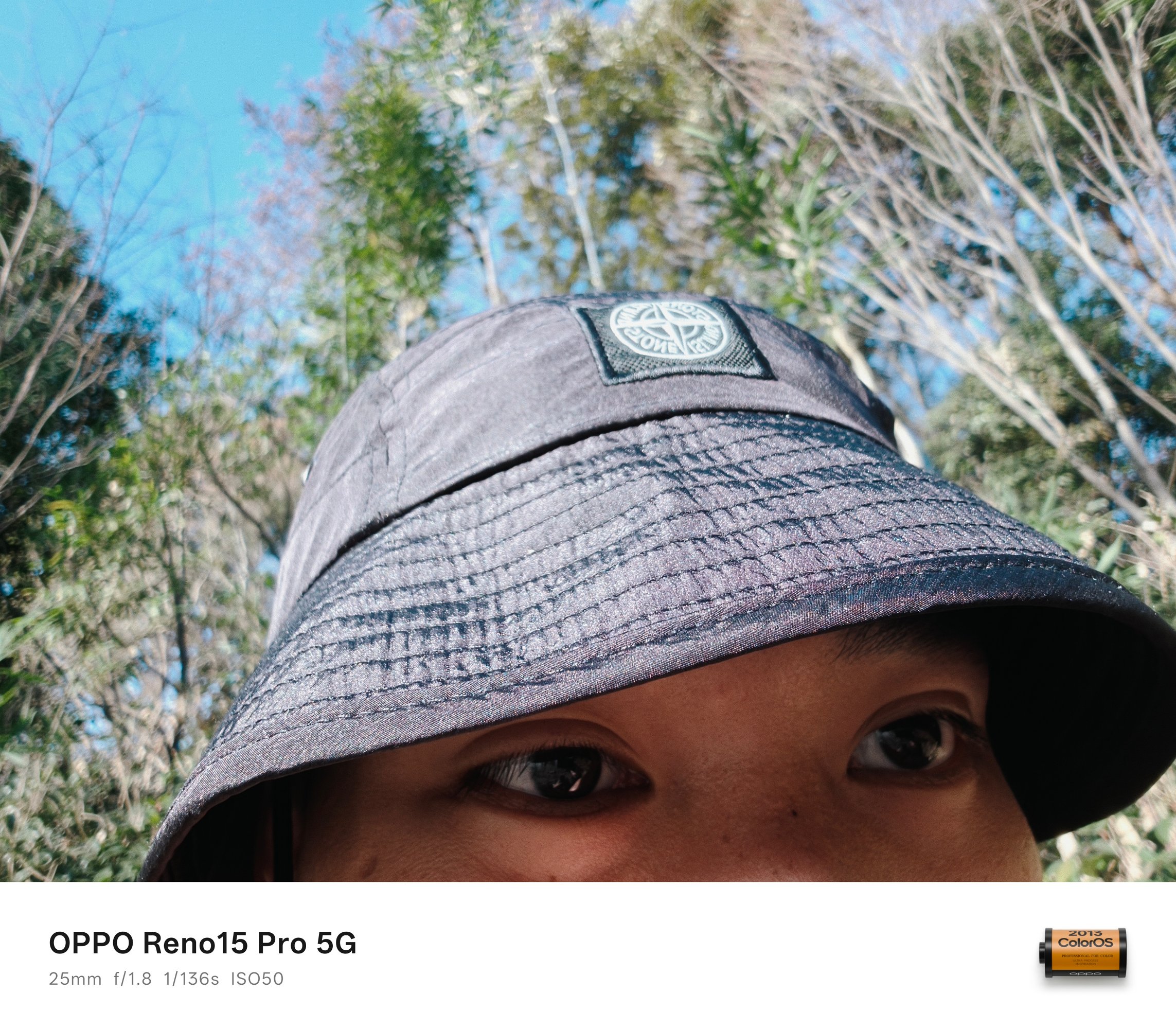
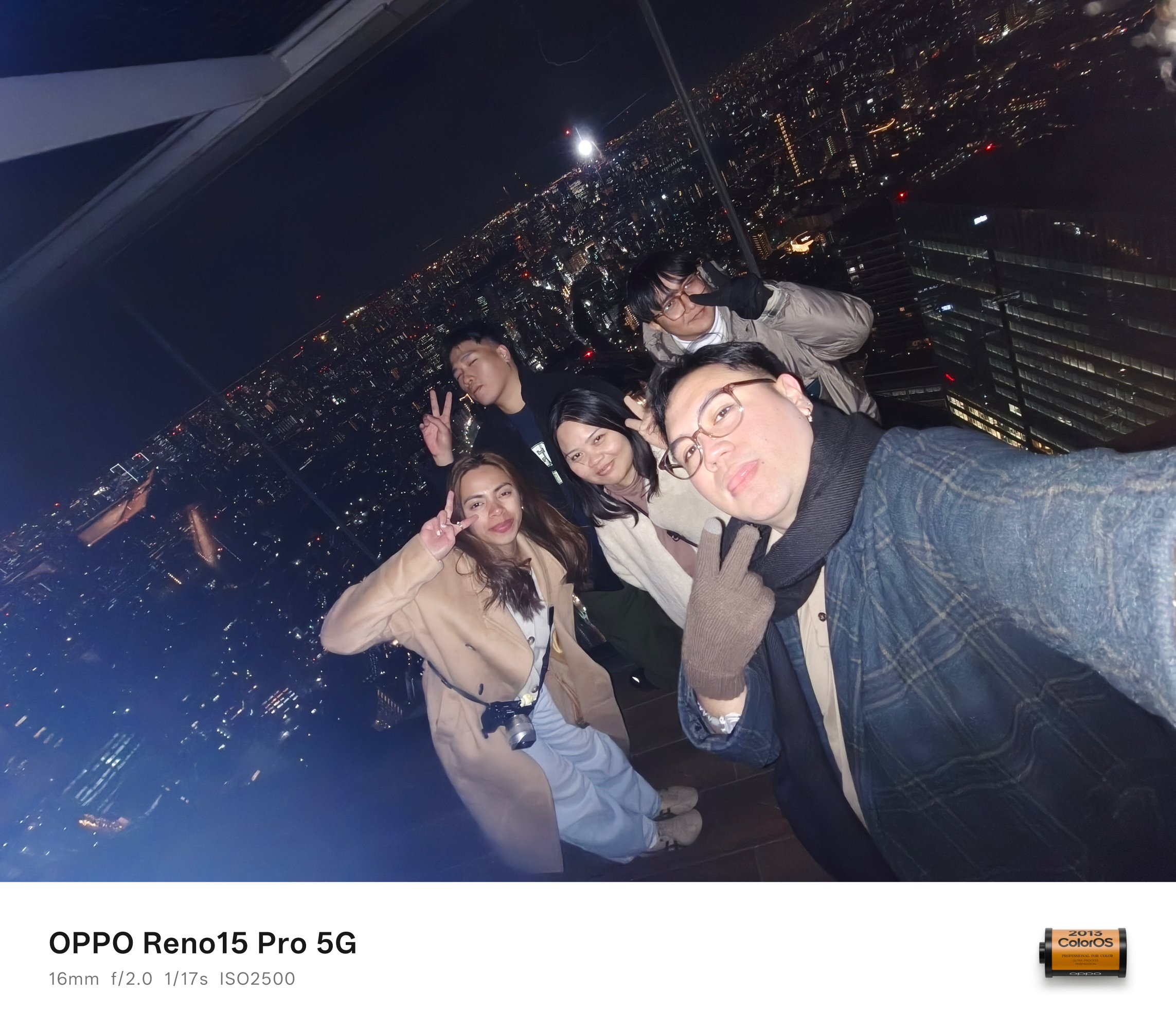
Selfies are for one, groufies are for another. The Reno15 Pro easily captures human subjects without frills.
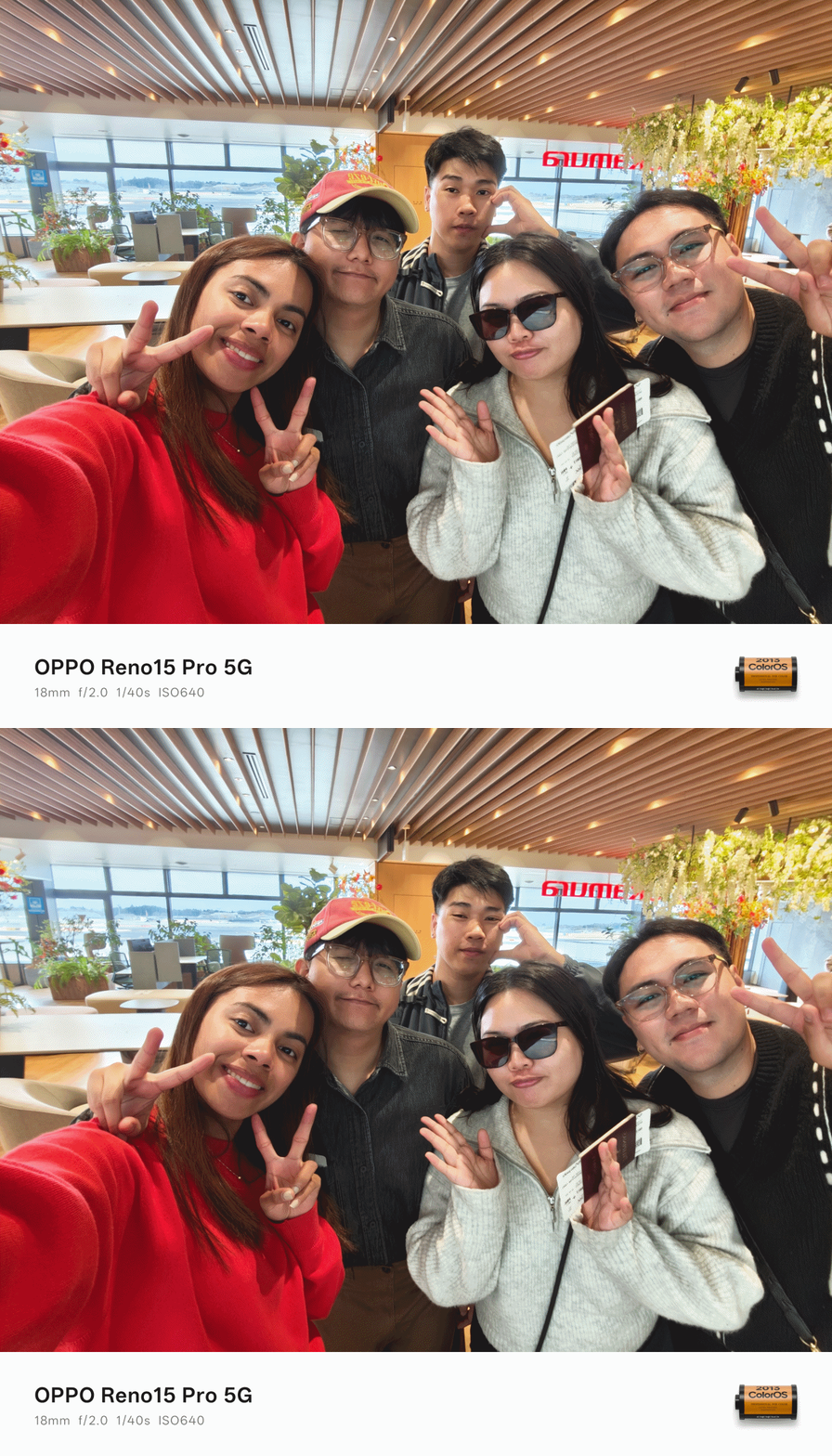


Taking low-light groufies in this device weren’t a struggle at all.
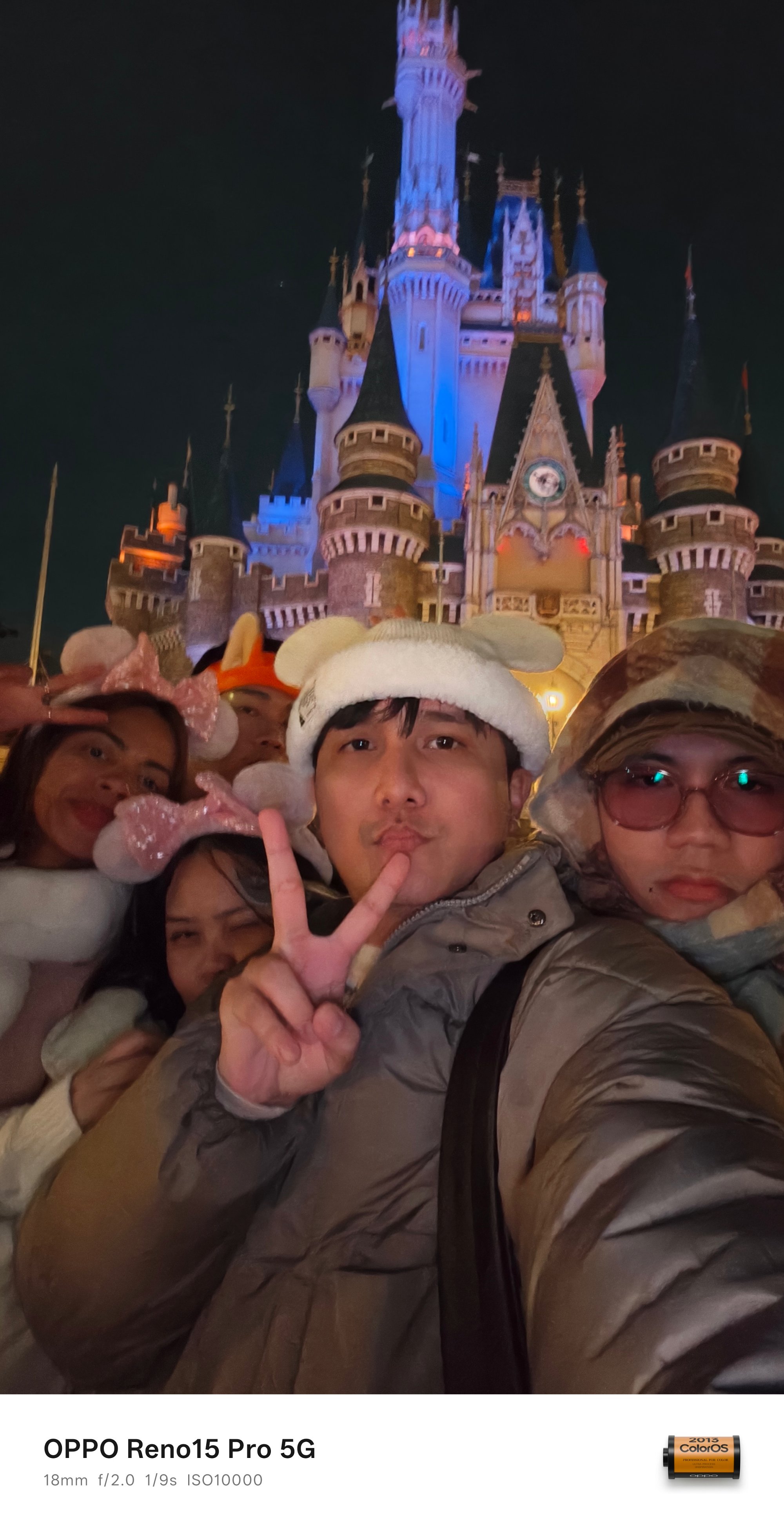



BONUS #3: Gen-Z selfie with the rear UWA camera!
#NoFilter shots aren’t bragging rights
What draws the fine line between the Find and Reno line are their camera partnerships (or lack thereof).
While the Find still rocks that Hasselblad partnership since the Find X5 Pro, the Reno class relies on OPPO’s own imaging algorithms.
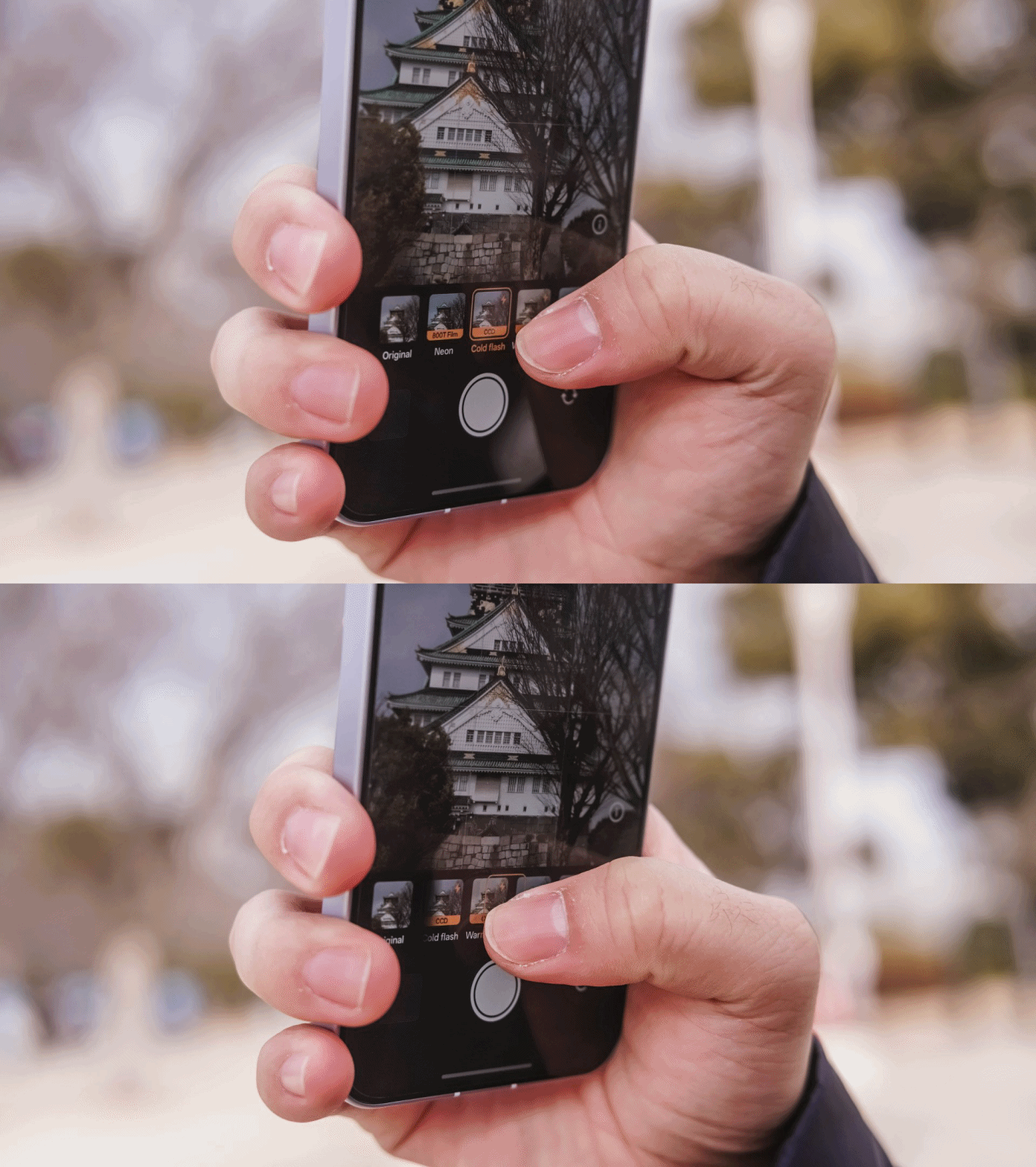
It’s honestly not the best. However, if you want your photos to look less “generic”, these filters truly give soul to your shots.
All in all, there are 18 filters you can choose from:
| Film-Simulated | Classic | Black and White |
| Neon (800T Film) | Vivid | B&W |
| Cold Flash (CCD) | Shine | Mono |
| Warm Flash (CCD) | Natural | |
| Fresh (Film CC) | Food | |
| Vintage (Film NC) | Cool | |
| Clear (Film NH) | Warm | |
| Vibrant | ||
| Faded |
-
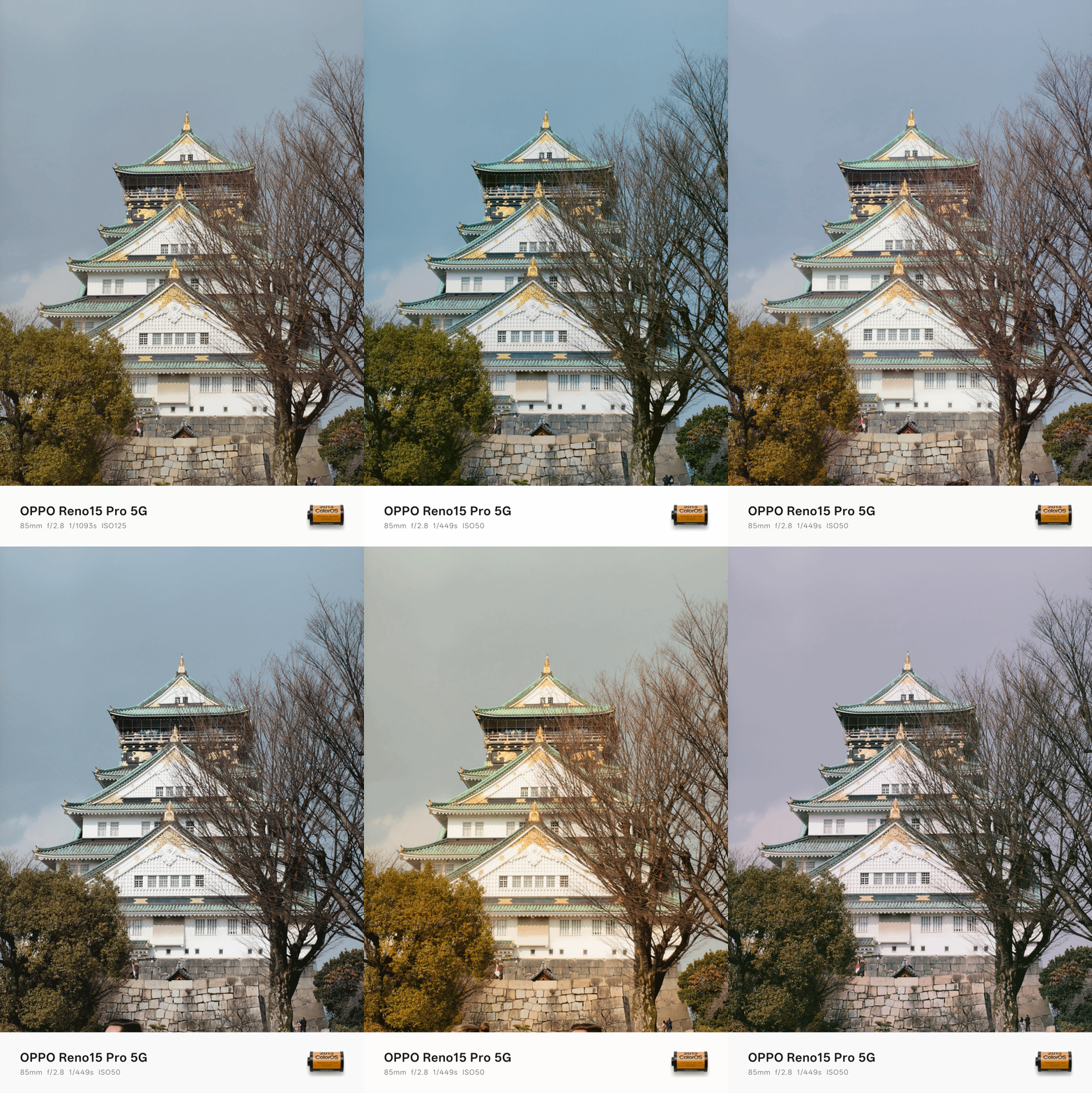
- Film-Simulated Presets
-
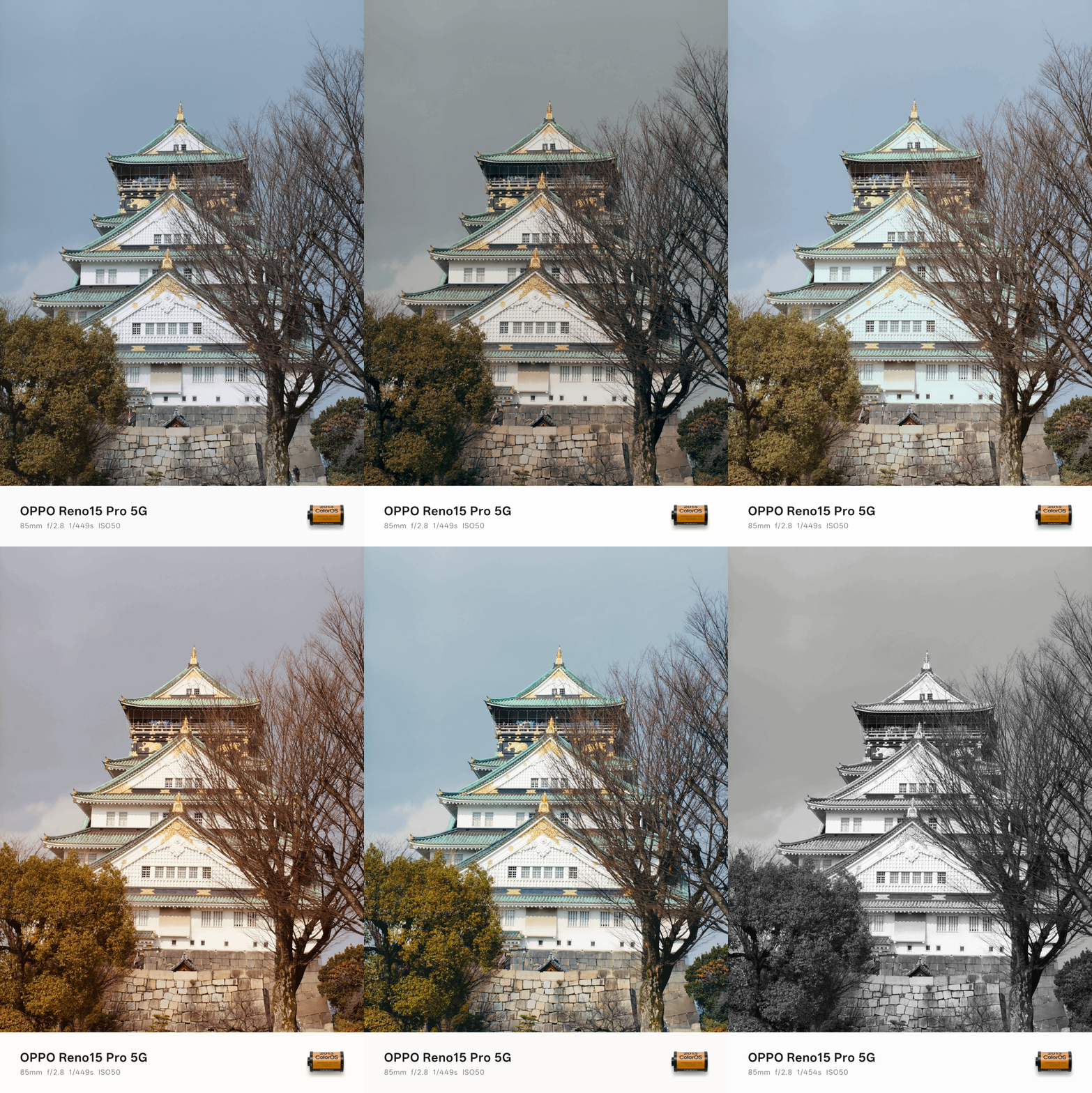
- Classic + B/W Presets
Personally, my frequently used filter is Neon (or 800T Film).

Although it really depends on the subject you’re trying to capture, it performed well during my Japan trip. Either it’s the place, the camera, or both. You be the judge.
Love it or h(AI)te it
Given the unstoppable price hike in memory and other tech components, 2026 seems like a progressive year for AI.
Love it or hate it, AI Tools are getting more advanced — and the OPPO Reno15 Pro isn’t far from the race.
The precise AI Eraser is already given. However, there’s more than just that.

In times when the environment doesn’t fully expose each and everyone’s faces, the AI Portrait Glow feature comes in very handy.

With the right balance, it illuminates faces as if we each had our own fill light. Just be wary if your face gets tweaked and does not look the same way as it is.

Speaking of groufies, the AI Perfect Shot is the perfect companion in fixing those good shots ruined by your friend’s unprepared faces.

For bad photographers, AI Recompose reframes your bad-angled shots based on OPPO’s AI power.

More on the Reno15 Pro’s AI Editor list includes Enhance Clarity to 4K, Reflections Remover, and Unblur.
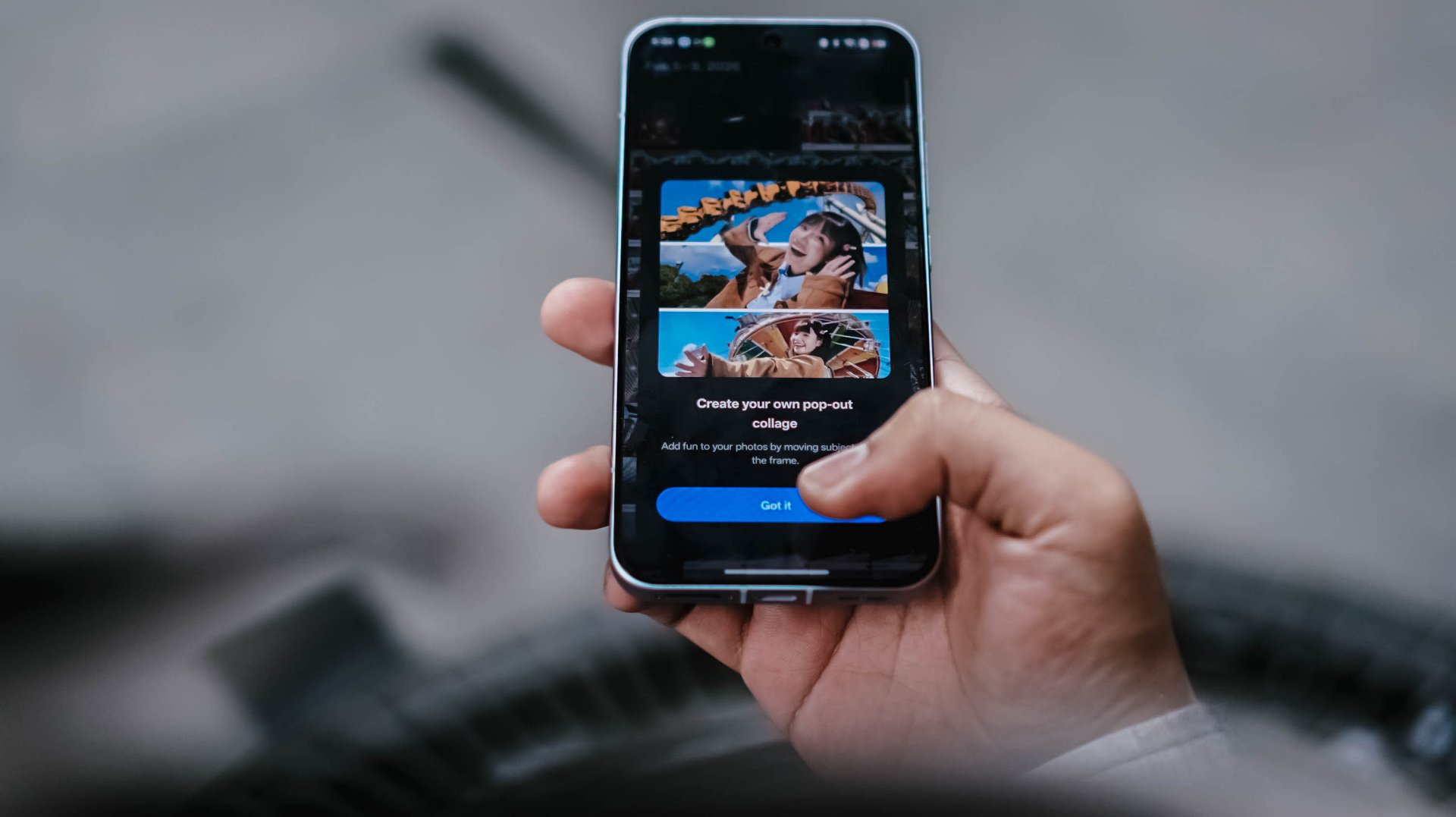
Pop-out collage is also there to make your Instagram Stories (or Facebook Stories) look more quirky.
Video Versatility
It wouldn’t be a complete camera review without testing out how the Reno15 Pro performs when shooting clips.
At first, I was really skeptical on its performance. But, after having a dead powerbank and flagship phone in my bag, my only recourse was to shoot with the Reno15 Pro during that festive electrical night parade in Tokyo Disneyland.
I’ve also used it to record the “Sky Full of Colors” ending fireworks show as the ending piece of our visit.
While it was cancelled last-minute during our Tokyo DisneySea journey, we were still lucky enough to see it from Disneyland a day after.
If the low-light performance was already commendable to begin with, how much more when it’s daytime?
For a phone in this segment, I was not expecting anything grand. Gladly, it delivered more than what I have imagined.
Zoom cruising, while not perfect, still provided a smoother transition between 1x to 3.5x (compared to phones in this league). Surprisingly, 4K/60fps with HDR is possible so I used it just like in the flagship phones I own.
That goes hand in hand with the Reno15 Pro’s tiny but mighty 6.32-inch AMOLED ProXDR display as it can actually display HDR content without any brute force.
Other Goodies
OPPO Reno15 Pro is more than just your typical midrange smartphone. Diving more into its camera app, there are several features I was not able to explore yet can still be very useful in times of need.
The usual ones are the Panorama, Time-lapse, and Slo-mo. For some fun, there are the Dual-View Video and Sticker modes. Need to scan documents? Document and Text Scanner both exist.
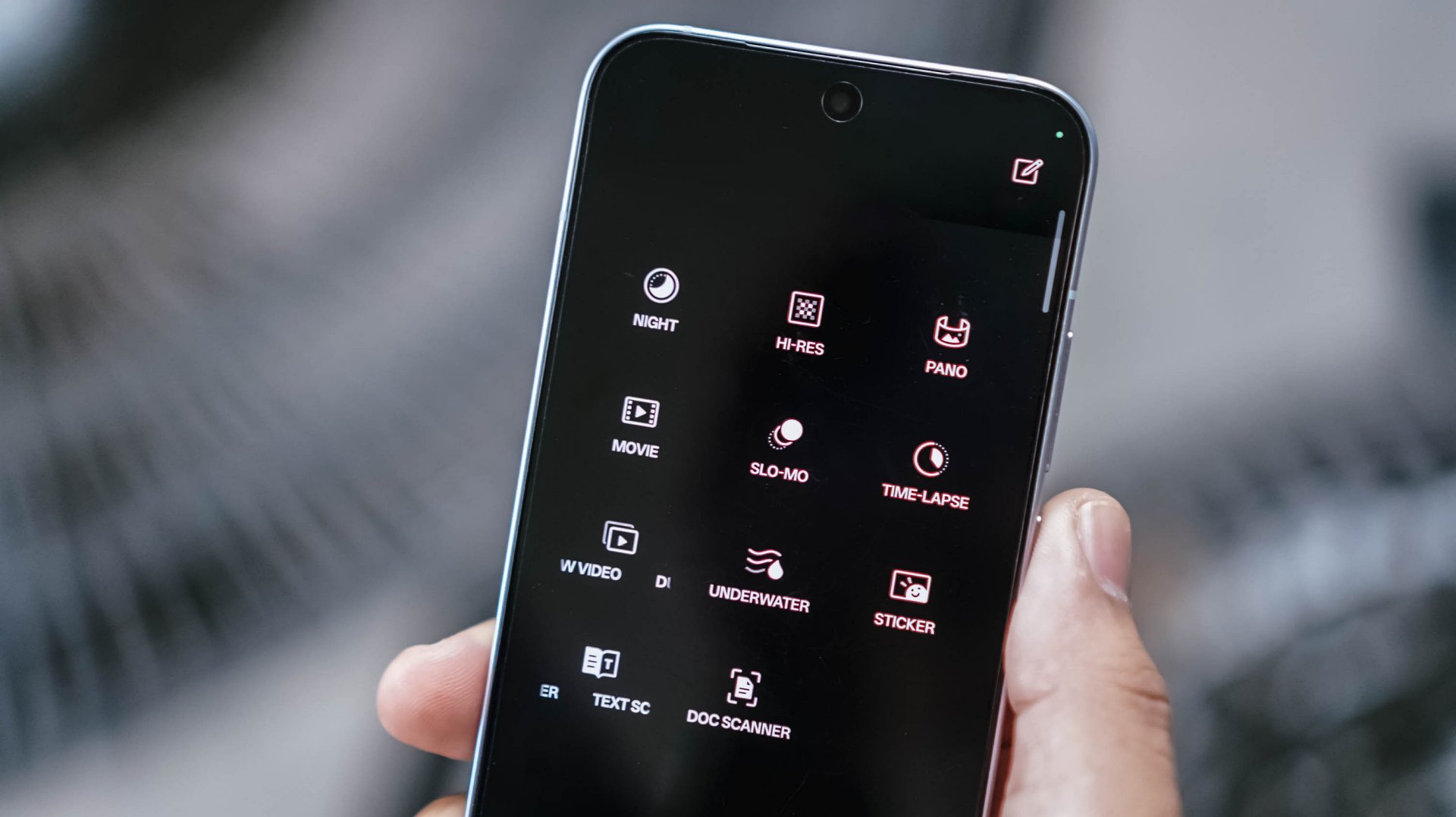
Professional-grade shooting? There’s the Pro mode for stills and Movie mode for, you guessed it, video recording.
Scene-strict modes? Night Mode and Underwater Mode both save the day and the night. After all, the Reno15 Pro is IP66/IP68/IP69-certified.
And, even in low-light shots, OPPO Reno15 Pro’s AI capabilities already does the job for you — even without switching to Night Mode that’s hidden in that vault anyway.
Is the OPPO Reno15 Pro your GadgetMatch?
With a staggering pricing of PhP 49,999, the OPPO Reno15 Pro isn’t a totally easy recommendation for users who want capable cameras in a phone for less.
However, looking at what the OPPO Reno15 Pro offers, it’s imaging prowess is more than justifiable. It’s more than just a “Portrait Expert.”
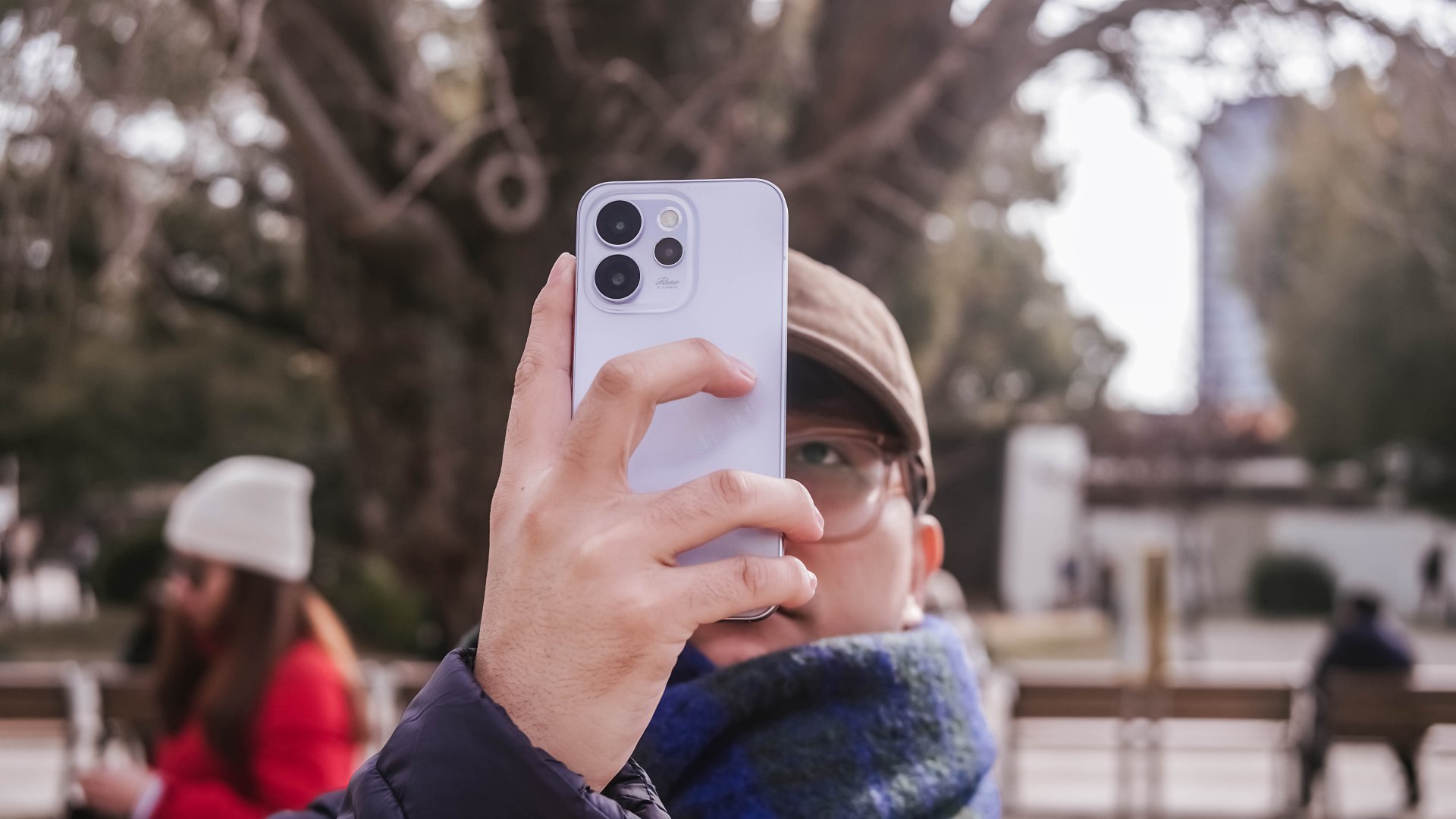
Now onto my bold excerpt:
Why is this even considered a “Reno”?
While it’s clearly still under OPPO’s midrange line, the Reno15 Pro already feels like a flagship. Honestly, it could have just been named as the “Find X9 mini” not just for its sheer size, but for all the flagship-grade qualities it possesses.
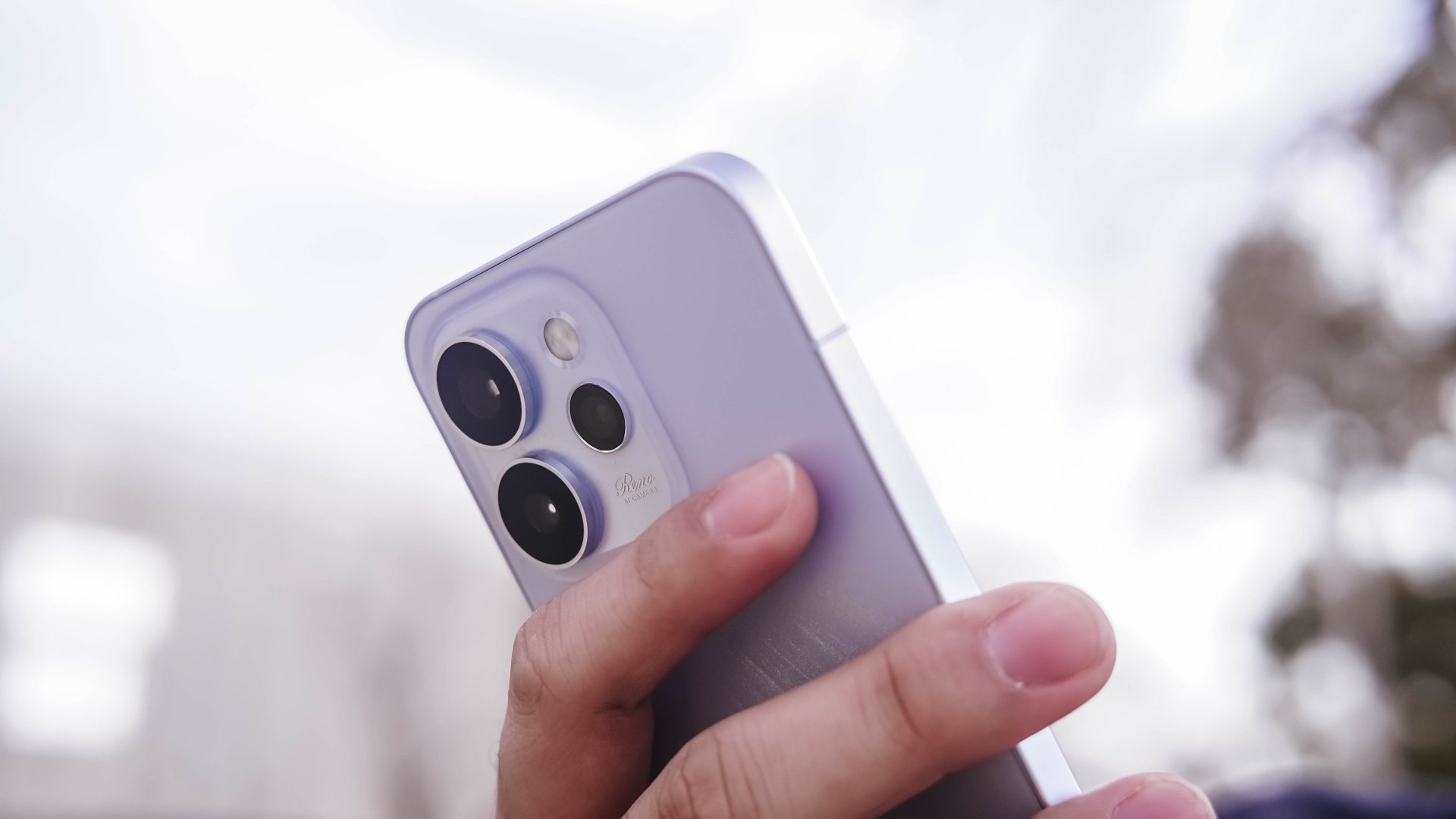
While I’m talking about its fast 4nm Dimensity 8450 SoC, 12GB memory, 6200mAh battery capacity, alongside the oh-so-fluid ColorOS 16, its superior cameras are for another — just without the Hasselblad branding and novelties on it.
(Re)volutionary and in(no)vative
While OPPO was vague with how they actually named “Reno” as their midrange line, I have thought of my own meaning: (Re)volutionary + in(no)vative.
If my memory serves me right, the first series of OPPO Reno that came out last 2019 had an unusual pop-up camera mechanism alongside that 10x hybrid zoom capability. Those two unique features embody what the Reno line is — or so I thought.
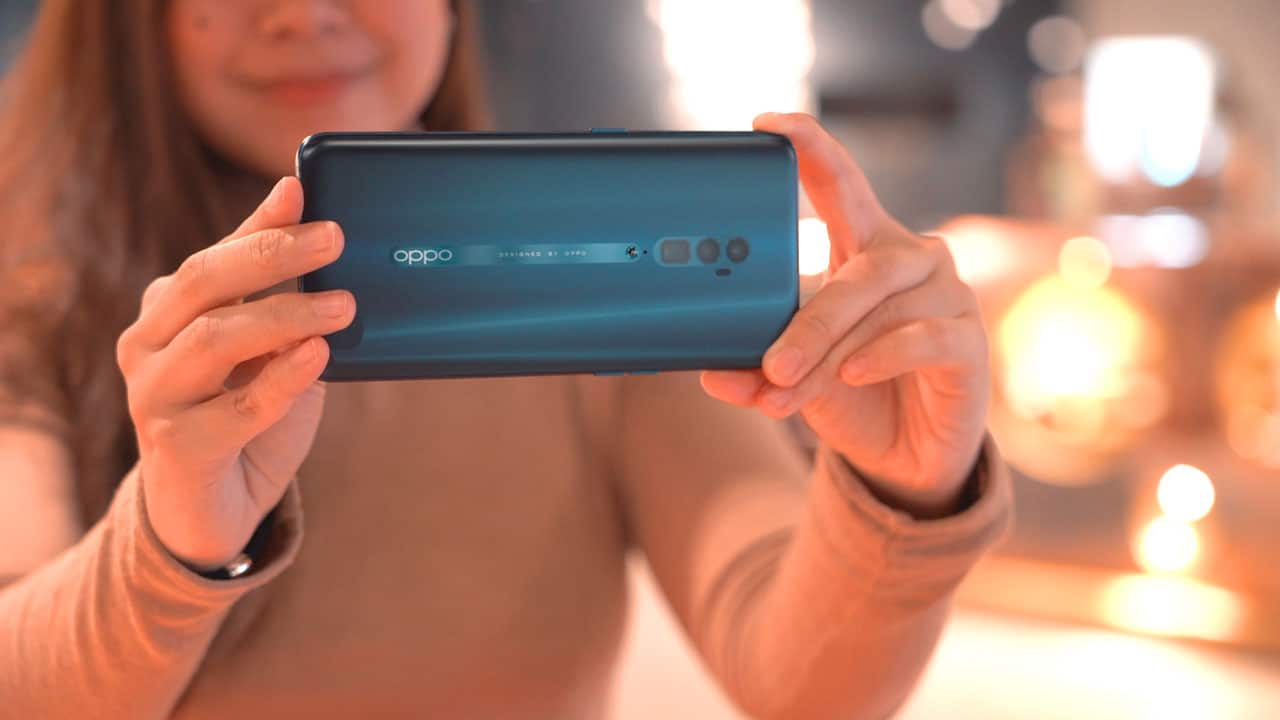
OPPO Reno 10x zoom | 2019
While I may not have experienced each and every Reno model ever released, my colleagues’ pieces are proof that the line isn’t totally consistent with what they wanted to deliver.
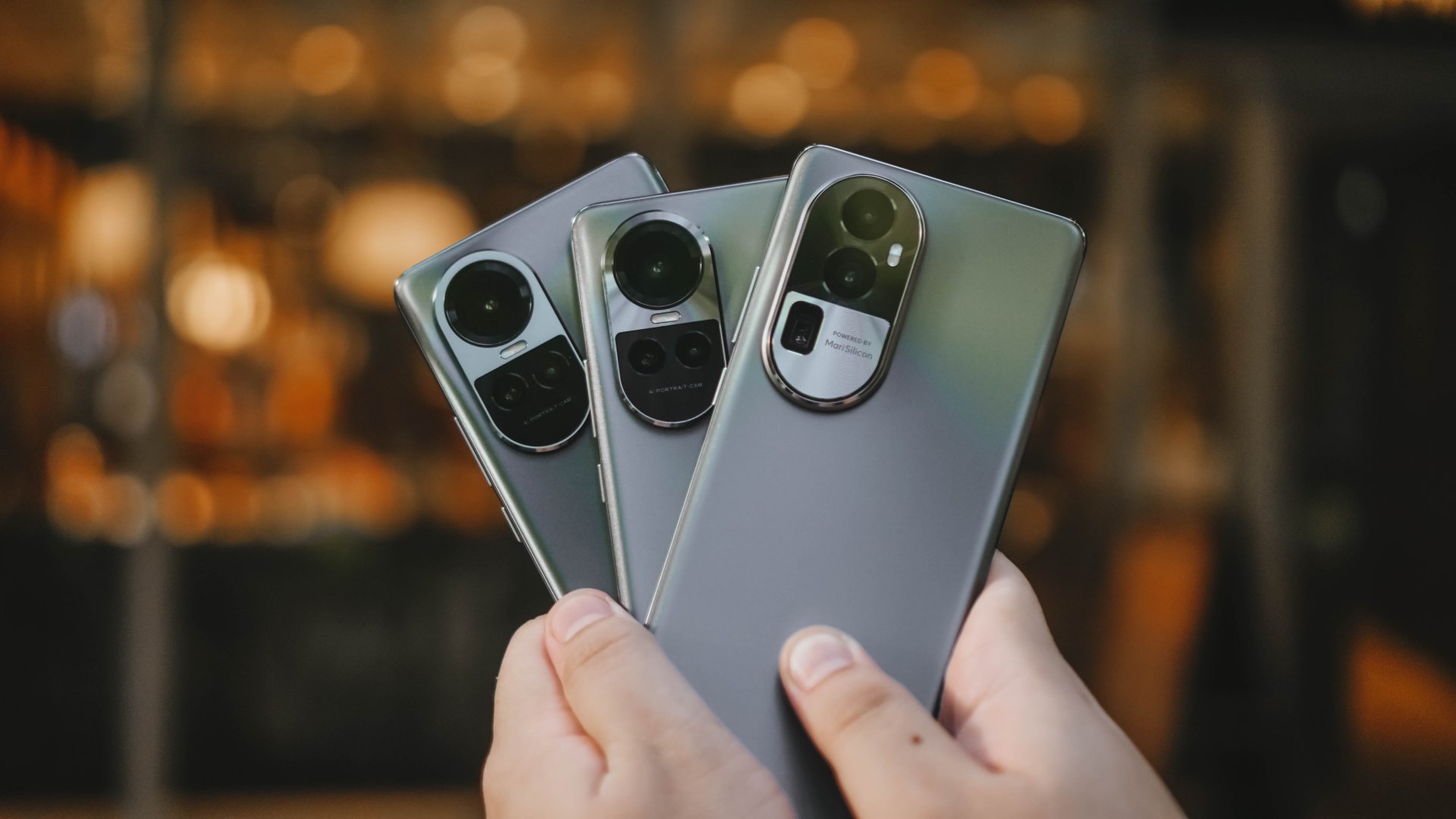
OPPO Reno10 Series | 2023
My memory with the Reno10 Pro back in 2023 is still vivid though. It felt like a midranger slapped with a mix of cameras that performed just right — much like any other mid phone in its prime. However, I cannot say the same for the Reno15 Pro. It was surprisingly delighting and more than satisfying.
Almost three years after, OPPO set the record straight. They finally delivered a midranger that doesn’t feel mid with its excellency in smartphone-tography. That’s minus the intimidating flagship price tag of its “Find” lineup.

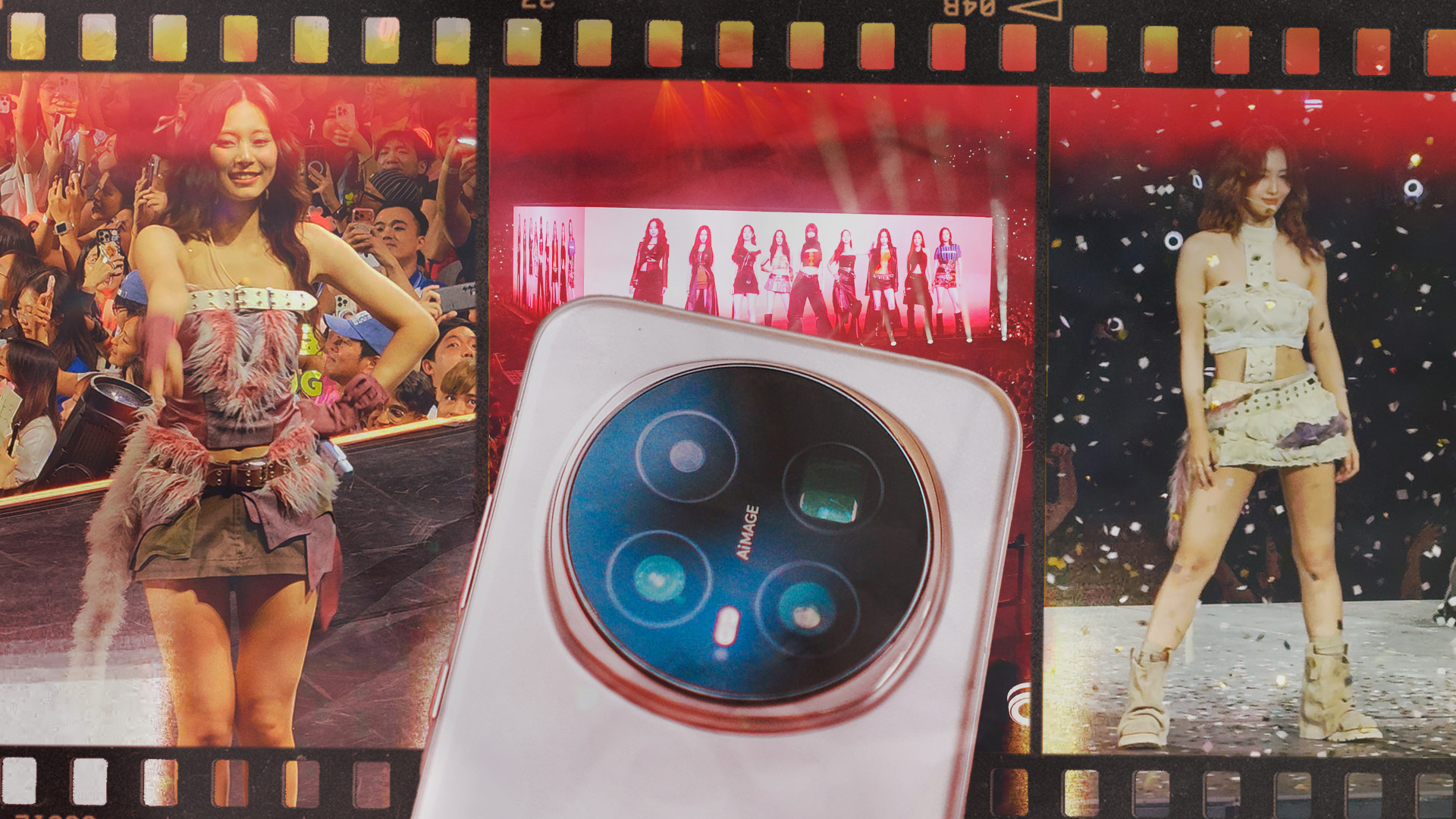
Concerts are unfair camera tests — wild lighting, fast movement, and zero second chances. So when I brought the HONOR Magic8 Pro to TWICE’s THIS IS FOR concert in Bangkok, I wanted to see if HONOR’s Stage Mode could actually handle it.
Everything here was shot using Stage Mode at 4K 30fps.
This wasn’t lab testing. This was real-world, heart-racing, shaky-hands shooting.
Where I was seated and why zoom mattered
View this post on Instagram
The concert used a 360-degree stage. I was lucky enough to sit close to one of the extended stages, which meant I was often shooting between 3.7x to 10x zoom.
For the main stage, I mostly relied on 15x zoom.
That’s where a phone either wins your trust… or completely falls apart.
Surprisingly stable, even with shaky hands and excitement
Let’s start with what impressed me most — stability.
I’m naturally shaky, and TWICE being right in front of me did not help. I was vibrating out of excitement most of the night. Even then, Stage Mode stabilization held things together beautifully.
View this post on Instagram
Shots stayed usable. Footage stayed watchable.
Even when I wasn’t being my most careful self.
This gave me confidence to keep shooting instead of worrying about every tiny hand movement.
Image quality: sometimes magical, sometimes uncertain
Now the honest part.
Stage Mode still needs to mature.
There were moments when footage looked crisp, clean, and genuinely impressive for a smartphone in that environment.
View this post on Instagram
But there were also times where it clearly struggled — particularly with lighting transitions and focus.
View this post on Instagram
Some clips handled spotlights well. Others felt like the processing panicked a little.
It wasn’t bad. It just wasn’t consistent yet.
How it compares to other concert kings
View this post on Instagram
If I were purely relying on zoom to watch the concert through my phone, I’d still recommend the Samsung Galaxy S25 Ultra. It remains the phone I trust most when zoom is mission-critical.
vivo also still leads in Stage Mode execution. The vivo X300 Ultra’s Stage Mode feels more refined and reliable at this point.
HONOR isn’t there yet.
But it’s also much closer than I expected.
So… would I bring the Magic8 Pro to concerts again?
Yes.
Even with the inconsistencies.
Even knowing there are better Stage Mode implementations out there.
View this post on Instagram
Because the Magic8 Pro still gave me plenty of shots and clips I was genuinely happy with. Stability is excellent. Quality can be great. And for most users, it delivers results worth keeping and sharing.
If I didn’t have a Galaxy S25 Ultra or vivo X300 Ultra with me, I’d still confidently bring the HONOR Magic8 Pro.
Stage Mode isn’t perfect yet.
But it’s promising — and when it works, it really does feel like magic.
View this post on Instagram
SEE ALSO:

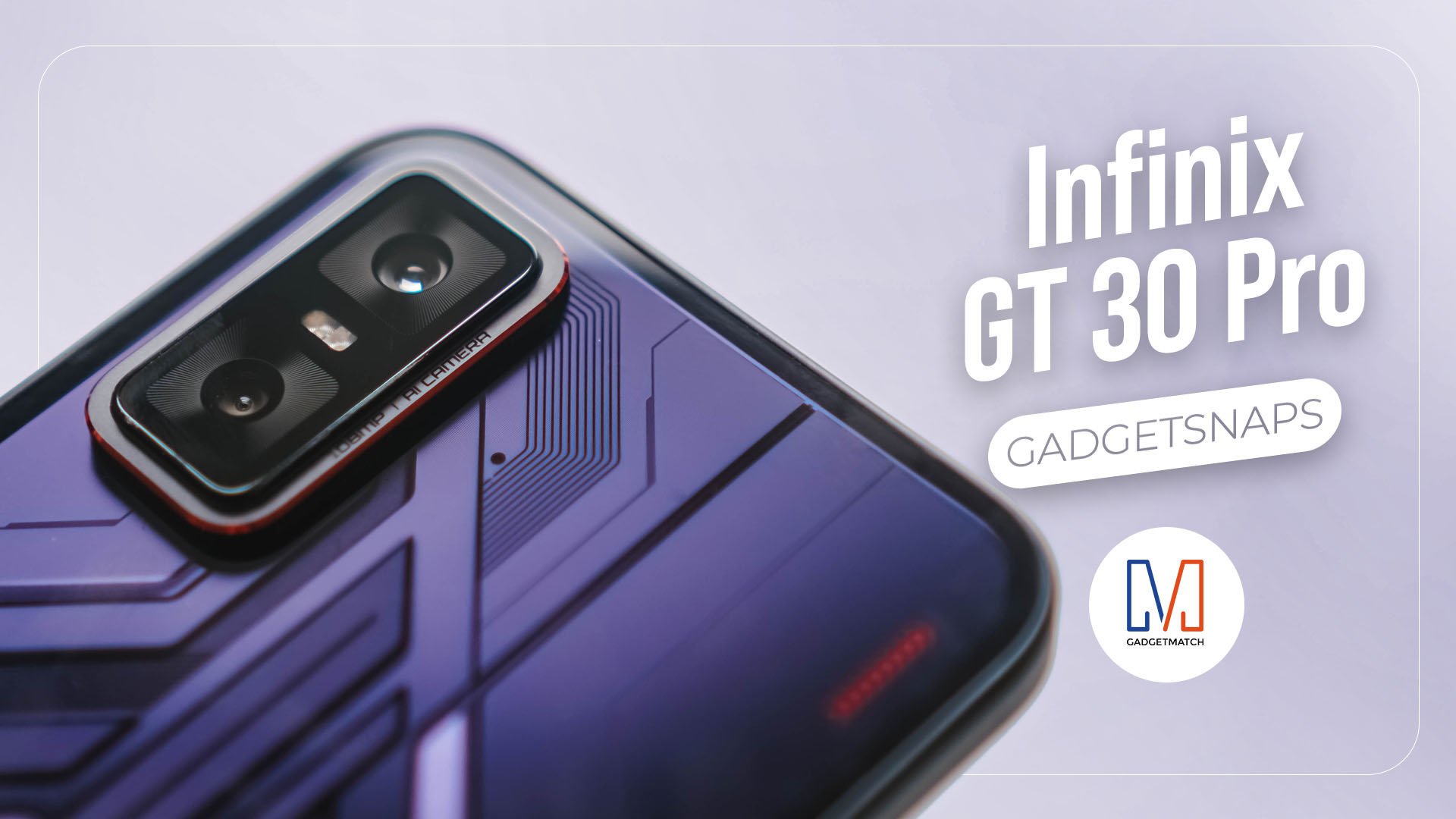
The Infinix GT 30 Pro was launched in the Philippines on Monday for an attractive asking price. The latest affordable gaming smartphone from one of the Transsion brands can be owned for as low as just PhP 11,999.
As of writing, I have yet to exhaust the device for various mobile games. But initial sessions have gone well. I can tell that the phone is already worthy of consideration.
But one thing is for sure: the Infinix GT 30 Pro’s camera system is likewise reliable. Nowadays, it’s difficult to attract customers if the smartphone you’re offering is one-dimensional.
Fortunately, the GT 30 Pro has a camera system which produces good sharpness, detail, and color. I am fond of the third aspect in particular. The processing is not overdone. Shots come out lively.
I took the device earlier this month to TOYCON PH 2025, which is the biggest mid-year celebration not just for toy enthusiasts but hobbyists in general.
Here are some samples:






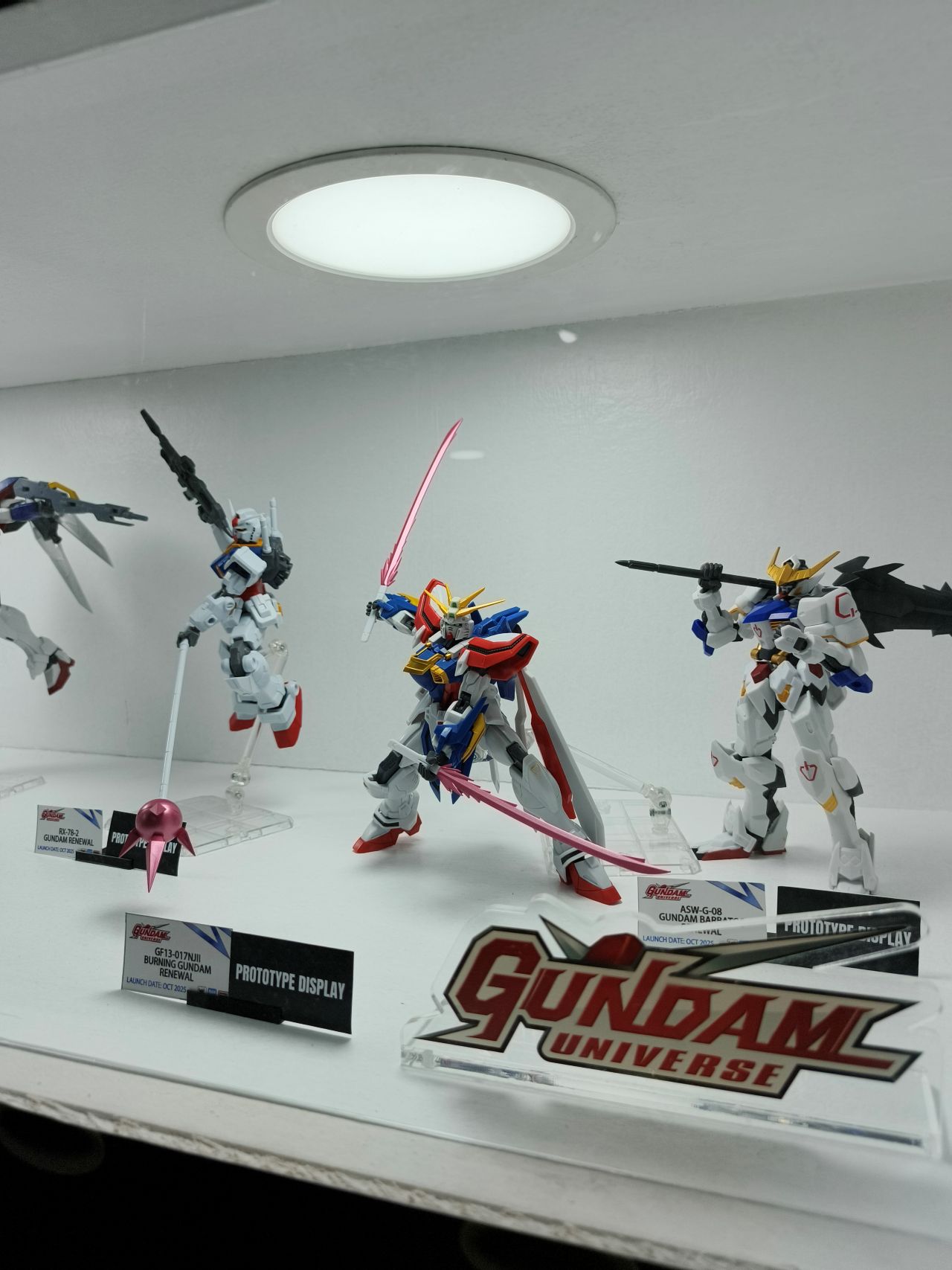



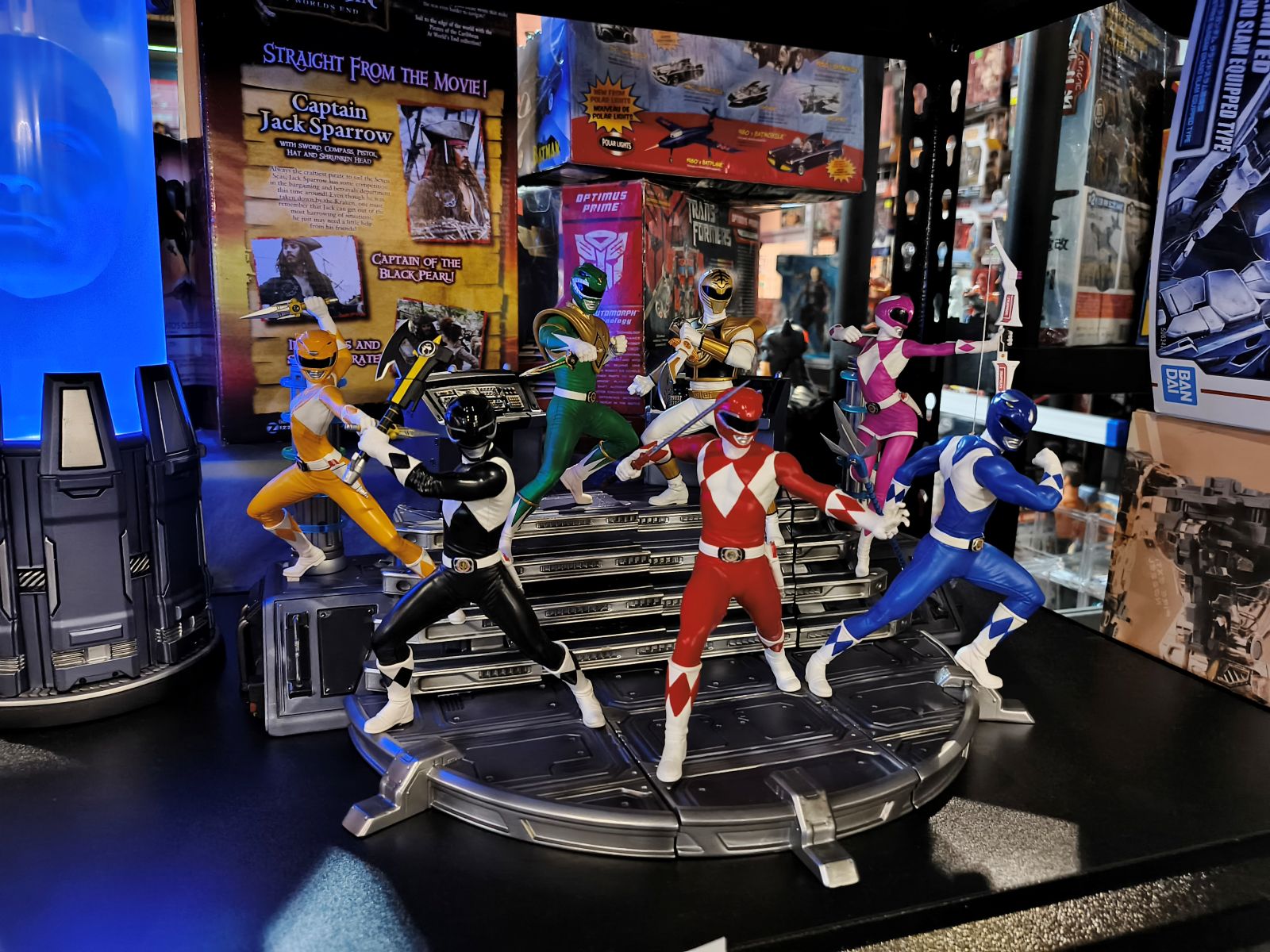
There’s just something for everyone at this three-day convention. From different kinds of collectibles, figures, statues, and exclusive drops to various merch, the event is filled with pleasant surprises.
More anime
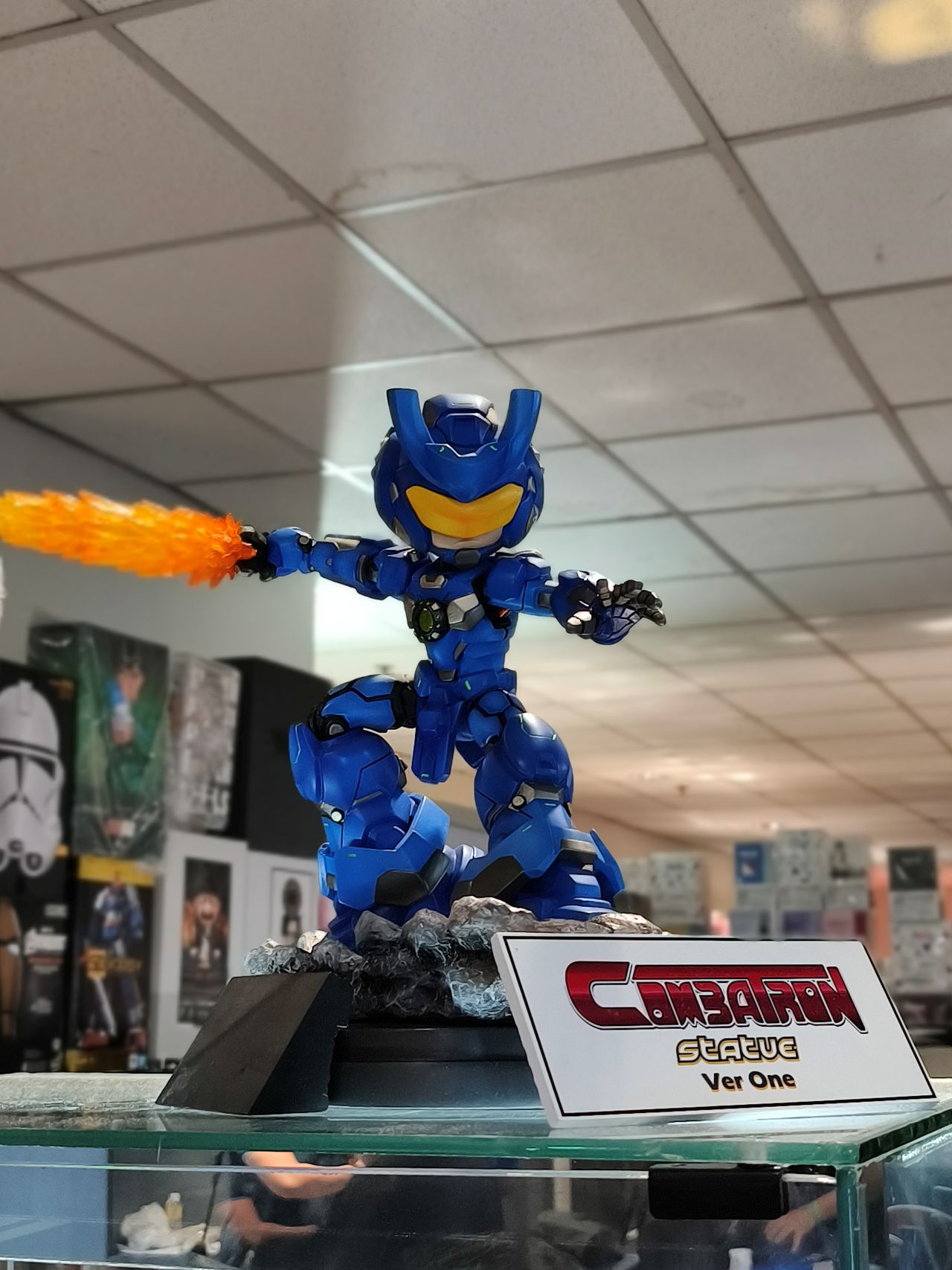





Custom pieces, exclusive collectibles
There were also a ton of special guests. Moreover, the event empowered local artists as the 2025 edition had plenty of room for them to showcase their creations.
What’s great about TOYCON is that there are likewise exclusive collectibles you’ll be able to see or buy only during the event.











The Infinix GT 30 Pro’s main camera can capture decent detail at up to about 3X or 4X zoom, which came in handy when I was taking photos of the ribbon cutting ceremony.



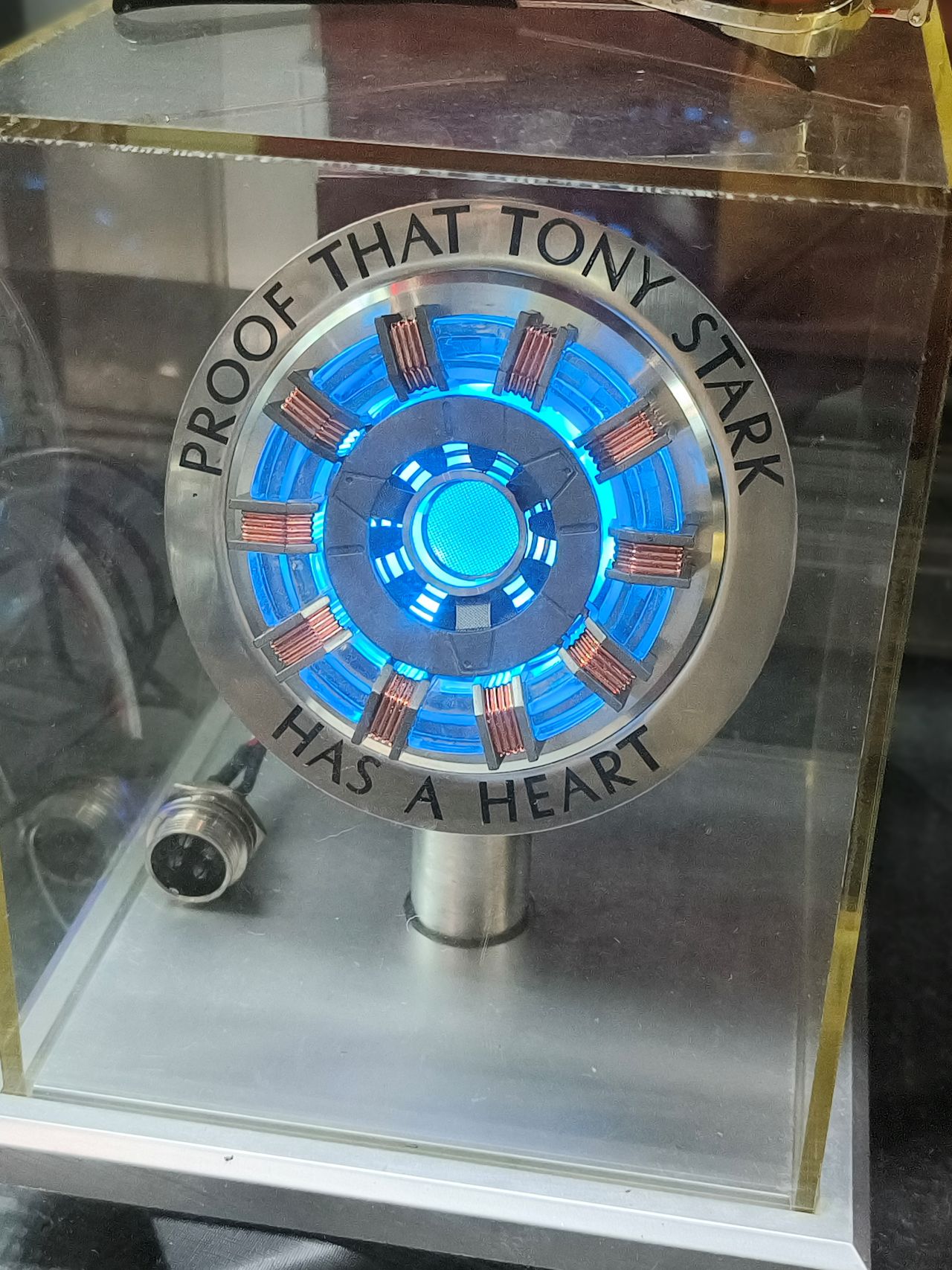
Marvel and DC







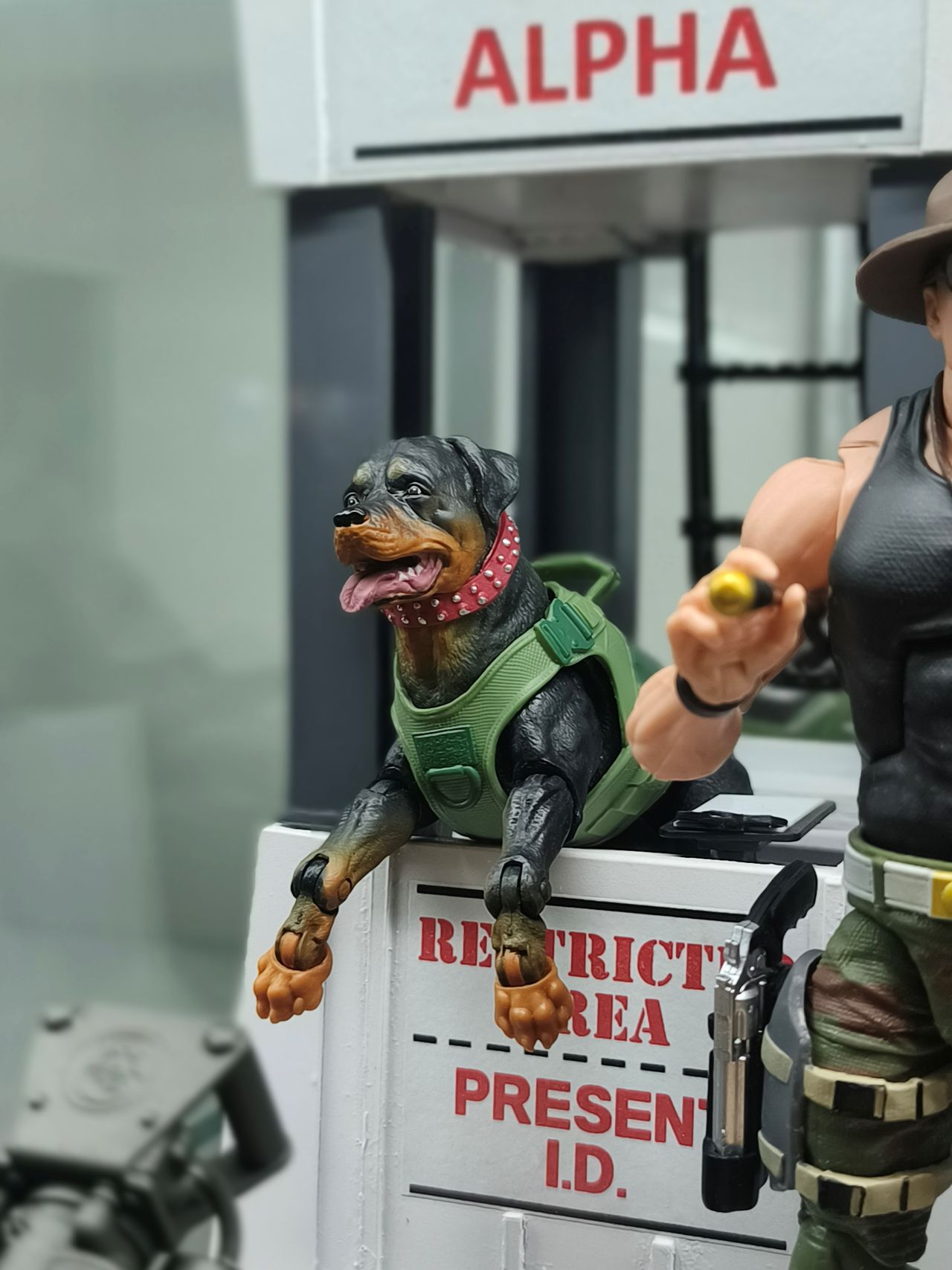
John Cena




Predator vs. Dutch
At the gallery section, I saw a display of multiple Predator figures arranged in a way where it’s them against Dutch (played by Arnold Schwarzenegger).
The way it was arranged already painted a story. Depending on the angle and focus, the captured photo can tell a different meaning.



More snaps











Food in between
For snaps of food, the Infinix GT 30 Pro’s main camera is also able to produce above results a cut above most phones of a similar price point.
Color is great. There’s just a bit more contrast and sometimes, the subject appears warmer than intended, but overall, they sure look appetizing.





Some selfies




Decent for filming
As for filming, I would say the Infinix GT 30 Pro still does a decent job. It does feel a bit stutter-y with different camera movements, especially for reels. But there still some smoothness to it.
I filmed most of the TOYCON 2025-related content that I uploaded on my socials using the phone. The camera was set to 1080@60 and I had steady mode turned on. Again, detail and color are alright.
@manilaconnoisseur Also at TOYCON PH 2025: Combatron Bust Series na collab between Tido Dojo and Berlin Manalaysay! Limited to 50 pieces tapos may exclusive version rin na limited to 10 pieces naman! #combatron #combatronbustseries #toycon #toyconph2025 #toyconph #customtoys #pinoycomics #comicartist
Reliable shooters
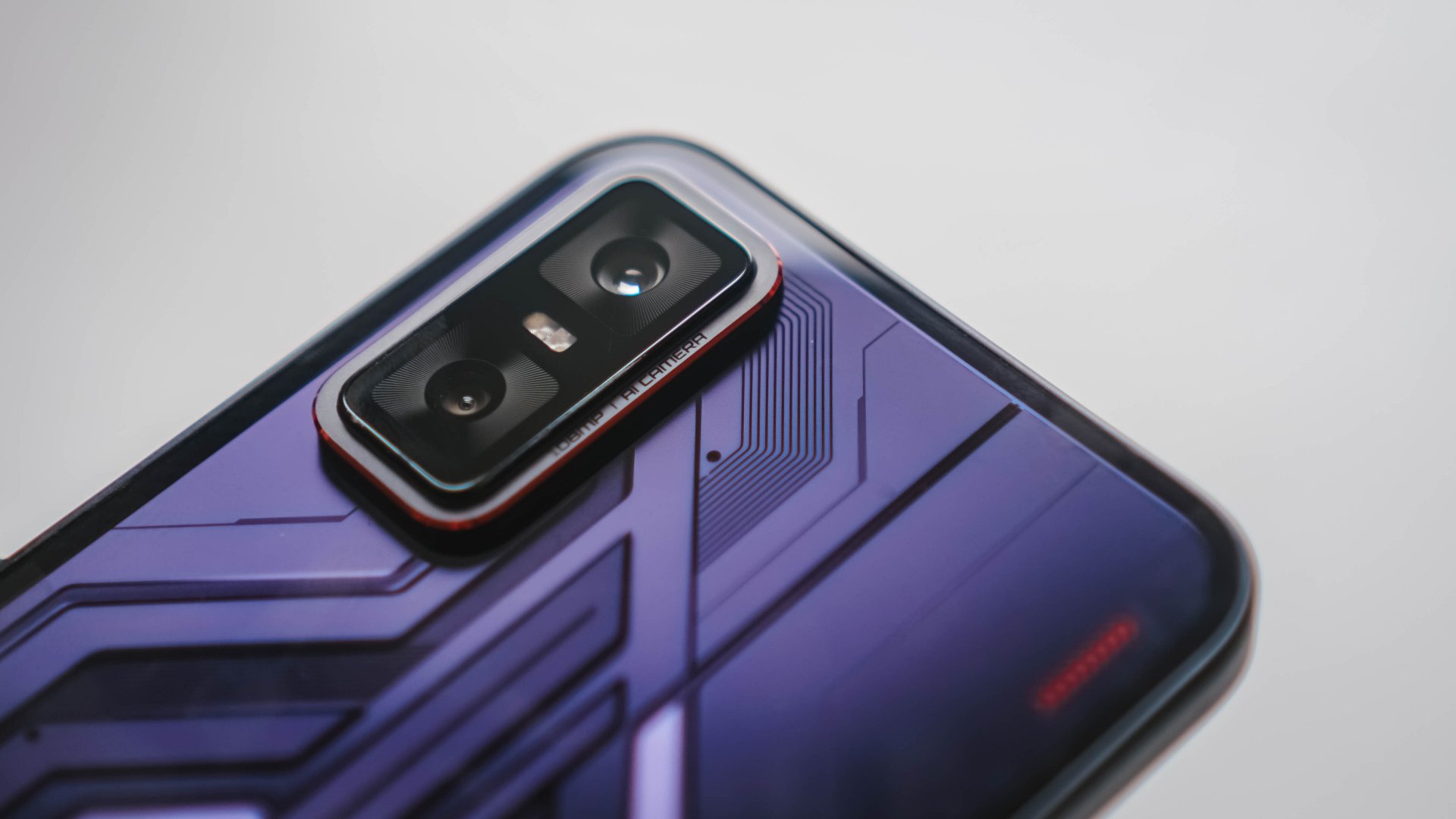
Overall, the cameras are something you can definitely utilize whenever you’re not playing mobile games on the device. Hardware wise, the device sports a 108MP main camera. In front, there’s also a 13MP selfie camera.
Most of the shots of toys I took were in portrait mode. Granted, the results aren’t perfect each time. There are moments where the phone struggles with focus and identifying the background, subject, and foreground.
But it’s also challenging to capture just what you want sometimes at the event as it’s just overwhelming and crowded. And for the device’s asking price, I can’t complain. You can still pull off smooth and creamy bokehs, and impressive captures in general with good color, depth, and detail.
That’s why it also pays to have a good camera phone. When you’re on a budget, having an album’s worth of memories should suffice. Just replay or view them back to remind you you’ve been to somewhere nice.
-
 MWC 20262 weeks ago
Infinix NOTE 60 Ultra makes a motorsport-inspired debut
-

 Computers2 weeks ago
AMD announces Ryzen AI 400, AI 400 PRO series at MWC 2026
-

 Reviews1 week ago
The Xiaomi 17 shoots Leica dream
-

 Laptops2 weeks ago
Apple unveils MacBook Pro with M5 Pro and M5 Max
-

 Gaming2 weeks ago
Ubisoft confirms Assassin’s Creed: Black Flag remake
-

 Hands-On2 weeks ago
OPPO Reno15 F 5G hands-on
-

 Gaming2 weeks ago
PlayStation will stop releasing its games on PC
-
 Computers2 weeks ago
Apple unveils Studio Display and all-new Studio Display XDR