
Computers
XPG Mars 980 Blade review: High-speed storage that finally makes sense
Fast, reliable, and no longer offensively expensive

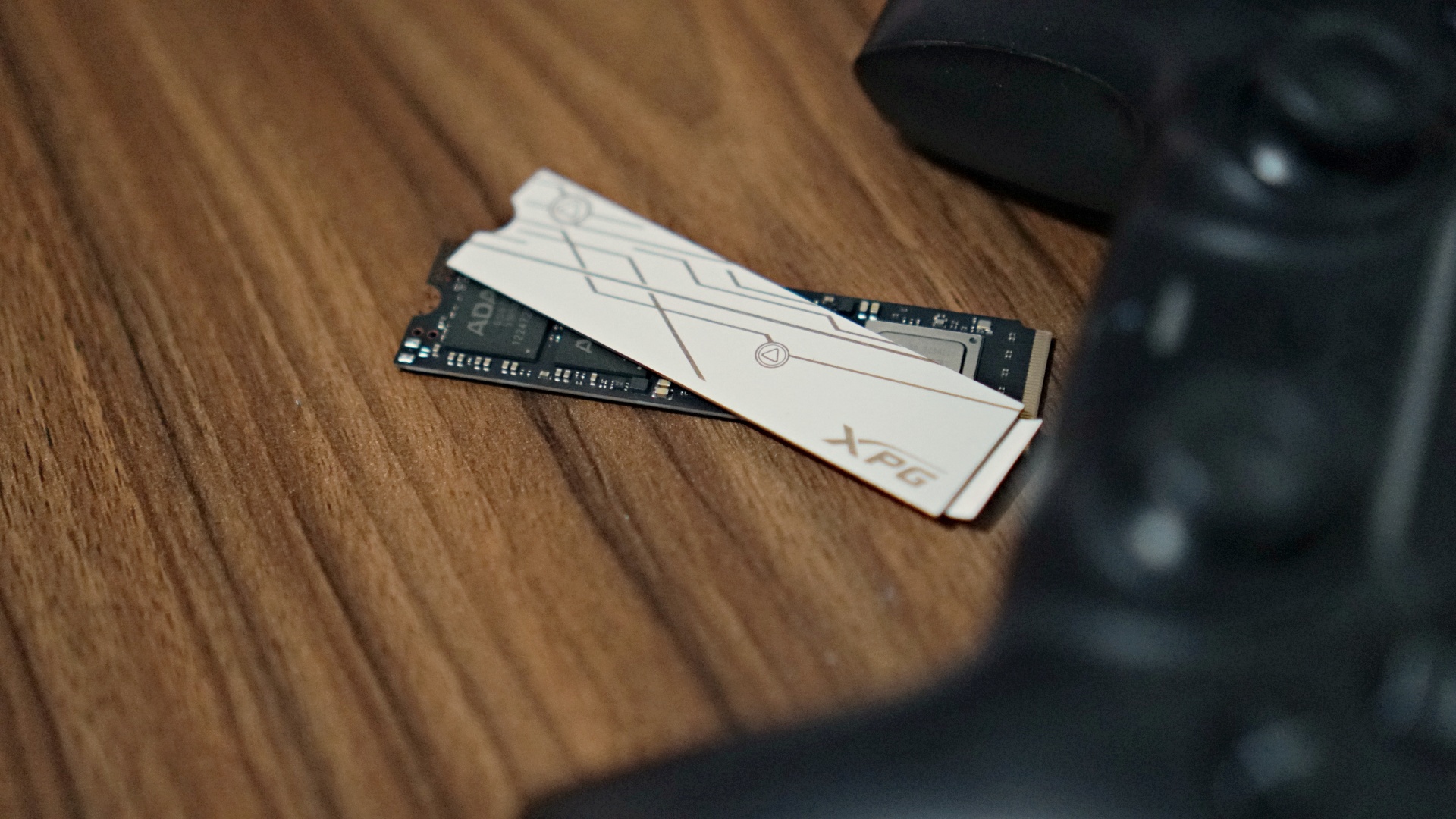
A few years ago, adding high-speed storage to your PS5 or gaming rig meant coughing up a small fortune — sometimes nearly half the price of the console itself. Back then, PCIe Gen4 NVMe drives were bleeding-edge tech, and prices reflected that. But now that the dust has settled, more affordable options are emerging without compromising performance. One of those options is the XPG Mars 980 Blade, and it’s a drive that gets the job done without the unnecessary frills.
We tested the 980 Blade primarily as a PS5 storage expansion, and the experience was so seamless, it was almost forgettable — in the best way. Games launched quickly, performance remained stable, and the system treated it as if it were native storage. That’s a high compliment for any aftermarket SSD.
But beyond raw performance, what makes the Mars 980 Blade stand out is how reasonably priced it is. The 1TB model goes for $135 USD, while the 2TB version has an SRP of $205 USD. That’s a far cry from the $400+ Gen4 SSD we purchased just a year into the PS5’s life cycle. In many ways, this is the drive we wished we had back then.
Designed to disappear (in a good way)
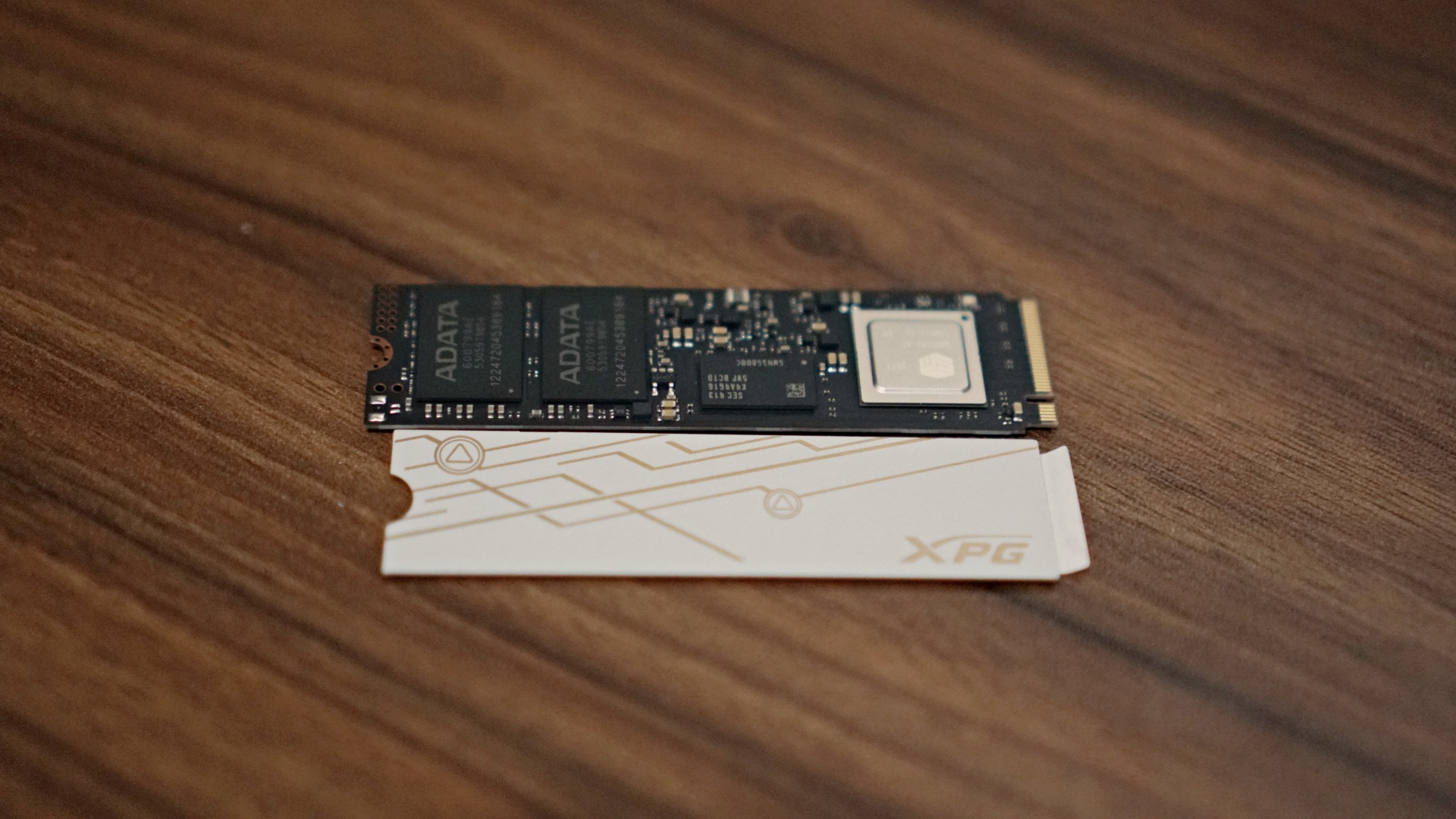
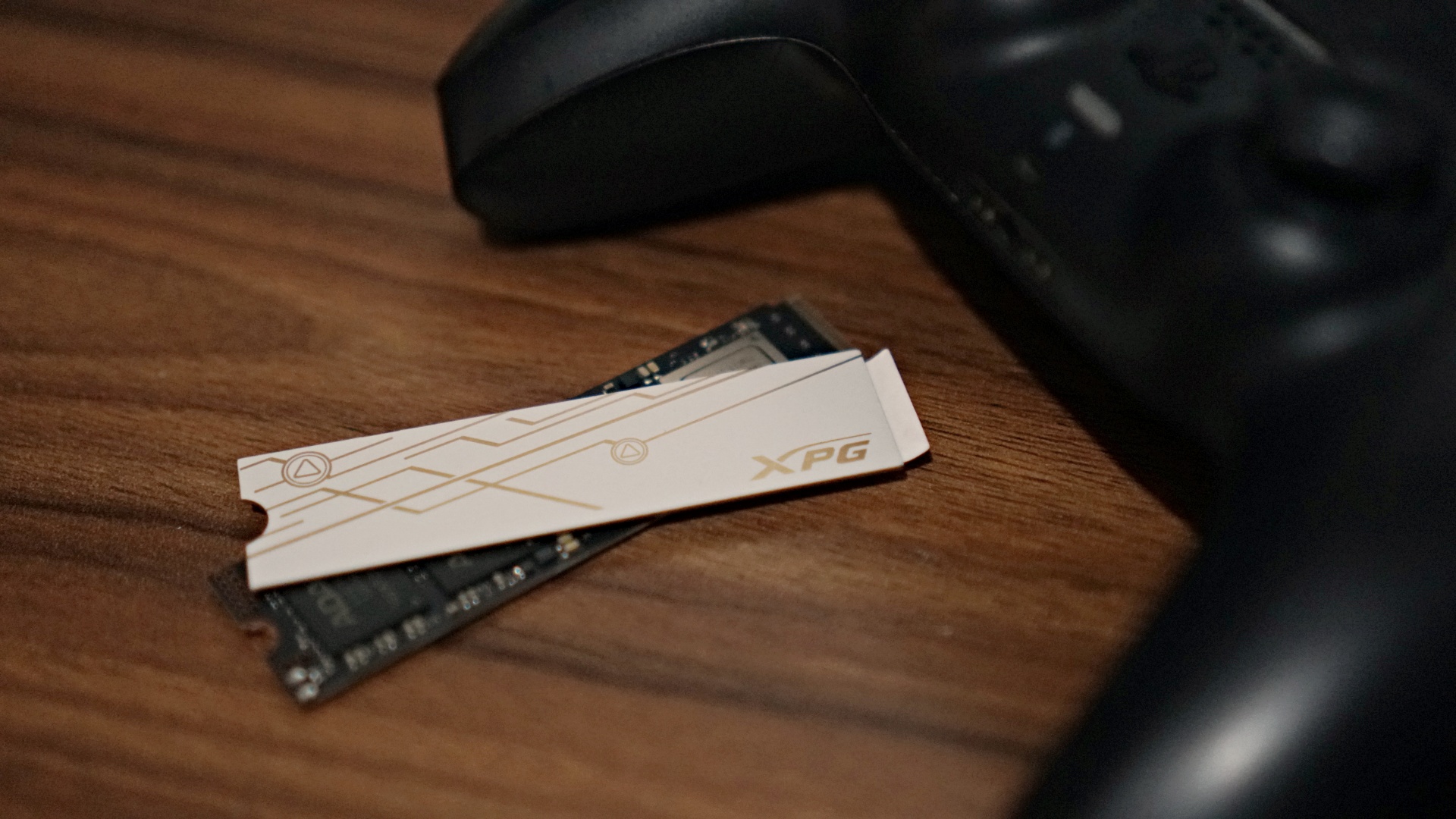
The Mars 980 Blade isn’t flashy, and that’s part of its appeal. There’s no RGB, no oversized heat pipes, and no branding overload. Instead, you get a low-profile aluminum heatsink that makes it compatible with the PS5’s expansion slot — no modification required. It slid in easily and was recognized by the system almost instantly. The included heatsink keeps things cool enough without getting in the way, which also makes it a strong contender for slim laptops or handhelds.
There’s something refreshing about a component that’s meant to be installed once and forgotten. The Mars 980 Blade leans into that philosophy — performance where it matters, no extra distractions.
Real-World PS5 Use
The real test was daily usage. I moved a few of my heavier titles — including Call of Duty: Black Ops 6 and Spider-Man 2 — from the PS5’s internal SSD onto the Mars 980 Blade. The result? No noticeable difference in performance. Boot times, in-game loading, and texture streaming all felt identical.
This is what makes the Mars 980 Blade a smart buy. You don’t have to sacrifice performance for price. And if you’ve been juggling which games to keep installed, this SSD becomes an easy way to expand your library without babysitting your storage every week.
It also helps that the Mars 980 Blade supports sequential read speeds of up to 7400 MB/s — more than enough to meet Sony’s requirements for PS5-compatible drives. And for those who care about durability, XPG uses TLC NAND, which typically offers better endurance and sustained speed than cheaper QLC-based alternatives.
What about Gaming Laptops and Handhelds?
While we focused our testing on the PS5, it’s not hard to project how this SSD will perform on modern gaming laptops and handhelds like the Legion Go 7 Gen9. With its PCIe Gen4 x4 interface and slim thermal profile, the Mars 980 Blade should integrate seamlessly into most M.2 slots — even in space-constrained builds.
Games installed on internal NVMe drives typically launch faster, stream assets more smoothly, and reduce system hiccups, especially in open-world or live-service titles. That’s exactly where the Mars 980 Blade fits in. Whether you’re booting into Windows or loading up a massive game like Starfield or Cyberpunk 2077, you’ll benefit from the fast sequential speeds and consistent write performance.
Plus, unlike relying on microSD cards or external drives, having a fast internal Gen4 SSD means you’re getting the full performance potential of your hardware. For power users who multitask with game capture, editing, or large file transfers, the Mars 980 Blade should hold its own.

Price vs Performance: A turning point
Let’s talk value — because that’s where this drive really shines. When the PS5 launched, the earliest compatible SSDs often sold for well over $300 to $400 USD, especially if you wanted 2TB with a heatsink. Now, we’re finally seeing drives like the Mars 980 Blade deliver that same tier of performance at nearly half the cost.
At $205 USD for 2TB, this drive undercuts many premium-branded options while offering the same Gen4 speed, excellent thermal control, and broad compatibility. You’re not paying for flashy marketing — just solid performance. For comparison, popular alternatives like the WD_BLACK SN850X or Samsung 980 Pro may come with slightly faster random read/write speeds or longer warranties, but for everyday gaming use, the difference is marginal at best.
The Mars 980 Blade hits a practical sweet spot for gamers who just want more room to play — whether they’re on a console, laptop, or handheld.
Is the XPG Mars 980 Blade your storage expansion Match?
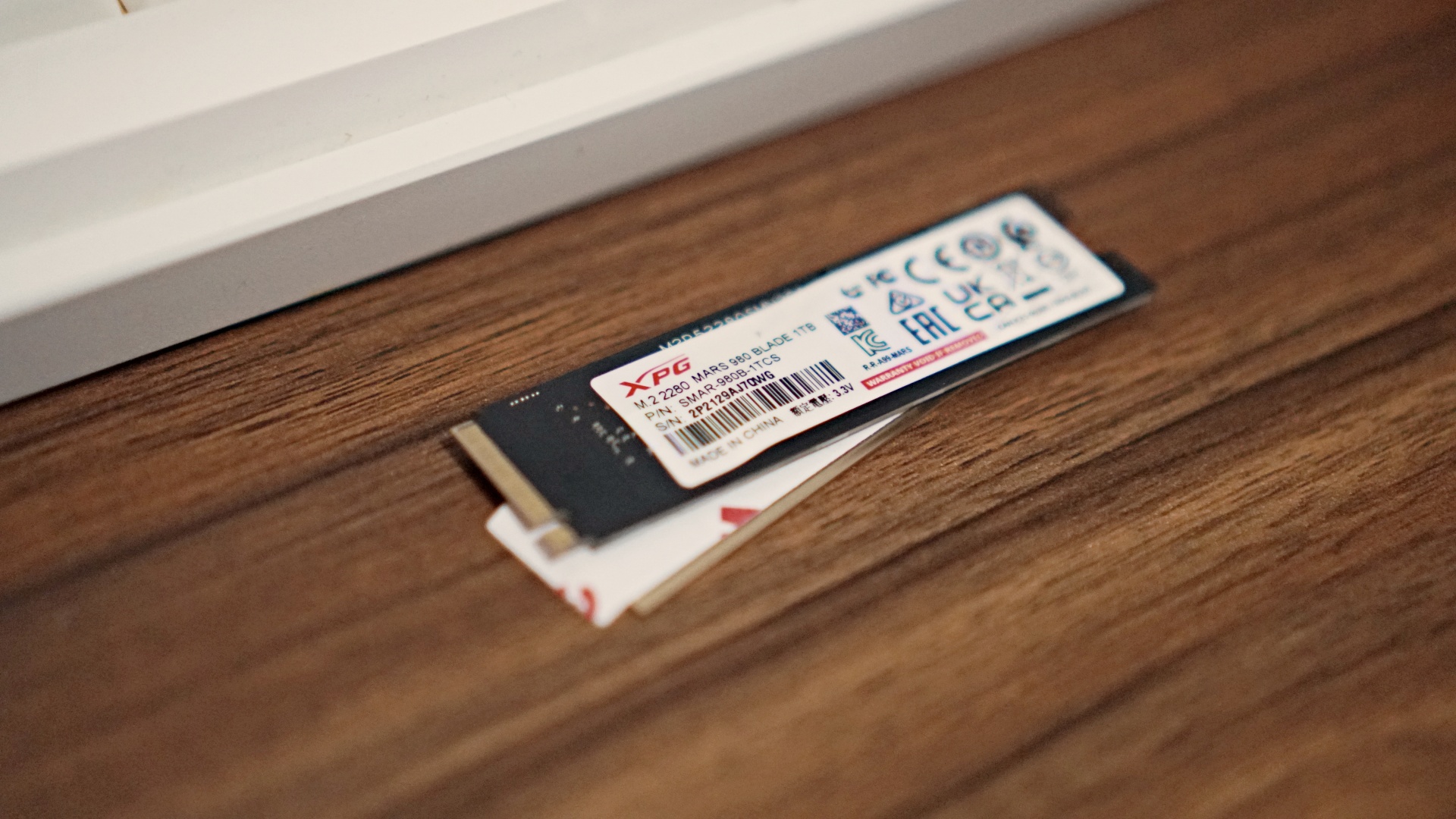
The XPG Mars 980 Blade isn’t trying to reinvent storage. Instead, it focuses on what matters: delivering fast, stable performance at a price that makes sense in 2025. Whether you’re upgrading your PS5 or adding more muscle to a handheld gaming PC, this drive holds its own.
It may not come with flashy extras or aggressive marketing claims, but it doesn’t need to. It performs exactly how you want it to — and at a price that doesn’t feel like a punch to the gut.
The XPG Mars 980 Blade is one of the best-value Gen4 SSDs for console and PC gamers who just want to play more — and worry less.
Buy the XPG Mars 980 Blade here.





Computers
CIPTA debuts AI GPU server, edge workstation at CloudFest 2026
Malaysia-made AI infrastructure
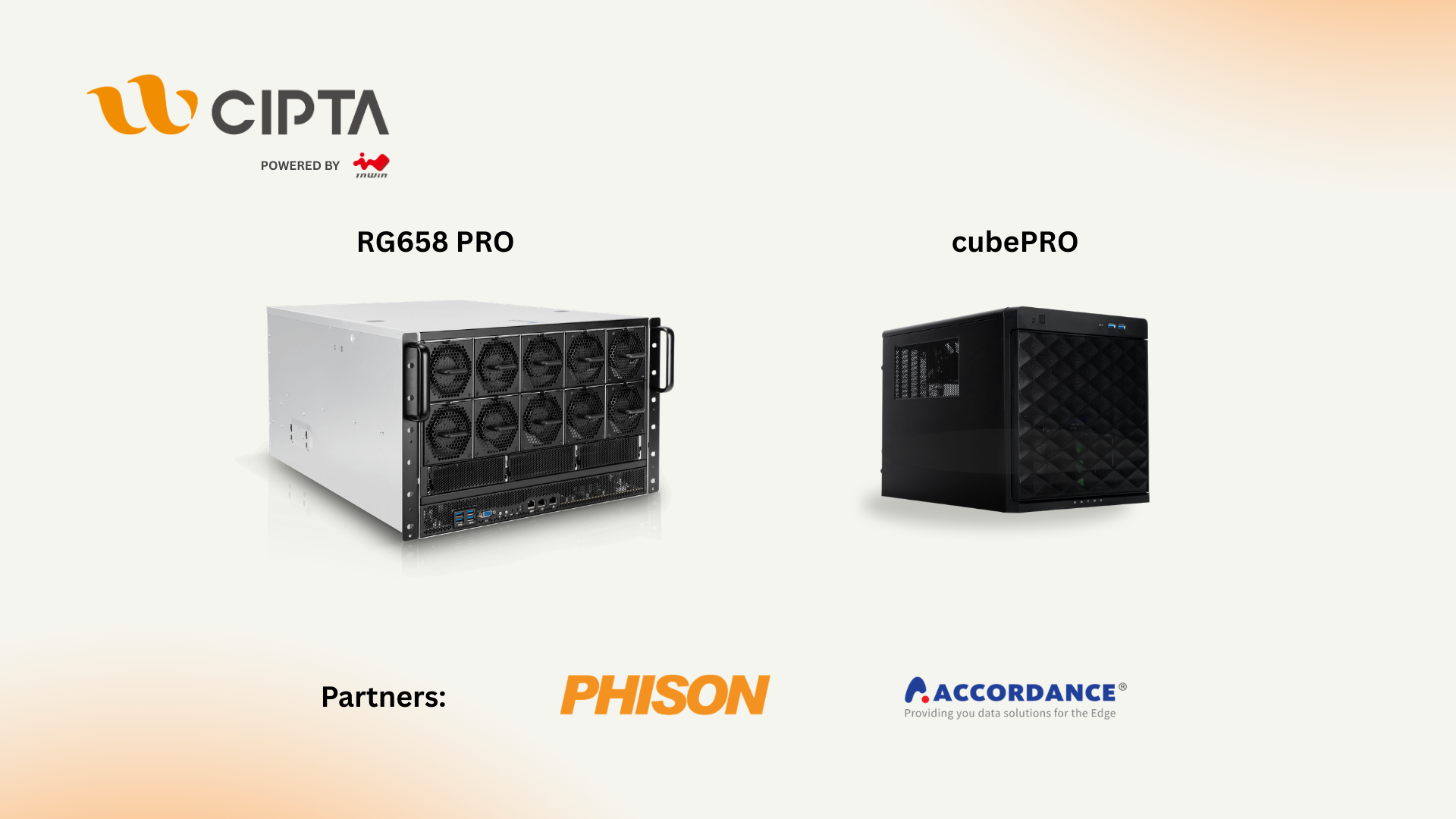
CIPTA Industrial Sdn Bhd steps onto the global stage with its European debut at CloudFest 2026. They introduced high-density AI infrastructure and edge-ready systems built for modern enterprise workloads.
Held at Europa-Park in Rust, Germany from March 23 to 26, the event marks the company’s first major international showcase under its own brand. Backed by InWin Development Inc., CIPTA positions itself as a new-generation EMS provider focused on AI, cloud, and enterprise systems.
At Booth R41, the company is highlighting two key platforms: the RG658 PRO GPU server developed with Phison, and the cubePRO edge workstation created in collaboration with Accordance.
Built for scalable AI workloads
Leading the showcase is the RG658 PRO, a high-density GPU server designed to handle large-scale AI training and inference without pushing costs out of reach for enterprises.
The system supports up to eight high-performance GPUs and integrates Phison’s Pascari aiDAPTIV alongside its PASCARI enterprise SSD lineup. This combination aims to improve data throughput, reduce latency, and streamline AI pipelines.
Thermal performance is a key focus. The RG658 PRO uses a dual-chamber design to separate heat zones, paired with up to 14 high-speed PWM fans for sustained cooling under heavy workloads. Power delivery is handled by a 3+1 redundant configuration of 80PLUS Titanium PSUs, scaling up to 9600W.
The result is a platform built to scale AI deployments on-site while maintaining efficiency and reliability.
Edge computing without downtime
Alongside its GPU server, CIPTA is introducing the cubePRO, a compact edge workstation designed for environments where uptime and data integrity are critical.
The system supports up to four PCIe slots for GPU configurations, making it suitable for AI workloads at the edge. It also features high-capacity multi-SSD setups and optimized airflow for continuous 24/7 operation.
Through its partnership with Accordance, the cubePRO integrates the Disk Array ARAID M500 solution, enabling high-availability storage and data protection. This ensures uninterrupted performance for use cases such as industrial systems, remote nodes, and enterprise branch deployments.
The focus here is clear: bring AI processing closer to where data is generated, without sacrificing reliability.
Strengthening Malaysia’s role in AI infrastructure
CIPTA’s debut also reflects a broader shift in global supply chains. Operating from Malaysia, the company offers end-to-end services—from concept to production—along with flexible manufacturing cycles and cost-efficient operations tailored for Southeast Asia and international markets.
With access to InWin’s server chassis ecosystem and infrastructure solutions, CIPTA combines global platform capabilities with localized integration. The goal is to help enterprises deploy AI and cloud infrastructure faster while diversifying their supply chain footprint.
As demand for AI systems continues to grow, CIPTA is positioning Malaysia as a key hub for scalable, production-ready infrastructure.
Visitors can find CIPTA at Booth R41 during CloudFest 2026 in Europa-Park, Rust, Germany.
Computers
AMD expands Ryzen AI Embedded P100 series lineup
Scalable, efficient AI compute for industrial, edge solutions
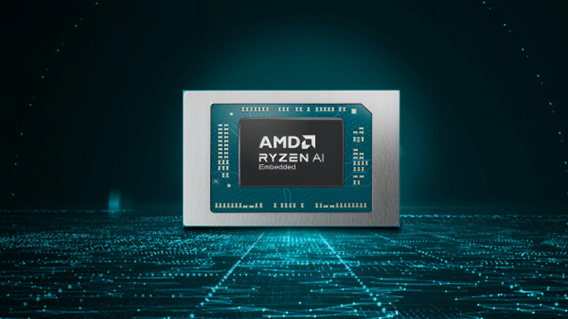
AMD has recently announced the expansion of its AMD Ryzen AI Embedded P100 Series processor lineup.
This enables scalable and power-efficient AI compute tailor-built for industrial and AI edge systems. Scenarios include factory automation, physical AI in mobile robotics, and other AI-driven edge applications.
With eight to 12 high-performance Zen 5 cores, AMD ROCm support, and up to 80 total system TOPS, the new x86 embedded APUs deliver up to:
- 2x more CPU core counts
- 8x higher GPU compute
- 36% higher system TOPS
This way, developers and system designers get an expanded and scalable portfolio of power-efficient edge computing solutions. These processors support real-time AI from vision to control and reasoning, as well as offer advanced graphics capabilities.
On a single chip, clients get up to 80 TOPS physical AI acceleration, AMD RDNA 3.5 graphics for real-time visualization, and an NPU based on the AMD XDNA 2 architecture.
Moreover, the processors can withstand industrial temperature ranges (-40° C to 105° C) and can support continuous 24/7 operations for up to 10-year life cycles. That’s along with low-latency and power-efficient AI inference.
Real-life applications include intelligent factories, autonomous robots, and medical imaging devices. For instance, the processors can deliver CPU performance required for real-time inspection and process optimization.
For mobile robots, meanwhile, processors can manage navigation, motion, control, and route planning while the GPU processes multi-camera feeds for spatial awareness.
Furthermore, for 3D health imaging, the processors can enable the powering of 3D imaging for ultrasounds, endoscopes, tissue classification, and tumor detection at the edge. This is done with models like U-Net, nnU-Net, and MONAI.
The processors then accelerate image-to-report workflows with MedSigLIP and support clinical reasoning and Q&A with Med-PaLM 2.

GIGABYTE and Capcom have collaborated for a limited time Resident Evil Requiem-inspired custom PC giveaway.
The setup is inspired by the title, which recently released, and includes an exclusive monitor game bundle to bring players closer to the experience.
Headlining the collaboration is the Umbrella Corporation — Level 3 Access custom rig giveaway. It is one of a kind, fully-built desktop featuring a Z890M AORUS ELITE WIFI7 ICE motherboard and RTX 5080 AERO OC SFF graphics.
Of course, it draws inspiration from the visual identity and atmosphere of Resident Evil Requiem. It also features a GIGABYTE C102 GLASS ICE chassis design and custom GIGABYTE MO27Q28G gaming monitor to complete the setup.

The giveaway runs from March 2 to March 31 via the official campaign website. Fans can enter for a chance to win the custom rig, with no purchase necessary. The only caveat is that they have to be a United States or Canada resident.
Such experience is designed to invite players and PC enthusiasts alike to engage with the collaboration while highlighting GIGABYTE’s premium hardware craftmanship and attention to detail.
In addition to the giveaway, GIGABYTE is also offering a Resident Evil Requiem game bundle with select gaming monitors. Included are AORUS brand monitors, ranging from 27 to 55 inches in size.
This bundle is available until March 31. Customers who purchase eligible models can redeem a digital game code through GIGABYTE’s official redemption platform.
The featured monitor is the MO27Q28G, which has fourth generation WOLED panel with 280Hz refresh rate and 0.03ms response time. It is an ideal monitor to experience the spine-chilling terror and death-defying action of the title.


Galaxy Buds4 Pro review: I thought I was done with in-ears
This Buds4 you


WWE 2K26 lets you live out all the fantasy matches you could want
But you have to play for hours and hours to unlock everyone.


The HONOR X8d is serviceable
Steady but slow?

More iPhone switchers this year than Android switchers, report says

Marvel’s Wonder Man greenlit for a rare second season

Apple’s WWDC 2026 will be from June 8 to 12
Galaxy Buds4 Pro review: I thought I was done with in-ears
WWE 2K26 lets you live out all the fantasy matches you could want


-

 Reviews1 week ago
POCO X8 Pro Max review: A new beast from the far east
-

 News1 week ago
POCO X8 Pro Series: Price, availability in the Philippines
-

 Laptops2 weeks ago
Apple MacBook Neo Review
-

 Apps2 weeks ago
Google Maps is finally getting a 3D mode
-

 Features2 weeks ago
Galaxy AI on the Samsung Galaxy S26 Ultra
-

 Entertainment2 weeks ago
The internet is thirsting over the One Piece Season 2 cast
-

 Automotive2 weeks ago
BYD is reportedly considering an F1 team
-

 Gaming2 weeks ago
Resident Evil Requiem will get a story expansion