
Enterprise
500 million Yahoo accounts were hacked: What we know so far


The fallout isn’t over.
As if going from dot-com darling to afterthought wasn’t unfortunate enough, Yahoo today confirmed data of at least 500 million user accounts were stolen from its network in 2014 in what many are describing as the “biggest cyber breach ever.”
The internet company said cyber thieves may have gotten off with personal information, such as names, email addresses, phone numbers, birthdates, security questions and answers, and encrypted passwords. Payment and bank account information, on the other hand, don’t appear to have been compromised.
Yahoo also confirmed the breach was carried out by a “state-sponsored actor” who are no longer in its network. As to whom it was referring to — your guess is as good as mine, though it wouldn’t be unreasonable to suspect hackers in China, North Korea, or Russia could be behind the theft, which is starting to sound like the plot of a Mr. Robot episode.
Yahoo says it is working closely with law enforcement and has started notifying “potentially affected users.” On its website, the company urged all its users to change their passwords and security questions and use its two-factor authentication tool to secure their accounts. We encourage you to do the same post-haste. And while you’re at it, change your Flickr and Tumblr passwords as well because Yahoo owns both services.
It remains unclear when Yahoo learned about the breach and why it has gone radio silent about it until now, but it may have something to do with its on-going merger with Verizon Communications, which has agreed to buy its internet business for $4.8 billion in cash.
Not being upfront about the attack is one thing, but millions of users opting out of Yahoo services altogether could have a drastic impact on Yahoo’s market valuation and may prompt Verizon to adjust its offer. In a statement, the U.S. carrier said it “will evaluate as the investigation continues.”
[irp posts=”3603″ name=”#TBT: RIP, Yahoo. You had a good run”]
Image credit: Insane Visions






AMD is prepared to lead the industry in its agentic AI era with their high-performance CPU strategy.
As the industry pivots from simple AI models to agentic AI systems that are capable of independent planning and decision-making, the CPU is reclaiming its role as the critical “head coach” of the data center.
This was noted by AMD CEO and Chair Dr. Lisa Su during the AMD Advancing AI event last year. The rise of autonomous agents has transformed inference into a complex and multi-step workflow that demands sophisticated logic and orchestration.
And while high-performance GPUs are necessary to generate insights in real time, the surrounding infrastructure is just as important.
This is where CPUs enter the picture. Their performance and efficiency are more important than ever in the overall performance of modern AI infrastructure.
And AMD delivers an advantage with their offerings. In recently published data, a 5th Gen AMD EPYC CPU-based system is estimated to perform up to 2.1x better per core against an NVIDIA Grace Superchip-based system.
The same system AMD-based system also delivers up to 2.26x uplift on SPECpower, measuring operations per watt.
The x86 CPU architecture gives customers the advantage of a broad, proven software ecosystem that can run existing workloads natively.
This avoids the costly refactoring and code-base duplication often required when switching to Arm-based alternatives.
Looking ahead, AMD is doubling down on the balanced system philosophy. Future architectures such as the “Venice” CPUs will power the “Helios” rack-scale AI design.
By integrating EPYC CPUs with Instinct GPUs and the ROCm software stack, AMD aims to maximize cluster-level performance and lower the total cost of ownership in the agentic era.
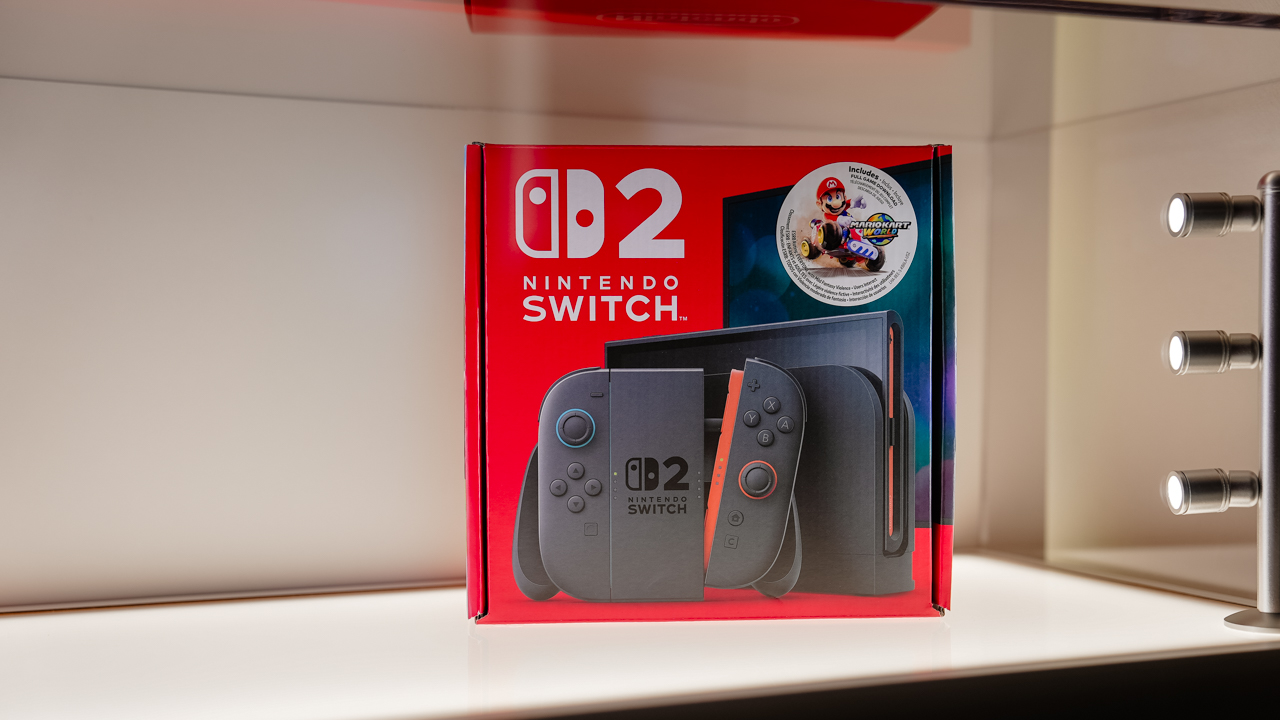
What happens when an unstoppable force meets an immovable object? After a year of wrestling through tariffs from the current American administration, Nintendo has decided to sue the United States.
Last year, the Trump administration was trigger-happy with implement tariffs on countries everywhere. Though the controversy mostly circulated around geopolitics, major corporations also found themselves on the receiving end of Trump’s ire. All over the world, the tariffs sparked product delays and price hikes.
Nintendo is no exception. As a result of the fiasco, the company had to delay the launch of the Switch 2, in anticipation of disruptions caused by the tariffs. First reported by Aftermath, the Japanese gaming giant is now going after the American government over refunds associated with the tariffs.
Now, the tariffs aren’t a big issue anymore. Notably, the Supreme Court scratched off the White House’s implementations that the former found illegal. While a big sigh of relief for future business, corporations like Nintendo have already paid duties and deposits in the past. As a result, Nintendo is now looking for recompense for what they paid before.
Nintendo isn’t the first company to seek restitution over the illegal tariffs. Others, including FedEx and Revlon, are also asking for refunds. However, the Japanese giant is certainly one of the biggest names to cross the government’s path. After all, the company is notoriously litigious over anything it considers as an affront to its business, including small streamers using Pokémon on their broadcasts.
With all its global resources, Nintendo likely won’t just give up without a fight.
SEE ALSO: The Nintendo Switch is now Nintendo’s best-selling console ever
Enterprise
Paramount wins bid for HBO Max, plans to merge streaming apps
It’s all part of the deal to acquire the Warner Bros. library.


Last year ended with the bombshell announcement that Netflix might buy the entire Warner Bros. library. However, after some finagling and a rocky start, Paramount has now emerged as the main suitor for the lucrative library.
At the end of last year, it seemed all but confirmed that the gigantic Warner Bros. library was coming to Netflix as part of a huge buyout deal. This became even clearer when Warner Bros. Discovery rejected Paramount’s initial bid to counter Netflix. However, Paramount recently revised its offer to an astounding US$ 110 billion, or US$ 31 per share, which Warner Bros. Discovery signed off on. Netflix passed on the opportunity for a counteroffer, making Paramount the sole bidder.
Today, Paramount has announced that, if the deal pushes through, they will merge Paramount+ and HBO Max into one streaming service. This means that Paramount’s CBS, Comedy Central, and MTV will be under the same roof as DC, Game of Thrones, Harry Potter, and Mission: Impossible.
The value of the above names alone makes this into one of the most lucrative deals for Paramount. However, it’s not without its drawbacks. The combined entity will reportedly carry US$ 79 billion in net debt for both purchasing Warner Bros. and refinancing the newly purchased property.
Currently, the deal is expected to go through regulatory approval ending in the second half of 2026.





Now Playing: Hoppers

Jackery SolarSaga series: Free power for small devices

UGREEN adds new Nexode Pro power bank, charger to lineup

nubia to launch new Neo 5 series gaming phones on March 28

SHINOBI: Art of Vengeance’s SEGA Villains Stage out on April 3


-

 Reviews5 days ago
POCO X8 Pro Max review: A new beast from the far east
-

 News5 days ago
POCO X8 Pro Series: Price, availability in the Philippines
-

 Laptops2 weeks ago
Apple MacBook Neo Review
-

 Computers2 weeks ago
GIGABYTE collaborates with Capcom for RE Requiem custom PC
-

 Apps1 week ago
Google Maps is finally getting a 3D mode
-

 Entertainment2 weeks ago
The internet is thirsting over the One Piece Season 2 cast
-

 Features1 week ago
Galaxy AI on the Samsung Galaxy S26 Ultra
-

 Automotive2 weeks ago
BYD is reportedly considering an F1 team