
Finance
GameStop stock: Making sense of the madness
What’s happening and why



Late last week, Reddit woke up to a strange but oddly foreboding revolution: a call to buy stock from ailing video game store GameStop. The trend’s seeds, an explosive thread from the oft underrepresented but equally as chaotic subreddit r/WallStreetBets, spoke of the stock’s inherent strength after a period of stagnation borne from the pandemic. Naturally, no one believed the seemingly meme-worthy claim.
Now, a week later, GameStop is one of the most profitable stocks on Wall Street, to everyone’s surprise. If you weren’t on Reddit when everything went haywire, you’re likely wondering what happened. Why is GameStop trending? Should you buy GameStop stock now? It’s not as simple as 1-2-3.
The tech players
On the tech side of things, the biggest two factors are, obviously, Reddit and, less obviously, micro-investing apps.
Last year, a heavy r/WallStreetBets user, u/DeepFuckingValue, heavily speculated on GameStop’s eventual success. The Redditor poured in US$ 50,000 for shares in GME. In investing as much into the seemingly dying stock, they, along with others who followed in their path, hoped to cause a short squeeze on all those who bet options on its failure.
This is where micro-investing apps come in. r/WallStreetBets is not a community for investment firms or professionals. Most of the community are middle-class Americans, trying to find the next big pick for a quick buck. That said, the requirements of more robust investing firms are often too steep for the average American. Like Robinhood and Webull, micro-investing apps allow users to purchase stocks without a minimum required and easily from their phone.
With an easy-to-use app, r/WallStreetBets raised an army of GME buyers, which rapidly skyrocketed the stock’s price. The stock was up 6000 percent since its low point last summer. While Reddit gained traction as the trend went along, other investors saw the trend and bought into it without even knowing about Reddit’s involvement until it was too late.
So how did a Reddit community take down a hedge fund?
To understand how the Redditors managed to take on hedge funds with billions of assets under management, we need to understand the meaning of a “short.” A short is when a trader borrows stock from a broker and immediately sells it at the current price. The brokers, in this case, are micro-investing apps like Robinhood.
On an ordinary day, if you buy Stock A for US$ 10 and sell it for US$ 12, your realized profit is said to be US$ 2. This is the fundamental concept on which every business runs. On the other hand, a short-seller places a bet that the stock price will fall so that they can purchase the stock back at a lower price and return it to the broker. In this case, they profit from the difference between the original price at which the stock was sold and the price at which it was repurchased.
In simpler terms, if the trader borrowed the stock for US$ 12 and repurchased it at US$ 10, the realized profit is said to be US$ 2. But the risk involved is equally the same. If the stock price does not decrease like the trader had expected and rises to US$ 14, the trader ends up taking a loss of US$ 2 because they have borrowed the stock from the broker and need to pay for it.
In GME, Melvin Capital, a hedge fund based out of New York, had bets against the stock by short-selling its shares. Members of r/WallStreetBets decided to start accumulating GME so that the price climbs and inflicts a loss on Melvin’s short. The move is called a “short squeeze” and took the stock’s value from US$ 17 (at the beginning of 2021) to US$ 150 when trading closed on January 26.
Seeing GME climb unrealistic valuations, it soon caught the attention of pretty much every trader or investor in the US. What started as a micro-managed movement against a hedge fund became a widespread revolt against the bears. In the end, Melvin was forced to close its position on GME and had to take external support from its backers Citadel and Point72, who pumped US$ 3 billion in the fund to keep it alive.
A micro class war
Unsurprisingly, bigger investors hated GME’s sudden uptrend. The success went against everything their system stood for. In fact, a lot of them called for an official investigation against Reddit for market manipulation. The calls, however, haven’t materialized into any solid repercussions at the time of this writing.
And why would they? As liberal politician Alexandra Ocasio-Cortez (AOC) put it, “it’s really something to see Wall Streeters with a long history of treating our economy as a casino complain about a message board of posters also treating the market as a casino.” Reddit was merely playing the same game as Wall Street.
Out of political options, Wall Street then went after Reddit’s trade tools, the same micro-investing apps that touted a democratized stock market for the middle class. As of Thursday, Robinhood and its contemporaries have stopped or limited buying any more Reddit-implicated stocks. Investors can only sell, but no one is budging. Soon after the announcement, AOC (and surprisingly, Republican Ted Cruz) is pushing for a formal investigation against Robinhood for market manipulation, the same accusation levied against Reddit.
And so, the meme-worthy investing boom turned into a micro class war between the tough-as-nails, nothing-to-lose Redditors versus long-standing, ultra-rich investors. Echoing the remnants of the Occupy Wall Street movement from years past, both parties are now locked in a tense game of chicken to see who blinks first.
To Wall Street’s dismay, the investors of Reddit have almost nothing to lose and absolutely everything to gain. Most have already inured themselves to heavy losses on the stock market. If Wall Street wants to complete, they will be forced to expose their system’s double standards against the average investor.
The repercussions of the war
For most, it’s revenge. The whole point of the short squeeze was to make brokers and funds lose money. We are a crucial junction in time where we’re seeing the norms of capitalism getting challenged. The rich have always jokingly said that the stock market is open for all and that anyone can be rich by leveraging it.
Well, a few folks took it quite seriously and decided to unleash the market’s true potential. Turning the tables in one’s favor. It isn’t just GameStop. Reddit users have started encouraging people to buy shares in Blackberry and AMC theaters.
This is a truly modern, digital, and anonymous vigilantism. People are fed up with the 1 percent and are hitting back in whichever way possible. However, the GME saga has clearly shown us the prime drawbacks of the system. In response to the stock’s unrealistic climb, Robinhood would restrict trading for GameStop and others, effectively preventing investors from purchasing more shares of the stocks. For an app that’s focused on democratizing finance for all, this isn’t a confidence-building measure.
According to Financial Times, US$ 39 million of Robinhood’s revenues come from equities, and options order flow comes from Citadel Securities, a part of Citadel. And it repressed a whopping 35 percent of Robinhood’s revenues. Can two financial institutions rub each other’s backs while smaller clients (retail investors) are left to fend for their own?
Many experts have pointed out that the future of the stock markets will be in everyone’s hands and not just institutions. Even though individuals were always allowed to use the exchanges, they never had any considerable central power against larger funds.
In a nutshell, Reddit has forced the world to reconsider our fundamental financial systems and how they’re played by a few too powerful players. The White House and the SEC are both monitoring the situation with GameStop and the larger stock market.






GCash is future-proofing micro, small, and medium enterprises (MSMEs) with new customer-first payment innovations. This, as the Philippines continues to become a digital payments nation.
The app expanded its suite of solutions to make digital payments more accessible, convenient, and secure for merchants.
Rather than a one-size-fits-all solution, GCash has payment devices designed for different business sizes and ways of operating.
One is the GCash EasyPOS, an all-in-one terminal for medium and even large enterprises. This accepts QRPh, Visa, and Mastercard payments and also supports features like digital receipts, refunds, settlements, and transaction monitoring.
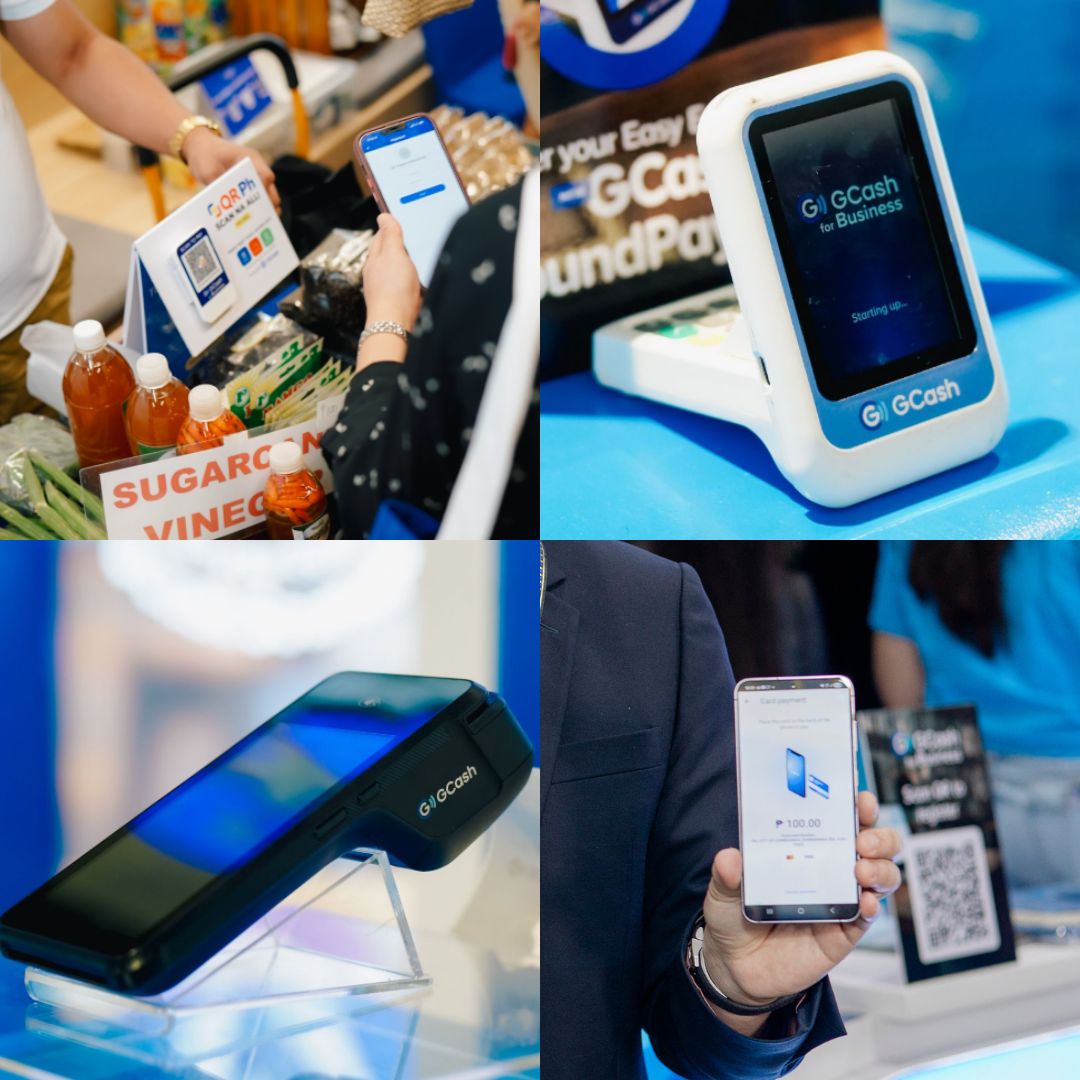
Meanwhile, GCash SoundPay Plus is designed for micro and small merchants, specially in the retail and F&B sectors. It combines QR payments, card acceptance, and instant voice confirmation so merchants can immediately check when a payment pushes through.
The rollout of these two solutions builds on earlier solutions GCash introduced, including PocketPay and SoundPay.
PocketPay is designed for MSMEs, bazaar or pop-up merchants, and mobile sellers who take their products and services wherever their customers are.
It turns an NFC-enabled Android smartphone into a contactless card terminal. This makes payments easy and affordable — without investing in additional hardware.
SoundPay, meanwhile, is a portable QR payment device that provides instant voice confirmation for every transaction.
According to Bangko Sentral ng Pilipinas (BSP), 57.4% of retail payment transactions by volume were made digitally in 2024.
The central bank is targeting a digital payment share of 60% to 70% by 2028, with businesses increasingly expected to support cashless transactions.
Finance
GoTyme Bank grows to 10 million users in the Philippines
Over US$ 859.4 million in customer deposits
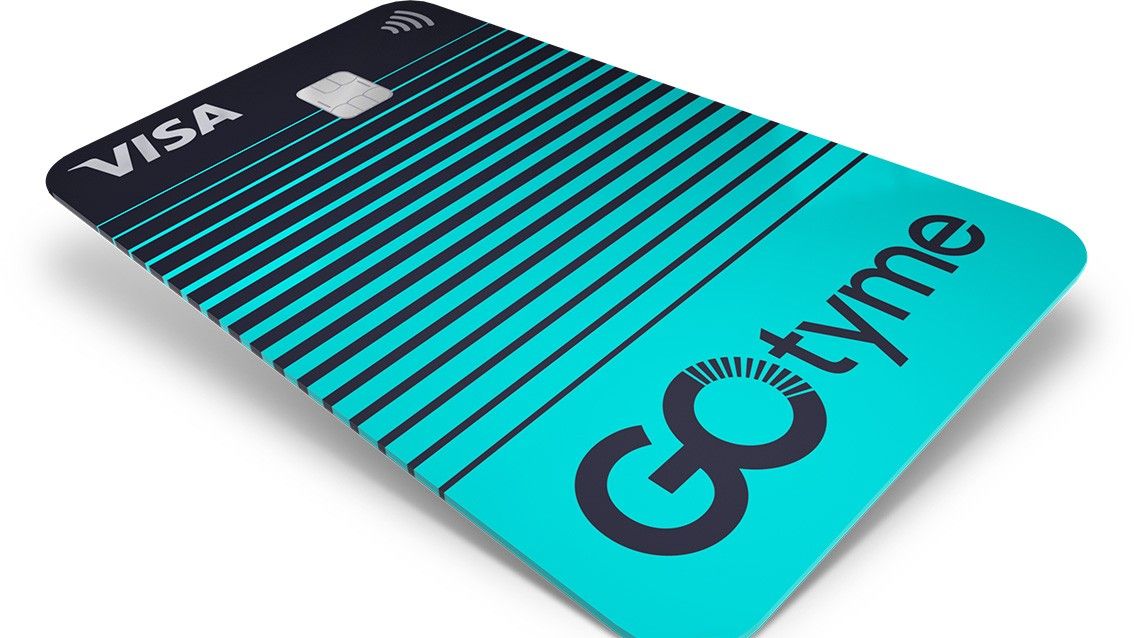
GoTyme Bank has reached the 10 million-user milestone in the Philippines, one of its key markets.
A joint venture between the parent Tyme Group and the the local Gokongwei Group, the digital bank has officially grown to 10 million strong, its latest accomplishment after debuting in the country three years ago.
The milestone is backed by over PhP 53 billion (~859.4 million) in customer deposits and sustained engagement across the GoTyme Bank ecosystem.
A core driver of the bank’s rapid growth is its integration into users’ daily financial habits. GoTyme was the Most Used Visa Debit Card in the Philippines, based on Visa debit active usage data in 2025.
The bank has also offered free InstaPay transfers from the start (capped at 20 transactions a month) for greater flexibility. There are also more than 160 billers on the app.
Complementing the digital-first infrastructure is an extensive physical network. There are now more than 600 kiosks in major malls nationwide.
Customers can also conveniently deposit and withdraw cash through more than 2,500 Robinsons Retail store lanes. Cash deposit is also allowed through more than 4,500 7-Eleven stores nationwide.
Among GoTyme’s recent offerings is MoreTyme, a flexible, transparent, and easy-to-understand credit solution.
Through Visa, GoTyme also took part in FIFA World Cup 2026 campaigns, with raffle winners being flown to watch the matches live.
Finance
UnionDigital Bank, Chubb partner for accessible insurance protection
Chubb insurance products now integrated into UD app
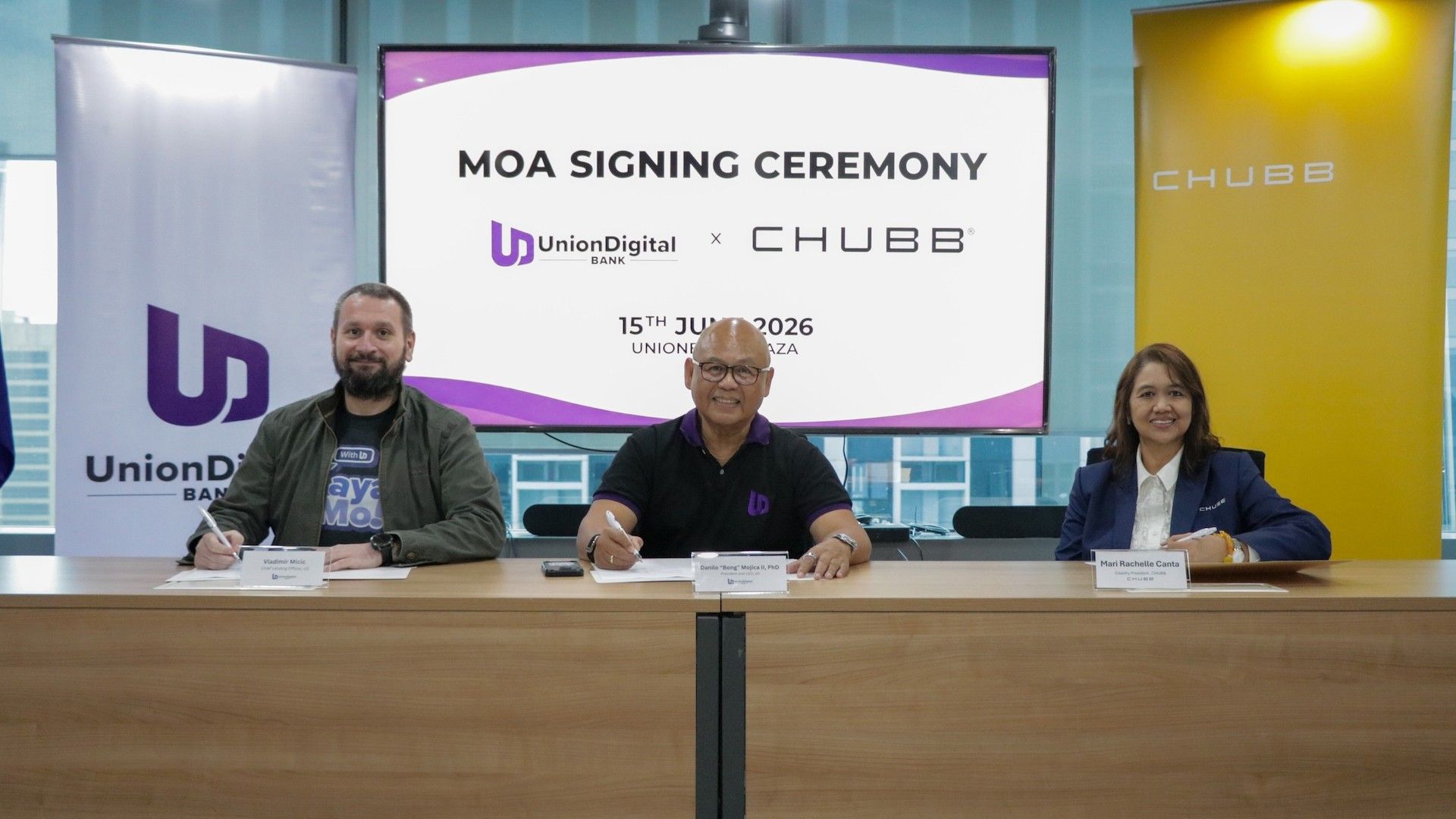
UnionDigital Bank and Chubb Philippines have partnered to bring accessible insurance protection to Filipinos.
The strategic partnership integrates Chubb’s insurance solutions directly on the UD app. These comprehensive solutions will be seen among UD’s suite of financial products. That way, insurance protection becomes more accessible for consumers.
The two key insurance products in the initial rollout are Loan Protect Insurance and Kaya Protect Insurance.
The first product is automatically included for eligible UD loan borrowers at no additional cost for the first three months once the loan is approved.
In the event of accidental death, permanent disability, temporary disability, or death due to illness, Loan Protect Insurance pays up to the original loan amount to cover 100% of the customer’s outstanding loan balance.
Any remaining balance is released to beneficiaries. Loan Protect Insurance is currently available for loans up to PhP 30,000 with short-term repayment periods.
Meanwhile, Kaya Protect Insurance will be available soon. This provides personal accident and accidental death coverage up to PhP 150,000 and is activated automatically by maintaining a low minimum balance of PhP 100 in the insured’s savings account.
The partnership between UnionDigital Bank and Chubb aims to address the protection gap, as according to a Bangko Sentral ng Pilipinas (BSP) survey, 48% of adult Filipinos are currently uninsured.

realme C100: Enduring and durable in spite of entry-level realities
Enough power but needs more agility
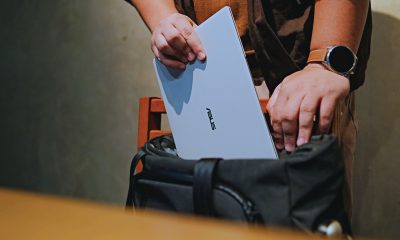

The ASUS ExpertBook Ultra wins you over
The laptop sneaks up on you
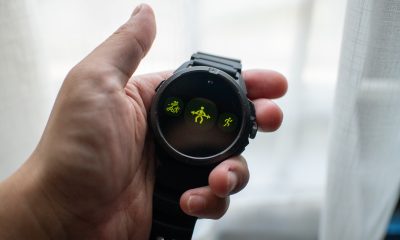

Nexal Watch Sport review: A rugged watch for small budgets
I couldn't believe that watches this good could come for this cheap.

The iPhone 18 might sell out for an unexpected reason

These “smart” glasses just sold out in under a week

New Yorkers compete in Ted Lasso lookalike contest at Apple Fifth Avenue

nubia expands gaming lineup with Neo 5 Max, Neo 5 GT Special Edition

Sony launches FE 100-400mm F5.6-8 OSS telephoto zoom lens

New York becomes first state to ban smart glasses

Sony launches IER-M500 in-ear monitors

Microsoft dictates that a new Fallout game is coming

HoYo FEST 2026 details announced; tickets on sale from July 16
realme C100: Enduring and durable in spite of entry-level realities


-
 Automotive4 days ago
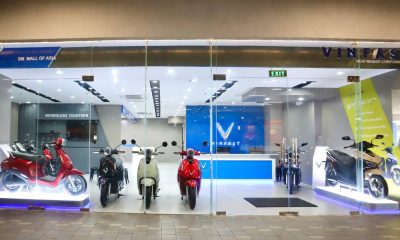
VinFast debuts two-wheeler models, opens 21 e-motorcycle showrooms
-
 Computers1 week ago
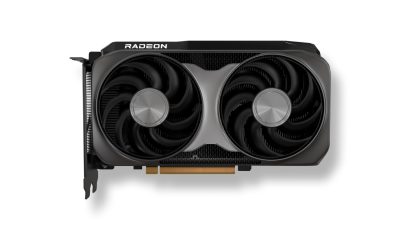
AMD launches Radeon RX 9050 graphics card
-
 Computers2 weeks ago
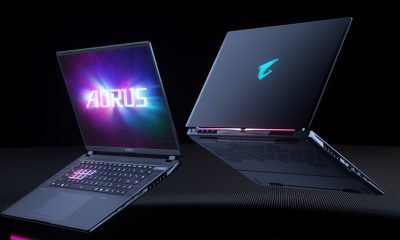
AORUS MASTER 16 Gen 2 2026 AI gaming laptop launches
-

 Gaming2 weeks ago
God of War Laufey finally confirms its highly anticipated launch date
-

 Automotive6 days ago
Xiaomi debuts SkyNomad Series featuring new Kunlun platform
-

 News2 days ago
OnePlus officially leaves the United States and Canada
-

 Gaming1 week ago
NBA 2K27 gameplay trailer showcases new dunk mechanics, Rucker Park, and more
-

 Gaming5 days ago
Call of Duty: Modern Warfare 4 clip shows Losing Ground 1st look