
Uncategorized
OPPO Find N2 is Best Smartphone at Asia Mobile Awards
Outstanding performance


The OPPO Find N2 bagged the prestigious “Best Smartphone in Asia” accolade at the 2023 Asia Mobile Awards in MWC Shanghai.
The brand’s flagship foldable was recognized mainly for its outstanding performance and innovative user experience. It bested the HONOR Magic 5 Pro, which was cited as “Highly Commended.”
As OPPO’s second-generation flagship foldable, the Find N2 has a Flexion Hinge, and an industry-first aerospace-grade carbon fiber screen support frame.
Both the lightweight device’s foldable and cover screens are AMOLED 120Hz displays, with the 7.1-inch unfolded one having HDR10+ support and a peak brightness of 1,200 nits.
The Find N2 winning the award is pretty much merited; in Q1 2023, the phone had the highest market share among foldables in China at 35.0%, according to data from IDC.
The distinction is also the latest add-on to OPPO’s impressive résumé, having been named to the 10 most Innovative Asia-Pacific Companies and having won 15 awards at the iF International Forum Design.





Insomniac Games has shared more details about Marvel’s Wolverine, highlighting Logan’s combat abilities, progression systems, exploration features, customization options, and accessibility settings.
The developer shared the details alongside a new Features Trailer ahead of the game’s September 15 release on PlayStation 5.
Wolverine fights with momentum
Marvel’s Wolverine puts aggressive combat at the center of its gameplay.
Logan can attack enemies with his claws, kicks, barrages, and critical strikes. Players can also unlock Techniques to enhance his combat moves.
Special Techniques add more options during fights. Players can equip up to four at a time, including moves such as Tornado Spin, Knee Breaker, and Spiral Strike.
Logan can further customize his combat style through Adaptations. These can improve his ability to absorb bullets, increase the effectiveness of Rage, expand parry windows, and provide other combat advantages.
His Rage system has three tiers. It focuses on survivability, resilience, and fury. Players can use it to survive dangerous encounters or unleash more brutal attacks.
Logan travels around the world
The game features an original story that takes Logan across different locations.
He and Jean Grey will work alongside members of Team X to stop Bolivar Trask and his plans against mutantkind. Logan will also face enemies such as Omega Red and Deathstrike.
Exploration will offer activities outside the main story. Players can discover Nightmare Doors with combat and traversal challenges. They can also find whisky bottles that reveal more about Logan’s forgotten memories.
Material crates can unlock suits inspired by Wolverine’s appearances across comics, movies, and animation.
Suits and claws add customization
Players can unlock a variety of Wolverine suits, including versions inspired by Weapon X, Old Man Logan, Ultimate Wolverine, and Patch.
The game also features more casual looks, including a tank top and leather jacket. Players can toggle some cowls and hats on or off.
Different claw designs are also available. These include bone, notched, curved, reflective, and angled claws.
The game will also feature Logan’s Nightmare Cabin. It includes New Game Plus with exclusive Techniques and level caps, Mission Replay, Nightmare Challenges, and Photo Mode. Photo Mode will be available through a day-one update.
More accessibility options included
Insomniac says Marvel’s Wolverine will include more than 100 new, returning, and improved accessibility features.
These include High Contrast visuals, English audio description, Global Game Speed, and Strong Haptic Signals.
The game also gives players more control over its violence and adult language. Separate options can alter dynamic blood and dismemberment, while language filters can limit adult language in English.
Marvel’s Wolverine launches on PlayStation 5 on September 15, 2026.
News
HUAWEI Pura X Max overtakes the iPhone Fold as 2026’s first wide foldable
Also goes ahead of Samsung’s upcoming Galaxy Z Wide Fold

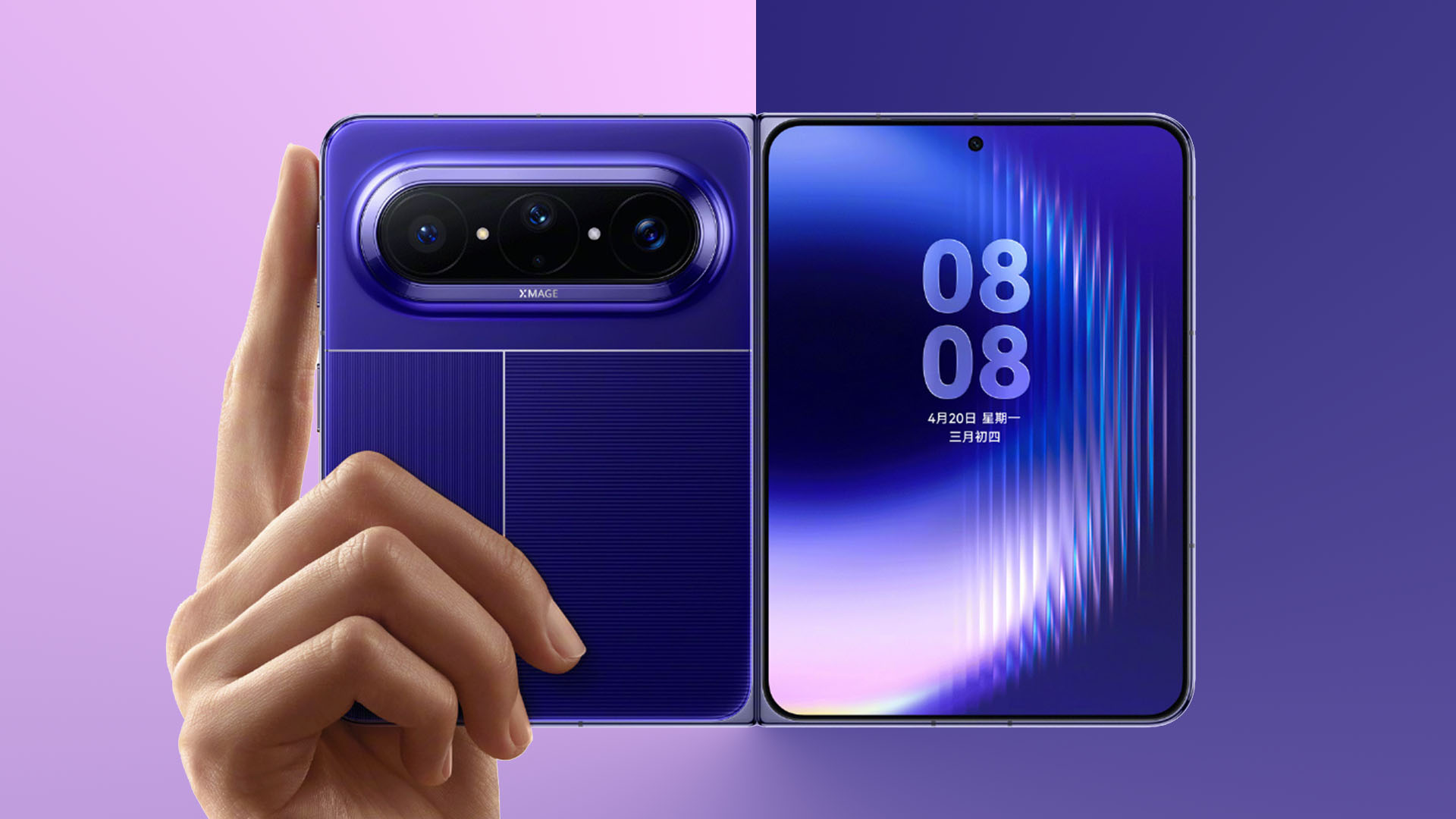
Months ahead of the much-awaited foldable from Apple, HUAWEI has decided to get in the way of the Cupertino-based company by announcing the world’s first wide foldable.
The HUAWEI Pura X Max is the earliest and biggest clapback to Apple’s upcoming iPhone Fold and Samsung’s rumored “Galaxy Z Wide Fold.”
World’s first wide foldable
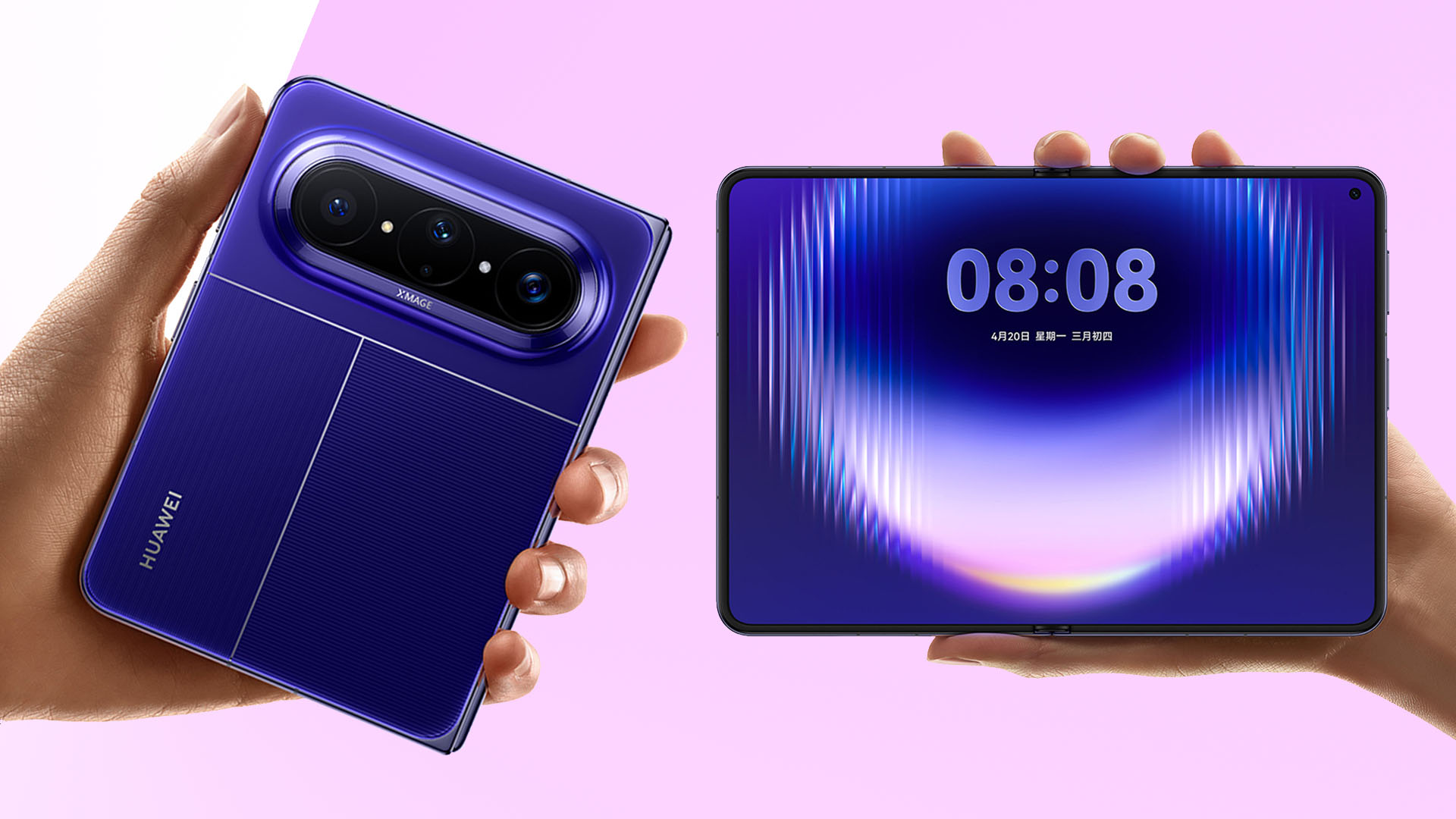
HUAWEI’s Pura X Max isn’t a direct successor to last year’s Pura X.
Graphics by Vincenz Lee | GadgetMatch
Last year’s offering only had a measly 3.5-inch cover screen. This time, it has a full 5.4-inch wide display outside. Unfolding it reveals a 7.7-inch foldable display instead of Pura X’s smartphone-like 6.3 incher.
Both are LTPO 2.0 OLED displays with an adaptive 1~120Hz refresh rate. They are not compromised with support for 1.07 Billion Colors as well as DCI-P3 Wide Color Gamut.

This new form factor solves the biggest issue seen among standard foldables — especially when consuming content or playing games.
Graphics by Vincenz Lee | GadgetMatch
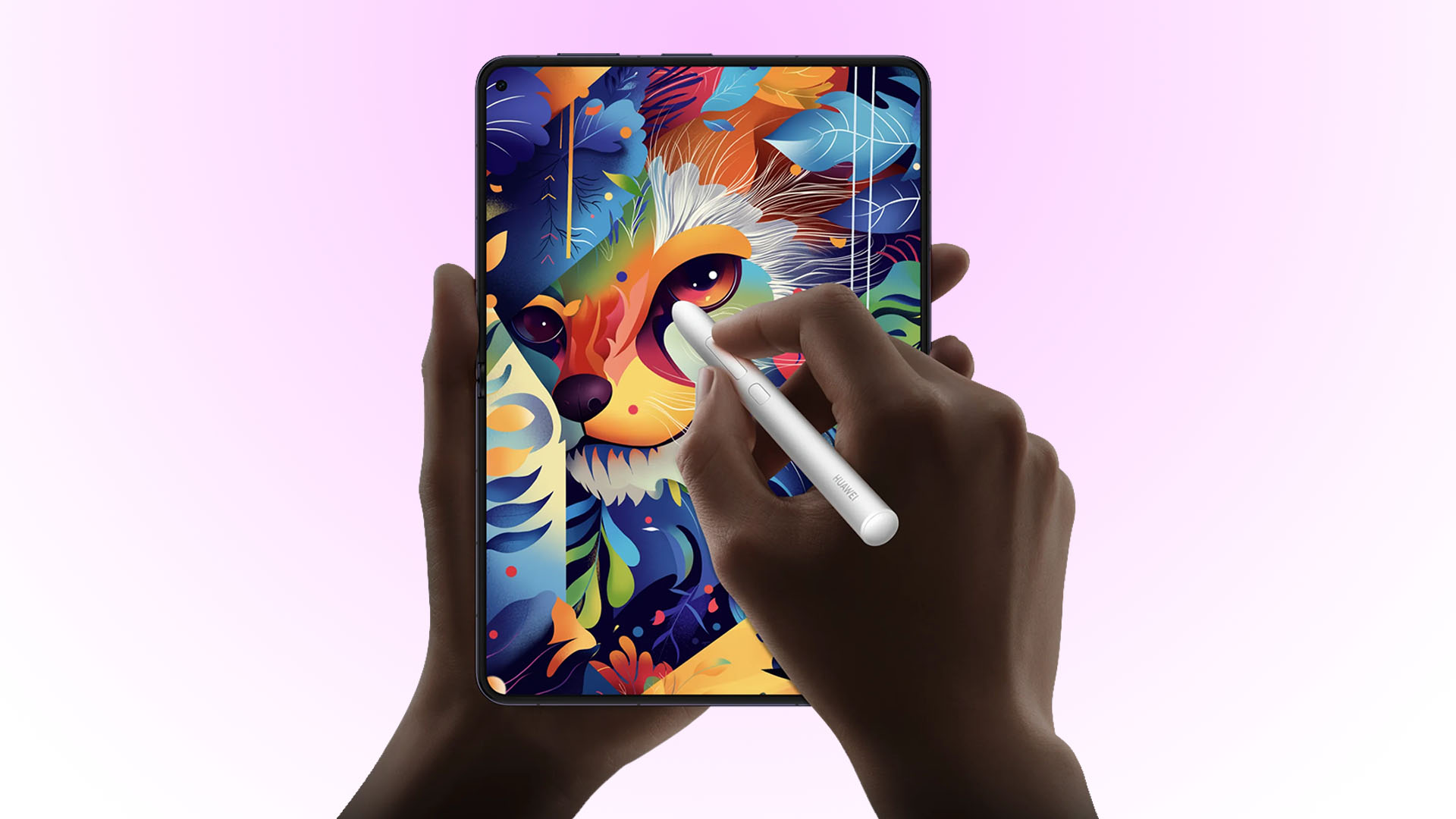
Stylus support is also expected with HUAWEI’s M-Pen 3 Mini stylus — best for jotting down, scribbling, doodling, drawing, or even just for navigation.
Supporting this foldable screen is HUAWEI’s so-called “basalt water droplet hinge” with core components made of steel.
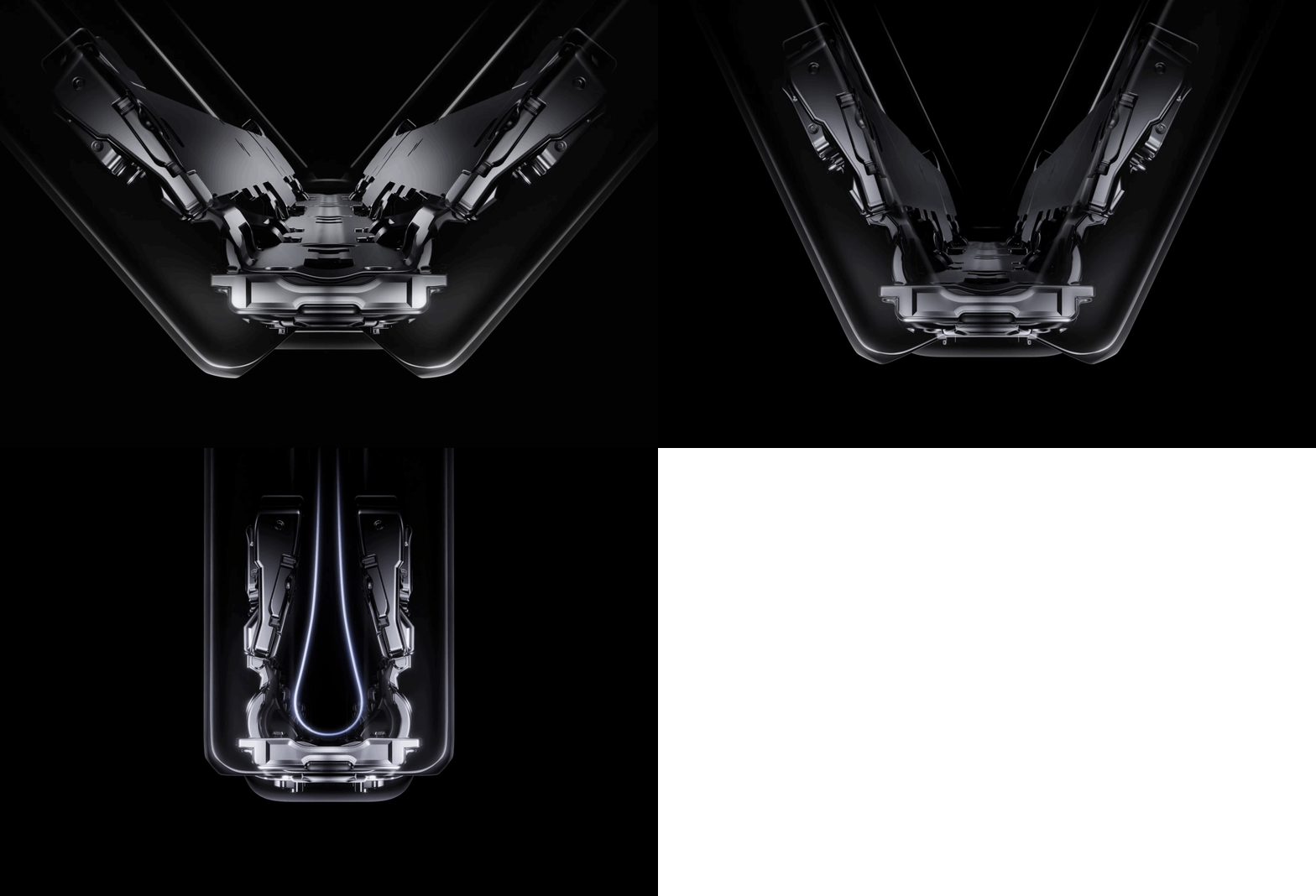
GIF by Vincenz Lee | GadgetMatch
As for the cover glass, it uses second gen Kunlun glass. And while we’re already at it, the Pura X Max supports IP58 and IP59 ratings for durability.
Maxed out fold
What runs this wide foldable is HUAWEI’s very own Kirin 9030 Pro chipset. The super brand promises up to 30% performance improvements.
Gaming should not be compromised thanks to its extra large VC Graphene Heat Dissipation System. Battery capacity is rated at 5300mAh with 66W wired and 50W wireless SuperCharge speeds.
GIF by Vincenz Lee | GadgetMatch
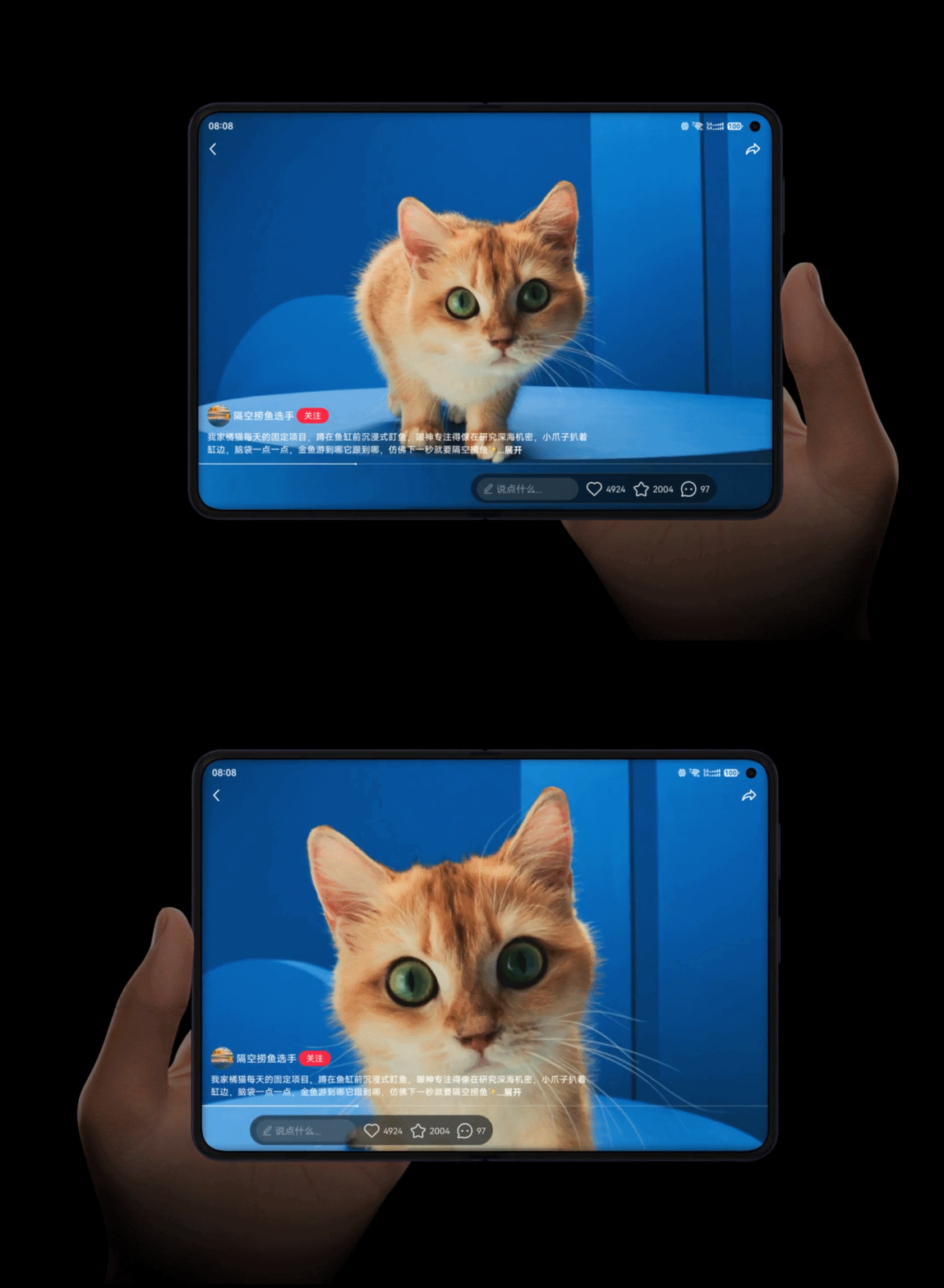
HUAWEI’s latest HarmonyOS 6.1 not only brings in that translucent trend, they have also adapted to the user’s needs through Immersion Layout.
When used, the app’s controls automatically adjusts if you are left- or right-handed — no matter how you hold them.

Much like most smartphones, HarmonyOS also relies on its AI tools to make things easier.
Last but definitely not the least, it’s camera system.

The HUAWEI Pura X Max boasts a 50MP main (wide) camera with a variable aperture of f/1.4 ~ f.4.0 — much like last year’s Pura 80 Ultra and the latest Pura 90 Pro Max.
It also has another 50MP f/2.2 3.5x periscope telephoto camera that can also take optical-quality 7x shots and as far as 100x digital zoom.
Lastly, the ultra-wide camera is capped at 12.5MP with an aperture of f/2.2. All these cameras are based from HUAWEI’s RYYB image sensor.

Graphics by Vincenz Lee | GadgetMatch
Additionally, there’s a spectral sensor called “Red Maple camera” in its second iteration.
Selfie cameras inside and out are 8MP f/2.4.
Pricing and Availability
HUAWEI’s Pura X Max will be available in five colorways: Olive Gold, Phantom Night Black, Starblue, Vibrant Orange, and Zero Degree White.
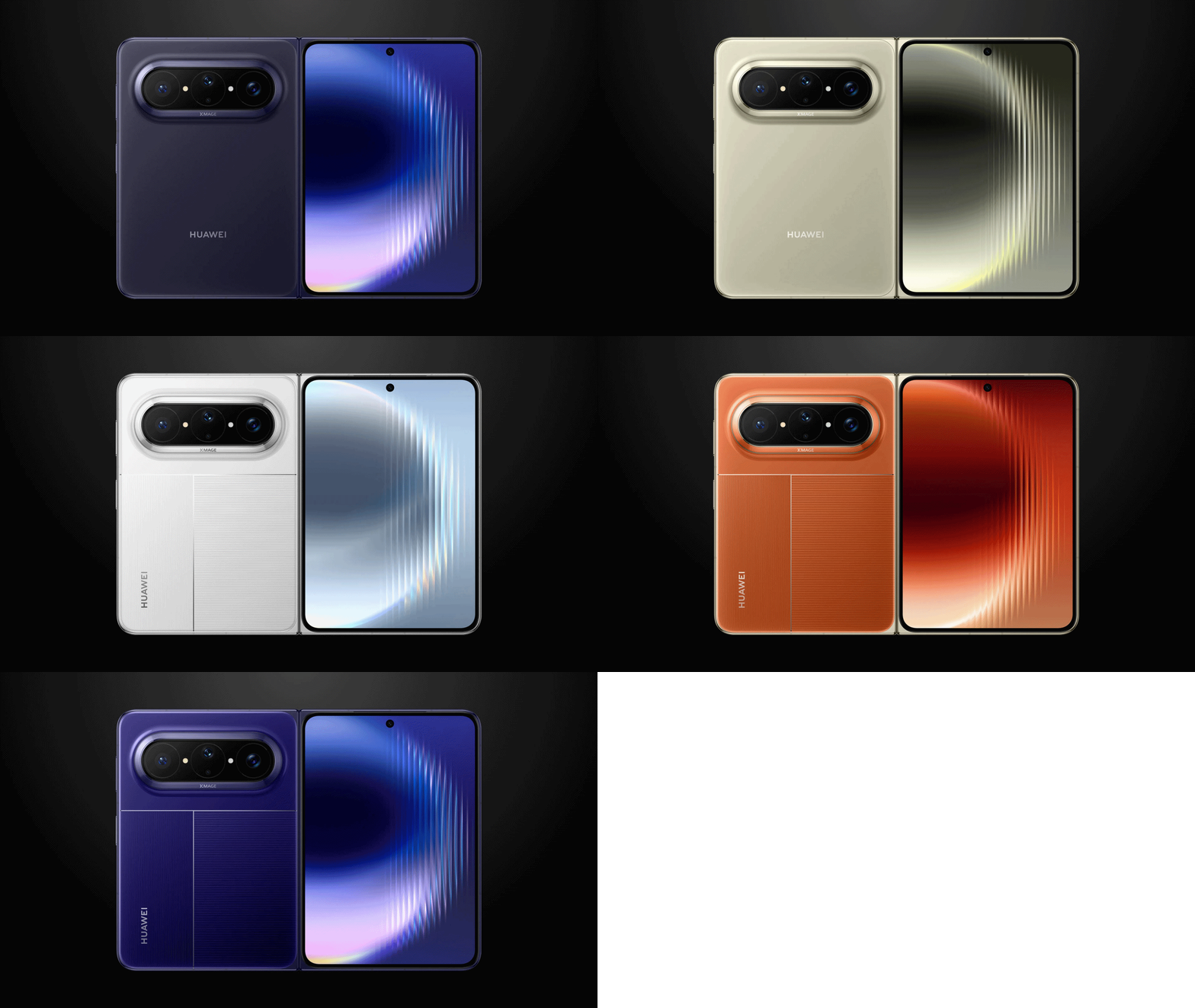
Graphics by Vincenz Lee | GadgetMatch
Pricing does not come cheap. The HUAWEI Pura X Max are divided into two editions with four configurations in total:
Regular Edition
- 12+256GB = CNY 10,999 (US$ 1615 / EUR 1370 / GBP 1190 / SG$ 2050 / MYR 6370 / PhP 96,850 / INR 149,650)
- 12+512GB = CNY 11,999 (US$ 1760 / EUR 1490 / GBP 1300 / SG$ 2240 / MYR 6950 / PhP 105,650 / INR 163,260)
Collector’s Edition
- 16+512GB = CNY 12,999 (US$ 1905 / EUR 1615 / GBP 1410 / SG$ 2425 / MYR 7530 / PhP 114,460 / INR 176,860)
- 16+1TB = CNY 13,999 (US$ 2050 / EUR 1740 / GBP 1520 / SG$ 2610 / MYR 8110 / PhP 123,260 / INR 190,465)
* These are only rough price conversion estimates
Collector’s Edition supports China’s Beidou Satellite Services that the Regular Edition models don’t have.
It’s currently open for pre-orders in their home turf while global availability remains bleak. ICYMI, Last year’s Pura X was not released outside China.
Uncategorized
Jabra launches Evolve3 Series for hybrid work and everyday use
Professional-grade performance for modern work, everyday life




Marvel’s Wolverine review: When the claws come out
A brutal, cinematic superhero adventure

Setting your bedsheets ablaze with the Lovense Solace Pro
The closest proxy I could find where I'm guilty as sin


Now Playing: Elden Ring Tarnished Edition
Is the Switch 2 port worth the price?

First Look: Apple iPhone Duo

Xbox saves Kojima’s PHYSINT after PlayStation drops support
Marvel’s Wolverine review: When the claws come out

PH to celebrate 1st ever National Cinema Day; movies start at less than $2

New AGON gaming monitor features up to 1000Hz refresh rate

TECNO MEGAPAD 2 review: Eyes on the size

realme 16T 5G with 8000mAh battery, IP69 Pro rating launches in PH

HUAWEI Pura X View is 2026’s first WIDE slab-type smartphone

REDMI Note 17 Series focuses on long-term reliability

REDMI reveals the refreshed Note 17 and Note 17 Pro series


-
 News2 weeks ago
realme 16T 5G with 8000mAh battery, IP69 Pro rating launches in PH
-
 News4 days ago
HUAWEI Pura X View is 2026’s first WIDE slab-type smartphone
-
 Cameras1 week ago
DJI Osmo 360 II review: Going all-in on the ecosystem
-

 Features2 weeks ago
The designated photographer’s new favorite phone: OPPO Reno16 Series 5G
-

 News4 days ago
The CAMON Slim 5G is TECNO’s latest ultra-slim smartphone
-

 IFA 20261 week ago
TECNO MEGABOOK T15 360 unveiled at IFA 2026
-

 Gaming1 week ago
NBA 2K27 review: A two-way All-Star
-
 Reviews1 week ago
Samsung Galaxy Z Fold8 Ultra review: It’s time to get a foldable