
Gaming
Assassin’s Creed Origins Review: Steps back to leap forward


After taking a year off from its annual release cycle, Assassin’s Creed is back. A newbie to the games swan dives into Assassin’s Creed Origins to see if the changes to the formula is enough to revitalize the franchise.
Assassin’s Creed is one of modern video games’ landmark series. It’s actually been a decade since the first game was released, which started off a hugely successful multimedia franchise spanning games, comics, novels, and even a Hollywood film.
Recent years haven’t been as kind to the brand, though. The annual releases on every platform eventually wore on critics and consumers, as review scores and sales dwindled after the peaks of the second and third main games. Ubisoft, the series creator, eventually gave Assassin’s Creed a one-year break before putting out this latest installment.
I mention all this because even as a games enthusiast, I went into Assassin’s Creed Origins having zero experience with the whole franchise.

Back to the beginning
For a series newbie, the setup is perfect. Origins basically tells how the Assassin Brotherhood, the secret organization that each protagonist from every game is part of, came to be. It takes place at the tail end of Ancient Egypt. The two pharaohs Ptolemy and Cleopatra are at odds over who should be the rightful ruler. Meanwhile, the threat of Roman imperial influence on the nation, spearheaded by Julius Caesar, hangs heavy over the embattled Egyptian monarchy.
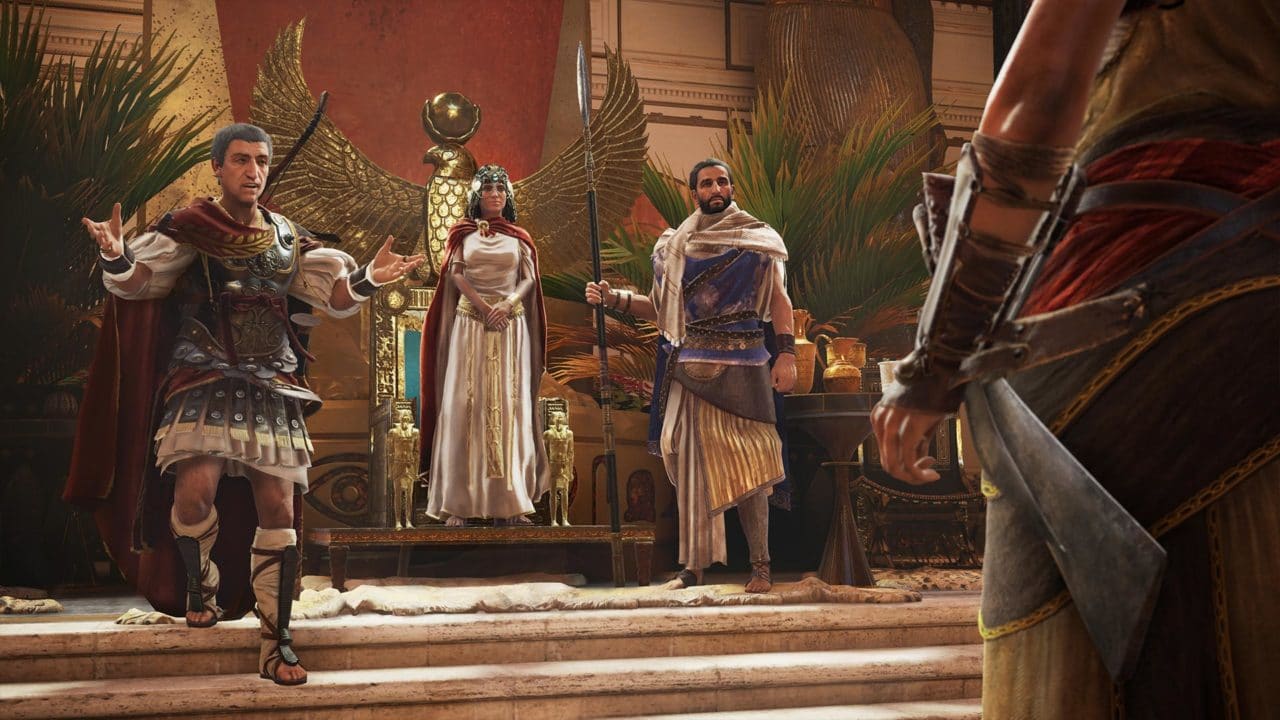
Amid this political turmoil, you play as Bayek, the medjay of the province of Siwa, and the very last of Egypt’s ordained protectors. You are on a quest for revenge against a shadowy cabal planning on taking complete control of the country.
No other big budget game comes to mind that tackles this particular setting, so my interest was piqued, despite the rather messy intro. Fortunately, that interest blossomed into a mostly enjoyable 42-hour experience!

Gorgeous and gigantic
That enjoyment had a lot to do with how much I wanted to be in Origins‘ staggering simulation of Ancient Egypt. From the way sand blows in the desert winds to how sunlight gleams on the surface of the Nile; from the architectural apex of Greek and Egyptian antiquity in Alexandria to the fading beauty of Egypt’s capital Memphis; and from the artistic Hellenistic heights of Greco-Roman Cyrene to the ever-enduring mystery and majesty of the Pyramids of Giza, Origins renders it all in stunning fashion.
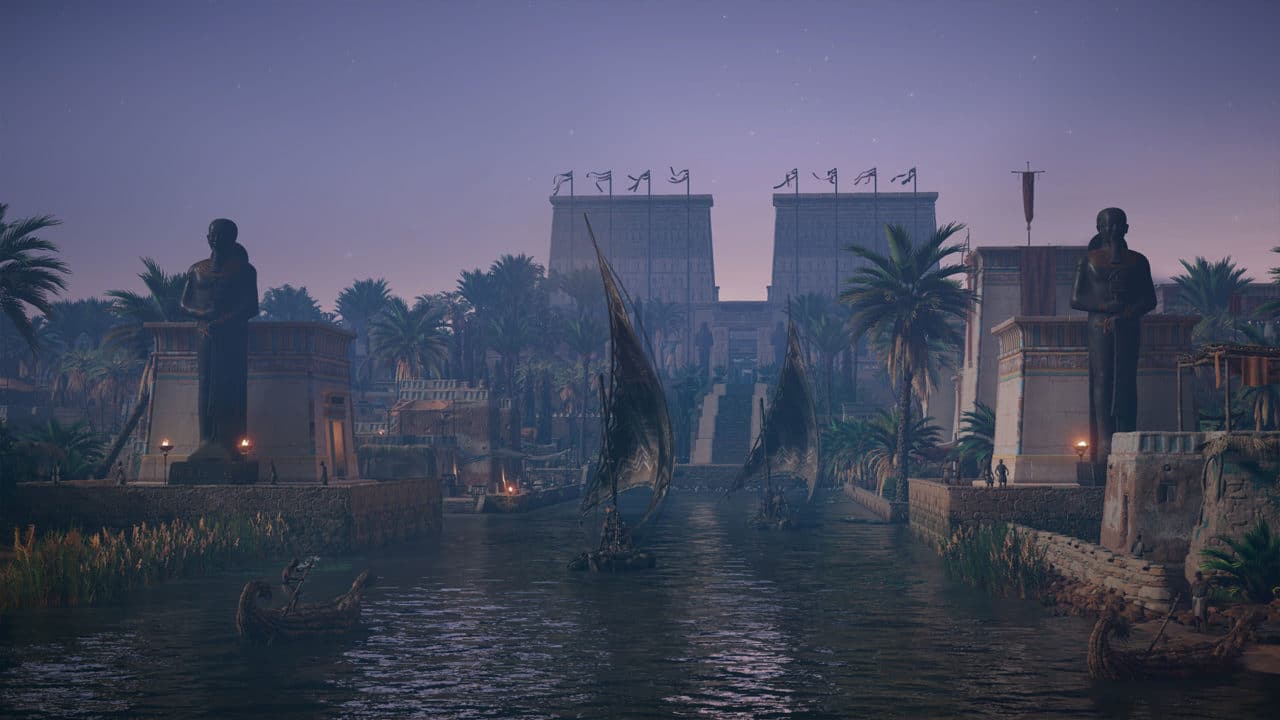
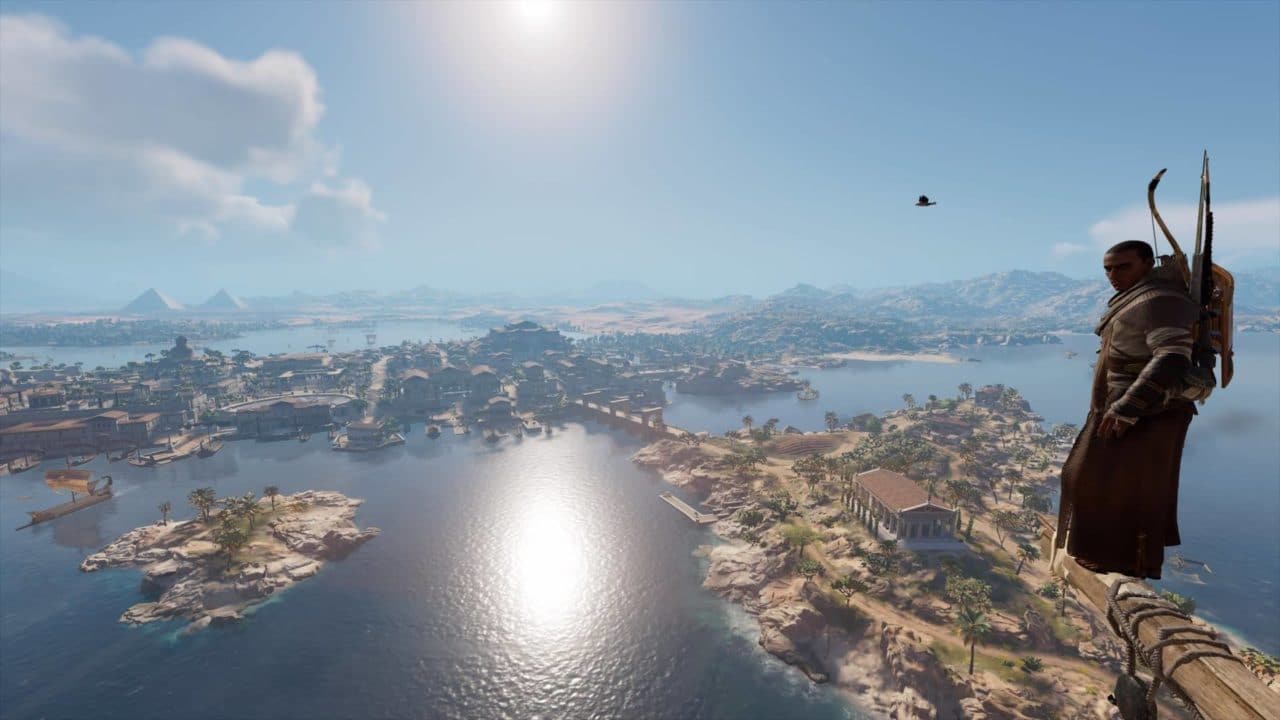
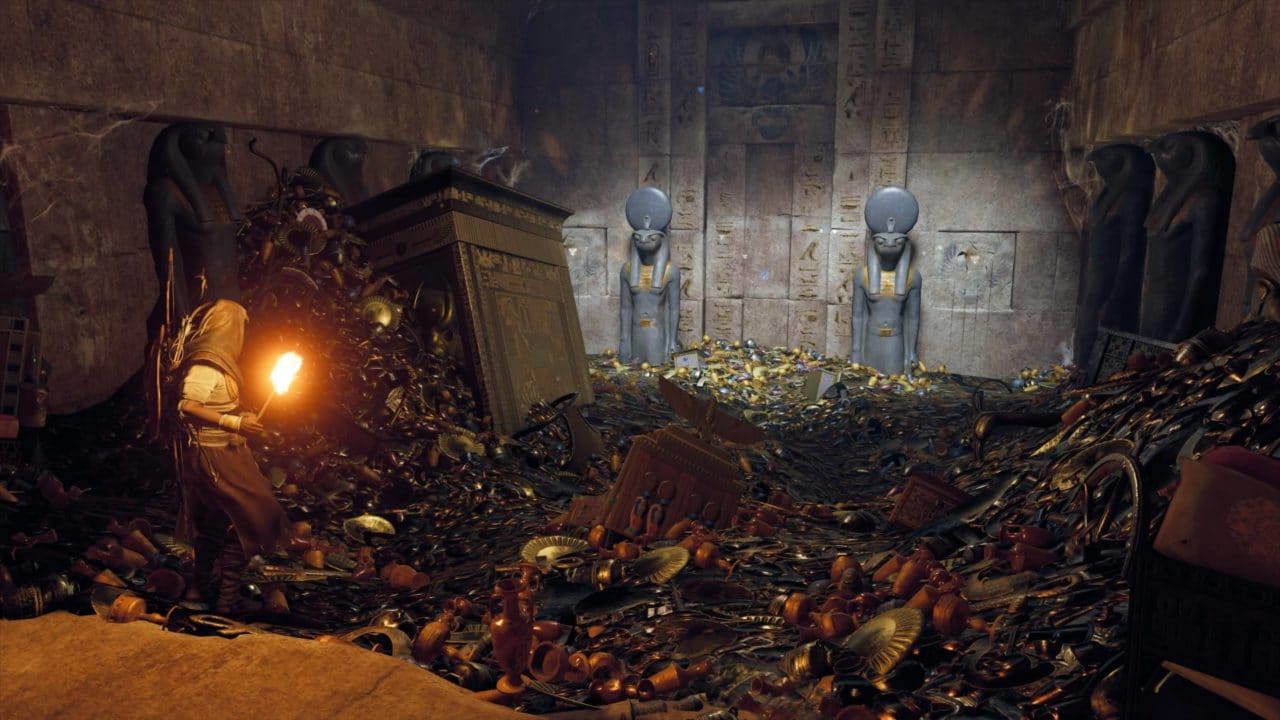
Even the depiction of life and culture in that age is impressive. Markets and ports bustle with merchants peddling wares and laborers working on galleys. Guards on horseback and chariots patrol cobblestone streets and escort traders across land and sea. A whole mountain village is dedicated to extracting salt for mummification, with the statue of Anubis, the jackal god of death, perched on a shrine overlooking the settlement.
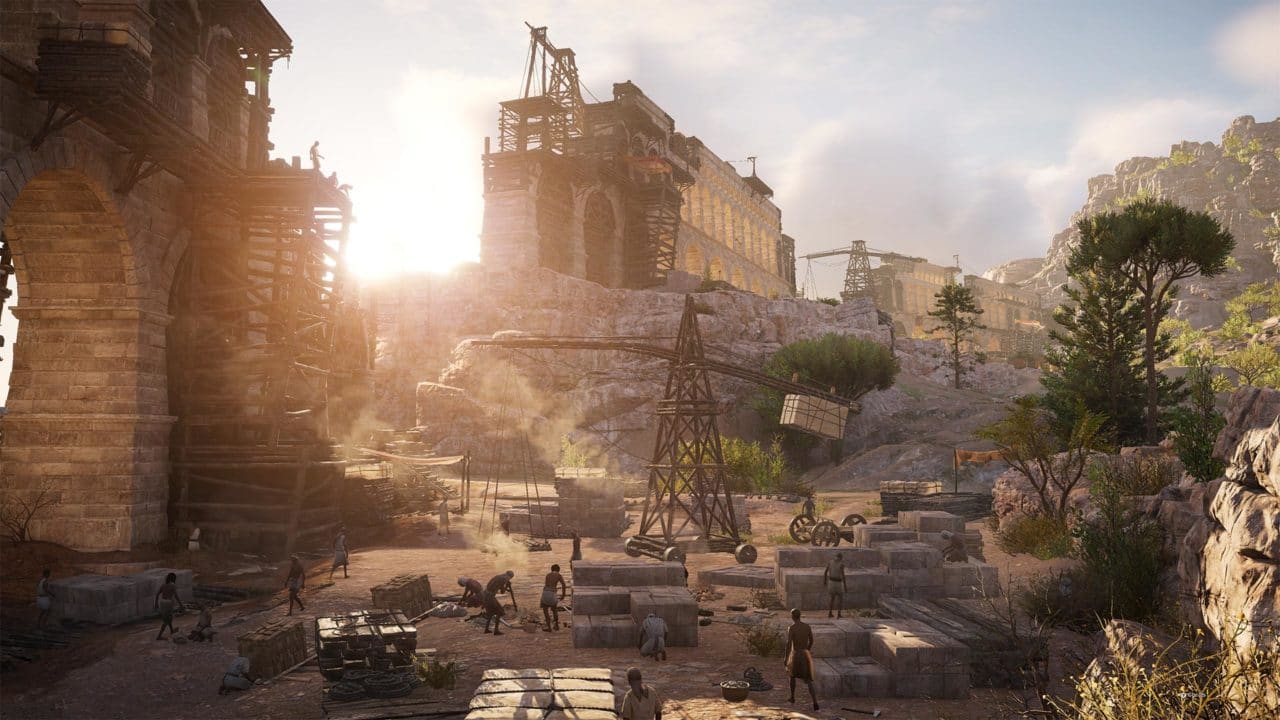
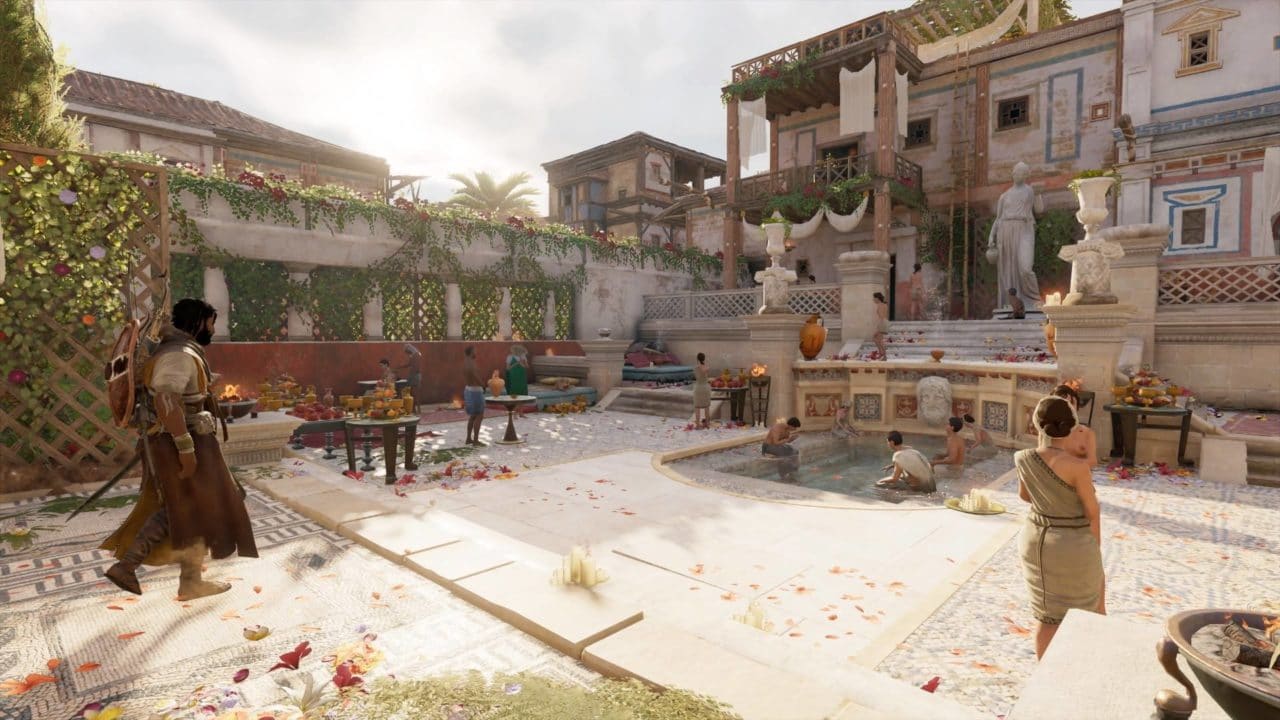
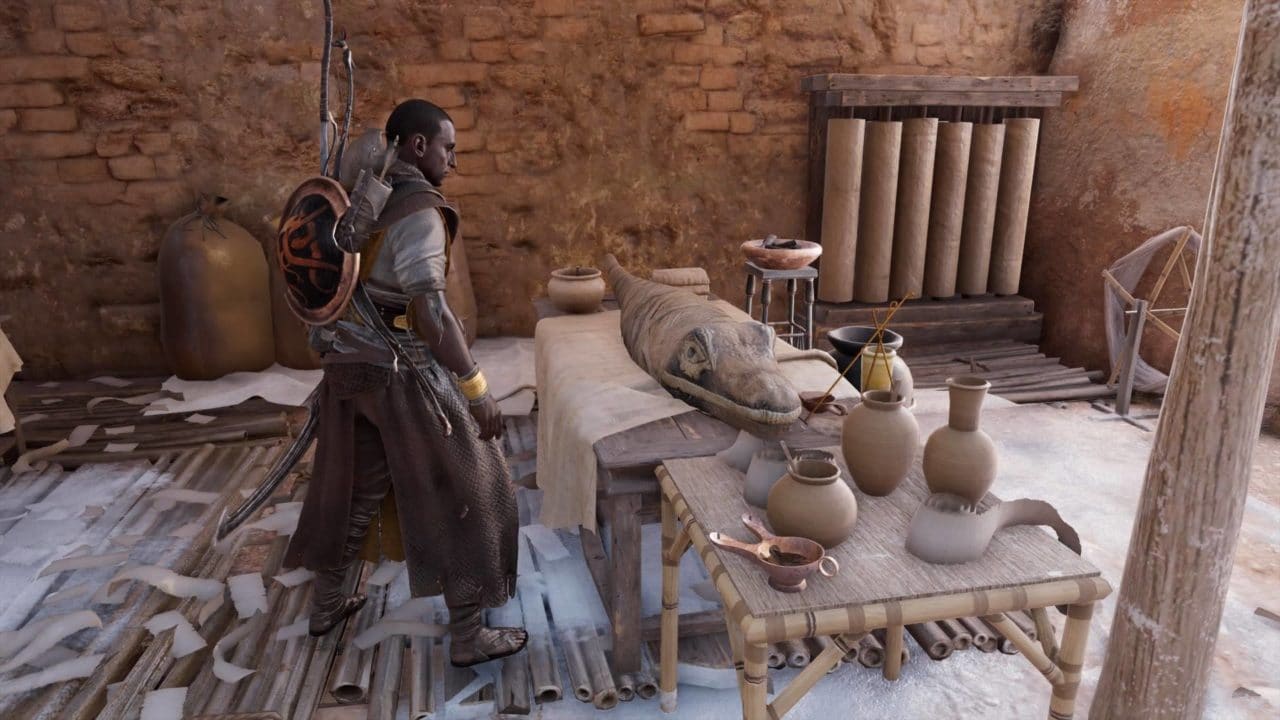
So, even though I found the quests at the beginning to be worryingly banal, I sought them out just to learn more about the world. A good deal of them flesh out the overarching narrative, too, as they illustrate the villains’ tyranny manifesting in numerous, logical ways.
Likable leads
Bayek’s character shines through his interactions with the populace. I found that he could laugh at himself while still being fiercely passionate in his sense of justice and respect for tradition. Him being a father and a husband reflects on how good he is with kids and understanding of parents with family problems.
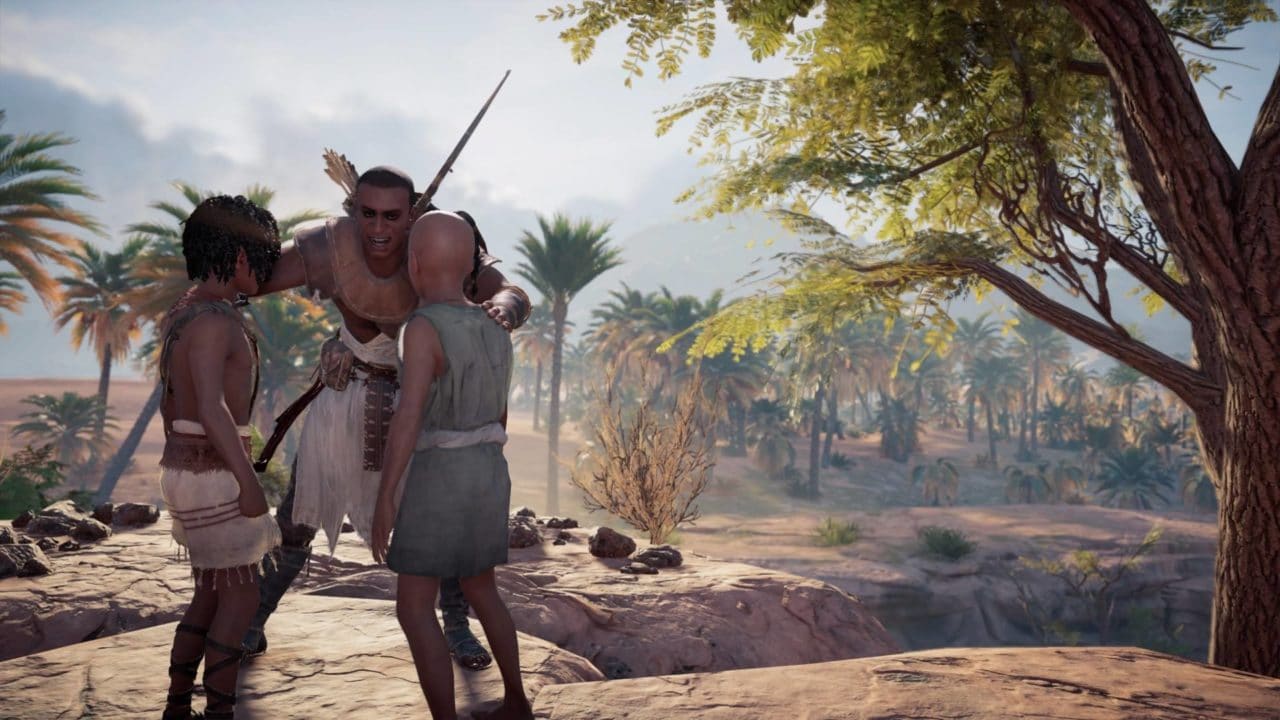


His relationship with his wife Aya is also refreshing. They are both extremely competent as warrior assassins and trust each other’s ability. While they share the goal of revenge, they each have distinct motivations that set their character arcs apart. Affection is something they don’t hesitate to show one another. They display moments of emotional vulnerability, but they deal with it maturely like you’d expect from a long-married, caring couple.
The rest of the cast doesn’t come close to this level of characterization, but this core pairing is solid enough that it made me want to see their story through to the end.
Gameplay is a grower
I’m grateful for being so drawn into the world and these two leads, as I wasn’t having a great time with Origins until I played way more of it. After unlocking more abilities, gaining more tools and weapons, and generally getting a hang of the mechanics, I eventually found the gameplay rewarding in itself.
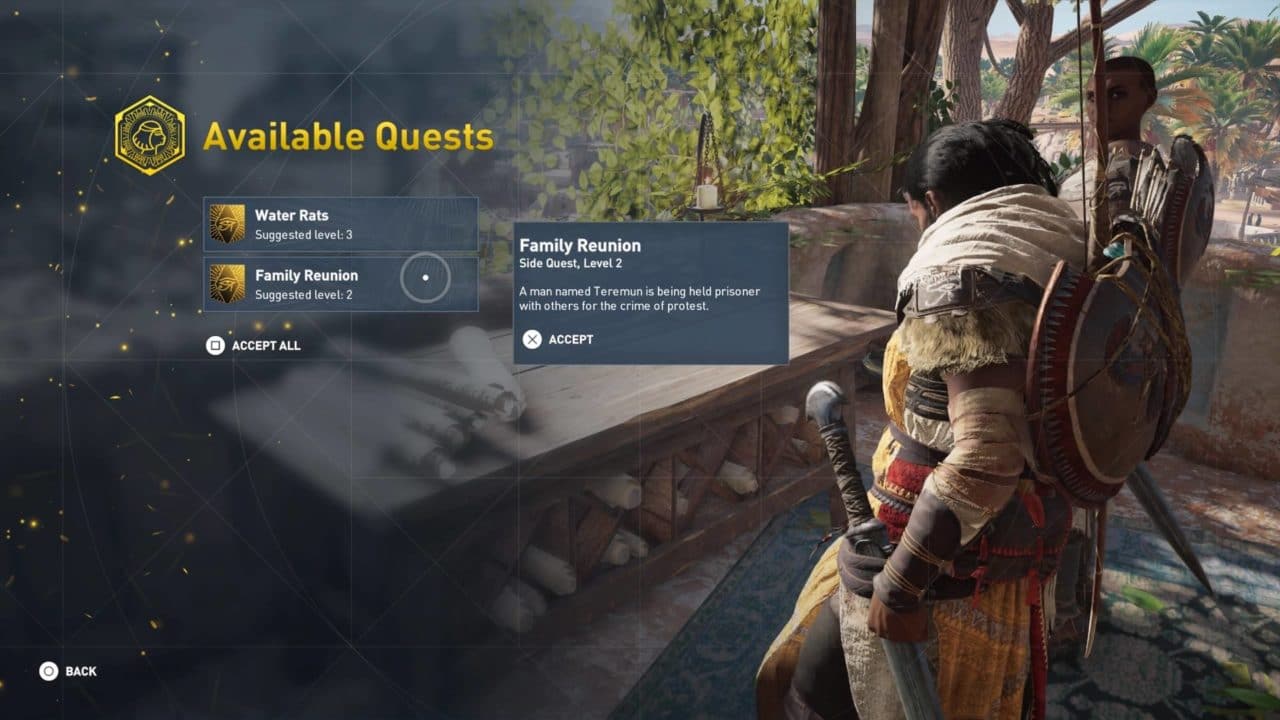
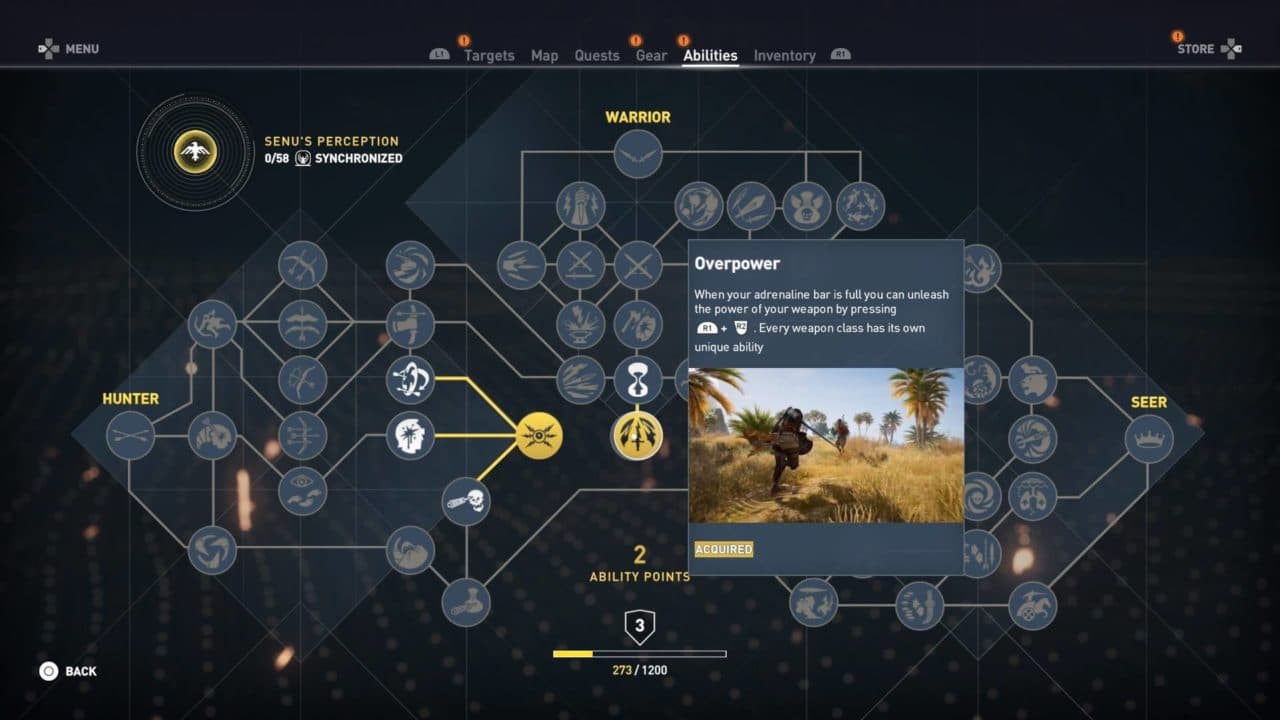
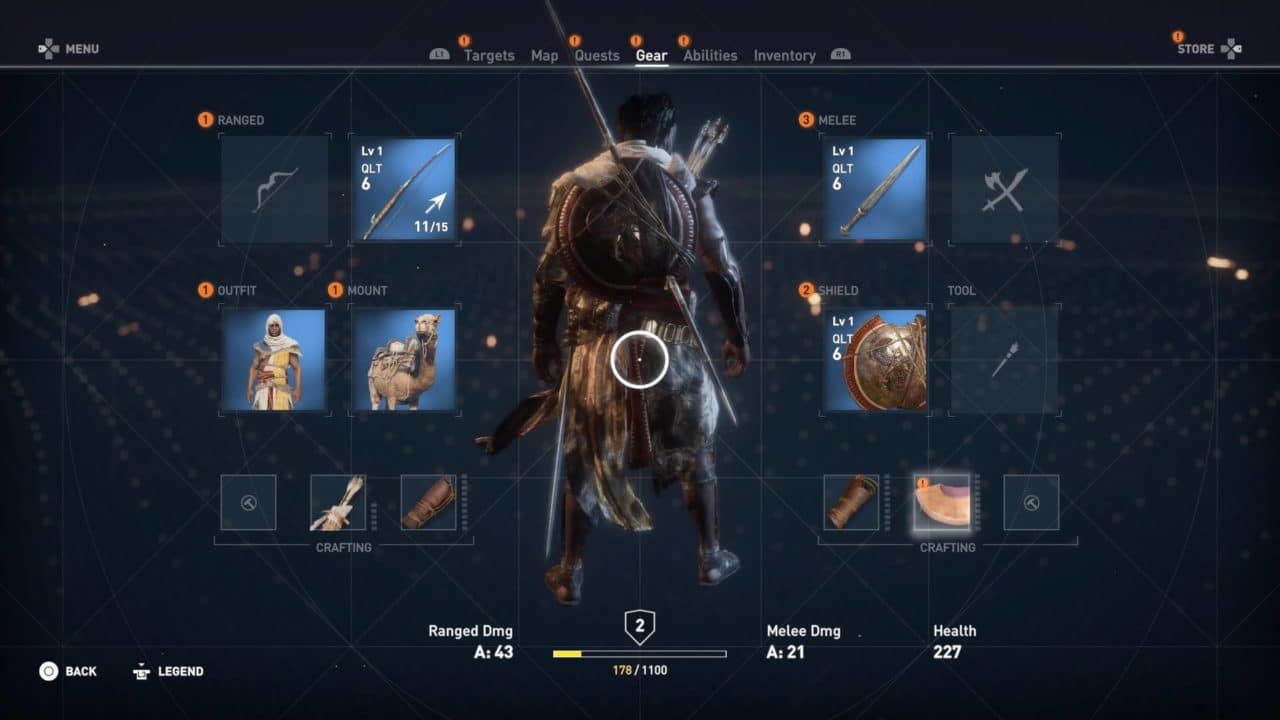
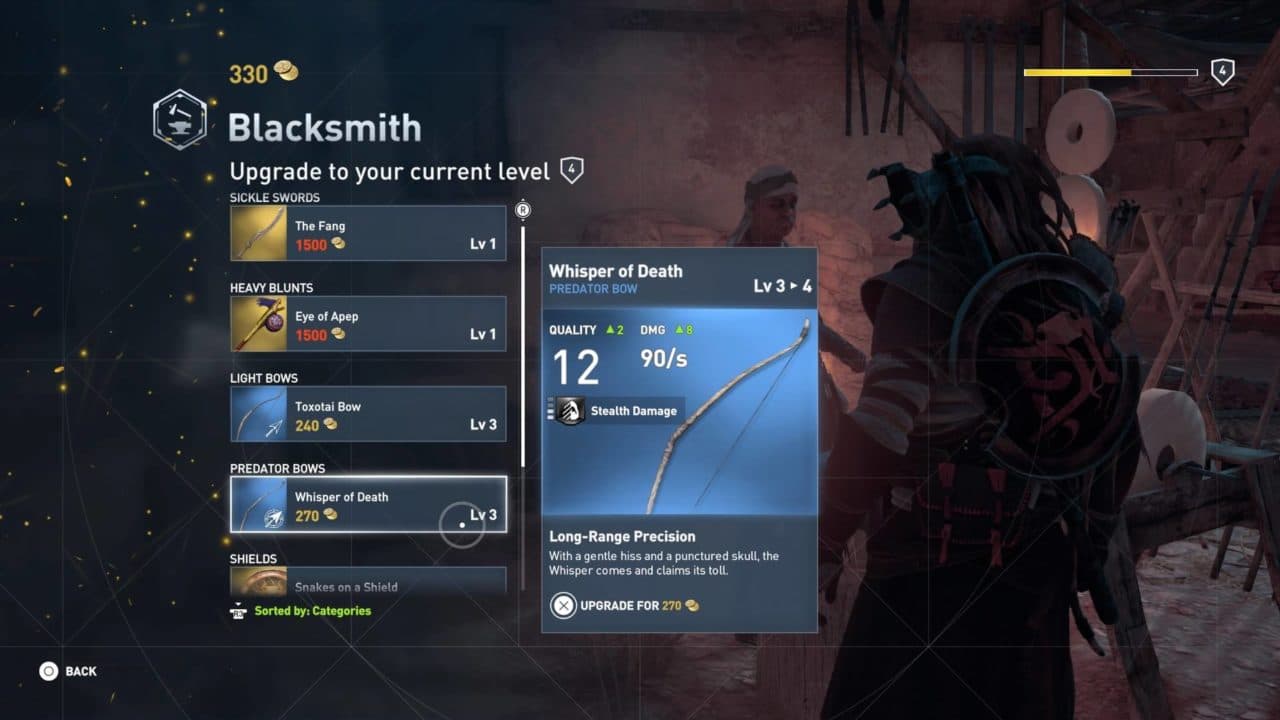
While still having an action/stealth adventure foundation, Origins builds a light RPG structure a la Horizon Zero Dawn on top of it; you level up, get stronger, and gain access to more abilities. You can improve your gear with crafting materials you collect from hunting animals, dismantling equipment, or shopping at vendors. There’s a variety of weapons and shields with stats and unique perks, and they also have levels that determine their effectiveness.
Because Bayek’s capabilities are tied into hard numbers, I was frustrated on numerous occasions during fights and sneaking up on enemies that were just two or three levels higher than me in the early goings. I was still grasping the fundamentals of combat and stealth, so it wasn’t uncommon for me to get spotted while trying to sneak into a base, surrounded by multiple guards, and killed in the ensuing melee.
More demanding mechanics
The fighting system has been revamped, too. It’s reminiscent of Dark Souls in that you’re throwing measured strikes with your weapon while dodging or blocking incoming blows, and every button press has Bayek committing to whatever action you take. If you throw out a strong attack and miss, you will likely get punished with a counter-attack. There is no stamina to worry about though, with only slight pauses in between attack and defend animations to keep you from chaining infinite combos. You do have an “Overpower meter” that gradually fills up in combat. Once it’s full, it allows you to either do a powerful one-hit super move or speed up your every attack for a set amount of time, depending on what weapon you have equipped.
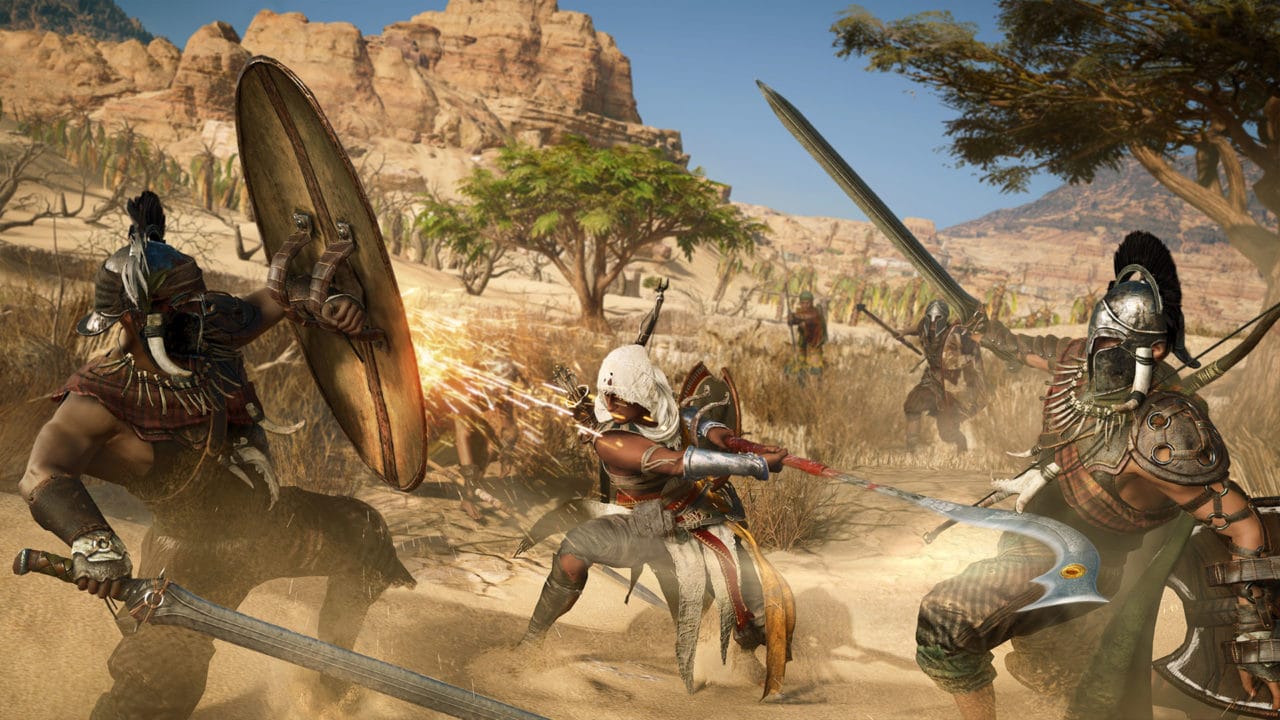
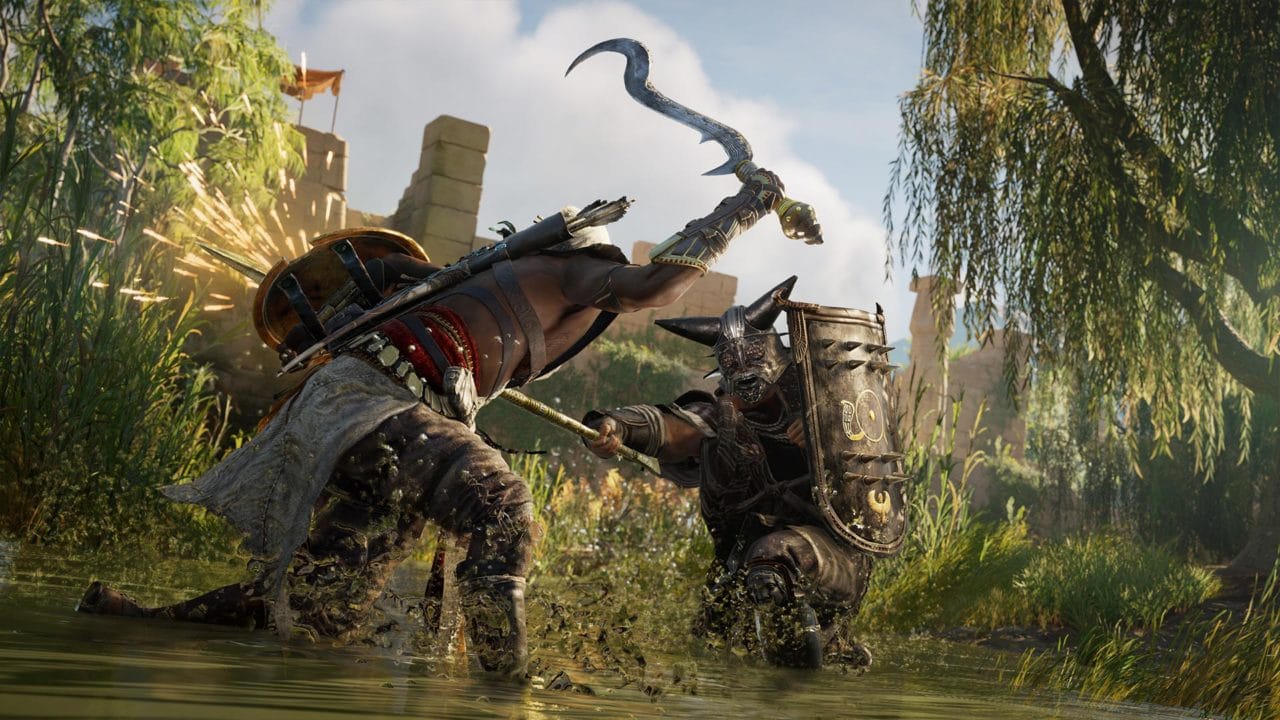
It’s not as tight and responsive as the Souls games, though. I struggled at the sluggishness of striking and the skittery enemy movements.
Going into a heavily guarded fort or bandit hideout, you have one major advantage. You can take control of Senu, Bayek’s trusty eagle companion, to fly over the map and mark locations of your quest objectives, enemies, treasure, and other items you can interact with. It’s critical prep work before entering hostile territory, but even then it didn’t feel like enough for me to confidently clear out encampments without alerting everyone in them.
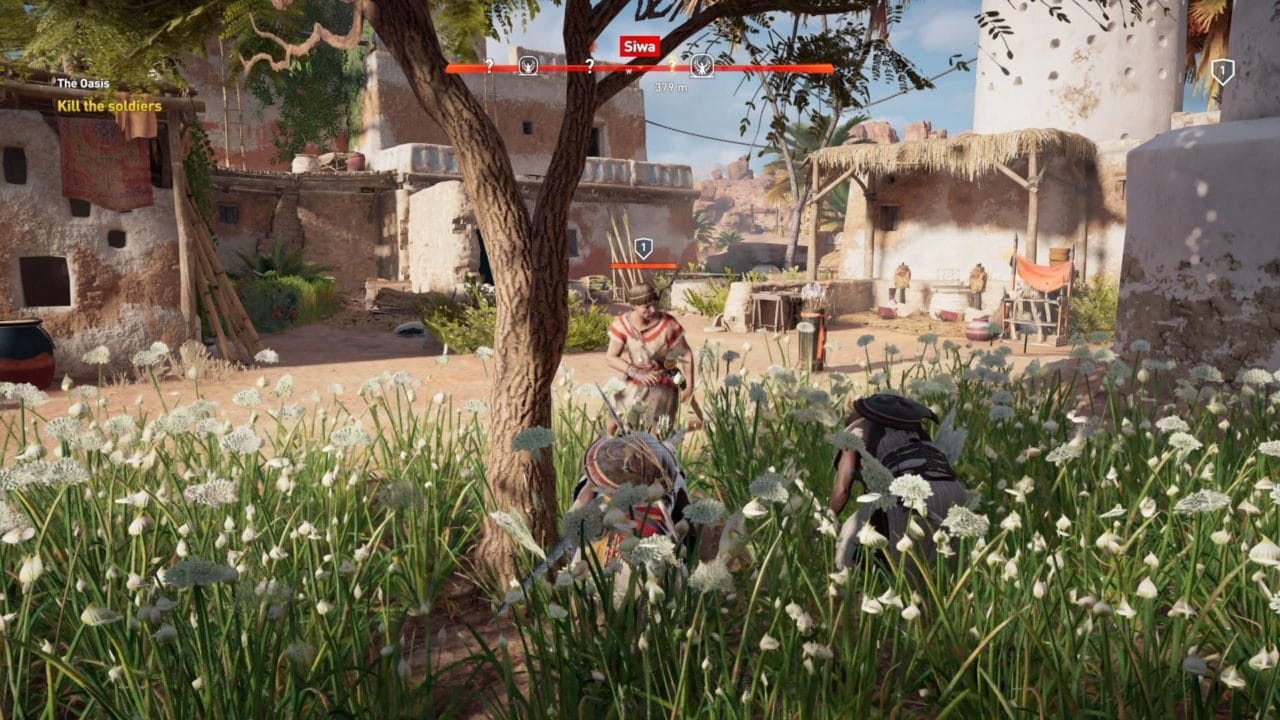
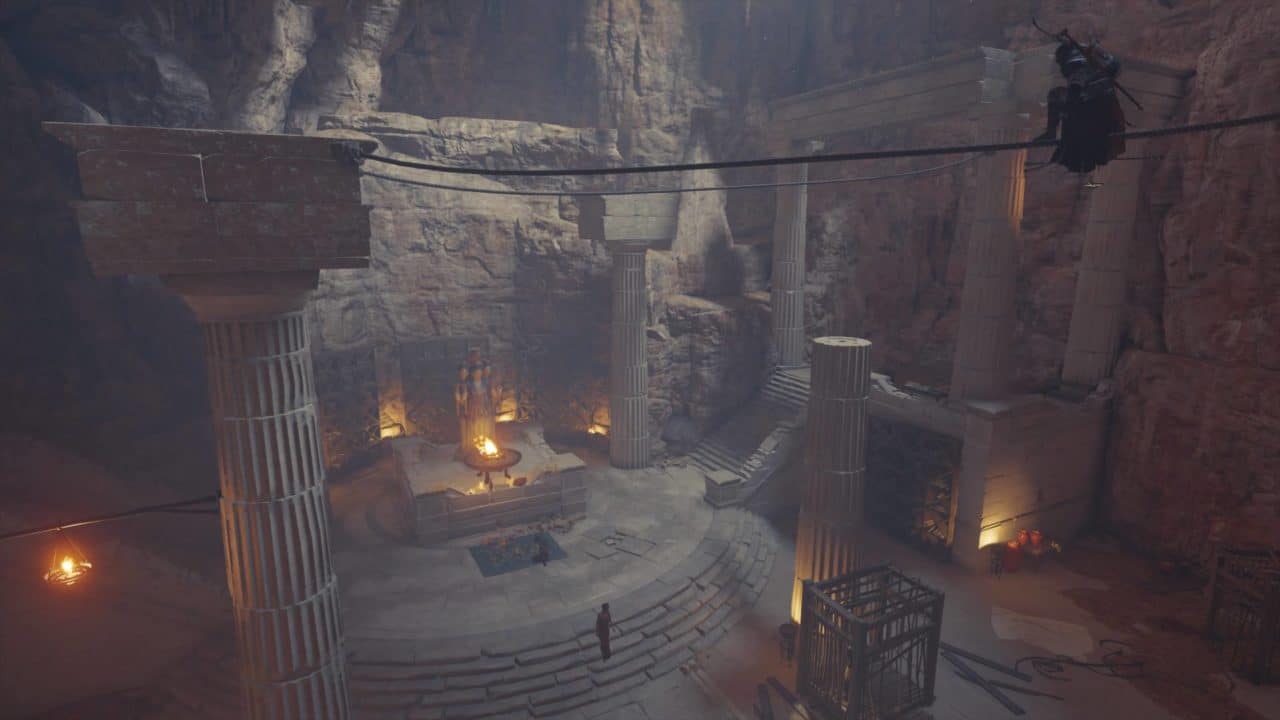
But once I got comfortable with the controls and earned more abilities, the gameplay started to click with me.
Slow but satisfying surprise
Around eight hours and 15 levels in, I was better at sneaking past enemies and smarter at fighting them with fire bombs and warrior bows. 20 hours and 25 levels in, I was silently headshotting guards and slaying lions and crocodiles. 40 hours and 35 levels in, I was clearing out fortresses and palaces using sleep darts and poison traps and brutally executing entire garrisons with my assortment of legendary dual blades, spears, sickle swords, and staves.
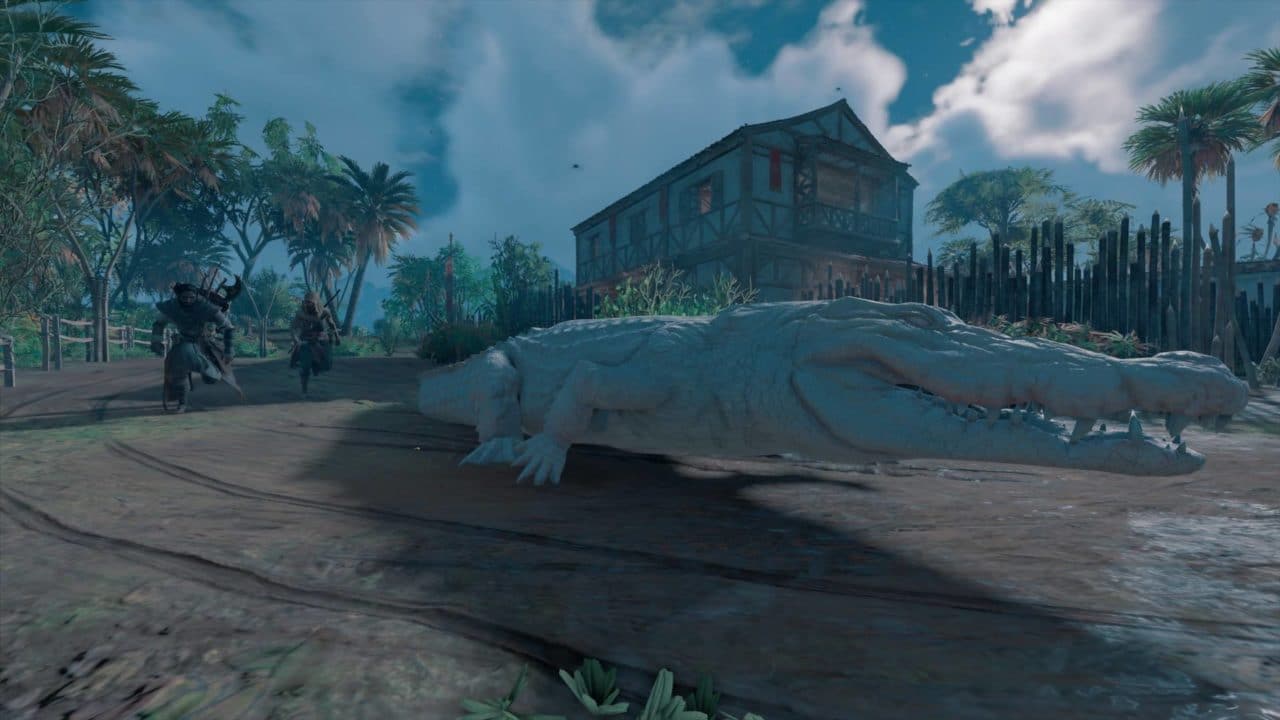
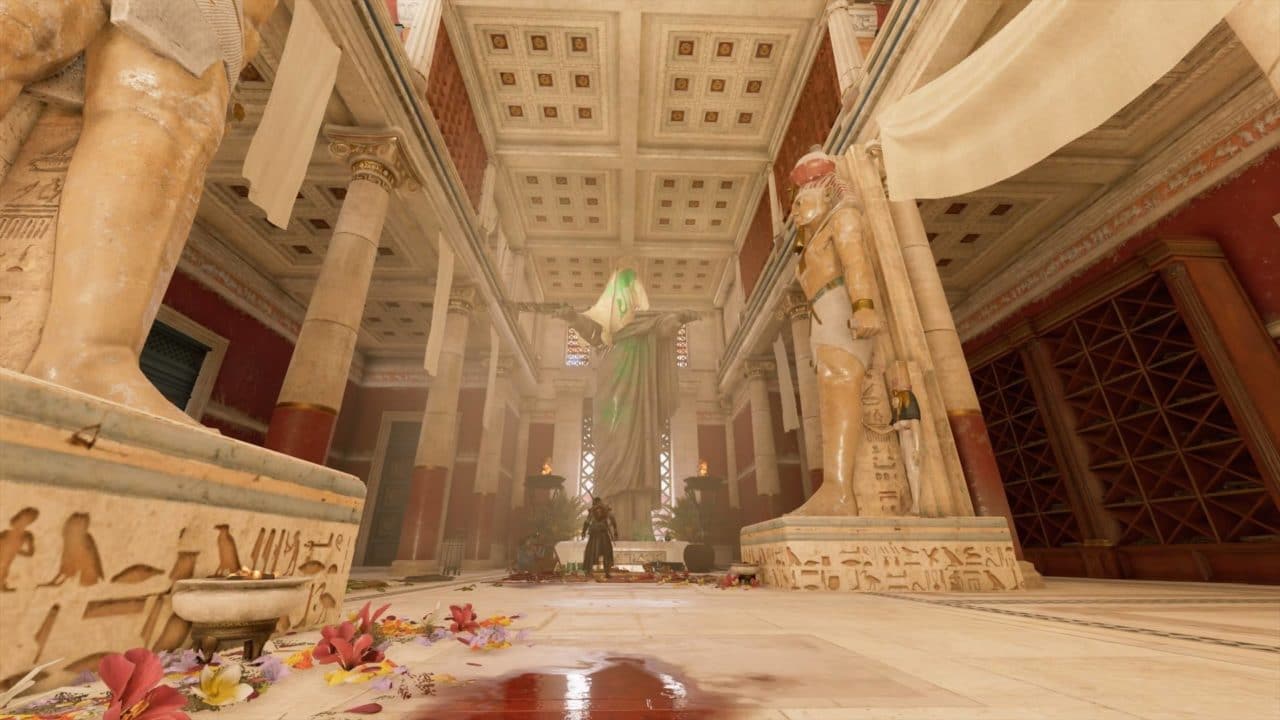

Assassin’s Creed Origins is the perfect example of a lovingly crafted virtual world with a strong sense of place that is truly captivating, so much so that it carried me to discovering joy in seemingly simple systems. It’s a slow starter, for sure, but it turned out to be the biggest surprise for me so far in this year of stellar video games, and I’m glad I took the leap on Assassin’s Creed at the right time.
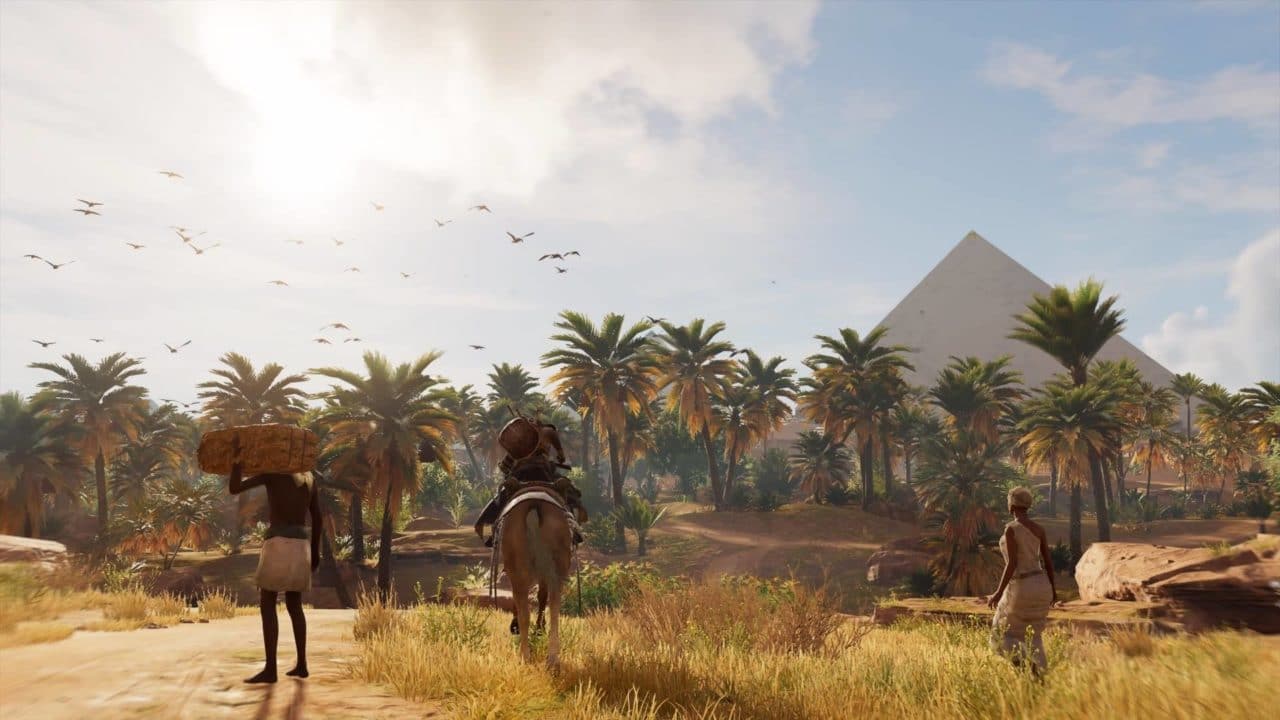

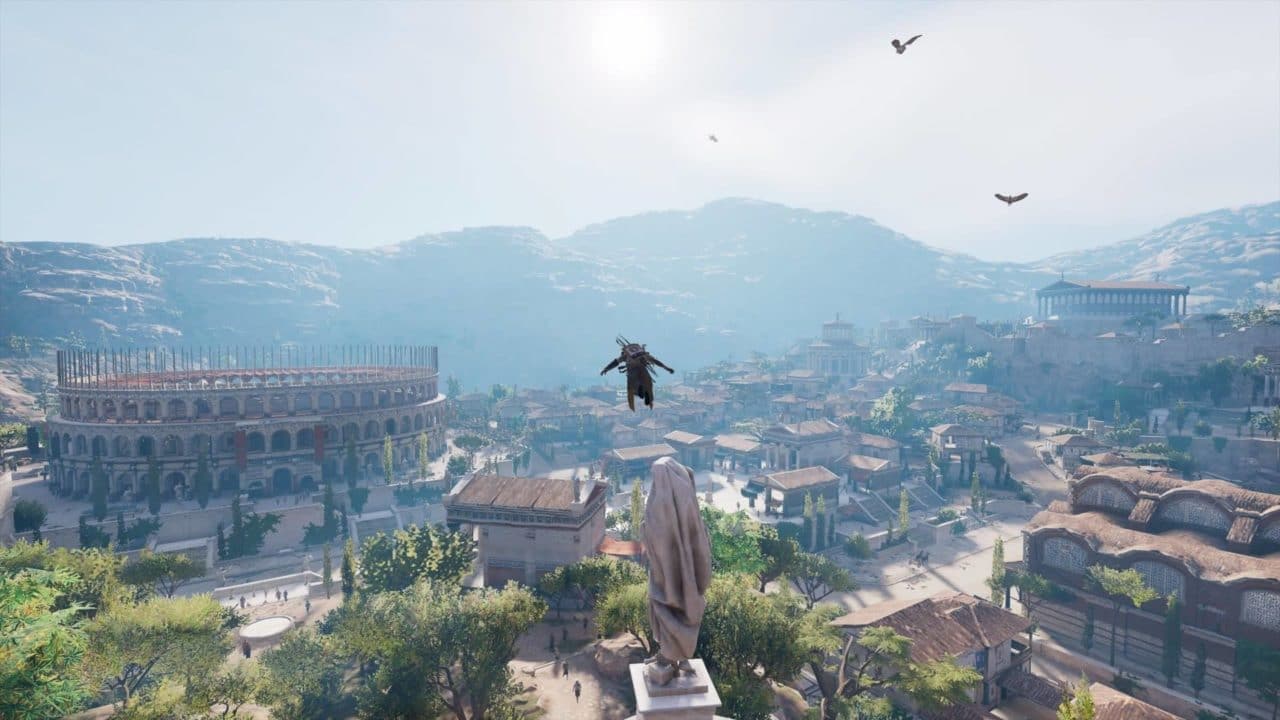
SEE ALSO: Middle-earth: Shadow of War review — System overload
[irp posts=”22808″ name=”Middle-earth: Shadow of War review — System overload”]





Gaming
Life is Strange: Reunion now available on consoles and PC
Max and Chloe return for an emotional finale

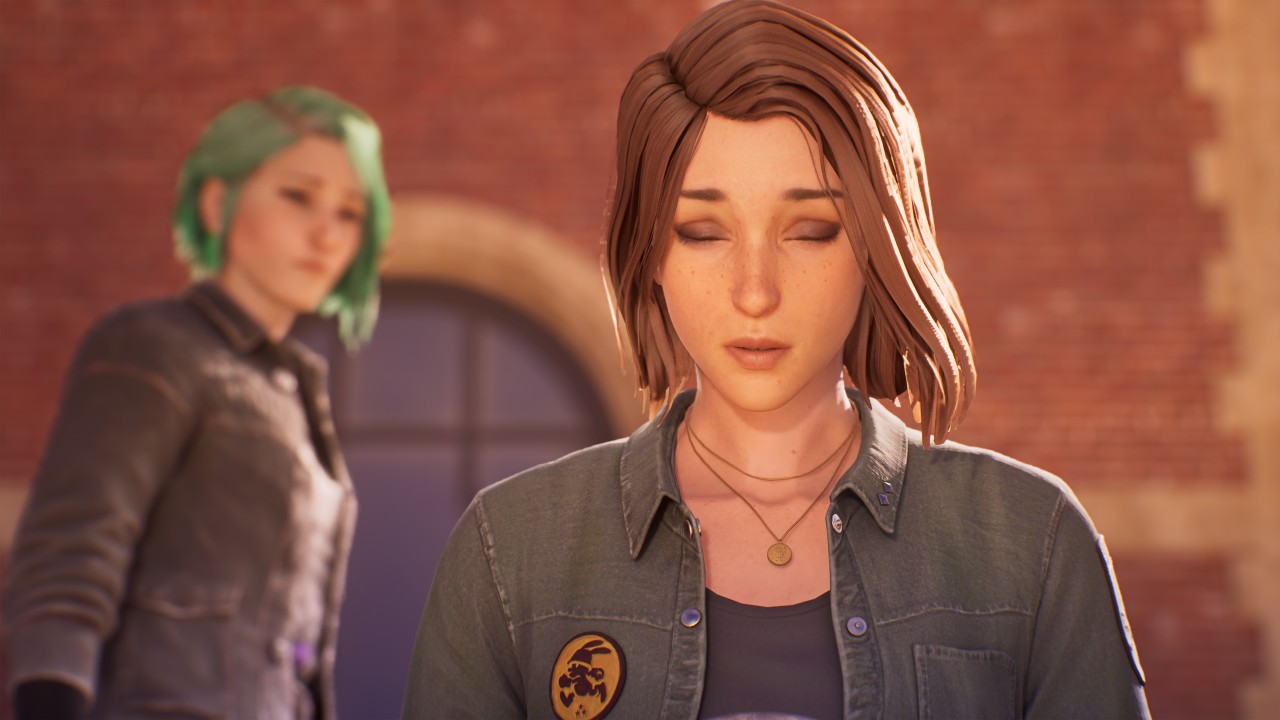
Bandai Namco Entertainment Asia and Square Enix have officially launched Life is Strange: Reunion, the latest entry in the narrative adventure series. Developed by Deck Nine Games, the title is now available on PlayStation 5, Xbox Series X|S, and PC via Steam and the Microsoft Store. A physical PlayStation 5 edition is also available across Southeast Asia.
The launch comes with an official trailer, marking the return of one of the franchise’s most beloved storylines.
A long-awaited reunion
Set 11 years after the original events, Life is Strange: Reunion brings back Max Caulfield and Chloe Price as they reunite to solve a new timeline-spanning mystery. This time, the stakes center on a devastating inferno threatening Caledon University–Max’s workplace as a photography teacher.
Returning from a trip, Max discovers the campus engulfed in flames, with lives lost across the university. She survives only by using her Rewind ability, a power that allows her to reverse time.
The situation takes an unexpected turn with Chloe’s sudden arrival–an outcome tied to the timeline-merging events of Life is Strange: Double Exposure. Now dealing with fractured memories and an unstable sense of reality, Chloe once again finds herself relying on Max.
Dual perspectives, new gameplay dynamics
For the first time in the series, players can take control of both Max and Chloe, switching perspectives as the story unfolds.
Max’s Rewind power lets players revisit decisions, reshape conversations, and manipulate environments to solve complex, time-based puzzles. Meanwhile, Chloe brings her signature Backtalk ability, allowing her to push conversations in her favor and access situations Max cannot.
This dual-character approach expands both narrative depth and gameplay variety, offering different ways to uncover clues and influence outcomes.
A character-driven finale
Life is Strange: Reunion continues the series’ focus on grounded, emotional storytelling, with choices that carry meaningful consequences. The game builds toward a dramatic climax that aims to close out Max and Chloe’s journey.
As the final chapter in their story, Reunion positions itself as both a continuation and a conclusion–tying together years of narrative threads while delivering a new mystery shaped by time, loss, and choice.
Gaming
Nintendo will make it cheaper to buy digital games than physical
Physical releases will have the same price.

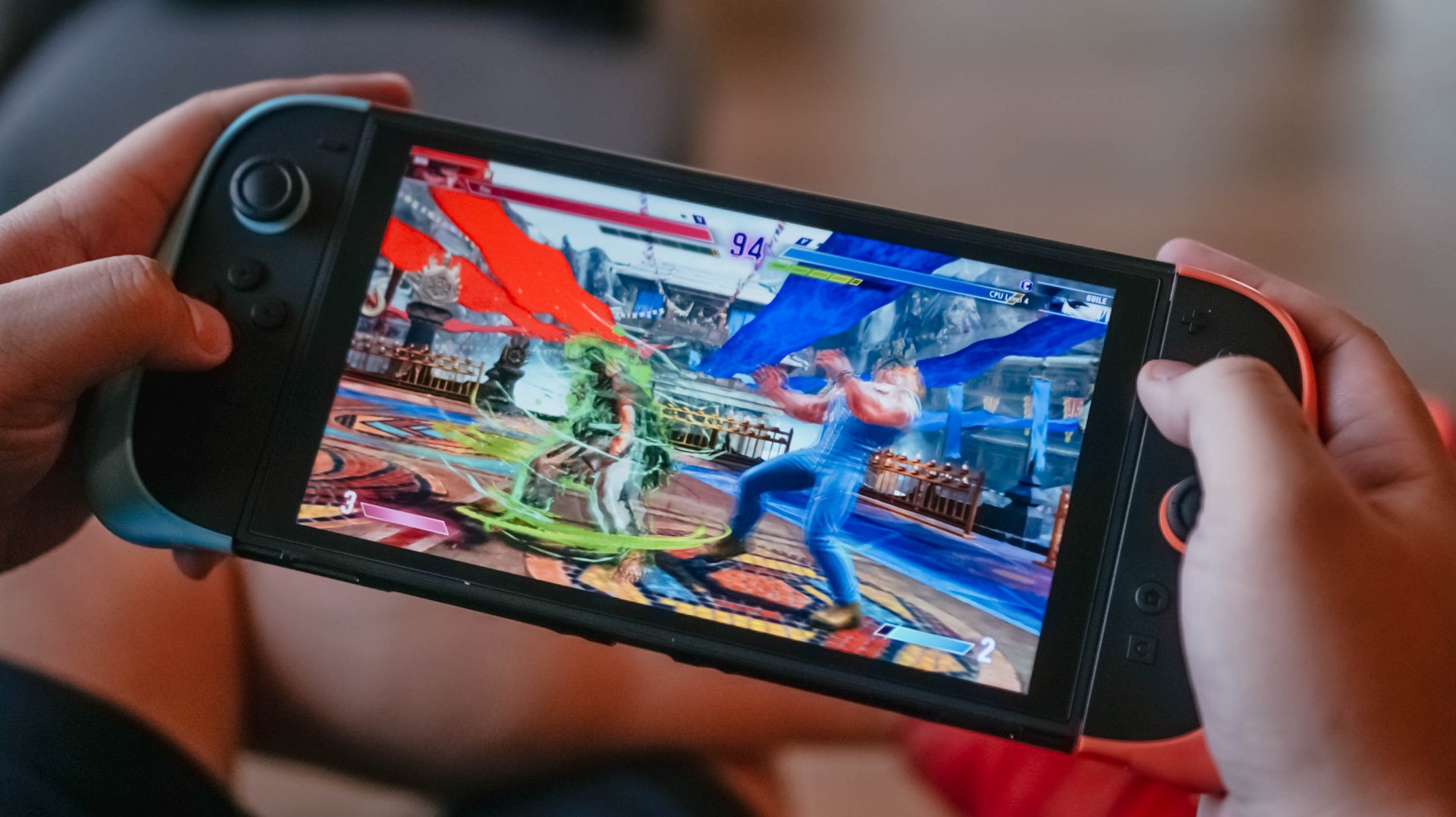
The days of lining up for a newly released game are well and truly over. Though some games still experience shortages in brick-and-mortar stores, such as the widely successful Pokémon Pokopia, gamers can get their titles digitally. Now, Nintendo is making digital releases more enticing by offering a tempting discount on the eShop.
Starting in May, Nintendo will start charging different prices for the physical and digital releases of first-party games. While physical releases will still have the same prices going forward, digital releases via the eShop will enjoy a discount.
The discount, of course, will likely depend on the title itself. Nintendo has already given the upcoming Yoshi and the Mysterious Book as the first example. The new platformer will cost US$ 70 from retailers. However, it will cost only US$ 60 on the digital eShop.
The company says that the new pricing scheme “simply reflects the different costs associated with producing and distributing each format.” With the prices of chips skyrocketing, it’s no surprise that the physical release is more expensive than the digital one.
To be more technical about it, Nintendo has started skipping a physical game card for a while now. The physical release of Pokémon Pokopia, for example, has only a game-key card or a code to download the game. In this format, physical releases are just pretty cases you can display on your shelf.
Also, digital releases do carry the added risk of getting delisted on the whims of the developers, the publishers, or Nintendo itself. It is, however, still a cheaper option, especially in a world where getting any discount is a welcome thought.
SEE ALSO: Nintendo sues the United States

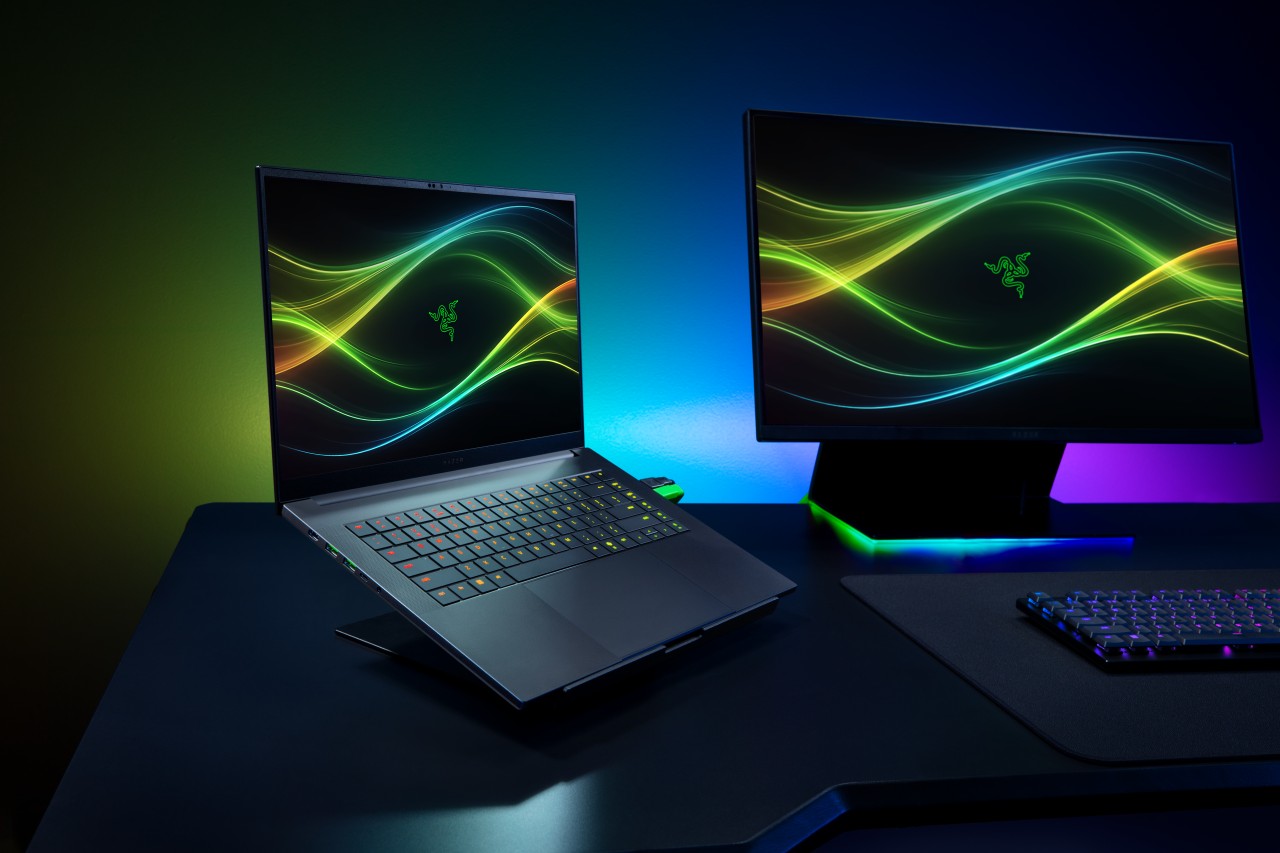
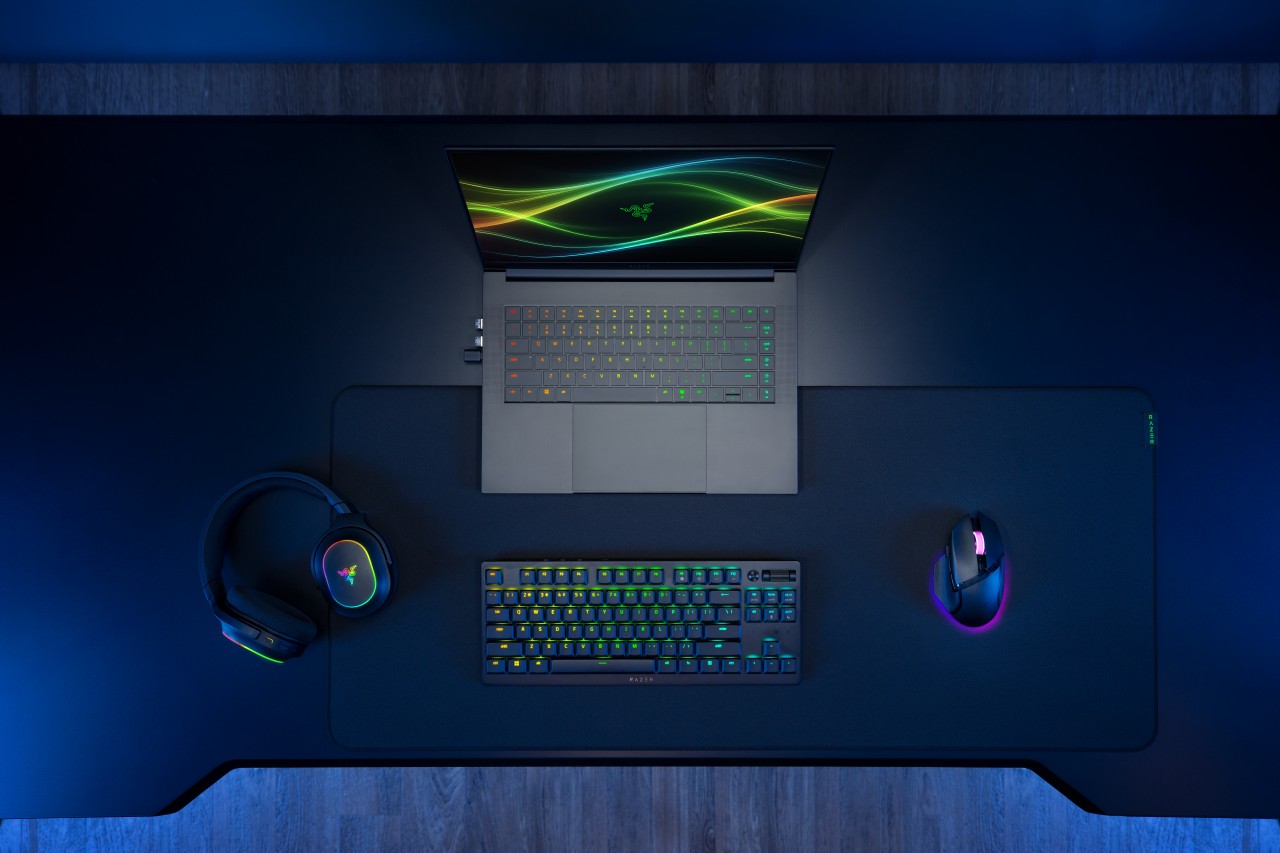
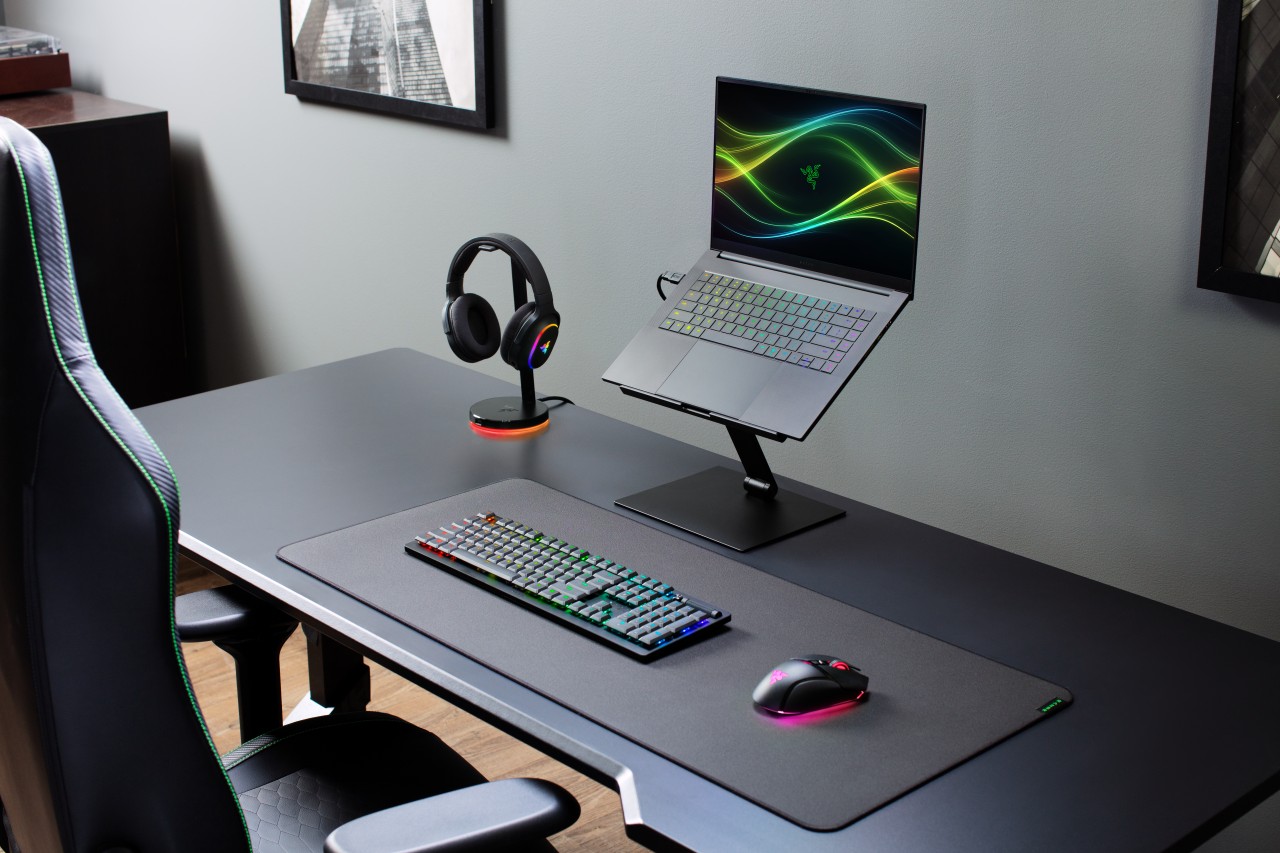
Razer has officially unveiled the 2026 version of its Blade 16, doubling down on what it does best: squeezing high-end performance into an ultra-slim chassis.
This year’s refresh focuses on meaningful internal upgrades. That includes a new Intel Core Ultra 9 processor, faster LPDDR5X memory, and NVIDIA’s latest RTX 50 Series laptop GPUs — all while keeping the Blade 16 as the thinnest gaming laptop in Razer’s lineup.
Performance gets a serious bump
At the core of the new Blade 16 is the Intel Core Ultra 9 386H, featuring 16 cores and up to 4.9GHz boost clock. Razer claims a 33% increase in core count versus the previous generation, translating to stronger performance across gaming, content creation, and AI workloads.
There’s also an integrated NPU capable of up to 50 TOPS, enabling faster on-device AI tasks like image generation and live translation.
Memory gets a notable upgrade too. The Blade 16 now supports up to 64GB of LPDDR5X-9600MHz RAM, which Razer positions as the fastest available in a laptop today. The result: quicker responsiveness for heavy multitasking, creative apps, and AI-assisted workflows.
On the graphics side, NVIDIA’s GeForce RTX 50 Series (Blackwell architecture) brings DLSS 4 and enhanced AI capabilities for both gaming and creator use cases.
Display and design stay premium
Razer isn’t fixing what isn’t broken. The Blade 16 retains its signature CNC-milled aluminum chassis, measuring just 14.9mm thick and weighing around 2.14kg.
The display remains a highlight. You get a 16-inch QHD+ OLED panel with a 240Hz refresh rate, now brighter and certified for VESA DisplayHDR TrueBlack 1000. It supports full DCI-P3 coverage, Calman calibration, and NVIDIA G-SYNC, making it just as suited for creators as it is for competitive gaming.
Battery life and efficiency improve
Despite the performance gains, Razer is also pushing efficiency. Thanks to Intel’s newer architecture and system-level optimizations, the Blade 16 can hit up to 13 hours of productivity use and up to 15 hours of video playback under ideal conditions.
That’s a notable improvement for a machine in this class, especially given its slim form factor.
Connectivity and audio step up
The 2026 Blade 16 gets a future-ready connectivity suite, including Thunderbolt 5, Wi-Fi 7, and Bluetooth 6.0. There’s also a full set of ports, from USB-A to HDMI 2.1 and an SD card reader.
Audio gets an upgrade too. The six-speaker system now supports THX Spatial Audio+ with virtual 7.1.4 surround, aiming to deliver more immersive sound both on speakers and headphones.
Price and availability
The Razer Blade 16 configured with an NVIDIA GeForce RTX 5080 (16GB VRAM) and 32GB LPDDR5X-9600MHz RAM is priced at US$3,499.99 / €3,599.99 MSRP.
It is available now, exclusively via Razer.com and select RazerStores worldwide.
Still the Blade, just sharper
At a glance, the 2026 Blade 16 doesn’t reinvent the formula. But under the hood, it pushes performance, memory speed, and efficiency forward in ways that matter.
It’s still the same idea: a no-compromise gaming laptop that looks like it belongs in a minimalist workspace — just faster, smarter, and a bit more future-proof this time around.


Galaxy Buds4 Pro review: I thought I was done with in-ears
This Buds4 you


WWE 2K26 lets you live out all the fantasy matches you could want
But you have to play for hours and hours to unlock everyone.


The HONOR X8d is serviceable
Steady but slow?

nubia Neo 5 series launches in the PH, starts below PhP 12K

Life is Strange: Reunion now available on consoles and PC

Why this AI-powered eye health exam is the only reading you need this season

DJI officially launches the Avata 360 with 8K immersive imaging

The Changan Eado Plus officially lands in the Philippines


-

 Reviews2 weeks ago
POCO X8 Pro Max review: A new beast from the far east
-

 News2 weeks ago
POCO X8 Pro Series: Price, availability in the Philippines
-

 Reviews2 weeks ago
POCO X8 Pro Iron Man Edition review: Midrange phone in superhero armor
-

 Automotive2 weeks ago
VinFast extends free unlimited charging in 3 markets amid rising fuel prices
-
Philippines1 week ago
The HONOR X8d is serviceable
-

 News2 weeks ago
POCO introduces X8 Pro Series with Dimensity 9500s
-
 Reviews2 weeks ago
Samsung Galaxy S26 Ultra review: A phone you live with
-
 Gaming2 weeks ago
NVIDIA’s DLSS 5 can turn your favorite AAA game into AI slop