
Gaming
Middle-earth: Shadow of War review — System overload


Three years after Middle-earth: Shadow of Mordor broke ground with how video game systems can tell stories, its sequel Middle-earth: Shadow of War builds on that foundation and more. Do these new layers elevate or encumber the experience?
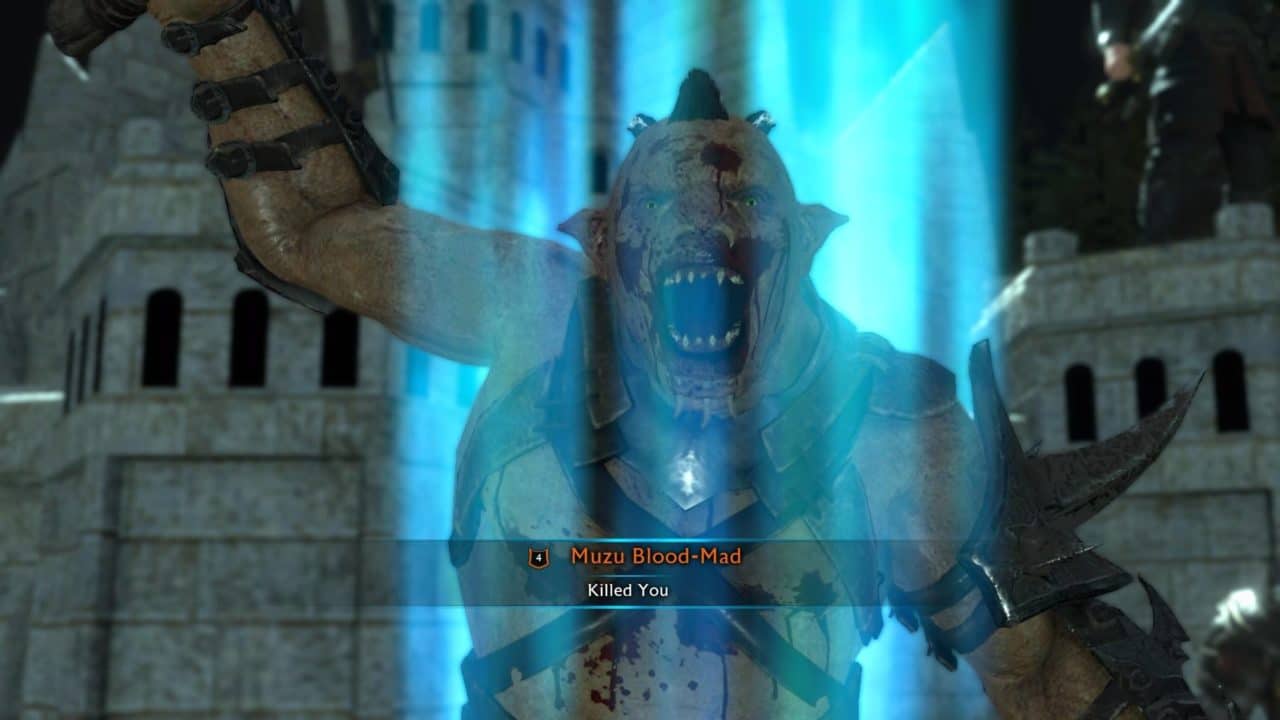
With a twist of his hunky wrists, Ur-Hakon Brawlmaster extinguished Bugu Flame Monger’s ambitions of becoming warchief. The 15-foot Olog berserker separated the fiery terror’s head from his body, showing every orc in the ice cavern Fight Pit of Seregost what he’d do to challengers. It was an impressive audition for a spot in my army that would face Sauron’s siege. Ur-Hakon just didn’t know it yet.
Prestigious legacy
Middle-earth: Shadow of Mordor was a revelation for video games in 2014. On the surface, it looked like a cash-grab mash-up of The Lord of the Rings, Assassin’s Creed, and the Batman: Arkham series. Technically, it was, as it used the LOTR universe as well as the combat and stealth mechanics of the two aforementioned video game franchises.
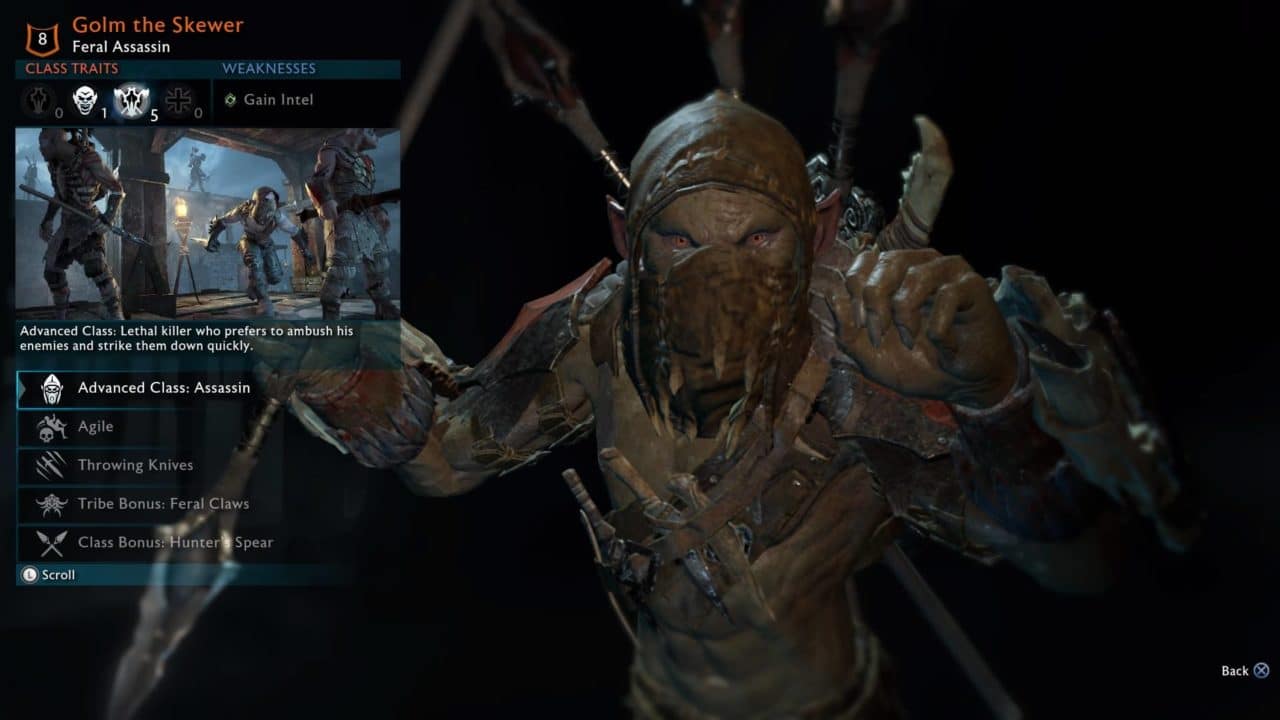
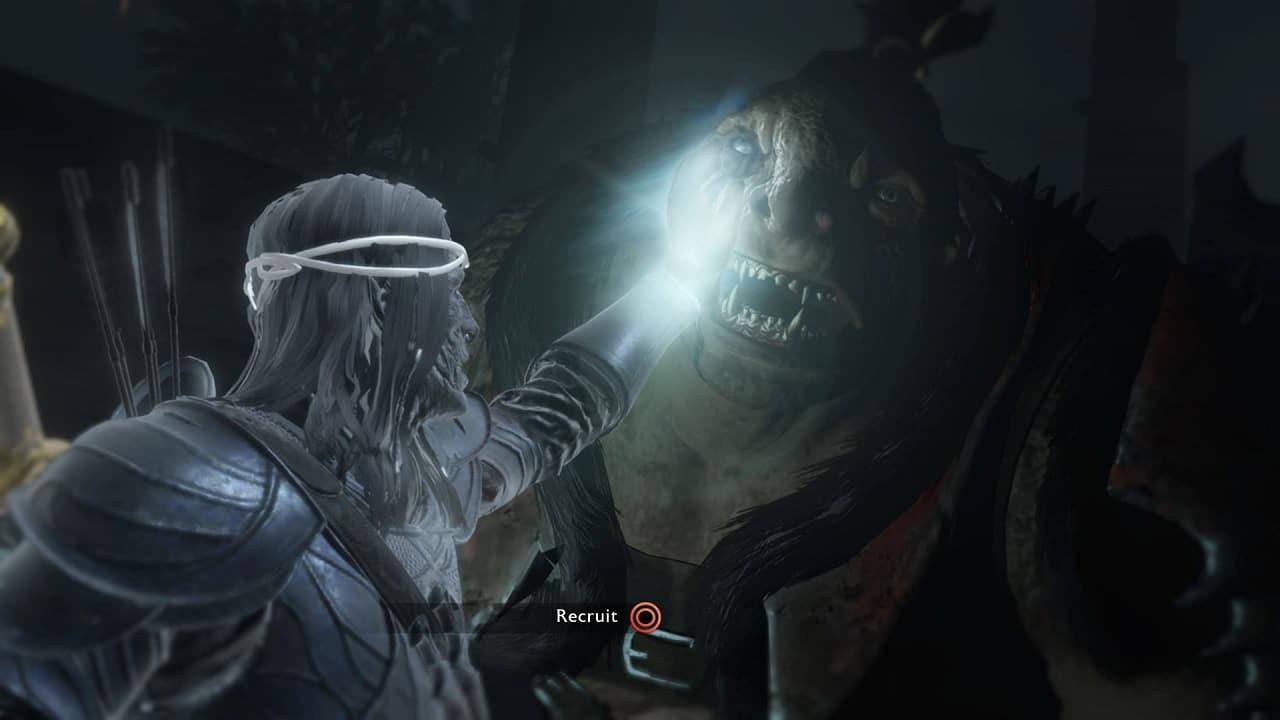
What made it special though was the Nemesis system. Basically, it generated enemy orcs with randomized sets of various strengths and weaknesses that would grow stronger if they killed the player or survived the encounter. They would remember how the encounter with the player ended, commenting on it through voiced dialogue if they’d meet the player again. These orcs would also fight with one another, with or without the player’s input, and the winner would also become stronger.
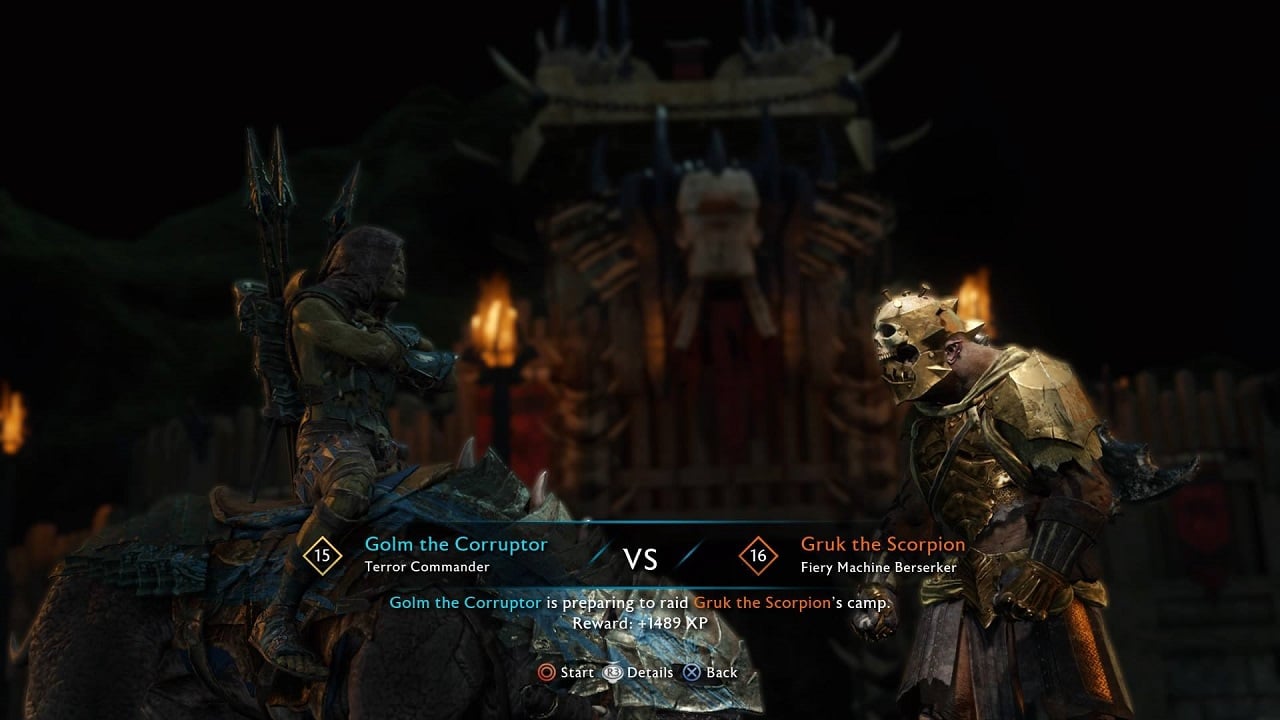
This system facilitated all sorts of unique stories, and was the number one driving force for all the accolades the game received.
The sequel, Middle-earth: Shadow of War, expands on the Nemesis system with a lot more traits assigned to orcs, novel ways they can react to the player’s actions, loot drops, and a whole new fortress capture-and-defend element.
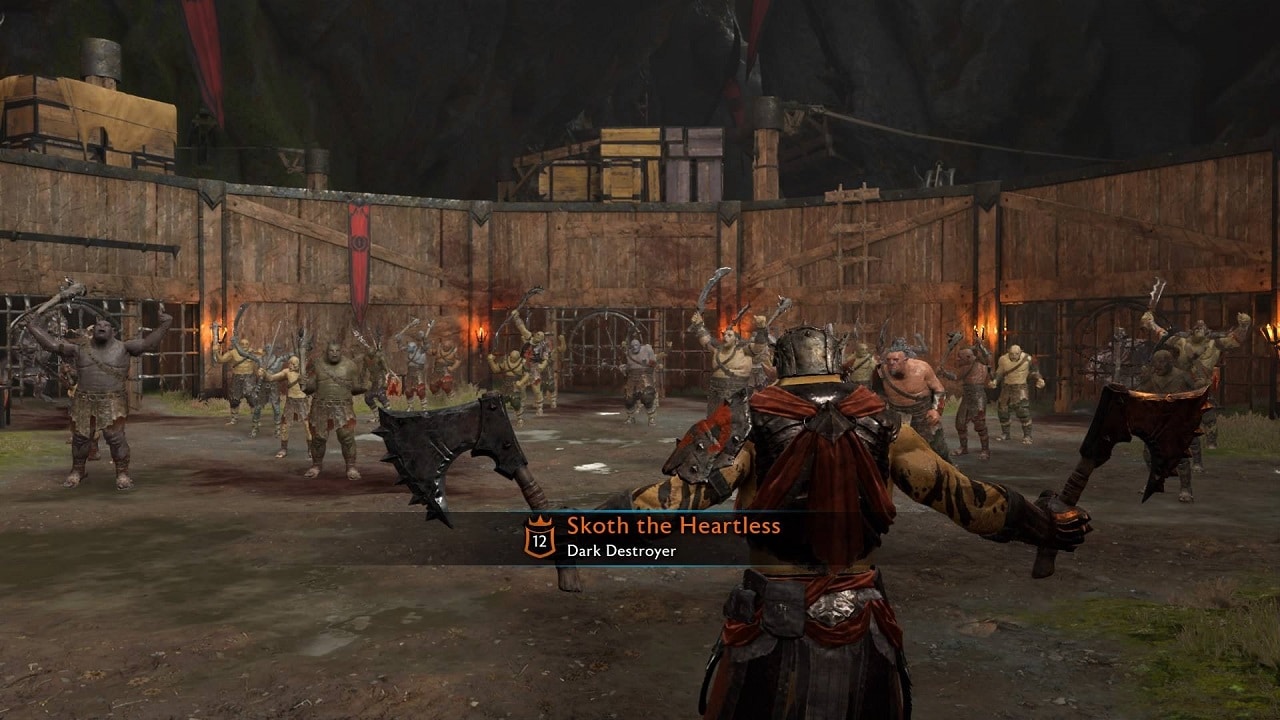
Despite winning with relative ease, Ur-Hakon sustained enough damage in his duel with Bugu that it would not have taken long for me to Dominate him. Just a few more strikes from my sword, and he would’ve been ready to submit and join my legion of mind-controlled orcs. So I leapt into the pit, eager to replace my now headless captain with this hulking behemoth, right into an ambush by Horza, Feral Tracker.
More mechanics
There are four areas to conquer, each with its own host of orcs that have different attributes and equipment they can drop. The gear you can pick up is sorted in a separate menu, listing their statistics along with bonuses you can access by completing small goals and wearing a matching set. Runes can be slotted into your equipment for buffs, and runes of the same kind can be upgraded by combining three similarly leveled runes to form one stronger rune. You have more skills to unlock compared to Shadow of Mordor.
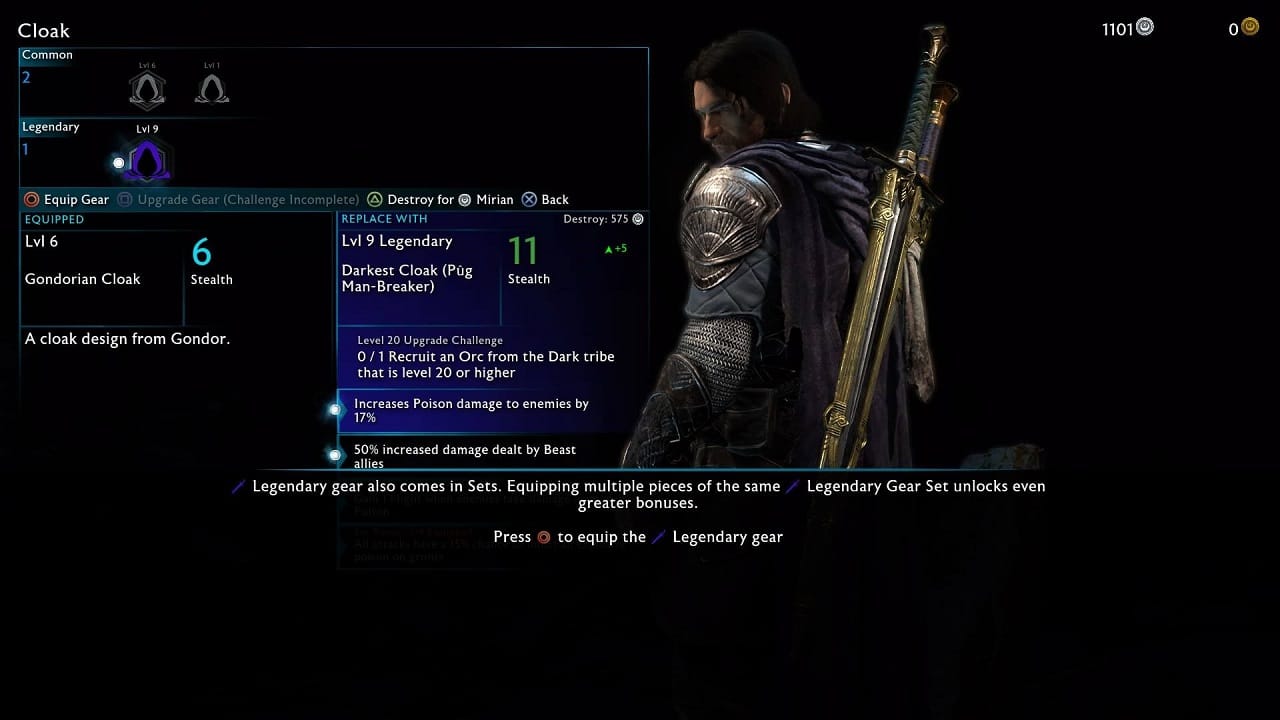
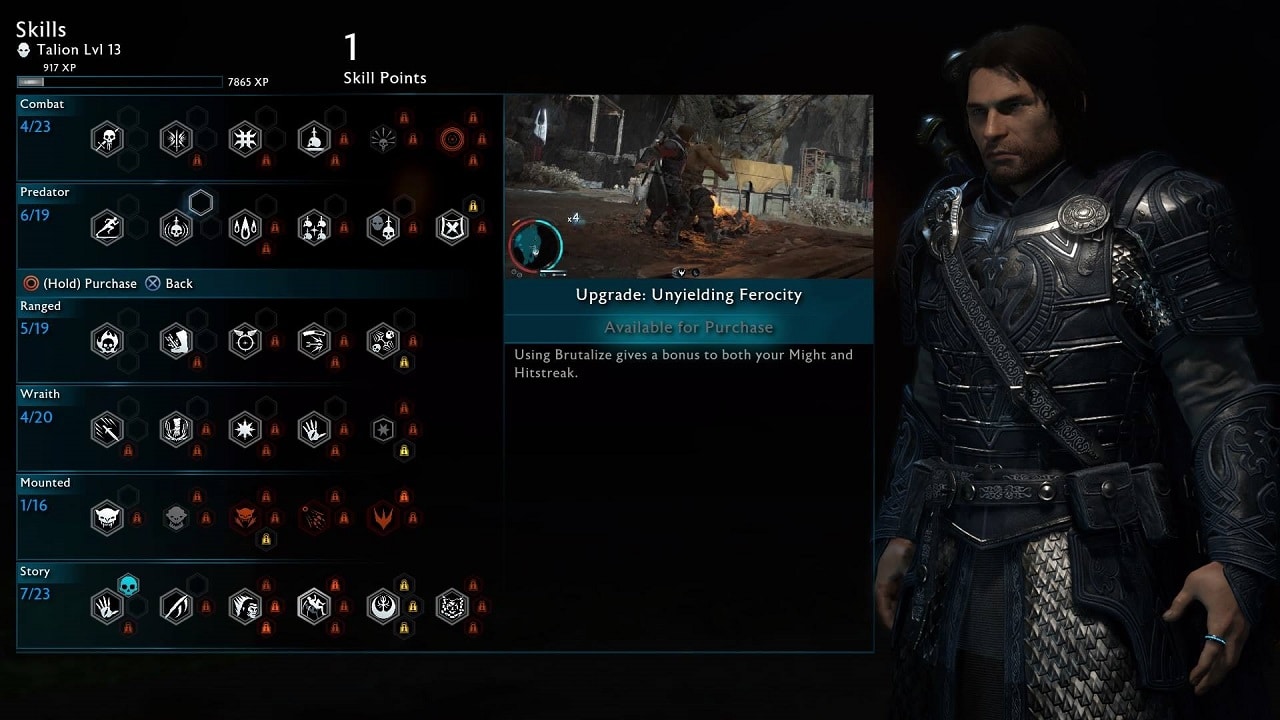
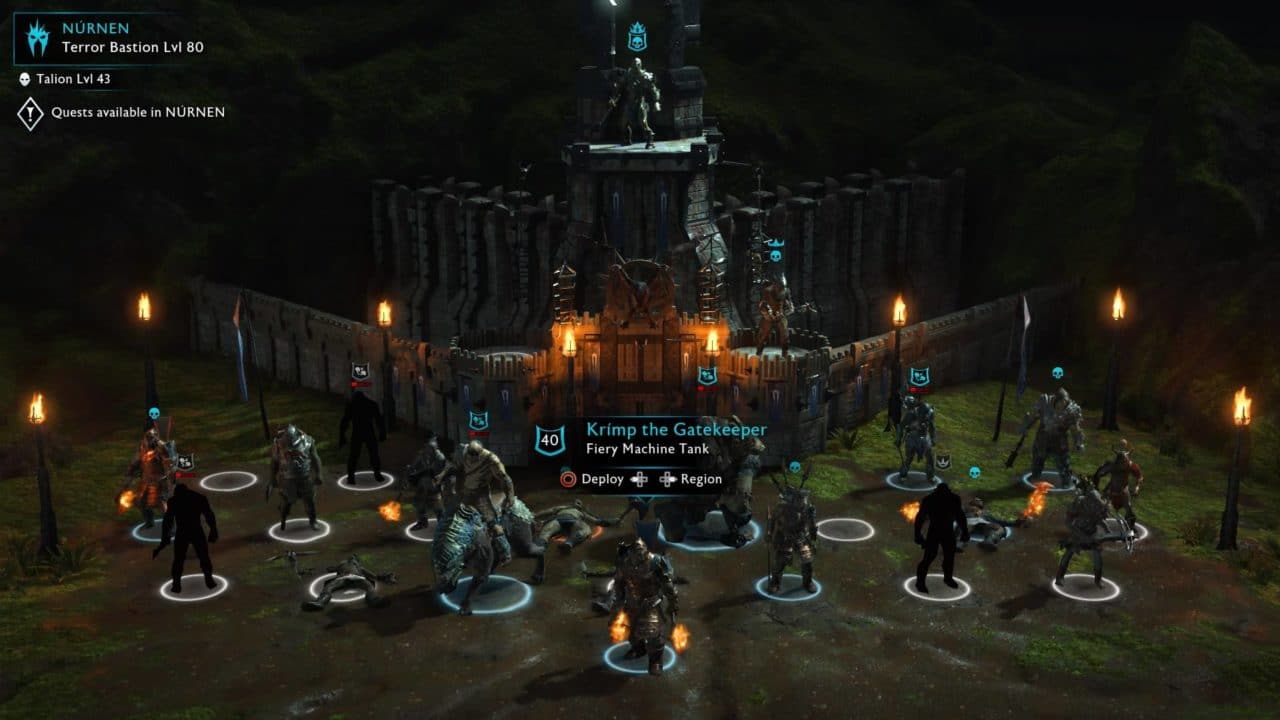
The game introduces these mechanics over time so that it’s not overwhelming. It’s pretty easy to get immersed in exploring how they interlock. Does this polished vitality rune go better with the rare longbow that restores health with every headshot over the regular chest piece that gives a flat increase to your life bar? Would this ability to freeze multiple baddies at once be effective against this orc captain that always has a pack of caragor-riding hunters with him? Perhaps pairing this sickly warchief with an orc bodyguard that gets stronger when poisoned would do well against an enemy orc that can summon venomous spiders for this one fortress siege.
And it’s in those fortress sieges that Shadow of War shines.
Ur-Hakon’s might should have been mine. Complications by way of several blades to my back courtesy of Horza led to this death. Well, deaths, as I did get rid of the meddling party after chopping off the Feral Tracker’s limbs. Ur-Hakon, taking advantage of the distraction, pummeled me into the ground. “I’ll get him on the next life,” assuring myself upon seeing the Brawlmaster’s power grow for ending me.
Compelling complexity in chaos
Opposing orc forces smash into each other on screen by the dozens. Siege beasts hurl explosives over spiked metal walls. Gigantic Graugs and club-wielding Olog-hai batter the gates as toxic fumes blow out of spouts, choking would-be invaders trying to scale the perimeter. Fire rains from a drake circling the skies. Warchiefs face assault leaders in strategic areas, their powers and weakpoints laid bare in pitched combat.
And there’s you, right in the middle of everything, the one X-factor that can change the tide of battle.
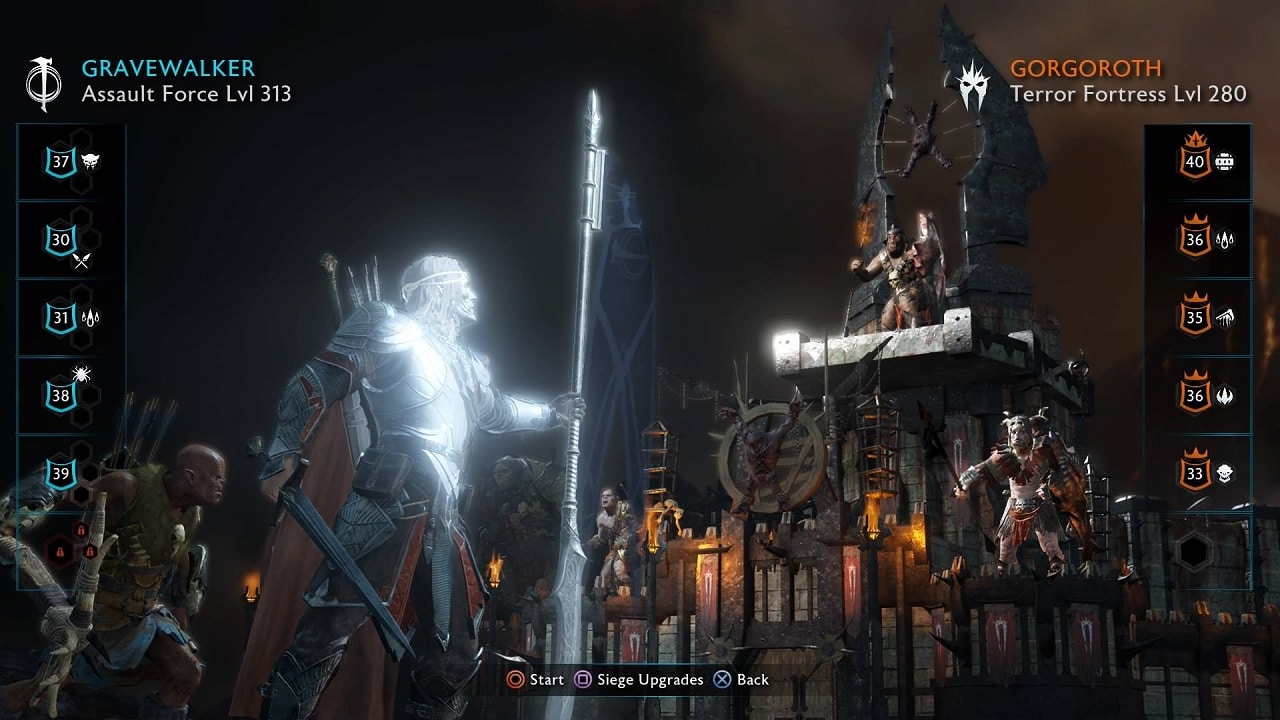
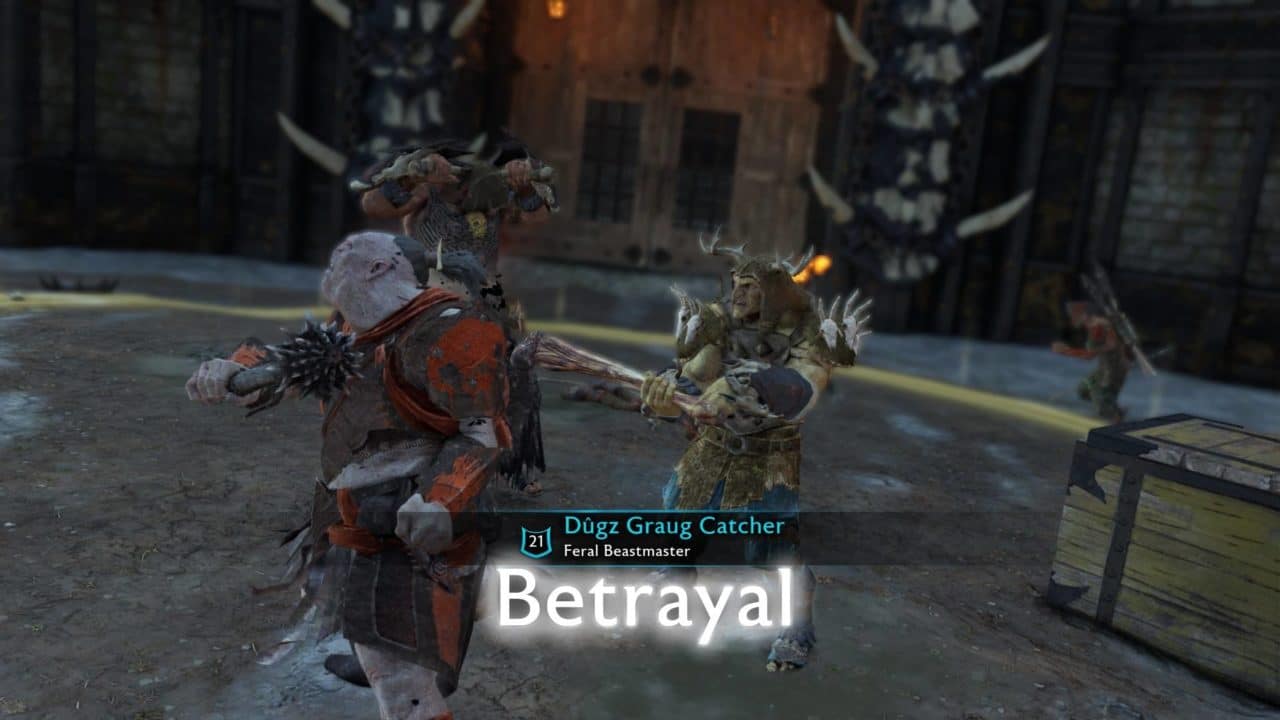
Depending on how much you planned prior to engaging, these sieges can be quick, calculated affairs under 15 minutes or wild and protracted struggles that have you teetering on the edge of defeat for 30 minutes or longer. Whether you’re seeing a sound strategy swiftly executed or barely surviving a slog of a brawl, it can be exhilarating.
Up to a point.
It didn’t take long finding Ur-Hakon at the edges of Seregost’s snow-capped mountains. He was fresh this time, unburdened from the tolls of a pit fight. Before I could get close though, a snarl behind me snapped my attention to Tuka the Machine. I burned him to death once. Half of his face was steel now, and he had a gang to back him up. We fought, unfortunately, in front of Ur-Hakon. The Brawlmaster killed us both.
The weight of war
Beating the game requires you to do about 30 fortress sieges, 20 of which come back-to-back at the end, and that’s if you don’t lose. Of course, each one gets harder than the last, as the orcs you face have progressively higher levels. The higher their levels, the fewer weaknesses they have and the more immunities they possess. By the last 10 sieges, most orc bosses you have to defeat are invulnerable to a lot of techniques and can also kill you in a couple of hits, even when you’ve reached the max level of 60 and have powerful gear.
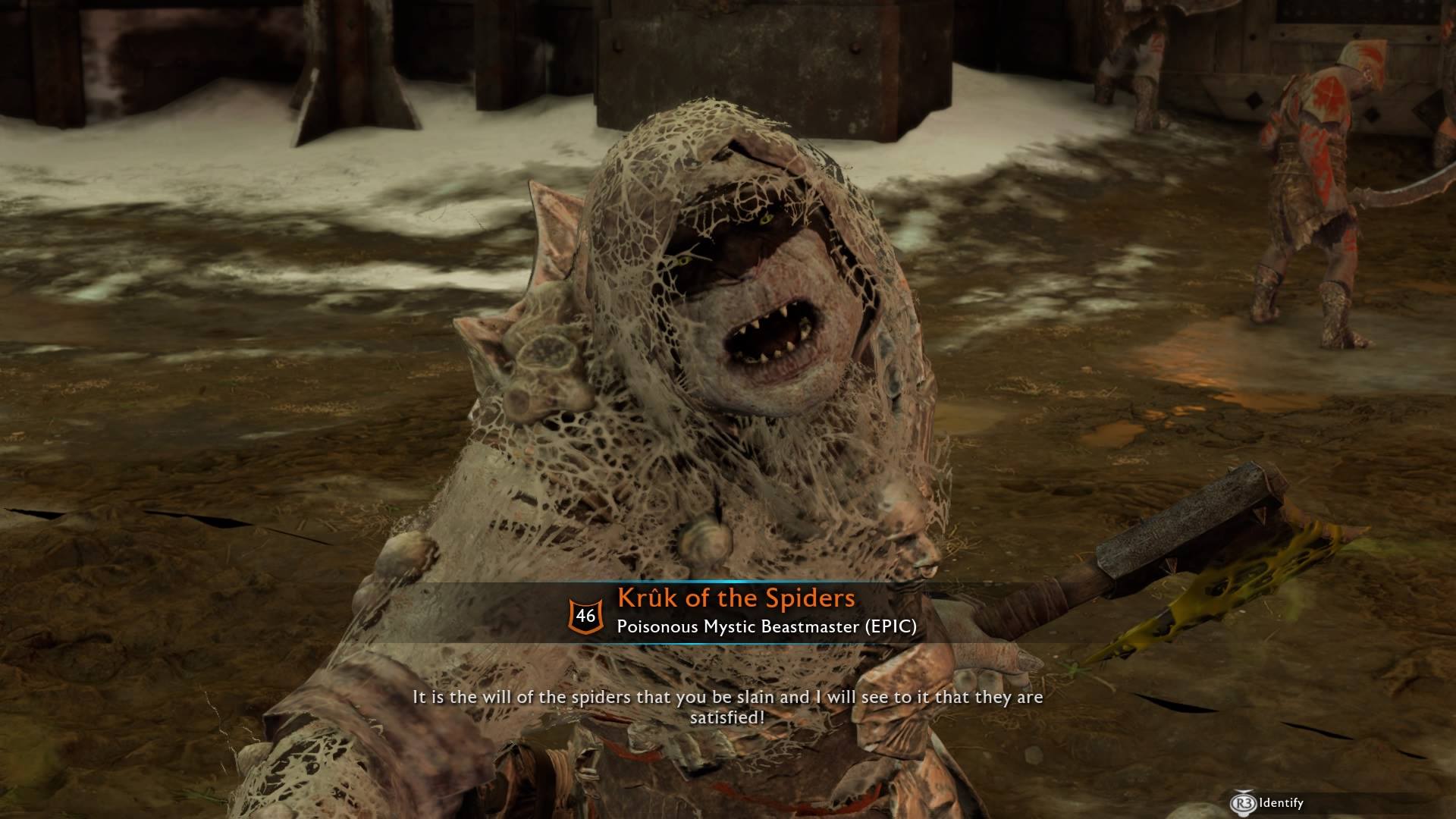
The orcs you’ve put in charge of the fortresses from naturally playing the game get outpaced in level by the enemy orcs when you reach this point, too. How do you keep up?
You either slowly level up your army through the Fight Pits, or you buy loot boxes that contain more appropriately leveled orcs. The former takes forever as you can only do it for one orc at a time, while the latter just feels icky with how blatantly it takes you out of the experience and pressures you to pay up.
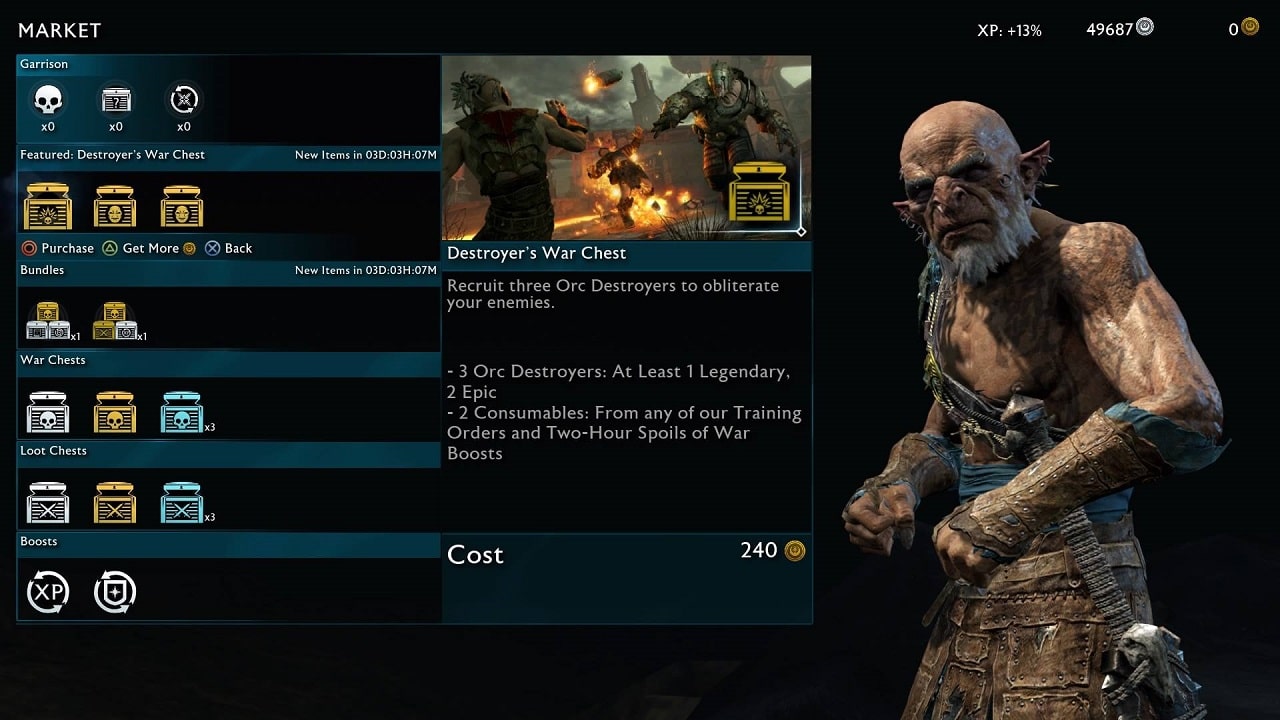
Granted, you can buy a basic loot box with in-game currency that you’ll have probably amassed enough of by this time from completing quests.
Did I mention there are quests?
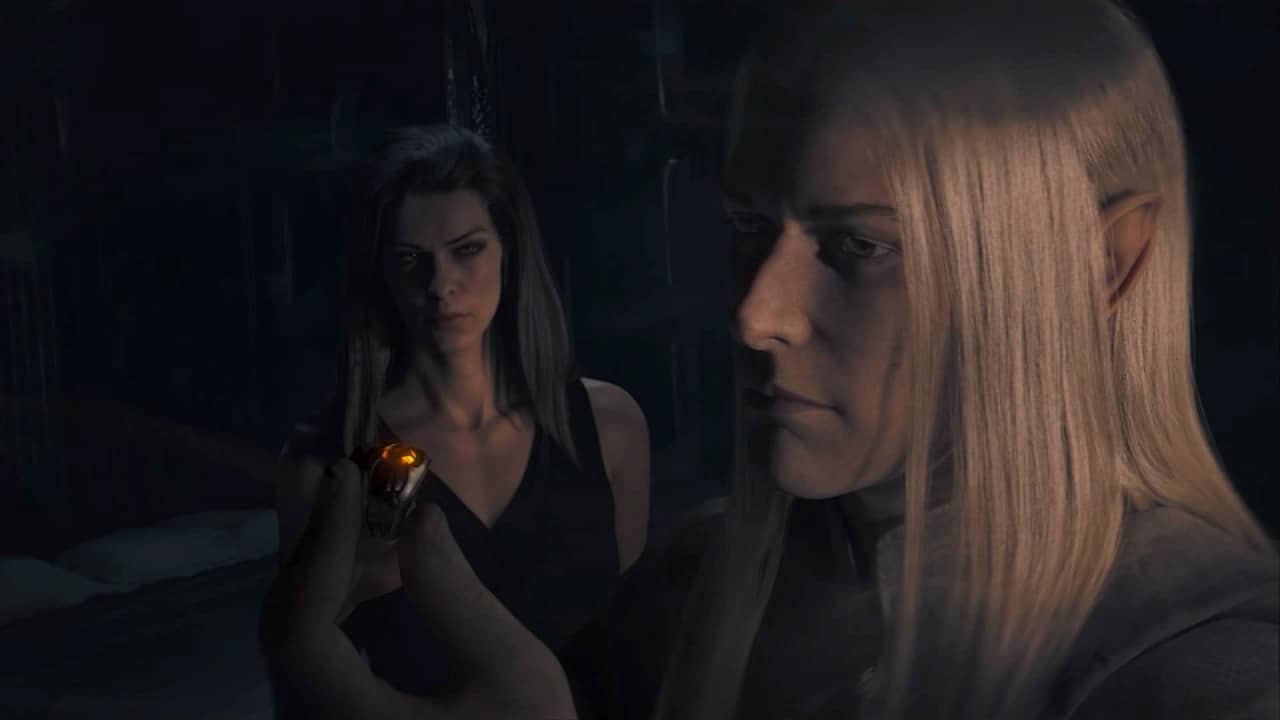
This was it. I tracked Ur-Hakon to a nearby cavern. There was no one else around to interfere. I would best him in one-on-one combat and have him under my command. I attacked. My sword was but a needle poking at his tough leathery hide. He would not succumb. His brute strength humiliated me. I fell to my knees one last time, his fist raised and ready to crush my skull. It fell past my head, as Stakuga the Knife came to my side at the last second, his blade catching Ur-Hakon’s blow, severing the arm from the elbow down. Stakuga saved me. He demanded a promotion, which I was more than glad to give.
Leaden narrative
I almost forgot about the quests because of how utterly unremarkable they are. They’re short, plain, and repetitive, asking you to accomplish one or two goals in the most straightforward manner. The Nemesis system doesn’t apply at all. No orcs can wander into the missions you’re on to surprise you. You die, you’re treated to a game over screen. Talion AKA Bargain Bin Boromir is as boring as video game protagonists come, and the rest of the cast is dour and unlikable, save for the handful of orcs that have way too minor roles.


The only notable thing about the narrative is the complete disregard of the canon and tone of the original Lord of the Rings stories. The first game certainly wasn’t the most respectful use of the LOTR license, but Shadow of War straight up retcons the lore to a ridiculous degree. Its attempt at commenting on the nature of evil clashes with how it rewards the player literally enslaving others.
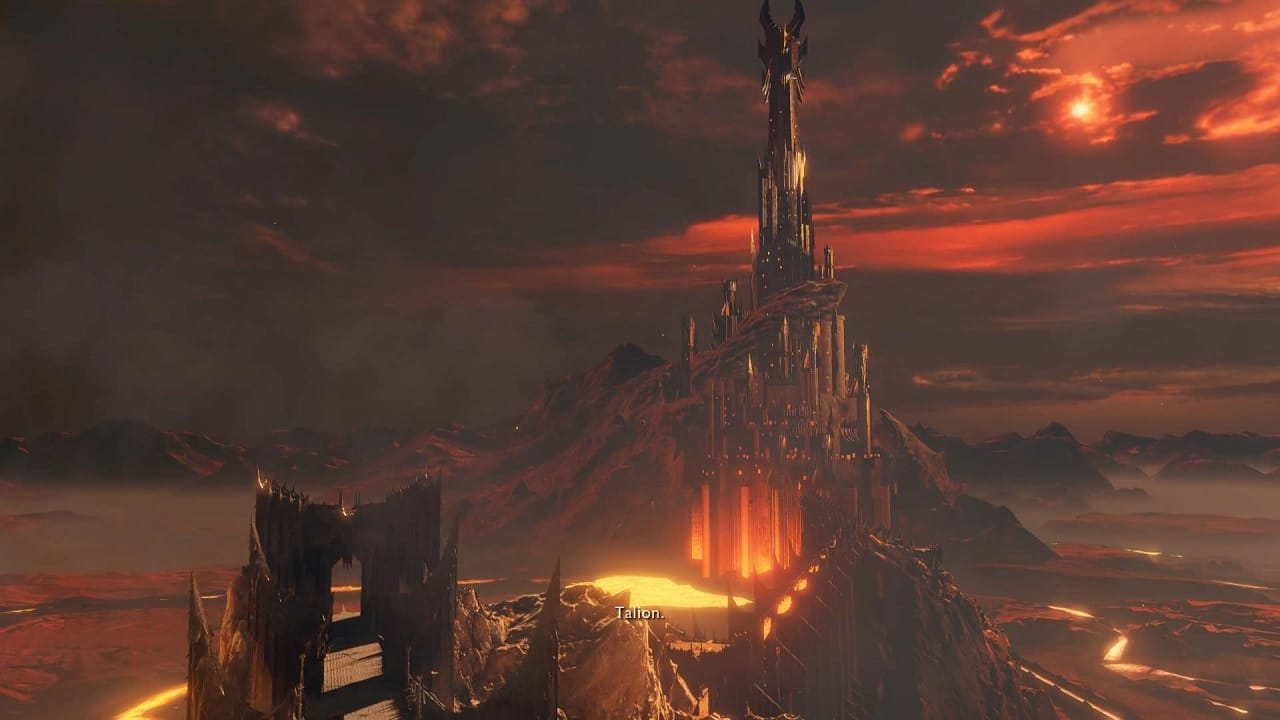
By tying the completion of this forgettable story into the fortress sieges in the final act, Shadow of War burdens the one clearly enjoyable thing about it and turns it into a chore.
There’s fun to be had in Middle-earth: Shadow of War, for sure, but it’s all in the dynamic mechanics divorced from the plot. Feel free to drop it when finishing it starts fatiguing you. That release is worth more than enduring the nigh endless endgame for a predictable ending.
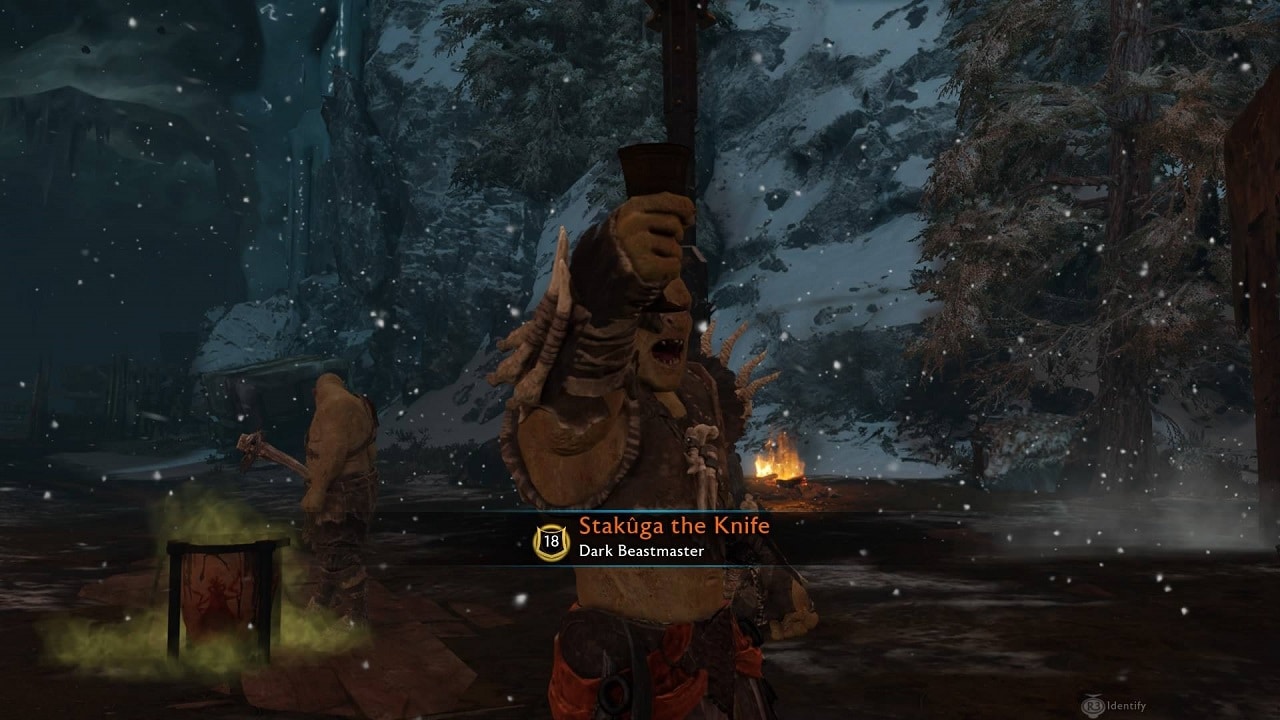
I tasted steel, and then dirt. I got up. Again. I assembled what was left of my troops. That fort in Gorgoroth had to be retaken. I had lain waste to that invading force before that stray arrow caught me in the melee. I only needed to storm the throne room. Stakuga died defending the courtyard. Some nameless goblin cut him down as he ran, afraid for his life. I envied his escape from this mortal coil. I reclaimed the fortress. Four more to go.
SEE ALSO: Indygo: A game that talks about depression
[irp posts=”22702″ name=”Indygo: A game that talks about depression”]

Gaming
CRISIS CORE -FINAL FANTASY VII- REUNION physical edition now available for Switch 2
Zack Fair’s story comes to Switch 2.

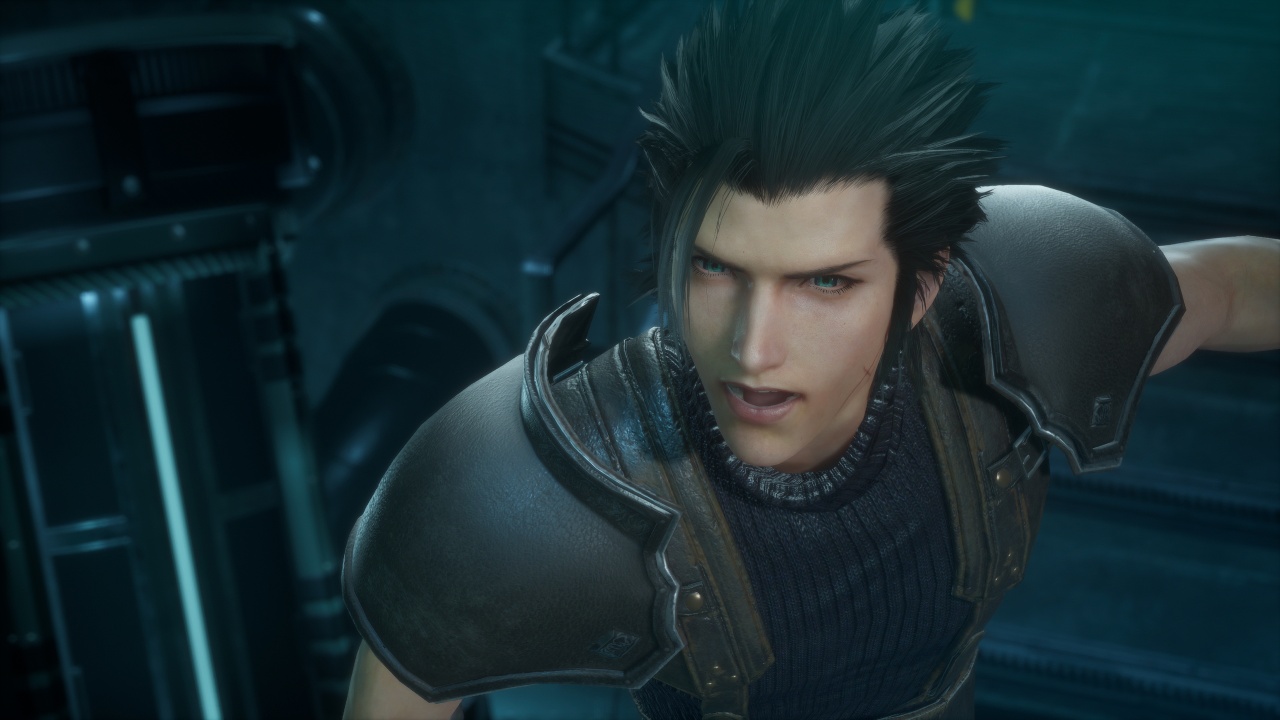
Bandai Namco Entertainment Asia and SQUARE ENIX have released the physical edition of CRISIS CORE -FINAL FANTASY VII- REUNION for Nintendo Switch 2 in Southeast Asia.
Players can also purchase the game digitally on the platform. Availability may vary by region and retailer.
Zack Fair’s story returns
Set in the mako-powered metropolis of Midgar, CRISIS CORE -FINAL FANTASY VII- REUNION follows Zack Fair, a young operative in Shinra’s elite SOLDIER unit.
Zack investigates the mysterious disappearance of SOLDIER operatives alongside his mentor, Angeal, and the legendary Sephiroth. His journey reveals the events that shaped the world of FINAL FANTASY VII and his connection to Cloud Strife.
The game revisits Zack’s story with an HD graphical overhaul of its character models, user interface, and environments. It also features fully voiced dialogue in English and Japanese, alongside an updated action-combat system.
Players can trigger Limit Breaks and Summons as they battle their way through the story. The game also supports handheld and docked play on Nintendo Switch 2.
A look back at Zack’s legacy
Originally released as a remaster of the PSP classic, CRISIS CORE -FINAL FANTASY VII- REUNION offers a refreshed take on one of the franchise’s most significant prequel stories.
In our GadgetMatch review, we explored how the remaster brings Zack Fair’s journey to modern platforms while preserving the emotional core of his story.
The release also gives players another way to experience the events leading into FINAL FANTASY VII, ahead of the upcoming FINAL FANTASY VII REVELATION, the third and final entry in the FINAL FANTASY VII Remake series.
For more information about CRISIS CORE -FINAL FANTASY VII- REUNION and other Bandai Namco Entertainment Asia titles, visit the official website.
Gaming
Dune: Awakening makes it way to the PS5 and Xbox Series X
Surviving the harsh land of Arrakis one sandstorm and bloodlust at a time

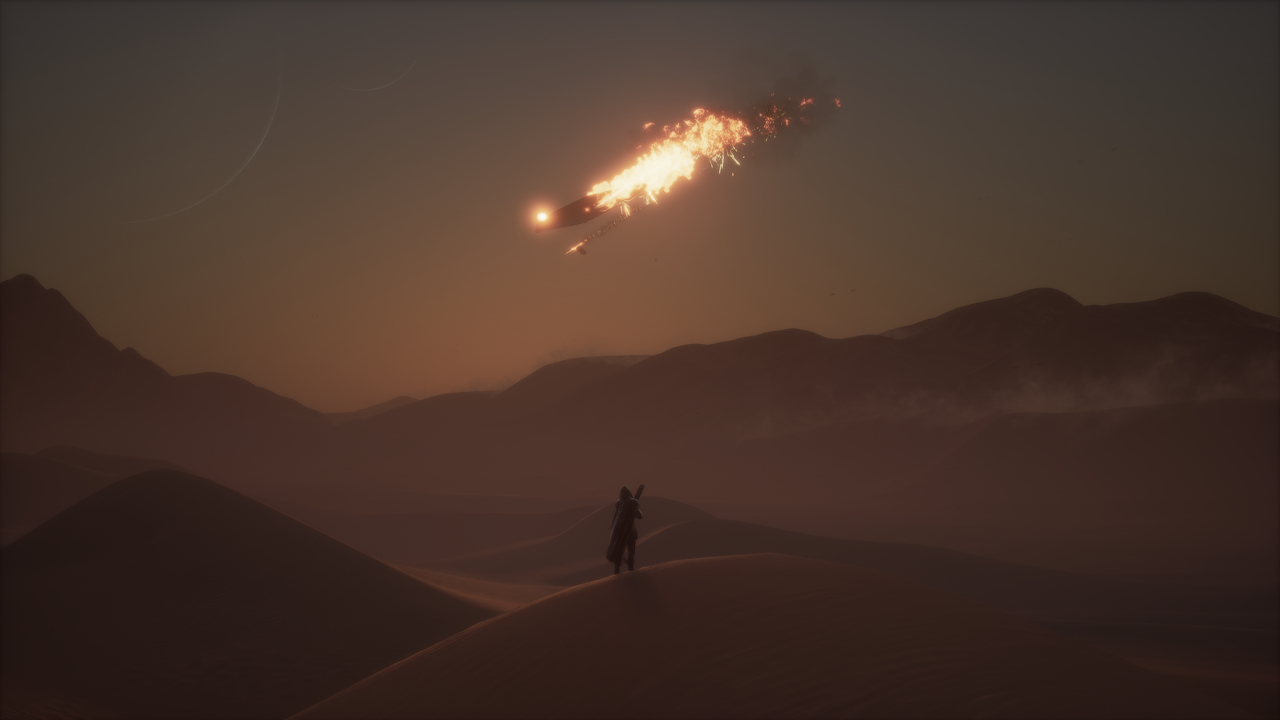
Back in June of 2025, Funcom released its multi-nominated open world survival game, Dune: Awakening. Inspired by the renowned movie franchise, the game takes place within the deserts of Arrakis as players survive and thrive through intense combat and strategic decision making. Now, in the big 2026, Funcom is finally bringing that experience to PlayStation 5 and Xbox Series X|S players as Dune: Awakening officially launches on console!
For the newbies finally getting it on console, here’s all you need to know:
Take the lead or do it together
Dune: Awakening takes you into the desolate land of Arrakis, and gives you the option to do it on Single Player or Multiplayer upfront. Through your own bidding in strategy, combat, and resource management, your goals are simple: survive the terrain, make more allies than enemies, and conquer the land through your affiliation to the powers that be.
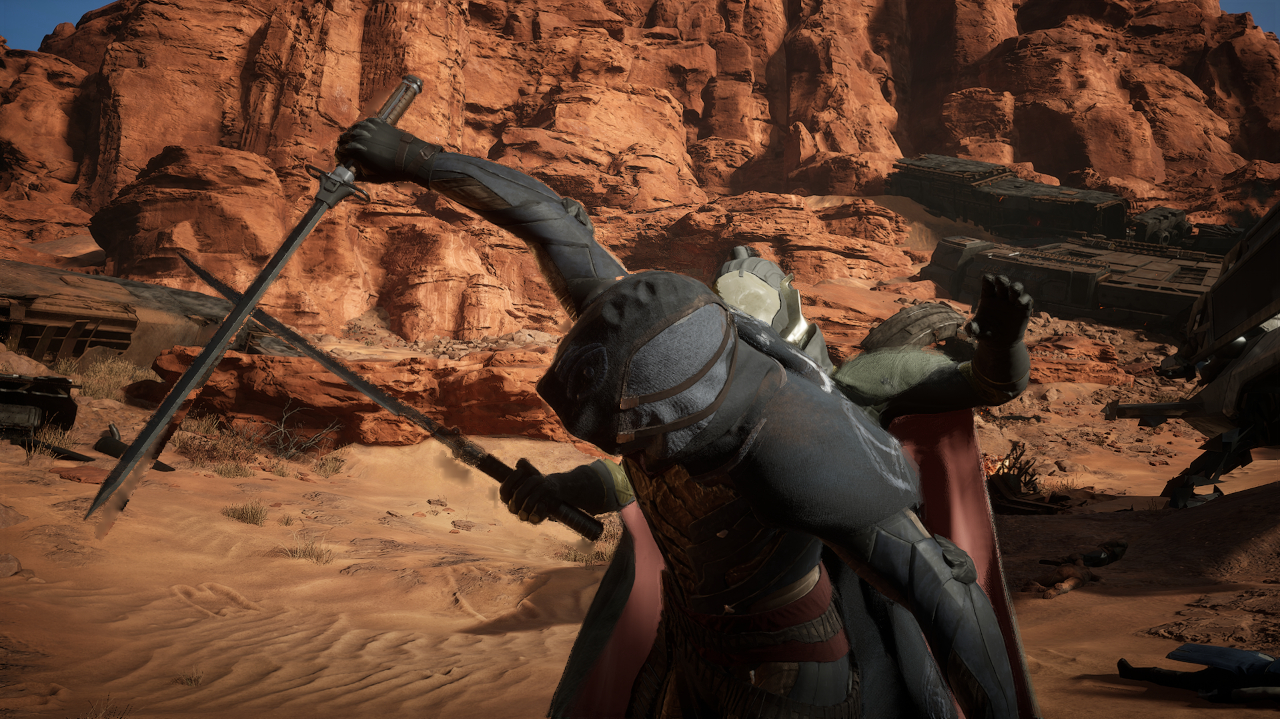
This version of the game is as exact and as one-to-one as it possibly could with the PC version released last year, down to the story arcs, quests, and PvE/PvP areas you take on. Since launch, Funcom has introduced new weapons, areas, and cosmetics through DLCs that will be available to console players, as well. Also, several key features in story and mission progression that have changed on the PC version will take into effect.
If you want to engage with multiplayer, it is still a viable option when you want to gather more resources and reinforce your bases against other players and the natural elements. However, you still won’t be able to host your own server on a console just yet, as it is more stable to do so on the PC version.
Become whoever and whatever to survive
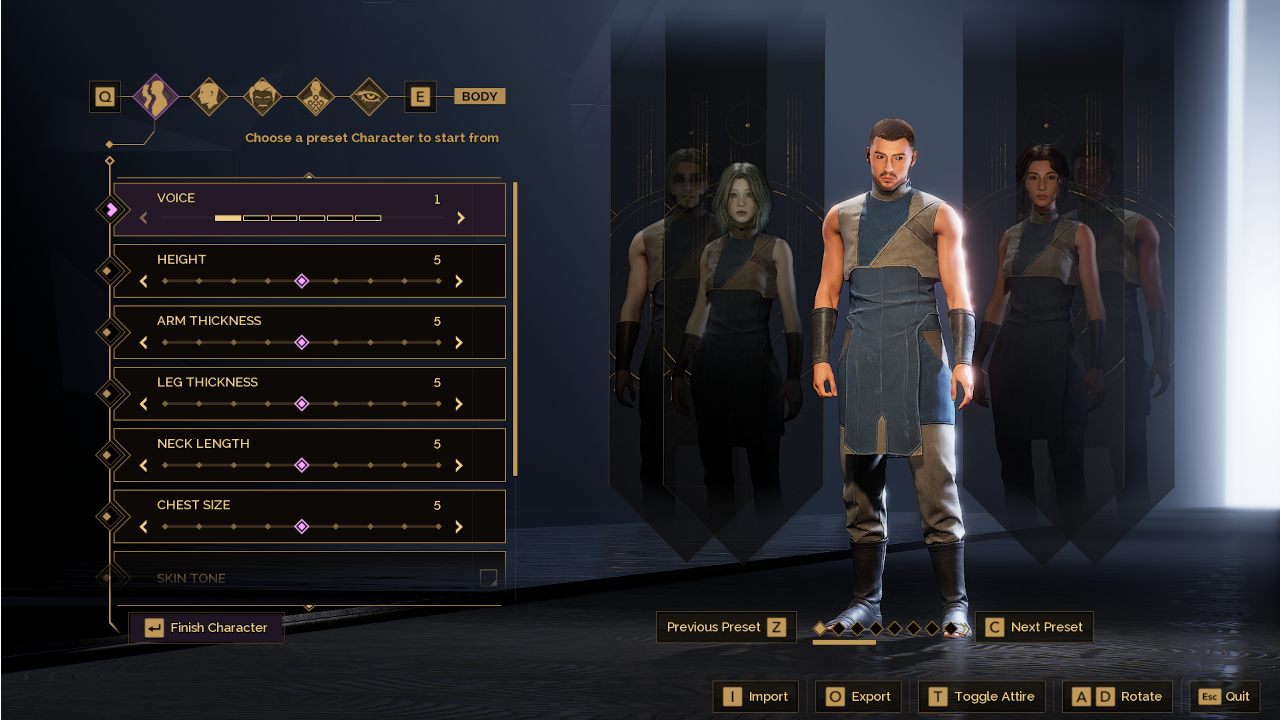
Character customization became the game’s bread and butter through its extensively library of features and unique take on story progression. As you begin your journey, Lady Jessica welcomes you in and asks you on your origin story, mentorship, and initial skill set — all of which are to your choosing based on your play style. Honestly, none of these completely influence the difficulty in progressing the story too much but it will give you full control of the experience.
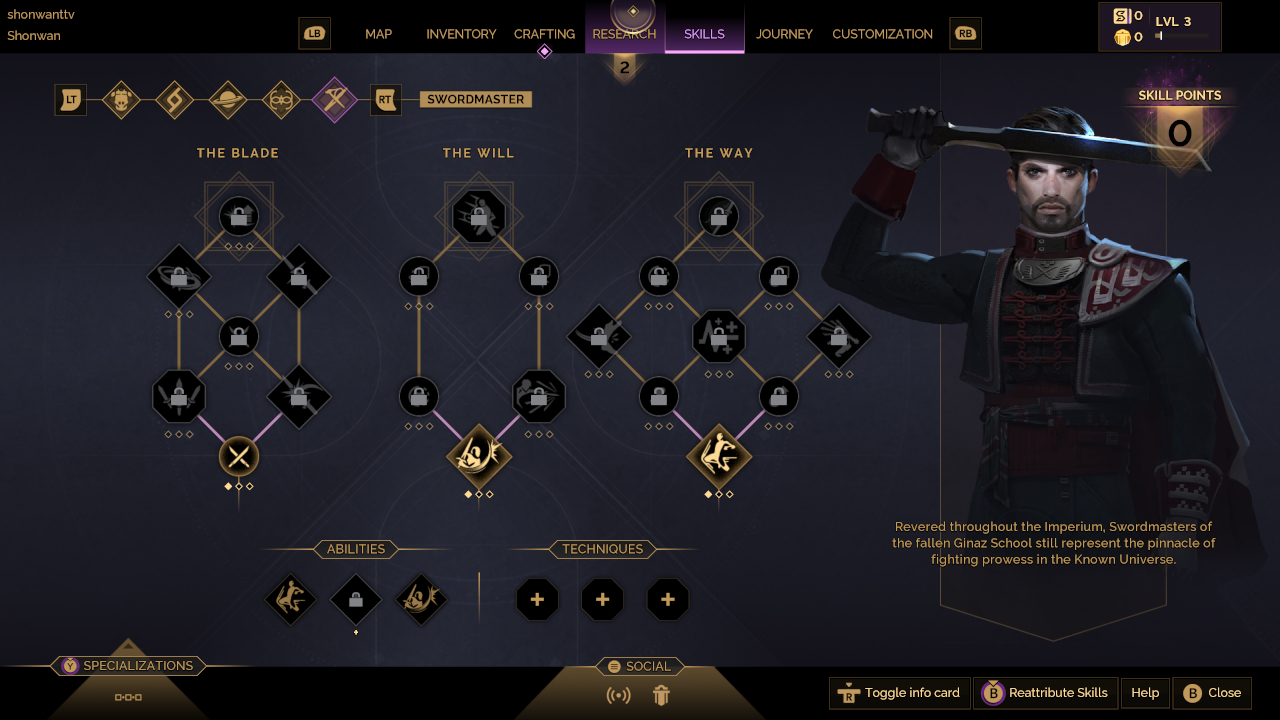
As you progress further into the game, you will unlock more skills and abilities to aid you in your quest for power and survival. These will help you earn XP, along with accomplishing tasks, gathering resources and researching newer technologies, plus engaging in combat both within the PvE and PvP areas. Ultimately, you and, potentially, other players must build enough rapport and influence to shape the world of Arrakis to your liking.
Consistent visual expectations
For most players on the PC version, graphical fidelity relied heavily on the hardware of choice. When transitioning the game into a console-friendly environment, Funcom worked out the details seamlessly by adding a Performance and Quality mode. In this fashion, you can opt for crystal-clear graphics at a decent 30 FPS or go for a constant 60 FPS to keep up with the action.
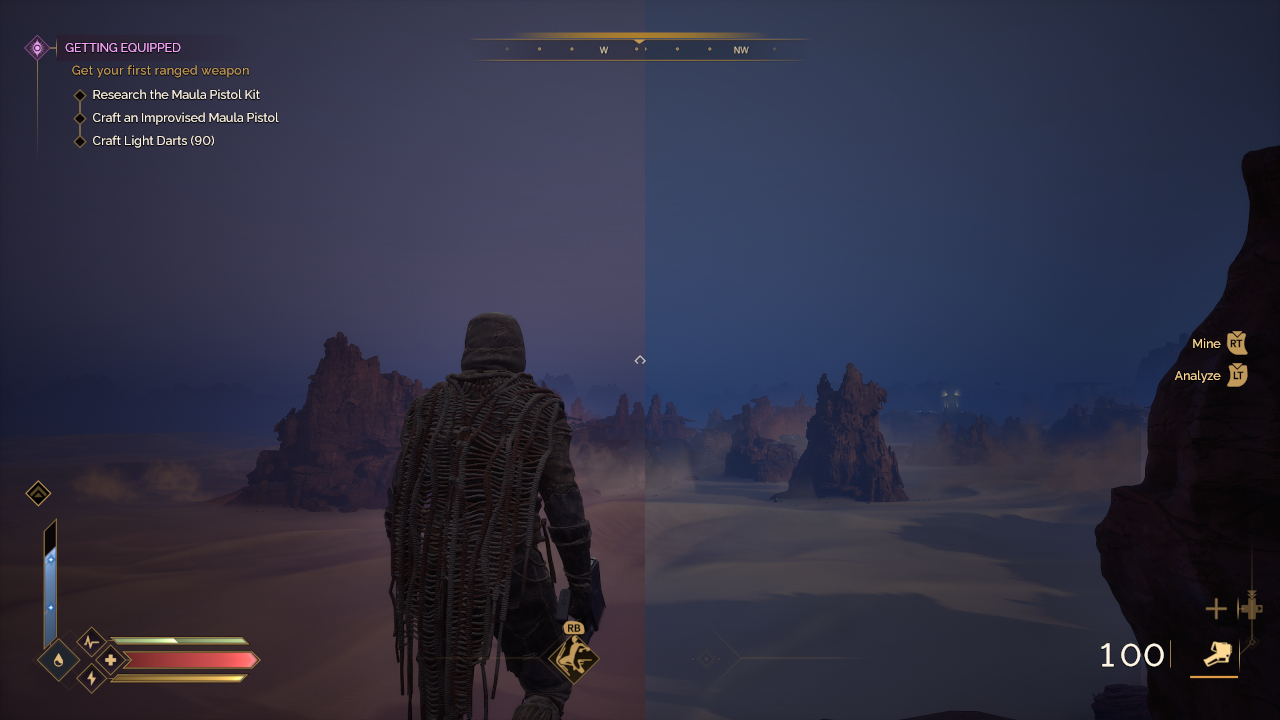
Left: Performance | Right: Quality
No matter which mode you choose, the overall visual identity of the game doesn’t change drastically. Environments look rich and vibrant, while the tiniest of details within character models are preserved. Although, given frame rate differences, rendering of background elements also reflects that but it won’t ruin the gaming experience.
Dune: Awakening will be available on the PlayStation 5 and Xbox Series X|S on September 22. For Xbox Game Pass owners, this will also be a Day One release with Play Anywhere support and cross-play within Xbox and PC players upon launch.
Funcom has also planned an exciting map update later this year plus potential DLC tie-ins to the upcoming Dune: Part Three theatrical release in December.

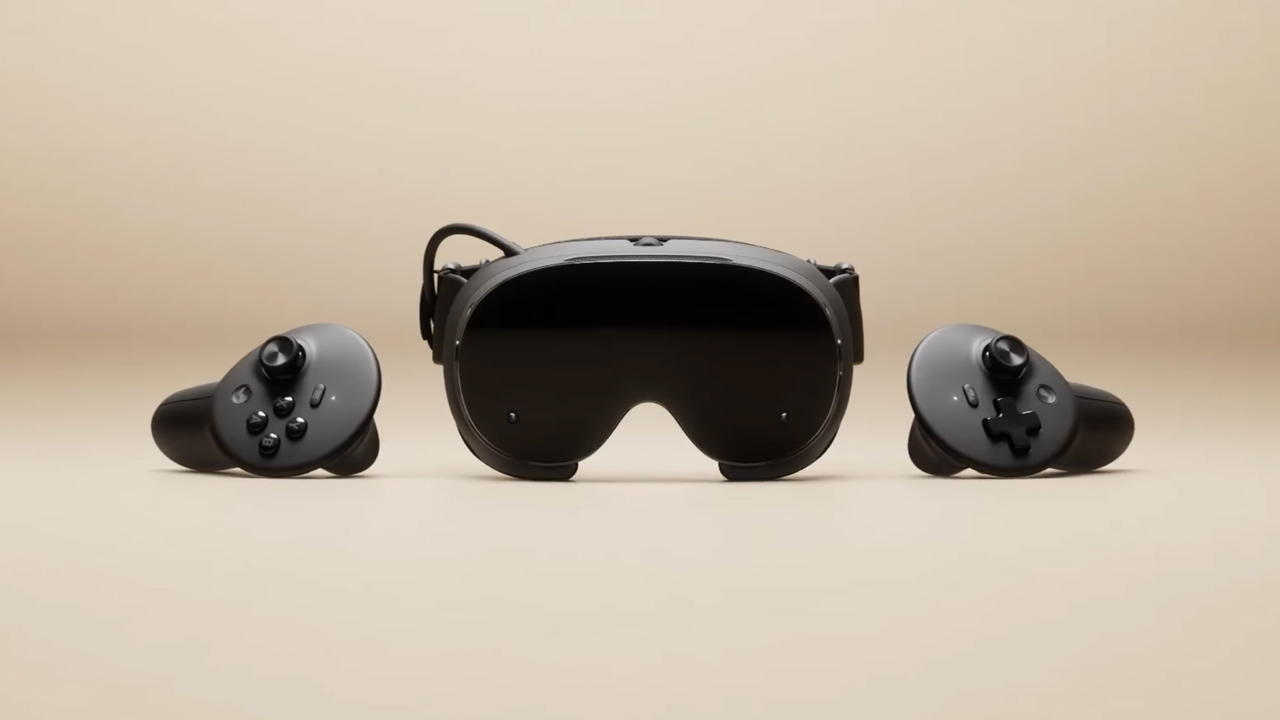
The trifecta is complete. Almost a year after announcing their new hardware, Valve has finally unveiled the price tag of the Steam Frame, complementing the Steam Machine and Steam Controller revealed a few months ago.
Whereas the Steam Machine is a console of its own, the Steam Frame is a traditional VR headset with a pair of controllers for both hands. Unfortunately, despite being in a different segment, the headset is not immune to the rising prices of technology. The Steam Frame will start at US$ 1,059 for a 256GB model and can go up to US$ 1,299 for the 1TB model. On the plus side, each box will come Half-Life: Alyx packaged along with the headset.
Here’s a more detailed rundown of what you’re getting. The Steam Frame will ship with the Snapdragon 8 Gen 3 chipset, paired with 16GB of RAM. Each eye comes with a 2160 x 2160 LCD screen, putting out images at up t0 a 144Hz experimental refresh rate. As mentioned above, the headset will start with 256GB of storage but can go up to 2TB. It will come packaged with SteamOS 3 and a rechargeable 21.6Wh battery.
This might be a hard buy for some. The industry currently has more affordable options, for one. Also, virtual reality isn’t the most thriving segment of gaming today.
If you’re still decided on buying one, however, Valve is using its lottery system. Interested customers can sign up from now until September 17. The company will then randomize the purchasing order. Those who draw the first ones in the lottery can get a purchase email as soon as September 18. Meanwhile, anyone who registers after September 17 will automatically be put at the back of the queue.
SEE ALSO: Valve announces its own console called the Steam Machine


DJI Lito X1 review: Is this the best lightweight drone for creators?
Making a strong case as a travel companion and a capable B-cam!


REDMI Note 17 Pro Max review: A new breed born from AI greed
Welcome to the new normal


Marvel’s Wolverine review: When the claws come out
A brutal, cinematic superhero adventure

Chimelong’s newest attraction might be the robots themselves

Xiaomi 18 Pro series is launching globally, Xiaomi confirms

Google Photos can now censor your kid’s face better

CRISIS CORE -FINAL FANTASY VII- REUNION physical edition now available for Switch 2

Smart launches AI.Smart, an affordable AI workspace

realme 16T 5G with 8000mAh battery, IP69 Pro rating launches in PH

HUAWEI Pura X View is 2026’s first WIDE slab-type smartphone

REDMI reveals the refreshed Note 17 and Note 17 Pro series

REDMI Note 17 Series: Price, availability in Singapore

The CAMON Slim 5G is TECNO’s latest ultra-slim smartphone


-

 News4 days ago
vivo X500 Series launches with major imaging upgrades
-

 Hands-On2 weeks ago
Apple iPhone 18 Pro Series Hands-on
-
 Gaming2 weeks ago
BlizzCon 2026 announces World of Warcraft: Forever and Diablo V
-
Reviews2 weeks ago
REDMI Note 17 Pro Max review: A new breed born from AI greed
-

 News3 days ago
OPPO Find X10 Pro Max is the first phone with a triple 200MP camera system
-

 Singapore6 days ago
Epson Lifestudio Grand Plus EH-LS970B with 4K projection, more launches
-

 News4 days ago
vivo introduces OriginOS 7 with smarter multitasking and AI features
-
 Gaming2 weeks ago
Valve unveils price of the Steam Frame