


Did you know that the first electric vehicle was invented by Scottish inventor Robert Anderson in 1832? Back then, electricity-powered cars were nothing but curiosities and novelties. Now, electric vehicles are readying themselves to take over the car industry in just a few decades.
As with all revolutionary technology, reception for electric cars is lukewarm at best. Most consumers are still wary with converting to full electric, citing an unstable and uncertain future for the industry.
With the car and fuel industry hanging in the balance, gas car companies have a lot to gain by downplaying the benefits of electric vehicles. Due to the lack of information available, unproven myths inevitably pop up. Myths, as always, need to be debunked especially when electric cars overtake gas car production.
Myth 1: Electric cars are more expensive than gas cars
The cost of an electric vehicle is the most hotly contested aspect of EVs. Admittedly, the world’s most famous electric car, the Tesla Model S, still falls under the luxury car category. The battery-powered car still hovers around the US$ 100,000 range.
Budget-friendlier alternatives are out now, but their price ranges are still a bit more than a conventional car. The Chevrolet Bolt and the Nissan Leaf both cost around US$ 40,000, for example.

Illustrations by Yanni Panesa
Additionally, installing a home charging station compounds that price by about US$ 600.
It’s no surprise that most consumers are turned off by the exorbitant costs of EVs. However, the one-time price tag fails to show how much cheaper it is in the long run.
Right now, the cost of one kilowatt-hour (the standard for EVs) is below the cost of one liter of gasoline. Roughly estimating, one kWh costs 20 cents, while one liter of gas costs US$ 1, according to today’s standards.
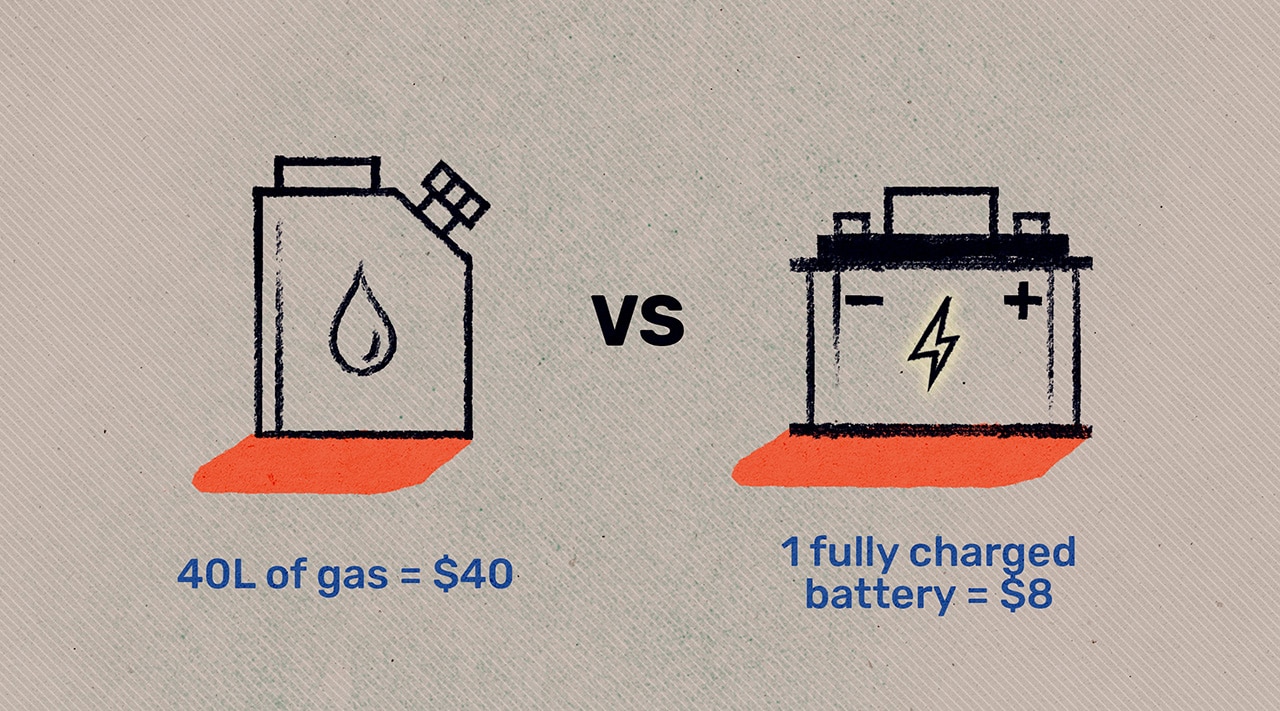
The Nissan Leaf carries a 40kWh battery. Charging it to full will cost 40kWh x US$ 0.20 = US$ 8. Meanwhile, a 40L gas car will cost 40L x US$ 1 = US$ 40. Added with a much steeper maintenance cost, gasoline vehicles will quickly overtake the cost of EVs in the long run. (Of course, actual costs will still vary on usage, real prices, and road conditions.)
Myth 2: EVs don’t perform as well as gas cars
Don’t be fooled. Even if EVs are remarkably silent on the road, they are hiding powerful engines that are quickly catching up to the standards of speed today.
At their core, gasoline vehicles are inherently faulty. Their emissions aren’t only a hit on air pollution; they also mean that a car wastes a huge portion of their energy through heat, smoke, and other harmful pollutants.
On the other hand, EVs convert up to 62 percent of their stored energy for movement. For comparison, gas cars only use up 21 percent of their energy.
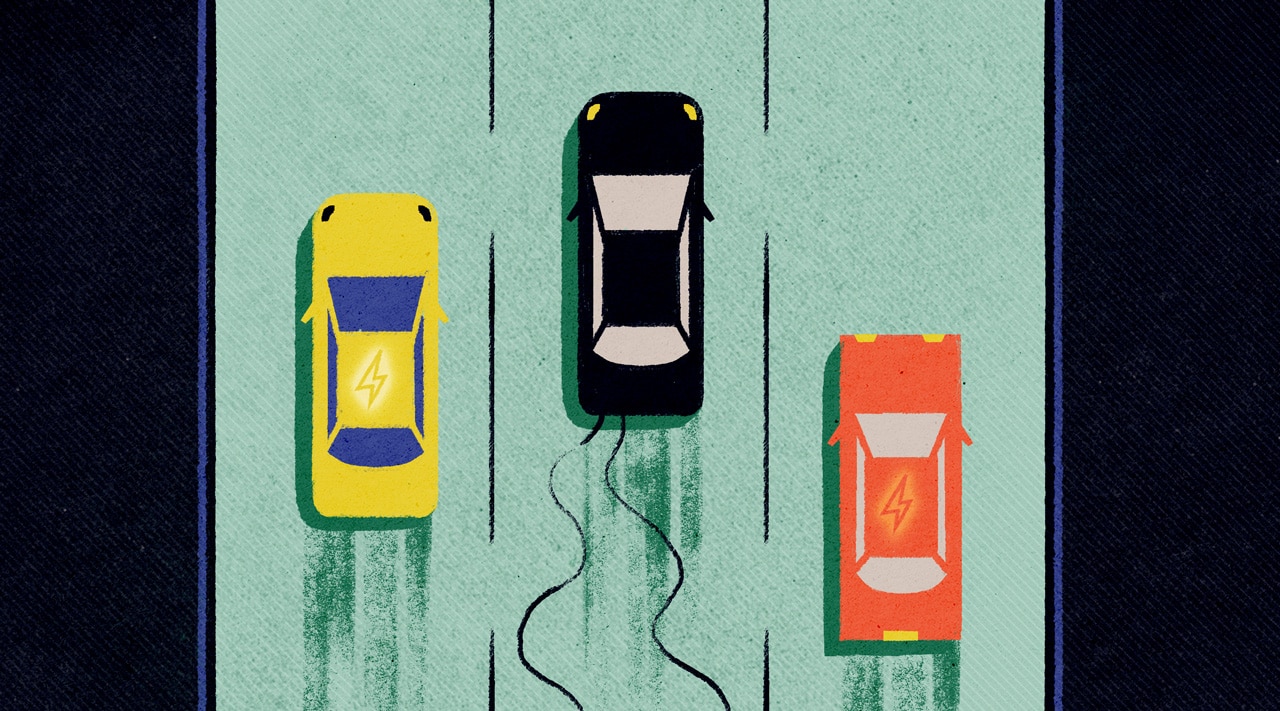
In terms of mileage, EVs can travel up to 193 kilometers on a full charge, adequate for a day’s worth of traveling. However, gas cars still rule the road by hundreds of kilometers more. It’s only a matter of time before EVs catch up, though. The industry-leading Tesla Model S 100D already tops out at 530+ kilometers.
Finally, when it comes to speed, EVs can do well to catch up with you in traffic. For example, both the Nissan Leaf and the Chevrolet Bolt reach speeds of up to 150km/h. While the more widely available EVs can still be woefully left in the dirt on a straightaway, the Tesla Model X blazes through with a top speed of 250km/h.
Amid all of this, EVs do their jobs quietly. If you’re not paying attention, an EV can sneak up on you from behind. Besides air pollution, EVs avoid noise pollution, too.
Myth 3: Maintaining an EV is more trouble than it’s worth
Both an EV and a gas car take you from one place to the other. EVs just do it with far fewer components. Unlike conventional cars, EVs aren’t frequent visitors to the mechanics. Fewer parts mean fewer components to maintain.
That doesn’t mean that everything is breezy, though. Replacing the battery is a nightmare for your budgeting. For example, a Nissan Leaf replacement battery costs US$ 5,499.

Thankfully, batteries are a lot more durable than you would expect. The Nissan Leaf guarantees a battery life of eight years or 100,000 miles (or approximately 161,000 kilometers). Most electric car brands already offer warranties (including replacements) before their batteries expire. Moreover, electric car batteries are completely recyclable. You might even get a trade-in return for your old battery.
Currently, the only hurdle impeding an electric car’s maintenance is the lack of able mechanics who specialize in EVs. On the bright side, by the time that you’ll need a thorough repair on your EV, the employment industry will have evolved to accommodate your needs.
Myth 4: Electric vehicles are the saviors of the environment
There is no doubt that EVs eliminate the carbon emissions that gas cars will always emit. Even from their construction, EVs carry a design trait that puts them beyond gas cars: They don’t have a tailpipe.
Currently, 75 percent of air pollution comes from motor vehicles. With their energy-efficient design, EVs eliminate the pollution caused by carbon emission. Converting to an EV is one of the greenest decisions you can make to save the environment.
However, it has its own fair share of gray areas. Critics often share the myth that EVs only displace the emissions from the tailpipe to a coal plant’s smoke stack.
Which is partly true.

On their own, the world’s main methods of producing power are terribly unprepared for a sudden surge in demand. Despite recent developments in renewable energy, coal power is still the world’s leading generator of electricity.
Hypothetically, if everyone in the world adopted EVs right now, coal plants would have to exponentially increase their output, creating more smokestack emissions as a result.
Luckily, the world isn’t ready to go full EV yet. Early predictions still date the takeover to 2040. We still have a lot of time to adjust our energy consumption for more energy-efficient means, like solar, hydro, and nuclear.
In reality, EVs can’t save the world by themselves. The myth that they just displace damage is only half-true. However, the environment can’t survive with 50 percent solutions. It has to rely on us changing our perspectives on energy.
Electric vehicles are the future. But with unchecked energy consumption rates, that future can look quite grim.







Automotive
Psst! You can test drive BYD and DENZA EVs for free this week, but not for long
Four days of EV displays, test drives, and a first look at the DENZA Z9 GT.


BYD Cars Philippines and DENZA Philippines are opening Super Experience Week to the public starting October 8, 2026.
The event runs until October 11 and gives visitors a hands-on look at the brands’ latest EVs and plug-in hybrids, along with test drives and a few previews. Admission is free.
BYD brings its plug-in hybrids and safety program
BYD’s showcase at the BGC Amphitheater will feature the Sealion 6 DM-i and the Tang DM-i. The brand’s full lineup will be on display at the BGC Garden, where visitors can also take the cars out for test drives.
BYD is also running its “Drive Electric, EV Safety Program” at the event. It’s aimed at helping new and prospective owners learn more about EV use as the community in the Philippines continues to grow. BYD says visitors can also get exclusive offers on all of its models, but only during Super Experience Week.
DENZA shows its premium lineup and a first look at the Z9 GT
DENZA is the centerpiece of the event. The brand is displaying its D9, B5, and B8, positioned as premium smart mobility with an emphasis on design, in-car tech, electrified performance, and comfort.
The main draw is an exclusive preview of the DENZA Z9 GT. The Philippine launch is targeted for the first quarter of 2027, and reservations are already open for customers who want to register their interest before it arrives.
The weekend moves to 5th Avenue
On October 10 and 11, the event expands to 5th Avenue, which will host a dedicated performance and advanced mobility showcase. A special exhibition will feature YANGWANG models, BYD’s ultra-luxury new energy vehicles.
The DENZA B5, DENZA B8, and BYD Shark 6 DMO will also be on show in a street exhibition throughout the weekend.
Test drives across both the BYD and DENZA lineups will be available for the duration of the event, so visitors can check out the tech, performance, and comfort of each model firsthand.
Automotive
Electric luxury reimagined: XPENG launches next-gen EV lineup
XPENG’s PH lineup spans the X9 MPV and the L03, with prices starting at PhP 1,548,000

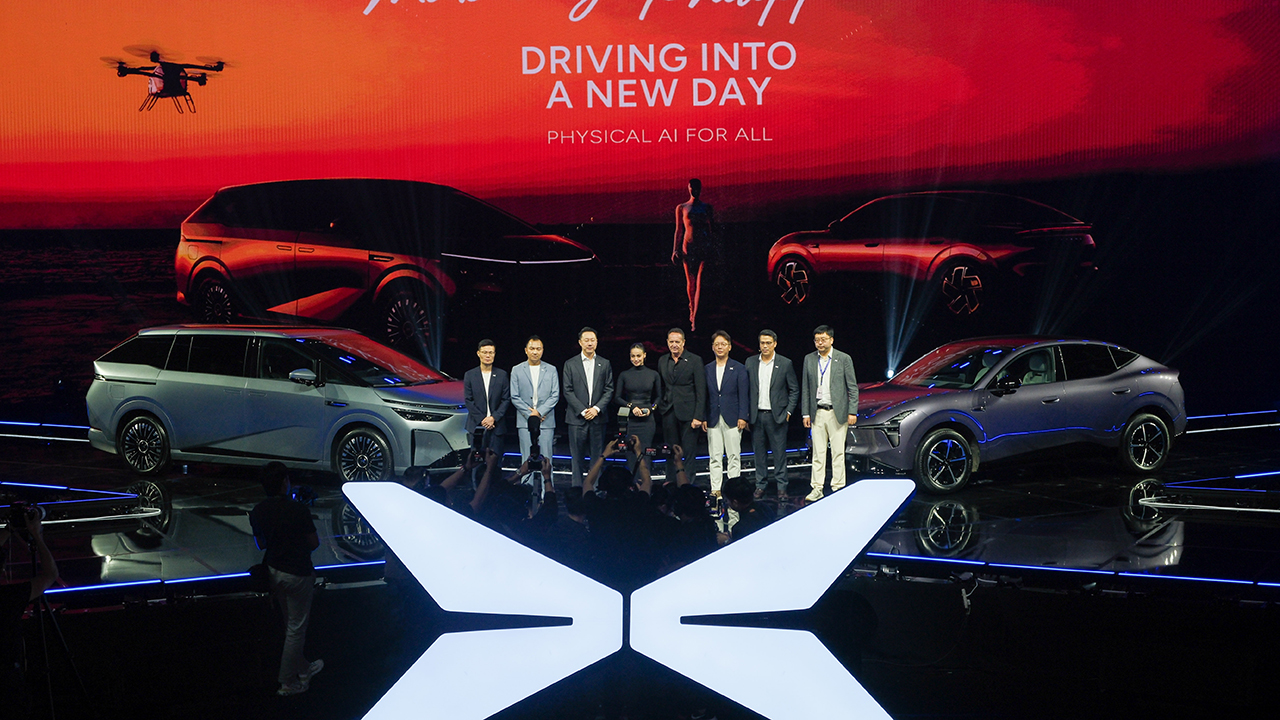
XPENG has officially entered the Philippine EV market. Over 3,000 guests attended the brand’s grand local debut. During the launch event, the automaker introduced a six-variant lineup.
The lineup features the flagship X9 MPV and the sleek L03 SUV Coupé. Prices start at an accessible PhP 1,548,000.
Brand ambassador Anne Curtis joined the celebration on stage, while XPENG showcased its X2 Flying Car and IRON Humanoid Robot. These futuristic displays highlighted the company’s “Physical AI” vision.
XPENG X9: First-class travel for seven
The XPENG X9 serves as the brand’s flagship seven-seater MPV.
It turns luxury mobility into a private lounge experience. Buyers can choose between two Long Range variants. The base X9 Long Range costs PhP 3,858,000. It features zero-gravity second-row seats with a central aisle. This layout ensures quick access to the third row. The Premium Seat Package costs PhP 4,058,000.
It upgrades the middle row to individual captain’s chairs. These chairs feature four-way powered headrests and 16-point massage.
Both variants share identical mechanical hardware. A front-wheel-drive motor produces 235 kW and 450 Nm of torque. A massive 110 kWh battery provides up to 615 km of range.
A compatible DC fast charger boosts power from 10 to 80 percent in 12 minutes. Active rear-wheel steering delivers a tight 5.4-meter turning radius. Dual-chamber air suspension ensures maximum ride comfort.
A powered third row folds completely flat beneath the floor. Color options include Midnight Black, Arctic White, Matte Gray, and Silver Frost. Inside, buyers can select Meteorite Black or Coffee.
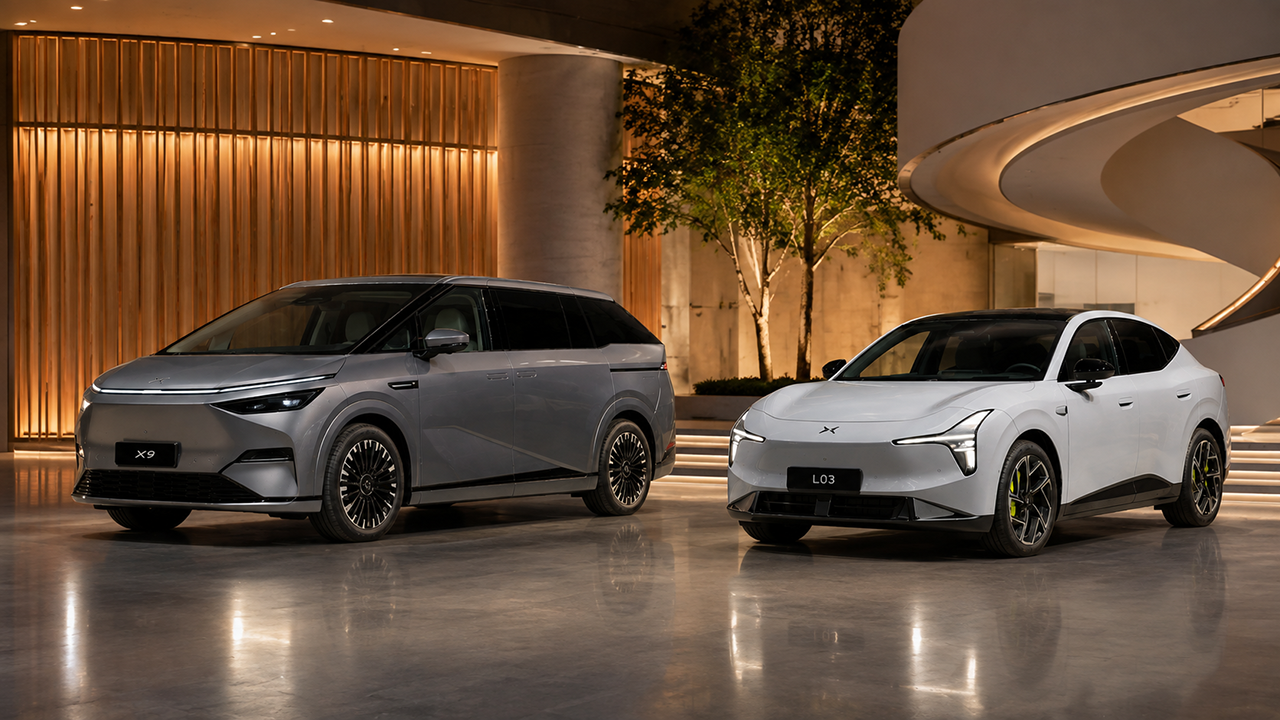
XPENG L03: Sleek versatility meets electric freedom
The L03 SUV Coupé blends striking aesthetics with daily utility. XPENG offers four distinct variants. Three models use pure battery-electric powertrains. One model features a range-extended electric setup (REEV).
The L03 EV Standard Range costs PhP 1,548,000. Its 58.3 kWh battery delivers up to 445 km of range. The L03 EV Long Range costs PhP 1,698,000 and offers up to 520 km.
The top-tier Long Range Ultra costs PhP 2,058,000 with 480 km of range. This Ultra trim adds front-seat massage, upgraded audio, and intelligent driving tech.
The L03 REEV costs PhP 1,598,000. It uses an onboard gas engine as an electric generator. Its 37.2 kWh battery delivers 215 km of pure electric driving. Total WLTP combined range reaches up to 1,017 km.
All L03 models feature rear-wheel drive. Fast charging takes roughly 20 minutes to reach 80 percent. Every model includes a 15.6-inch touchscreen and 539 liters of cargo space.
Available colors include Arctic White, Midnight Black, Rock Gray, Silver Frost, and Phantom Purple.
Ownership packages, reservation details

XPENG pairs each model with generous ownership perks. X9 buyers receive five years of free preventive maintenance. The package includes five years of roadside assistance.
XPENG adds a five-year bumper-to-bumper warranty. An eight-year warranty covers the battery and motor. X9 buyers also receive a complimentary 7kW wall charger.
L03 buyers receive two years of free preventive maintenance. The L03 includes identical roadside, bumper-to-bumper, and battery warranties. L03 EV buyers get a 7kW wall charger. The REEV variant comes with a 3.5 kW portable charger.
Reservations cost PhP 25,000 for the X9 and PhP 10,000 for the L03. Buyers can reserve through @xpengphilippines on social media.
XPENG showrooms in Greenhills, Makati, North EDSA, and Cebu are accepting reservations now. Local customer deliveries will begin in the fourth quarter.
Automotive
BYD says that way better EV batteries are coming next year
Solid-state batteries will debut with higher-end models in 2027.

With gas prices reaching the edges of believability, electric and hybrid vehicles are turning into worthy upgrades. That said, the more casual consumer still has a lot of questions about going electric, primarily about the durability of the battery and range anxiety. Well, a major battery technology upgrade is coming in the next few years, and BYD has just committed to it for next year.
Via the Spanish outlet Carwow, BYD EVP Stella Li confirmed that the company will launch its first vehicle with a solid-state battery in 2027. Now, if you’re a regular consumer, a solid-state battery probably doesn’t make much sense to you. But here’s the basics: it’s smaller, safer, and can last longer on a single charge.
If you’re fine with technical explanations, a solid-state battery uses more solid components, as opposed to the liquid solution used by the current standard of lithium-ion batteries. Because it’s more solid, it has better energy density. Higher energy density means a smaller size is needed to achieve the same battery capacity as modern batteries. In turn, this means that a vehicle can pack more batteries inside, allowing for better capacity. Oh, and let’s not forget that these batteries are generally safer and less prone to incidents.
In the same interview, BYD says that the first model will arrive next year. Unfortunately, because of the battery’s cost to produce, the component will likely debut with the company’s higher-end models. Still, it’s an exciting sight to behold. The electric and hybrid market is already quite the temptation for users, so an even better battery will further push the segment to better heights.
SEE ALSO: BYD adds the facelifted Seal 5 DM-i to its hybrid sedan lineup






Now Playing: Whalefall

vivo V80 review: Good phone, tough sell

Apple reveals iPhone Duo’s 4883mAh battery

Lenovo expands Yoga lineup with new AI PCs and tablets

TNT wins gold at SMARTIES Philippines

vivo X500 Series launches with major imaging upgrades

OPPO Find X10 Pro Max is the first phone with a triple 200MP camera system

TECNO CAMON Slim 5G: Price, availability in the Philippines

TECNO CAMON Slim 5G review: Slim on size, big on surprise

HONOR Magic9 Pro Max launches in China with ARRI-powered imaging


-

 News2 weeks ago
OPPO Find X10 Series launches globally October 21
-

 News2 weeks ago
Sony teams up with Hello Kitty for exclusive limited-edition collection
-

 Wearables1 week ago
Garmin Enduro 4 promises up to 320 hours of battery life
-

 Gaming1 week ago
Dragon’s Dogma 2: Dark Arisen launches with new Official Pawns
-

 News4 days ago
vivo V80 debuts with ZEISS cameras
-

 Deals1 week ago
Score PhP 22,000 in guaranteed freebies when you pre-order the iPhone 18 Pro at Beyond the Box
-

 Wearables1 week ago
Garmin Approach S72 brings swing metrics, green reading to your wrist
-

 Gaming2 weeks ago
FFVII Revelation: 11 things you missed