


Entertainment
9 post-breakup makeovers to do when you’re ready to move on
Accompanied by powerful songs to lift your spirits!

Move over, Adele! When the time has come to really move on, you stop wallowing in despair and you let go of the void. Gone are the days where you lie down in your bed, tucked under the sheets, and listening to songs that make you dwell on sad feelings.
Think of this as the soundtrack in your own drama film where a song plays while you pick yourself up from pieces — trying new clothes on, getting a makeover, hitting the gym, or just turning your life around. Here are the post-breakup makeovers you need to do and the songs to listen to.
Make a statement
If you feel you’re ready to move on, find a new mantra and make a statement. Show the world that you’re moving forward and ready to face new challenges once again. You can get a tattoo, a new hair color, or completely different hairstyle.
Song to listen to: “We Are Never Ever Getting Back Together” by Taylor Swift
We are never ever, ever getting back together
We! Are never ever, ever getting back together
You go talk to your friends, talk to my friends, talk to me
But we are never ever ever ever getting back together
Pamper yourself
When was the last time you took time for yourself without feeling selfish and guilty? Now’s the time to book a spa treatment and get that much-needed mani-pedi session. Savor the opportunity to wear just a robe at night while you apply a face mask or some cucumber slices on those eyebags caused by the late nights you spent crying over your ex.
Song to listen to: “Love Myself” by Hailee Steinfield
I’m gonna put my body first
And love me so hard ’til it hurts
I know how to scream out the words
Scream the words
Change your makeup routine
Sport a new look by being more adventurous with your makeup. Try something new for the first time, perhaps a vibrant lippie and pop liner aside from the usual blush, pink, and red. Get out of the beauty rut so you regain any lost confidence. Giving ourselves a new look gives us a chance to be someone new.
Song to listen to: “no tears left to cry” by Ariana Grande
Right now, I’m in a state of mind
I wanna be in, like, all the time
Ain’t got no tears left to cry
So I’m pickin’ it up, pickin’ it up (oh yeah)
I’m lovin’, I’m livin’, I’m pickin’ it up
Sweat all the toxins out
If there’s one thing you can truly enjoy post-breakup, it’s breaking a sweat. You get endorphins from working out which makes you happy, and you’ll feel refreshed and alive after! Being healthier and getting abs are just a bonus.
Song to listen to: “The Greatest” by Sia
Well, uh-oh, running out of breath, but I
Oh, I, I got stamina
Uh-oh, running now, I close my eyes
But, oh oh, I got stamina
Purge and redecorate
Start letting go of the past and purge your closet. Throw away (or donate) the stuff that reminds you of your ex. Keeping it in won’t let you move on and next thing you know, you’re eating a tub of ice cream late at midnight.
While you’re at it, take the chance to redecorate your room. Paint your walls with new colors or rearrange your furniture. Make a new sanctuary for yourself.
Song to listen to: “Irreplaceable” by Beyoncé
Everything you own in the box to the left
In the closet that’s my stuff, yes
If I bought it please don’t touch
Treat yourself out
When you’ve finally let things go and made some space for something new, it’s time for retail therapy! Splurge on fashion and accessories, and look fabulous again. Buy that gorgeous handbag and that killer pair of stilettos. Don’t bother feeling guilty, you deserve all of it!
Song to listen to: “Material Girl” by Madonna
‘Cause we are living in a material world
And I am a material girl
You know that we are living in a material world
And I am a material girl
Start doing things alone
I know you’ve been used to doing things with someone else, but let’s face it: you’re now alone. Don’t think of it as a bad thing. Shift your perspective and think of it as an opportunity to learn new things or try activities you’ve always wanted to do but your ex didn’t want to.
Song to listen to: “Party For One” by Carly Rae Jepsen
Party for one
If you don’t care about me
I’ll just dance for myself
Back on my beat
I’ll be the one
If you don’t care about me
Making love to myself
Back on my beat
Slay in work and propel your career
Remind yourself of the great talents you possess. You’re strong and independent and you can get anything you want as long as you work for it.
Song to listen to: “Work B*tch” by Britney Spears
You want a hot body? You want a Bugatti?
You want a Maserati? You better work bitch
You want a Lamborghini? Sippin’ martinis?
Look hot in a bikini? You better work bitch
Show the world you’re ready
Update your social media accounts and show the world the new you. Socialize and let people see you’re doing well, even if your heart breaks from the memories of the past from time to time. Take the crown because the world is yours.
Song to listen to: “Sit Still, Look Pretty” by Daya
Oh, I don’t know what you’ve been told
But this gal right here’s gonna rule the world
Yeah, that is where I’m gonna be because I wanna be
No, I don’t wanna sit still, look pretty
Bonus: If the sadness creeps back in, embrace it
Just because you look well both in and out doesn’t mean you’re not vulnerable from heartbreaking memories and the sadness that comes after every breakup. Embrace it, but don’t sulk for too long. Just let yourself feel because this is going to pass. You’ll get through this.
Song to listen to: “Dancing On My Own” by Robyn
I’m in the corner, watching you kiss her, ohh
I’m right over here, why can’t you see me, ohh
I’m giving it my all, but I’m not the girl you’re taking home, ooo
I keep dancing on my own (I keep dancing on my own)
If you love the list, make sure to follow our playlist on Spotify! Now go ahead and move forward. You go, girl!




Entertainment
PH to celebrate 1st ever National Cinema Day; movies start at less than $2
Watch a movie on September 12 for a fraction of the cost

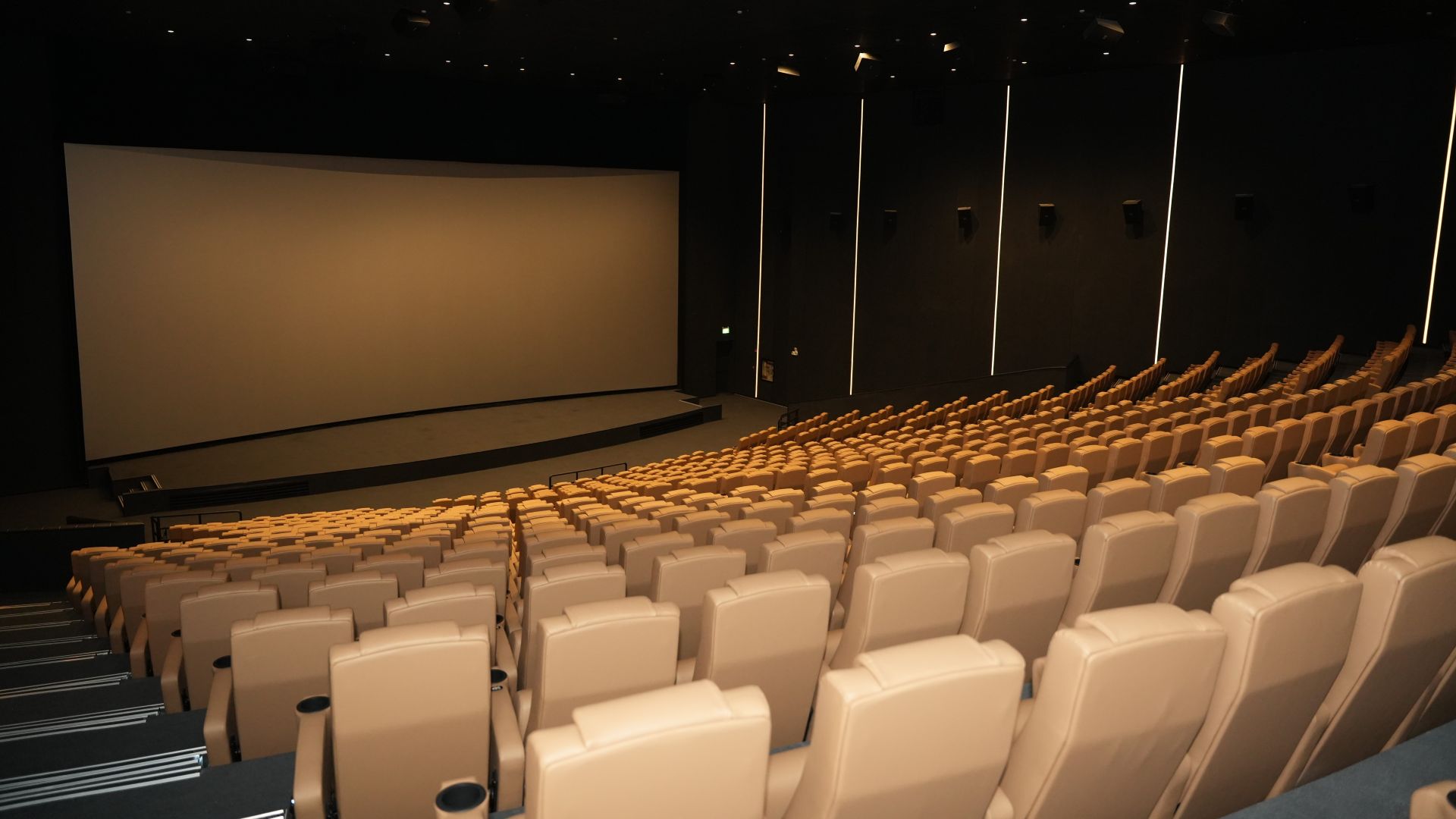
The Philippines will be celebrating its first ever National Cinema Day on September 12. On this day, movie tickets will go for as low as PhP 100 (US$ 1.60) at regular 2D cinemas.
The campaign aims to make moviegoing more accessible to audiences. This includes families, friends, students, and cinephiles in general.
Such initiative has been a staple in other countries, like the United States, United Kingdom, Spain, Germany, Australia, New Zealand, and more. The same concept applies, with movie tickets going on sale for a lot less.
What’s great about the celebration is that all movies scheduled for exhibition on September 12, whether local or international, shall get the special admission price.
Advanced tickets sales have already begun. Customers can purchase through participating box offices, official websites, mobile apps, and authorized platforms.
Tickets will be sold on a first-come, first-served basis and remain subject to theater capacity. Prices vary for other viewing formats like Director’s Club or IMAX, for instance.
The campaign is organized by the Cinema Exhibitors Association of the Philippines (CEAP), along with industry and government partners.
The initiative is supported by the Film Academy of the Philippines (FAP), Film Development Council of the Philippines (FDCP), Movie and Television Review and Classification Board (MTRCB), and the Metro Manila Film Festival through the MMDA.
Participating cinemas include Ayala Malls Cinemas, SM Cinemas, Robinsons Movieworld, CityMall Cinema, Megaworld Cinemas, and more.

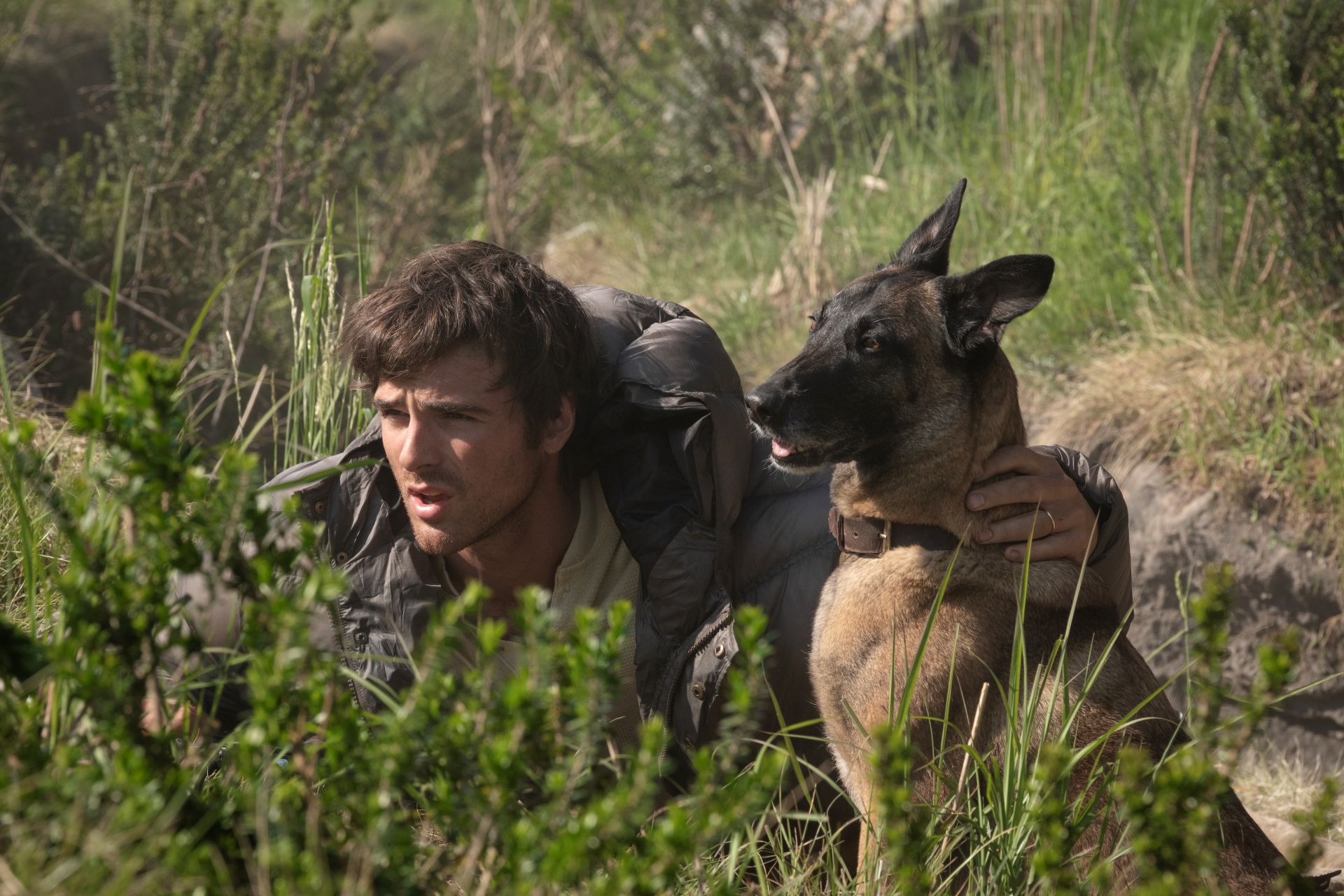
It’s easy to mistake The Dog Stars for a canine-centric survival tale if you aren’t familiar with the source material.
Peter Heller’s 2012 novel uses the title as a double meaning — referencing both the star Sirius within the Canis Major constellation (hence, “the Dog Star”) and the very real bond between a man and his dog.
In Ridley Scott’s cinematic adaptation, the premise delivers a grounded, post-pandemic world devastated by a global flu. The narrative is driven by a mysterious radio transmission intercepted by Jacob Elordi’s Hig, a quiet pilot pushed by grief and an irrepressible human curiosity to see what’s left of the world beyond his refuge.
With a stacked cast, a legendary director, and rich thematic material, general moviegoers and book fans alike have plenty of reason to expect a post-apocalyptic thriller.
Sadly, as an adaptation, The Dog Stars underwhelms. What promises to be an edge-of-your-seat survival ride settles into a surprisingly dull story that lacks the punch of a post-apocalyptic thriller.
It isn’t a bad film, but it struggles to balance its atmospheric build-up with a rushed, squandered third act.
⚠️ Warning: Some spoilers ahead! ⚠️
Ridley Scott’s signature touch
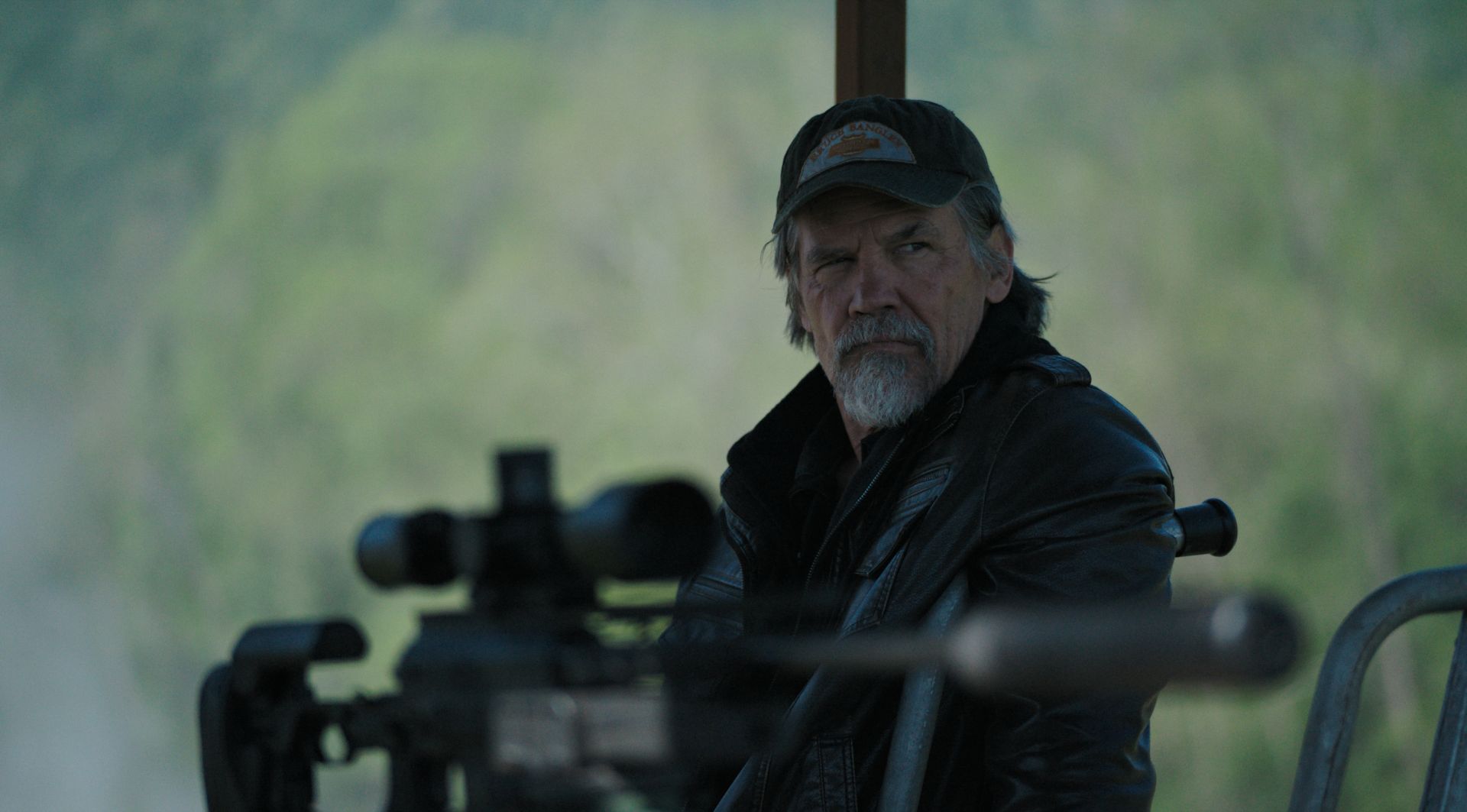
For what it’s worth, Scott doesn’t take long to make his visual presence felt. The director fills the screen with sweeping tracking shots of Hig’s Cessna plane gliding over vast mountain ranges.
This is juxtaposed with melancholic, muted sequences of his daily survival routine with Josh Brolin’s Bangley.
There is a sense of desolation; unaddressed grief for Hig’s late wife and the sheer fatigue of scavenging alongside his loyal Belgian Malinois, Jasper.
The quiet routine switches gears dramatically during action sequences. Scott brings dynamic flair to the screen. Notably, when Bangley holds off a horde of Reapers, the cinematography turns into a video game-esque, FPS-style night-vision POV shot.
Ditto with the high-stakes chase at Margaret Qualley’s Cima’s place, and during the final act in the trap that is Grand Junction.
Brolin and Pearce anchor the wasteland
What’s problematic here is that the lead supports, Josh Brolin and Guy Pearce, give the film its most grounded and reliable energy.
Fresh off playing a father searching for answers in Weapons, Brolin again slips effortless into his role of Bangley.
This badass survivalist with ex-Marine credentials complement Hig with a contrasting manner, making defending their abandoned airstrip look routine.
The initial friction between Hig and Bangley also drives the film’s early momentum. Bangley is perfectly content just chilling at the airstrip, while Hig is consumed by a curiosity to see what’s left on the other side of the horizon given the tools he has.

Bangley eventually concedes to Hig’s urge to chase the radio signal, but gets an earned “I told you so” moment near the end. This is fittingly a chef’s kiss to his character’s consistent demeanor.
Yet you don’t mistake Bangley’s isolation for passivity as well. He is practically itching for a reason to unleash a barnyard full of weapons (pun not intended) he’s been hoarding. It’s as if treating the invading Reapers like the ultimate survival battle he’s eagerly been waiting for in the post-pandemic world.
Complementing this heavy-duty presence is Guy Pearce’s Pops. His fiercely overprotective father persona to Cima steals the spotlight given how everyone is cherishing what’s (or who’s) left.

There are sharp one-liners aimed at keeping Hig at arm’s length, as he’s understandably paranoid after surviving the apocalypse.
Together, these are two highly enjoyable flavors of post-apocalyptic fatherhood. Eventually, Bangley warms up as the entire protagonist group relocates to integrate with the Mennonites in the end.
Pacing turbulence, squandered climax
The film’s momentum begins to stall in the second half. Once Hig crash-lands and meets Cima nad Pops, the narrative slows down considerably.
Sure, it’s a way to establish the emotional foundation and romantic spark between the couple for audiences unfamiliar with Heller’s novel. Perhaps, an attempt to balance the quiet character work with the surrounding chaos.
However, the scales still tip heavily toward sluggish pacing, with the film losing much of the earned tension. This turns what should have been a tense journey into a noticeably dull movie experience.
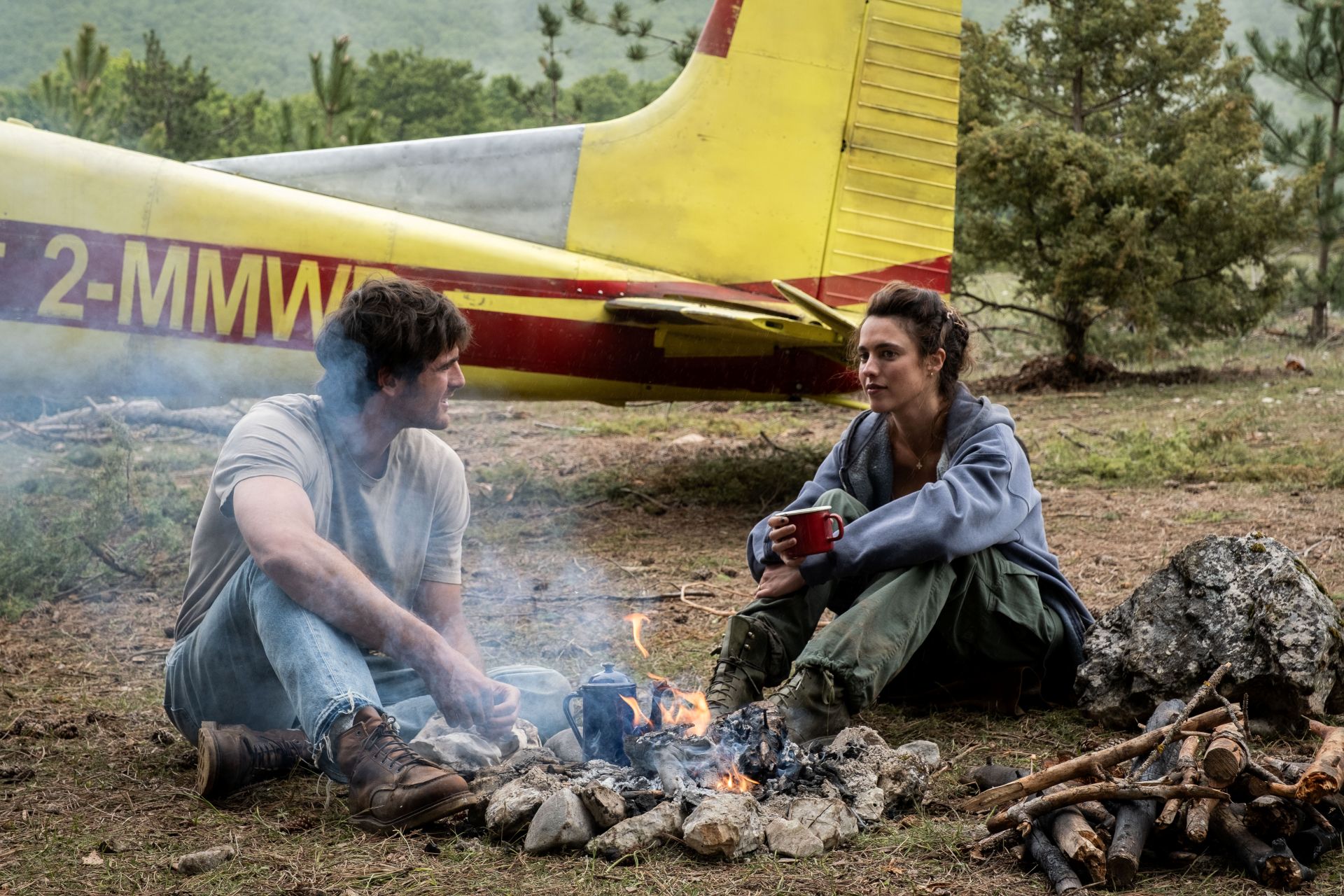
Quite ironically, this is where Elordi and Qualley’s acting shines the most. It doesn’t help that there is an exposition-heavy writing as you just wait for a climactic finale to unfold, yet it never quite materializes.
By the time the story finally moves to Grand Junction, what should have been a defining act feels like a rushed afterthought.
Given the creative independence, Grand Junction could have been executed like a harrowing, inescapable maze. More frustratingly, the film completely drops the ball on its most disturbing revelation.

When the group stumbles upon roomfuls of discarded passports and piles of dead bodies, it should have been a heart-stopping, horror-thriller pivot. It’s the ultimate “we are completely fucked” moment, exposing the radio signal as a trap rather than a beacon of hope.
Had the film leaned into this nightmare, it would have rolled out the red carpet for Scott to flash his brilliance even further, recalling the tight, claustrophobic dread he mastered in Alien.
Instead, the movie glances past it in a split second. The protagonists overpower the opposition far too easily, robbing the climax of any real danger or lingering tension.
Should you watch it?

Undeniably, The Dog Stars movie succeeds in grounding itself on the human side of post-pandemic survival.
This isn’t a high-octane, “suspend-your-disbelief” blockbuster stuffed with outrageous sci-fi gimmicks; it is a thoroughly logical, realistic look at how real people would handle isolation, grief, and the instinct to rebuild community after everything crumbles.
The film’s core ideas are sound, and its emotional logic is intact. Still, it simply lacks the sharp execution and narrative punch needed to elevate it into a masterpiece.
On our Watch Scale, it falls under Wait on streaming. There’s plenty of technical flair and solid performances from grizzled veterans, but the rushed finale and missed horror-thriller pivot leaves you wishing Scott had been allowed to unleash the full extent of his cinematic powers.
Entertainment
UNDERTALE: The Determination Symphony gets two more shows
Both shows will be held on the next day.


The Philippines has an unquenchable love for game-based concerts (so *wink wink* please bring more of them). Though these concerts do generate a lot of hype, the drawback is that they often sell out way before most fans can grab tickets. If you’re an UNDERTALE fan, that experience might be rocking you right now, as both shows have already sold out. But fear not: UNDERTALE: The Determination Symphony has just opened two more shows.
Late last month, Film Concerts PH, in partnership with SOHO Live, announced UNDERTALE: The Determination Symphony happening on October 17. As expected, both shows, at 3pm and at 7pm, sold out very quickly after sales opened.
Today, the concert experience is opening two more shows on the next day, October 18. Like the original date, the two shows will happen at 3pm and at 7pm, allowing more fans to experience the concert.
The concert will be performed by the Filharmonika Orchestra and conducted by Thanapol Setabrahmana. Personally curated by creator Toby Fox and developed by Lambert Jackson with Materia Music, the concert experience showcases the game’s most recognizable tunes laid over gameplay footage playing simultaneously. Plus, for the world tour, the experience will have expanded scoring.
Tickets are available through Ticketmelon. Both dates will be held at The Proscenium Theater in Makati.
SEE ALSO: UNDERTALE: The Determination Symphony hits Makati in October


Marvel’s Wolverine review: When the claws come out
A brutal, cinematic superhero adventure

Setting your bedsheets ablaze with the Lovense Solace Pro
The closest proxy I could find where I'm guilty as sin

Now Playing: Elden Ring Tarnished Edition
Is the Switch 2 port worth the price?

First Look: Apple iPhone Duo

Xbox saves Kojima’s PHYSINT after PlayStation drops support
Marvel’s Wolverine review: When the claws come out

PH to celebrate 1st ever National Cinema Day; movies start at less than $2

New AGON gaming monitor features up to 1000Hz refresh rate

TECNO MEGAPAD 2 review: Eyes on the size

realme 16T 5G with 8000mAh battery, IP69 Pro rating launches in PH

HUAWEI Pura X View is 2026’s first WIDE slab-type smartphone

REDMI reveals the refreshed Note 17 and Note 17 Pro series

REDMI Note 17 Series focuses on long-term reliability


-
 News6 days ago
HUAWEI Pura X View is 2026’s first WIDE slab-type smartphone
-

 News6 days ago
The CAMON Slim 5G is TECNO’s latest ultra-slim smartphone
-
 Cameras2 weeks ago
DJI Osmo 360 II review: Going all-in on the ecosystem
-

 IFA 20261 week ago
TECNO MEGABOOK T15 360 unveiled at IFA 2026
-

 Gaming1 week ago
NBA 2K27 review: A two-way All-Star
-
 Reviews2 weeks ago
Samsung Galaxy Z Fold8 Ultra review: It’s time to get a foldable
-

 News4 days ago
iPhone 18 Pro series: Price, availability in the Philippines
-

 IFA 20261 week ago
TECNO’s POVA 8 Pro gets a stealthy makeover