

Gaming
Saros review: Returnal’s difficulty is back and better than ever
Although, it loses the memorable storywriting.

In 2012, Housemarque worked on the Angry Birds Trilogy compilation, the quintessential experience of throwing things at a wall and seeing which one will break it. In 2021, the studio developed Returnal, once again a quintessential experience of frustratingly throwing things at a wall. Now, in 2026, the studio is back with Saros, an experience with more of the same but with more flair and the accessibility to more easily break down those walls.
Turn back time over and over again
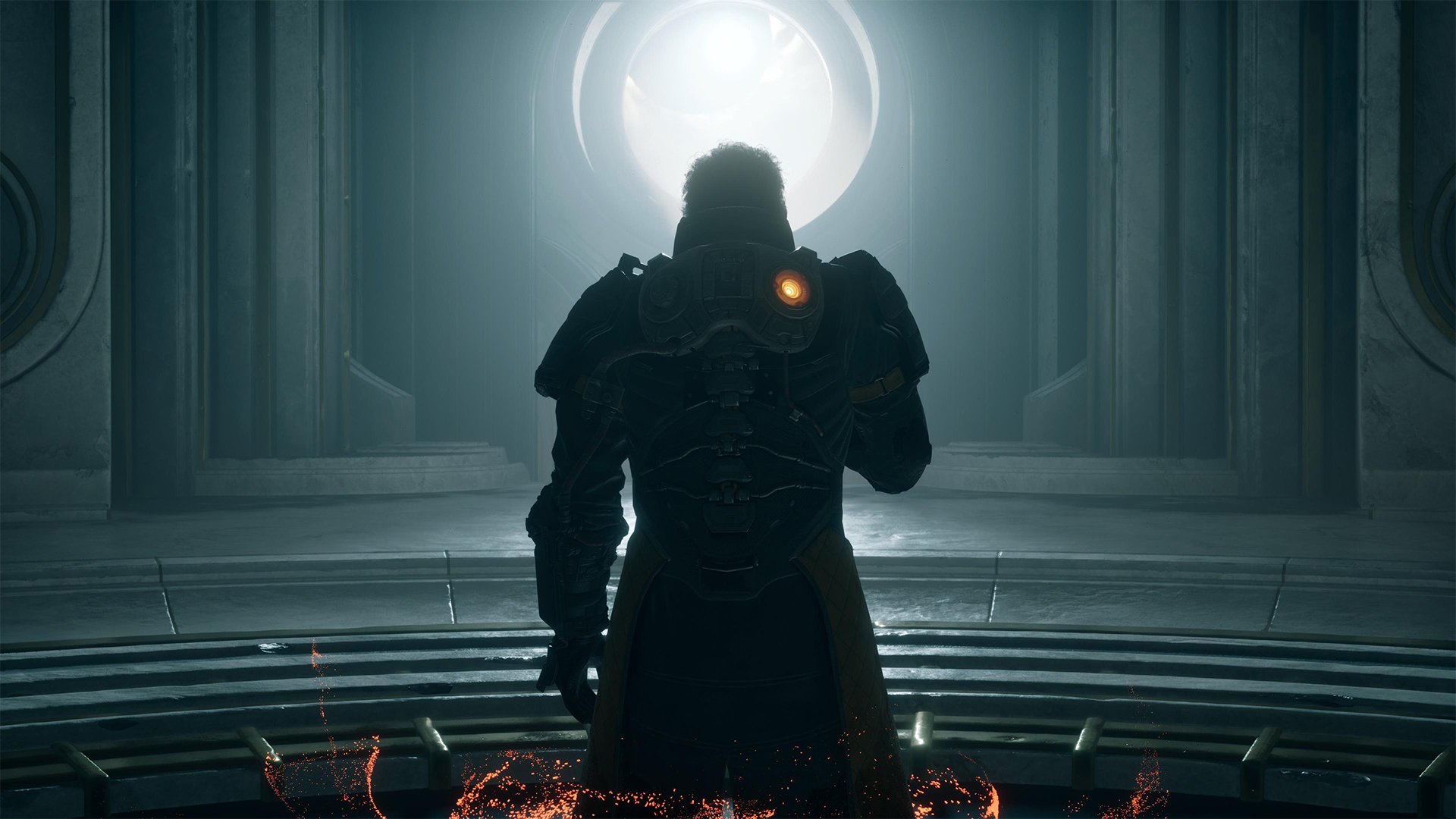
Like Returnal, Saros is a roguelike shooter. Players start every run from almost-scratch, earning Lucenite along the way. Upon death or winning the run, Arjun Devraj, the playable character, returns to the starting hub and spends his earned Lucenite to unlock meaningful (and permanent!) upgrades for the next run.
Along the way, Devraj finds an armory of available weapons and powerups that subsist through a single run, adding enough variability to ensure that no two runs are completely the same. Coupled with tangible upgrades, Saros creates an ever-changing experience but ensures that you feel stronger with every consecutive run.
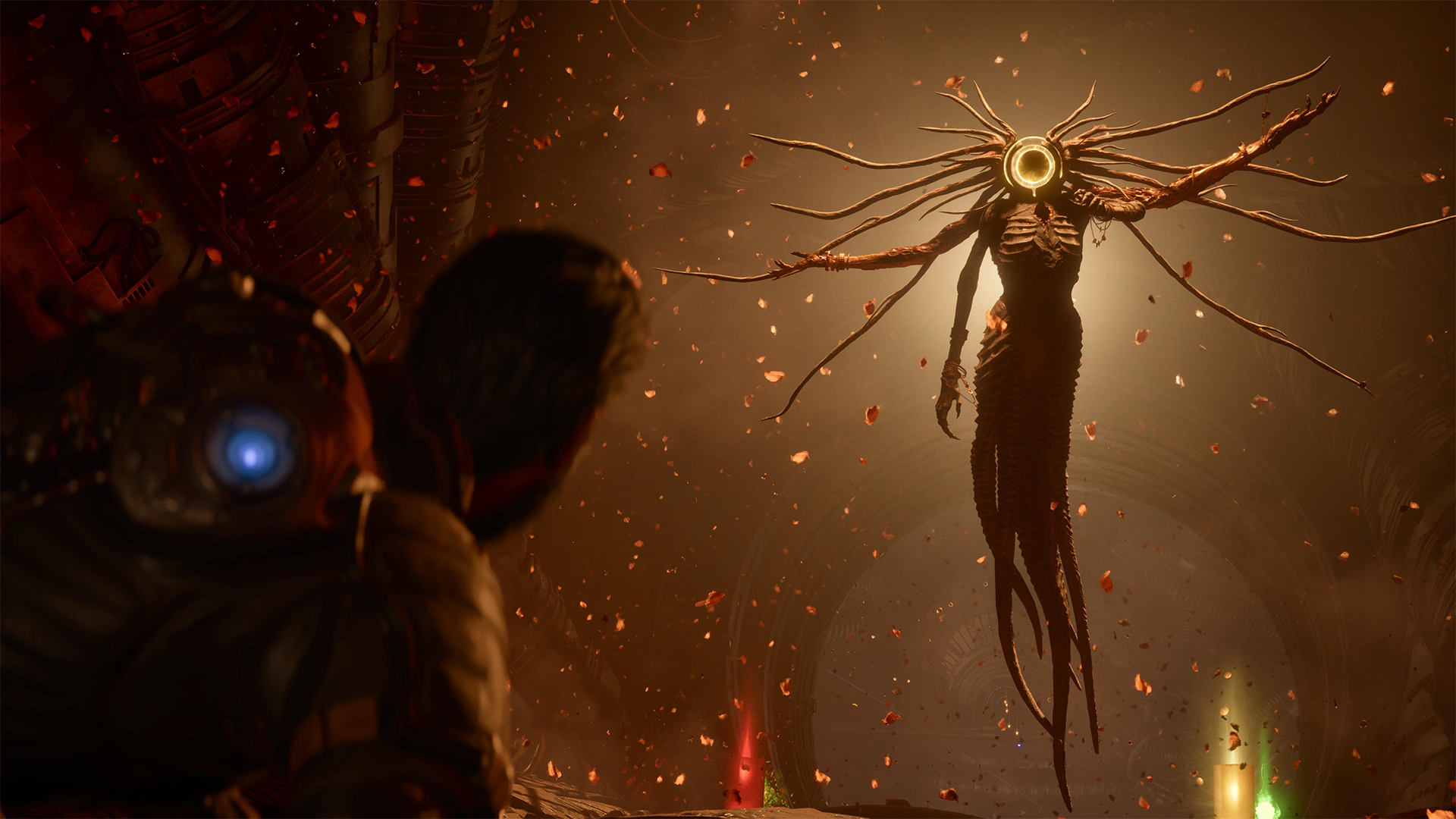
It’s also a visually stunning game with designs that border on Lovecraftian. Enemies are so well designed that it’s impossible not to stop and stare at how detailed the monsters are.
A smoother, hypnotic fight
Saros plays like butter. Normally, shooters played on a controller are too finicky for me, but Saros just works. The game features a good number of auto-aiming weapons that help you focus on dodging projectiles. Even the native aim assist on non-automatic weapons is useful enough for making shots.
There’s also Power Weapons, or high-damage attacks that use consumable Power. There are a handful, and all of them are powerful enough to help win a difficult battle.
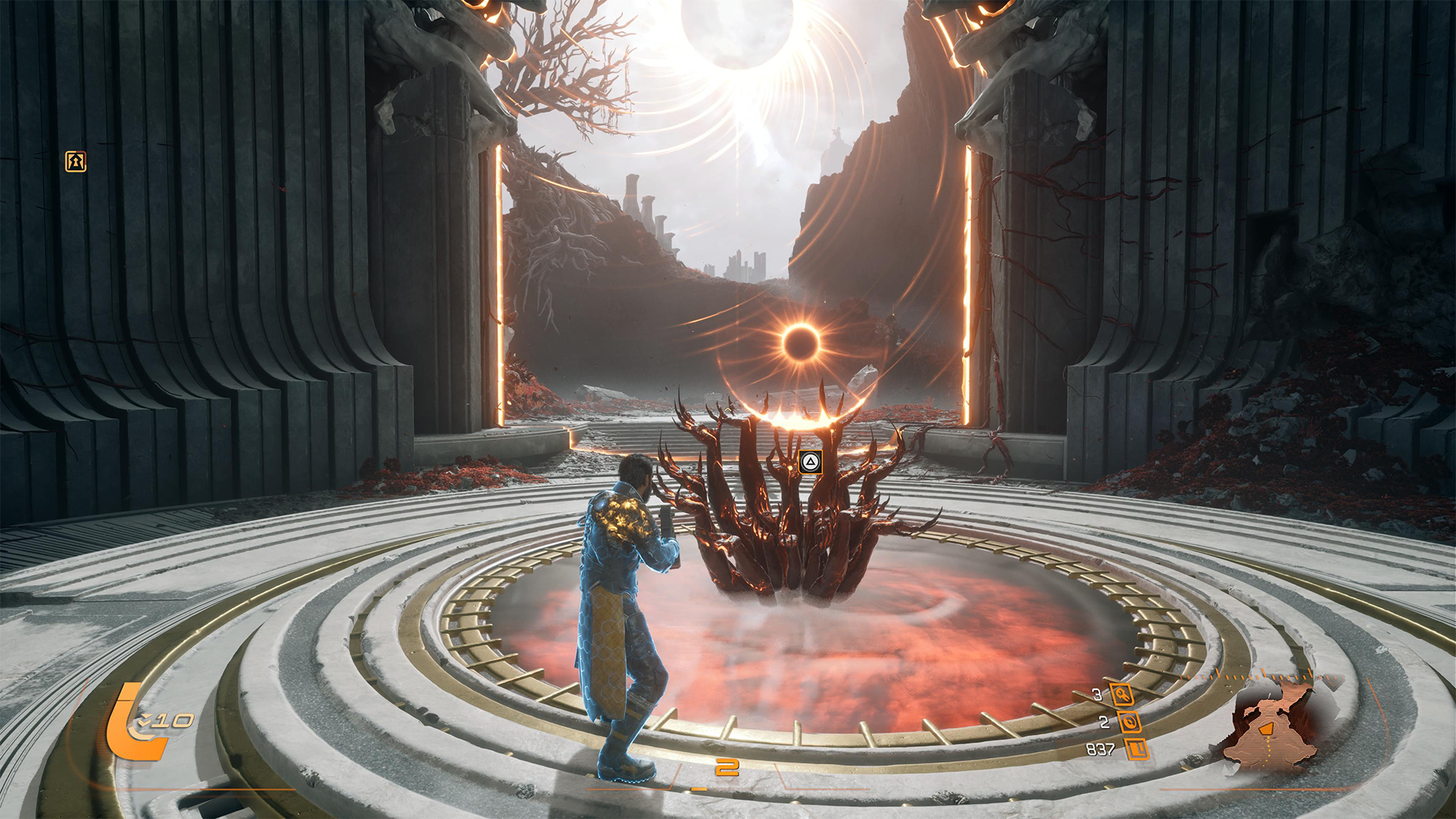
Fighting, then, is simply fluid. It didn’t take long for me to breeze through runs without focusing on muscle control. This makes for an easier game overall. Whereas Returnal has players beating their heads against the wall for hours, Saros is more accessible. It wants you to win. It wants you to get stronger.
As mentioned, each permanent upgrade is palpable. Devraj does get stronger. You can feel it when you rush past the starting area in no time. There are caps, but each cap is unlocked when you first beat a boss.
That said, the game still offers a challenge. Often, bosses take a few runs to master. Sometimes, you’ll get bodied by a surprise barrage from behind.
Variability that eventually runs out
The key to making a great roguelike rests on how different every run is. Some even have game-breaking combinations with ultra-rare pickups that wreck all of the game’s challenges.
At the start (especially before everything is unlocked), Saros does feature enough variability that invites you to discover everything that the game has to offer.
However, it does become clear that this variability has a limit. Once I had everything unlocked, I was defaulting to only a few combinations: a smart rifle (with auto-aim) with powerups that improve health and Lucenite drops. Plus, since I already had rerolls unlocked, I could just reset every drop until I got what I wanted. Experimentation doesn’t seem like a major draw for players; instead, it’s more about discovering the combination that works for you and grinding until you find it in every run.
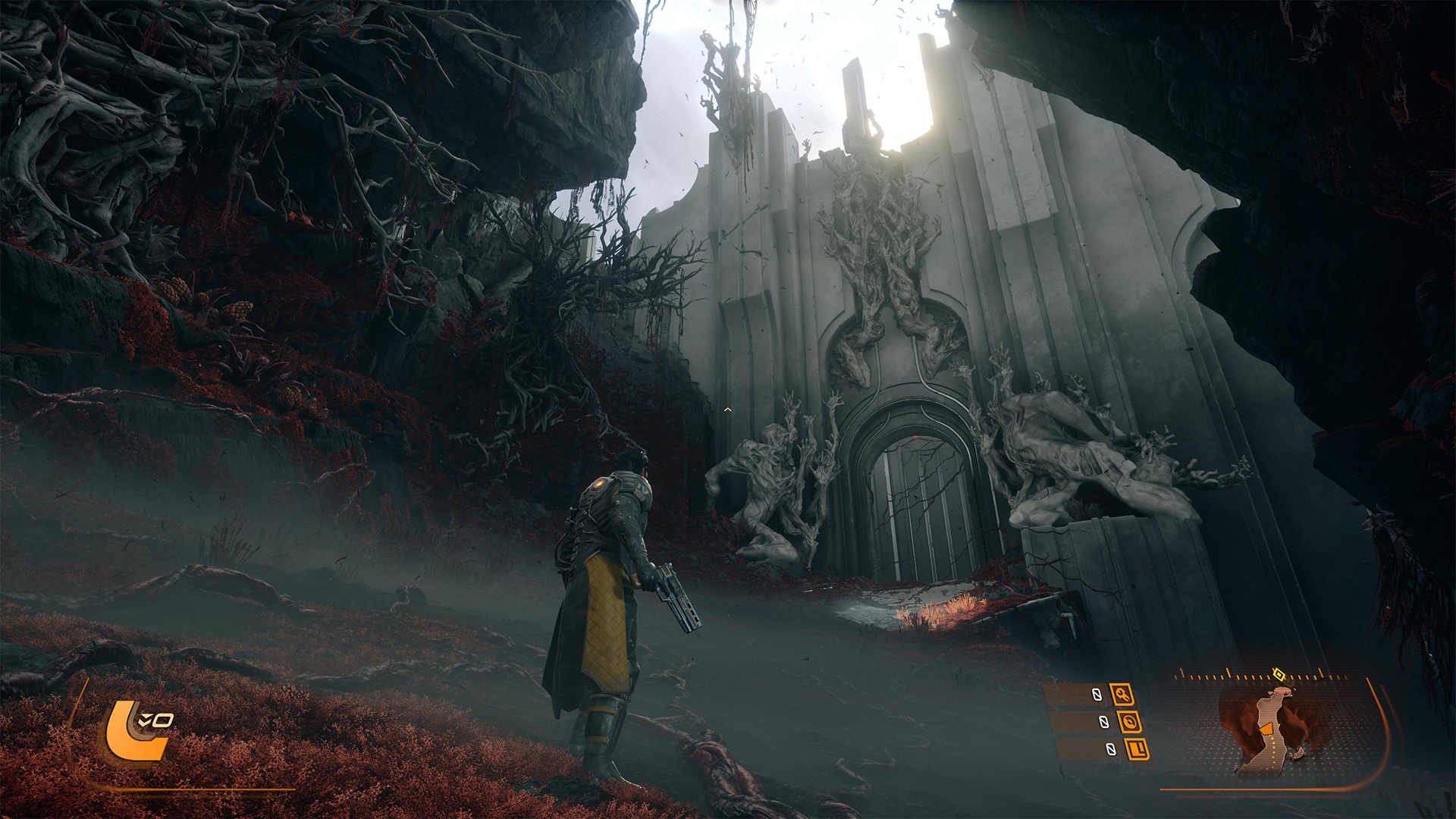
Additionally, the map doesn’t really change. Though there are miniscule changes, none of which alters the experience that much. Each room features different terrain, but they’re all essentially identical to one another: fight the horde that spawns in and collect the reward afterwards.
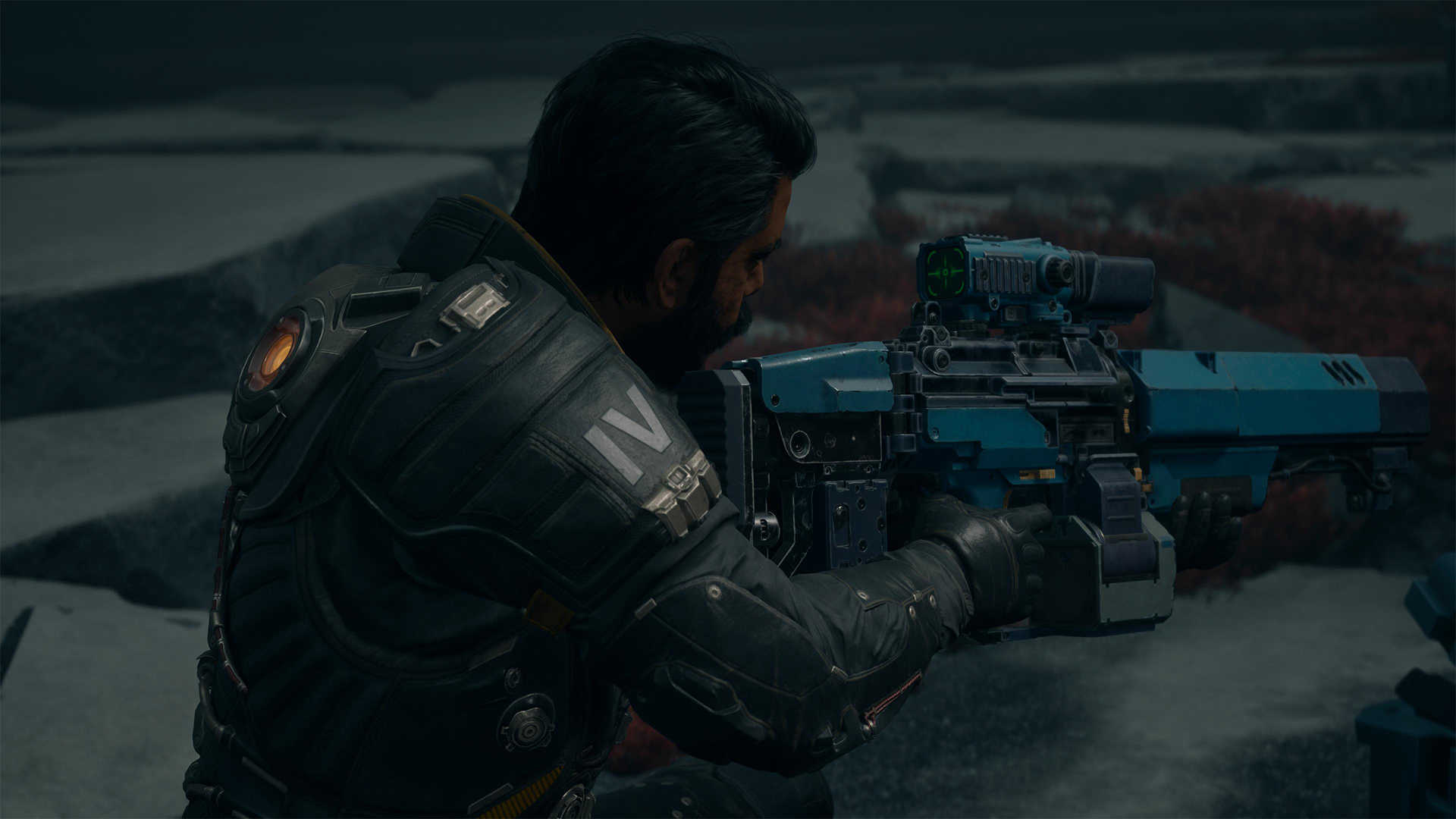
Despite being treated as a major change to the map, even the self-imposed eclipse mode (from which the game derives its title) doesn’t add much besides the corruption status effect. At first, there’s a sense of dread going into the eclipse, as the game says that enemies are more powerful and unpredictable, but it will eventually teach you that eclipses are just part of the level design. There is zero tradeoff.
Every run has a lingering sense of sameness to it. This should be appealing to some, especially since it helps make the game more accessible. However, this approach will naturally run into a wall, particularly after you spend 2.5 hours on a run only to die on the final boss.
What story?
Saros is an exercise in Lovecraftian worldbuilding. Like all stories of the same bent, the game’s plot focuses more on the insanity of its world, rather than its characters.
The game does not say much about the story besides the bare brushstrokes. Devraj is part of the Echelon IV expedition to the planet of Carcosa. While his main mission is to find the past expeditions, he has a secret motivation to find Nitya, a member of Echelon III and his lover.
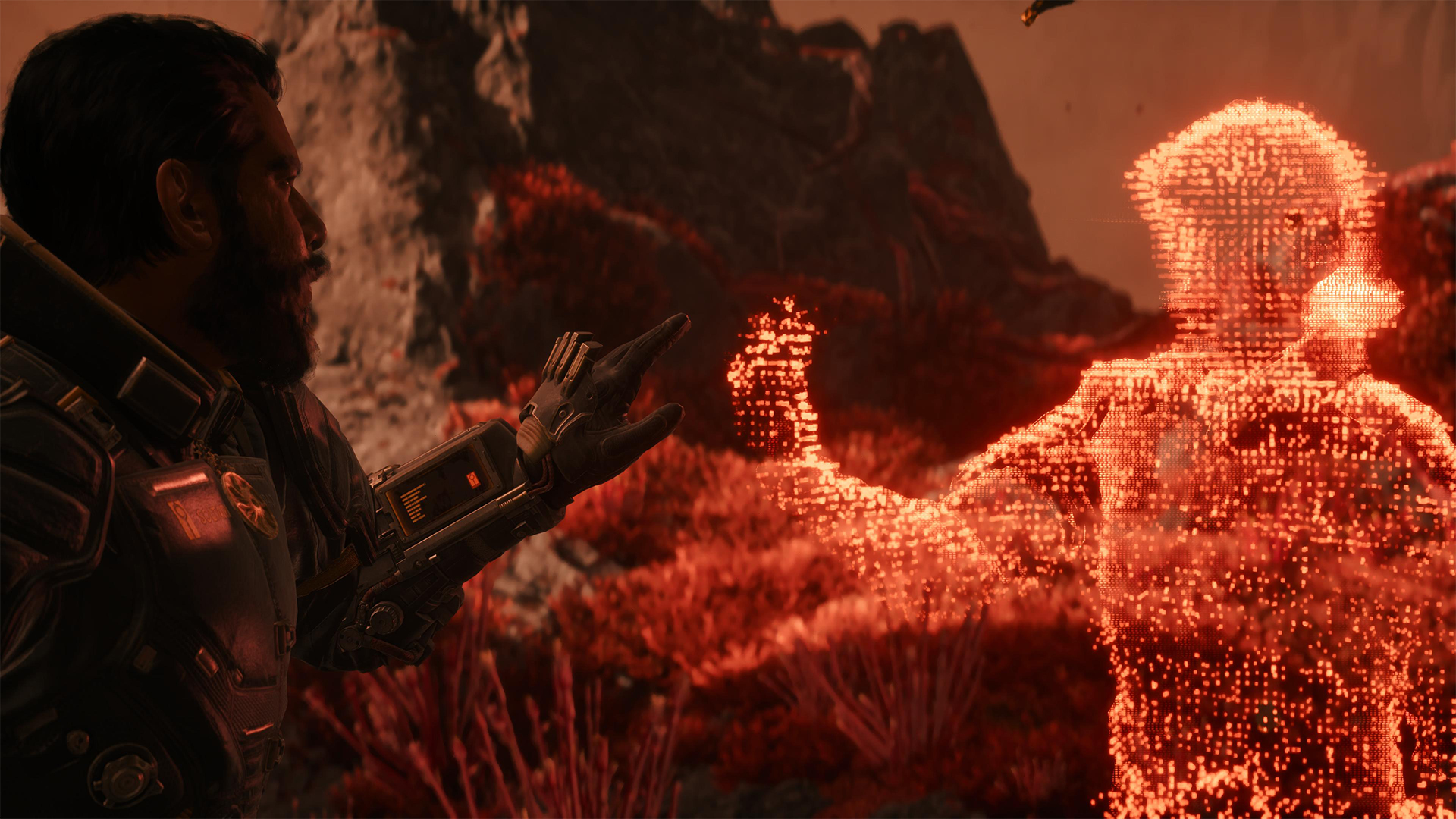
Similar to The King in Yellow by Robert W. Chambers, the game features allusions to madness because of “the Yellow”. Both previous expeditions and members of his own team succumb to the madness. However, the game never gives players enough time with any of these characters, so when they reveal themselves as victims of the same religious insanity, it’s never treated with the gravitas it deserves. People die, but you’ll barely miss them.
The same, unfortunately, goes for Devraj himself. Despite the world descending into cosmic horror around him, he stoically continues his mission to find Nitya. He doesn’t seem too affected by death. And, as such, he doesn’t really have a lot of qualities to latch on to, as a player who should be invested in the development of their playable character.
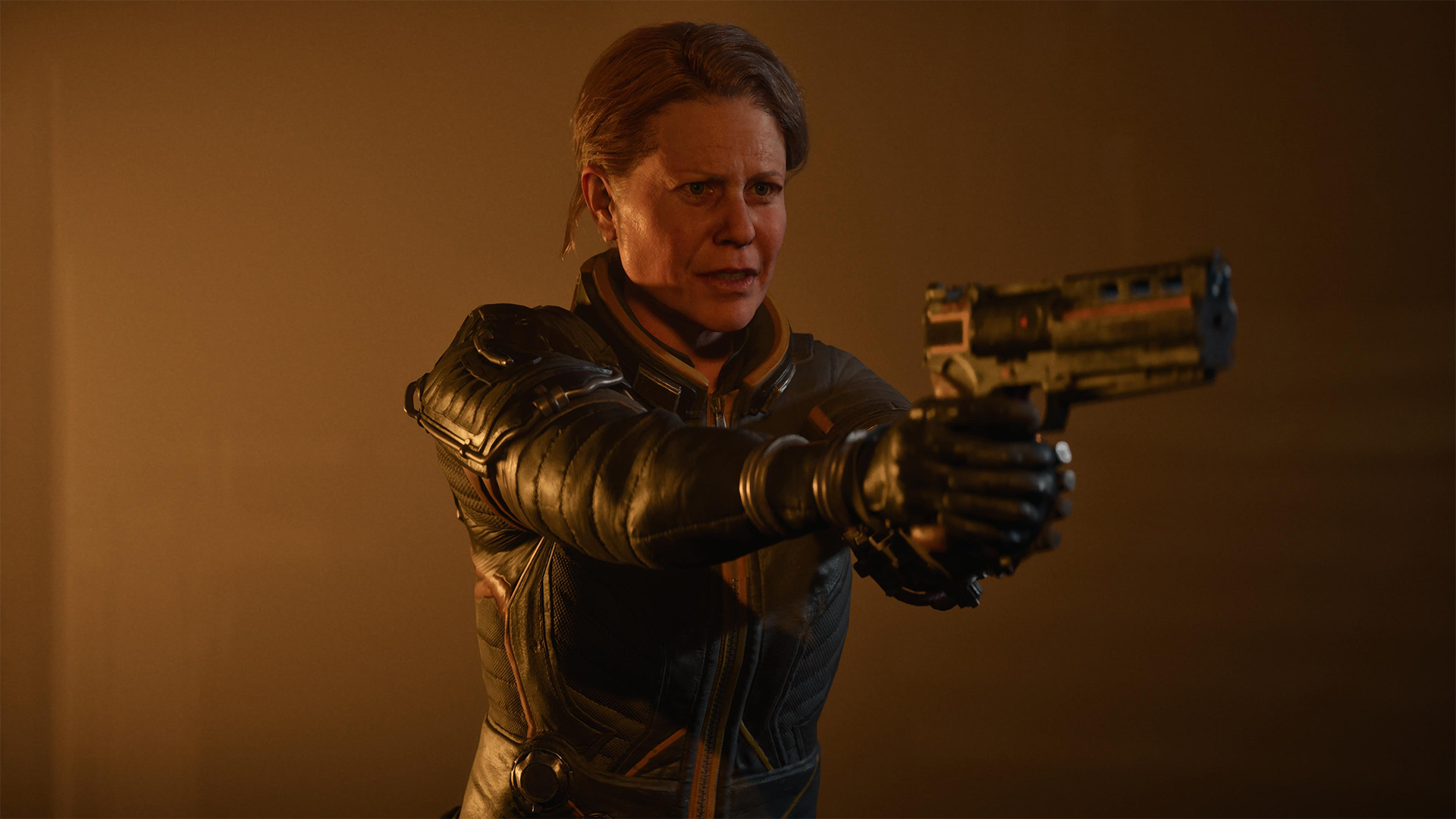
It’s atypical for a first-party PlayStation game to prioritize world-building over character writing. Most of the platform’s titles have incredibly memorable characters, but Saros just doesn’t. That said, the world-building is phenomenal; I just don’t want to spend hours reading through journal entries to find out what’s wrong with this world.
Is Saros your GameMatch?
If you found Returnal too difficult, Saros is a lot more approachable. It didn’t take me long to reach the game’s latter parts. If anything, the difficulty is finding two hours to go on an extended run. With the substantial progression system, it feels meaningful to restart and go again. Fans of roguelikes will easily Swipe Right on this game.
However, if you’re looking for a meaningful story to sink your teeth into, the game heavily prefers environmental storytelling. Prepare to spend hours just poring over lore. Even then, you won’t really get a sense of which characters to root for. For that, it’s a Swipe Left.



Riot Games is celebrating the return of virtual K-pop group K/DA with new music, exclusive skins, and major gameplay updates in League of Legends: Wild Rift Patch 7.3.
After a six-year hiatus, K/DA returns with FIRESTARTER, the group’s newest track and the title track of an EP featuring three additional songs. The release marks a new chapter for the virtual group, which brings its latest musical era to the mobile MOBA through the new HEATBRINGER skinline.
To celebrate the comeback, Riot Games hosted FIRE IT UP: The K/DA Comeback Party in the Philippines. The event brought fans together for a listening party featuring music from across Riot Games’ virtual acts, live Wild Rift gameplay, community activities, and exclusive photo opportunities.
Attendees also experienced live AAA ARAM matches featuring gameplay disruptions and augments inspired by Riot Games’ musical universe, including HEARTSTEEL, Pentakill, and TRUE DAMAGE.
K/DA returns with new HEATBRINGER skins
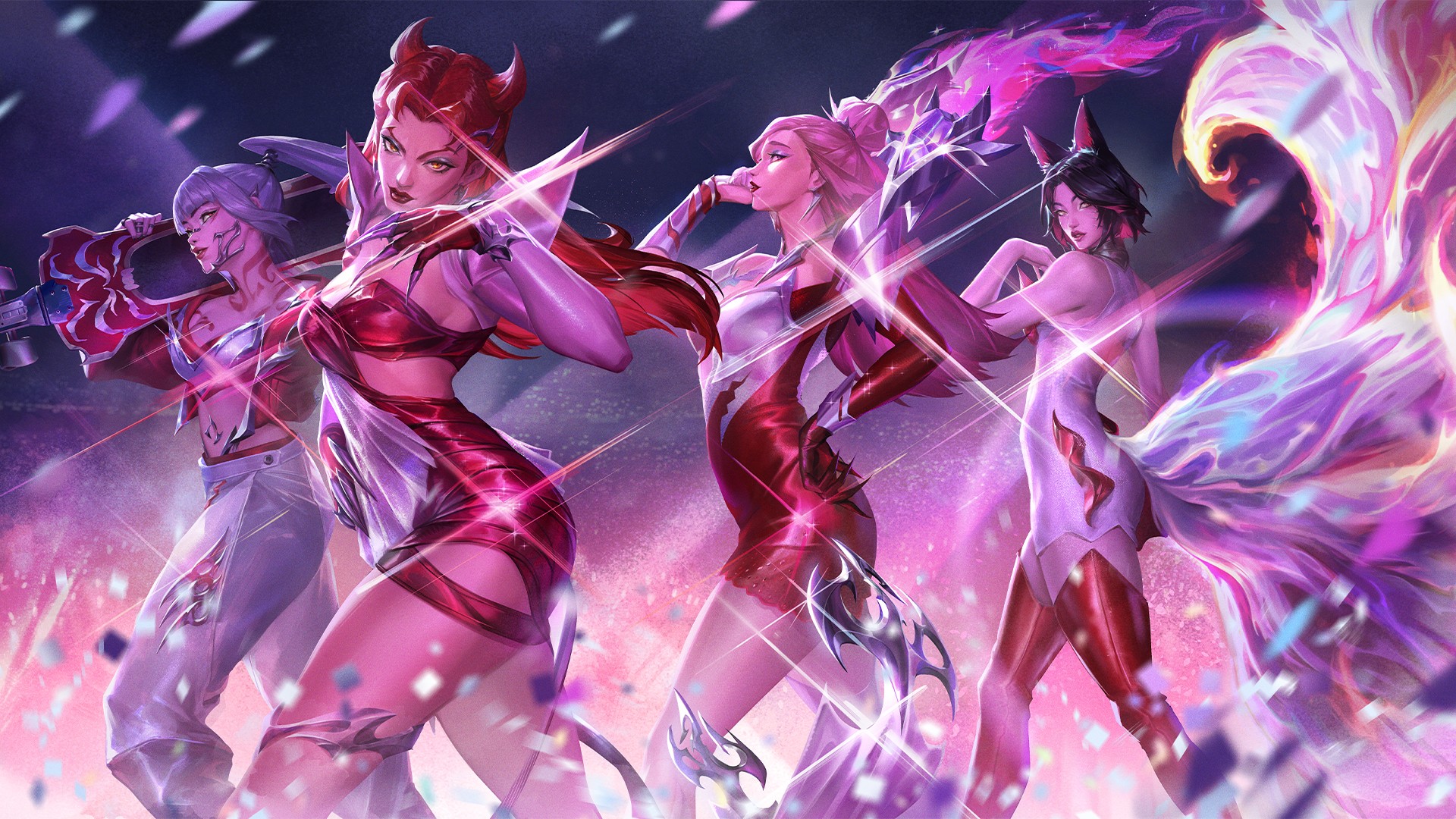
The K/DA comeback introduces the HEATBRINGER skinline, featuring new looks for the group’s four original members: Ahri, Akali, Evelynn, and Kai’Sa.
The skins give the champions a new visual identity inspired by K/DA’s latest musical era, with fiery red and white elements that bring their stage presence to the Rift.
The collection also includes Prestige K/DA HEATBRINGER Evelynn.
The new skins are exclusive to Wild Rift and are scheduled to launch on November 4, 2026.
The comeback extends beyond the cosmetics. With FIRESTARTER and its accompanying EP now available on major music streaming platforms, K/DA’s return brings together Riot Games’ music and gaming communities.
Wild Rift Patch 7.3 overhauls marksmen and item builds
Beyond the K/DA celebration, Patch 7.3 introduces significant gameplay changes that reshape champion builds, jungle strategies, and objective control.
One of the biggest changes targets marksmen, giving critical-strike builds more room to scale. Base critical-strike damage increases from 175% to 200%, while the attack-speed cap rises from 2.5 to 3 attacks per second.
Several marksmen also receive individual adjustments, including Ezreal, Kai’Sa, Twitch, Lucian, Caitlyn, Draven, Miss Fortune, Samira, Zeri, Jinx, Vayne, and Ashe.
The item system gets an overhaul to support these changes. Players can explore new or redesigned options, including Hexoptics, Yun Tal Wildarrows, Fiendhuler Bolts, Stormrazor, Rapid Firecannon, and Immortal Shieldbow.
Lifesteal also receives changes intended to support basic attacks, on-hit damage, and abilities treated as basic attacks.
Support items are part of the update, too. Echoes of Helia is positioned toward offensive supports who want to convert damage into healing, while Ardent Censer, Staff of Flowing Water, and Harmonic Echo also receive changes.
Jungle changes reward efficient farming
Patch 7.3 also changes how junglers approach the early and mid-game.
The updated jungle system rewards consistent camp clearing with bonus gold and introduces a catch-up mechanic for junglers who fall behind. This reduces the pressure to constantly gank and encourages players to balance farming with opportunities to assist their teammates.
Clearing camps also progresses Ecosystem Protection stacks, allowing Smite to scale from 600 to 1,000 and eventually 1,400 true damage.
These changes make efficient farming more important when preparing to secure major objectives such as Baron Nashor, Rift Herald, and Dragons.
Epic monsters also adjust to the pace of each match, scaling according to the average player level rather than simply growing stronger as time passes.
Turrets receive substantial changes as well. Plating now extends to outer, inner, and inhibitor turrets and remains permanently. The new Crystalline Overgrowth mechanic lets turrets accumulate crystals that champions can detonate with their first basic attack.
Together, these changes place greater emphasis on lane pressure, defensive positioning, and coordinated pushes. Winning team fights remains important, but teams must also turn their advantages into meaningful objective damage.
Hwei, Sylas, and Rek’Sai join the roster
Patch 7.3 expands the champion roster with three additions: Hwei, Sylas, and Rek’Sai.
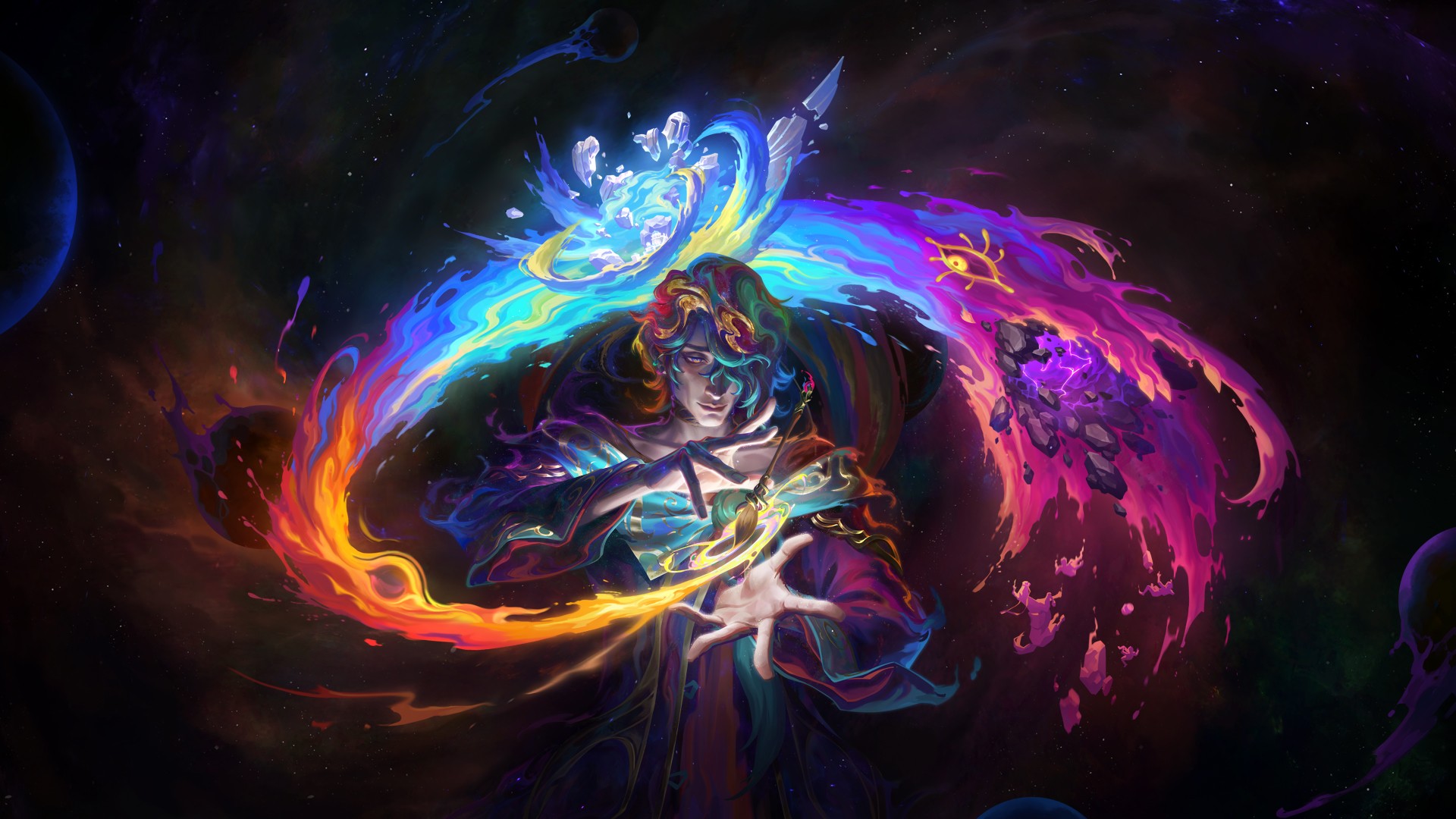
Hwei, the Visionary, brings a flexible set of abilities to the mid lane. His Subject: Disaster, Subject: Serenity, and Subject: Torment ability groups give him tools for dealing damage, supporting allies, and controlling opponents.
Sylas offers explosive damage and crowd control. His kit includes an ability that pulls enemies into a stun-to-knock-up combination, while Kingslayer restores health based on his missing health. His ultimate lets him steal an enemy champion’s ultimate ability.
Rek’Sai brings another approach to initiating team fights. Her Unburrow ability knocks up nearby champions, while her ultimate helps her track nearby enemies before striking.
These additions give players more options for adapting their team compositions and strategies.
Ranked play and game modes get updates
Competitive players also get changes to Ranked and Legendary Ranked.
The S/A and MVP scoring systems now evaluate performance according to a player’s lane and champion role instead of relying on a single universal metric. Strong performances can also yield more Ranked energy.
Legendary Ranked receives adjustments to its seasonal entry requirements for former Grand Masters, alongside a new trial format designed to help top performers advance from Legendary Commander Rank.
Players looking for something different can also try Rift Rumble, a new 3v3 mode played on a symmetrical map. Teams battle for kills and compete to capture ultimate stones that can change how their champions secure eliminations.
Meanwhile, AAA Realm continues to evolve with a music-themed season and new augment cards. These include Sonic Waves, which draws inspiration from Riot Games’ musical acts, including HEARTSTEEL, Pentakill, and TRUE DAMAGE.

A new era for K/DA and Wild Rift
With FIRESTARTER, the HEATBRINGER skins, and a sweeping gameplay update, Patch 7.3 connects Riot Games’ music and gaming communities through a shared celebration.
K/DA’s return gives fans a new soundtrack and fresh looks for their favorite champions, while the gameplay changes introduce new ways to approach champion builds, jungle farming, and map control.
Players can follow Wild Rift Philippines’ official social media channels for updates on the latest patch, champion releases, and in-game content.
K/DA returns with FIRESTARTER.

HoYoverse will launch Petit Planet, its first cozy galactic life simulation game, on December 4, 2026. The game will be available on PC, iOS, and Android, with a Nintendo Switch 2 release planned for 2027.
The announcement was made during the Petit Planet Pre-Launch Special Program on November 1. HoYoverse also revealed more details about the game’s characters, gameplay features, and launch events.
Build a planet and meet new Neighbors
In Petit Planet, players take on the role of Planet Tenders who travel across the Starsea with Oumuamua, a Starsea Spirit said to listen to people’s wishes.
Each player starts with their own planet, where they plant a Luca Seed that grows into a Luca Arbor. This tree gradually shapes the planet’s landscape, seasons, and ecosystem.
Players will also meet various Neighbors, including Planet Coordinator Mobai and Starsea Racer Elsasani. Getting to know these characters allows players to develop friendships and discover their individual stories.
Beyond their home planets, players can explore scattered Islets across the Starsea. They can also visit the Galactic Bazaar to play games, participate in auctions, and share their creations with others.
Launch events offer free rewards
HoYoverse has prepared several events to celebrate the game’s launch.
Players can enter a pre-registration lucky draw through the official website for a chance to win prizes. Regular gameplay will also offer more than 1,000 clothing and furniture items for free.
The Besties, Made to Match! event rewards players who invite two friends to pre-register. Each participant will receive an exclusive clothing item.
Starting November 1, the Launch a Planet event will let players design their own planets through the official event website. Participants will also have a chance to win surprise grand prizes.
The first Petit Planet Seasonal Creation Event will begin alongside the game’s launch. Selected fan creations can win cash prizes, in-game rewards, and official merchandise.
Players can also visit the game’s official X account after the special program to receive a Moving Guide and join a giveaway featuring a suitcase, gift cards, and an exclusive luggage tag.
Pre-register for Petit Planet
Petit Planet is now available for pre-registration on the Apple App Store, Google Play Store, and Epic Games Store. Players can search for the game on these platforms to pre-register and receive a notification when it launches.
The game arrives globally on December 4, 2026, for PC, iOS, and Android. A Nintendo Switch 2 version is scheduled for 2027.

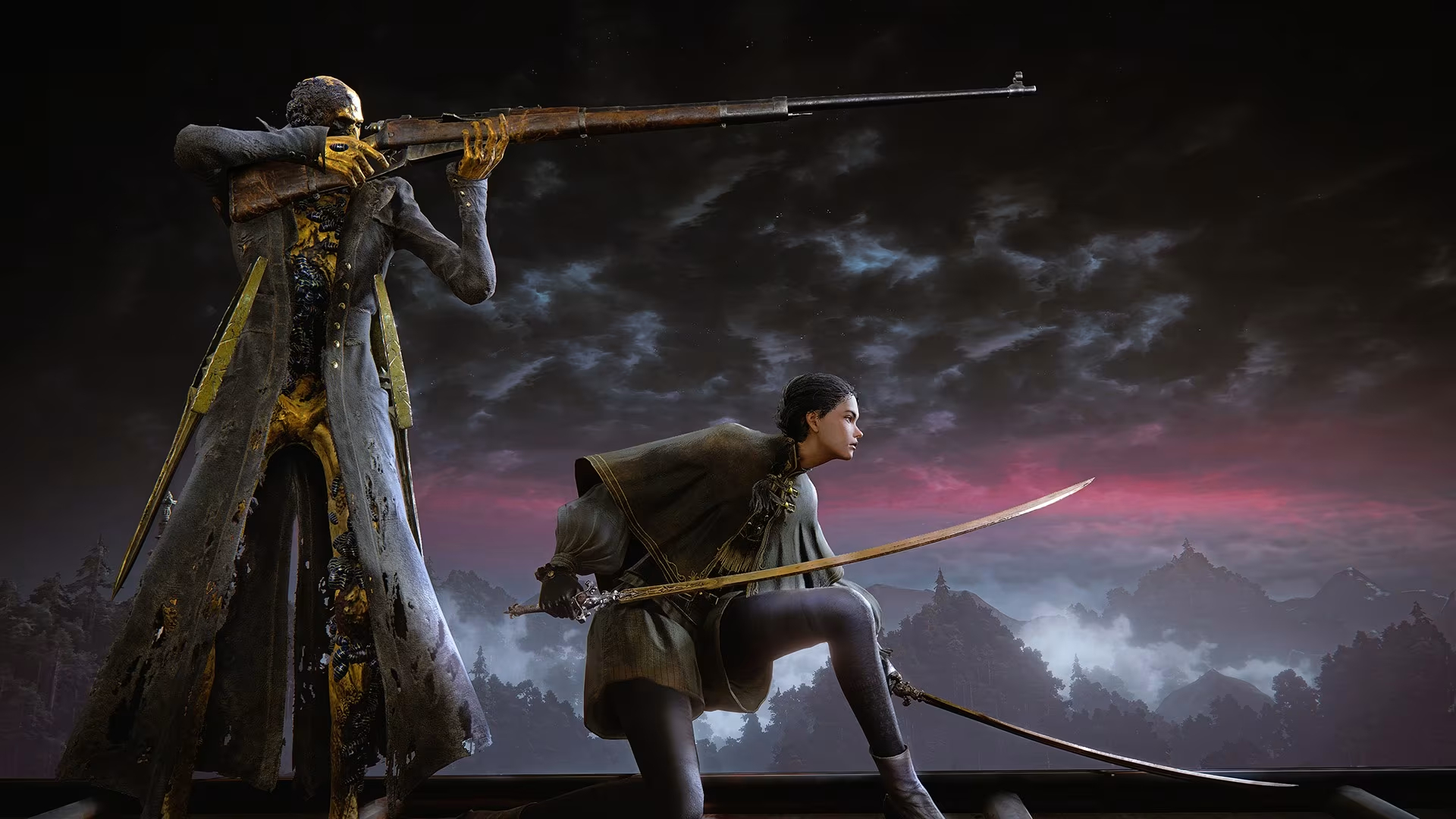
It’s been a while since the last time we got a FromSoftware game. Elden Ring Nightreign felt like an age ago, even if it was launched just last year. Plus, the title isn’t even a new one, technically, since it’s just building off of Elden Ring. Unfortunately, our wait for a new FromSoftware game has to go on for a little bit longer. FromSoftware has delayed the launch of The Duskbloods to 2027.
The Duskbloods is an interesting addition to the FromSoftware oeuvre. Compared to the usual fare, the Switch-exclusive title is a multiplayer extraction game with a distinctly Bloodborne-like feel. If you’re used to FromSoftware’s usual formula, The Duskbloods represents a huge change.
But it’s a welcome one, nonetheless. If the recently released Elden Ring port of the Switch 2 is any indication, FromSoftware does have a handle of what performance looks like on the console.
Sadly, the new title needs a bit more time in the oven. Citing “final adjustments to game rules and balancing,” FromSoftware is delaying the launch of the game to 2027. According to the studio, this is in response to the successful network test a while back.
The delay shouldn’t come off as a surprise. Though the studio promised a 2026 launch for the title, most of the year has passed without a definite launch date. That was already a telltale sign that a delay was coming.
At the very least, the delay comes with the benefit of launching the game farther away from Grand Theft Auto VI and the Ocarina of Time remake, which will surely dominate holiday gaming this year.


ROG G700 review: The best prebuilt PC you can get off the shelf
This PC will make you stop worrying about specs.

HP OMEN Max 16 review: Gamer-maxxing in deep black
Peripherals deemed necessary to max this out


vivo V80 review: Good phone, tough sell
A capable travel companion

Wild Rift Patch 7.3, celebrates K/DA comeback

LG showcases its latest AI TVs in the Philippines

Your coffee nook is getting a makeover with Starbucks’ holiday collections

Petit Planet launches December 4

This pop-up sauna brings the steam room experience into your home


-
Reviews2 weeks ago
vivo V80 review: Good phone, tough sell
-

 News2 weeks ago
OPPO Find X10 Series: Price, availability in the Philippines
-

 Cameras2 weeks ago
DJI Osmo Pocket 4P Pearl White now available globally
-

 News2 weeks ago
OPPO Find X10 Series: Price, availability
-
 Entertainment2 weeks ago
Cyberpunk: Edgerunners 2 now streaming, Cyberpunk 2077 update coming
-
Gaming1 week ago
HP OMEN Max 16 review: Gamer-maxxing in deep black
-

 Laptops2 weeks ago
Lenovo expands Yoga lineup with new AI PCs and tablets
-

 Laptops2 weeks ago
ASUS ProArt P14, P16 laptops with NVIDIA RTX Spark now available