

Gaming
Biped review: A cute little co-op game for two

Back in 2008, there was an online browser game called QWOP. It had you controlling your character’s legs with nothing but the Q, W, O, and P keys. It sounds simple but, because of the odd physics engine, it became ridiculously difficult. Despite that, it was a pretty fun and hilarious game that became widely popular.
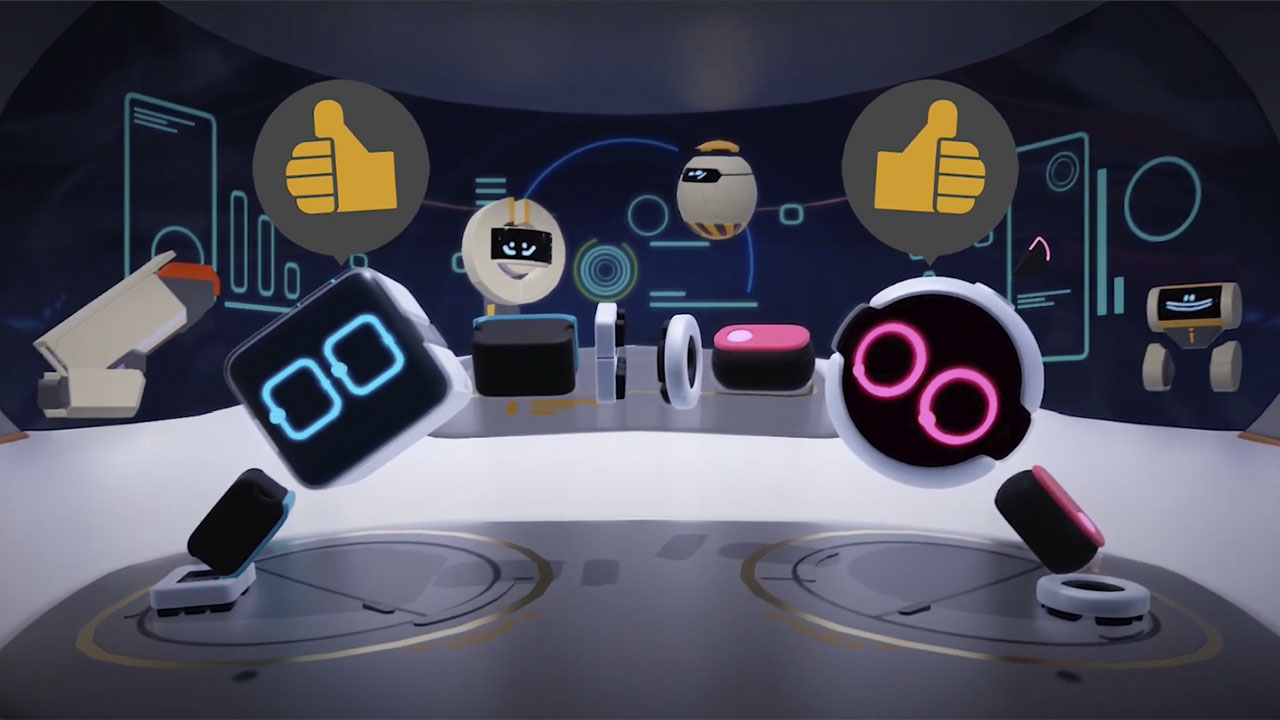
Much like QWOP, NEXT Studios’ Biped takes the mundane act of walking and twists it to make a complicated and frustratingly fun game. Whether you play with a friend or by yourself, Biped presents you with interestingly designed physics puzzles that test both you and your partner’s creativity and patience. And while playing by yourself is an option, it’s obvious that the game was designed to be played with two players. The addition of another player shakes up the gameplay and will have you strategizing, shouting, and probably taking long pauses just to laugh at each other.
Bipeds to the rescue
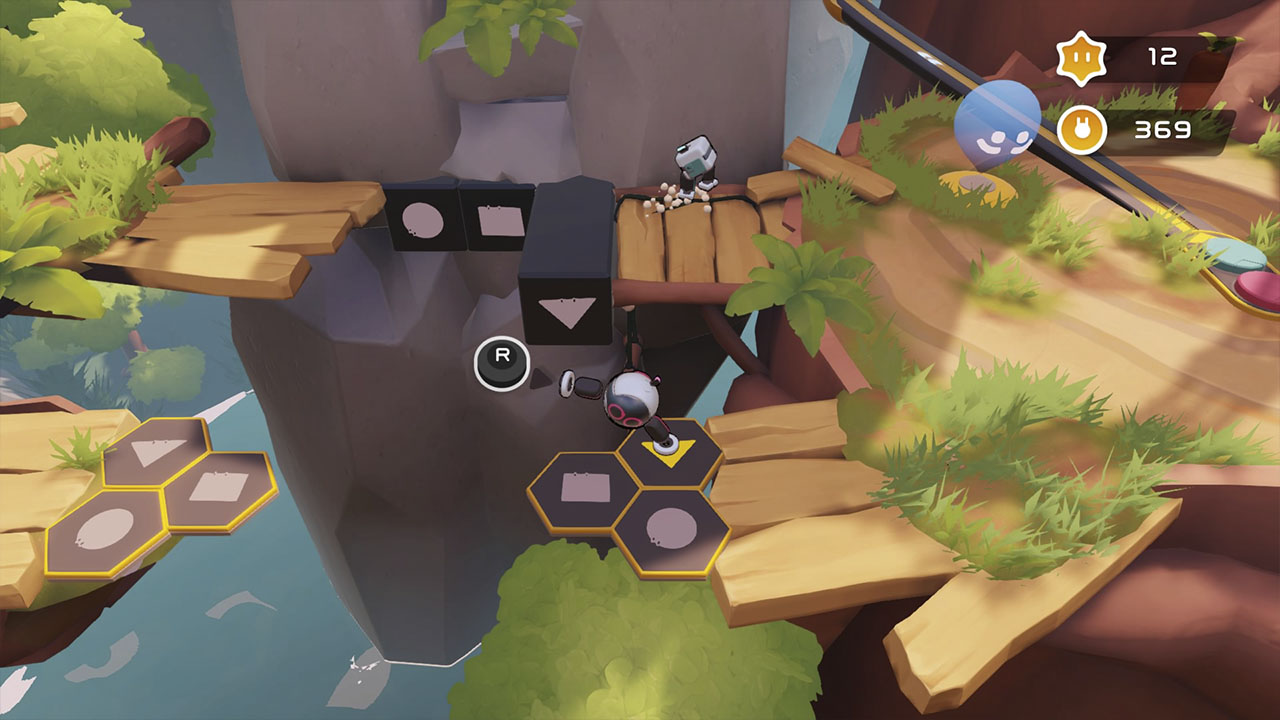
The story is pretty simple. An unexplained force has caused the Earth’s light beacons to extinguish. Two little biped robots, Aku and Sila, are tasked to journey to the planet and reignite these beacons to keep the planet from growing dark.
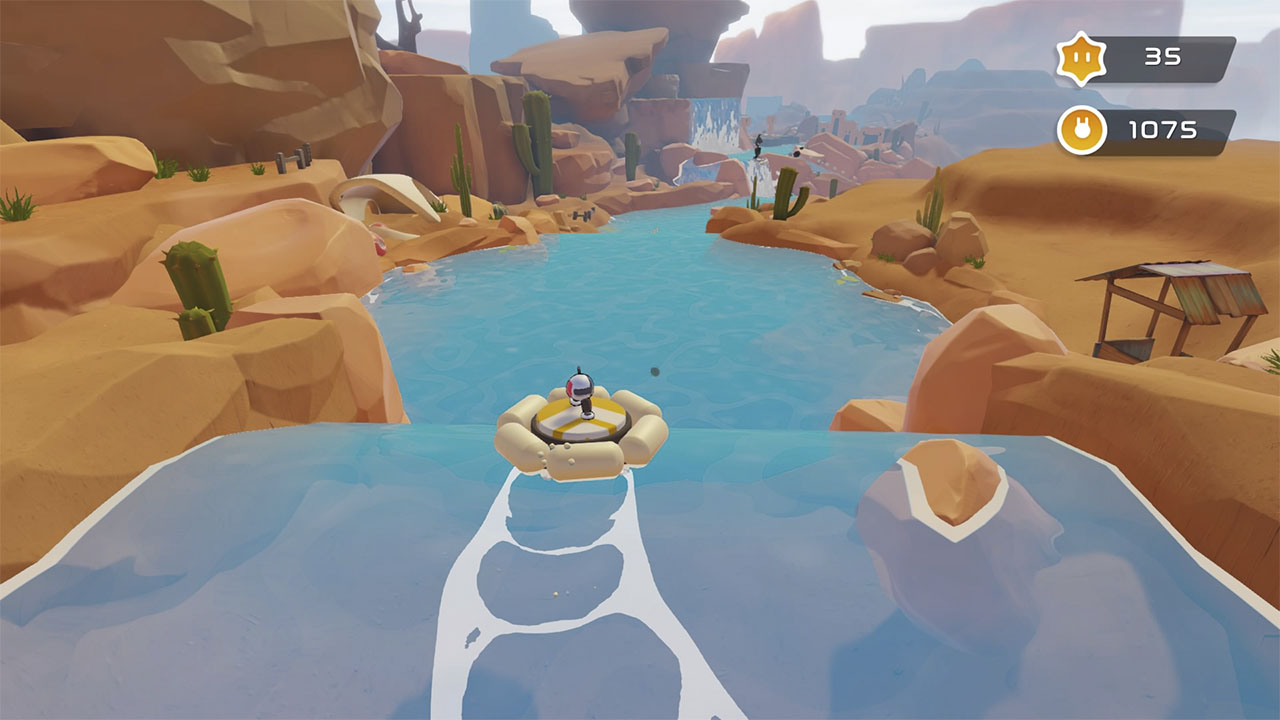
Biped’s graphics are delightfully bright and marries well into the game’s overall aesthetic. It gives off a Pixar-ish feel and will have you wondering if the biped robots are based after Eve from Wall-e (I’m pretty sure they are).
Each level is themed and paired with new sets of puzzles that change depending on whether you’re on single or co-op mode. There are also small and delightful interactive elements that make the world feel a tad bit more alive. I also thoroughly enjoyed the soundtrack which gave off a calm and peaceful vibe despite the fact that I wasn’t.

Left, Right, Left, Right
With all that talk of how complicated walking is in this game (that is the premise, after all), you’re probably wondering how exactly the controls work. Basically, you use the left analog stick to control the biped’s left foot and the right analog stick to control the right foot. To walk, you’ll have to toggle the analog sticks alternately, akin to walking in real life. The instructions are deceivingly simple but as you take your first steps, you’ll most likely find yourself stumbling, falling, grabbing on to the wrong things, and even pushing your partner off platforms.
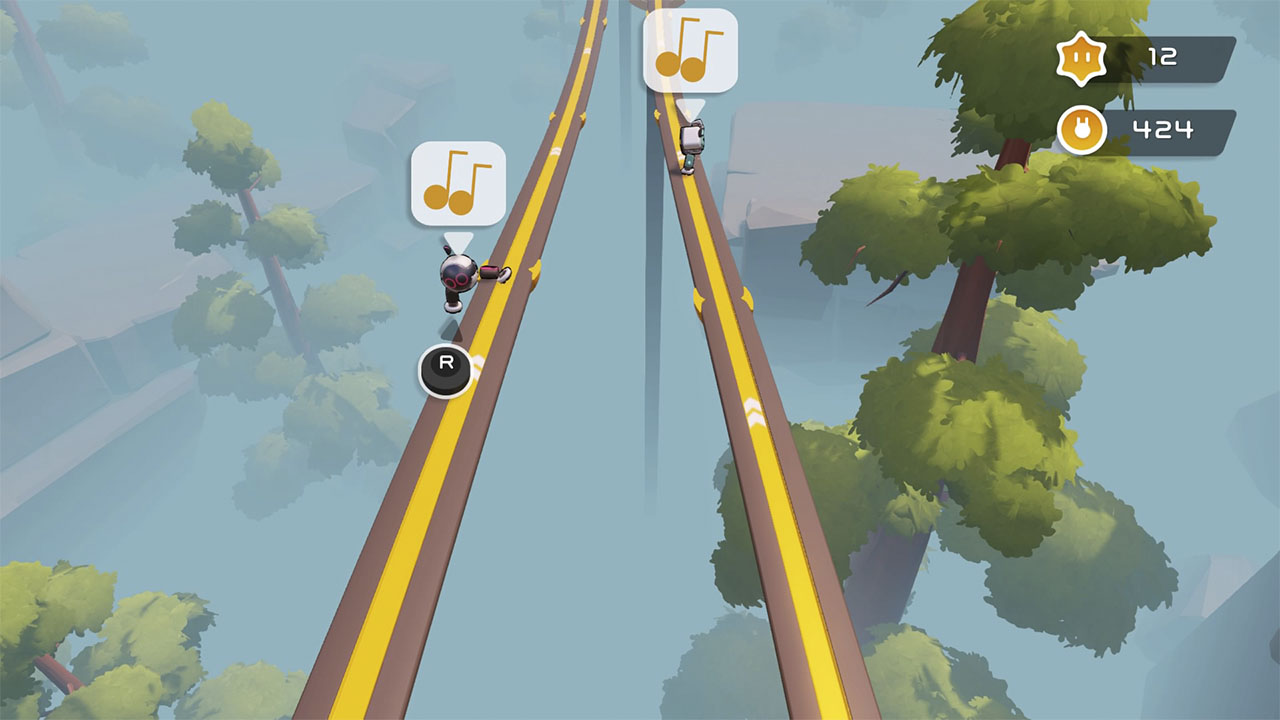
I first started the game playing in solo mode and found myself sailing through levels pretty quickly. As I progressed, I saw that some challenges were originally made for co-op and the game will throw in NPCs to help you out in solo mode. It wasn’t hard to cooperate with the NPCs but it simply has a programmed movement that you need to go along with to complete tasks and teamwork doesn’t really come into play.
For example, I was balancing on a platform and using the NPC as my counterweight to get across. To finish the puzzle, I had to focus on the NPC’s movements instead of my own because it systematically moved. The positive thing about this is that its movements became predictable which meant I could easily finish the puzzle.
Double Trouble
After my NPC partner experience, I figured it would be easier to play with another human being since we could coordinate our movements. I roped in my husband so we could experience the game as it was intended. Adding a human player definitely changed my approach to the game. I can confidently say, though, that thinking it would be easier playing with another person was an incredibly wrong notion.
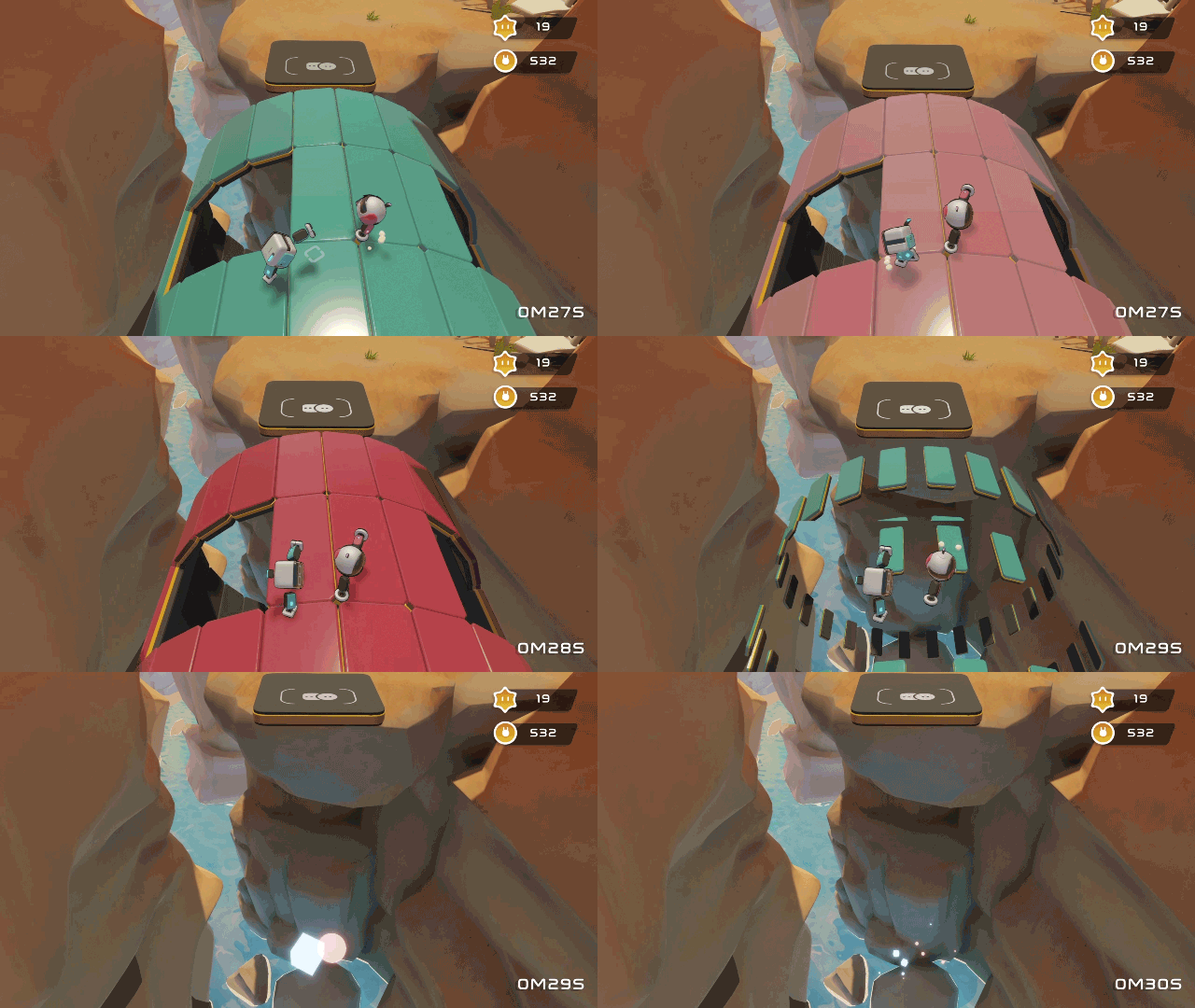
In co-op mode, you and your partner have to constantly be wary of each other’s movements. One wrong move can send a player tumbling down the platform and have both of you start all over again. I found the color-coded platforms to be the most difficult. Both players have to have on-point coordination, cooperation, and patience or else you’ll turn what was supposed to be a 3-minute puzzle into a 30-minute one (yes, it happened to me and my husband).
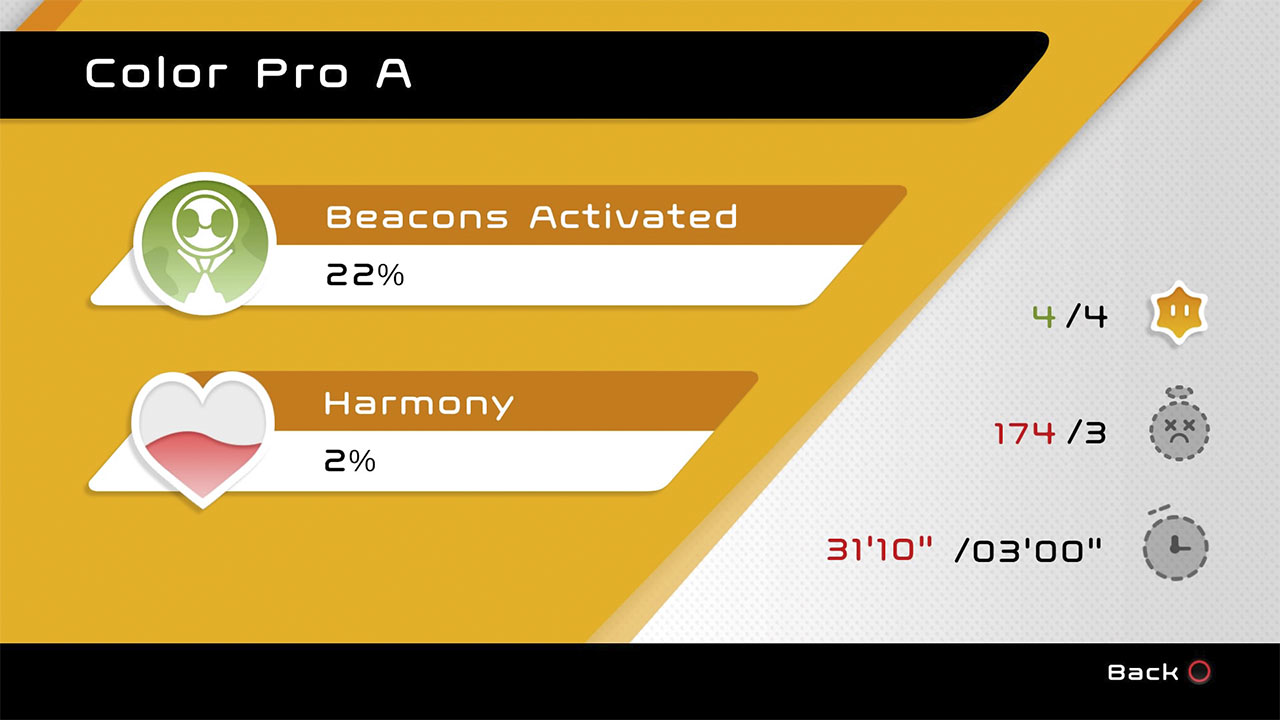
Completing a level in co-op mode will unlock it’s Pro levels. These levels were made to test you and your partner’s skills as a team. The additional stages offer much more difficult puzzles that require serious coordination between the two players. On our first runs, we could finish stages in 20 – 30 minutes and it involved a lot of plotting, coordinating, and discussion on how to go about the puzzles. Despite our finishing times being twice or thrice the recommended time per stage, going through the puzzles successfully together gave us a large sense of accomplishment and pride.

Over before it started
Unfortunately, the game is quite short and can be finished in a couple of hours. There are a total of 8 different levels with two Pro levels each for co-op mode. Completionists may have a longer run time with this game as there are more challenges to beat, such as completing coins and beating times, before you can get that 100% rating for each level. But even so, I felt that as the game was just starting to really flesh out, it ended.
Final Thoughts
Overall, Biped is a delightful little game that can give you a couple of hours of fun. The awkward and clumsy controls are, undoubtedly, frustrating but largely contribute to the charm of this game. Paired with bright, visually pleasing graphics and a quiet little soundtrack, it’s worth looking into for your list of “games to play when people are over.”
It sadly does have a humdrum solo mode which means that solo gamers might not get much mileage out of this game. Co-op is also limited to local or couch co-op and it seems that it won’t be getting support for online play any time soon. It does, however, support the PS4’s SharePlay feature so you can still virtually play with a friend.
But despite it lacking a bit on content, Biped, with its clunky controls, adorable lead characters, and bright environments, is still a game well worth considering for a fun and challenging local co-op game.
Vikka contributes lifestyle and gaming content for GadgetMatch. She is easily distracted by dogs and has an affinity for anything kawaii. She proudly declares Psyduck as her Pokémon spirit animal. You can find more of her work on The Modern Creatures.




Gaming
Project Helix is Xbox’s next console, and it plays PC games
It might be as powerful as a modern PC.


Among all the platforms in today’s generation of consoles, the Xbox has to be biggest loser. Compared to the PlayStation 5 and the Switch 2, the Xbox Series X|S isn’t as memorable. To rectify its position in the rankings, Xbox is heavily teasing its next console codenamed Project Helix.
As was hinted before, Xbox is trying something different with its next-generation console. Rather than just a simple iteration over the current-generation console, the upcoming one will reportedly double as a PC. Today, the company itself has confirmed that this is the case for Project Helix.
Through a post on X, Xbox CEO Asha Sharma said that the console will “lead in performance and play your Xbox and PC games.”
Great start to the morning with Team Xbox, where we talked about our commitment to the return of Xbox including Project Helix, the code name for our next generation console.
Project Helix will lead in performance and play your Xbox and PC games. Looking forward to chatting about… pic.twitter.com/Xx5rpVnAZI
— Asha (@asha_shar) March 5, 2026
There are two things to unpack here. Firstly, Project Helix will aim to bridge the perilous divide between console players and PC players. Unlike the past, there will be a way to play both platforms on both devices… except for games exclusive to the PlayStation and the Switch, that is.
Secondly, a “lead in performance” seems to indicate that this isn’t just a mini-PC. Most recently, Valve announced the Steam Machine. Though it offers a convenient way to play Steam games in one device, it doesn’t have the best specs. Project Helix, if Sharma’s words are to be believed, might be as powerful as a modern PC.
Xbox won’t wait long before revealing more details about the console. Sharma, who only recently started her post as CEO, will be at next week’s Game Developers Conference to explain Project Helix more.
SEE ALSO: AMD teases next-gen Xbox coming in 2027
Gaming
Ubisoft confirms Assassin’s Creed: Black Flag remake
It’s officially called Assassin’s Creed: Black Flag Resynced.
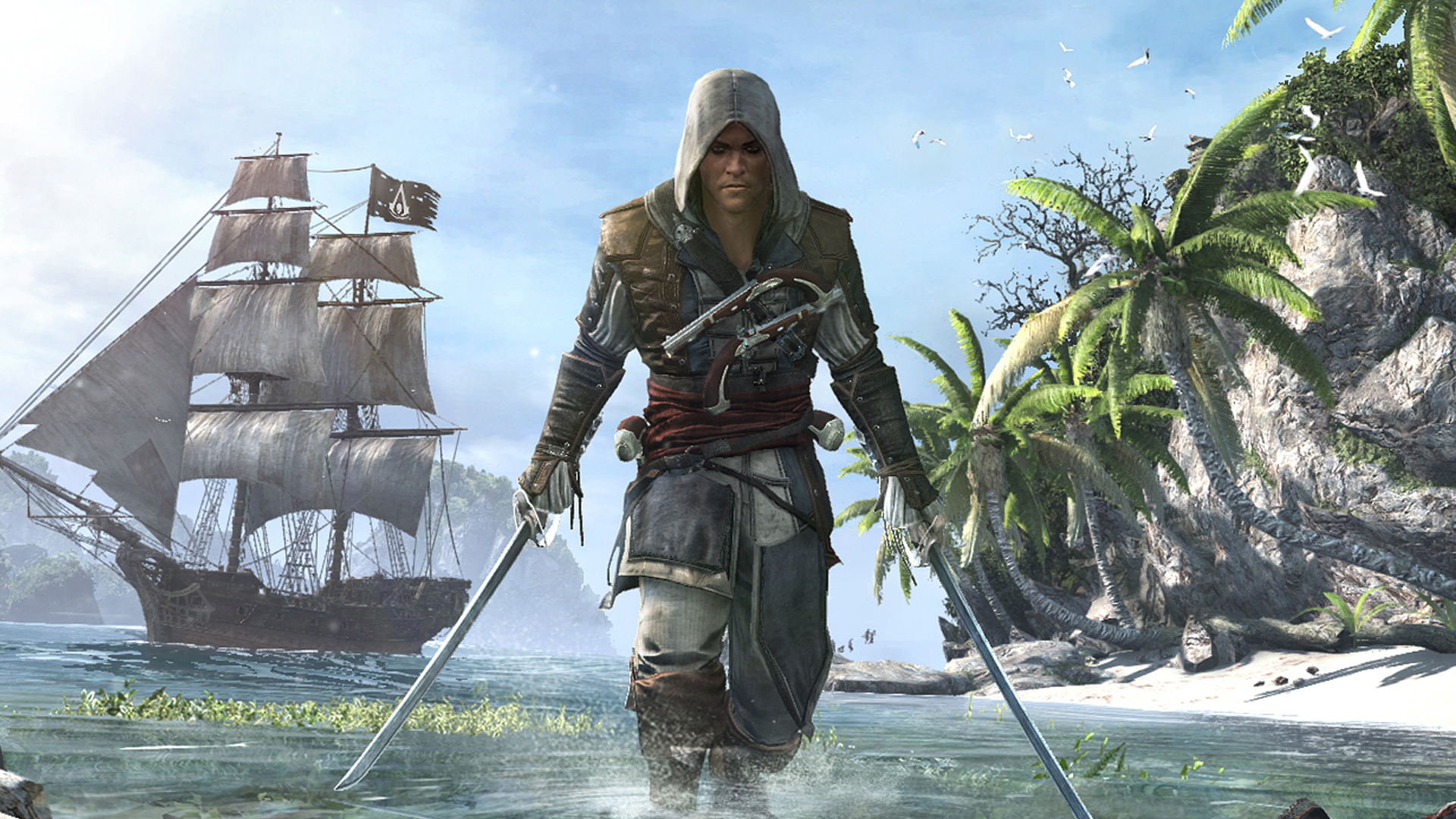
If you ask an Assassin’s Creed fan what their favorite game of the series is, Assassin’s Creed: Black Flag will likely be one of the top contenders. Because of its reputation, gamers are constantly asking for a remake of the popular pirate simulator. Now, the dream is finally here. Ubisoft has confirmed that a remake, called Assassin’s Creed: Black Flag Resynced, is coming.
Released in 2013, Assassin’s Creed: Black Flag saw the journey of Edward Kenway, a vagabond pirate haplessly thrust into life as part of the Assassin Brotherhood against his will. The critically acclaimed game was something that all gamers have been clamoring for since Sid Meier’s Pirates: a true pirate simulator. It was no surprise that the game got as popular as it did.
Today, through an official roadmap shared by the company, Ubisoft has confirmed that Assassin’s Creed: Black Flag Resynced is real, and it might launch later this year. The company also released the first concept art for the remake.

Currently, there’s no official word as to how Ubisoft is remaking the game. At the very least, we can expect significant graphical upgrades to put it up to par with the modern games. We wouldn’t be opposed to more stories and missions too.
Now, though the Black Flag remake is already a big deal, the same roadmap also emphasizes that Codename Hexe, the next mainline title, is still coming. Ubisoft hasn’t confirmed the actual timeline yet, but the game will depict “a pivotal moment in history.” With post-launch development for the ongoing Shadows winding down, efforts to launch Codename Hexe should be ramping up soon.
SEE ALSO: Assassin’s Creed Shadows gets Attack on Titan-themed content
Gaming
PlayStation will stop releasing its games on PC
A new reports suggests that Sony is going back to console exclusives.

PC-only gamers have been eating well for the past few years. The formerly exclusive PlayStation library opened its gates and released worthy ports for PC. Unfortunately, Sony is putting an end to this short-lived era of openness to PC gamers. According to a new report, the company is once again making first-party PlayStation games exclusive to the console.
During the pandemic, Sony started releasing its critically acclaimed first-party games on PC. The new wave saw gamers get the ability to play titles such as Horizon Zero Dawn, The Last of Us, Marvel’s Spider-Man, and God of War on another platform. Even now, players are still eagerly awaiting the PC launch of Death Stranding 2, due out later this year.
However, as reported by Bloomberg’s Jason Schreier, Sony has just had a change of heart and will no longer release any more games on the PC, beyond those already confirmed for future launches.
This will mean that last year’s Ghost of Yotei and the upcoming Saros will remain PlayStation exclusives for the foreseeable future.
It’s a big change to Sony’s direction. However, it’s not without its precedents. For one, Microsoft has started to compete in the non-exclusive market. The company is already set to launch Fable and Forza Horizon 6 on other platforms, including PC and PlayStation, concurrently with the Xbox launch. To compare, PlayStation still waits a long time before launching exclusive games on PC.
Also, now that rumors have begun to speak of a fabled PlayStation 6, Sony might want to keep things close to its chest for now. After all, selling the console might be its top priority for now.
SEE ALSO: PlayStation 6 reportedly delayed to 2029 because of RAM shortage


EastWest rolls out Google Pay access for debit cardholders

Globe postpaid opens pre-orders for Samsung Galaxy S26 series

The Xiaomi 17 shoots Leica dream

Nintendo sues the United States

OPPO Reno15 F 5G hands-on

Xiaomi 17 Ultra is now available outside China

TECNO will showcase the CAMON 50 and POVA 8 series at MWC 2026

The art of being in and behind the frame

HUAWEI MatePad 11.5 S 2026: The better-than-ever 4-in-1 productivity tablet

TECNO MEGABOOK K16s 13th review: No-frills beneath those grills


-
 News1 week ago
Xiaomi 17 Ultra is now available outside China
-
 MWC 20266 days ago
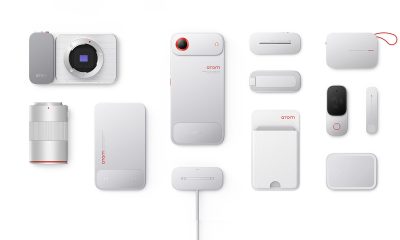
TECNO showcases cool concepts at MWC 2026
-

 MWC 20261 week ago
TECNO resurrects modular phones with this new concept
-
 MWC 20264 days ago
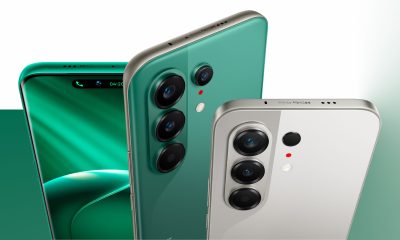
TECNO launches the all-new CAMON 50 series
-

 Reviews1 week ago
Xiaomi Pad 8 review: Slab that slaps!
-

 Reviews1 week ago
Forget the Phone: Xiaomi 17 Ultra Is A CAMERA!
-
 Reviews4 days ago
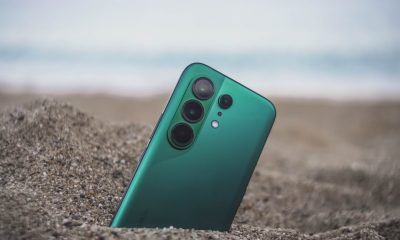
TECNO CAMON 50 Ultra review: End of an era?
-
 MWC 20263 days ago
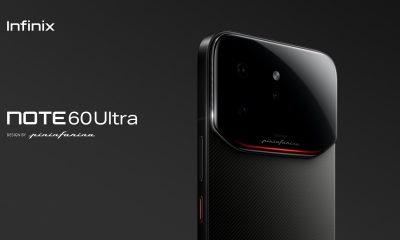
Infinix NOTE 60 Ultra makes a motorsport-inspired debut