
Entertainment
Now Playing: Avatar: Fire and Ash
Imperfect finale leaves room for more

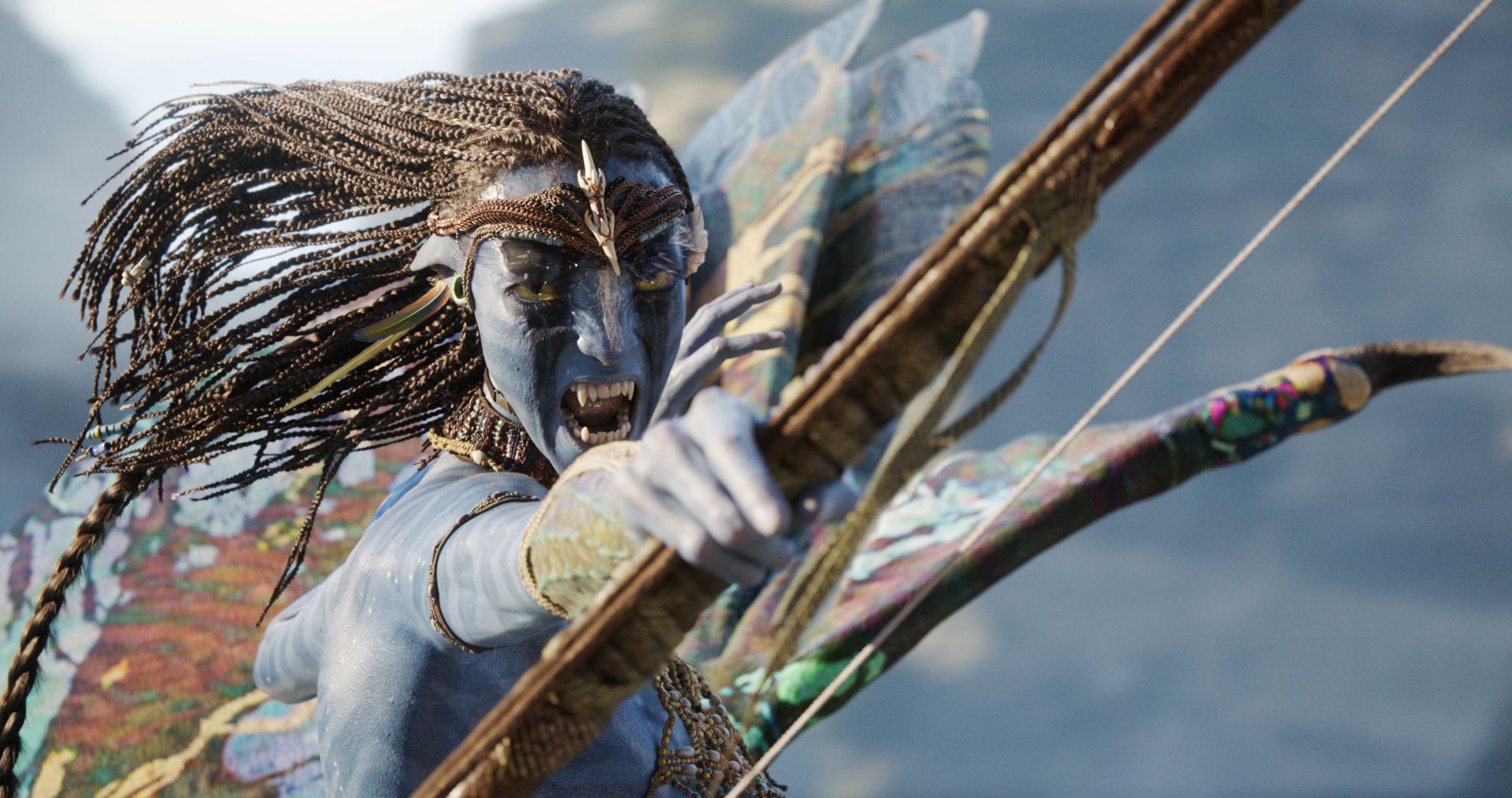
If this truly marks James Cameron’s farewell to the franchise, then Avatar: Fire and Ash does deliver a gripping finale that caps the saga’s first arc.
Moviegoers are assured of a visual masterpiece that is even better in 3D, to say the least. Story wise, the film ties up loose ends from Way of Water and culminates in a ginormous battle Pandora’s fate. That’s all while leaving the door open for future chapters.
Execution could have been more polished, but the box office blockbuster franchise’s third entry still remains worth the trip.
As a standalone movie, viewers will find it enjoyable without much knowledge of the first two installments.
Decisions, consequences
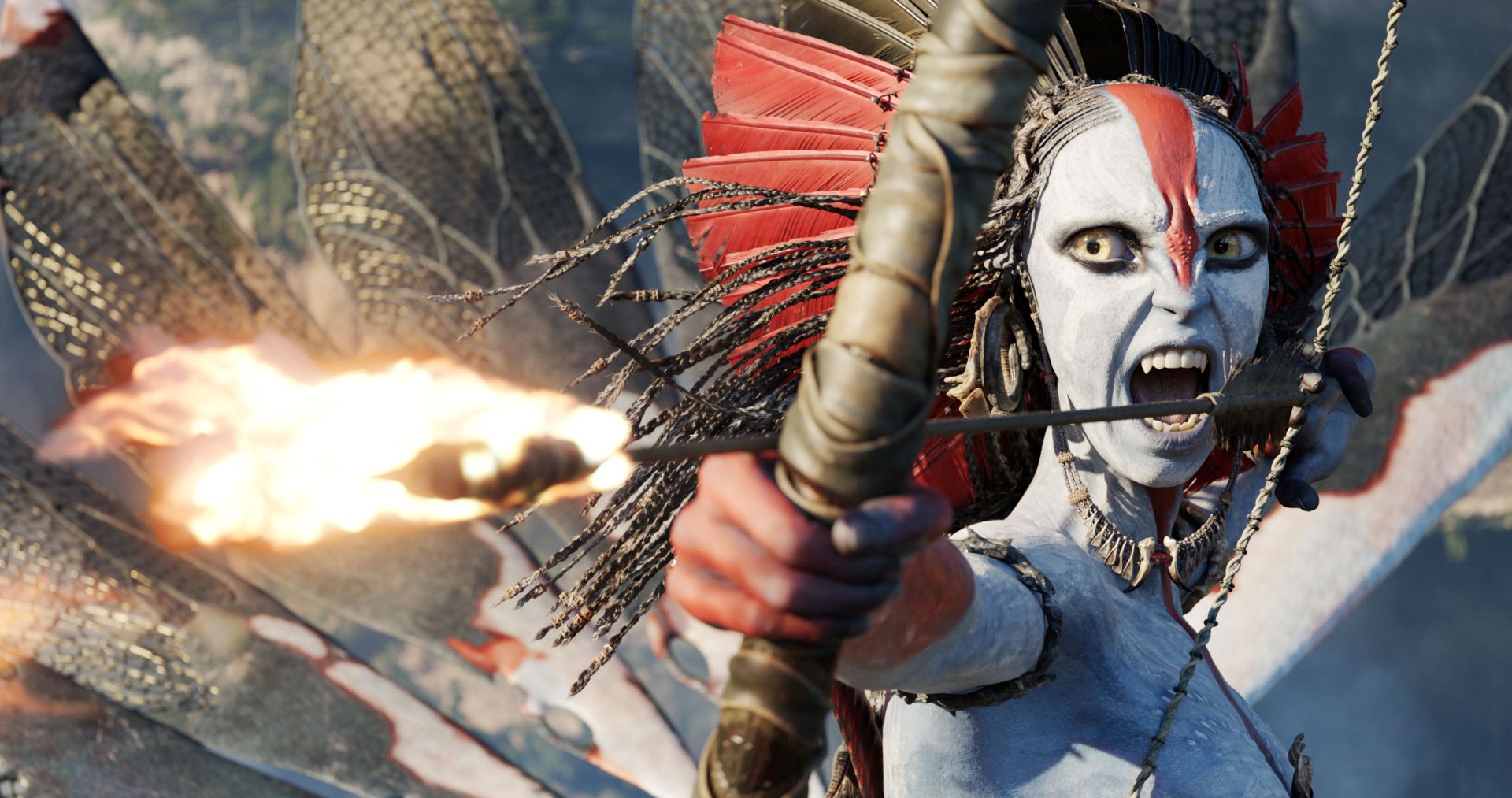
Avatar: Fire and Ash is set just weeks after the events of Way of Water. And just like the second installment, the conflict begins with a seemingly harmless decision.
Amid their grief, Jake, Neytiri, and the Sullys decide Miles “Spider” Socorro — son of Col. Miles Quaritch — can no longer stay with them.
This leads to them accompanying him aboard a passing flying merchant ship. Along their trip supposedly back to the human scientist camp, the film introduces the Mangkwan.
This isolated Na’vi tribe who reject Eywa is spearheaded by their tsahik, Varang. From the initial look, they seek domination over Pandora. They also happen to reject Eywa, as bared later on, with Varang showcasing control of fire.
Chaos erupts as the Mangkwan attacks the flying merchants, leaving almost everyone dead. The encounter also causes the Sullys to be separated.
While the tribe ravages the hapless merchants, Col. Quaritch and his team remain hellbent on exacting revenge on Jake, as was his central goal from the past film.
In his pursuit of Jake, a three-way conflict pushes the movie to be tense from the get-go. All parties have their goals they need to accomplish. And a radical new threat stands in the way too.
Enemy of the enemy

Quaritch and his right-hand, Cpl. Lyle Wainfleet, only find Jake tied up in the aftermath of the Mangkwan’s attack.
Persuaded by Jake who knows where to find Jake, Quaritch decides to spare his nemesis temporarily.
They set out on a search for the Mangkwan, while the film highlights the tribe’s radical, if not extremist nature. There’s unsettling rituals and Varang’s thirst for power.
This starts to deepen the narrative as now, it’s a matter of ironically joining forces with your foe. And in spite of the vengefulness inside Quaritch, his side as a father to Spider lets him postpone his payback plans.
Jake and Quaritch team up momentarily to save the former’s children. But Quaritch also realizes the potential in forming an unlikely alliance with Varang, which he does.
A incomprehensible power within
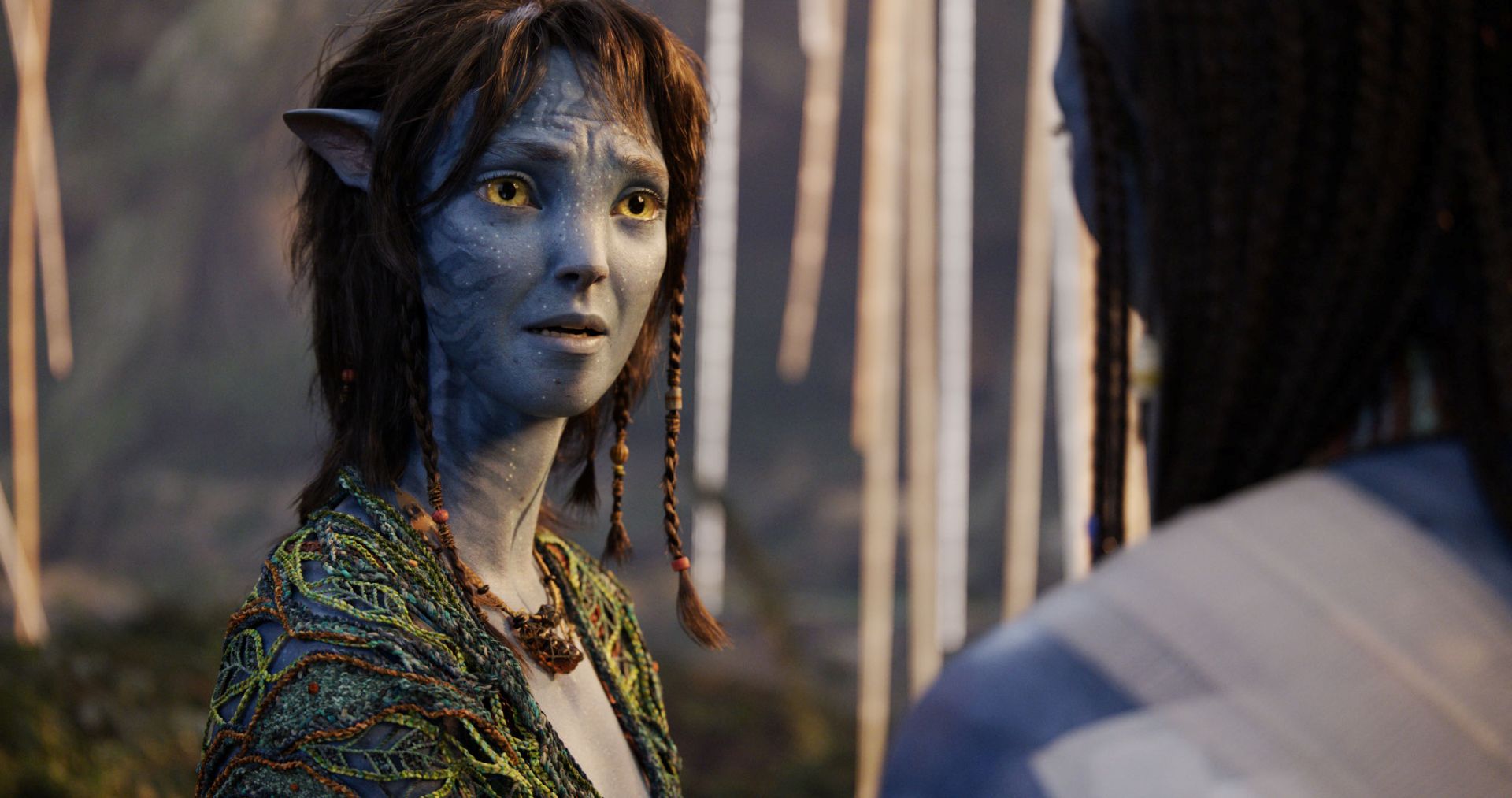
After the first hour or so, Avatar: Fire and Ash gradually builds up on Kiri’s mysterious abilities. She was key to the children escaping from the Mangkwan when she commanded the fauna to kill some fighters.
This was also highlighted more when she bonded with the ground to help Spider survive and turn him sort of into half-Na’vi, being able to breath without an oxygen mask.
But her powers are incomprehensible even to herself. She even tries to commune with Eywa, but to no avail. It was clear at this point that the movie intended to set her up as an integral warrior to what was brewing.
Expanding conflict
Back in the RDA lab, corporate greed takes over anew as scientists find out hundreds of Tulkun whales will be gathering for their mating season.
This would bring them billions in profit if they could harvest large volumes of the amrita substance, threatening Pandora’s ecosystem in the process.
The subplot adds to an already complex web of conflicts. Although, Quaritch’s vendetta against Jake still remains the enduring, central thread, sustaining tension throughout the runtime.
Each chapter just provided constant cliffhangers, somehow keeping viewers glued in spite being three hours long. About two hours in, Quaritch and Varang’s alliance (and relationship) and Jake’s surrender evoked trouble across Pandora.
Humanity amidst the struggle

Adding to that long runtime was exploring the Sullys’ human side. Standing out was Neytiri’s extended grief over the loss of Neteyam.
Her anger toward Spider and general hatred for humans from the first film created an ethical dilemma when she wanted Quaritch’s son dead. Ultimately, the couple decided not to kill Spider, showing how humanity prevailed amidst the struggle.
Neytiri’s sorrow was an aspect the filmmakers arguably could have utilized better. Early on, her grieving lingered over and over. It didn’t help that she was injured from the initial Mangkwan attack too.
While it was already heartbreaking to see Neytiri in such a state, it could have been shown better how she channels this into anger and showing the sky people what they’ve done.
Make no mistake, her clever disguise as a Mangkwan member that helped free Jake and Spider was a great touch.
Yes, the was emotional balance from Zoe Saldana’s character to complement action sequences, but a different direction could have pushed it further.
Climactic finish

Eventually and expectedly, Avatar: Fire and Ash finale sprawls into a dramatic battle that involves all parties. Jake assumes the mantle of Toruk Makto once more, and rallies all known Na’vi tribes, knowing what’s at stake.
This was setup aptly given all conflicts were unveiled at different parts of the movie. I’ll give them the cohesion. But still, it should have been presented with more chaos.
For a film that was titled “Fire and Ash”, you would have expected ruins and lots and lots of burning. Perhaps even some volcanic explosions to set up the end of Pandora.
Anyway, the Tulkuns and Na’vi take care of business initially against the profit-blinded RDA ambush. But combined forces of the now heavily-armed Mangkwan and Quaritch turn the odds to the antagonists’ favor.
Casualties were aplenty; the sudden deaths of key allies felt apt with how straightforward they cut through viewers’ chests. Instantly dead if that’s how their fates should be sealed.
By now, most loose ends have been addressed. Kiri has likewise finally connected with Eywa, whom she asks for help.
Similar to Way of Water, family members were once again held hostage inside an RDA ship. Thankfully, Neytiri overpowers Varang, who decides to flee.
Everything boiled down to Quaritch and Jake confronting each other amid the chaos. Spider aids Jake, but his conflicting loyalty culminates in him saving his biological father.
Repetitive?

Visually, the entire final sequence dazzles, with the sheer volume of moving parts making up for an epic scene at part with those in other trilogies. But the length might have caused fatigue too.
At the same time, if you are going with such an exhaustive screen time, might as well incorporate newer elements related to the Mangkwan.
Or Neytiri and Varang could have had their own distinct one-on-one combat to add to what’s going on.
Even better, Neytiri should have led from the get-go for a refreshed take while the Jake-Quaritch conflict remained a lasting subplot.
There were missed opportunities especially in a final battle that once again took place ocean-bound.
Room for more?
In what was the film’s final cliffhanger for more potential installments, Quaritch decides to jump off the floating rock shortly after getting cornered by the Sullys.
It appeared Jake still wanted to say something, or perhaps convince him to redeem himself before it’s too late.
Instead, we can only assume Quaritch has fallen to his death… not unless the suddenly disappeared Varang saved him on a Banshee. Such ambiguity leaves space for possibly more.
The epilogue was poignant; the underwater spirit trees were a nice touch with cameos from past characters welcoming Spider for his full transition to a Na’vi. The same could be said for Neytiri and Ronal warming up to each other after being reluctant towards each other.
Overall, Avatar: Fire and Ash is a visual spectacle that weaves several dilemmas throughout. It’s not that it wasn’t coherent nor cohesive, but missed opportunities held it back.
Though it’s a worthy, if imperfect, finale to Cameron’s first saga.






Entertainment
Cyberpunk: Edgerunners 2 now streaming, Cyberpunk 2077 update coming
Edgerunners returns to Night City

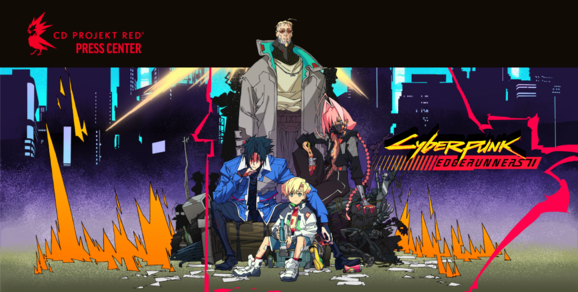
Cyberpunk: Edgerunners 2 is now streaming on Netflix, with all 10 episodes available to watch. CD PROJEKT RED and animation studio TRIGGER have also announced a new update for Cyberpunk 2077, bringing content inspired by the anime to the game.
The Edgerunners 2 Update (Update 2.5) launches on October 22, 2026, for PC, PlayStation 5, and Xbox Series X|S. A Nintendo Switch 2 release will follow shortly.
Edgerunners returns with a new cast
Set in the world of Cyberpunk 2077, Cyberpunk: Edgerunners 2 tells a standalone story through an entirely new cast of characters. The series follows a veteran edgerunner, a young cinephile, a chrome-obsessed delinquent, and a Snake Nation netrunner as their stories explore vengeance and redemption in Night City.
Director Kai Ikarashi leads the new installment, with Kanno Ichigo serving as lead character designer. Masahiko Otsuka returns as a collaborator, while Bartosz Sztybor serves as showrunner, story writer, and producer.
Both Cyberpunk: Edgerunners and Cyberpunk: Edgerunners 2 are available exclusively on Netflix.
Cyberpunk 2077 gets a new update
CD PROJEKT RED announced the Edgerunners 2 Update alongside the anime’s premiere on October 20. The free update will introduce new items and features to Cyberpunk 2077, including content inspired by the new series.
The update launches on October 22 for PC, PlayStation 5, and Xbox Series X|S. CD PROJEKT RED has yet to announce the Nintendo Switch 2 release date beyond confirming that it will follow shortly.
The studio will reveal more details during a special episode of REDstreams on October 21. The broadcast will air on Twitch, YouTube, and Steam, with official patch notes scheduled for release on the same day.

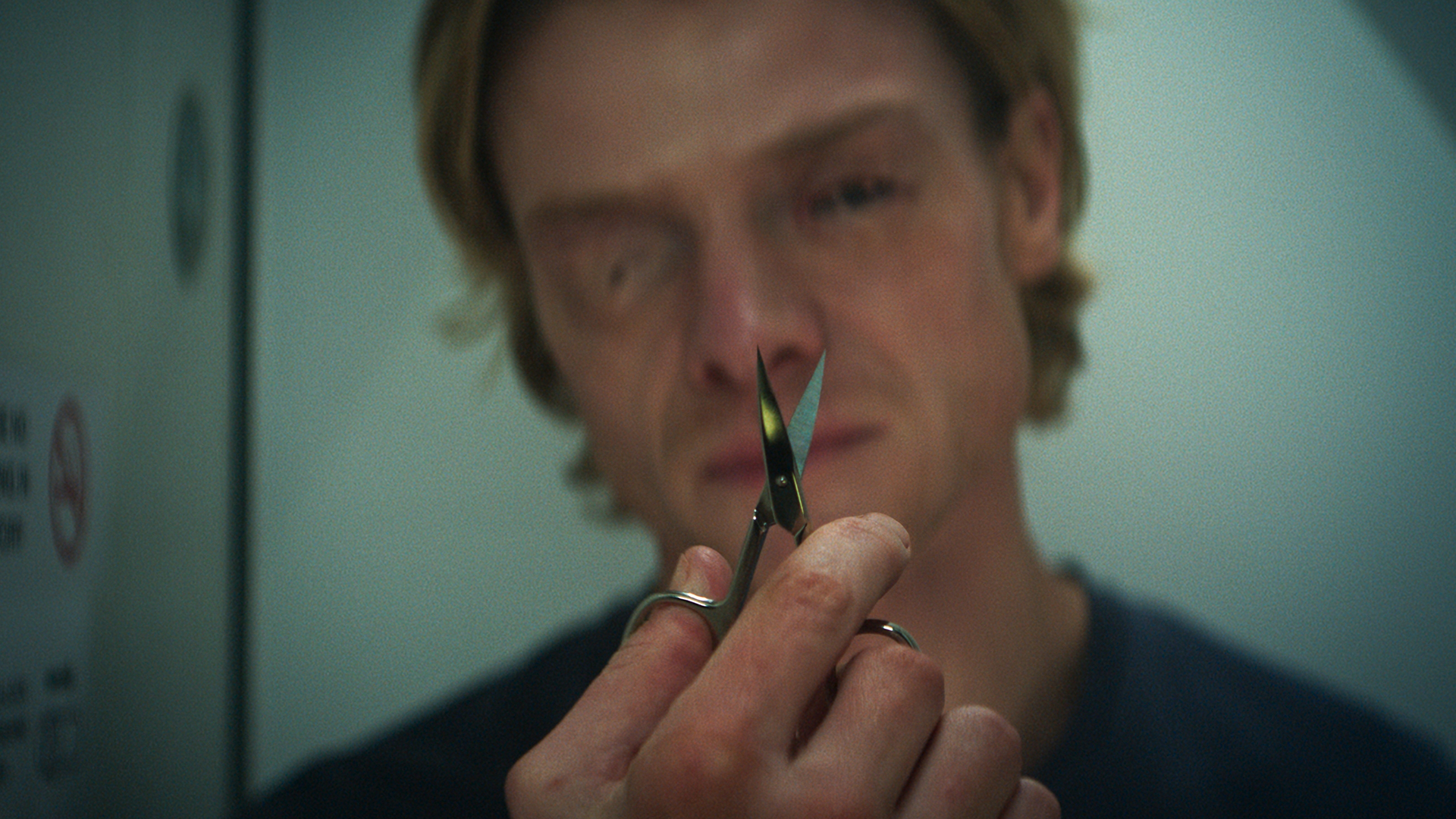
The thing about supervillain movies is that they rarely let their villain be a villain. From Venom to Kraven the Hunter, they’re contrarian dreck that reframe a mass murderer as a “misunderstood anti-hero” who’s overshadowed by a corny do-gooder. Boo hoo. Thankfully, Clayface got the memo to not do that, even if it came pretty close.
Clayface reimagines how rising actor Matt Hagen becomes one of Batman’s most (literally) monstrous enemies. Here, Matt is horribly disfigured by gangsters then abandoned by his friends. He finds hope in Dr. Caitlyn Corr’s genetic experiments, but loses his body, mind and soul as her miracle cure enables his worst impulses.
Basically, Clayface is everything Joker failed to be. It’s a sympathetic origin story for a twisted Batman villain, but it doesn’t make excuses for them. If Joker scapegoats Arthur Fleck’s madness and anarchy on the nebulous enemy that is Society the way an aimlessly rebellious teenager would, Clayface throws all the blame and consequences on Matt — and Matt alone.

I like how Matt’s story is a tragedy of his own making. He wasn’t always evil, and he really was wronged by scum. Worse, his identity is cracking, which is a bit of psychological torment that I wish the movie dwelled on more. And yet, he always had a way out. He just keeps choosing the cruelest and greediest options instead.
This is the kind of agency most supervillain movies — or any movie about a juvenile anti-hero fighting The System, really — lack, but Clayface has an abundance of. There was a moment I thought that the movie would still side with Matt despite everything he’s done, only for him to cross a line. In the end, he can only blame himself when he loses everything and everyone.
However, I was let down by Clayface’s violence. There’s blood and guts, alright, but they’re too inconsistent. For every morbidly satisfying disemboweling or close-up of a nasty scarring, there’s a moment where the movie cuts away from these too early. I lost count of how many times Clayface jumped to the next scene before really letting blades sink into flesh, or how many of Matt’s kills were done offscreen.

Minus the pivotal deaths, the kills are also not as diverse as I’d hope from a killer powered by Play-Doh and imagination. It’s just variations of stabbing and bludgeoning. My issue isn’t a lack of brutality, but that this reluctance to push it further or just show it gives the well-built tension a lackluster payoff. A movie about superpowered revenge in one of fiction’s vilest hellholes should be more depraved and creative.
To be fair, this is more the fault of the movie’s constraints, not a lack of skill or thought. Effects cost time and money that Clayface clearly didn’t have a lot of. This would also explain why Matt is limited to identity theft not by molding himself, but via clever camera work. For what it’s worth, I see and respect the smart workarounds the movie found to deliver the dread.
Still, I like Clayface. It’s the rare supervillain movie that’s self-aware and honest about its darkness. It humanizes its villain, but commits to their monstrosity while rejecting forced redemption. It’s also a grisly thriller that works on its own merits, yet complements DC Comics’ latest growing cinematic world. That said, Batman can’t arrive sooner to beat Matt’s melted face in.


I went into Whalefall with relatively low expectations. My initial assumption was something along the lines of a Discovery Channel or National Geographic documentary. Perhaps, with a biblical twist inspired by Jonah and the whale.
Learning about marine life and having a mildly existential moment about the ocean seemed plausible enough. What I wasn’t prepared for was being physically thrown around in a cinema while watching a man get swallowed whole by a sperm whale.
Based on the novel of the same name, Whalefall follows Jay Gardiner (Austin Abrams), who dives off the coast of California in search of his father’s remains. What begins as a deeply personal mission turns into a fight for survival when Jay finds himself trapped inside the very creature that could end his life.

(L-r) Director Brian Duffield and Austin Abrams as Jay Gardiner in 20th Century Studios’ WHALEFALL. Photo by Jennifer Clasen. © 2026 20th Century Studios. All Rights Reserved.
Watching it in 4DX made the experience all the more harrowing. My seat moved and the tension mounted. I found myself gripping the armrests as though I had personally signed a waiver to become whale food.
I went in expecting an underwater adventure and left with a renewed appreciation for dry land, breathable air, and the many reasons to stay out of a sperm whale’s digestive system. More surprisingly, I left thinking about my father.
Oh, the questionable decisions we make when we’re hurting
Anyone who has spent time diving knows that going underwater alone is a risk. Conditions can change in an instant. Having nobody around to help when something goes wrong can turn a manageable situation into a life-threatening one.
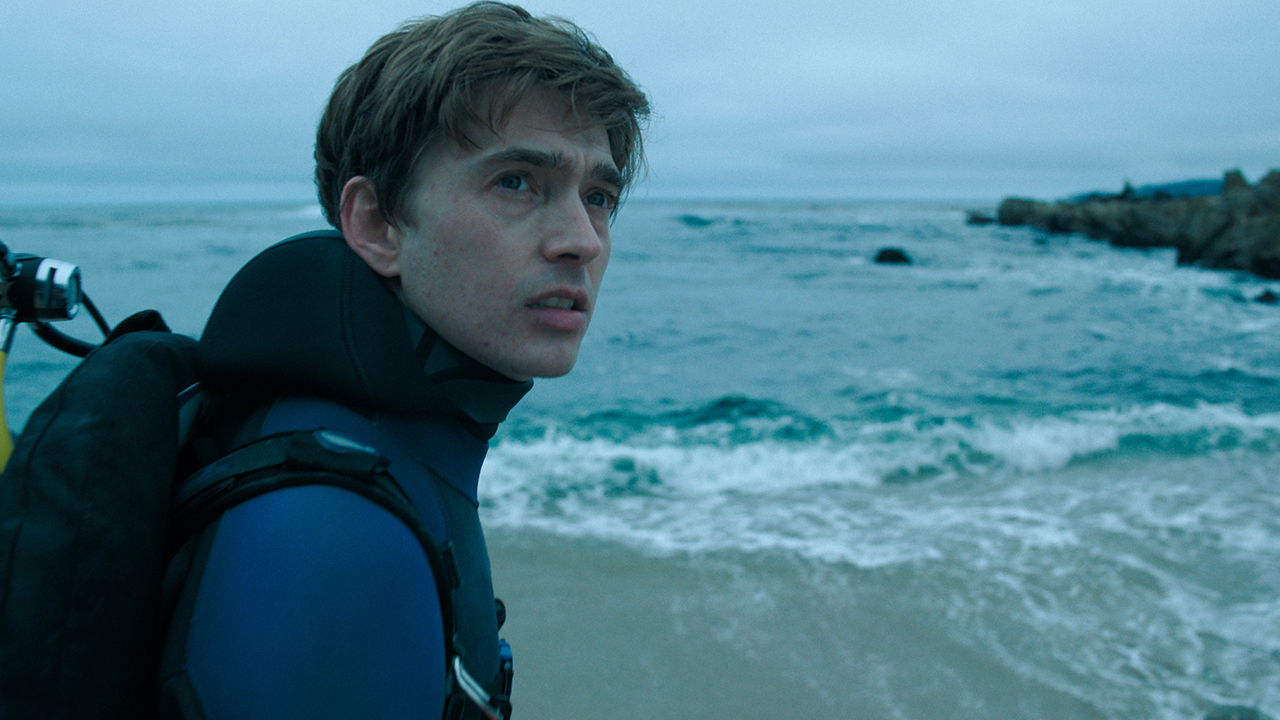
Jay, unfortunately, has other things on his mind. His decision to dive alone is frustrating to watch, particularly when you can see how much trouble his stubbornness is going to cause him.
There were moments when I wanted to reach through the screen and confiscate his diving equipment. I wanted to tell him that grief is not an excuse to abandon every survival instinct he has ever learned.
Then again, grief has a rather unpleasant way of making sensible people do questionable things. Jay is still carrying the weight of his father’s death, compounded by the memory of their last fight.

Diving was something they shared, and returning to the water becomes his way of reconnecting with a man he can no longer speak to.
His search for his father’s remains is also a search for something less tangible: closure, forgiveness, and perhaps, a chance to make peace with the things left unsaid.
That part hit a little too close to home. My own attempt to reconnect with my father involved tennis. Apparently, when daddy issues meet a sports hobby, the brain starts entertaining the idea that a shared activity might somehow repair years of complicated feelings.
Baggage you can’t breathe away
I haven’t read the original novel, so I can’t speak to how closely the film follows the book. What I can say is that Whalefall uses its survival premise to explore the kind of emotional baggage that no amount of deep breathing can magically dissolve.
Jay is fighting to stay alive, but he is also confronting the guilt that has kept him emotionally tethered to his father’s death. The whale becomes a fascinating extension of that struggle.
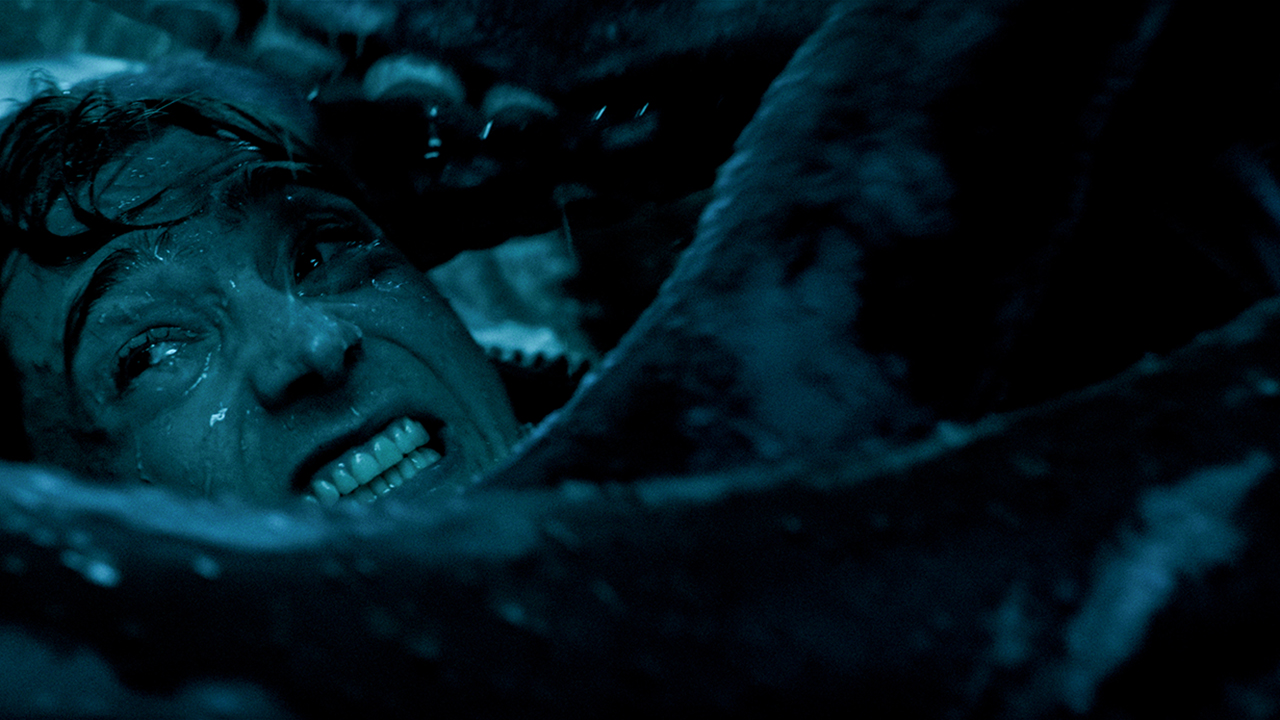
As Jay fights his way through its body, the physical obstacles begin to mirror the emotional ones he has spent so long avoiding.
The creature sometimes feels more like a manifestation of his father. It forced him to confront memories he has buried along with his grief. Survival, in this case, means more than finding a way out. Jay must also find a way to forgive himself.
Suspense that gets under your skin
It’s so deeply unsettling watching a person trapped inside a living creature. I can handle the occasional horror movie, but the human imagination has its limits. Mine would very much prefer not to picture what happens when the walls around you are made of whale.
Jay’s ordeal is brutal. He suffers serious injuries, struggles with dwindling oxygen, and has to work through one terrifying obstacle after another with very little room for error.
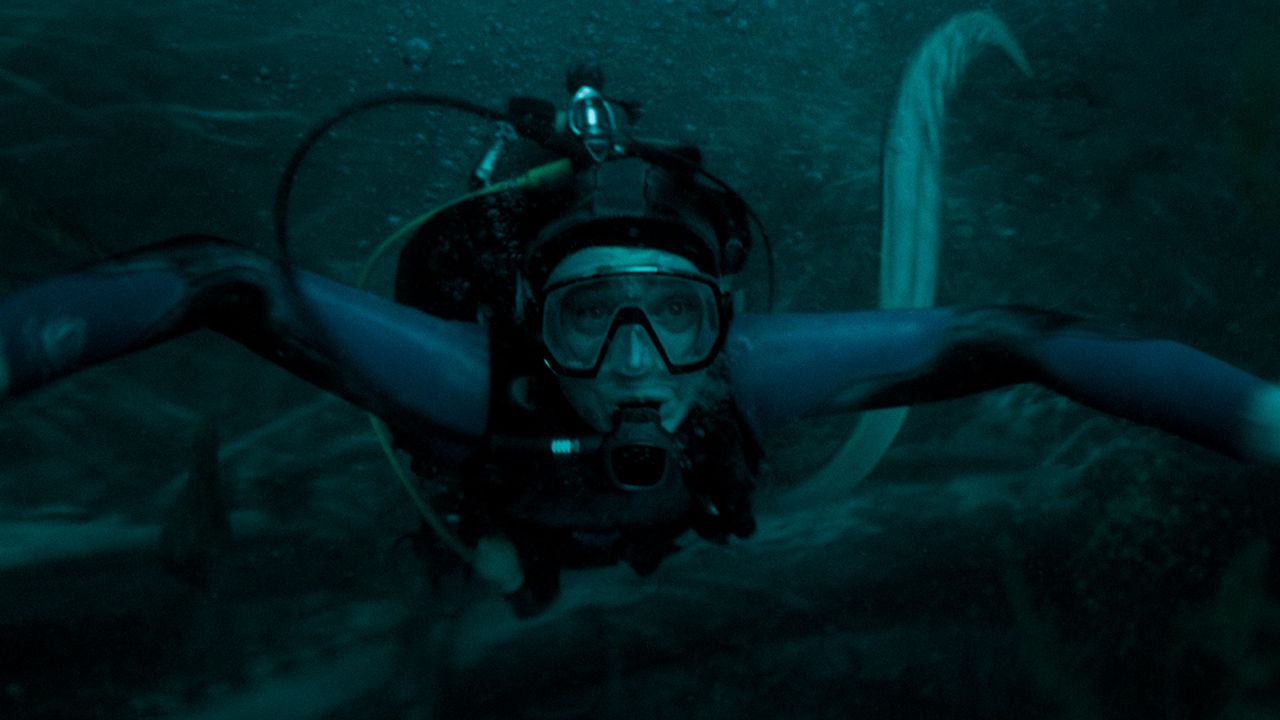
The film makes the environment feel claustrophobic and unpredictable, keeping you painfully aware that his body is running out of time.
The 4DX presentation makes all of this considerably harder to watch. Every jolt and movement pulled me further into Jay’s predicament. The physical effects heightened the sense that something could go wrong at any moment.
I was no longer comfortably observing a survival thriller from my cinema seat. Apparently, I was a passenger on the world’s worst underwater excursion.
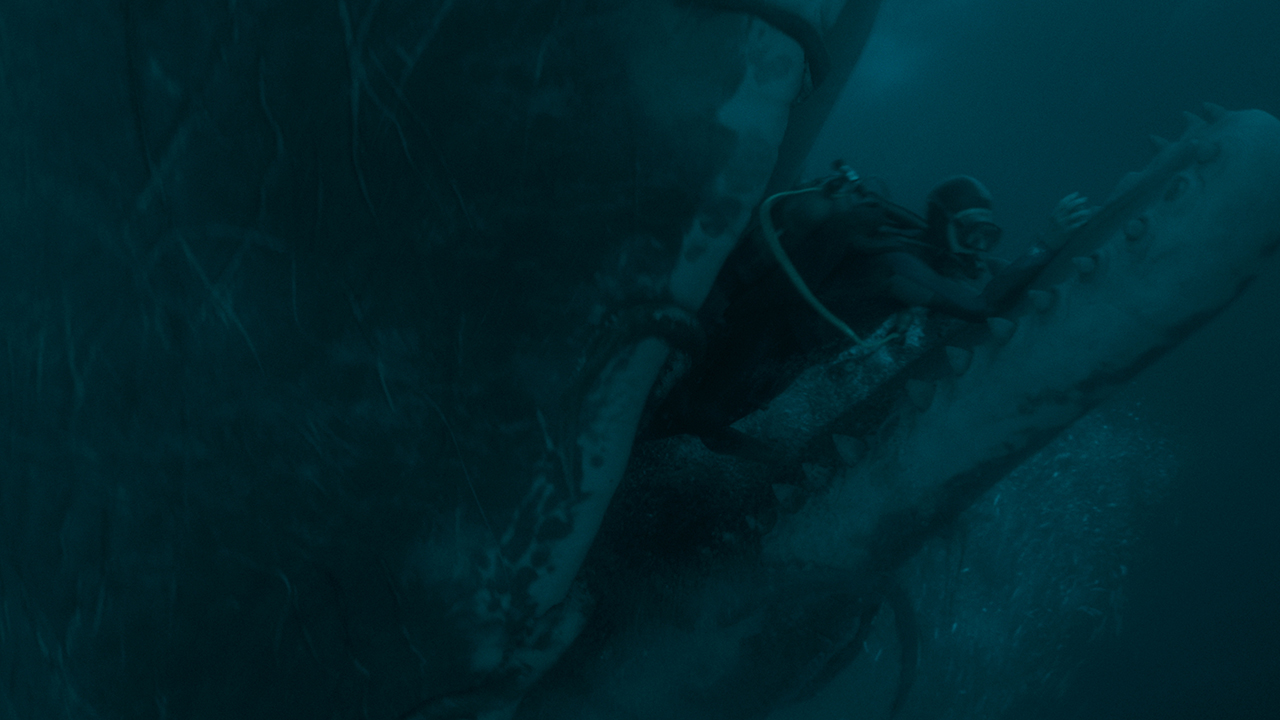
There were moments when I genuinely wanted to look away and ask someone to tell me when it was safe to look again. I knew Jay was the protagonist, and a small, sensible part of my brain assumed the story would find a way to keep him alive.
The rest of me remembered that films can be cruel. That being the main character isn’t always a legally binding guarantee of survival.
Between hope and hopelessness
What kept me watching was the tension between hope and helplessness. Jay has knowledge that could save him, much of it drawn from lessons his father taught him. But remembering what to do is difficult when panic takes over.
His chances seem to improve just enough to make you hopeful before another complication threatens to undo everything.
The film doesn’t rely solely on the spectacle of a man being trapped in a whale. Its suspense comes from watching Jay piece together what he knows while confronting everything he has spent years trying not to feel.
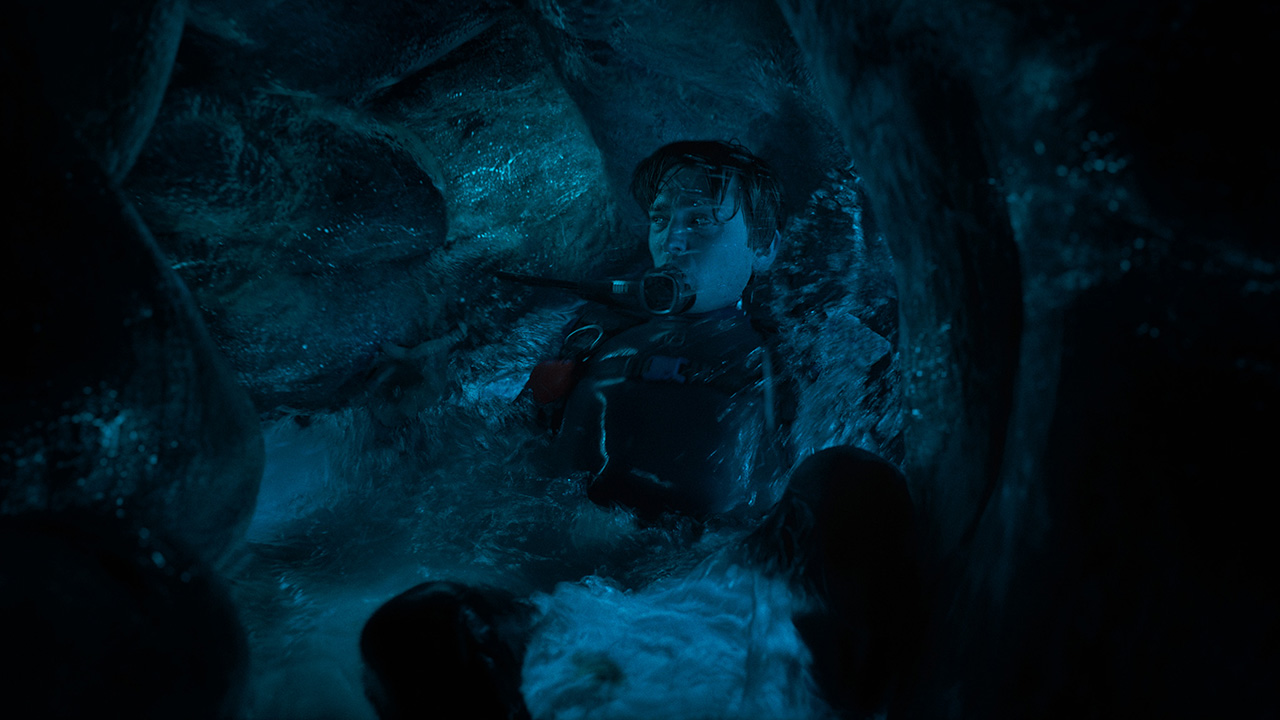
And no, this is not Moana. There is no helpful manta ray carrying the spirit of a dead grandmother to guide our hero through his darkest hour. Jay has to do the work himself, even when the memory of his father becomes the closest thing he has to a guide.
That is what makes the whale’s presence so compelling. It feels as though Jay is being forced into an encounter with his father, except the reunion comes with broken bones and a ticking oxygen supply.
A survival story with grief at its heart
I expected Whalefall to be a survival thriller about the sheer terror of being swallowed by a sperm whale. It certainly delivers on that front, particularly in 4DX, where every movement makes the experience feel uncomfortably immediate.
What I didn’t expect was to leave the cinema thinking about my own relationship with my father. The film’s most affecting moments emerge when the physical struggle and Jay’s emotional journey begin to converge.
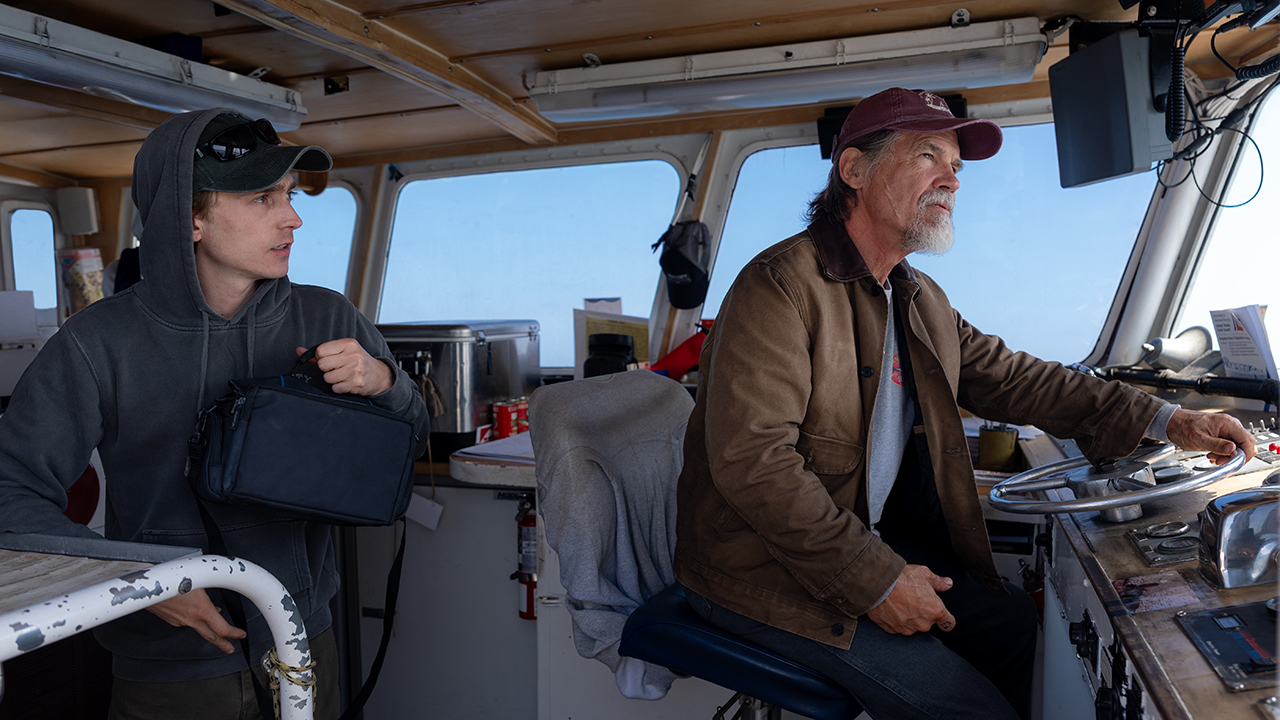
(L-R): Austin Abrams as Jay Gardiner and Josh Brolin as Mitt Gardiner in 20th Century Studios’ WHALEFALL. © 2026 20th Century Studios. All Rights Reserved.
The whale and the memories of his father all become part of a story about learning to live with loss. Its imagery gives the audience room to consider how grief can trap us in the past, even when we desperately want to move forward.
It’s painfully familiar to hold on to the last argument, the final conversation, or the version of a relationship we wish we could have changed.
We replay those memories as though enough mental editing might eventually produce a different ending. Sometimes, we even try to revisit the things we once shared with someone, hoping the familiarity will bring us closer to them again.
Making peace with who we were
Jay’s journey suggests that making peace with a person who is gone also requires making peace with the person we were when they were still here.
That’s a difficult thing to accept, especially when the relationship itself was complicated. Forgiveness doesn’t necessarily mean every wound disappears or every unanswered question finds a neat resolution.
Sometimes, it means acknowledging what happened and allowing yourself to keep living. Whalefall surprised me with how much emotional weight it carried beneath its survival-thriller premise.
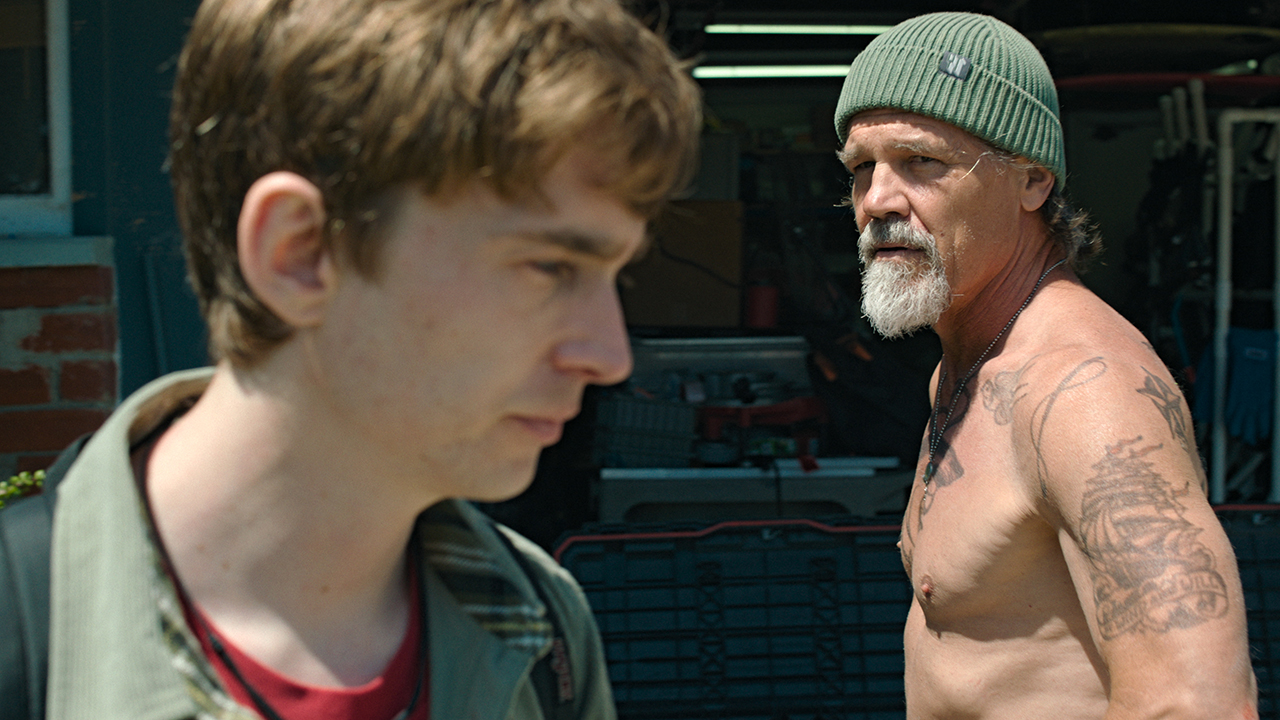
(L-R): Austin Abrams as Jay Gardiner and Josh Brolin as Mitt Gardiner in 20th Century Studios’ WHALEFALL. © 2026 20th Century Studios. All Rights Reserved.
The cinematography and storytelling give its more introspective moments room to settle, making the experience linger long after the credits roll.
If you’re looking for a survival thriller that will leave you gripping your cinema seat, Whalefall is worth the trip. The 4DX experience makes its claustrophobic ordeal all the more visceral. Consider this your reminder to bring your strongest stomach.
If you have a complicated relationship with your father, the film might leave you with something heavier to carry home.
I arrived expecting to watch a man fight his way out of a whale. I left thinking about the things we carry long after the people we love are gone, and the difficult business of learning to let them go.


HP OMEN Max 16 review: Gamer-maxxing in deep black
Peripherals deemed necessary to max this out


vivo V80 review: Good phone, tough sell
A capable travel companion


Ghost of Yōtei Complete Edition review: More of a great thing
Picking up where Atsu left off

Visa: 79% of Filipinos want to learn about stablecoins

CASETiFY Match: Finding the right case for your Galaxy Z8 Series phone
HP OMEN Max 16 review: Gamer-maxxing in deep black

Google illegally destroys 250,000 trees for a single AI data center

FINAL FANTASY RESONANCE now available across major platforms

TECNO CAMON Slim 5G review: Slim on size, big on surprise

TECNO CAMON Slim 5G: Price, availability in the Philippines

HONOR Magic9 Pro Max launches in China with ARRI-powered imaging

BYD says that way better EV batteries are coming next year

TECNO CAMON Slim 5G teases an ultra-slim design ahead of launch


-
 Gaming2 weeks ago
Dragon’s Dogma 2: Dark Arisen launches with new Official Pawns
-

 News1 week ago
vivo V80 debuts with ZEISS cameras
-

 Deals2 weeks ago
Score PhP 22,000 in guaranteed freebies when you pre-order the iPhone 18 Pro at Beyond the Box
-

 Philippines1 week ago
TECNO CAMON Slim 5G gets launch discounts, free MagBadge
-

 Wearables2 weeks ago
Garmin Approach S72 brings swing metrics, green reading to your wrist
-

 News1 week ago
Samsung: Galaxy Z Fold8 demand rose because of iPhone Duo
-

 Features1 week ago
I don’t want a phone that unfolds — the Galaxy Z Fold8 gets why
-
Reviews5 days ago
vivo V80 review: Good phone, tough sell