
Computers
Apple unveils Studio Display and all-new Studio Display XDR
Powering up the desk.

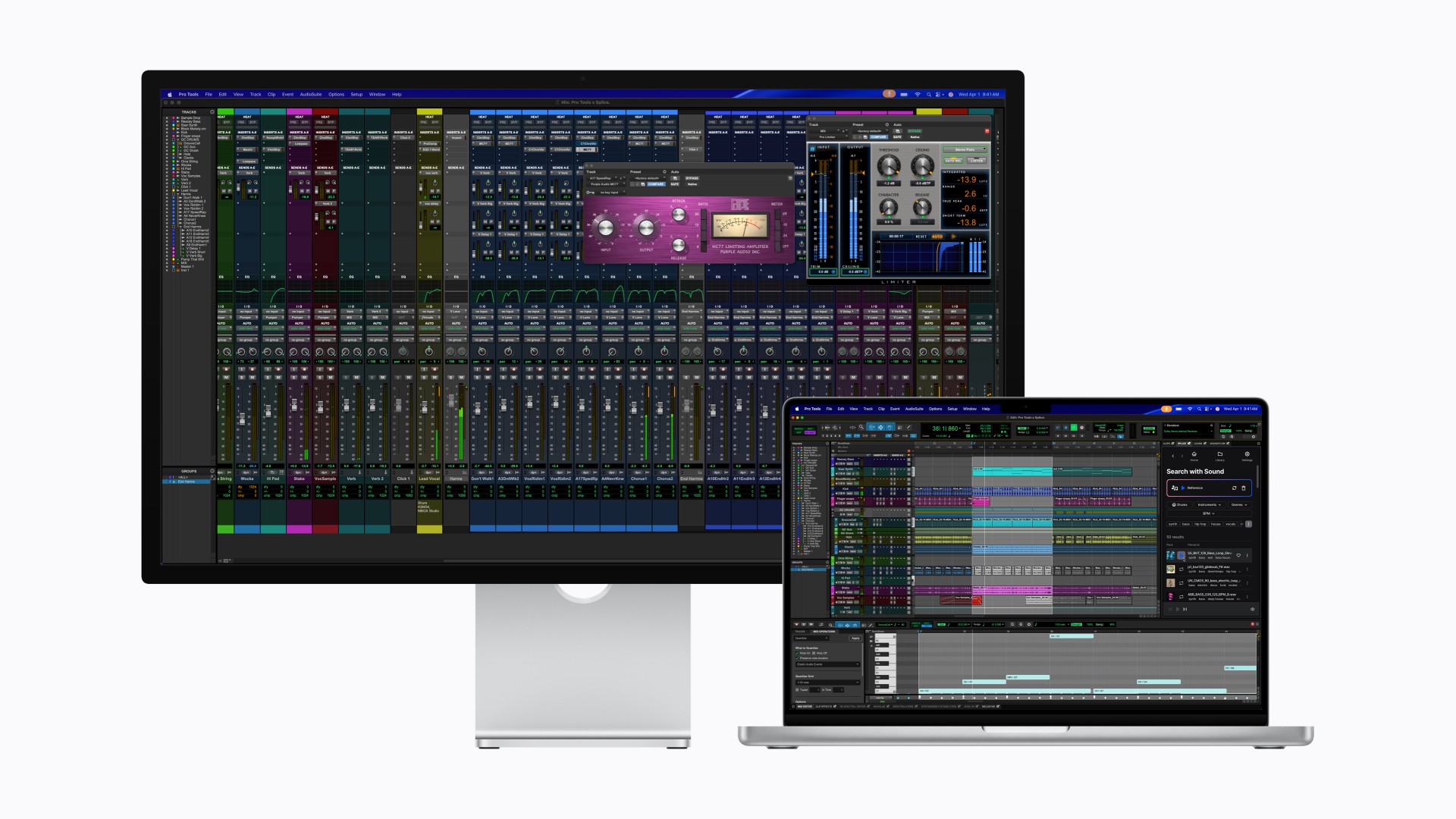
After taking the MacBook Pro to Super Saiyan levels, Apple is now doing the same for the display it pairs with.
With its latest Studio Display family, Apple is splitting the lineup into two clear tiers. The regular Studio Display already feels powered up. The all-new Studio Display XDR transforms.
If this were Dragon Ball Z logic, the Studio Display is Super Saiyan. The Studio Display XDR is Super Saiyan Blue — calmer, more controlled, and operating on an entirely different plane.
A strong base form
The new Studio Display sticks to what already worked: a 27-inch 5K Retina panel with over 14 million pixels, 600 nits of brightness, and P3 wide color. It’s sharp, bright, and more than capable for photo editing, design work, music production, and daily tasks.
Apple upgrades the experience around the screen, too. There’s now a 12MP Center Stage camera with improved image quality and Desk View support. The three-mic array and six-speaker system return, this time with deeper bass and Spatial Audio support.
Connectivity jumps to Thunderbolt 5, allowing users to daisy-chain up to four Studio Displays for nearly 60 million combined pixels. It also delivers up to 96W of charging power for a connected MacBook Pro.
It’s the dependable powered-up form. Strong. Confident. Already more than enough for most creators.
The controlled transformation
Then there’s Studio Display XDR.
This is where Apple goes full Super Saiyan Blue.
The 27-inch 5K Retina XDR panel uses a mini-LED backlight with over 2,000 local dimming zones. It pushes up to 1000 nits of SDR brightness and 2000 nits of peak HDR brightness, alongside a 1,000,000:1 contrast ratio. Highlights hit harder. Blacks stay deep. Blooming stays minimal.
The display also adds Adobe RGB support on top of P3, covering more than 80 percent of Rec. 2020 for HDR workflows. For video editors, colorists, and print professionals, this shifts the XDR from “great display” to “reference-grade tool.”
Motion gets smoother, too. A 120Hz refresh rate with Adaptive Sync dynamically adjusts between 47Hz and 120Hz, reducing latency and making everything from scrubbing timelines to gaming feel more fluid.
Apple even introduces DICOM medical imaging presets and a Medical Imaging Calibrator for diagnostic radiology use in the U.S., pending FDA clearance. It’s a reminder that this panel isn’t just about aesthetics. It’s about precision.
Built for the pro desk
Both displays share the same upgraded 12MP Center Stage camera, studio-quality microphones, six-speaker Spatial Audio system, and Thunderbolt 5 connectivity. The XDR model goes further with up to 140W charging power and additional downstream ports, effectively acting as a high-speed hub.
Pricing and availability
In the U.S.
The new Studio Display starts at $1,599 (U.S.) and $1,499 for education, while the Studio Display XDR begins at $3,299 (U.S.) and $3,199 for education. Both models can be pre-ordered starting tomorrow, March 4, with availability beginning March 11 in select Apple Store locations and authorized resellers.
In Singapore
Pre-orders open on March 9 via apple.com/sg/store and the Apple Store app. Pricing starts at S$2,199 for the Studio Display (S$2,059 for education). The Studio Display XDR begins at S$4,499 (S$4,359 for education).
Optional accessories such as the Magic Keyboard, Magic Trackpad, and Magic Mouse remain available in white and black color options. Apple also offers nano-texture glass and adjustable stand configurations for professional setups.
The message from Apple is consistent: the base Studio Display remains a strong professional companion, while the Studio Display XDR targets workflows demanding reference-grade performance and HDR capability. Pre-orders go live soon, with deliveries and in-store availability following in mid-March.
In the Philippines
Customers can pre-order starting March 4 at apple.com/ph/store.
Studio Display starts at ₱104,999, and ₱97,990 for education. Studio Display XDR replaces Pro Display XDR and starts at ₱219,999, and ₱212,990 for education.
Additional technical specifications, including nano-texture glass and a choice of stand options, are available at apple.com/ph/store.
Magic Keyboard with Touch ID and Numeric Keypad (from ₱10,490), Magic Trackpad (₱6,990), and Magic Mouse (₱5,490) in black or white color options are available at apple.com/ph/store.


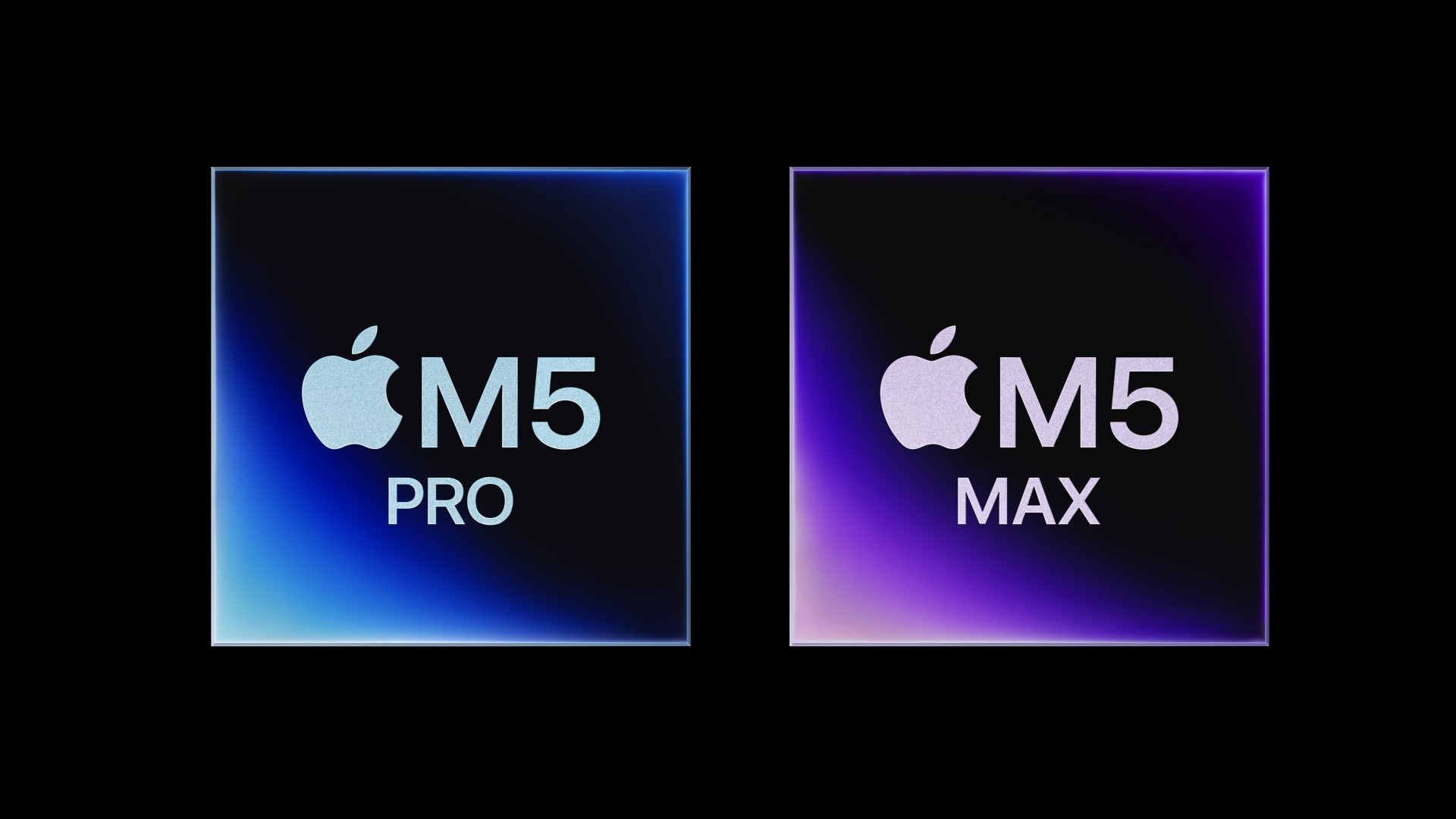
Apple has introduced the M5 Pro and M5 Max, chips designed for professionals who need high-performance computing and AI acceleration.
Built on the company’s new Fusion Architecture, the chips combine two dies into a single system on a chip (SoC), integrating a CPU, GPU, Media Engine, unified memory controller, Neural Engine, and Thunderbolt 5 support. This design increases performance and AI capability while maintaining Apple’s focus on efficiency.
The M5 Pro features an 18-core CPU with six super cores and 12 performance cores, delivering up to 30 percent faster performance for demanding workloads compared with the previous generation. The GPU scales to 20 cores and includes Neural Accelerators in each core, boosting AI compute and graphics performance. Unified memory supports up to 64GB with bandwidth reaching 307GB/s, enabling faster data handling in complex professional applications.
The M5 Max expands capabilities further with up to 40 GPU cores and unified memory of up to 128GB. Memory bandwidth reaches 614GB/s, accelerating workflows involving large datasets, 3D rendering, and AI models. According to Apple, the GPU delivers more than four times the peak compute of the prior generation for AI tasks and up to a 20 percent graphics improvement over the M4 Max.
Both chips include a faster 16-core Neural Engine for on-device AI features, support hardware-accelerated media formats such as AV1 and ProRes, and incorporate memory safety protections via Memory Integrity Enforcement. Thunderbolt 5 ports with dedicated controllers enable high-speed connectivity for professional peripherals.
With the M5 Pro and M5 Max, Apple aims to push professional computing forward, particularly for developers, researchers, and creatives who require advanced AI and graphics performance. The new chips will power the latest MacBook Pro lineup, available for pre-order soon with shipments beginning March 11.
Computers
ASUS, ROG announce 2026 desktops, AiO availabilities in PH
For gaming, heavy workloads, modern setups


ASUS and ROG have announced the availabilities of their latest 2026 desktops and all-in-one (AiO) PCs in the Philippines.
Headlining the lineup is the ASUS V600 All-in-One PC, the latest addition to the AiO series. It has a sleek aesthetic and is powered by up to an AMD Ryzen AI 5 330 processor, capable of handling demanding workloads with ease.
This processor is paired with AMD Radeon 820M graphics, up to 16GB DDR5 memory, and up to 512GB SSD storage.
The V600 has a 23.8-inch FHD IPS 178-degree view display with a wide 93% screen-to-body ratio, anti-glare coating, and is certified for eye comfort.
The 50 TOPs NPU PC is also part of the Copilot+ family, making it efficient for AI computing tasks. Other features include ASUS AI Noise-Cancelling and Adaptive Lock.
Price: PhP 56,995
ASUS V500 Mini Tower
Meanwhile, the ASUS V500 Mini Tower is crafted to blend modern workspaces while delivering dependable performance.
It touts up to an Intel Core 7 240H processor and comes in a Dark Wood color. It operates at as low as 24dB in whisper mode.
An addition, it features up to 80 PLUS Platinum-certified PSU, reducing heat generation and eliminating power-consumption concerns. The PC has support for up to 64GB DDR5 RAM and up to 512GB of SSD storage.
Price: Starts at PhP 41,995
ASUS TUF Gaming TM500
Moreover, the ASUS TUF Gaming TM500 is a compact gaming desktop that delivers power and efficiency in a streamlined form factor.
It is fueled by an AMD Ryzen 7 260 processor, reaching a maximum boost speed of 5.1GHz. Along with up to an NVIDIA GeForce RTX 5060 GPU, users can experience seamless gameplay.
The PC comes with 16GB DDR5 memory, and two more SO-DIMM slots to support up to 64GB of memory. This allows the machine to breeze through memory-heavy workloads, outside of the most demanding AAA titles.
Complementing these hardware is a custom heatsink with 1,218cm2 of total dissipation area, copper heat piping, and 90 mm cooling fan.
Price: Starts at PhP 76,995
ROG GM700
Lastly, the ROG GM700 features the undisputed power and beastly performance of the AMD Ryzen 7 9800X3D processor and AMD Radeon RX 9070 XT GPU.
With up to 32GB of memory, the PC can process jaw-dropping visuals at ultra-fast speeds. With up to 2TB of storage, it guarantees swift load times, high frame rates, and freedom from stutters in high-stakes gaming.
The ROG GM700 is also amenable for customization, maintenance, and future-proofing. Users can enjoy an upgrade potential of up to four DDR5 U-DIMM slots and multiple M.2 slots.
Price: starts at PhP 139,995
Computers
3D printing made accessible: Bambu Lab moves closer to everyday consumers
Empowering consumers to create tangible objects
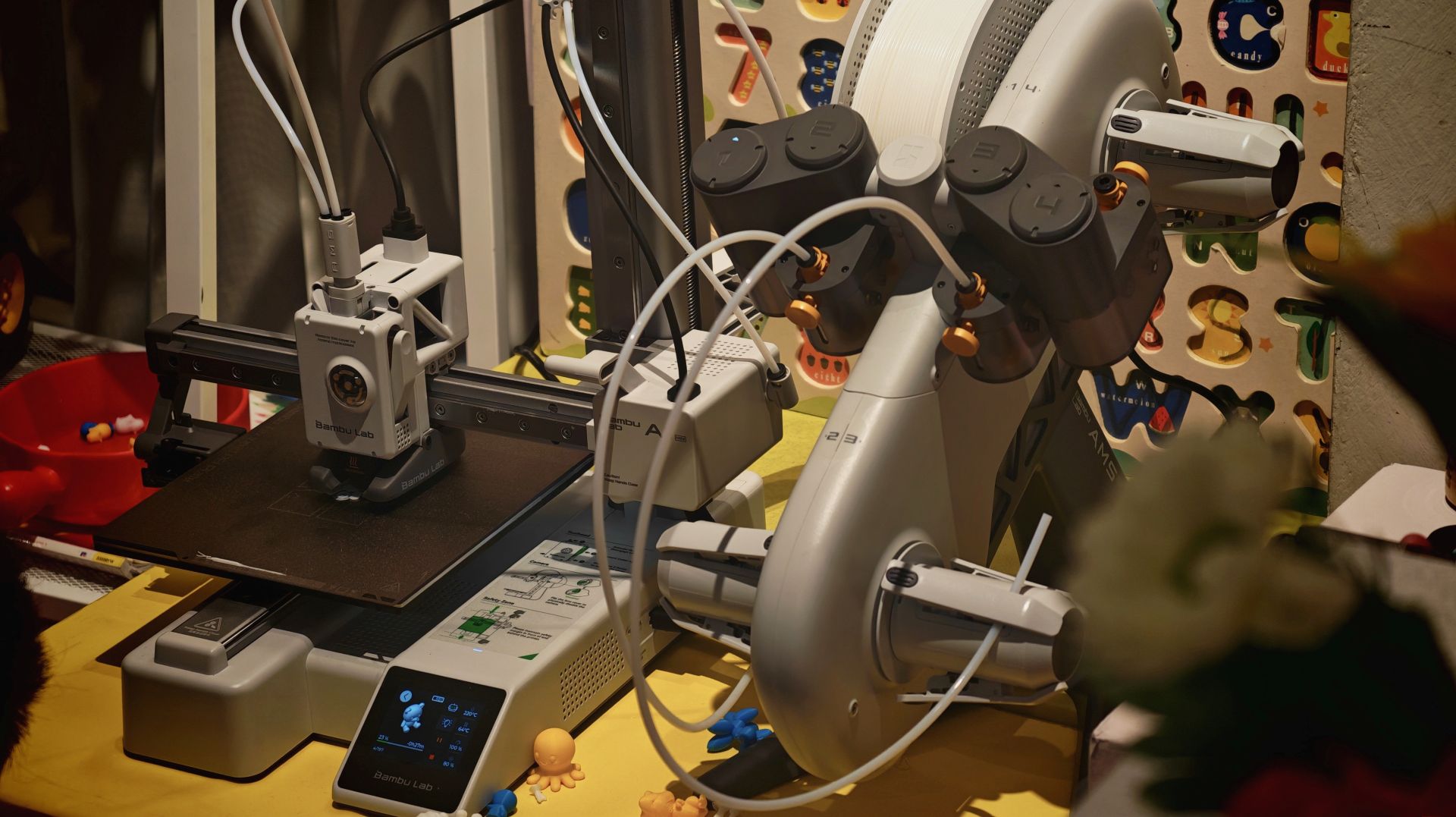
China-based brand Bambu Lab makes an effort to move closer to everyday consumers in the Philippines with a new retail partner by holding a media and creators roundtable in the Philippines. This was a bid to reshape how consumers perceive and use 3D printing technology.
Established in Shenzhen, China in 2020, Bambu Lab aims to make 3D printing more accessible, practical, and relevant to daily life through printers and other supplies.
The goal is to support practical home use, creative hobbies, product design, and even specialized tools, while putting emphasis on ease of use.
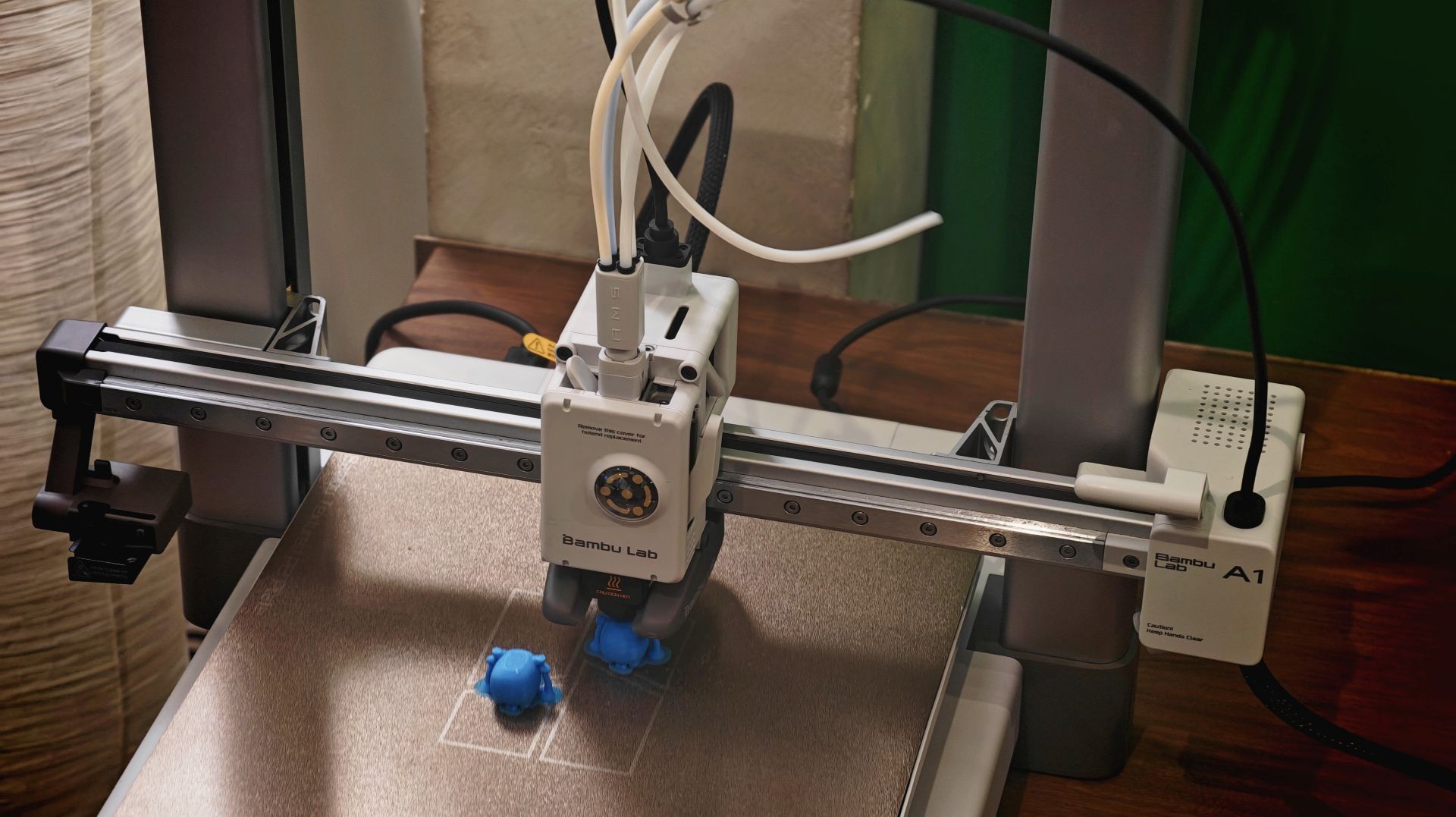
With such optics, Bambu Lab is trying to make consumers feel that there is less deep technical knowledge required and that they can actually create physical objects with 3D printing.
One of their products is the entry-level Bambu Lab A1 mini, which is compact enough to fit on a small desk.
The brand also has more advanced models which are capable of printing multiple colors and materials on a single run.

To complement the hardware ecosystem, Bambu Lab’s open platform MakerWorld lets users browse, select, and print from an extensive library of shared 3D designs directly from their own desktops.
The platform features a wide variety of objects across multiple categories. There’s household items, DIY tools, children’s toys, props, and educational materials.
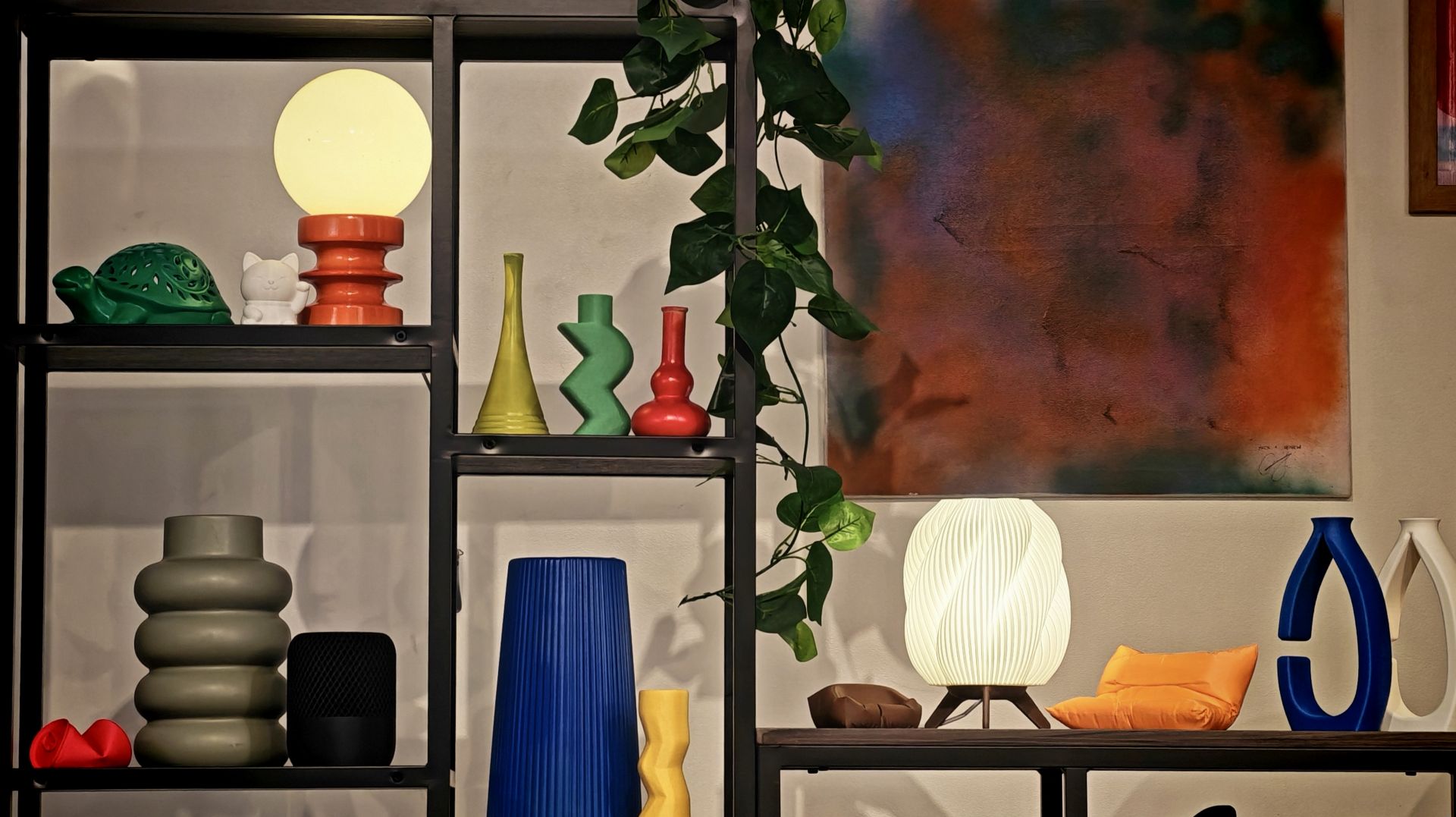
In the Philippines, Bambu Lab will open its first concept store at One Ayala, Makati City. The concept corner will give mallgoers the opportunity to see the range of 3D printers and consumables firsthand.







Apple unveils Studio Display and all-new Studio Display XDR

Apple unveils MacBook Pro with M5 Pro and M5 Max

Apple debuts M5 Pro, M5 Max to supercharge pro workflows

Apple introduces MacBook Air with M5

TECNO unleashes Tonino Lamborghini collection

Xiaomi 17 Ultra is now available outside China

TECNO will showcase the CAMON 50 and POVA 8 series at MWC 2026

PlayStation, LE SSERAFIM Chaewon team for the ‘Love of Play’ campaign

The art of being in and behind the frame

HUAWEI MatePad 11.5 S 2026: The better-than-ever 4-in-1 productivity tablet


-
 News3 days ago
Xiaomi 17 Ultra is now available outside China
-

 Camera Walkthrough1 week ago
OPPO Reno15 Pro: Camera Review
-
 First Look2 weeks ago
Match Pulse: Infinix NOTE 60 Pro
-

 Cameras2 weeks ago
Osmo Pocket 4 makes a surprising appearance in public
-

 Gaming2 weeks ago
LG unveils UltraGear evo, redefines 5K gaming with AI Upscaling
-

 News2 weeks ago
iPhone 17 Pro Max is somehow the most traded-in phone today
-
 Gaming2 weeks ago
PlayStation 6 reportedly delayed to 2029 because of RAM shortage
-

 News2 weeks ago
HUAWEI launches Mate X7, MatePad 11.5 S 2026, FreeClip 2