


Gaming
ASUS ROG Phone review: A true gaming phone done right?
Undeniably a phone built for mobile gamers

Finally, the ROG Phone from ASUS is out in the market! We first saw the gaming smartphone back in Computex 2018 last June, and we waited a long time (four months to be exact) to take one home.
We received a lot of questions about this phone. Is it the best gaming smartphone today? How is it different from other flagship phones with similar specs? And, how much value are you getting out of it?
To answer all those, here’s my review of the ROG Phone. You know the drill, let’s start with the phone’s physique.
Its AMOLED display measures 6 inches diagonally

With a Full HD+ resolution and 18:9 aspect ratio
It features stereo front-facing speakers

It’s not exactly borderless, but you get great loudspeakers
The physical buttons are on the right side

They are made of metal
The left has the card tray and side-mounted USB-C port

The phone doesn’t support expandable storage via microSD
Another USB-C at the bottom along with a 3.5mm jack

This phone doesn’t sacrifice wired connectivity
The back looks aggressive with the ROG logo

The logo lights up!
The phone is pretty angular with lots of unusual shapes

The ROG persona goes mobile
In case you’re wondering what ROG means…

It’s definitely for gamers
There are two rear cameras and a fingerprint reader

Almost forgot about those!
Obviously designed with gaming in mind
One look at the ROG Phone and it already screams that it’s a gaming smartphone. Unlike other game-centric phones from Honor and Razer which have subtle gaming looks, the ROG Phone belongs with the rest of the ROG laptops and peripherals that are made by ASUS.
When there are a number of phones on the table like in our office, it’s not difficult to differentiate the ROG Phone from the rest. The front of the phone has a distinct copper accent on its front stereo speakers, and the back is uniquely ROG. If you own an ROG laptop or desktop and use ROG-branded peripherals, the ROG Phone should be part of your collection.

Like with other 2018 phones, the ROG Phone has a glass back using Corning’s tough Gorilla Glass. Don’t expect things to be symmetrical here because the dual rear cameras and the LED flash are housed in an unusual shape. Even the fingerprint reader is slightly positioned to the right of the phone, but don’t worry, it’s still reachable using either index fingers.
The ROG Phone’s bold design doesn’t end there. The back also has a futuristic styling using lines and an ROG logo that lights up in virtually any color you want. To top things off, the phone even has an exterior for its cooling system.

Encased in a metal frame, the ROG Phone is premium all around. It certainly feels more well-built than its ZenFone cousins. But of course, the loud design is not everyone’s cup of tea. Some gamers might even find it too much, but ASUS is not following Razer’s design choices.
Apart from the phone’s body, there is also a lot to talk about the phone’s display. The 6-inch display is not just your ordinary AMOLED panel. Apart from producing deep blacks and vibrant colors, the display is capable of a 90Hz refresh rate with 1ms pixel response time. Basically, you can play with the phone in uber-smooth motion. On top of that, it supports HDR and has a wide color gamut that’ll please professionals.
The fastest Android gaming phone today
The ROG Phone is powered by a Snapdragon 845, which is practically found on all high-end Android phones that came out this year. To place this gaming smartphone ahead of them, ASUS threw in an overclocked variant of the already-powerful chip and paired it with lots of memory and speedy flash storage. The result is one of the fastest Android phones available today.
Android Oreo runs the show, but it’s customized by ASUS to make it one of their own. Being an ROG device, it comes with a combative theme. Turning on the “X Mode” will even make everything red, which means that the ROG Phone is performing at its peak.

Like with ROG notebooks and desktops, the phone has a command center where you can closely monitor the phone’s condition. The Game Center is as aggressive-looking as the phone’s body. Here you can check the CPU and GPU speeds, the battery’s temperature and remaining power, the setting for the RGB light customization, and the fan speed control for the external cooler.

The configuration I have for review has 8GB of memory and 128GB of storage. If you find 128GB not enough for all your games and personal files, there’s also a 512GB model. Without a doubt, the ROG Phone is insanely fast. Coupled with a 90Hz display, this will be your smoothest Android experience. The 120Hz display of the Razer Phone 2 is more fluid, but the eyes can already appreciate what the ROG Phone has.

Keep in mind that not all games take advantage of the high refresh rate, but popular titles already do. My all-time favorite, Asphalt 9: Legends, is more enjoyable when it’s rendered in 90fps. Other graphics-intensive titles like Free Fire (which comes pre-installed) is fully supported and PUBG: Mobile is playable in the highest settings without lag, as well.
Also, the AirTriggers, which are ROG’s virtual shoulder buttons, aid in mobile gaming. Basically, the sides of the phone are touch-sensitive. They are kind of gimmicky in a way because they are pretty difficult to reach during gameplay. When you get used to it, you’ll have an edge against other players using regular phones.
It even comes with fun cameras
The ROG Phone is not just fun in gaming, but it’s also a good picture taker. It won’t match the likes of the Pixel 3 and Mate 20 Pro, yet I am impressed with the phone’s cameras. Maybe because I wasn’t expecting it to be this good?
It’s got dual rear shooters. The main one is a 12-megapixel sensor with f/1.8 lens, optical image stabilization, and Dual Pixel autofocus. Of course, the phone’s camera is powered by AI that detects the scenes and adjusts the settings accordingly. Thankfully, there’s no over processing going on like with other AI-enabled shooters.
Here are some photos taken using the main sensor in Auto mode:


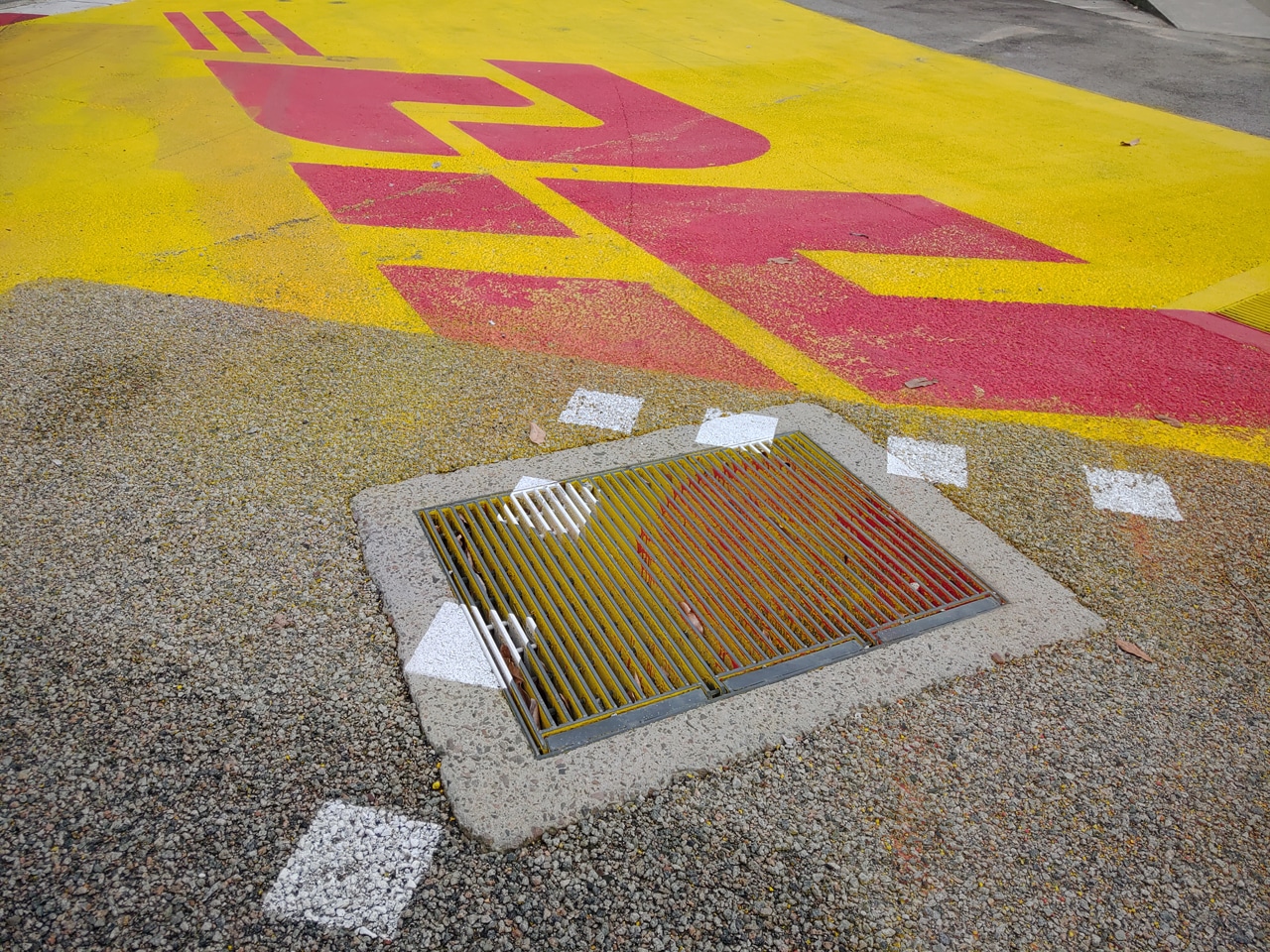



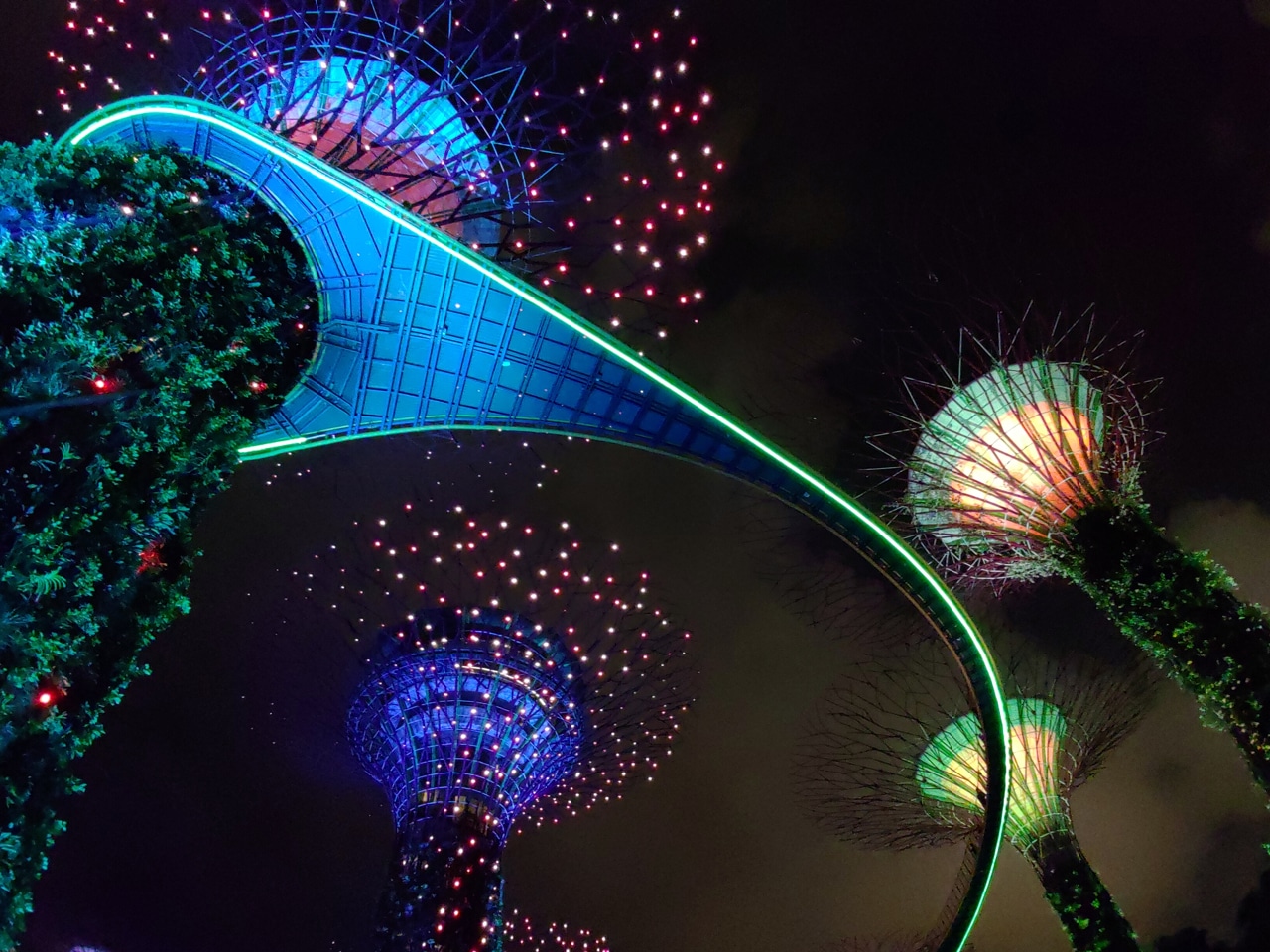
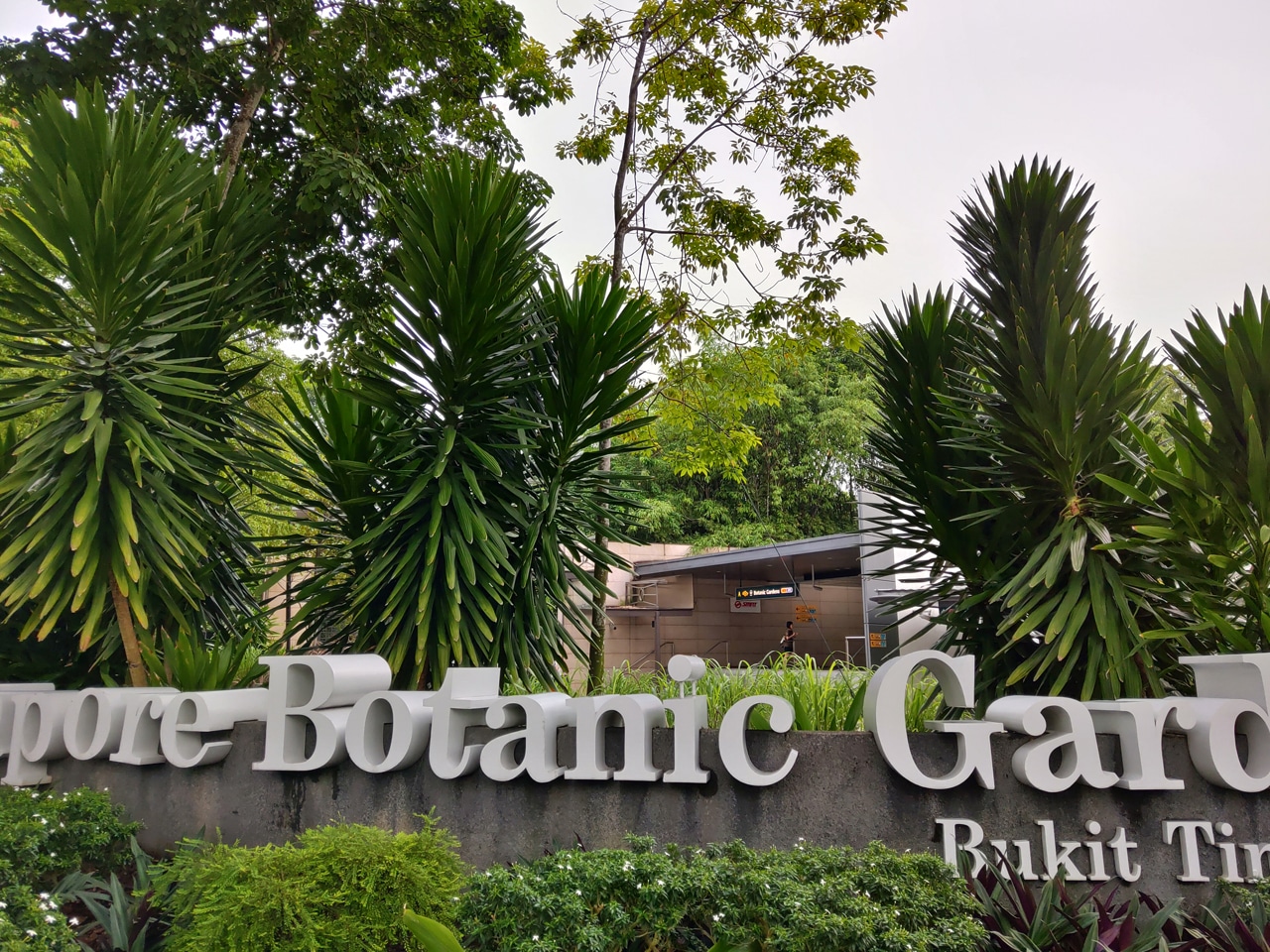
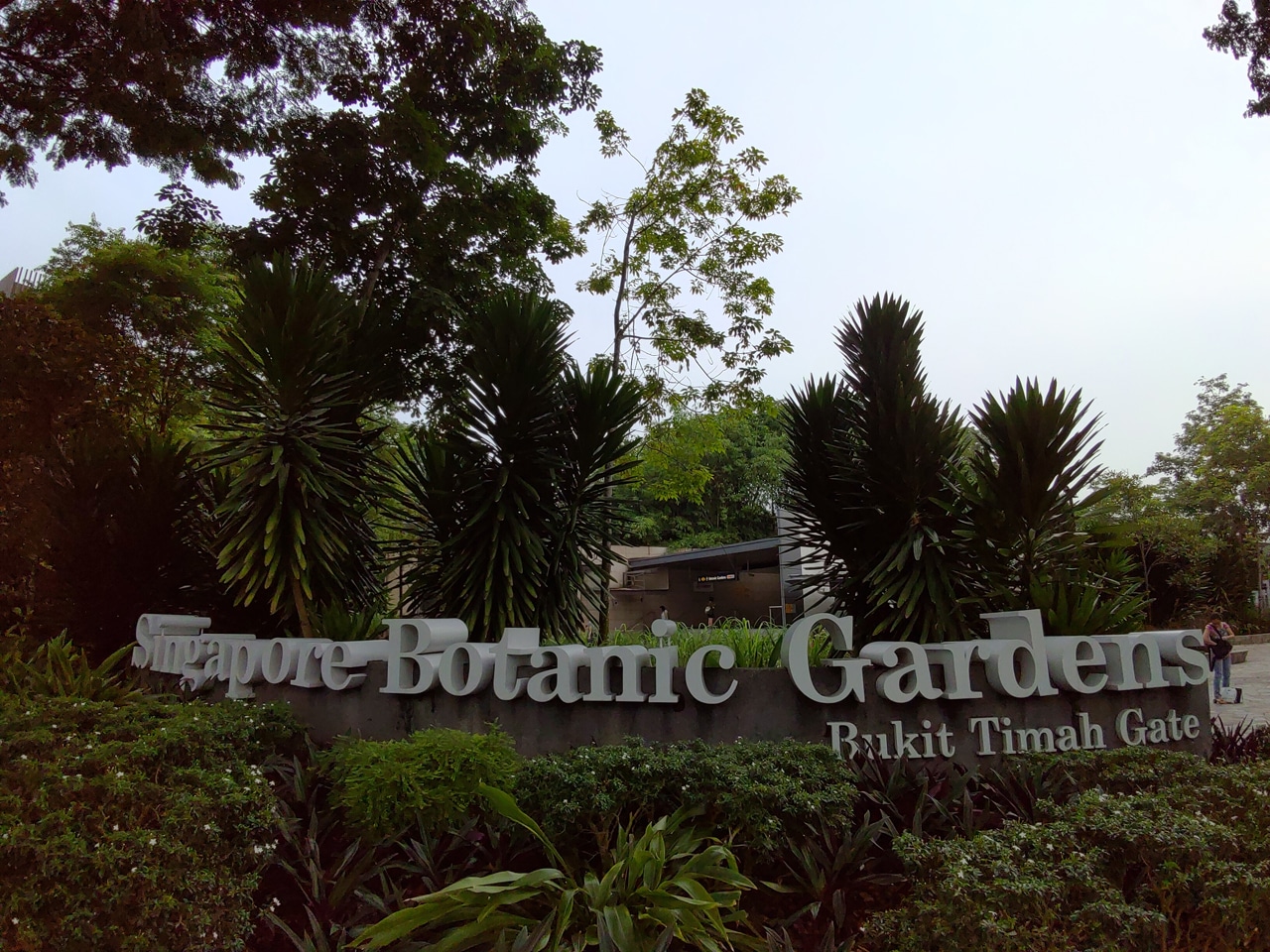
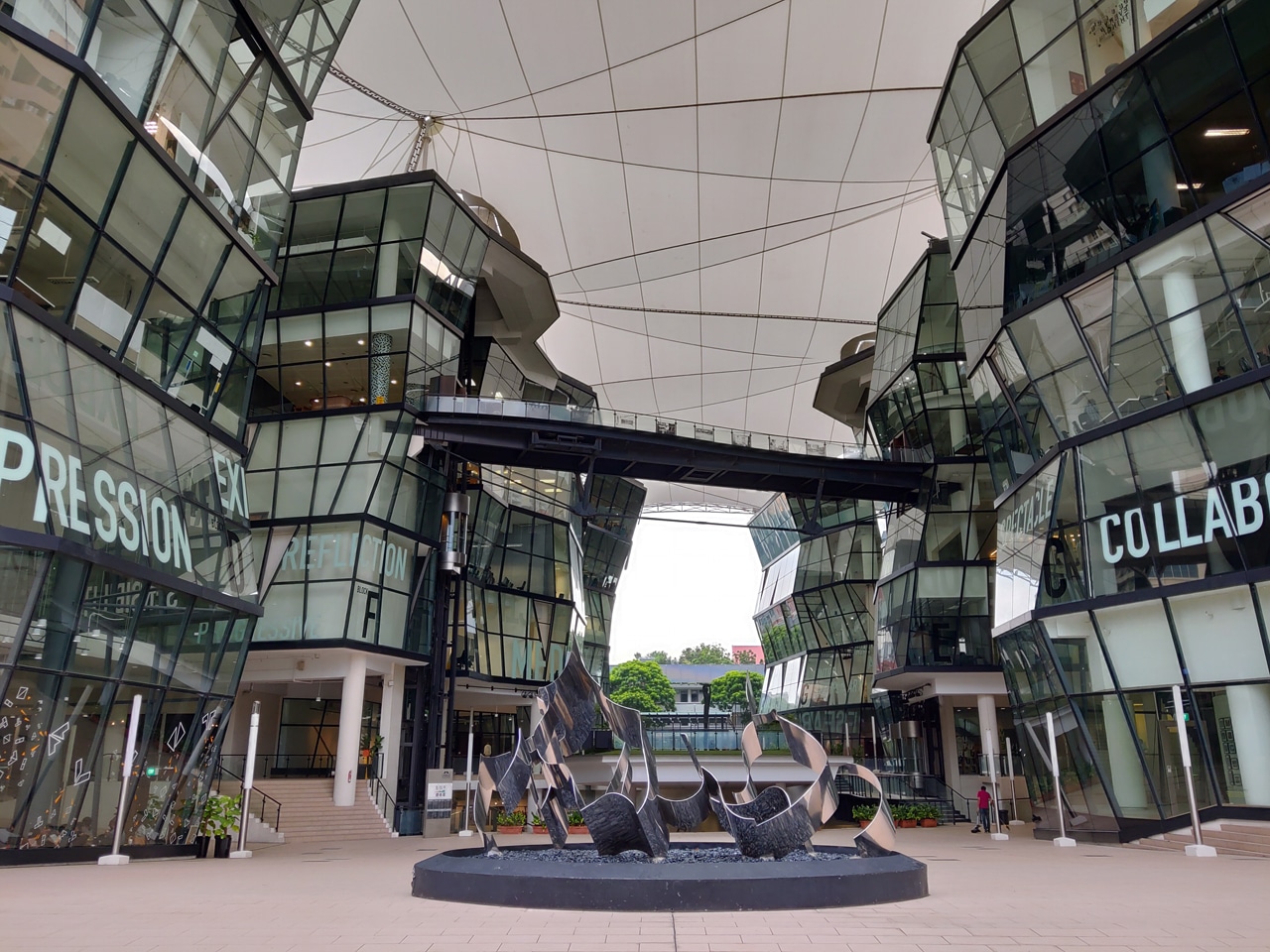
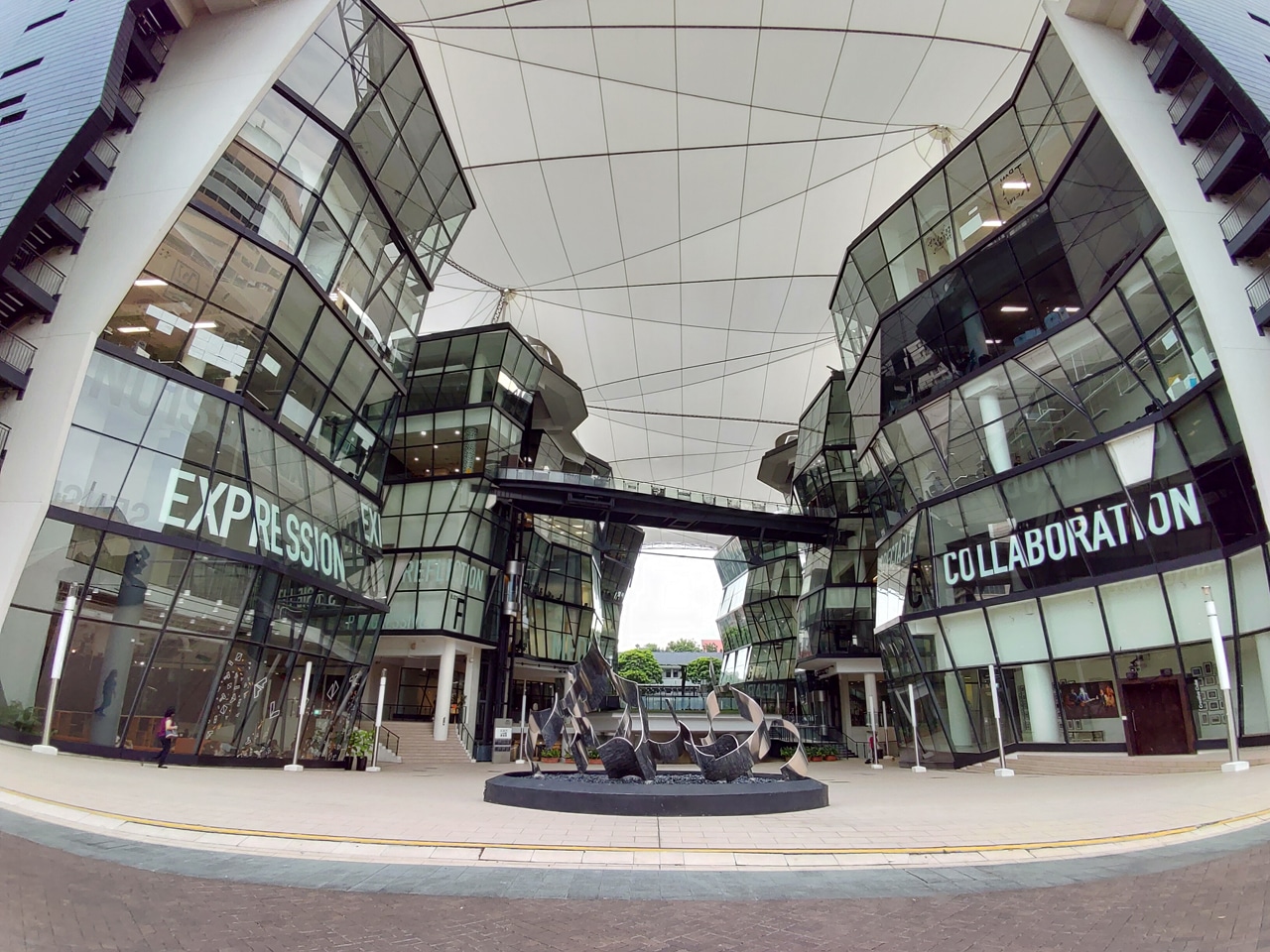
They aren’t bad, right? Although, ASUS didn’t put much attention on the 8-megapixel secondary shooter with an ultra wide-angle lens. I’m a fan of wide-angle secondary cameras, so I enjoyed shooting GoPro-like shots. Too bad it’s got no autofocus and the quality isn’t at the level of the main sensor.
Here are some samples taken using the main sensor and the wide-angle camera for comparison:
-

- Normal
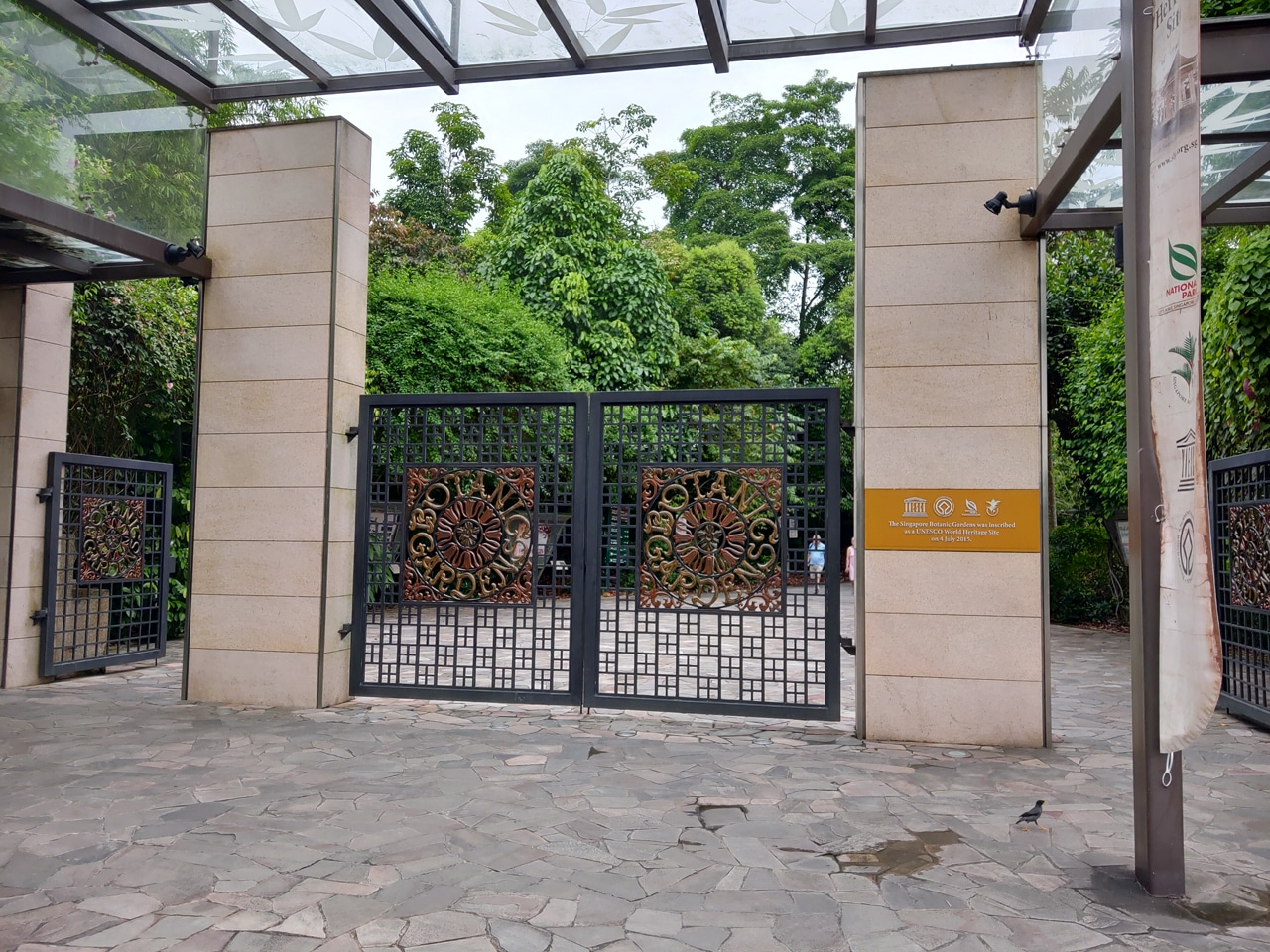
-

- Ultra wide-angle
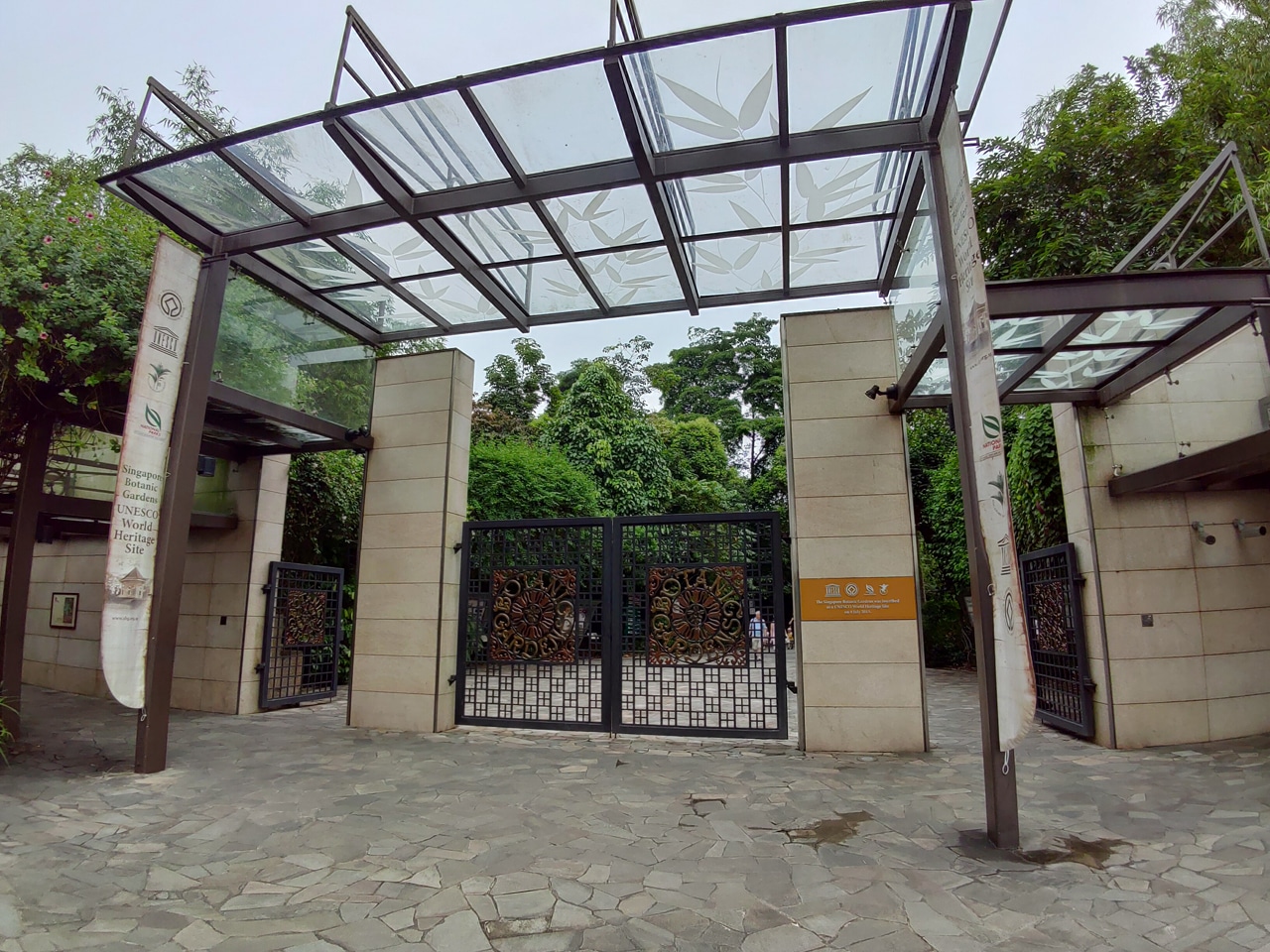
-

- Normal
-

- Ultra wide-angle
-

- Normal
-

- Ultra wide-angle
-

- Normal

-

- Ultra wide-angle

-

- Normal
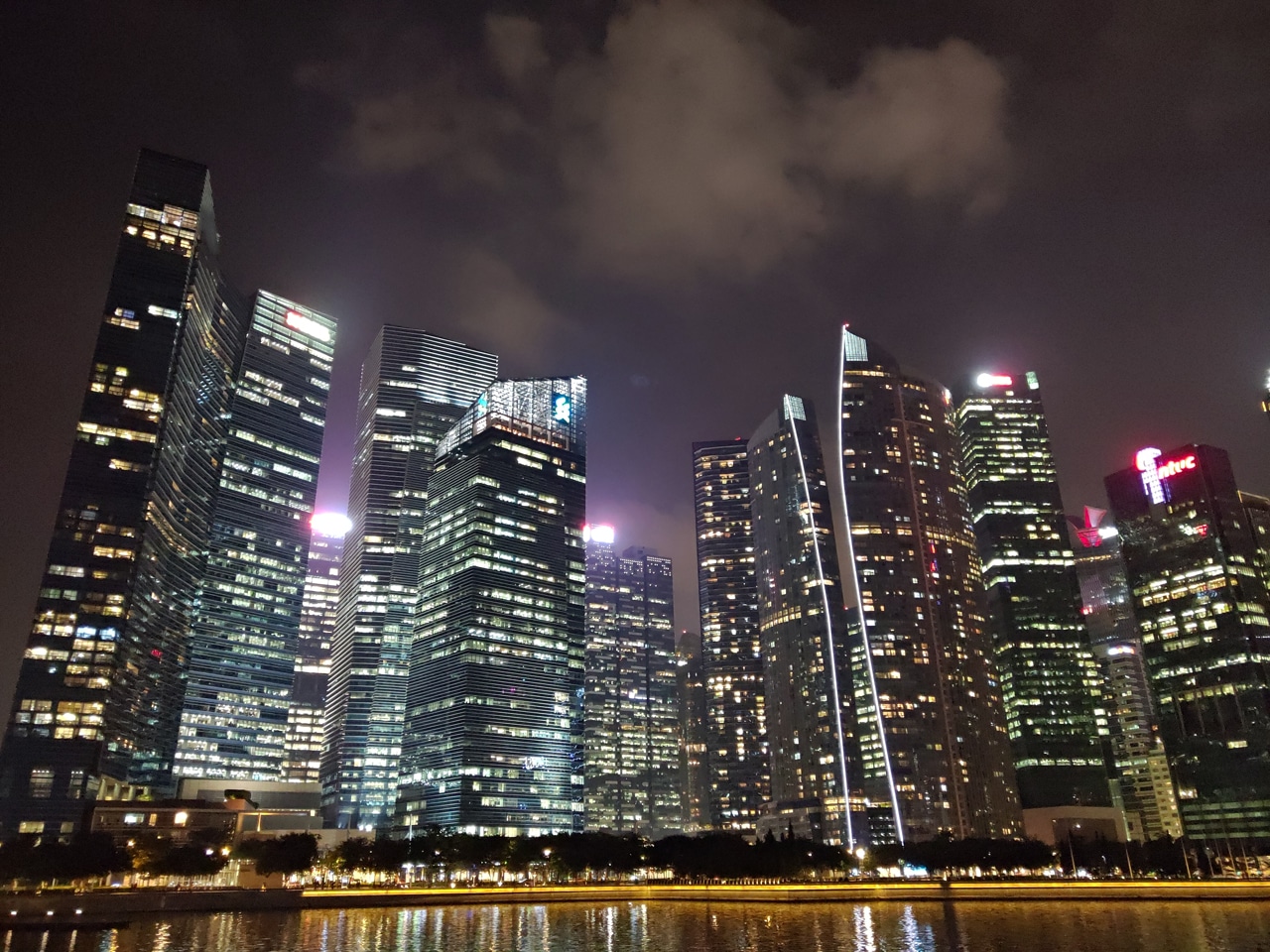
-

- Ultra wide-angle

-

- Normal

-

- Ultra wide-angle

Moving to the front, we have another 8-megapixel shooter but it’s just wide enough to take spacious selfies. It comes with an f/2.0 aperture, so low-light shots shouldn’t be a problem — at least on paper. You can also apply bokeh effects to your selfies for added depth.
-

- No effect

-

- With bokeh

-

- With bokeh

-

- Low-light with bokeh

No one is buying the ROG Phone for photography purposes, but those who are interested in it will be able to take great photos. The use of an ultra wide-angle secondary lens is also a good choice by ASUS. Why? Because it’s more fun to take wide shots.
Incredible power takes a toll on battery
With all the features the ROG Phone has, a trusty 4000mAh battery keeps the lights on. But, it is enough? Based on my usage, no. If you wish to enable the phone’s highlighted features such as the 90Hz refresh rate, you should make sure to have a power bank around.
The phone didn’t last a full day as my daily driver. I usually get fewer than three hours of screen-on time. My usage includes typical work duties with the phone constantly connected to either Wi-Fi or LTE, and lots of gaming in X Mode.

When I set the refresh rate back to default (60Hz), I was able to get better battery life. The ROG Phone was my secondary device during my four-day business trip to Singapore and I only had to charge it twice. I mainly used the phone for taking photos, checking out web pages, uploading IG stories, and, of course, for playing mobile games once in a while.
Speaking of charging, the ROG Phone comes with a super-fast charger in the box. In just 15 minutes, I was able to charge the phone from zero to 26 percent. The charging rate slows down when you’re nearing 100 percent, so a full charge takes about an hour and 40 minutes. That is still very impressive, though.
Is this your GadgetMatch?
The ROG Phone is a premium device from ASUS with all the bells and whistles of a gaming smartphone. Some might argue that regular flagship phones are already good at gaming. Yes, that’s true but they are not meant for it. That’s where gaming smartphones, such as the ROG Phone, come in.
It has the fastest available processor, super-smooth refresh rate, loud front speakers, optimized software, and extra hardware features such as shoulder triggers and both passive and active cooling systems.

But, everything comes at a price. When the ZenFone 5Z came out earlier this year, we were in awe at how ASUS is offering a flagship-specced phone at an affordable price. It’s even cheaper than OnePlus in some regions, but not as affordable as a Xiaomi flagship. Things are different with the ROG Phone and ASUS is asking quite a lot of money for it, but at least it’s not your usual Android phone.
The ROG Phone has an official starting price of US$ 899 for the 128GB model. In the Philippines, it goes for PhP 49,995, which is not far from the international pricing. If you want more storage, you can get the 512GB model for US$ 1,099. You can also get the top-tier model for PhP 61,995 in the Philippines, SG$ 1,598 in Singapore, and NT$ 31,990 in Taiwan where it’s the cheapest.
If you wish to complete the set, the ROG Phone is being sold along with all of its accessories but the asking price puts it in the league of gaming laptops, so you might want to think carefully before purchasing any of them.






Gaming
NVIDIA’s DLSS 5 can turn your favorite AAA game into AI slop
DLSS 5 will launch on select games.

Have you ever wondered why RAM prices are going up this year? Everyone is rightfully saying that AI is the reason for the price hike, but it’s hard to palpably see why. Today, NVIDIA is showing off where its hard-earned profits are going by revealing DLSS 5.
For gamers who don’t have a particularly strong machine, NVIDIA’s DLSS technology upscales a game’s graphics quality and frame rate to artificially keep up with newer hardware. A few months ago, the company unveiled DLSS 4.5, which marks the latest step to help games sparkle. Today, with DLSS 5, the technology is going all-in on AI.
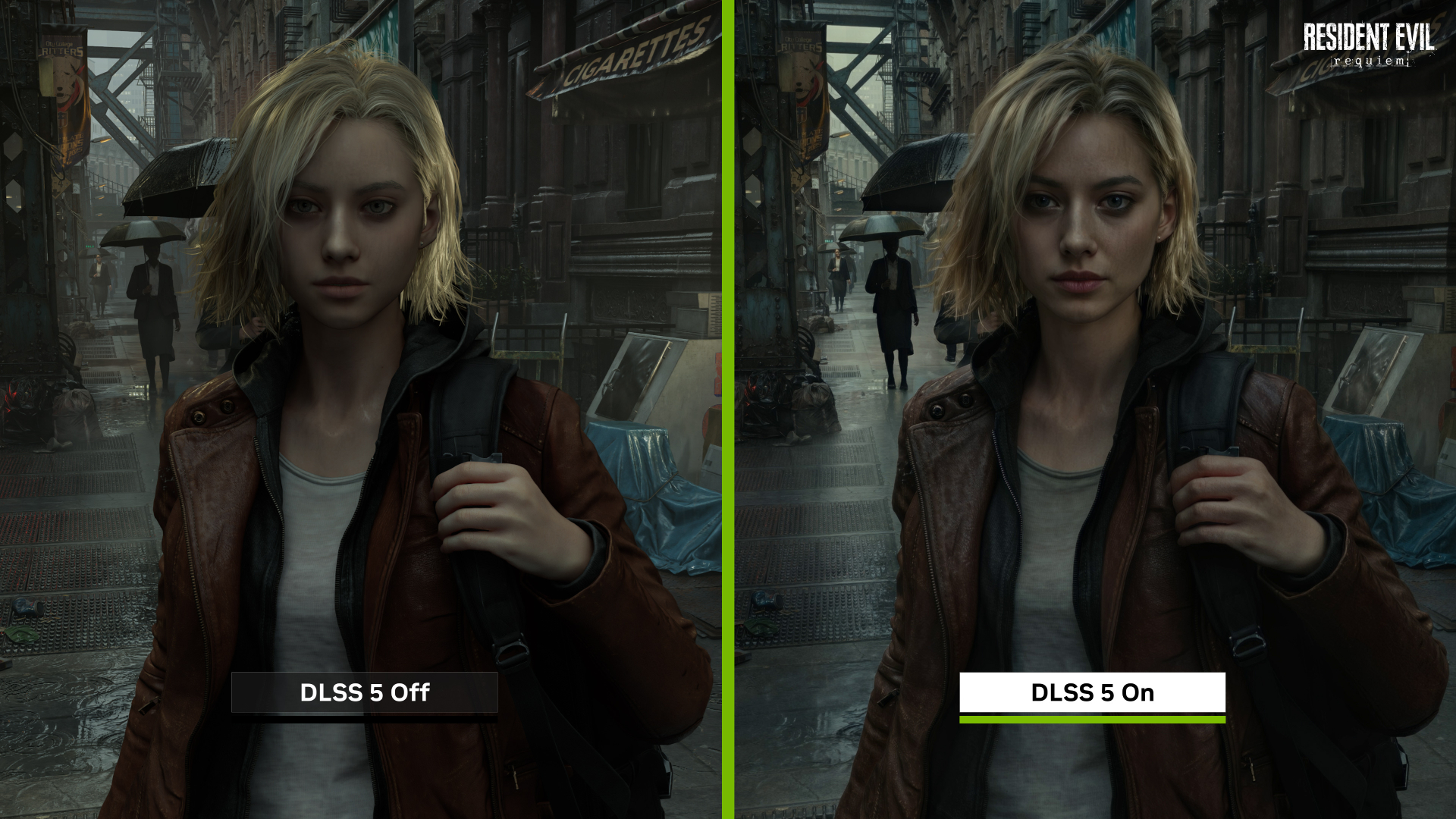
In a tech demo, NVIDIA showcased the latest version of the technology. This time, the feature will use photoreal lighting and materials to alter graphics. It can allegedly analyze a scene’s elements — including hair, fabric, and translucent skin — based simply on a single frame.
The demo’s most prominent example is Resident Evil Requiem. Grace Ashcroft, the gamer’s protagonist, evolves from her doll-like appearance into… well, something you might see on an AI-generated mobile game ad.
NVIDIA claims that the new version will make games look closer to real life. The jury is still out, especially with such a low sample size. However, in this writer’s humble opinion, it’s gonna be a no for me, dawg. I’d rather play with what the developer originally intended for their game than with yet another generic AI filter.
The new feature is rolling out to some of the biggest games today including Assassin’s Creed Shadows, Hogwarts Legacy, Resident Evil Requiem, and Where Winds Meet.
Gaming
Honkai: Star Rail Version 4.1: Dark secrets within the Phantasmoon Games
Ashveil becomes playable character

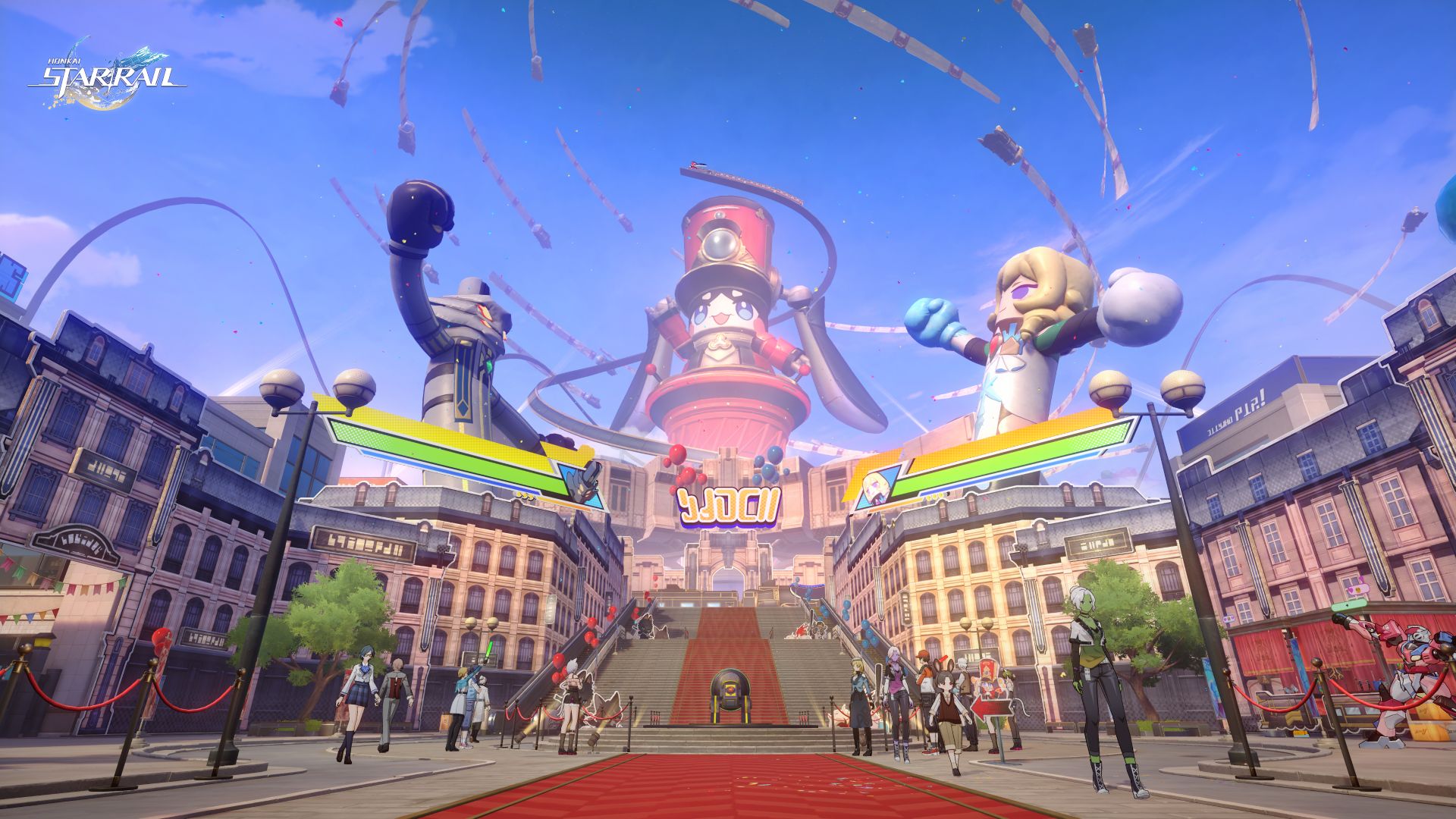
The Version 4.1 update for Honkai: Star Rail will be available on March 25. Called “Unraveled for Daybreak”, the update will continue to revolve around the story of Planarcadia.
Here, the Astral Express Crew is invited to attend the grand Star Rail FEST, a fan festival inspired by their past interstellar journeys.
In the process, they will join a new 5-Star Character, Ashveil, as they uncover the dark secrets lurking during the Phantasmoon Games.
Star Rail FEST
This festival features three major open zones: the Belobog Zone, Xianzhou Luofu Zone, and Penacony Zone.
The festival is set-up after the Trailblazer has successfully obtained the mask of the supplicant to participate in the Phantasmoon Games. Pearl, the CEO of Planarcadia, then collaborates with the Astral Experss Crew to hold a grand exposition.
Citizens of Planarcadia can board a special Pom-Pom front shuttle express through Interplanar Jump to enjoy the highlights of their trailblaze journey.
Trailblazers can witness giant balloon figures, immerse themselves in a duel against the Lord Ravager Phantylia, and charge headlong at The Great Septimus.
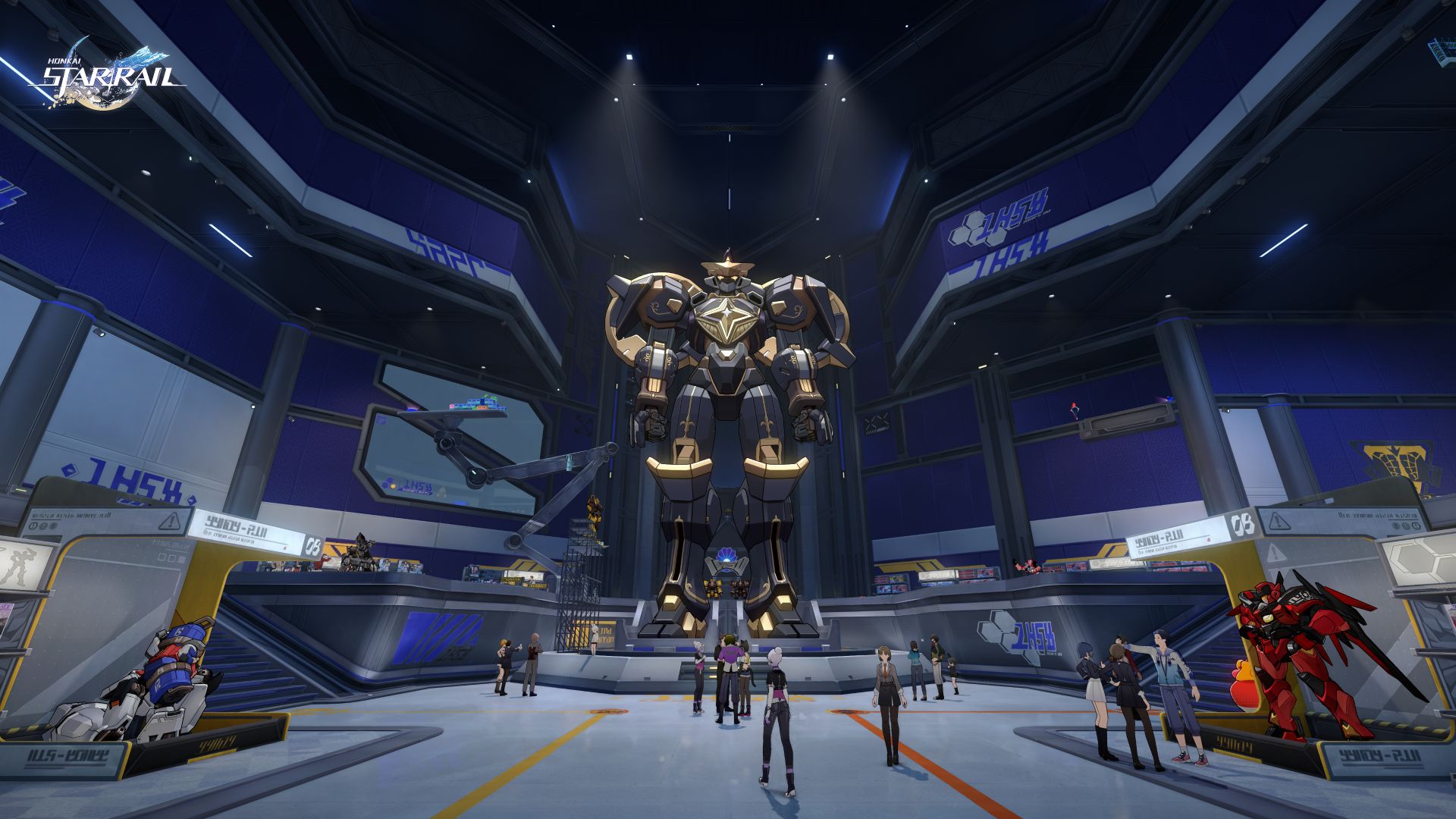
Meanwhile, the festival’s organizer, Pearluxe Corp, will also have an area unlocked: Pearluxe Tower. Inside is a newly ultra-poseable model, “Alloy King Pom-Pom” and a variety of mechatron-themed interactive activities.
However, beneath the revelry, conspiracies are abound, and various crises will soon follow.
Ashveil joins the list of playable characters
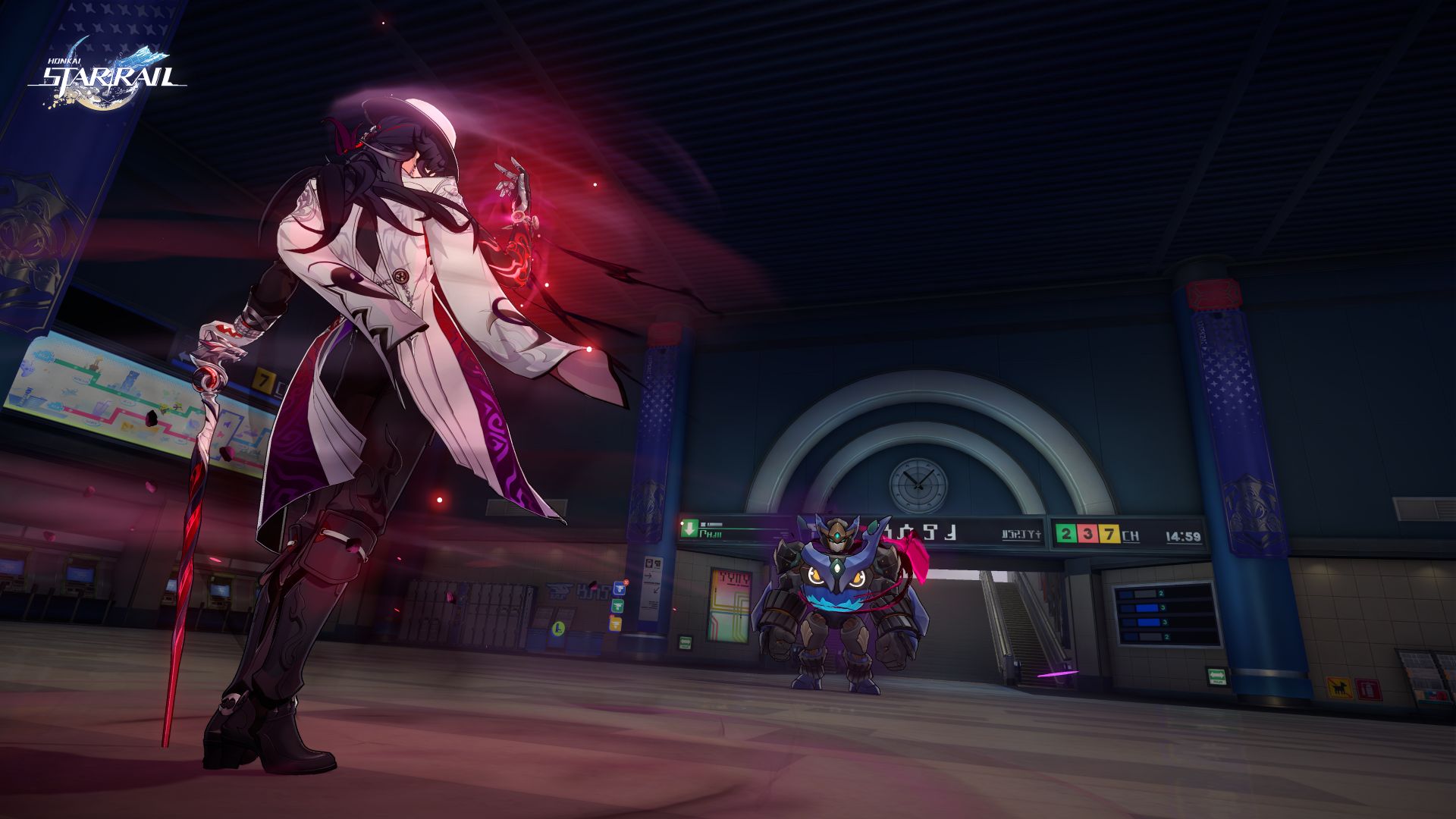
This marks the start of a new adventure for the Trailblazers, to be joined by famous detective, Ashveil.
This 5-star Lightning-Type (Path of The Hunt) “detective unreliable” will showcase his serious and dependable side as a playable character.
Ashveil uses his Technique to inflict a Stunned state on enemies within a certain range. After entering combat, he can increase the CRIT DMG of all allies and selects one enemy to be the Bait.
As long as the Bait is on the field, the DEF of all enemies will be reduced. And when Ashveil uses his Skill on the Bait again, he will deal extra DMG and recover Skill Points for the entire team.
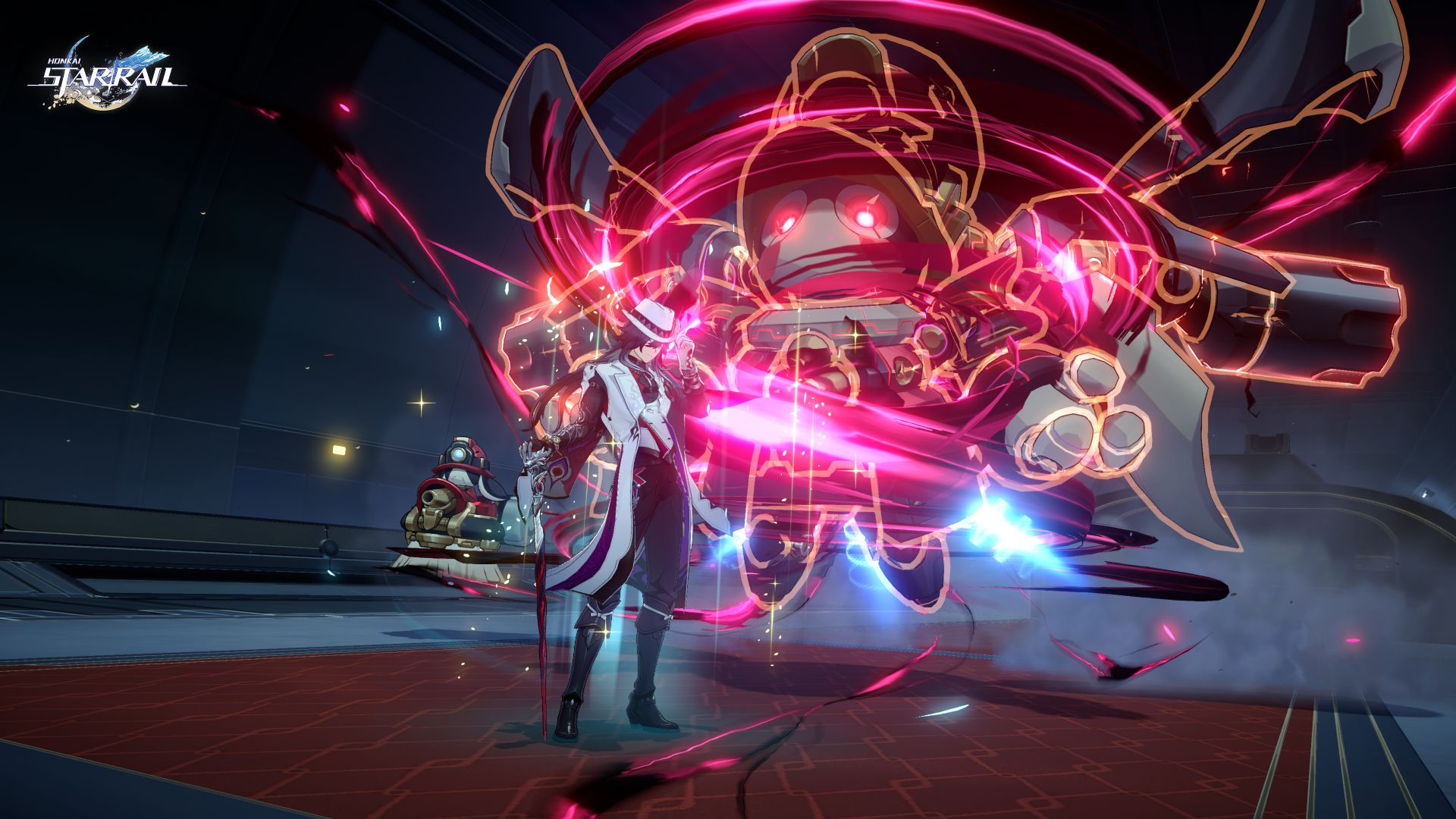
Moreover, when a teammate attacks the same Bait, Ashveil unleashes a Follow-Up ATK and gradually accumulates Gluttony in combat. Consuming this can further enhance the unit’s Follow-Up capabilities.
At the end of the last story stage, he will enter the Phantasmoon Games and begin investigating the murder case that occurred in the Dovebrook District.
He will work alongside the Astral Express Crew to uncover the conspiracy hidden beneath the surface of the elation feast to deliver justice for the fallen.
More features
In addition, Honkai: Star Rail Version 4.1 will launch with the Wispae War Saga. The Trailblazer can lead various types of wispae soldiers to battle in the Graphia Academy.
Here, they can defeat powerful champions by employing different strategies, upgrading wispae, and using spell cards and capsules with different effects.
Players can acquire both rewards and engage in even more challenging matches against outsider adversaries.
Gaming
Zenless Zone Zero Version 2.7 available on March 24
Featuring Hollow Champions tournament, new Agents

Version 2.7 of Zenless Zone Zero will become available on March 24 across platforms. Called “Champions Never Fall to the Past”, the update features the Hollow Champion competition and new agents.
The Hollow Champion competition sweeps across New Eridu — hosted by TOPS — spreading excitement as far as beyond the city center.
Competitors can take home high-stakes rewards, including the rare Porcelloy W-Engine. The tournament’s scale draws not only familiar allies, but even several unexpected participants.
There’s the Public Security’s Metropolitan Order Division, aside from the Cunning Hares and Sons of Calydon. It is said that the Calydon’s Sweepers will also step into the competition.
New Agents emerge

Furthermore, among the figures emerging from the shadows is the infamous Black Wolf Romeul. In battle, Romeul can activate a Corruptive Barrier for increased CRIT Damage Resistance and Interruption Resistance. This also causes opponents to continuously lose HP.
To break through this barrier, teams must be capable of delivering sustained Anomaly damage. This adds a new tactical layer for those wanting to challenge him.
Moreover, Cissia of the Metropolitan Order Division will also enter the race. As an S-Rank Electric Attack agent, Cissia gains three stacks of Venom upon entering battle.
Each stack deals Electric damage, while temporarily increasing her own CRIT Rate. The Venom gradually dissipates over time, but Cissia can also generate additional stacks through her EX Special Attack. As the stacks accumulate, she may expend them with her Basic Attack, Serpent’s Kiss.
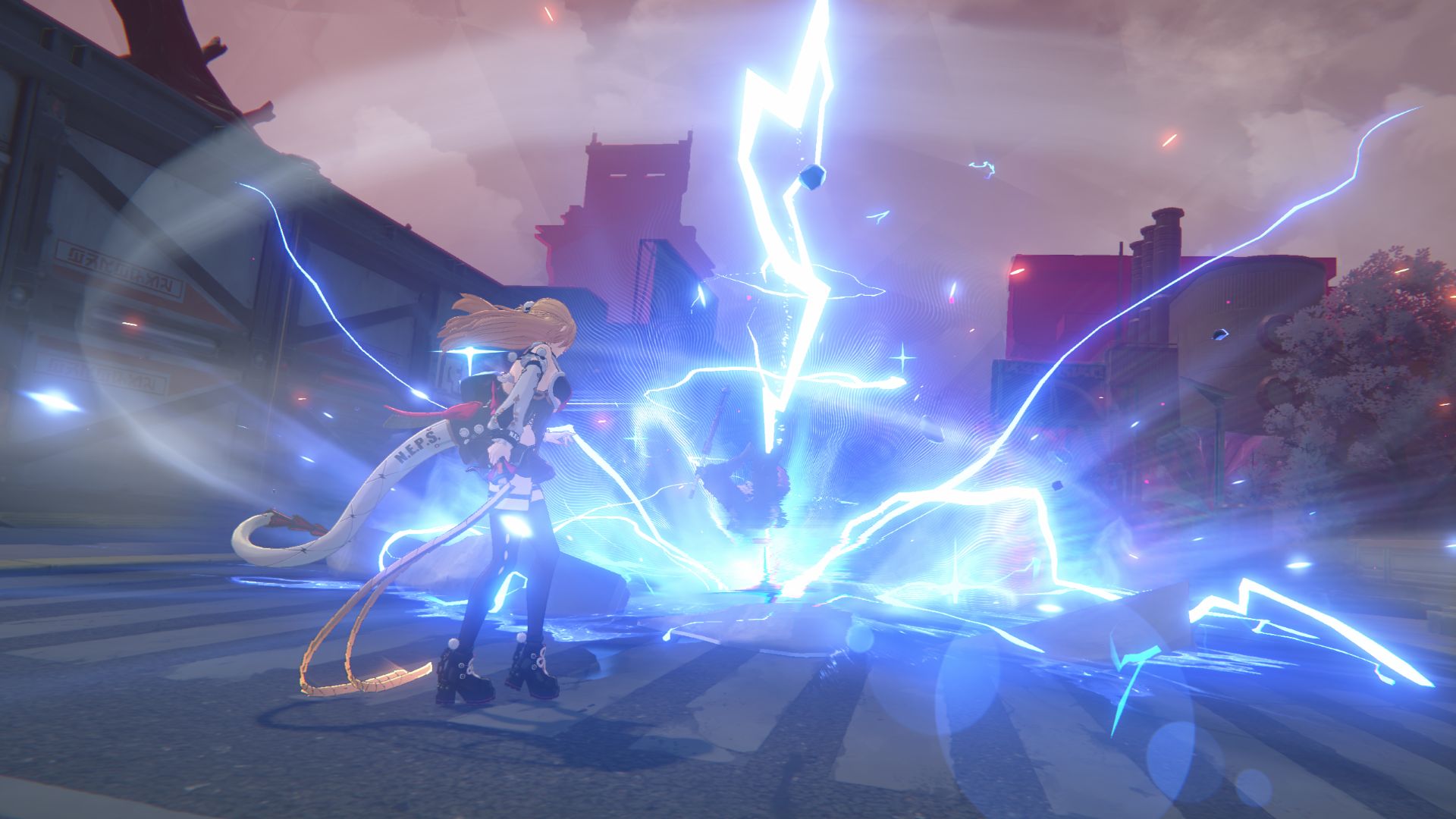
Joining Cissia is the Angels of Delusion lineup, captained by their dancer, Nangong Yu. The S-Rank Ether Stun Agent enhances her team’s Anomaly Buildup Rate against Stunned enemies.
During combat, she automatically regenerates Downbeat over time. Additional Downbeat is also restored whenever a squad member inflicts Anomaly on enemies.
Once the Downbeat is sufficient, she can unleash powerful charged attacks to extend the enemy’s Stun duration. This is while her own Stun and Anomaly buildup accelerates. Meanwhile, her Ultimate can activate Ether Veil: Delusion Reprise to boost the squad’s entire Attack.
Proxies can unlock an exclusive faction wallpaper after collecting all members of Angels of Delusion. In addition, S-Rank Ice Rupture Agent Yidhari and Electric Attack Agent Seed will also return to Zenless Zone Zero Version 2.7.


POCO X8 Pro Max review: A new beast from the far east
That "Pro Max" naming superlative is more than justified


POCO X8 Pro Iron Man Edition review: Midrange phone in superhero armor
POCO x MK15


Now Playing: Project Hail Mary
It's a treat for those who loved the original book.
POCO X8 Pro Max review: A new beast from the far east
POCO X8 Pro Iron Man Edition review: Midrange phone in superhero armor

POCO X8 Pro Series launches in Singapore with early bird prices

POCO X8 Pro Series: Price, availability in the Philippines

POCO introduces X8 Pro Series with Dimensity 9500s


-

 Reviews2 weeks ago
TECNO CAMON 50 Ultra review: End of an era?
-
 MWC 20262 weeks ago
Infinix NOTE 60 Ultra makes a motorsport-inspired debut
-

 MWC 20262 weeks ago
TECNO launches the all-new CAMON 50 series
-
 MWC 20262 weeks ago
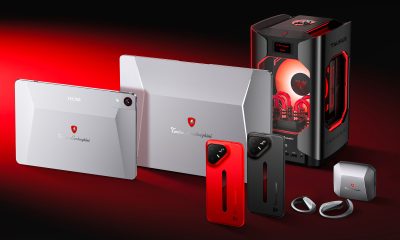
TECNO unleashes Tonino Lamborghini collection
-
 Computers2 weeks ago
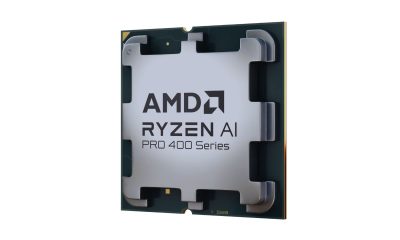
AMD announces Ryzen AI 400, AI 400 PRO series at MWC 2026
-
 MWC 20262 weeks ago
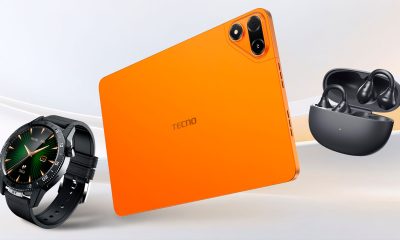
TECNO debuts latest devices, HiOS 16, upgraded Ella at MWC 2026
-

 Reviews1 week ago
The Xiaomi 17 shoots Leica dream
-

 Laptops2 weeks ago
Apple unveils MacBook Pro with M5 Pro and M5 Max