
Gaming
ASUS ROG Zephyrus Review: So thin, so powerful

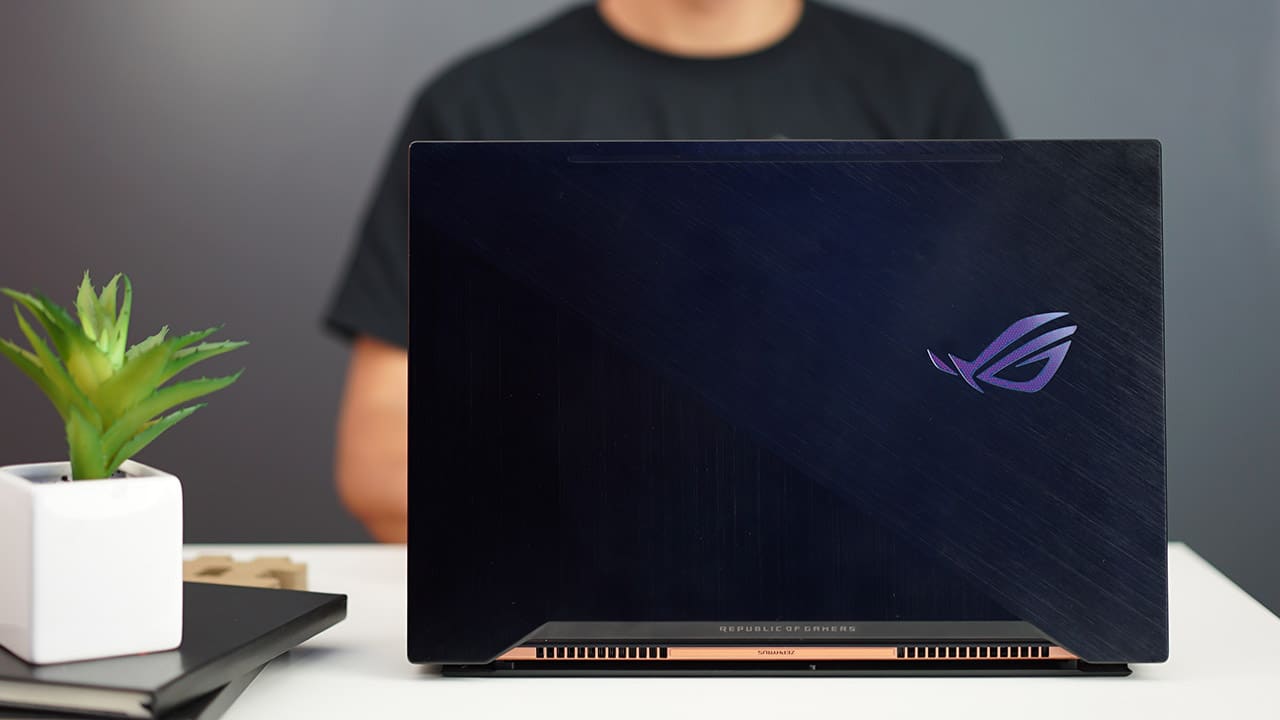
How thin can a high-end gaming laptop get? Looking at the ROG Zephyrus of ASUS, we have a pretty solid answer.
The Zephyrus (GX501) is based on NVIDIA’s recently introduced Max-Q design, which cuts down the size of graphics chips in favor of thinner notebooks without compromising too much power. But wait — haven’t manufacturers been doing this for a while already?
Yes and no. While brands have been striving for that oh-so-slim gaming laptop for ages, it’s only now with NVIDIA’s help that it’s possible to fit a top-of-the-line GeForce GTX 1080 GPU into a frame that’s less than 18mm thick.
In this case, the 15.6-inch Zephyrus has that GTX 1080 within an approximately 17mm, 2.25kg chassis. Here’s how it fares.
It definitely looks and feels like a regular laptop
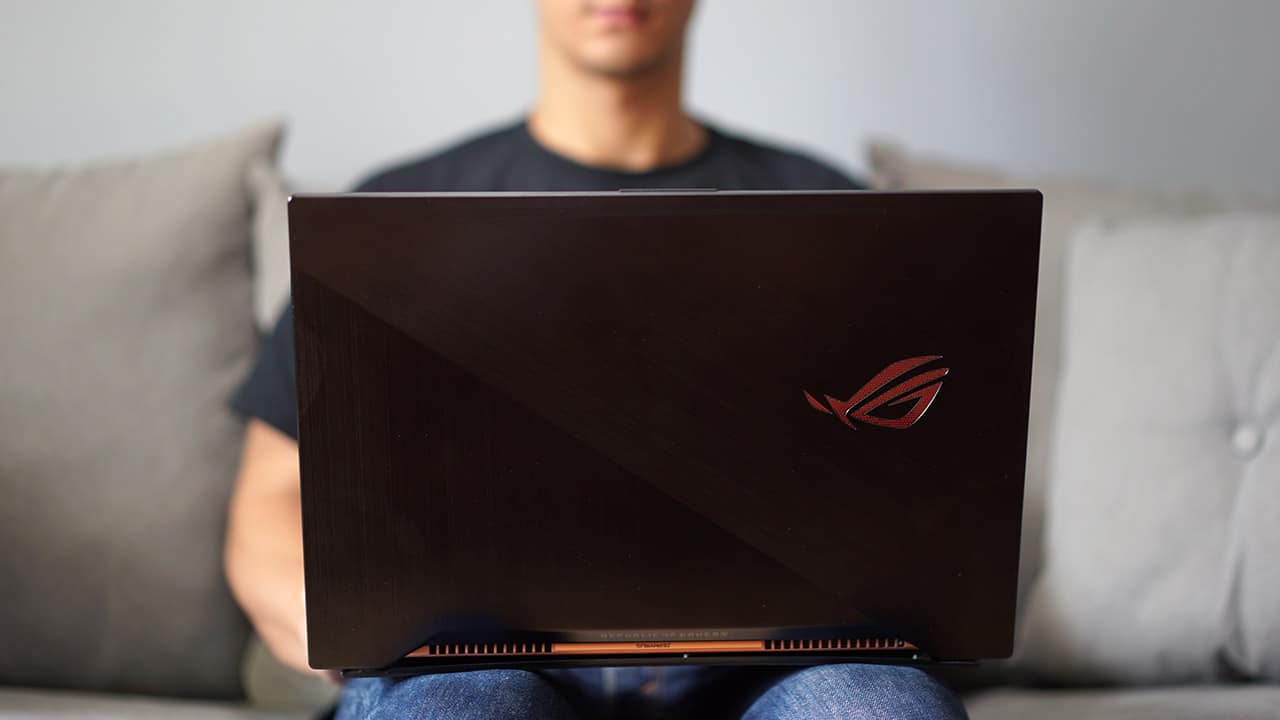
This is one of the few gaming laptops I’d actually allow on top of my lap. My only qualm is in the way the cooling system was built.
ASUS uses this technology called the Active Aerodynamic System, which lifts the rear end of the body when you open the lid for greater air distribution.
While I can attest to the efficiency of the cooling system — not once did it burn my legs or howl like a large washing machine — the design means the bottom plate is somewhat flimsy unless it’s placed on a flat surface.
But that’s fine, since the Zephyrus isn’t designed for traveling writers without a stable workplace; gamers who want to settle down in a LAN party or hotel room will appreciate this form factor.
The hands-on experience may be weird at first

Just look at it: By shoving all the internal components to the upper half, the keyboard had to be pushed to the bottom with the touchpad awkwardly placed to the right.
The abrupt cutoff of the keyboard’s bottom edge, shallowness of the keys themselves, and vertical trackpad have a really steep learning curve. One week of everyday use wasn’t enough to master this setup, and that may be a bad thing.
You must do several practice runs on Overwatch or your preferred MOBA before jumping into competitive play. ASUS bundles a rubber palm rest (as pictured above) to help ease you into the compromised part of the design, but it’s purely for table-top use since it doesn’t attach to the unit itself.
There’s some trackpad magic
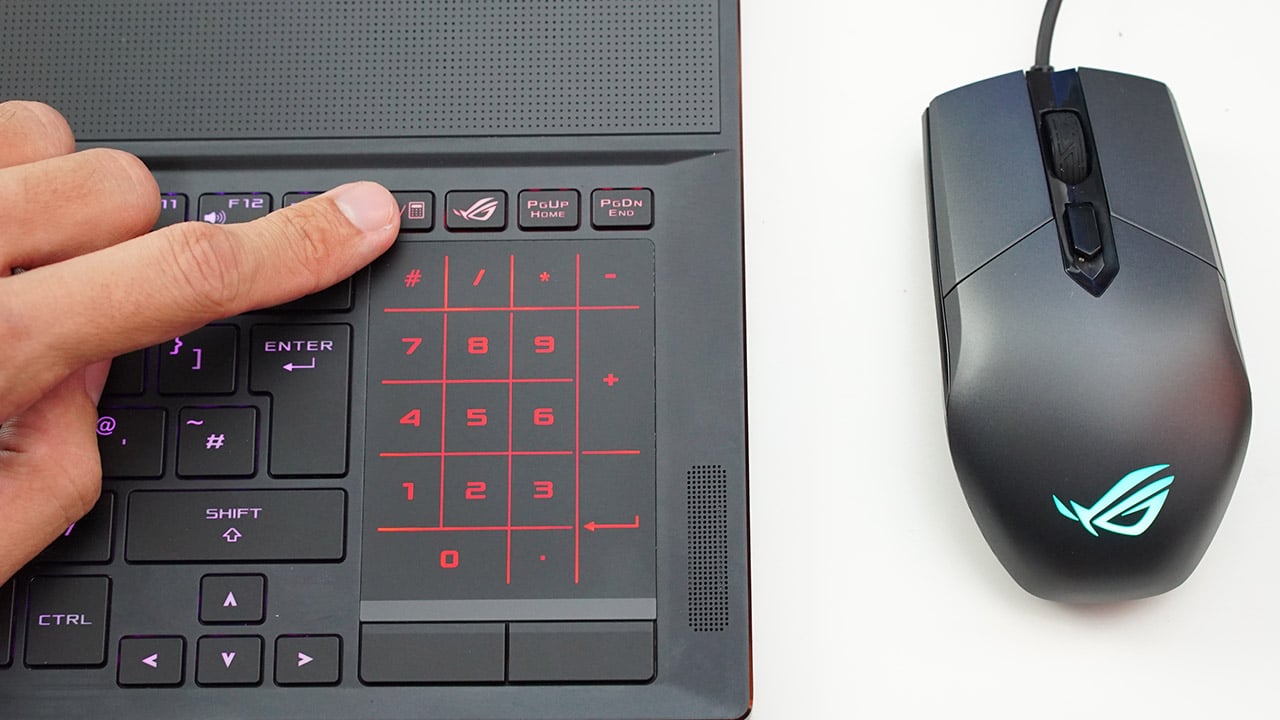
By pressing the button pointed at above, you can transform the trackpad into a fully functional numpad.
If you use the bundled optical mouse — which I found to be quite delightful to use, by the way — you’re better off just ignoring the trackpad altogether in favor of this traditional keyboard-numpad-mouse-palm rest setup.
Actually, this should be the only setup you should consider, especially if you take gaming seriously. Just be sure to take the palm rest and mouse with you, and never leave them behind by accident, which happened to me a couple of times.
Comes with performance that matches a much bulkier PC
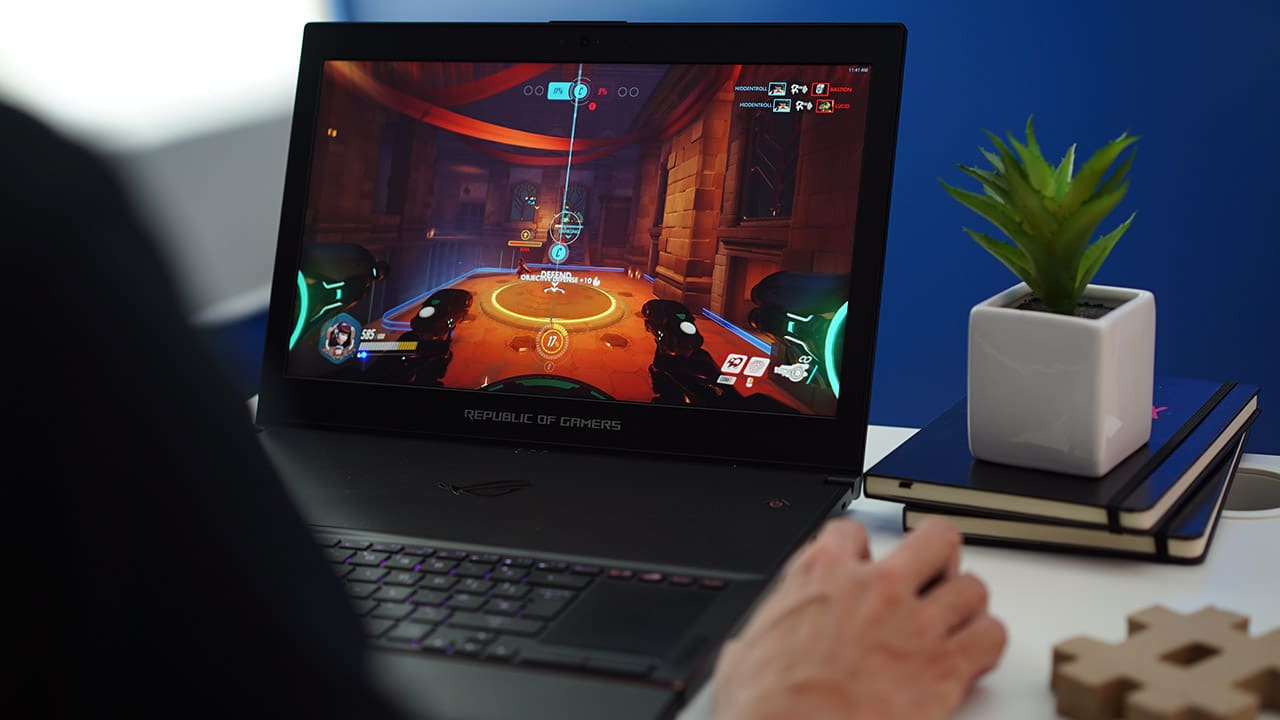
I feel like it’s justified to spend half of this review on the design alone, since this is what the Max-Q philosophy stands for, but this wouldn’t be a gaming article without talking about performance.
There’s no getting around it; the Zephyrus ticks every box for a gaming laptop. The variant we reviewed has the following: An Intel Core i7-7700HQ processor, 24GB of memory, 1TB SSD storage, and of course, a full-fledged GTX 1080 — none of that “mobile version” terminology attached to it.
It’s a given this machine can run through the latest games. Titles like Rise of the Tomb Raider and the latest DOOM can be maxed out on the laptop’s native 1080p resolution with frame rates consistently exceeding 60fps.
To be specific, I got an average of 98.14fps and 58.2fps on the benchmark tests of Rise of the Tomb Raider and Deus Ex: Mankind Divided respectively on Ultra settings and DirectX 12. The maximum temperatures reached during these stress tests were 71 degrees Celsius for the CPU and 70 degrees for the GPU.
More importantly, the Zephyrus we tested has NVIDIA’s G-Sync enabled on the LED-backlit panel to prevent unwanted tearing and stuttering during fast-paced games.
Coupled with the 120Hz refresh rate, this is a godsend for games like CS:GO and Overwatch. Not once did I feel like the Zephyrus held me back during intense gaming with lots of action going on.
Here are closer looks at the finer details
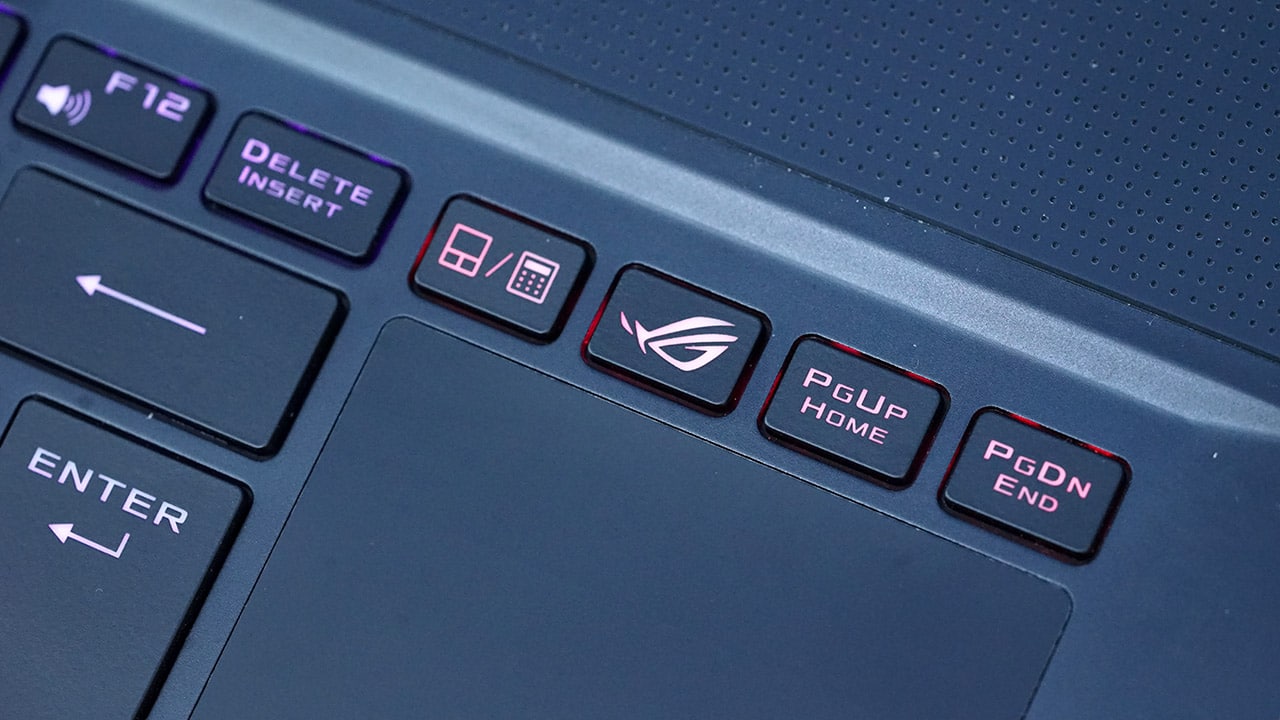
The ROG button opens up ASUS’ own command center for tweaking performance settings and the keyboard’s colors
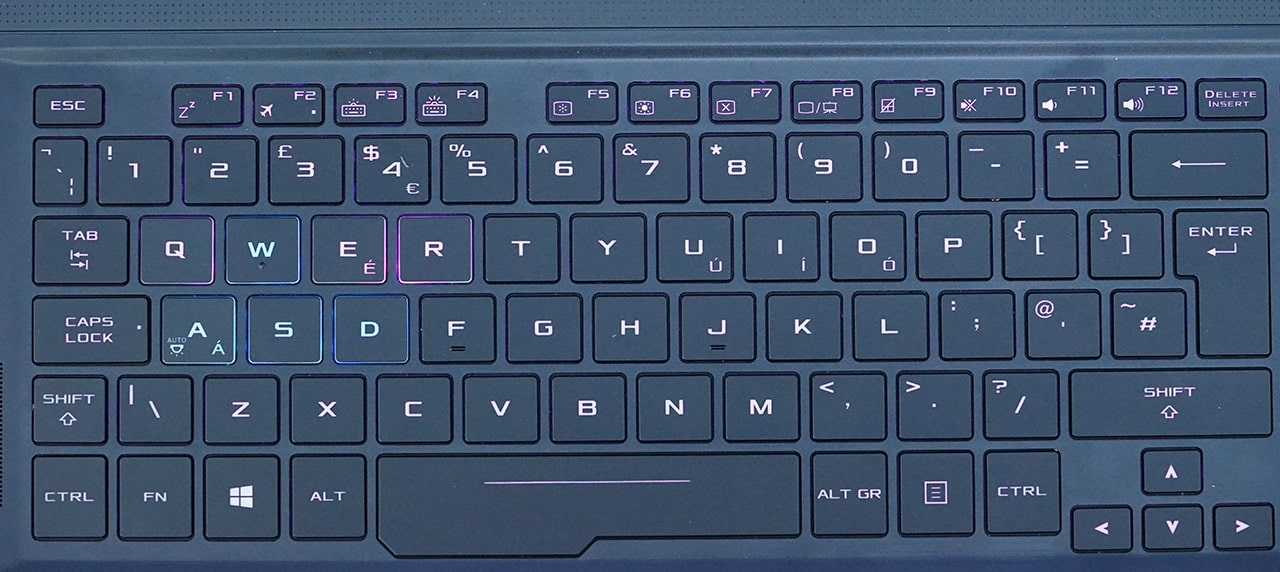
Yes, the left shift key is narrow, really narrow. Every other key is well sized, especially the space bar.
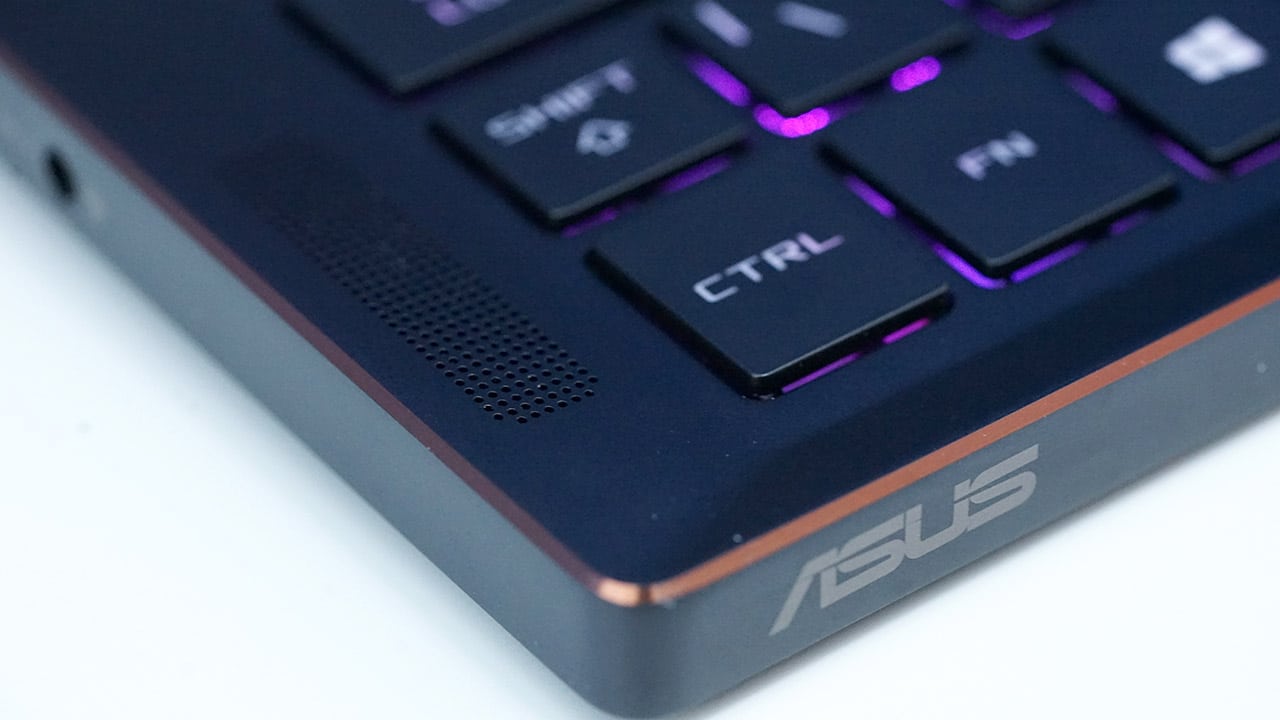
The stereo speakers face upwards and are loud, but not deep in bass. Headphones during gaming are a must.
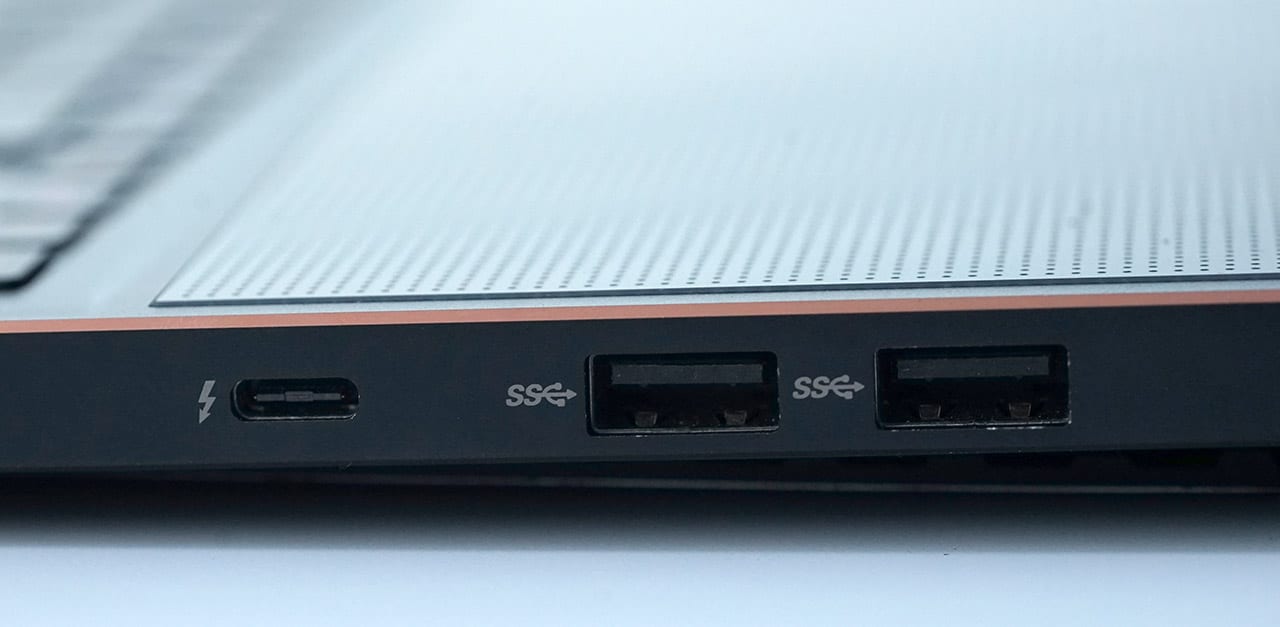
Two full-sized USB 3.0 ports and a Thunderbolt-enabled USB-C port are found on the right side.
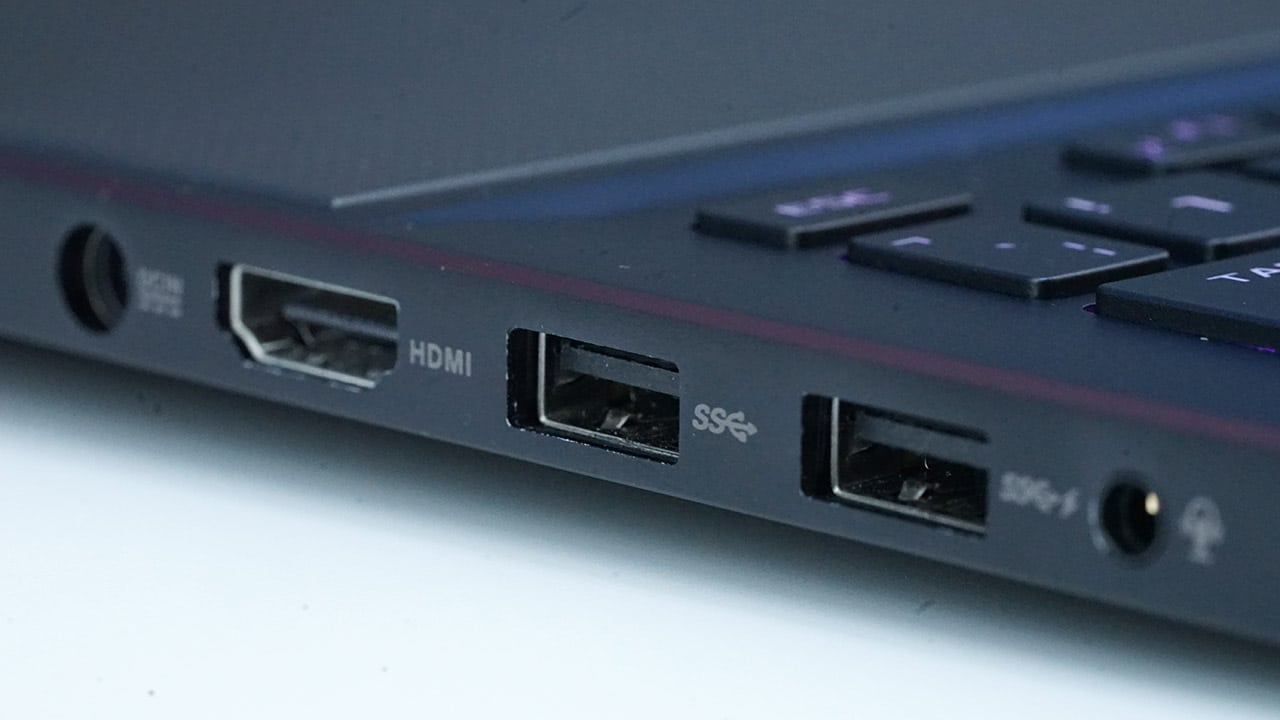
The left side contains two more USB 3.0 ports, a 3.5mm audio port, HDMI, and power port.

Those who are into first-person shooters may choose to highlight the WASD keys like this.
What else is there to know?
With the exception of the somewhat uncomfortable keyboard-trackpad combo and flimsy bottom plate, the Zephyrus seems like it’s about to reach the finish line without any deal-breakers. But wait — I found something!
No matter how many optimization tricks I tried or useless software I uninstalled, I couldn’t for the life of me get this thing to last more than two hours on a single charge.
It turns out that cramming so much high-powered hardware in such a slim profile leads to atrocious battery life. I was never confident enough to unplug the Zephyrus from a wall socket to work or game on the move for more than an hour.
Is this your GadgetMatch?
That’s a tough question. As innovative and well-rounded as the Zephyrus is, its target market is as slim as the laptop itself.
With a starting price of $2,700, it’s way more expensive than building an equally capable desktop PC rig of your own, but it isn’t crazy pricey like some of the behemoths we’ve covered recently.
Our particular model was provided by ASUS Philippines, and it costs slightly more at PhP 179,995 (roughly US$ 3,550) since it has the best-possible configuration.

I often found myself taking a break in between work and gaming sessions to reflect on how far we’ve come since the impractical “mobile” PCs of the past. Those massive machines still exist, but they’re no longer the standard by which all gaming laptops must follow.
At the same time, there are drawbacks to slimming down a computing monster: The chassis loses its sturdy build, the keyboard and trackpad are relegated to awkward spots, and most of all, battery life takes a dive.
I’d say those are weaknesses you can ignore; keep the Zephyrus on a desk, insert the bundled mouse and wrist rest, and stay plugged in. Have to move to a new location? You can easily slide everything into a medium-sized backpack and bring them with you.
SEE ALSO: ASUS ZenFone AR review
[irp posts=”15440″ name=”ASUS ZenFone AR review”]






Gaming
SHINOBI: Art of Vengeance’s SEGA Villains Stage out on April 3
Face off against legendary SEGA bosses from different franchises

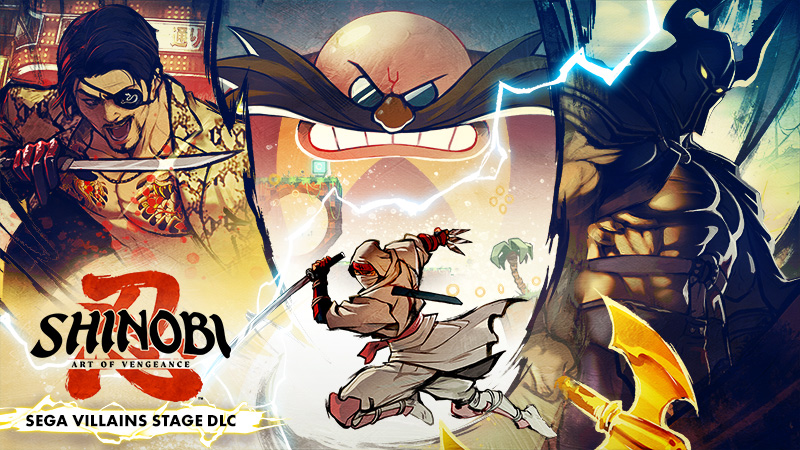
The SEGA Villains Stage DLC for SHINOBI: Art of Vengeance will release on April 3 for PlayStation 4 and 5, Xbox Series X|S, XBox One, Nintendo Switch, and Steam.
The DLC lets players face off against legendary SEGA bosses from different franchises: Like a Dragon and Yakuza, Golden Axe, and Sonic.
An animated trailer has been unveiled as part of the announcement. It features those franchises’ characters, Goro Majima, Death Adder, and Dr. Eggman.
There will be a total of five crossover stages, three bosses, and two Boss Rush modes featuring the bosses for the DLC.
In addition, there will be three more Ninpo, three new outfits, and six new music tracks. The SEGA Villains Stage DLC is a free update for all players.
Aside from the crossover, players can also try out a new Hardcore Mode which features changes in enemy placement and stronger boss attacks.
Additional combat settings also lets players adjust recovery frames, the flash effect, and camera shake. Various quality-of-life improvements are also planned for the 2D action-platformer.
Gaming
The hunt begins: The Witcher in Concert hits Manila with surprises in tow
The Continent comes alive
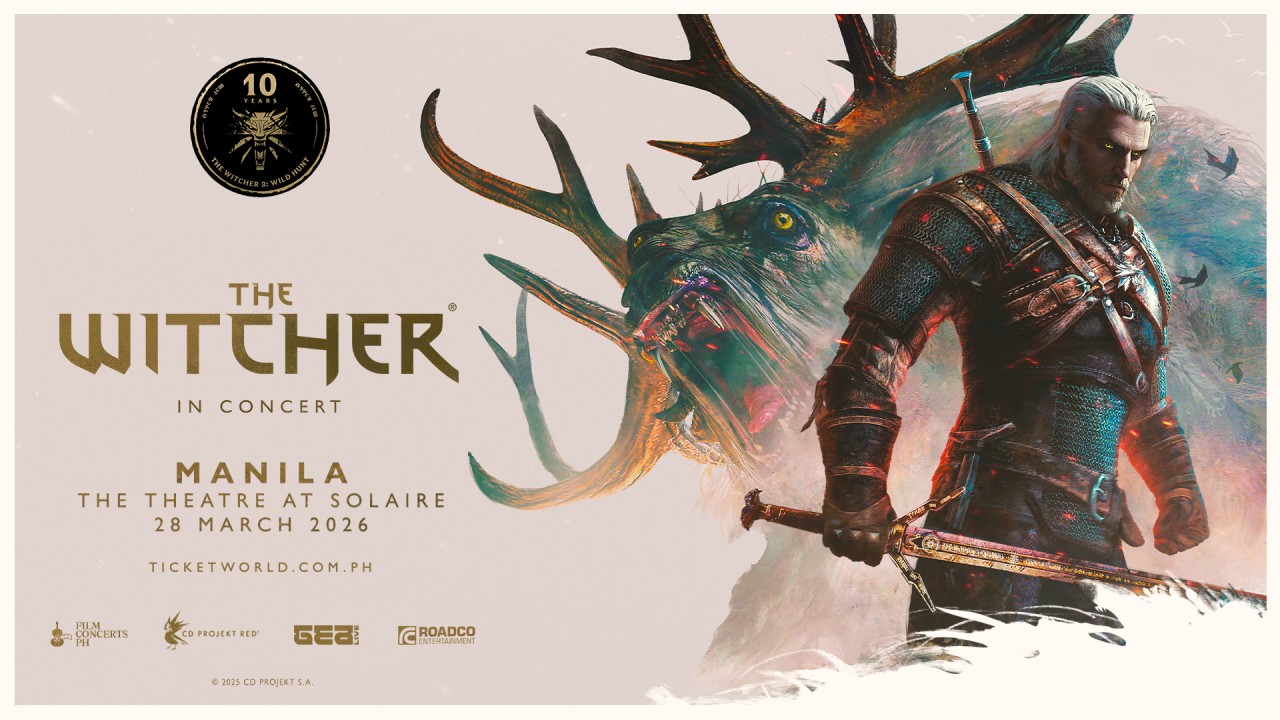
If you’ve ever heard a haunting chant echo through a battlefield or felt the weight of a choice that isn’t as simple as good or evil, then you already know—the Path has a way of calling you back.
And if you haven’t stepped into that world just yet, consider this your invitation.
With less than two weeks to go, The Witcher in Concert is set to take over Manila for a one-night-only performance. It’s happening on March 28, 2026 at The Theatre at Solaire—bringing with it not just the music of a beloved RPG, but a full-on return to the Continent.
Celebrating the 10th anniversary of The Witcher 3: Wild Hunt, the concert transforms one of gaming’s most iconic soundtracks into a live experience. Expect performances from selected musicians of the Filharmonika Orchestra alongside Percival Schuttenbach—the Polish folk-metal band whose distinct sound helped define the game’s identity. Paired with in-game visuals, it’s a show designed to feel both nostalgic and entirely new.
As the night draws closer, here are three things fans can look forward to:
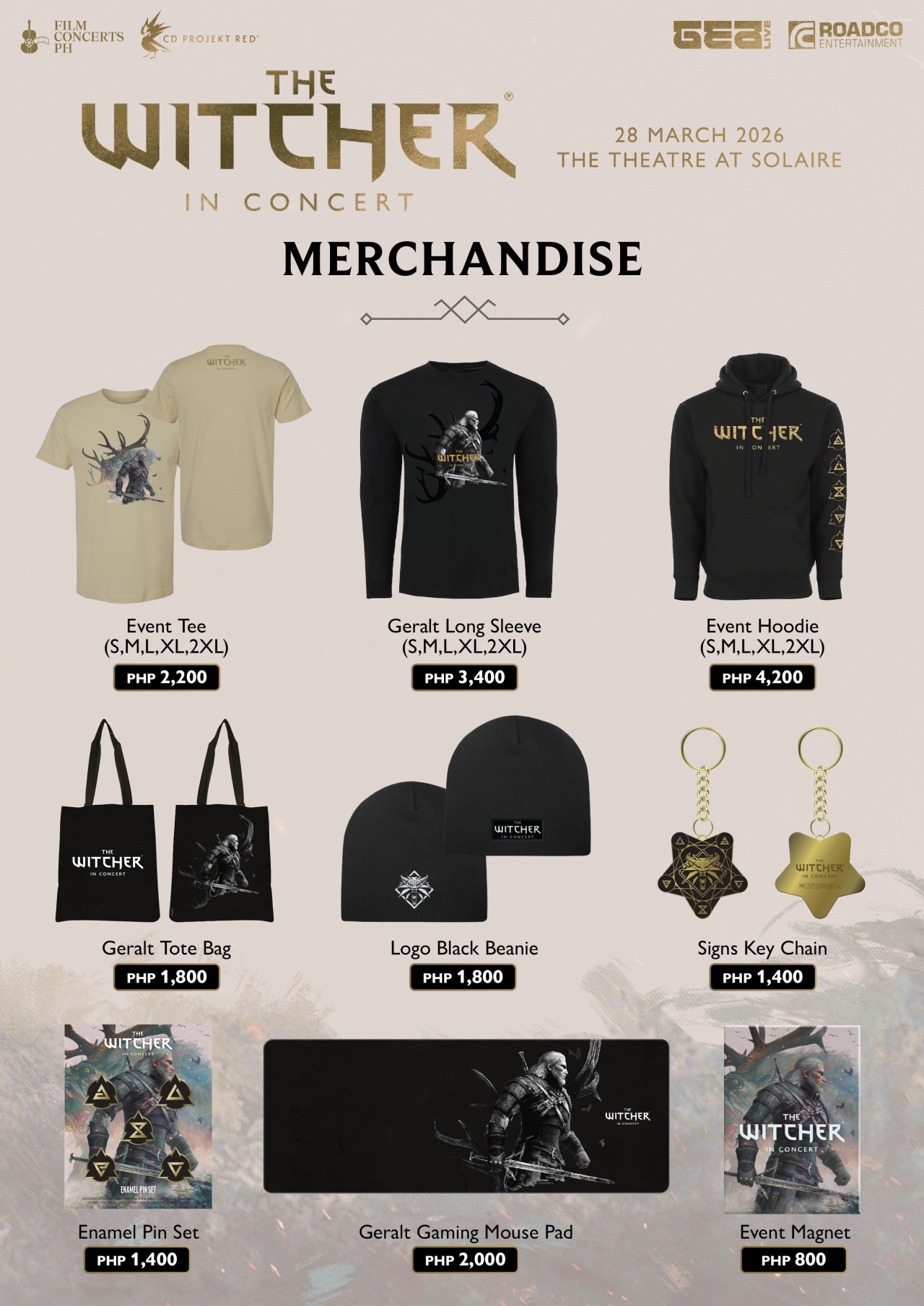
Relics from the Continent: official merchandise
For those who want to take a piece of the experience home, exclusive event merchandise will be available in limited quantities.
This includes the following:
- Event Tee (PhP2,200)
- Geralt Long Sleeve (PhP3,400)
- Event Hoodie (PhP4,200)
- Beanie (PhP1,800)
- Tote bag (PhP1,800)
- Key chain (PhP1,400)
- Enamel pin set (PhP1,400)
- Event magnet (PhP800)
- Geralt gaming mouse pad (PhP2,000)
It’s the kind of loot drop fans won’t want to miss.
The path to Solaire: getting there made easier
Getting to the venue is part of the journey—and this time, it’s a little easier. Attendees can use the Grab code FCPH2026 to get 20% off rides (up to PhP75). With the condition of a minimum fare of PhP250. The promo is valid for two rides per user and applies to trips to and from Solaire Entertainment City.
A rare encounter: meet Percival Schuttenbach
For a handful of lucky fans, the experience goes beyond the stage. Ten winners will get the chance to meet Percival Schuttenbach and receive an autographed CD.
To join, ticket holders need to share any official The Witcher in Concert post on their Instagram Story. They need to write what they’re most excited to hear live and tag @filmconcerts.ph. They need to submit their entry before March 24, 2026 at 5:00 PM. Winners will be announced on March 25.
Answer the call
As the Continent arrives in Manila, fans are encouraged to lean all the way in—whether that means coming in cosplay as a monster hunter, mage, bard, or something far more dangerous.
Tickets are available via TicketWorld and participating outlets nationwide.
The Path is open. The question is—will you answer the call?
Gaming
Monopoly: Star Wars Heroes vs. Villains launching on June 11
Introducing a team-based, cinematic twist to the classic board game
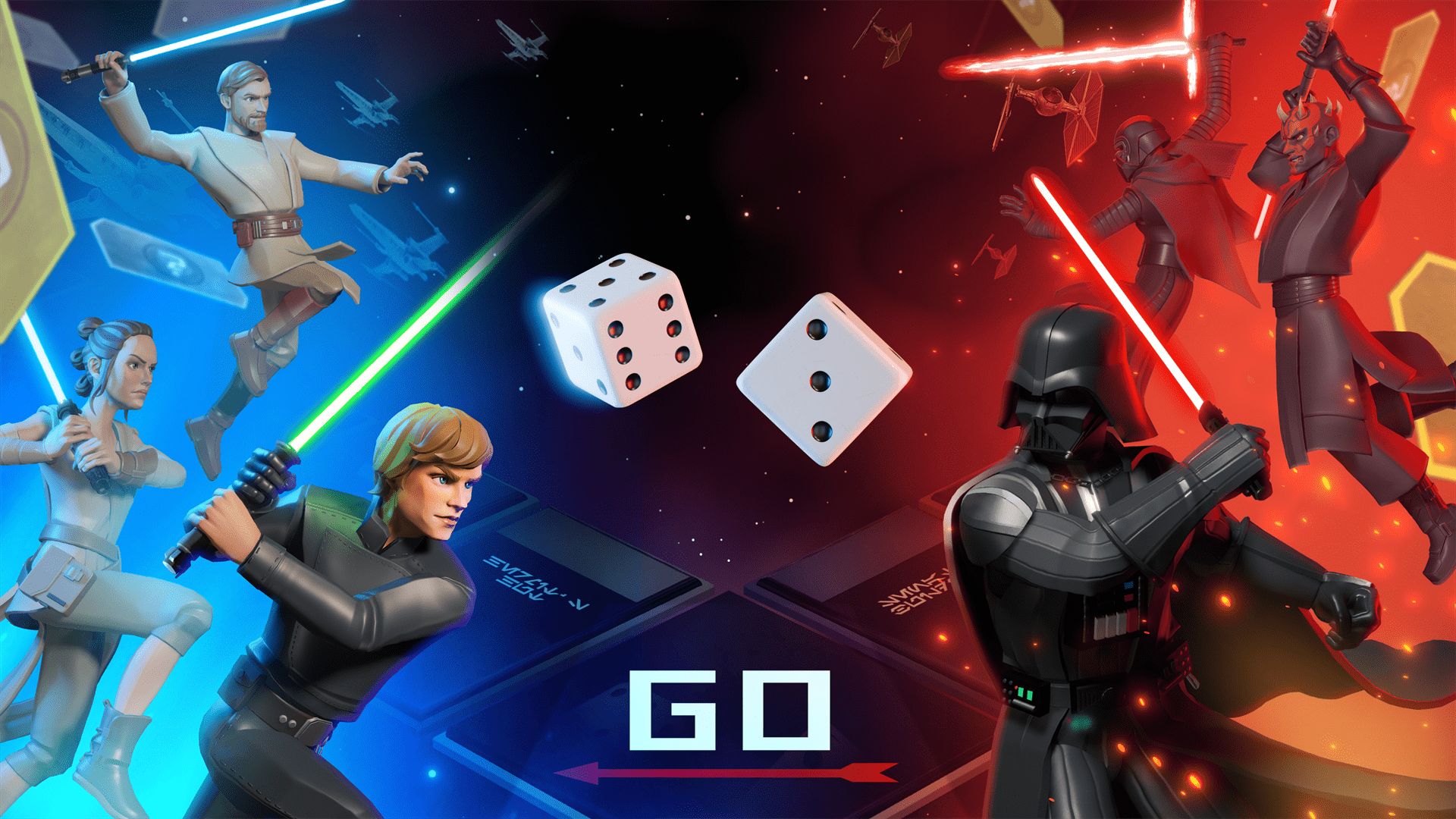
Monopoly: Star Wars Heroes vs. Villains will launch on June 11, Ubisoft has announced. It will debut on PlayStation 5, Xbox Series X|S, Nintendo Switch 1 and 2, GeForce Now, and PC through Steam, Epic Games, and the Ubisoft Store.
The Behavior Interactive title introduces a team-based combat twist to the traditional real estate board game. It includes competitive 2v2 and 3v3 modes, available online and through couch co-op.
This transforms the classic Monopoly gameplay into an action-packed, strategic showdown where teamwork and hero combinations matter.
Every turn carries high stakes as properties change hands in an instant. Dynamic GO events also introduce game-altering twists.
The full reveal will be on April 29.

Monopoly: Star Wars Heroes vs. Villains transports players into the Star Wars galaxy with a custom Monopoly board, packed with iconic locations from across the saga.
The gameplay is reimagined with thrilling cinematic moments, themed spaces, and dynamic elements. These make up for a refreshed experience from start to finish.
Players can choose from a wide roster of Star Wars heroes and villains. There’s plenty of options, from Luke Skywalker and Princess Leia to Darth Vader and Darth Maul.
Each character brings unique abilities to shape the team’s strategy and affect the match’s complexion with every roll of the dice.




Now Playing: Hoppers

Jackery SolarSaga series: Free power for small devices

UGREEN adds new Nexode Pro power bank, charger to lineup

nubia to launch new Neo 5 series gaming phones on March 28

SHINOBI: Art of Vengeance’s SEGA Villains Stage out on April 3


-

 Reviews5 days ago
POCO X8 Pro Max review: A new beast from the far east
-

 News5 days ago
POCO X8 Pro Series: Price, availability in the Philippines
-

 Laptops2 weeks ago
Apple MacBook Neo Review
-

 Computers2 weeks ago
GIGABYTE collaborates with Capcom for RE Requiem custom PC
-

 Apps1 week ago
Google Maps is finally getting a 3D mode
-

 Entertainment2 weeks ago
The internet is thirsting over the One Piece Season 2 cast
-

 Features1 week ago
Galaxy AI on the Samsung Galaxy S26 Ultra
-

 Automotive2 weeks ago
BYD is reportedly considering an F1 team