The ASUS Zenbook Duo 2024 came into my life at such a weird time. Over the past few months, I have been actively trying to build a workflow that’s not reliant on having to bring a laptop all the time. Yet, here comes ASUS’ latest and possibly best dual screen laptop yet, opening up possibilities I personally never even imagined.
Here’s my time so far with the ASUS Zenbook Duo 2024.

Multiple modes
The multiple modes available to you with this unique form factor have been well documented. But here’s a quick recap.

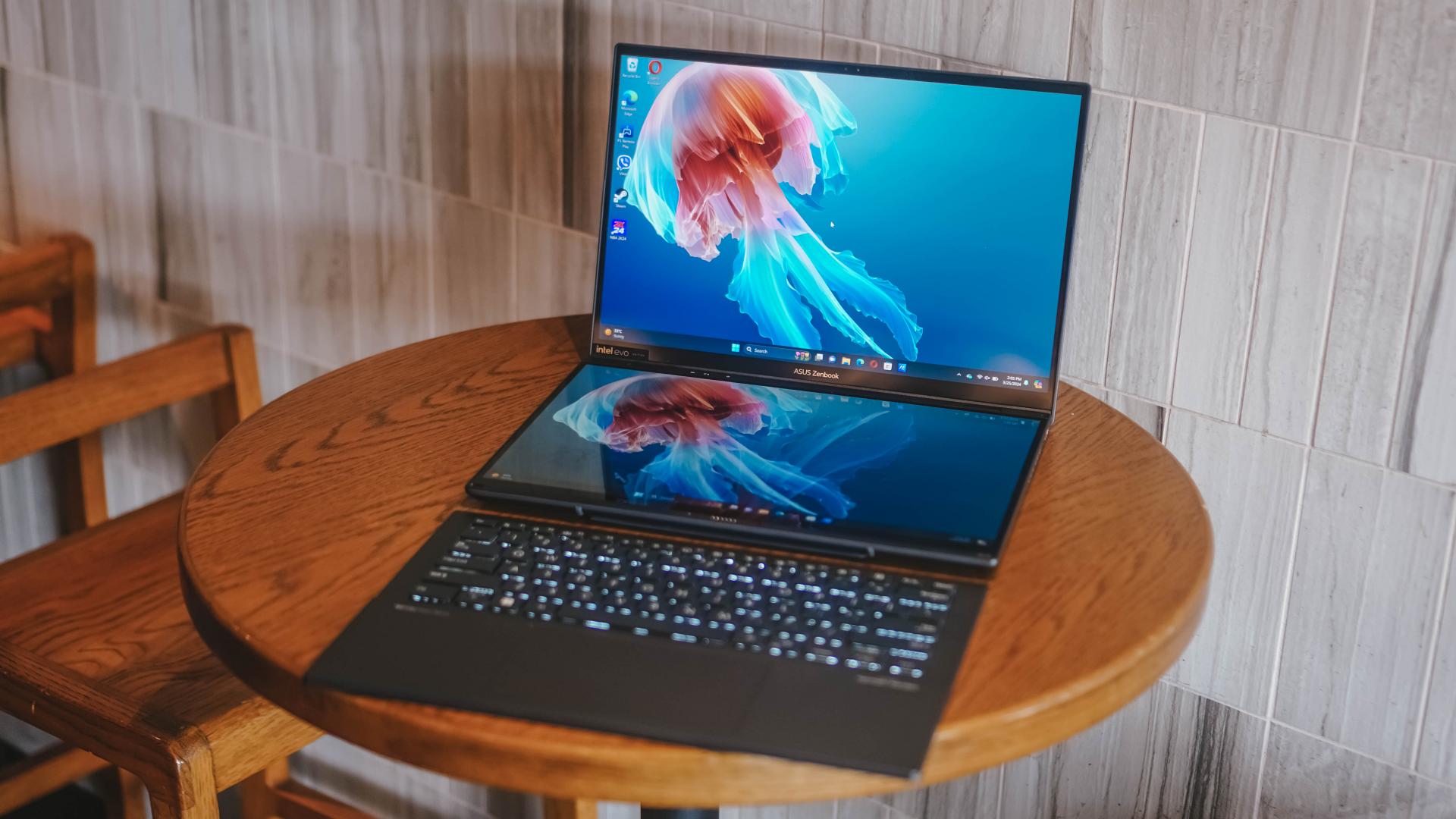
Naturally, there’s Laptop Mode. If you don’t care for extra attention when you’re out and about while working, this is likely the mode you’ll stick with most of the time. Due to its nature, this is also the mode where you’ll be able to squeeze out more usage from the device because the other screen is not in use. More on that later.
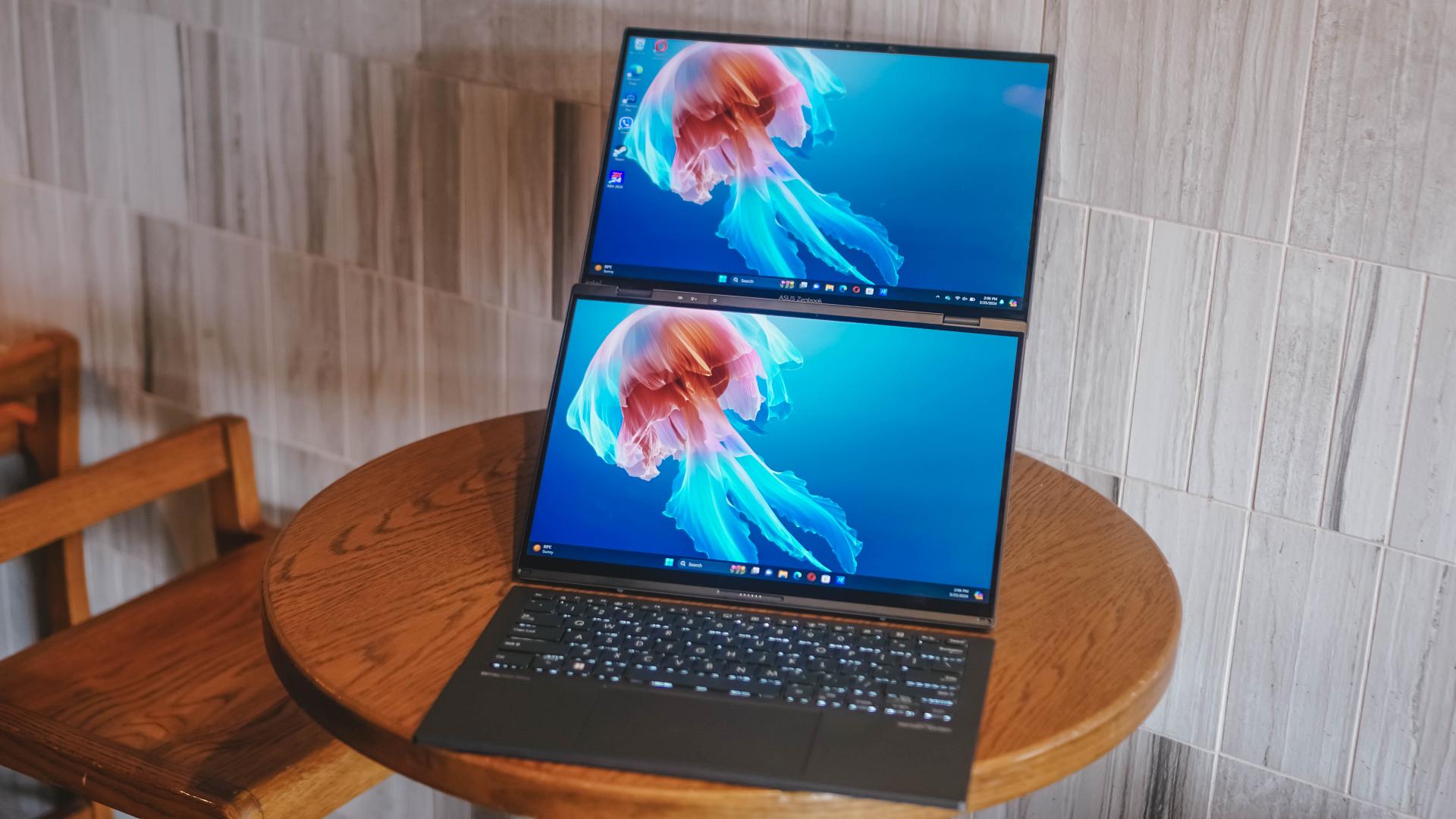
There’s Dual Screen Mode. Next to Laptop Mode, this is the orientation I use the most, especially when I’m able to plug the device. So, at home, this is mostly how I used the Zenbook DUO 2024. I’m starting to get so used to this mode that when I do work on the regular Laptop Mode, something feels lacking.
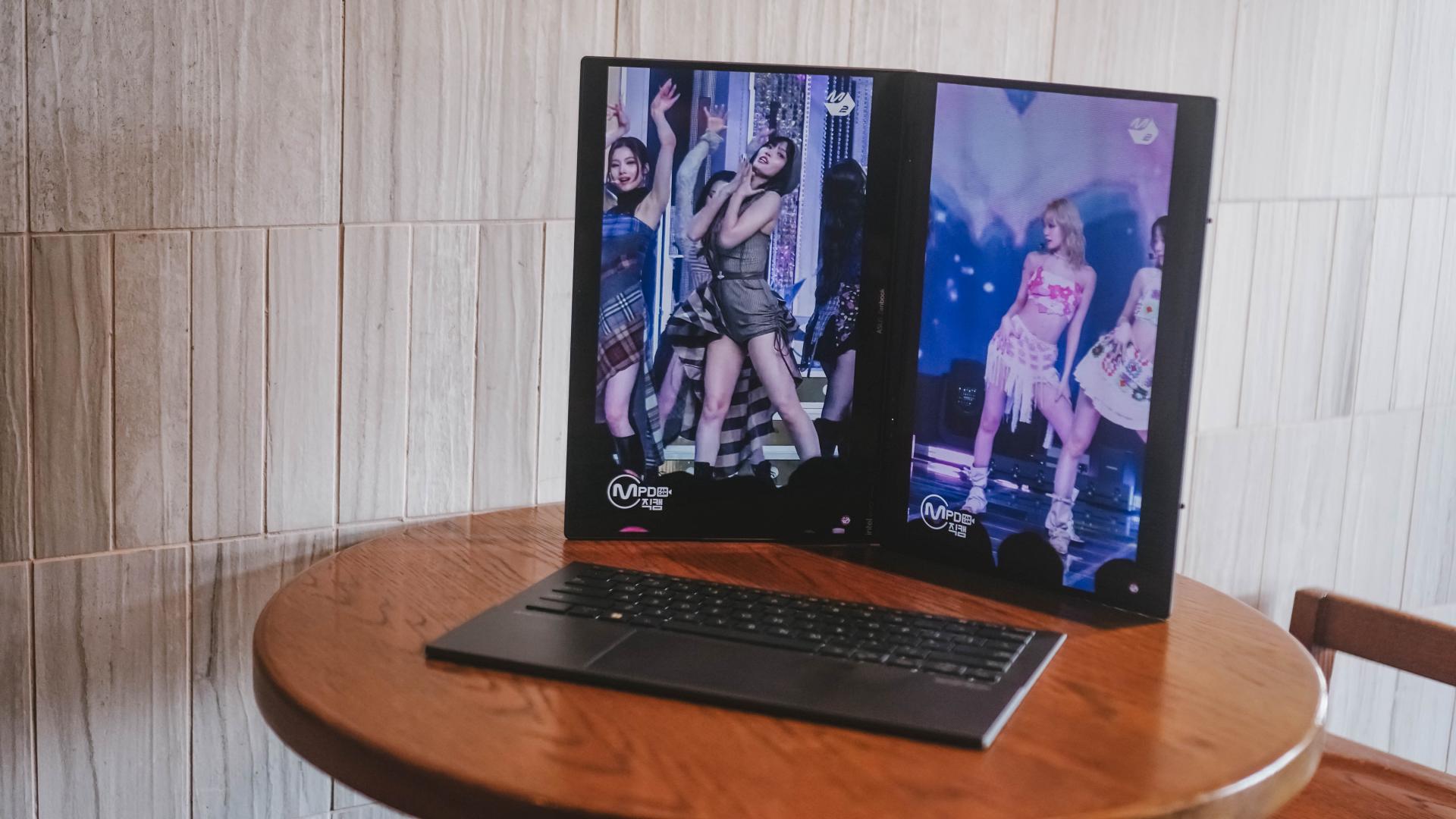
Lastly, there’s Desktop Mode. It’s essentially just like Dual Screen Mode but with the Dual Screen in portrait orientation. I’ve never used this to work and only really went to this orientation to showcase it.

A key thing that makes all of these possible is the underrated inclusion of a kickstand. It feels like a natural part of the whole contraption that it’s mostly just a passing mention in most discussions about the Zenbook DUO 2024. But I think it’s a big part of what makes all of it work seamlessly.
There isn’t a name for it but you can also lay the laptop flat on the table fully spread. It’s great when you’re trying to present something to someone across the table. Also feels like more apps can get some sort of use-case for it if the form factor ends up being popular.
Other knick knacks

ASUS also made sure to make this as usable as possible even if, for whatever reason, you misplace the bluetooth keyboard.
You can tap the bottom screen with six fingers to pull-up a Virtual Keyboard. It’ll never feel as good as a physical keyboard, but it’s there in case you happen to need it.
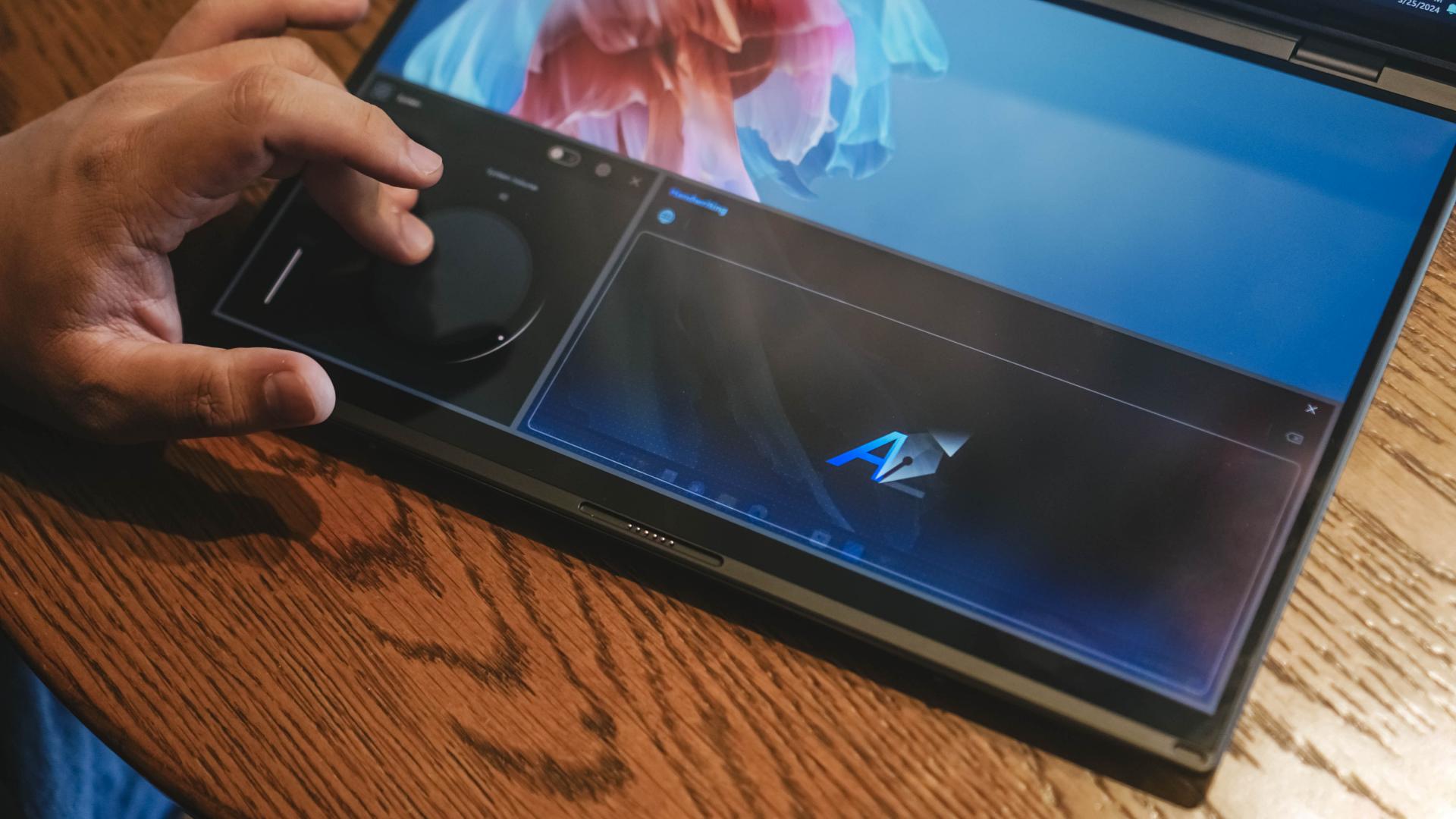
Swipe down with six fingers and you’ll get the Easy-access tools. Here you’ll have handy things like handwriting input, the control panel, as well as the number key and quick key.
Lastly, you can tap the screen with three fingers to get the Virtual touchpad. This layout is reminiscent of the earlier Zenbook Duo designs.
Does anyone ‘need’ this?
They say necessity is the mother of invention, so what was the thing that necessitated the creation of this dual screen laptop?
Personally, I think more screen real estate is always a boon. And over the years, more and more people have squeezed out plenty of usage out of multi-monitor desktop setups. What ASUS did here is they took that concept and made it more mobile.

For me specifically, I’ve used it to run two browsers side-by-side. One for the material I need to reference, the other for the Google Doc that I stare blankly at as I try to cobble words together to make sense of things.
It’s also great for video editing. You can have one entire screen to be the preview area and reserve the other for your timeline and work area. It’s so much easier than having to preview your video on 25% or less of a regular screen.
In these particular instances, productivity is most definitely enhanced. It saves time because you no longer have to press alt+tab as much to switch apps. And it’s easier than ever to glance at multiple apps at once.

Part of my work is also communicating on multiple chat apps. There’s Slack, Messenger, Telegram, WhatsApp, and Viber. Different sets of folks prefer different apps. It can be cumbersome but it’s something I’ve gotten used to. Having Dual Screens as well as the ability to split view apps in these screens has been a godsend. It’s now easier and faster to see which apps have a pending message I need to attend to.
And you can just as easily switch what’s on each screen with a single tap of this button on the F8 key.
It didn’t exactly feel like it while I was using the Zenbook DUO 2024, but as I now sit and ponder on how I’ve used it over the past couple of weeks, I definitely see how it’s helped me get some things done faster even if it’s just by a small percentage.

It’s also great to just have a video running on either screen while you work on the other.
Lastly, there’s this little quality of life thing where my primary screen is now near eye-level even if I’m not using a separate monitor. It’s great for one’s posture. I just have to find a better work chair now.
A Dual Screen believer
Over the past year, I have fancied myself a foldable enthusiast. On the daily I switch between the OPPO Find N3 and the HONOR Magic V2. Something about having more screen real estate flips a productivity switch in my brain.
I can’t say the Zenbook DUO 2024 has had the exact same effect, but it’s definitely in the same neighborhood. The additional screen has unlocked possibilities that at this point, I would say are still just “nice-to-have.” I can certainly still go back to a regular laptop and not miss a beat. When it comes to smartphones, I think my personal preference now is totally the foldable kind. I’m not there yet when it comes to laptops.
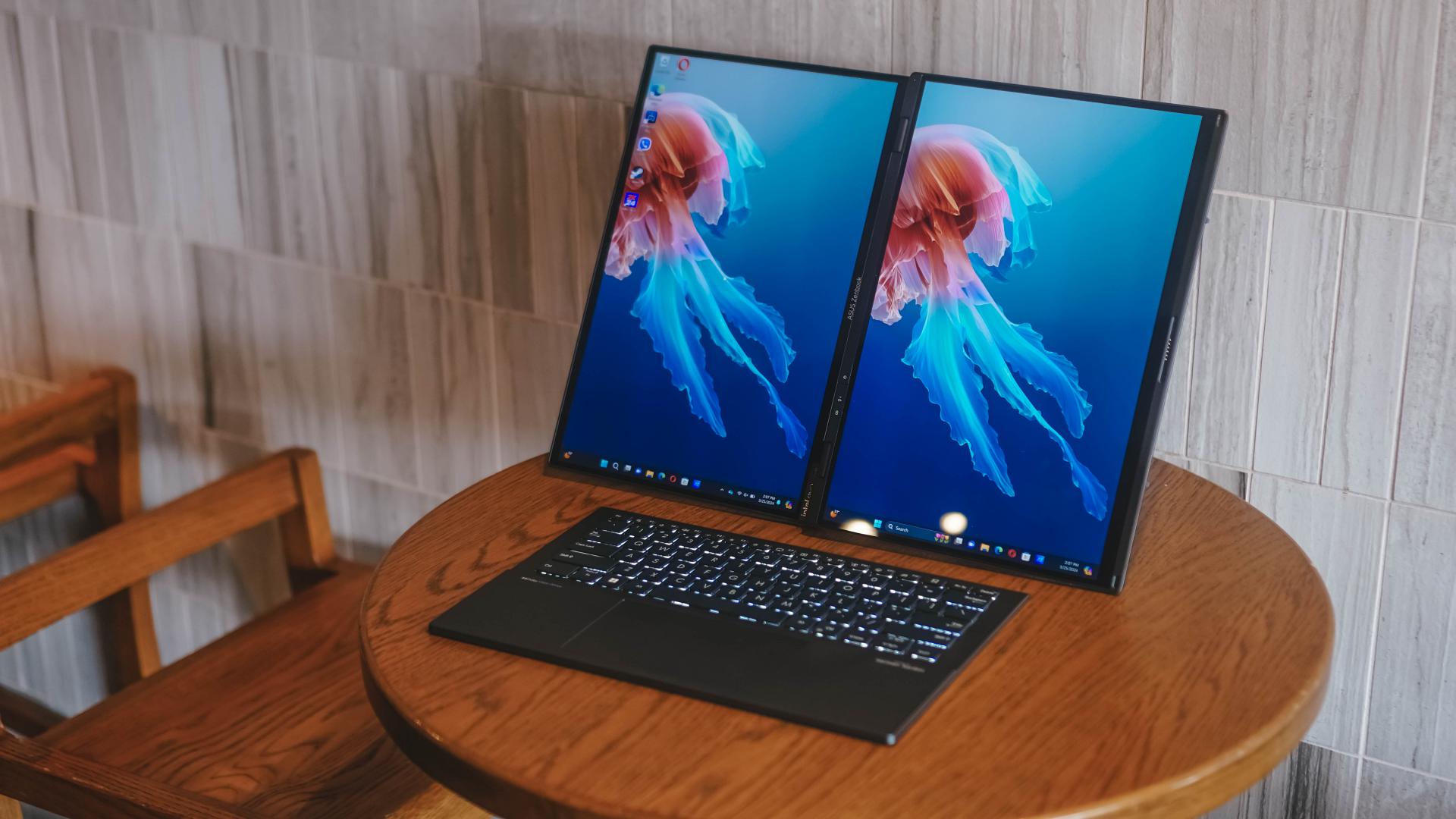
That said, this form-factor definitely has merit. Even Lenovo has something similar with the Yoga 9i. That alone will show you that there might just be enough demand for this kind of laptop.
Dual drawbacks
There are two things, though, that don’t make this an absolute slam dunk for me. That’s Microsoft Windows and the battery life.
For context, I’ve been using a 2020 13-inch MacBook Pro M1 for the better part of the last four years. And prior to that, I’ve used a MacBook Pro for most of my time as a media professional. When it comes to software fluidity and battery life, I have been spoiled.

To me, Windows just isn’t as fluid and does not feel as seamless as MacOS. Don’t get me wrong, it has certainly come a long way. I get by now with the same gestures using only the trackpad. There was a time when Windows trackpads just weren’t usable for me.
Don’t get me wrong, I am fully aware of the advantages of Windows and how much more control you can have over it if you’re the type to really dig down in the settings. But that’s not me. I do not have the luxury of time to be doing so much tweaking.
And while the Windows vs MacOS thing is debatable and largely boils down to preference, the same isn’t true for battery life. With my 13” MacBook Pro M1, I feel confident going out and not having to plug it for an entire day. I know I’ll have enough juice left for an entire heavy work day and then some.
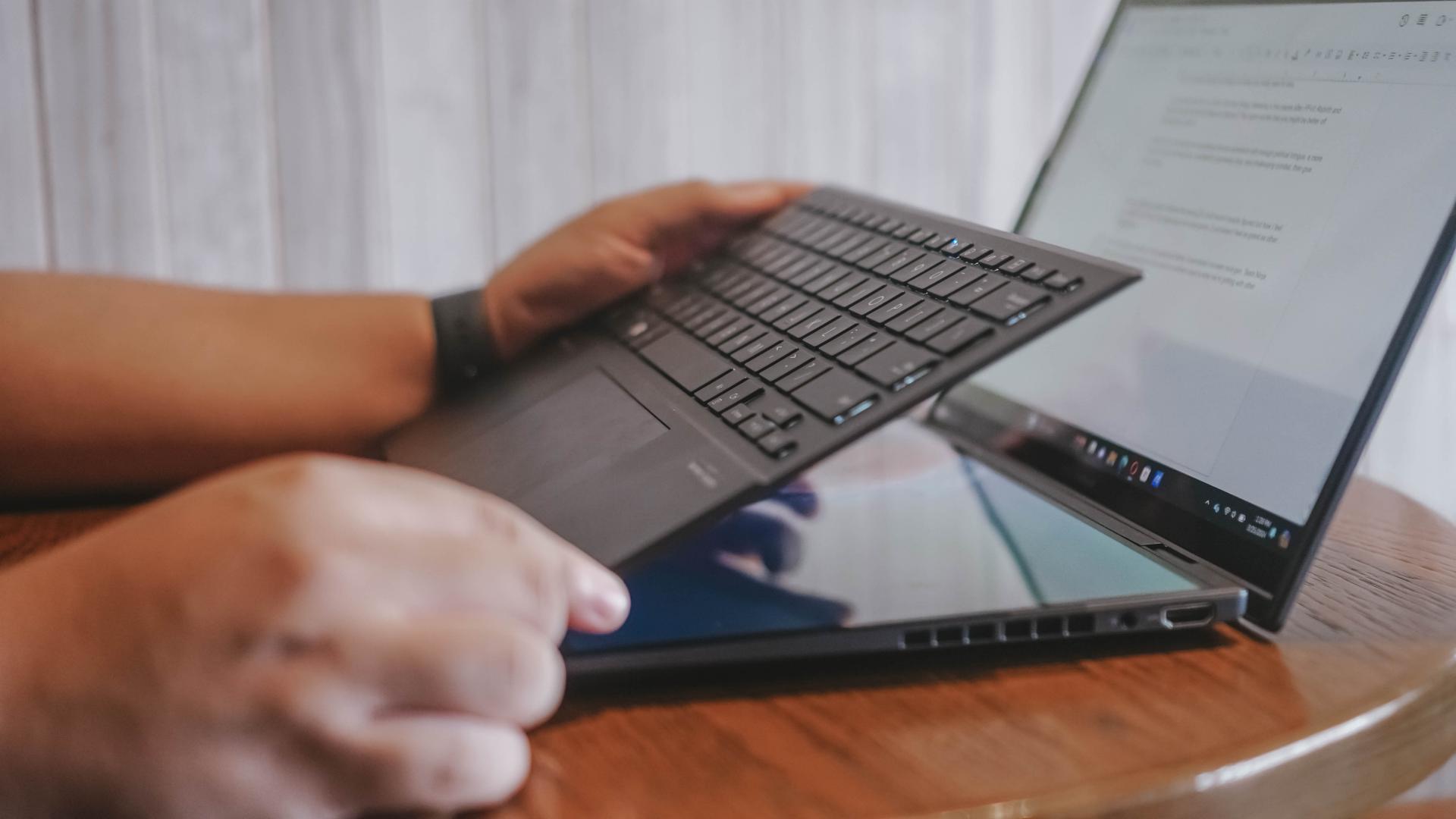
That just isn’t true for the ASUS Zenbook DUO 2024. Especially since I prefer using it in Dual Screen mode. That means I am limited to around 3.5 to 4 hours in this specific mode because the screens consume more power and the bluetooth keyboard can only last that long.
These aren’t absolute deal breakers, but they are things you definitely should consider if you’re thinking about getting this dual screen machine. You best know all the spots with an electricity outlet or at least have a heavy duty power bank on hand to keep things running all day.
Is the ASUS Zenbook DUO 2024 your GadgetMatch?
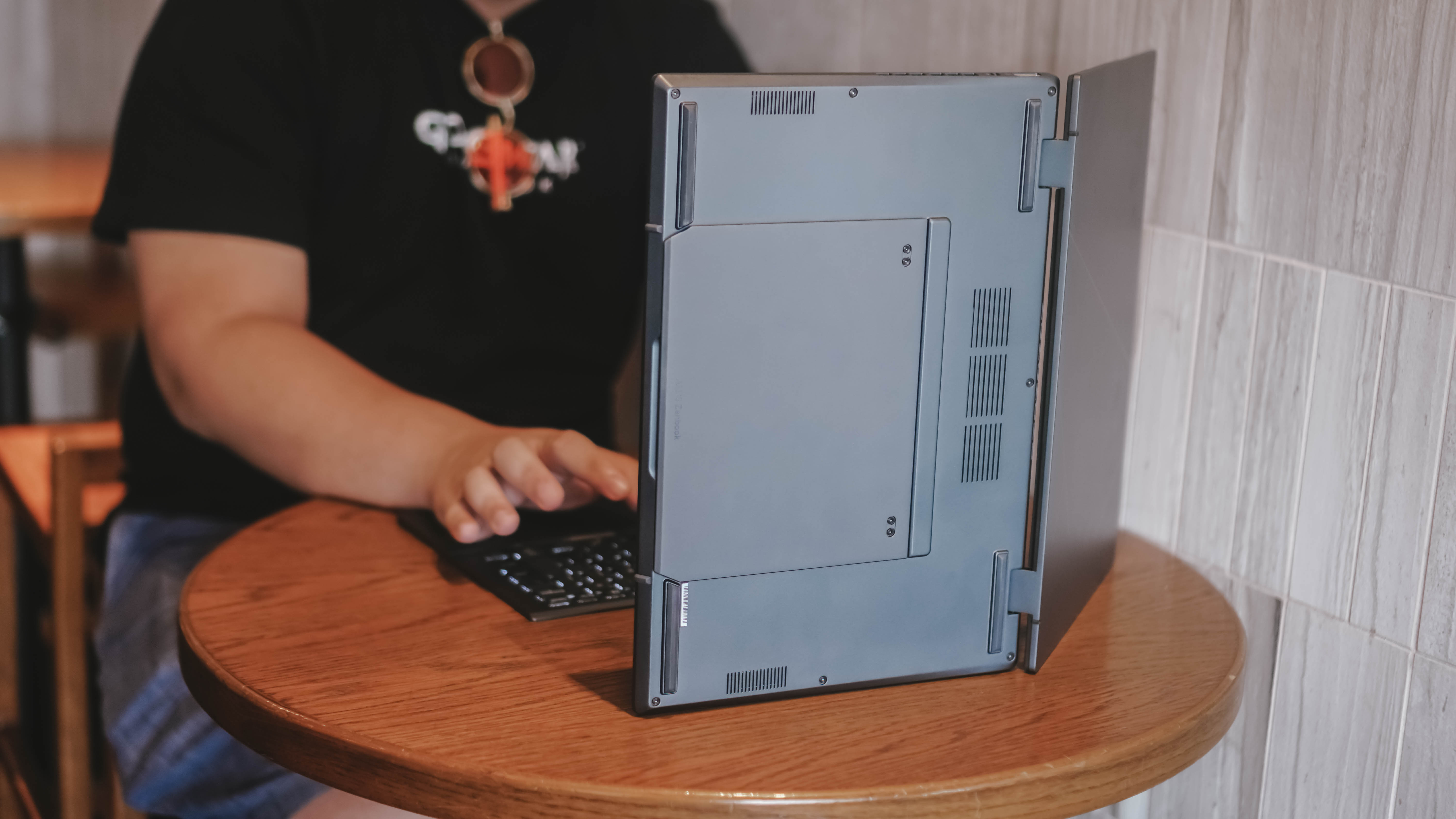
All things considered, the ASUS Zenbook DUO 2024 is a fantastic machine. After two weeks, I haven’t even tapped into its full potential yet, but the improvements in my work efficiency are noteworthy.
At PhP 129,995, it does command a hefty price tag. Whether or not the benefits are worth it will ultimately come down to how you plan to incorporate its dual screens to your workflow. If you see yourself needing to work on dual screens while you’re on the go, this is about as good as it gets.

Everything equipped in this machine is top-of-the-line: Intel Core Ultra 7 155-H, 32GB of LPDDR5x RAM, 1TB of PCIe 4.0 NVMe M.2 SSD storage, and more. You also get a healthy number of ports: 2x Thunderbolt, 1x USB 3.2 Type-A, 1x full-size HDMI 2.1, 1x audio combo jack.

There’s more than enough power here to fuel most workflows. And you get all of that with twice the number of screens. I wouldn’t jump in blindly, but if the ASUS Zenbook DUO 2024 is something you fancy, you’ll definitely feel special once you have it on hand.
Laptops
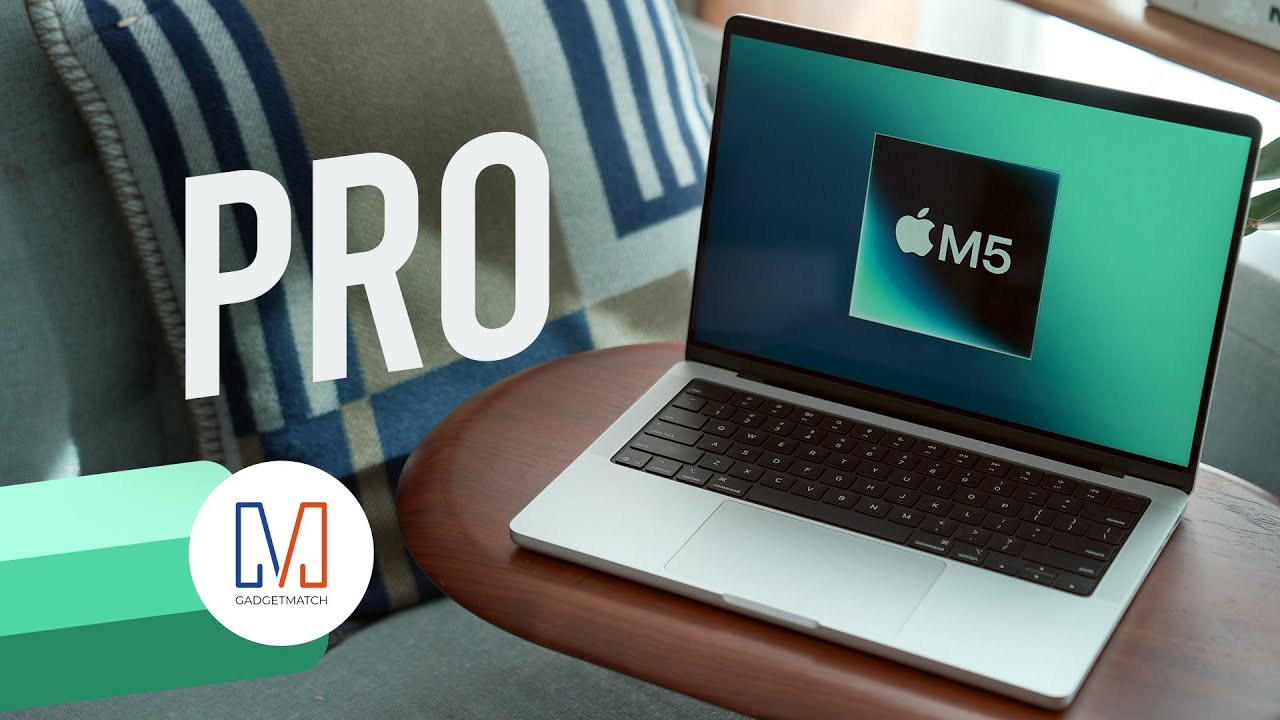
Apple unveils new 14-inch MacBook Pro M5
Up to 3.5x more AI performance, faster storage, up to 24 hours battery
Apple has introduced the new 14-inch MacBook Pro M5. It brings faster performance, greater efficiency, and a major leap in AI capability to the Mac lineup.
The next big leap in AI for the Mac
The M5’s 10-core GPU design brings up to 3.5x faster AI performance than M4, and 6x faster than M1. This makes it ideal for everything from text-to-image generation in Draw Things. It’s also great for faster large language model (LLM) processing in LM Studio.
The enhanced 16-core Neural Engine further speeds up AI-driven workflows such as data modeling, video enhancement, and deep learning . Meanwhile, the 2x faster SSD supports up to 4TB of storage for loading large AI models and handling heavy creative projects.
Next-level performance with M5
M5’s world-fastest CPU core drives up to 20% faster multithreaded performance for code compiling, multitasking, and creative apps like Premiere Pro and Blender. Its GPU enables up to 1.6x faster graphics and 1.6x higher frame rates in games like Cyberpunk 2077: Ultimate Edition compared to the previous generation.
For developers and professionals, over 150GB/s of unified memory bandwidth makes it easier to run large AI models or manipulate complex 3D scenes. AI video tools such as Topaz Video now process enhancements up to 7.7x faster than M1, while compiling code in Xcode is up to 2.1x faster.
Big gains for M1 and Intel upgraders
Upgraders from Intel-based Macs will see up to 86x faster AI performance, 30x faster GPU performance, and 5.5x faster CPU speeds. M1 users get up to 6x faster AI, 6.8x faster GPU with ray tracing, and 2x faster CPU performance.
Battery life rises dramatically — up to 14 more hours than Intel models, and four more hours compared to M1. Fast charge powers the MacBook Pro to 50% in 30 minutes using a 96W USB-C adapter.
The 14-inch Liquid Retina XDR display hits 1600 nits peak HDR brightness, while the 12MP Center Stage camera, studio-quality mics, and six-speaker Spatial Audio system deliver superior audio-visual experiences.
macOS Tahoe and Apple Intelligence
Running macOS Tahoe, the new 14-inch MacBook Pro brings major updates to Spotlight, Continuity, and Live Activities, alongside a redesigned interface with Liquid Glass effects and new customization options.
With Apple Intelligence, users can summarize messages, translate calls in real time, and automate tasks using smarter Shortcuts and app-integrated models — all while keeping data private and on-device.
Built for sustainability
The new MacBook Pro supports Apple 2030, the company’s goal of achieving carbon neutrality across its products and supply chain by the end of the decade. It’s made from 45% recycled materials, including 100% recycled aluminum, rare earth elements, and cobalt. The device is built using 55% renewable electricity and ships in 100% fiber-based packaging.
Pricing and availability
Customers can pre-order the new 14-inch MacBook Pro with M5 starting October 17 at apple.com/sg/store and in the Apple Store app. It will be available in stores and begin shipping to customers starting Wednesday, October 22.
The 14-inch MacBook Pro with M5 starts at SGD 2,199, or SGD 2,049 with education pricing, and comes in space black and silver. Configure-to-order options and accessories are available at apple.com/sg/mac.
Laptops
The Lenovo Yoga 7i Aura Edition gets it right after ten generations
All ten generations lead up to this.
To me, the original foldable is the Lenovo Yoga. Sure, a laptop technically folds, but a true foldable can shift between different form factors. That’s what the Yoga series can do. Now, ten generations later, the Yoga 7i Aura Edition is back, guns blazing and ready to take on the world again.
How many ways can you use the Yoga?
As always, the biggest draw of the Yoga 7i is its flexibility. This isn’t just any normal laptop. With its flexible hinge, you can fold it into a tent or into a tablet. All three modes are usable in their own way, of course.
Ten years ago, I never found a genuine way to use the other modes. I always asked myself, “Why would I ever use the other modes if the laptop mode is good enough?” Now, using all three modes just feels natural. It might be that I’m at an age that appreciates clearer division of tasks, but it could also be Lenovo’s better designs. And I’m leaning towards the latter.
Each mode feels like there’s a reason why it should exist. Instead of just a quirky design choice, both tent and tablet modes have worthy uses.
More power underneath
Despite how light the Yoga 7i is, it’s packing much more power underneath its chassis. It has an Intel Core Ultra 5 processor, paired with 16GB of RAM and 1TB of internal storage.
This looks like overkill. If you’re using this notebook purely for work, this is definitely too much. But for the package that it’s coming with, it feels like a bonus. Yes, it can handle all your daily work needs but also so much more.
Midway through testing, I was invited to showcase more of what the processor can do. At the time, my approach to the Yoga 7i was as an all-arounder, rather than as a premium or a gaming notebook. It felt pointless to force the notebook into a gaming-sized cubbyhole. Boy, was I wrong.
This thing can handle games. Obviously, it won’t be enough to play modern titles that need beefy graphics. The integrated graphics chip is impressive, though. Silksong was a no-brainer; the hardware worked even only on battery power. Overwatch 2 also worked, but I had to tone down some settings to get a smoother frame rate. Finally, if I forced it with lower settings, the notebook could even play a bit of Forza Horizon 5.
This performance was more than I expected from this lithe notebook. Going back to our quandary in the previous section, this is where the Yoga 7i’s tent mode shines: as an entertainment hub after a long day’s work.
OLED is finally here
Speaking of being an entertainment hub, the Yoga 7i just sparkles with its 14-inch WUXGA OLED screen. Once again, the notebook’s unassuming looks doesn’t betray the beasts lurking underneath.
Recently, I’ve gotten so enamored with displays that support True Black 500. The Yoga 7i is brilliant at showcasing deep blacks and vibrant colors. Playing the dark levels of Silksong, the contrast melds almost seamlessly with the black bezels. It’s easy to forget that you’re staring at a screen. Besides gaming, the notebook feels perfect for watching movies.
Similarly, the touchscreen was smooth and responsive. However, if you’re particular about smudges, fiddling around with the touchscreen display can leave fingerprints. The package does come with a stylus, though. The Lenovo Pen works well enough for using the device without fingers.
It’s a confusing layout
Anyone who’s used a laptop and a tablet before will know that the both of them have different layouts. The former, of course, has a keyboard and a power button right above it. Meanwhile, the latter has its power button on the side.
The Yoga 7i has a unique layout. Rather than the traditional placement for a notebook, Lenovo’s latest convertible laptop has its power button on the side, much like a tablet. This throws me off so much. Normally, when you carry a laptop while it’s in use, you grasp it by its sides. If that’s also where the power button is, there will be times when you’ll accidentally press the button by mistake. This was a big point of frustration because it felt like I had to relearn the simple act of picking up a laptop.
Additionally, it’s still unnatural for me to have a full keyboard behind a tablet. The Yoga 7i features novel ways to use a convertible notebook. But the price is coping with tiny irregularities foreign to how you normally use a notebook or a tablet.
A powerful enough battery
The Yoga 7i has a 70Whr battery. This seems pretty standard for a notebook. However, because it’s not a beefy machine, you can squeeze out more hours than with a normal laptop.
In my experience, it can handle a full 8-hour workday with ease. If I had to force it, the battery can last even longer. It wasn’t until the 12-hour mark before I felt too anxious to keep going on pure battery power.
It’s easy to charge, though. The notebook uses a USB-C port for power delivery. The charging brick is also conveniently small. If you’re familiar with it, it’s the same brick you’ll find with the Legion Go. It’s as small as a smartphone brick. Coupled with how light the notebook already is, it’s a breeze to carry the entire package for working outside.
Is the Lenovo Yoga 7i Aura Edition your GadgetMatch?
Ten generations in, I’m still constantly impressed with the Yoga series. At first, I thought that it was a quirky addition to the laptop market. Now, because of all the improvements that can pack powerful hardware in a small package, I’m even more impressed.
The Lenovo Yoga 7i Aura Edition is a distillation of the past ten generations of the series. On its own, it is already a capable notebook for everyday tasks. Coupled with its flexibility, the 2-in-1 convertible is a head turner and a unique piece for your digital ecosystem.
Plus, it’s affordable! It costs only PhP 81,995.
With all of that said, the Yoga 7i Aura Edition gets a Super Swipe. Though my tastes lean more toward premium and gaming devices, the notebook impresses with great hardware and an affordable price.
Laptops
ASUS unveils latest ExpertBook B5, P5 laptops, more
Improved durability, security, performance, versatility, and AI processing
ASUS has unveiled its latest ExpertBook B and P series laptops in the Philippines, which include powerful series headliners in the ExpertBook B5 and ExpertBook P5.
These latest laptops all come with improved durability, security, performance, versatility, and AI processing tailored for the current generation of professionals.
Headlining the new P series models is the ASUS ExpertBook P5, which the company dubs as a “serious productivity weapon” for professionals.
It is powered the latest Intel Core Ultra processors (Series 2) for up to three times AI performance boost and up to 47 NPU TOPs.
In front is a 14-inch 2.5K 155Hz display for stunning clarity and ultra-smooth visuals. Inside is an all-day battery that can provide up to 28 hours of screen time.
All these features are housed in a sleek, aluminum chassis that is durable and lightweight at just 1.27 kilograms.
ASUS ExpertBook P series
Meanwhile, the ASUS ExpertBook PM3 is powered by up to AMD Ryzen AI 7 PRO processors and up to 64GB of DDR5 dual-channel memory and up to 3TB of dual SSD storage.
Users can choose from either a 14-inch or 16-inch 2.5K 144Hz anti-glare display. The PM3 models come with ASUS ExpertCool thermal design, and can run up to 18 hours on a single charge.
Furthermore, the ASUS ExpertBook P3 features a 16:10 anti-glare display, ExpertCool for better airflow, and up to 13 hours of battery life.
It comes with an assortment of ports: two full-function USB 3.2 Gen 2 Type Cs, two USB 3.2 Gen 1 Type As, HDMI 2.1, TDMS, audio combo jack, RJ45 LAN, and Kensington Nano Security Slot.
This variant is powered by up to 13th Gen Intel Core i7 processors.
Lastly, the ASUS ExpertBook P1 offers users a great entry-level laptop for work and other tasks. It comes with an FHD display, up to an Intel Core i7 processor, and ample RAM and internal storage with room for expansion.
Pricing
- ASUS ExpertBook P5 (P5405CSA): Starts at PhP 82,995
- ASUS ExpertBook PM3 (PM3406/PM3606): Starts at PhP 78,495
- ASUS ExpertBook P3 (P3405CVA/P3605CVA): Starts at PhP 61,495
- ASUS ExpertBook P1 (P1403CVA/P1503CVA): Starts at PhP 42,995
ASUS ExpertBook B5
On the other hand, bannering the new ExpertBook B series releases is the ASUS ExpertBook B5. Pricing starts at PhP 82,995.
This notebook combines the latest Intel Core Ultra 7 processors with Intel vPro and NVIDIA graphics for up to 99 total-platform TOPS.
That way, it is built to power even the most intensive multitasking sessions for business professionals, accelerating productivity.
In front is a 2.5K 144Hz display, while on the sides are two Thunderbolt 4 Type-C ports and HDMI 2.1, along with a card reader and nano SIM slot for 4G connectivity. The laptop also supports Wi-Fi 7 for ultra-fast speeds.
In spite all of these, the ExpertBook B5’s lightest configuration weighs just about 1.29 kilograms, making it portable for those always on the go.
AI ExpertMeet: AI for work
The new ExpertBook B and P models also introduce the AI ExpertMeet software, which is ASUS’ suite of AI-powered tools to enhance productivity and efficiency.
Among its key highlights are AI Meeting Minutes which can capture and transcribe meetings, turning audio into clear text for easy review.
There’s also AI Translated Subtitles for instant subtitles for live calls and recordings on the fly, as well as translations.
For video conferencing, there’s AI Noise Cancellation, AI Camera, and Webcam Watermark. AI Audio, meanwhile, can block off noise when a user records sound.
Multi-presenter mode also acknowledges multiple unique voices from different locations and distances so they are all conveyed at a similar volume.
ASUS ExpertGuardian, Military-Grade Standard compliance
All new ASUS ExpertBook models, including the entry-level options, also come with commercial-grade and NIST SP 800-155-compliant BIOS.
Coupled with Windows 11 Secured-core PC technologies, the laptops create a fortified defense against software vulnerabilities.
On top of these, ASUS offers a comprehensive five-year support for BIOS and driver updates.
Lastly, all new ASUS laptops have Military-Grade Standard compliance (MIL-STD-810), with the company subjecting models to more than 20 tests.
This is to ensure the laptops’ enhanced durability and longevity, complementing what it can provide on the performance and processing power side of things.
Tests include:
- 50,000 open and close cycle tests for the hinge
- Drop test as high as 1.2 meters
- Rump pressure test
- Water spill-resistance test for keyboard
- Metal plate-reinforced I/O ports tested to endure up to 9 kilograms
- Screen durability
- Various temperature tests (freeze/thaw test, solar radiation test, humidity test)
- Altitude test of up to 15,000 feet
- 5,000 USB Type-A connections
- Twist test to simulate normal handling and carrying
Laptops also come with 3-year on-site service, plus Accidental Damage Protection and 1-year plus international coverage in over 80+ countries under ASUS’ Comprehensive Warranty.
-
Cameras1 week agoDJI Osmo Nano review
-
Reviews1 week agoThe HONOR MagicPad 3 is an almost perfect premium pad partner
-
Reviews1 week agoSamsung Galaxy S25 FE review: Closer to flagship than ever
-
Reviews2 weeks agoTECNO Slim review: Smexy, Antifragile Slab
-
News1 week agovivo X300 Pro headlines Dimensity 9500 and Sony’s LYT-828 image sensor
-
Reviews2 weeks agoThe Xiaomi OpenWear Stereo Pro is a midrange wearable in premium packaging
-
News2 weeks agoAbenson goes big with iPhone 17 pre-order deals
-
Automotive2 weeks agoWhat it’s like to spend a day at BYD’s All-Terrain Circuit