

Reviews
CyberSoul X3 Pro review: Coasting just fine
For commuters who don’t want to use their last three brain cells

Electric kick scooters (EKS) are flocking the streets more than ever. The advent of a personal mobility solution has caught the attention of commuters looking for an alternative form of transportation.
Presently, there is a myriad of electric kick scooters you can find. Several of which are costly to one’s pocket. We’ve driven some EKS in the past and recently, we’ve discovered a new gem unbeknownst to many.
Meet the CyberSoul X3 Pro — an electric kick scooter from CyberSoul, a young transport brand focused on safe, eco-friendly, and effective mobility.
Oh, it’s new! The shape of your body, it’s blue~
The CyberSoul X3 Pro, which we’ll call X3 Pro for brevity, looks like your typical electric kick scooter. The resemblance is uncanny to most EKS found on the streets.
What sets it apart are the intricate details and thoughtful design to make it functional. And of course, a user experience that’s enjoyable when going in on a ride.
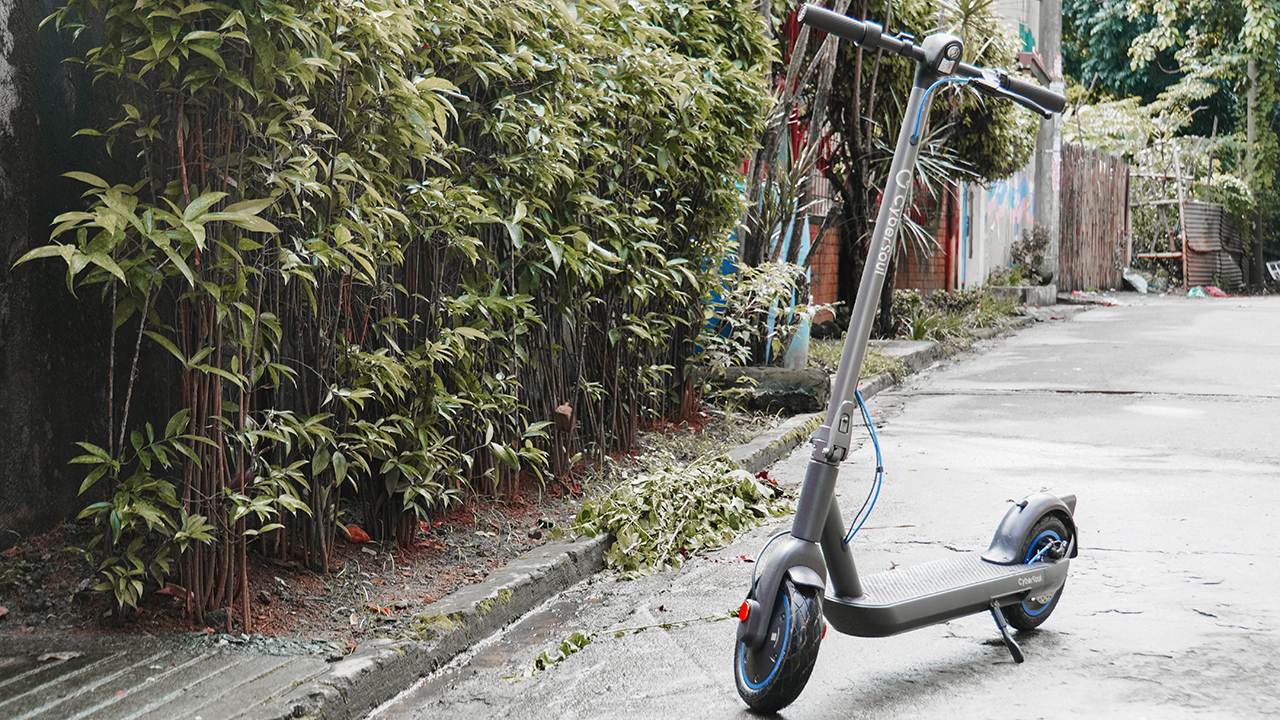
Forgive me for the dust and dirt that you’ll find in the visuals. I’ve been using the X3 Pro for more than a month and even though I’ve been cleaning it regularly, I accidentally took photos and videos outdoors when it rained torrentially.
Granted, the dust, dirt, and wet deck and wheels are inevitable. And it’s something we’ll be talking about later on.
Locked me out and threw a feast
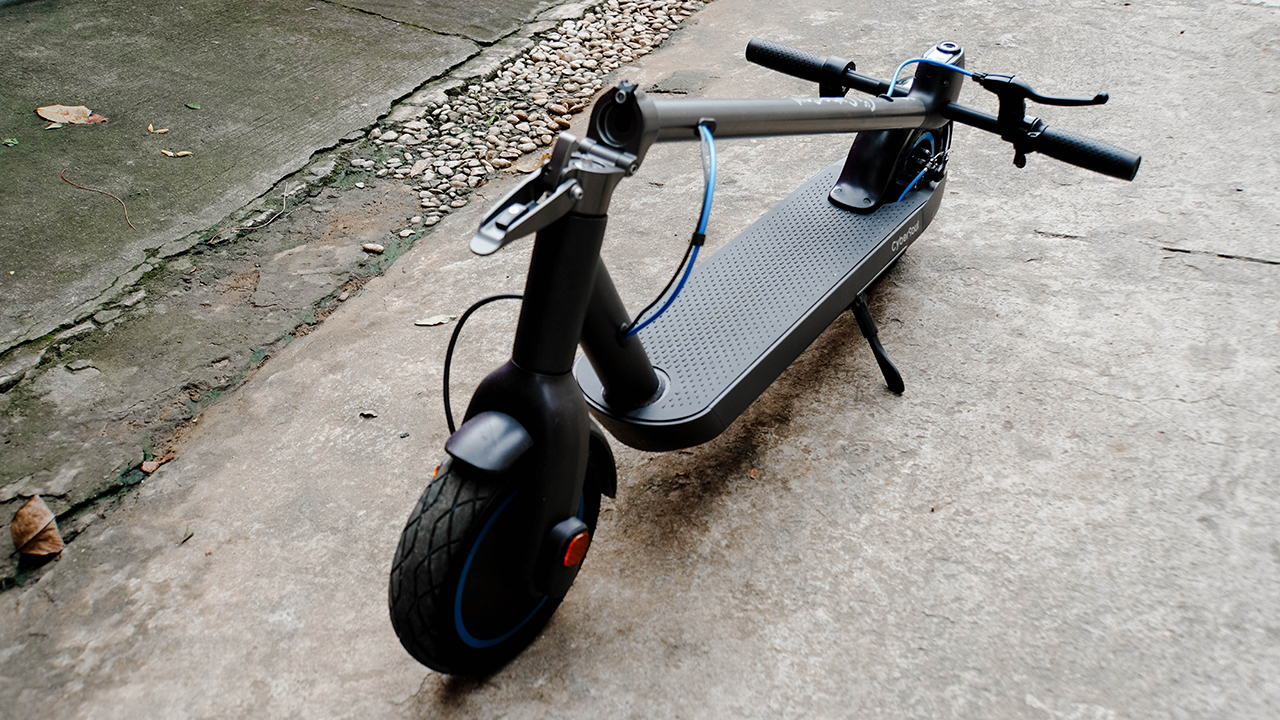
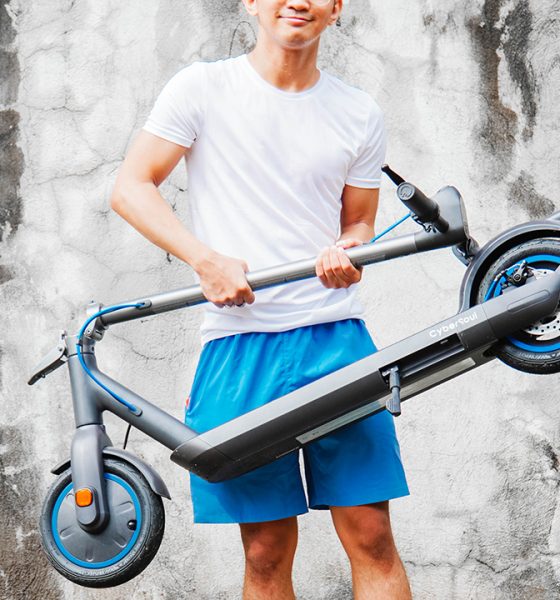
Out of the box, you’ll find the X3 Pro unfolded. It weighs 16.9kg, so lifting the electric kick scooter would be a piece of cake — if you’re a lifter, that is.
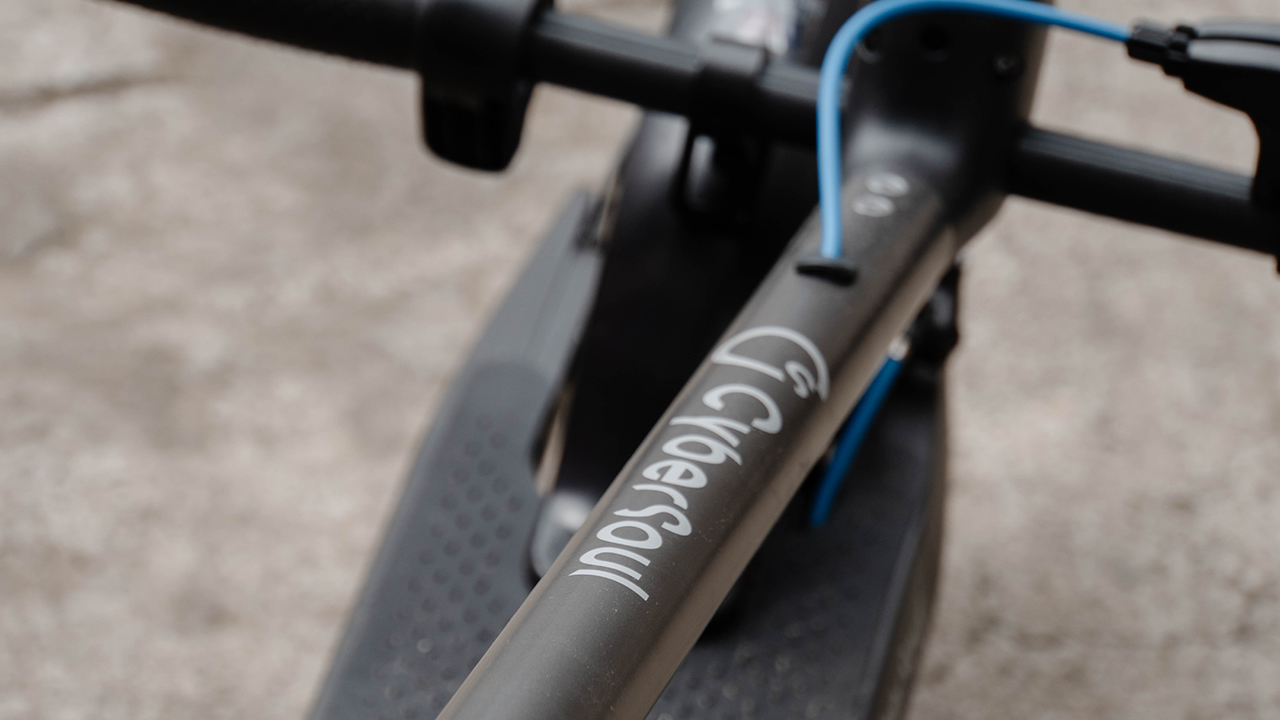
The material’s made of aluminum alloy — a strong yet light component commonly used in aeronautics.

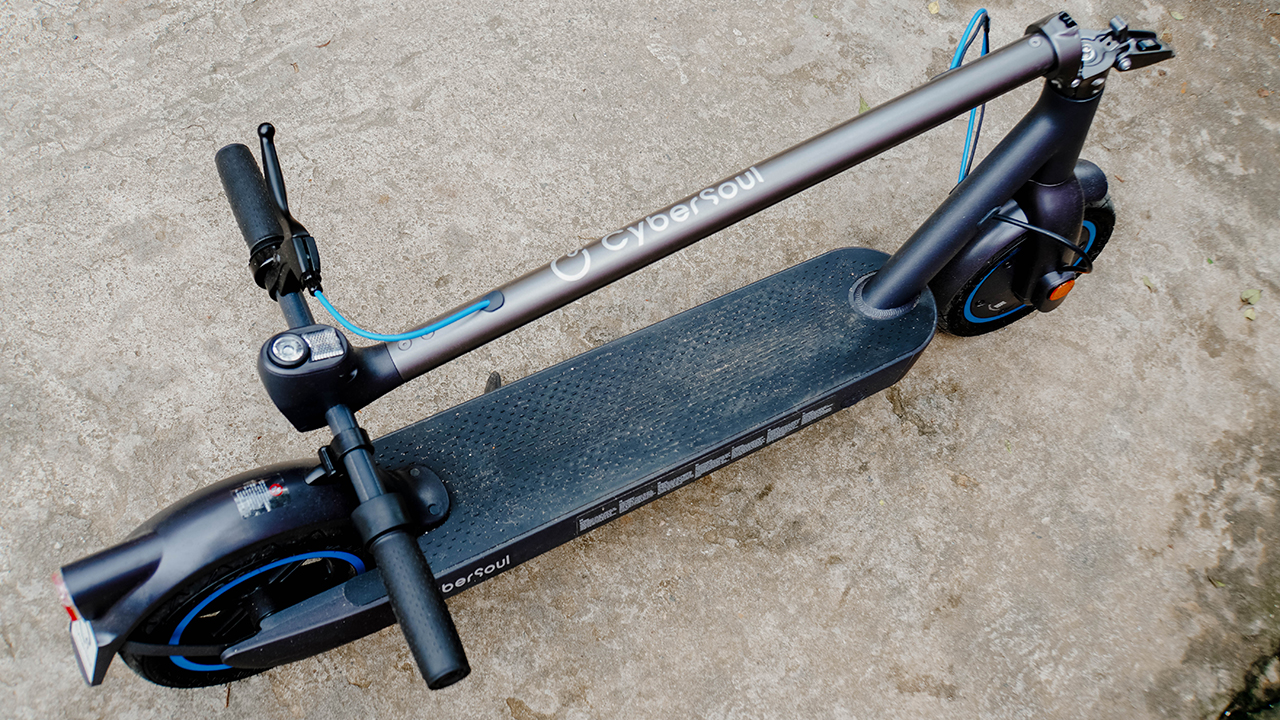
The stem is easy to grip, and you can lock it firmly on a special hook to ensure it stays in its position when folded.

Upfront, you can find the shackle with two locking systems. The inner one automatically locks when you raise the stem, while the other one is a folding shackle familiar to most electric kick scooters.
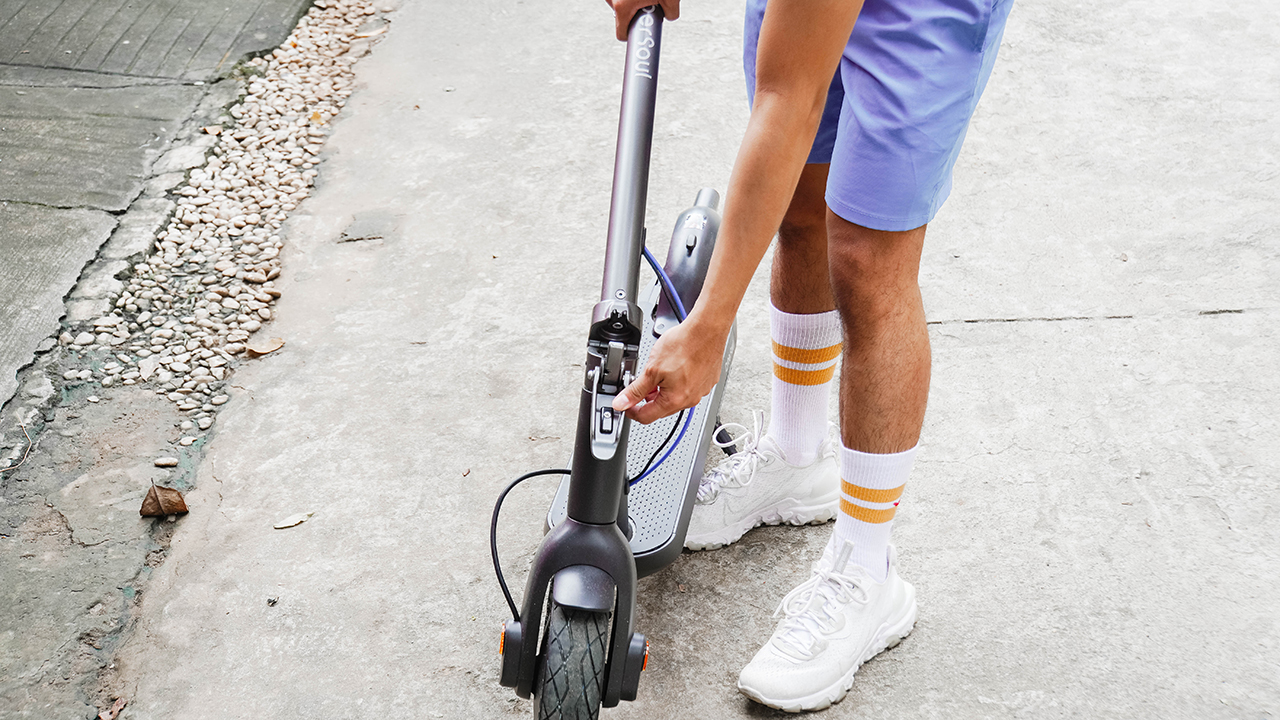
This type of shackle needs extra pressure for both locking and unlocking the scooter’s stem. Frankly, I always find it difficult to apply pressure on the shackle since it requires strength from your fingers.
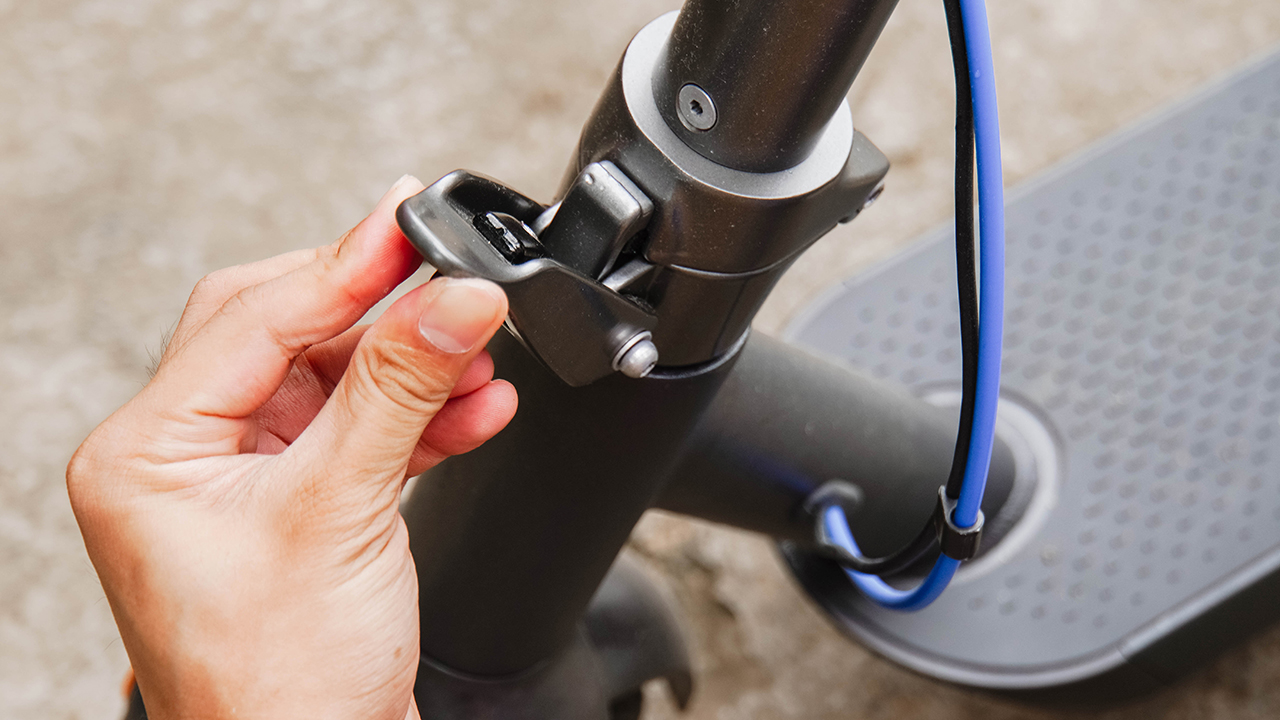
Though it’s hard and extremely tight, the process gave me peace of mind knowing that my electric kick scooter is firmly functional and secure.
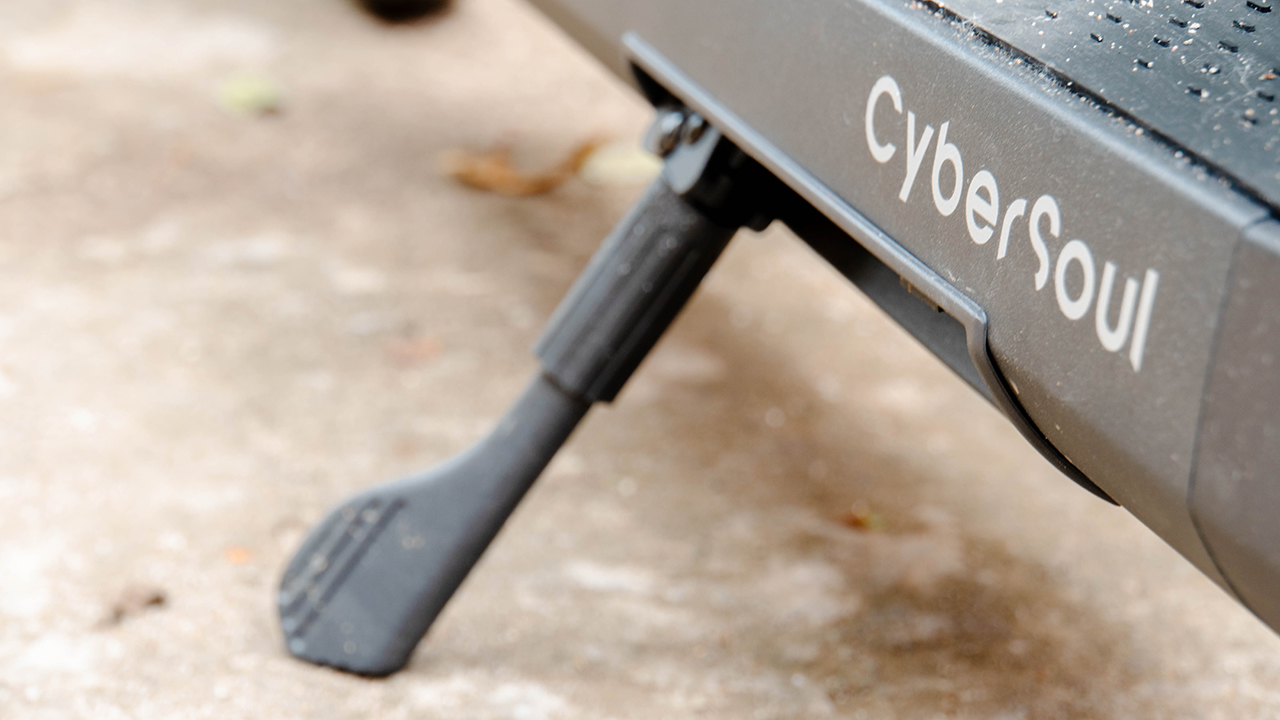
Nonetheless, there’s a stand on its left side so you can park it while you fold and unfold, or just when you need to step away from your EKS for a moment.
Devil’s in the details, babe
The CyberSoul X3 Pro comes with a striking design adorned with intricate details that are both astonishing and bothersome. For one, the engraved style in its wheels and deck accumulate dust and dirt that are grueling to remove.
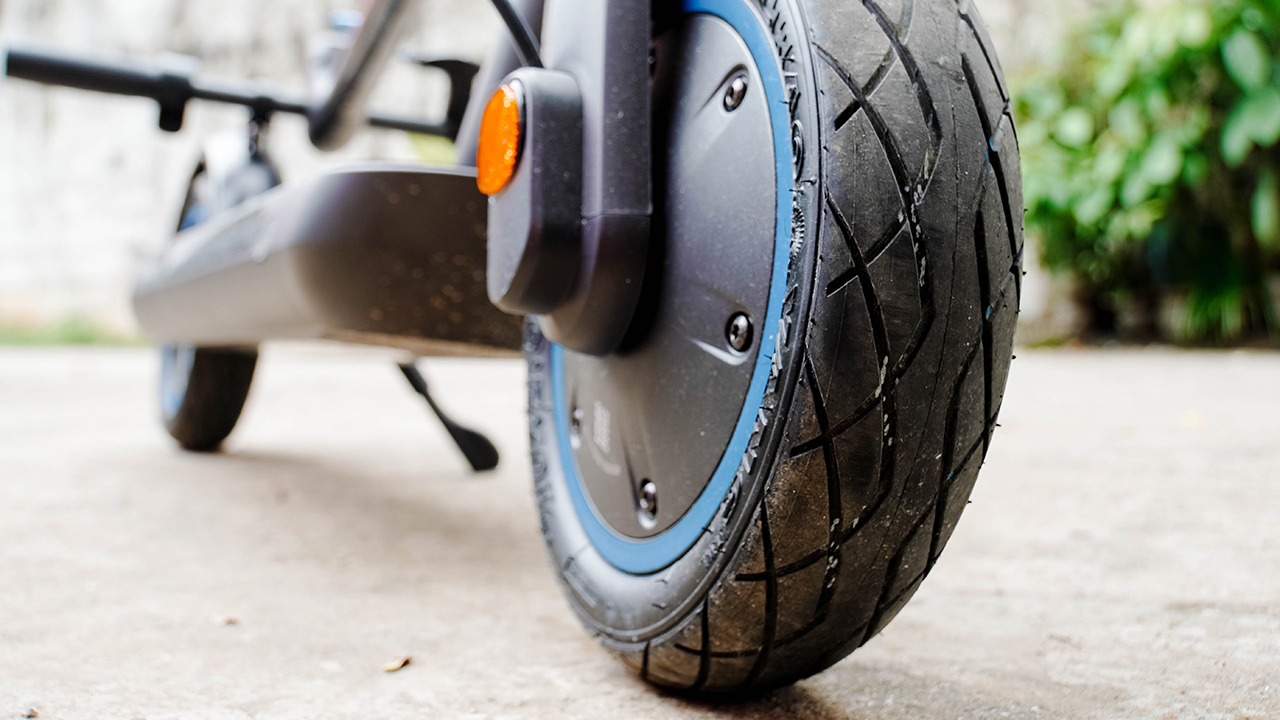
Unlike the Lenovo M2 Electric Scooter I test drove early this year, the X3 Pro uses a pair of tubeless tires. It’s the same tire you commonly see on automobiles.
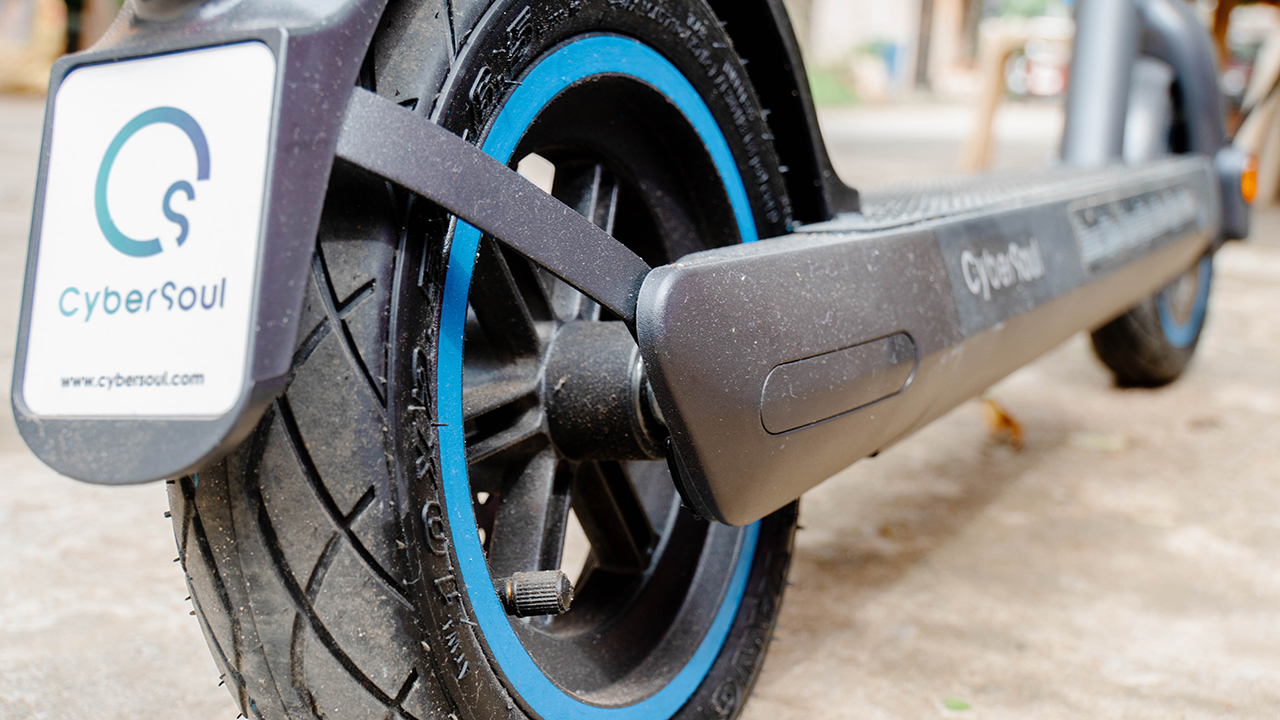
A good thing about tubeless tires is that they’re more heavy-duty, and can keep up with your electric kick scooter’s performance. Tubeless tires are also puncture-resistant so you won’t have to worry about debris puncturing your beloved wheels.
It’s also undoubtedly stronger and can handle heavier load — both the deck and the tires. The X3 Pro has a maximum load of 120kg, so trust that it can carry you wherever you want to go.

The only con I would think about having a tubeless tire is how it can be a pain to have it repaired if it became flat or it badly needs to be changed.
But it shouldn’t be a big deal if you love riding on bicycles, scooters, and motorbikes. Or if you own one. The amount of love and care you’ll tend to those babies will be the same if you have the X3 Pro.

On its back, you can find the X3 Pro sporting a tail light that activates whenever you use the brakes. Speaking of brakes, the X3 Pro uses a double-brake system: an electronic brake on the front wheel and a disc brake on its rear.
Easy as knowing all the words to your old favorite song
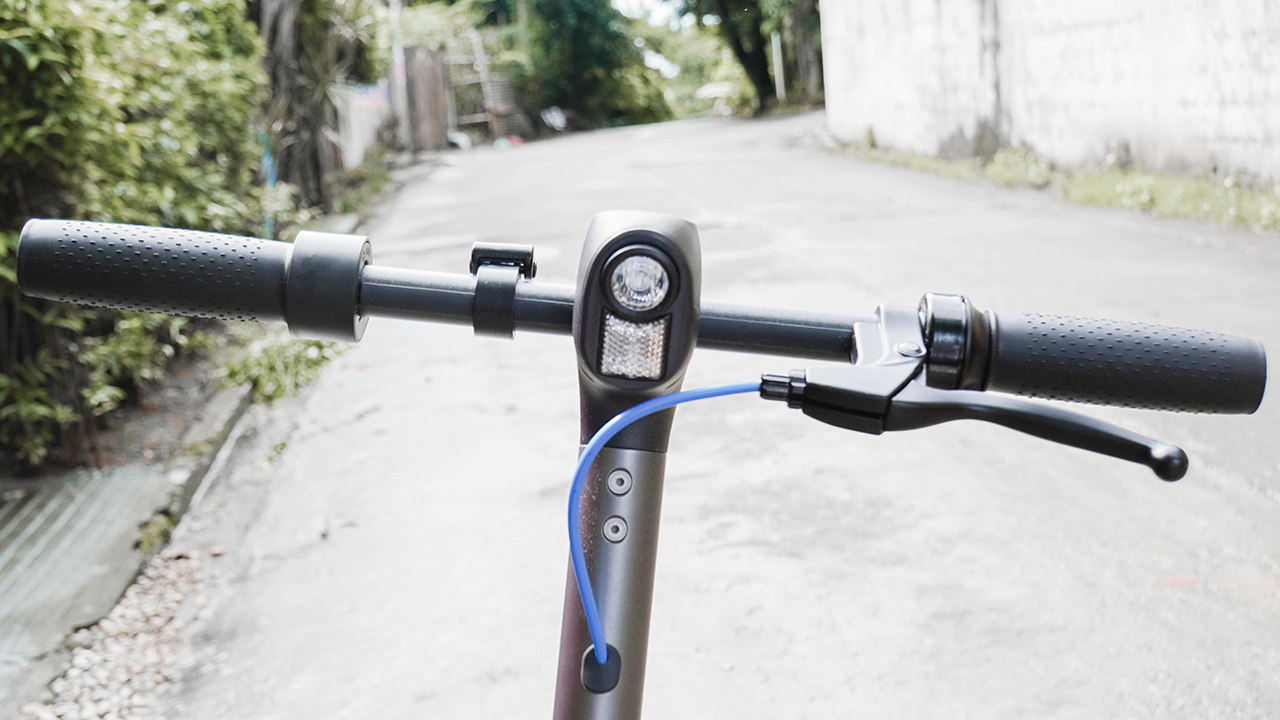
Since we’re talking about brakes, the brake lever can be found upfront, situated on the left side of the handlebar. There’s also a headlight — which lights up decently when used in a dark alley.
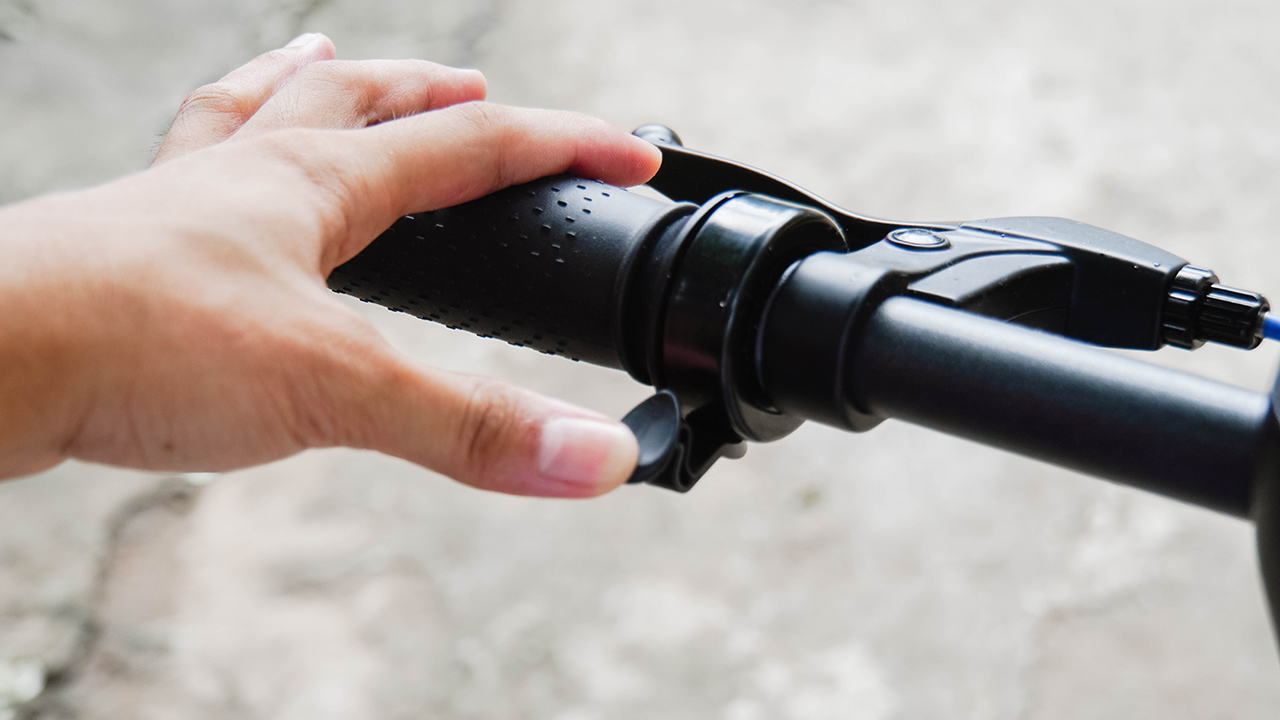
Further, there’s a bell that I rarely use because I end up sounding like an ice cream delivery guy. But it’s loud enough to warrant attention from commuters and people on the sidewalk.
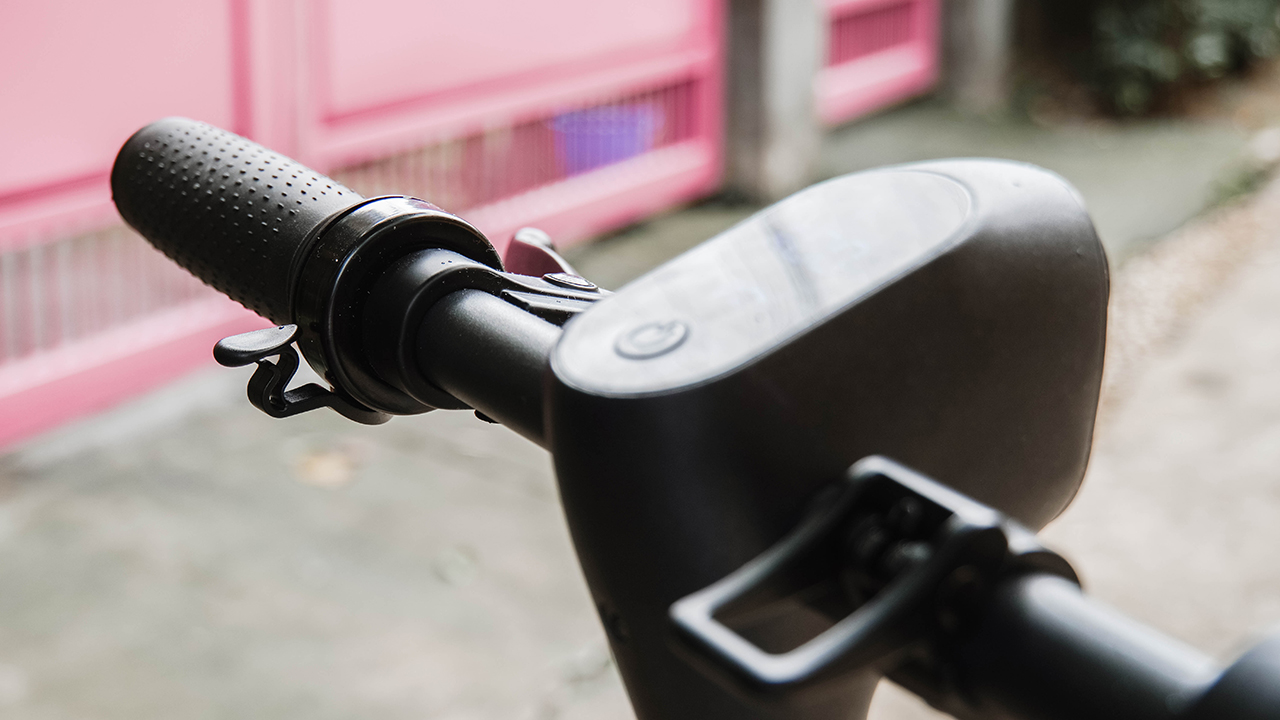
In the middle, you can find the multi-functional power button and the control panel with a simple interface. The display isn’t that legible under extreme sunlight, so you might need to cover it up when you want to preview the panel. Or you can just find a shaded area.
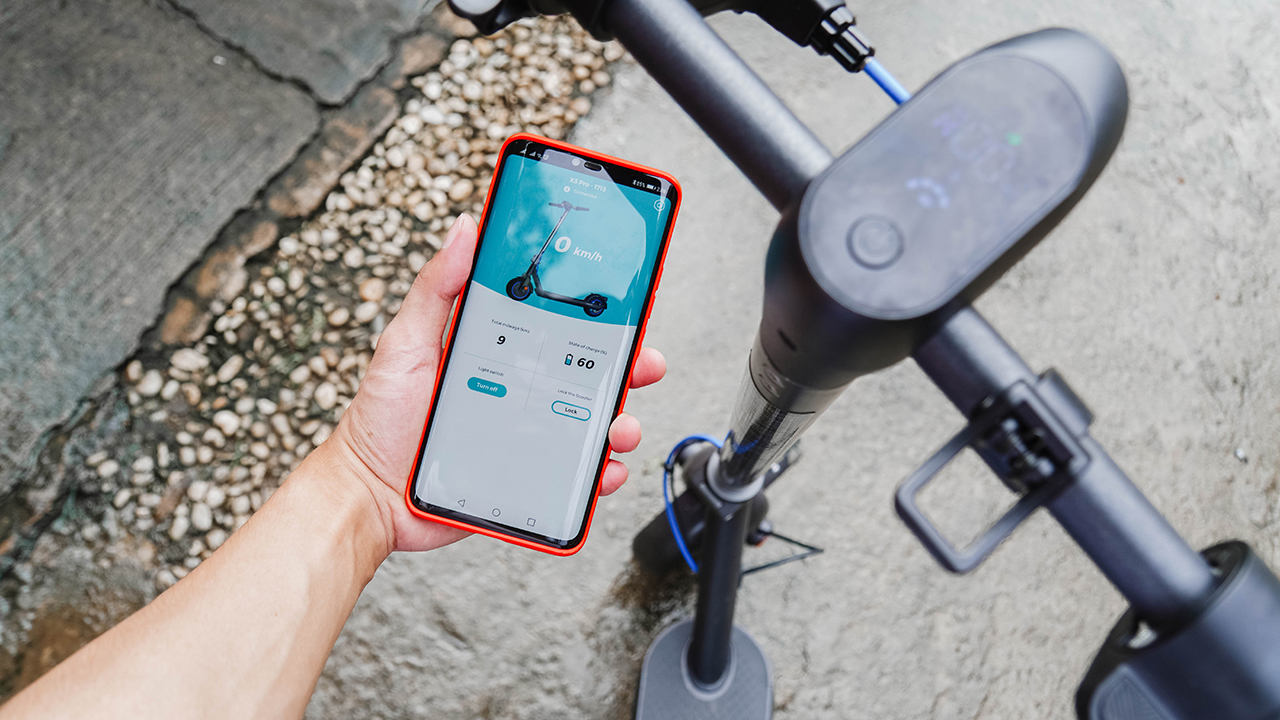
You can also just download the CyberSoul app and connect the X3 Pro through Bluetooth. The app houses important information such as your total mileage, its battery state, a light switch just in case you don’t want to press the button, and an option to lock your scooter for security.
Just a heads-up, having the X3 Pro locked via the app doesn’t mean the EKS will be immovable. You can still move it and let its wheels roll, but you won’t be able to speed up and use the throttle. So, consider having a chain and padlock for security.
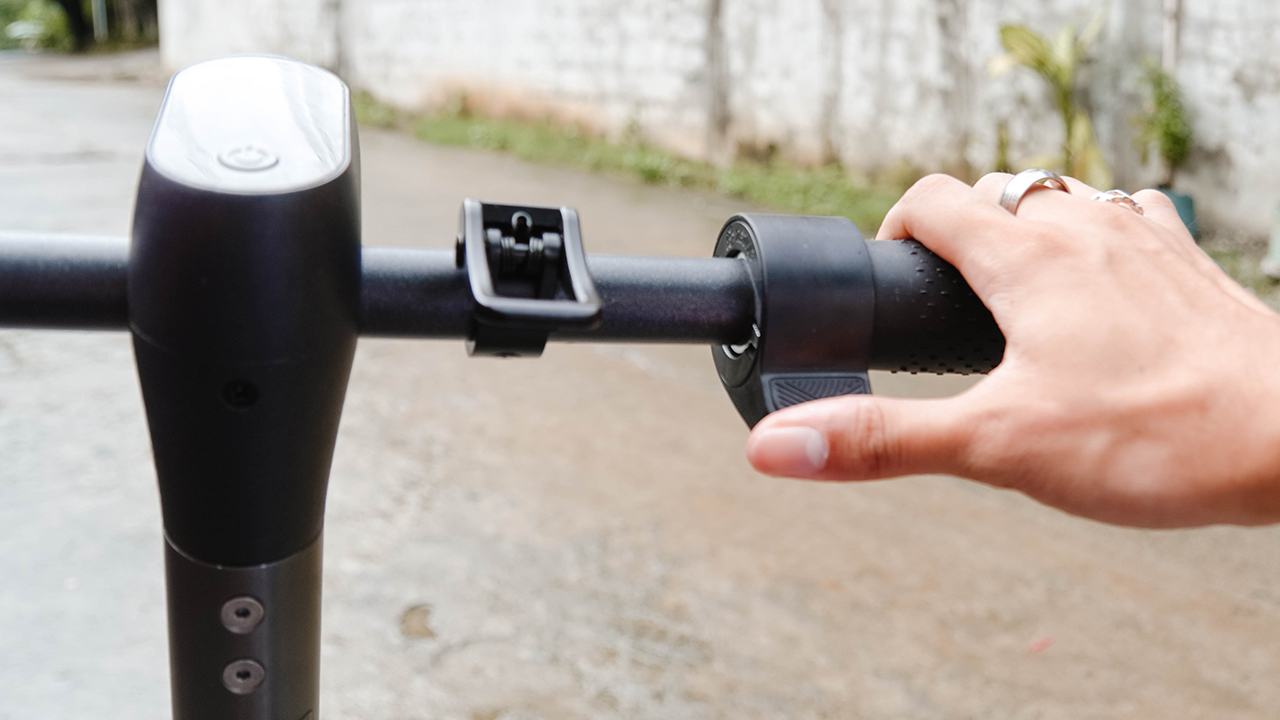
On the right side, you can find the hook that lets you lock the handlebar when folded and the throttle that lets you navigate the electric kick scooter.
Unlike other EKS, the X3 Pro doesn’t use gears. Rather, it has two speed modes to choose from: Relaxing mode and Sports mode. Relaxing mode limits the speed up to 5km/h only, perfect for strolling.
If you want to move faster, you just need to double press the power button to switch modes. Riding while in Sports mode increases the maximum speed up to 25 km/h.
Devils roll the dice, angels roll their eyes
Riding the X3 Pro was blissful and liberating. The electric kick scooter felt durable, safe, and stable every time I step on it. Its deck is larger than the decks from previous electric kick scooters I’ve used before.
Surprisingly, it feels lighter when I was riding it. It was easy steering the handlebar, which I deem essential when navigating curves, slopes, and uneven roads. The performance is impeccable and smooth, thanks to its 300W motor power (which has a maximum output of 600W).

To fully test the electric kick scooter’s capabilities, I went around my village where there are 40- to 60-degree slopes, along with uneven, cracked, and bumpy roads.
It’s the perfect spot for my test drives and I did it gracefully even when the roads are wet caused by torrential rains.
I’ve been an adventurous soul and despite the warnings that electric kick scooters shouldn’t be used on a slippery road, I still did it anyway.
The tubeless tires made a screeching noise, or what I call ‘the sounds of horror’ since the roads were too slippery for the wheels to handle. Despite that, I went downhill on a 40-degree slope.
We were flyin’, but we’d never get far
Riding down like a daredevil, the maximum speed went beyond 25 km/h — capping at 28 km/h. This made the lights flash a warning sign of overspeeding. But I still ignored it. At that time, I was the only one on the road and there were no pedestrians on sight.
But going uphill is another story. With a maximum of 24-degree incline, the X3 Pro struggled driving upwards. Its velocity deteriorated the higher I went — from 23 km/h on a 20-30 degree slope to 19 km/h as I move higher. Then, it alternated between 14 to 15 km/h while I was moving up around 50- to 60-degree slope.

If you didn’t build any momentum, the max velocity would play between 10 km/h to 11 km/h. Riders were laughing at how slow I’ve been going up when they pass by me, and some were even worried if the EKS’s motor can handle the drive.
Move to me like I’m a Motown beat
Moving forward, you need to find a sweet spot when using the throttle. Pressing hard would result in the electric kick scooter speeding up uncontrollably.
When you’re speeding up, especially on a flat surface, removing the pressure on the throttle won’t slow you down. However, putting light pressure on the brake lever would signal the brakes that you’re about to slow down.
Just don’t hit the brake suddenly lest you’ll slip up and possibly crash on a wall. It’s common sense for most motorists, but if you’re a beginner, consider this a heads-up.

On another note, your brake lever is your friend on a downhill ride. The electric kick scooter automatically speeds up when it detects movement on a downward slope, so you don’t need to use the throttle anymore. All you have to do is find the sweet spot for the brake as you slow down sliding on a slope.
Can I go where you go?
I had the CyberSoul X3 Pro for more than a month now, and it has been an excellent companion for short-distance trips. Whether it’s picking up an order at the entrance of our subdivision, or going on a stroll to visit neighborhood cafes.

But for what it’s worth, the X3 Pro can be your solution to the never-ending traffic and unstable transportation system. That is if you live in third-world countries.
Surprisingly, major roads have been adding designated bicycle lanes. The government has regulated electric kick scooters, too, as personal transportation for the average commuter.
My office is situated seven to eight kilometers away. A back-and-forth trip can accumulate a 16-kilometer range — still enough since the X3 Pro has a total range of 55km on a single charge. I’ve never fully drained the battery; the closest I get was having it down to 12 percent in which I realized I need to charge it.

You can fully amp up its juice by charging it for seven hours. I find that a bit slow for an electric kick scooter with only a 12,000mAh battery since most EKS has more. Nonetheless, the X3 Pro doesn’t have a lot of functions to tinker with or background processes that might drain the battery quickly.
It’s still a win for some, especially when you can last two days or more without constantly having your rideable plugged near a wall socket.
Take the long way home
Aside from having an aerospace-graded material, there’s also one feature that the CyberSoul X3 Pro gives me peace of mind: an IP rating.
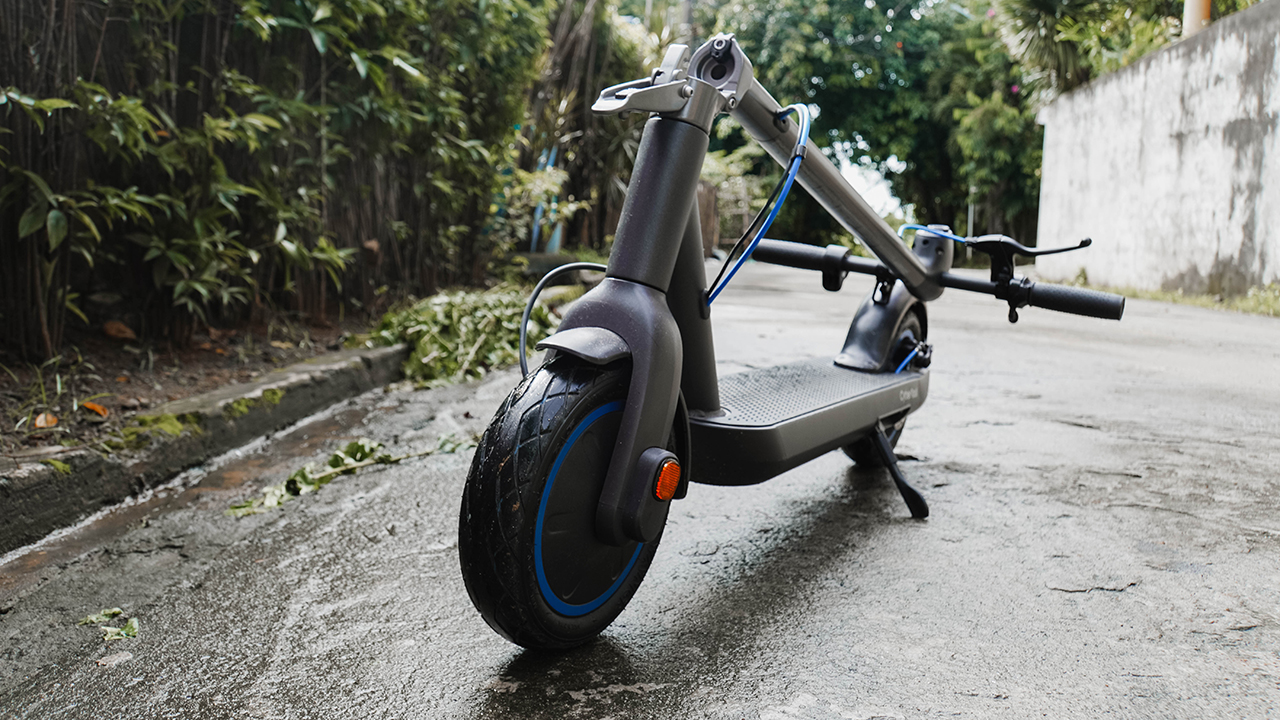
With an IP55 rating for dust and water protection, the X3 Pro can handle the usual dust, dirt, mud, and drizzle of rain. But not enough to ride offroad and during heavy rains.
Of course, it’s ‘kwazy’ to even do that. The right thing to do is wait under a roof to protect you and your electric kick scooter. Case in point: motorists hiding under a footbridge during a sudden barrage of rain.
Having an IP rating gives comfort and security that the circuitry inside your rideable won’t unexpectedly shut down because it drizzled one day when you’re out riding on the streets.

Is this your GadgetMatch?
What I like the most about the CyberSoul X3 Pro is how it exudes an all-arounder vibe. It’s simple, easy to operate, functional, and a bit snazzy. The experience is dedicated to commuters who don’t want to use their last brain cells trying to figure out how to drive from one point to another. Which is remarkable, honestly. Especially for simpletons like yours truly.
It could very well be my GadgetMatch. And anyone who needs a personal mobility solution because they just need to take the matter of transportation into their very own hands. Or feet.

Of course, there are other options to choose from since we all have different needs and lifestyles. But whatever you choose, make sure you wear a decent helmet. And don’t forget to keep your eyes on the road. Lastly, drive safely.
The CyberSoul X3 Pro retails for PhP 26,990. In the Philippines, it’s distributed by Xiaomi Zone — a global authorized reseller available in Lazada.


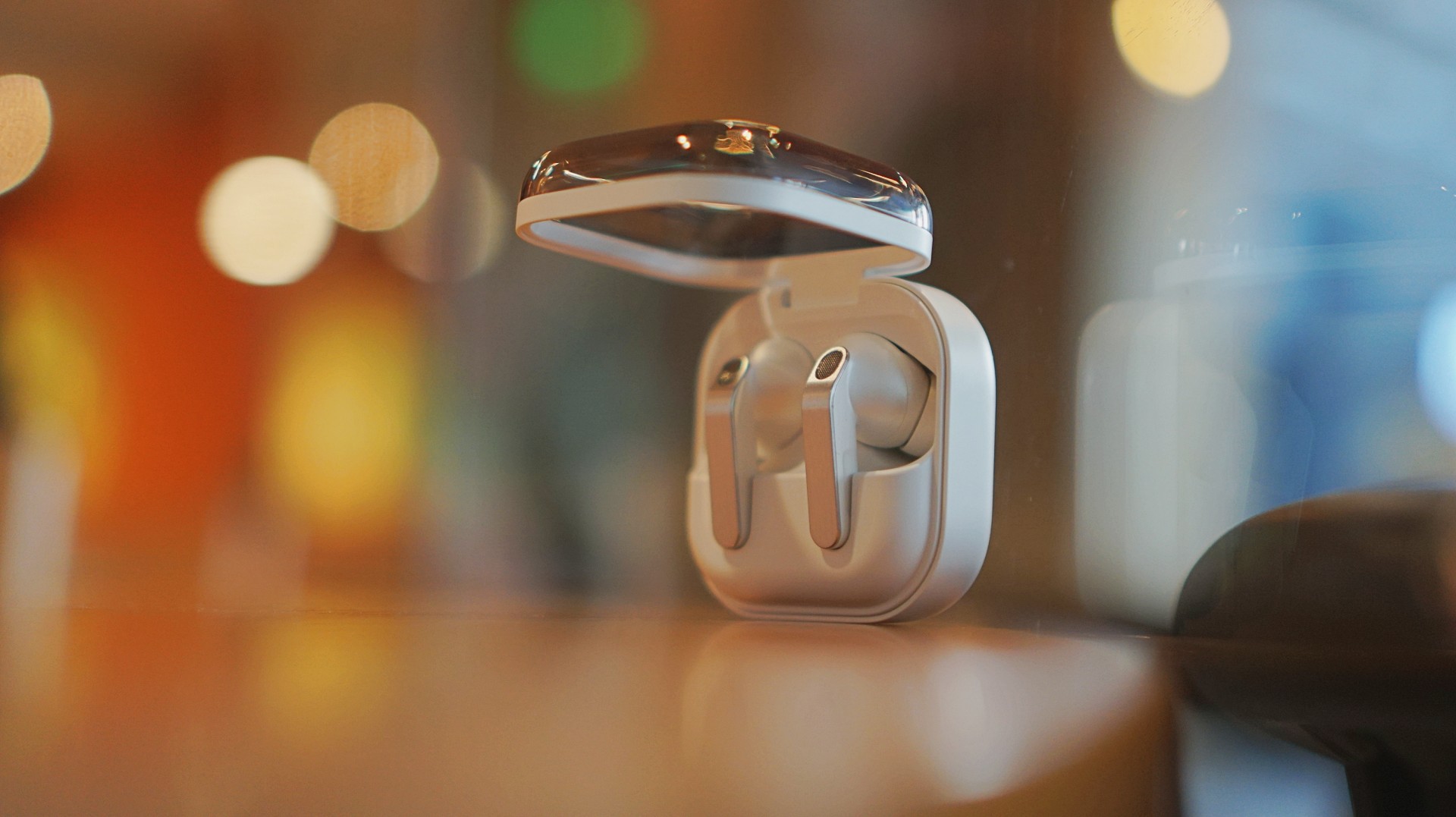
I thought I was done with in-ear headphones. Then the Galaxy Buds4 Pro entered my atmosphere.
I was never truly comfortable with in-ear headphones. That’s why I leaned toward over-ear pairs. But I still wanted something compact for days when I wanted a lighter loadout.
Then came the Shokz OpenDots One. A clip-type, open-ear pair that felt like a game changer. It sounded good enough. It kept me aware of my surroundings. I used it to preview reels while out on coverage, while walking around the neighborhood, and even on quick trips to the barber.
I was ready to write off in-ears completely.
Good thing I didn’t.
A surprise I didn’t expect
I went into the Galaxy Buds4 Pro a little skeptical. I already liked the Galaxy Buds3 Pro, but comfort was never its strongest suit for me.
Then I wore the Buds4 Pro.
Right away, it felt different. More comfortable. More natural. I thought it was just new gadget novelty. But even after a week, that feeling didn’t fade.
That’s when it clicked. These are different. They don’t just sound good. They fit into your day better.
Finally looks like its own thing
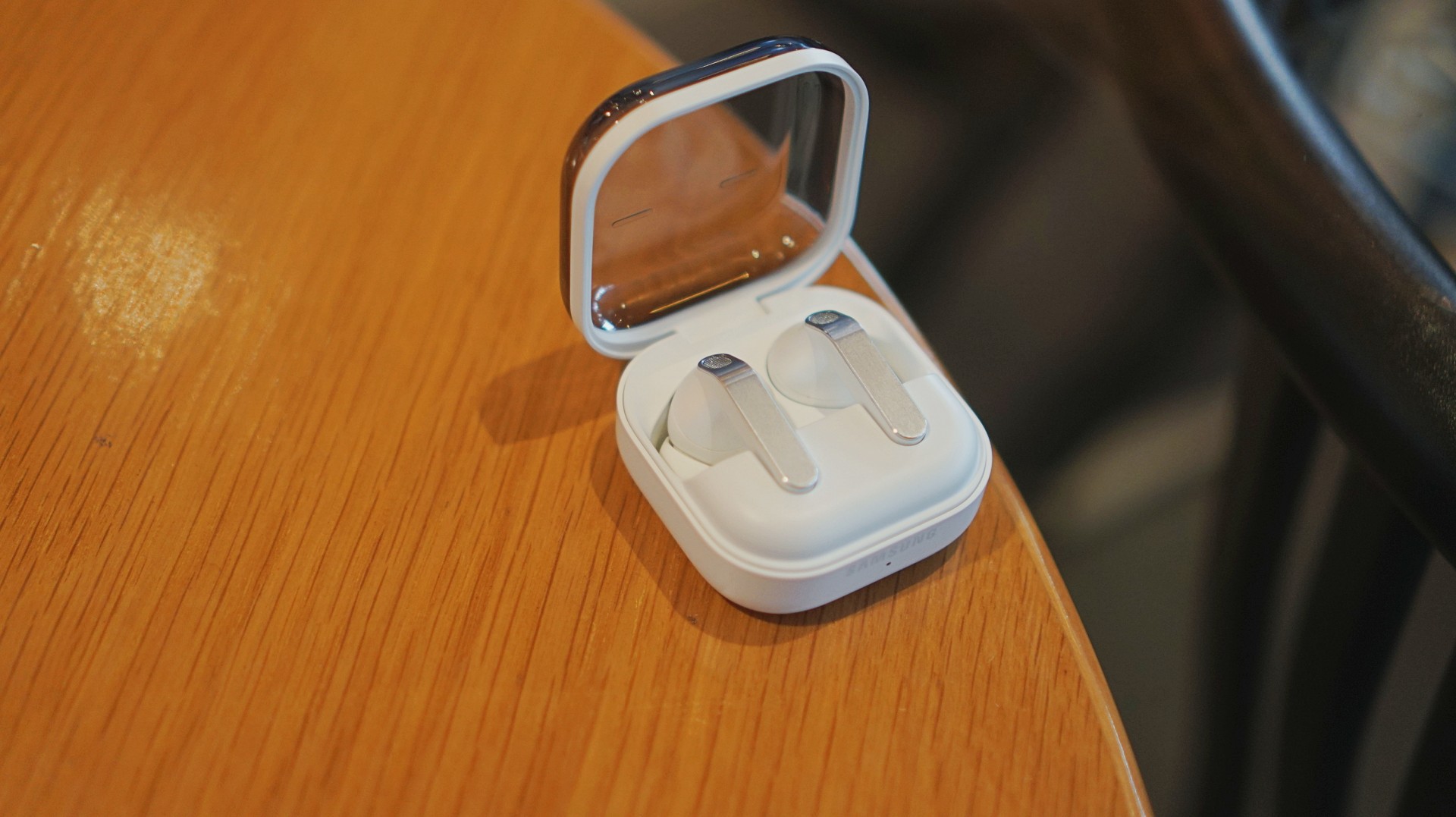
The first thing I loved? It doesn’t look like AirPods anymore.
The Galaxy Buds3 Pro looked a little too familiar. I didn’t hate it, but it didn’t feel like me. I like using tech that reflects a bit of individuality, and that design always felt a little tacky.
The blade design on the Galaxy Buds4 Pro fixes that.
It looks cool. Straight up.
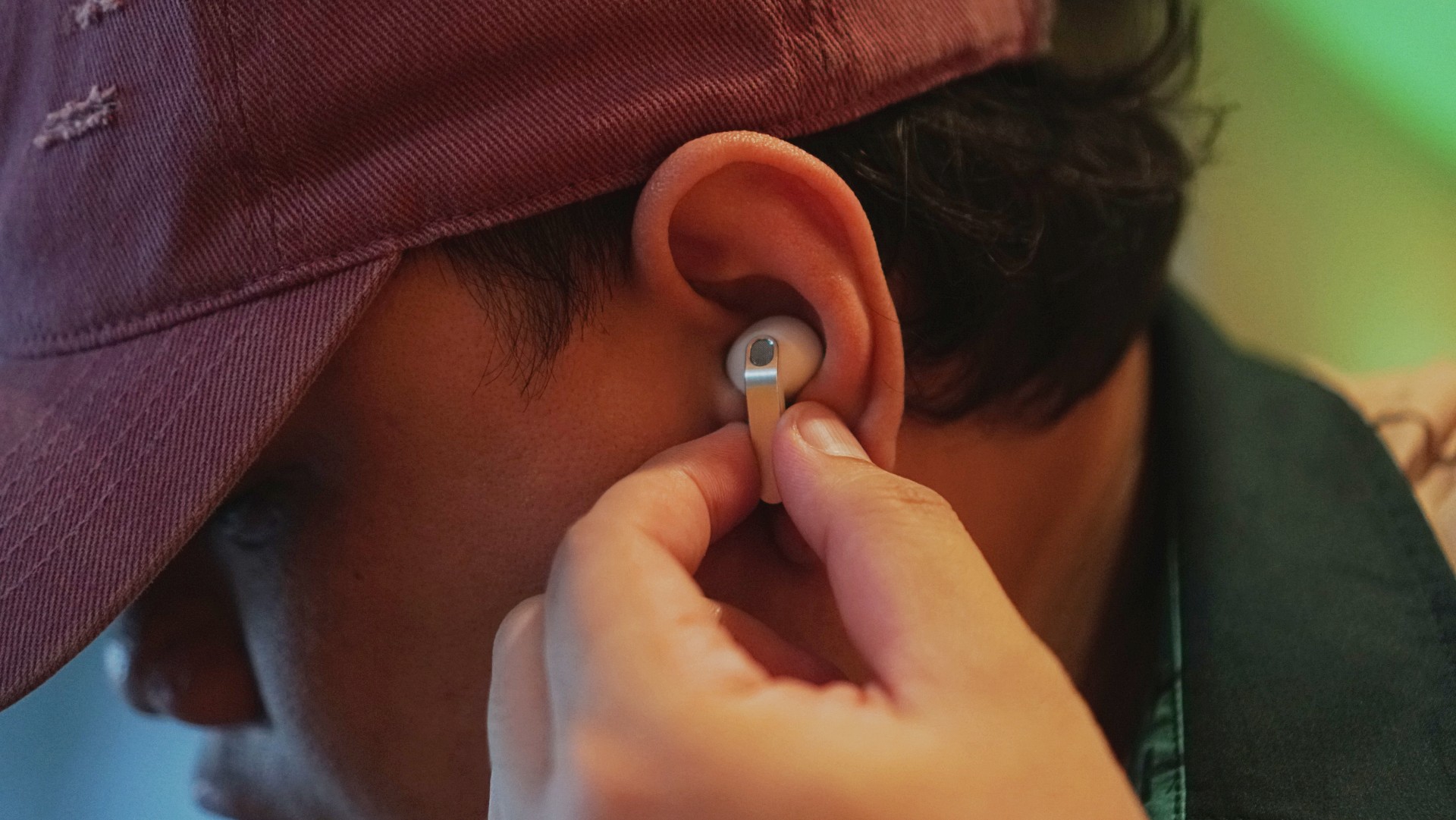
More importantly, it feels more like Samsung finally finding its design language again instead of borrowing from someone else. It’s not just aesthetic either. The shape makes controls easier to find and use.
It’s a small thing on paper. In practice, it changes how you feel about using it every day.
Controls feel easier too. Pinch to pause/play, slide up/down in the same pinching position if you want to adjust volume. It just works.
Comfort changes everything
This is the biggest upgrade for me.
With the Buds3 Pro, I loved the features but didn’t always enjoy having them in my ears. With the Buds4 Pro, that problem is gone.
It’s not that you don’t feel them at all. You do. But not in a way that makes you want to take them out.

I’ve worn them for four straight hours while working in a café. Writing, replying to emails, just sitting there with music on. No urge to remove them. No fatigue that breaks your flow.
They stay in place, too. Even during brisk walks.
For someone who almost gave up on in-ears entirely, that alone is a massive win.
Rich, full, and now more layered
If you’ve used the Galaxy Buds3 Pro, you already know the sound is good. The Buds4 Pro takes that and pushes it one step higher. Rich, warm, full, and surprisingly layered. The difference hit me immediately.
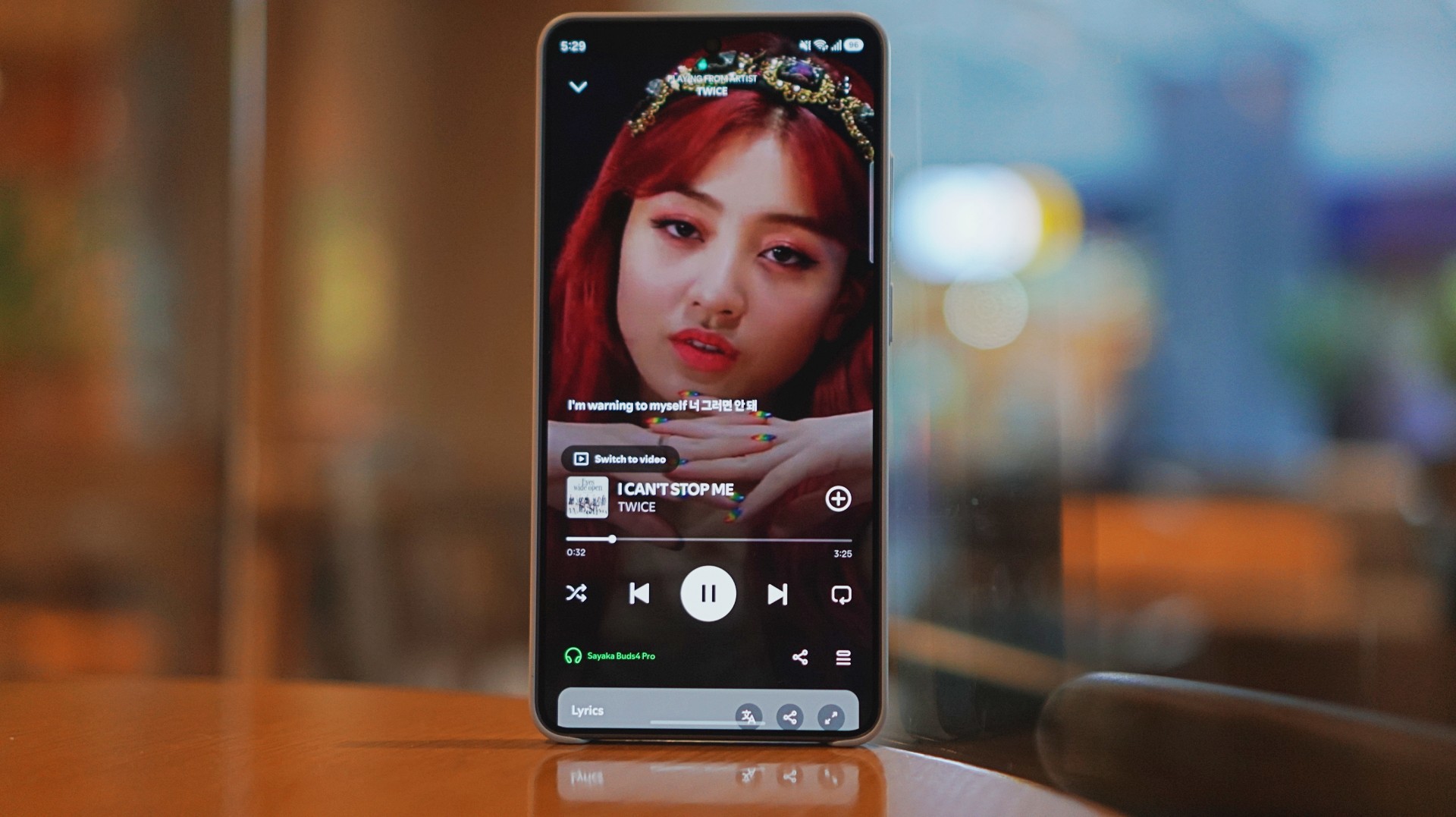
I was listening to Spotify on the Galaxy S26 Ultra and started hearing details I don’t usually notice. It reminded me of the first time I heard lossless tracks on Apple Music with a really good pair of headphones.
And this is just on Spotify. Hell yeah, it makes Spotify feel good enough.
Hearing the little things
I listen to a mix of K-pop, KRNB, OPM, pop rock, and alternative rock. Across all of it, one thing stood out: separation. It’s easier to isolate sounds if you’re into that.

With TWICE tracks, I started picking up vocal riffs and runs from Jihyo and Nayeon that don’t always stand out on other setups. They’re not overpowering. Not distracting. They just sit there, completing the track.
It feels… intentional. Like everything has its place. It doesn’t just sound better. It makes music you already love feel new again.
A quick reality check
At one point, I forgot to charge the Buds4 Pro and switched to the HONOR Earbuds 4. Same track. Same app. Night and day difference.
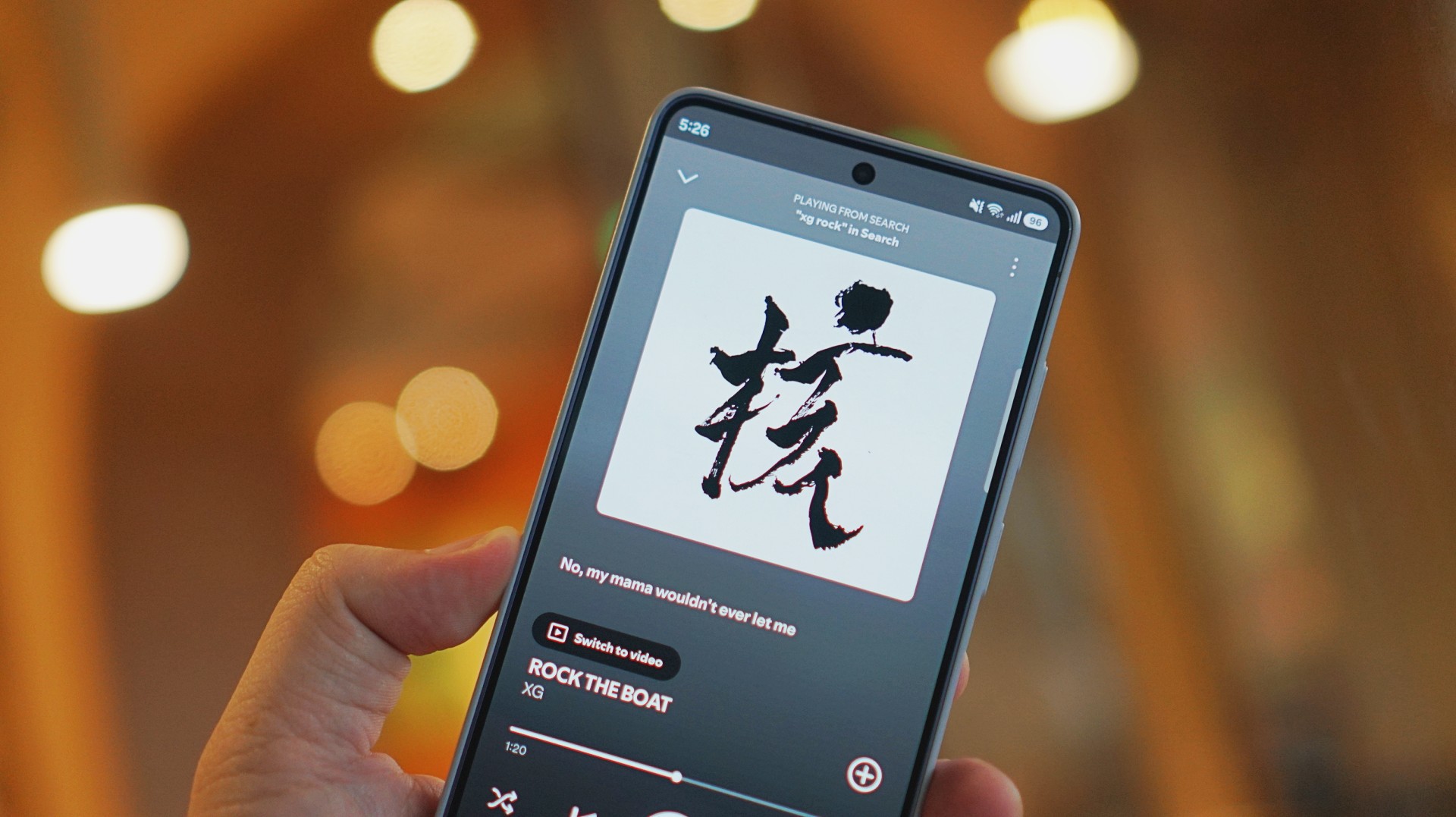
I was listening to “Rock the Boat” by XG when I made this switch.
The Galaxy Buds4 Pro sounded rich, warm, and full. The HONOR Earbuds 4 felt a few steps behind across the board. To be fair, they’re in different price brackets. But that moment still validated everything I was feeling about the Buds4 Pro.
ANC that gets the job done
Let’s set expectations.
The ANC is not Sony WH-1000XM6 level. But nothing is.
If Sony is an 11/10, this sits comfortably at around an 8.5.
And honestly? That’s more than enough.
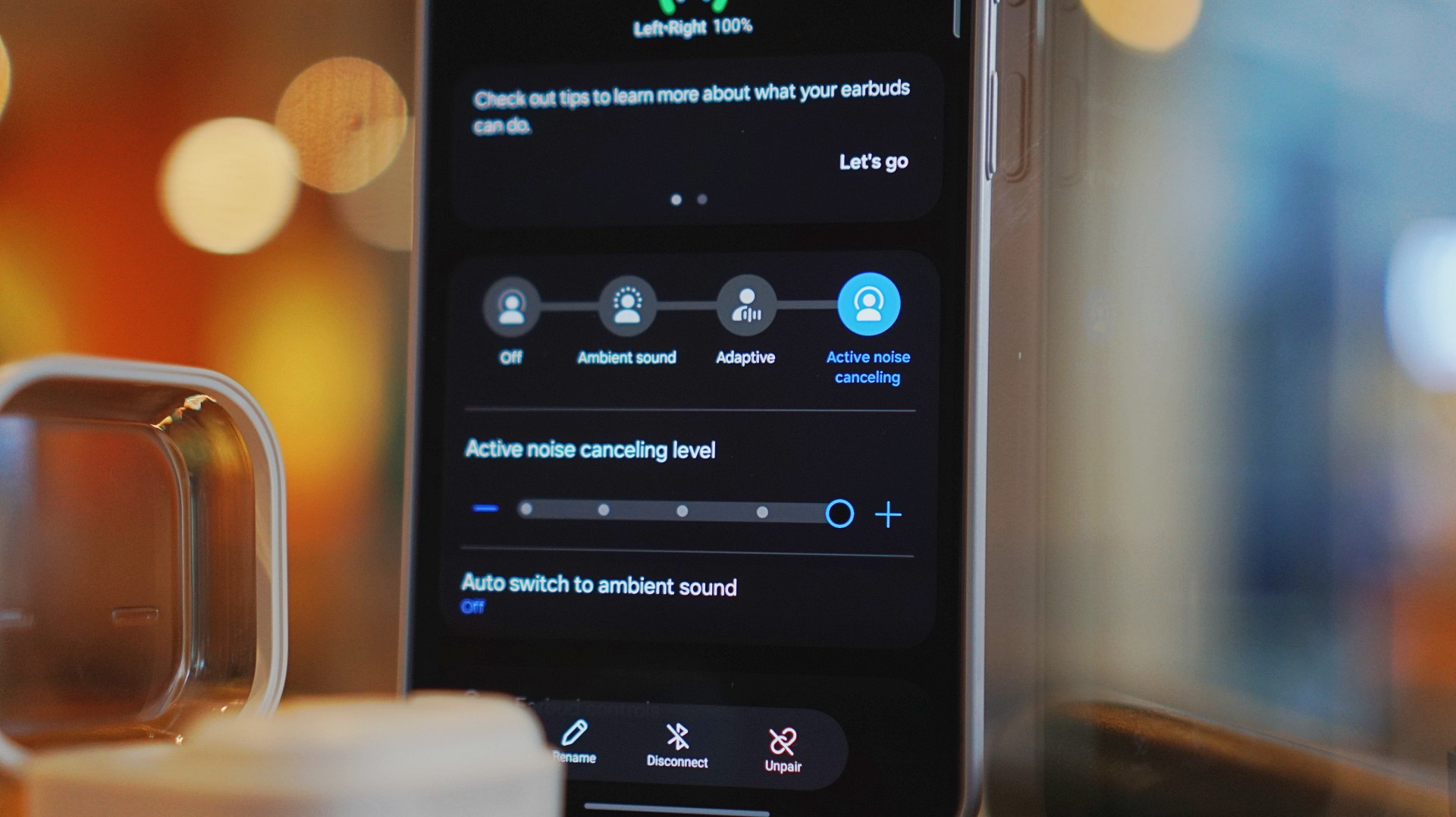
On a 12-hour flight from San Francisco back to the Philippines, I had these on almost the entire time. Engine noise was significantly reduced. There’s still a faint hum if you really listen for it, but it never got distracting.
In cafés, even when seated right next to the speaker, it blocks out enough noise for you to stay locked in.
It locks you in. You feel like the music is inside your head while still giving you elite sound, some spatial awareness, and surprising comfort.
That balance matters more than chasing perfection.
Adaptive ANC still needs patience
I default to turning ANC on manually. Adaptive ANC and EQ are there, but in my experience, they take a bit of time to kick in. Sometimes a minute or two.
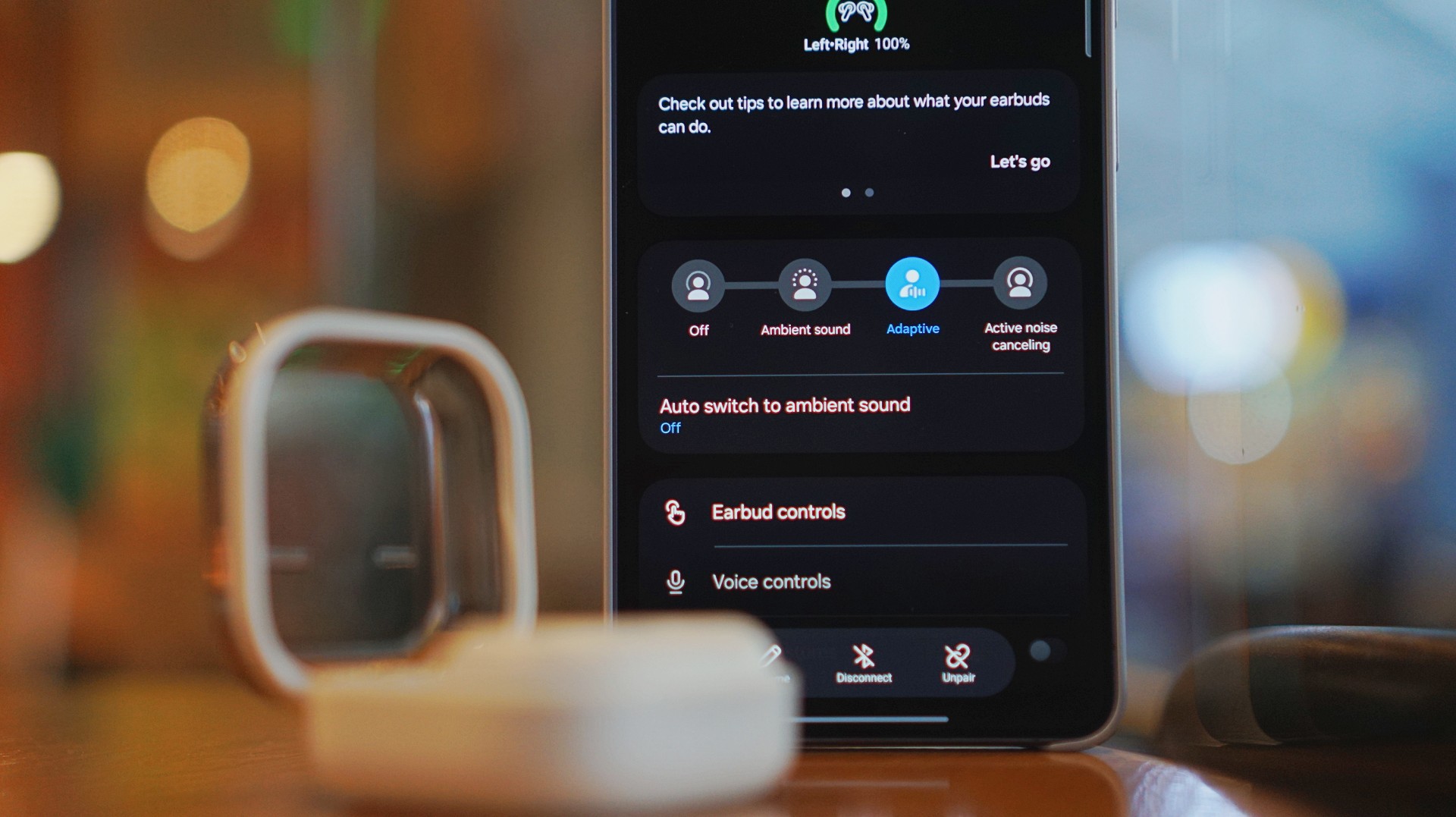
Because of that, I’ve built the habit of switching modes myself depending on where I am.
It works. It’s reliable. But I’d like to see this feel faster and more seamless over time.
Just fits into your day
This is the kind of device you don’t think about. I reach for it every time I step out. Walks, errands, quick food runs.

It’s perfect when you’re waiting in line and scrolling through reels. No accidental loud audio. No awkward moments. It just fits. That’s probably the best compliment I can give it.
Galaxy ecosystem still wins
Pairing is seamless. Controls are responsive. Everything works the way you expect it to. If you’re using a Galaxy device, this is a no-brainer.
Even outside the ecosystem, it still holds up. But you definitely get the best experience when you stay within it.
What still doesn’t matter (yet)
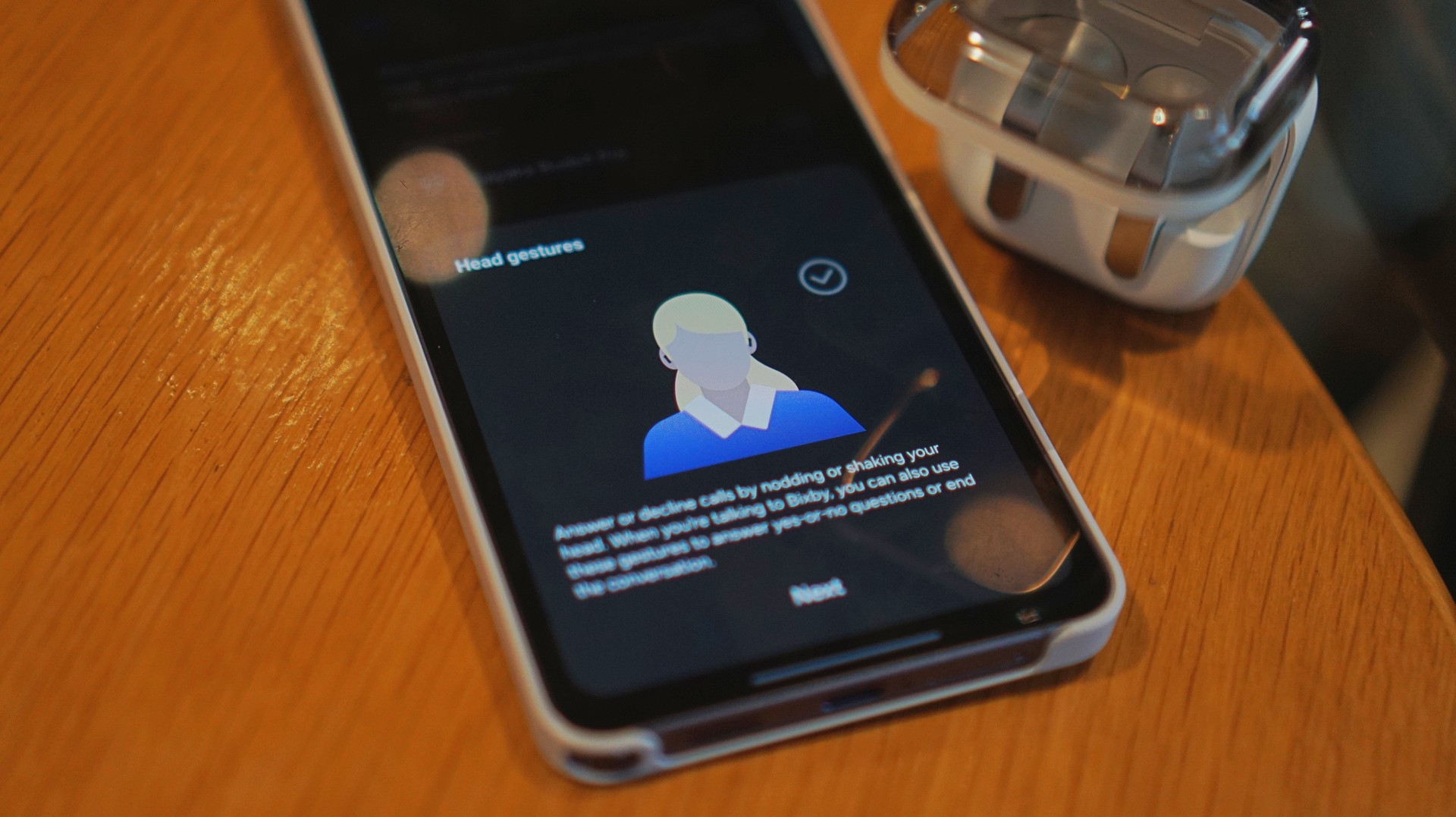
Features like AI Translate are still in that “nice to have” category for me. They’re promising. They’ll probably get better. But they’re not why you buy this.
You buy this for the sound, the comfort, and the everyday usability. And those are already excellent.
Is the Galaxy Buds4 Pro your GadgetMatch?
If the Galaxy Buds3 Pro was Samsung’s best so far, the Galaxy Buds4 Pro is that — made better. A meaningful refinement.
This is my default recommendation now.
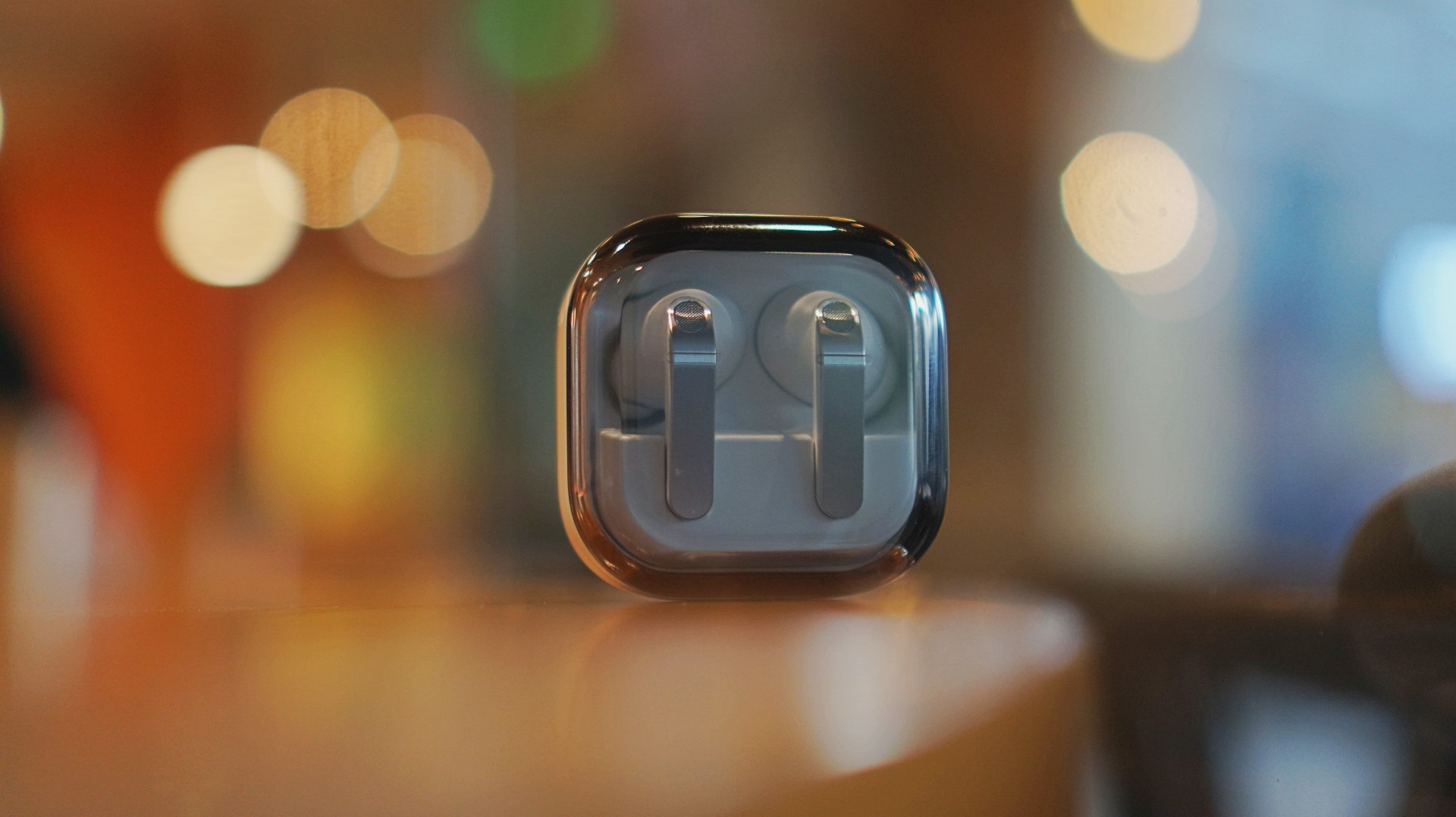
The Galaxy Buds4 Pro is for people who want to get the best sound in a compact, easy-to-carry audio buddy to their smartphones.
If you’re coming from older earbuds, this is an easy upgrade.
If you’re coming from the Buds3 Pro, you can probably hold off — unless comfort and design matter a lot to you.
And if you’re deep in the Galaxy ecosystem?
This Buds4 you. Swipe up. No questions asked.
Gaming
WWE 2K26 lets you live out all the fantasy matches you could want
But you have to play for hours and hours to unlock everyone.


The old SmackDown vs. RAW games were some of the most fun I’ve had as a teenager. Though I didn’t own a PlayStation 2 or 3 then, I had a PlayStation Portable and the series’ corresponding version. Sure, it didn’t have the then-advanced graphics, but the games kept me company for many a day and night. And it all revolved around a simple premise: letting wrestling fans live out their fantasy matches.
Now, with over 400 playable characters on launch, WWE 2K26 hopes to rekindle that magic. Previously, 2K’s take on the wrestling simulator never really captivated me as much as the SvR series did. Though players still had a similarly large roster throughout the years, the series felt too homogenized, too riddled with microtransactions. This year, the series got me thinking again: Can sheer numbers singlehandedly usher a new renaissance for WWE gamers?
The good: Four hundred superstars under one banner
WWE 2K26 touts over four hundred playable characters on launch. With unannounced DLCs still on the horizon, this number will surely balloon further. Even for a dedicated WWE fan, having over four hundred playable characters is insane. Where else can I pit Joe Hendy against Andre the Giant and create my own WrestleMania III moment?

The only catch, however, is that the game did some stat padding to get to this enormous number. Besides having multiple personas for a single wrestler (and CM Punk alone has ten of these), the roster includes a platoon of fictional MyRISE characters, which comes off as distracting if you don’t particularly engage with the MyRISE mode.
Ironically, the game didn’t even need to pad its stats this way. For the first time in the series, the launch roster includes Superstars from the current WWE roster, TNA, AAA, and the Hall of Fame. I could spend hours just feeding a litany of Superstars to TNA legend Abyss. That’s something I could never have done in the old SvR days.
The good: A more fluid fighting system
It also helps that WWE 2K26’s fighting system is the most fluid that the series has been. Wrestlers no longer feel like wooden animatronics skipping from one animation to the next. Each punch flows smoothly into a clothesline, a grapple, a carry, or a finisher.
It is, of course, at the expense of a more complex control scheme where each input combination corresponds to its own move. A stray waggle of the right joystick, for example, can have your wrestler careening towards their opponent in ways you never intended.

It takes some time to get used to. Every time I get a WWE 2K game, I always need a refresher course for the controls. Plus, each entry introduces something different. This year introduces rushing opponents to the corner and carrying opponents in different ways.
Another new addition is the new third-person camera which follows your character, rather than being locked to the ring. To me, this was a welcome feature. The original camera can often betray you by having various elements (other wrestlers, the ring itself) block your view of the action, thus preventing you from reacting correctly to your opponent. The dynamic third-person camera solves this and makes the fight more immersive.

That said, the camera necessarily changes the controls a bit because you need the right joystick to look around. Because of that, I had to revert back to the original camera after a while. Regardless, this is a step in the right direction.
The improved fight scheme is also a step in the right direction. WWE 2K26 is the franchise’s most immersive entry to date because of how fluid the action plays out.
The meh: Iterative game modes
Every yearly sports simulator falls prey to the curse of iteration. Because it’s an annual release, every game needs to add something new for players. At the same time, the same game can’t iterate too much, or it might end up alienating fans of the previous title. Each WWE 2K title has to be the same but also a bit different.
WWE 2K26 goes through the same rigamarole. Most of the game’s different modes don’t offer a lot of improvements from last year. So, if you loved last year’s MyRISE, MyGM, and Universe Mode, you’ll likely find this year’s iteration inoffensive.

“Inoffensive,” however, isn’t the best way to sell a new game. At the very least, MyFACTION gets interesting improvements. For a mode I historically dislike every year, WWE 2K26’s MyFACTION ended up being the one I loved the most this year.
This year, the layout feels more intentional. Though it still lacks the exciting animations of NBA 2K, opening a pack no longer looks like a PowerPoint presentation. There’s also more ways to fight offline with the addition of a challenging World Tour mode. Plus, with intergender support and team chemistry, this feels like the update that MyFACTION needed.

In another twist of fate, Showcase Mode ended up being the loser this year. WWE 2K26 rehashes last year’s schtick of having the star rewrite their history. Last year, this worked with Paul Heyman, a notorious bad guy. It doesn’t really stick with this year’s star, CM Punk, the so-called voice of the voiceless.
Punk could have shined with the traditional style of laying their commentaries over their past matches, especially with his shoot style. Instead, we got a series of what-ifs with practically no commentary. It’s just not what I expected from a firebrand like CM Punk.
The bad: The Ringside Pass
For the first time in the series, WWE 2K26 has a battle pass called the Ringside Pass. Like battle passes in other games, the Ringside Pass unlocks more content as you play through the game. However, unlike today’s standard which revolves mostly on cosmetics, this version locks a treasure trove of playable wrestlers behind an experience gate.
Even if you already paid for the game, WWE 2K26 asks you to play an inordinate number of hours just to unlock the best wrestlers in the game.
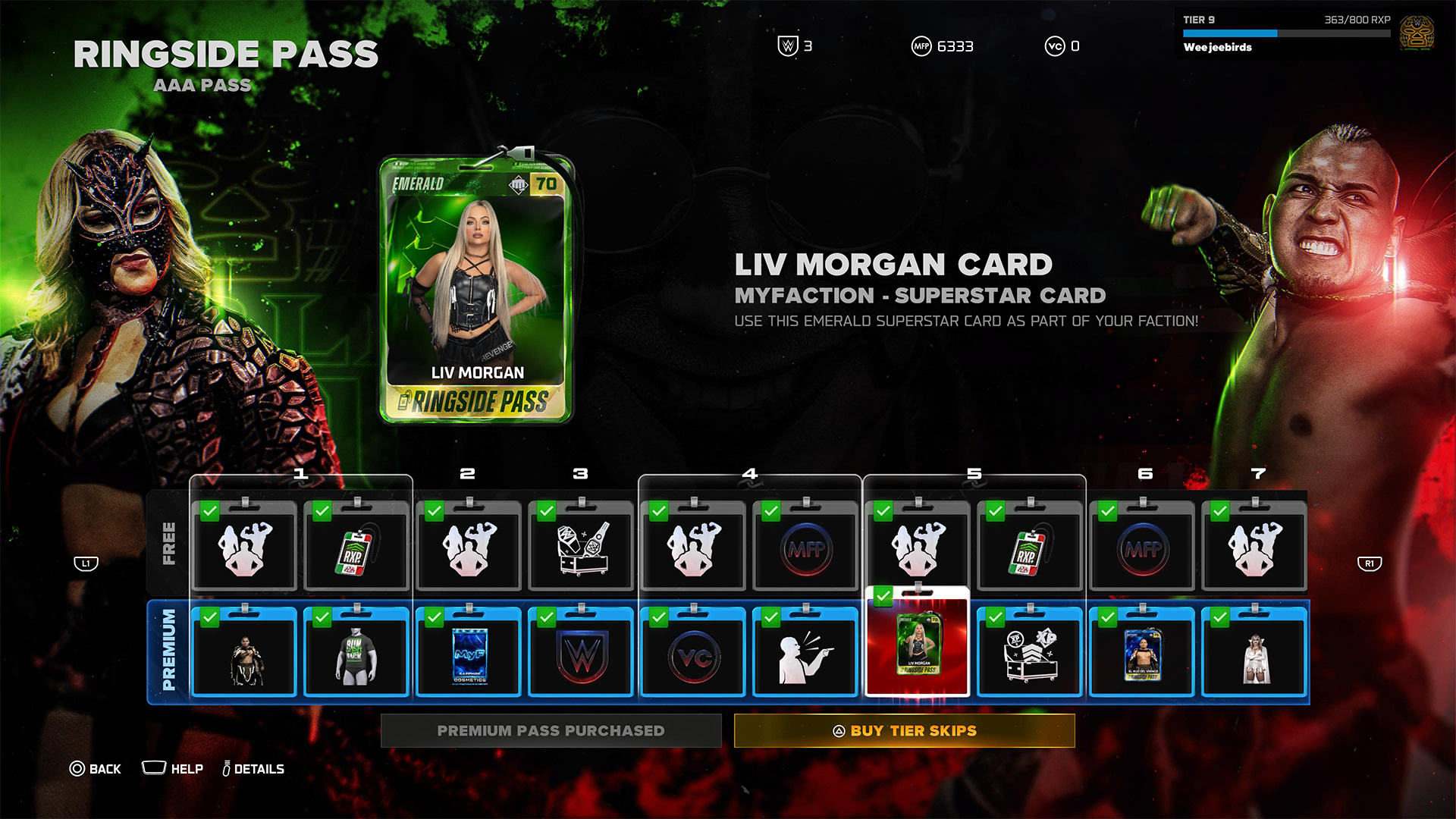
To be fair, it’s not all bad. Right out the gate, the game already gives you access to heavy hitters like CM Punk, Shawn Michaels, and John Cena. However, a lot of favorites are still unplayable including Bret Hart and Kurt Angle. This even includes the strongest version of Bray Wyatt, who’s locked under the last tier of the current pass.
Gaining experience isn’t an easy feat, either. After playing for hours and hours, I still haven’t unlocked more than half of the tiers. At the very least, there is no time limit, so I can play the game at my own pace.

Props to WWE 2K26 for making its battle pass have fulfilling rewards, but it’s still unfortunate that significant elements of the game are locked behind hours and hours of playtime.
The gameplay loop is real and repetitive. And it all circles back to how iterative the game modes are. If only the game modes ended up being as exciting as they were last year, then it would have been exciting to play over and over again. Instead, WWE 2K26 prevents you from engaging in greatest strengths: an exciting roster and a fluid fighting system.
Is WWE 2K26 your PlayMatch?
Last year’s WWE 2K25 was an exciting period for the series. Though this year’s version keeps most of what made the previous game so exciting, WWE 2K26 also adds features, especially the Ringside Pass, that ultimately detract from the entire experience. It’s a small step back, which can hopefully be rectified next year, if not in future updates.

WWE 2K26 is a Swipe Left if you didn’t love last year’s game anyway. The game doesn’t add anything that might change your mind.
However, it’s a Swipe Right if you missed the pure joy of creating dream matches. The game’s massive roster allows for so many impossible matchups to happen, even if only in the digital realm. Just get ready to grind for a long time.
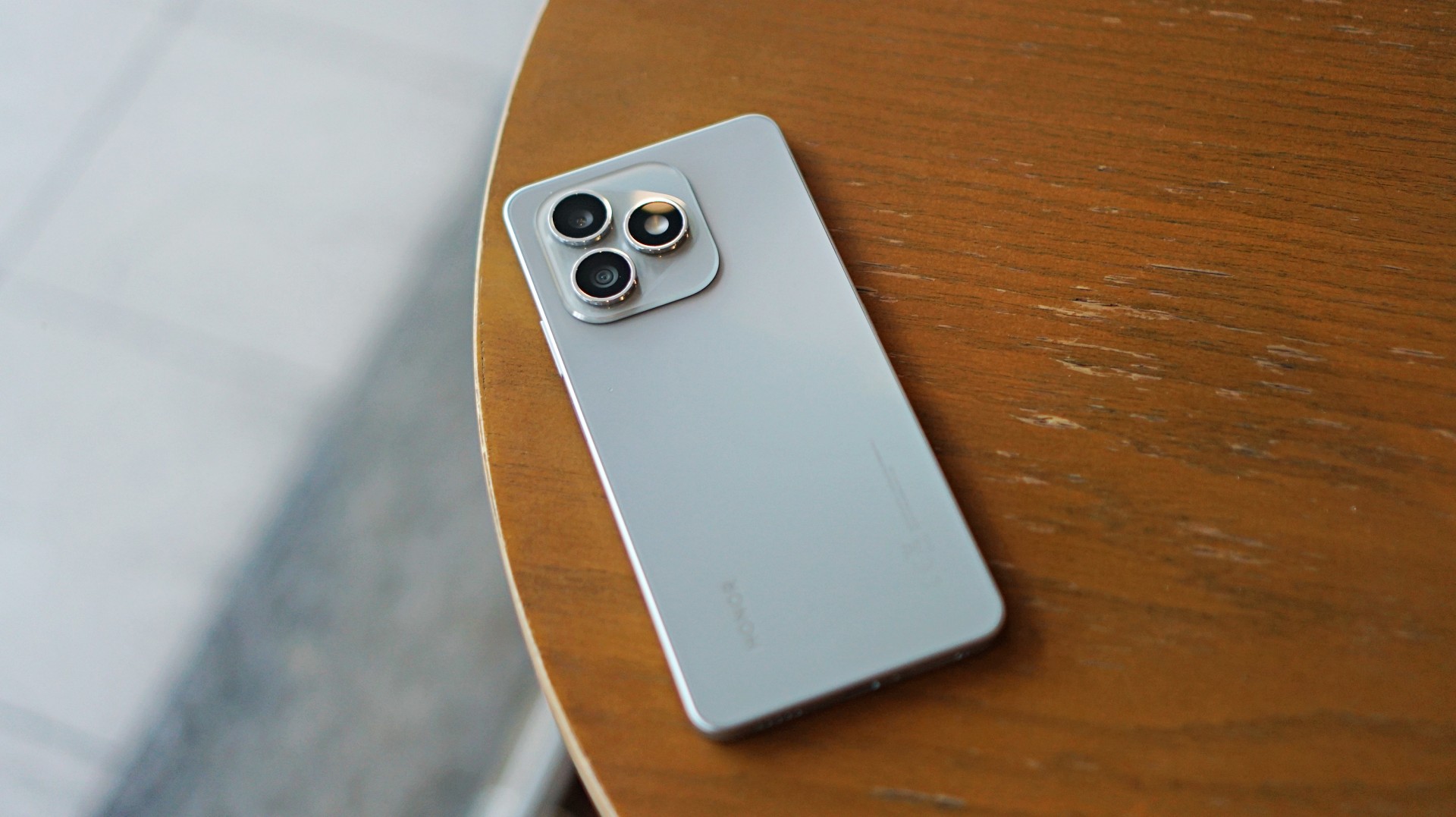
Some smartphones aim to stand out. Others just aim to work. The HONOR X8d falls squarely into the second category.
In day-to-day use, it presents itself as a device that focuses on the essentials. It’s functional, predictable, and easy to understand—but also a reminder of how noticeable the gap can be once performance and responsiveness start to lag behind.
A design-first approach
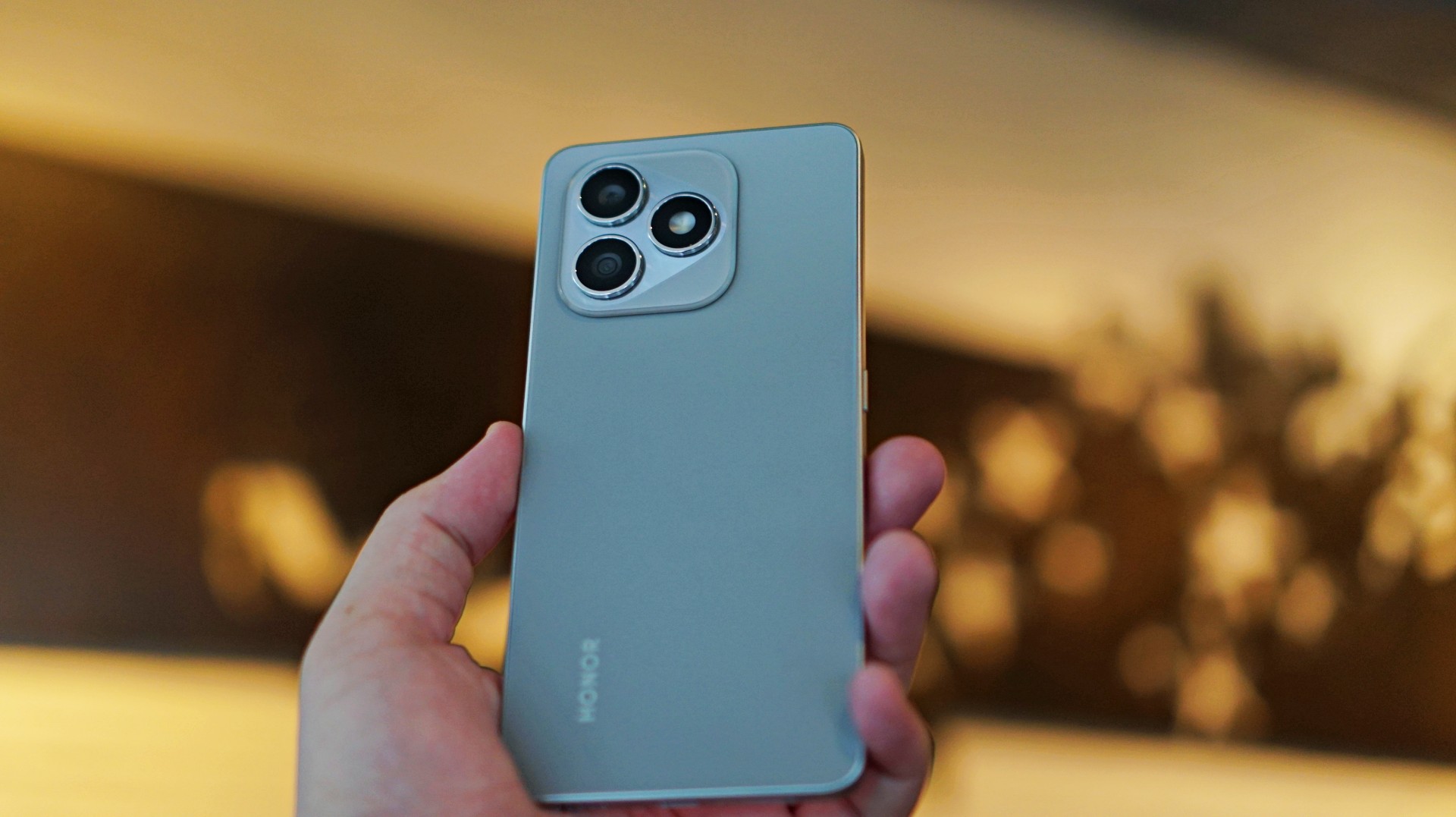
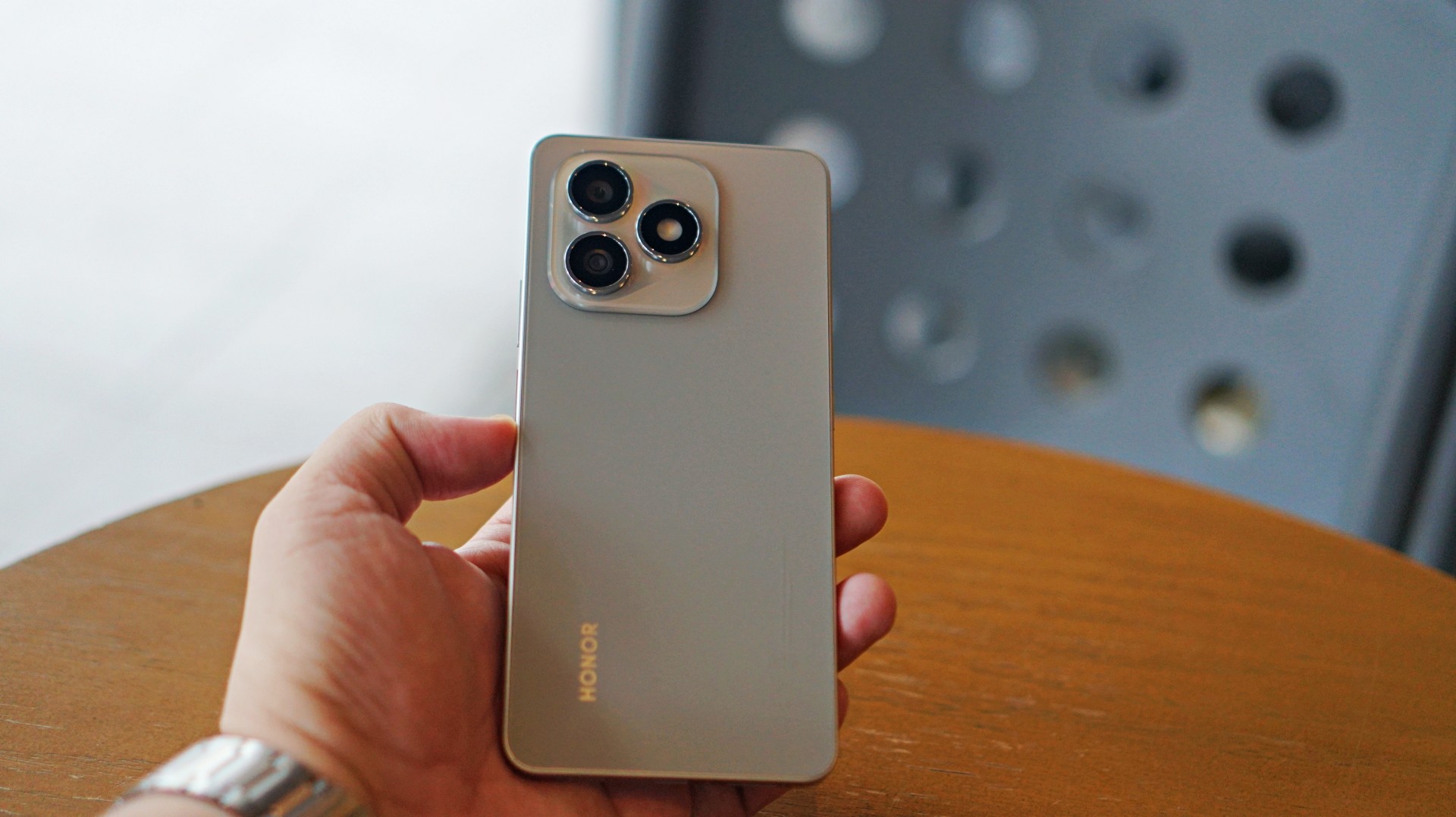
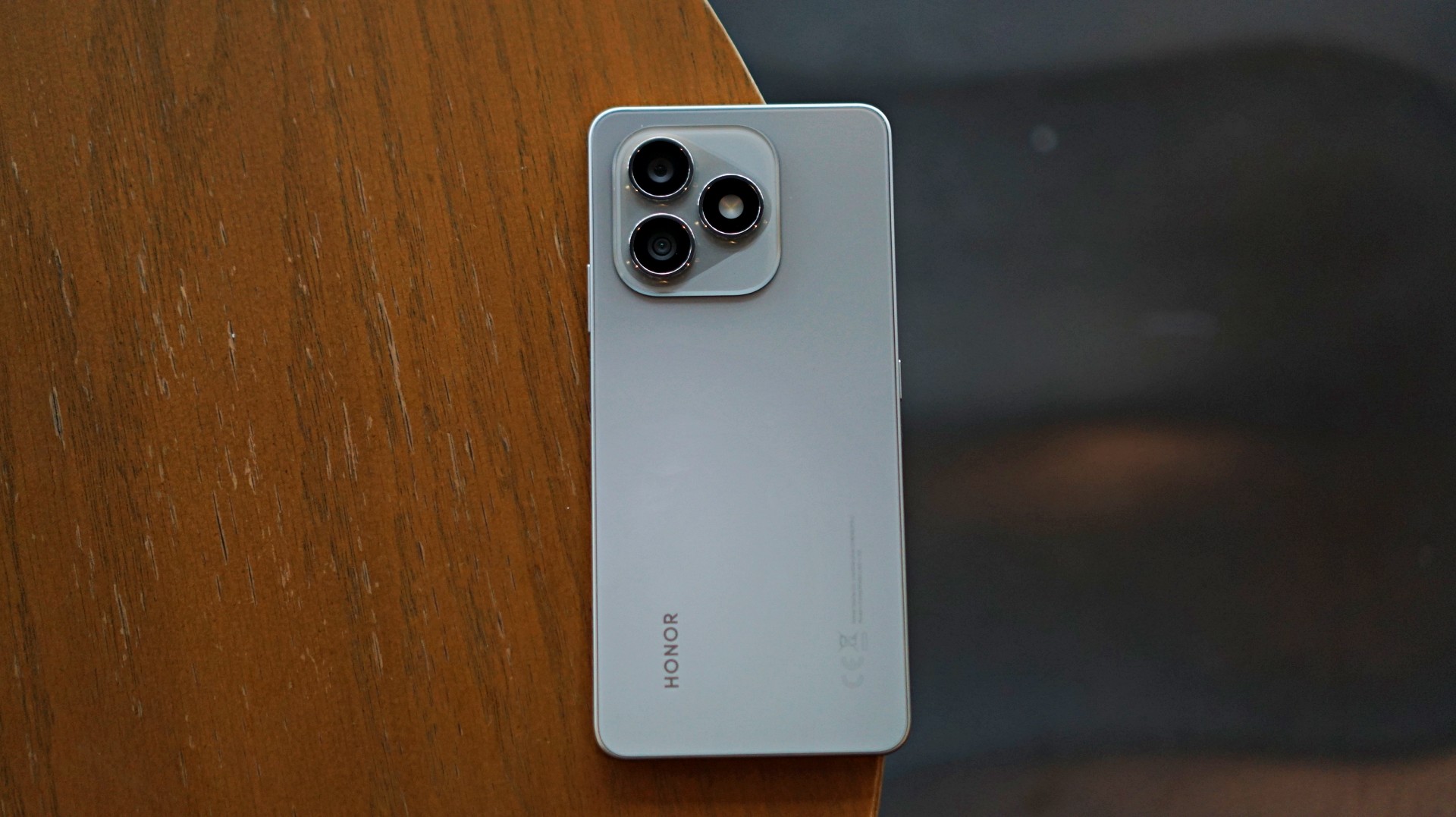
The HONOR X8d makes a decent first impression. It’s slim, relatively lightweight, and easy to hold despite packing a large battery. The flat sides and smooth back give it a clean, modern look, while the camera module adds a bit of visual identity.
It’s available in Light Blue, Velvet Black, and Velvet Grey—options that lean into its youthful positioning. The device also feels sturdy in hand, backed by SGS certification for drop and crush resistance, along with IP65-level protection against dust and splashes.
For a device in this category, the HONOR X8d delivers a build that feels dependable enough for daily use.
Display and media: Bright and usable
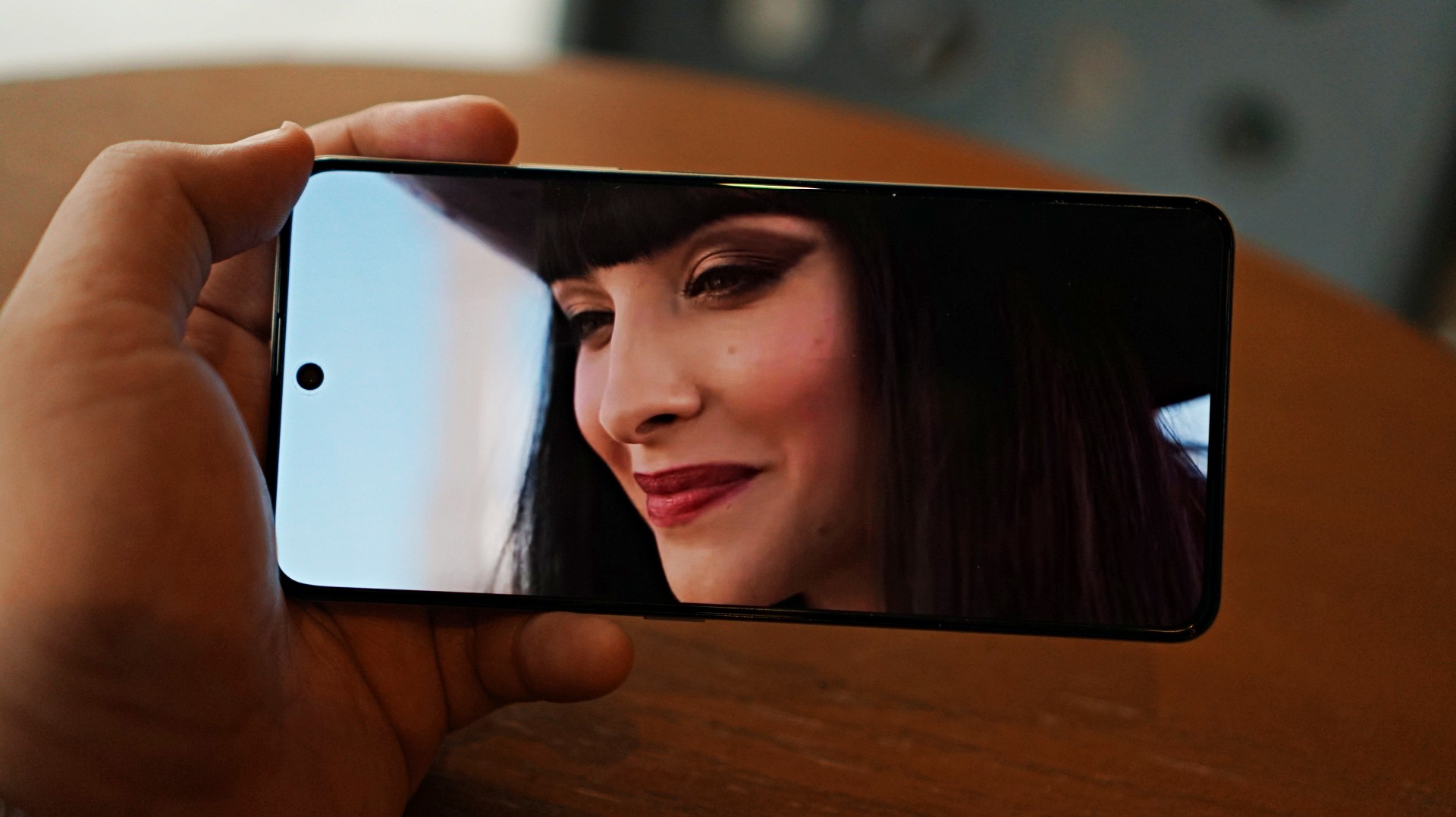
Miss All Sunday makes everything look good
Up front, the HONOR X8d features a 6.77-inch AMOLED display with a 120Hz refresh rate and up to 3000 nits peak brightness. Colors are vibrant, and the panel supports 100% DCI-P3, which helps content look lively.
For casual viewing, the experience is serviceable. Watching shows or videos feels comfortable, and the high brightness ensures visibility even under harsh lighting. Features like 3840Hz PWM dimming and E-Book mode also help reduce eye strain during extended use.
Now Playing: One Piece Season 2
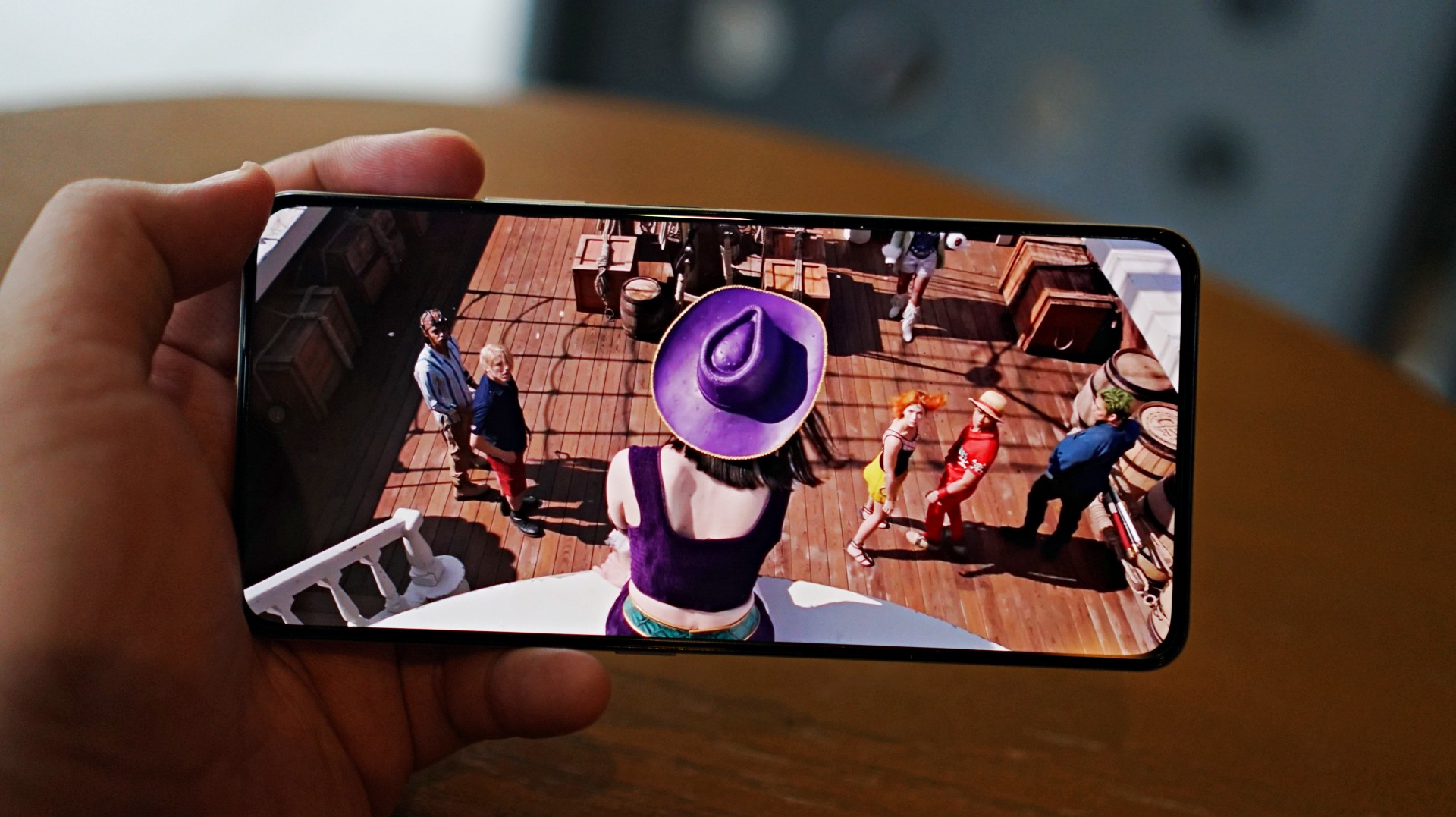
I skimmed through a few episodes of the One Piece Season 2 live action on Netflix and again it was… alright. Nothing here will blow you away but it serves its purpose.
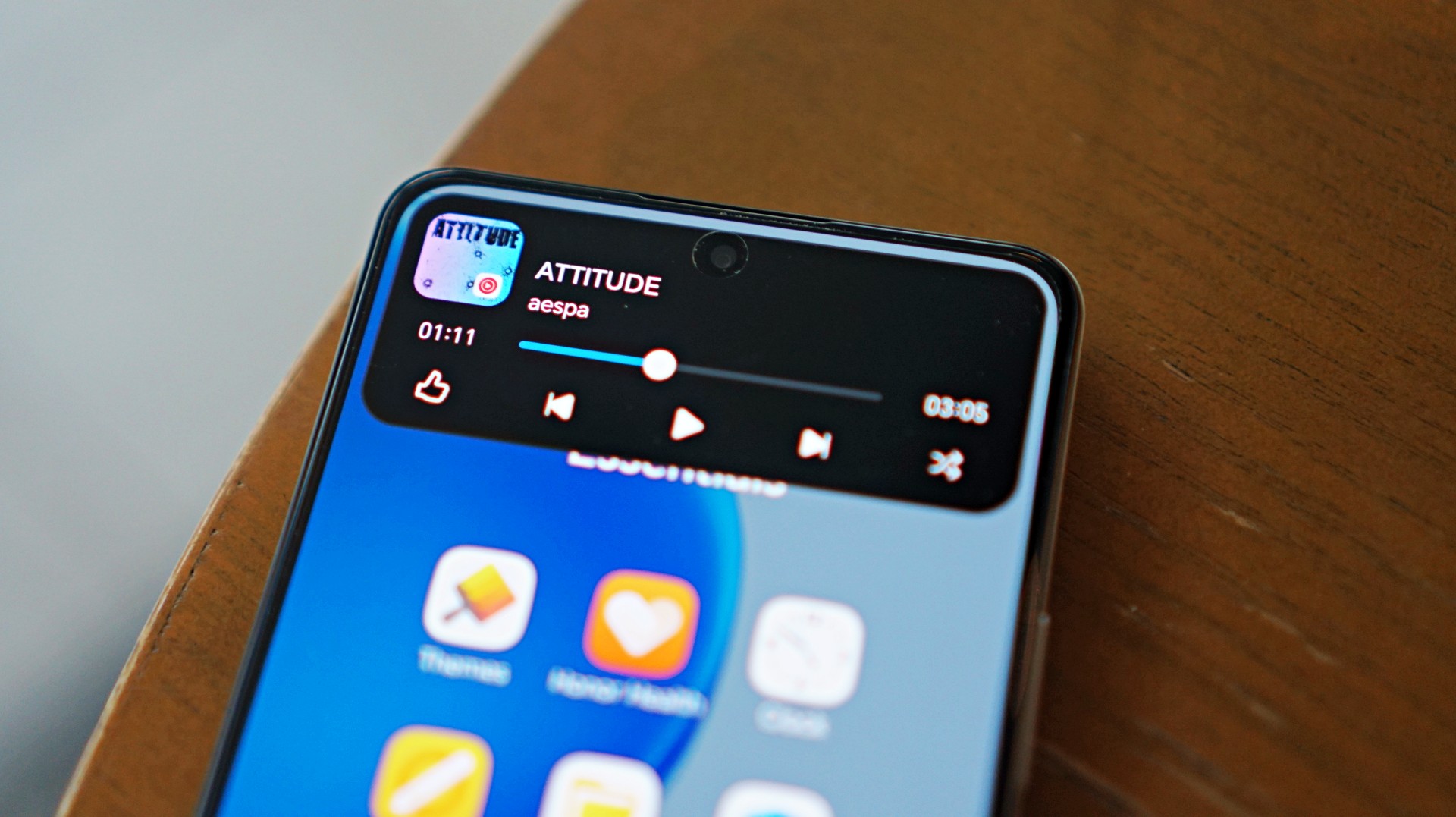
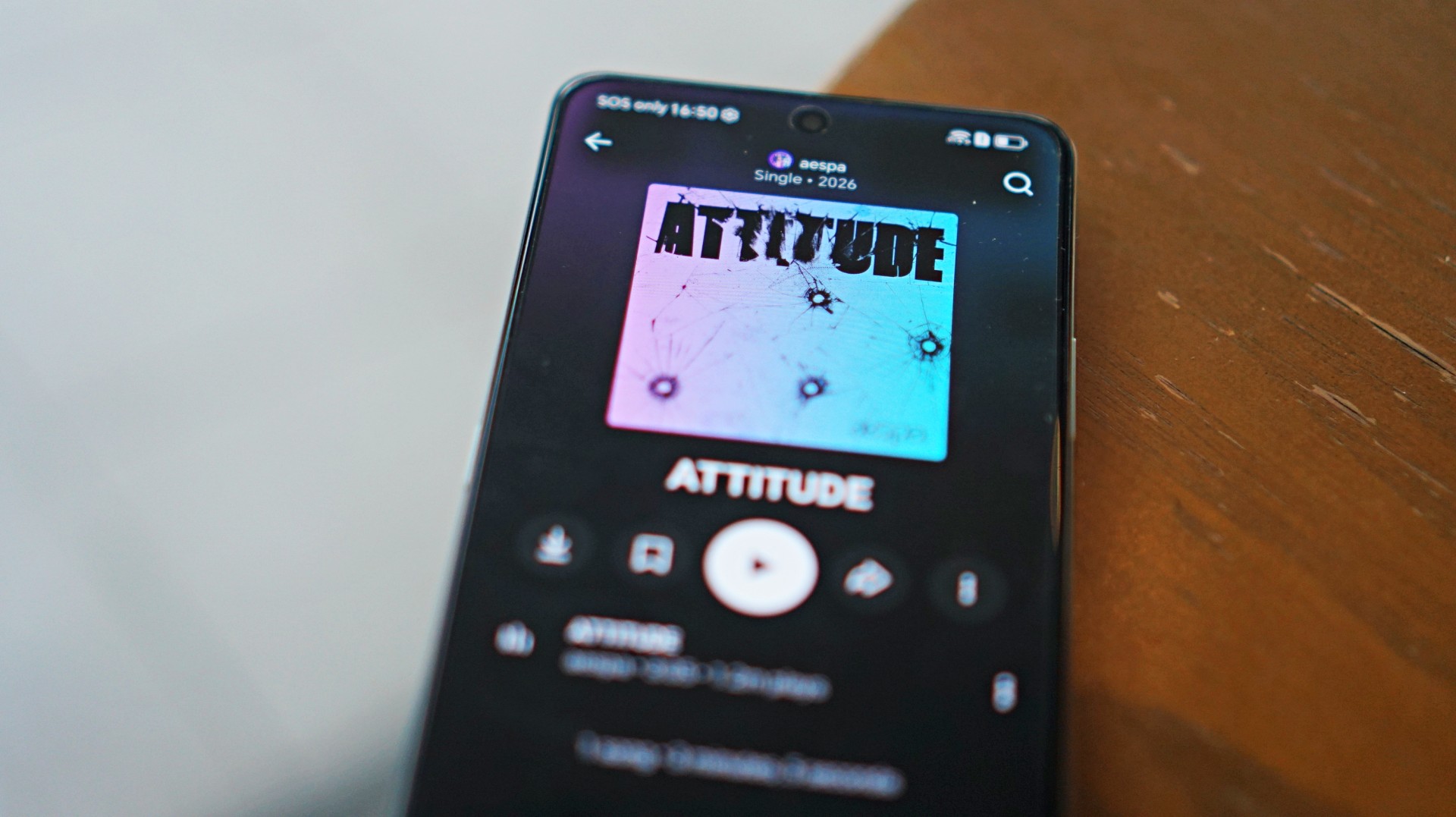 I also listened to “Attitude” by aespa on YouTube music and it just echoes the general feeling of the phone – serviceable.
That said, the overall experience remains straightforward. It delivers what you need for day-to-day media consumption without going much further.
Performance is where compromises show
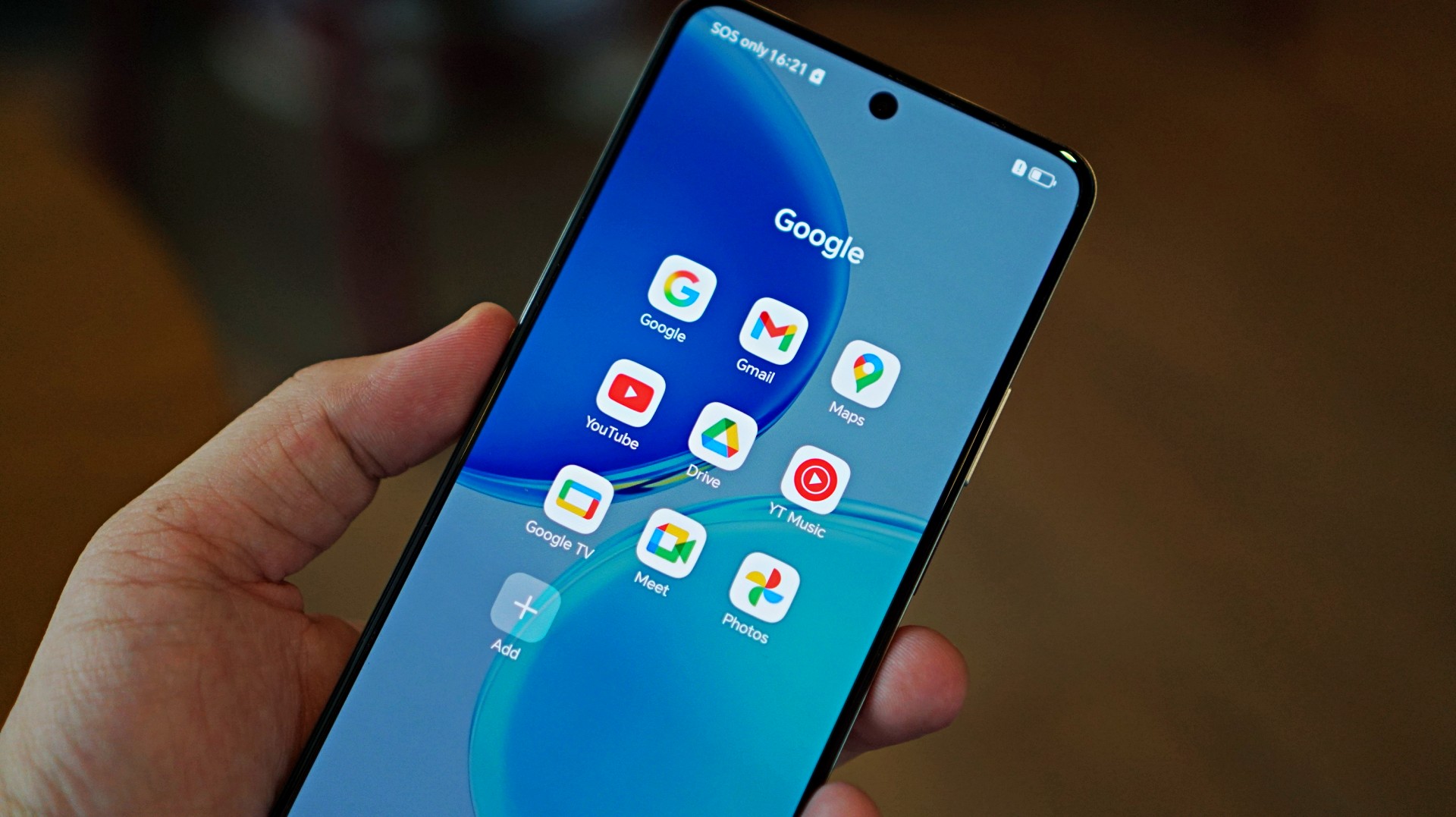
The HONOR X8d runs on the Snapdragon 6s 4G Gen 2 paired with 8GB of RAM. On paper, it’s positioned for everyday tasks, but in practice, performance leans on the modest side.
Basic interactions like switching between apps or scrolling through feeds can feel slower than expected. There’s a noticeable delay at times, even during simple tasks, which affects the overall flow of the experience.
This extends to camera usage as well, where responsiveness can occasionally feel a step behind. The device remains usable, but the pacing may feel dragging depending on what you’re used to.
Cameras are reliable in good light
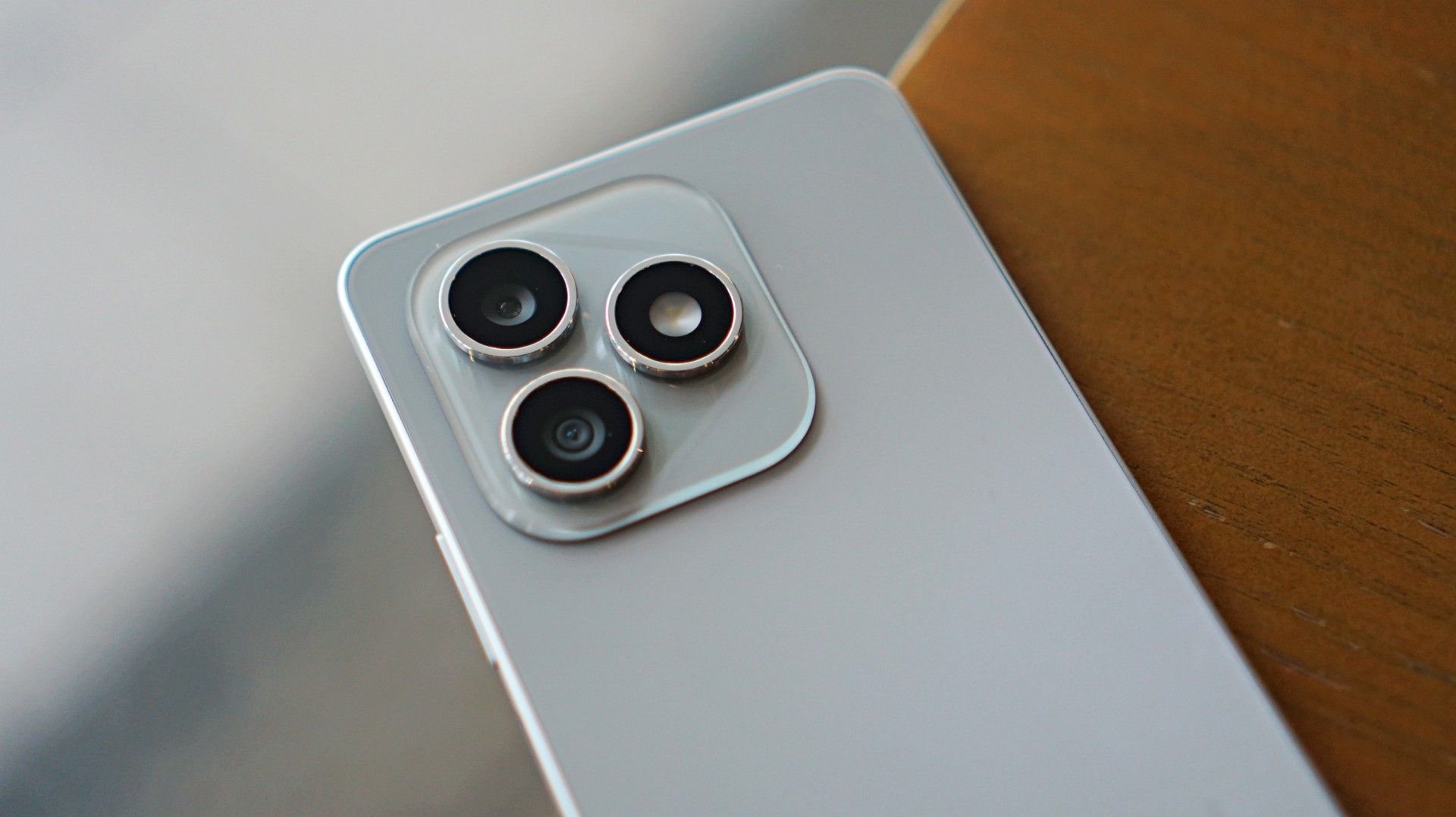
The HONOR X8d is equipped with a 108MP main camera alongside a 5MP wide camera, with a 16MP shooter up front.
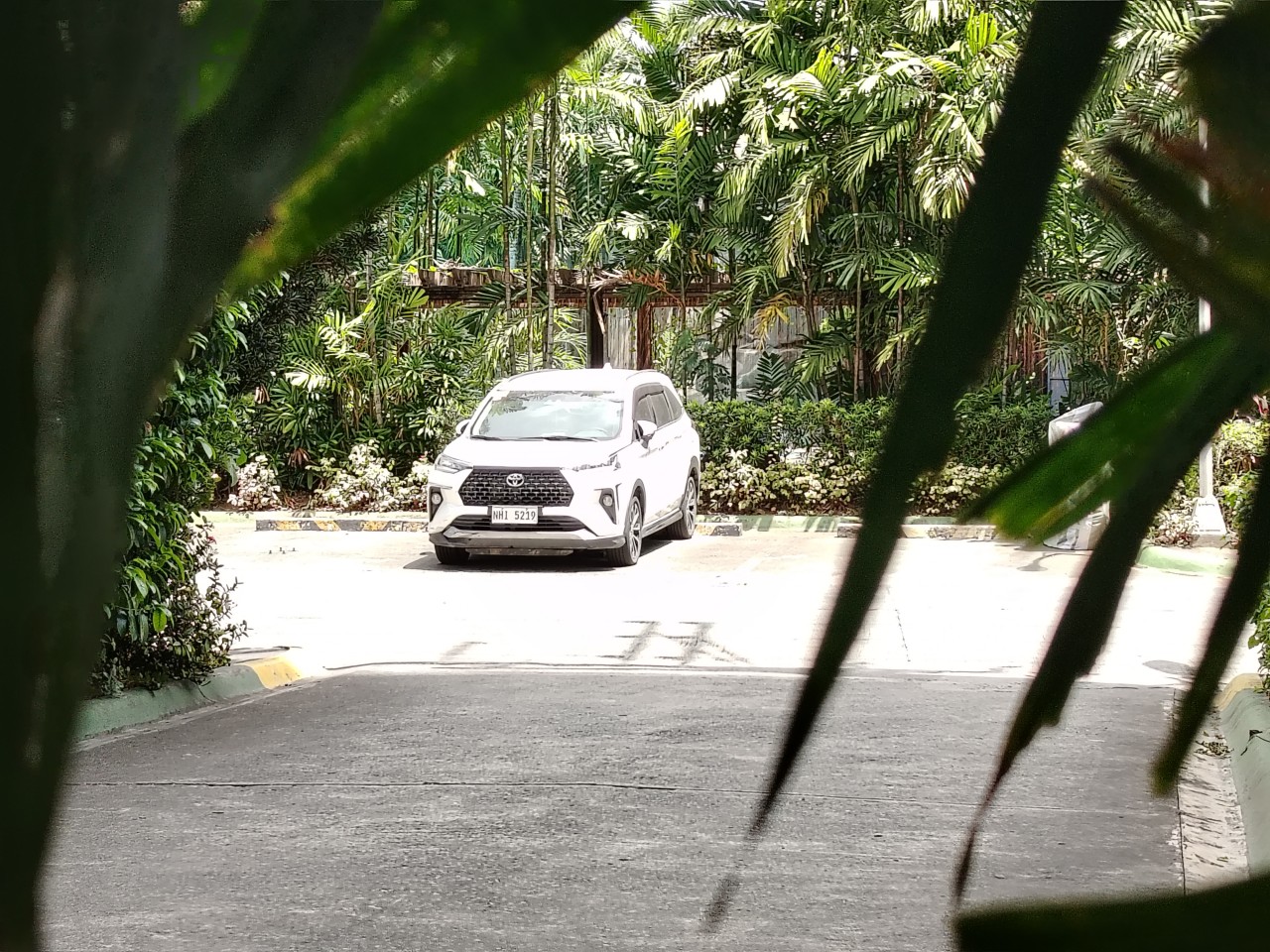
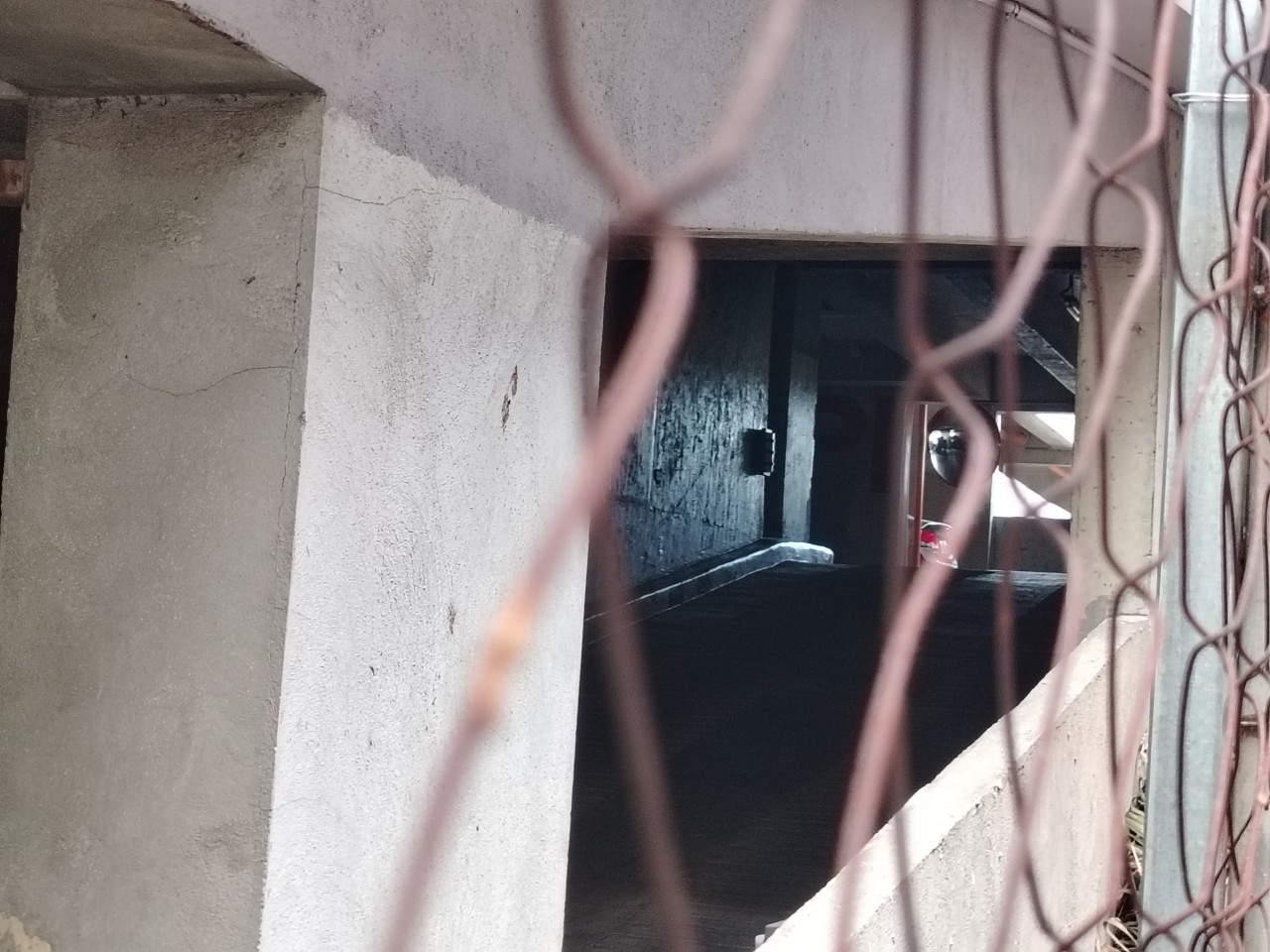
In good lighting conditions, the phone produces decent images. Shots are clear enough, with acceptable detail and color for social media sharing. The camera system also benefits from a suite of AI tools such as AI Eraser, AI Cutout, and AI Upscale, which add flexibility when editing photos.
Zoom options at 1x, 2x, and 3x remain usable, though results are best when lighting is favorable. Overall, the camera system is dependable for casual snaps.












Software and AI: familiar, feature-filled
Running on MagicOS 10 based on Android 16, the HONOR X8d comes with a feature-rich software experience. It includes tools like AI Translate, AI Writing, AI Notes, and AI Recorder, alongside features such as Magic Portal and Circle to Search.

Like many Android skins today, MagicOS follows a design approach that will feel immediately familiar. The layout, navigation, and overall structure borrow heavily from the iOS-inspired blueprint that most brands have adopted. It’s easy to get into, even for less experienced users.
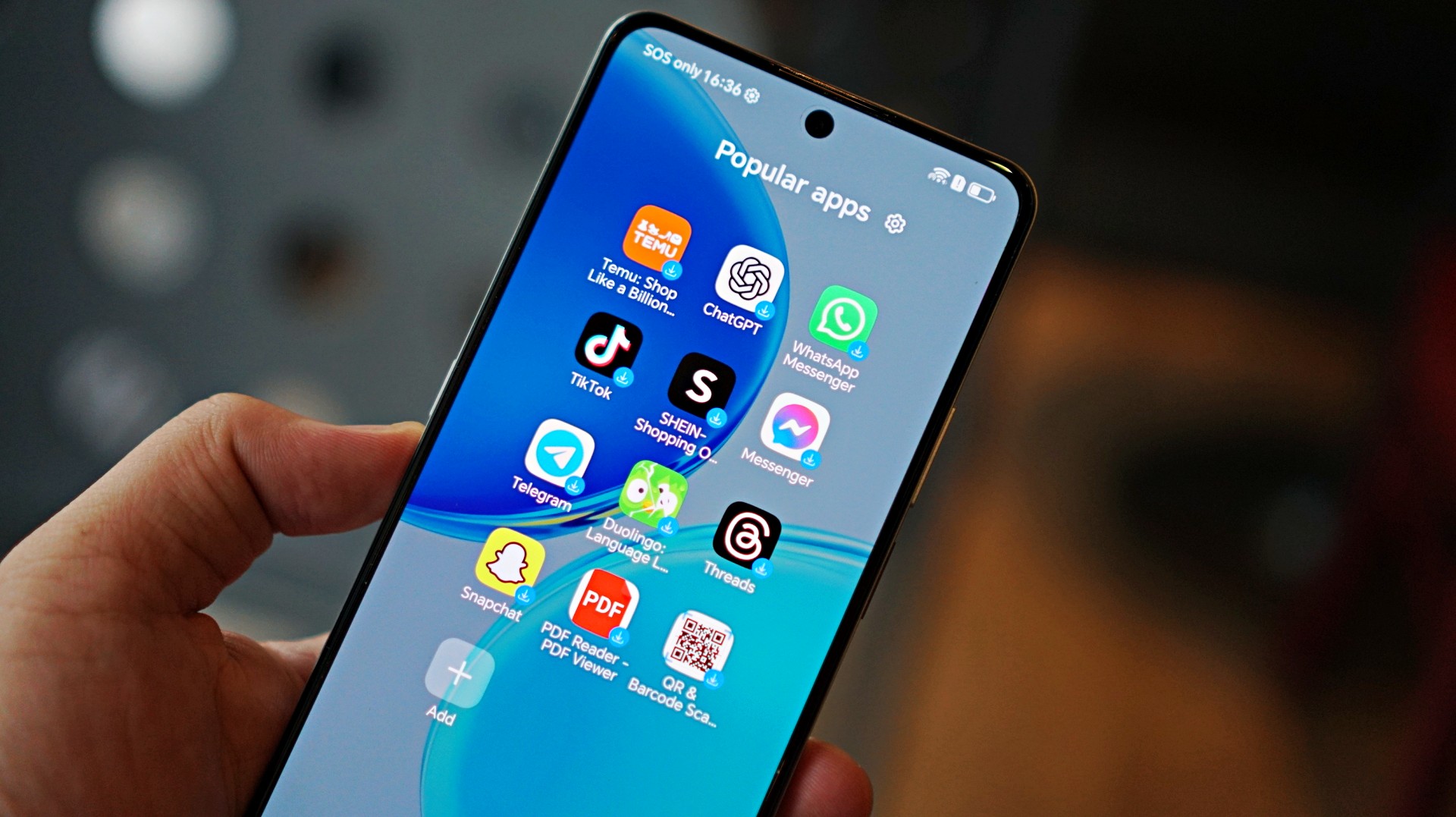
Typical of entry-level smartphones, the device also includes app recommendations out of the box. Thankfully, these aren’t overly intrusive, and many of the suggested apps are ones users would likely install anyway.
The software helps add depth to the overall package, even if the hardware limits how smooth everything feels in actual use.
Battery and everyday use is a clear strength
One of the standout features of the HONOR X8d is its 7000mAh battery. It’s designed to last through extended use, whether for streaming, browsing, or everyday communication.
Paired with 45W HONOR SuperCharge, topping up the device remains relatively quick. For users who prioritize longevity over speed, this is easily one of the more reliable aspects of the phone.
Is the HONOR X8d your GadgetMatch?
When HONOR Philippines was first teasing the phone it was positioned as something for students. But if I were a parent, I’m pretty sure I’d like my kid to have some kind of advantage and not have to deal with a device that might not be able to keep up with them.
After learning that it’s priced at PhP 15,999 my verdict just became much clearer. This is a Swipe Left.
Add a few more to that price and you can get an excellent smartphone at its early bird price.
The HONOR X8d focuses on delivering the basics—design that works, a large battery, and a feature-filled software experience.
However, the overall experience depends heavily on what you prioritize. For users who simply need a phone that can get through daily tasks, the X8d does enough to hold its ground. For those who value speed and responsiveness, it may feel a step behind.
Whether it fits your needs ultimately comes down to how much you’re willing to trade performance for battery life and features.


Galaxy Buds4 Pro review: I thought I was done with in-ears
This Buds4 you


WWE 2K26 lets you live out all the fantasy matches you could want
But you have to play for hours and hours to unlock everyone.

The HONOR X8d is serviceable
Steady but slow?

Logitech G debuts PRO X2 SUPERSTRIKE with faster click tech

More iPhone switchers this year than Android switchers, report says

Marvel’s Wonder Man greenlit for a rare second season

Apple’s WWDC 2026 will be from June 8 to 12
Galaxy Buds4 Pro review: I thought I was done with in-ears


-
 Reviews1 week ago
POCO X8 Pro Max review: A new beast from the far east
-

 News1 week ago
POCO X8 Pro Series: Price, availability in the Philippines
-

 Laptops2 weeks ago
Apple MacBook Neo Review
-
 Features2 weeks ago
Galaxy AI on the Samsung Galaxy S26 Ultra
-

 Apps2 weeks ago
Google Maps is finally getting a 3D mode
-

 Entertainment2 weeks ago
The internet is thirsting over the One Piece Season 2 cast
-

 Reviews1 week ago
POCO X8 Pro Iron Man Edition review: Midrange phone in superhero armor
-
 Gaming2 weeks ago
Valve is embroiled in a lawsuit with New York over loot boxes