

Automotive
Lenovo M2 Electric Scooter review: Your new, city best friend
Also a smart, sustainable solution

Technology has been progressing as fast as ever, and presently, it has propelled us to a new and smarter way of living. The global pandemic ushered a barrage of changes on countless fronts, and right now, the future is uncertain. Only one thing is certain: we’re all affected.
Lenovo hopped in with a golden opportunity to propose a smarter way to commute. Befitting the age of physical distancing; this solution doesn’t need anyone else but you when going for a ride.
Meet the Lenovo M2 Electric Scooter — mankind’s new best friend probably in 2021 and beyond.
Come, ride with us
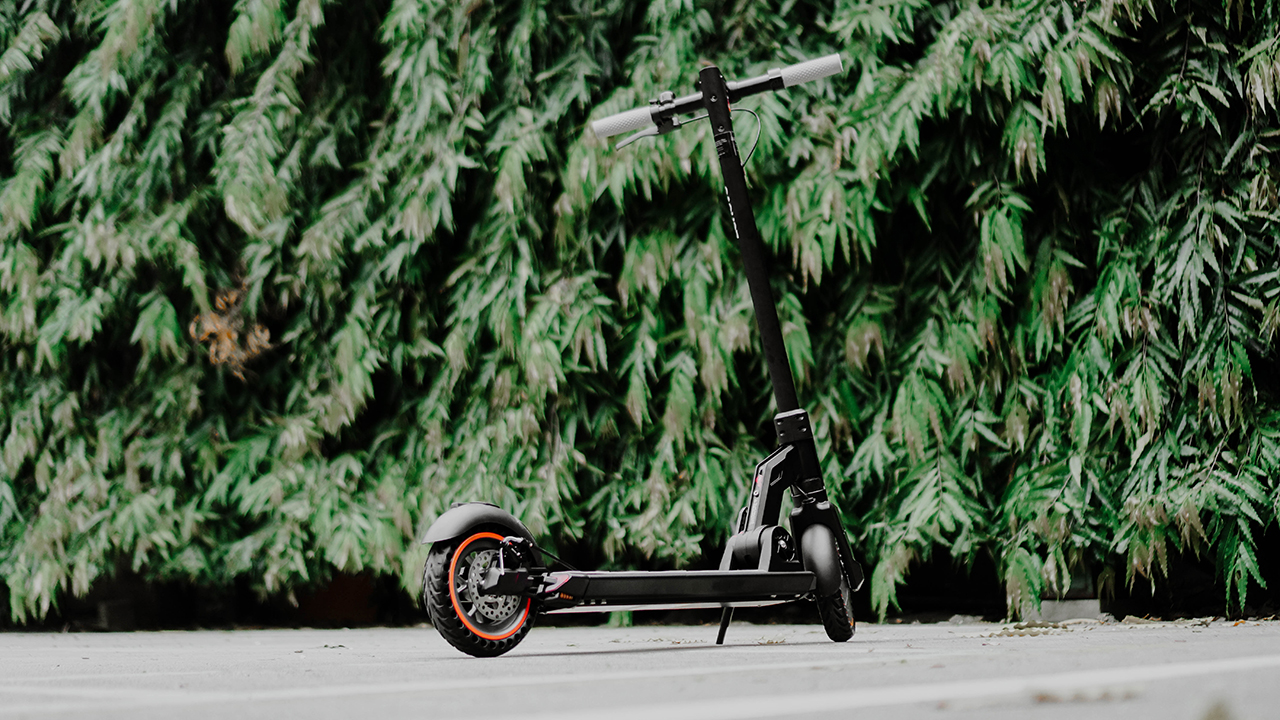
The Lenovo M2 Electric Scooter, M2 or e-scooter for brevity, is the company’s first-generation flagship electric scooter. Launched in 2020, the electric scooter is the ideal solution to short-distance travel. It mixes convenience, comfortability, reliability, and security while crowding the device with smart features essential for a long lifespan.
Forget cars and motorcycles for a while, this electric scooter rightfully ticks all the right boxes for it to become your next road partner, especially for your quick errands.
Your big step towards building a sustainable future
First things first, an electric scooter is a sustainable form of mobility. E-scooters, like electric vehicles, are constructed without a tailpipe.
You don’t need to use gasoline and fossil fuels, therefore, you won’t be adding to pollution with carbon emissions. Except for iron particles and brake dust caused by braking. But that’s for another story.

As someone who dreams of a green, sustainable future and living in a smart city, riding the M2 felt like a step forward towards that dream. Going electric is possibly one of the greenest decisions we can make to save the environment. But will it last for a long time? It just might.
Constructed with you in mind
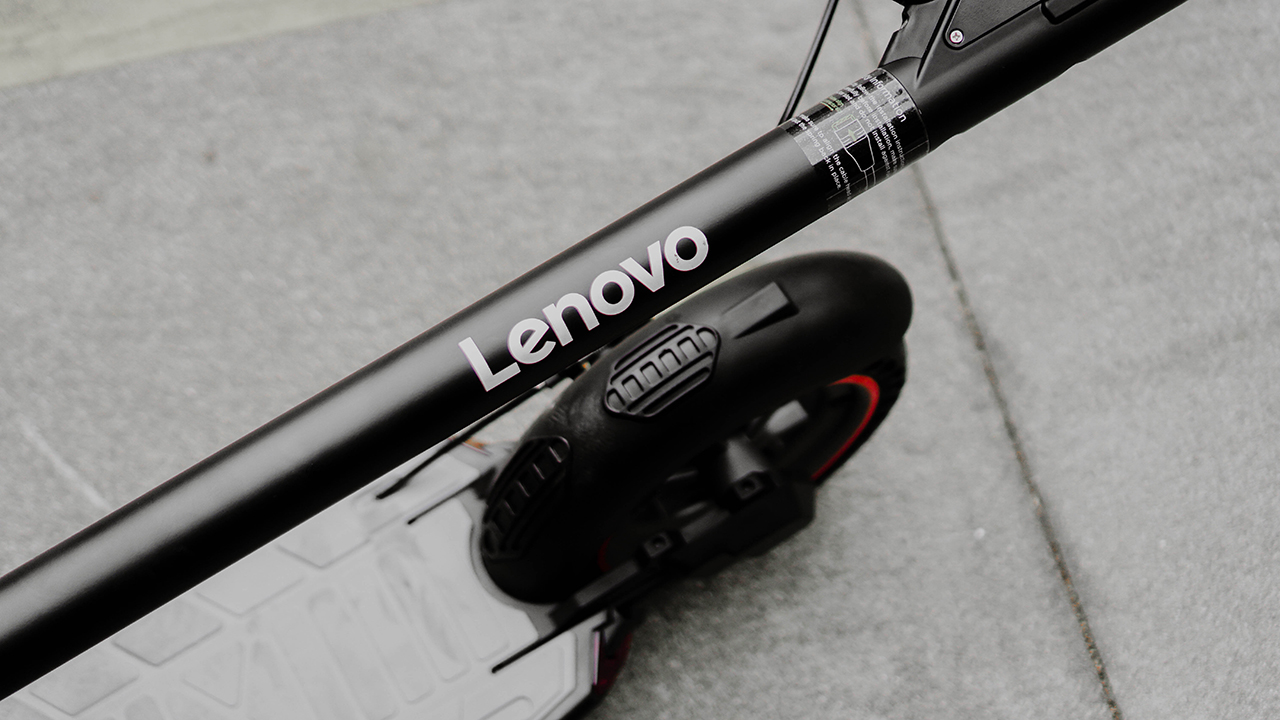
The M2 was engineered with a portable foldable design using strong yet light components, such as magnesium and aluminum alloy which were commonly used in aeronautics.

It employs a folding shackle that’s stable and durable, but easy to open and fold. You just need to apply pressure upwards to open the shackle.
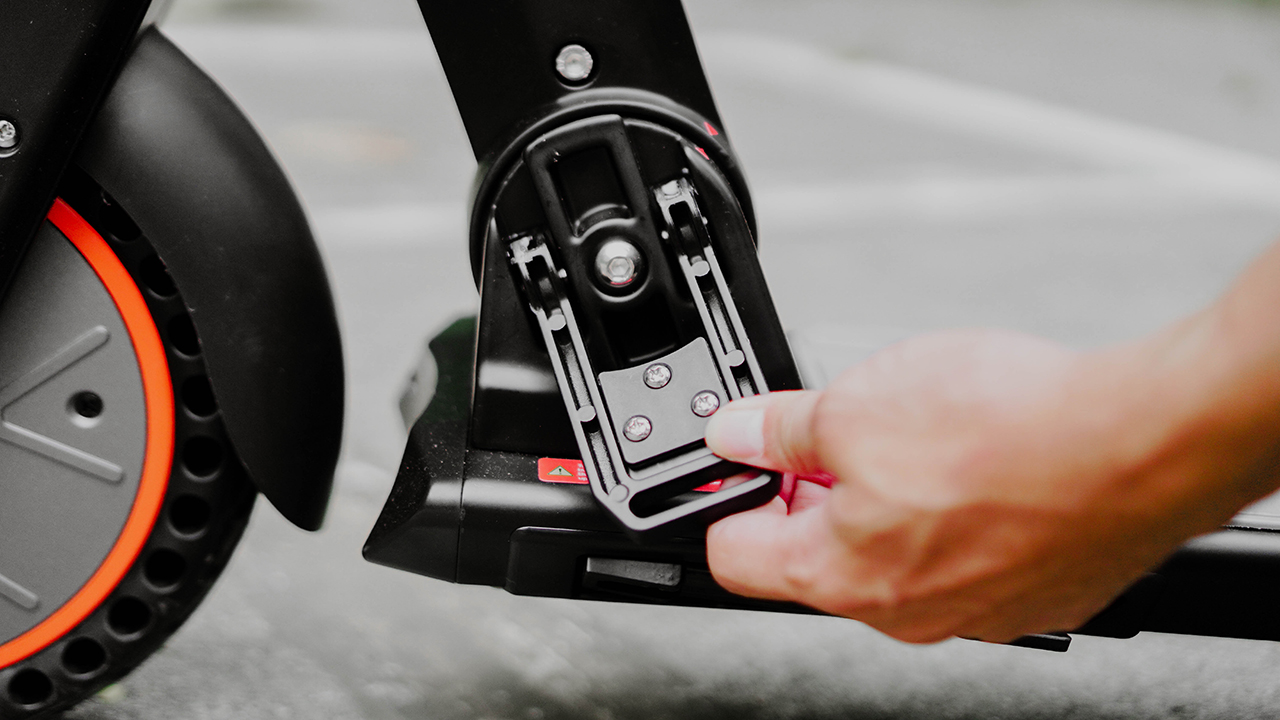
When you successfully open the shackle, hold the vertical rod and fold it gently lest the wheel rolls and you end up dropping the e-scooter.
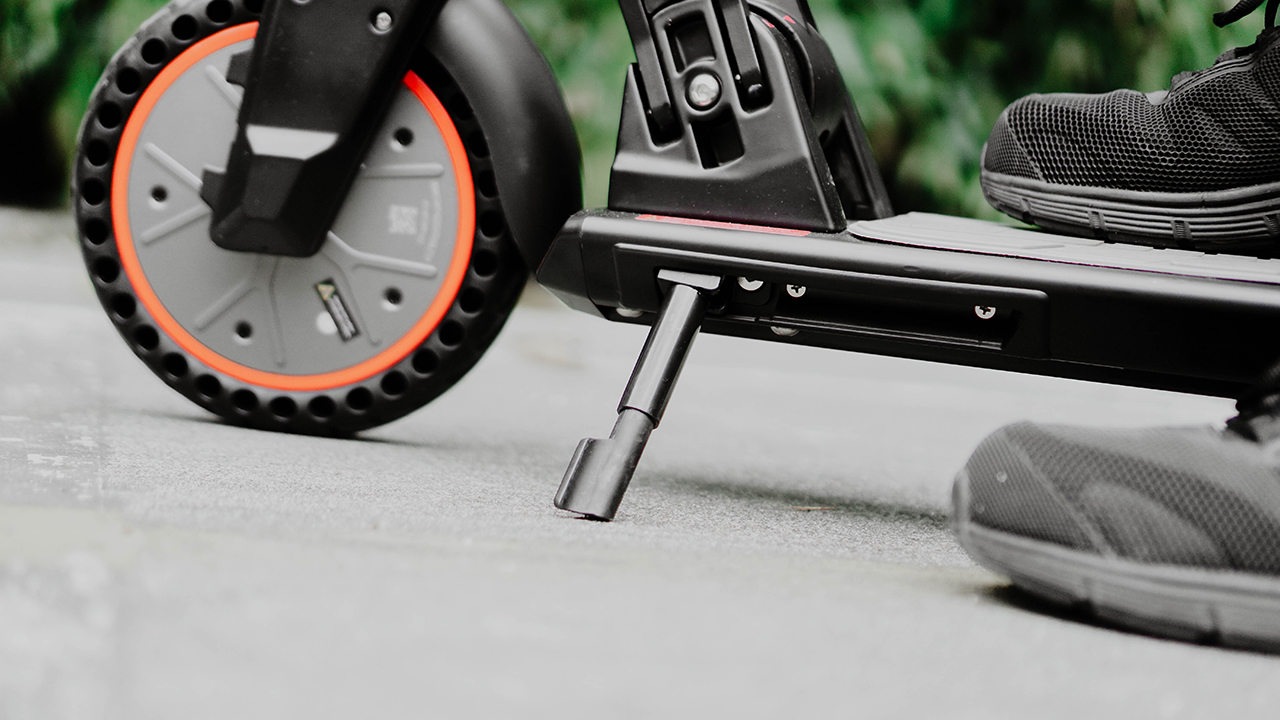
It has a stand, in case you need support for the e-scooter.
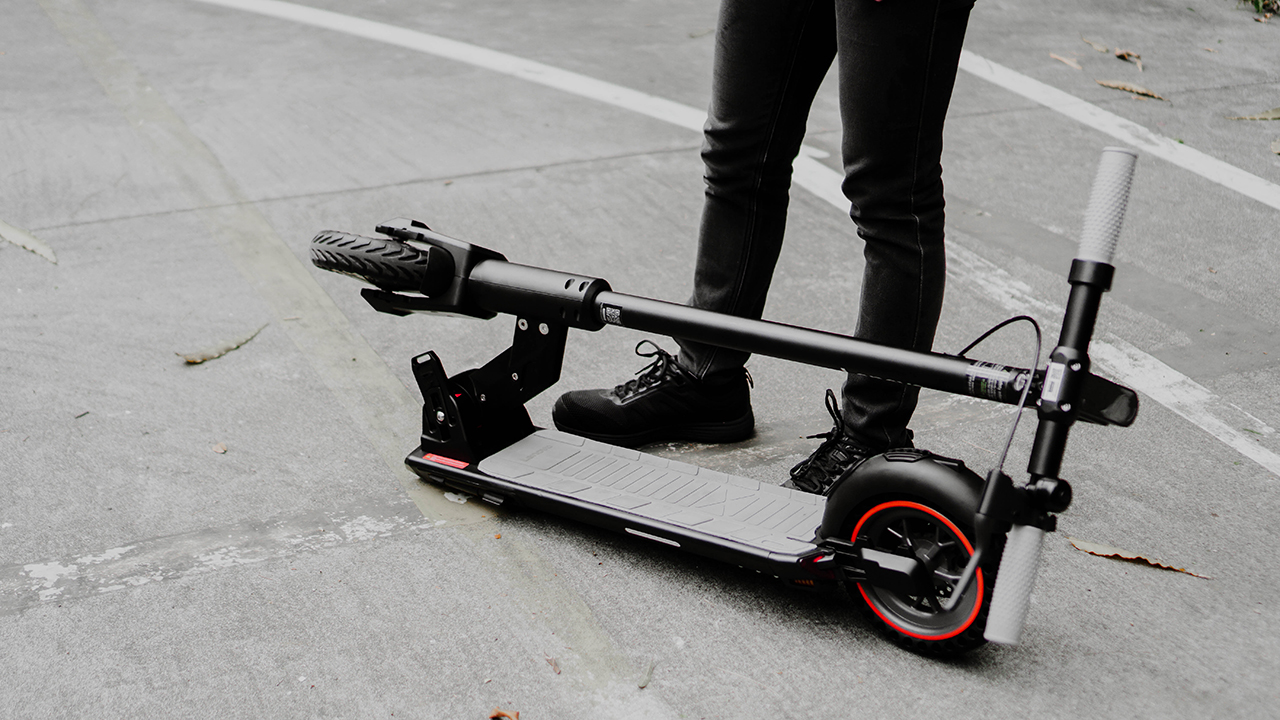
This is how it looks when folded.
Make sure to lock the shackle before carrying the folded M2 for safety purposes. In one of my brain-not-engaged moments, I forgot to lock the shackle and lifted the e-scooter, only to find it hitting my legs. It hurt like hell.

The M2 weighs only 15kg, which would’ve been a piece of cake if you’re a serious lifter. My current threshold for both arms ranges from 25kg to 30kg when lifting plates.
Carrying the electric scooter at first wasn’t challenging, that is if you’re just standing. When I brought it home while taking the stairs, I found myself huffing and puffing which signified two things: either I need to build more strength or the e-scooter was just too heavy for me to lift.
You’re guaranteed not to fall
Aside from assembling strong components for its frames, Lenovo devised a system to secure the safety of its users. First, it has a triple braking system — electronic brake, disc brake, and pedal-braking system — ensuring a safe ride.

During my test drives, I had too many dumb moments where the braking system saved me from crashing into a wall, a lamppost, and from flying after riding a slope.
I don’t want to get into any more details since I’m too embarrassed but here’s a little secret: the e-scooter almost flew from my sudden use of the disc and pedal brake when I was riding it too fast. Special thanks to all the engineers that helped save my life and my wallet.
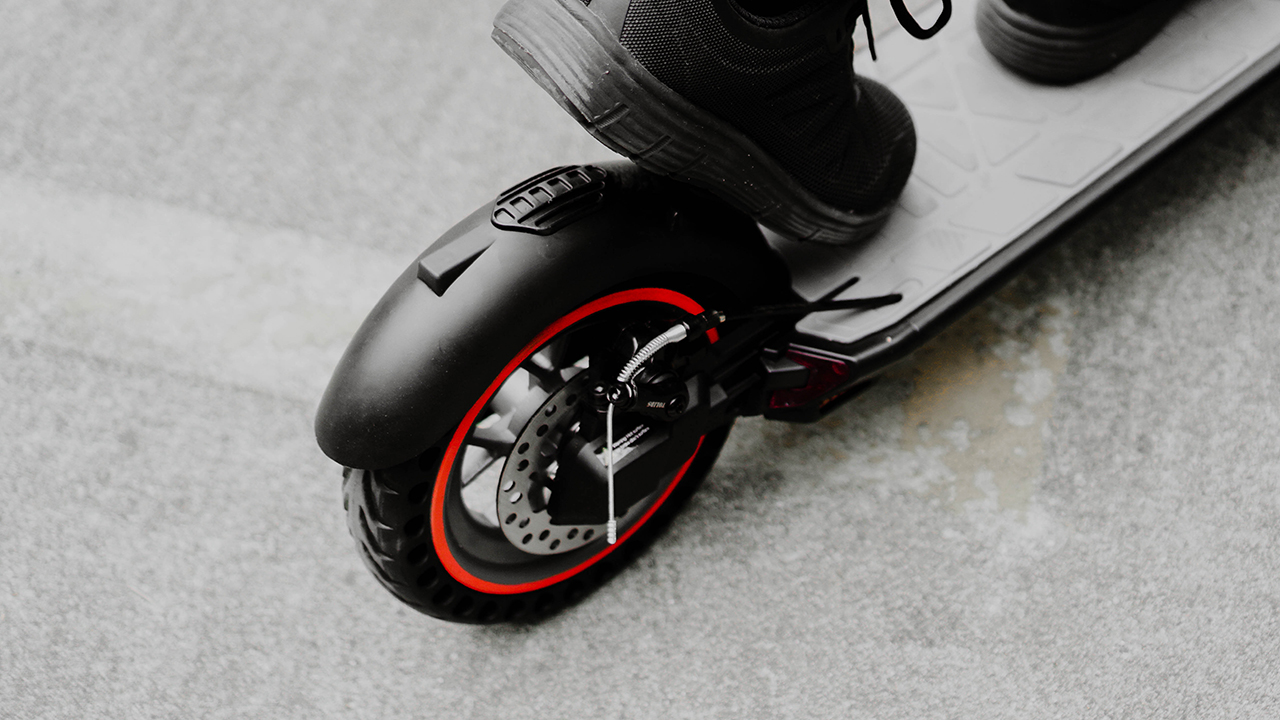
Anyhoo, this e-scooter also comes with a triple-shock absorber design: a front-fork hydraulic shock absorber, a rear-wheel independent suspension shock absorber, and a thickness tire absorber. I was able to ride it smoothly even on rough surfaces and small speed bumps.
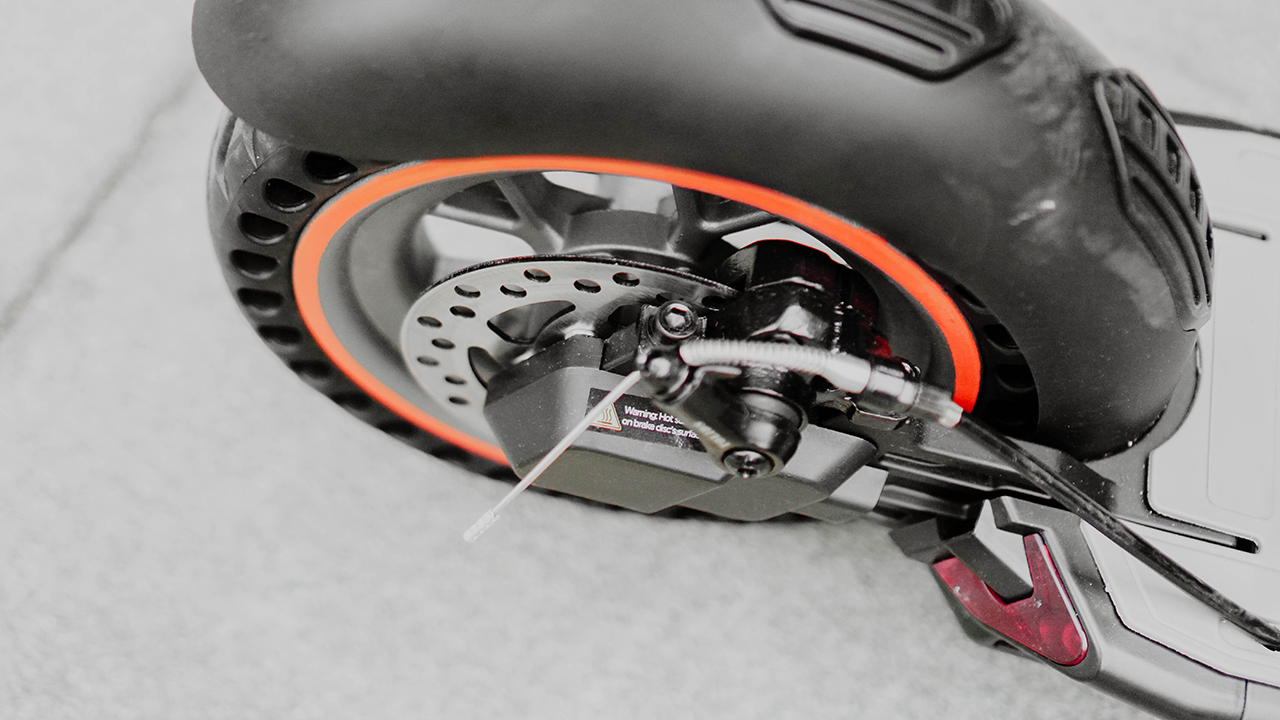
However, given that it has a low deck and small wheels, it isn’t advisable to ride the e-scooter on sunken, uneven, and muddy roads.
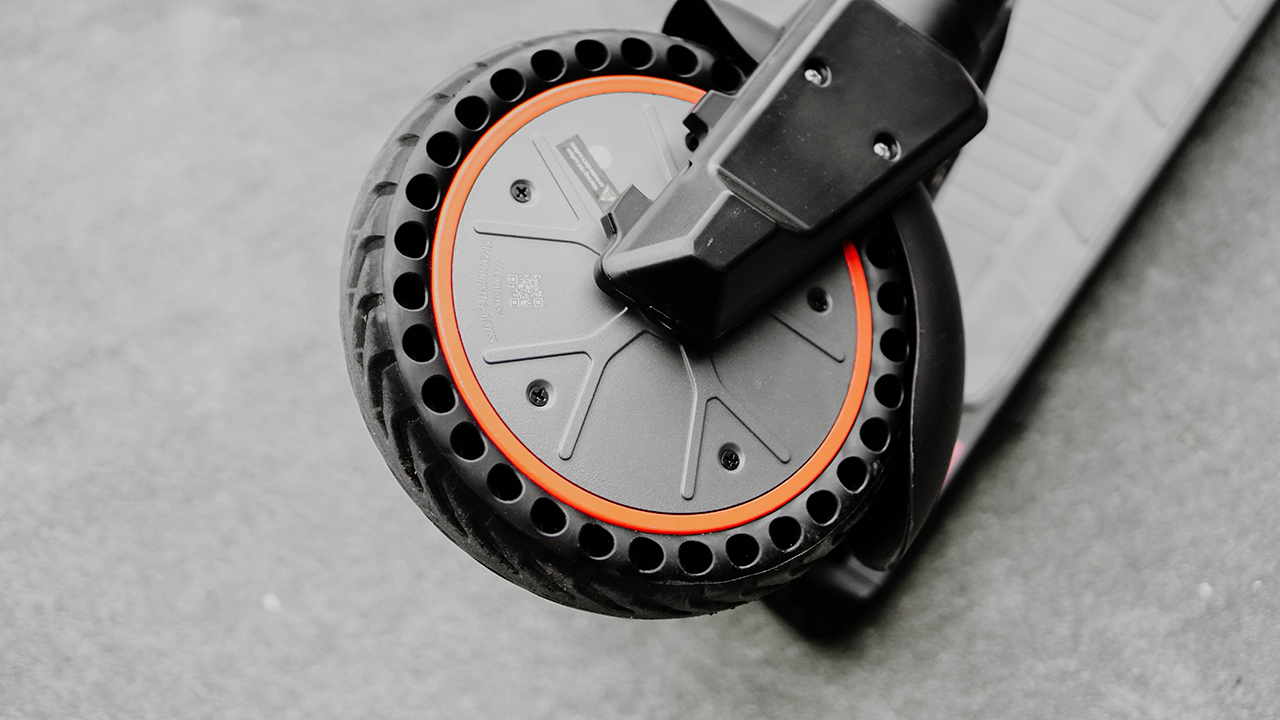
Nonetheless, the M2 assembled Honeycomb tires, providing stronger defense and prolonged wear life. It’s like a solid tire with air pockets, so you don’t have to worry about unknown debris puncturing your wheels. It won’t go flat. Think: Michelin’s airless (non-pneumatic) tires.
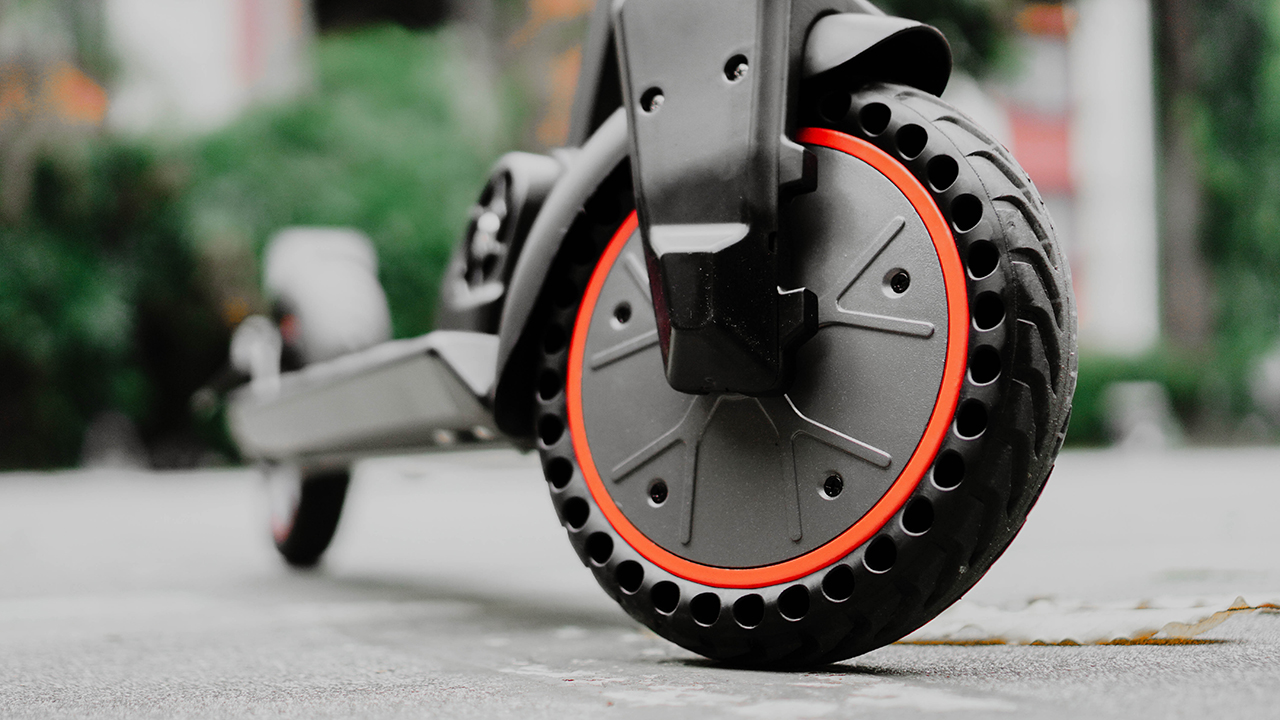
Unlike solid tires, Honeycomb tires aim to deliver a smoother experience. All without the hassle of changing them frequently, just like what you do with pneumatic tires.
It’s also more resilient and robust compared to other tires, supporting the M2’s strength and stability, and bearing weight up to 120KG of load capacity. Balancing yourself on the Lenovo M2 electric scooter can be a child’s play. But it also requires proper coordination.
Engineered for the adventurous and highly-independent (singles?)
Navigating the e-scooter at first was dumbfounding. I’m not the type who reads manuals and instead, proceeds with trying something and figuring it out along the way. And learning after making a mistake.

For the most part, I figured things out easily until I had questions in my mind that needed some answers. That’s when I had to pull the manual to make sure I’m doing it right.
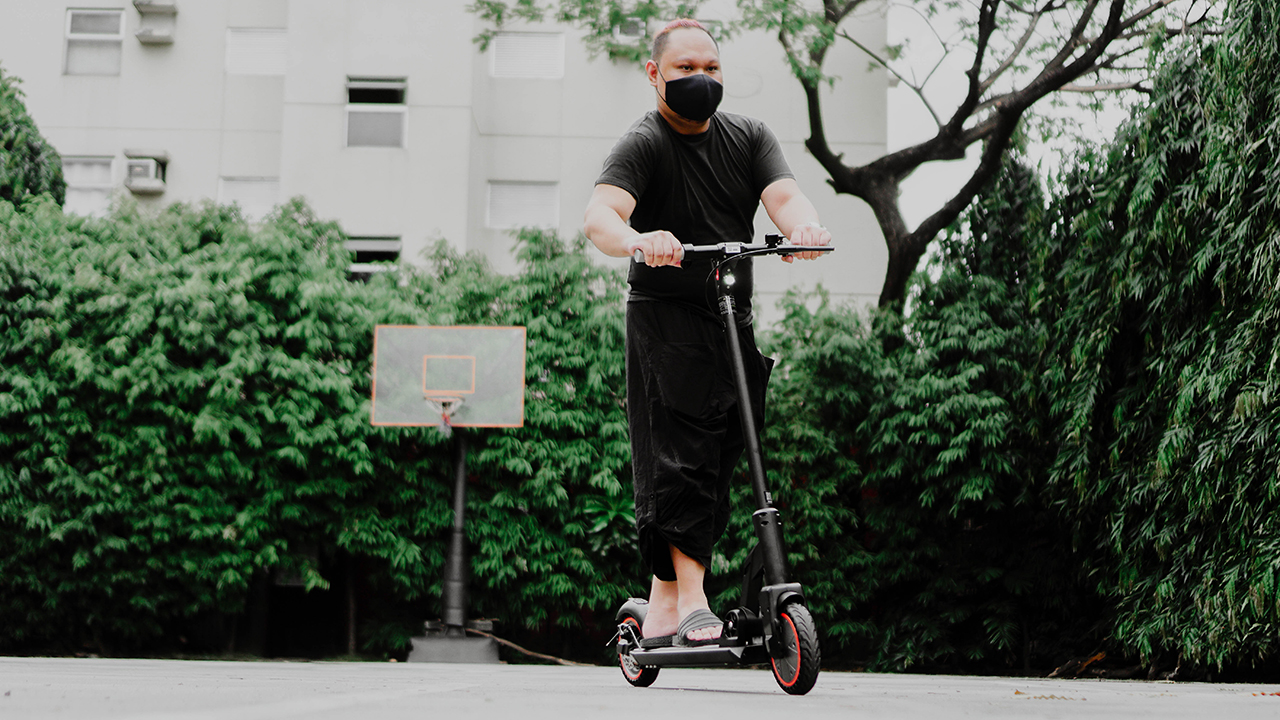
Our Managing Editor even tried navigating the e-scooter and found himself struggling to balance and maneuver it. He was able to adapt quickly after a few tries, but he proclaimed he would rather use a bike.
(Editor’s Note: “Adapt Quickly” is a stretch. The editor has terrible balance).
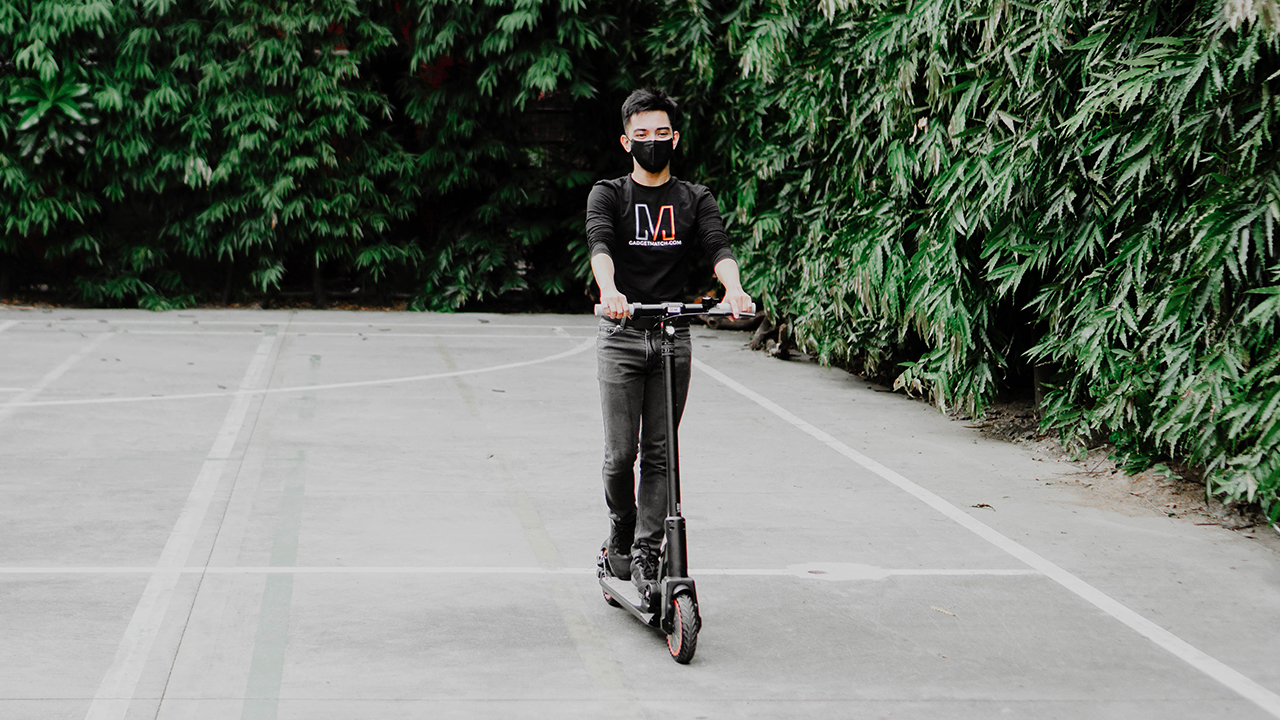
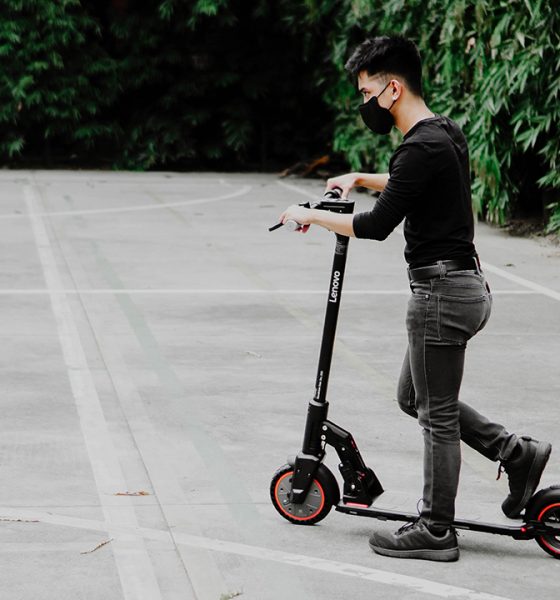
Even so, the e-scooter astounded people like me, a highly-independent single lad wanting to head over a destination without relying on anyone else to drive from Point A to Point B.
Clearly, I had fun using the Lenovo M2 Electric Scooter 💖 #GearedToGoPlaces pic.twitter.com/u1gGnbY4M1
— MJ (매커스재) (@hemjhae) March 18, 2021
It was from that moment I realized, I loved my singlehood terribly. I have the ability to decide wherever I want to go, without considering anyone else’s thoughts and opinions. And I can decide whether to move forward at my own pace, or as fast as I could.
Ride it for as long as you like
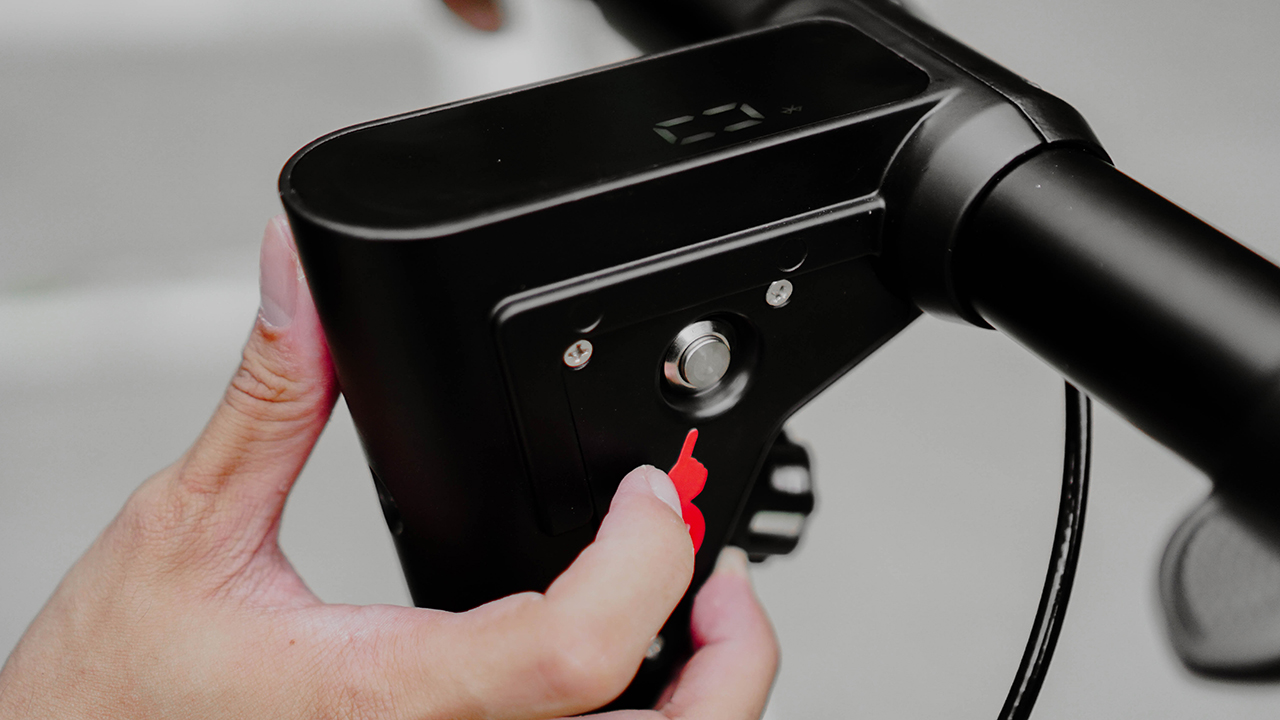
Lenovo crowded the M2 with intelligent and innovative technology. You can shift gears and monitor your speed which you can preview on the LED display found on the bar.
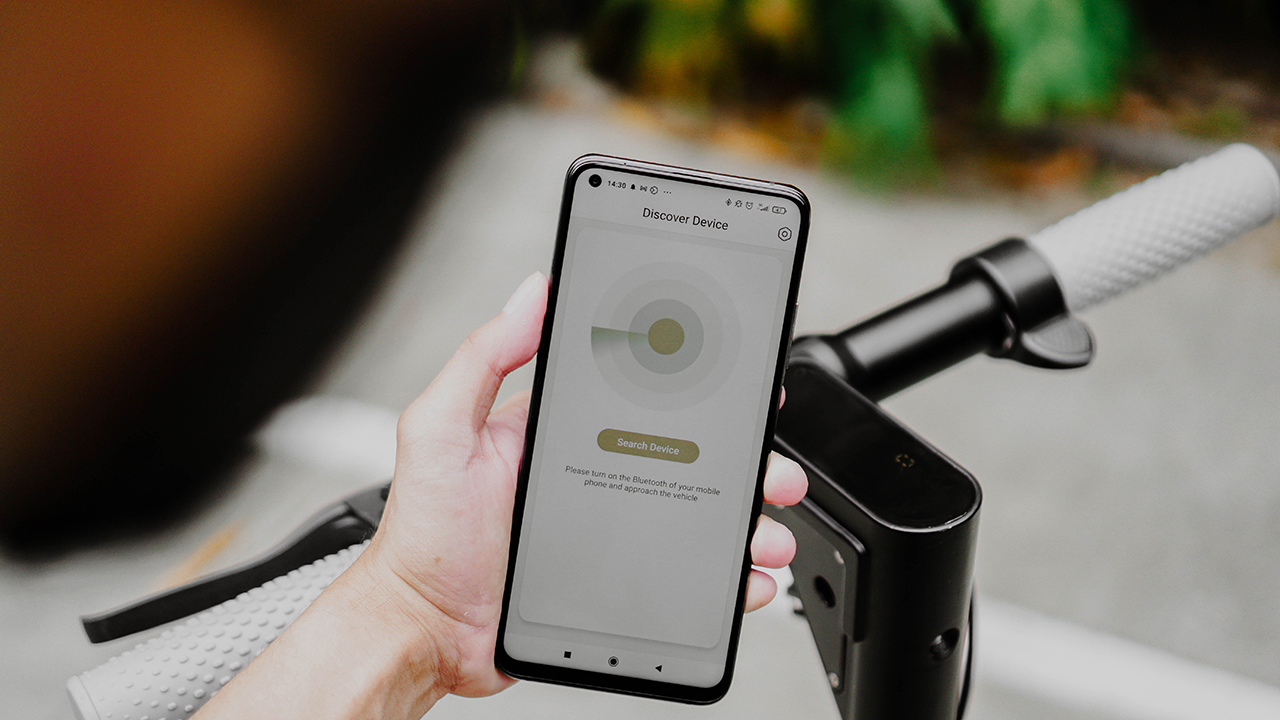
You can also connect the e-scooter via Bluetooth on Lenovo’s mobile app for connectivity and additional security.
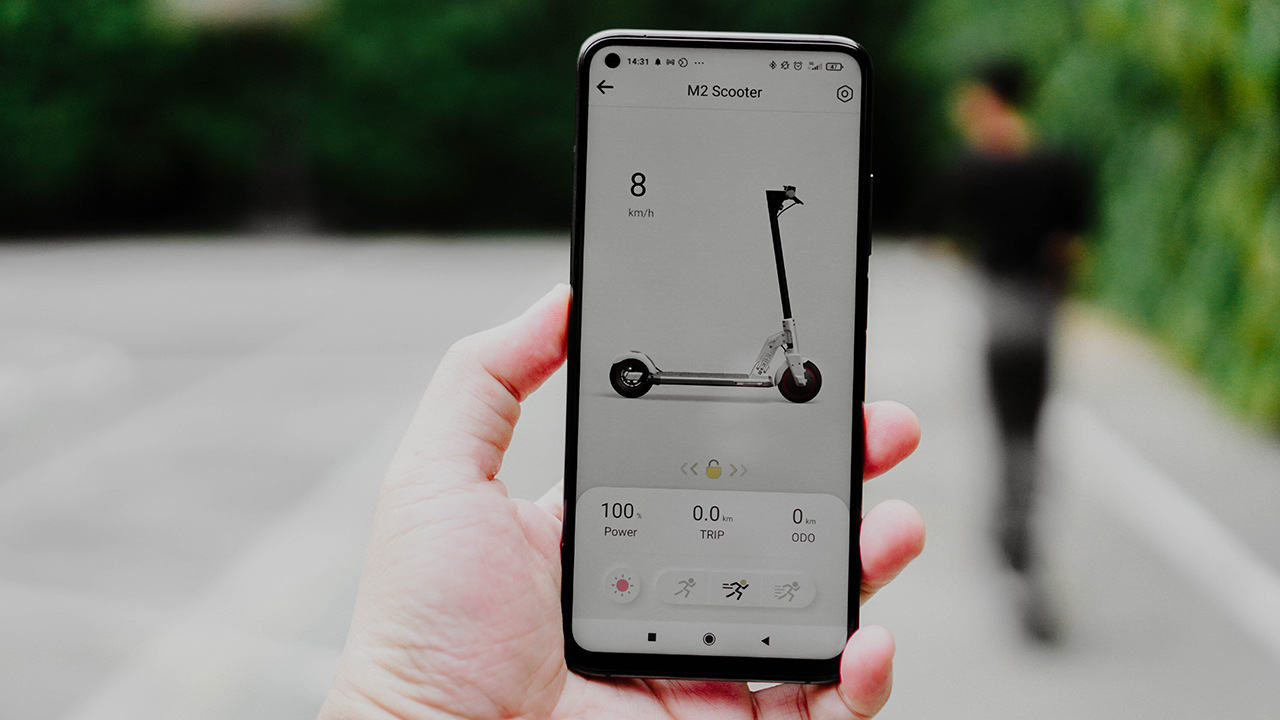
When paired, you can use it to adjust and control your e-scooter through various functions, as well as check the power available to ensure you won’t run out of battery.
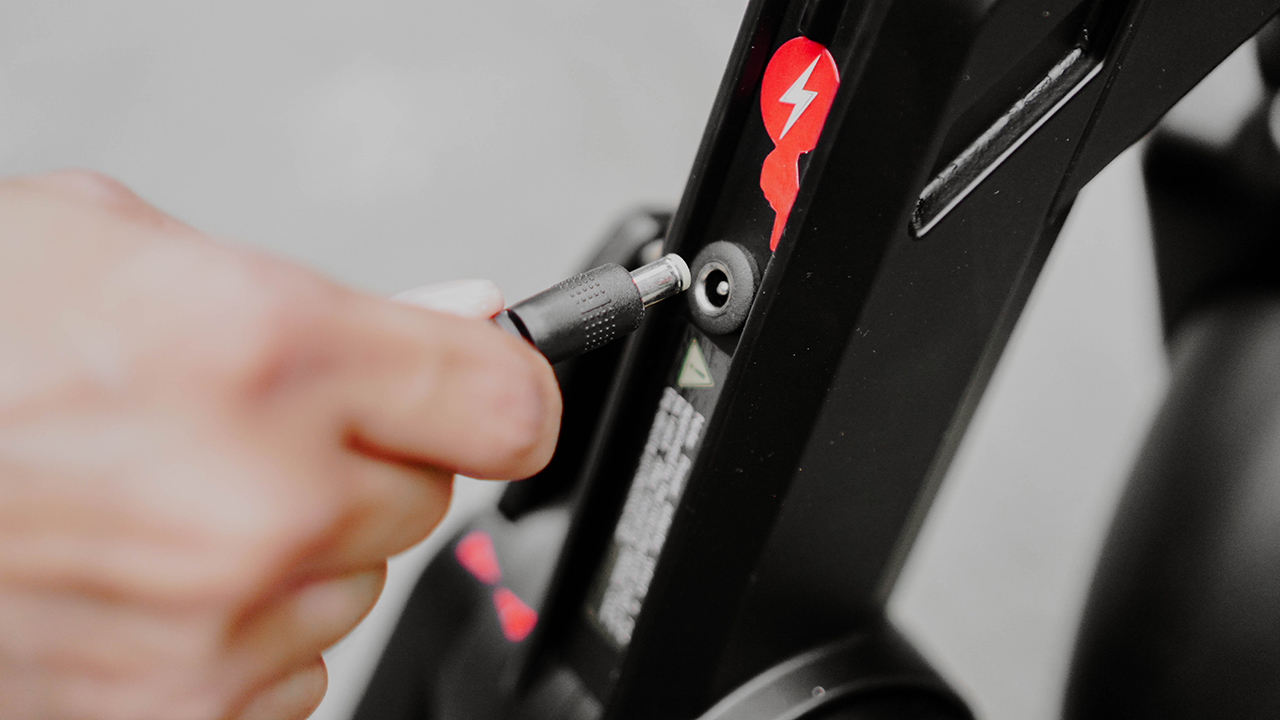
And if you run out of juice, you can charge it fairly quickly for three to four hours — faster than competing scooters which takes at least five hours to fully charge.
If you’re afraid of fast-charging technology, fret not. The M2 is equipped with an intelligent battery management system so it has protection against short circuits, over-currents, overcharges, over-discharges, and temperature anomalies.
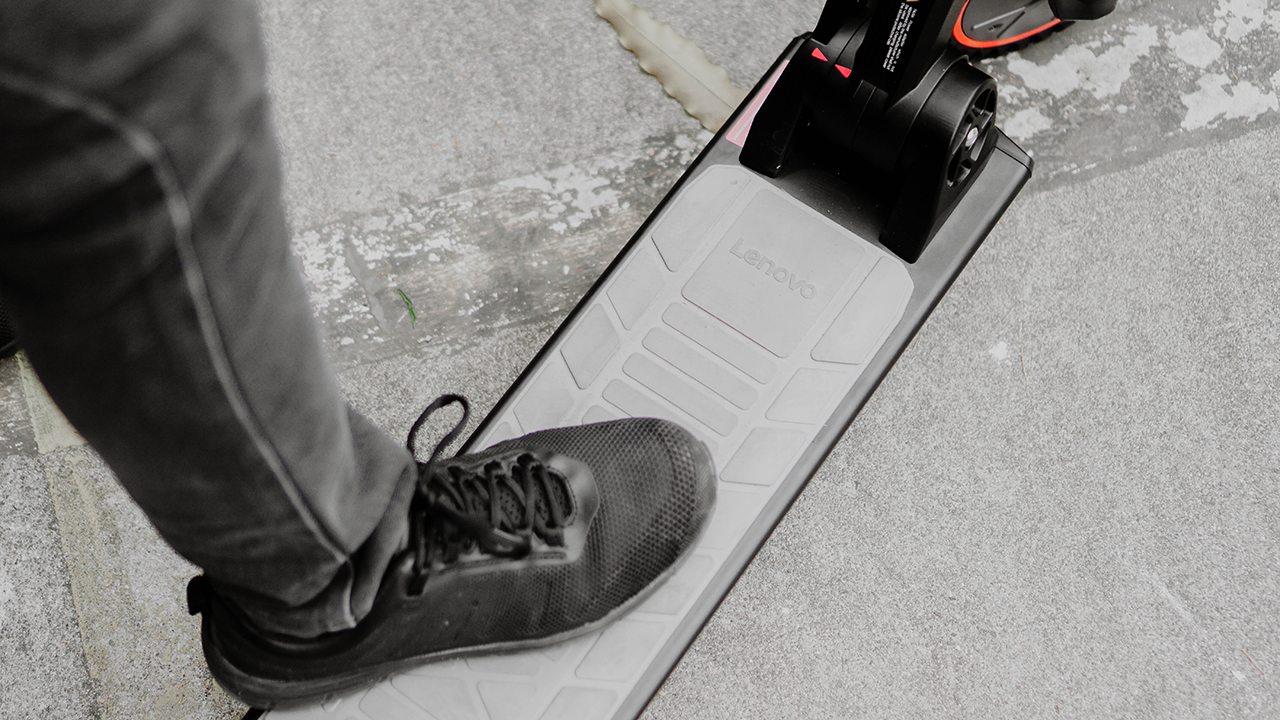
The deck where the 18,650 lithium battery is stored.
Although, the distance I traveled wasn’t enough to fully consume its 18,650 lithium battery. The M2 has a powerful 350W motor and a 7.5Ah high-capacity battery and can reach up to 25km/h (supposedly) and travels up to 30km.
If you’re asking if that is the battery’s mileage, yes it is. That power alone is enough to give you a 30km ride, which means you can travel back and forth to your office from your home easily.
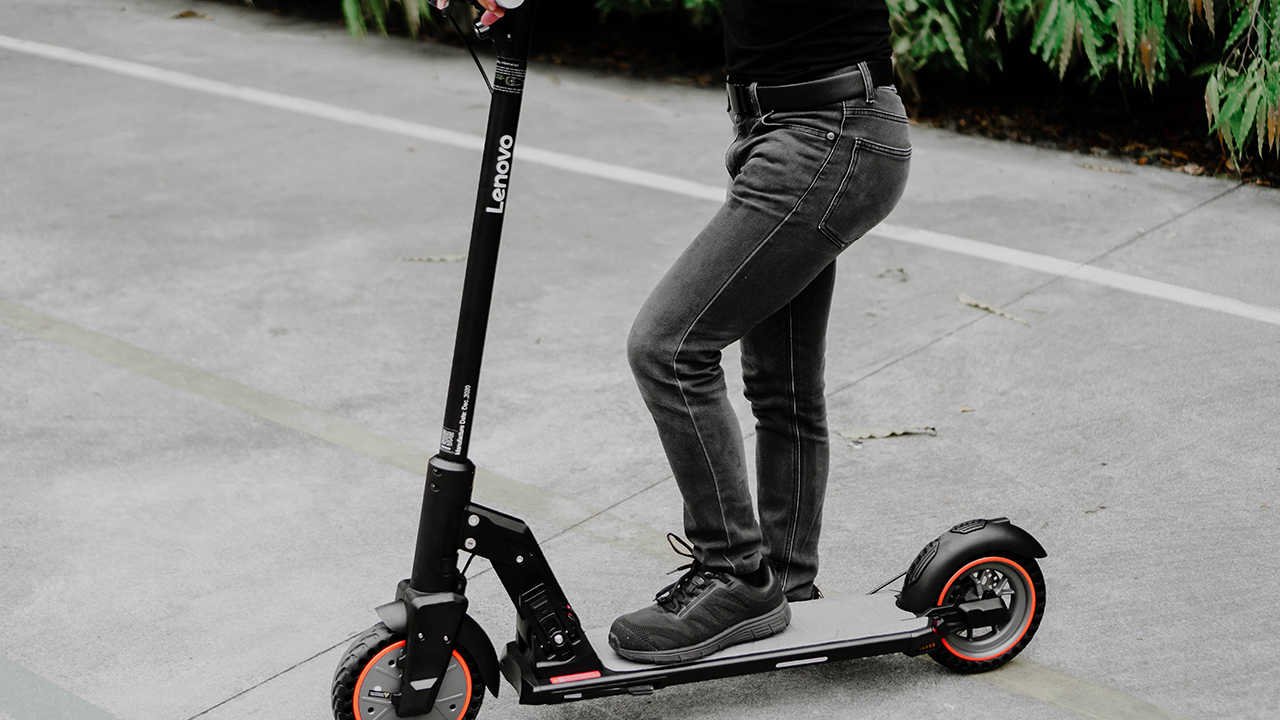
Forward… always forward
As mentioned, it can reach up to 25km/h supposedly. Since I live on the far east side of the Metro, I had the opportunity to test the e-scooter on slopes and open roads without distractions.

Shot on the Xiaomi Mi 10T Pro
In my experience, the maximum speed for the first gear was 7km/h; 18km/h for the second gear; and 28km/h for the third gear. I was speeding and I didn’t have trouble maneuvering the e-scooter even on slopes and asphalt roads. I just enjoyed the cool breeze hitting my face. Thank heavens, I really didn’t fly.
I also used it while there was a drizzle. I wasn’t afraid to test it out in the rain since it has an IP54 rating. In other words, it has decent protection against dust and water spray. My only warning: never ride when the roads are slippery to avoid any accidents. I tried using it down on a 60-degree slope and I sped up uncontrollably.
I also tried riding the M2 Electric Scooter on slopes. Thank heavens, I didn’t fall 😅 #GearedToGoPlaces pic.twitter.com/hoUCVH8V4t
— MJ (매커스재) (@hemjhae) March 18, 2021
I’m not an Aries nor a Sagittarius, but I was really impulsive, daring, and reckless at that time. Not gonna lie, “I live my life on the edge” was my motto a few years ago and it seemed like the daredevil awakened that day.
Speaking of angles, the e-scooter won’t have any trouble riding and turning on a 15-degree slope. My mistake last time was hastily sliding down a 60-degree slope and having a hard time building momentum to go up.
Apparently, the e-scooter wasn’t supposed to be able to handle anything beyond a 15-degree slope. It was the maximum climbing angle and I tried to push it beyond its limits. Well, you’ll never know if you never try, right?
Is this your GadgetMatch?
If you’re looking for a smarter way to commute, lessen carbon emissions, and travel without adding up to the never-ending bumper-to-bumper traffic, the Lenovo M2 E-Scooter is the way to go. It has everything you need for your short-distance travels within your neighborhood, going to work, or for your errands in the city.

This e-scooter might be a first-generation product, but it doesn’t disappoint. It can be the first step you can take towards a sustainable, greener future, and the first step towards living a smart, connected lifestyle. Just remember: Wear your helmet when riding the e-scooter for safety and security. The Lenovo M2 Electric Scooter is available in black and retails for PhP 19,995.








Automotive
Electric luxury reimagined: XPENG launches next-gen EV lineup
XPENG’s PH lineup spans the X9 MPV and the L03, with prices starting at PhP 1,548,000
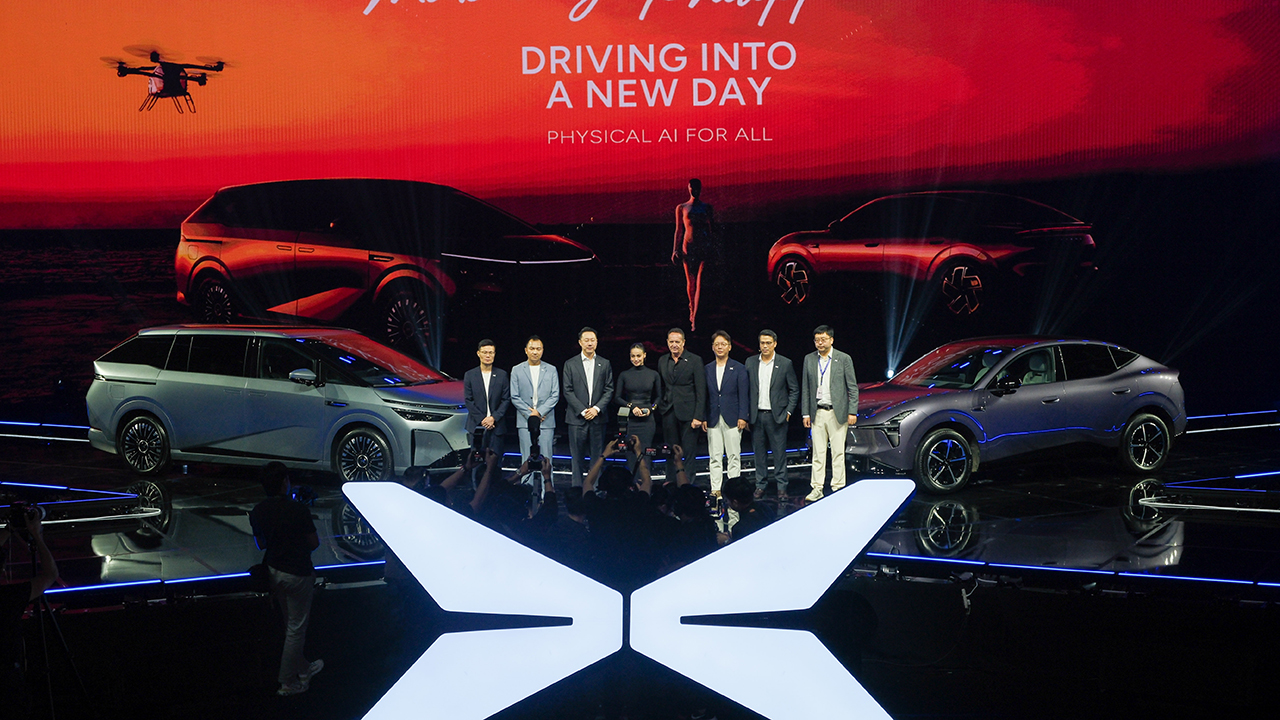
XPENG has officially entered the Philippine EV market. Over 3,000 guests attended the brand’s grand local debut. During the launch event, the automaker introduced a six-variant lineup.
The lineup features the flagship X9 MPV and the sleek L03 SUV Coupé. Prices start at an accessible PhP 1,548,000.
Brand ambassador Anne Curtis joined the celebration on stage, while XPENG showcased its X2 Flying Car and IRON Humanoid Robot. These futuristic displays highlighted the company’s “Physical AI” vision.
XPENG X9: First-class travel for seven
The XPENG X9 serves as the brand’s flagship seven-seater MPV.
It turns luxury mobility into a private lounge experience. Buyers can choose between two Long Range variants. The base X9 Long Range costs PhP 3,858,000. It features zero-gravity second-row seats with a central aisle. This layout ensures quick access to the third row. The Premium Seat Package costs PhP 4,058,000.
It upgrades the middle row to individual captain’s chairs. These chairs feature four-way powered headrests and 16-point massage.
Both variants share identical mechanical hardware. A front-wheel-drive motor produces 235 kW and 450 Nm of torque. A massive 110 kWh battery provides up to 615 km of range.
A compatible DC fast charger boosts power from 10 to 80 percent in 12 minutes. Active rear-wheel steering delivers a tight 5.4-meter turning radius. Dual-chamber air suspension ensures maximum ride comfort.
A powered third row folds completely flat beneath the floor. Color options include Midnight Black, Arctic White, Matte Gray, and Silver Frost. Inside, buyers can select Meteorite Black or Coffee.
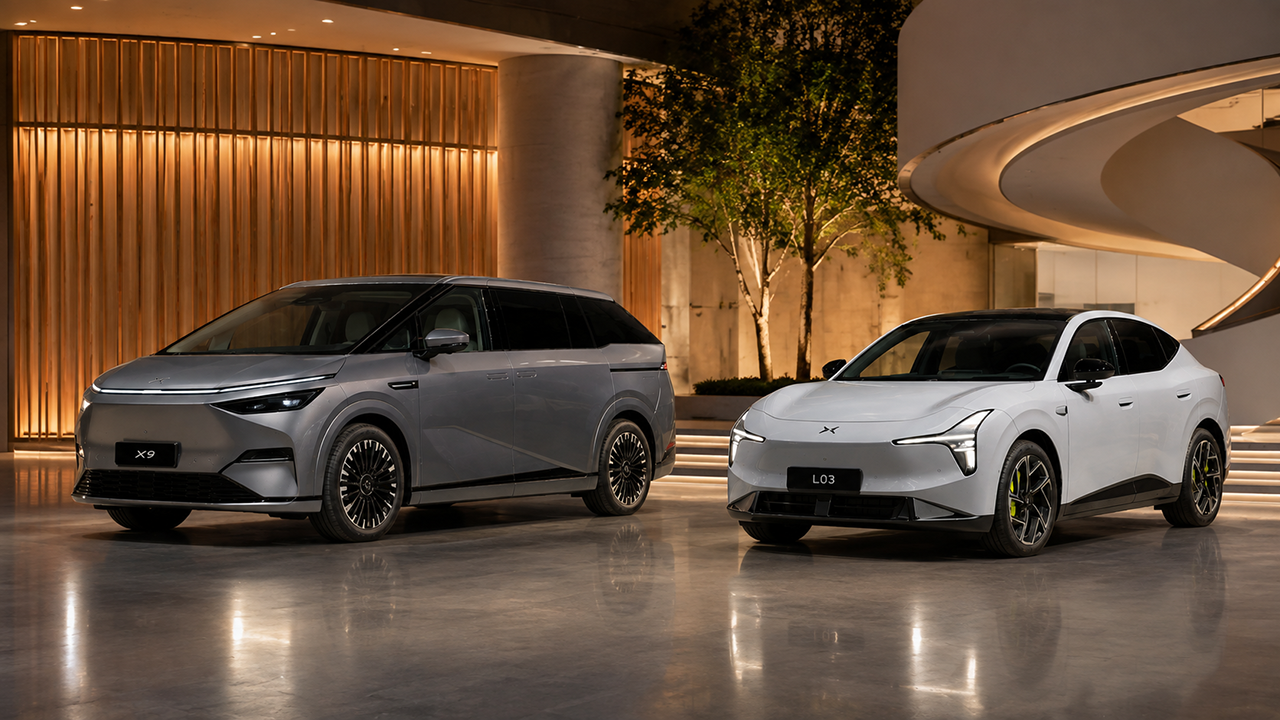
XPENG L03: Sleek versatility meets electric freedom
The L03 SUV Coupé blends striking aesthetics with daily utility. XPENG offers four distinct variants. Three models use pure battery-electric powertrains. One model features a range-extended electric setup (REEV).
The L03 EV Standard Range costs PhP 1,548,000. Its 58.3 kWh battery delivers up to 445 km of range. The L03 EV Long Range costs PhP 1,698,000 and offers up to 520 km.
The top-tier Long Range Ultra costs PhP 2,058,000 with 480 km of range. This Ultra trim adds front-seat massage, upgraded audio, and intelligent driving tech.
The L03 REEV costs PhP 1,598,000. It uses an onboard gas engine as an electric generator. Its 37.2 kWh battery delivers 215 km of pure electric driving. Total WLTP combined range reaches up to 1,017 km.
All L03 models feature rear-wheel drive. Fast charging takes roughly 20 minutes to reach 80 percent. Every model includes a 15.6-inch touchscreen and 539 liters of cargo space.
Available colors include Arctic White, Midnight Black, Rock Gray, Silver Frost, and Phantom Purple.
Ownership packages, reservation details

XPENG pairs each model with generous ownership perks. X9 buyers receive five years of free preventive maintenance. The package includes five years of roadside assistance.
XPENG adds a five-year bumper-to-bumper warranty. An eight-year warranty covers the battery and motor. X9 buyers also receive a complimentary 7kW wall charger.
L03 buyers receive two years of free preventive maintenance. The L03 includes identical roadside, bumper-to-bumper, and battery warranties. L03 EV buyers get a 7kW wall charger. The REEV variant comes with a 3.5 kW portable charger.
Reservations cost PhP 25,000 for the X9 and PhP 10,000 for the L03. Buyers can reserve through @xpengphilippines on social media.
XPENG showrooms in Greenhills, Makati, North EDSA, and Cebu are accepting reservations now. Local customer deliveries will begin in the fourth quarter.
Automotive
BYD says that way better EV batteries are coming next year
Solid-state batteries will debut with higher-end models in 2027.


With gas prices reaching the edges of believability, electric and hybrid vehicles are turning into worthy upgrades. That said, the more casual consumer still has a lot of questions about going electric, primarily about the durability of the battery and range anxiety. Well, a major battery technology upgrade is coming in the next few years, and BYD has just committed to it for next year.
Via the Spanish outlet Carwow, BYD EVP Stella Li confirmed that the company will launch its first vehicle with a solid-state battery in 2027. Now, if you’re a regular consumer, a solid-state battery probably doesn’t make much sense to you. But here’s the basics: it’s smaller, safer, and can last longer on a single charge.
If you’re fine with technical explanations, a solid-state battery uses more solid components, as opposed to the liquid solution used by the current standard of lithium-ion batteries. Because it’s more solid, it has better energy density. Higher energy density means a smaller size is needed to achieve the same battery capacity as modern batteries. In turn, this means that a vehicle can pack more batteries inside, allowing for better capacity. Oh, and let’s not forget that these batteries are generally safer and less prone to incidents.
In the same interview, BYD says that the first model will arrive next year. Unfortunately, because of the battery’s cost to produce, the component will likely debut with the company’s higher-end models. Still, it’s an exciting sight to behold. The electric and hybrid market is already quite the temptation for users, so an even better battery will further push the segment to better heights.
SEE ALSO: BYD adds the facelifted Seal 5 DM-i to its hybrid sedan lineup
Accessories
70mai launches the A900 series with 4K front, rear recording
Two new 4K dual-channel dash cams, both with 4G
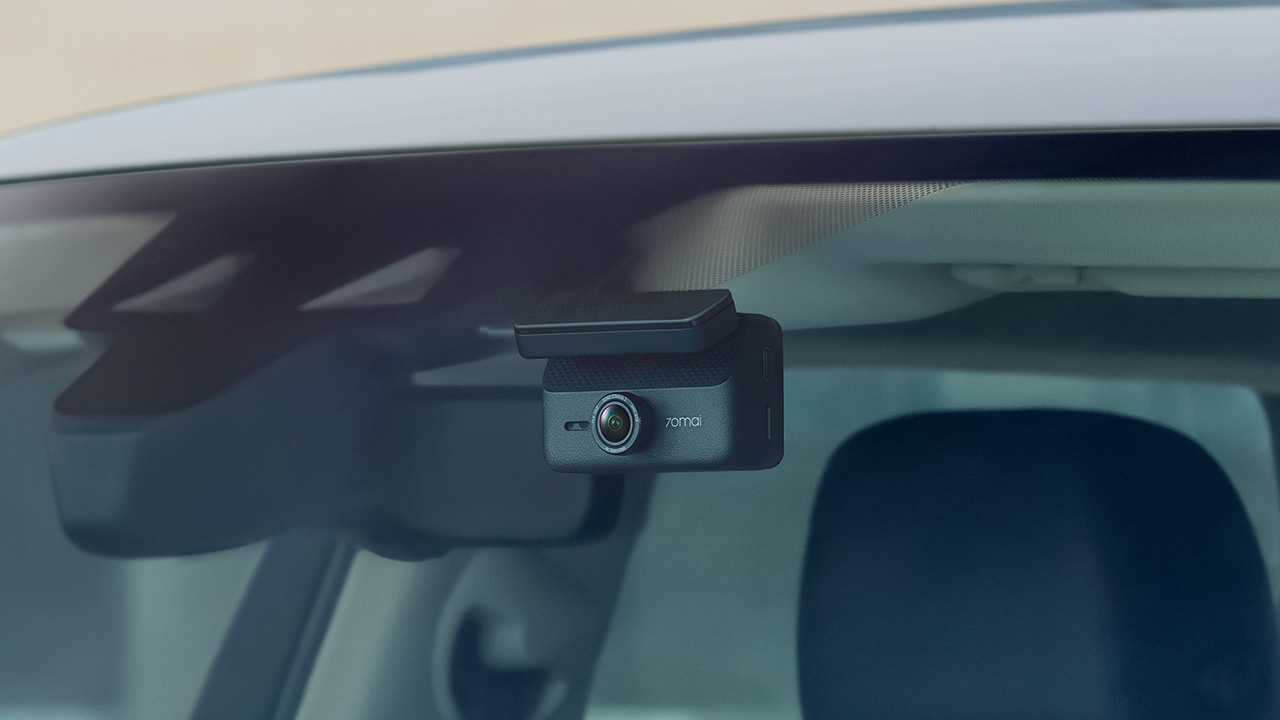
70mai has launched the A900 Series, led by the flagship 70mai Dash Cam 4K A900 Ultra, with the 70mai Dash Cam 4K A900 joining it in the lineup.
Both models record in 4K from the front and rear cameras, and both support 4G, so your footage stays reachable from your phone even when you’re away from the car.
4K recording from both cameras
The A900 Ultra uses dual Sony STARVIS 2 IMX678 sensors to capture clear 4K footage from both directions. As a result, details like license plates and road signs remain sharp.
Smart HDR balances bright and dark areas under shifting light. Users can also adjust color tones and contrast. To keep feeds synced, the rear camera uses LVDS digital transmission. This tech sends a lossless 4K feed with just 20ms of latency.
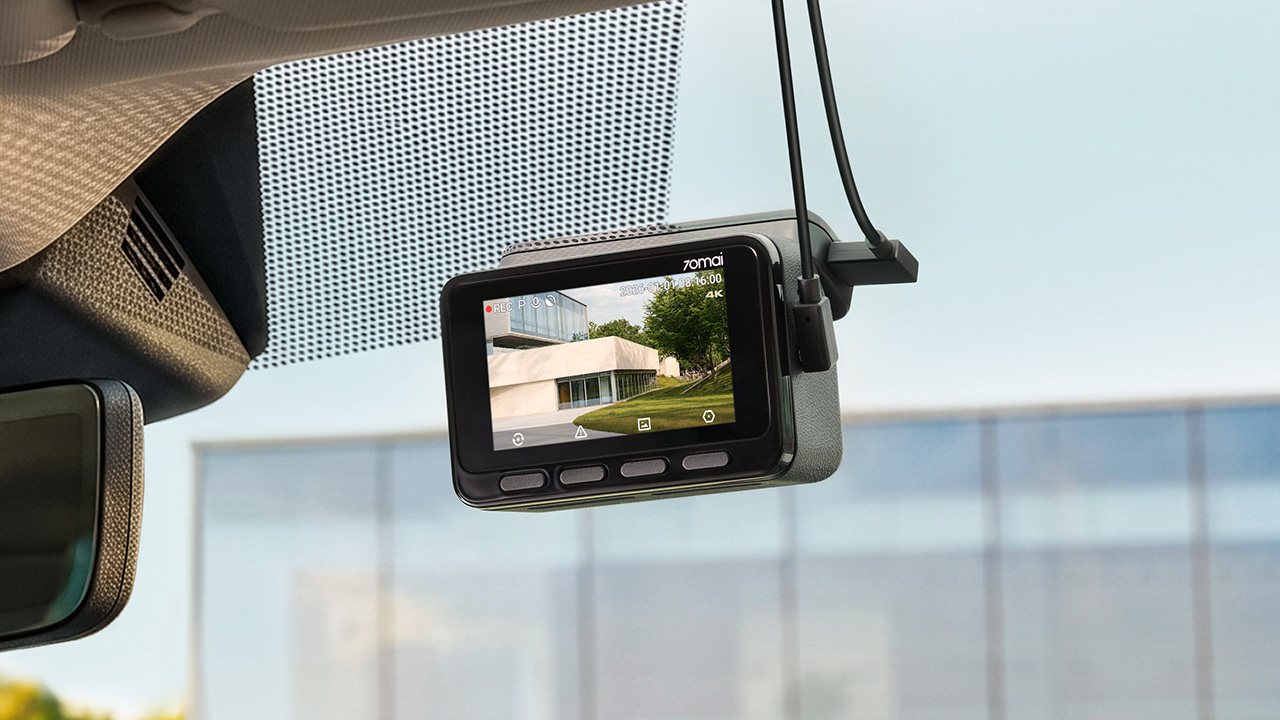
Handling changing light
Driving into a tunnel or under the shadow of a tall building changes the lighting quickly, and 70mai built three imaging technologies into the A900 Ultra to deal with it.
MaiColor Vivid+ Solution 2.0 is meant to give more natural colors and finer detail, along with smarter scene adaptation. Night Owl Vision 2.0 reduces noise and glare to help with nighttime clarity.
Lumi Vision is made for parking surveillance in near-total darkness, where it automatically adjusts exposure and gain and applies noise reduction. 70mai says this produces clear, full-color footage in extremely low light.
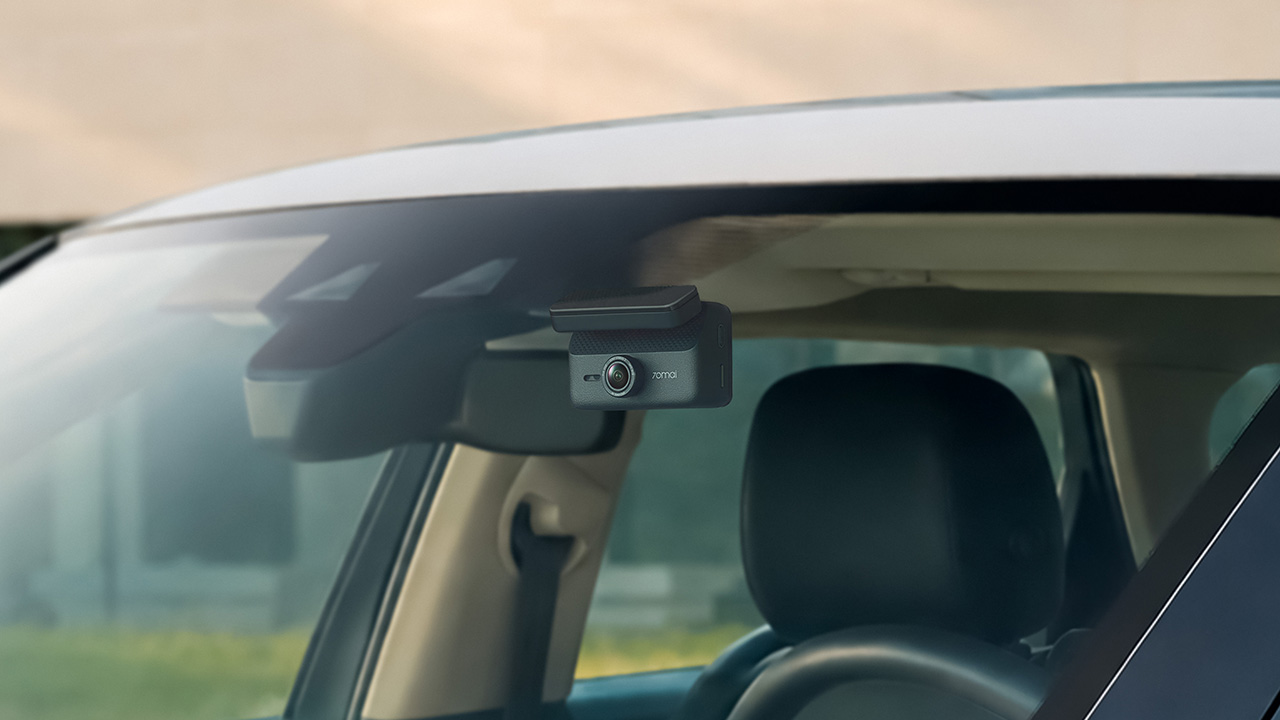
Parking mode and remote access
Smart Parking Guardian Mode 2.0 protects your vehicle while parked. It combines AI motion detection, dual-channel collision detection with pre-recording, and time-lapse options.
The system draws just 5mA on standby to prevent battery drain. For extended coverage, the optional 70mai Battery Pack Mini powers surveillance for up to 30 days.
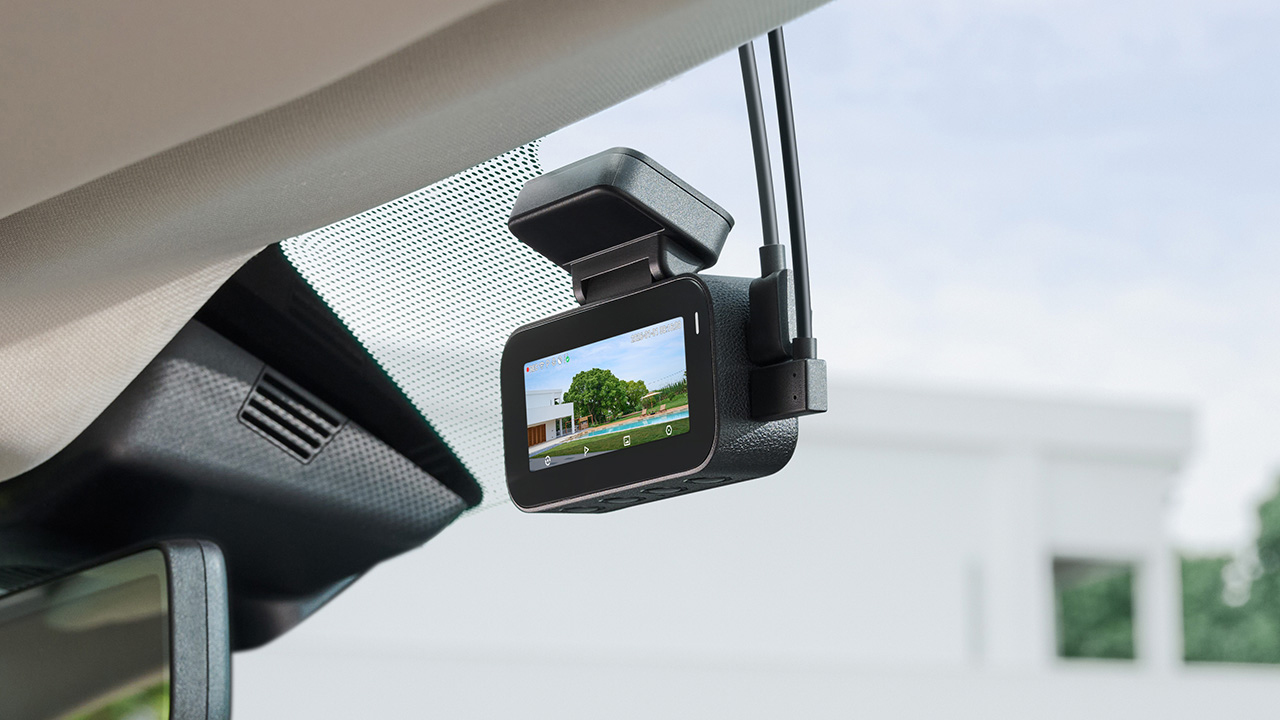
In photo: A900
Pairing the camera with the 4G Hardwire Kit unlocks 70mai 4G Cloud+ 2.0 features on the app. Enhanced Buffered Emergency Recording saves up to 190 seconds before an incident and 30 seconds after.
It automatically uploads this footage to the cloud for immediate remote viewing.
The 70mai Dash Cam 4K A900
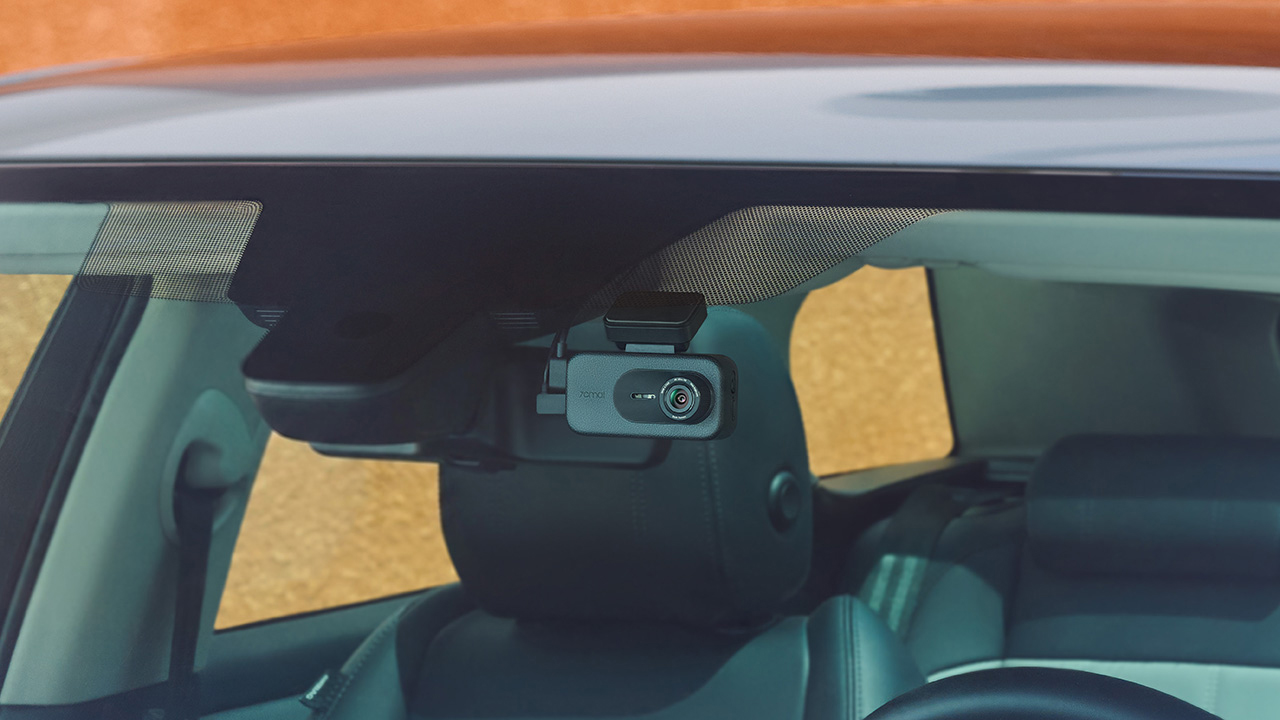
In photo: A900
The A900 sits alongside the Ultra as the more accessible option. It records True 4K HDR at 30FPS from both the front and rear cameras, and Smart HDR can be scheduled to turn on at set times.
Its f/1.55 aperture is meant to help in low light, and 4G Cloud+ 2.0 keeps the dash cam connected to the 70mai App. It’s the model for drivers who want dual-channel recording and 4G connectivity at a lower price.
The 70mai Dash Cam 4K A900 Ultra retails for US$ 300, available for pre-order at US$ 240. Meanwhile, the A900 is priced at US$ 200, currently 20% off at US$ 170.





FFVII Revelation: 11 things you missed

Sony teams up with Hello Kitty for exclusive limited-edition collection

iPhone 18 series breaks records in Vietnam as pre-orders triple

The Ace Combat 8: Wings of Theve launch event is happening this week

30 days with the LG AeroMini

HUAWEI Pura X View is 2026’s first WIDE slab-type smartphone

The CAMON Slim 5G is TECNO’s latest ultra-slim smartphone

iPhone 18 Pro series: Price, availability in the Philippines

vivo X500 Series launches with major imaging upgrades

iPhone 18 Pro series: Price, availability in Singapore


-
 Automotive1 week ago
BYD says that way better EV batteries are coming next year
-

 News1 week ago
HONOR Magic9 Pro Max launches in China with ARRI-powered imaging
-

 Philippines5 days ago
TECNO CAMON Slim 5G: Price, availability in the Philippines
-
 Reviews6 days ago
TECNO CAMON Slim 5G review: Slim on size, big on surprise
-

 Smartphones1 week ago
TECNO CAMON Slim 5G teases an ultra-slim design ahead of launch
-

 Reviews1 week ago
TECNO POVA 8 Pro Tonino Lamborghini review
-
 Smartphones1 week ago
When TECNO-logy meets Tonino Lamborghini legacy
-

 News6 days ago
Apple wants to release new iPhones more regularly