

I’ve never been the kind of person who stays still for long.
My calendar looks more like a puzzle than a plan. Airports, races, trails, test drives, repeat.
Somewhere between boarding gates and finish lines, I try to squeeze in meetings, shoots, and the occasional night out.
For years, I’ve carried cameras that promised to keep up. They all said the same thing: lightweight, smart.
Yet they always ended up feeling like one more thing to hold. They’re more of a reminder that I was documenting life instead of living it.
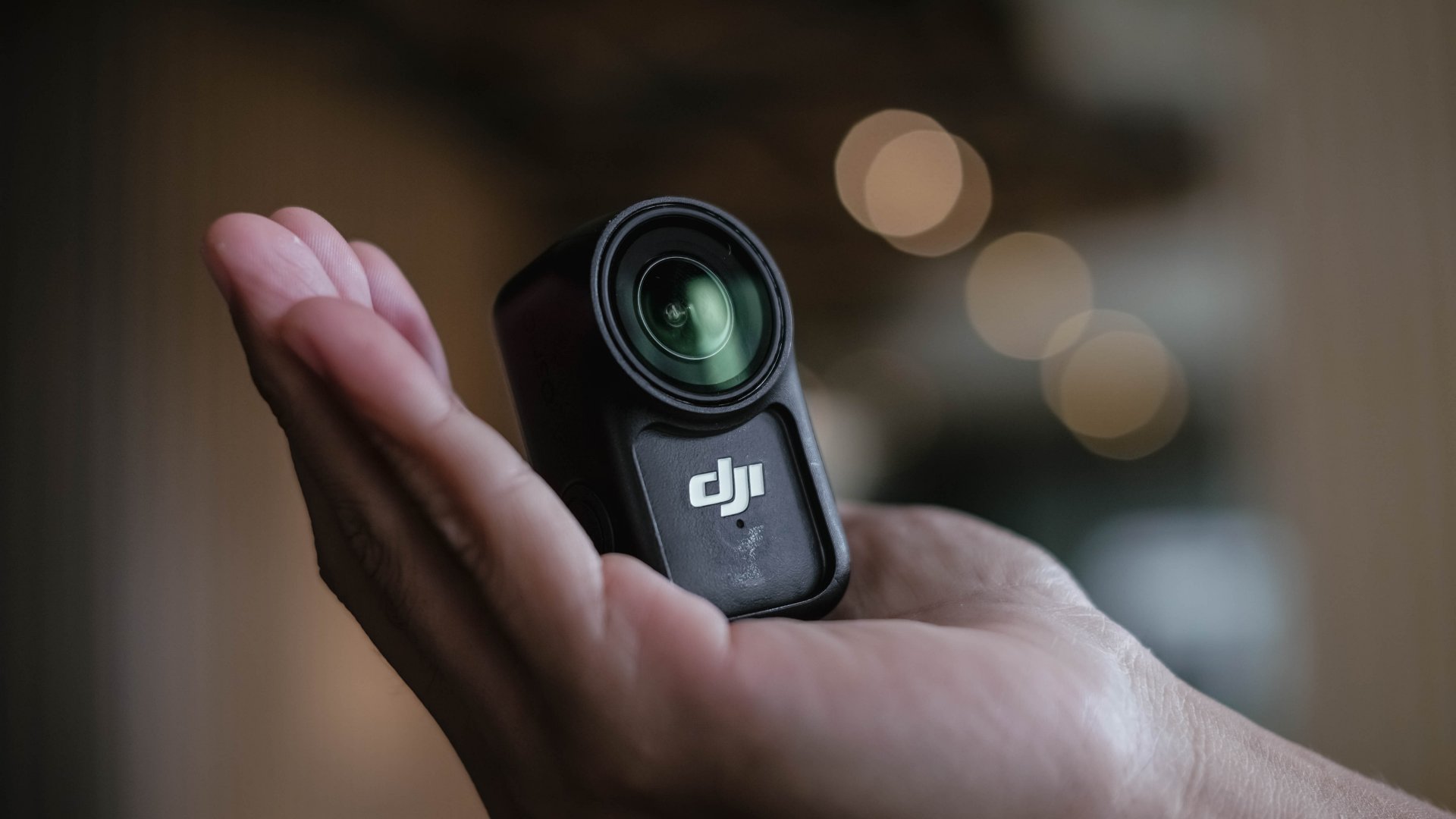
Then the DJI Osmo Nano arrived, right before a flight to Hong Kong. I slipped it into my backpack without much thought.
Somewhere between the terminals of Hong Kong, the beaches of Shenzhen, the streets of Zhengzhou, and the mountain roads of Baguio, this tiny camera became part of my everyday life.

Hanging from a lanyard or docked on a dashboard, it was always ready. It’s strange how something so small can change the way you move through the world.
I stopped worrying about framing the perfect shot and started focusing on feeling the moment.
Made for people on the move
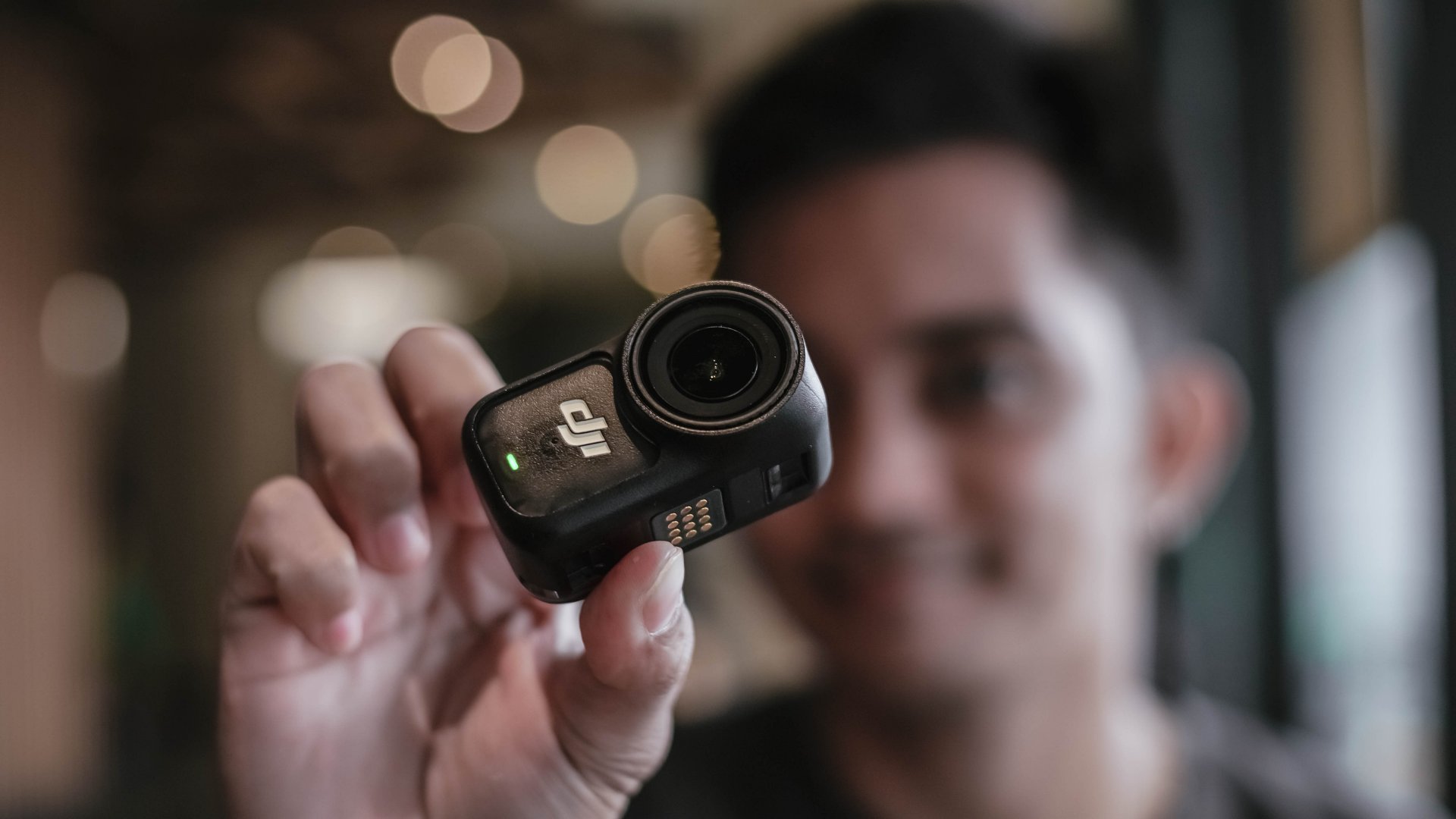
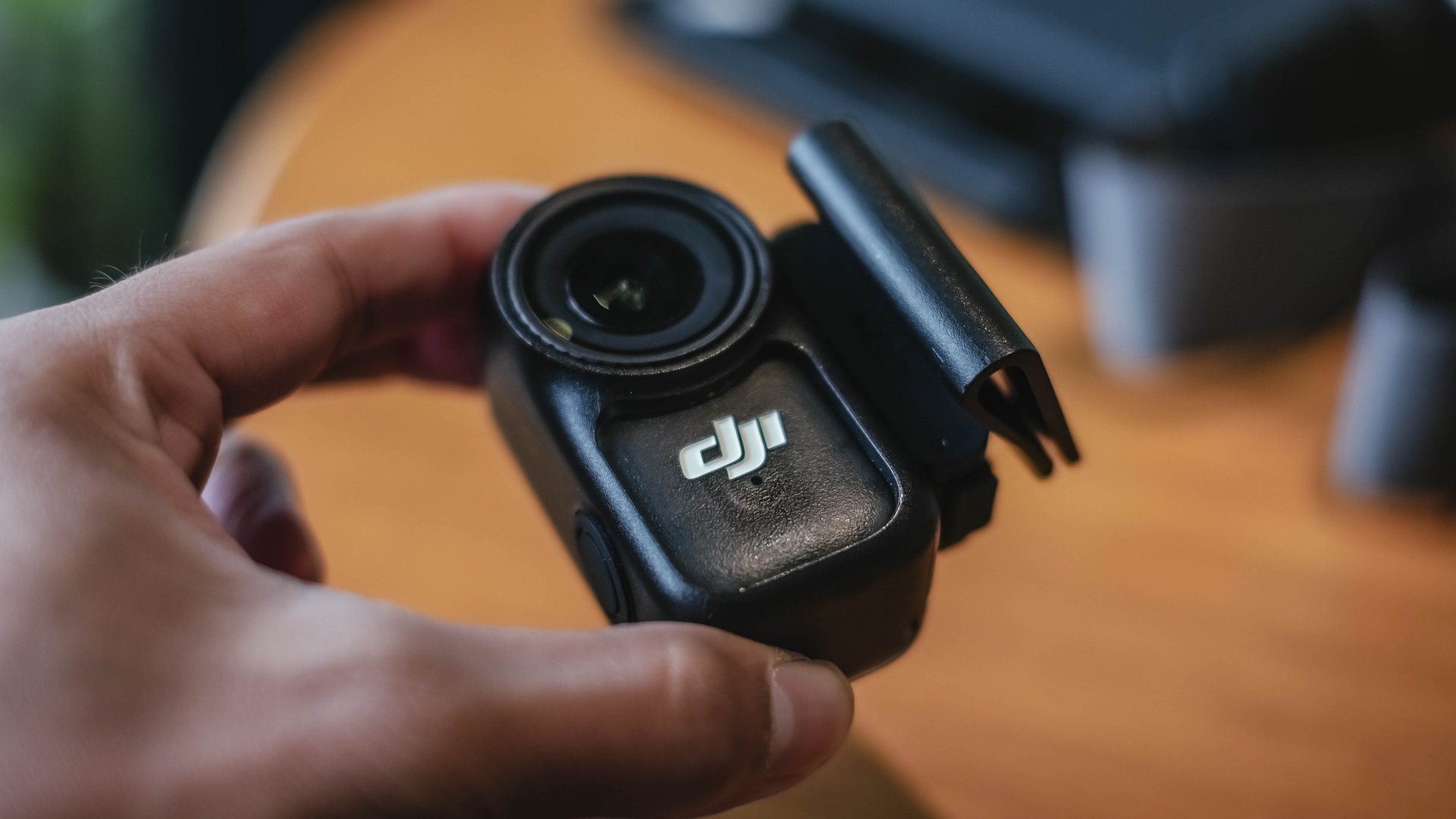
At 52 grams, the Osmo Nano is incredibly light yet feels substantial. It’s the kind of confidence that comes from precision engineering.
The matte finish resists fingerprints and the occasional drop of sweat. Simply put, it’s designed for motion.
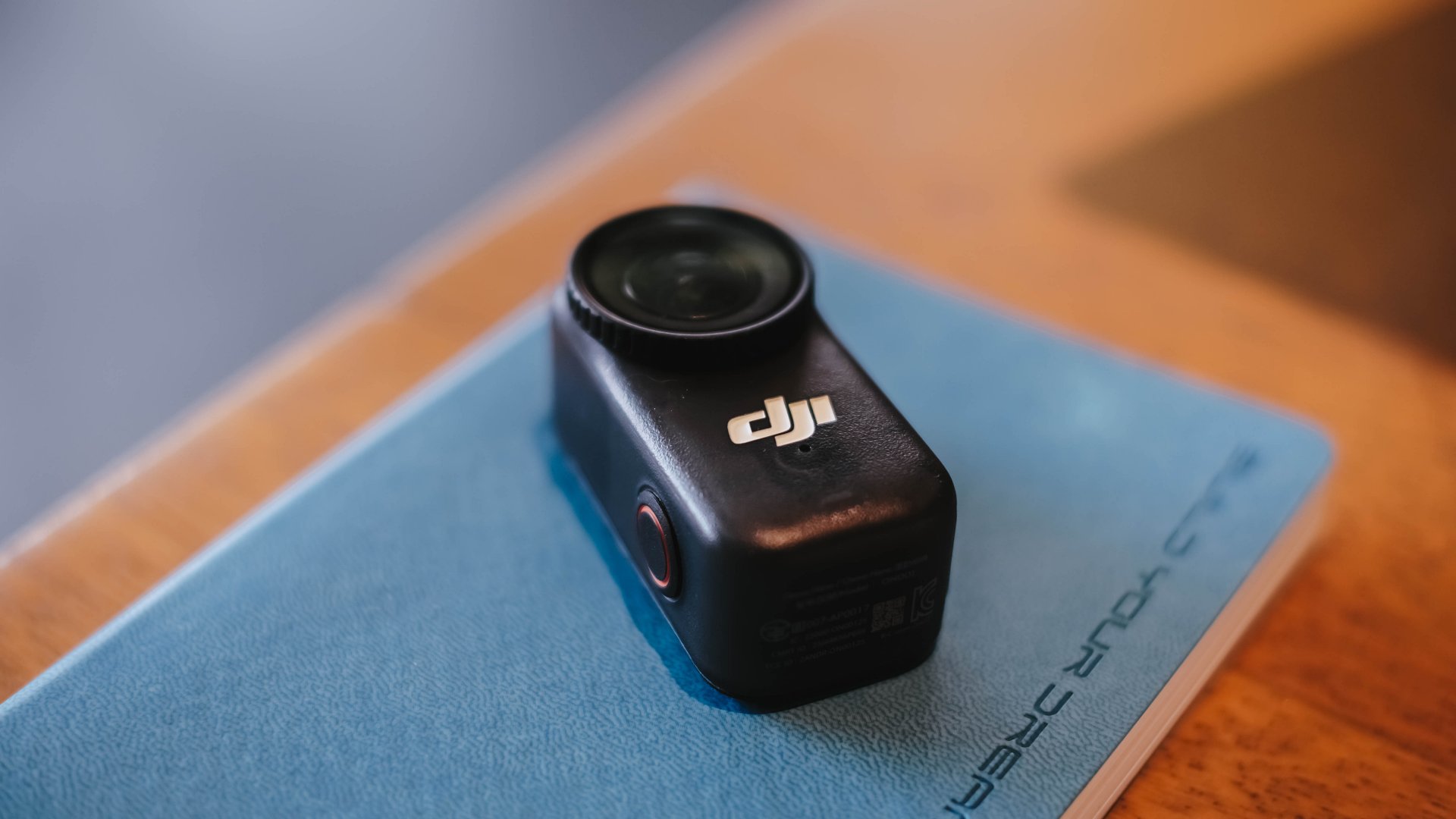
Then there’s the protective case. If there were an award for most underrated accessory, this would win it.
I accidentally dropped the Nano from a floor up and braced for heartbreak, but when I picked it up, both the body and the lens were flawless.
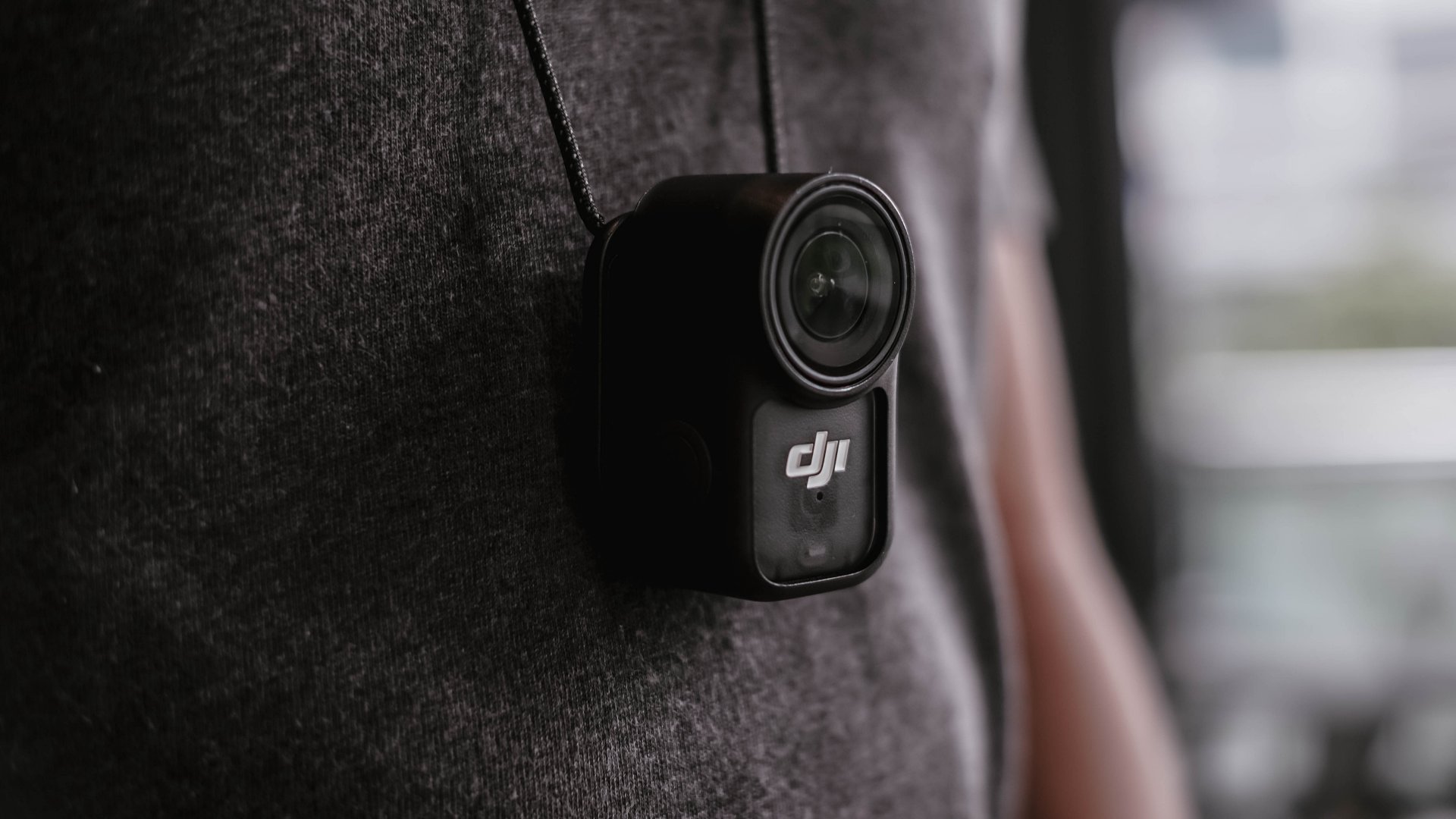
With or without a case, it also looks elegant. It doesn’t scream “camera.” You can clip it on your shirt or cap, and no one gives you a second look.
You can film without disrupting the mood, which gives the footage a sense of authenticity that’s hard to replicate.
A full system in your pocket
The Osmo Nano alone is impressive, but pair it with the Multifunctional Vision Dock and it becomes a complete ecosystem.

I brought it everywhere. In Shenzhen, it sat on the sand while I ran barefoot by the water. In Zhengzhou, it helped me capture temples and tourist sites that looked almost cinematic.
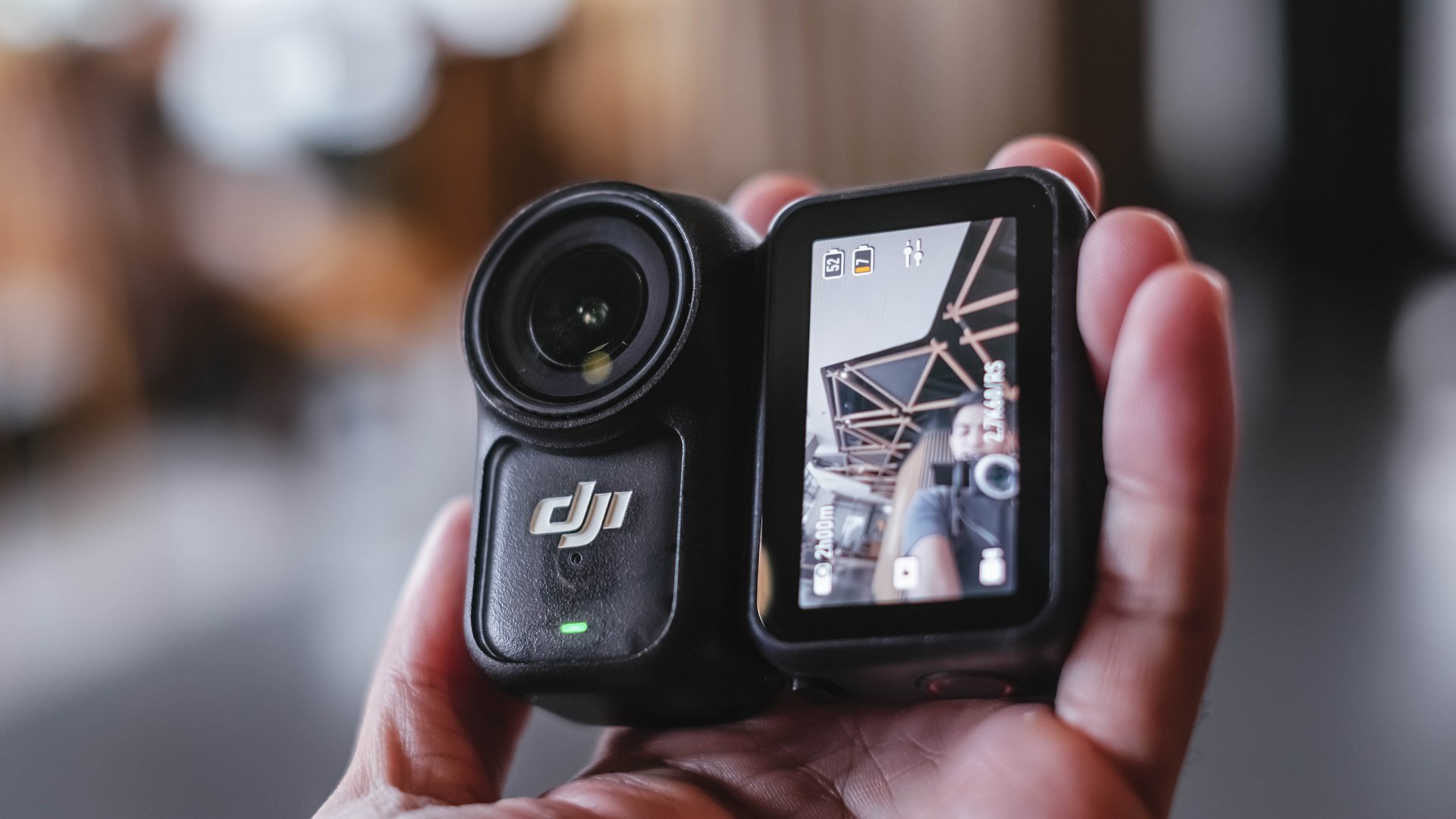
The dock acts like your all-in-one creative base: a power bank, tripod, remote control, and transfer hub built into one piece of aluminum.
It charges the camera to 80% in just 20 minutes, records for up to 200 minutes, and transfers data up to 600MB/s through its microSD slot.
It even doubles as a display for previewing or reviewing clips, which is a rare convenience in a setup this small.
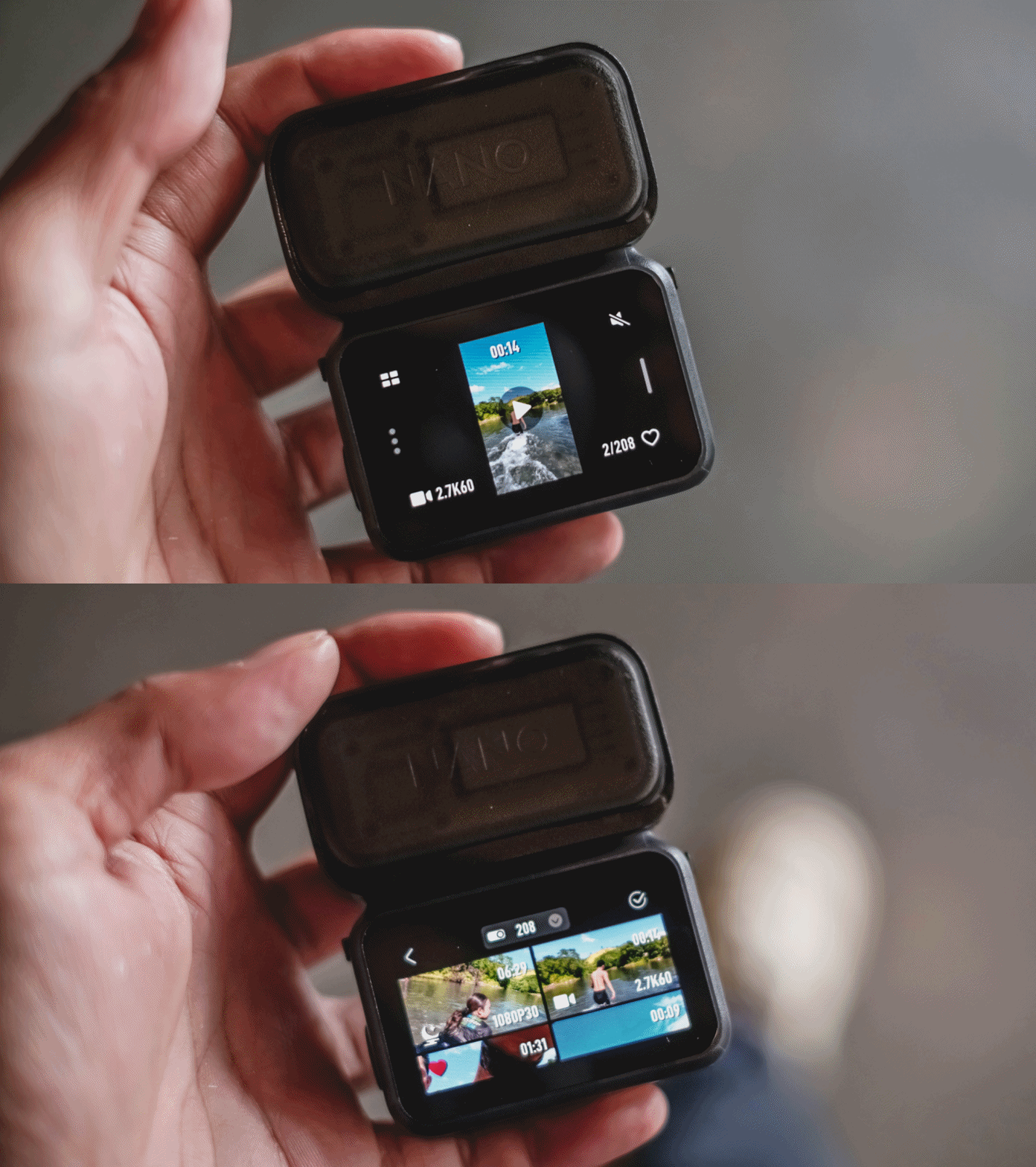
Together, the Nano and the dock feel like the definition of portable professionalism: a setup that fits in your pocket yet never feels like a compromise. It’s everything you need, minus the baggage.
The creative hub
What ties it all together is the DJI Mimo app. It’s the command center that turns the Osmo Nano into an extension of your creative workflow.
Footage syncs automatically, though I wish it keeps the connection longer, as the device kept disconnecting from the app time and time again.
Through the app, you can trim, color-grade, and export straight from your phone. Whether at an airport lounge, a café, or even the backseat of a car, editing feels effortless as long as you don’t use the One-Tap Edit feature.
I don’t know how to put it, but using AI to pick the ‘best’ frames doesn’t sit well with me after trying it and seeing its output.
While the frames it picked were ideal, composition-wise, it doesn’t have the emotions needed when producing a video.
@gadgetmatch We’ve taken the DJI Osmo Nano in the wild and here are our sample clips. Full review on gadgetmatch.com 🫶🏼 #DJIOsmoNano #DJI #foryou ♬ som original – 𒆜|𝑹𝑵𝑩𝑨𝑺𝑺444🇧🇷-_-
Nevertheless, I particularly love how it adapts to my workflow. Syncing large files and previewing high-res clips happens with minimal lag.
For creators who thrive on momentum, that speed is priceless.
Race tracks and road trips
I’ve always believed that motion tells better stories than stillness, that the way a car turns a corner says as much as the driver’s expression.
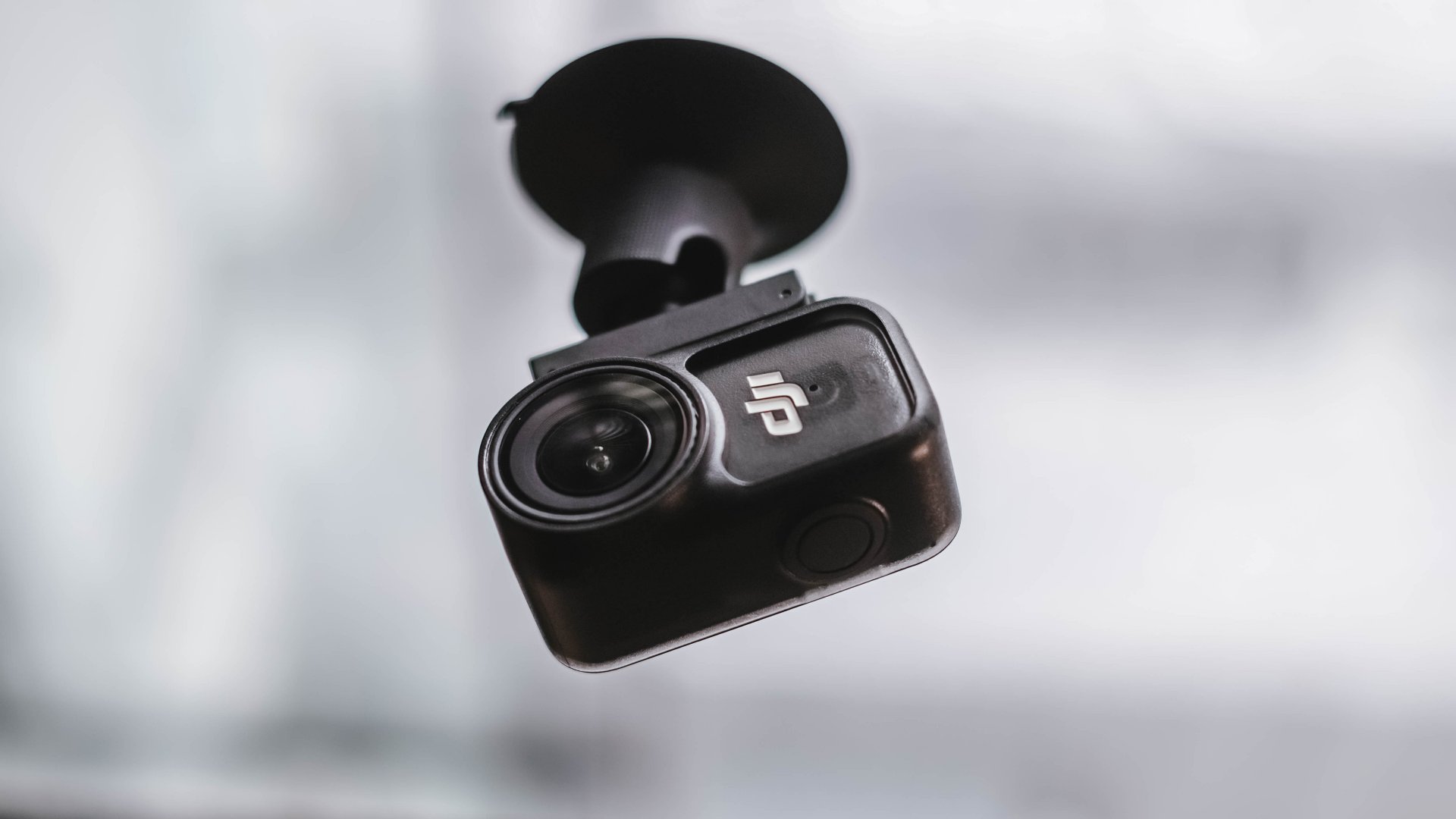
When I tested cars at the BYD Zhengzhou All-Terrain Circuit, the Osmo Nano was mounted on the Dual-Direction Magnetic Ball-Joint Adapter Mount.

Through rough corners and high-speed bursts, the videos stayed unshaken thanks to RockSteady 3.0 and HorizonBalancing.
The footage looked like something out of a commercial. The 143° ultra-wide lens captured more story.
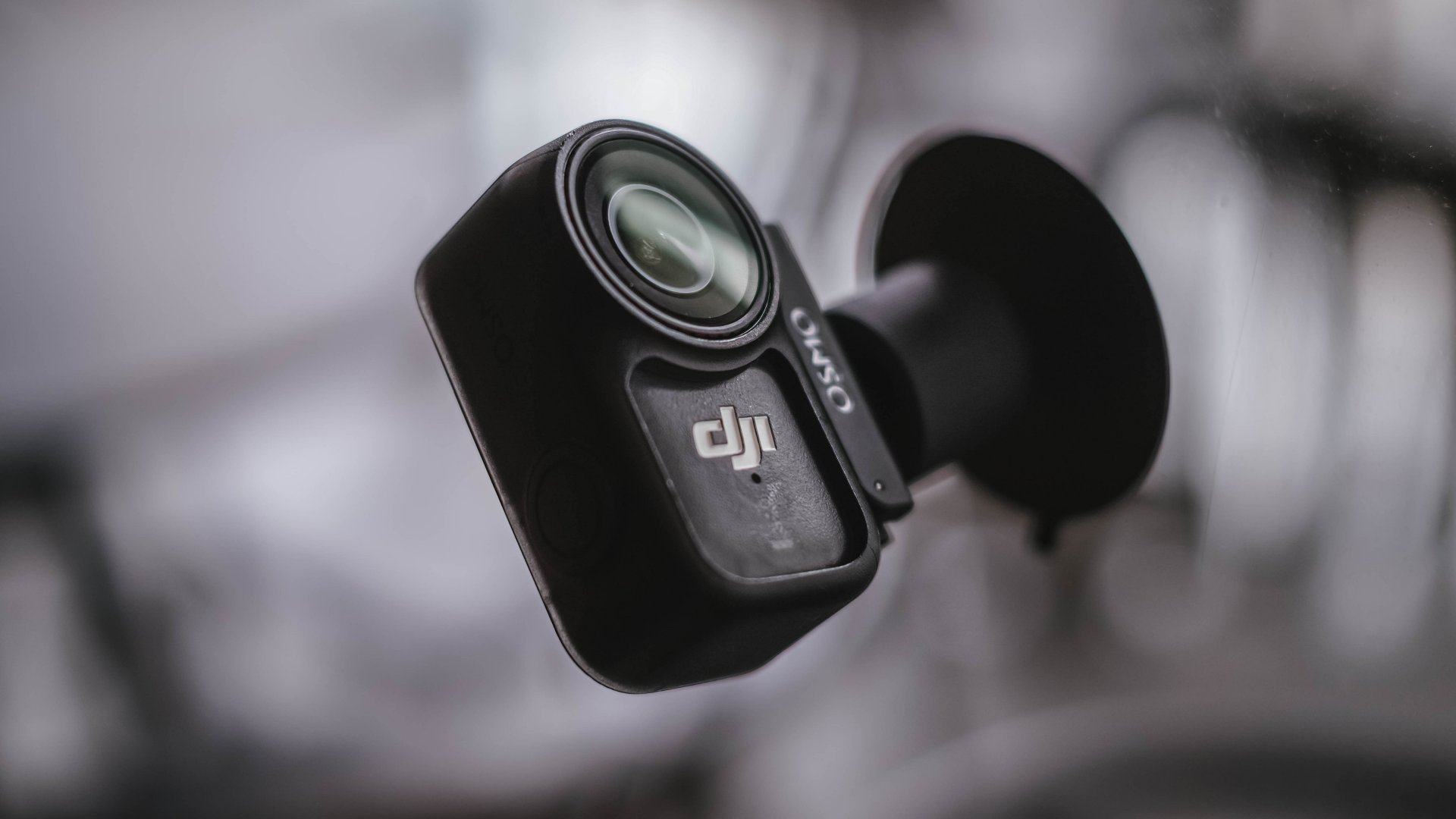
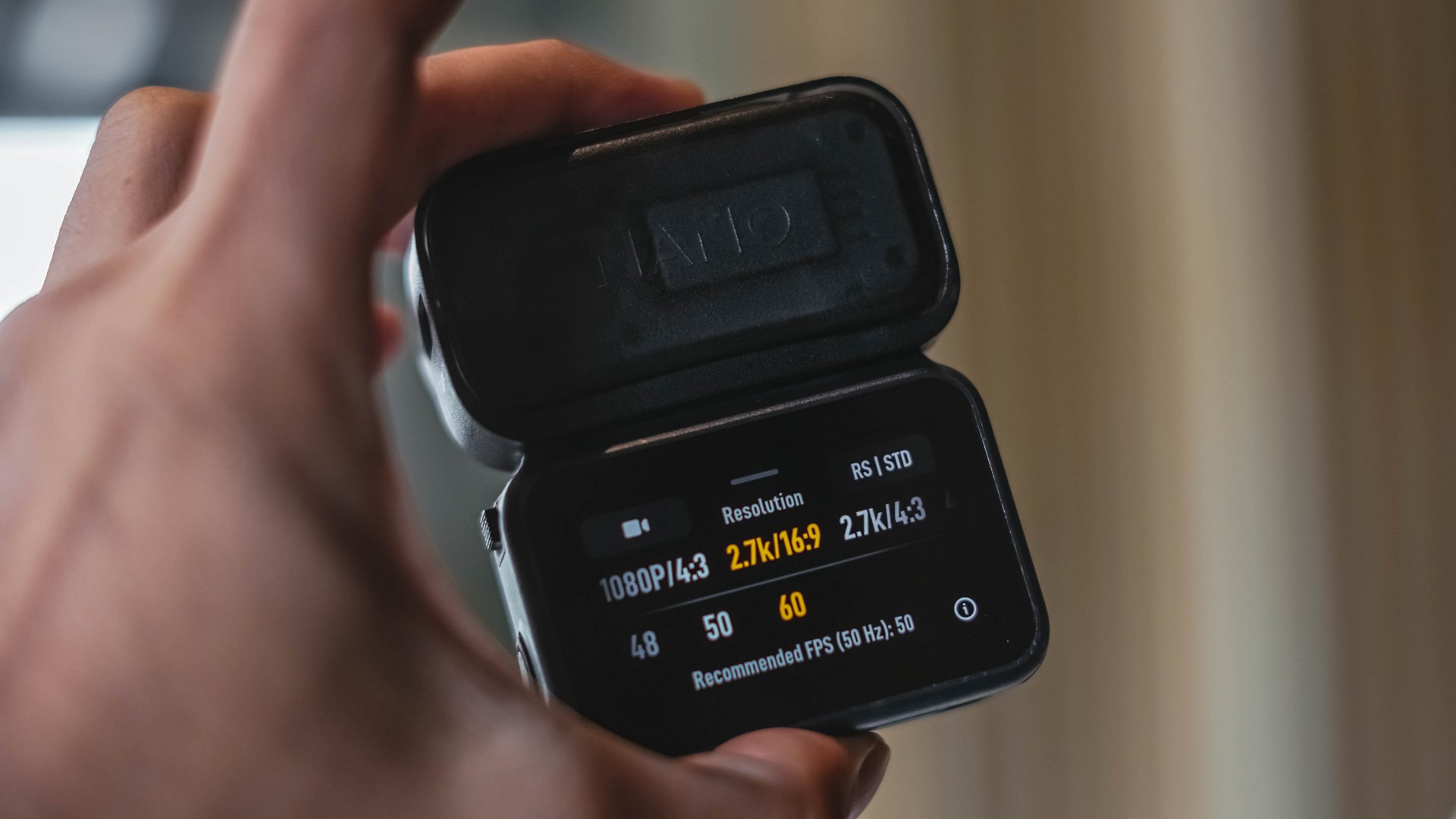
The only drawback was how the Nano tended to overheat during off-road and race track sessions, even after a firmware update.
Even when we were indoors at the BYD Di-Space Museum — a controlled, air-conditioned environment — I had to limit recordings to 2.7K or 1080p instead of 4K to keep recording.
Later, I brought it to Baguio City, driving through pine-covered streets with the Ford Territory Hybrid.
The colors shifted with the light, from deep morning blues to warm golds by afternoon, and the Nano handled it all gracefully. It balanced light and shadow without flattening the details.
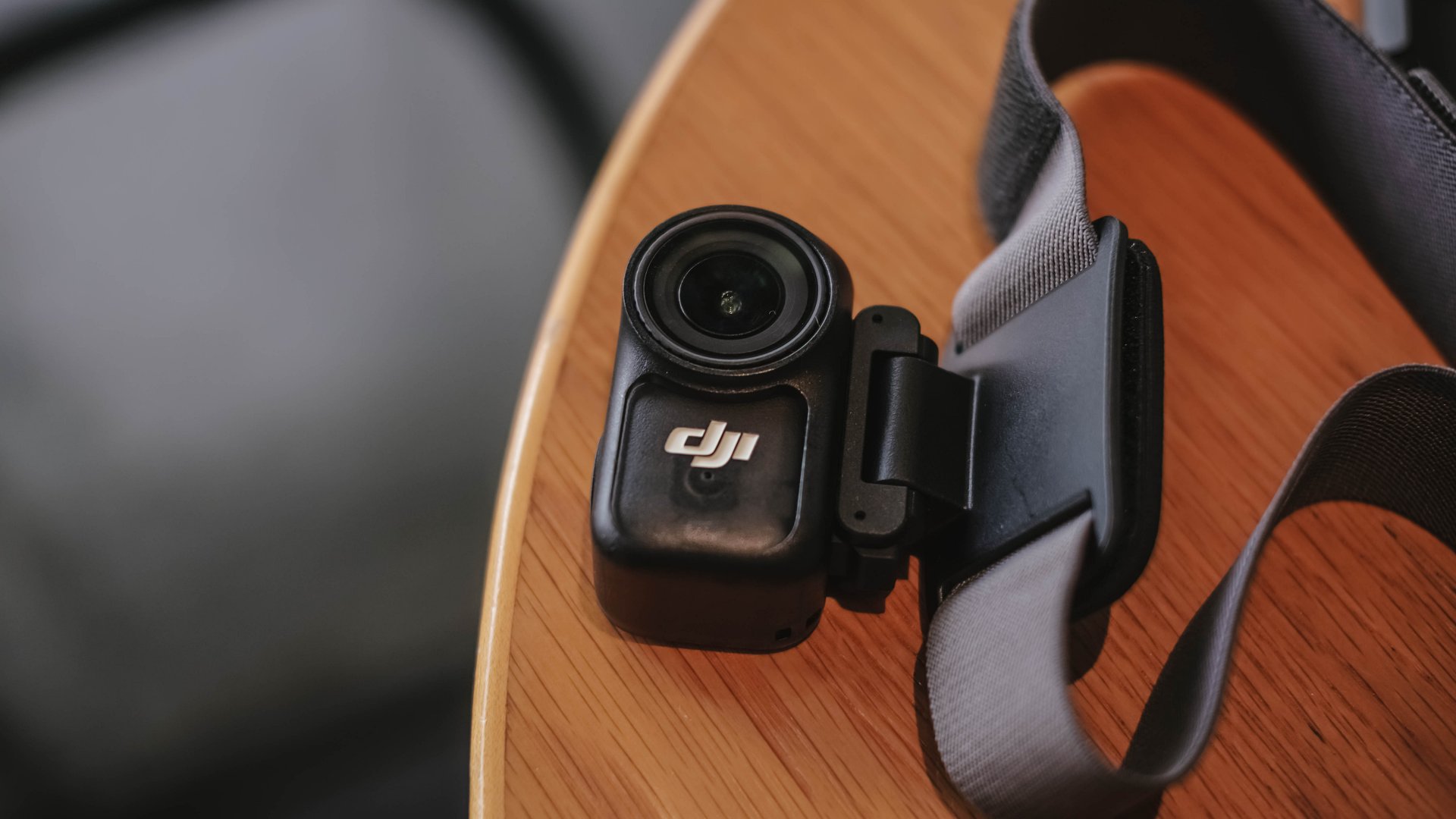
In moments where I could lose a shot quickly, I preferred setting color to Auto rather than using D-Log. Though I’m a creative director by profession, I don’t believe in using D-Log unless you can color grade perfectly.
Most creators who insist on it miss the point. It takes away the beauty of capturing things as they are. The Nano’s color quality is good enough to make every frame look polished and accessible.
Never missing a step
Of course, no camera review feels complete until I’ve taken it to the trail.
During BGY BYG’s OCR Simulation at Bridgetowne Obstacle Park, I used the Magnetic Headband and Lanyard, swapping between them as I watched participants go through obstacles.
I wanted to see how the Nano handled rain and movement, and it didn’t just survive. It performed well.
Thanks to the 1/1.3-inch CMOS sensor, it captured athletes at dusk with the SuperNight mode assisting in low light. The image quality was good, though not exceptional.
View this post on Instagram
Due to its fixed ultra-wide field of view, versatility remains limited. It doesn’t have a zoom lens, so I had to move closer to the athletes to frame their movements.
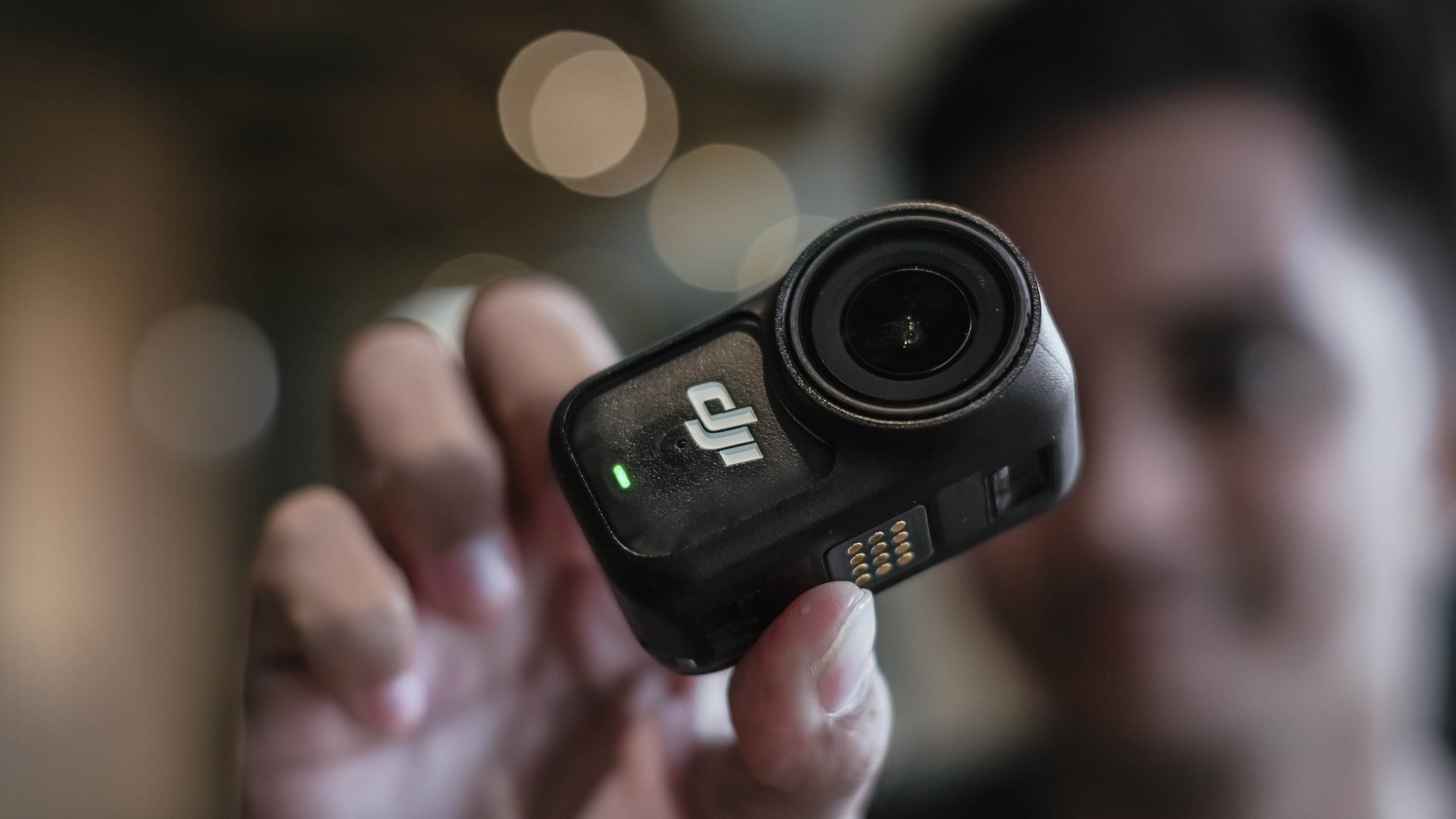
Then came the 32km trail run to Sitio Malasya in Rodriguez, Rizal. The terrain was brutal (as usual) and yet the Nano stayed locked in. I held it by hand without the dock, and the footage I captured became one of my favorites.
It’s rare for an action camera to feel emotional, but the Nano somehow made the footage feel alive.
During the run, the audio also impressed me. The built-in microphones captured ambient sound and reduced wind effectively. For those with DJI Mics, pairing is seamless and doesn’t require receivers.
Maybe next time, I can record a Trail Talks podcast so we don’t get bored running longer distances?
View this post on Instagram
At the end of Sitio Malasya is a raging river, where we stopped to eat and rest. When it drizzled mid-run, I kept recording without worry.
The Nano handled rain and splashes without fogging or glitching. I didn’t feel anxious bringing it into the unpredictable courses of my life.
Running back to the jump-off point, I realized the DJI Osmo Nano isn’t just a piece of technology. It’s an adventure companion that understands the tempo of your life.
Unlocking its full potential
Like any performer, the Osmo Nano shines brighter with the right supporting cast.
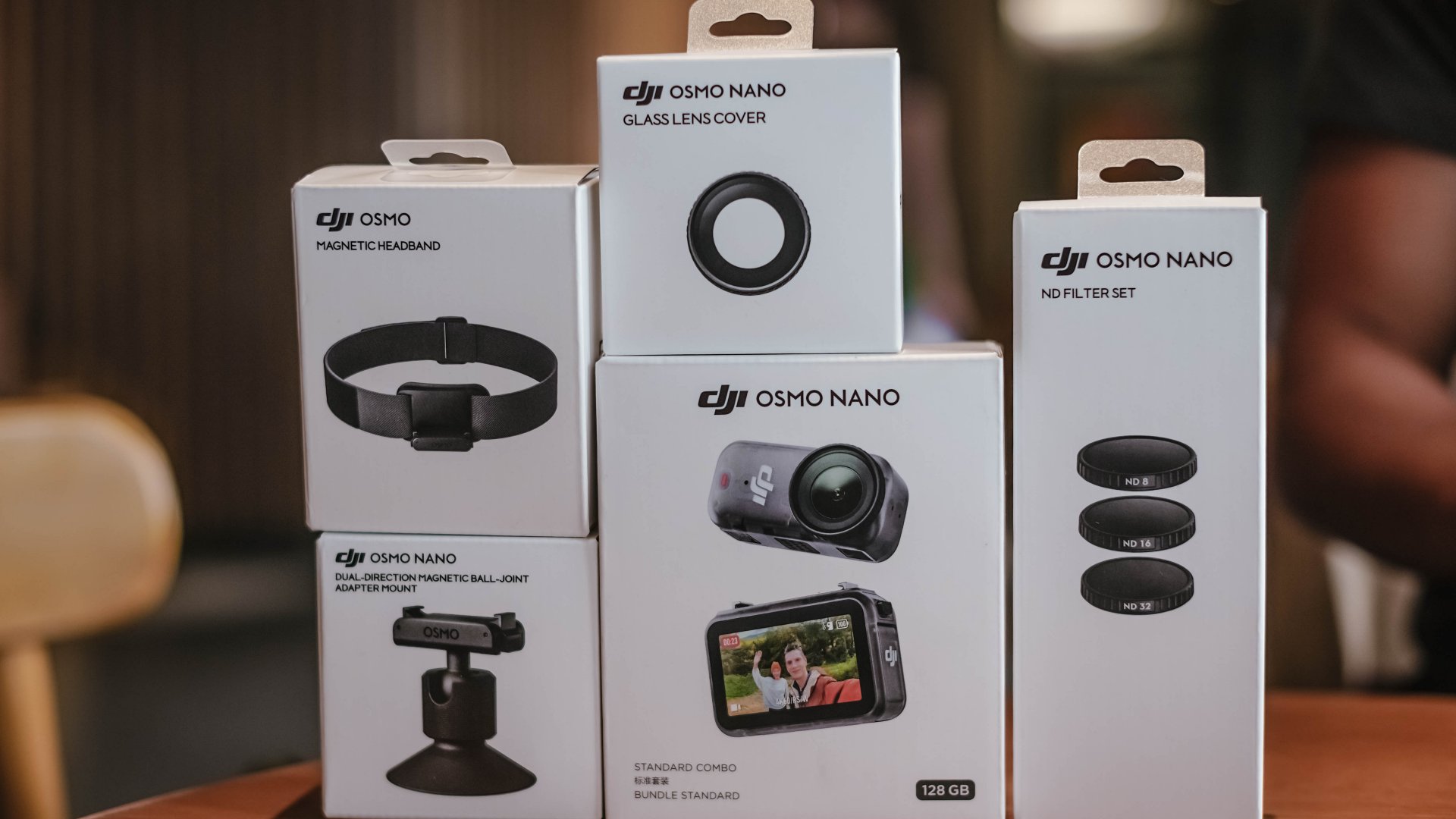
The ND Filter Set is a must for bright outdoor scenes, adding that polished, cinematic tone. The Magnetic Headband is perfect for hands-free capture during workouts or races.
For flexible angles, the Dual-Direction Magnetic Ball-Joint Adapter Mount is my second favorite.
My personal favorite is the Glass Lens Cover. It’s the reason my lens still looks brand new after that dramatic drop.
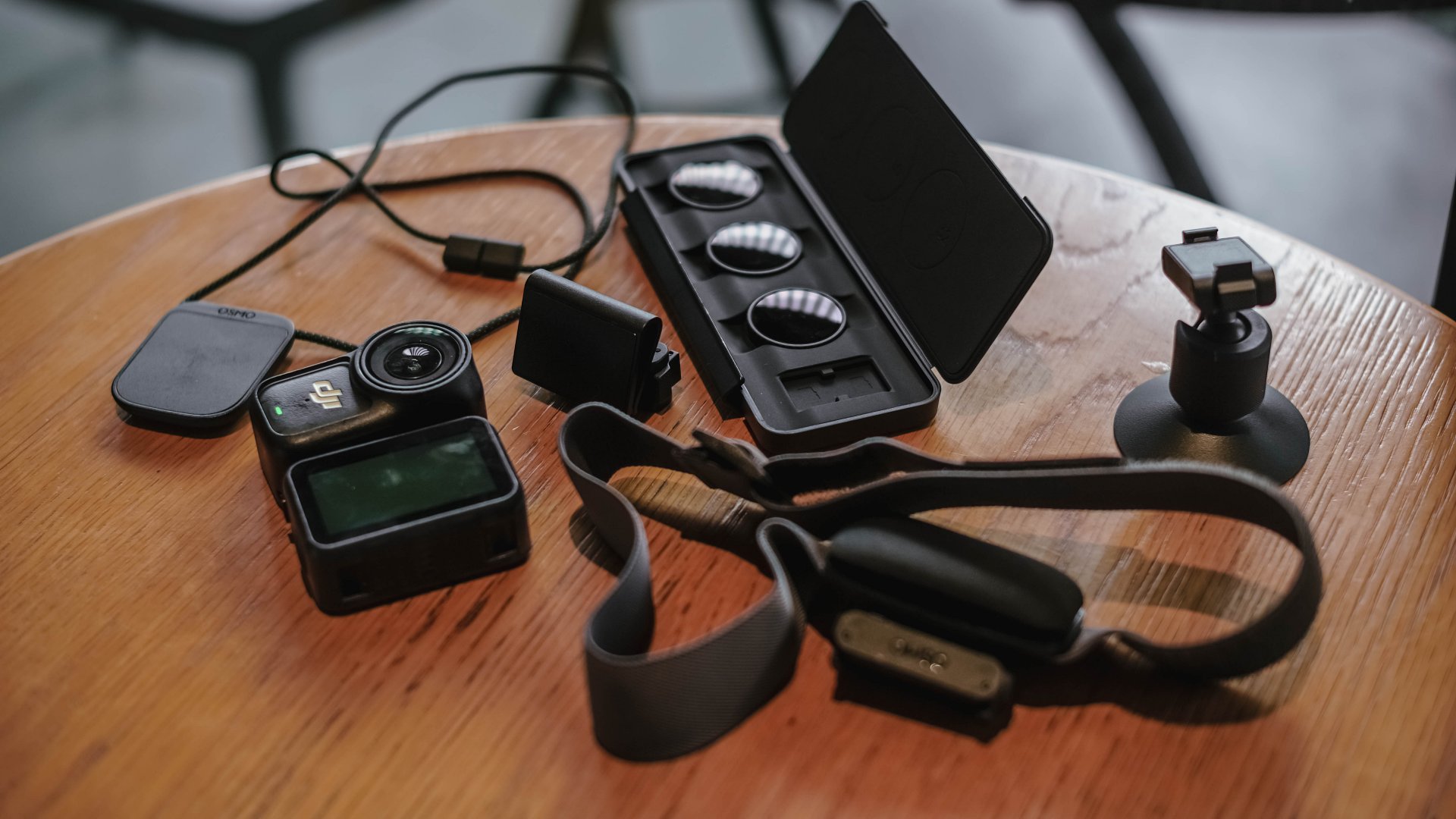
Out of the box, though, the DJI Osmo Nano already comes prepared with the camera, Magnetic Lanyard, Multifunctional Vision Dock, Dual-Direction Magnetic Ball-Joint Adapter Mount, Protective Case, Magnetic Hat Clip, and a USB-C 3.1 cable.
It’s a complete kit that gets you shooting right away. And once you see how capable it is, you’ll want to expand your setup anyway.
Is the DJI Osmo Nano your GadgetMatch?
The DJI Osmo Nano represents freedom. It’s made for people who live on the go, who don’t have time for complex setups but still want cinematic results.
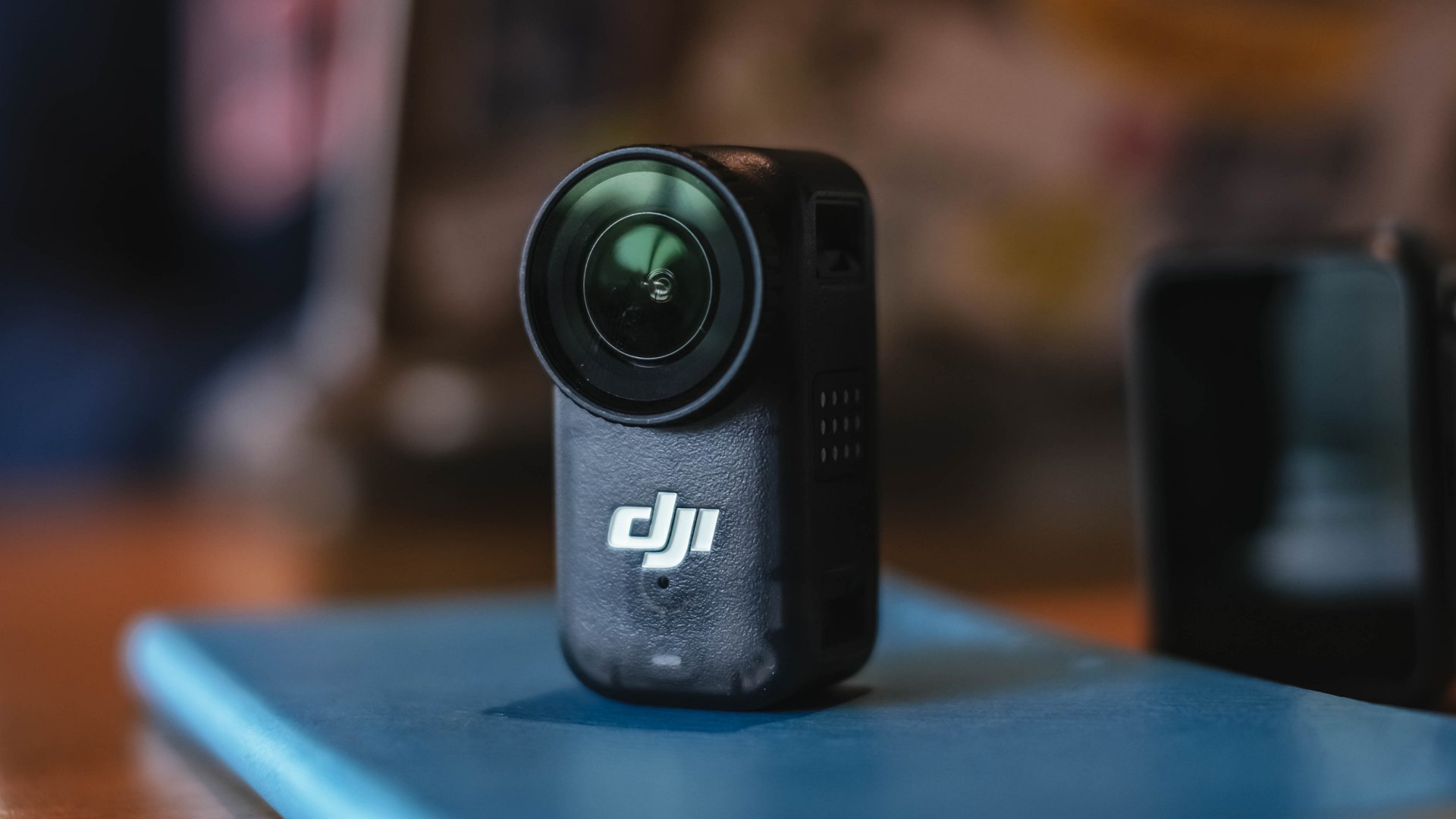
I’ve always believed that the best camera is the one that never slows you down, and the Osmo Nano fits that perfectly. For an athlete and storyteller like me, it’s a Super Swipe.
Even if you’re not living life on the move, it’s still a Swipe Right, especially considering how complete the package is for its price: PhP 15,990 for the 64GB model and PhP 18,390 for the 128GB model.
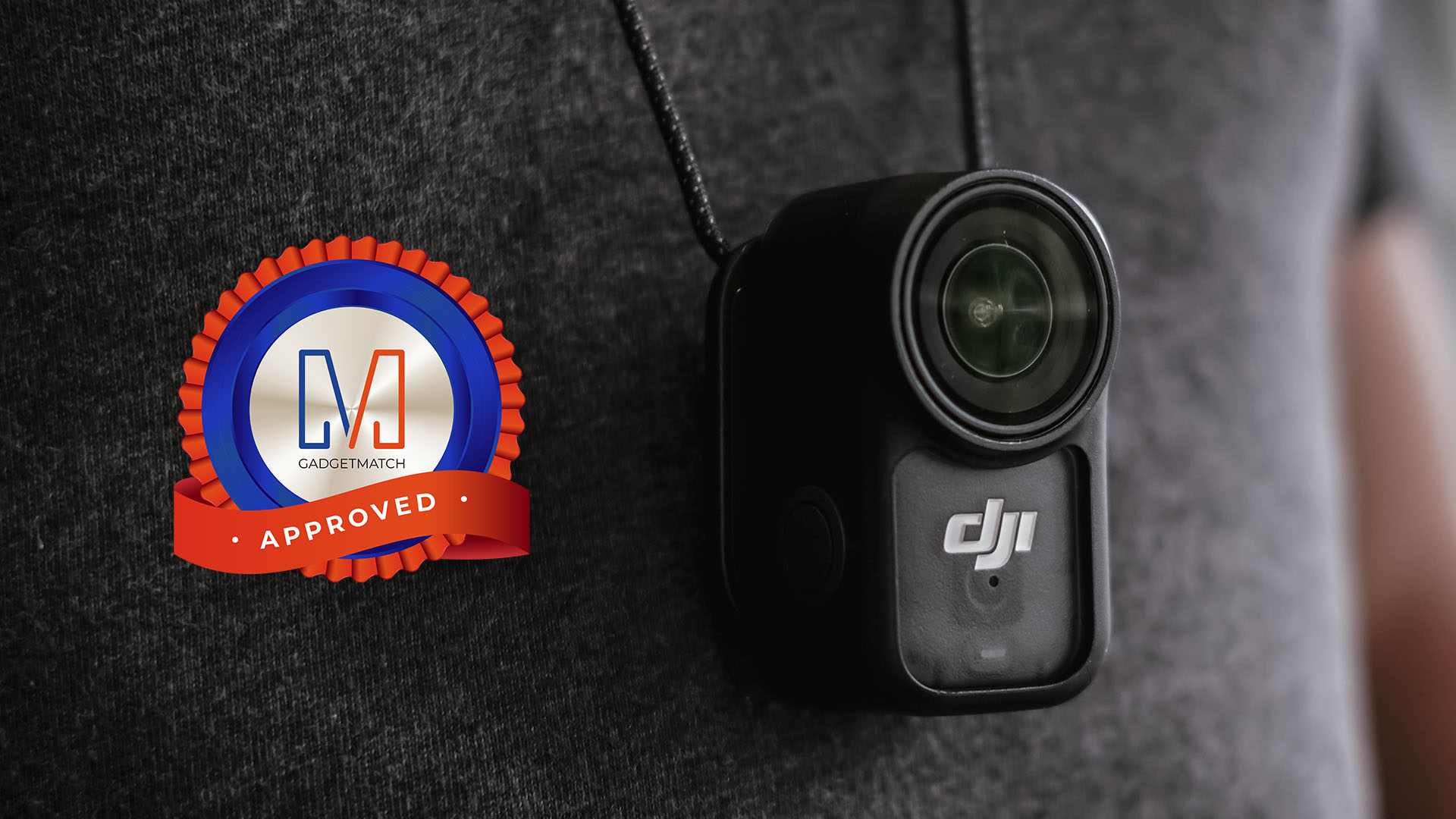
Think of the stories you’ll tell once you bring it on your next trip. This is why it earns the GadgetMatch Seal of Approval.
Of course, it’s not flawless. If you expect the same performance, image quality, or versatility of the Osmo Action 5 Pro, Osmo Pocket 3, or even its competitor, the Insta360 Go, you might need to temper your expectations.
But as a new device, the Osmo Nano is promising. So promising that five automotive journalists I was with in Zhengzhou bought one on the spot after seeing mine in action.
If that’s not convincing enough, I don’t know what is. Because right now, as most people see it, the DJI Osmo Nano deserves a spot in your camera arsenal, and perhaps, a place in the story of your life on the move.




Cameras
Sony launches FE 100-400mm F5.6-8 OSS telephoto zoom lens
Super telephoto zoom lens for hobbyists

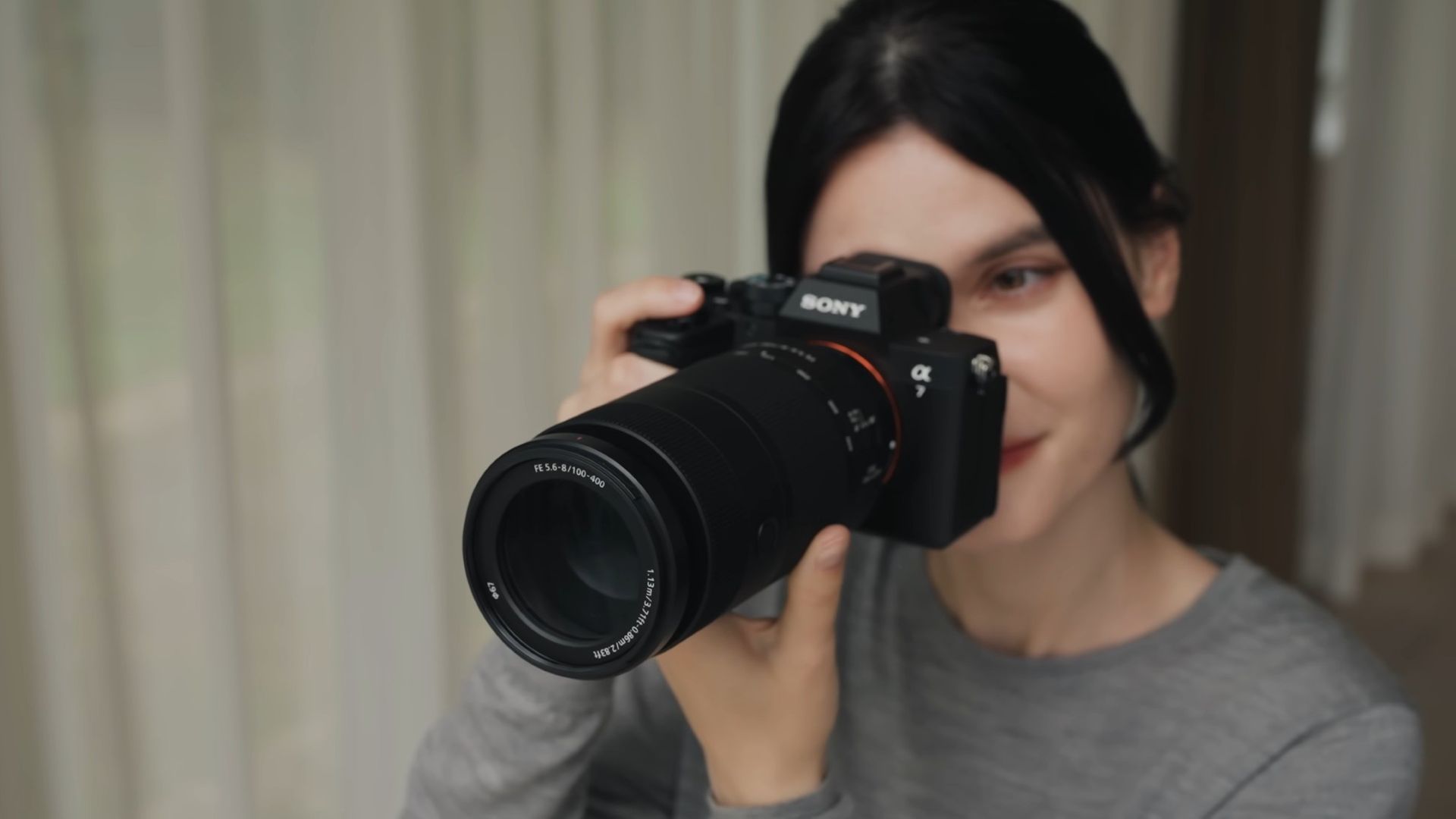
Sony has launched the FE 100-400mm F5.6-8 OSS super telephoto zoom lens tailored for hobbyists and for a competitive price.
The compact and lightweight lens (approx. 654 grams) is meant for 35mm full-frame Alpha E-mount cameras, making it easy to carry to capture subjects that are difficult to appraoch.
This includes birds, sports scenes, and more. Landscape photography unique to super-telephoto lenses can also be enjoyed by making use of the compression effect. This makes the distance between nearby subjects and distant background elements appear closer together.
When used with a teleconverter, users can double the distance they can capture, with the lens supporting focal lengths of up to 800mm or up to 1,200m in APS-C mode.
With the latest optical design incorporating two ED glass elements and two aspherical elements, excellent image quality is achieved across the entire zoom range. These elements reduce chromatic and other aberrations for clear rendering.
Subject shooting can stand out as well in a natural and soft bokeh, with the lens’ 9-blade circular aperture. This makes the lens also ideal for close-up photography of flowers, insects, and other nearby objects.
In addition, the lens features a linear motor drive for fast, precise, and quiet AF performance to help capture moving objects. The lens also supports high-speed continuous shooting with AF/AE tracking at up to approximately 120 frames per second when used with the Alpha 9 III.
Built-in optical image stabilization also supports handheld shooting in the super-telephoto range, suppressing camera shake. Users can also utilize the camera body’s Active Mode image stabilization and coordinate image stabilization control.
In Singapore, the Sony FE 100-400mm F5.6-8 OSS will be available by the end of August for SG$ 1,099.
Accessories
OBSBOT’s Meet Flip is your next best pocketable 4K webcam
Fold the Flip for further protection

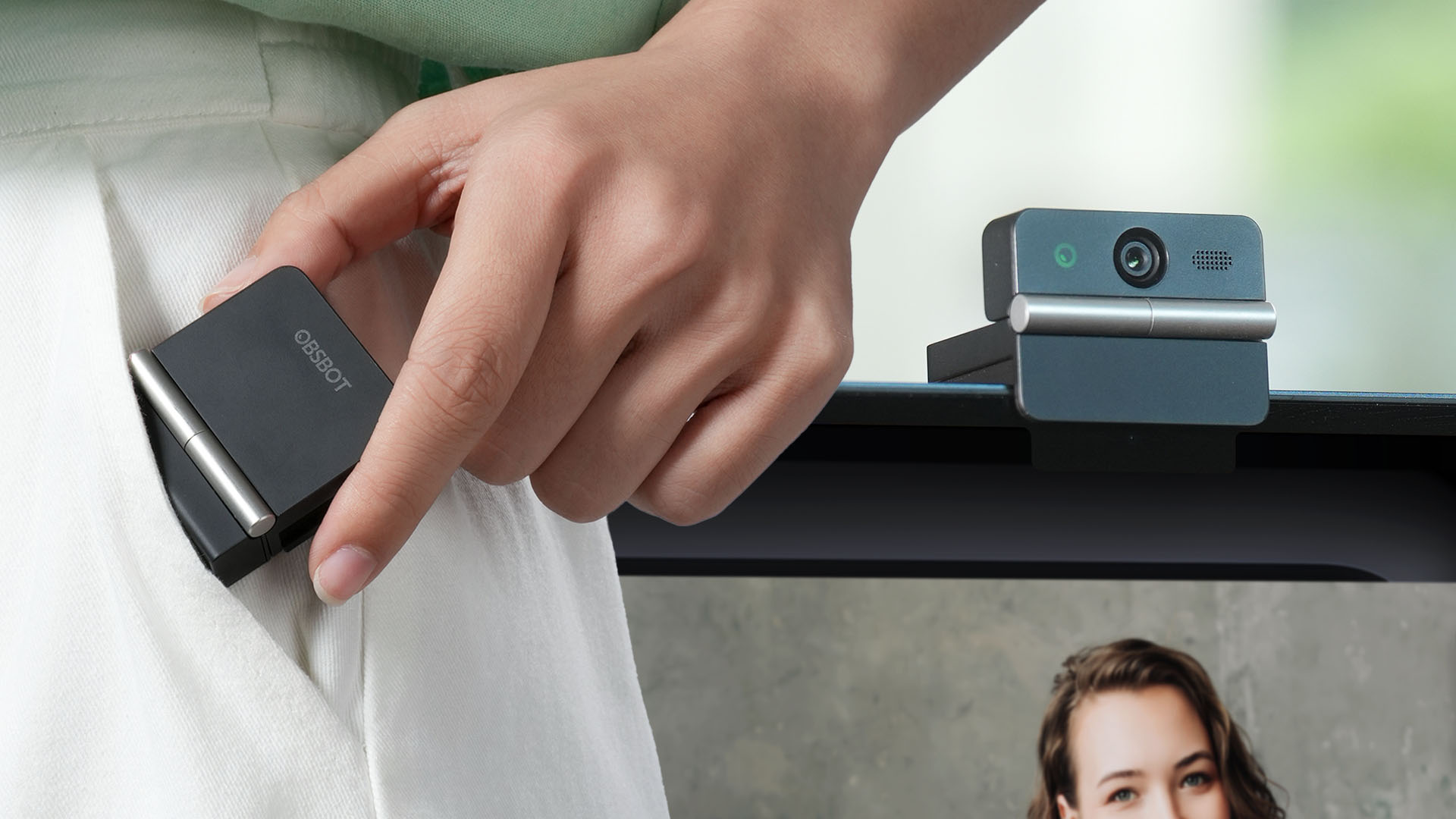
Several months ago, you might remember that OBSBOT revealed the Tiny 3 series of web cameras.
Six months after, they also unveil the all-new Meet Flip. From the name itself, it’s the company’s latest foldable 4K webcam that puts hardware privacy front and center.
Foldable and pocketable
Despite weighing just 37.7 grams, the Meet Flip aims to deliver premium webcam features for all types of users. Be it remote workers, professionals, or content creators.
Graphics by Vincenz Lee | GadgetMatch
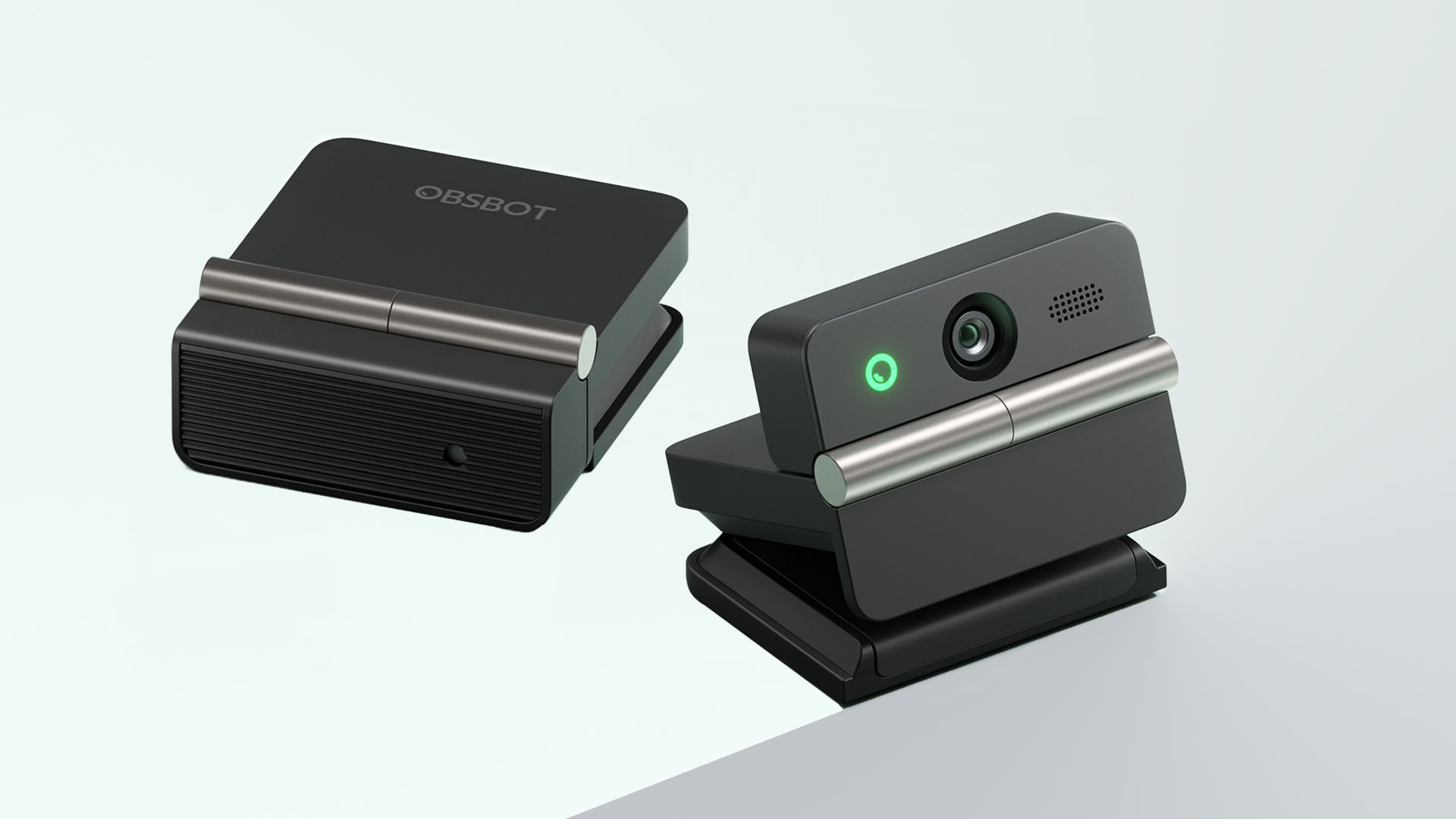
Undoubtedly, the biggest highlight has got to be the webcam’s folding design. Not only it’s portable, it protects your privacy too.
Closing the device physically blocks the lens, giving users a visual confirmation that the camera is no longer active. When it’s time for a meeting, simply unfold it and it’s ready to go.
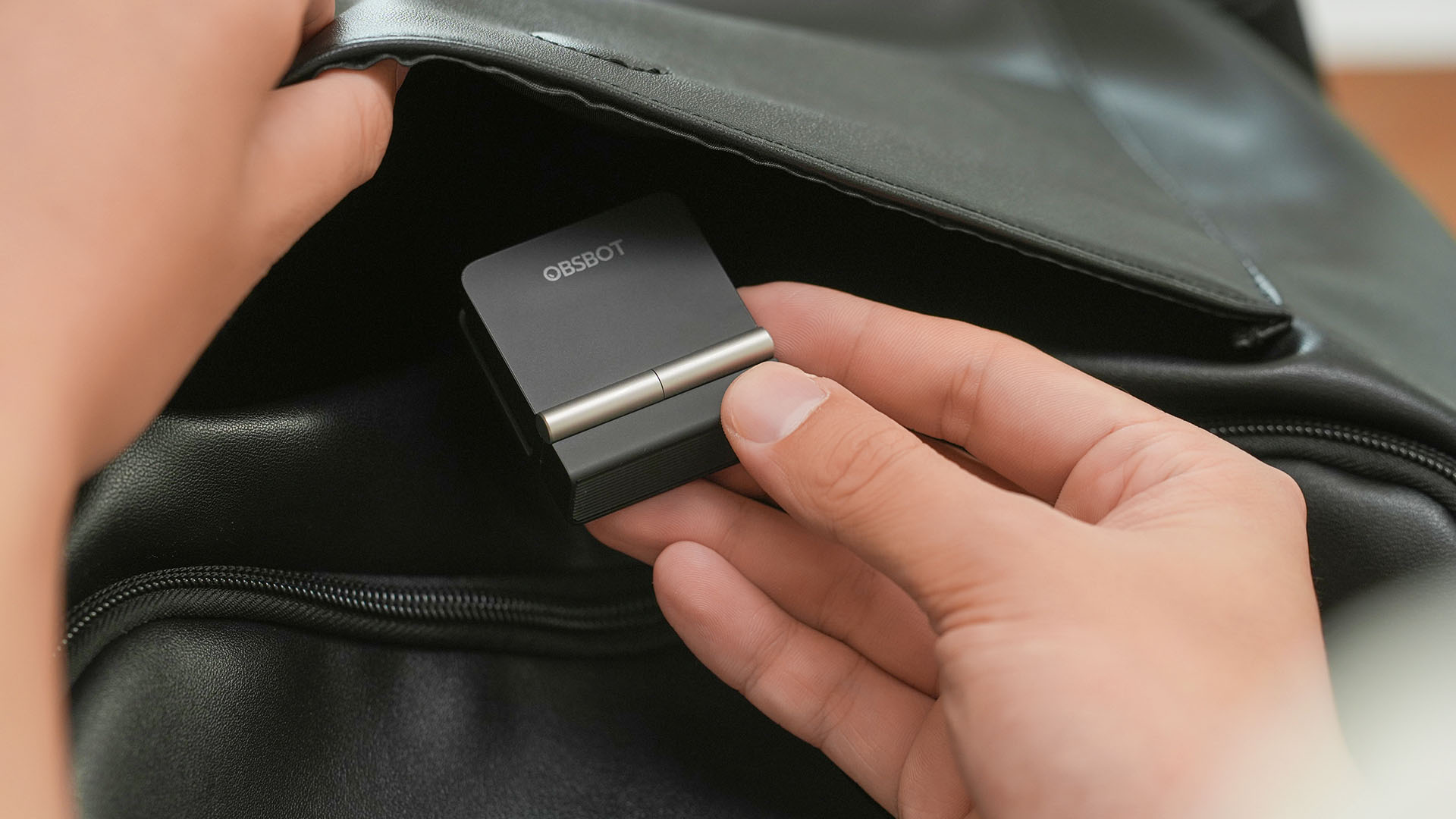
That lightweight body also features a built-in mounting clip that works with laptops, monitors, and tripods. Users can mount it in landscape, portrait, or even upside-down orientations depending on their setup.
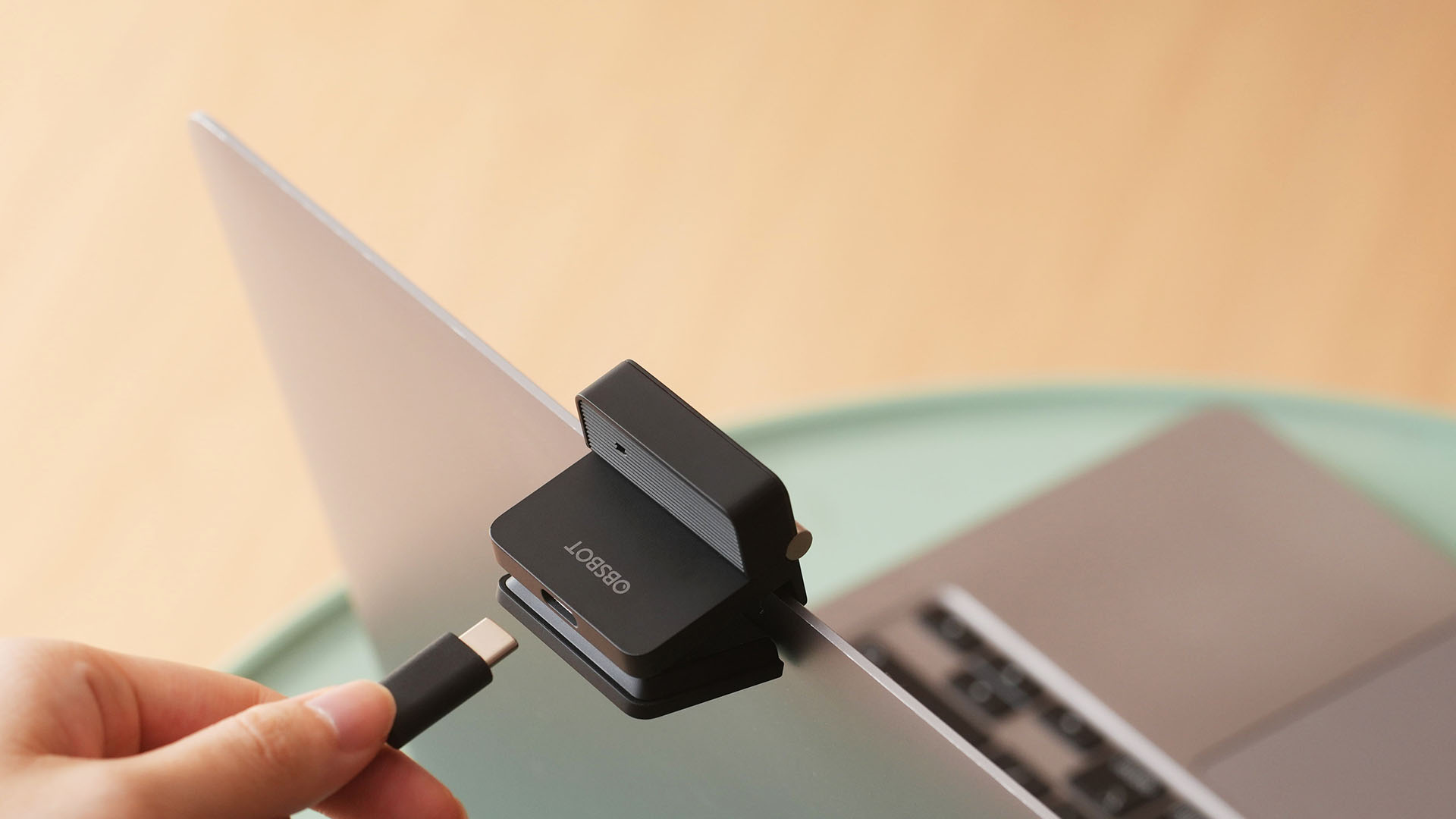
Despite that absurd amount of lightweightness, the OBSBOT Meet Flip is still able to house a 1/2-inch Exmor RS stacked CMOS sensor with Quad Bayer technology. That’s something more commonly found among bigger and higher-end web cameras.
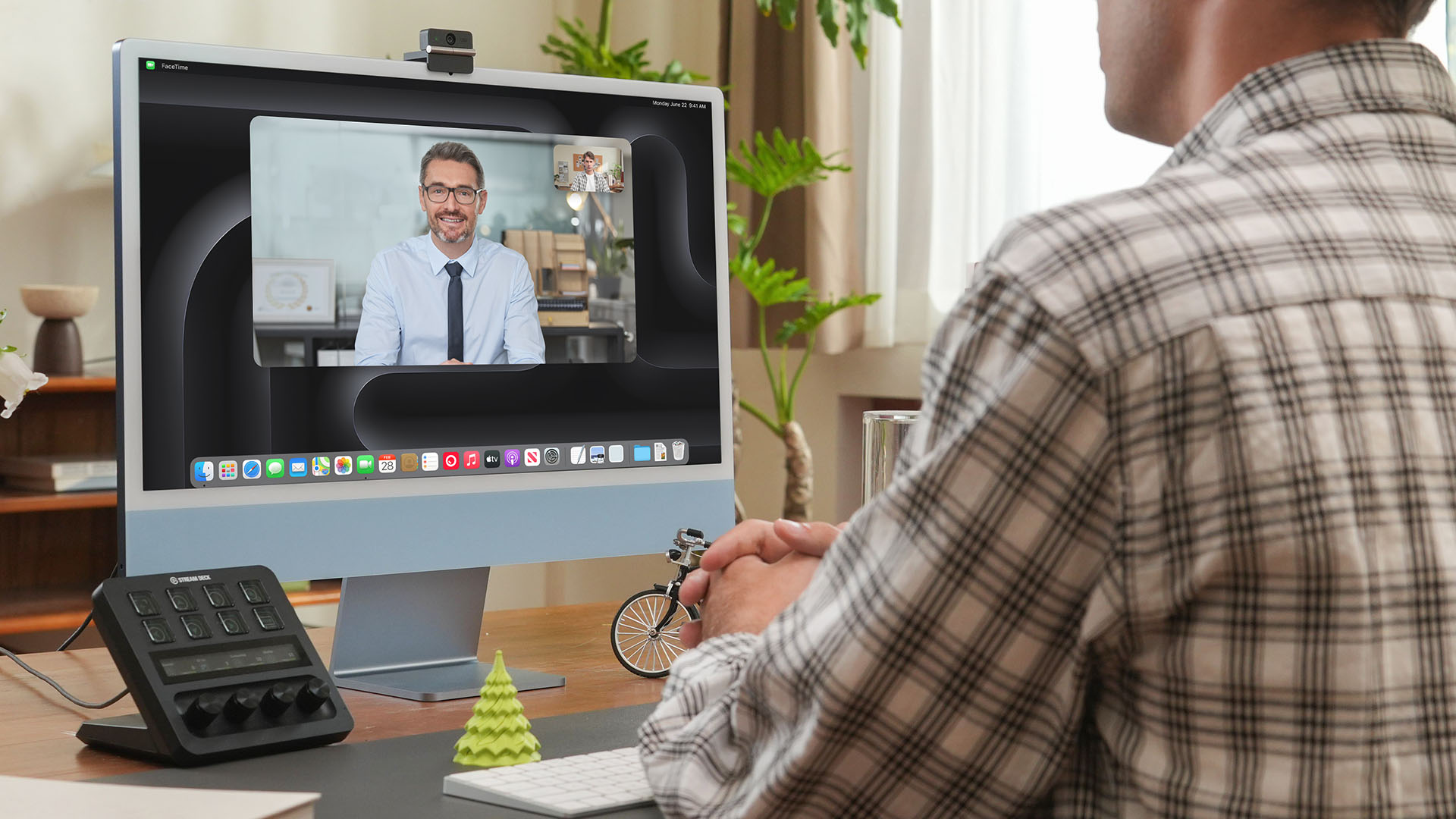
Other camera features include:
- 4K video recording / 30fps
- 1080p recording / up to 60fps
- HDR support for challenging lighting
- Phase Detection Autofocus (PDAF)
- 4x digital zoom
- f/1.8 aperture with ISO 100-6400 support for low-light environments
Beyond just video calls
The OBSBOT Meet Flip isn’t just packed with serious camera hardware, it’s seriously intelligent as well.
The Meet Flip supports AI Auto Framing. This automatically keeps users centered during meetings — regardless if they are presenting alone or with a group. Gesture controls also let users activate framing or adjust zoom without touching the keyboard or mouse.
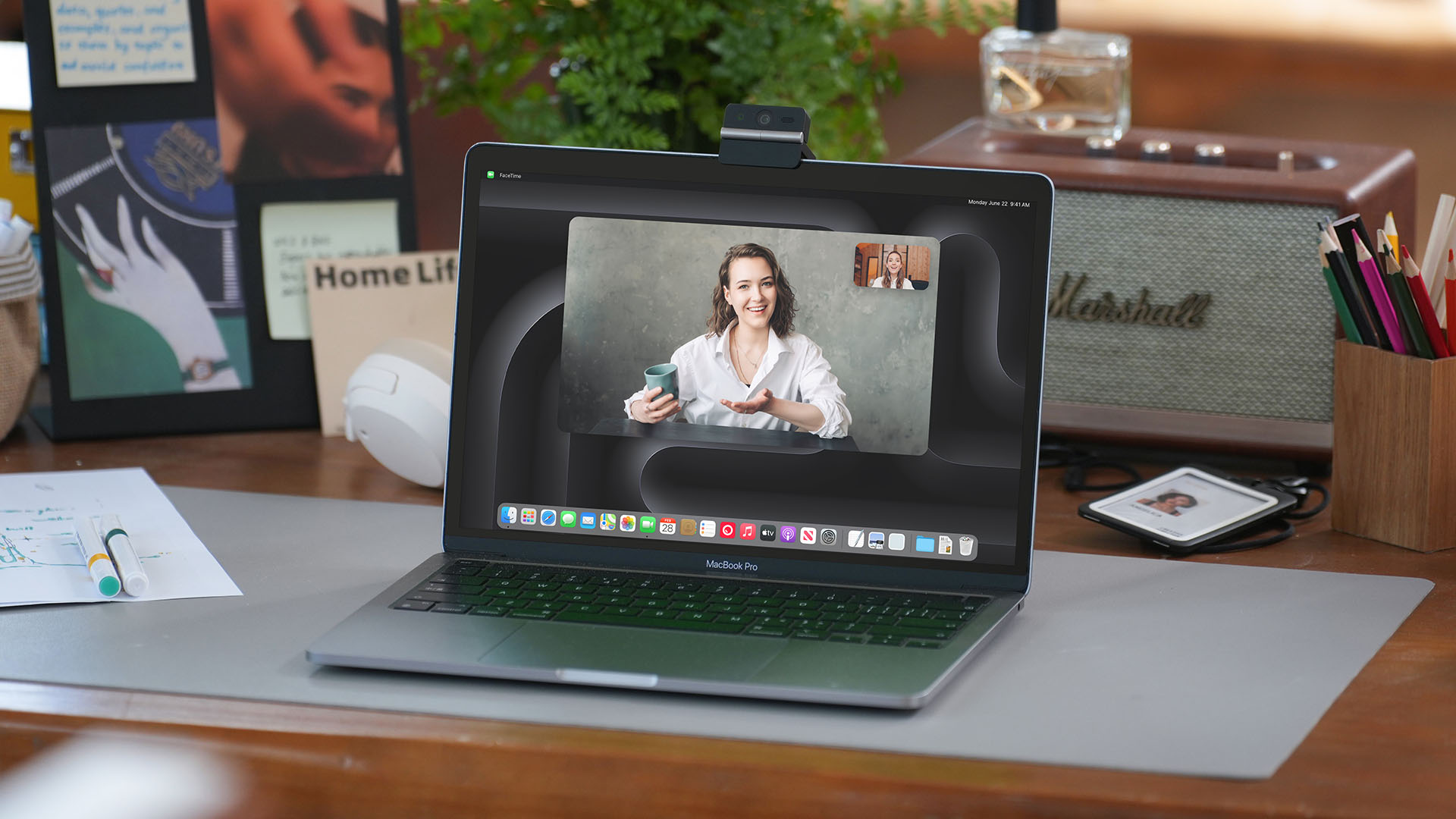
Another standout feature is AI Magic Notes which provides real-time meeting transcription and automatically generates summaries, action items, and key discussion points.
The feature works with Google Meet, Zoom, and Microsoft Teams through OBSBOT Center. Every webcam includes complimentary transcription of 120 minutes.

With that being mentioned, OBSBOT Center also makes users gain access to software features such as background blur, virtual backgrounds, beauty mode, and picture-in-picture overlays for presentations.
Those who want more advanced controls can enable Smart Eye Tracking, teleprompter support, and manual image adjustments.

Audio also gets an upgrade through an intelligent dual-microphone system that offers four recording modes:
- Directional Mode / solo calls
- Dual-Directional Mode / interviews
- Smart Omni Mode / group meetings
- Pure Audio Mode / unprocessed stereo recording
AI Noise Reduction and Automatic Gain Control are also available across most modes to help improve voice clarity.
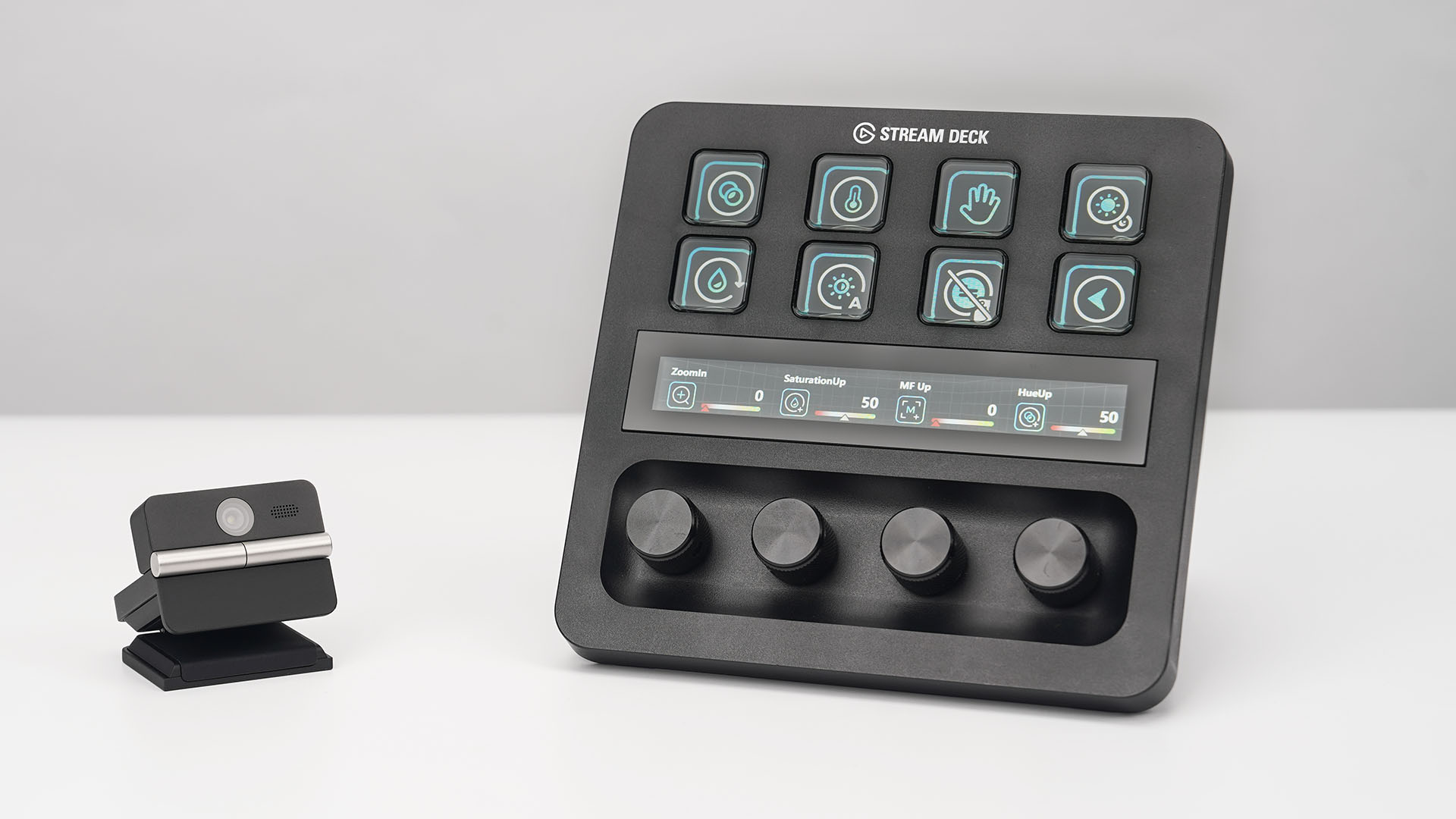
OBSBOT’s Meet Flip is also compatible with mobile devices through the OBSBOT Live app and supports integrations with accessories including Elgato Stream Deck, Nintendo Switch 2, and UVC-to-NDI/HDMI adapters.
Pricing and Availability
The OBSBOT Meet Flip is available starting today for US$119 through OBSBOT’s online store, Amazon US, and select retailers worldwide. Regional pricing may vary.
Cameras
Sony announces new FX5 full-frame camera
Newly-developed sensor, Open Gate recording, more enhanced capabilities
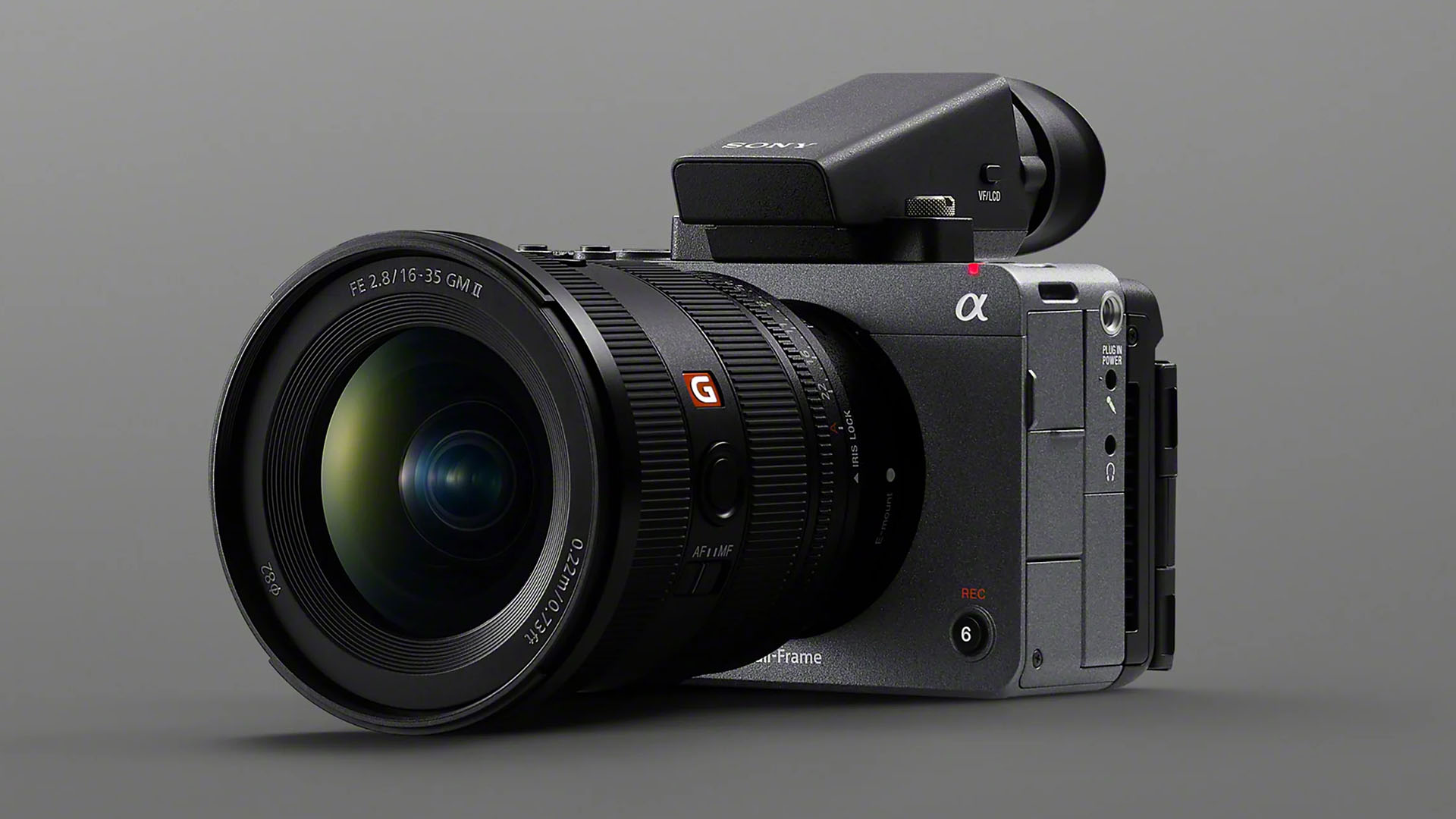
Sony has launched the new FX5 full-frame camera in its Cinema Line series with enhanced capabilities.
The camera is equipped with a newly-developed fully stacked Exmor RS CMOS sensor and the latest high-speed BIONZ XR2 image processing engine, which includes a dedicated AI processing unit.
When shooting in S-Log3, the camera achieves 15+ stops of dynamic range. The broad latitude and low-noise performance enable seamless roll-off from highlights to shadows and natural texture reproduction, even in high-contrast scenes.
Three Base ISOs of ISO 800, ISO 4000, and ISO 12800 enable low-noise image expression under a wide range of conditions.
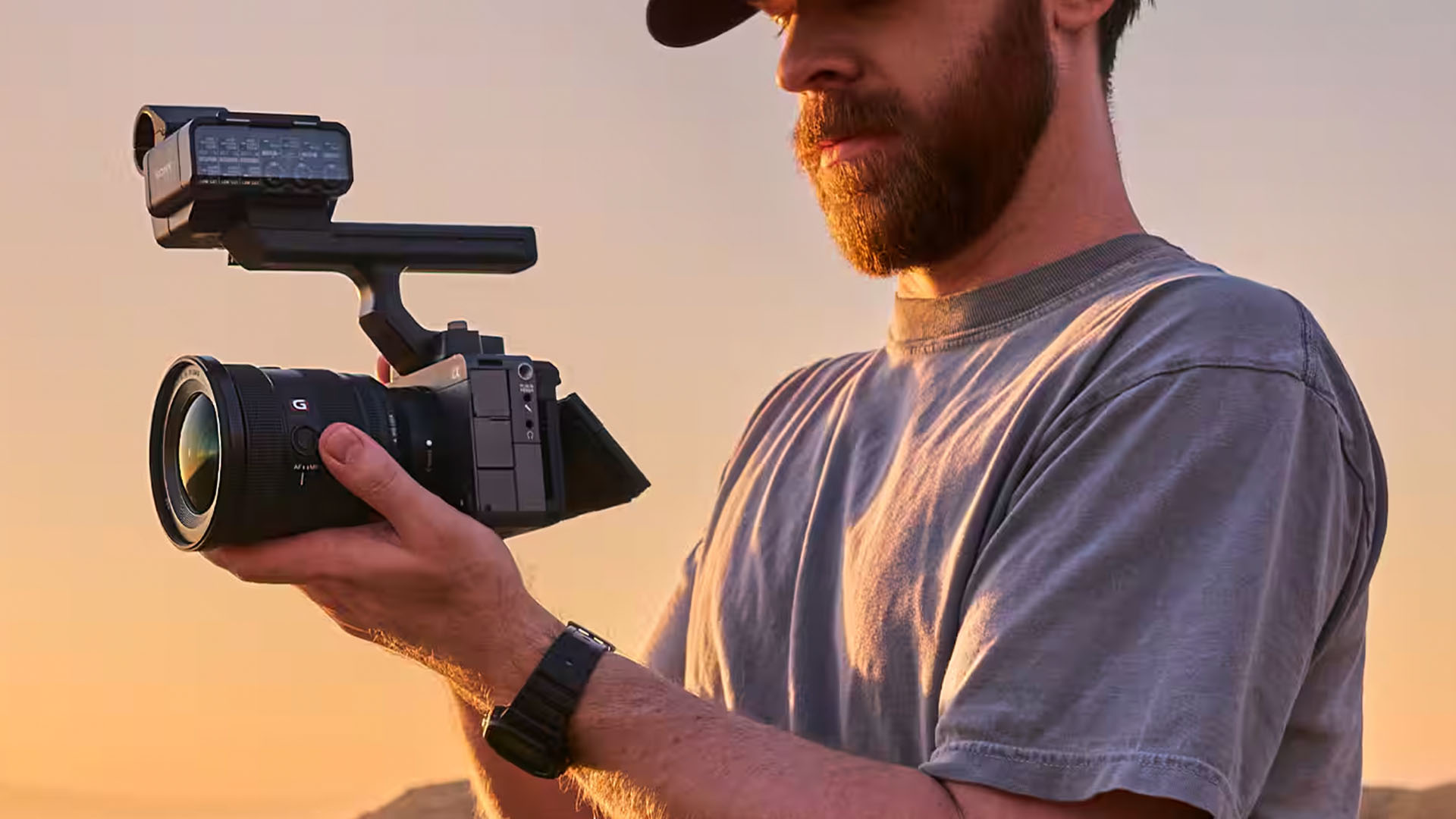
Moreover, Dual Gain Shooting function, supported for the first time in the FX series, maximizes the performance of the image sensor to enable smooth gradation reproduction with even wider latitude, while effectively reducing noise without compromising shadow detail.
For the first time in the Cinema Line FX series, the FX5 supports Open Gate shooting, as well as in-camera recording in X-OCN, Sony’s proprietary RAW format.
This includes a variety of scan modes like 17:9, 16:9, and super 35mm. This allows for flexible angle-of-view selection for the user’s creative intent.
The camera is capable of shooting in 5K at up to 60 frames per second, in 4K up to 120 frames per second and in FHD up to 240 frames per second.
These features bring together the Cinema Line look and operability designed to meet the needs of production environments in a compact, highly portable body.
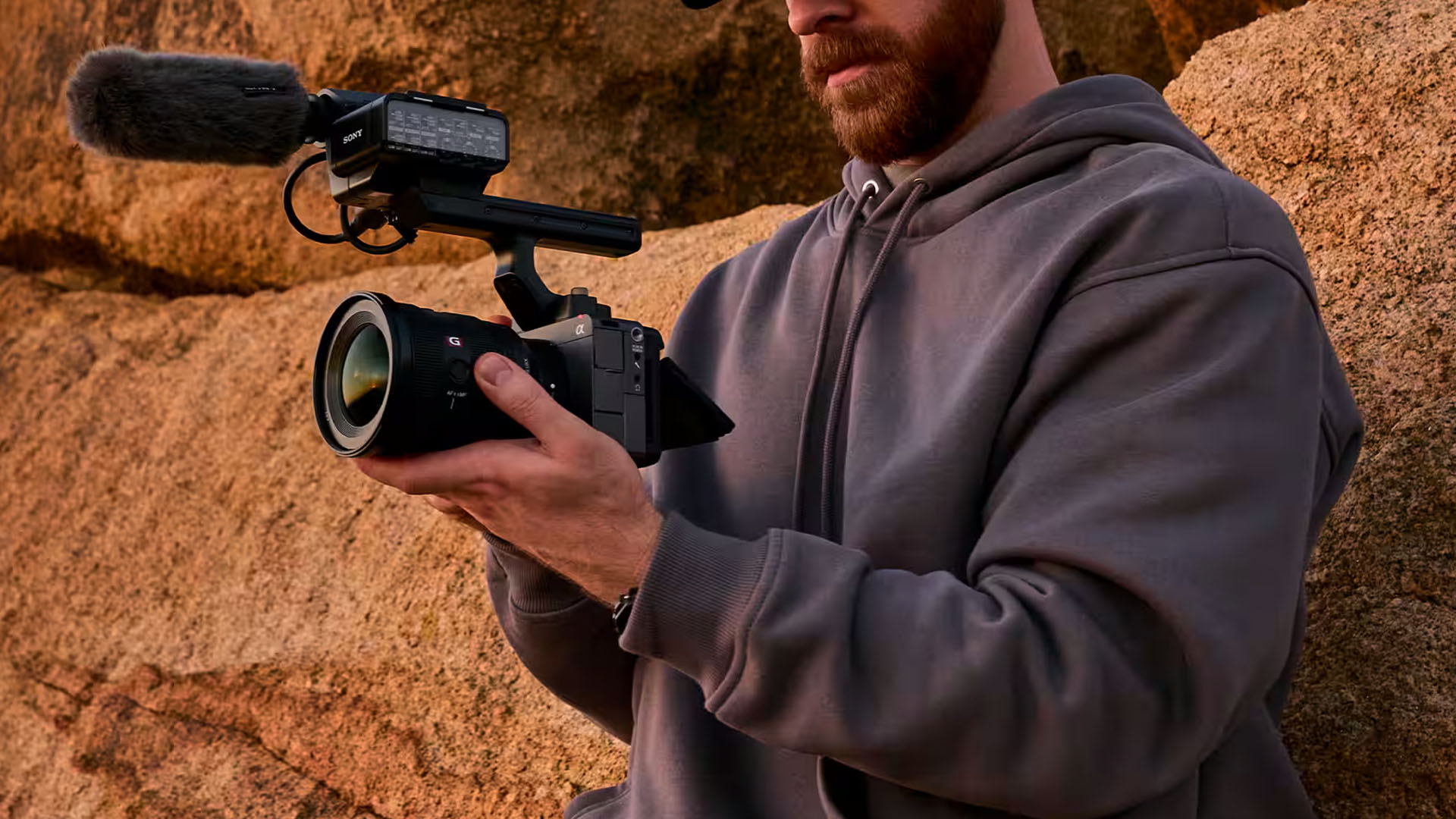
The Sony FX5 will also include two new optional accessories: a detachable OLED viewfinder and an XLR Handle that enables recording in-camera at up to 96 kHz, 32-bit float.
The camera system incorporates expertise that Sony has cultivated through the development of Cinema Line cameras, which have earned high praise from cinematographers and video creators around the world.
Price, availability
The ILME-FX5 with XLR Handle Unit (SG$ 7,199) and ILME-FX5B Body Only (SG$ 6,399) will be available for pre-order until August 9.
The DVF-EL1 OLED Detachable Viewfinder (SG$ 899) and VMC-BNCU1 Timecode Adapter Cable (SG$ 129) will be available after Mid-August.
Meanwhile, the XLR-H2 XLR Handle (SG$ 1,099) will be available by special order.
On July 28, the FX5 will also be on display atThe Arts House At The Old Parliament from 6:00 P.M. to 8:00 P.M., giving creators the chance to experience it for the first time.


realme C100: Enduring and durable in spite of entry-level realities
Enough power but needs more agility


The ASUS ExpertBook Ultra wins you over
The laptop sneaks up on you


Nexal Watch Sport review: A rugged watch for small budgets
I couldn't believe that watches this good could come for this cheap.

nubia expands gaming lineup with Neo 5 Max, Neo 5 GT Special Edition

Sony launches FE 100-400mm F5.6-8 OSS telephoto zoom lens

Google will force Android users to use Gemini next month

Tides of Annihilation opens first public demo at Gamescom 2026

Street Fighter 6 adds first Filipino fighter Yasmine to its roster

New York becomes first state to ban smart glasses

Sony launches IER-M500 in-ear monitors

Microsoft dictates that a new Fallout game is coming

HoYo FEST 2026 details announced; tickets on sale from July 16
realme C100: Enduring and durable in spite of entry-level realities


-

 Automotive3 days ago
VinFast debuts two-wheeler models, opens 21 e-motorcycle showrooms
-

 Gaming2 weeks ago
FINAL FANTASY X | X-2 HD Remaster launches on Nintendo Switch 2
-

 Accessories2 weeks ago
CASETiFY revives Spider-Man collection for Brand New Day
-

 Computers2 weeks ago
AORUS MASTER 16 Gen 2 2026 AI gaming laptop launches
-

 Computers1 week ago
AMD launches Radeon RX 9050 graphics card
-

 Gaming2 weeks ago
God of War Laufey finally confirms its highly anticipated launch date
-

 Automotive5 days ago
Xiaomi debuts SkyNomad Series featuring new Kunlun platform
-

 Philippines2 weeks ago
OPPO Reno16 Series 5G is coming soon to the Philippines