
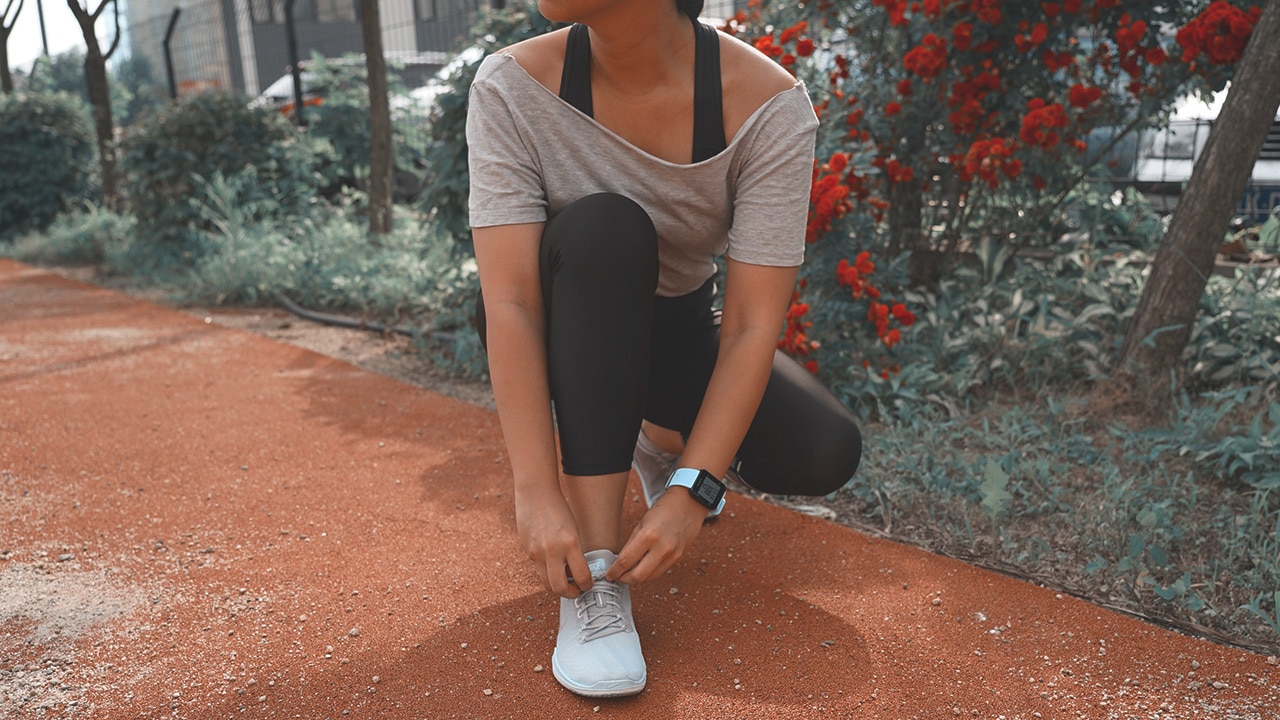

The idea of being healthy and fit wasn’t something I always entertained. The closest I got to a healthier lifestyle was attending yoga classes religiously around four to five years ago. I had a lot of excuses for stopping though: My schedule didn’t allow it, my friends stopped going, it was too expensive, the studio moved, and there was nothing else nearby.
Finding other fitness activities to do since then has been a chore, mostly for the same excuses listed above. While everyone agrees running is one of the easiest and cheapest exercises you can do just about anywhere, it’s simply not something I enjoyed doing. The turning point for me eight months ago was seeing and feeling physical manifestations of being unfit.
Confession #1: My motivation is not abs, but my weaknesses
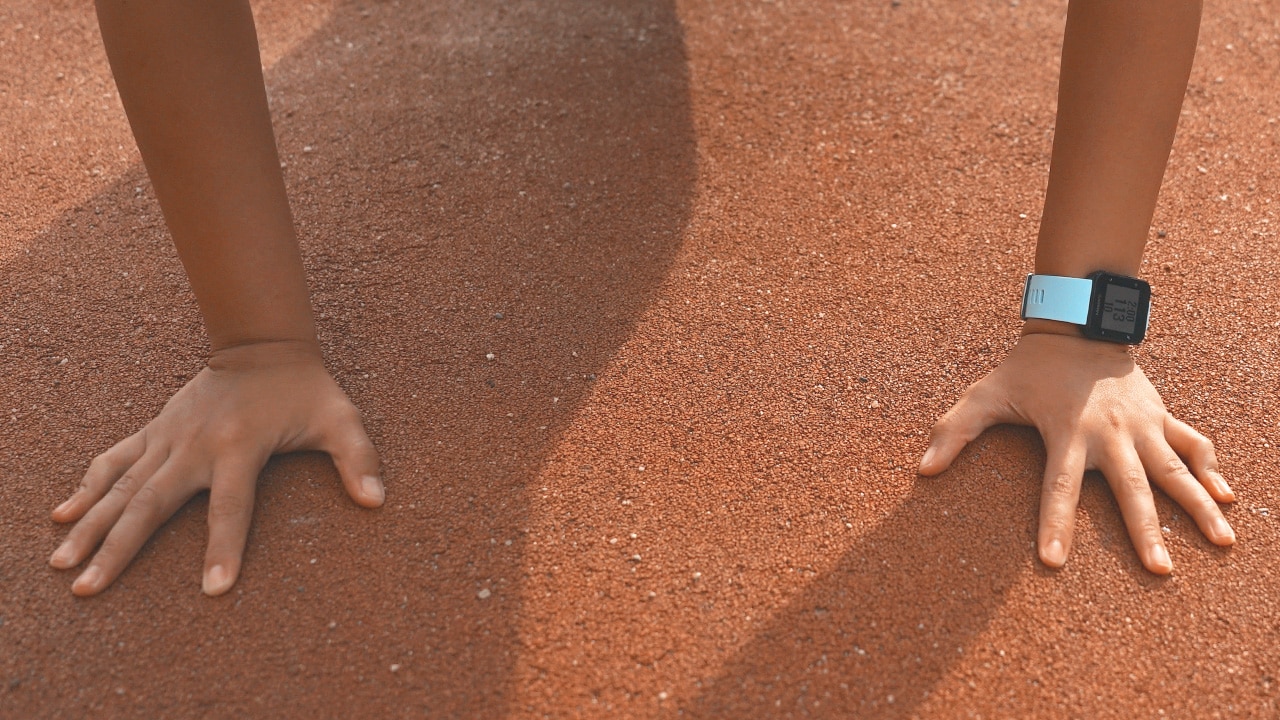
My recent attempt at a healthier lifestyle was not due to any desire to look good in a swimsuit, although getting there wouldn’t hurt because I admittedly cringe at old clips of me with a more prominent double chin.
There is no better motivation for me to exercise than my self-defined weaknesses. Whether that’s not being able to load your own carry-on into the overhead bin, running out of breath during an easy hike, getting too tired and sore from walking and carrying a tripod at a tour or the show floor, not being able to focus at the tasks at hand, and not being able to sleep and wake up at normal hours.
Confession #2: I enjoy working out with weights and machines
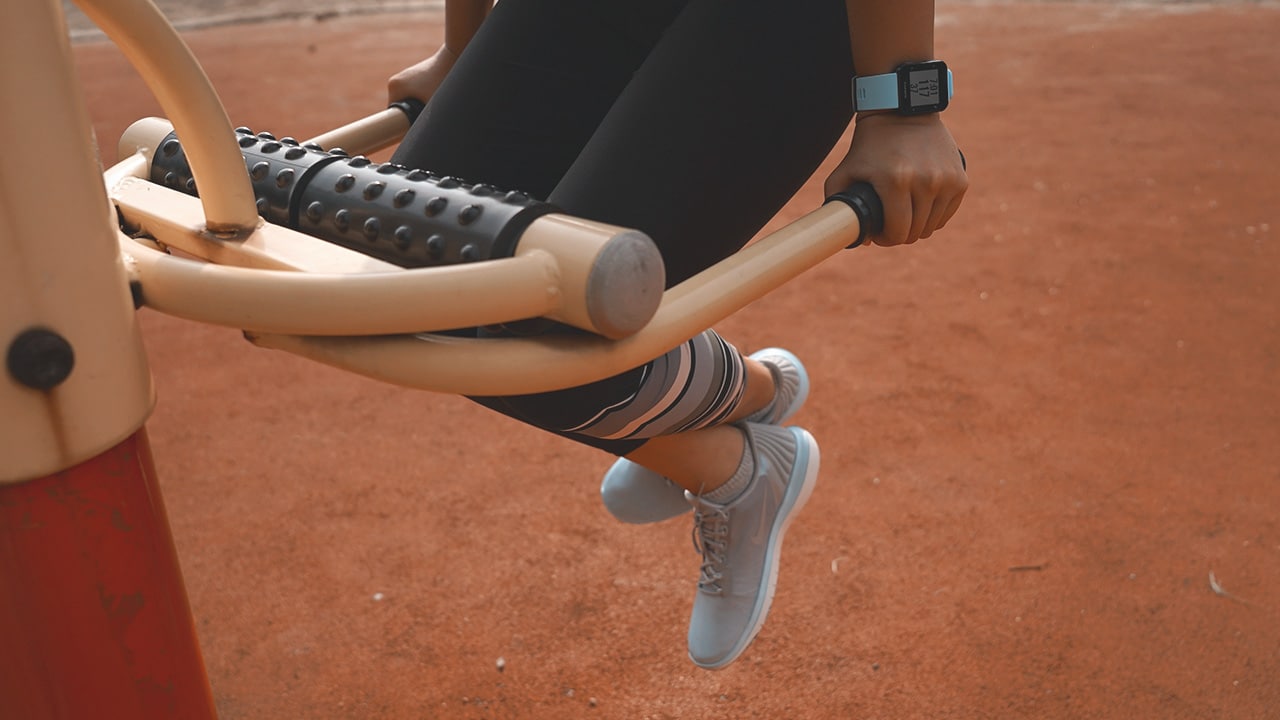
Through the last few months of experimenting with different exercises, I found that strength training is most enjoyable and important to me, especially in addressing my weaknesses.
My only problem is I’m unable to do most of my routine when traveling, which I do often, unless my hotel has its own gym. For those instances, I resort to exercises that don’t require weights or machines, like tricep dips, planking, and crunches.
Confession #3: I hate running as much as I hate counting calories
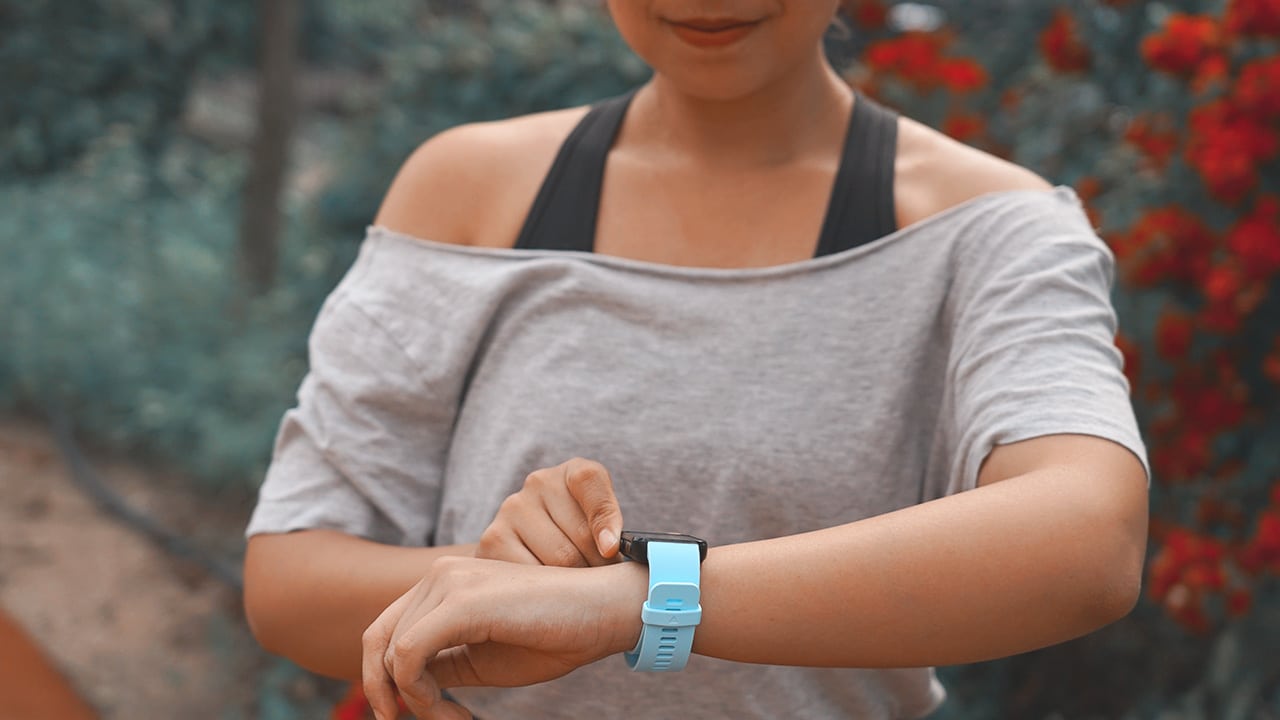
There’s no getting around it: I will most likely be one of the first casualties of the zombie apocalypse. I would rather skip my exercise for the day if running outdoors was my only option.
But I started running anyway — indoors that is — on a treadmill in high-intensity intervals. Telling myself to run for 10 to 20 minutes instead of covering two miles is much easier to commit to, what with the limited time I have in a day. There’s no better feeling than doing something out of my comfort zone and knowing I can survive a quick run tells me I can survive anything, eventually.
Confession #4: I don’t really believe in smartwatches, at least not yet
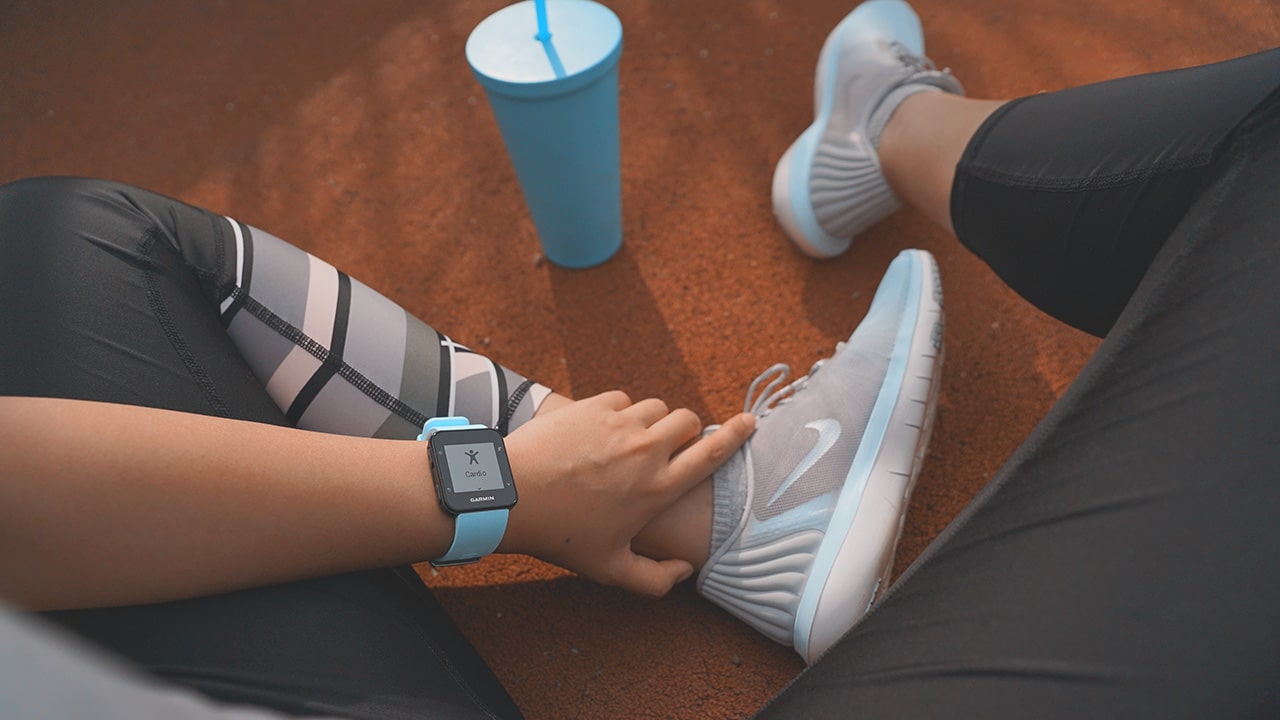
A shiny new thing on your wrist is like a new gym membership; it motivates you at the start, and gives you fake willpower to overcome laziness, mostly because you want to get the most out of the investment you just made. Sometimes you’d even throw in new shoes, a new sports bra, or a fresh pair of cute leggings, just so you’d feel good while working out.
Even for everyday use, I find myself turning off notifications and not using any other function my smartphone can also do on any wearable I get my hands on. I’ve avoided smartwatches ever since the first smartwatch I tried using because of how they look, bad battery life, and not-so-useful functions.
Don’t get me wrong, when it comes to monitoring your health, smartwatches and fitness trackers can be helpful and have improved a lot over the years. But knowing how many calories I’ve burned or steps I’ve taken on a certain day doesn’t mean anything if I didn’t change my habits for the long term. A new piece of tech or clothing can only do so much to motivate me.
Confession #5: I have a fast resting heart rate and that’s not good
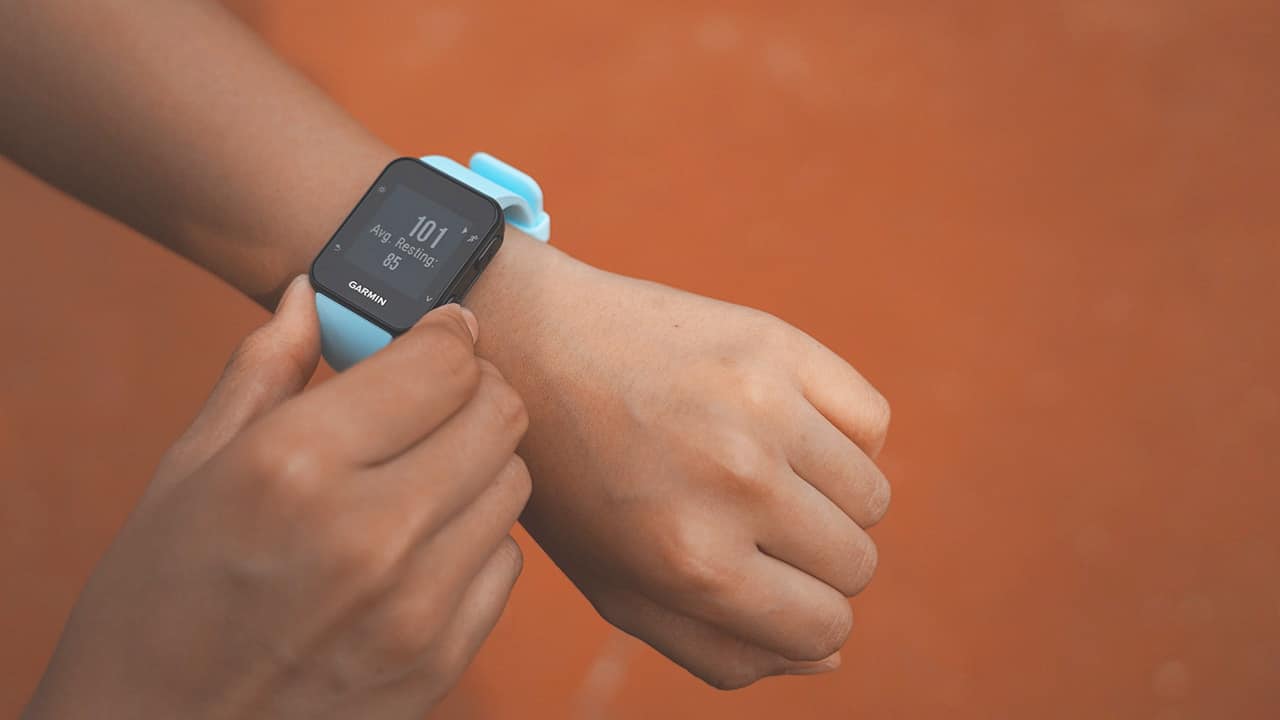
From the overwhelming amount of data a smartwatch gives me, I realized that what matters the most is my heart rate. One’s resting heart rate says a lot about one’s overall well-being, and my average resting heart rate says a lot about the current state of my fitness. I live a very sedentary lifestyle — I sit all day, go in front of my computer, Uber to and from work. I rarely get to walk a lot.
For what it’s worth, using a fitness wearable like the Garmin Forerunner 35 to track how much my heart beats in real time has helped. Seeing how unfit I really am with one press of a button, through a number that isn’t my calorie count and seeing that number lower little by little, motivates me to reach new goals.

It’s only been four months since I started consistently adding 10-minute running intervals before any of my workout routines and I already feel better. I climbed the easternmost part of the Great Wall of China two months ago and I didn’t get as easily tired compared to when I went up the Geumnyeonsan Mountain in Busan, South Korea back in October.
Aside from surviving easy hikes and having stronger arms that can carry a bag full of camera gear overhead, one of my fitness goals now is to have a more normal heart rate — that whenever I press that button on any smartwatch, it should say anything between 60 to 80 instead of 100 and above. Even if I don’t enjoy it as much, I’ve learned that running is still one of the best ways for me to get there. Slowly building up my running time, running at a faster pace, and maybe eventually running outdoors will help me achieve a healthier heart.
In the last few months, it’s been reinforced to me that being fit isn’t so much about how you look — having a thigh gap or toned abs doesn’t necessarily equate to good health. A healthy heart, after all, is a happy one. Everything else (abs included) will eventually follow.






Accessories
Jackery SolarSaga series: Free power for small devices
Portable solar panels can charge small gadgets directly

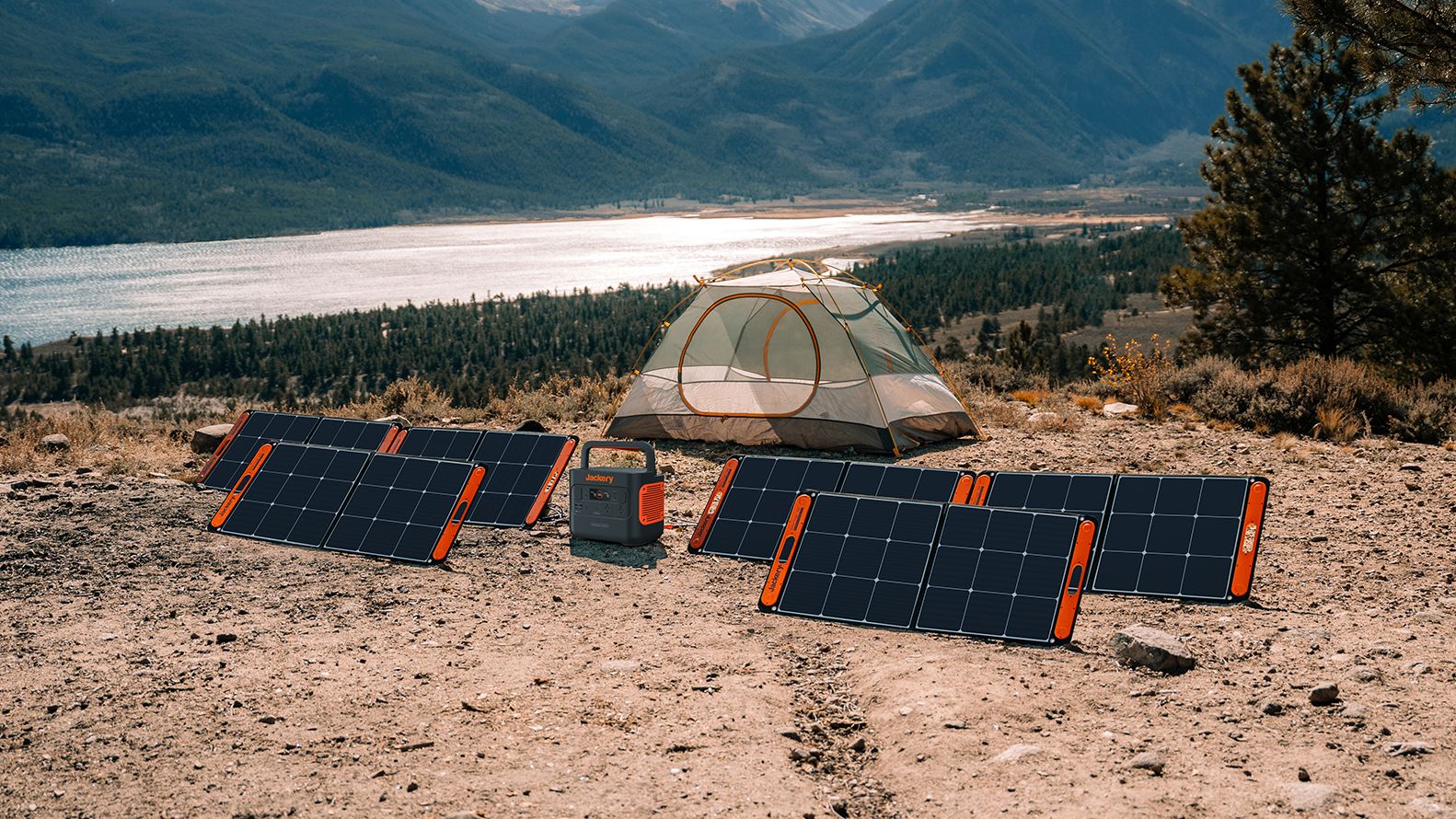
As fuel prices continue to surge as of late, one of the ways to make up for the additional expenses is to turn to alternative power sources. That’s including solar power.
And Jackery is here to help Philippine consumers, with the availability of their portable SolarSaga panels.
These solar panels are an alternative to traditional and permanently installed rooftop solar panels. They are engineered for modern and mobile life with portable, lightweight, and sleek designs. They are built primarily to be set up and put away easily, and charge small devices directly.
Simply put the Jackery SolarSaga panels where sunlight is available, and it will convert up to 25% of sunlight into usable energy.
To charge small gadgets like phones and portable fans, or even smartwatches, the SolarSaga panels come with a USB-C and USB-A port.
Another way is connecting the SolarSaga to Jackery’s Explorer power stations like the Explorer 300 Plus or 1000 Plus.
From there, users can power up devices, essentially for free. On its own, the Jackery SolarSaga panels are available in 100W and 200W variants.
The panels are also IP68 rated for water and dust resistance. This makes them usable outdoors when brought to adventures like camping, picnics, or beach trips.
The panels are already available through Jackery’s Lazada and Shopee platforms, as well as Techroom’s Lazada and Shopee accounts.
Accessories
UGREEN adds new Nexode Pro power bank, charger to lineup
Intelligent displays, fast-charging, user-focused design
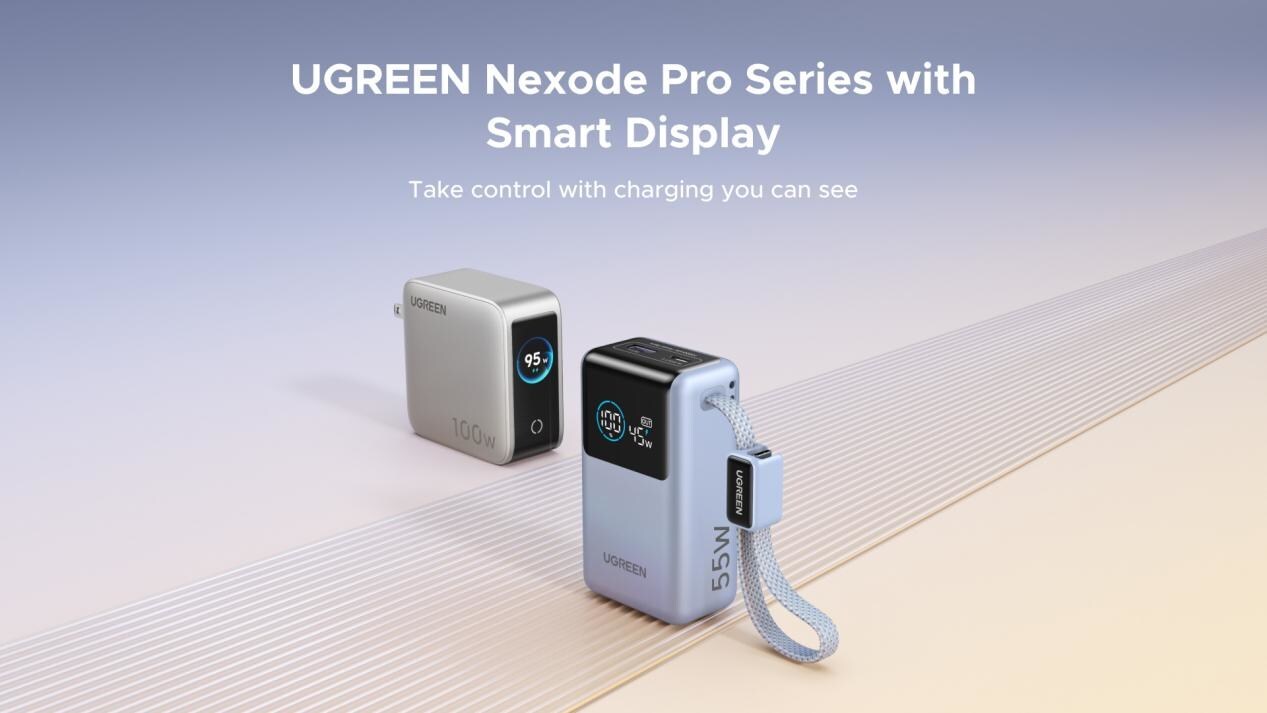
UGREEN has expanded its Nexode Pro charging lineup with two new devices designed for the modern user. They are the Nexode Pro 10000mAh 55W Power Bank and Nexode Pro 100W 5-Port Charger.
These new offerings combine intelligent digital displays, fast-charging capabilities, and user-focused designs for reliable power — whether at the desk or on the move.
The Nexode Pro 10000mAh Power Bank is the ultimate travel companion, delivering strong charging performance in a compact and travel-friendly form.
It supports up to 45W single-port fast charge, meeting the industry standard for high-speed portable charging. It can reach up to 55W as well when charging compatible Xiaomi devices.
The accessory is equipped with two USB-C ports, one USB-A port, and a built-in retractable USB-C cable. As such, it can power up to three small devices simultaneously without requiring extra cables.
With a rated capacity of 36Wh, the power bank also meets airline carry-on requirements.
Meanwhile, the UGREEN Nexode Pro 10W 5-Port Charger supports workstations. It has four USB-C ports, a USB-A port, and up to a 100W output.
It also has a built-in smart TFT display for easy power distribution monitoring.

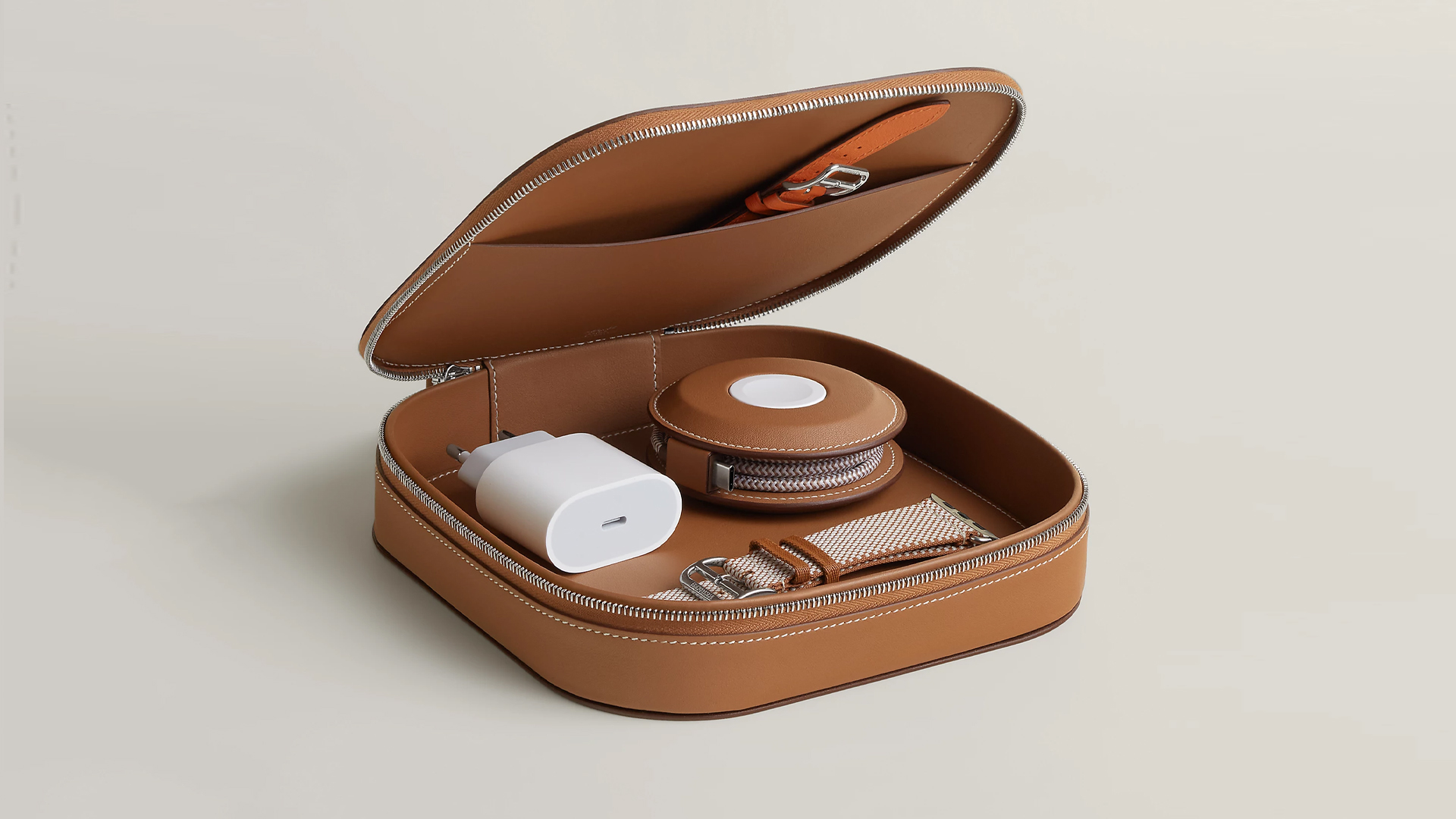
How extra are you as an Apple fan? No matter what you say, you’ll probably never be as extra as someone who buys a US$ 5,000 MagSafe charging case for their iPhone and Apple Watch. Hermès has just launched a series of leather chargers and cases specifically made for Apple fans.
Available now, Hermès has three types of MagSafe chargers for iPhone users. The cheapest one, the Paddock Solo, is a simple leather-bound puck that can charge a single device. The charger also has a braided 3.3ft USB cable. It costs an eye-watering US$ 1,250.
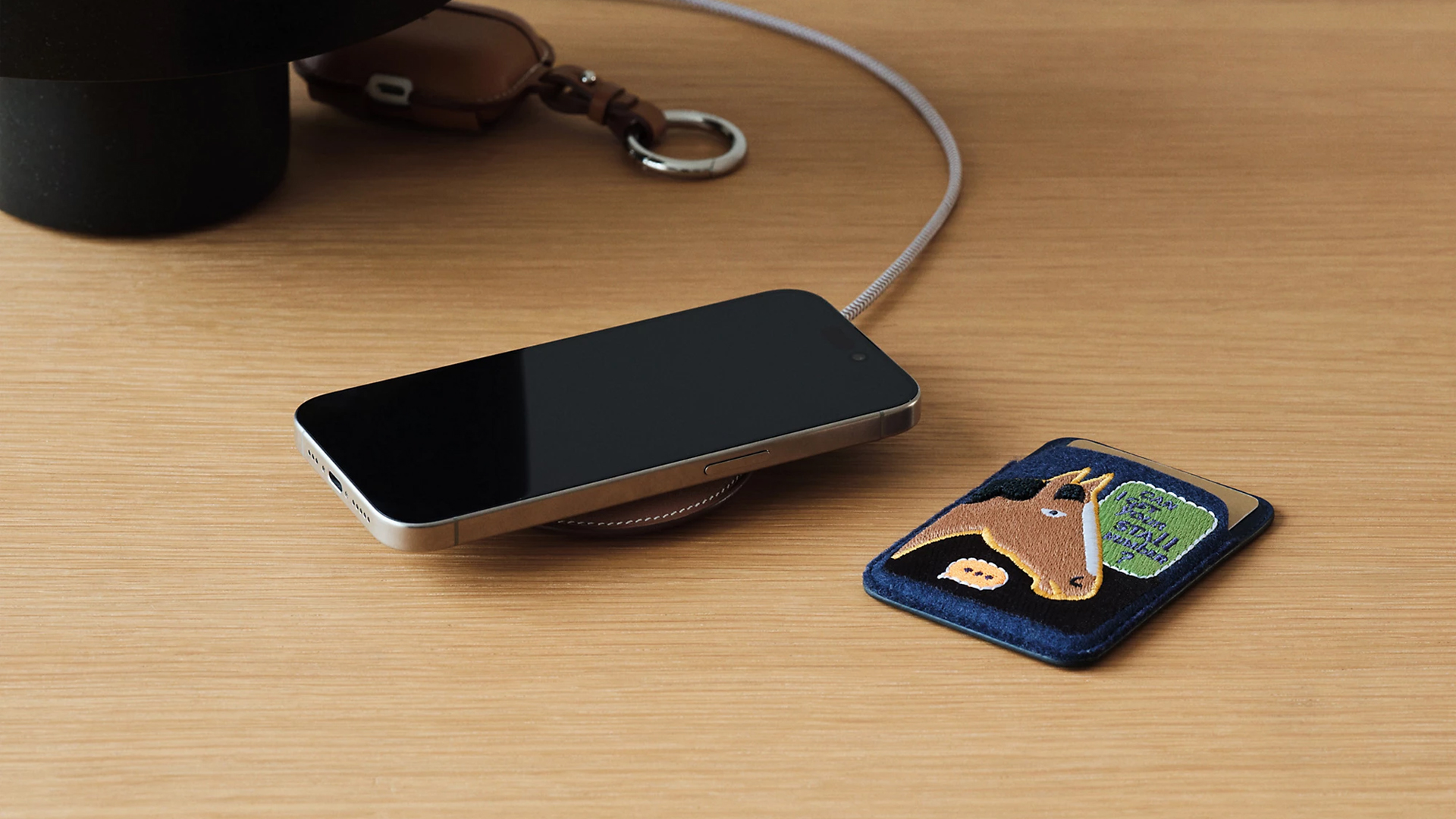
Paddock Solo charger
On the other hand, the Paddock Yoyo charger offers two charging zones for two devices simultaneously. Shaped like a yoyo (hence, the name), it allows users to roll the cable into a convenient stack. It costs US$ 1,750.
Finally, the Paddock Duo is a charging pad that allows for two devices simultaneously. It just doesn’t have a pocket for the cable. It likewise costs US$ 1,750.
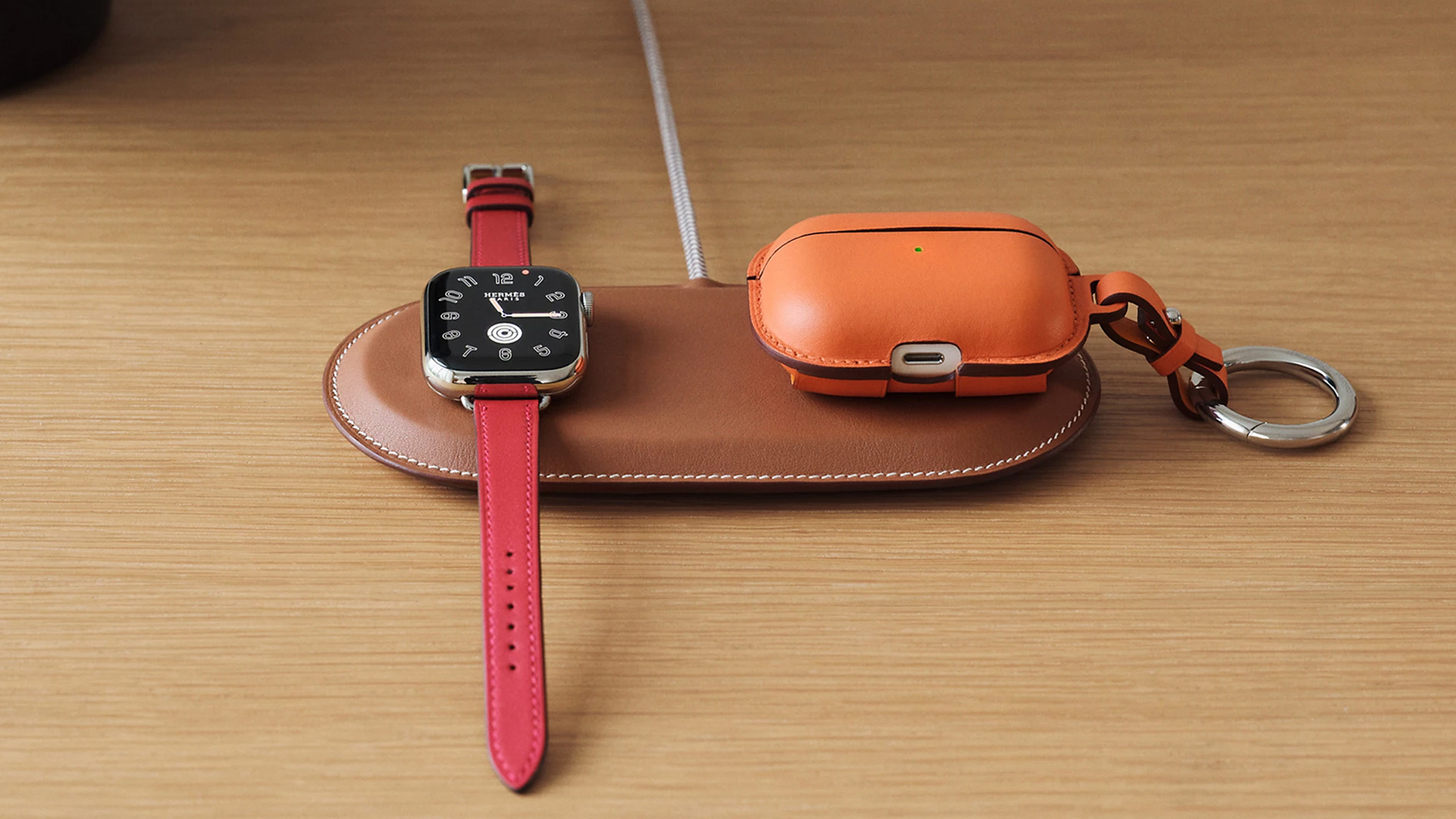
Paddock Duo charger
Now, if you want to upgrade your pricey charging kit even further, Hermès has two cases for them: the Petit Paddock case and the Grand Paddock case.
The Petit Paddock case, as the name suggest, is a snug leather case that fits only the charger (and a brick, if bundled with the Yoyo). The charger and case combo will set you back by US$ 3,725 for the Solo, and US$ 4,225 for either the Duo or the Yoyo.
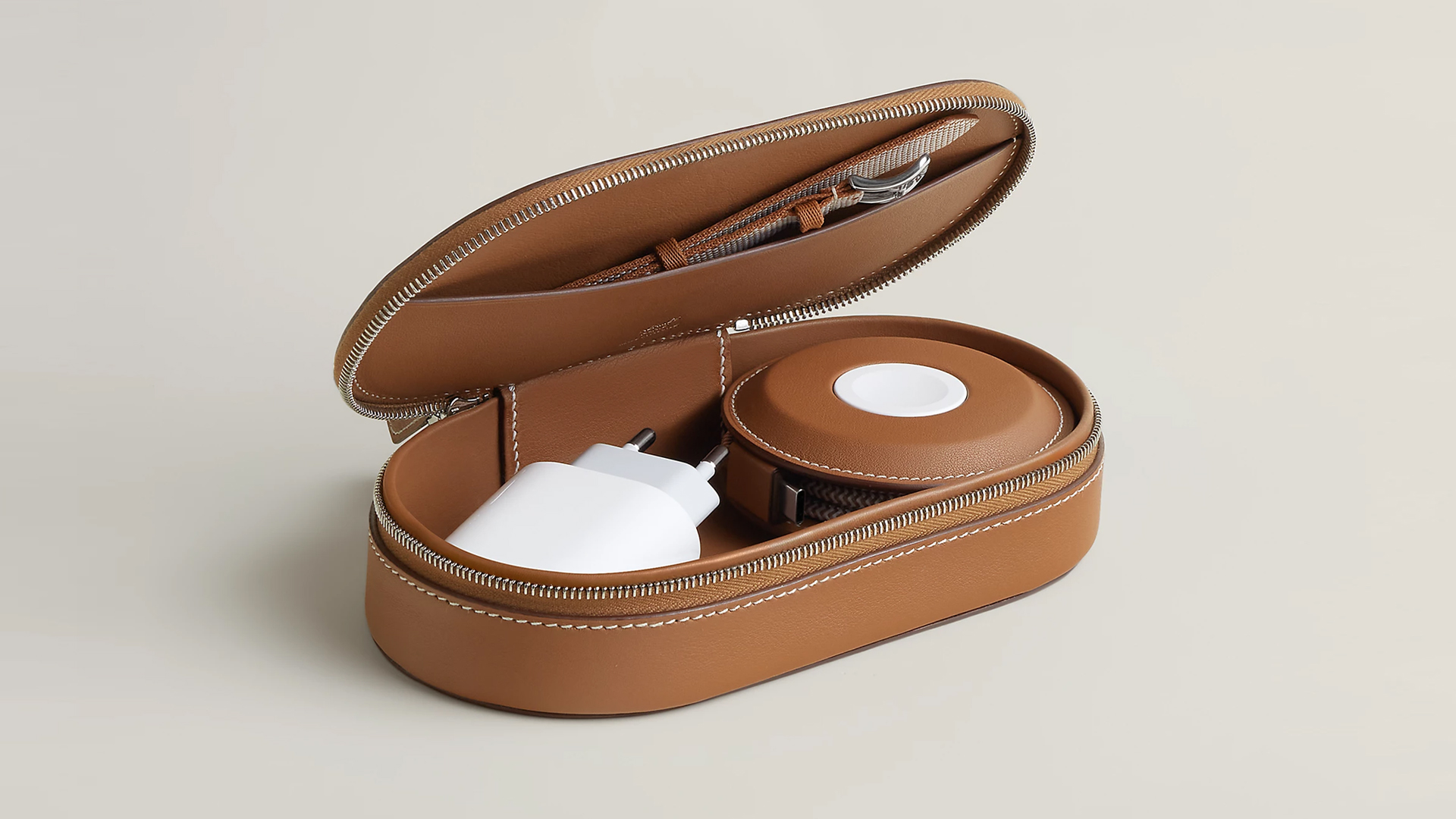
Paddock Yoyo + Petit Paddock
Alternatively, the Grand Paddock can fit much more but also costs a lot more. It costs US$ 4,650 for the Solo, and US$ 5,150 for the Duo or the Yoyo.
Of note, none of these come with a charging brick, so you’ll have to shell out a bit more to maximize the kit.
SEE ALSO: Apple unveils the iPhone 17e




Now Playing: Hoppers

Jackery SolarSaga series: Free power for small devices

UGREEN adds new Nexode Pro power bank, charger to lineup

nubia to launch new Neo 5 series gaming phones on March 28

SHINOBI: Art of Vengeance’s SEGA Villains Stage out on April 3


-

 Reviews5 days ago
POCO X8 Pro Max review: A new beast from the far east
-

 News5 days ago
POCO X8 Pro Series: Price, availability in the Philippines
-

 Laptops2 weeks ago
Apple MacBook Neo Review
-

 Computers2 weeks ago
GIGABYTE collaborates with Capcom for RE Requiem custom PC
-

 Apps1 week ago
Google Maps is finally getting a 3D mode
-

 Entertainment2 weeks ago
The internet is thirsting over the One Piece Season 2 cast
-

 Features1 week ago
Galaxy AI on the Samsung Galaxy S26 Ultra
-

 Automotive2 weeks ago
BYD is reportedly considering an F1 team