
News
Huawei Mate 30 Pro retakes position as DxOMark camera king
An excellent score of 121


Huawei Mate 30 Pro’s impressive specs truly raises the bar for a 2019 flagship phone. Among its impressive specs are the quadruple rear cameras found in this flagship.
Looking at the raw specs of the camera alone, there is a 40MP wide-angle lens, 40MP ultra-wide-angle lens, 8MP telephoto lens, and a Time-of-Flight (T0F) 3D depth-sensing camera in the back. In the front, there is a 32MP camera and a ToF sensor. But there is more to that raw specs in creating a good photo. Fortunately, Huawei delivers on all fronts as proved by DxOMark’s camera review.
The cameras alone are so impressive that DxOMark gave Mate 30 Pro a high score of 121. The score is the highest given by DxOMark, dethroning the score of 117 previously set by Samsung Galaxy Note 10+ 5G.

Mate 30 Pro’s Night Mode is more or less represented by this photo of Shanghai at night.
Impressive for photo stills
DxOMark gave a score of 131 for photos taken by the Mate 30 Pro. The Mate 30 Pro capture high levels of detail even in low light conditions. Apparently, its cameras capture photos with minimal noise and lots of detail in low light. The photos also show a good balance of noise and detail — something tricky to achieve for a smartphone.
In terms of exposure and color, the Mate 30 Pro performs very well. Photos are well-exposed and retained a high dynamic range (HDR) even in low light conditions. Also, they are well-saturated more than the P30 Pro, which DxOMark found to be a positive aspect in favor of the Mate 30 Pro.
Night Mode shooting is also favorable for the Mate 30 Pro. It did well in low-light conditions, whether or not the flash is on. As a matter of fact, DxOMark remarked that its night mode is the best among all flagships.
Zooming on subjects is no problem at all for the Mate 30 Pro. It may have lost the P30 Pro’s 5x optical zoom, but the 3x optical zoom in this phone still captures excellent photos. Zoom shots in close and medium range are captured with good details. Meanwhile, autofocus is not a problem as the cameras were quick to focus, in all conditions. Most smartphones struggle with low-light, but the phone’s autofocus locks on the subject immediately.
Those who love their bokeh would be happy with the Mate 30 Pro. The photos taken show excellent depth estimation and detail, but they can be undersaturated and lacking in HDR. Also, the 18MM field-of-view limits what can fit inside a photo taken by the phone.
The phone won’t disappoint selfie lovers too, as it took selfies with good exposure and HDR. Colors are accurate and details are good. It is worth noting, however, that the lens are fixed-focused, unlike other flagships released this year.
Videos are great, but not the best
For the videos taken by the Mate 30 Pro, DxOMark gave a score of 100. Samsung Note 10+ 5G scored higher with a 101. Still, the phone captures videos with good detail and minimal noise in all conditions.
The Mate 30 Pro lacks HDR video recording; nonetheless, colors are vivid and exposure is accurate in most conditions. The autofocus is fast and accurate, while stabilization is good. Its cameras compensated well for the walking motion and camera shake.
And last, the Mate 30 Pro captures videos in 4K by default.
Aside from the impressive camera specs, the Mate 30 Pro packs a 6.62 inch edge-to-edge screen which curves at 88 degrees. The new Kirin 990 processor is powering the device which enables 5G connectivity. Battery is sufficient at 4,500 mAh which can be charged with either 22W or 40W Huawei SuperCharge.
It is available in various color variants: Emerald Green, Space Silver, Cosmic Purple, Black. A vegan leather option is also available, coming in two colors: Forest Green and Orange.



Deals
GoTyme Bank, Visa partner for FIFA World Cup 2026 raffle giveaway
Win an all-expense-paid trip to the World Cup with your GoTyme Visa Debit Card


GoTyme Bank and Visa have officially teamed up for a FIFA World Cup 2026 raffle giveaway.
This gives Filipino football fans the chance to win an all-expense-paid trip to attend either the World Cup Group Stage or Final in the United States.
The partnership marks GoTyme Bank’s growing presence not only in the market but also in the global stage. Recently, the digital bank has grown to over 9 million customers in the Philippines, and 20 million worldwide.
Under the partnership, GoTyme Bank and Visa have released new limited-edition FIFA World Cup 2026-themed Visa Debit Cards.
These are available in two designs: Pitch Black and Trophy Gold. Both are designed by Filipino artist Ross Du, who incorporated the iconic tournament’s iconic trophy.
The latter, in particular, has some rarity as there will only be 20,000 copies printed in GoTyme Bank kiosks nationwide. Customers can have them printed starting March 23.
Print, Spend, Score
To join the raffle, cardholders simply have to spend at least PhP 1,000 for a raffle entry. That’s using the Classic or Pitch Black card.
Overseas spending also comes with a 3x multiplier, meaning three entries for every PhP 1,000 spent abroad.
Two winners — one Classic and one Pitch Black cardholder — will each win an all-expense-paid trip for two to attend the FIFA World Cup 2026 Group Stage in Los Angeles.
But even better, those who get the exceptionally rare Trophy Gold card will automatically get a raffle entry for the grand prize raffle draw — with no minimum spend required.
One Trophy Gold cardholder will win an all-expense-paid trip for two to attend the World Cup Final in New York City. This includes roundtrip business class seats as well.
In addition to the major prizes, 10 customers will receive exclusive FIFA World Cup 2026 Visa Premium merchandise.
The fly-off promo runs until May 7 for the Classic and Pitch Black cardholders and until June 10 for the Trophy Gold cardholders.
Gaming
Switch 2 now lets you play old games in 1080p
It tricks old games into thinking that the console is docked.

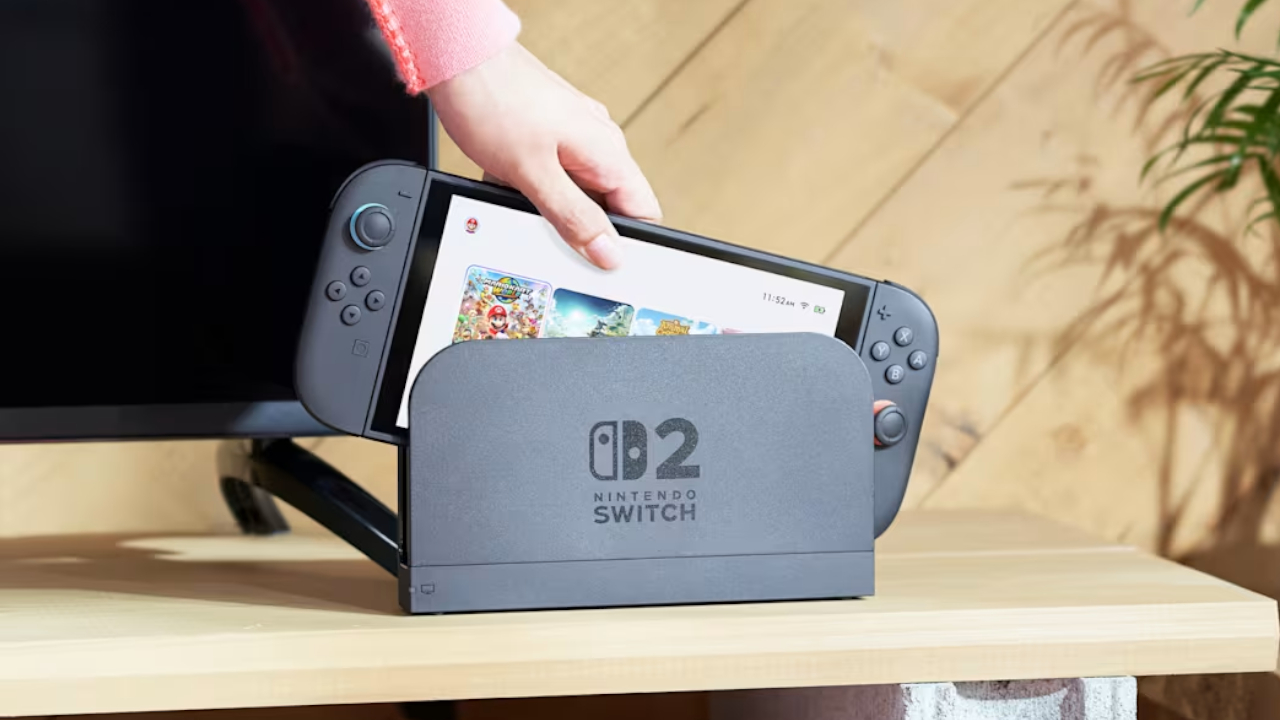
The Switch 2’s popularity is astonishing, to say the least. Just recently, a single game, Pokémon Pokopia, was responsible for taking the free times of over two million players on the Switch 2. Now, Nintendo has released a new feature which should make the console much more playable, especially for those who already had the original Switch.
Today, the Switch 2 received the 22.0.0 system update. Though the update is mostly a variety of smaller updates, one feature, called the Handheld Mode Boost, stands out among the rest. As per the patch notes, “Handheld Mode Boost will cause compatible Nintendo Switch software to run as if the console is being played in TV mode.” Put simply, the feature will unlock 1080p resolution for older games.
For gamers who had the original Switch, game resolution was a huge problem. The first console lived on a 720p screen, so the early games supported only lower resolutions. The only exception is when the console was docked, which allows 1080p resolution.
Now, the Switch 2 supports backwards compatibility. Players can access their older Switch games on the new console. The catch, however, is that these games are still stuck in 720p. Some titles, at least, have released an update to increase resolution on the new console.
Handheld Mode Boost tricks the console into thinking that it’s hooked up to the dock. In effect, the game will play in 1080p. The catch, however, is that it also thinks that the Joy-Cons are a single Pro controller, so players might lose some game features. It’s still a decent price to pay, though.
In other news, the update has also updated the naming of the “Hong Kong/Taiwan/South Korea” to “Hong Kong/Taiwan/South Korea/Southeast Asia,” potentially hinting that Southeast Asia might finally get an online store.
SEE ALSO: Now Playing: Yakuza 0 on Switch 2

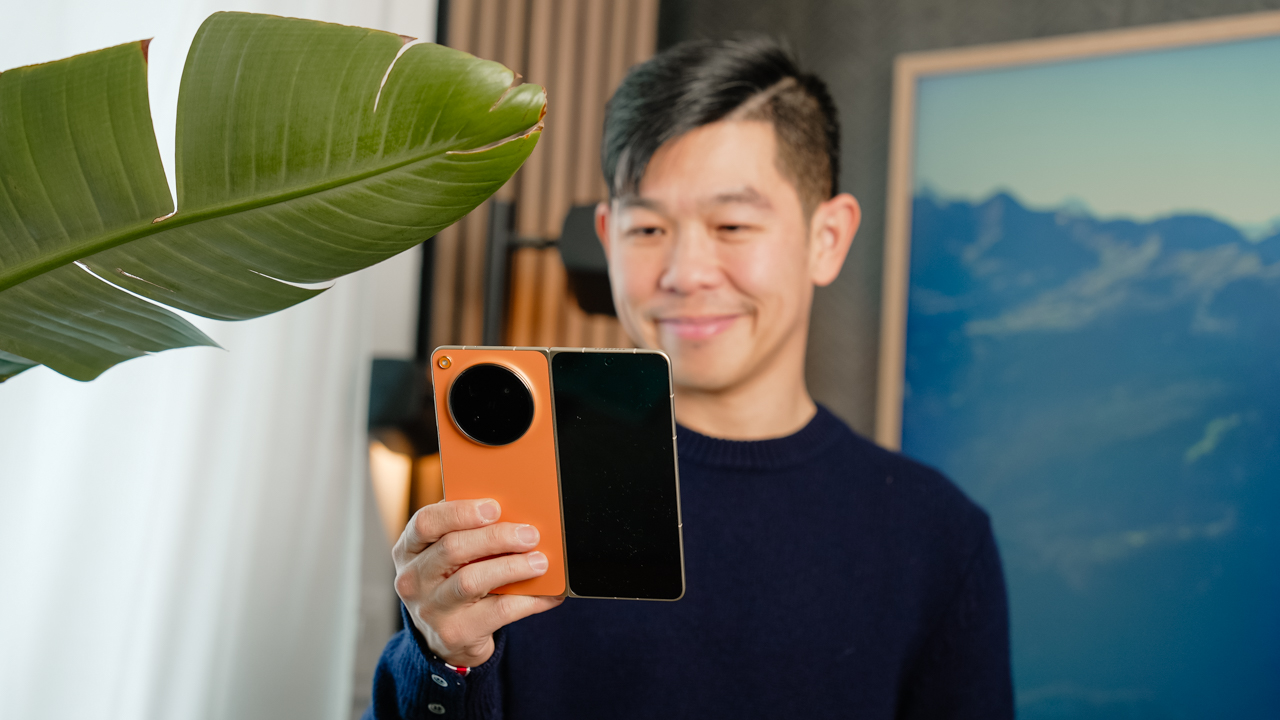
OPPO has officially unveiled the Find N6, its latest foldable flagship designed to push the category further with a near crease-free display, powerful hardware, and productivity features tailored for large screens.
The device introduces what OPPO calls a “Zero-Feel Crease,” a new hinge and display structure designed to minimize the visible fold line and deliver a flatter inner screen experience over time.
The foldable was introduced at OPPO’s Binhai Bay Campus in China and will become globally available starting March 20, 2026.
Design and durability upgrades
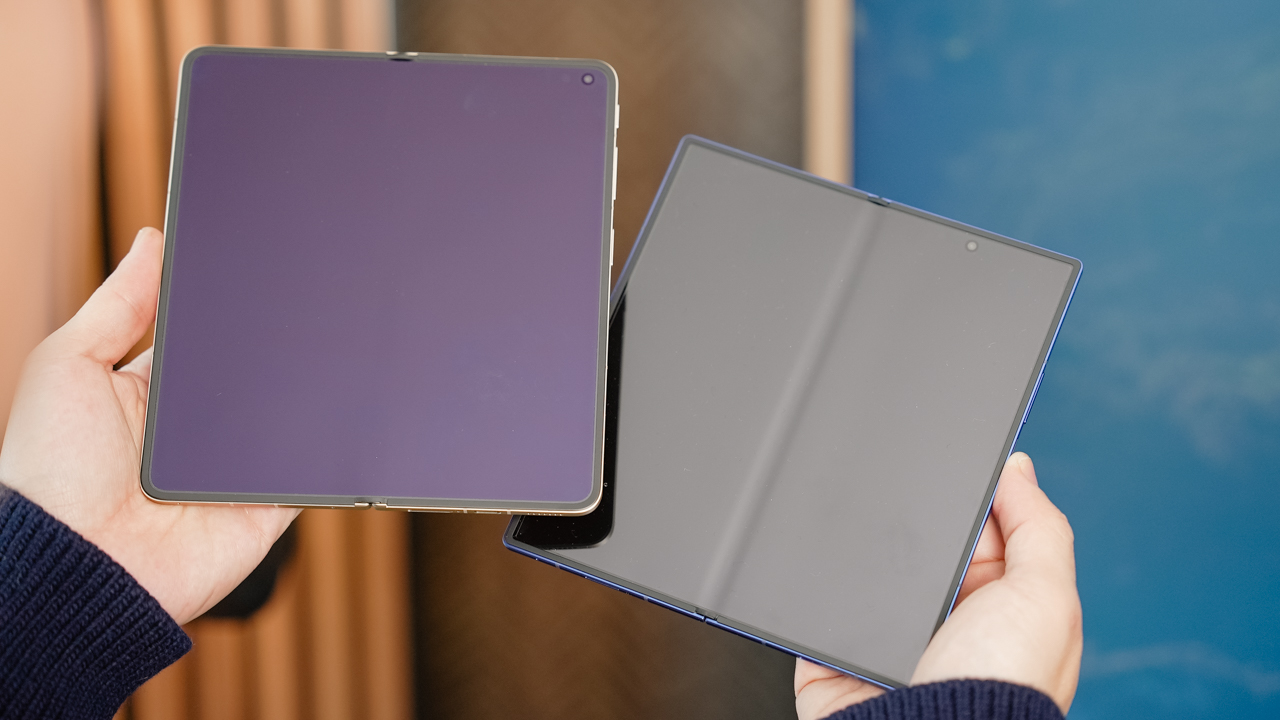
Left: OPPO Find N6. Right: Galaxy Z Fold7
The Find N6 continues OPPO’s push for thinner and more ergonomic foldables. Despite its book-style design, the company says the device maintains a comfortable grip comparable to conventional bar-style smartphones.
It comes in two colourways: Stellar Titanium and Blossom Orange. The latter stands out with genuine gold accents integrated into the hinge casing made of titanium alloy.
Underneath its premium exterior, the Find N6 also adds stronger durability credentials. It carries IP56, IP58, and IP59 ratings for dust and water resistance, allowing it to withstand everyday splashes as well as high-temperature and high-pressure water jets.
Multitasking powered by ColorOS 16
On the software side, the Find N6 runs ColorOS 16 optimized for foldables, designed to take advantage of its larger inner display.
One of the key features is Free-Flow Window, a multitasking tool that allows up to four apps to run simultaneously. Users can freely adjust window sizes and aspect ratios, enabling flexible workflows for productivity or content creation.
The feature integrates with OPPO’s Boundless View interface, allowing users to transition smoothly between intensive multitasking layouts and a focused single-app experience.
ColorOS 16 also brings a set of AI-driven tools, including AI Mind Space, AI Recording, and AI Motion Photo Popout.
For cross-device functionality, O+ Connect enables file transfers between the Find N6 and Mac or Windows computers. The system also supports screen mirroring and remote control functions.
AI Pen turns foldable into a workstation
Complementing the large display is the OPPO AI Pen, a stylus designed to enhance productivity on the foldable device.
The stylus supports 4,096 levels of pressure sensitivity and works on both the inner and outer displays.
OPPO positions it as more than a standard stylus. The AI Pen enables features like Quick Note and Global Annotation, while also functioning as a laser pointer for presentations.
It also supports AI-powered tools such as Circle to Capture, AI Chart, and AI Image. These tools can capture on-screen content, convert rough notes into structured tables, or transform hand-drawn sketches into polished artwork.
Flagship performance and imaging
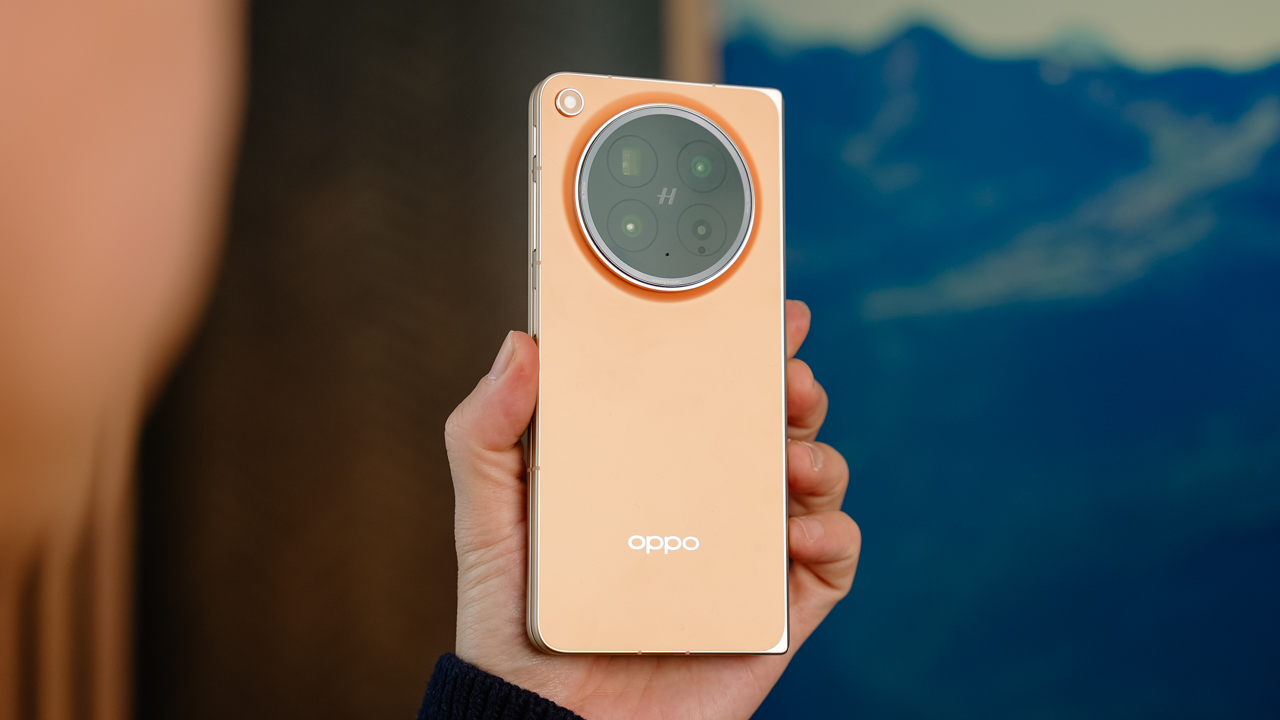
Powering the Find N6 is the Snapdragon 8 Elite Gen 5 Mobile Platform paired with a 6,000mAh silicon-carbon battery.
The device supports 80W SUPERVOOC wired charging and 50W AIRVOOC wireless charging, designed to provide all-day endurance even with extended use of the foldable display.
For imaging, OPPO introduces its new Hasselblad Master Camera System on the Find N6.
The system is led by a 200MP Hasselblad Ultra-Clear main camera. It is joined by a 50MP ultra-wide camera capable of capturing 50 percent more light than the previous generation, and a 50MP 3x periscope telephoto lens with tele-macro capabilities.
The phone also includes a dedicated True Color Camera sensor, first introduced with the Find X9 series, designed to improve white balance accuracy and produce more natural color reproduction.
Camera features developed with Hasselblad include Hasselblad Portrait Mode for DSLR-style bokeh, Hasselblad Master Mode with manual controls tuned to match the Hasselblad X2D camera, and XPAN mode that captures cinematic photos in a wide 65:24 aspect ratio.
The Find N6 also supports professional-grade video features. All three rear cameras can record 4K video at 60fps in Dolby Vision, while the main camera can capture 4K 120fps Dolby Vision footage. Log video support is also included for advanced color grading workflows.
Price and availability
OPPO Find N6 will be globally available starting March 20, 2026 through official OPPO stores, authorized retailers, and partner carriers worldwide.
The foldable will be available in two colourways: Stellar Titanium and Blossom Orange.
Pricing in China is as follows:
- 12GB + 256GB: ¥9,999
- 16GB + 512GB: ¥10,999
- 16GB + 1TB: ¥11,999
The OPPO AI Pen Kit will retail for ¥499.
For regional pricing and availability, OPPO advises consumers to check with their respective regional teams or official OPPO channels.


POCO X8 Pro Max review: A new beast from the far east
That "Pro Max" naming superlative is more than justified


POCO X8 Pro Iron Man Edition review: Midrange phone in superhero armor
POCO x MK15


Now Playing: Project Hail Mary
It's a treat for those who loved the original book.

GoTyme Bank, Visa partner for FIFA World Cup 2026 raffle giveaway

Spider-Man: Brand New Day first trailer hits hard — and gets weird

TUMI’s “Mediterranean Escape” brings vacation energy to Spring 2026 lineup

Switch 2 now lets you play old games in 1080p

OPPO Find N6 launches globally with near crease-free foldable display


-
 MWC 20262 weeks ago
Infinix NOTE 60 Ultra makes a motorsport-inspired debut
-

 Reviews2 weeks ago
The Xiaomi 17 shoots Leica dream
-

 Gaming2 weeks ago
Ubisoft confirms Assassin’s Creed: Black Flag remake
-

 Gaming2 weeks ago
PlayStation will stop releasing its games on PC
-

 Hands-On2 weeks ago
OPPO Reno15 F 5G hands-on
-

 Gaming2 weeks ago
Project Helix is Xbox’s next console, and it plays PC games
-

 Hands-On2 weeks ago
Apple MacBook Neo Hands-on
-

 Computers1 week ago
GIGABYTE collaborates with Capcom for RE Requiem custom PC