
MWC 2016
Huawei’s MateBook is a PC that looks and feels like a tablet

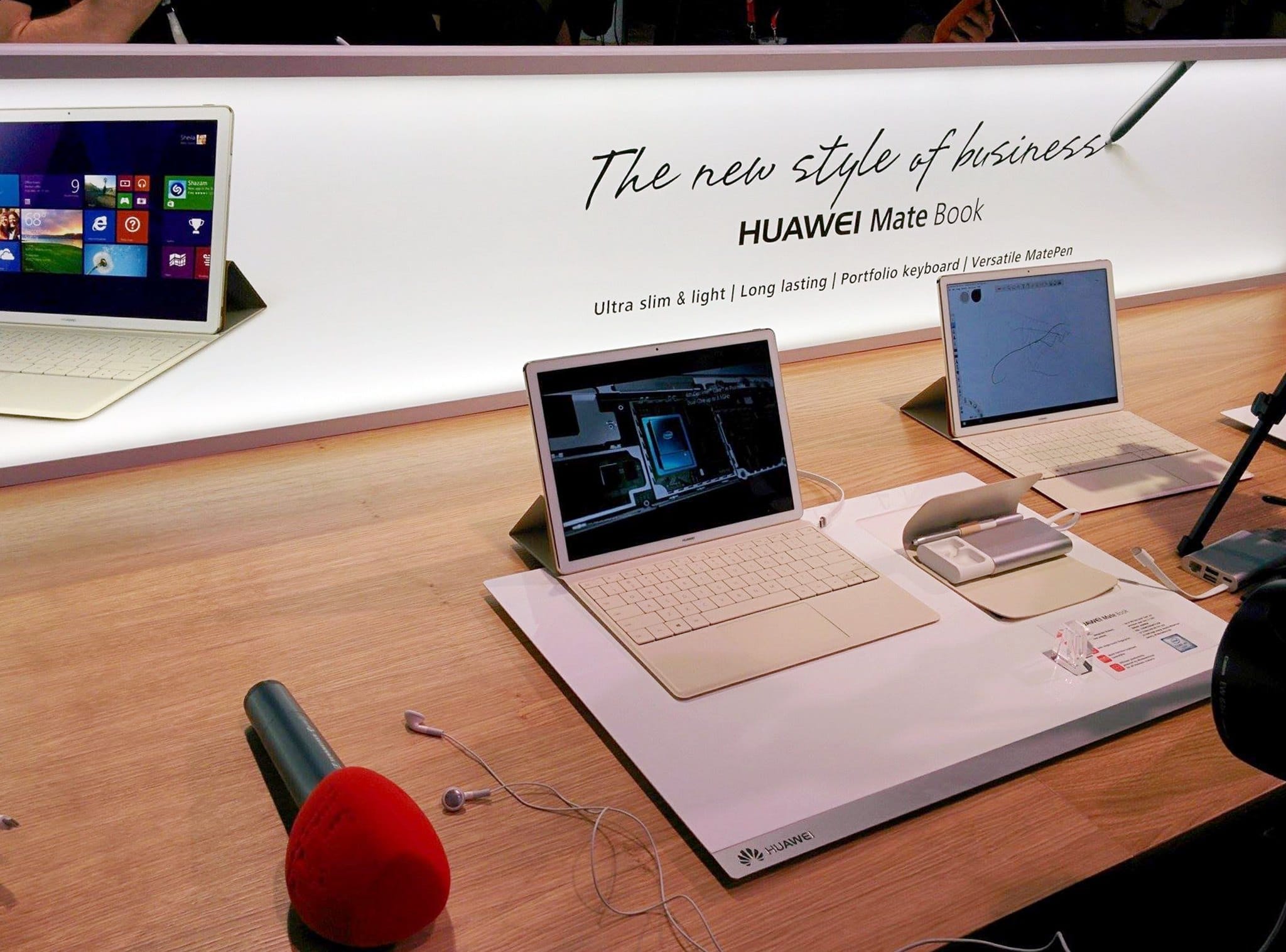
Despite the no-show of the P9 smartphone, Huawei managed to turn heads on the show floor, announcing the MateBook at Mobile World Congress 2016 in Barcelona. It’s the first Windows 10 tablet from the third-biggest smartphone brand in the world, and Huawei throwing its hat in the downtrodden PC market is proof positive that it is looking to diversify its product line and expand its presence in the U.S. and Europe.
If the latter doesn’t work out, Huawei may well have made a safe bet in putting its name into the fastest-growing segment of the PC business. According to IDC, shipments for convertible PCs reached an all-time high of 8.1 million units in 2015.

But back to the MateBook: It is one sleek-looking Microsoft Surface challenger — just 6.9 millimeters thick, which is quite impressive for a slate — that costs less than Redmond’s version. Meanwhile, the hardware itself borrows heavily from Huawei’s high-end Mate series of handsets and features a full-metal enclosure and a fanless design. All this adds up to a Windows 10 machine that’s just as portable as any tablet we’ve seen before.
Oh, and did we mention the bit where the MateBook transforms into a full-fledged laptop with the inclusion of a keyboard cover and touch-sensitive stylus, which has a built-in laser pointer? Yeah, it’s a straight-up productivity machine out of the box, something we can’t say about most Android tablets.
The IPS display measures 12 inches diagonally and uses a resolution of 2,160 x 1,440 pixels; it’s plenty sharp, but not nearly as crisp as those found on the iPad Pro and Surface Pro models. There’s a fingerprint reader built into the side of the device as well. Configurations range from Intel Core M3 to M7, with up to 8GB of RAM and up to 512GB of SSD storage. Huawei says the MateBook will last 10 hours on battery with moderate use.
The Huawei MateBook will be available in Asia, Europe, and North America later this year. You can expect to pay $699 for the base model with a Core M3 processor and 4GB of RAM; pricing goes up to $1,599 for the highest configuration with a Core M7 processor and 8GB of RAM.
[irp posts=”10584″ name=”Huawei’s profits dropped despite record sales in 2016″]
Photo credit: Sameer Mitha of Digit






LG puts the fun back in function with the announcement of its latest flagship smartphone at Mobile World Congress, the LG G5. It has everything a 2016 flagship is expected to have: Qualcomm Snapdragon 820 processor, 4GB of RAM, Quick Charge 3.0 that promises 83% of battery after 30 minutes of charging, a fingerprint scanner, quad HD display, USB Type C, Android Marshmallow, and great cameras.
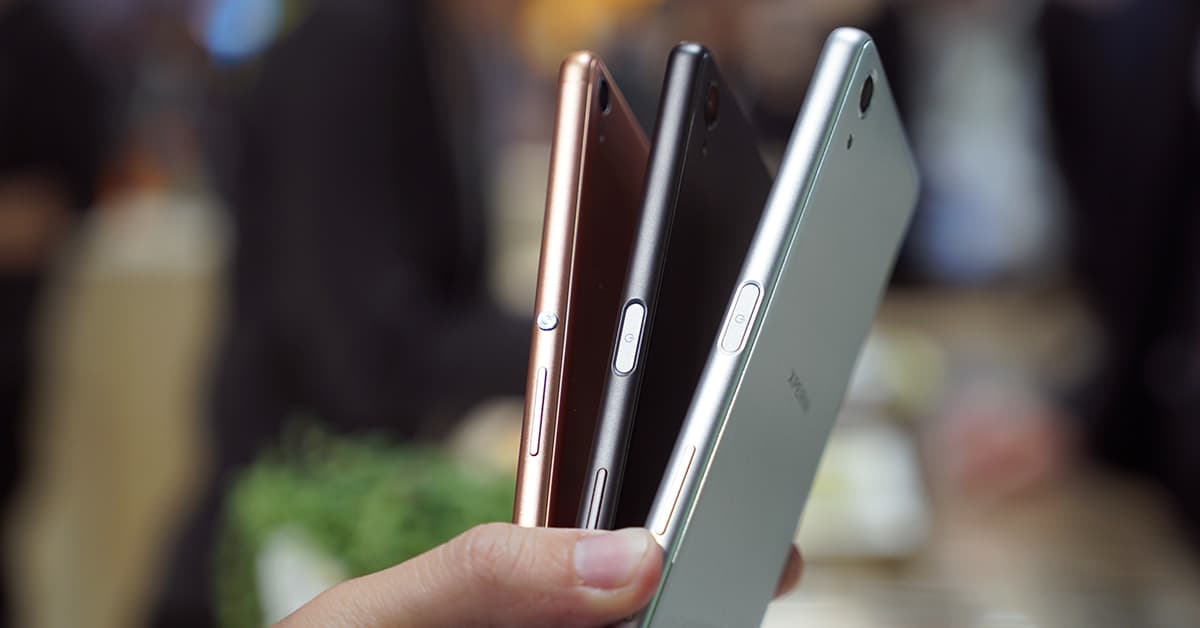
In a surprise announcement at Mobile World Congress in Barcelona, Sony said goodbye to its top of the line Xperia Z smartphone, unveiling in its place a trio of new smartphones collectively referred to as Xperia X.
Specs-wise the new Xperia X line isn’t going to be the most high end smartphone release of 2016 but Sony’s left just enough for the phones to be desirable. (more…)

It’s been a full month since the biggest tech coverage of my life to date. Having finished Legal Management in college, and then eventually making a career in Creatives, never did I think I’d be in Spain, as a journalist, covering one of the world’s biggest tech events.




Now Playing: Hoppers

Jackery SolarSaga series: Free power for small devices

UGREEN adds new Nexode Pro power bank, charger to lineup

nubia to launch new Neo 5 series gaming phones on March 28

SHINOBI: Art of Vengeance’s SEGA Villains Stage out on April 3


-
 Reviews5 days ago
POCO X8 Pro Max review: A new beast from the far east
-

 News5 days ago
POCO X8 Pro Series: Price, availability in the Philippines
-

 Laptops2 weeks ago
Apple MacBook Neo Review
-

 Computers2 weeks ago
GIGABYTE collaborates with Capcom for RE Requiem custom PC
-

 Apps1 week ago
Google Maps is finally getting a 3D mode
-

 Entertainment2 weeks ago
The internet is thirsting over the One Piece Season 2 cast
-
 Features1 week ago
Galaxy AI on the Samsung Galaxy S26 Ultra
-
 Automotive2 weeks ago
BYD is reportedly considering an F1 team