
Entertainment
Joker: Folie à Deux: A take on life’s unfair, paradoxical reality
Joker: Folie à Deux slaps your face with the truth that sometimes, there are no choices and escapes

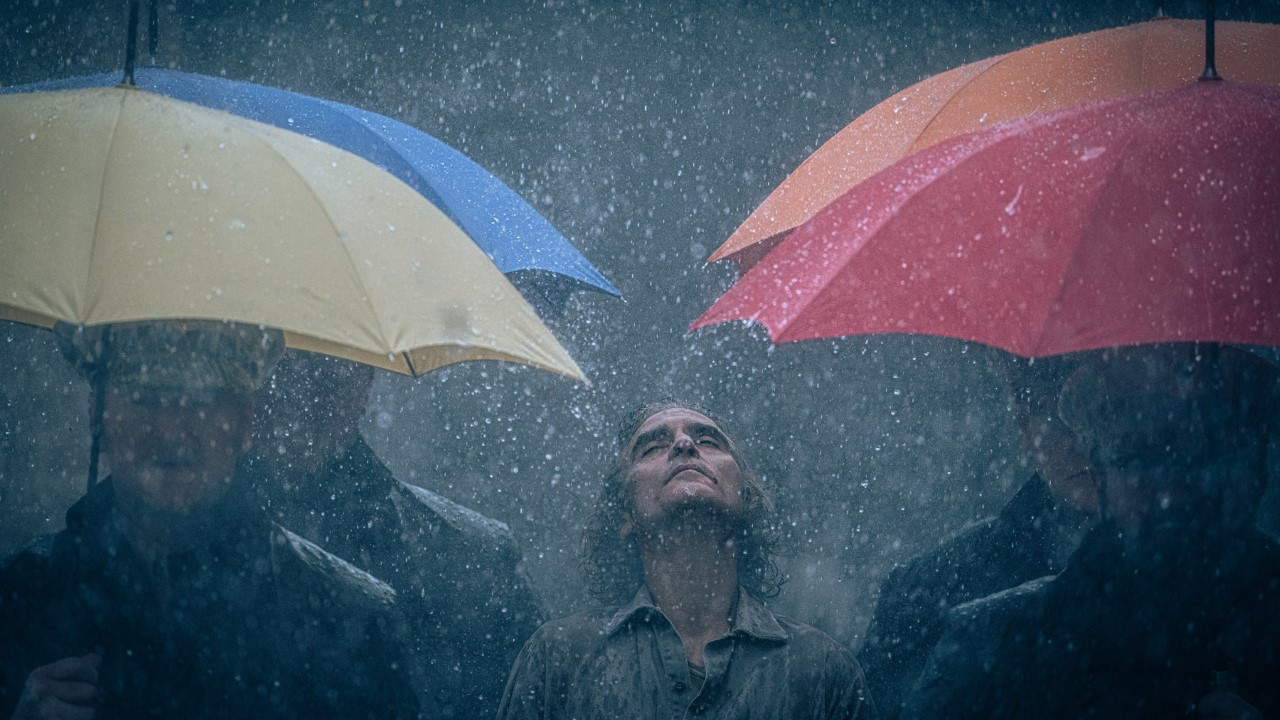
⚠️Warning: Some spoilers ahead⚠️
As if my general thoughts about life had needed further provoking, Todd Phillips’ Joker: Folie à Deux just validated them even more. I never thought I’d go full-blown philosophical with this take, but that’s where this is headed. I’ll leave other angles to those with more expertise than me.
Let’s just put it this way: no matter what lens you put on to dissect it, the new musical psychological thriller isn’t “bad” as a standalone film (and sequel to the supposedly standalone Joker film of 2019).
There’s so much to unpack regarding how the film dives again into the complexities of human emotions and mental illness. That’s still through the titular protagonist Joker, or Arthur Fleck, of course. Not only that, this movie makes you rethink your reality and life in general. And I’m focusing on these aspects, if I haven’t been clear yet.
For the most part, Joker: Folie à Deux is relatable again. Fleck’s experiences growing up contributed in shaping who he became. The whole nature-nurture thing can be a good thing. But it can also be the exact opposite — like what happened to Fleck, which was highlighted further in Joker: Folie à Deux.
To backtrack a bit, one need not be an expert to logically see why Joker did what he did. Fleck’s unfortunate backstory led to his current state, as well as the brutal actions he had done as result of triggers that might have flashed his trauma in front of him.
Beautifully set up
And three-fourths through Joker: Folie à Deux, we were convinced that he did suffer from dissociative identity disorder (DID). In other words, the Joker persona was separate from Fleck. It was the former who murdered late night TV show host Murray Franklin, the three subway bullies, and more. Fleck, meanwhile, was the abandoned yet loving and caring individual who could do no harm.
The second film’s plot covers Fleck’s trial for such brutal actions. And throughout, we thought he made a strong case to establish that he wasn’t guilty, since he wasn’t even sane enough to begin with.
Everything was beautifully set up, so much so that you could already predict a not-guilty verdict. His defense had solid arguments to back everything up. A resounding final statement would have left a lasting impression on the jury that handled the case.

And yet, in a red pill moment, Fleck admitted there is no Joker persona and that everything was done by just him. He was handed the guilty verdict, and chaos ensues again, albeit in a different light.
To say the least, it’s incredible what Fleck did. It’s confusing at first, yet it also makes sense. We’ll get to that in a bit.
Even Lady Gaga’s Lee Quinzel wound up questioning Fleck in the end why he quit the Joker masquerade, when he was doing so well with it. Ironically, it was also Lee who told Fleck (as shown on the trailer) she wanted “to see the real” him.
What if the “real” him was indeed one without the Joker personality we all thought was separate from him? How paradoxical. And the film’s open-endedness all the more makes it such a compelling work of art.
No other choice?
Perhaps, for Fleck, it was the only way. He chose to stop delaying the inevitable. He thought of stopping the charades and finally waking up to what was real. Besides, what other choice did he have? It’s not as if everything else still mattered.
Naturally, it’s much more complex in real life. As for mental health problems, there are no magic bullets. Scientifically speaking, there’s therapy, medication, support circles, and developing healthy habits to improve your overall well-being. But “healing” and getting to a “better place” takes a continuous process. It can even go an entire lifetime sometimes.
And sometimes, suffering from such illnesses also hurt those around us. It can push those around us away. We may or may not realize that right away. It’s not that it’s our fault. But at the same time, those who suffer from mental illnesses themselves also come to realize that they will have to play an integral role if they want progress.
In the same logic to a certain extent, Fleck seeing those rallying behind him committing acts of violence, or even Lee getting influenced by his Joker facade, it was a realization that he needed to stop and finally be responsible for all of his actions. That’s even with his upbringing and the trauma it caused him.
Unfortunately for him, there was no escaping his situation anymore after everything that had already transpired, as he was ultimately killed inside the Arkham Asylum. It’s unadulteratedly sad. Harsh, even. And yet, it’s also the reality for most of us.

Unfair, paradoxical life
Beneath Fleck’s transcendence, one may think: if only he had a level playing field to begin with. Truth be told, most of us do not have the same luxury either. Furthermore, most — if not all — suffering from mental health illnesses do not have it too.
Fleck came to comprehend reality. I wouldn’t even say “embrace” or “accept” because both sound forced in this context. That’s no matter how unfair it had been to him, and knowing he was already in a no-win situation.
And for most of us, it takes a while before comprehending how unfair this world is and realizing how paradoxical it can get. For some, it can get really tough like Fleck’s case where there is no getting out. Just imagine how many real-life Arthur Flecks there are.
It doesn’t mean one cannot win in life anymore, or live a reality that’s more ideal. It also doesn’t mean those who have mental health problems can never “completely” heal from them or overcome them.
But it’s no guarantee either. And Joker: Folie à Deux slaps us with this truth. By strict definition, it’s hardly even a musical nor a comic book/superhero story. It’s a take on the reality of life: one that’s unfair and paradoxical; one that sometimes can be without choices and escapes.
How do we even come to terms with life if that’s the case? I probably shouldn’t have watched this movie.
But what choice do I have?
See? Makes you think.






Entertainment
ITZY’s YUNA is Infinix’s first ever global brand ambassador
Infinix is in with YUNA in the scene


Infinix is entering a new era — and the brand is bringing one of K-Pop’s most sought-after stars along the ride.
A first for Infinix
In line with the launch of the latest NOTE 60 series, Infinix has also named YUNA of ITZY as its very first Global Brand Ambassador. The company calls this a bold step forward for both innovation and style.

For the record, this is the first time Infinix has tapped a global ambassador — and the choice makes sense. YUNA is known for her confidence, vibrant energy, and unapologetic self-expression. These qualities align closely with Infinix’s “Joy Tech, Beyond Limits” philosophy.
In a statement, YUNA shared her excitement about the partnership. She said she’s looking forward to connecting with fans in a new way and creating meaningful stories together with the brand.
For Infinix, this collaboration is more than just a celebrity endorsement. It signals a shift in how the company wants to position itself globally — not just as a smartphone maker, but as a lifestyle tech brand for expressive, tech-savvy youth.
The more, the merrier
The partnership goes along the debut of the NOTE 60 Series, further fueling Infinix’s move toward a more premium smartphone experience.
Like YUNA, the NOTE 60 line also brings notable names in the table:
- Powered by Snapdragon from Qualcomm
- Design collaboration with Pininfarina
- Audio tuned with JBL
It’s a clear attempt that Infinix wanted to elevate both performance and design by blending in flagship-level specs, more refined aesthetics, and immersive sound altogether.

Infinix says this launch also marks its expansion into more premium international markets.
With YUNA as the face of the brand, the company hopes to strengthen its appeal among younger users who want both powerful hardware and a device that matches their personality.

Rather than focusing purely on specs, Infinix is leaning into storytelling — highlighting how technology can spark creativity, joy, and individuality.
With the NOTE 60 Series and YUNA front and center, Infinix appears ready to redefine its brand identity on a global scale.

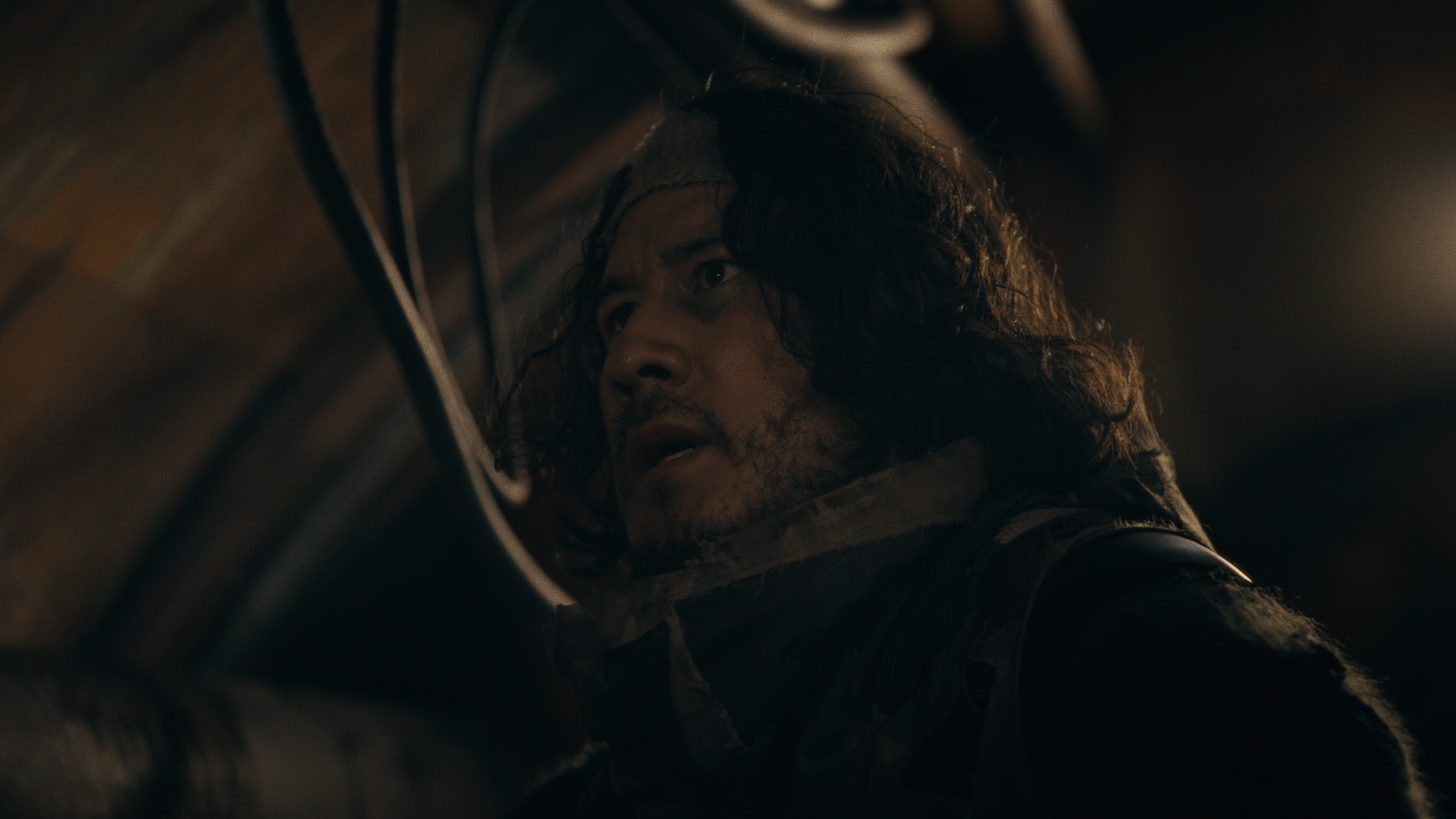
I’m starting to think that cosmic horror is near-impossible to adapt to the big screen. Often, the point of this subgenre of horror is to showcase the unfathomable, a horror so unknowable that it’s impossible to describe. Now, for a medium that thrives on “show, don’t tell,” a full-length movie doesn’t seem like the best format for this type of horror. I’ve seen so many cosmic horror films, and a majority of them fail to land the satisfaction of a more traditional horror film.
Iron Lung, directed by and starring Markiplier, takes a stab at this elusively complex genre.
After the sudden disappearance of stars and planets in the universe, a lone space station explores a nearby moon to search for a way to save humanity. The catch is that the entire moon is covered in an ocean of blood. A convict, played by Markiplier, is tasked with exploring the moon in a one-man submersible, in exchange for his freedom.
Naturally, an ocean of blood isn’t the best place to be. The moon’s ocean hides mysteries and monsters beneath all the gore.
On the impossibility of cosmic horror
Though a movie is all about showing and not telling, Iron Lung navigates through these intricacies by not showing anything.
Because everything is just blood outside, the submarine needs a special camera that takes only grainy photos directly in front of the submersible. There’s always a sense of claustrophobic dread. What’s outside the submarine? What were those sounds? Did the camera really take a photo of something alive?
The film’s premise alone is a perfect source of horror. This is where cosmic horror thrives: on the questions, on the tiny sneak peeks of a monster lurking around the corner.
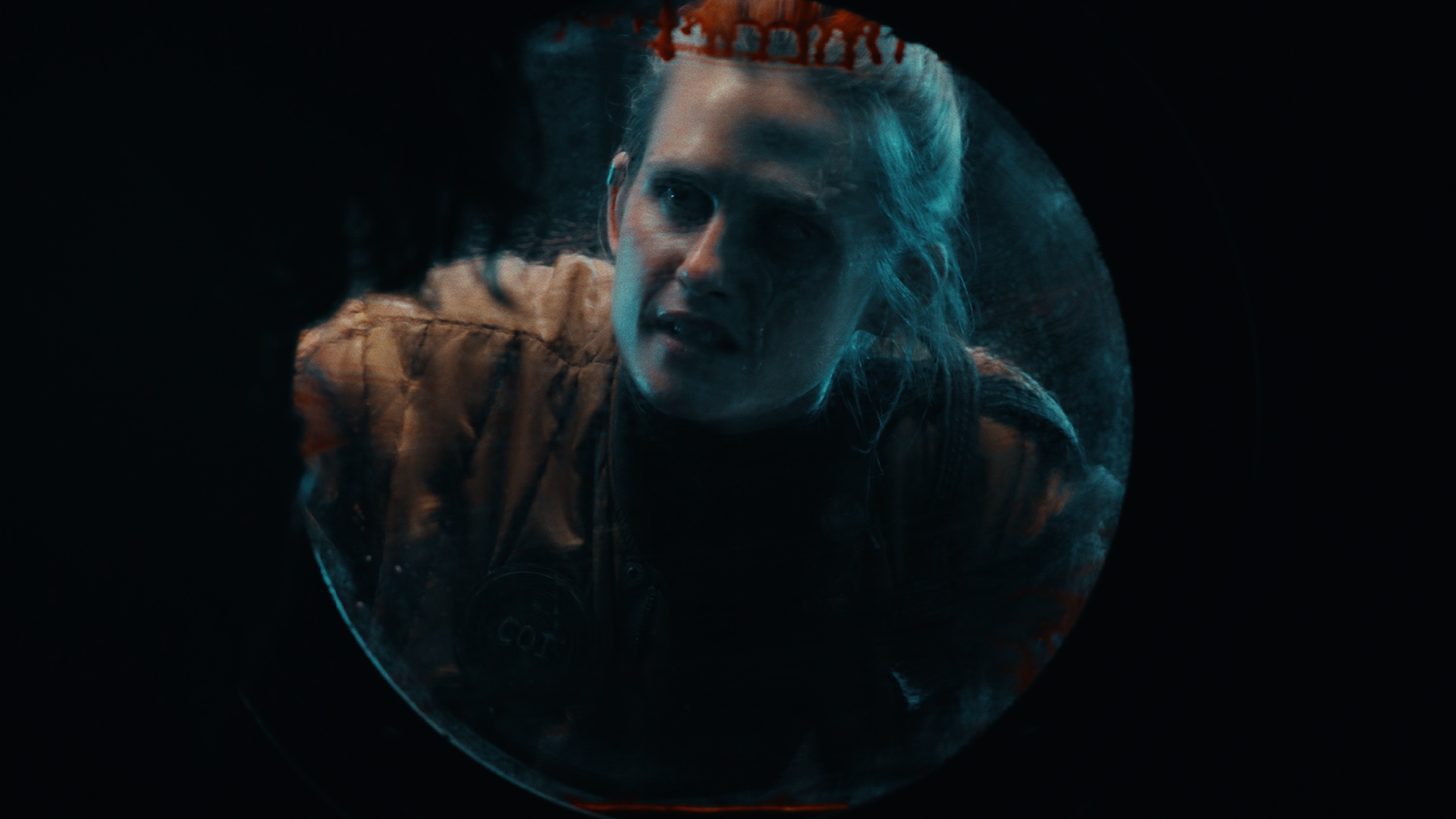
But, then again, this is also where the subgenre can paint itself into a corner. Eventually, audiences ask for more. They need to see and know the beast for real. Think Cloverfield, when the massive alien finally shows its face, or The Nun with… well, The Nun.
It’s an unwritten rule in horror films that the monster must make an appearance. It becomes a paradox for cosmic horror because the beast must also be unknowable.
When the beast finally shows up in Iron Lung, the audience never learns an understandable reason why it’s stalking the submarine. It’s not hungry, it doesn’t want revenge, and it doesn’t want to take over the world. It just is.
Is that a satisfying enough conclusion? If you’re a fan of cosmic horror, then it’s par for the course. However, if you’re more used to the more traditional horror film, it might leave you wanting more.
On madness
A mysterious monster isn’t the only thing that cosmic horror is known for. It’s also about madness and how the protagonist goes insane after seeing the unknown.
It’s apropos, then, that the convict starts hallucinating right after seeing a glimpse of the ocean’s beast. He starts to lose track of what’s real and what’s not.
In other movies, madness is an effective tool in subverting expectations and amplifying the horror. For example, in The Lighthouse, Winslow, the protagonist, also loses his sanity and questions reality. The film is all about this descent into madness and the questionable actions as a result from it. In Shutter Island, madness is a punchline, a plot twist that invites the audience to revisit the entire film and question their own perception.

Iron Lung, however, is neither a complete descent nor a plot twist. Rather, it’s a clear third act stemming from the convict’s encounter with the monster.
Since it’s clearly delineated in the third act, it’s hard to empathize with the convict’s plight. There’s a sense of vertigo moving from a creature feature into, in the convict’s own words, “alien shit” where you’re not sure of what’s real. Likewise, it’s not a plot twist either. You don’t reevaluate whether the entire movie was a hallucination.
Madness is understandably a major plot point of the original game that the movie is based on. However, its translation into film isn’t the smoothest. It’s both too short and too long.
But is it a good film?
Despite its struggle with the format, Iron Lung is still a spirited attempt at a one-room horror film. Markiplier melds into his role and doesn’t just showcase his on-screen YouTube personality.

The premise is, at once, frightening. It’s eerie and creepy. There is always a pervasive need to figure out what comes next. That’s pretty much what you want from a movie anyway. Yes, the ending might be polarizing, especially to those more used to the usual horror film, but the journey is still worth the price of admission.
And, at the very least, the film got me interested in watching Mark’s original playthroughs.
Entertainment
Netflix does the unthinkable: Mayweather-Pacquiao II set for September
Streaming globally on the app
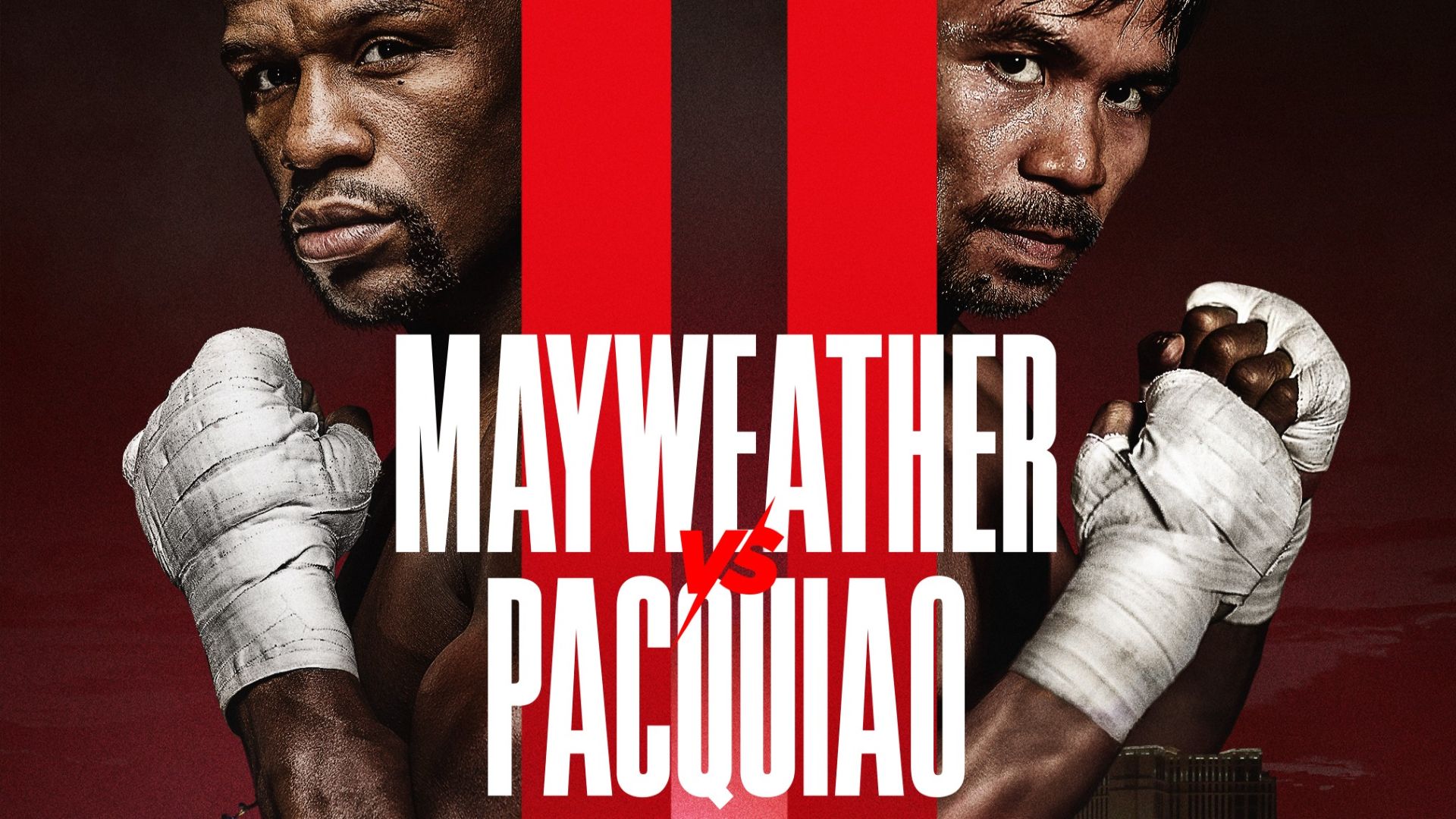
Netflix has done the seemingly impossible: a Floyd Mayweather-Manny Pacquiao mega fight rematch is set for September 19. It will stream globally on Netflix with no additional cost for standard subscribers.
The historic bout will be the first-ever boxing match to be held at The Sphere, the 20,000-seater modern indoor venue in Las Vegas known for its immersive, 16K wraparound LED display.
Arguably two of the greatest icons in boxing history, Floyd “Money” Mayweather (50-0, 27 KOs) and Manny “Pac-Man” Pacquiao (62-8-3, 39 KOs), will square off in an official, professional rematch.
The development comes on the heels of Mayweather announcing coming out of retirement an almost decade-long hiatus.
Meanwhile, it will be Pacquiao’s first professional fight since July 2025 when he and Mario Barrios fought to a majority draw. At the time, he also came out of a four-year retirement.
During the span, both fighters have been active in exhibition boxing matches. Notably, Mayweather fought against Tenshin Nasukawa and Logan Paul, whose brother Jake popularized novelty exhibition boxing matches. Pacquiao, for his part, fought against DK Yoo and Rukiya Anpo.
Interestingly, both Mayweather and Pacquiao
The upcoming rematch follows the two protagonists’ 2015 “Fight of the Century” wherein Mayweather outpointed Pacquiao via a unanimous decision.
A rematch had been sought for so long, especially with both fighters having encounters with each other numerous times.
Full details regarding undercard and ticket availability will be announced in the coming weeks.
Netflix taking over sports broadcasts
The Mayweather-Pacquiao rematch comes just a few days after Netflix announced a Ronda Rousey-Gina Carano MMA super fight.
This match is a collaboration between the streaming giant and MVP promotions, which is co-founded by Jake Paul and Nakisa Bidarian.
On the other hand, the upcoming boxing slate in September is primarily more of a broadcast for Netflix.
The platform has actively been getting into broadcasting premier sporting events, including the Canelo Alvarez-Terence Crawford fight last year.
Unlike pay-per-views (PPV), Netflix does not require extra payment for viewers to be able to watch such sporting events. A standard subscription to their platform is already enough.


Now Playing: Iron Lung
The premise will leave you wanting for more.


Infinix NOTE Edge: Stellar at street photography
Despite trailing in other specs, the Infinix NOTE Edge was built for point-and-shoot photography.


OPPO Reno15 Pro: Camera Review
Why is this even considered a "Reno"?

Resident Evil Requiem is out now

Unboxing: HONOR Magic8 Pro Photography Kit

Tales of Berseria Remastered is out now on consoles and PC

Pokémon Winds and Pokémon Waves will launch in 2027

ITZY’s YUNA is Infinix’s first ever global brand ambassador

Breaking up with Adobe Photoshop after 20 years

TECNO will showcase the CAMON 50 and POVA 8 series at MWC 2026

PlayStation, LE SSERAFIM Chaewon team for the ‘Love of Play’ campaign

VinFast updates battery subscription policy for large upfront savings

The art of being in and behind the frame


-

 Accessories2 weeks ago
Apple AirTag 2 Review
-

 First Look1 week ago
Match Pulse: Infinix NOTE 60 Pro
-

 Cameras1 week ago
Osmo Pocket 4 makes a surprising appearance in public
-
Camera Walkthrough7 days ago
OPPO Reno15 Pro: Camera Review
-

 Gaming2 weeks ago
Star Wars: Galactic Racer shows off new gameplay at State of Play
-

 News1 week ago
iPhone 17 Pro Max is somehow the most traded-in phone today
-

 Gaming1 week ago
LG unveils UltraGear evo, redefines 5K gaming with AI Upscaling
-

 News1 week ago
HUAWEI launches Mate X7, MatePad 11.5 S 2026, FreeClip 2