

Entertainment
Now Playing: Weapons is a horrifying, well-stitched work of art
In a year where the standard for films under the genre has been set high

I walked into the cinema for Warner Bros. Pictures’ advanced screening of Weapons, not knowing what to expect from Zach Cregger’s mystery horror.
Other than the fact that the reputable cast included actors for MCU’s Thanos, Shalla Bal/Silver Surfer, and Sorcerer Supreme, I had no clue how it would pan out.
I realized after a few hours that I had just watched one of the best horror films this year. And given how many big pictures under the genre have performed tremendously well this calendar year so far, you know Weapons did a lot right.
 Warning: Some spoilers ahead!
Build-up gets you hooked

Still: Warner Bros. Pictures
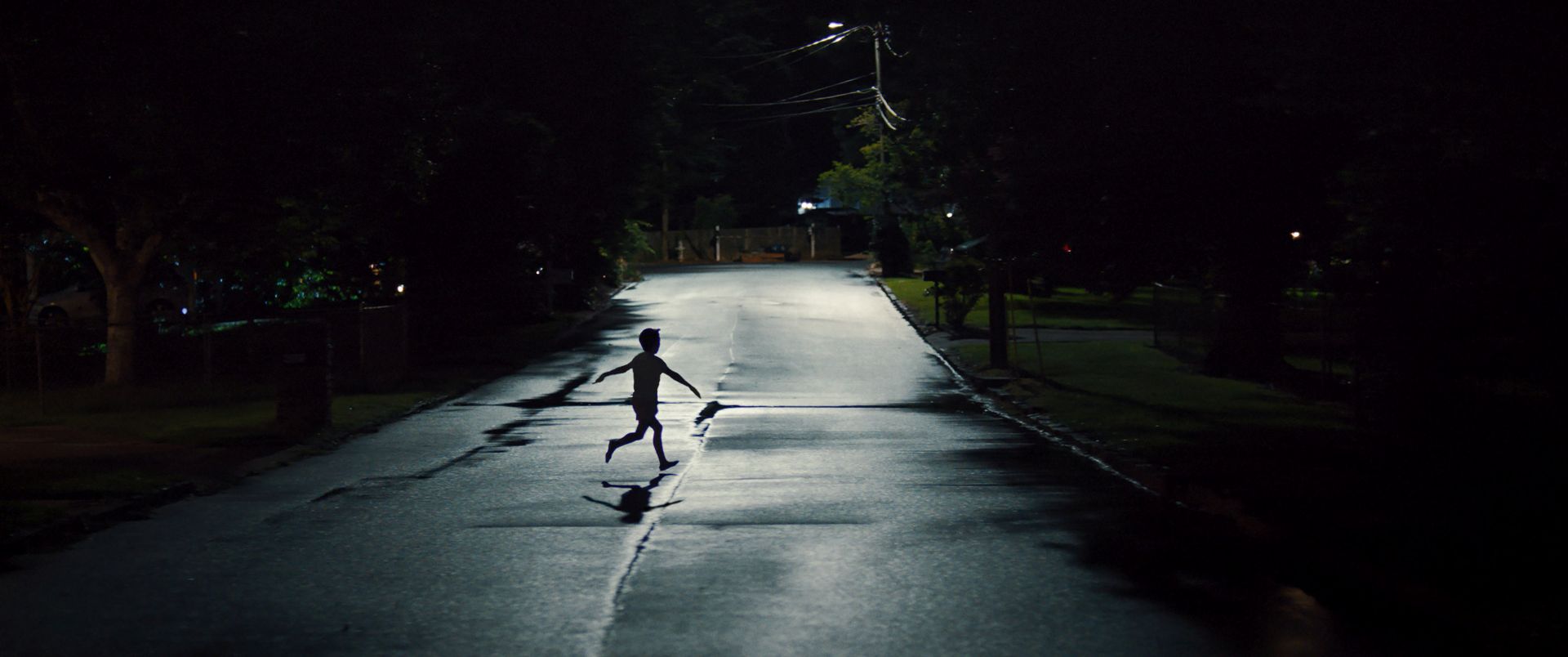
The film starts with a strong and simple premise: all but one child mysteriously disappear at 2:17 a.m. one night.
They all did so running in the exact same way: towards a point B no one knows what is and where. This mysterious happening was even caught by the security cameras of the parents’ homes that had them.
As with disappearances in general, everyone involved is compelled to ask questions. How and why perhaps are the two most relevant. All we know so far is that they all came from the same class, and that one managed not to have the same fate.
It’s sudden, perplexing, and beyond comprehension. From here, audiences are left seeking for answers, which the film uncovers one by one in a way that isn’t random but rather well-stitched.

Still: Warner Bros. Pictures
Most of the main characters were introduced from the get-go as they were directly integral to what was going on.
Julia Gardner’s Justine was the teacher of the 17 vanished students, Josh Brolin’s Archer was one of the parents seeking answers, and Benedict Wong’s Andrew Marcus was the school principal.
Other characters who also played a key role in the story development were later on thrown into the spotlight one by one in a likewise shrewd manner.
Camera work gets you tense
Weapons was told in not exactly a non-linear way, through several parts. These linked parts, by definition, make the movie tantamount to an anthology.
But instead of different stories, the parts were actually mostly the same scenes but presented through different perspectives — one for each main protagonist.
Still: Warner Bros. Pictures
Obviously, they weren’t just replayed literally all over again. Cregger made it a point that cliffhangers preceding the next POVs were explained by presenting elements unseen or overlooked the first time.
Some of them were as simple as a can of chicken noodle soup or Justine waving to someone she knew. You just had to remain engaged.
It all made sense why the camera work was fantastic from the get-go from a technical standpoint. There was an abundance of rear view shots to establish some scenes.
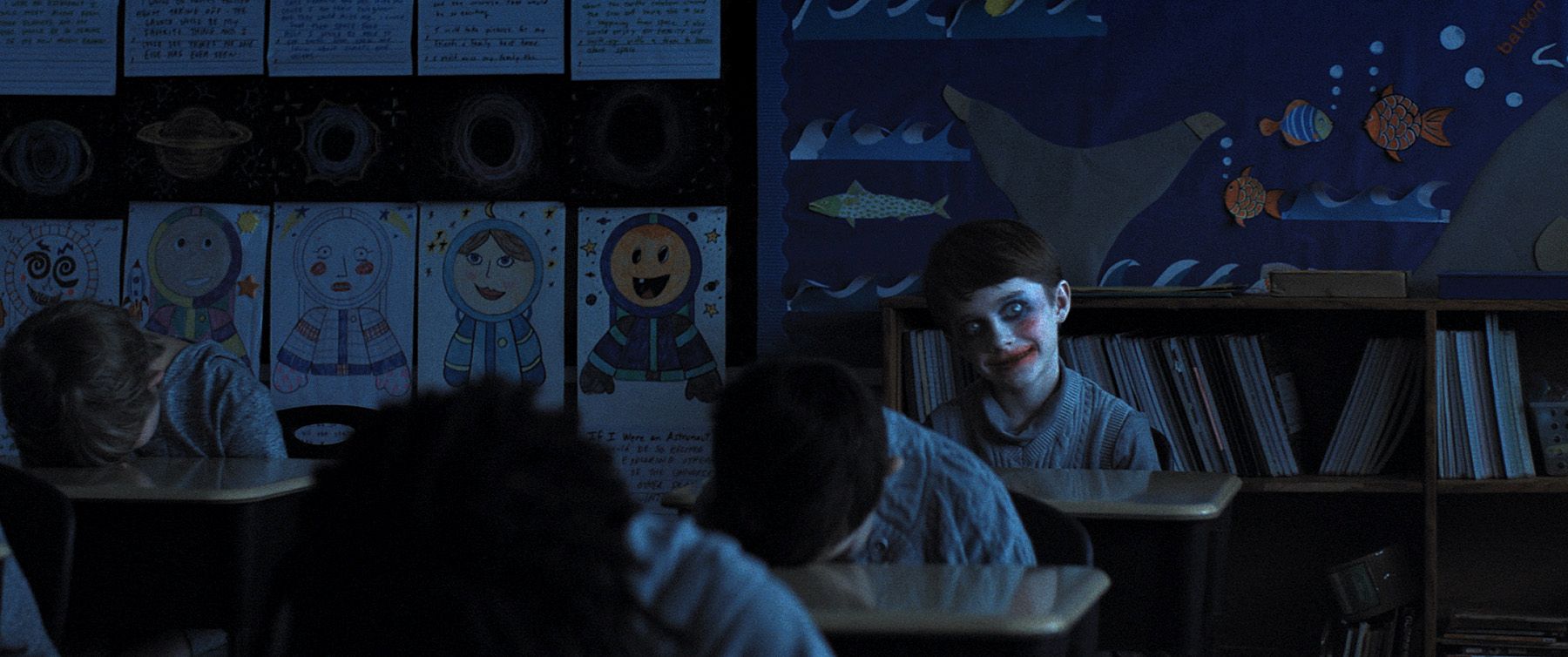
There’s Cary Christopher’s Alex being alone in Justine’s classroom, Justine’s overreliance on alcohol to even make sense of what is happening, and the on-going investigation.
These pictures all evoked an eerie vibe. There were even sporadic oners, although they were shorter in duration and weren’t that action-packed. Then came the scenes that left audiences both terrified yet wanting more.
We had to guess what immediately happens next with scenes involving simple panning left and right, blurring, and a little more zoomed-in framing. Cregger just let Gestalt principles do the work.
This technical expertise was best evident during the scenes that officially introduced Alex’s family home. Of course, this would later be the setting of the movie’s climactic finale.
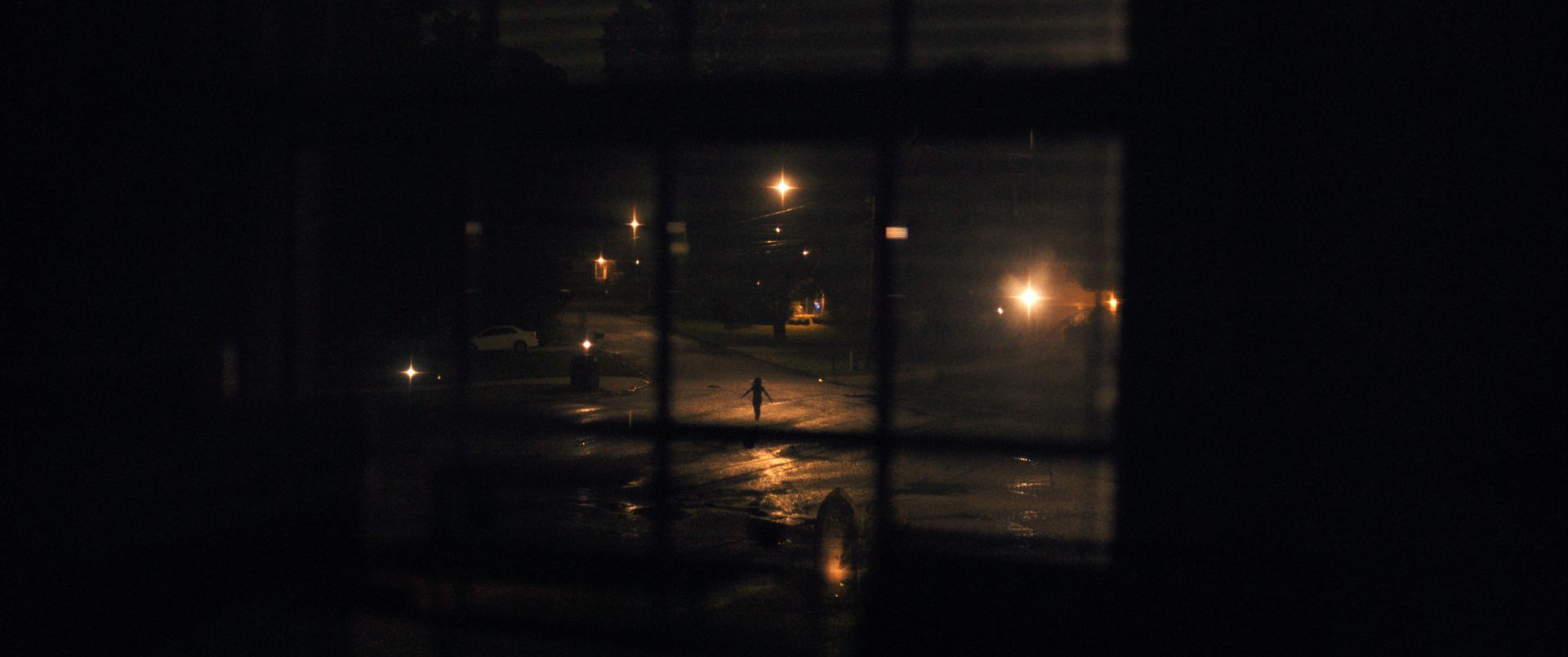
With windows all covered by newspaper from the inside and a front door that had nothing but darkness when opened, the house set up the transition from the first few POVs to the next ones.
Film made the most out of its cast
And while you’re initial in it for the obvious horror, the characters’ relatable everyday lives also help in keeping you glued. There’s nothing otherworldly about their routines. And it’s that normalness that creates a sense of realism as far as the steps they took throughout.
Viewers can relate to Justine’s cluelessness, trying to just carry on with life just as the entire Maybrook community has been enveloped with fear of the unknown.
Still: Warner Bros. Pictures
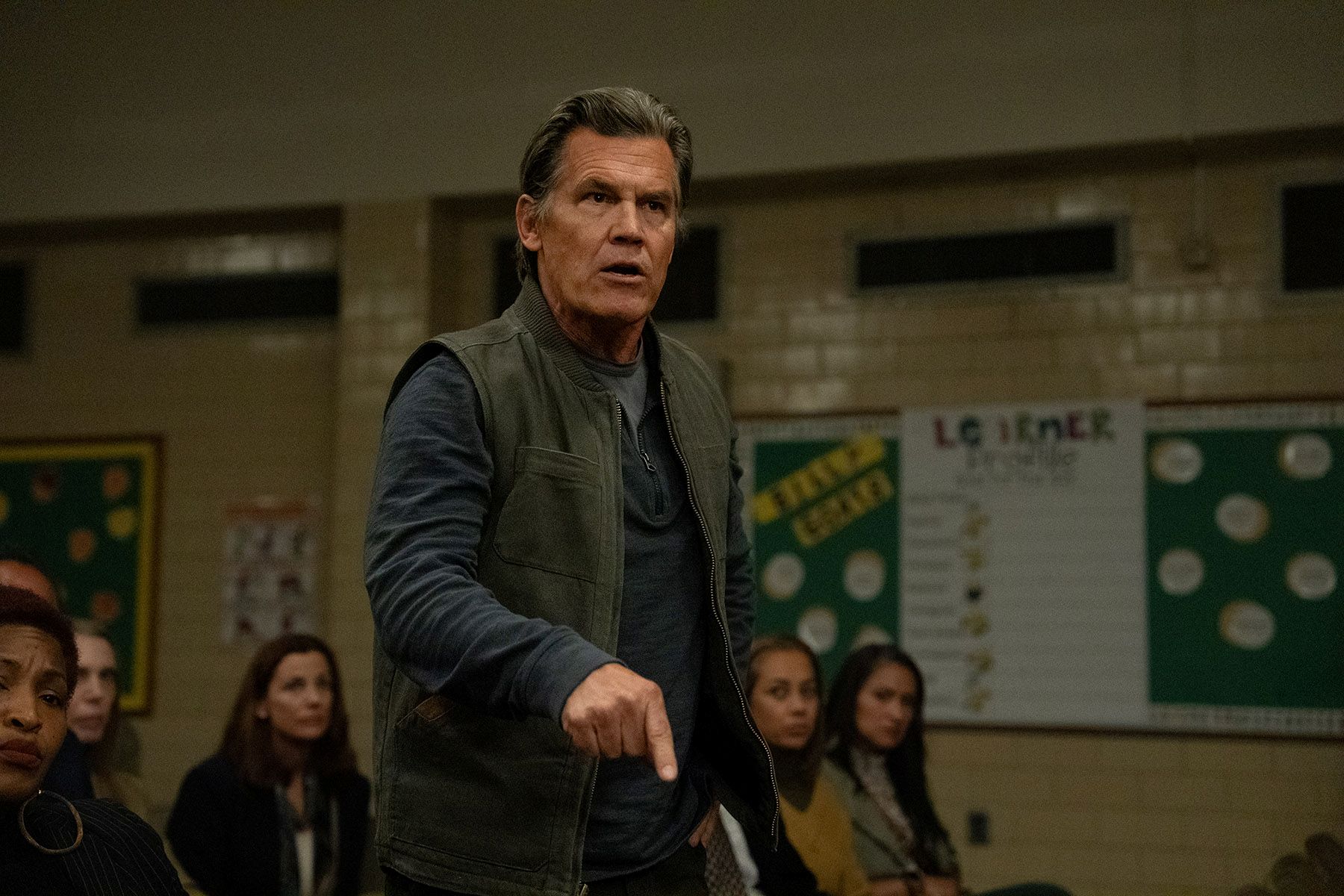
Archer combined desperation from a parent who lost his child with resentment and disbelief in the system. He took matters into his own hands with a detective-style, investigative approach.
There was a scene from the film where Archer figured out from the Maybrook map that all missing children headed somewhere. The film did not need to show all 17 houses but just let him infer with a small sample.
As the film progressed, the lens switched from Justine and Archer to more people involved, albeit in shorter durations. We were introduced to Alden Ehrenreich’s Paul Morgan, a police officer who apparently sees Justine in spite of a legal relationship.
But as someone sworn to protect society, Paul does what he needs to. This is where he stumbles upon Austin Abrams’ James, a drug addict.
Perhaps not surprisingly, it was James who discovered Alex’s home — and the 17 children in a hypnotic state — as he was desperate for funds and survival.
Puzzle waiting to be solved
And just when everything started to make sense, we suddenly found a clearly possessed principal Andrew charging towards Justine, just when the former was in a confrontation with the still answer-seeking Archer.
I didn’t know how far Cregger would push the film in terms of its goriness. I got the answer to that from that scene. And from that point, everything else was just lined up perfectly for an explosive finish.
Still: Warner Bros. Pictures
Further tidbits were presented as if puzzle pieces for a grander riddle waiting to be solved. We were finally acquainted with Amy Madigan’s Gladys, Alex’s peculiar aunt. You just knew something was off with her, and boy, we were right.
It was revealed that Gladys was involved in performing witchcraft, and was behind controlling Andrew. Ditto with Alex’s parents, officer Paul, James, and all of the 17 children.
A brief backstory showed how Gladys ended up staying at Alex’s parents’ home — and eventually causing disturbances to Maybrook.
Climactic ending
By the time the film had ended, we were brought back to the start, finally realizing how everything unfolded. The aftermath of chaos and destruction was clarity.
I even forgot there was an actual child narrating the beginning and the end of the movie, which aptly ended in silence.
Going with a bloodline strategy isn’t all new. But Weapons did not go with a generic trope. I had expected a typical pass-the-curse-to-the-next-family-member twist towards the end. But it didn’t come.
They played it out in a manner that still logically made sense, with Alex reversing the spell in the nick of time by performing the same ritual his aunt did. Cregger was even able to sneak in some comedic relief during the chase towards the end.
But the mere fact this movie let 17 kids do the unthinkable by literally ripping a helpless old woman to pieces towards the end was the chef’s kiss in what has been a harrowingly well-sewn masterpiece.
Should you watch Weapons?
Weapons is a Super Swipe as far as horror films go. It is pieced together brilliantly. Viewers will be left glued, shocked, surprised, yet wanting more.
The premise presumably draws inspiration from what we know from other horror movies. But it’s molded into a unique and unpredictable one that the story is able to build off of.
From its formidable and promising cast to excellent cinematography and brilliant storytelling, Weapons delivers what is expected of a horror masterpiece — especially in a year where standards have been set high.




Entertainment
Cyberpunk: Edgerunners 2 now streaming, Cyberpunk 2077 update coming
Edgerunners returns to Night City


Cyberpunk: Edgerunners 2 is now streaming on Netflix, with all 10 episodes available to watch. CD PROJEKT RED and animation studio TRIGGER have also announced a new update for Cyberpunk 2077, bringing content inspired by the anime to the game.
The Edgerunners 2 Update (Update 2.5) launches on October 22, 2026, for PC, PlayStation 5, and Xbox Series X|S. A Nintendo Switch 2 release will follow shortly.
Edgerunners returns with a new cast
Set in the world of Cyberpunk 2077, Cyberpunk: Edgerunners 2 tells a standalone story through an entirely new cast of characters. The series follows a veteran edgerunner, a young cinephile, a chrome-obsessed delinquent, and a Snake Nation netrunner as their stories explore vengeance and redemption in Night City.
Director Kai Ikarashi leads the new installment, with Kanno Ichigo serving as lead character designer. Masahiko Otsuka returns as a collaborator, while Bartosz Sztybor serves as showrunner, story writer, and producer.
Both Cyberpunk: Edgerunners and Cyberpunk: Edgerunners 2 are available exclusively on Netflix.
Cyberpunk 2077 gets a new update
CD PROJEKT RED announced the Edgerunners 2 Update alongside the anime’s premiere on October 20. The free update will introduce new items and features to Cyberpunk 2077, including content inspired by the new series.
The update launches on October 22 for PC, PlayStation 5, and Xbox Series X|S. CD PROJEKT RED has yet to announce the Nintendo Switch 2 release date beyond confirming that it will follow shortly.
The studio will reveal more details during a special episode of REDstreams on October 21. The broadcast will air on Twitch, YouTube, and Steam, with official patch notes scheduled for release on the same day.

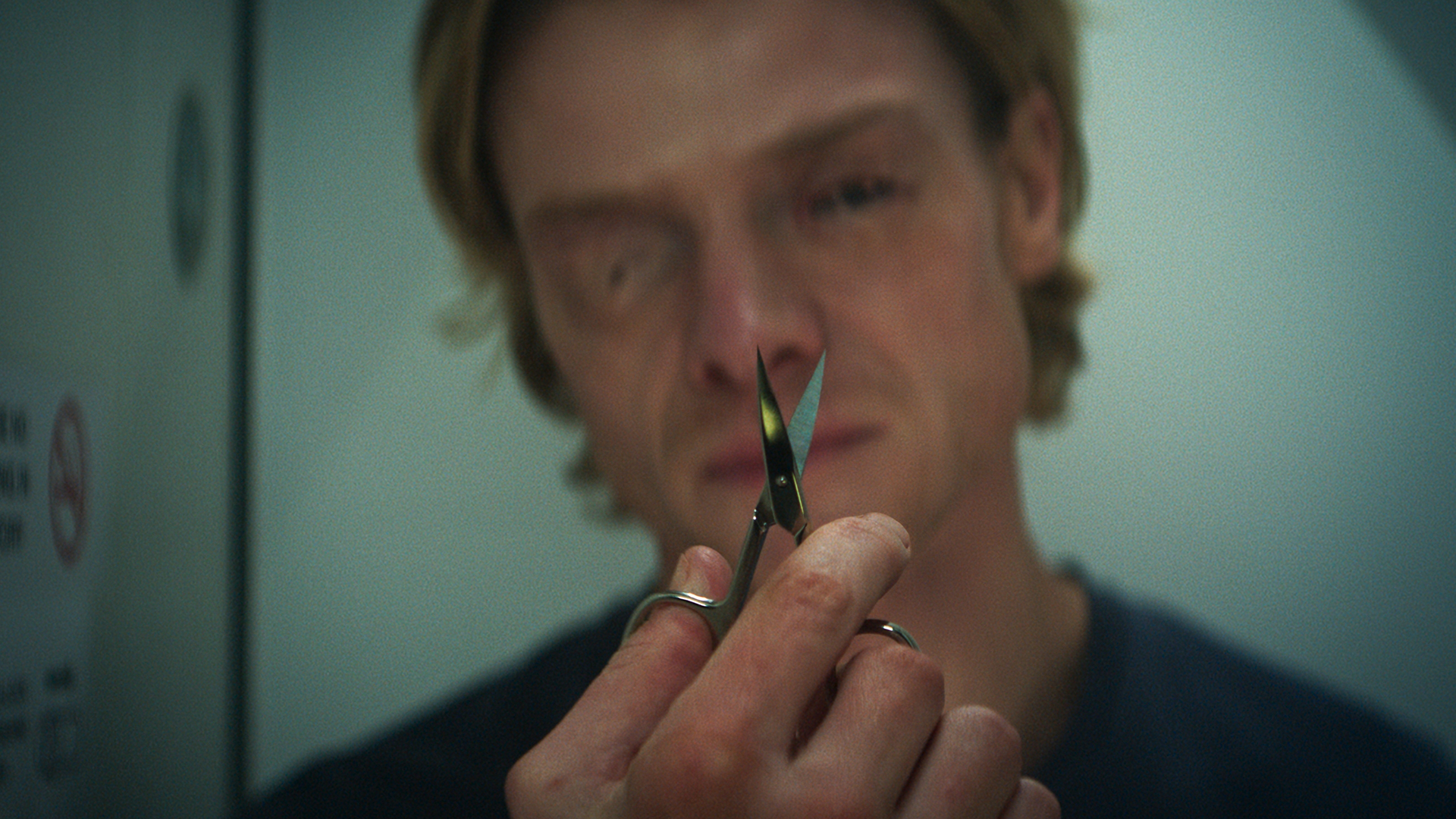
The thing about supervillain movies is that they rarely let their villain be a villain. From Venom to Kraven the Hunter, they’re contrarian dreck that reframe a mass murderer as a “misunderstood anti-hero” who’s overshadowed by a corny do-gooder. Boo hoo. Thankfully, Clayface got the memo to not do that, even if it came pretty close.
Clayface reimagines how rising actor Matt Hagen becomes one of Batman’s most (literally) monstrous enemies. Here, Matt is horribly disfigured by gangsters then abandoned by his friends. He finds hope in Dr. Caitlyn Corr’s genetic experiments, but loses his body, mind and soul as her miracle cure enables his worst impulses.
Basically, Clayface is everything Joker failed to be. It’s a sympathetic origin story for a twisted Batman villain, but it doesn’t make excuses for them. If Joker scapegoats Arthur Fleck’s madness and anarchy on the nebulous enemy that is Society the way an aimlessly rebellious teenager would, Clayface throws all the blame and consequences on Matt — and Matt alone.

I like how Matt’s story is a tragedy of his own making. He wasn’t always evil, and he really was wronged by scum. Worse, his identity is cracking, which is a bit of psychological torment that I wish the movie dwelled on more. And yet, he always had a way out. He just keeps choosing the cruelest and greediest options instead.
This is the kind of agency most supervillain movies — or any movie about a juvenile anti-hero fighting The System, really — lack, but Clayface has an abundance of. There was a moment I thought that the movie would still side with Matt despite everything he’s done, only for him to cross a line. In the end, he can only blame himself when he loses everything and everyone.
However, I was let down by Clayface’s violence. There’s blood and guts, alright, but they’re too inconsistent. For every morbidly satisfying disemboweling or close-up of a nasty scarring, there’s a moment where the movie cuts away from these too early. I lost count of how many times Clayface jumped to the next scene before really letting blades sink into flesh, or how many of Matt’s kills were done offscreen.
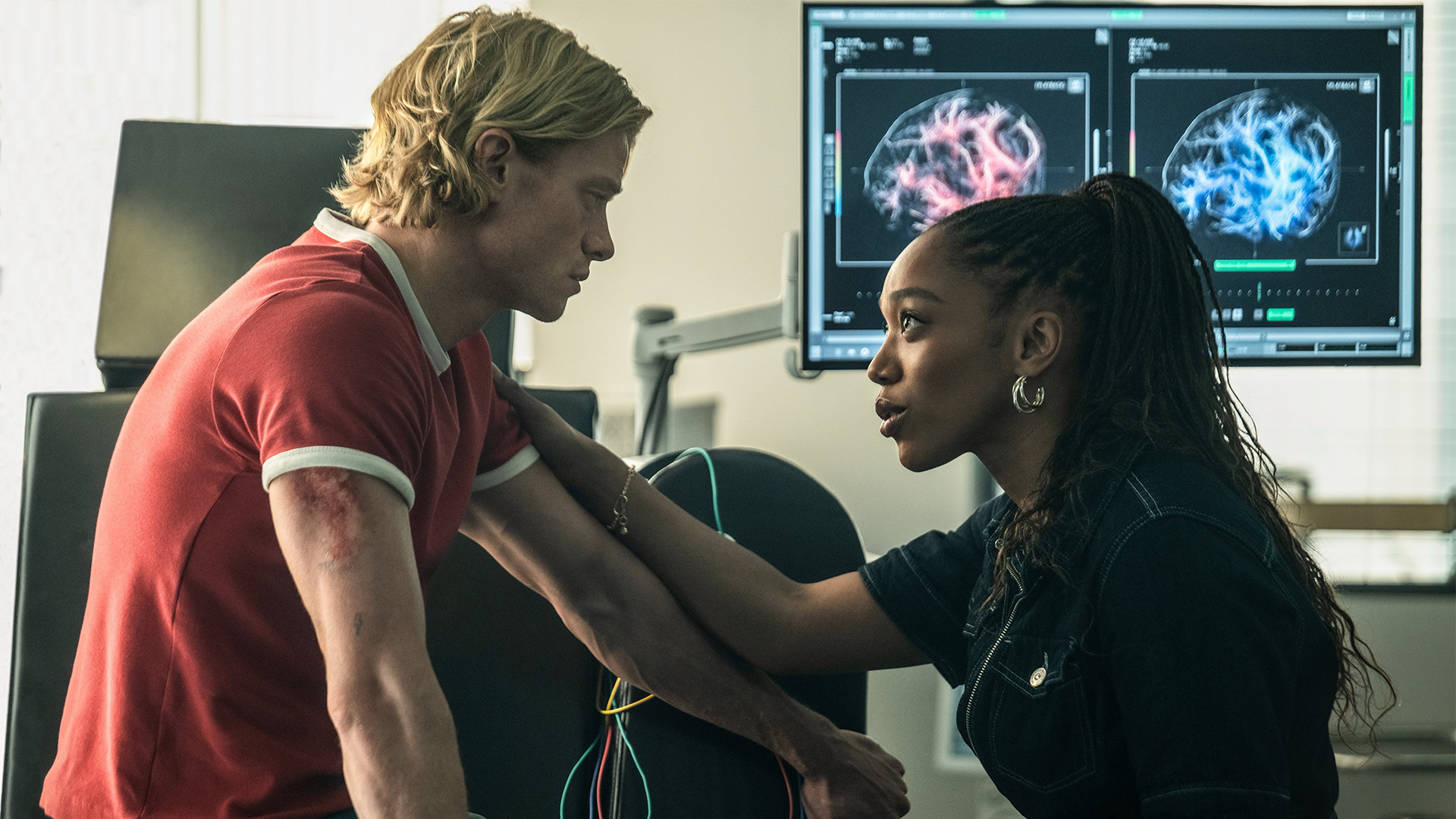
Minus the pivotal deaths, the kills are also not as diverse as I’d hope from a killer powered by Play-Doh and imagination. It’s just variations of stabbing and bludgeoning. My issue isn’t a lack of brutality, but that this reluctance to push it further or just show it gives the well-built tension a lackluster payoff. A movie about superpowered revenge in one of fiction’s vilest hellholes should be more depraved and creative.
To be fair, this is more the fault of the movie’s constraints, not a lack of skill or thought. Effects cost time and money that Clayface clearly didn’t have a lot of. This would also explain why Matt is limited to identity theft not by molding himself, but via clever camera work. For what it’s worth, I see and respect the smart workarounds the movie found to deliver the dread.
Still, I like Clayface. It’s the rare supervillain movie that’s self-aware and honest about its darkness. It humanizes its villain, but commits to their monstrosity while rejecting forced redemption. It’s also a grisly thriller that works on its own merits, yet complements DC Comics’ latest growing cinematic world. That said, Batman can’t arrive sooner to beat Matt’s melted face in.


I went into Whalefall with relatively low expectations. My initial assumption was something along the lines of a Discovery Channel or National Geographic documentary. Perhaps, with a biblical twist inspired by Jonah and the whale.
Learning about marine life and having a mildly existential moment about the ocean seemed plausible enough. What I wasn’t prepared for was being physically thrown around in a cinema while watching a man get swallowed whole by a sperm whale.
Based on the novel of the same name, Whalefall follows Jay Gardiner (Austin Abrams), who dives off the coast of California in search of his father’s remains. What begins as a deeply personal mission turns into a fight for survival when Jay finds himself trapped inside the very creature that could end his life.

(L-r) Director Brian Duffield and Austin Abrams as Jay Gardiner in 20th Century Studios’ WHALEFALL. Photo by Jennifer Clasen. © 2026 20th Century Studios. All Rights Reserved.
Watching it in 4DX made the experience all the more harrowing. My seat moved and the tension mounted. I found myself gripping the armrests as though I had personally signed a waiver to become whale food.
I went in expecting an underwater adventure and left with a renewed appreciation for dry land, breathable air, and the many reasons to stay out of a sperm whale’s digestive system. More surprisingly, I left thinking about my father.
Oh, the questionable decisions we make when we’re hurting
Anyone who has spent time diving knows that going underwater alone is a risk. Conditions can change in an instant. Having nobody around to help when something goes wrong can turn a manageable situation into a life-threatening one.
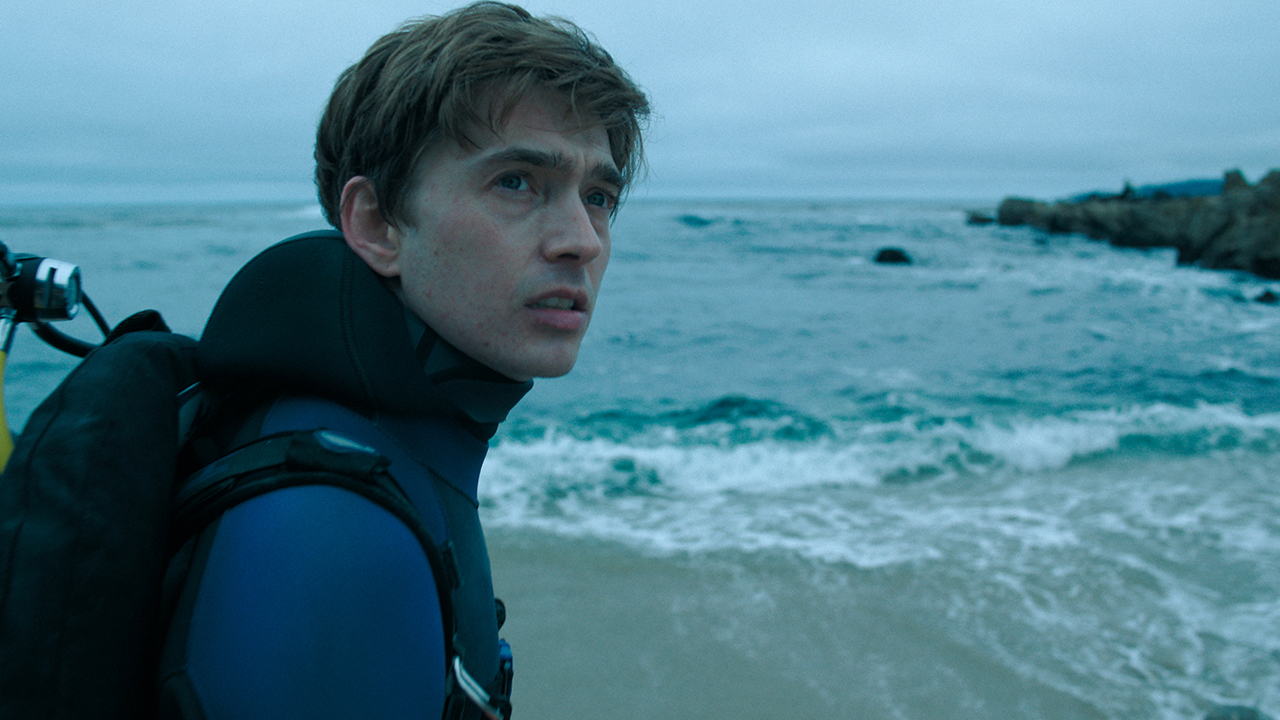
Jay, unfortunately, has other things on his mind. His decision to dive alone is frustrating to watch, particularly when you can see how much trouble his stubbornness is going to cause him.
There were moments when I wanted to reach through the screen and confiscate his diving equipment. I wanted to tell him that grief is not an excuse to abandon every survival instinct he has ever learned.
Then again, grief has a rather unpleasant way of making sensible people do questionable things. Jay is still carrying the weight of his father’s death, compounded by the memory of their last fight.

Diving was something they shared, and returning to the water becomes his way of reconnecting with a man he can no longer speak to.
His search for his father’s remains is also a search for something less tangible: closure, forgiveness, and perhaps, a chance to make peace with the things left unsaid.
That part hit a little too close to home. My own attempt to reconnect with my father involved tennis. Apparently, when daddy issues meet a sports hobby, the brain starts entertaining the idea that a shared activity might somehow repair years of complicated feelings.
Baggage you can’t breathe away
I haven’t read the original novel, so I can’t speak to how closely the film follows the book. What I can say is that Whalefall uses its survival premise to explore the kind of emotional baggage that no amount of deep breathing can magically dissolve.
Jay is fighting to stay alive, but he is also confronting the guilt that has kept him emotionally tethered to his father’s death. The whale becomes a fascinating extension of that struggle.
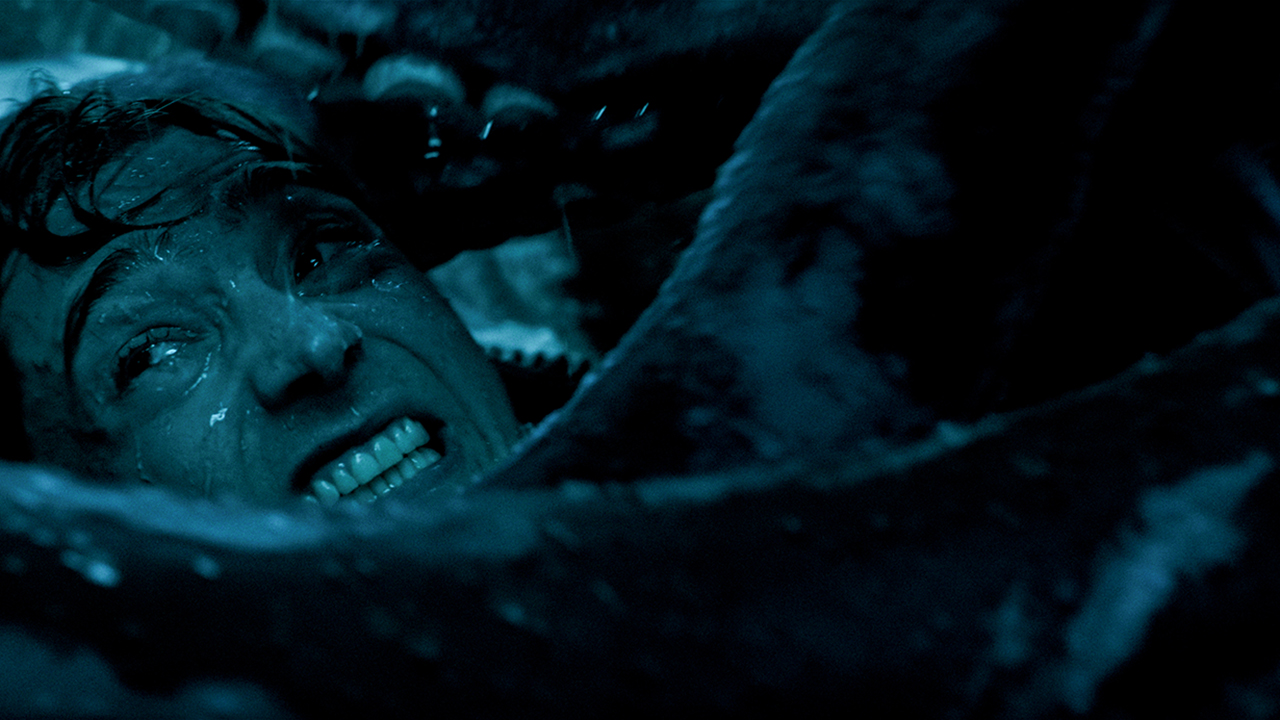
As Jay fights his way through its body, the physical obstacles begin to mirror the emotional ones he has spent so long avoiding.
The creature sometimes feels more like a manifestation of his father. It forced him to confront memories he has buried along with his grief. Survival, in this case, means more than finding a way out. Jay must also find a way to forgive himself.
Suspense that gets under your skin
It’s so deeply unsettling watching a person trapped inside a living creature. I can handle the occasional horror movie, but the human imagination has its limits. Mine would very much prefer not to picture what happens when the walls around you are made of whale.
Jay’s ordeal is brutal. He suffers serious injuries, struggles with dwindling oxygen, and has to work through one terrifying obstacle after another with very little room for error.
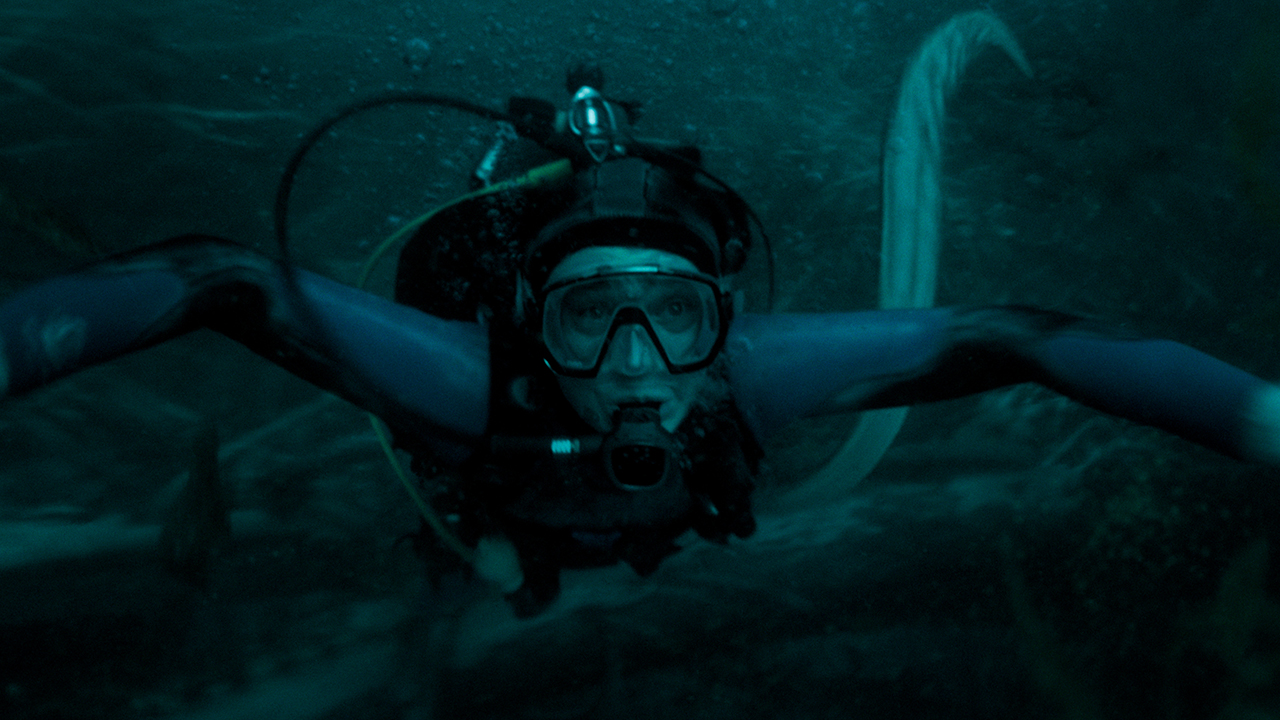
The film makes the environment feel claustrophobic and unpredictable, keeping you painfully aware that his body is running out of time.
The 4DX presentation makes all of this considerably harder to watch. Every jolt and movement pulled me further into Jay’s predicament. The physical effects heightened the sense that something could go wrong at any moment.
I was no longer comfortably observing a survival thriller from my cinema seat. Apparently, I was a passenger on the world’s worst underwater excursion.
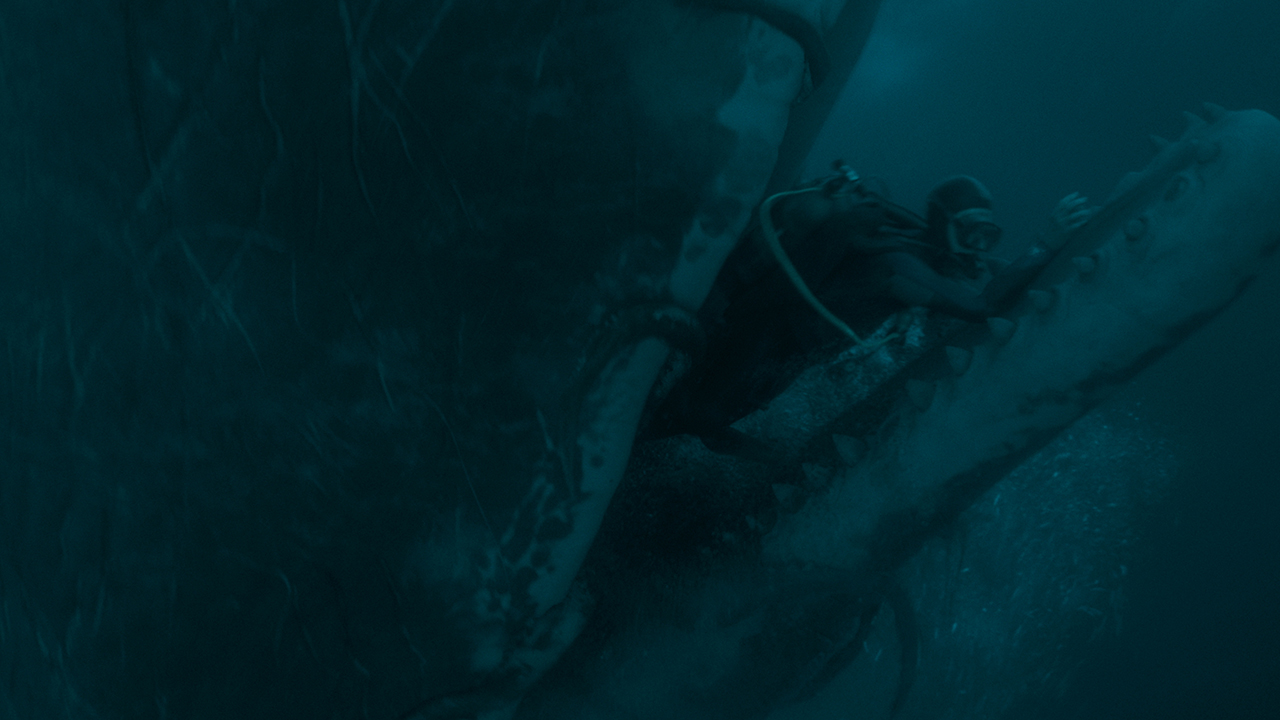
There were moments when I genuinely wanted to look away and ask someone to tell me when it was safe to look again. I knew Jay was the protagonist, and a small, sensible part of my brain assumed the story would find a way to keep him alive.
The rest of me remembered that films can be cruel. That being the main character isn’t always a legally binding guarantee of survival.
Between hope and hopelessness
What kept me watching was the tension between hope and helplessness. Jay has knowledge that could save him, much of it drawn from lessons his father taught him. But remembering what to do is difficult when panic takes over.
His chances seem to improve just enough to make you hopeful before another complication threatens to undo everything.
The film doesn’t rely solely on the spectacle of a man being trapped in a whale. Its suspense comes from watching Jay piece together what he knows while confronting everything he has spent years trying not to feel.
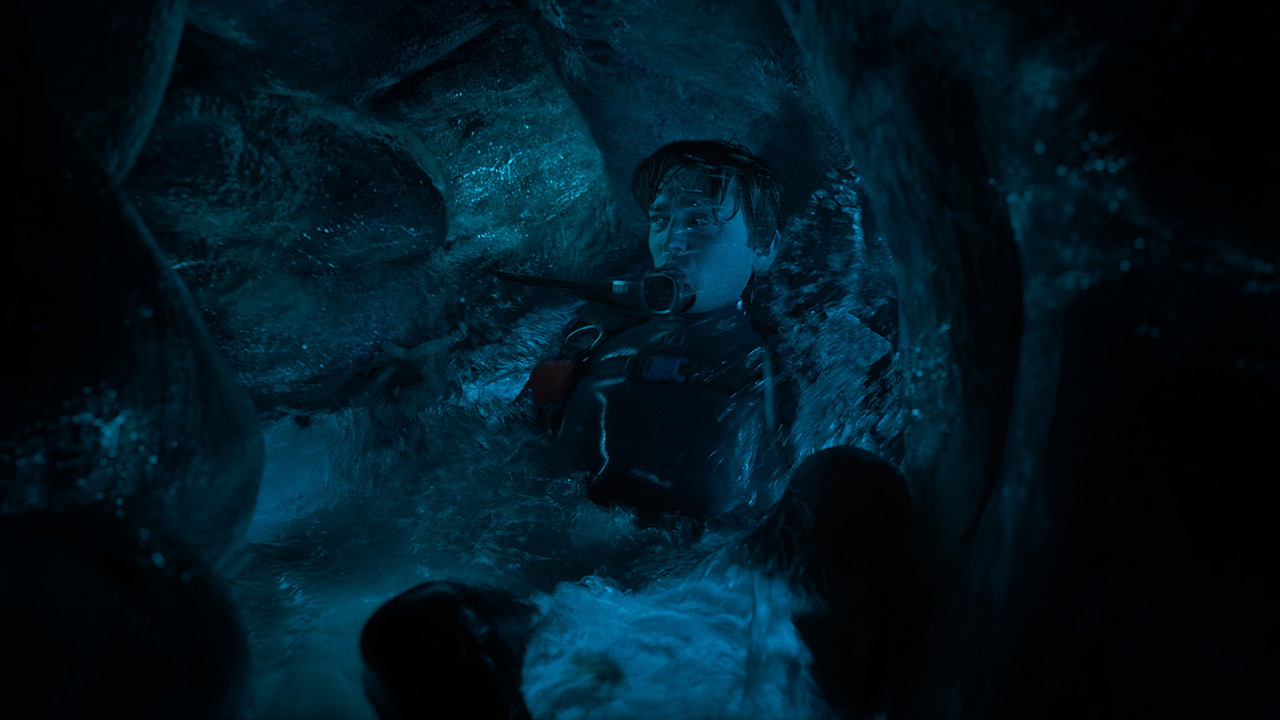
And no, this is not Moana. There is no helpful manta ray carrying the spirit of a dead grandmother to guide our hero through his darkest hour. Jay has to do the work himself, even when the memory of his father becomes the closest thing he has to a guide.
That is what makes the whale’s presence so compelling. It feels as though Jay is being forced into an encounter with his father, except the reunion comes with broken bones and a ticking oxygen supply.
A survival story with grief at its heart
I expected Whalefall to be a survival thriller about the sheer terror of being swallowed by a sperm whale. It certainly delivers on that front, particularly in 4DX, where every movement makes the experience feel uncomfortably immediate.
What I didn’t expect was to leave the cinema thinking about my own relationship with my father. The film’s most affecting moments emerge when the physical struggle and Jay’s emotional journey begin to converge.
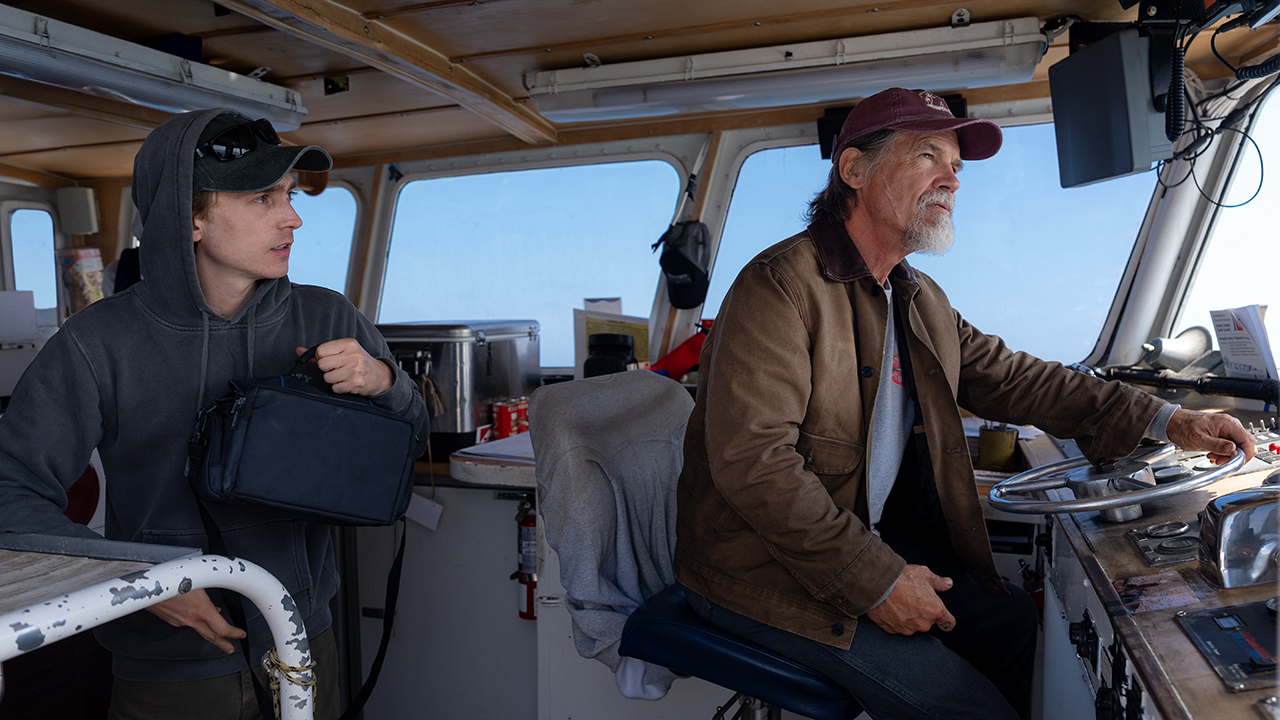
(L-R): Austin Abrams as Jay Gardiner and Josh Brolin as Mitt Gardiner in 20th Century Studios’ WHALEFALL. © 2026 20th Century Studios. All Rights Reserved.
The whale and the memories of his father all become part of a story about learning to live with loss. Its imagery gives the audience room to consider how grief can trap us in the past, even when we desperately want to move forward.
It’s painfully familiar to hold on to the last argument, the final conversation, or the version of a relationship we wish we could have changed.
We replay those memories as though enough mental editing might eventually produce a different ending. Sometimes, we even try to revisit the things we once shared with someone, hoping the familiarity will bring us closer to them again.
Making peace with who we were
Jay’s journey suggests that making peace with a person who is gone also requires making peace with the person we were when they were still here.
That’s a difficult thing to accept, especially when the relationship itself was complicated. Forgiveness doesn’t necessarily mean every wound disappears or every unanswered question finds a neat resolution.
Sometimes, it means acknowledging what happened and allowing yourself to keep living. Whalefall surprised me with how much emotional weight it carried beneath its survival-thriller premise.
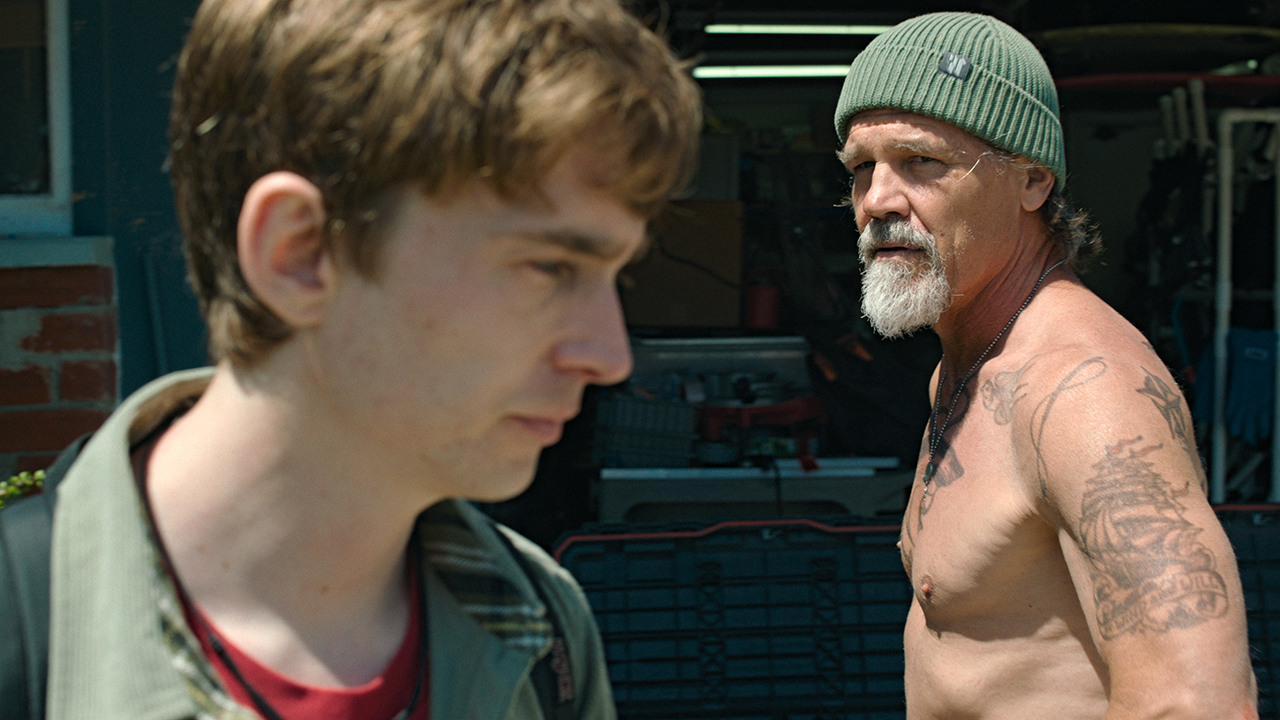
(L-R): Austin Abrams as Jay Gardiner and Josh Brolin as Mitt Gardiner in 20th Century Studios’ WHALEFALL. © 2026 20th Century Studios. All Rights Reserved.
The cinematography and storytelling give its more introspective moments room to settle, making the experience linger long after the credits roll.
If you’re looking for a survival thriller that will leave you gripping your cinema seat, Whalefall is worth the trip. The 4DX experience makes its claustrophobic ordeal all the more visceral. Consider this your reminder to bring your strongest stomach.
If you have a complicated relationship with your father, the film might leave you with something heavier to carry home.
I arrived expecting to watch a man fight his way out of a whale. I left thinking about the things we carry long after the people we love are gone, and the difficult business of learning to let them go.







Google illegally destroys 250,000 trees for a single AI data center

FINAL FANTASY RESONANCE now available across major platforms

Bose acquires Skullcandy

Next Xbox might cost double the price of an Xbox today

Apple Music is getting a Liquid Glass makeover

TECNO CAMON Slim 5G: Price, availability in the Philippines

TECNO CAMON Slim 5G review: Slim on size, big on surprise

HONOR Magic9 Pro Max launches in China with ARRI-powered imaging

BYD says that way better EV batteries are coming next year

TECNO CAMON Slim 5G teases an ultra-slim design ahead of launch


-

 Wearables2 weeks ago
Garmin Enduro 4 promises up to 320 hours of battery life
-

 Gaming1 week ago
Dragon’s Dogma 2: Dark Arisen launches with new Official Pawns
-

 News7 days ago
vivo V80 debuts with ZEISS cameras
-

 Deals2 weeks ago
Score PhP 22,000 in guaranteed freebies when you pre-order the iPhone 18 Pro at Beyond the Box
-

 Philippines6 days ago
TECNO CAMON Slim 5G gets launch discounts, free MagBadge
-

 Wearables2 weeks ago
Garmin Approach S72 brings swing metrics, green reading to your wrist
-

 Laptops2 weeks ago
ASUS Zenbook 14 lineup expands with new colors and processors
-

 News6 days ago
Samsung: Galaxy Z Fold8 demand rose because of iPhone Duo