


Gaming
Marvel’s Spider-Man is the open-world superhero game we’ve been waiting for
A spoiler-free hands-on look

I can only imagine the excitement the team of developers at Insomniac must have felt when they were given the chance to create Spider-Man’s next adventure. It must have been as much as, if not greater than, the thrill fans experienced when seeing the game’s very first trailer.
Marvel’s Spider-Man is a culmination of three and a half years’ worth of coming up with a whole new universe and building solid gameplay around it. Any hardcore fan can agree that a Spider-Man game’s story has to be handled as well as its web-swinging mechanics — which Insomniac wholeheartedly understands.
I was fortunate enough to play the first three hours of the latest Spider-Man, which is exclusive to the PS4, in an invite-only demo session last month. It was barely enough to fully immerse myself into the newly formed world built by legit Spidey fans, but from what I was able to gather, early impressions are mostly positive.

BOOM! That’s exactly how the game starts. You, the player, are instantly thrust into Spider-Man’s world, filled with action, romance, and constant multitasking. This being an open-world title, there’s so much happening at once, but not without a proper introduction.
Web swinging
Your very first task as the neighborhood’s friendly red-and-blue superhero is to swing all the way to a crime scene using — you guessed it — web. Insomniac made it a point to dedicate so much effort into making web swinging feel like you’re truly in Spidey’s suit. I must say, they pretty much nailed it.
All it takes is some timing on the R2 button, and you’re off. It can be a little clumsy at first (I often swung into buildings and unintentionally landed on taxis), but the game will never make you look stupid. Spider-Man himself makes every flight and landing feel graceful, no matter how noobish you are. The animations are as fluid as the graphics itself, and I’d say web swinging is the early favorite for the game’s best gameplay mechanic.

Like how you’d try to climb every mountain and tree in Breath of the Wild because you can, you’ll potentially spend hours roaming the streets of New York City using only your web and desire to be your childhood hero. Even better: There’s no fast travel to checkpoints in this open world. This encourages you to swing from one building to another and absorb what the lively city has to offer.
But as much fun as this travel mechanic is, the real action starts once you get into battle mode, which is a joy in itself.
Not an origin story
The Peter Parker you control isn’t a newbie superhero; this version of the classic character is already a seasoned veteran, and has the skills on top of all the gizmos he’s blessed with. In other words: No Uncle Ben dying on you and doing the “With great power…” rant in the beginning. You go straight to punching baddies and bringing them to justice in the very first act.
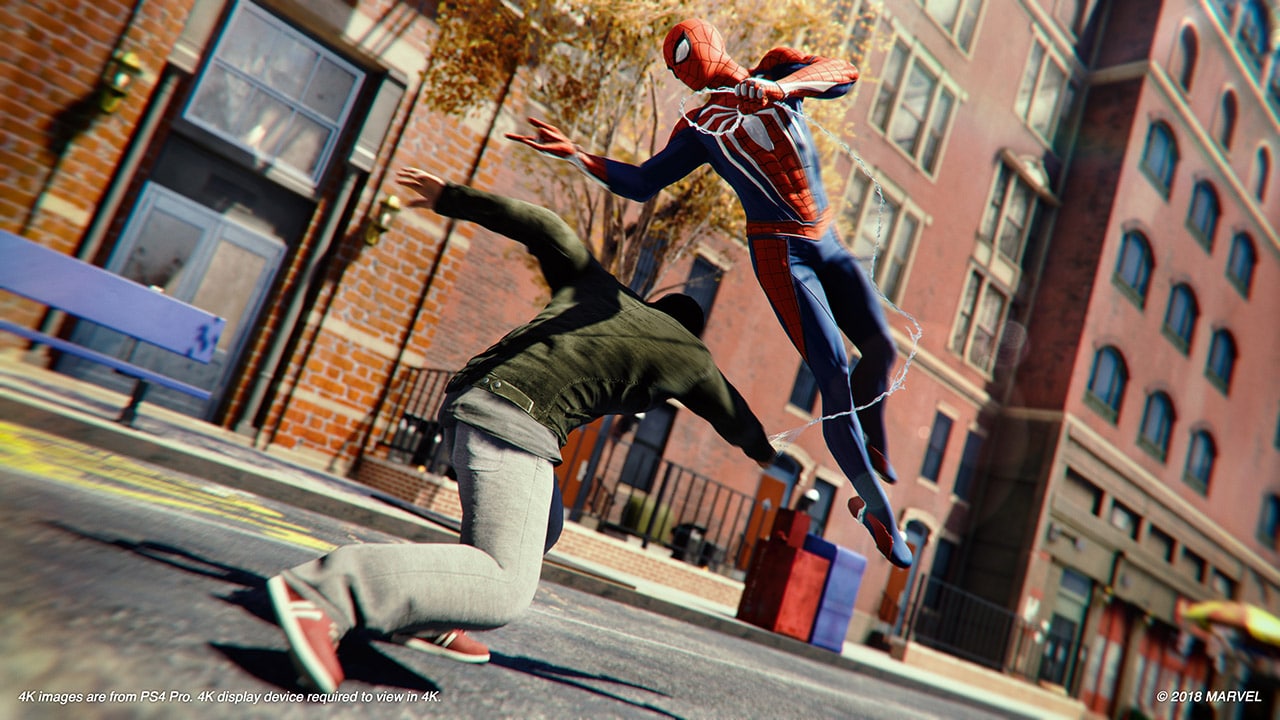
To be totally honest, this was the aspect of the game I was most worried about. Spider-Man games have traditionally been weak in the fighting department, often relying on style over substance. Marvel’s Spider-Man is somewhere in the middle in this regard, but at least for the first three hours of gameplay, there’s enough depth to keep you coming back for more.

It’s pretty simple: You press square to punch or kick, triangle to control opponents with your web, circle to dodge, and R1 to activate one of your gadget’s special skills. Stringing combos together adds to your Focus bar, which in turn provides you with useful abilities such as healing. However, even if regenerating health is at your disposal, you’re better off dodging the hell out of every enemy attack.
Spidey doesn’t have a ton of health to work with, at least at the start. The game has a Bayonetta or DMC vibe wherein you’re rewarded more for pulling off perfect dodges and counter-attacking than kicking ass straight up. Spider senses are around to give you visual cues when to dodge, then it’s up to you how to capitalize on the opening.
A couple of hours in, I thoroughly enjoyed the combat system. It’s straightforward and doesn’t require you to analyze much; at the same time, there’s enough variety to make each fight scene feel unique. But again, this is in the early game, and I can imagine it getting stale midway through the plot unless more gimmicks turn up.
The complexity of Spider-Man
After an hour of going through what feels like a long, story-driven tutorial session, you get thrown into Marvel’s interpretation of New York City. Even though the developers call this an open-world game, don’t mistake this for a GTA or Witcher clone. NPC interaction is shallow; you can only say hi, and if you accidentally attack bystanders, they’ll barely flinch.
That’s not a bad thing, though, because the game delivers a bunch of other things to find and do. On top of the side missions that are mildly related to the main storyline, you can collect items needed to upgrade your arsenal and save citizens from low-level baddies. All these allow you to level up — yes, like in an RPG — to learn new abilities through a skill tree (just like in an RPG).

And those aren’t the only RPG-like elements. Opening the in-game menu reveals the city-wide map, your suits, gadgets, the aforementioned skill tree, missions, stuff you’ve collected, benchmarks for stats, characters you’ve met, and complete moves list. That’s a lot, and I didn’t even mention the sub-menus yet. But, perhaps the most interesting section to check out is Spider-Man’s suits. I’d rather not spoil which ones I earned, although I can say I unlocked five in the first three hours alone.
Is there enough to hang on to?
All that’s left to talk about based on my brief hands-on experience is the story, which I can’t delve too much into. As mentioned earlier, you get to enter the mind of a veteran Peter Parker who’s 23 years of age and has been doing this superhero thing for eight years already. Sounds like there’s a lot of established plot points early on, but that’s far from the truth.
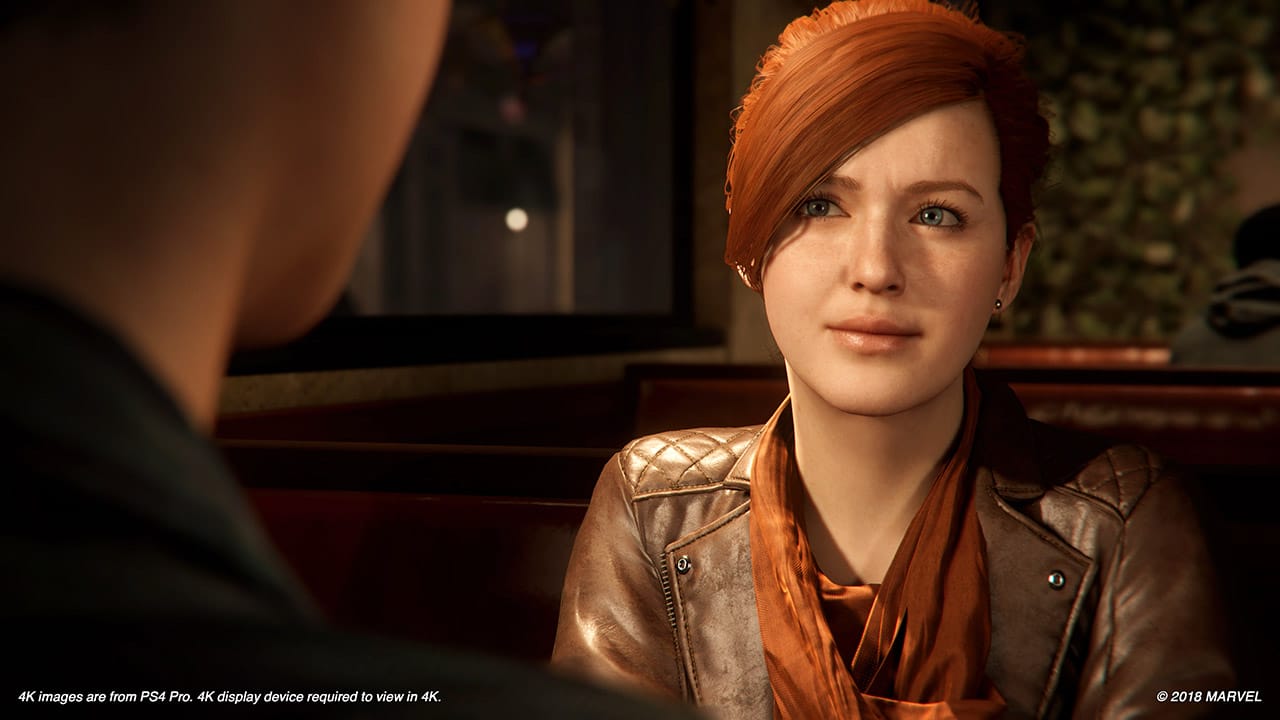
The thing is, this isn’t based on any comic storyline or the Marvel Cinematic Universe — everything you see and play here is unique to this game alone. Because of that, finding out who’s involved in the plot and how they relate to Peter can potentially spoil some key points. What I can say is that Peter works in a lab, wherein you the player get to solve puzzles as part of Peter’s research, and Mary Jane is the primary love interest.

The trailers have already revealed tons of friends and foes, and I barely scratched the surface during my short time with the game. When I asked the team behind Marvel’s Spider-Man how they plan to cram so many characters in a single title and avoid the mistakes of past Spider-Man movies, they simply said the trick is in pacing.
It certainly looks like the developers know how to plan out a game as fast-paced as this. The early excitement and depth are there from the very start, and I could tell that there’s so much more in store for the remaining 90 percent of the game.
Is it good enough to sell consoles? Maybe, but critical and commercial success do seem to be on its horizon.







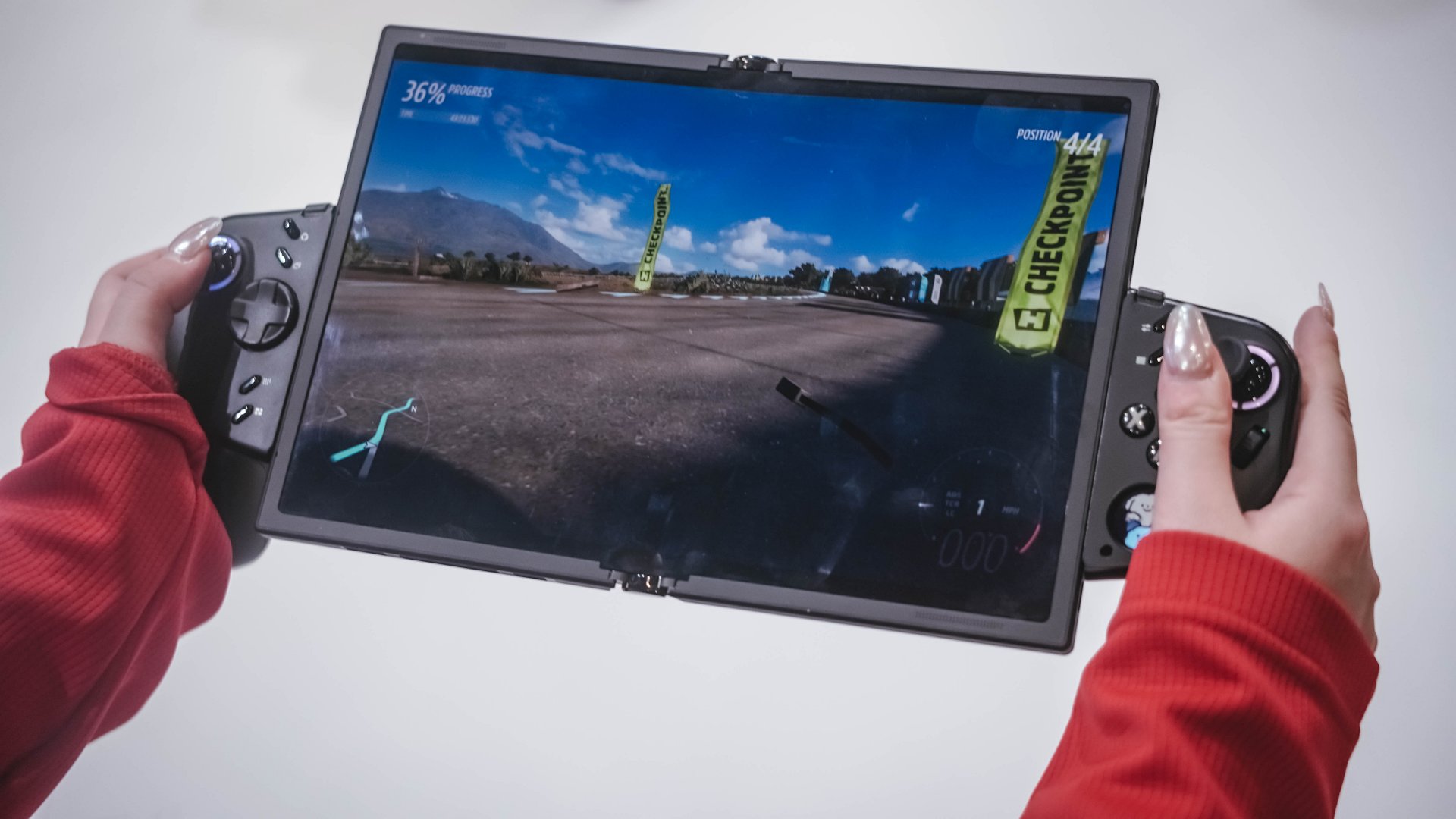
An all-in-one device is a pipe dream for many. Imagine a device that can turn into a tablet, a laptop, a phone, and a console with the flip of a switch. As showcased during MWC 2026, Lenovo wants you to stop imagining. A new concept called the Legion Go Fold is an all-around device you can take with you on travels.
On account of the lineup it’s associated with, the Legion Go Fold is, first and foremost, a handheld gaming console. Normally, it’s a sizable 7.7-inch screen you can attach the Legion Go’s recognizable controllers to.
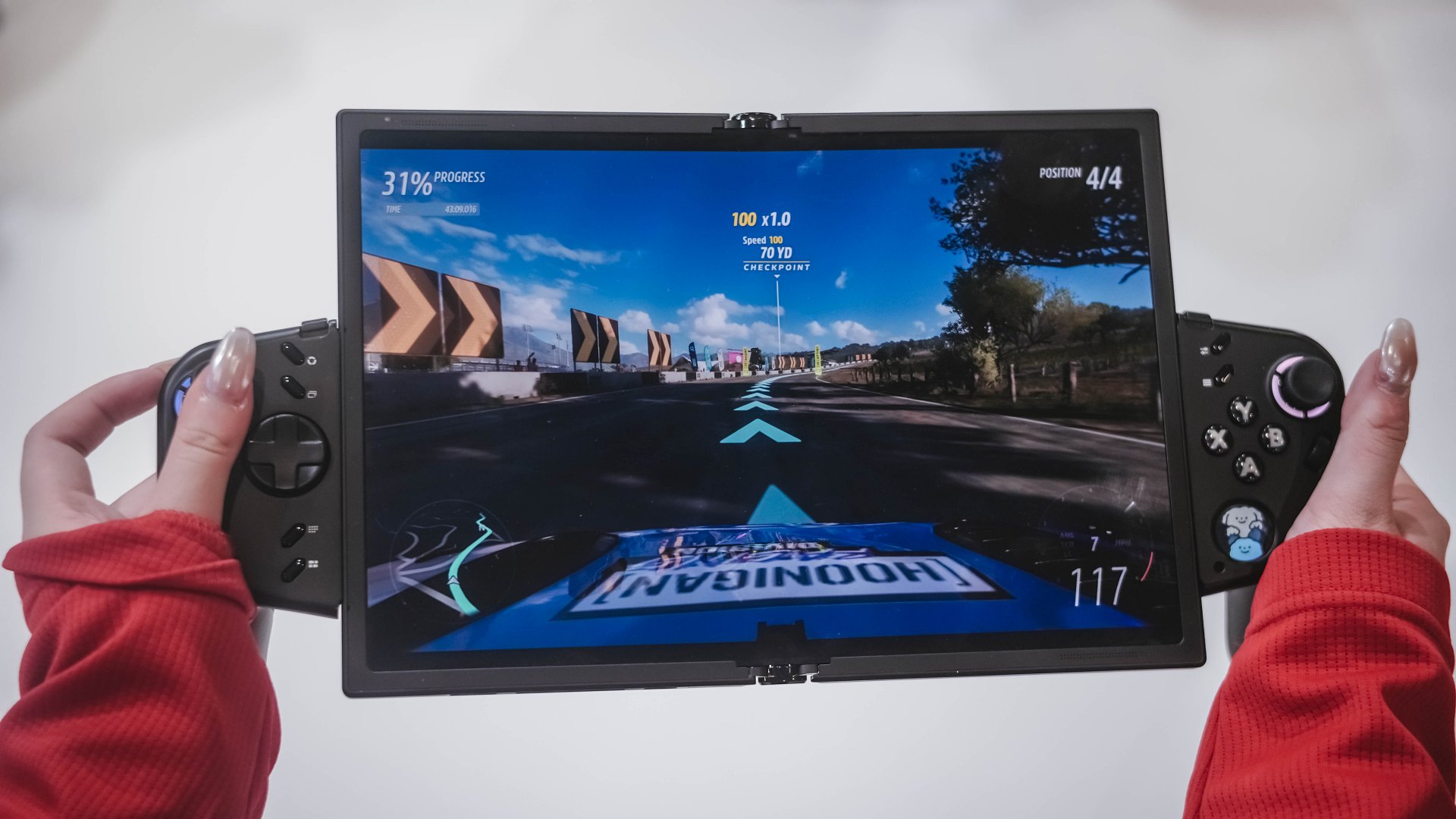
However, as the “Fold” in its name is hinting, the screen can be unfolded into a much larger screen. At its quirkiest, the concept looks like a vertical tablet with controllers attached to either side. Lenovo says that this is best used in split-screen mode where you can split the display between a game and other media such as a walkthrough video.
Alternatively, you can just rotate the screen horizontally and attach the controllers to play with the maxed out 11.6-inch display.
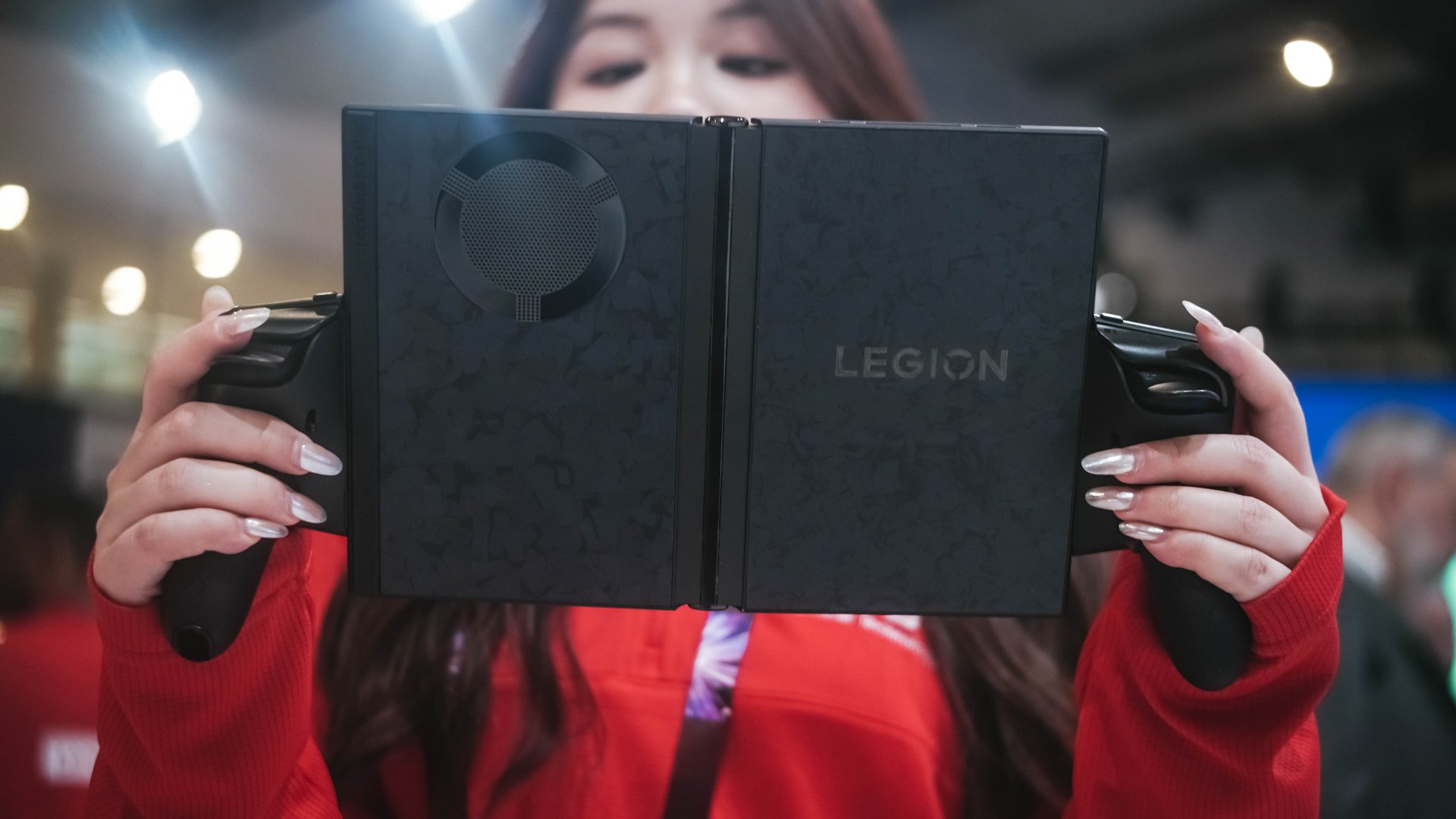
Finally, the Legion Go Fold can be used as a laptop via the detached screen and an included wireless keyboard. Like the other devices in the Legion Go lineup, the right controller can be used as a makeshift mouse.
Because it’s a concept, the Legion Go Fold isn’t close to being released yet. However, it’s a good evolution of what the Legion Go can already do. As we said in previous reviews, the lineup can technically be a work laptop in a pinch. This just makes it easier.
Automotive
Xiaomi Vision Gran Turismo makes global debut at MWC 2026
Tech giant becomes first technology brand in Vision GT program


Xiaomi has unveiled the full-scale concept model of the Xiaomi Vision Gran Turismo or Xiaomi Vision GT at MWC 2026 in Barcelona, Spain. This marks the company’s official entry into the elite Vision Gran Turismo project.
Created for the legendary Gran Turismo franchise, the electric hypercar concept represents the first time a technology company has been invited to participate in the Vision GT program. Xiaomi now joins a select group of global automakers, becoming the 36th brand to take part and the creator of the 51st Vision Gran Turismo concept overall.
The project began at the GT World Series in London, where series producer Kazunori Yamauchi personally invited Xiaomi to design its own Vision GT car. For Xiaomi’s global EV design team, the opportunity meant rethinking hypercar development from a technology-first perspective, blending advanced aerodynamics with AI-driven intelligence.
Sculpted by the wind
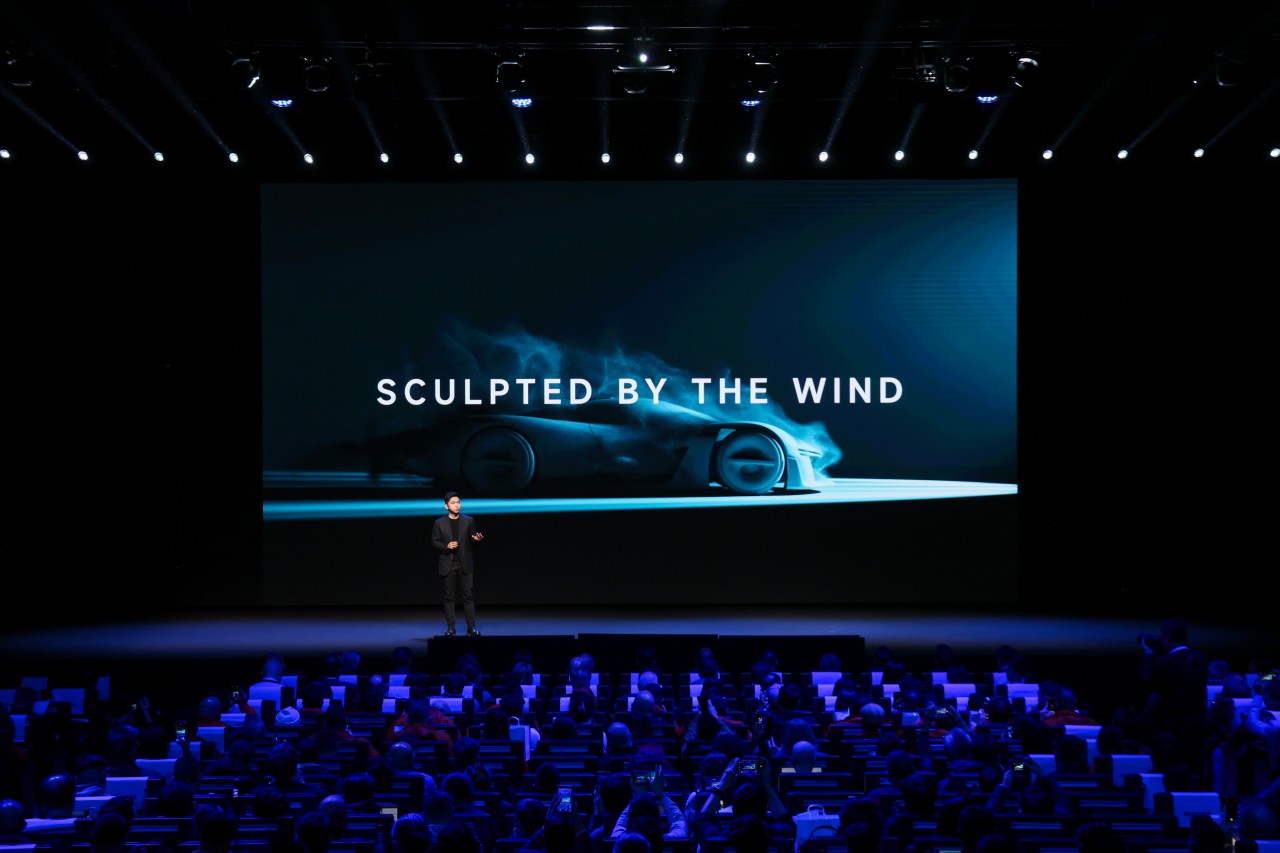
At the core of Xiaomi Vision Gran Turismo is aerodynamic balance. Instead of chasing extreme low drag or maximum downforce alone, Xiaomi pursued efficiency between the two.
The concept follows a “Sculpted by the Wind” philosophy. Its teardrop cockpit silhouette, integrated air ducts, and airfoil-shaped structural elements guide airflow seamlessly from front to rear. The body avoids excessive add-ons, relying instead on built-in aerodynamic solutions.

Signature design elements serve dual purposes. Cross-shaped headlights integrate into the airflow system, while the halo-shaped taillight sits within a massive rear air outlet. An Active Wake Control System surrounds the rear with micro-perforations that manage turbulent air using real-time speed and angle data.
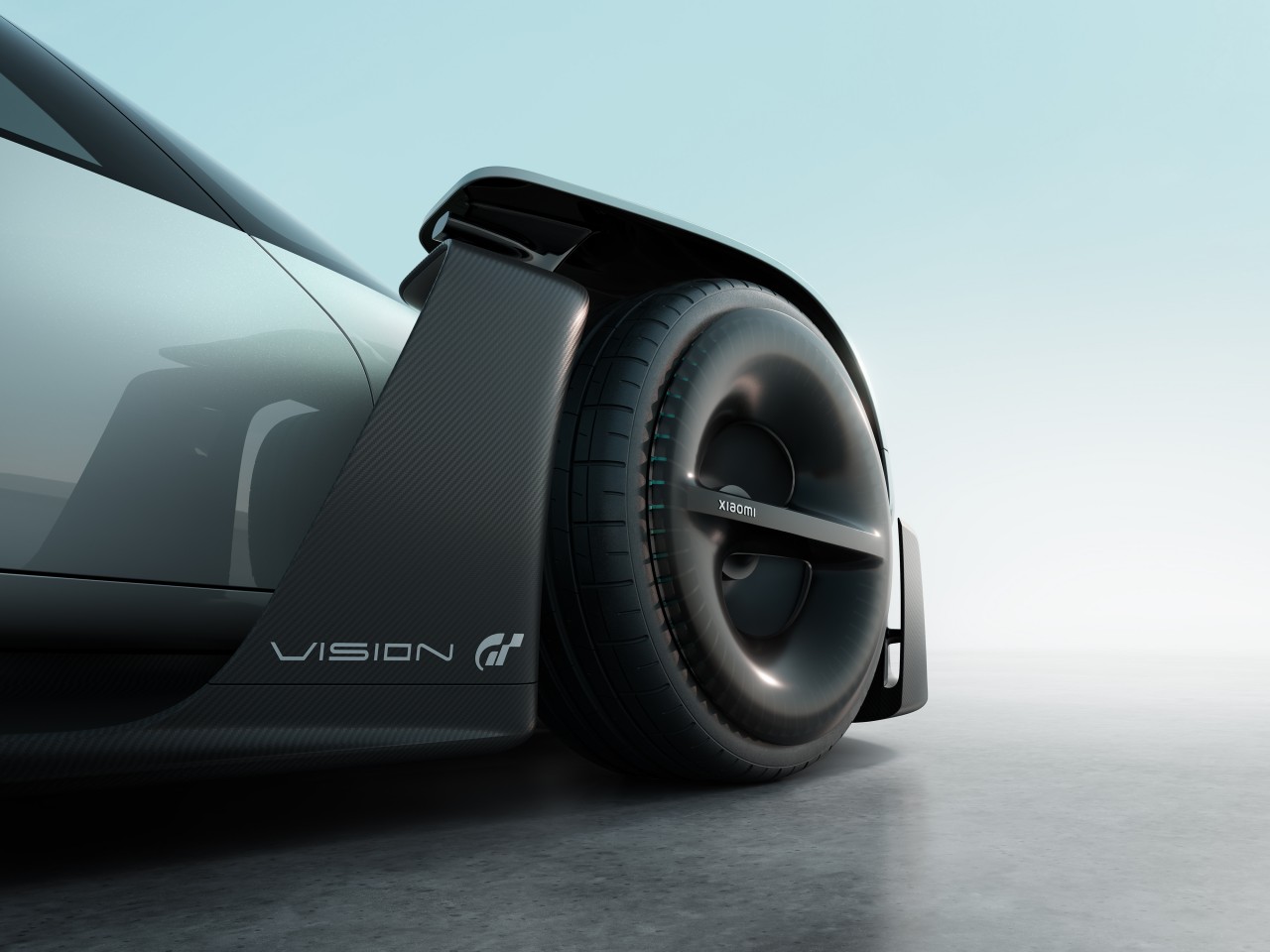
The Accretion Rims feature vortex-style wheel covers that remain visually stationary while the car is in motion, reducing drag from rotating surfaces. Internal turbine fins help cool the brakes during operation.
Through iterative simulation testing, Xiaomi says the concept achieves a drag coefficient of 0.29, downforce of negative 1.2, and an aerodynamic efficiency rating of 4.1 — figures that highlight balance rather than extremes.
A “sofa racer” interior
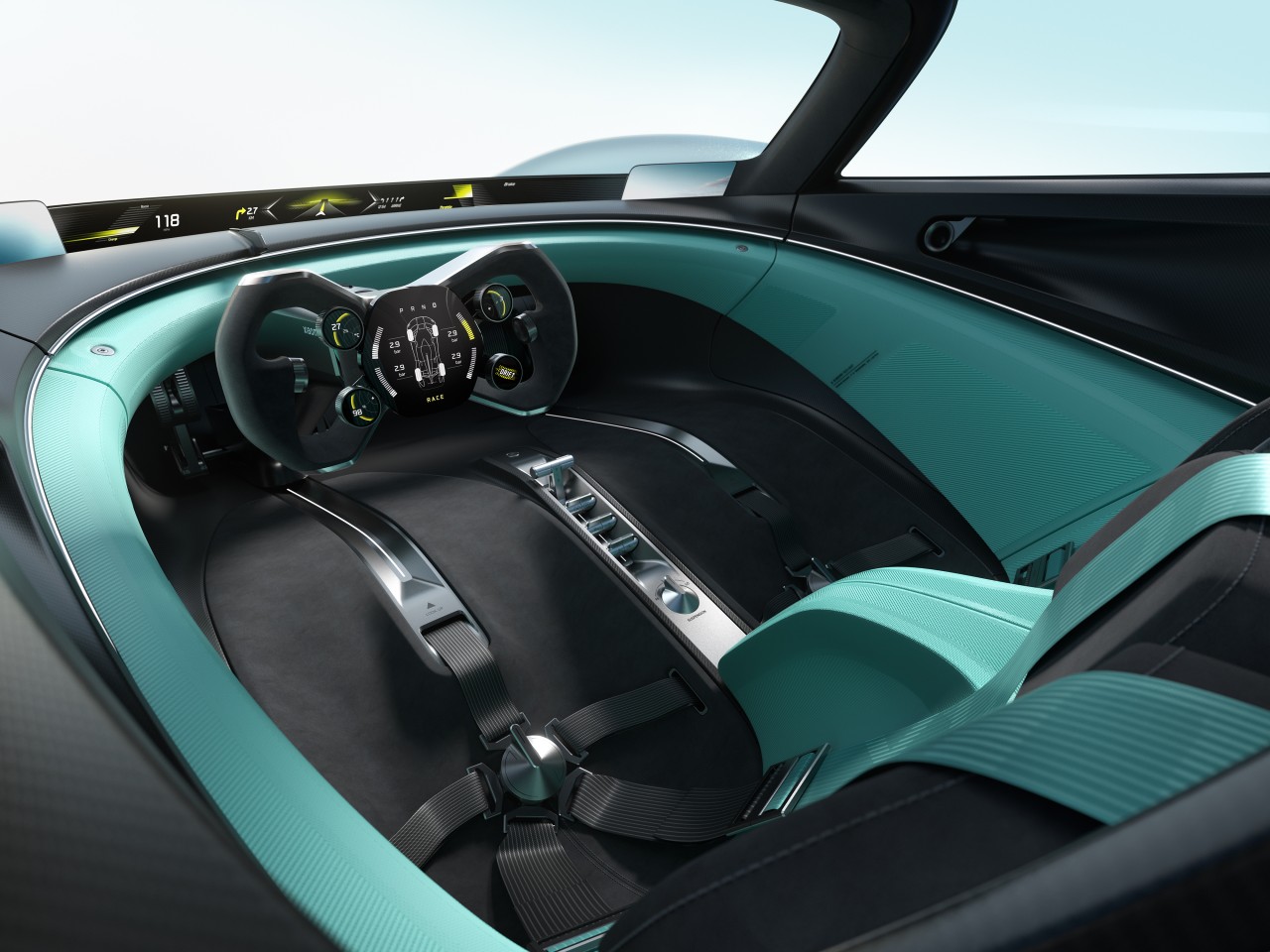
Inside, Xiaomi departs from the rigid, track-focused cabins typical of hypercars. The “Sofa Racer” concept emphasizes comfort without sacrificing control.
A ring-shaped cockpit architecture wraps around the driver, blending dashboard, doors, and seats into one continuous structure. Breathable 3D-knitted fabric materials aim to provide both support and warmth.
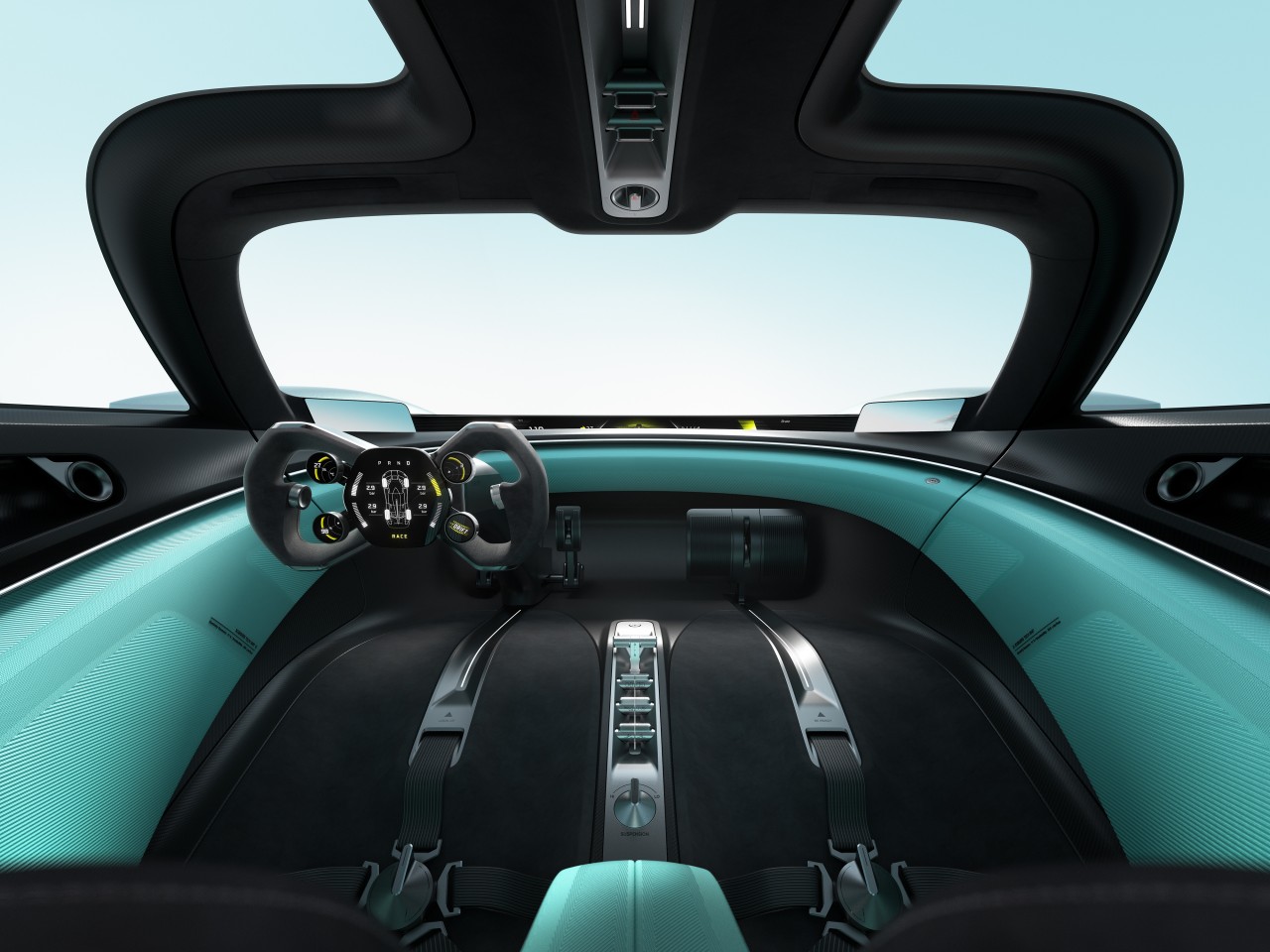
At the center is Xiaomi Pulse, an intelligent assistant integrated into the dashboard. Working alongside Xiaomi HyperVision and the company’s HyperOS platform, the system adapts displays and interactions based on driving mode and environmental data. Physical controls remain tactile and precise, including an infinite-shaped steer-by-wire wheel.

The concept also integrates into Xiaomi’s broader “Human × Car × Home” ecosystem. Powered by XiaoAi AI Assistant and the Xiaomi MiMo foundational model, the car connects with personal devices and smart home products, positioning itself as part of a unified digital lifestyle.

Xiaomi has also envisioned a companion driving simulator designed as furniture for the home, extending the Vision Gran Turismo experience beyond the vehicle itself.
Yamauchi praised the project, noting how the design successfully resolves the tension between low drag and high downforce. Further details about the car’s arrival in Gran Turismo 7 will be announced at a later date.
With its Vision Gran Turismo debut, Xiaomi signals a broader ambition: redefining the electric hypercar through AI integration, ecosystem connectivity, and aerodynamic precision.


Resident Evil Requiem is now available worldwide, marking the ninth mainline entry in Capcom’s long-running survival horror franchise.
The game launches today on PlayStation 5, Nintendo Switch 2, Xbox Series X|S, Steam, Epic Games Store, and GeForce NOW. Set 30 years after the Raccoon City Incident, the story returns players to the ruins of a city that defined the series’ legacy.
This time, players follow two protagonists: newcomer Grace Ashcroft, an FBI intelligence analyst investigating a string of mysterious deaths tied to her mother’s murder, and returning fan favorite Leon S. Kennedy. As their paths converge at the center of a new outbreak, both must confront the lingering trauma of Raccoon City and uncover the truth behind the incident that changed the world.
First-person or third-person
For the first time in the series, players can freely switch between first-person and third-person perspectives, blending immersive horror with more dynamic action. Multiple difficulty settings are available, including a Casual mode with aim assist and a Standard (Classic) mode that reintroduces the Ink Ribbon save system while playing as Grace.
Editions available
Resident Evil Requiem is available in Standard and Deluxe editions. The Deluxe edition includes five costumes, four weapon skins, two screen filters, two charms, and additional bonus content. A Premium Steelbook Edition bundles the Deluxe content with a limited-edition lenticular card, available while supplies last.
Capcom is also celebrating the launch with a slate of collaborations and collectibles. These include a themed Nintendo Switch 2 Pro Controller, the franchise’s first-ever amiibo figures of Grace and Leon arriving July 30, 2026, limited-edition watches designed with Hamilton, a one-of-a-kind Porsche Cayenne Turbo GT created as Leon’s in-game vehicle, and 1/6 scale collectible figures launching this fall.
Resident Evil Symphony of Legacy
To mark the series’ 30th anniversary, the Resident Evil Symphony of Legacy orchestral concert series will tour Japan, North America, and Europe later this year. Meanwhile, Resident Evil 7 biohazard Gold Edition and Resident Evil Village Gold Edition also arrive on Nintendo Switch 2 today, alongside a Generation Pack bundle exclusive to the platform.
With a return to Raccoon City and a new chapter in survival horror underway, Resident Evil Requiem ushers in what Capcom calls a new era for the iconic franchise.






Apple unveils Studio Display and all-new Studio Display XDR

Apple unveils MacBook Pro with M5 Pro and M5 Max

Apple debuts M5 Pro, M5 Max to supercharge pro workflows

Apple introduces MacBook Air with M5

TECNO CAMON 50 Ultra review: End of an era?

Xiaomi 17 Ultra is now available outside China

TECNO will showcase the CAMON 50 and POVA 8 series at MWC 2026

PlayStation, LE SSERAFIM Chaewon team for the ‘Love of Play’ campaign

The art of being in and behind the frame

HUAWEI MatePad 11.5 S 2026: The better-than-ever 4-in-1 productivity tablet


-
 News3 days ago
Xiaomi 17 Ultra is now available outside China
-

 Camera Walkthrough2 weeks ago
OPPO Reno15 Pro: Camera Review
-

 First Look2 weeks ago
Match Pulse: Infinix NOTE 60 Pro
-

 Cameras2 weeks ago
Osmo Pocket 4 makes a surprising appearance in public
-

 Gaming2 weeks ago
LG unveils UltraGear evo, redefines 5K gaming with AI Upscaling
-

 Gaming2 weeks ago
PlayStation 6 reportedly delayed to 2029 because of RAM shortage
-

 News2 weeks ago
iPhone 17 Pro Max is somehow the most traded-in phone today
-

 News2 weeks ago
HUAWEI launches Mate X7, MatePad 11.5 S 2026, FreeClip 2