
Computers
NVIDIA unleashes the new RTX 5090, RTX 5080, RTX 5070
Next gen is here

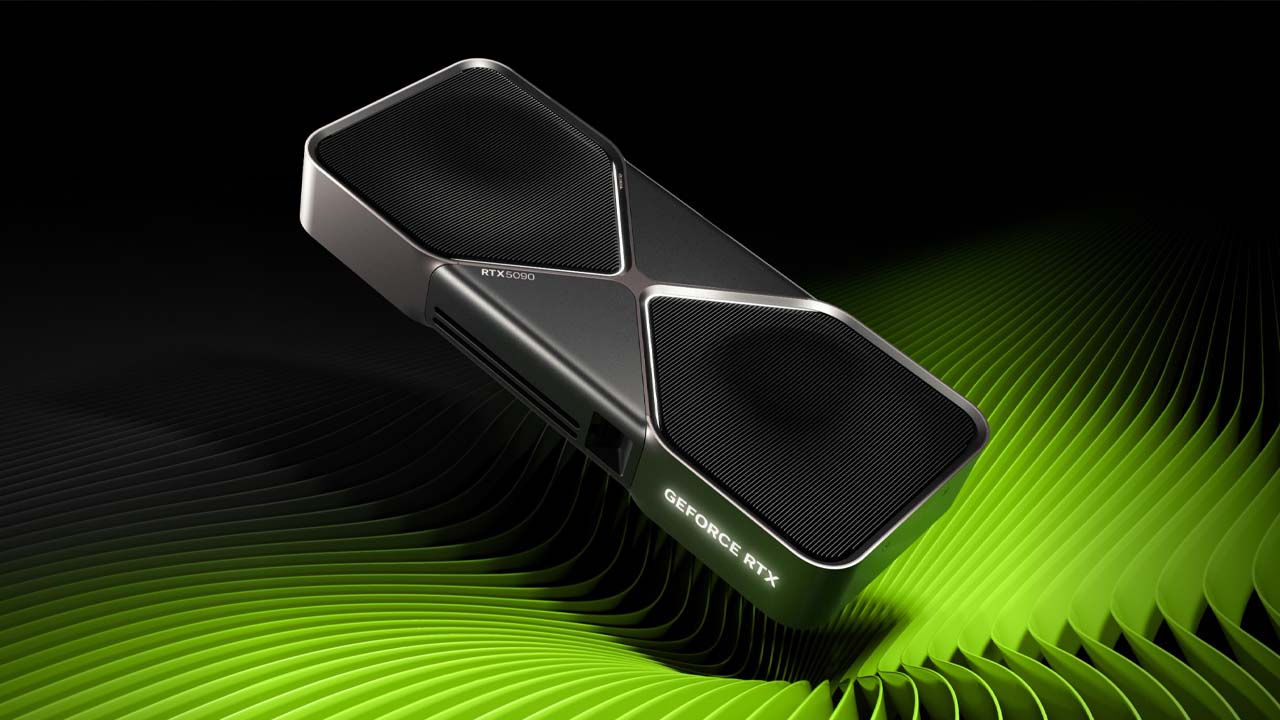
Building a PC just got a lot more exciting this year. Finally, after months of rumors and speculation, NVIDIA has launched the new RTX 5090 and RTX 5080 during CES 2025.
If you were holding off on a major upgrade on your PC, four new options are coming your way. The new RTX 50 series will have four models: RTX 5090, RTX 5080, RTX 5070 Ti, and RTX 5070.
In terms of performance, NVIDIA says that the RTX 5080 will have double the performance of the RTX 4080, which came out in 2022. It will have 16GB of GDDR7 VRAM and a memory bandwidth of 960GB/s. The top-tier RTX 5090 Founders Edition is a two-slot GPU that rocks 32GB of GDDR7 memory, a memory bandwidth of 1,792GB/s, and 21,760 CUDA cores.
Further, the new series introduces the new DLSS 4, the brand’s image optimization technology. During the presentation, NVIDIA demonstrated the technology using Cyberpunk 2077. The current-gen RTX 4090 (which only has DLSS 3.5) topped at only 112fps. Meanwhile, running the same settings with ray-tracing on, the new RTX 5090 peaked at 244fps.
The series will also have a few more AI-based features including RTX Neural Shaders and RTX Neural Faces. Both features use AI to generate textures and facial animations better than the previous models. According to NVIDIA CEO Jensen Huang, the new series can now “predict the future,” generating frames before you even need them.
Naturally, the new series will cost quite a lot of money. The RTX 5070 costs US$ 549, while the RTX 5070 Ti costs US$ 749. Meanwhile, the RTX 5080 costs US$ 999. Finally, the RTX 5090 costs US$ 1,999.





Computers
AMD announces Ryzen AI 400, AI 400 PRO series at MWC 2026
Offering support for next-gen AI PCs, Copilot+ experiences

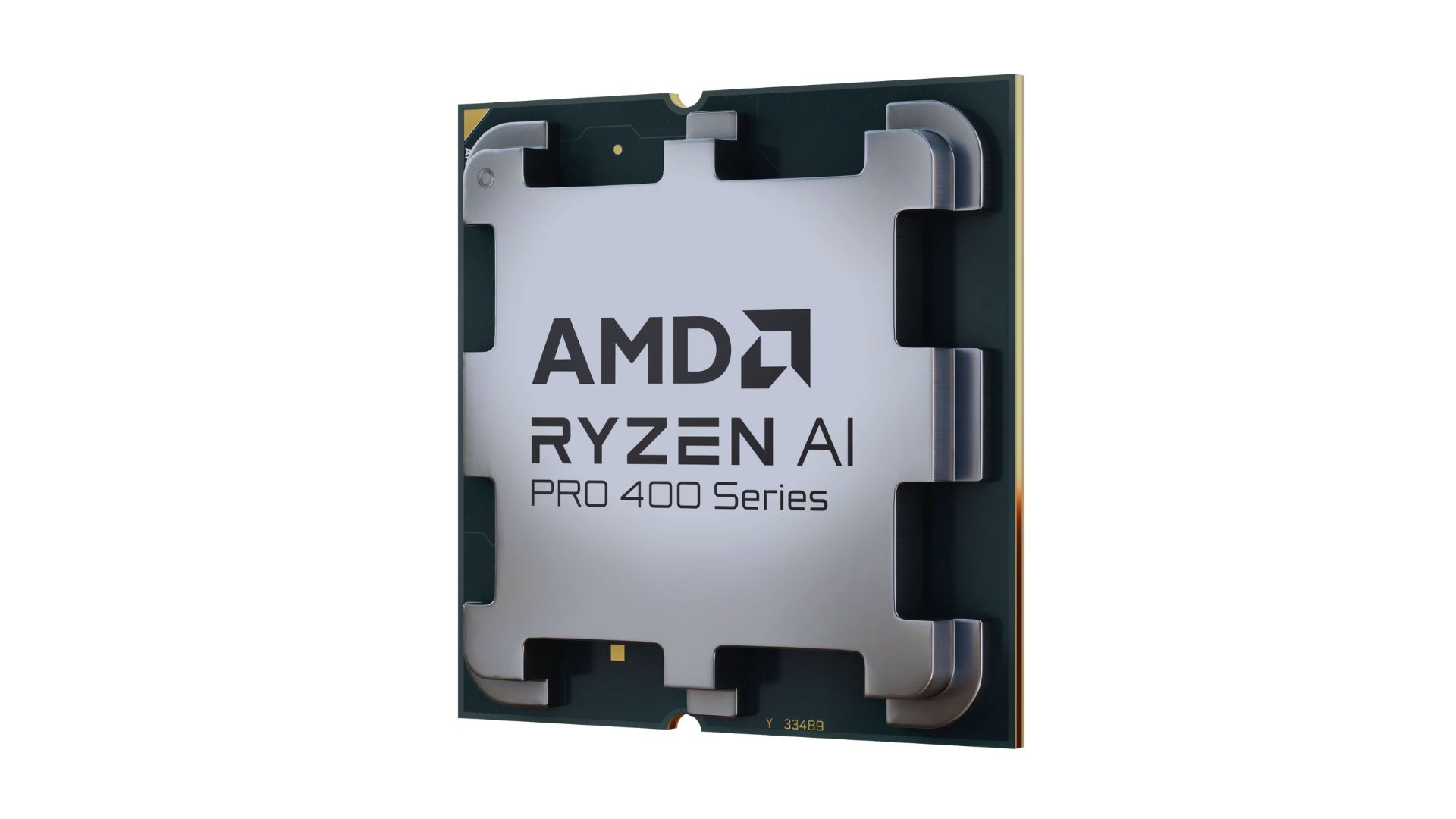
AMD announced new products and initiatives at MWC 2026 Barcelona, headlined by their newest Ryzen AI 400 and Ryzen AI PRO 400 series processors.
These latest processors are built on the AM5 platform and advanced Zen 5 architecture, delivering next-generation experiences for both consumer and commercial scenarios.
The additions enable original equipment manufacturers (OEMs) to offer next-gen AI PCs across high-performance desktops, laptops, and mobile workstations optimized for modern workloads.
Along with dedicated AMD XDNA 2 NPUs and AMD RDNA 3.5 graphics, both series offer up to 60 TOPS of NPU AI compute, exceeding the requirements of Copilot+ PCs.
As such, these enable powerful on-device AI performance, including running LLMs locally and tackling compute-intensive applications for design and engineering.
The Ryzen AI 400 series processors are also the first for next-gen desktop AI PCs to support Copilot+ PC experiences. Featuring an NPU providing up to 50 TOPS of AI compute, these processors enable running AI assistants and productivity tools locally.
In addition, AMD is expanding the Ryzen AI 400 series mobile portfolio to include workstations. Some that are expected to release in Q2 2026 include products from Dell, HP, and Lenovo.
AMD PRO initiative
Furthermore, AMD announced AMD PRO for enterprise-grade security, manageability, and reliability.
This is done through foundational hardware and software designed to simplify IT operations and protect investments over time.
AMD says it will continue to evolve the AMD PRO platform by strengthening both its silicon foundation and software stack.
This will support enterprise IT teams managing distributed AI-enabled PC fleets. Meanwhile, expanded remote management features improve visibility, recovery, and control.

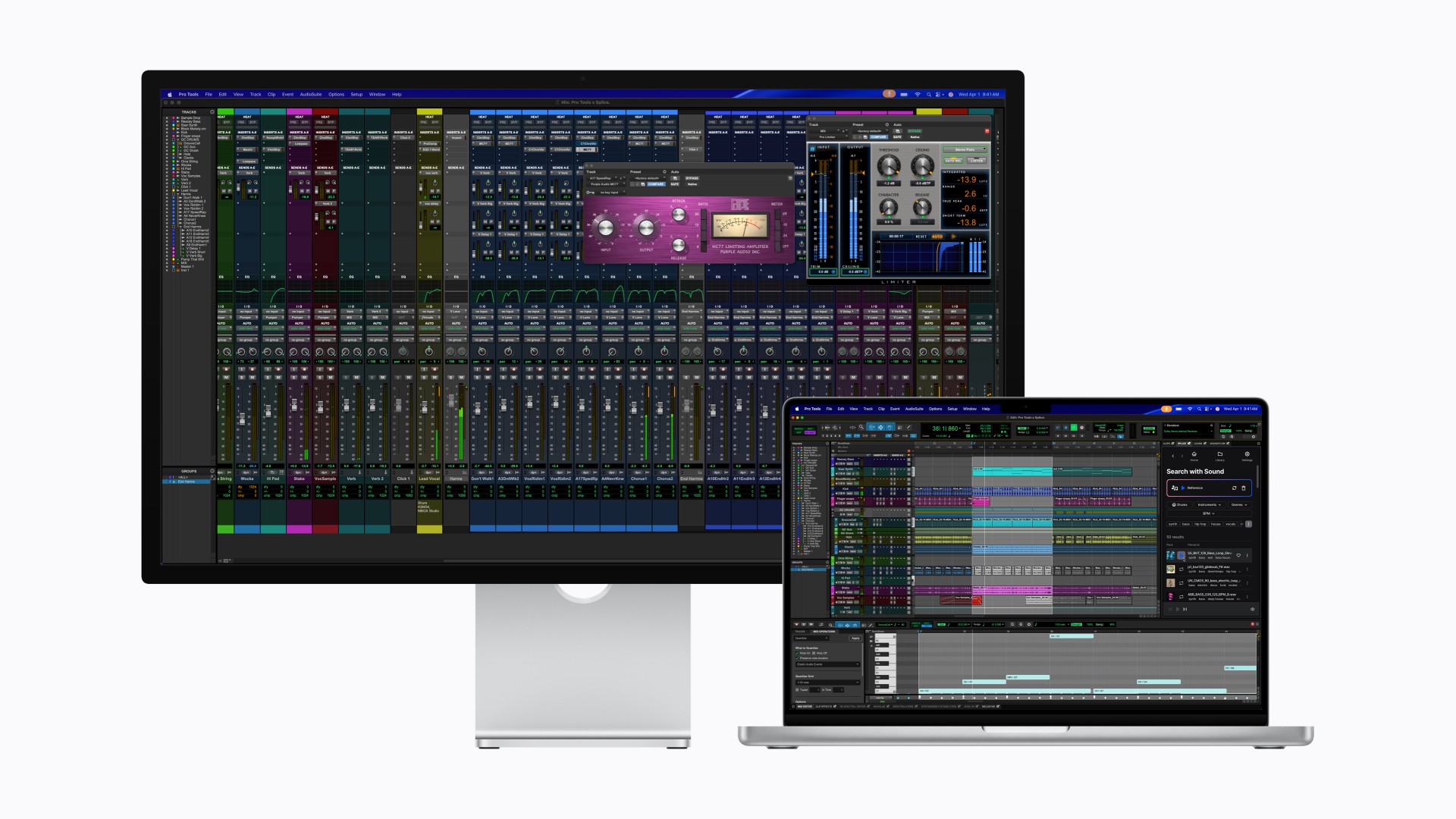
After taking the MacBook Pro to Super Saiyan levels, Apple is now doing the same for the display it pairs with.
With its latest Studio Display family, Apple is splitting the lineup into two clear tiers. The regular Studio Display already feels powered up. The all-new Studio Display XDR transforms.
If this were Dragon Ball Z logic, the Studio Display is Super Saiyan. The Studio Display XDR is Super Saiyan Blue — calmer, more controlled, and operating on an entirely different plane.
A strong base form
The new Studio Display sticks to what already worked: a 27-inch 5K Retina panel with over 14 million pixels, 600 nits of brightness, and P3 wide color. It’s sharp, bright, and more than capable for photo editing, design work, music production, and daily tasks.
Apple upgrades the experience around the screen, too. There’s now a 12MP Center Stage camera with improved image quality and Desk View support. The three-mic array and six-speaker system return, this time with deeper bass and Spatial Audio support.
Connectivity jumps to Thunderbolt 5, allowing users to daisy-chain up to four Studio Displays for nearly 60 million combined pixels. It also delivers up to 96W of charging power for a connected MacBook Pro.
It’s the dependable powered-up form. Strong. Confident. Already more than enough for most creators.
The controlled transformation
Then there’s Studio Display XDR.
This is where Apple goes full Super Saiyan Blue.
The 27-inch 5K Retina XDR panel uses a mini-LED backlight with over 2,000 local dimming zones. It pushes up to 1000 nits of SDR brightness and 2000 nits of peak HDR brightness, alongside a 1,000,000:1 contrast ratio. Highlights hit harder. Blacks stay deep. Blooming stays minimal.
The display also adds Adobe RGB support on top of P3, covering more than 80 percent of Rec. 2020 for HDR workflows. For video editors, colorists, and print professionals, this shifts the XDR from “great display” to “reference-grade tool.”
Motion gets smoother, too. A 120Hz refresh rate with Adaptive Sync dynamically adjusts between 47Hz and 120Hz, reducing latency and making everything from scrubbing timelines to gaming feel more fluid.
Apple even introduces DICOM medical imaging presets and a Medical Imaging Calibrator for diagnostic radiology use in the U.S., pending FDA clearance. It’s a reminder that this panel isn’t just about aesthetics. It’s about precision.
Built for the pro desk
Both displays share the same upgraded 12MP Center Stage camera, studio-quality microphones, six-speaker Spatial Audio system, and Thunderbolt 5 connectivity. The XDR model goes further with up to 140W charging power and additional downstream ports, effectively acting as a high-speed hub.
Pricing and availability
In the U.S.
The new Studio Display starts at $1,599 (U.S.) and $1,499 for education, while the Studio Display XDR begins at $3,299 (U.S.) and $3,199 for education. Both models can be pre-ordered starting tomorrow, March 4, with availability beginning March 11 in select Apple Store locations and authorized resellers.
In Singapore
Pre-orders open on March 9 via apple.com/sg/store and the Apple Store app. Pricing starts at S$2,199 for the Studio Display (S$2,059 for education). The Studio Display XDR begins at S$4,499 (S$4,359 for education).
Optional accessories such as the Magic Keyboard, Magic Trackpad, and Magic Mouse remain available in white and black color options. Apple also offers nano-texture glass and adjustable stand configurations for professional setups.
The message from Apple is consistent: the base Studio Display remains a strong professional companion, while the Studio Display XDR targets workflows demanding reference-grade performance and HDR capability. Pre-orders go live soon, with deliveries and in-store availability following in mid-March.
In the Philippines
Customers can pre-order starting March 4 at apple.com/ph/store.
Studio Display starts at ₱104,999, and ₱97,990 for education. Studio Display XDR replaces Pro Display XDR and starts at ₱219,999, and ₱212,990 for education.
Additional technical specifications, including nano-texture glass and a choice of stand options, are available at apple.com/ph/store.
Magic Keyboard with Touch ID and Numeric Keypad (from ₱10,490), Magic Trackpad (₱6,990), and Magic Mouse (₱5,490) in black or white color options are available at apple.com/ph/store.
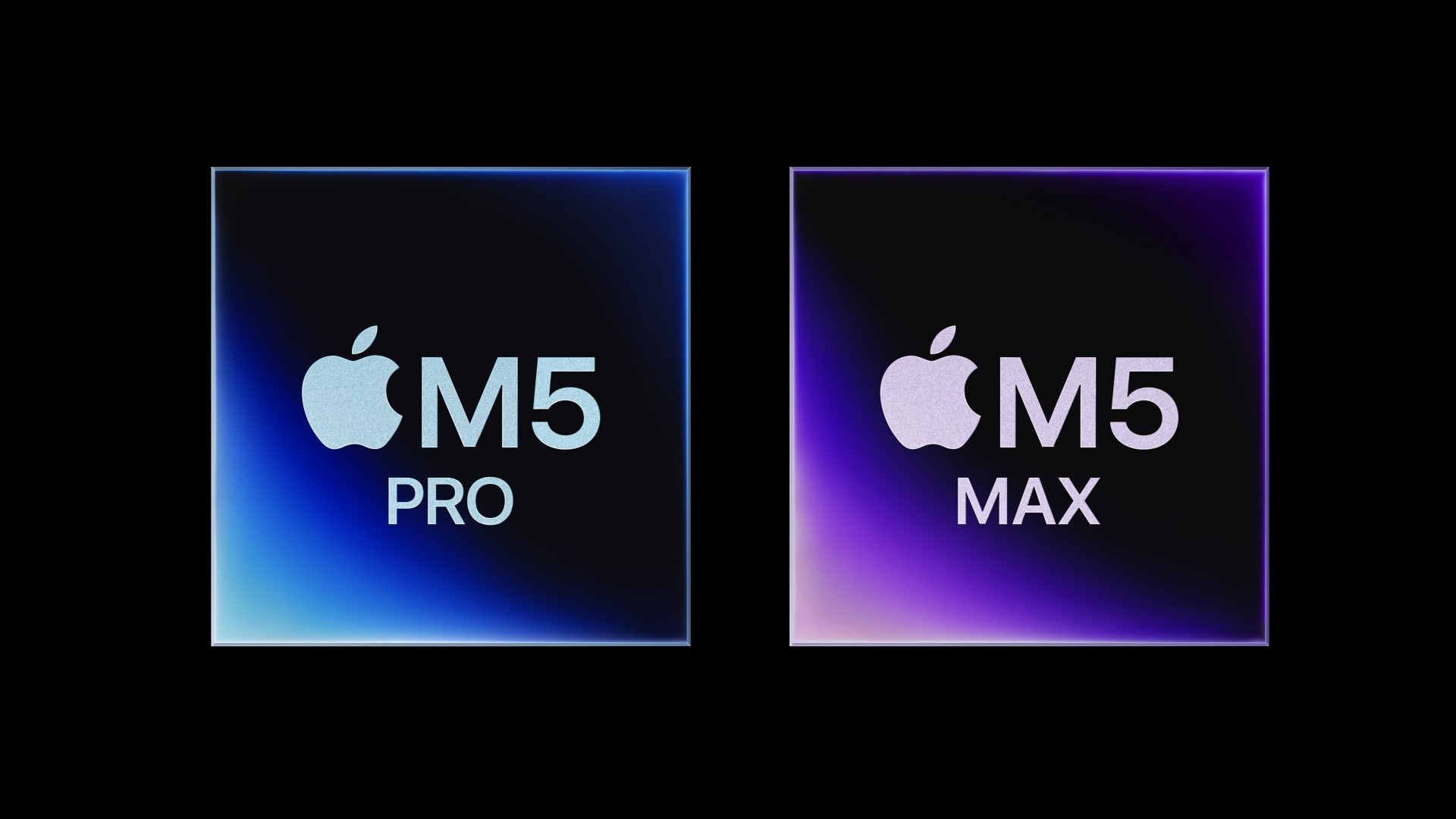
Apple has introduced the M5 Pro and M5 Max, chips designed for professionals who need high-performance computing and AI acceleration.
Built on the company’s new Fusion Architecture, the chips combine two dies into a single system on a chip (SoC), integrating a CPU, GPU, Media Engine, unified memory controller, Neural Engine, and Thunderbolt 5 support. This design increases performance and AI capability while maintaining Apple’s focus on efficiency.
The M5 Pro features an 18-core CPU with six super cores and 12 performance cores, delivering up to 30 percent faster performance for demanding workloads compared with the previous generation. The GPU scales to 20 cores and includes Neural Accelerators in each core, boosting AI compute and graphics performance. Unified memory supports up to 64GB with bandwidth reaching 307GB/s, enabling faster data handling in complex professional applications.
The M5 Max expands capabilities further with up to 40 GPU cores and unified memory of up to 128GB. Memory bandwidth reaches 614GB/s, accelerating workflows involving large datasets, 3D rendering, and AI models. According to Apple, the GPU delivers more than four times the peak compute of the prior generation for AI tasks and up to a 20 percent graphics improvement over the M4 Max.
Both chips include a faster 16-core Neural Engine for on-device AI features, support hardware-accelerated media formats such as AV1 and ProRes, and incorporate memory safety protections via Memory Integrity Enforcement. Thunderbolt 5 ports with dedicated controllers enable high-speed connectivity for professional peripherals.
With the M5 Pro and M5 Max, Apple aims to push professional computing forward, particularly for developers, researchers, and creatives who require advanced AI and graphics performance. The new chips will power the latest MacBook Pro lineup, available for pre-order soon with shipments beginning March 11.



OPPO Reno15 F 5G hands-on

Project Helix is Xbox’s next console, and it plays PC games

Nothing adds color to its wearables with the Headphone (a)

Nothing launches the Phone (4a) series

HMD is developing an AI assistant for the elderly

Xiaomi 17 Ultra is now available outside China

TECNO will showcase the CAMON 50 and POVA 8 series at MWC 2026

The art of being in and behind the frame

HUAWEI MatePad 11.5 S 2026: The better-than-ever 4-in-1 productivity tablet

TECNO MEGABOOK K16s 13th review: No-frills beneath those grills


-
 News6 days ago
Xiaomi 17 Ultra is now available outside China
-

 Camera Walkthrough2 weeks ago
OPPO Reno15 Pro: Camera Review
-

 MWC 20264 days ago
TECNO showcases cool concepts at MWC 2026
-

 MWC 20261 week ago
TECNO resurrects modular phones with this new concept
-

 Reviews6 days ago
Xiaomi Pad 8 review: Slab that slaps!
-

 Events2 weeks ago
Capcom to hold Resident Evil Requiem launch event in Jakarta
-

 MWC 20263 days ago
TECNO launches the all-new CAMON 50 series
-

 Reviews6 days ago
Forget the Phone: Xiaomi 17 Ultra Is A CAMERA!