


Most of the applications you’re currently using must have rolled out their own version of dark mode by now. The smooth transition from a light to dark interface can be done through a push of a button, or by sending the moon emoji on Messenger. A lot of people also find dark mode quite sexy, and that’s probably because of the screen they’re looking at.
A lot of newly released smartphones now have OLED screens, and dark mode seems to work best on such displays! But why is that? How do OLED panels allow dark mode to flourish?
Better, blacker, affordable screens
Organic LED (light-emitting diode) or OLED is essentially a kind of display technology. In a nutshell, OLED panels allow for better and clearer images and colors.
Thin layers of carbon fiber make up OLED screens. Because of these lightweight fibers, screens show brighter and more vibrant colors. Apart from that, OLED screens show deeper blacks and reduce instances of motion blur when navigating. The best part is that OLED screens are becoming gradually cheaper to manufacture. That explains why more and more of today’s smartphones use this panel.
More colorful than the rest
In comparison to regular LED screens of the past, OLED promises more accurate colors by producing light from individual pixels, instead of relying on backlighting. Back then, LCD screens relied heavily on the backlight of the display to make colors pop. Although, such displays also make the colors seem washed, especially when compared to OLED.

Image credit: Denise Chan
However, OLED’s colors don’t always turn out better than on LED and LCD screens. One such case is when you turn your screen’s brightness to its maximum, especially under strong daylight conditions. LED and LCD screens are designed to perform relatively better in color accuracy when your screen’s brightness is set to max. OLED screens were not designed for maximum brightness, so colors at that point would be saturated.
Which OLED is best?
There are two types of OLED technologies that currently exist: AMOLED and PMOLED. A lot of people hear AMOLED tossed around a lot because lots of smartphones use it. Essentially, AMOLED uses a storage capacitor that controls how much light each individual pixel will give off. It’s the one responsible for projecting all sorts of vibrant colors on most OLED smartphone screens. Apart from that, AMOLED screens do support wider resolutions at a more affordable and efficient rate.

PMOLED, on the other hand, does not have a storage capacitor and instead relies on user control. Essentially, the user will control lighting settings, and the individual pixels will adjust accordingly. You can find PMOLED screens on smaller devices like older iPods and pocket Wi-Fi devices. Take note that these screens use more power to implement such color changes.
Joining the dark side
Ever since dark mode rolled out for different apps and interfaces, people have been contemplating on switching to it — and for good reason. On normal LED or LCD screens, the new feature does not bode well with the technology. The depth of the black their dark mode possesses is not reflected well, to the point that the blacks look more gray than actual black. This is much more obvious when the screen’s brightness is turned all the way up.

Image credit: Mike Enerio
Aesthetically, dark mode looks better on OLED screens because of the technology’s emphasis on deeper blacks. Most OLED screens have capacitors that control light passing through each pixel, which also works for blacks and whites. As such, dark mode shows up deeper and blacker, which is the intended look compared to regular modes. But, there’s actually more to just aesthetics for this mode.
It’s also been proven that dark mode on OLED helps save your battery life. Google confirmed this at its Android Dev Summit, citing that on max brightness, blacks consume less power than all other colors. Individual pixels need less electricity to show blacks on screen, which results in lower power consumption through time. Note that Google got these findings through tests on their original Pixel smartphones and their own apps like YouTube.
What’s left for OLED and dark mode
Apps and operating systems are now starting to embrace or consider incorporating dark mode into their software. While apps like Twitter and YouTube introduced such an option early on, others are beginning to take notice. Of course, you’re gonna need the right screen to fully immerse yourself.

Image credit: Simone Dalmeri
It has been proven: OLED and dark mode are indeed a perfect match. But, it is entirely up to you whether you want to stay in the light or switch to the dark side.






Computers
CIPTA debuts AI GPU server, edge workstation at CloudFest 2026
Malaysia-made AI infrastructure

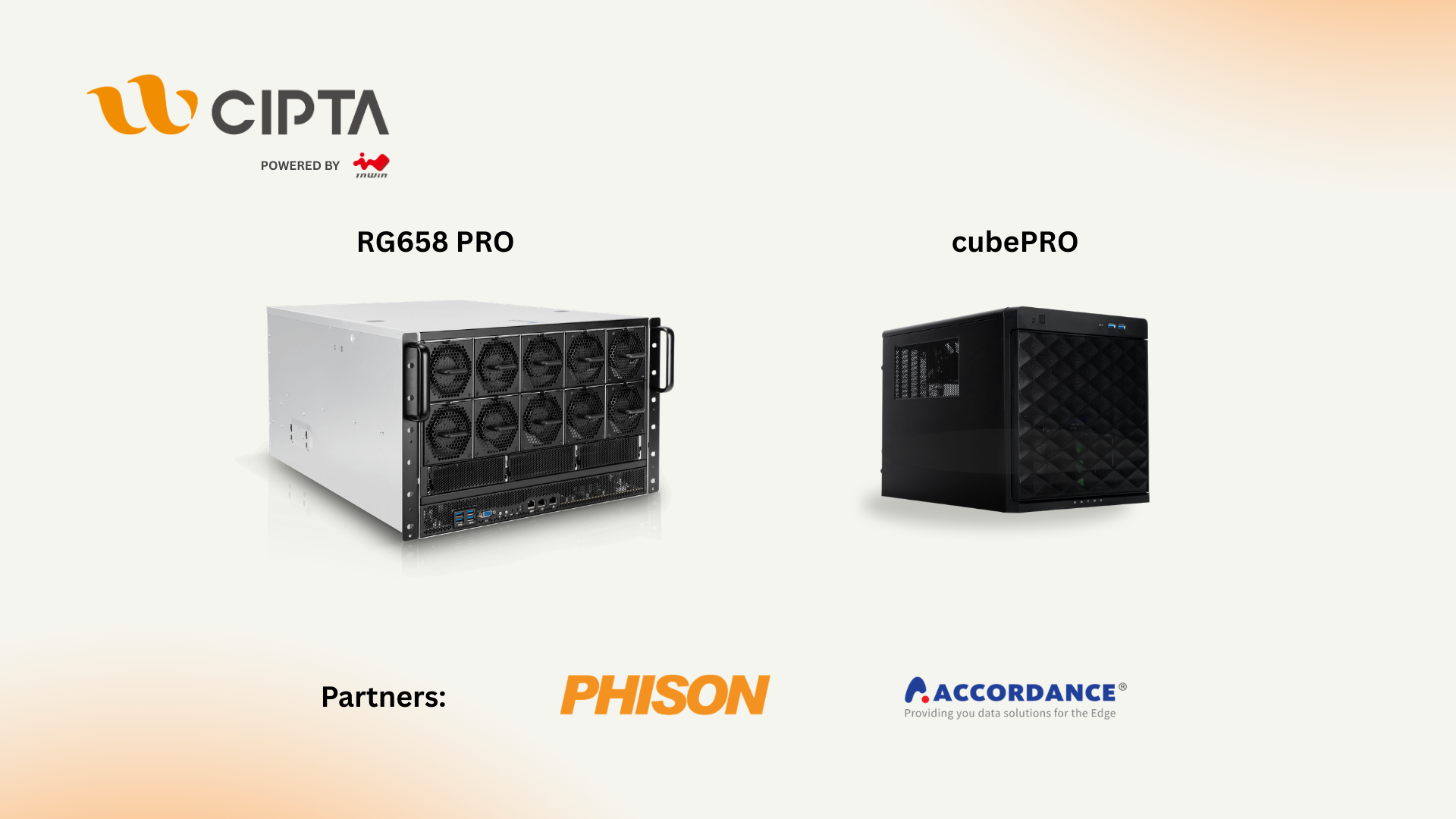
CIPTA Industrial Sdn Bhd steps onto the global stage with its European debut at CloudFest 2026. They introduced high-density AI infrastructure and edge-ready systems built for modern enterprise workloads.
Held at Europa-Park in Rust, Germany from March 23 to 26, the event marks the company’s first major international showcase under its own brand. Backed by InWin Development Inc., CIPTA positions itself as a new-generation EMS provider focused on AI, cloud, and enterprise systems.
At Booth R41, the company is highlighting two key platforms: the RG658 PRO GPU server developed with Phison, and the cubePRO edge workstation created in collaboration with Accordance.
Built for scalable AI workloads
Leading the showcase is the RG658 PRO, a high-density GPU server designed to handle large-scale AI training and inference without pushing costs out of reach for enterprises.
The system supports up to eight high-performance GPUs and integrates Phison’s Pascari aiDAPTIV alongside its PASCARI enterprise SSD lineup. This combination aims to improve data throughput, reduce latency, and streamline AI pipelines.
Thermal performance is a key focus. The RG658 PRO uses a dual-chamber design to separate heat zones, paired with up to 14 high-speed PWM fans for sustained cooling under heavy workloads. Power delivery is handled by a 3+1 redundant configuration of 80PLUS Titanium PSUs, scaling up to 9600W.
The result is a platform built to scale AI deployments on-site while maintaining efficiency and reliability.
Edge computing without downtime
Alongside its GPU server, CIPTA is introducing the cubePRO, a compact edge workstation designed for environments where uptime and data integrity are critical.
The system supports up to four PCIe slots for GPU configurations, making it suitable for AI workloads at the edge. It also features high-capacity multi-SSD setups and optimized airflow for continuous 24/7 operation.
Through its partnership with Accordance, the cubePRO integrates the Disk Array ARAID M500 solution, enabling high-availability storage and data protection. This ensures uninterrupted performance for use cases such as industrial systems, remote nodes, and enterprise branch deployments.
The focus here is clear: bring AI processing closer to where data is generated, without sacrificing reliability.
Strengthening Malaysia’s role in AI infrastructure
CIPTA’s debut also reflects a broader shift in global supply chains. Operating from Malaysia, the company offers end-to-end services—from concept to production—along with flexible manufacturing cycles and cost-efficient operations tailored for Southeast Asia and international markets.
With access to InWin’s server chassis ecosystem and infrastructure solutions, CIPTA combines global platform capabilities with localized integration. The goal is to help enterprises deploy AI and cloud infrastructure faster while diversifying their supply chain footprint.
As demand for AI systems continues to grow, CIPTA is positioning Malaysia as a key hub for scalable, production-ready infrastructure.
Visitors can find CIPTA at Booth R41 during CloudFest 2026 in Europa-Park, Rust, Germany.
Computers
AMD expands Ryzen AI Embedded P100 series lineup
Scalable, efficient AI compute for industrial, edge solutions
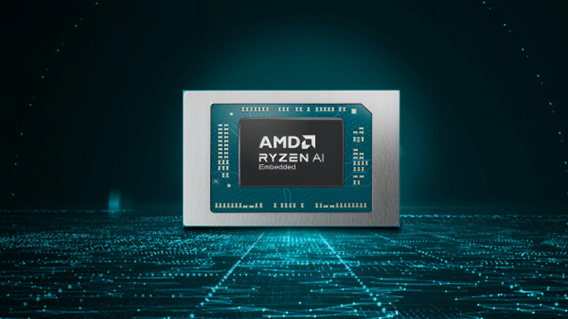
AMD has recently announced the expansion of its AMD Ryzen AI Embedded P100 Series processor lineup.
This enables scalable and power-efficient AI compute tailor-built for industrial and AI edge systems. Scenarios include factory automation, physical AI in mobile robotics, and other AI-driven edge applications.
With eight to 12 high-performance Zen 5 cores, AMD ROCm support, and up to 80 total system TOPS, the new x86 embedded APUs deliver up to:
- 2x more CPU core counts
- 8x higher GPU compute
- 36% higher system TOPS
This way, developers and system designers get an expanded and scalable portfolio of power-efficient edge computing solutions. These processors support real-time AI from vision to control and reasoning, as well as offer advanced graphics capabilities.
On a single chip, clients get up to 80 TOPS physical AI acceleration, AMD RDNA 3.5 graphics for real-time visualization, and an NPU based on the AMD XDNA 2 architecture.
Moreover, the processors can withstand industrial temperature ranges (-40° C to 105° C) and can support continuous 24/7 operations for up to 10-year life cycles. That’s along with low-latency and power-efficient AI inference.
Real-life applications include intelligent factories, autonomous robots, and medical imaging devices. For instance, the processors can deliver CPU performance required for real-time inspection and process optimization.
For mobile robots, meanwhile, processors can manage navigation, motion, control, and route planning while the GPU processes multi-camera feeds for spatial awareness.
Furthermore, for 3D health imaging, the processors can enable the powering of 3D imaging for ultrasounds, endoscopes, tissue classification, and tumor detection at the edge. This is done with models like U-Net, nnU-Net, and MONAI.
The processors then accelerate image-to-report workflows with MedSigLIP and support clinical reasoning and Q&A with Med-PaLM 2.

GIGABYTE and Capcom have collaborated for a limited time Resident Evil Requiem-inspired custom PC giveaway.
The setup is inspired by the title, which recently released, and includes an exclusive monitor game bundle to bring players closer to the experience.
Headlining the collaboration is the Umbrella Corporation — Level 3 Access custom rig giveaway. It is one of a kind, fully-built desktop featuring a Z890M AORUS ELITE WIFI7 ICE motherboard and RTX 5080 AERO OC SFF graphics.
Of course, it draws inspiration from the visual identity and atmosphere of Resident Evil Requiem. It also features a GIGABYTE C102 GLASS ICE chassis design and custom GIGABYTE MO27Q28G gaming monitor to complete the setup.

The giveaway runs from March 2 to March 31 via the official campaign website. Fans can enter for a chance to win the custom rig, with no purchase necessary. The only caveat is that they have to be a United States or Canada resident.
Such experience is designed to invite players and PC enthusiasts alike to engage with the collaboration while highlighting GIGABYTE’s premium hardware craftmanship and attention to detail.
In addition to the giveaway, GIGABYTE is also offering a Resident Evil Requiem game bundle with select gaming monitors. Included are AORUS brand monitors, ranging from 27 to 55 inches in size.
This bundle is available until March 31. Customers who purchase eligible models can redeem a digital game code through GIGABYTE’s official redemption platform.
The featured monitor is the MO27Q28G, which has fourth generation WOLED panel with 280Hz refresh rate and 0.03ms response time. It is an ideal monitor to experience the spine-chilling terror and death-defying action of the title.





Now Playing: Hoppers

Jackery SolarSaga series: Free power for small devices

UGREEN adds new Nexode Pro power bank, charger to lineup

nubia to launch new Neo 5 series gaming phones on March 28

SHINOBI: Art of Vengeance’s SEGA Villains Stage out on April 3


-

 Reviews5 days ago
POCO X8 Pro Max review: A new beast from the far east
-

 News5 days ago
POCO X8 Pro Series: Price, availability in the Philippines
-

 Laptops2 weeks ago
Apple MacBook Neo Review
-

 Computers2 weeks ago
GIGABYTE collaborates with Capcom for RE Requiem custom PC
-

 Apps1 week ago
Google Maps is finally getting a 3D mode
-

 Entertainment2 weeks ago
The internet is thirsting over the One Piece Season 2 cast
-

 Features1 week ago
Galaxy AI on the Samsung Galaxy S26 Ultra
-

 Automotive2 weeks ago
BYD is reportedly considering an F1 team