
Gaming
Patapon 2 Remastered review: Held back by a beat
Staying true to the original, except for a few things


When I first got a PlayStation Portable, Patapon 2 was not in my list of games to purchase upon receiving it. I gravitated towards games that mostly included combat or exploration — the two things Patapon, as a whole, wasn’t. Even when the first game got remastered for the PlayStation 4, I still didn’t bother trying it out.
So I’ve decided to finally give Patapon 2 Remastered a shot, with knowledge of the first game from some of my friends. I wanted a change of pace from all the shooter and racing games that I needed to just settle down for a bit. Maybe a game about rhythm and matching button mashing to drum beats can be a good change of pace.
Faithful to the original?
Patapon 2 Remastered brings back the core gameplay of the 2009 original, which is pretty simple. It’s a game of matching the beat of the Patapons’ drums using every button on the right of the controller. In order to progress through the game, you will learn button combinations to move, attack, and defend against enemies. Also, to add more power to attacks, you have to sustain the combos without going off-sync.
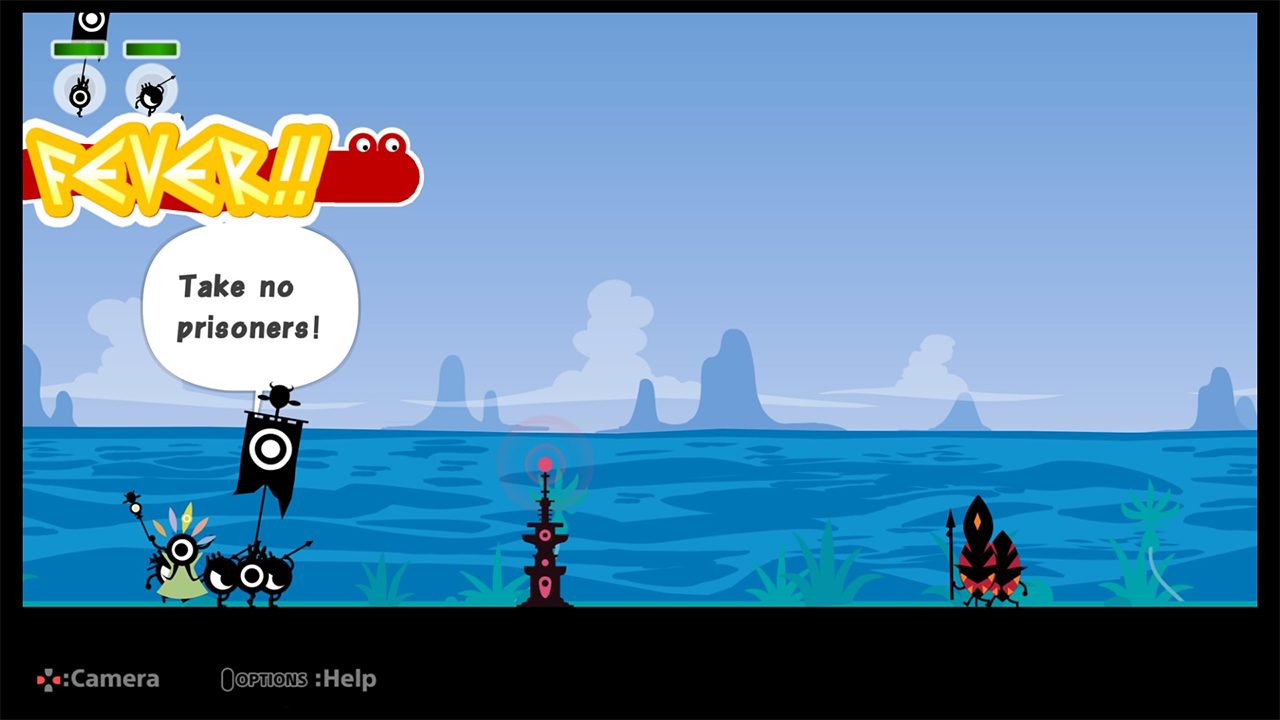
If this is your first time ever playing any Patapon game, it’s a game mechanic that requires some patience. Timing the button presses to the beat alone is actually stress-inducing enough, but it’s not a steep learning curve. After some practice, you will get used to it; even if you mess up, there’s no penalty.
For those who have played the original game before, it’s nothing groundbreaking. The overall experience of the original is preserved in many ways, from the beat-matching to the combat style. If anything, gameplay feels a lot stricter in terms of syncing your button presses. But there is one flaw that the remaster has, which I’ll get to later.
Beautified original
I felt like the only real change this remaster has is in its visuals. I get it, the technology at the time of its release fails in comparison to today so that had to be expected. But, this wasn’t just slapping in crisper lines and darkening the fill on the Patapon army.
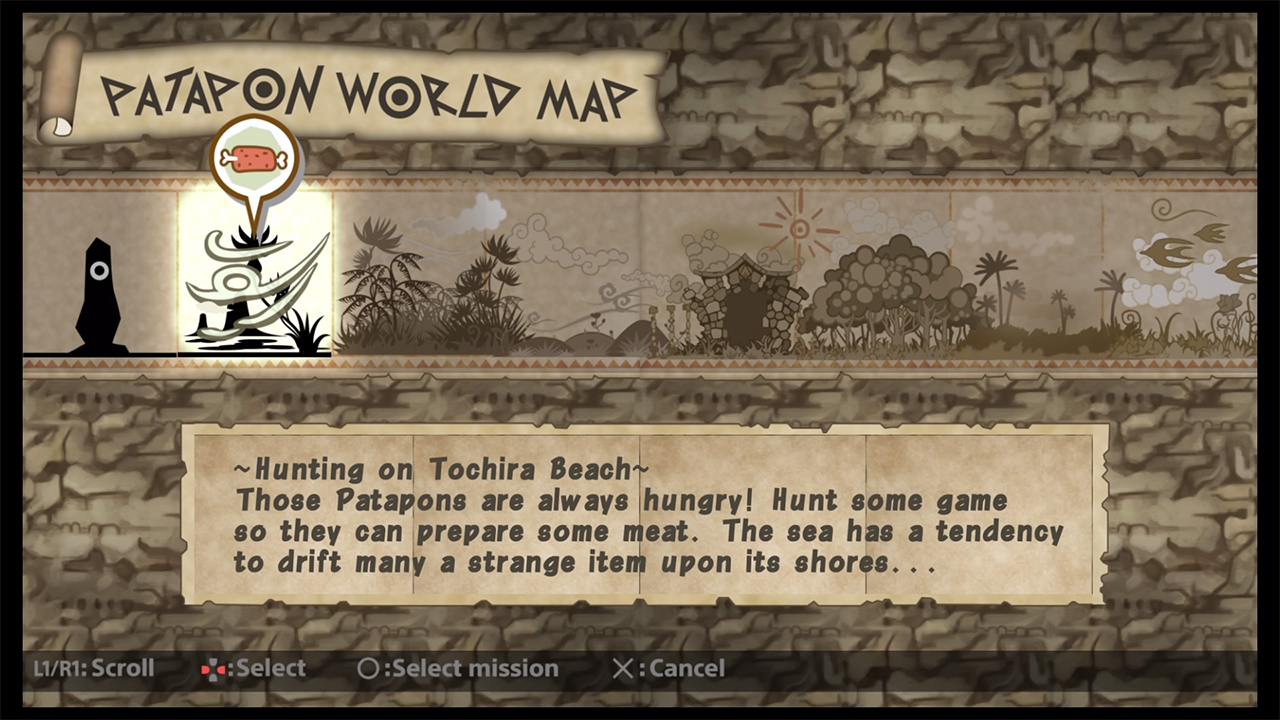
Overall, Patapon 2 Remastered gained the HD facelift that improved depth in background and character outlines. Colors in the background are more vibrant, and they hardly ever looked washed compared to the original. Animations were also snappier by comparison, proving that timing is of great importance for a game like this.
Differences and flaws from the original
Although, like any remaster done in the last few years, some things had to change. For one, the multiplayer option for certain features was removed. Patapon 2 for the PS4 is now just a single player adventure game, which isn’t much of a dealbreaker anyway. In its place, though, the game gives you all friendship-based equipment to use. Older players may have mixed feelings over this, but it really depends on how much you value nostalgia.
And another thing that’s changed, or at least is now a problem, is some level of input lag. The original game on the PSP didn’t have that much input lag — last time I checked. The game somehow thrived on smaller screens, so button mashing seemed like a total breeze at the time.
When you transition that to much larger screens, plus more enhanced visuals and controls, the problem starts to settle in. Several times, I literally kept saying, “I swear I pushed the button on the beat” whenever I input the right combinations. I know I should keep trying harder to match the drum beat, but even if I do match the beat it just won’t work. It’s wasting precious combos for stronger attacks.
Should you give it a try?
Listen, Patapon 2 Remastered is one good game when you need to pass some time. It’s all rhythm-based, and with enough patience and mastery you’ll finish the game in no time. If you’re one of the more nostalgic fans out there, it remains true to most of the original game.
I still fairly enjoyed the game even with the amount of input lag I experienced. I even found myself jamming to the beat just to keep the combo streak going. Also, I didn’t mind that it was now just a single player game, which I think most people would enjoy.

Overall, it’s one of those classic games that’s worth giving a try. It’s not as action-packed, and not as visually breathtaking, but it is fun to play on your own.



Gaming
Project Helix is Xbox’s next console, and it plays PC games
It might be as powerful as a modern PC.


Among all the platforms in today’s generation of consoles, the Xbox has to be biggest loser. Compared to the PlayStation 5 and the Switch 2, the Xbox Series X|S isn’t as memorable. To rectify its position in the rankings, Xbox is heavily teasing its next console codenamed Project Helix.
As was hinted before, Xbox is trying something different with its next-generation console. Rather than just a simple iteration over the current-generation console, the upcoming one will reportedly double as a PC. Today, the company itself has confirmed that this is the case for Project Helix.
Through a post on X, Xbox CEO Asha Sharma said that the console will “lead in performance and play your Xbox and PC games.”
Great start to the morning with Team Xbox, where we talked about our commitment to the return of Xbox including Project Helix, the code name for our next generation console.
Project Helix will lead in performance and play your Xbox and PC games. Looking forward to chatting about… pic.twitter.com/Xx5rpVnAZI
— Asha (@asha_shar) March 5, 2026
There are two things to unpack here. Firstly, Project Helix will aim to bridge the perilous divide between console players and PC players. Unlike the past, there will be a way to play both platforms on both devices… except for games exclusive to the PlayStation and the Switch, that is.
Secondly, a “lead in performance” seems to indicate that this isn’t just a mini-PC. Most recently, Valve announced the Steam Machine. Though it offers a convenient way to play Steam games in one device, it doesn’t have the best specs. Project Helix, if Sharma’s words are to be believed, might be as powerful as a modern PC.
Xbox won’t wait long before revealing more details about the console. Sharma, who only recently started her post as CEO, will be at next week’s Game Developers Conference to explain Project Helix more.
SEE ALSO: AMD teases next-gen Xbox coming in 2027
Gaming
Ubisoft confirms Assassin’s Creed: Black Flag remake
It’s officially called Assassin’s Creed: Black Flag Resynced.
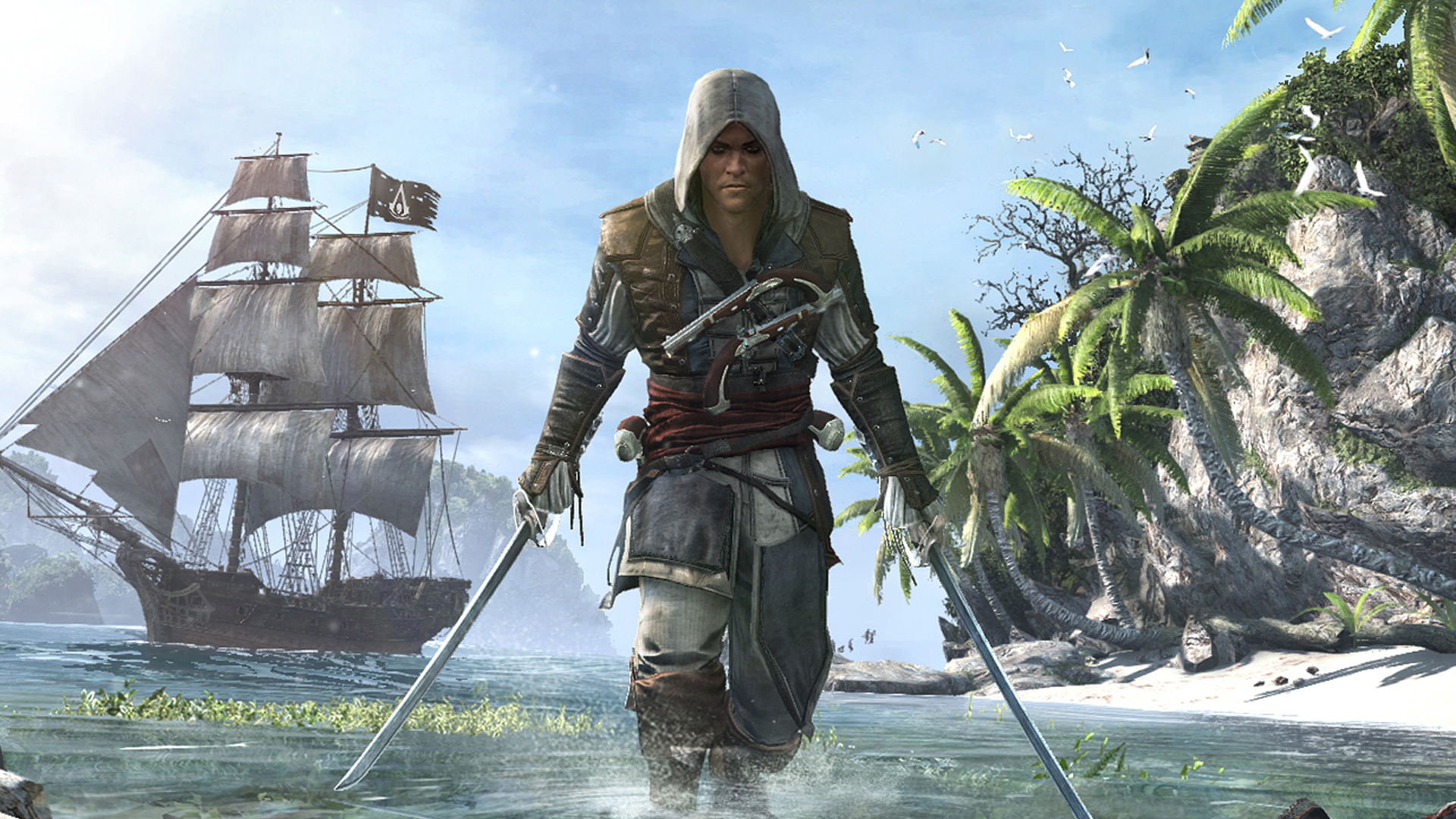
If you ask an Assassin’s Creed fan what their favorite game of the series is, Assassin’s Creed: Black Flag will likely be one of the top contenders. Because of its reputation, gamers are constantly asking for a remake of the popular pirate simulator. Now, the dream is finally here. Ubisoft has confirmed that a remake, called Assassin’s Creed: Black Flag Resynced, is coming.
Released in 2013, Assassin’s Creed: Black Flag saw the journey of Edward Kenway, a vagabond pirate haplessly thrust into life as part of the Assassin Brotherhood against his will. The critically acclaimed game was something that all gamers have been clamoring for since Sid Meier’s Pirates: a true pirate simulator. It was no surprise that the game got as popular as it did.
Today, through an official roadmap shared by the company, Ubisoft has confirmed that Assassin’s Creed: Black Flag Resynced is real, and it might launch later this year. The company also released the first concept art for the remake.

Currently, there’s no official word as to how Ubisoft is remaking the game. At the very least, we can expect significant graphical upgrades to put it up to par with the modern games. We wouldn’t be opposed to more stories and missions too.
Now, though the Black Flag remake is already a big deal, the same roadmap also emphasizes that Codename Hexe, the next mainline title, is still coming. Ubisoft hasn’t confirmed the actual timeline yet, but the game will depict “a pivotal moment in history.” With post-launch development for the ongoing Shadows winding down, efforts to launch Codename Hexe should be ramping up soon.
SEE ALSO: Assassin’s Creed Shadows gets Attack on Titan-themed content
Gaming
PlayStation will stop releasing its games on PC
A new reports suggests that Sony is going back to console exclusives.
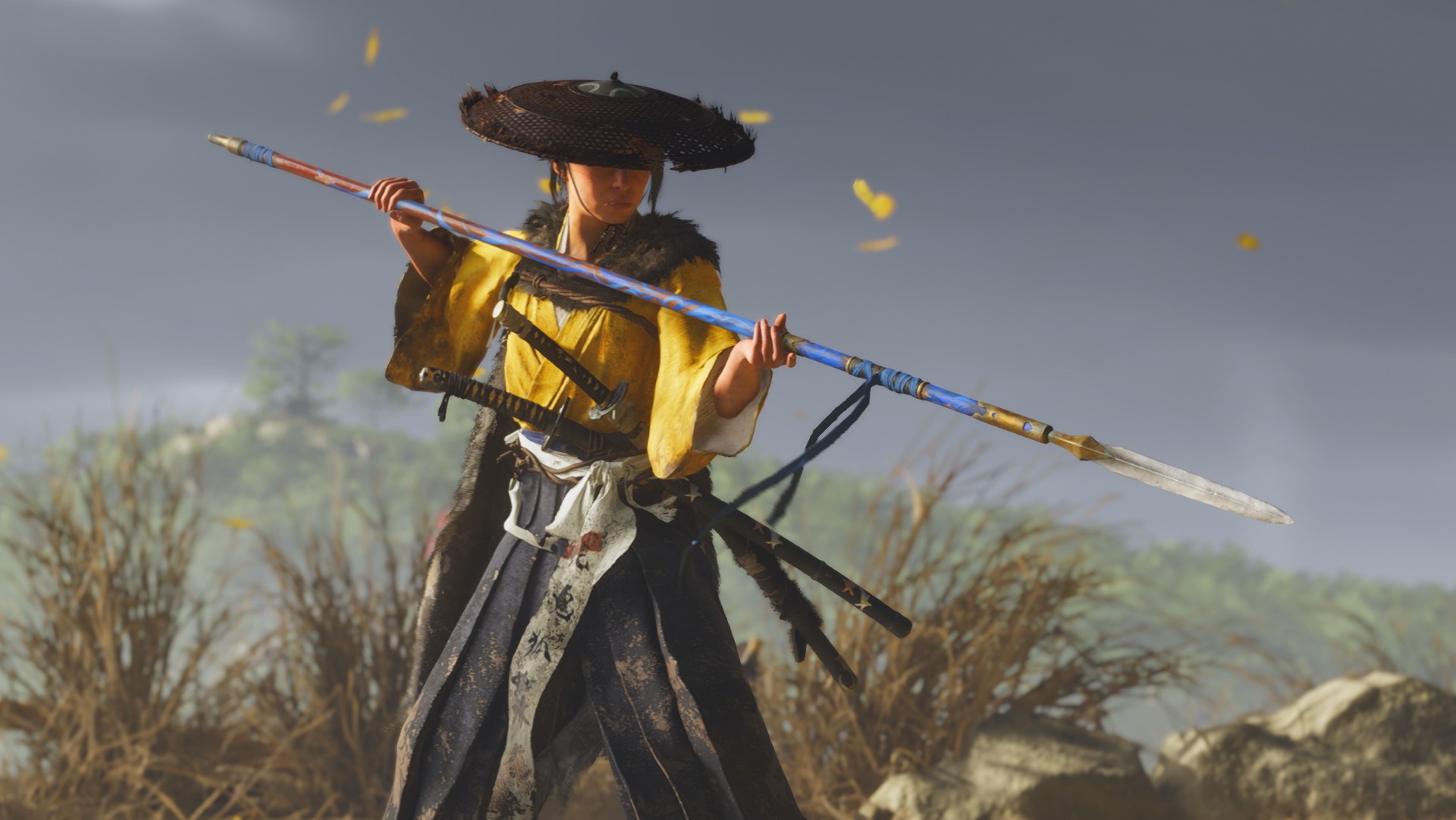
PC-only gamers have been eating well for the past few years. The formerly exclusive PlayStation library opened its gates and released worthy ports for PC. Unfortunately, Sony is putting an end to this short-lived era of openness to PC gamers. According to a new report, the company is once again making first-party PlayStation games exclusive to the console.
During the pandemic, Sony started releasing its critically acclaimed first-party games on PC. The new wave saw gamers get the ability to play titles such as Horizon Zero Dawn, The Last of Us, Marvel’s Spider-Man, and God of War on another platform. Even now, players are still eagerly awaiting the PC launch of Death Stranding 2, due out later this year.
However, as reported by Bloomberg’s Jason Schreier, Sony has just had a change of heart and will no longer release any more games on the PC, beyond those already confirmed for future launches.
This will mean that last year’s Ghost of Yotei and the upcoming Saros will remain PlayStation exclusives for the foreseeable future.
It’s a big change to Sony’s direction. However, it’s not without its precedents. For one, Microsoft has started to compete in the non-exclusive market. The company is already set to launch Fable and Forza Horizon 6 on other platforms, including PC and PlayStation, concurrently with the Xbox launch. To compare, PlayStation still waits a long time before launching exclusive games on PC.
Also, now that rumors have begun to speak of a fabled PlayStation 6, Sony might want to keep things close to its chest for now. After all, selling the console might be its top priority for now.
SEE ALSO: PlayStation 6 reportedly delayed to 2029 because of RAM shortage


OPPO Reno15 F 5G hands-on

Project Helix is Xbox’s next console, and it plays PC games

Nothing adds color to its wearables with the Headphone (a)

Nothing launches the Phone (4a) series

HMD is developing an AI assistant for the elderly

Xiaomi 17 Ultra is now available outside China

TECNO will showcase the CAMON 50 and POVA 8 series at MWC 2026

The art of being in and behind the frame

HUAWEI MatePad 11.5 S 2026: The better-than-ever 4-in-1 productivity tablet

TECNO MEGABOOK K16s 13th review: No-frills beneath those grills


-
 News6 days ago
Xiaomi 17 Ultra is now available outside China
-

 Camera Walkthrough2 weeks ago
OPPO Reno15 Pro: Camera Review
-

 MWC 20264 days ago
TECNO showcases cool concepts at MWC 2026
-

 MWC 20261 week ago
TECNO resurrects modular phones with this new concept
-

 Reviews6 days ago
Xiaomi Pad 8 review: Slab that slaps!
-

 Events2 weeks ago
Capcom to hold Resident Evil Requiem launch event in Jakarta
-
 MWC 20263 days ago
TECNO launches the all-new CAMON 50 series
-

 Reviews6 days ago
Forget the Phone: Xiaomi 17 Ultra Is A CAMERA!