
News
Qualcomm launches Snapdragon 6 Gen 1 and 4 Gen 1
Coming later this year

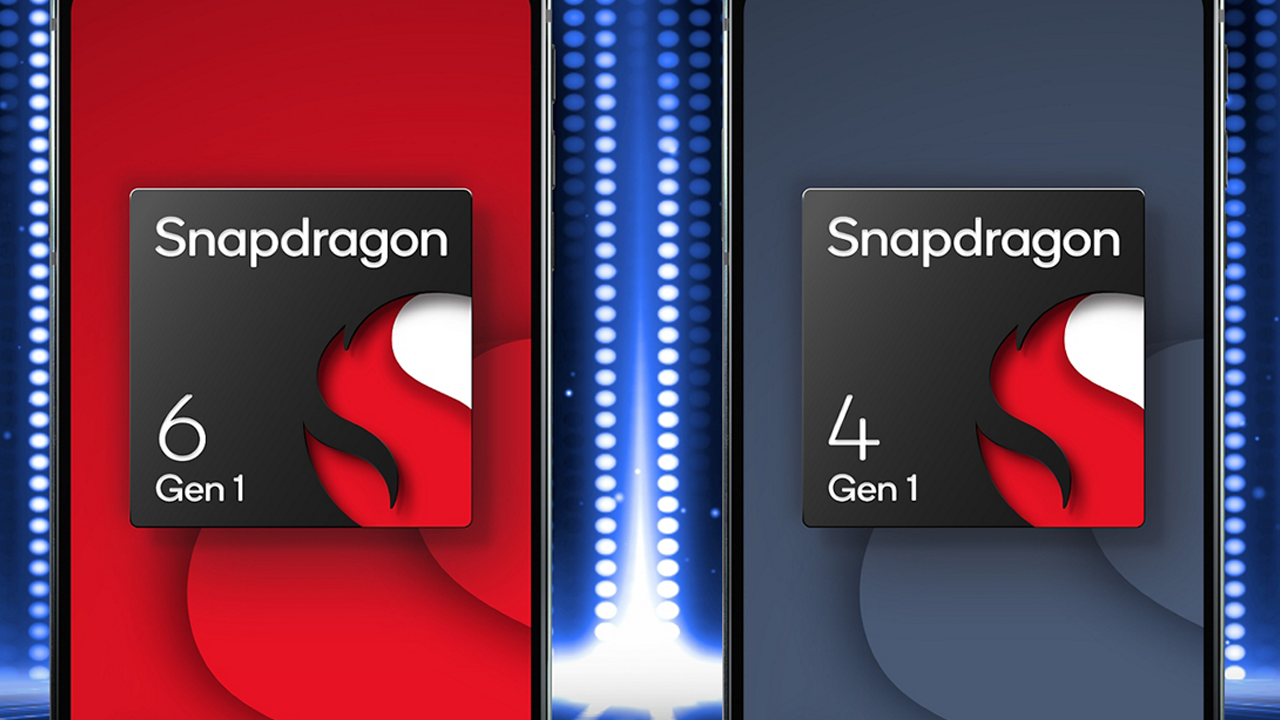
Last year, Qualcomm introduced the Snapdragon 8 Gen 1, leaving behind its old naming convention and presumably bringing its chipsets to the next generation. Now, the company is finally bringing everyone under the same roof. Saying goodbye to the Snapdragon 600 and 400 series, Qualcomm has launched the Snapdragon 6 Gen 1 and the Snapdragon 4 Gen 1.
In contrast to Snapdragon 8 Gen 1’s premium offering, both of the new chipsets will appeal to the midrange and budget phone segments. Both will feature a healthy infusion of new AI capabilities while focusing on performance.
First up, the Snapdragon 6 Gen 1 will deliver improvements for gamers. Compared to the previous generation, the new midrange chipset can render graphics 35 percent faster and process operations 40 percent quicker. Packed with the new 7th-generation Qualcomm AI Engine, it comes with a lot of possibilities for AI-infused devices. Also, the chipset can now support 108-megapixel cameras and HDR capabilities. Devices with the midrange chipset are set to come out in the first quarter of 2023.
On the other hand, the Snapdragon 4 Gen 1 builds on more performance and battery efficiency. The chipset has 15 percent better CPU and 10 percent better GPU, compared to the previous generation. It can also support 108-megapixel cameras. The AI Engine can help keep voice assistants active in the background. Qualcomm also promises “multi-day battery life” in devices with the new processor. Devices are set to come out during the third quarter of 2022.
Motorola has already promised that an upcoming device will come with the Snapdragon 6 Gen 1 next year. iQOO, however, will launch the Z6 Lite to help debut the Snapdragon 4 Gen 1 later this year.
SEE ALSO: Qualcomm leaks when the Snapdragon 8 Gen 2 will launch






Laptops
Apple accidentally revealed something called the MacBook Neo
Is this the rumored entry-level MacBook?

We’re living in the week of Apple. Through the past few days, Apple launched a new iPhone, iPads, and now, MacBooks. But the week isn’t over, so the brand still has a few tricks up its sleeve. Now, on the cusp of its major event, a brand-new notebook lineup has seemingly been leaked ahead of time. Apple has accidentally leaked the name “MacBook Neo” on its official website.
While we’ve seen the launches of the new MacBook Air and the MacBook Pro, the year’s lineup of notebooks is still missing the highly rumored entry-level MacBook. Ahead of this week, the brand was tipped to launch a new lineup that brought the price of the notebook down and introduced quirkier colorway options. Judging by the invite for it, the event scheduled for March 4 seems to be the launch pad for this device.
Today, in a now-deleted mention on a regulatory document on the brand’s official website (via MacRumors), Apple has accidentally leaked a mention of a “MacBook Neo (Model A3404)”. Sadly, the mention did not include any details about this device. Plus, it was deleted soon after it was spotted by the public.
There isn’t much to say about this model yet, if it is indeed the budget-friendly MacBook that everyone is talking about. If anything, it’s been tipped that the lineup will feature a mobile chipset rather than the M-series silicon often prominent in the regular MacBook series. It will also add splashes of color by offering colorway options apart from the usual metallic choices.
Then again, March 4 (in the States) is right around the corner, so the device’s launch might only be a few breaths away.
SEE ALSO: Apple’s March 4 Event signals something BIG is coming
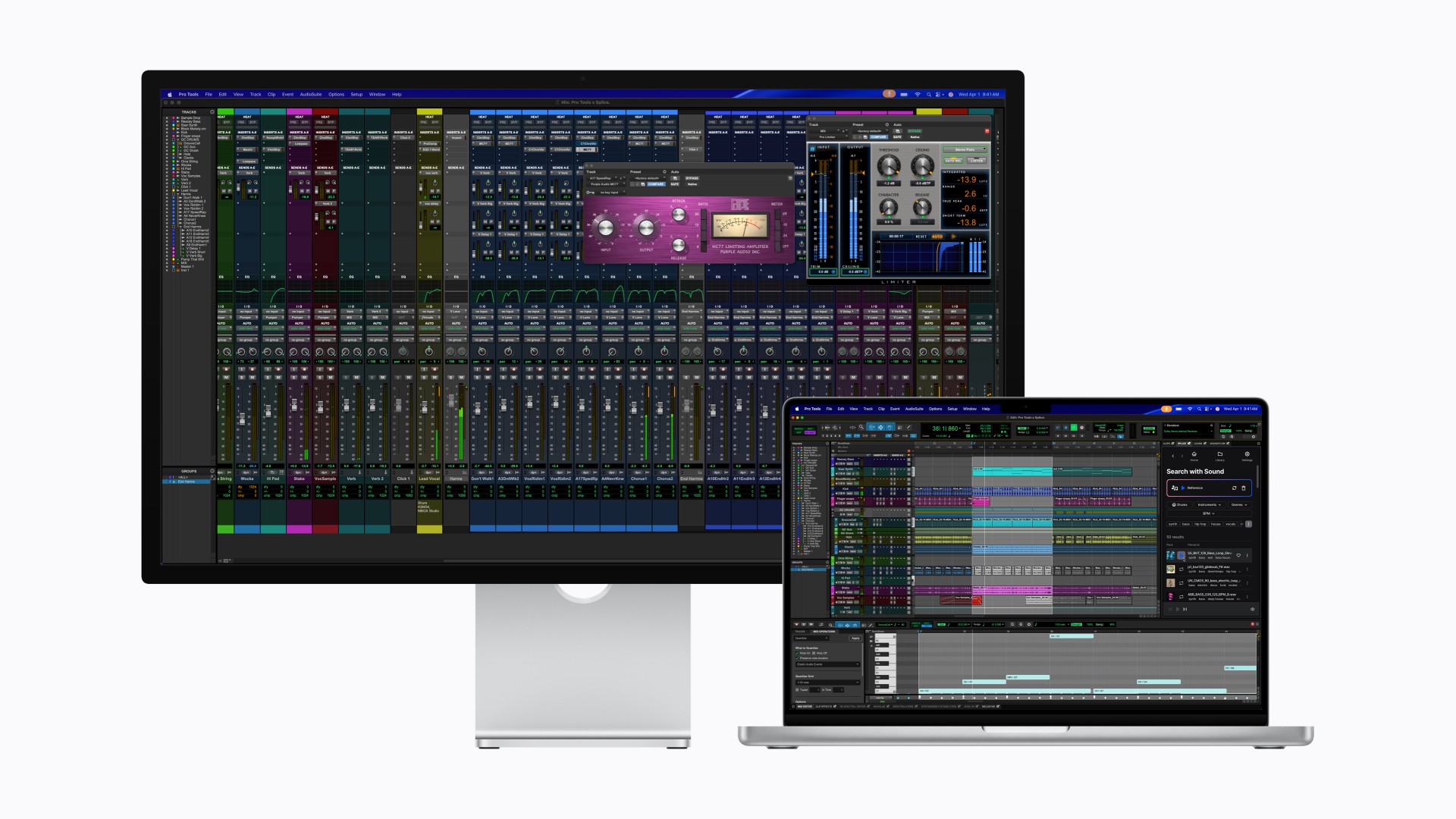
After taking the MacBook Pro to Super Saiyan levels, Apple is now doing the same for the display it pairs with.
With its latest Studio Display family, Apple is splitting the lineup into two clear tiers. The regular Studio Display already feels powered up. The all-new Studio Display XDR transforms.
If this were Dragon Ball Z logic, the Studio Display is Super Saiyan. The Studio Display XDR is Super Saiyan Blue — calmer, more controlled, and operating on an entirely different plane.
A strong base form
The new Studio Display sticks to what already worked: a 27-inch 5K Retina panel with over 14 million pixels, 600 nits of brightness, and P3 wide color. It’s sharp, bright, and more than capable for photo editing, design work, music production, and daily tasks.
Apple upgrades the experience around the screen, too. There’s now a 12MP Center Stage camera with improved image quality and Desk View support. The three-mic array and six-speaker system return, this time with deeper bass and Spatial Audio support.
Connectivity jumps to Thunderbolt 5, allowing users to daisy-chain up to four Studio Displays for nearly 60 million combined pixels. It also delivers up to 96W of charging power for a connected MacBook Pro.
It’s the dependable powered-up form. Strong. Confident. Already more than enough for most creators.
The controlled transformation
Then there’s Studio Display XDR.
This is where Apple goes full Super Saiyan Blue.
The 27-inch 5K Retina XDR panel uses a mini-LED backlight with over 2,000 local dimming zones. It pushes up to 1000 nits of SDR brightness and 2000 nits of peak HDR brightness, alongside a 1,000,000:1 contrast ratio. Highlights hit harder. Blacks stay deep. Blooming stays minimal.
The display also adds Adobe RGB support on top of P3, covering more than 80 percent of Rec. 2020 for HDR workflows. For video editors, colorists, and print professionals, this shifts the XDR from “great display” to “reference-grade tool.”
Motion gets smoother, too. A 120Hz refresh rate with Adaptive Sync dynamically adjusts between 47Hz and 120Hz, reducing latency and making everything from scrubbing timelines to gaming feel more fluid.
Apple even introduces DICOM medical imaging presets and a Medical Imaging Calibrator for diagnostic radiology use in the U.S., pending FDA clearance. It’s a reminder that this panel isn’t just about aesthetics. It’s about precision.
Built for the pro desk
Both displays share the same upgraded 12MP Center Stage camera, studio-quality microphones, six-speaker Spatial Audio system, and Thunderbolt 5 connectivity. The XDR model goes further with up to 140W charging power and additional downstream ports, effectively acting as a high-speed hub.
Pricing and availability
In the U.S.
The new Studio Display starts at $1,599 (U.S.) and $1,499 for education, while the Studio Display XDR begins at $3,299 (U.S.) and $3,199 for education. Both models can be pre-ordered starting tomorrow, March 4, with availability beginning March 11 in select Apple Store locations and authorized resellers.
In Singapore
Pre-orders open on March 9 via apple.com/sg/store and the Apple Store app. Pricing starts at S$2,199 for the Studio Display (S$2,059 for education). The Studio Display XDR begins at S$4,499 (S$4,359 for education).
Optional accessories such as the Magic Keyboard, Magic Trackpad, and Magic Mouse remain available in white and black color options. Apple also offers nano-texture glass and adjustable stand configurations for professional setups.
The message from Apple is consistent: the base Studio Display remains a strong professional companion, while the Studio Display XDR targets workflows demanding reference-grade performance and HDR capability. Pre-orders go live soon, with deliveries and in-store availability following in mid-March.
In the Philippines
Customers can pre-order starting March 4 at apple.com/ph/store.
Studio Display starts at ₱104,999, and ₱97,990 for education. Studio Display XDR replaces Pro Display XDR and starts at ₱219,999, and ₱212,990 for education.
Additional technical specifications, including nano-texture glass and a choice of stand options, are available at apple.com/ph/store.
Magic Keyboard with Touch ID and Numeric Keypad (from ₱10,490), Magic Trackpad (₱6,990), and Magic Mouse (₱5,490) in black or white color options are available at apple.com/ph/store.
Laptops
Apple unveils MacBook Pro with M5 Pro and M5 Max
Up to 8x AI gains, faster SSD, Wi-Fi 7, and bigger starting storage


Apple has introduced the new 14- and 16-inch MacBook Pro powered by the all-new M5 Pro and M5 Max chips — bringing what feels like a full Super Saiyan moment to its pro lineup.
If M5 Pro is Super Saiyan, then M5 Max is Super Saiyan 2.
Both chips are built using Apple’s new Fusion Architecture, combining two dies into a single system on a chip. The result: massive gains in CPU, GPU, memory bandwidth, and on-device AI performance.
Apple says the new CPU includes the world’s fastest CPU core, with up to 18 cores total — 6 “super cores” and 12 performance cores — delivering up to 30% faster performance. The next-generation GPU now includes a Neural Accelerator in every core, pushing AI workloads significantly further.
Compared to M1 models, the new MacBook Pro delivers:
- Up to 8x faster AI image generation
- Up to 6.9x faster LLM prompt processing
- Up to 5.4x faster video effects rendering
Compared to the previous M4 Pro and M4 Max generation, AI workloads see up to 4x gains, while graphics performance improves by as much as 50%.
This isn’t just about benchmarks. Apple is positioning this as a serious local AI machine. Developers can run advanced LLMs directly on device. Creators can train models, render 3D scenes, process massive photo libraries, and edit complex 8K timelines without leaning on the cloud.
And unlike many performance laptops, it does this with up to 24 hours of battery life.
Storage, bandwidth, and wireless get upgrades too
The performance bump isn’t limited to silicon.
The new MacBook Pro delivers up to 2x faster SSD speeds, reaching up to 14.5GB/s read and write performance. Starting storage also gets a major upgrade:
- M5 Pro models now start at 1TB
- M5 Max models now start at 2TB
- The base 14-inch M5 model also now starts at 1TB
Memory bandwidth scales aggressively depending on configuration:
- M5 Pro supports up to 64GB unified memory and 307GB/s bandwidth
- M5 Max supports up to 128GB unified memory and 614GB/s bandwidth
Connectivity gets a boost as well. Apple introduces its new N1 wireless chip with support for Wi-Fi 7 and Bluetooth 6. Thunderbolt 5 ports come standard, alongside HDMI with up to 8K support, SDXC, and MagSafe 3 with fast charging.
The laptop retains its Liquid Retina XDR display with up to 1600 nits peak HDR brightness, now with a nano-texture option. It also features a 12MP Center Stage camera, studio-quality microphones, and a six-speaker system with Spatial Audio support.
All models run on macOS Tahoe, which deepens integration with Apple Intelligence and introduces updated Spotlight, Live Translation, and more customizable UI elements.
Pricing and availability
In the U.S., pre-orders begin March 4, with availability starting March 11.
U.S. pricing starts at:
- 14-inch MacBook Pro with M5 Pro: US$2,199 (US$2,049 education)
- 16-inch MacBook Pro with M5 Pro: US$2,699 (US$2,499 education)
- 14-inch MacBook Pro with M5 Max: US$3,599 (US$3,299 education)
- 16-inch MacBook Pro with M5 Max: US$3,899 (US$3,599 education)
The 14-inch MacBook Pro with base M5 starts at US$1,699 (US$1,599 education), now with 1TB standard storage.
In Singapore, pre-orders also begin March 4 via apple.com/sg/store, with availability starting March 11.
Singapore pricing starts at:
- 14-inch MacBook Pro with M5 Pro: S$2,999 (S$2,789 education)
- 16-inch MacBook Pro with M5 Pro: S$3,649 (S$3,379 education)
- 14-inch MacBook Pro with M5 Max: S$5,099 (S$4,669 education)
- 16-inch MacBook Pro with M5 Max: S$5,449 (S$5,029 education)
The 14-inch MacBook Pro with base M5 starts at S$2,299 (S$2,159 education).
In the Philippines, customers can order the new 14- and 16-inch MacBook Pro models with M5 Pro and M5 Max soon on apple.com/ph/store and Apple Authorized Resellers.
Philippine pricing starts at:
- 14-inch MacBook Pro with M5 Pro starts at ₱149,990 (₱139,990 for education)
- 16-inch MacBook Pro with M5 Pro starts at ₱179,990 (₱166,990 for education)
- 14-inch MacBook Pro with M5 Max starts at ₱239,990 (₱219,990 for education)
- 16-inch MacBook Pro with M5 Max starts at ₱259,990 (₱239,990 for education)
All models are available in space black and silver.







One Piece: Into the Grand Line unveils final trailer ahead of premiere

AMD announces Ryzen AI 400, AI 400 PRO series at MWC 2026

ASUS launches 2026’s Zenbook S16, Zenbook 14

Apple accidentally revealed something called the MacBook Neo

Apple unveils Studio Display and all-new Studio Display XDR

Xiaomi 17 Ultra is now available outside China

TECNO will showcase the CAMON 50 and POVA 8 series at MWC 2026

PlayStation, LE SSERAFIM Chaewon team for the ‘Love of Play’ campaign

The art of being in and behind the frame

HUAWEI MatePad 11.5 S 2026: The better-than-ever 4-in-1 productivity tablet


-
 News4 days ago
Xiaomi 17 Ultra is now available outside China
-

 Camera Walkthrough2 weeks ago
OPPO Reno15 Pro: Camera Review
-

 Cameras2 weeks ago
Osmo Pocket 4 makes a surprising appearance in public
-

 Gaming2 weeks ago
LG unveils UltraGear evo, redefines 5K gaming with AI Upscaling
-

 News2 weeks ago
HUAWEI launches Mate X7, MatePad 11.5 S 2026, FreeClip 2
-

 News2 weeks ago
iPhone 17 Pro Max is somehow the most traded-in phone today
-

 Events2 weeks ago
Capcom to hold Resident Evil Requiem launch event in Jakarta
-
 Gaming2 weeks ago
Pokémon FireRed and LeafGreen are coming to the Switch