

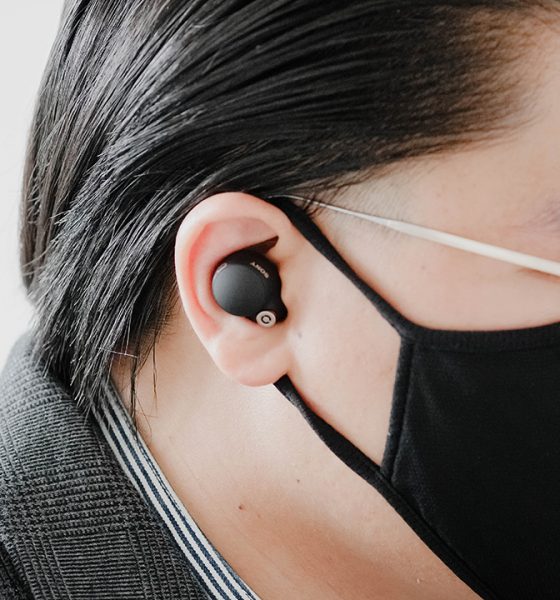

Almost two years ago, we saw Sony release their first “true wireless” Airpod-type earbuds with the WF-1000XM3. At the time, the XM3 really stood out for offering great noise cancellation along with the great audio quality we’ve come to expect from Sony’s most premium headphones.
Sony has its successor — the Sony-WF-1000XM4. But a lot has changed since then.
Apple now has the AirPods Pro which also boasts noise cancellation. There’s the Beats Studio Buds, QuietComfort Earbuds by Bose, Google even has their own Pixel buds, and pretty much every other smartphone manufacturer came out with their own earbuds.
Suddenly, the true wireless (TWS) earbuds scene is more crowded than ever.
A reputation of excellence
But Sony has a reputation to live up to. Their flagship WH-1000XM4 over-the-ear headphones is widely regarded as the best wireless headphones in the market. Even more than the nearly double-priced Apple Airpods Max. In fact, the only thing most reviewers could really find wrong with them (us included), was the annoying naming scheme Sony uses.
So when we saw the brand new Sony WF-1000XM4 earbuds announced — we really had our hopes up. How you do improve upon what was already one of the best all-round TWS earbuds?
Sony went right back to the drawing board to design a pair of earbuds that look quite different from their predecessors. The Sony WF-1000XM4 has an all new design and charging case that are much smaller, a new V1 chip audio processor for even better noise cancellation and audio quality, IPX4 water and sweat resistance, and they even have a new memory foam-like eartip material. All of these makes Sony’s offering the best pair of true wireless earbuds on the market, once again.
While we still have an annoying model name to deal with, the Sony WF-1000XM4 manages to stand out because of great audio quality, solid noise cancellation, along with being one of the most feature-packed and user-friendly wireless earbuds around.
Design and Build Quality

Our first impressions of the XM4 begin with the box. Sony switched to a new, very compact rectangular box that uses recycled packaging. It is plastic-free and made from a special blend of paper.
We aren’t fans of all the plastics we waste on larger packaging and were happy to see Sony switch to this more sustainable solution. It doesn’t give you the premium feeling you get when you purchase a high-end item. But once you move on to the actual earbuds themselves, things get much better.
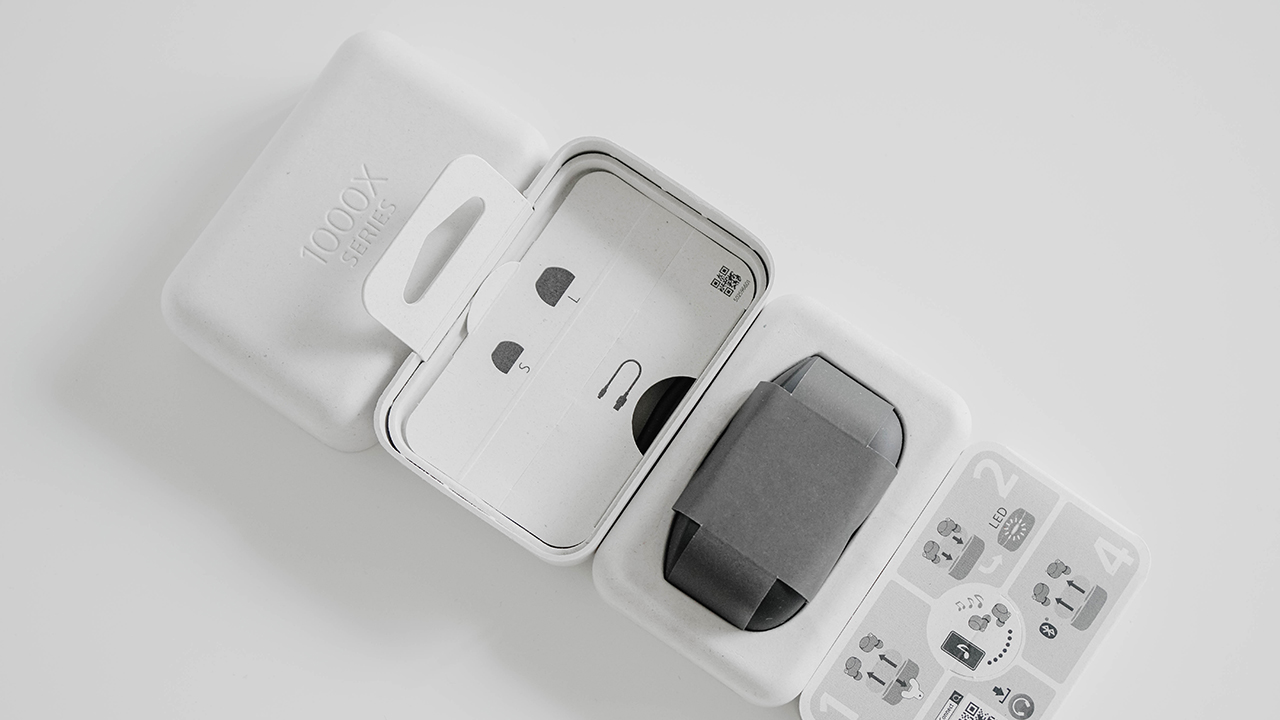
We got the black model to review, though the XM4 also comes in a nicer silver (light grey) color as well.
First up you’ll notice the new, smaller charging case that is 40 percent smaller than its predecessor. Much smaller than what we’ve seen with the Bose Earbuds. There’s a tiny status indicator light that lies right at the opening and glows green, orange, or red to indicate charge level.
At the top, you’ll just see that classic Sony branding printed in gold.
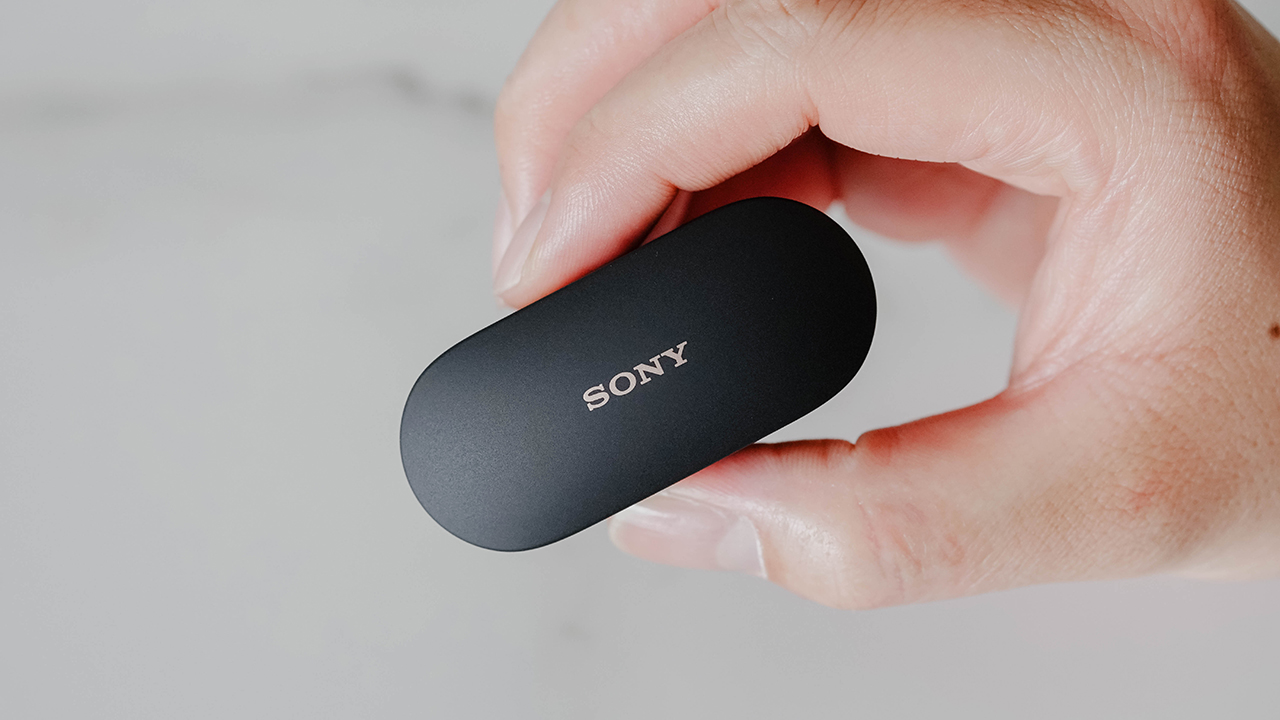
Flip to the back and you’ll see the hinge for the lid. The USB Type-C port is here which you’ll use to charge the case (which charges the earbuds).
Coming to the bottom, you’ll see the model information and various regulatory information along with the fact that these are made right here in Malaysia! Hooray!
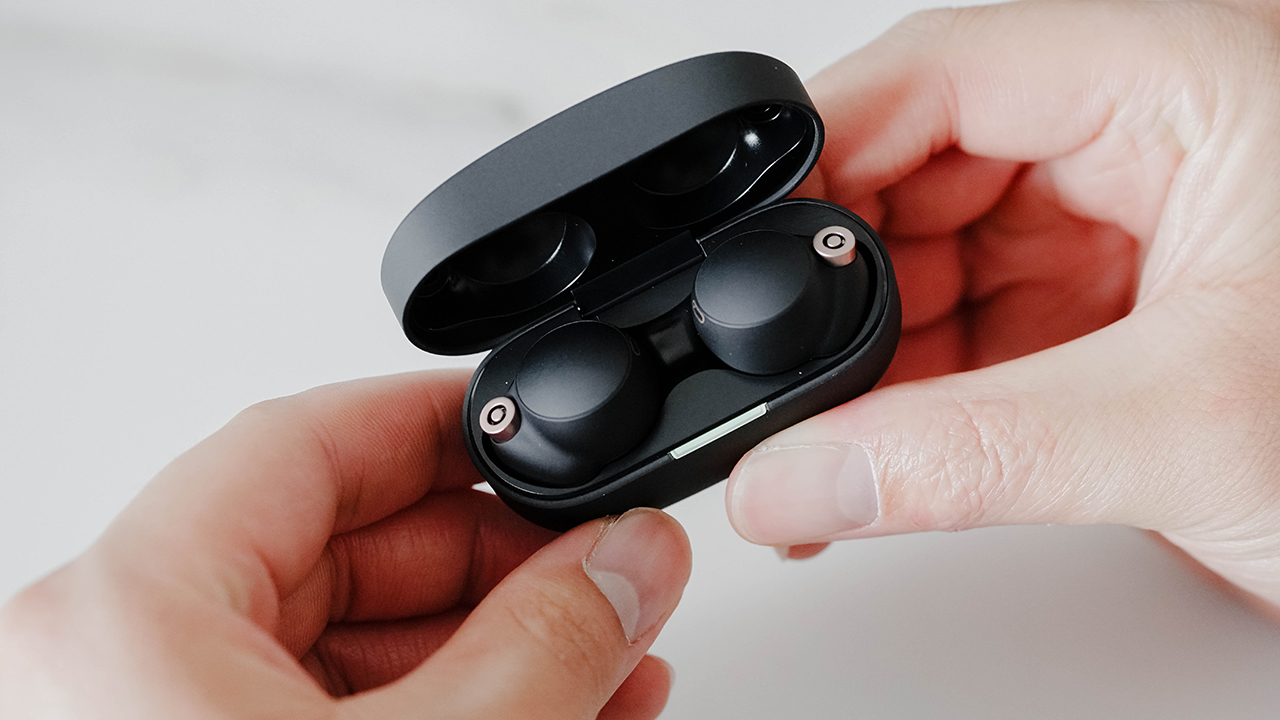
The entire case is made out of this really nice, matte finish hard plastic that feels quite premium and well built. Once you flip open the magnetic case, you’ll see the brand new, smaller earbud design of the Sony WF-1000XM4. The earbuds snap into the case magnetically and are held very securely in it.
Better fit
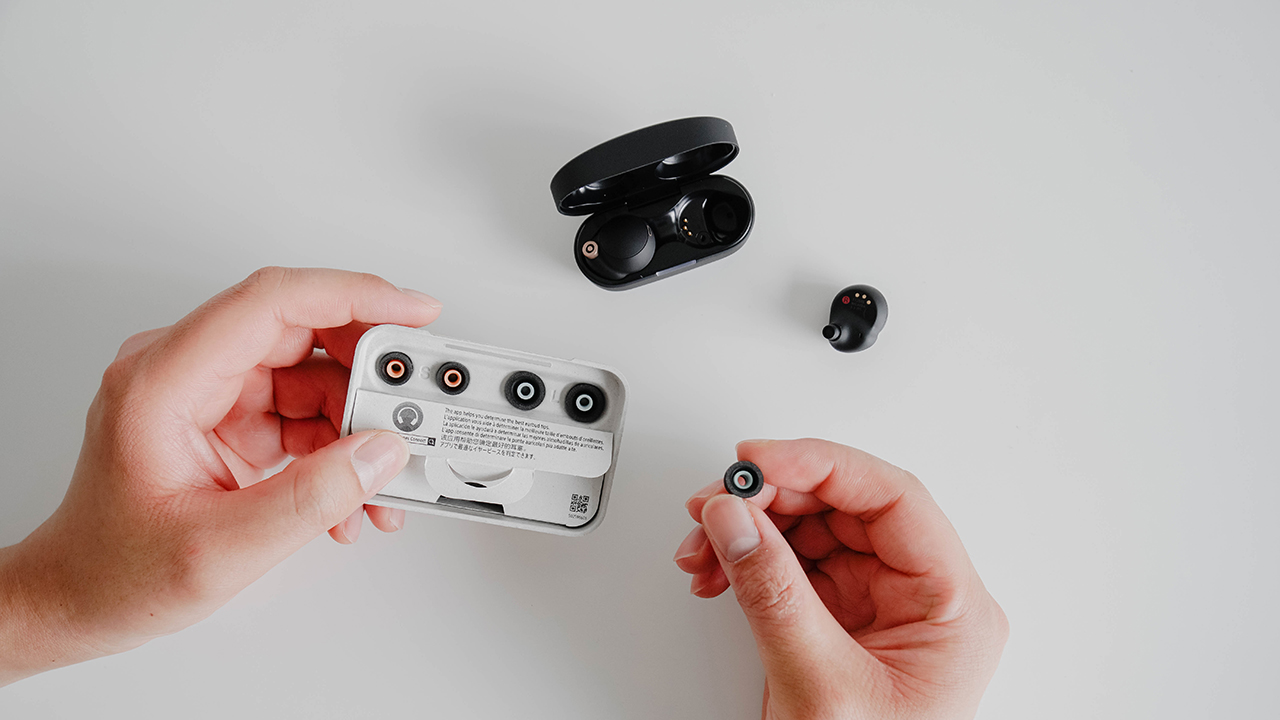
According to Sony, they went over customer feedback on the predecessor XM3. With research on the human ear and its various shapes and sizes, they created a round shape for the earbuds that sit more inside your ears.
You’ll see that same premium-feeling matte black finish on each earbud as well. It has these tiny hits of bronze accents around the microphone, the rear sensor, the SONY logo, and the charging pins.
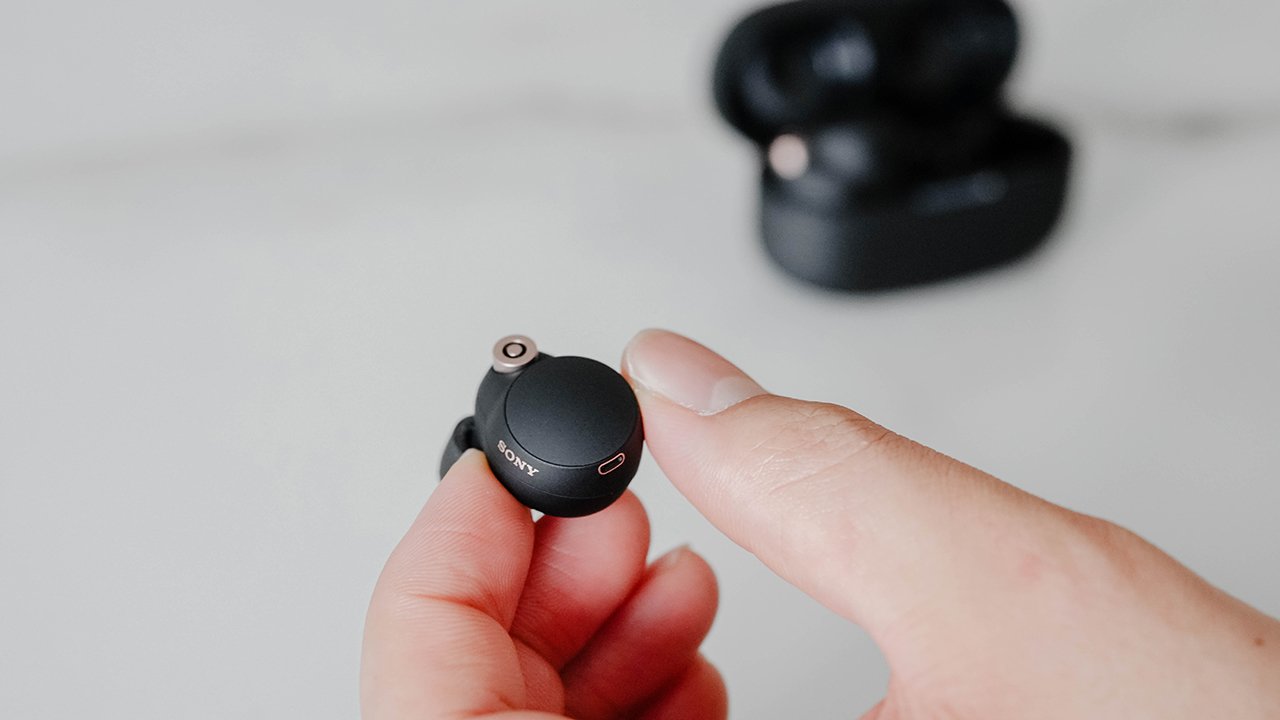
There’s this tiny pinhole for the microphones on the inside of the earbuds, next to what looks like it might be the bone conductor sensor or a tiny proximity sensor which detects whenever you take your earbuds off or put it on, and will automatically pause or play your music respectively.
The earbuds also have a L and R marking so that you know which is the left side earbud and which is the right side.
New eartips
Apart from that, the XM4 also boasts new eartips. It’s made from a memory-foam like polyurethane material., which sort of feels like a combination of the classic silicone tips we’re used to, and a new foam like material.
This material also apparently has tiny bubbles which are supposed to help dissipate and reduce noise. Sony says these will help secure a more stable, tighter fit that will ensure the earbuds stay in your ears and form a perfect seal for better audio quality and noise cancellation.

The only downside to this new eartip is that, unlike the XM3 which had six different ear-tip options, here you only get a set of small, medium, and large sized tips. These tips should last you a few years but Sony says you can purchase extra tips from them in case you lose one, or they wear out.
When you find the right eartip size for you, you’ll see how they are quite comfortable even over a long listening sessions.
Fit test
To help you make sure that you have the perfect fitting eartips, Sony has a new “air tightness test” available in their Headphones Connect app (iOS and Android). It plays a test tone to test out the seal with the foam in your ears, and reports back on whether you should move to a larger or smaller ear-tip.
Just like the AirPods Pro, it is recommended to run this test when you first connect the XM4 to your phone. This waytyou can avoid wearing the wrong sized eartips which might allow for outside noises to leak in, or make the bass feel less powerful.
Quick controls
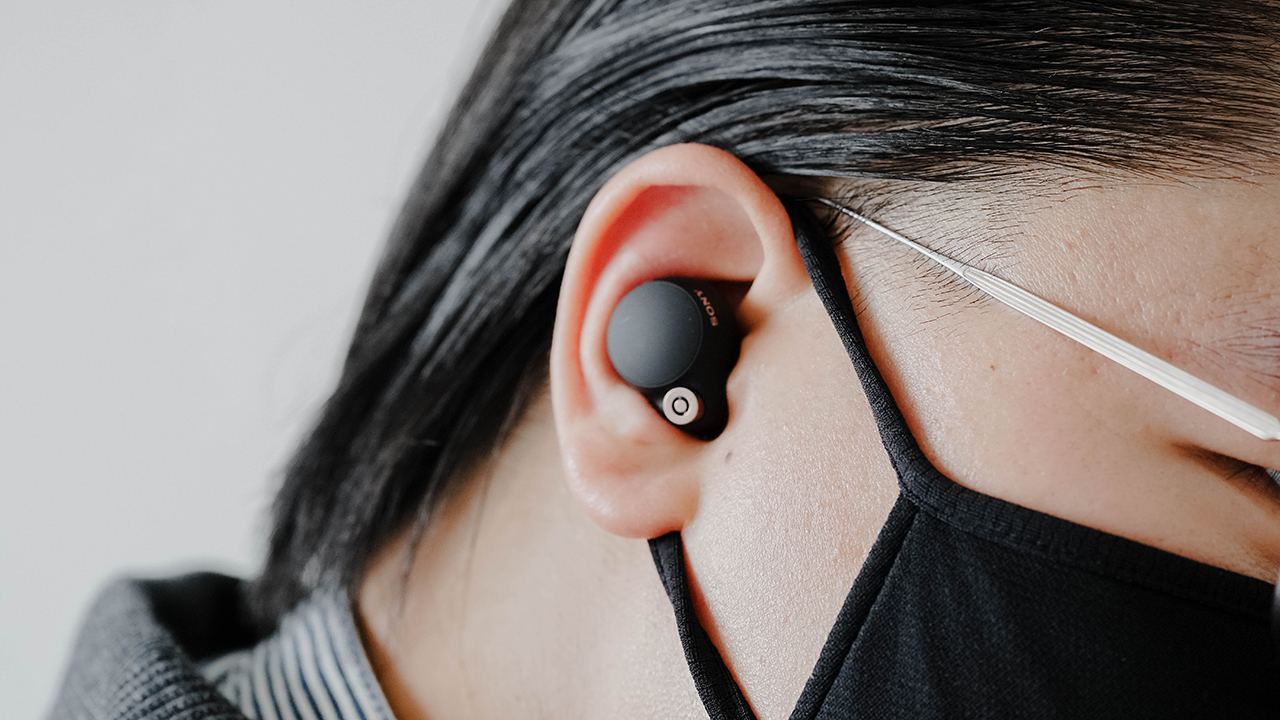
Just like its bigger, over-the-ears model, the Sony WF-1000XM4 is incredibly feature-packed, as you would expect for a pair of true wireless earbuds in this price range.
The circular surface on the outside of each earbud are touchpads. You can use taps or short/long presses to control volume, playback, or switch between noise-cancelling or ambient sound modes.
You can customize these gestures using Sony’s Headphones Connect app (iOS & Android), and the earbuds are quick to respond to each gesture.
Speak-to-chat
There’s also support for Sony’s “Speak-to-Chat” feature which will automatically turn down the volume and noise cancellation whenever you start to talk, so that you can effortlessly have conversations without having to take off the earbuds.
This feature works pretty well, but only triggers about a second after you start talking. So, in case you’d rather switch off the voice trigger, Sony allows you to use a similar “Quick Attention” gesture feature which uses a manual long-press on the left earbud instead.
Similarly, turning off the voice trigger is recommended in case you have a tendency to break into a spontaneous private karaoke session when you’re listening to a song while working from home.
Audio quality improvements
But there’s even more tech to impress you within the XM4. These include a new integrated “V1” processor unit which powers an improved DAC, and analogue amplifier, which Sony claims allows for clearer sound, and much better noise-cancellation than its predecessor. And from my experience, that claim is absolutely true.
There’s also Sony’s DSEE Extreme audio engine with “Edge-AI”, which magically allows the earbuds to upscale low-bitrate audio files to much better sounding hi-res quality. We first saw this used on the flagship Sony WH-1000XM4 earlier this year.
While there’s no aptX HD support this time, the XM4 does support Sony’s LDAC format instead, which allows hi-res audio files up to 24-bit/96kHz to be streamed over Bluetooth at data rates of up to 990kbps, provided its coming from a compatible source. Sadly, this does not include the iPhone.
Call quality
The XM4 also boasts clearer call quality with features like a new bone conductor sensor that stops the microphone from picking up any random ambient sounds while you’re talking or moving around. There’s also Sony’s new beamforming advanced speech reinforcement technology and an automatic wind noise reduction mode. These are all thanks to Sony’s Precise Voice Pickup technology, which we first saw on the over-the-ear type WH-1000XM4.
As a result, the XM4 actually does a pretty decent job at handling call quality, and blocking outside noise or interferences so that only your voice filters through loud and clear for the person on the other end of the line.
That being said, people we called said we sounded a little muffled vs when we used the AirPods Pro which might be because the XM4 doesn’t have those stems for the microphones that the AirPods do. So maybe, these aren’t as great for calls as the AirPods are, but there’s a chance Sony could improve these ever so slightly via software updates.
Pairing
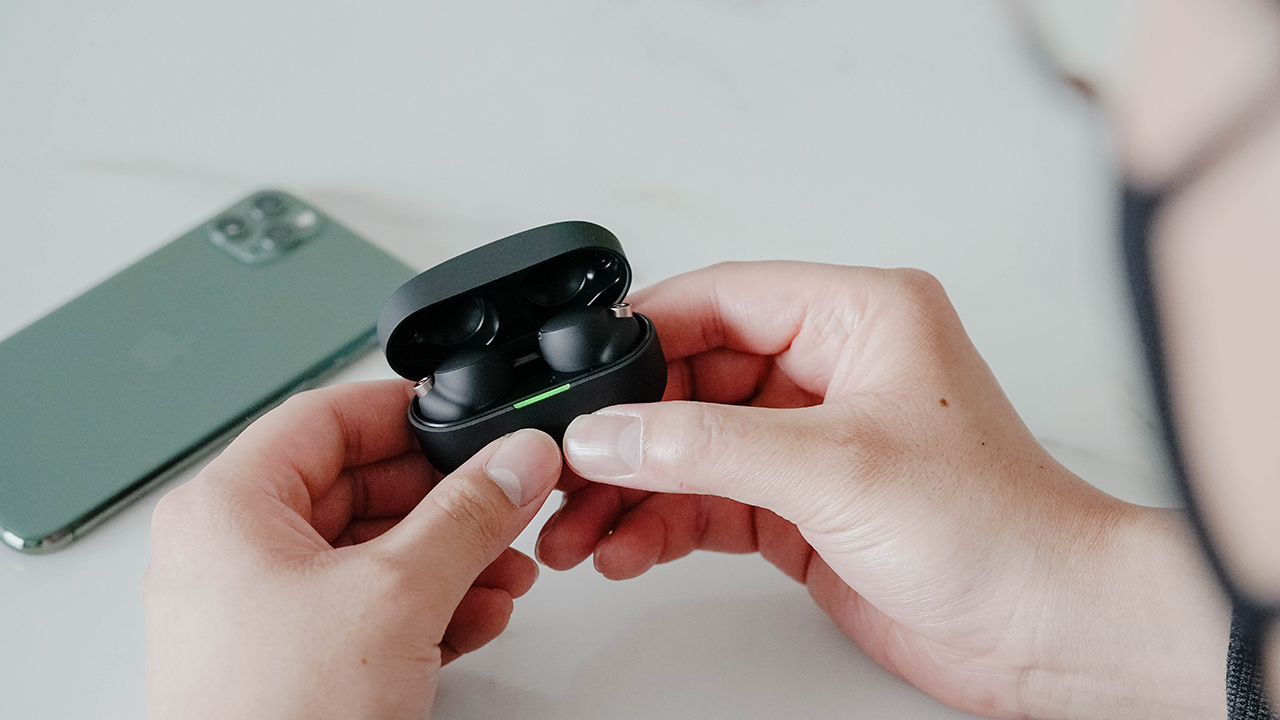
In terms of pairing, if you have an Android phone you’ll be happy to know that that the XM4 supports Fast Pair so connecting them to your phone happens in a matter of seconds. You’ll even be able to see battery information whenever they’re switched on.
Unsurprisingly, the experience on iOS is a bit different. Pairing happens the old fashioned way of manually going into your bluetooth settings and connecting to the earbuds.
Unfortunately Sony did not include bluetooth multi-point support on the WF-1000XM4, so you can’t connect to two different devices simultaneously which is a bummer if you plan on using these with multiple devices like your laptop and your smartphone or tablet. You can still switch between them manually, of course, but its a bit inconvenient. Hopefully Sony manages to bring it in with a software update in the coming months.
360 Reality Audio, other features

There’s support for Sony’s 360 Reality Audio as well for compatible streaming services like Tidal and Deezer. Setting it up is a tiny bit tedious because you need to take a photo of each ear in the headphones app which Sony will use to “optimize” the sound.
We used the XM4s with a OnePlus 9, an iPhone 11 Pro, and a Macbook Pro and the connection was always stable with no dropouts or interferences.
In terms of tech specs, the XM4 uses Bluetooth 5.2, and supports voice assistants like Google Assistant or Amazon’s Alexa. No Siri support here “officially” but you can still trigger it on an iPhone by just tap-and-holding the right earbud.
Lastly, if you were thinking about using these for running or at the gym, you’ll be happy to know that the XM4 boasts an IPX4 rating. This means they are sweat and water resistant — something that was missing from its predecessor, and is hugely appreciated.
While we do feel like these are overkill for using as running earbuds, if you’re going to pay this much for a pair of earphones you might as well use them as much as possible, right?
Audio Quality
The Sony WF-1000XM4 boasts a 6mm driver used inside, which is similar in size to its predecessor. But in this generation, it is made from an entirely new material and uses a larger magnet. Sony claims these help improve the overall audio quality and noise cancellation capabilities of the earphones especially in regard to lower frequencies.
And honestly, audio quality on the XM4s is glorious.
Starting with the way the earphones handle bass, there’s an immense level of audio detail with stunning audio quality and clarity at low frequencies. By comparison the Bose QC Earbuds almost sounded muffled.
For any kind of music
We listened to a wide range of music from Doja Cat to LANY to Daft Punk to The Rolling Stones to Frank Sinatra to Michael Jackson, and everything in between.
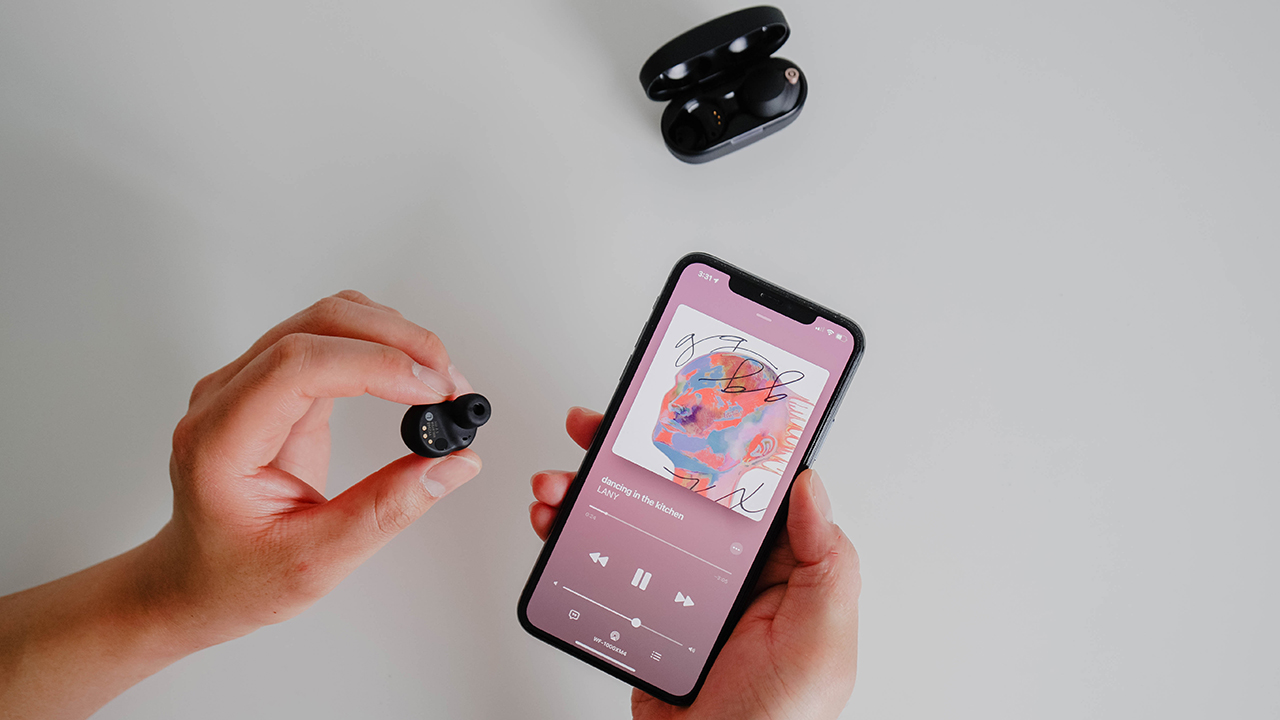
Even the most bass heavy tracks sounded fantastic, with each note and each beat coming in nice and clear. You can hear every element and intricacy of each note and every pulse of the bassline. Its a clarity that we didn’t realize we were missing out on, with our AirPods Pro.
But its not just all about the bass here. There’s clear audio across all frequencies of a music track. The XM4 can switch paces to handle any type of music effortlessly. Even a slower song with mainly vocals like “Its Oh So Quiet” by Bjork, will still allow these earbuds to completely captivate you. Sony has just done an amazing job here.
Better than the competition
Compared to its predecessor, the XM4 is a definite huge step up. If you’re happy with the older XM3 there’s no major reason apart from better audio clarity with clearer details and better battery life to switch to these.
But if you’re on the market for the best sounding, noise cancelling true wireless earbuds, the Sony XM4 is pretty much it. Compared to the Bose QC Earbuds and the Sennheiser Momentum True Wireless, the Sony XM4 boasts a more refined sound with better defined bass notes and overall just a better, more balanced audio experience.
Equalizer on the app
If all of that wasn’t enough, the Sony Headphones Connect app also does have an equalizer built-in, in case you want to try customizing your sound even more. The great noise cancellation is yet another major advantage for the XM4, managing an experience that is close to Sony’s Over-the-ear XM4s.
That is pretty much excellence across the board. There’s just no better audio and noise cancellation on a pair of true wireless earbuds right now.
This is also due to the memory foam-like material Sony is using in the ear-tips here which forms a great seal with your ear canal, so that the isolation blocks out most noises before the XM4’s ANC unit even has to.
Of course if the Active Noise Cancellation feels a bit suffocating, you can tap to turn it off, or switch to the “ambient noise” mode which will allow some environmental sounds to filter through.
Sony’s Headphones Connect app will even learn your locations and how you use your earphones so that it can switch on active noise cancellation while you’re commuting to work, but can switch to ambient noise mode at work or at home.
Battery Life and Charging
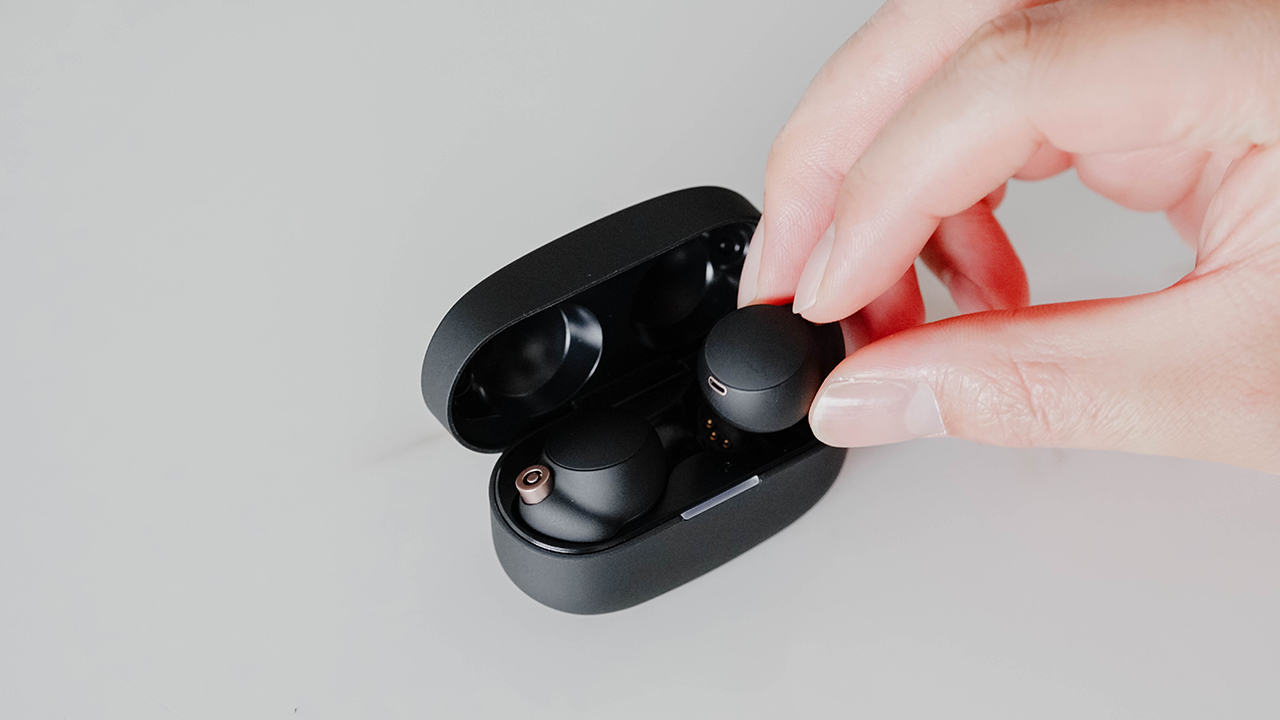
The case for the Sony XM4s charges via USB Type-C and also supports wireless charging as well (for the first time with Sony headphones) as long as you have a compatible Qi charging pad.
Battery life is something you’ll honestly never have to worry about much with the XM4. While the case is smaller and more portable, battery life has improved even more vs the older XM3.
You can now get up to eight hours of music playback with noise cancellation switched on, and the case can supply an additional 16 hours of battery life via charging.
That means the Sony WF-1000XM4 has the best battery life in the segment, vs its competitors like the AirPods Pro (up to 5 hours), the Bose QC Earbuds (up to 6 hours), and Sennheiser Momentum True Wireless (up to 6.5 hours). Honestly, how Sony managed to do it, is just pure wizardry.
Of course, if you want even better battery life out of the XM4s, you can switch off the noise-cancellation which will give you up to 12 hours of audio on a single charge, and up to 24 hours with the charging case. Sony’s also stated that a quick five-minute charge will give you about one hour of music playback too, which is awesome for those urgent situations.
While we were incredibly impressed with the audio quality and the noise cancellation, the fantastic battery life is just the piece de resistance on top of everything else.
Monitoring battery life
You can monitor the battery life remaining in the case and the buds via Sony’s Headphones Connect app, which will also alert you if the case drops below 30 percent charge. This is the only slight inconvenience you’ll have, if you’re an iPhone user. With the AirPods pro you could always just open the case to see a pop-up on remaining battery life on your iPhone. To get around this, you could always add the battery widget for iOS which will show you the remaining battery life on the XM4.
On an Android smartphone, things are the usual as with any other pair of earbuds.
Overall, battery life on the Sony WF-1000XM4 is fantastic. On a really music-and-call intensive day, it was still easily able to give us about an entire day of battery life.
Price and availability
The “1000XM_” models are Sony’s most premium headphones, so its not surprising that the WF-1000XM4 lies at the more premiumly priced side of the market.
The Sony WF-1000XM4 is priced at US$ 280 in the US, SG$ 379 in Singapore, and MYR 1099 here in Malaysia.
That puts them in the same price range as the Apple AirPods Pro (US$ 250), Bose QuietComfort Earbuds (US$ 280), and Sennheiser Momentum True Wireless 2 (US$ 299).
Is the Sony WF-1000XM4 your GadgetMatch?

Sony has absolutely done a fantastic job here. Not only are the XM4s smaller, lighter and have better battery life than its predecessor, but the new features and better audio quality makes you wonder what could Sony possibly improve upon with the next successor.
The XM4 delivers an incredibly satisfying experience, with stunning sound, some of the best noise cancelling you’ll hear in the segment, and the longest battery life in true wireless earbuds so far.
The Sony WF-1000XM4 not only raises the bar for true wireless earbuds to become the new benchmark, they are also the most versatile premium earphones from Sony yet. A reminder from Sony that there’s a reason that they’ve been in the audio industry for decades.
Whether it’s going on a run, blocking out the terrible music at the gym, your daily commute, or taking a flight, the new SONY WF-1000XM4 can effortlessly handle all of it
So are they worth the price tag? Well, it’s a lot of money, but consider it an investment into what will be the best noise cancelling earbuds you can find right now.
If you’re not a fan of true wireless earbuds and you prefer over-the-ear type headphones instead, there’s still the Sony WH-1000XM4 which remains the best noise cancelling headphones in the market. But if you’re looking for the best true wireless earbuds, the Sony WF-1000XM4 is it.
Definitely deserves the GadgetMatch seal of approval.






Accessories
70mai launches the A900 series with 4K front, rear recording
Two new 4K dual-channel dash cams, both with 4G

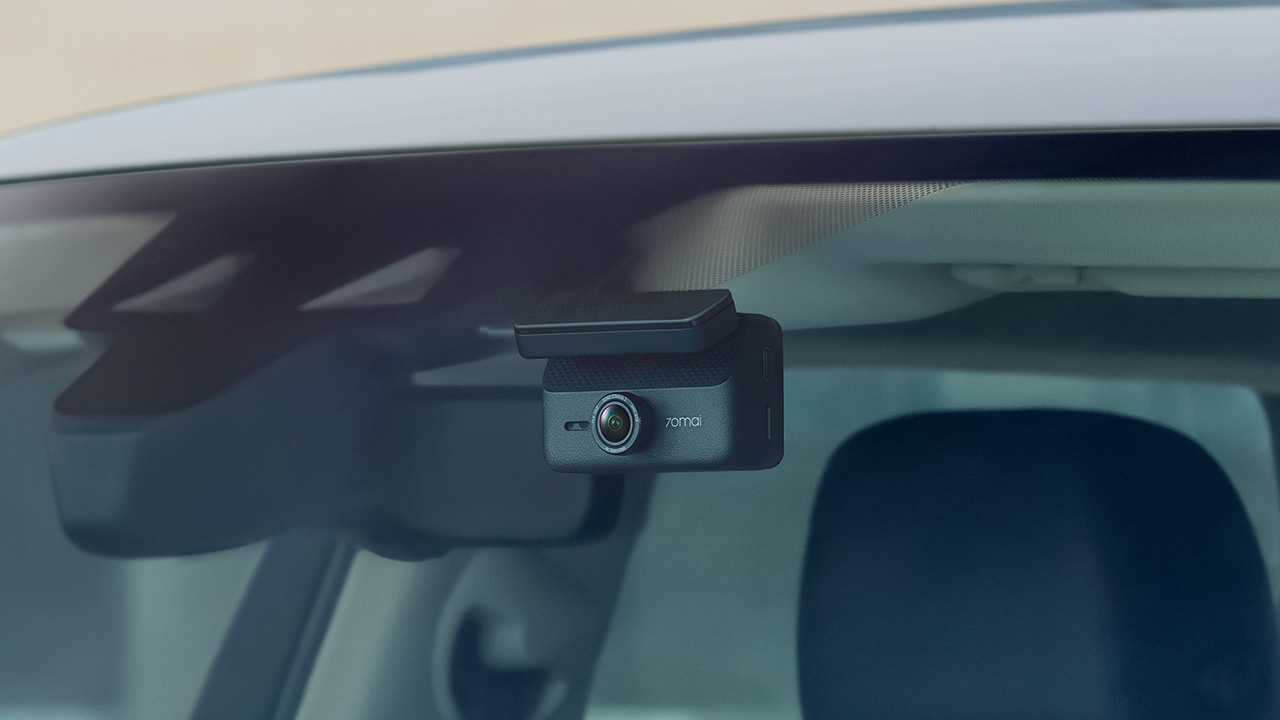
70mai has launched the A900 Series, led by the flagship 70mai Dash Cam 4K A900 Ultra, with the 70mai Dash Cam 4K A900 joining it in the lineup.
Both models record in 4K from the front and rear cameras, and both support 4G, so your footage stays reachable from your phone even when you’re away from the car.
4K recording from both cameras
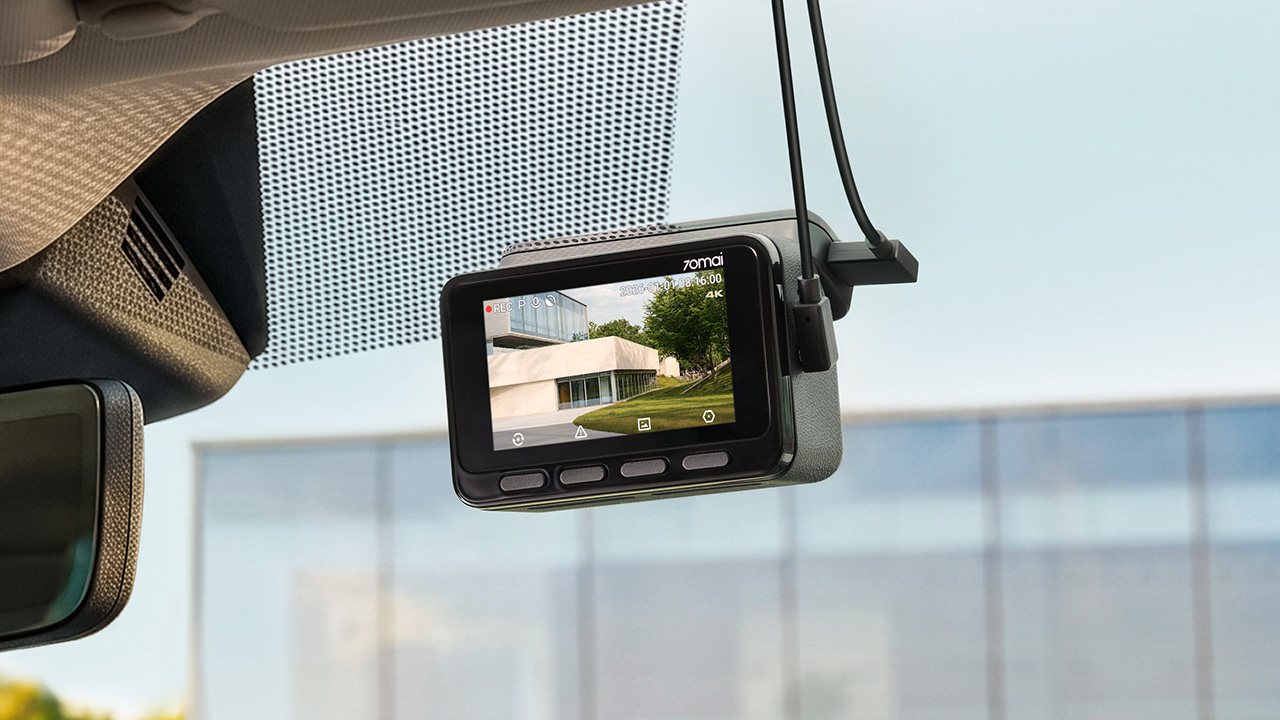
The A900 Ultra uses dual Sony STARVIS 2 IMX678 sensors to capture clear 4K footage from both directions. As a result, details like license plates and road signs remain sharp.
Smart HDR balances bright and dark areas under shifting light. Users can also adjust color tones and contrast. To keep feeds synced, the rear camera uses LVDS digital transmission. This tech sends a lossless 4K feed with just 20ms of latency.
Handling changing light
Driving into a tunnel or under the shadow of a tall building changes the lighting quickly, and 70mai built three imaging technologies into the A900 Ultra to deal with it.
MaiColor Vivid+ Solution 2.0 is meant to give more natural colors and finer detail, along with smarter scene adaptation. Night Owl Vision 2.0 reduces noise and glare to help with nighttime clarity.
Lumi Vision is made for parking surveillance in near-total darkness, where it automatically adjusts exposure and gain and applies noise reduction. 70mai says this produces clear, full-color footage in extremely low light.
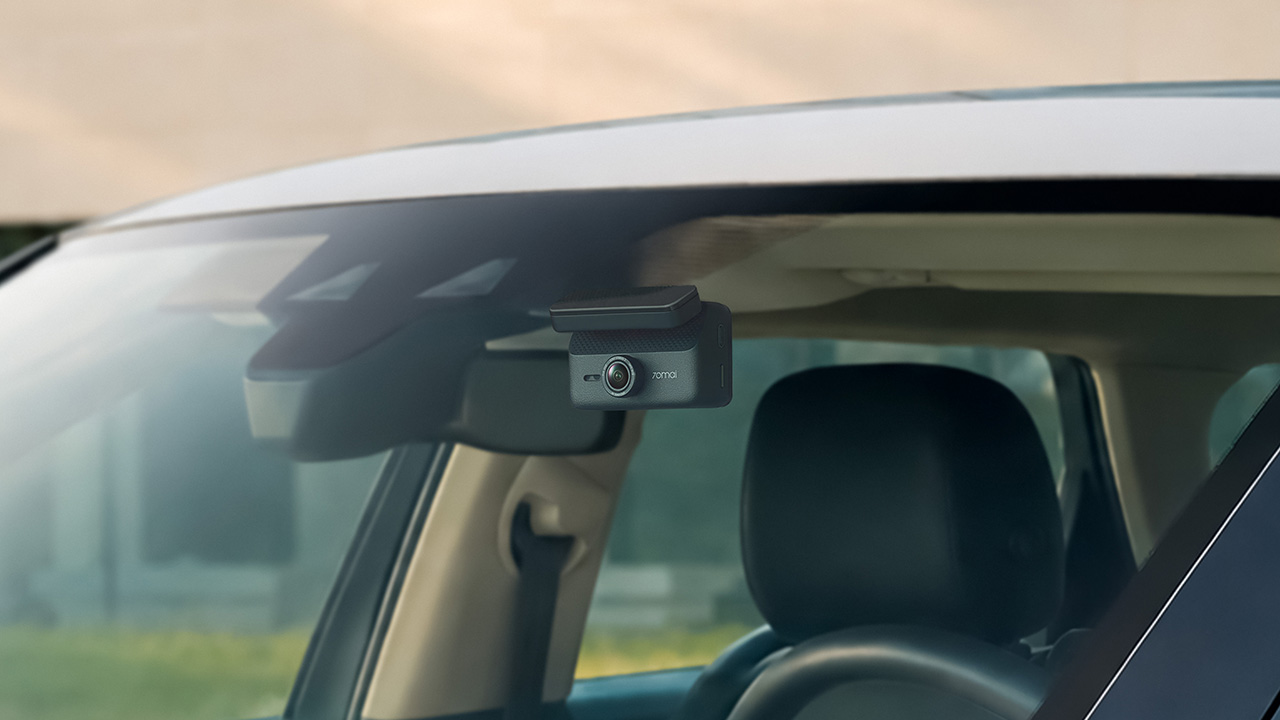
Parking mode and remote access
Smart Parking Guardian Mode 2.0 protects your vehicle while parked. It combines AI motion detection, dual-channel collision detection with pre-recording, and time-lapse options.
The system draws just 5mA on standby to prevent battery drain. For extended coverage, the optional 70mai Battery Pack Mini powers surveillance for up to 30 days.
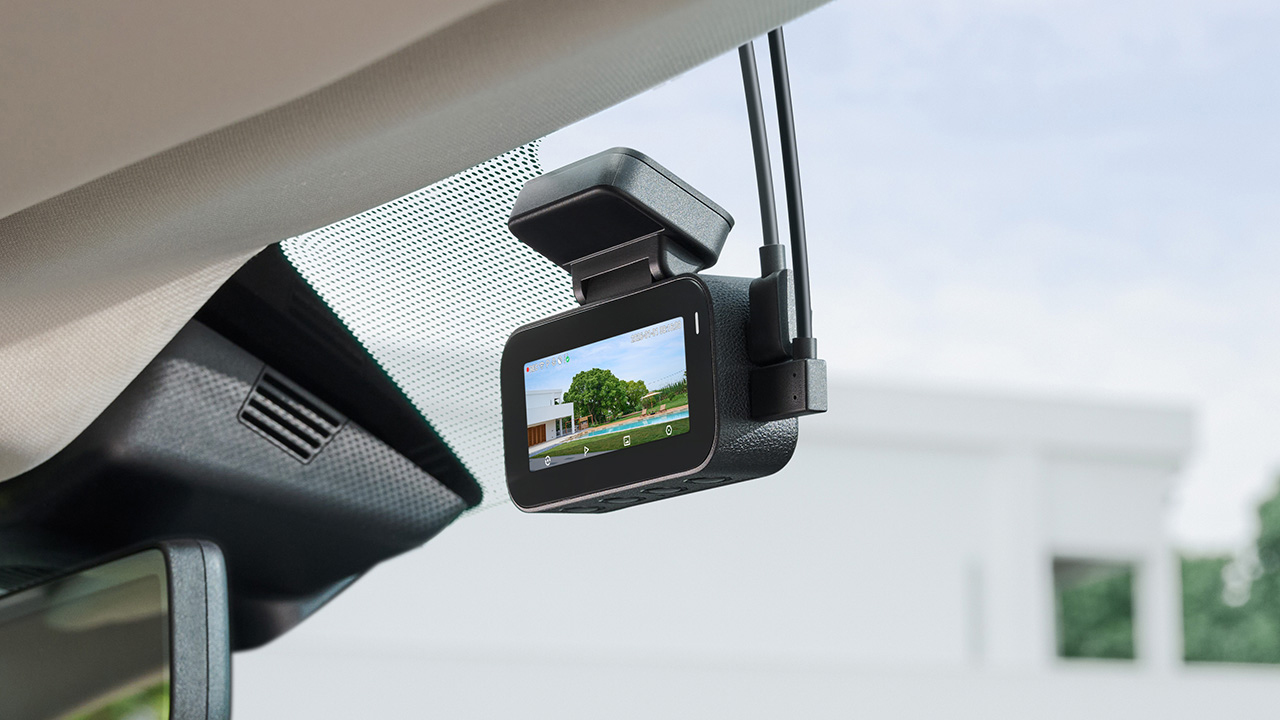
In photo: A900
Pairing the camera with the 4G Hardwire Kit unlocks 70mai 4G Cloud+ 2.0 features on the app. Enhanced Buffered Emergency Recording saves up to 190 seconds before an incident and 30 seconds after.
It automatically uploads this footage to the cloud for immediate remote viewing.
The 70mai Dash Cam 4K A900
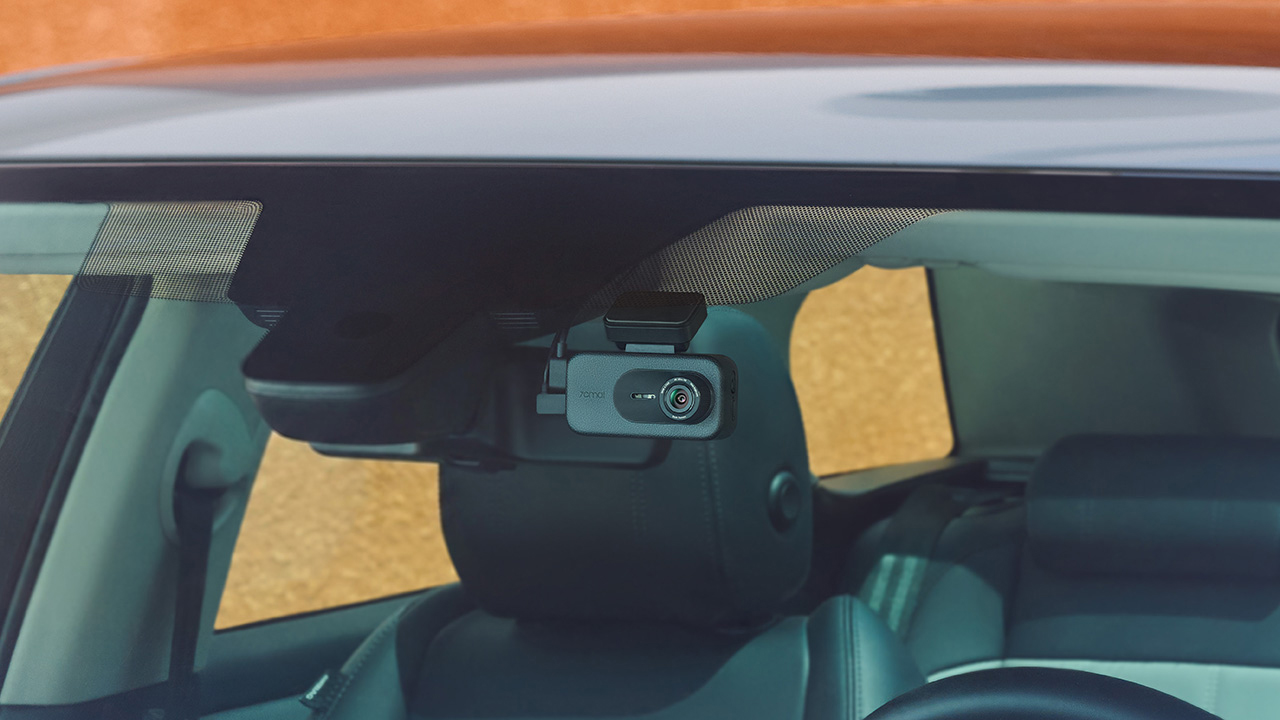
In photo: A900
The A900 sits alongside the Ultra as the more accessible option. It records True 4K HDR at 30FPS from both the front and rear cameras, and Smart HDR can be scheduled to turn on at set times.
Its f/1.55 aperture is meant to help in low light, and 4G Cloud+ 2.0 keeps the dash cam connected to the 70mai App. It’s the model for drivers who want dual-channel recording and 4G connectivity at a lower price.
The 70mai Dash Cam 4K A900 Ultra retails for US$ 300, available for pre-order at US$ 240. Meanwhile, the A900 is priced at US$ 200, currently 20% off at US$ 170.
Accessories
Manila turns up the volume at COVE
Sony Philippines launched its ULT TOWER lineup at Beyond the Beat, with SB19 joining the ULT Squad.

Sound and style shared the floor at COVE Manila in Okada Manila. Sony Philippines opened its doors for Beyond the Beat: The Next-Level ULT POWER SOUND Experience.
The event marked the company’s biggest ULT POWER SOUND launch in the country, and Sony paced the program like an exclusive night out.
Stacked ULT Towers filled the space. Guests styled themselves with designer pieces from Alser Lumawag, and SB19 closed the evening as the newest Sony ULT Squad members.

MySony members from every tier joined industry guests while the new ULT TOWER lineup set the tempo.
The towers take center stage
Shuhei Sugihara, Sony Philippines’ President and Managing Director, opened the program.

Product Marketing Specialist Keira Ambubuyog then introduced the newest additions to the lineup.

Arbie Bandiling of Personal Audio Systems unveiled the latest ULT Squad video. The clip introduced the artists and personalities fronting the campaign.
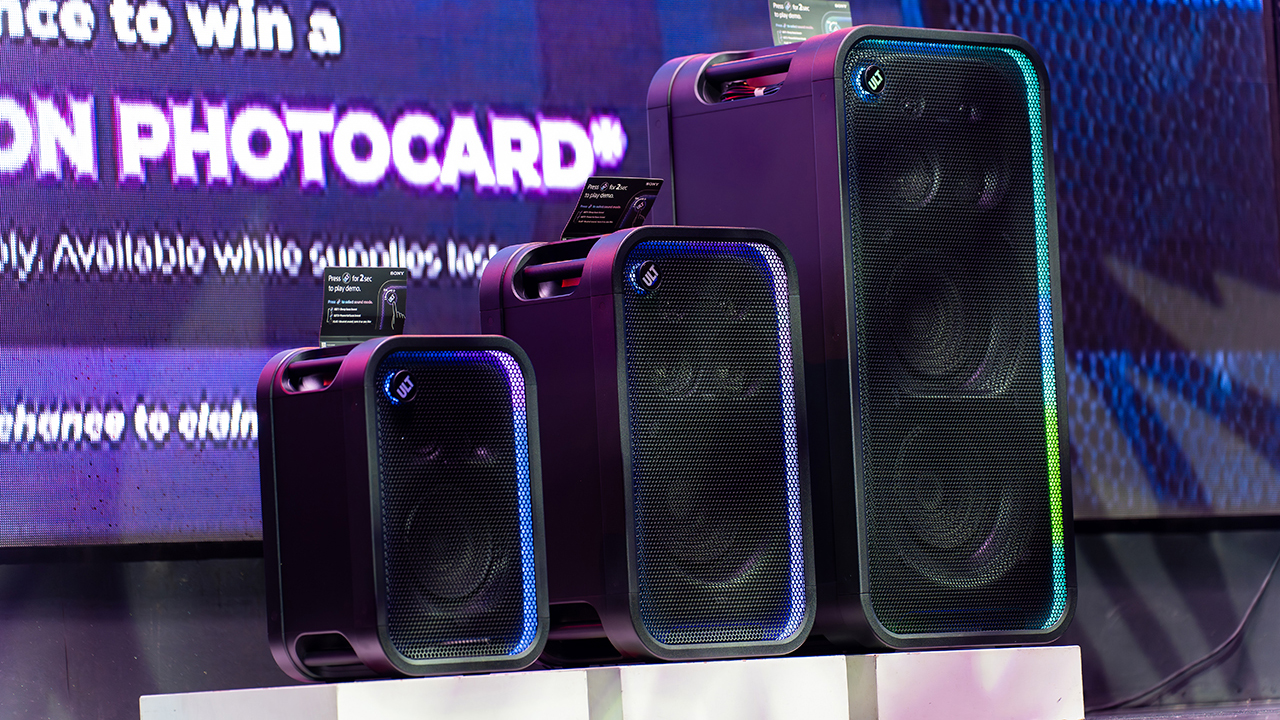
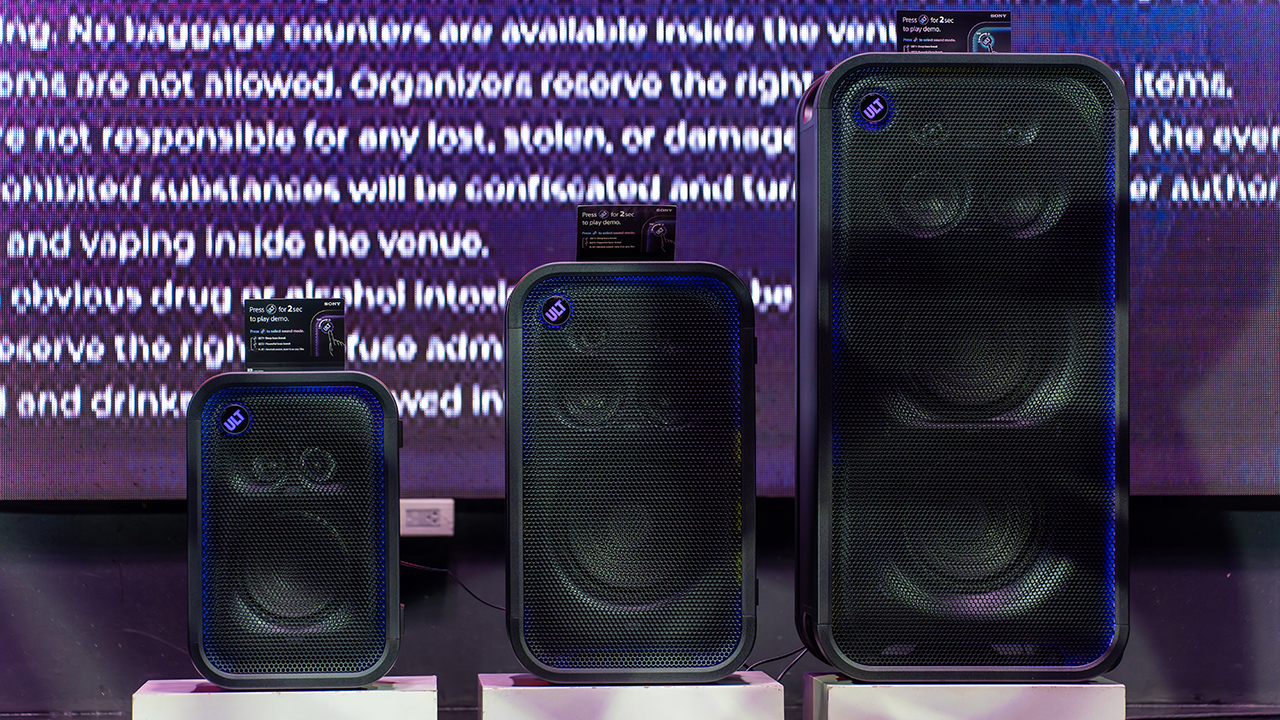
The lineup features the ULT TOWER 5, ULT TOWER 7, and ULT TOWER MAX. The new series pairs large circular woofers and high-capacity cabinets with ULT DUCT technology.
This design delivers stronger low-frequency bass than earlier models. The ULT TOWER MAX leads the series, described as Sony’s most powerful bass speaker yet.
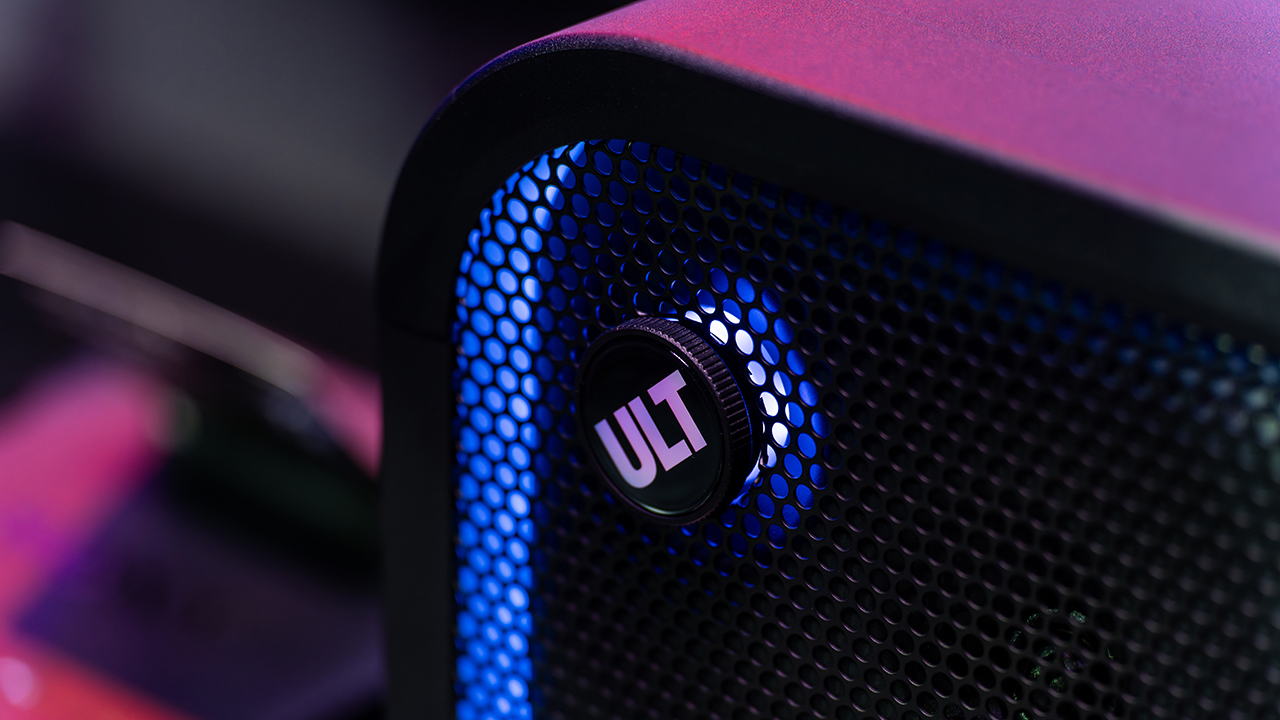
On another note, Sony pitches the ULT TOWER 7 as stage-worthy sound in a portable frame. Meanwhile, the compact ULT TOWER 5 targets smaller gatherings and features karaoke and DJ capabilities.
Experiential zones bring the sound to life
Guests explored the lineup across several interactive event zones. Step into the Beat paired an arcade-inspired setup with stacked ULT Towers and a dance pad. ULT Selfie Club handled photo ops.
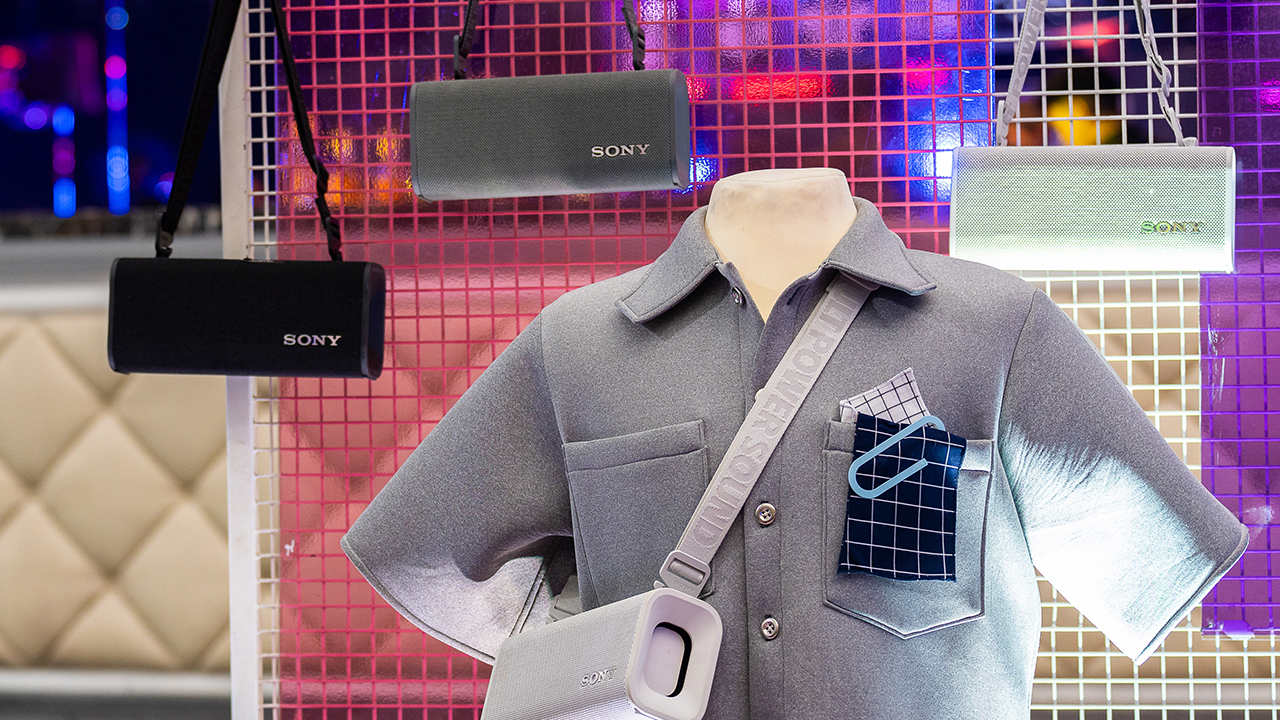
Nearby, ULT Cover Star let guests style ULT Field speakers alongside designer pieces from Alser Lumawag. Here, the speakers served as chic fashion accessories.

The Bass District gave VIPs and influencers a private, nightlife-inspired lounge. Karaoke Lounges invited everyone else to grab a mic and test the party-ready towers firsthand.
The ULT Squad shows up


Fashion influencer and ULT Squad member Angelique Manto-Guison hosted the night.
A-Team opened the show with a high-energy routine before Carlos Serrano III took the stage. David Guison and Jacqueline Jala walked the stage with ULT Models in elevated fashion, and Jeremy G followed with a dynamic musical performance.



KAIA brought a youthful pop sound, while Maki delivered a set in his signature style.
SB19 closed the night, making their debut as the newest Sony ULT Squad members. Sony pairs its sound technology with the group’s influence in Filipino music. This collaboration positions the Squad as a platform for artists shaping contemporary music culture.
The ULT TOWER MAX, ULT TOWER 7, and ULT TOWER 5 are now available at Sony Centres and authorized dealers nationwide.
Accessories
Jackery Explorer 300D: Power and portability in one
Uninterrupted workflows for digital nomads, freelance creatives, more

For digital nomads, freelance creatives, and even work-from-home professionals, staying productive on the move means carrying around multiple gadgets, cords, adapters, and power banks to survive the day.
Having to carry such weight, quite literally, is vital for maintaining workflow continuity.
For a more seamless experience and to have just one extra portable device to power all working parts, there’s the Jackery Explorer 300D.
Launched just last month, this grab-and-go offering from Jackery is designed for the modern lifestyle.
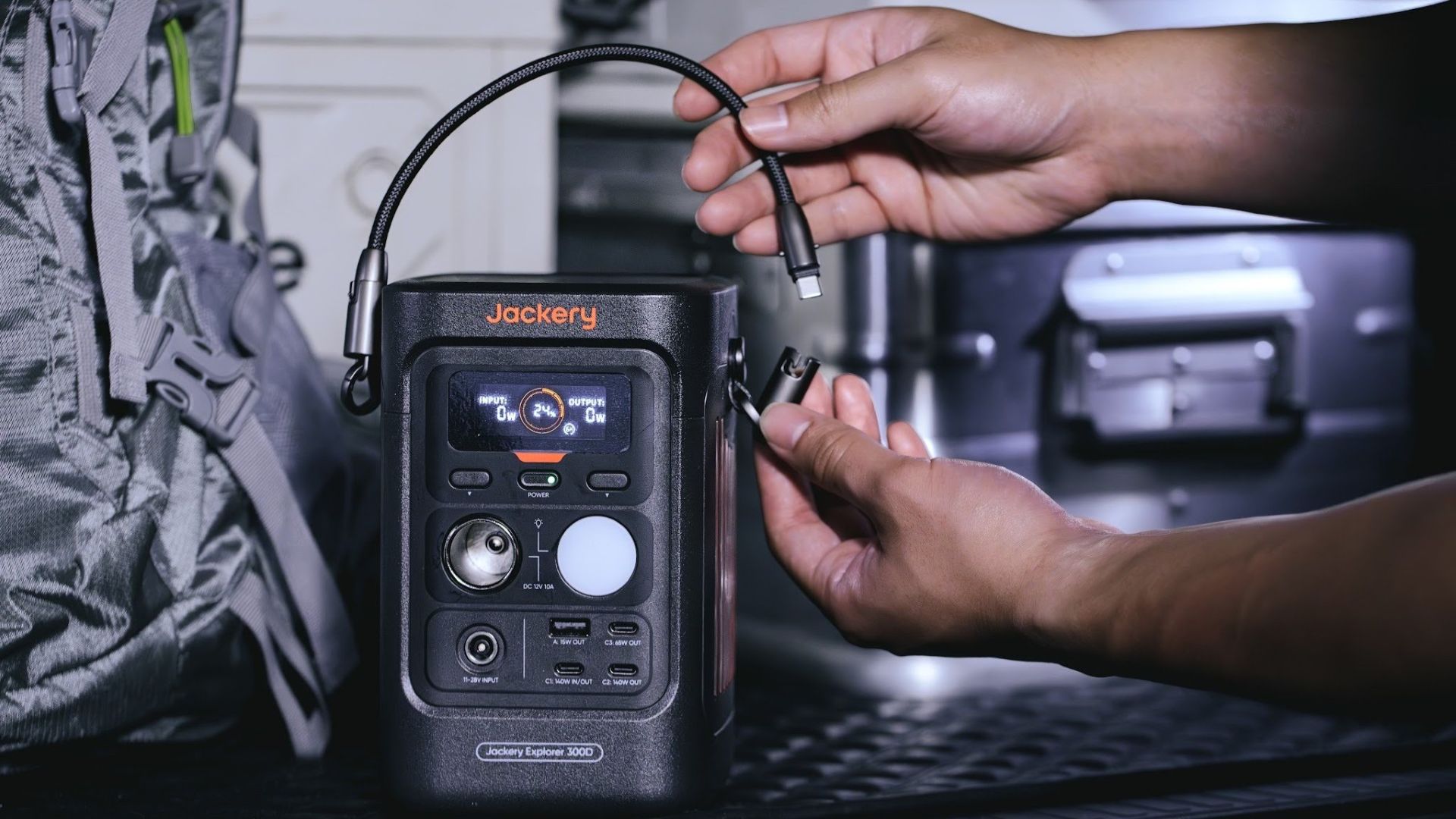
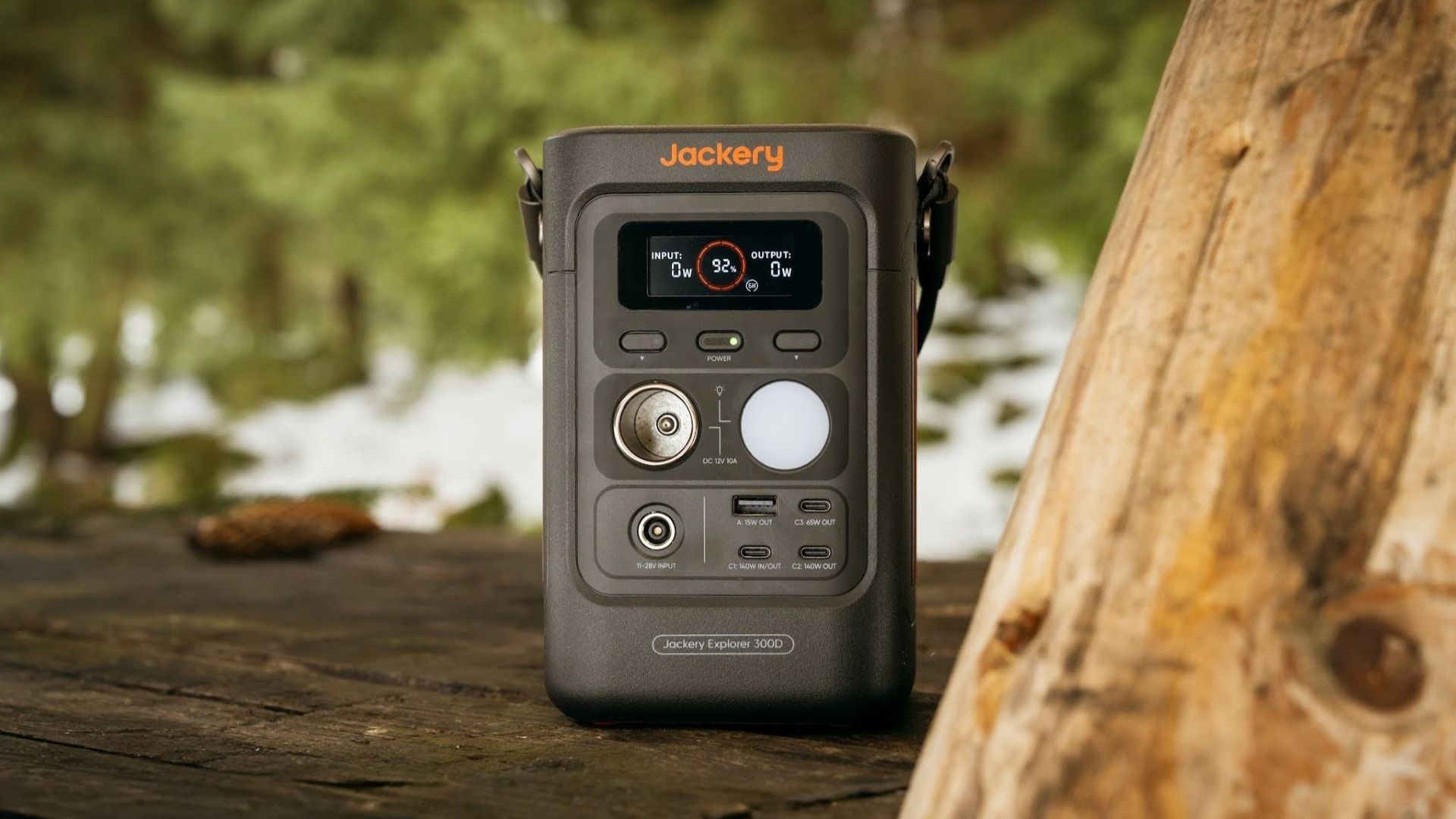
It moves away from Jackery’s traditional aesthetic with a sleek, speaker-like form factor. It weighs just 2.5 kilograms and is 64% smaller than standard 300W units in the market.
This ultra-compact size was made possible by a smart engineering choice of swapping bulky traditional AC wall outlets for highly efficient DC-only and USB-C ports — which also helps eliminate idle power loss.
With a 288Wh capacity, the Jackery Explorer 300D holds enough juice for up to nine power banks.
It can keep a Type-C fast-charging laptop for up to three to four full cycles, a Wi-Fi router alive for hours, and recharge cameras or drone batteries up to five times for a lengthy production day.
For smaller gadgets like smartphones and portable fans, the power station can juice them up for up to 22 times.

It can even charge five devices simultaneously with a total of three USB-C ports, a USB-A port, and a DC 12V car charger port.
All these ensure users are never disconnected, wherever they may set up their mobile office.
Another brilliant touch is the two-in-one shoulder strap that easily unclips to double as a heavy-duty 140W USB-C charging cable.
The everyday carry is available via Lazada and Shopee, and at the official Jackery kiosk in SM Fairview, as well as other partner stores.


DJI Lito X1 review: Is this the best lightweight drone for creators?
Making a strong case as a travel companion and a capable B-cam!


REDMI Note 17 Pro Max review: A new breed born from AI greed
Welcome to the new normal


Marvel’s Wolverine review: When the claws come out
A brutal, cinematic superhero adventure

70mai launches the A900 series with 4K front, rear recording

Dune: Awakening makes it way to the PS5 and Xbox Series X

The Kia EV3 brings gallery-worthy design in a compact electric form

vivo introduces OriginOS 7 with smarter multitasking and AI features

vivo X500 Series launches with major imaging upgrades

realme 16T 5G with 8000mAh battery, IP69 Pro rating launches in PH

HUAWEI Pura X View is 2026’s first WIDE slab-type smartphone

REDMI reveals the refreshed Note 17 and Note 17 Pro series

REDMI Note 17 Series: Price, availability in Singapore

The CAMON Slim 5G is TECNO’s latest ultra-slim smartphone


-
 News2 weeks ago
iPhone 18 Pro series: Price, availability in the Philippines
-
 Singapore2 weeks ago
iPhone 18 Pro series: Price, availability in Singapore
-
 News2 weeks ago
iPhone Duo: Price, availability in the Philippines
-

 News2 weeks ago
iPhone Duo: Price, availability in Singapore
-

 News2 weeks ago
vivo introduces refurbished versions of X300 FE, X300 Ultra for less
-

 Accessories2 weeks ago
CASETiFY upgrades iPhone 18 cases, teases iPhone Duo lineup
-

 News2 weeks ago
HONOR teases Magic9 Pro Max at Venice
-

 Editors' Choice2 weeks ago
GadgetMatch Awards: Best of IFA 2026