
Apps
Toyota makes $1 billion investment in Grab
The ride-sharing company hopes to expand operations through the partnership


Japanese car company Toyota Motor Corporation announced its US$ 1 billion investment plan for the ride-sharing app Grab last Wednesday. Toyota’s investment aims to improve Grab’s operations in Southeast Asia, particularly towards the app’s new features in GrabFood, GrabExpress, and GrabPay.
Grab officials stated that the investment improves their relationship with Toyota and provides better business solutions, as well. Both companies will look into new strategies towards vehicular mobility in Southeast Asia and better “online-to-offline services.” The investment also ensures that an executive from Toyota will be appointed in Grab’s board of directors, and a team member will be an executive officer in Grab.

The investment will also allow Toyota to integrate its services for driver insurance and maintenance. This means that Grab will provide incentives for its drivers to drive safely and to know when to have their vehicles checked. The two companies are also looking into the possibility of autonomous driving, although no plans have been made yet.
This is not the first time Toyota has provided financial support for the Singapore-based ride-sharing company. A year ago, Toyota funded Grab through its Next Technology Fund — an investment fund for artificial intelligence-based startups. The fund gave Toyota an opportunity to optimize the use of their cars for Grab’s services.
Source: TechCrunch







Apps
Apple Creator Studio: Creative apps bundled into single subscription
All the tools you need, one payment

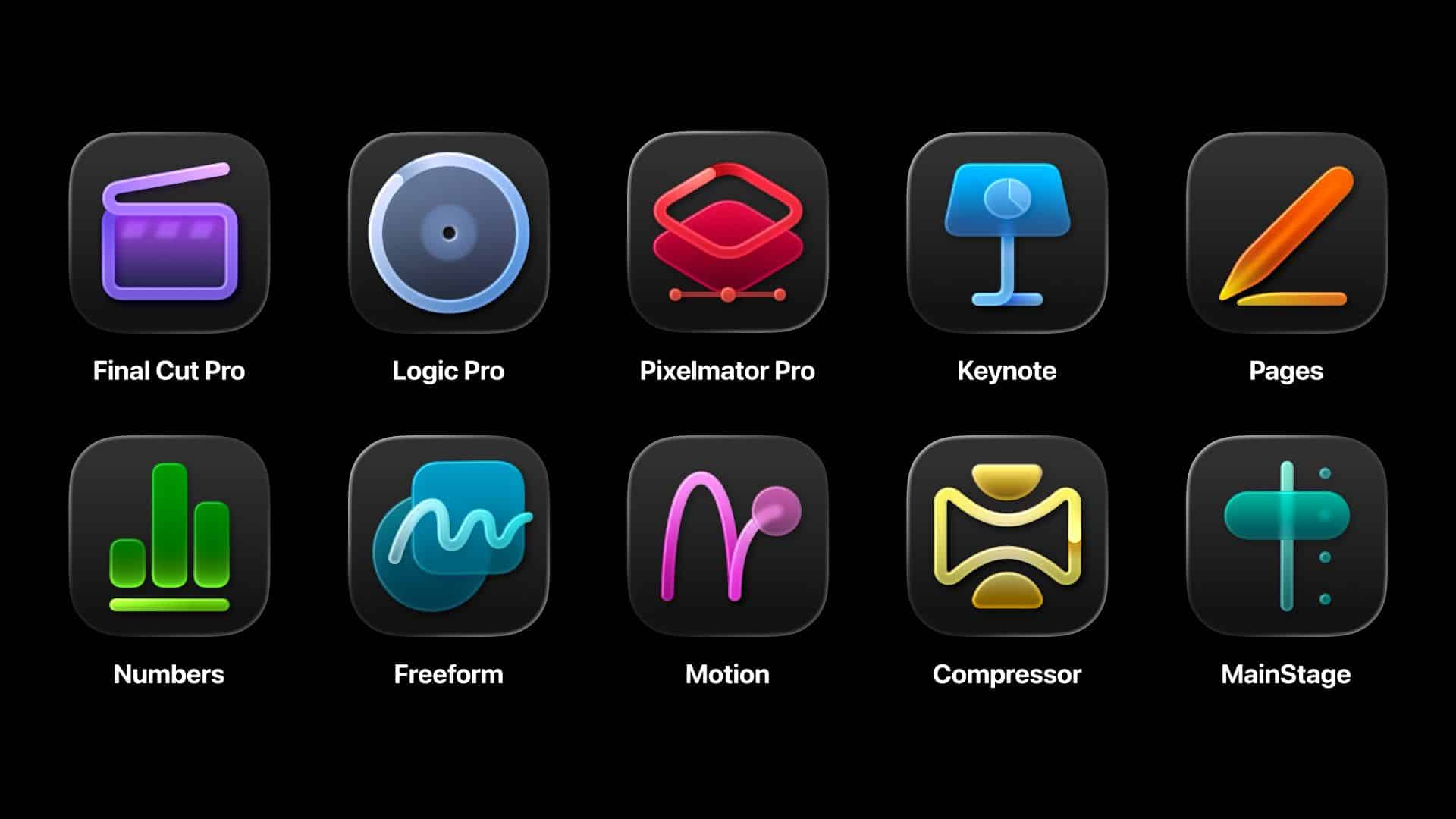
Apple has officially streamlined its popular creative apps into one single subscription suite with the introduction of Apple Creator Studio.
The collection includes some of the most useful apps for today’s creators: Final Cut Pro, Logic Pro, Pixelmator Pro, Motion, Compressor, and MainStage.
New AI features and premium content in Keynote, Pages, and Numbers also make the Apple Creator Studio an exciting subscription suite. Freeform will eventually be added to the lineup.
The groundbreaking collection is designed to put studio-grade power into the hands of everyone. It builds on the essential role Apple devices play in the lives of millions of creators worldwide.

The apps included cover video editing, music making, creative imaging, and visual productivity to give modern creators the features and capabilities they need.
Final Cut Pro introduces exceptional new video editing tools and intelligent features for Mac and iPad.
For the first time, Pixelmator Pro is also coming to iPad with a uniquely crafted experience optimized for touch and Apple Pencil.
Logic Pro, meanwhile, for Mac and iPad introduces more intelligent features like Synth Player and Chord ID.
Apple Creator Studio will be available on the App Store beginning January 29. In the Philippines, the rates are PhP 399 a month or PhP 3,990 annually.
There is also a free one-month trial which includes access to:
- Final Cut Pro, Logic Pro, and Pixelmator Pro on Mac and iPad
- Motion, Compressor, and MainStage on Mac
- Intelligent features and premium content for Keynote, Pages, Numbers, and later Freeform for iPhone, iPad, and Mac
College students and educators can subscribe for a discounted price of PhP 149 per month or PhP 1,490 per year.
Apps
Apple gives up on making AI, inks a deal with Gemini to power Siri
Gemini gets another feather in its cap.


In the not-too-long-ago past, the biggest names of the tech industry competed to build their own AI software. Now, though some brands are still on the hunt, it’s easier to name certain software that have more successfully drowned users in a flood of AI-powered features. Today, Google gets another win by adding Apple’s Siri to its Gemini cap.
In the past, Apple peddled Apple Intelligence, an upcoming AI-powered system to compete against the giants of the industry. However, much like other features from other brands, Apple Intelligence came out half baked with features still lacking months after the initial launch.
Now, Apple has signed a deal with Google to use Gemini for a revamped Siri. The former plans to launch a new version of Siri later this year. Because of the deal, the voice assistant will start using Gemini as a foundation for its own services. Currently, Samsung’s Galaxy AI already uses Gemini.
Formerly a battleground between so many competing brands, it’s now looking like a battle between two major companies: Google and OpenAI. Google now has a huge grip, though. Both Samsung and Apple are no slouches when it comes to owning market share in the world’s smartphones.
Now, as consumers, Apple’s deal probably doesn’t mean much besides the continued influx of features that add little to no value to a smartphone.
SEE ALSO: Google paid Samsung a lot of money to install Gemini on Galaxy
Apps
Microsoft continues to shove Copilot where it’s not wanted
This time, it’s reportedly coming to File Explorer.

If you look at a modern keyboard, you’ll find that the Copilot button is the cleanest one on the entire panel because no one ever willingly presses it. And yet, Microsoft still believes in the feature’s value. To show their odd commitment, the company is reportedly adding Copilot to File Explorer.
According to @phantomofearth from X (via Windows Central), a new Windows 11 preview build will add a button beside File Explorer’s navigation menu. Currently, the button is invisible and doesn’t do anything. However, the report says that the feature is tied to something called “Chat with Copilot.” It’s becoming clear that the system aims to add the AI software right inside the file organization app.
Besides revealing the potential addition of the egregious feature inside File Explorer, @phantomofearth also added mock-ups of a desktop with Copilot right on the taskbar, hinting at a potential nightmare of the feature lording itself over where it’s not wanted.
Thankfully, the preview build doesn’t always represent a final version of the system. There’s still a chance that Microsoft will not add the AI to the File Explorer.
As of late, Microsoft has received a lot of flak for persistently pushing Copilot onto users, regardless of how they feel about the feature. The company is also facing criticisms in the background for being a major proponent of AI data centers in the United States, which, in turn, have caused the prices of tech to skyrocket this year.
SEE ALSO: Dell admits AI PCs were a mistake


Now playing: Final Fantasy VII Remake INTERGRADE on Switch 2
Final Fantasy VII Remake, handheld again


HONOR X9d 5G review: Tougher, more long-lasting and optimized
Beyond all the marketing, it's a compelling all-around smartphone that actually works well


Redmi Note 15 Pro+ 5G review: The midrange fashion piece
Work-ready and style-friendly!

Esports Nations Cup 2026 secures US$ 45M funding

CODE VEIN II now available for consoles, PC

Samsung is teasing smart glasses again

Nothing will not release a Phone (4) this year

VinFast updates battery subscription policy for large upfront savings

HONOR X9d 5G launches in the Philippines: Price, preorder, availability

POCO M8 Pro review: Goin’ loco over this POCO

OPPO A6 Pro: Adequate tool, no definitive punch

Infinix NOTE Edge debuts: High-end features for accessible pricing

HONOR Magic8 Pro review: What sorcery is this?


-
 News2 weeks ago
Infinix NOTE Edge debuts: High-end features for accessible pricing
-
Reviews1 week ago
HONOR X9d 5G review: Tougher, more long-lasting and optimized
-

 Automotive2 weeks ago
BYD expands PH presence with entry of DENZA luxury EVs
-

 News2 weeks ago
HONOR slaps the iPhone Air with the all-new Magic8 Pro Air
-
Gaming1 week ago
Now playing: Final Fantasy VII Remake INTERGRADE on Switch 2
-

 News2 weeks ago
Beyond the Box, Digital Walker turn over Tesla Model Y to iPhone 17 raffle winner
-

 Accessories1 week ago
Razer fully unwraps these limited BLACKPINK Edition gaming gear
-

 Accessories1 week ago
G-DRAGON is CASETiFY’s first ever Global Brand Ambassador