
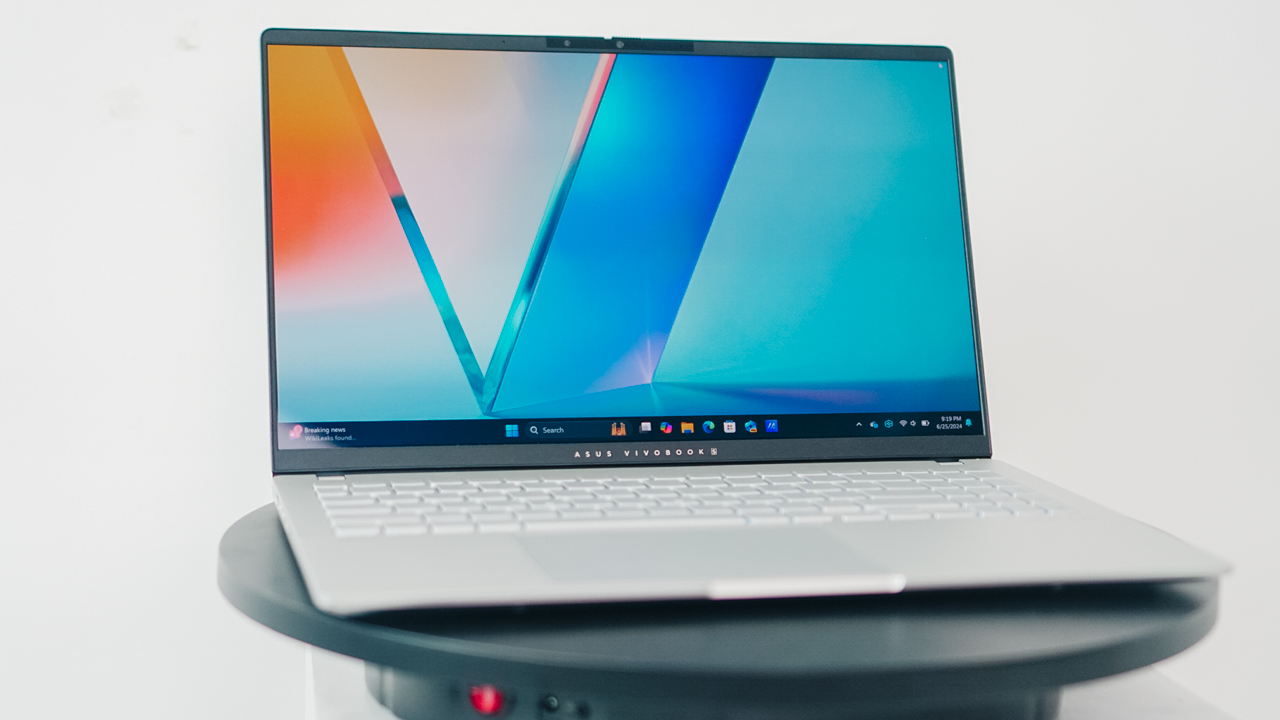

There’s a shift happening in laptops and it’s not something that’s immediately apparent to the naked eye. One of the laptops key to this wave of change is the ASUS Vivobook S 15.
What’s so unique about it? The Vivobook S 15 is one of the first batches of laptops that’s equipped with the Snapdragon X Elite processor which has a CPU architecture closer to mobile phones than traditional laptops.
Moreover, it’s also a Copilot+PC. That means it has the ability to run AI tasks on-device. There’s a lot to cover and in our brief time with it so far, we were shown some of what it’s capable of.
- Before everything else, here are its top-line specs and features:
- Display: 3K 120Hz OLED, 100% DCI-P3, VESA HDR Certified, low blue light
- Processor: Qualcomm Snapdragon X Elite, 45W TDP
- Battery: 70 Wh, up to 18 hours battery life
- RAM: 16GB
- Storage: 1TB
- Connectivity and Ports: WiFi 7, USB 4 (2x), USB 3.2 Type A (2x), HDMI 2.1, Audio Jack, MicroSD Card
- Software: ASUS AI Apps
Why is the Snapdragon X Elite a big deal?
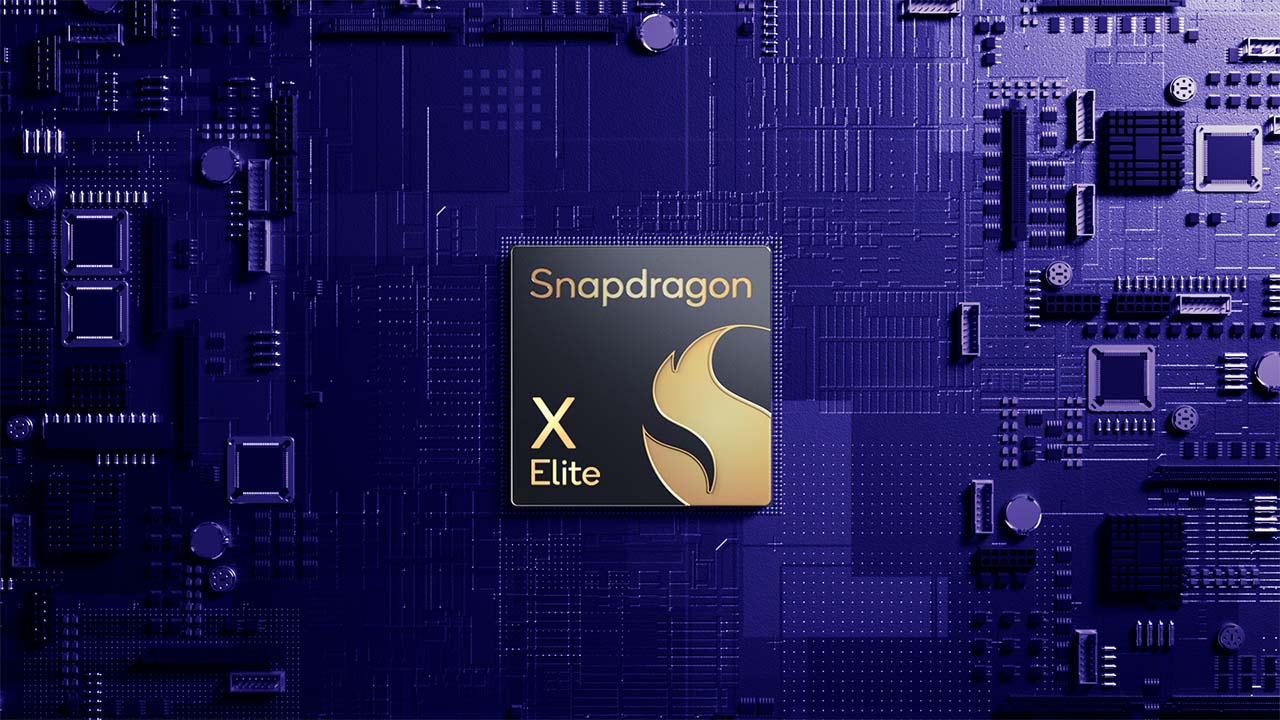
This isn’t Qualcomm’s first foray into offering laptop products. But their previous attempts can be categorized as premature. It’s been years since then and the technology has advanced significantly. So much so that there are claims that the Snapdragon X Elite can rival Apple’s M-chip powered MacBooks.
We have to spend a more significant time with the Vivobook S 15 to adequately weigh in on that notion. But why are the two being compared? It’s because both are using the ARM architecture for their CPUs.
ARM chips are smaller and allow for more things to be added on the main board. They are also known to be more power efficient. But until recently, ARM just couldn’t compete with x64 when it came to delivering high power performance in laptops and desktops. That has mostly changed.
ARM vs x86-x64
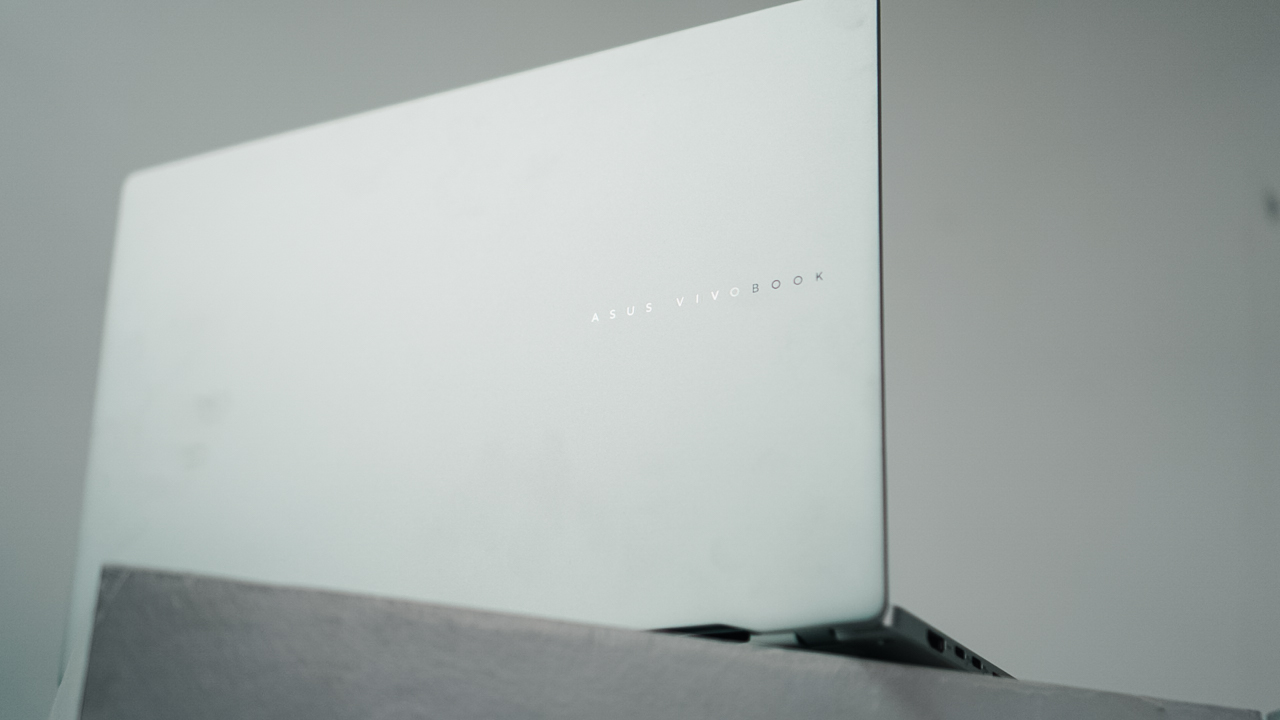
At this point, while the gap is closer, there are still some apps that won’t run as smoothly on ARM PCs vs ones that are x86-x64. For a comprehensive list or to check if the apps you regularly use are supported, just visit doesitarm.com.
But what exactly is the difference? Just think of ARM and x86-x64 as burgers but from two different joints. They’re both essentially the same burgers with buns, a juicy patty, and some veggies. But they’re made differently.
Copilot+PC, AI

Now let’s get into the meat of things. Or perhaps more appropriately, the special sauce that differentiates the Vivobook S 15 from other similarly priced (PhP 84,995/ US$ 1,299) laptops is AI and the way ASUS chose to implement it.
Naturally, there’s Copilot which is the AI service present in most Windows laptops. It’s Microsoft’s own and allows you to do multiple things. It’s also conversational which means your prompts don’t have to be super specific.
But the ingredient that makes this extra special is how AI is baked into the whole system. That means you get on-device AI things. These include but are not limited to:
Live Captions
Applicable to video calls, YouTube, and other video services. You simply download the language knowledge base and the laptop can translate for you in real-time.
This one’s a hit-or-miss feature but that will only get better with time and will probably be available in more device types in the future. The possibilities are worth the hype.
Cocreator
Something that might rub artists the wrong way. This can take whatever you sketch and enhance it. There are also many styles you can apply to the artwork like anime, cyberpunk, and more. It also functions like the image generator where you input a prompt and the AI creates an image for you.
In the demo, we were shown how it can turn a simple sketch of a tree into multiple different types of art styles. You can even adjust a Creativity slider from 0-100% for even more variety on the result.
Windows Studio Effects V2
Useful and fancy effects for when you’re in a video call. Includes noise cancelation, background blurring, and more.
Automatic Super Resolution
Automatically upscales the visuals of your games without the performance taking a hit.
There’s more and we’ll surely be happy to dive into those in reviews and possibly more content in the future. In fact, our YouTube team has been able to spend more time with the device so watch out for how they used some of these AI goodies.
StoryCube
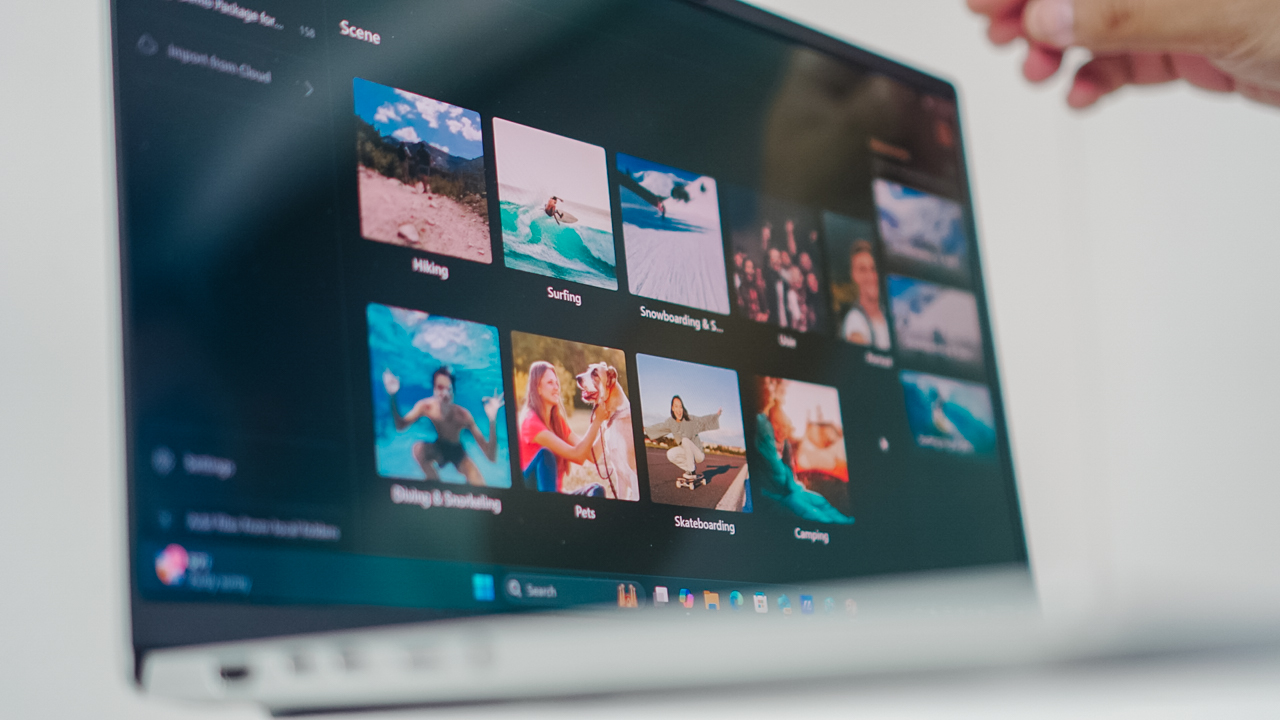
This is the AI tool that ASUS is most proud of. They’re calling it a one-stop media hub. It can pull from multiple media sources and automatically sort your photos, videos, and files for you. This makes it easy to look for certain images. The categories are also varied and the files can show up in more than one category.
It can pull from the local storage of your devices as well as online file sources like OneDrive, Photos from Apple, and Google Photos. It can also be linked with creative apps like DaVinci Resolve, Capcut, and more. And once you’re done processing, you can share away on YouTube, Facebook, and other social media platforms.
StoryCube probably deserves its own separate story for a full dissection. For now, that’s a brief overview of what it can do.
Exciting times for ARM laptops
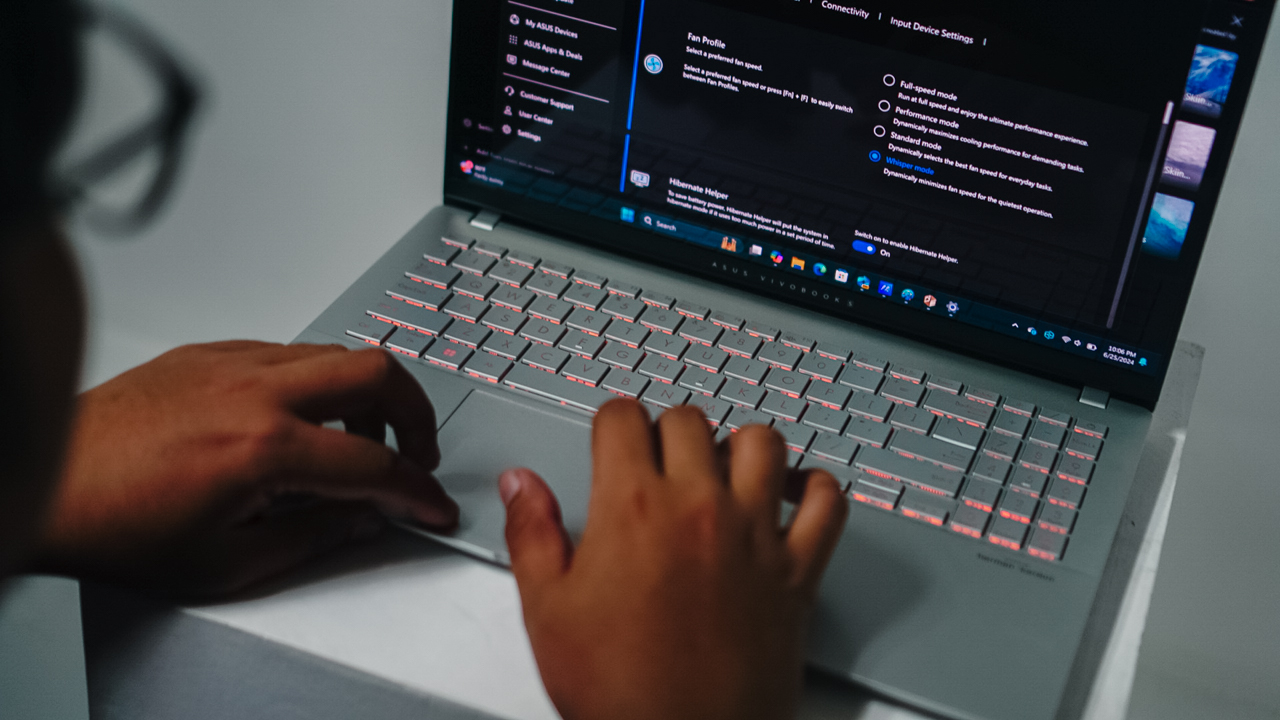
There’s never been a more exciting time for ARM-powered laptops than now. They’re finally able to go toe-to-toe against their x86 counterparts and in many instances, provide a more power efficient option. The Vivobook S 15 is a testament to that.
It’s also one of the more pocket-friendly Copilot+PCs on the market now from a brand that’s known for providing quality machines. But before you completely dive in, watch out for our full review as we take the laptop through the paces.
For now, what we can say is that this is a promising laptop and an overall promising development for the category in general.






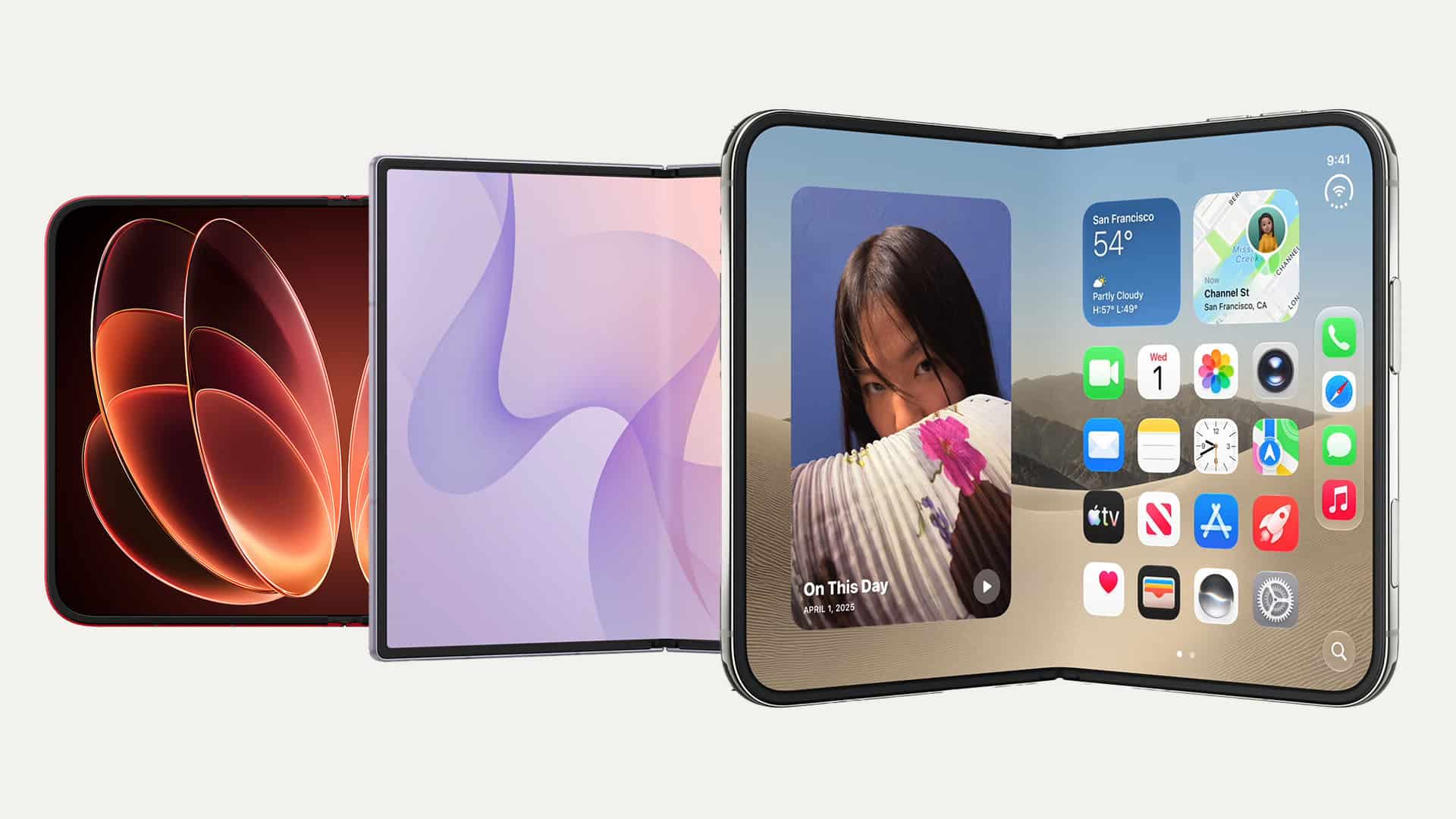
There’s a passport-sized revolution upon us, and we’re here for it.
After the HUAWEI Pura X Max and Samsung Galaxy Z Fold8, September 2026 showed us two more joining the fray: the Xiaomi 18 Fold and the much-awaited and plenty-rumored iPhone Duo.
While all four share a similar form factor, they don’t exactly all share the same approach to it. And while we’ve yet to spend significant time with most of them, we’re gonna go ahead and jump the gun and list what we think each one did right.
Think of this as more of a collective first impression or Match Pulse.
Samsung gets the weight right
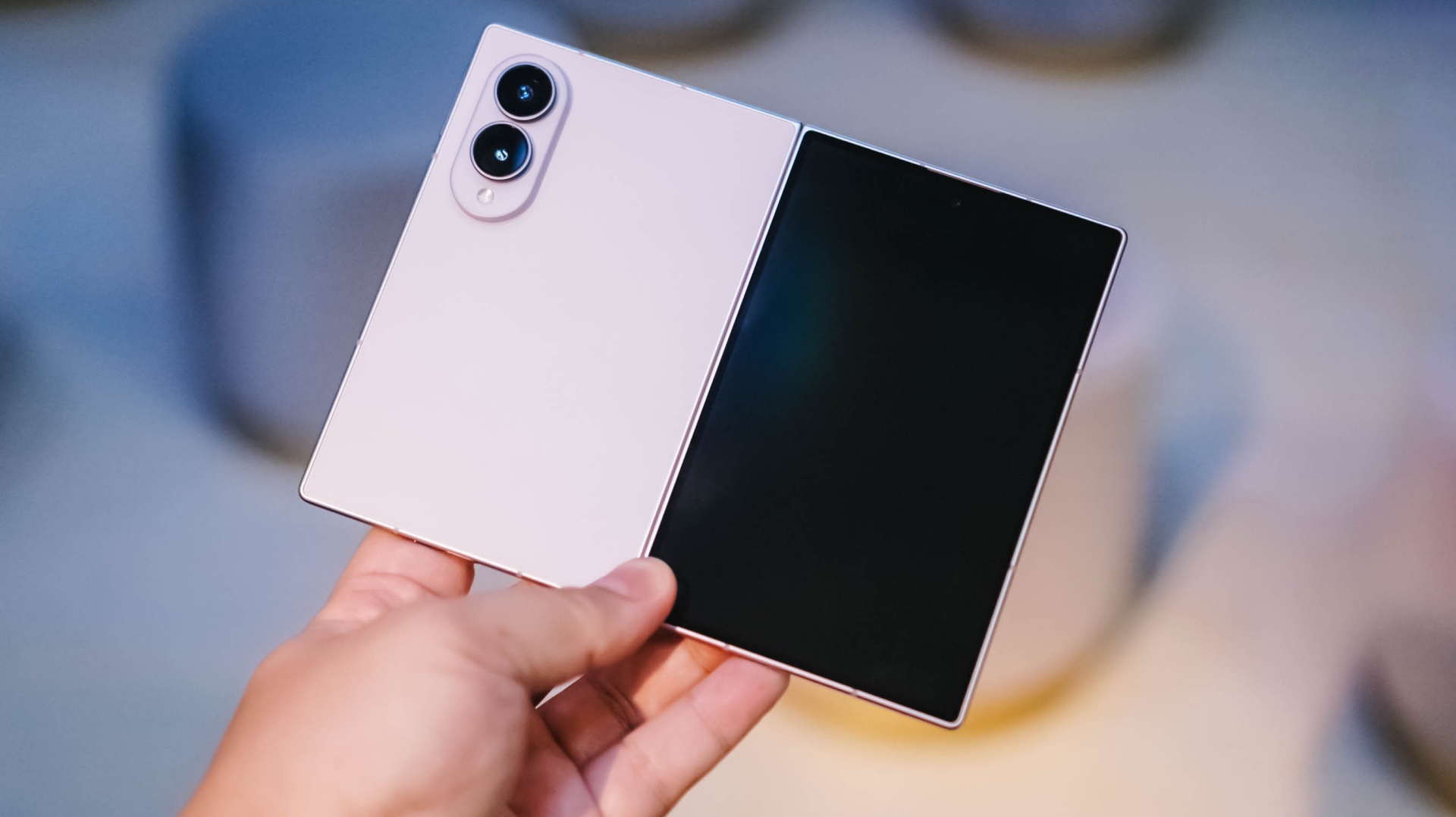
Samsung being a foldie veteran shows up here.
When I first held the Galaxy Z Fold8, I was pleasantly surprised by how light it was. At 201g, it’s the lightest of these four by a pretty significant margin. The Xiaomi 18 Fold comes in at 219g, the HUAWEI Pura X Max at 229g, and the iPhone Duo at 254g.
That’s thoughtful design, and definitely a result of Samsung having at it for years.
This is one of those things that doesn’t necessarily jump out on a spec sheet. But it matters when you actually have the phone in your hand. A passport-sized foldable is supposed to give you more screen without feeling like you’re carrying around a tiny tablet.
Samsung seems to understand that balance particularly well.
Xiaomi gets the cameras right
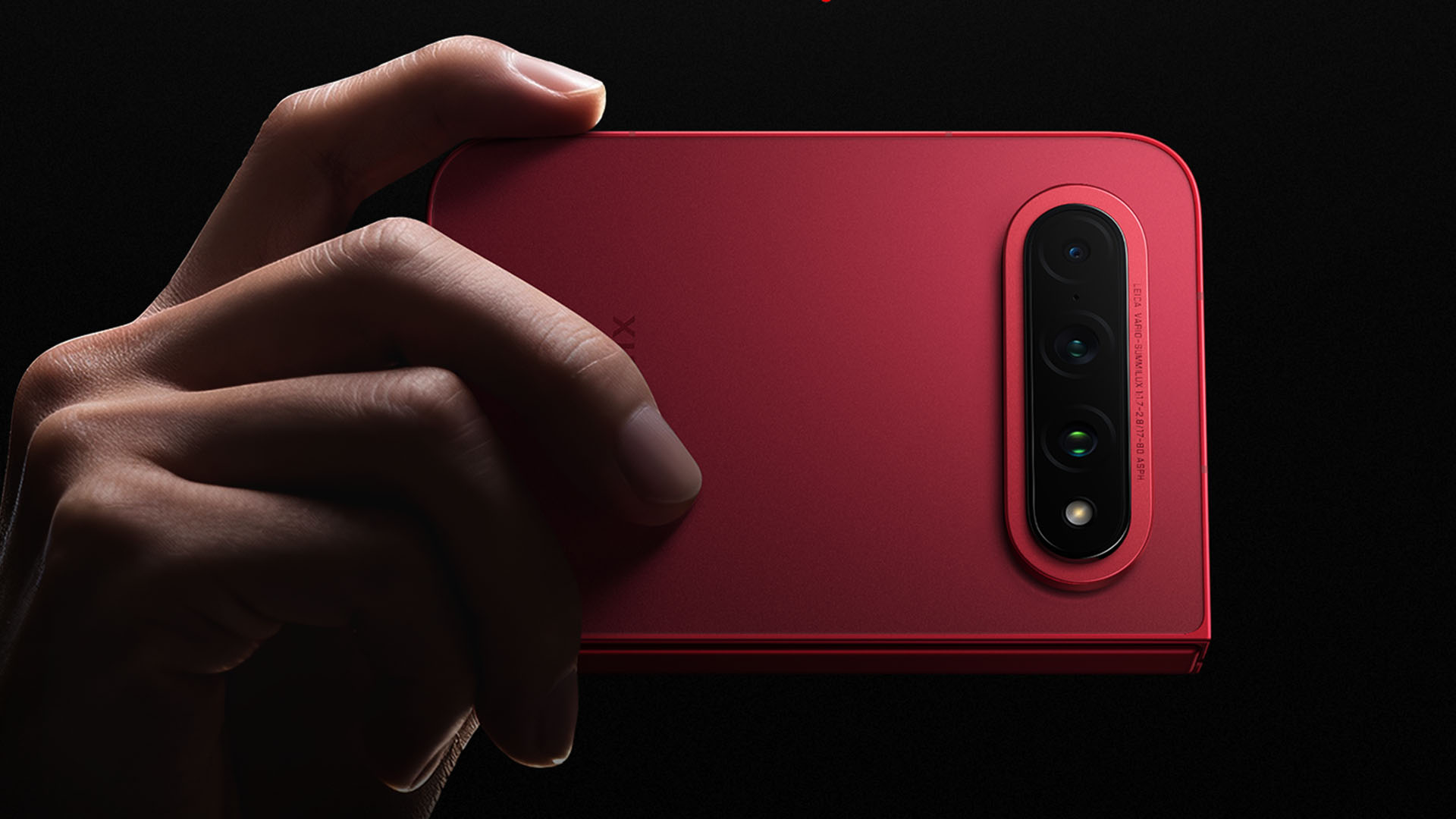
We’re not gonna talk about camera performance here. Just the cameras present and how they’re laid out.
In that regard, the Xiaomi 18 Fold is a runaway winner for me.
It has a 200-megapixel main camera, a 50-megapixel ultrawide, and a 50-megapixel 3.5x periscope telephoto. All three are part of Xiaomi’s Leica camera system.
That telephoto alone makes the setup feel much more complete than what some of the other passport-sized foldables are offering.
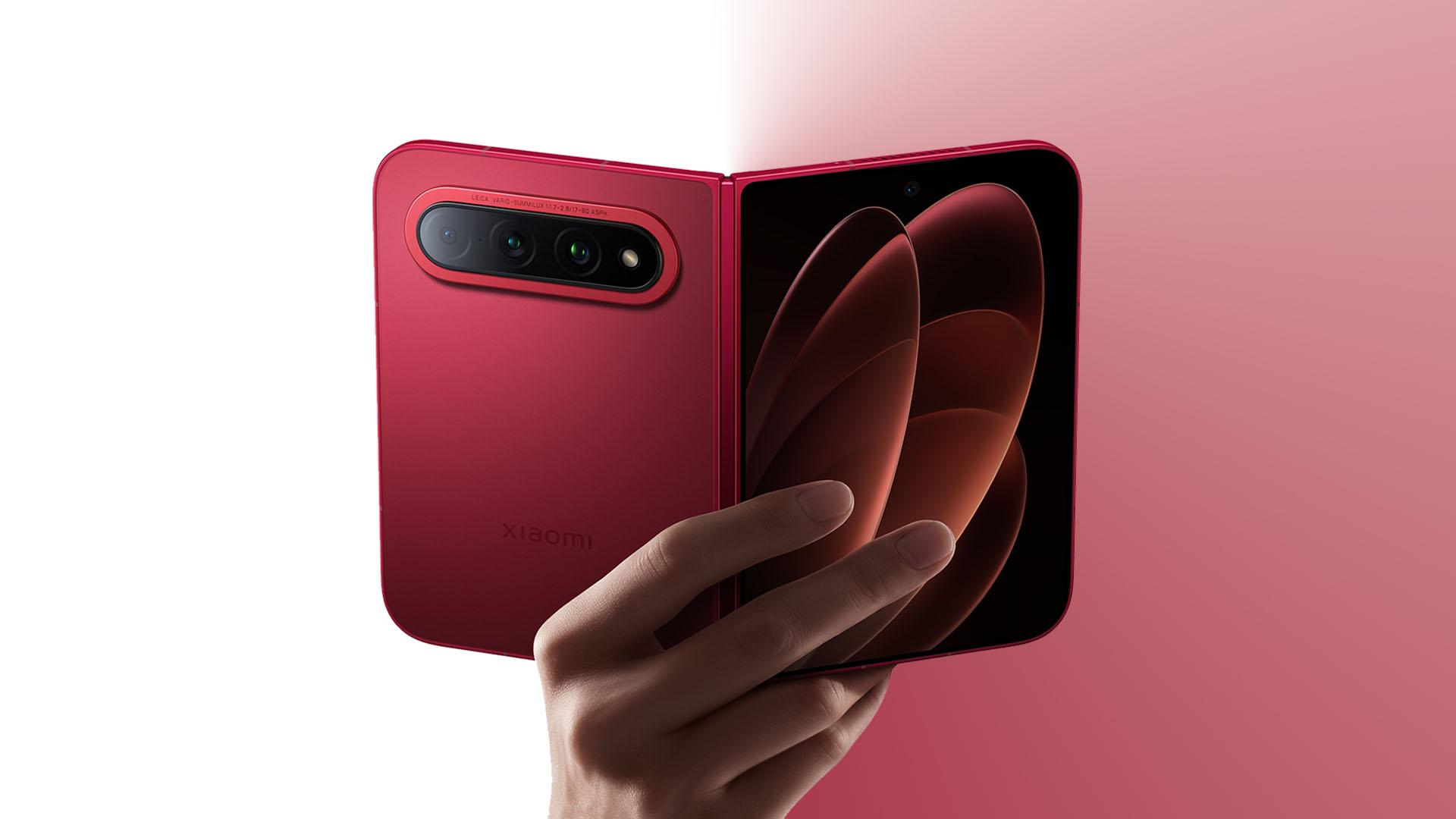
Then there’s the physical layout. Xiaomi puts the three cameras in a horizontal arrangement across the upper portion of the rear panel. It looks clean, but more importantly, it should help keep the phone from rocking around as much when you put it down on a flat surface.
That’s the kind of small design decision I appreciate.
You’re not just getting a foldable with cameras slapped onto the back. You’re getting a flagship-style camera system that also happens to fold.
Android gets the big screen right

This is where Android still has Apple beat.
The whole point of opening a passport-sized foldable is getting more screen. Android has spent years figuring out what to actually do with all that extra real estate.
On Samsung, you can run apps side by side, resize windows, use pop-up windows, save app pairs, and take advantage of Samsung’s broader Multi Window and DeX features. Huawei has also built out its own split-screen and floating-window tools.
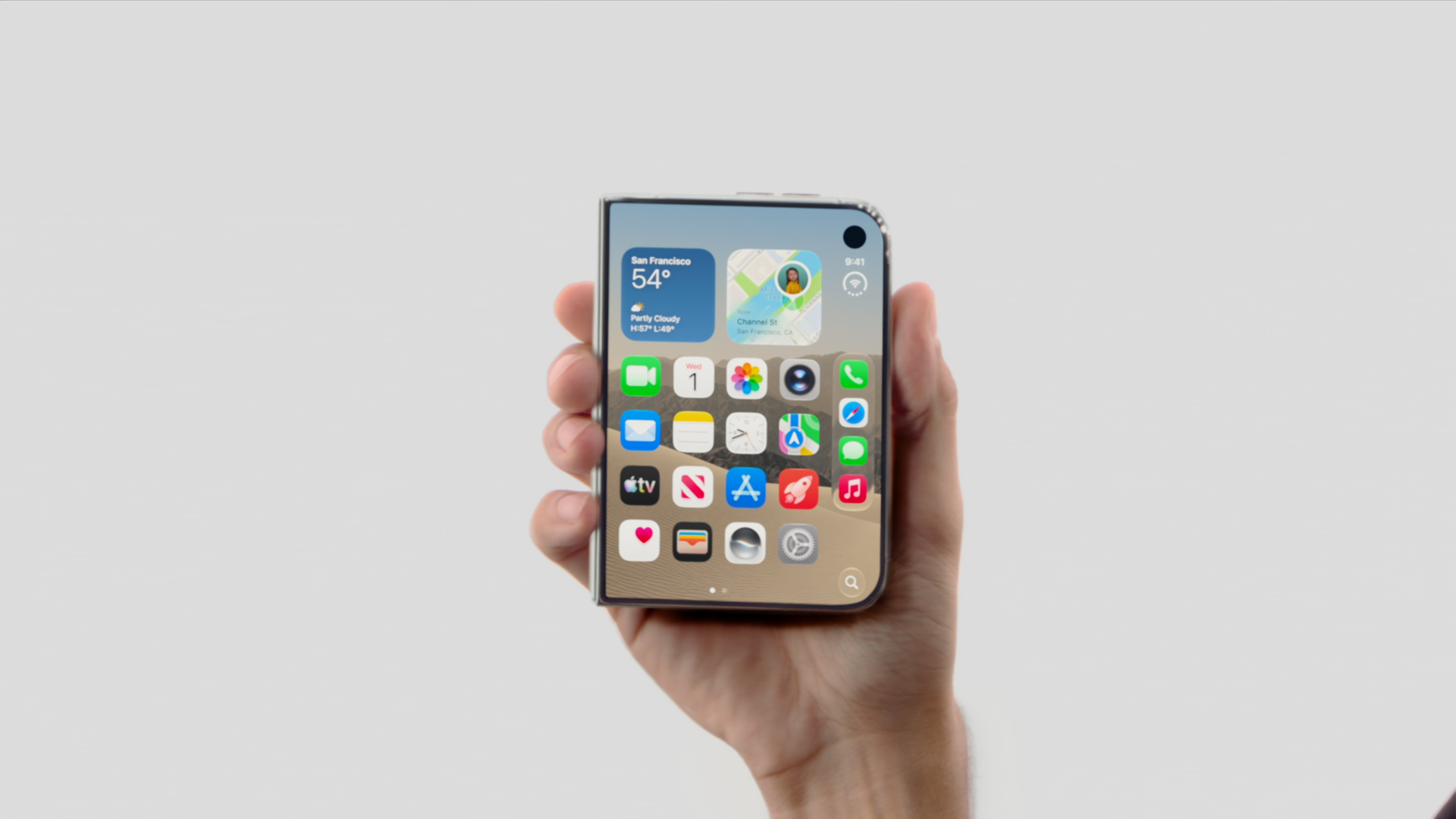
Apple is finally entering that conversation with the iPhone Duo. Its iOS 27 implementation allows two apps to run side by side (you just can’t resize them like you can on Android), two windows of the same app, quick app swapping, and saved app pairs.
That’s actually a pretty big deal. But Android has been doing this for years.
The passport-sized foldable isn’t just a bigger screen. It should let you do more things at once. Android understands that part of the assignment.
Apple gets the transition right
@gadgetmatchiPhone Duo maxxing 😮💨♬ original sound – GadgetMatch
This might be Apple’s biggest contribution to the passport-sized foldable.
The iPhone Duo doesn’t simply take iOS and stretch it across a bigger display. Apple has reworked the experience around the fact that the phone can physically change shape.
Both displays share the same aspect ratio, which means content can move between the outer and inner screens without feeling like you’re jumping between two completely different phones. iOS 27 also moves controls to the side when the Duo is open, adjusts app layouts for the wider canvas, and introduces Split View for the first time on iPhone.
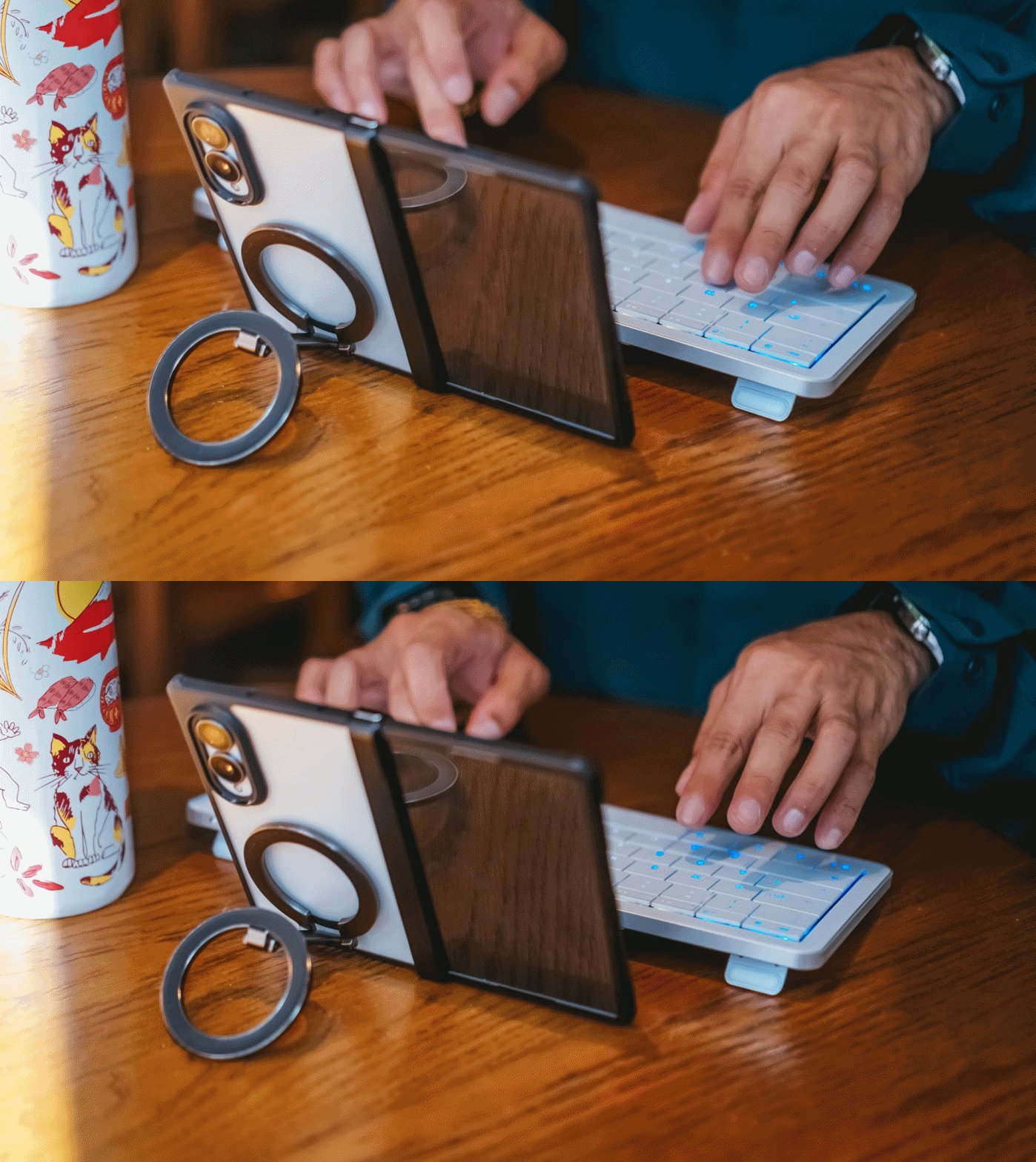
There’s also the rather clever StandBy implementation. Put the Duo down in a tent orientation and it can turn into a little smart display, even without being plugged in.
Apple Pencil support is coming later this year, too, and it works on both displays.
This is very Apple.
The hardware is new, but the software is doing a lot of the work to make the new thing feel familiar.
Samsung gets the overall shape right
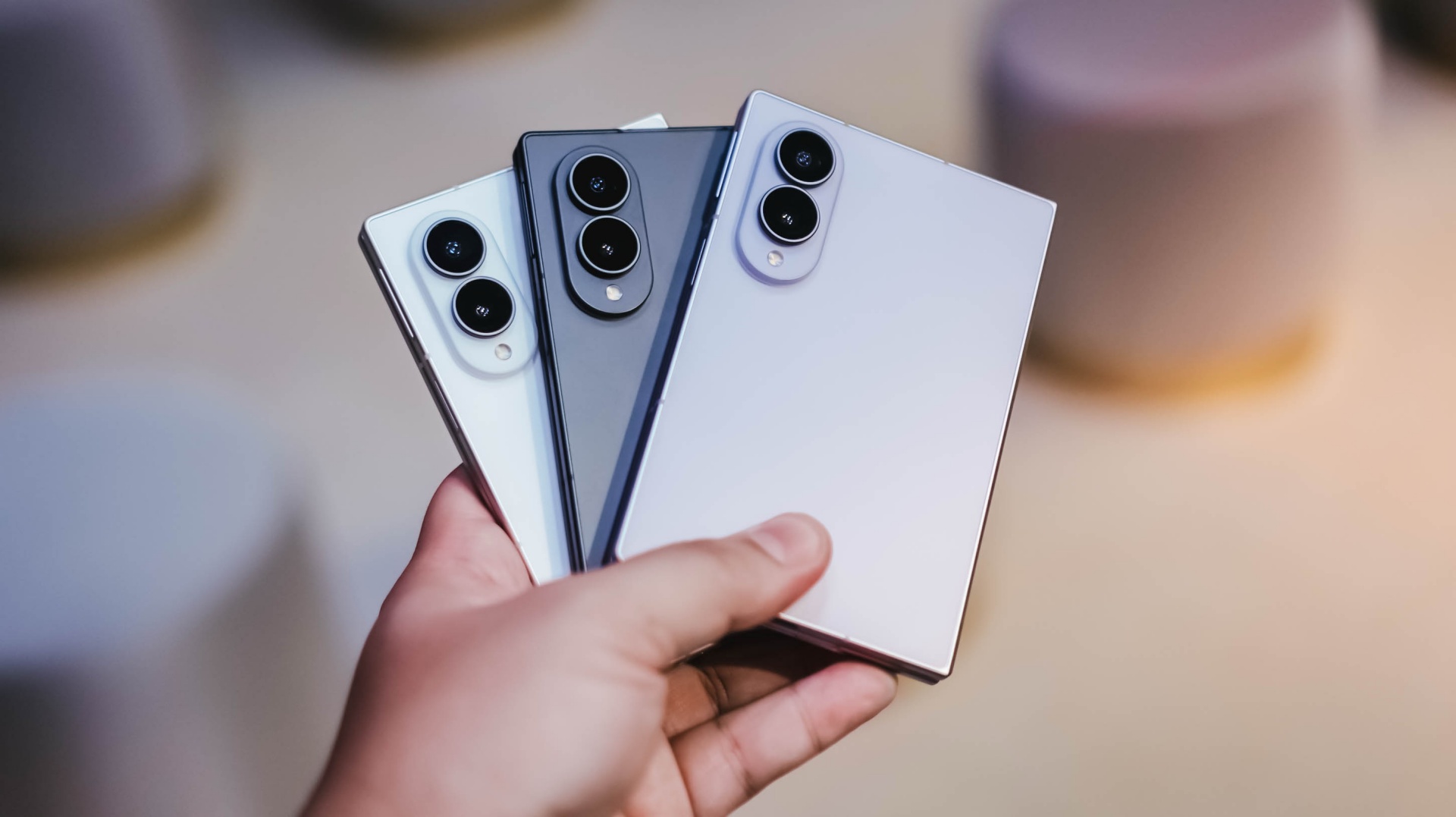
This one is completely subjective.
Personally, I prefer the square-ish, sharp-edge look of the Galaxy Z Fold8. I’ve seen plenty of people praising the D-like shape of the Duo — was that deliberate or just a happy coincidence? — and the more rounded look of the Pura X Max and Xiaomi 18 Fold.
But looks-wise, the Galaxy Z Fold8 just stands out to me.
There’s something about the balance and more symmetrical look of the Fold8 that seems more user-friendly compared to the no-love-for-lefties approach of the Duo, especially software-wise.
That’s obviously a personal preference. But that’s kind of the point.
We’re now at a stage where these devices aren’t all trying to look like the same thing.
The passport-sized foldable is becoming a design language of its own.
Android gets customization right
@rodneil Galaxy Z Fold8 – 3 different wallpapers: Folded, Landscape unfolded, Portrait unfolded #GalaxyZFold8 ♬ Kitty (MOMO) – MISAMO
Much has been said about the unfolding animation of the iPhone Duo. That’s cool for sure.
But if you’re after making a passport foldie truly feel like yours, Android is still the playground.
With Samsung specifically, Good Lock is your customization best friend.
You can tweak the interface, the lock screen, gestures, multitasking behavior, and plenty of little things that make a Galaxy feel less like the phone Samsung shipped and more like the phone you set up.
It’s not necessarily the sexiest feature to put on a spec sheet.
But after you’ve lived with a foldable for a while, those little things add up.
Samsung dropped the ball on the stylus
This is a weird one.
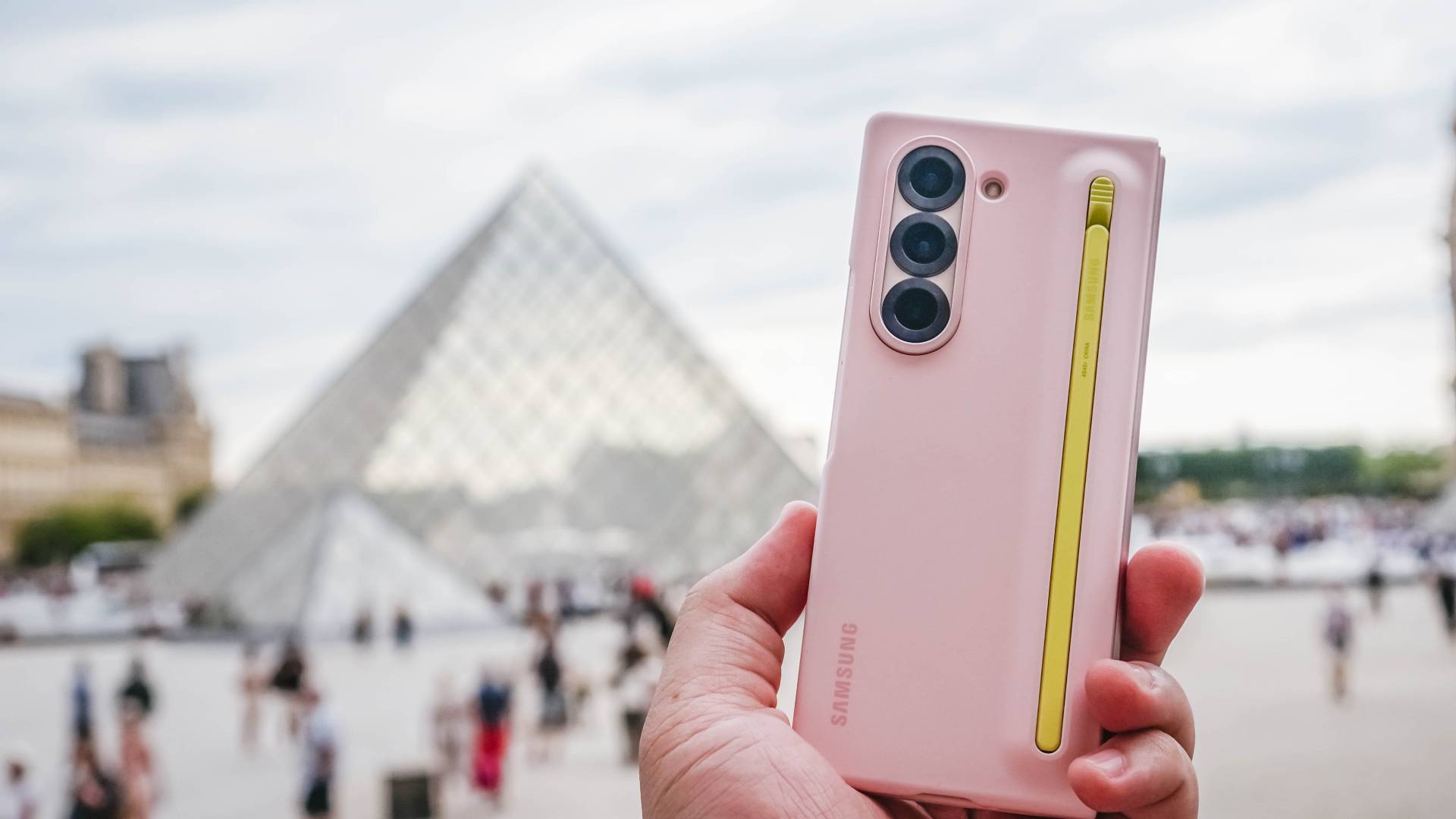
Samsung had S Pen support on the Galaxy Z Fold3, Fold4, Fold5, and Fold6. Then it dropped support with the Fold7. The Galaxy Z Fold8 and Galaxy Z Fold8 Ultra doesn’t support the S Pen either.
That’s a pretty significant omission for a device that unfolds into something approaching tablet territory.
The S Pen had plenty of fans. And you can absolutely argue that a stylus makes even more sense on a foldable because you suddenly have a much larger canvas for writing, drawing, editing, and annotating.
Apple, meanwhile, has promised Apple Pencil support for the iPhone Duo later this year.
Now, they’ve broken (or at least delayed) some promises before, so this is still a wait and see.
But it’s funny seeing Apple move toward a feature Samsung had already established on its Fold line.
The battery race is getting interesting
Graphics by Vincenz Lee | GadgetMatch
We still can’t fully compare this usage-wise. We haven’t spent enough time with all four devices to make any meaningful real-world battery call.
So we’re just gonna give you the numbers on paper.
The Xiaomi 18 Fold is the battery monster here with a 6,000mAh cell, alongside 67W wired and 50W wireless charging. Samsung’s Galaxy Z Fold8 has a 4,800mAh battery with 45W wired charging.
Apple doesn’t publish the iPhone Duo’s battery capacity in the same way, so we’ll leave the mAh comparison there rather than pretending the numbers are directly comparable.
This is one area where Xiaomi’s approach is particularly interesting.It has managed to put a 6,000mAh battery into a device that weighs 219g. That’s a pretty compelling combination on paper.
And then there’s performance
Same refrain as the battery here.
We’re not going to pretend that chipset names alone tell us which phone is going to be faster in actual use. Especially with four different platforms, operating systems, thermal designs, and software stacks involved.
But the hardware underneath is certainly no joke.
The Galaxy Z Fold8 runs on Snapdragon 8 Elite Gen 5 for Galaxy. The Xiaomi 18 Fold introduces Xiaomi’s own XRING O3 processor. And the iPhone Duo gets Apple’s A20 Pro, the same chip family used in the iPhone 18 Pro models.
The interesting part isn’t really which one wins the benchmark race. It’s that none of these companies seem to be treating the passport-sized foldable as a compromise device.
They’re putting flagship-class silicon, serious cameras, big batteries, and increasingly sophisticated software into this format.
And that’s probably the biggest thing to get right.
The passport foldable is becoming a thing
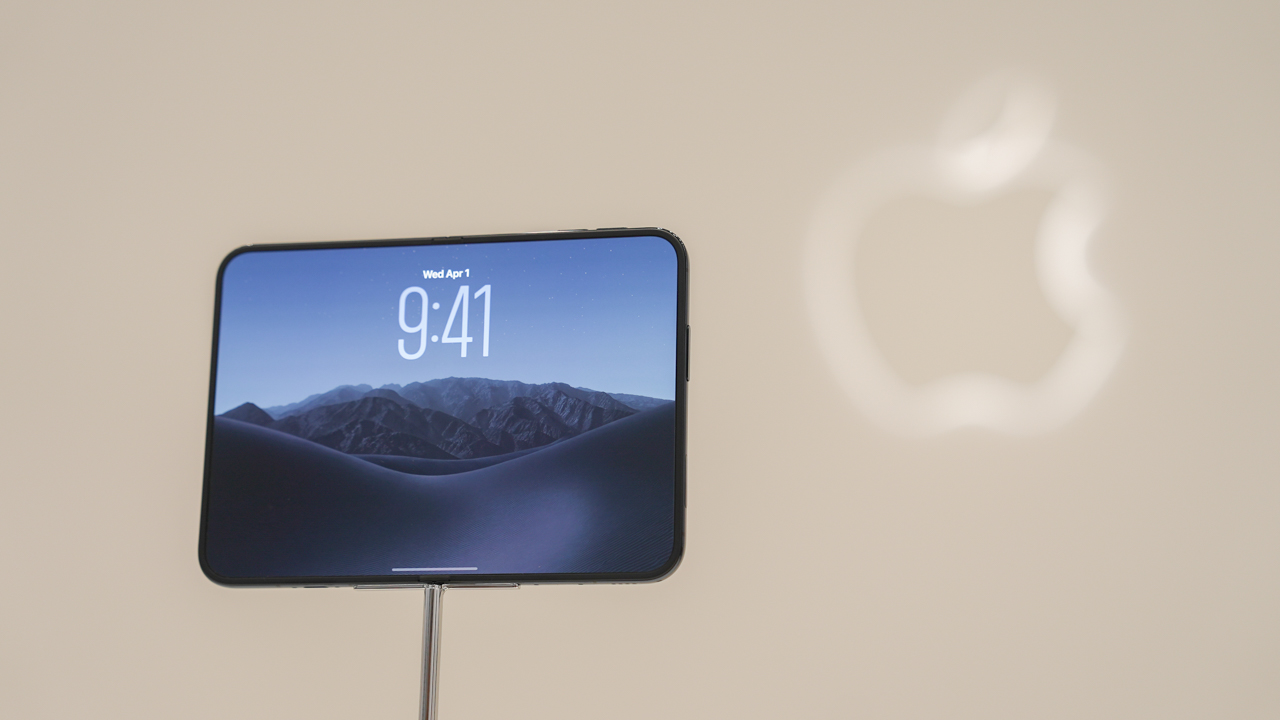
Exciting times are unfolding for the passport-sized foldable.
What’s interesting isn’t that these four phones are similar. It’s that they’re different.
Samsung has spent years figuring out how to make a big foldable thinner and lighter. Xiaomi is going all-in on cameras and battery. Huawei has its own interpretation of the compact, wide form factor. And Apple has arrived with a completely new take on how iOS should behave when the screen itself changes shape.
Between the Galaxy Z Fold8 being a big hit and the buzz generated by the iPhone Duo, it’s not far-fetched to think other brands will throw their own take at the form factor pretty soon.
And we’re totally here for it.
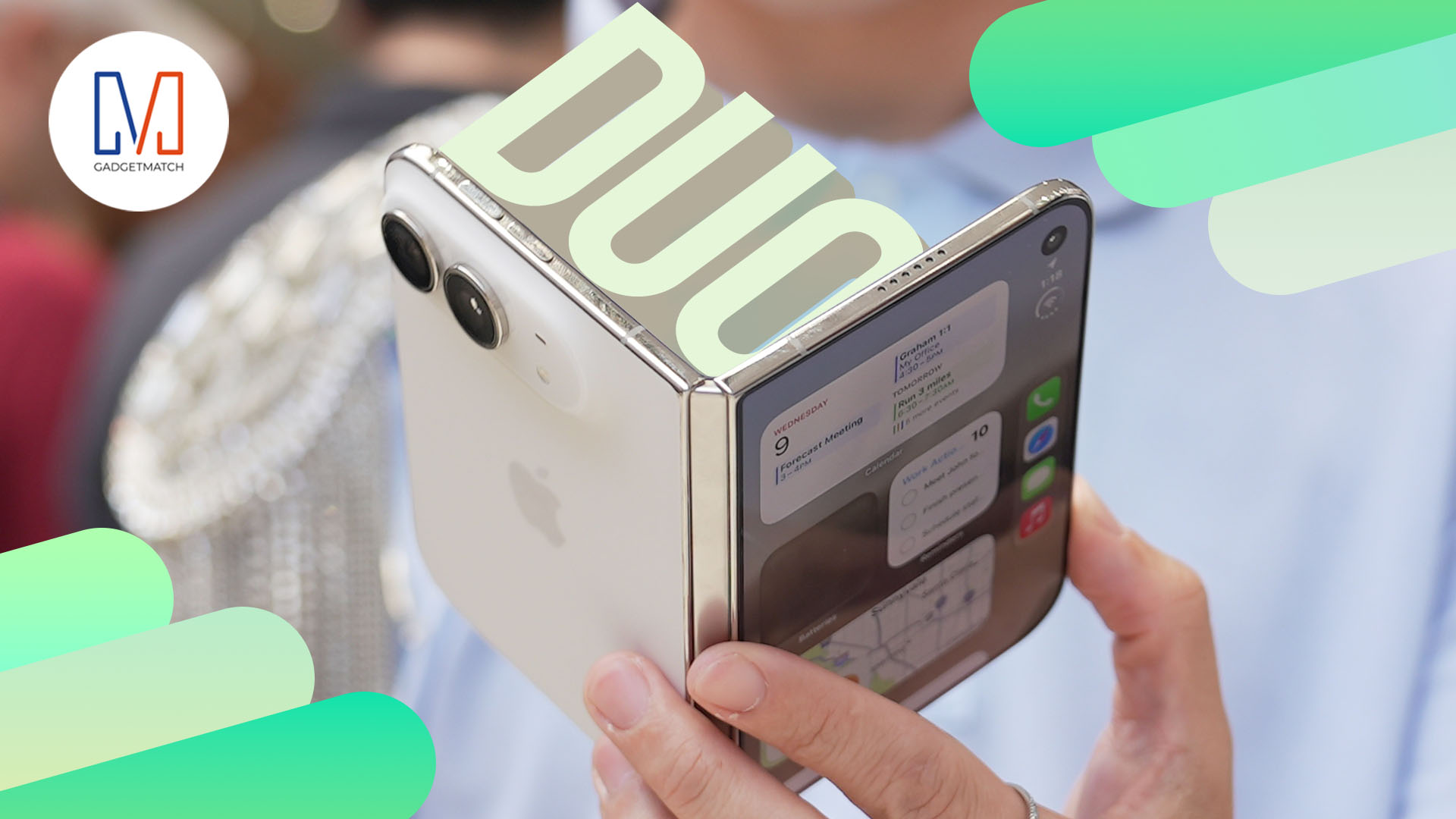
Apple’s first ever foldable is finally here! Say hello to the iPhone Duo.
In this video, THE Michael Josh shares his first impressions.
Those include the design, display, cameras, performance, and what it’s actually like to use Apple’s latest iPhone.
Is the iPhone Duo the future of the iPhone or just an interesting experiment?
We take a closer look and share everything that stood out during our hands-on experience.

I sometimes admittedly fall into the trap of having some good ideas in my head but never actually writing them down.
And specially in this era where you can easily be distracted by the pace of life, the external stimuli, and pretty much just stressful moments, it pays to have a companion to help you become organized.
Otherwise, those thoughts I mentioned about would just fly above my head.
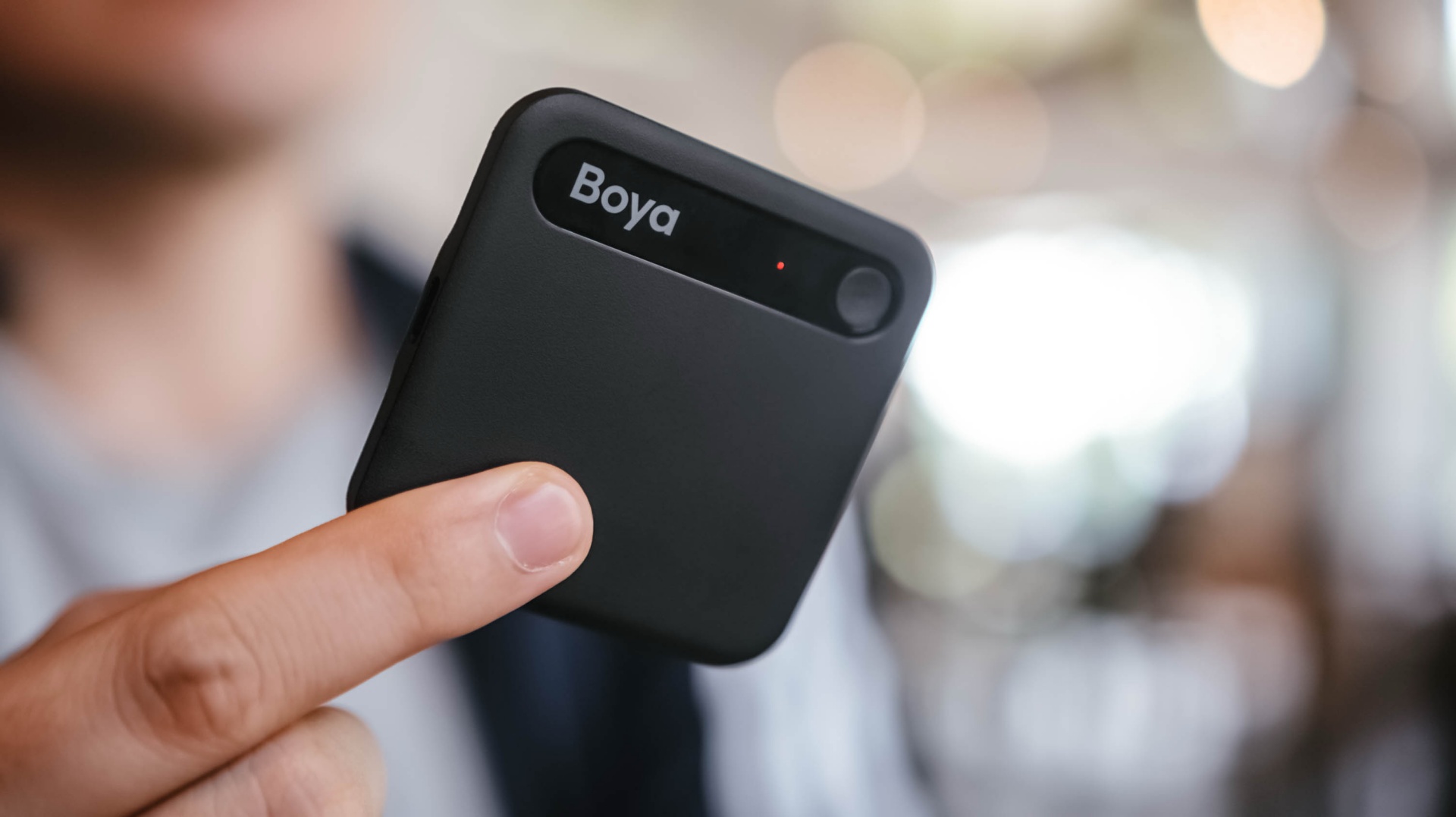
That’s where the Boya Notra Neo comes in. It’s a pretty straightforward portable AI recorder. As its slogan suggests, it’s for meetings, calls, and ideas.
It’s Boya’s more accessible, more affordable answer to the earlier Boya Notra.
Everyday AI note-taking made accessible
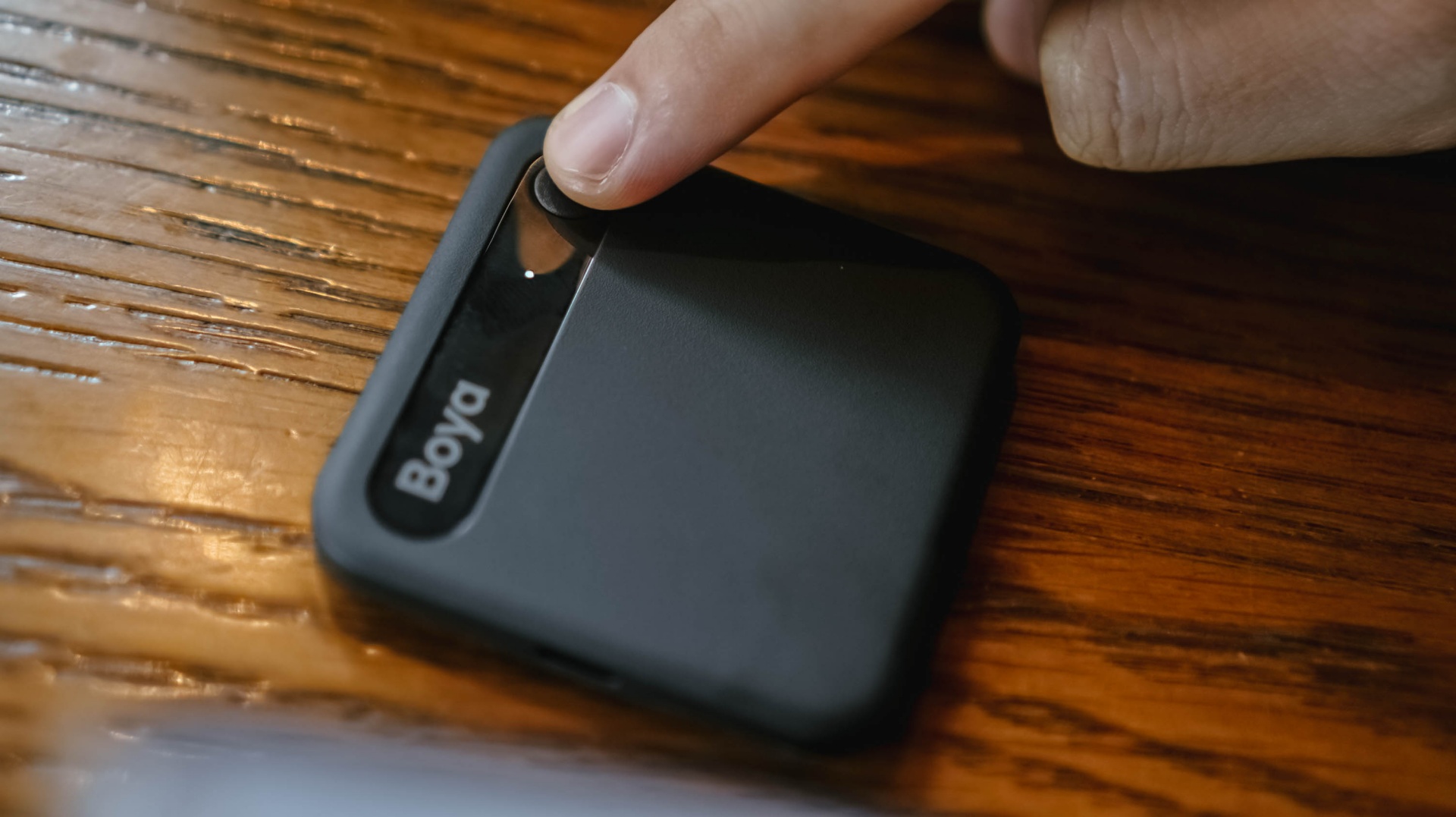
The Neo is incredibly lightweight and something you can sneak into your pocket easily.
I’ve been only able to use it a couple of times in casual settings, when ideas start to flow naturally in the middle of conversations.
Honestly, it’s great to have a companion device for such scenarios.
Although by default, your initial thought when such ideas arise is “Write that down”, sometimes, we are either pre-occupied or distracted by what’s in front of us.
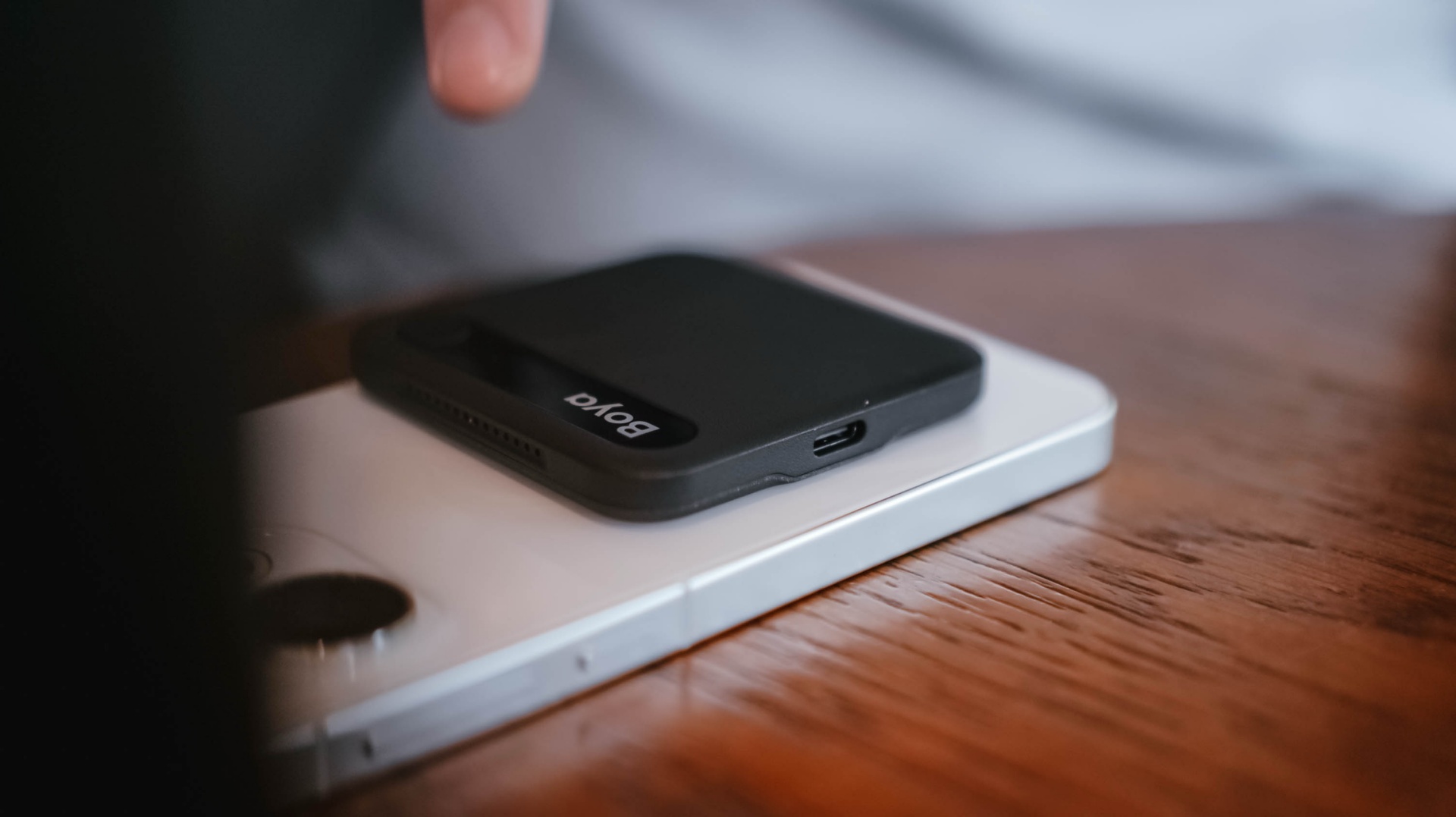
The Boya Notra Neo makes sure we don’t miss note-taking. One tap and it will automatically record audio.
This convenience translates to school group meetings and projects to even more professional settings.
Then, there are journalists like me who occasionally have to interview resource persons and attend press conferences, so this recorder comes in handy.
There are three recording modes to suit real-time needs: Ambient, Phone Call, and Bluetooth.
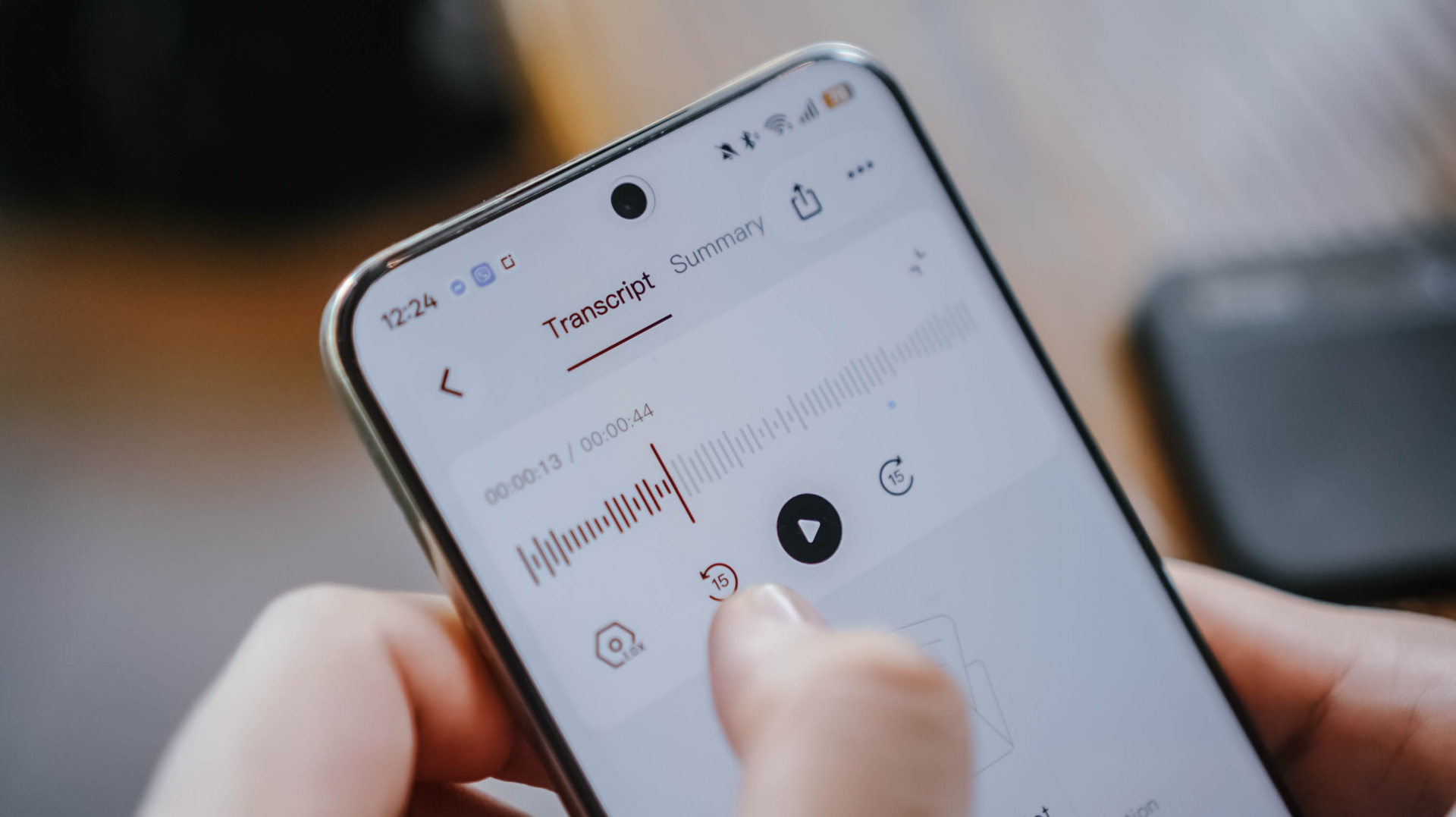
Post-handling of audio recordings are likewise a breeze. Through the Boya OS app, you can connect the device via Bluetooth to sync previous recordings.
If you’re not initially connected to the internet, the device will still be able to record a considerable length with its built-in 8GB memory.
Then, you can just sync the recordings to your device. You can then transcribe the recording on the app with its easy-to-understand interface.
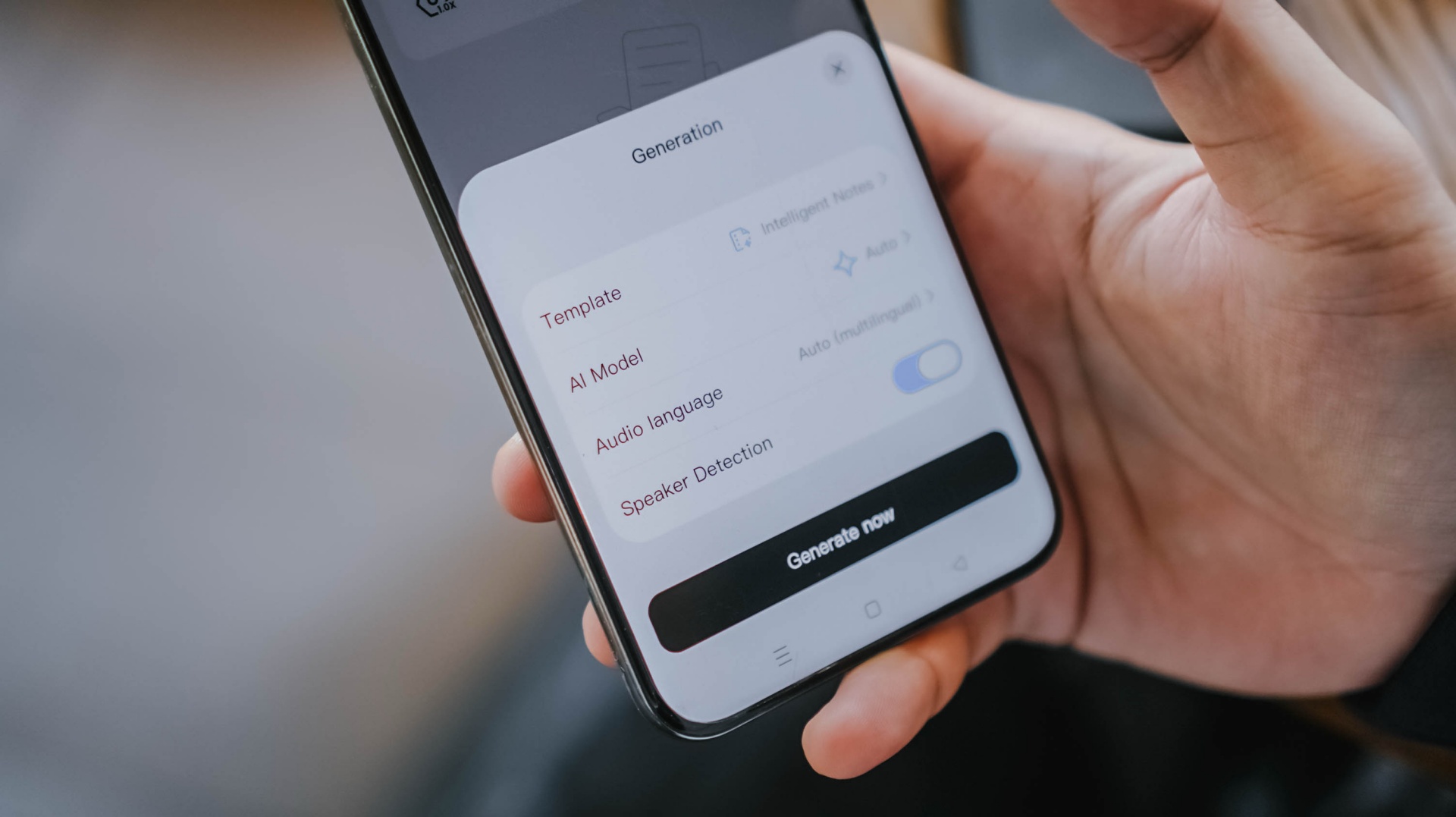
You can even choose from over 140 languages, the style of the transcription from 60 professional templates, and the AI model to help you with generating the text.
Beyond that, you can generate a summary or a mind map to quickly review what has been discussed, be it a meeting, a quick call, or a brainstorming session. You can likewise do an AI search across the recording to find more important notes or quotes and their timestamps.
Boya Notra Neo now available for pre-orders
The Boya Notra Neo is now available for pre-orders, ahead of its September 4 launch at IFA 2026.
Pre-ordering now entitles customers to a discount, so they can get the recorder for just US$ 69.99 (SRP: US$ 79.99).
Customers can purchase here.
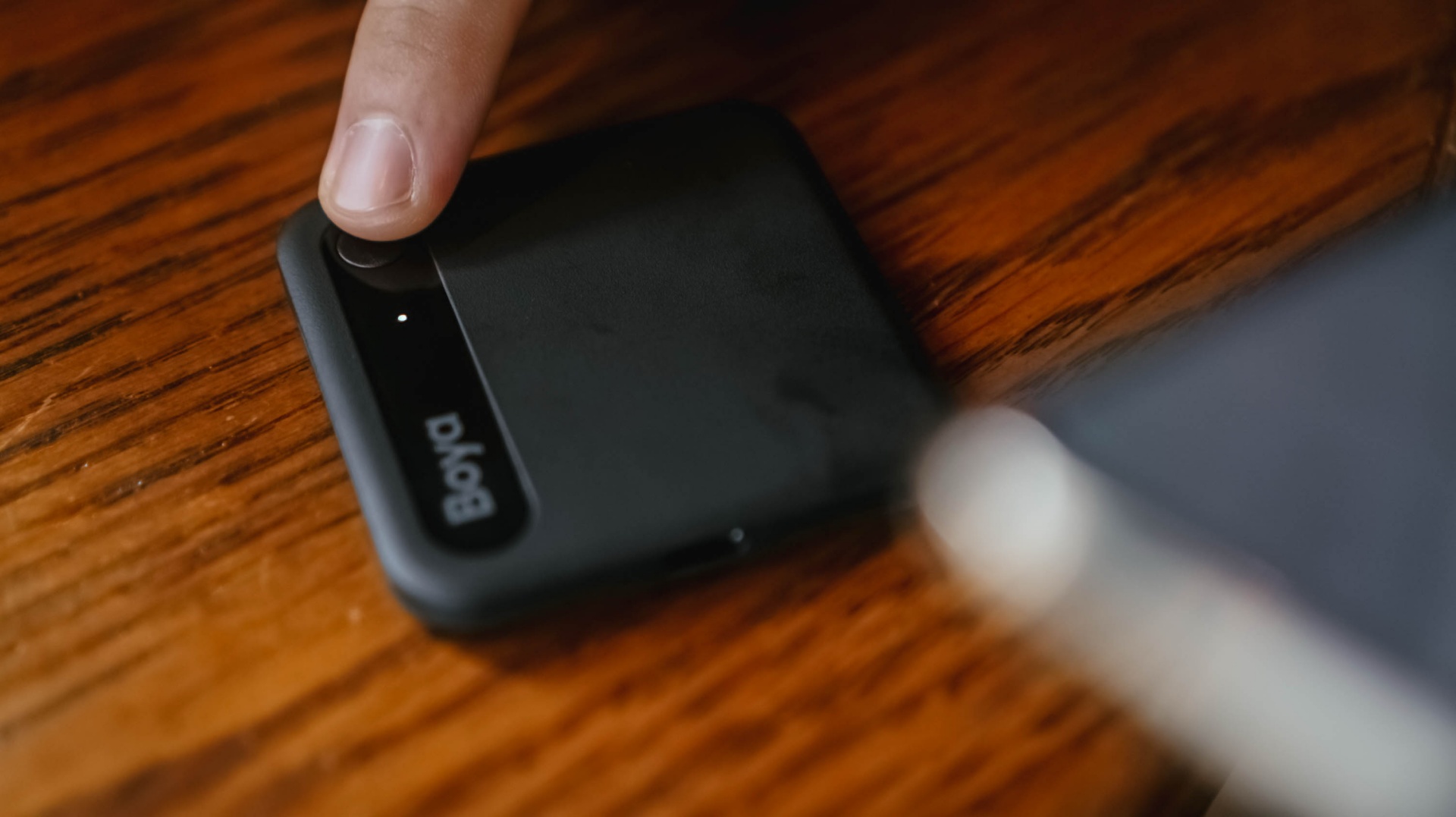
What’s good about the Notra Neo is its ample free recording minutes per month, as it is meant for everyday casual recording to begin with.
This allowance resets every month, so you can start using the device for free.
Subscriptions, on the other hand, are available for those needing more minutes and access to other features.
And oh, there are four colors to choose from to match your smartphone and fashion sense.


REDMI Note 17 Pro Max review: A new breed born from AI greed
Welcome to the new normal


Marvel’s Wolverine review: When the claws come out
A brutal, cinematic superhero adventure

Setting your bedsheets ablaze with the Lovense Solace Pro
The closest proxy I could find where I'm guilty as sin

Ford revs up Truck Month with extended 5-star care offers
REDMI Note 17 Pro Max review: A new breed born from AI greed

REDMI NOTE 17 Series: Price, availability in the Philippines

Max vs 100 will feature Max Verstappen race against 100 go-karters

Apple’s best feature to cure motion sickness is finally on Android

TECNO MEGAPAD 2 review: Eyes on the size

realme 16T 5G with 8000mAh battery, IP69 Pro rating launches in PH

HUAWEI Pura X View is 2026’s first WIDE slab-type smartphone

REDMI reveals the refreshed Note 17 and Note 17 Pro series

REDMI Note 17 Series: Price, availability in Singapore


-
 News1 week ago
HUAWEI Pura X View is 2026’s first WIDE slab-type smartphone
-

 News1 week ago
The CAMON Slim 5G is TECNO’s latest ultra-slim smartphone
-
 Cameras2 weeks ago
DJI Osmo 360 II review: Going all-in on the ecosystem
-
 IFA 20262 weeks ago
TECNO MEGABOOK T15 360 unveiled at IFA 2026
-

 Gaming2 weeks ago
NBA 2K27 review: A two-way All-Star
-

 News7 days ago
iPhone 18 Pro series: Price, availability in the Philippines
-

 IFA 20262 weeks ago
TECNO’s POVA 8 Pro gets a stealthy makeover
-

 Automotive2 weeks ago
Ford’s new Everest lineup brings V6 engine to the top, tech down the line