
News
Xiaomi Mi Note 2 with dual-curved display to arrive October 25


Off the top of your head: What smartphone has a large dual-curved display and flagship-worthy specs that fit snugly in an unbelievably thin frame? If you’re thinking of the discontinued Samsung Galaxy Note 7, we can’t blame you, but there’s an upcoming phone with the same description — at a presumably cheaper price: the Xiaomi Mi Note 2.
After releasing interesting Apple MacBook and iPhone 7 alternatives, Xiaomi is now hell-bent on replacing Samsung’s former masterpiece. If the rumored specifications and photos hold true, we could be looking at something even better.
[irp posts=”4798″ name=”Xiaomi Mi 5s and 5s Plus set to challenge iPhone 7 and 7 Plus”]
As of now, this is the most legitimate sighting we have of the Mi Note 2:

We can confirm so far that there’ll be a Qualcomm Snapdragon 821 processor (the best currently available for smartphones), curved 5.5-inch (or 5.7-inch) OLED display, dual-camera setup, and up to 6GB of RAM with 128GB of internal storage. Additional rumors claim there’s going to be two variants: one with a 1080p resolution and another with 1440p on its display.
The leaked shots below help back up the information we have so far:




More recent leaks, however, have shown a more outrageous design for the handset:



Absolutely no bezels in sight! As much as we’d love to see a smartphone with such a physique made commercially available, we wouldn’t hold our breaths. Still, how awesome would this Xiaomi be if all the rumors fit together?
The good news is we’ll be seeing the Mi Note 2 really soon, with an official unveiling on October 25. Let’s hope Xiaomi decides to make it more internationally available than all its other products, but we kind of doubt that.
[irp posts=”1428″ name=”The Xiaomi Mi 5 is a much cheaper alternative to the Samsung Galaxy S7″]
Sources: GizmoChina, PlayfulDroid, AndroidPure






Enterprise
Google illegally destroys 250,000 trees for a single AI data center
This is what we stand to lose with data centers.


In the Philippines, it’s illegal to cut down a single tree without a permit. It’s a constant reminder that the preservation of nature should be a civil, besides being a moral, obligation. And yet, corporations are seemingly immune from obligations and morals. Google, the company that used to stand for “Don’t be evil,” shows off its true colors by illegally cutting down 250,000 trees in Finland for a datacenter.
As first reported by The Guardian, Finland is now staring at 330 hectares of land suddenly denuded of around 250,000 valuable trees, all thanks to Google. A local ecologist has also said that the company killed a further 150,000 trees at a separate site.
The environmental desecration is part of Google’s multibillion-dollar push to build data centers all over the world for artificial intelligence. Google has since been ordered to stop the development in the country after Finland found that the company acted without securing the needed assessments and permits to clear the area.
Google brushed away the report by saying that they acted “on the best understanding we had of the legislation at the time.” The company also said that they are protecting the water quality at the affected sites and committed to replanting trees across 130 hectares, a pale comparison to the total area affected.
Other AI companies are also trying to weasel their way into other countries to build data centers. An example is the controversial Pax Silica in the Philippines. Finland now stands as a cautionary tale against the unimpeded and unsupervised growth of data centers for a service that no one asked for.
Don’t be evil, my ass.

As one of the wisest sages of the 2000s once said, “He was a punk, she did ballet. What more can I say?” Sometimes, opposites attract. Now, two of those opposites in the audio space are coming together: the punk Skullcandy and the ballet-loving Bose.
Today, Bose has announced its acquisition of Skullcandy. The latter will continue to operate as a separate brand but now officially under the Bose umbrella. Although, it’s not a new collaboration as the two brands have previously worked together on devices before. Skullcandy will just have more access to Bose’s technologies moving forward.
Alternatively, Bose will now have access to Skullcandy’s more varied audience. Compared to Bose’s focus on premium products, Skullcandy caters to more alternative lifestyles. Though the brand has since mellowed from its more radical roots, it is still known as one of the alternative brands.
Bose, on the other hand, is still a household name for home audio and noise-cancelling headphones. The new relationship between two polar opposites might be seen as a weird one, but it’s ultimately beneficial to both parties. Besides, both brands were very strong in the 2010s. Keeping both brands going is a boon to audiophiles of the past decade.
Gaming
Next Xbox might cost double the price of an Xbox today
The most expensive Xbox Series X costs $900. The next Xbox’s price might double that.
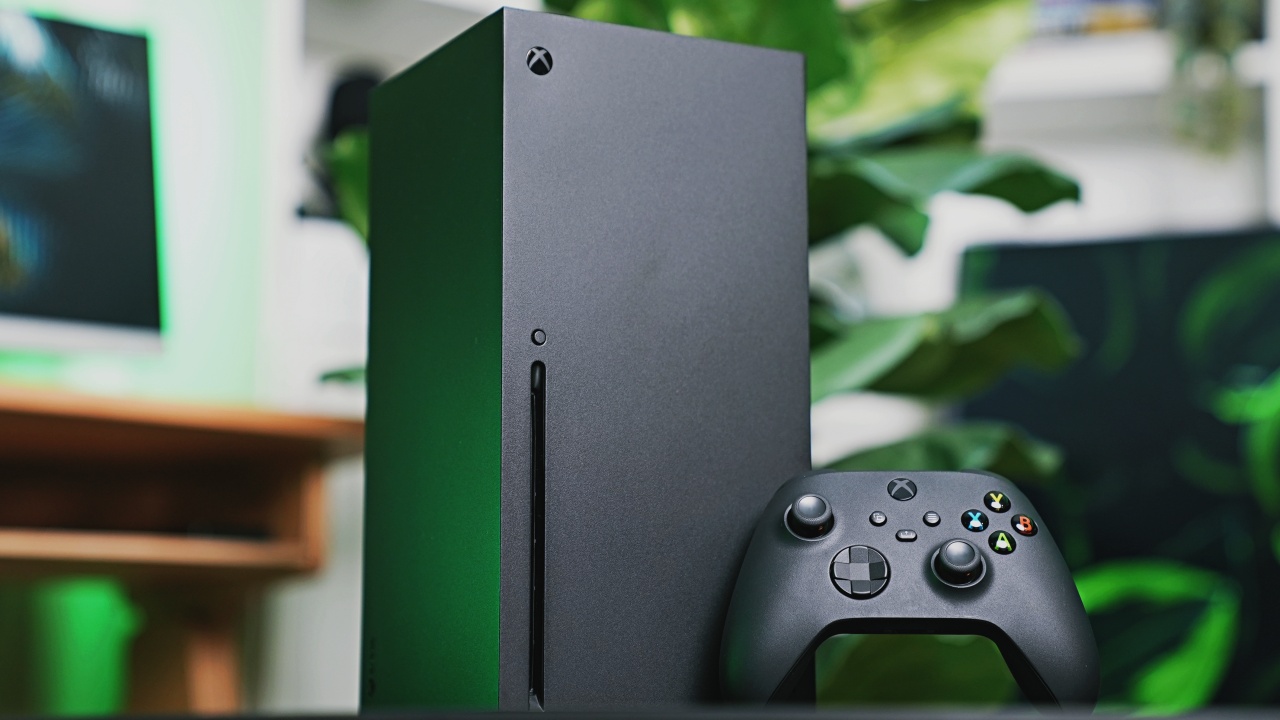
Buying a new gaming setup must be one of the most torturous things you can purchase these days. The rising price of chips has hampered the buying ability of many a consumer today. Sadly, that trend isn’t changing anytime soon. According to new reports, the next Xbox might cost double of what an Xbox costs these days.
The next console is currently codenamed Project Helix. Spearheaded by relatively new Xbox CEO Asha Sherma, Project Helix has hopes of being an all-around gaming machine capable of playing PC games besides console exclusives. Sharma obviously wants the platform to come back as a worthy destination for gamers.
That’s a monumental task, though, especially after the rising prices of chips are constantly threatening the prices of new devices. Now, according to a profile of Sharma published by Fortune, the next Xbox might cost as high as US$ 1,800. For reference, the limited 25th anniversary edition of the Xbox Series X currently costs US$ 899.
Should Fortune’s estimate hold true, a new console in the coming years is double the cost of the most expensive Xbox Series X variant available today. The next generation of gaming might be even more of a luxury than it already is.
Unfortunately, things aren’t getting better across the board. Gaming on PC and on PlayStation aren’t going to be much cheaper as the RAM crisis continues.
SEE ALSO: Xbox might get rid of physical discs too







Google illegally destroys 250,000 trees for a single AI data center

FINAL FANTASY RESONANCE now available across major platforms

Bose acquires Skullcandy

Next Xbox might cost double the price of an Xbox today

Apple Music is getting a Liquid Glass makeover

TECNO CAMON Slim 5G: Price, availability in the Philippines

TECNO CAMON Slim 5G review: Slim on size, big on surprise

HONOR Magic9 Pro Max launches in China with ARRI-powered imaging

BYD says that way better EV batteries are coming next year

TECNO CAMON Slim 5G teases an ultra-slim design ahead of launch


-

 Wearables2 weeks ago
Garmin Enduro 4 promises up to 320 hours of battery life
-

 Gaming2 weeks ago
Dragon’s Dogma 2: Dark Arisen launches with new Official Pawns
-

 News7 days ago
vivo V80 debuts with ZEISS cameras
-
 Deals2 weeks ago
Score PhP 22,000 in guaranteed freebies when you pre-order the iPhone 18 Pro at Beyond the Box
-

 Philippines6 days ago
TECNO CAMON Slim 5G gets launch discounts, free MagBadge
-

 Wearables2 weeks ago
Garmin Approach S72 brings swing metrics, green reading to your wrist
-

 Laptops2 weeks ago
ASUS Zenbook 14 lineup expands with new colors and processors
-

 News7 days ago
Samsung: Galaxy Z Fold8 demand rose because of iPhone Duo