
News
Mi Mix is Xiaomi’s ceramic concept of the future


In the tech world, you either imitate or innovate. Xiaomi has always been known as an imitator, but all that’s about to change with the unveiling of the practically borderless Mi Mix. Unlike other concept devices, however, this stunner will actually see the light of day sooner than you think.
Although Xiaomi calls the Mi Mix a “full-screen concept phone,” there’s so much more to it than that. With a 6.4-inch 2040 x 1080-pixel display (for an unusual 17:9 ratio) taking up 91.3 percent of the front, the only comparison we have is Sharp’s Aquos line of edge-to-edge smartphones, but those never really took off.

Xiaomi Mi Mix front and back
Of course, there’s still a chin at the bottom, where the speaker and front-facing camera are located. If it’s anything like the awkwardly placed selfie shooters of the Aquos phones or Dell XPS laptops, expect some unflattering photos of your own chin.
Another standout element is the use of ceramic for the frame and buttons — yes, the same nonmetal material used in your grandparent’s pottery collection. Credit goes to French designer Philippe Starck for coming up with the head-turning physique, and Xiaomi for maintaining a practical 7.9-millimeter profile and 209-gram weight.
With all this bezel cutting, you may be wondering how to make a phone call with this thing. Xiaomi employed a piezoelectric driver that creates vibrations to produce audio through the glass, and ultrasound is used in place of a proximity sensor. Basically speaking, it’s still a phone — a powerful one, at that.
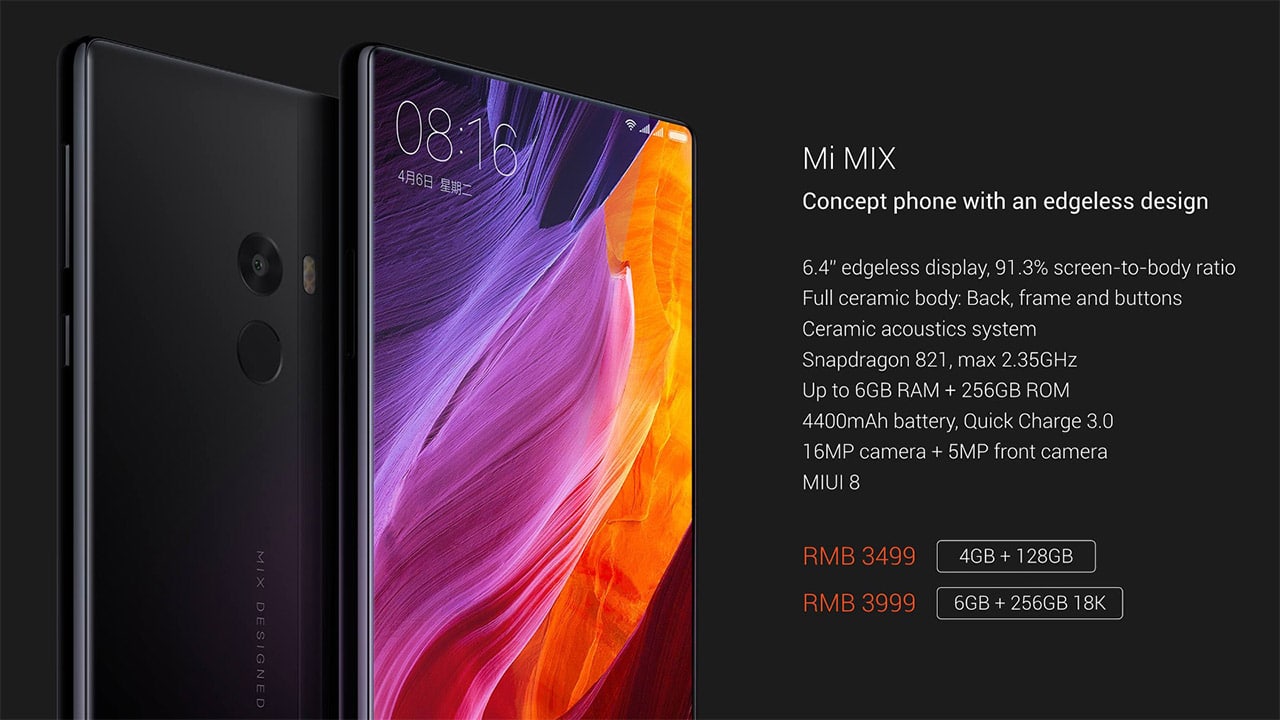
Xiaomi Mi Mix’s highlighted specs and pricing
The same Qualcomm Snapdragon 821 chipset used on the Mi Note 2 runs the show here, and the rear and front cameras are armed with 16-megapixel and 5-megapixel image sensors, respectively. A battery capacity of 4400mAh and Quick Charge 3.0 ensure your investment won’t die in less than a day of use.
As amazing as the Mi Mix is, the announcement isn’t a total surprise. When we uncovered leaks of a borderless Xiaomi handset a week ago, we thought it was that of the just-launched Mi Note 2. Turns out we’ve been looking at the Mi Mix all along.
[irp posts=”7220″ name=”Xiaomi Mi Note 2 has curved display, high-end specs”]
Configurations and their respective prices come in two options; the 4GB of memory with 128GB of storage model costs CNY 3,499 ($516), while the 6GB RAM with 256GB storage variant retails for CNY 3,999 ($590). The latter is extra special with 18-karat gold accents encircling the camera lens and fingerprint sensor located on the back.
Here’s the best part: Both models come with a leather case, and will be available beginning November 4 in China. We’ve never wanted a Xiaomi to experience a global release as badly as we do now.
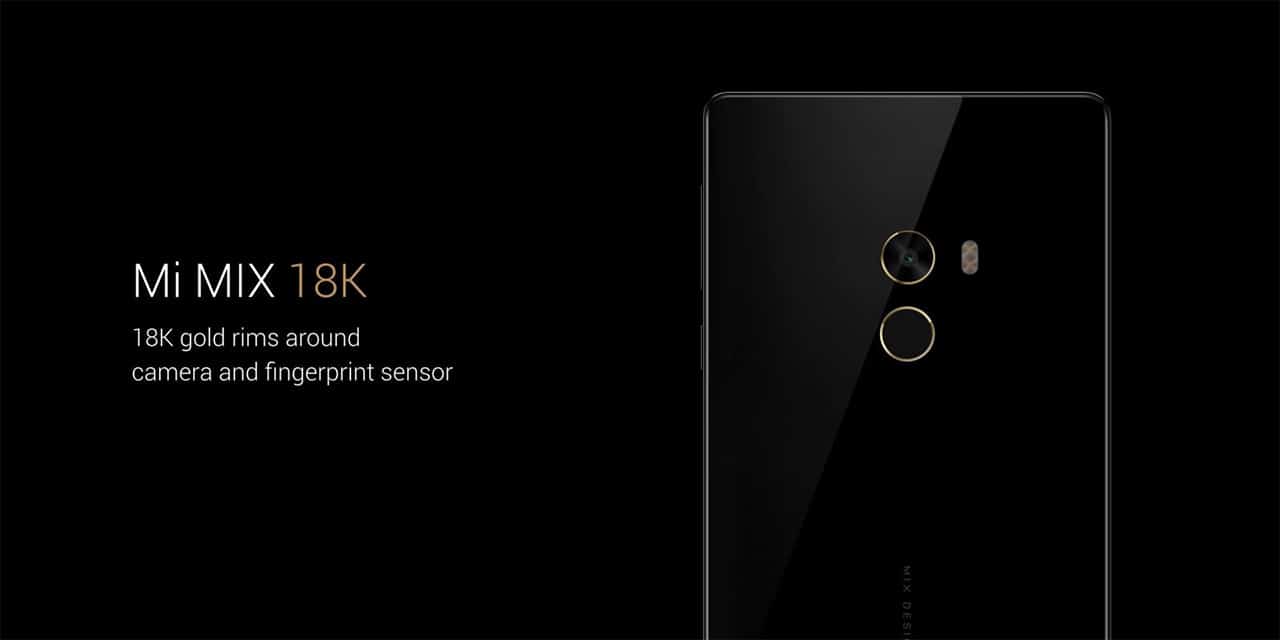
Xiaomi Mi Mix’s gold accents





News
Power Mac Center SM Aura is now an Apple Premium Partner store
With a new protection plan dubbed as “1Protect” for your precious new iPhones


Power Mac Center has upgraded its SM Aura branch into an Apple Premium Partner (APP) store. The “APP” designation is the highest tier for reseller stores worldwide.
Originally opened in 2014, the redesigned store now houses its retail space, training center, and a service center in one.

The new space also puts more emphasis on learning. Free group demos will be held every Friday to Sunday. These will cover topics such as iPad creativity, or camera features, personalization, and Continuity for the latest iPhone series.
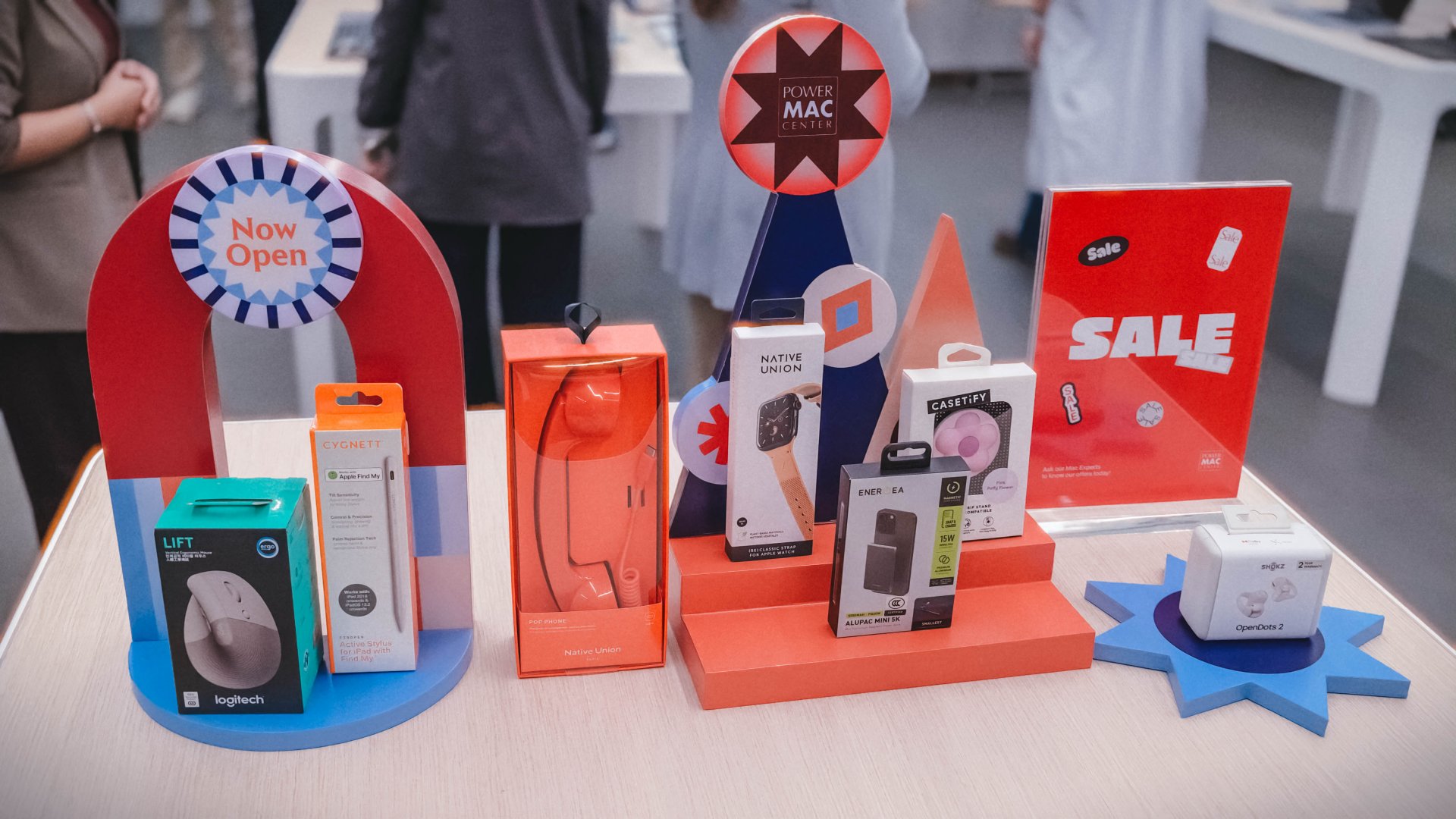
To celebrate the opening, customers can also score discounts on select Apple devices and accessories until September 27, 2026.
Deals include up to:
- ₱PhP 36,000 off MacBook Pros
- PhP 19,500 off iPads
- PhP 3000 off Apple Watches; and
- PhP 11,000 off iPhone models
There are also service discounts until September 25. Plus, new iPhones purchases here are also covered with 1Protect coverage options.
ICYMI, it’s a partnership between PMC and Bolttech. It’s basically a new way to protect your precious new iPhones.

Your regular one-year warranty does not cover accidental drops and water damage. Purchasing this new coverage plan (good for one year) gives you an unlimited dose of that.
Parts are guaranteed original and is an official part of AppleCare Services.
This protection program also covers one-time unwarranted exchanges (or change of mind returns) from micro scratches to color options. It will even replace your iPhone (of the same model and configuration) if it was stolen once.

There’s also the 1 Infinite loyalty program. Members can earn points from purchases and redeem them for devices, accessories, services, and training.
The Power Mac Center SM Aura APP store is located on Level 2 and is open daily from 10AM to 10PM.


The stage is set for next year’s smartphones. Both MediaTek and Qualcomm have unleased their upcoming flagship chipsets for the coming generation. If you’re looking for the Qualcomm side of things, go here. But if you’re looking for MediaTek, then you’re in the right place.
The Dimensity 9600 Pro adopts the 2nm process mode, which makes MediaTek one of the first companies to use it. The chip itself features a 2+3+3 All Big Core CPU. Specifically, it has two C2-Ultra cores going up to 4.55GHz, three C2-Pro cores going up to 4.35GHz, and three C2-Pro ones going up to 3.1GHz. This configuration can reportedly achieve 17 percent better single-core performance and 15 percent higher multi-core performance.
Besides all that power inherently built in, the chipset also has the G2-Ultra NX GPU. This GPU can deliver 27 percent higher peak performance, 24 percent lower power consumption, 18 percent faster raytracing, and gaming at up to 185 frames per second.
Finally, the chipset has the Imagiq 1290 ISP. With this engine, the processor can handle 60fps motion capture and 4K240 direct-output ultra-slow-motion video.
Alongside the Dimensity 9600 Pro, MediaTek is also launching the Dimensity 9600M, a slightly more lightweight option of the Pro that deliver flagship level performance to more users outside of that price point.
Smartphones that will come with the Dimensity 9600 Pro and 9600M will launch sometime in the fourth quarter.
SEE ALSO: MediaTek unveils Dimensity 9500s, 8500 mobile processors
The end of the year always heralds the next step of processors for next year’s smartphones. Besides the oodles of phone rumors we’ll have before the year ends, these new processors give us a powerful hint of what the new machinery can do. Today, Qualcomm has unveiled that next generation, announcing the Snapdragon 8 Elite Gen 6 and the Snapdragon 8 Elite Extreme Gen 6.
Yes, this time, the Snapdragon flagship chipset will come in two flavors. Let’s start with the Snapdragon 8 Elite Gen 6.
The “base” model of the duo has an octa-core Oryon CPU with two prime cores going up to 5GHz. It also has an Adreno GPU that touts 35 percent faster performance compared to the previous generation. Additionally, the chipset has a 16MB Flex Cache which can supposedly leverage the cache better to deliver better single-threaded performance.
The Snapdragon 8 Elite Gen 6 will also have a new Spectra ISP. The engine can support single image capturing at 320 megapixels, or 64 megapixels with a triple rear camera combo. It also supports 8K video capturing at 30fps. Further, Intelligent Pixel Control features better contextualization skills so the camera can more accurately detect what you’re taking a photo or video of.
Finally, the X105 5G modem offers the usual array of 5G connectivity options but also goes up to supporting Bluetooth 6 and Wi-Fi 8.
Meanwhile, the Snapdragon 8 Elite Extreme Gen 6 offers much of the same as the duo’s regular model. However, it features 18MB of high performance memory, video recording that goes up to 60fps at 8K resolution, and new Matrix Cores that boost frame generation for gaming.
As expected, both models will appear in new smartphones from later this year to next year.
SEE ALSO: Qualcomm is raising its prices this year


DJI Lito X1 review: Is this the best lightweight drone for creators?
Making a strong case as a travel companion and a capable B-cam!


REDMI Note 17 Pro Max review: A new breed born from AI greed
Welcome to the new normal


Marvel’s Wolverine review: When the claws come out
A brutal, cinematic superhero adventure

CRISIS CORE -FINAL FANTASY VII- REUNION physical edition now available for Switch 2

Smart launches AI.Smart, an affordable AI workspace

A Discord ban won’t save your kids

When your body talks, the Galaxy ecosystem listens

Power Mac Center SM Aura is now an Apple Premium Partner store

realme 16T 5G with 8000mAh battery, IP69 Pro rating launches in PH

HUAWEI Pura X View is 2026’s first WIDE slab-type smartphone

REDMI reveals the refreshed Note 17 and Note 17 Pro series

REDMI Note 17 Series: Price, availability in Singapore

The CAMON Slim 5G is TECNO’s latest ultra-slim smartphone


-

 News4 days ago
vivo X500 Series launches with major imaging upgrades
-

 Hands-On2 weeks ago
Apple iPhone 18 Pro Series Hands-on
-

 Gaming2 weeks ago
BlizzCon 2026 announces World of Warcraft: Forever and Diablo V
-

 Singapore6 days ago
Epson Lifestudio Grand Plus EH-LS970B with 4K projection, more launches
-
Reviews1 week ago
REDMI Note 17 Pro Max review: A new breed born from AI greed
-

 First Look2 weeks ago
First Look: Apple iPhone Duo
-

 News2 days ago
OPPO Find X10 Pro Max is the first phone with a triple 200MP camera system
-

 Gaming1 week ago
Valve unveils price of the Steam Frame