
Social Media
New York Times buys viral word game Wordle

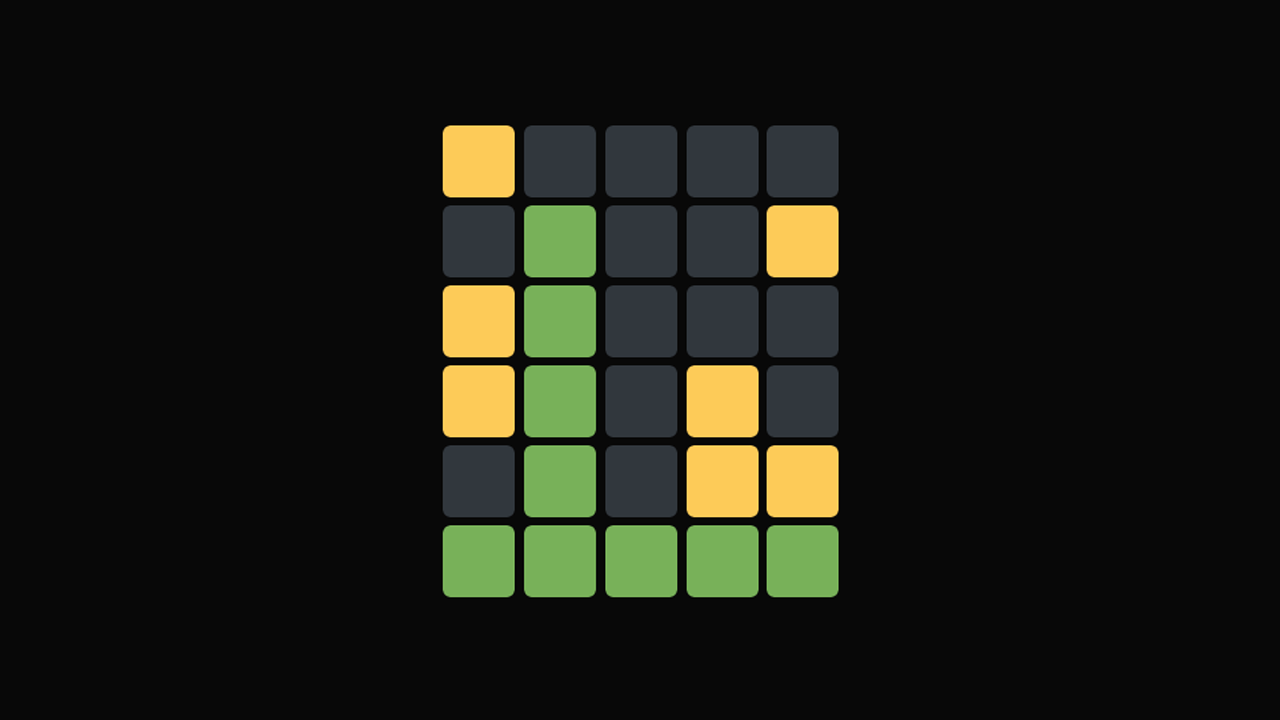
You might have noticed a grid of colored squares peppered around your social media feeds as of late. Likewise, you might have also seen a strange influx of interest for word games. Though they don’t seem connected, both trends revolve around the sudden astronomical rise of a viral word game called Wordle. If you’ve been wondering about the game yourself, you might hear a lot more about it in the coming months. Taking it from its social media roots, the New York Times has acquired Wordle.

How to play Wordle
So, what exactly is Wordle? The popular word game doesn’t differ a lot from traditional word-guessing games. Every day, players get a five-letter word to guess and six tries to do it. You don’t get any hints as to what the word might be. Instead, the game tells you which letters belong to the word. A yellow square means that the letter is in the word but in the wrong position. Green means it’s the right letter in the right position. Meanwhile, black means that the letter isn’t part of the solution.
Now, you’re likely getting a clearer idea of what those colored squares on Twitter mean. That grid, composed of yellow, green, and black squares, represent the user’s tries. It’s a badge of honor, as if to say, “Yeah, I just took this many tries to guess the word.”
Getting into the game is easy, too. Instead of fancy apps or pay-to-play systems, Wordle is free to play on any browser with this link. It’s a completely web-based game. Besides making it easy for players to get into the game, having a web-based platform means that any Wordle alternatives you might see on the App Store or on the Play Store aren’t part of the authentic Wordle experience. In fact, Apple already started purging any copycats from the App Store in January.

An astronomical rise
Created by software engineer Josh Wardle, the game was originally meant only for his partner, Palak Shah, who loves word games. The Brooklyn-based engineer created the simple game with no need for any account creation. The game doesn’t even have ads.
In fact, the original iteration didn’t even have a way to share your progress on social media. Apparently, Wardle only decided to introduce the feature when a New Zealand player used emojis to represent their progress on the word of the day.
Despite the simplicity of it, Wordle has exploded from its original one-person target audience. Because of good, old-fashioned word-of-mouth, millions of players now post their word grids every single day. And, according to an early interview with The Guardian, Wardle is now challenged to maintain the game’s operation every day.
“It going viral doesn’t feel great to be honest. I feel a sense of responsibility for the players. I feel I really owe it to them to keep things running and make sure everything’s working correctly,” the developer said.
Image source: New York Times
NYT buys Wordle
On Monday, The New York Times purchased the popular word game for “an undisclosed price in the low seven figures,” taking the game off Wardle’s hands. Though the acquisition might seem like a blow to the indie dream, the developer believes that the company are the right stewards for the game, citing that their values follow Wardle’s.
For the Times’ part, acquiring the hit word game can only mean opportunity for the publication’s growing games library. Like any newspaper, the Times maintains a games section to keep everyone’s minds calm amid the growing dread from today’s news. With most publication already in the digital realm, it’s easier to keep a game library. In fact, even before their acquisition of Wordle, the publication already had a similar game called Spelling Bee.
However, despite the acquisition’s promise for both Wardle and the Times, the latter has not explained whether the game will change direction in any way. Though the Times offers some gameplay for free, most are locked behind a subscriber wall.
Certainly, the Times does have a lot of precedent for keeping the games as is. Now, more than a day after the acquisition was made public, Wordle is still the same game as it has always been.
Colored squares will keep littering your feeds for the foreseeable future. Underlying all this talk of acquisition, Wordle offers one of the simplest ways to keep connected over the internet: a daily five-letter word to bond over.
SEE ALSO: Netflix could add video games to the platform at no extra cost

News
Facebook, Instagram gets away with $18 billion fine for being too addictive for kids
However, Meta is changing some policies regarding teenage use.
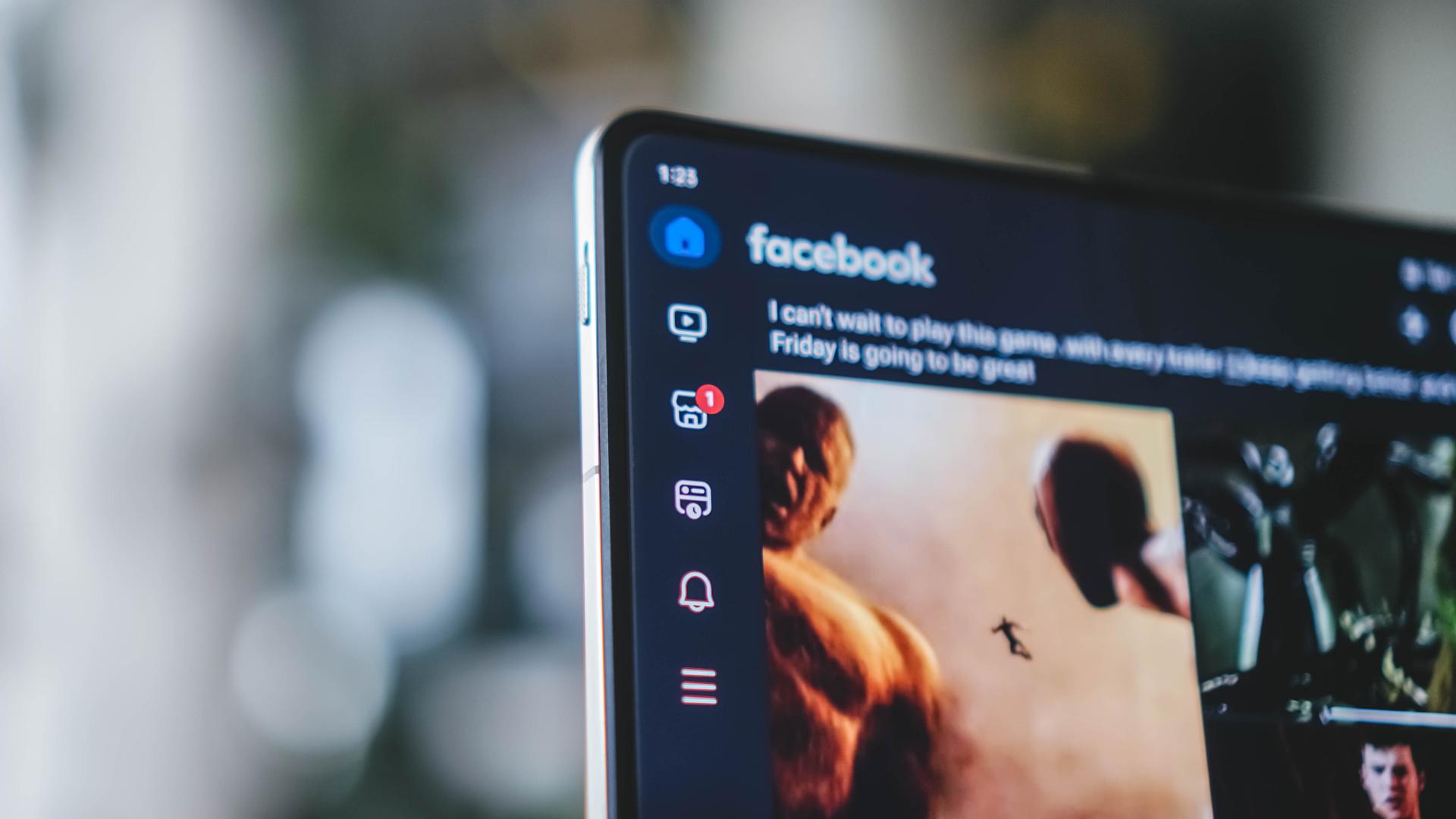
Are Facebook and Instagram too addictive for children and teenagers? That’s a question that the United States wants Meta to answer. The answer, however, comes in the form of a US$ 18 billion fine and changes to how teenagers can use the platforms.
Recently, Meta found itself in a pool of hot water over how addictive their platforms are for younger users. The government alleges that the company incentivizes a teenager’s prolonged usage and collects their data without their consent.
After some deliberation, Meta has agreed to the US$ 18 billion settlement and policy changes for younger users, pending the court’s agreement, of course.
Besides the hefty (but ultimately insignificant for the multi-billion dollar company) fine, Meta will impose stricter limits on teenage use. For example, teenagers can now use the platforms for only up to two hours per day. Meta will also block usage between midnight to 6AM. Parents can still manually change these limits. The platforms are also blocking notifications for younger users at night and during school hours.
Meta says that they’ll increase these limits to only one hour per day and a block from 10PM to 7AM, if rival platforms like YouTube and TikTok follow in their footsteps. They will also withhold 30 percent of the fine, unless these same platforms agree to the limits.
Most notably, Meta is starting a new “non-algorithmic” feed for teenagers which limits what they see only to accounts that they actually follow. This prevents the algorithm from sinking them into an endless doom-scrolling loop. Honestly, we wish that this “feature,” which is already what Meta was years before, comes to all users, too.
Though these measures are a welcome change to combat addiction, it’s only the tip of the iceberg on what Facebook and Instagram can change for the better. One can hope that this settlement will lead to more changes in the future.
Entertainment
BINI, KATSEYE among top worldwide Google Searches ahead of Coachella
Coachella to kick off this weekend


BINI and KATSEYE topped recent Google Search trends ahead of their Coachella performances this month.
It’s clear that Coachella attendees are curious about the popular Philippine pop girl group, as well as the Los Angeles-based global girl group.
That’s aside from dedicated BLOOMs who are eager to see Aiah, Colet, Maloi, Gwen, Stacey, Mikha, Jhoanna, and Sheena take part in the legendary California music festival on Friday, April 10.
According to Google Trends data, global searches for the term “BINI Coachella” hit a perfect
score of 100 on April 8.
This indicates that the search term briefly became the highest-ranking search trend.
Meanwhile, “KATSEYE Coachella” scored 98 on April 7 on Google Trends, followed by a perfect 100 on April 8.
The timing of KATSEYE’s new single, “PINKY UP” couldn’t have been better as it dropped just a day before their Sahara stage set.
At the same time, the Filipino octet has also released “Blush” as their new comeback song — just hours ahead of KATSEYE.
As such, EYEKONS have also been scouring the interwebs for the global girl group.
And as these are worldwide search data, the recent Google Search trends somewhat prove these artists are effectively breaking through the global mainstream, and introducing their respective cultures to the global stage.
Social Media
ZOOP, a new social platform, to launch soon
Platform to host dedicated Eurovision Song Contest Asia channel during launch
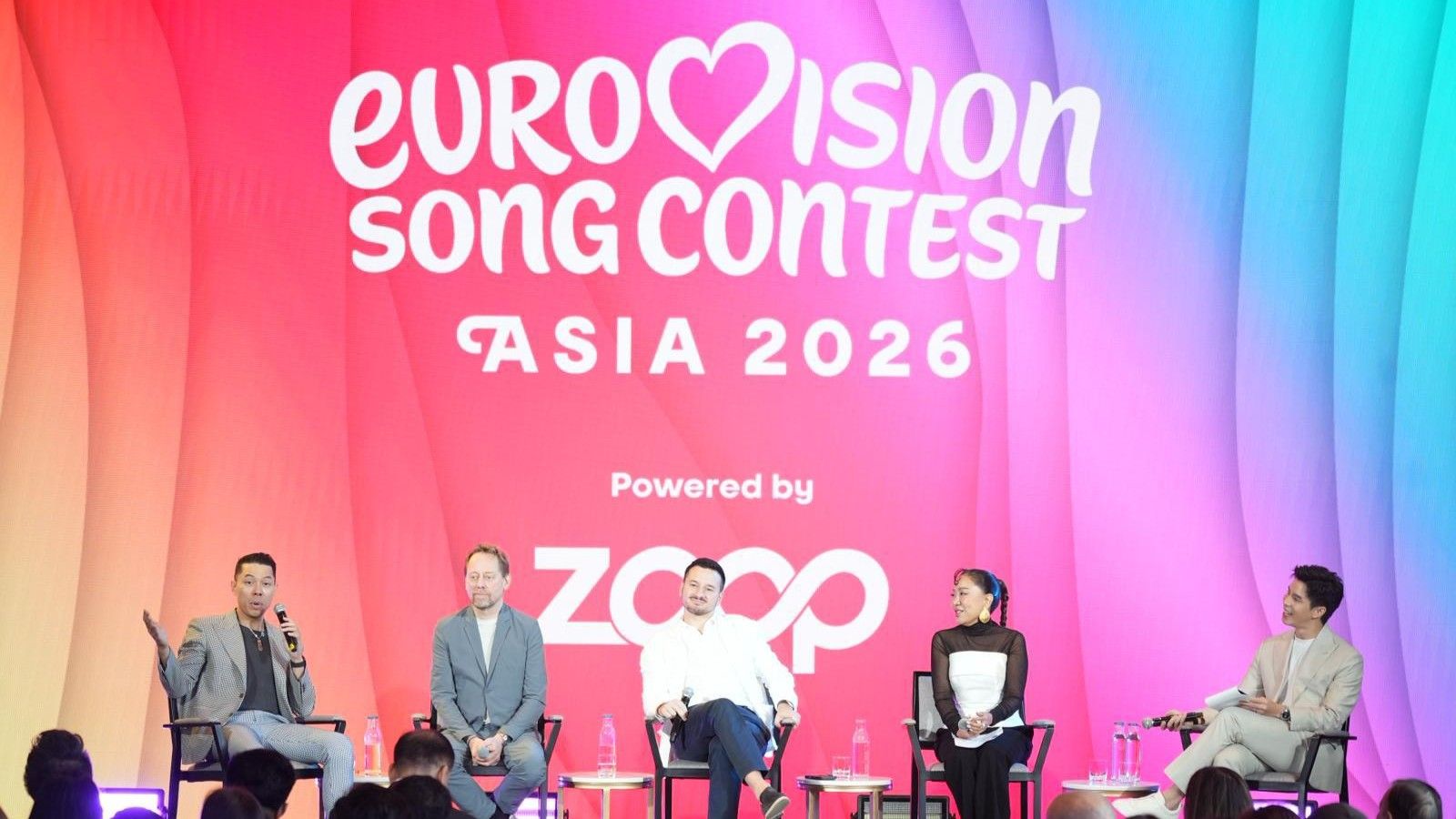
A new social platform built around creators, fans, and communities will launch globally on April 9. It is called ZOOP, and the launch will coincide with a dedicated Eurovision Song Contest Asia channel.
ZOOP positions itself as a challenger to the likes of Meta (Facebook, Instagram) and TikTok. It is designed so creators keep more of the value they generate — up to 80% of revenue, and potentially up to 50 times more than on traditional platforms.
Additionally, fans also get rewarded for meaningful engagement. ZOOP says it has already attracted nearly 1 million users via its web version, beta tests, and waitlist ahead of launch.
Securing a partnership with Eurovision Song Contest Asia as its exclusive social partner is a bold first move. And it isn’t just random; ZOOP plans to host dedicated channels, communities, competitions, voting and rewards around major cultural moments.
ZOOP is powered by Hedera for scalable, low-cost, and transparent participation. The social media platform also has an exclusive global rewards partnership with TLC Worldwide across more than 50 countries.






Apple iPhone 18 Pro Series review

UGREEN launches new MagFlow and Nexode Pro charging accessories to Southeast Asia

Apple might not have given up on the Vision Pro yet

ROG brings out the ultra-stylish G1000 gaming desktop

God of War Laufey pre-orders are now live

HUAWEI Pura X View is 2026’s first WIDE slab-type smartphone

The CAMON Slim 5G is TECNO’s latest ultra-slim smartphone

iPhone 18 Pro series: Price, availability in the Philippines

DJI Osmo 360 II review: Going all-in on the ecosystem

iPhone 18 Pro series: Price, availability in Singapore


-

 News1 week ago
vivo X500 Series launches with major imaging upgrades
-

 News1 week ago
OPPO Find X10 Pro Max is the first phone with a triple 200MP camera system
-

 Singapore2 weeks ago
Epson Lifestudio Grand Plus EH-LS970B with 4K projection, more launches
-

 Automotive2 days ago
BYD says that way better EV batteries are coming next year
-

 Drones2 weeks ago
DJI Lito X1 review: Is this the best lightweight drone for creators?
-

 News1 week ago
vivo introduces OriginOS 7 with smarter multitasking and AI features
-

 Finance2 weeks ago
HONOR, Fidesmo partner for contactless payments across Europe, Middle East
-

 Smartphones4 days ago
When TECNO-logy meets Tonino Lamborghini legacy