
Computers
Adata, XPG to showcase AI gaming laptop, handheld at Computex 2024
The XPG Xenia 15G and XPG Nia


Adata and XPG will showcase a new AI gaming laptop and gaming handheld at the Computex 2024 event in Taiwan. The two major devices are just part of a various roster of products Adata will be displaying at Computex.
The Taiwanese company will also showcase an overclocked DDR5 8000 R-DIMM memory designed for AI models, external SSDs and Express Cards, and future-proof solutions. In partnership with XPG, Adata will also be feting the award-winning Invader X gaming line, the Defender WS AI workstation, and more products.
Adata’s booth will be accessible from June 4. Virtual visitors may head to this website as well so they won’t miss out on the event. They may even win prizes such as external SSDs or hard drives, or Amazon gift cards.
New laptop, handheld
XPG’s new laptop, the XPG Xenia 15G, supports a configuration with up to 24TB of SSD storage and 96GB RAM. That is more than enough to handle massive workloads and data processing.
On the other hand, the XPG Nia handheld is poised to rival its popular counterparts. It combines superior ergonomics with a circular computing design so gamers can enjoy playing comfortably. The XPG Nia will also pioneer the use of Eyewear eye-tracking technology, so players can enjoy immersive gaming from anywhere.
Overclocked DDR5 memory
Adata will also showcase an overclocked DDR5 8000 R-DIMM memory that is designed to make AI models runs faster and smoother. Adata’s LPCAMM2 memory products are ideal high-performance memory solutions, especially for AI PCs. They comply with JEDEC standards and feature the latest technologies and new design architectures. Furthermore, they can achieve speeds of up to 7,500 MT/s. Available in 16GB to 64GB capacities, these may be applied to PCs, gaming workstations, and even data centers in the future.
Invader X line
Moreover, visitors will be able to see the XPG Invader X line, which includes the award-winning XPG Invader X mid-tower gaming chassis. This comes pre-installed with reverse spinning fans to optimize cooling performance.
The Invader X family of gaming chassis also includes the Invader X BTF, Invader X Pro BTF, and Invader X Mini. XPG has also expanded its line of cooling solutions to include the XPG Hydro CPU air cooler and Hurricane Mag. Completing the lineup are the Levante II AIO and Vento 120 ARGB PWM fans in both standard and reverse models.
Lastly, onlookers may also demo the newly-launched Sorcerer and Sorcerer Mini gaming keyboards, as well as the Precog Studio headset and Frontline XL Xtreme Saga edition mouse pad.
SSD, DDR5 solutions
Aside from the aforementioned major devices, Adata will be featuring various memory and storage solutions at the event.
For instance, their Express Card solutions are fit for AI mobile devices. Their microSD SD7.1 Express has read/write speeds of up to 800/700mbps, while the SD8.0 Express supports up to 1,700/1,200mbps. These allow PCIe SSD level speeds to be accessible for AI mobile devices.
There’s also the Project NeonStorm PCIe Gen5 SSD that adopts a patented dual active cooling system. On the other hand, the Legend 970 Pro PCIe Gen5 SSD boasts a continuous read/write speed of up to 14,000/12,000mbps.
To wrap up, the latest external SSDs, SC750 and SC720, which are designed for mobile phones, will also be available. They follow Adata’s Type-C SSDs that were manufactured to address a growing demand for seamless interdevice connections.






Computers
ROG brings out the ultra-stylish G1000 gaming desktop
Plus, here’s a couple of sleek transport options from ROG.


Despite how much higher prices are going today, there are still so many options if you want a PC for yourself. However, only a handful of brands will offer you quite as much style doing so as ASUS. Today, ROG has revealed the new G1000 gaming desktop.
For the first time ever in a prebuilt PC, the ROG G1000 comes with a built-in AniMe Holo, a holographic fan with customizable visuals using Armoury Crate and Aura Sync. Additionally, the holographic fan is inside its own chamber, preventing it from interfering with the main system. Instead, the desktop uses the ROG Thermal Atrium, which uses three fans to channel fresh air through a 420mm AIO liquid cooler.
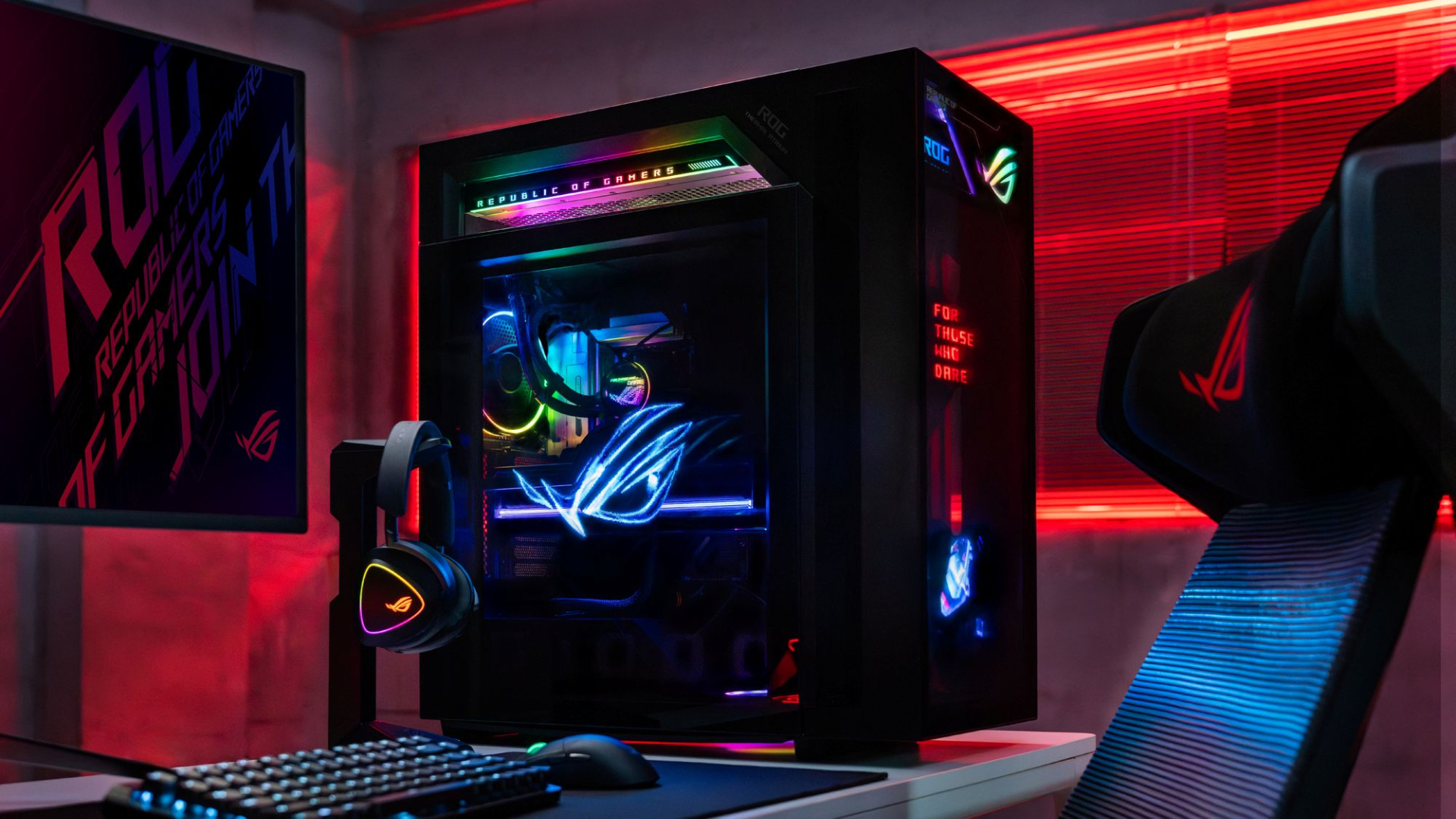
Now, the ROG G1000 isn’t just a pretty face. Inside, the 104L desktop comes with a Ryzen 7 9800X3D processor. It also comes equipped with the ROG Astral GeForce RTX 5080, up to 128GB DDR5 memory, and 1TB SSD for storage. New purchases will also come with a gaming keyboard and mouse, a year of Microsoft 365 Basic, Office Home 2024, and an ASUS No. 1 Quality and Service warranty.
The ROG G1000 will be available from ROG Exclusive Stores and will start at PhP 399,995.
Celebrating ROG at 20
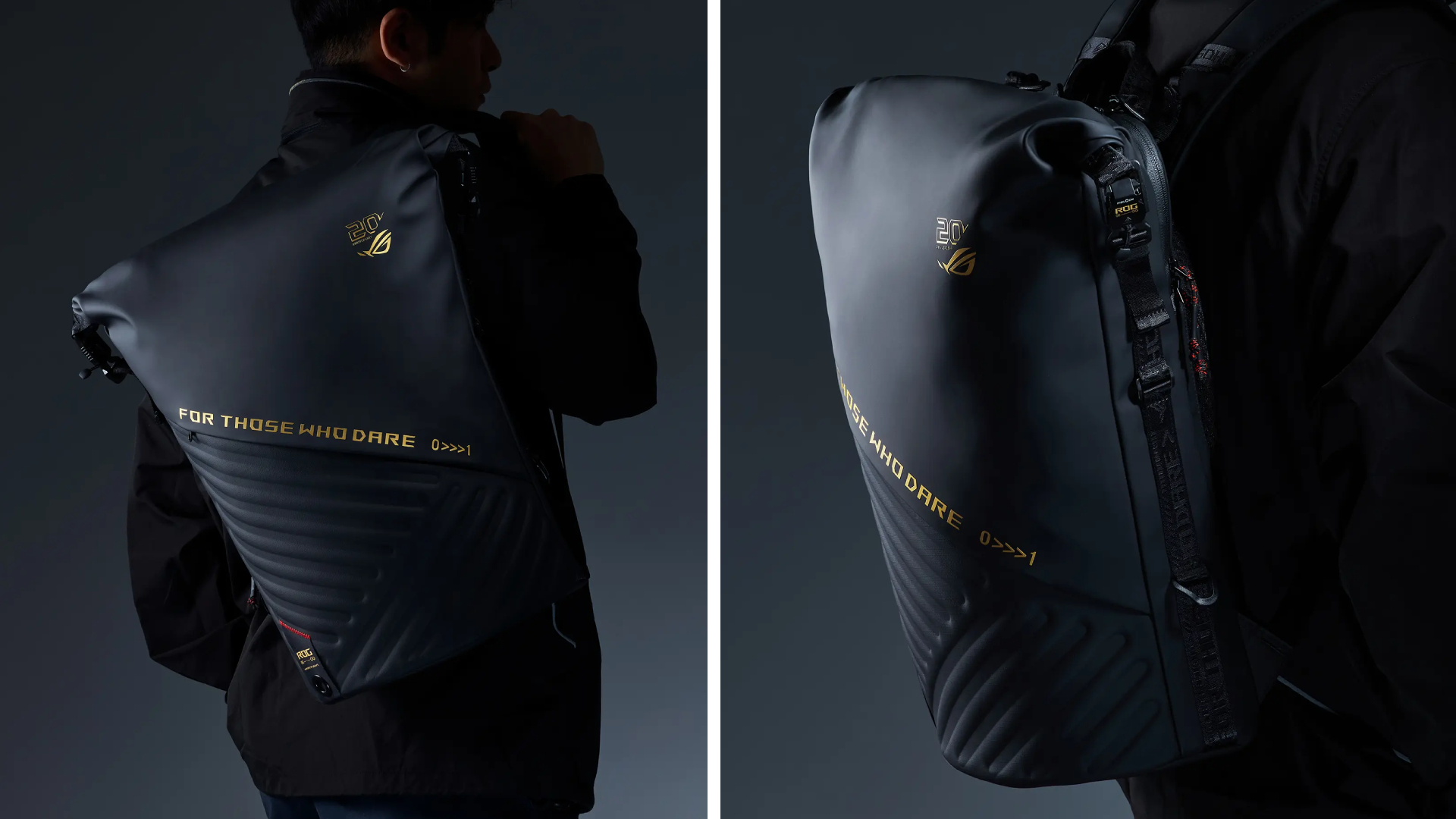
Besides the new desktop, ROG is also launching a couple of storage and transport options for your prized gaming possessions. The ROG SLASH Backpack Edition 20 is a sleek backpack that can fit an 18-inch laptop with enough room for peripherals and accessories. It also comes with a custom FIDLOCK Magnetic quick-release, black-and-translucent-gold buckle. It will be available next quarter for PhP 10,995.
Meanwhile, the ROG SLASH Hard-Case Luggage Edition 20 is designed specifically for transporting your hard-earned gaming devices. The light-but-durable aluminum frame comes with a specialized compartment for laptops, handhelds, and accessories. It also has removalbe foam dividers to better customize the case for your needs. Finally, it has 360-degree silent skate wheels for smoother rolling. The luggage will be available starting next quarter for PhP 15,995.


Acer is expanding its storage lineup with the PA100 Portable SSD. It’s a compact external drive designed for users who need faster storage across multiple devices.
The PA100 uses USB 3.2 Gen 1 connectivity. It reaches sequential read speeds of up to 560MB/s and write speeds of up to 430MB/s. This makes it suited for everyday tasks such as transferring large files, backing up content, managing documents, and moving media between devices.
Up to 2TB of portable storage
The PA100 comes in three capacities: 500GB, 1TB, and 2TB. This gives users options depending on whether they need extra space for documents and schoolwork or larger collections of photos, videos, and project files.
Acer also designed the drive with mobility in mind. The PA100 has a slim 9mm profile and a lightweight build, while its reinforced construction is designed to withstand everyday travel and handling.
The drive comes with a 2-in-1 USB-C to USB-C and USB-A cable. This allows it to connect to compatible PCs, tablets, smartphones, and other devices without requiring a separate adapter. It also supports major operating systems and USB-C mobile platforms.
Designed for everyday use
Power efficiency is another focus. Acer says the PA100 uses less than 3W during operation, while idle power consumption can drop to as low as 0.62W.
The drive also features an optimized thermal design to help maintain stable performance during extended transfers and daily workloads.
The Acer PA100 Portable SSD is backed by a three-year limited warranty. Pricing and availability may vary by market.
Computers
New Mac mini starts at a whopping $899, only 256GB of storage
It comes with the M6 or the M5 Pro.

Almost two decades ago, Apple was infamous for being an anti-gamer brand. Though the company’s devices touted superior protection against viruses, they couldn’t play video games, alienating a significant chunk of the population and forcing them onto PCs. For a while now, the Mac has changed the status quo, bringing in more powerful hardware that can play games. Today, Apple is championing that cause further through the newly launched Mac mini.
Compared to the chunkier Macs, the Mac mini has a lithe 5” x 5” profile, emphasizing the “mini” in its name. Despite the size, the new mini will tout two flavors of Apple silicon: the M6 and the M5 Pro.
The M6 variant delivers with up to two times faster gaming performance with ray tracing when running Cyberpunk 2077: Ultimate Edition, compared to the previous M4 version. Meanwhile, the M5 Pro version touts up to 4.5 times faster rendering performance with ray tracing in Blender, compared to the M2 Pro. It will come with macOS 27 Golden Gate out of the box.
You won’t have to worry about connectivity, either. The Mac mini comes with compatibility for Wi-Fi 7, Bluetooth 6, and 2.5Gb Ethernet (going up to 10Gb in upgraded versions). It will also have two USB-C ports, three Thunderbolt 5 ports (but only Thunderbolt 4 for the M6 version), and HDMI port, an Ethernet port, and a headphone jack.
Unfortunately, price seems to be another thing that it’s getting from PCs. The new Mac mini has an increased starting price. Specifically, the M6 version starts at US$ 899 (with only 256GB of storage), and the M5 Pro version starts at US$ 1,699 (for 512GB of storage). Preorders are open now, but they ship out on September 22.
SEE ALSO: Apple raises the prices of iPad and MacBook lineups

TECNO CAMON Slim 5G review: Slim on size, big on surprise
Still with some compromise


UGREEN Nexode Pro 160W review: One mighty brick with a powerful trick
All the speed you need in one charging brick


Apple iPhone 18 Pro Series review
Hype versus Reality
TECNO CAMON Slim 5G review: Slim on size, big on surprise
UGREEN Nexode Pro 160W review: One mighty brick with a powerful trick

Samsung unveils Galaxy Tab S12 series for work, creativity, and life on the go

JBL brings a soundtrack to every room
Apple iPhone 18 Pro Series review

HUAWEI Pura X View is 2026’s first WIDE slab-type smartphone

The CAMON Slim 5G is TECNO’s latest ultra-slim smartphone

iPhone 18 Pro series: Price, availability in the Philippines

DJI Osmo 360 II review: Going all-in on the ecosystem

iPhone 18 Pro series: Price, availability in Singapore


-

 News1 week ago
vivo X500 Series launches with major imaging upgrades
-

 News1 week ago
OPPO Find X10 Pro Max is the first phone with a triple 200MP camera system
-

 Automotive3 days ago
BYD says that way better EV batteries are coming next year
-

 Singapore2 weeks ago
Epson Lifestudio Grand Plus EH-LS970B with 4K projection, more launches
-

 Drones2 weeks ago
DJI Lito X1 review: Is this the best lightweight drone for creators?
-

 News1 week ago
vivo introduces OriginOS 7 with smarter multitasking and AI features
-

 News3 days ago
HONOR Magic9 Pro Max launches in China with ARRI-powered imaging
-
 Smartphones5 days ago
When TECNO-logy meets Tonino Lamborghini legacy