
Gaming
Detroit: Become Human review: Create-your-own-adventures are back
This is your story


Throughout video game history, the element of choice has never factored prominently towards a game’s progress. Even with an abundance of gameplay elements, video games always corral you to its own desired ending.
With Detroit: Become Human, developer Quantic Dream completely leaves that option to you. Besides a unique cinematic experience, Detroit brings a complete create-your-own-adventure set inside a near-future sci-fi world.

Welcome to Detroit
Like its predecessors Heavy Rain and Beyond: Two Souls, Detroit: Become Human mixes its plot seamlessly with its gameplay. Because both are so intertwined, it becomes impossible to talk about one without the other.
Detroit brings us to its eponymous city in 2038. Despite being set two decades into the future, the Motor City doesn’t differ greatly from how it is now. Cars, houses, and clothing styles strangely look the same. However, for all its similarities, the Detroit (and everywhere else) of the future differs in one crucial aspect: artificially intelligent androids exist.
As predicted, humanity has invented compliant and intelligent robots that can do our bidding as servants, companions, and even occasional lovers. Unfortunately, things aren’t as smooth as they seem. Everywhere, androids have started to rebel against their masters. Humanity would call them “deviants.”
In Detroit, you control three androids portrayed through their own respective points of view. Connor is a prototype police android tasked with investigating why androids are turning deviant. Kara is a housewife managing an abusive father’s house and his daughter. Markus is a companion robot caring for an aging artist.

Three-in-one
With three characters, Quantic Dream created three distinct perspectives to separate each story from the other. Besides three collaborative ones, each chapter takes on a different tone and theme.
From gameplay elements to the soundtrack, each perspective is its own story. Even if you isolate them as separate stories, they can still exist individually as an adequately drawn game.
For the most part, every character is isolated in its own world. Detroit successfully created different moods for each story. Connor’s story and gameplay takes on a CSI vibe. Kara’s story has a more familial vibe. Finally, Markus’ story has a more revolutionary tone.

Sigh-filled sci-fi
A well-written science fiction story is always an excellent medium to depict a cautionary tale of the future a la Black Mirror. Like that show, Detroit starts off with an optimistic, well-rounded vision of the almost-near future. In that vision, androids have elevated humanity into new technological levels.
Unfortunately, this breath of fresh air eventually degrades to an on-the-nose civil rights story. From the onset, Detroit already hints that android rights lack the same modicum of respect that human rights do.
While civil rights stories shine in the spotlight today, Detroit hammers it down a little too much. Case in point, the story’s android rights movement uses too much historic taglines like “we have a dream” and “we think therefore we are.” Despite its create-your-own nature, Detroit really wants you to care about its androids.
For what it’s worth, its background worldbuilding excels. Through in-game magazines and TV screens, the game explores other facets of 2038’s world — politics, sports, interpersonal relationships, and transportation.

Do choices really matter?
Thankfully, yes. As with Quantic Dream’s other games, Detroit features a vast river of branching paths. Every decision — whether major or trivial — affects future chapters. Even missing a single slip of paper in one scene blocks you from significant decisions in future scenes.
Despite the allure of unlocking every option possible, the game naturally blocks you from achieving — or at least, unlocking — every option. Some scenes even lock users into time limits, both explicitly shown and hidden.
Further, developers have also highlighted the game’s permadeath options. A persistent worry, however, is if Detroit will have copouts when it deals with death. Thankfully, death is a real option in the game. In my first playthrough, a key character didn’t make it to the end credits. While there are some copout moments, permadeaths for both side and main characters remain a possibility throughout.
Fortunately, Detroit shows you which branches and options you’ve unlocked during your playthrough. The developers adamantly encourage gamers to finish a playthrough first before backtracking into new branches. However, the temptation to replay a chapter is always there.

Press X to pay respects
Unlike most games, Detroit does not have a standard verb set. Besides the traditional movement stick and some interfaces, there are no dedicated run, use, and shoot buttons. Random prompts often appear to perform certain actions.
Usually, this isn’t a problem. In a laidback investigation portion, prompts are easy enough to decipher. However, as is the norm with Quantic Dream, the game also includes nerve-wracking quick-time events (QTEs) to get through action and chase scenes. While this is the best use of the janky controls, it’s not the best way to tell a story. The harried pressure to press the right button in time often takes away from the game’s cinematic element.

Realistic dolls in an empty dollhouse
The video game industry has come a long way from the polygonal character designs of yesteryear. Detroit pushes that boundary even further with its motion-captured performances. From cinematic cutscenes to trivial fidgets, Quantic Dream created extraordinarily realistic characters. The three main characters even share an uncanny likeness with the actual actors who play them.
Unfortunately, Detroit’s background visuals are less desirable. With interactable elements scattered throughout a scene, the game often plays out like an old-school point-and-click adventure game. However, they lack the random charm of those lovable games. Besides the actual objectives, Detroit’s backgrounds feel blank and empty. Even if they’re filled with details and background actors, neither Connor, Kara, nor Markus can interact with them other than just walking past. For a game that puts the premium on character design, Detroit falls short on delivering a thriving physical world.
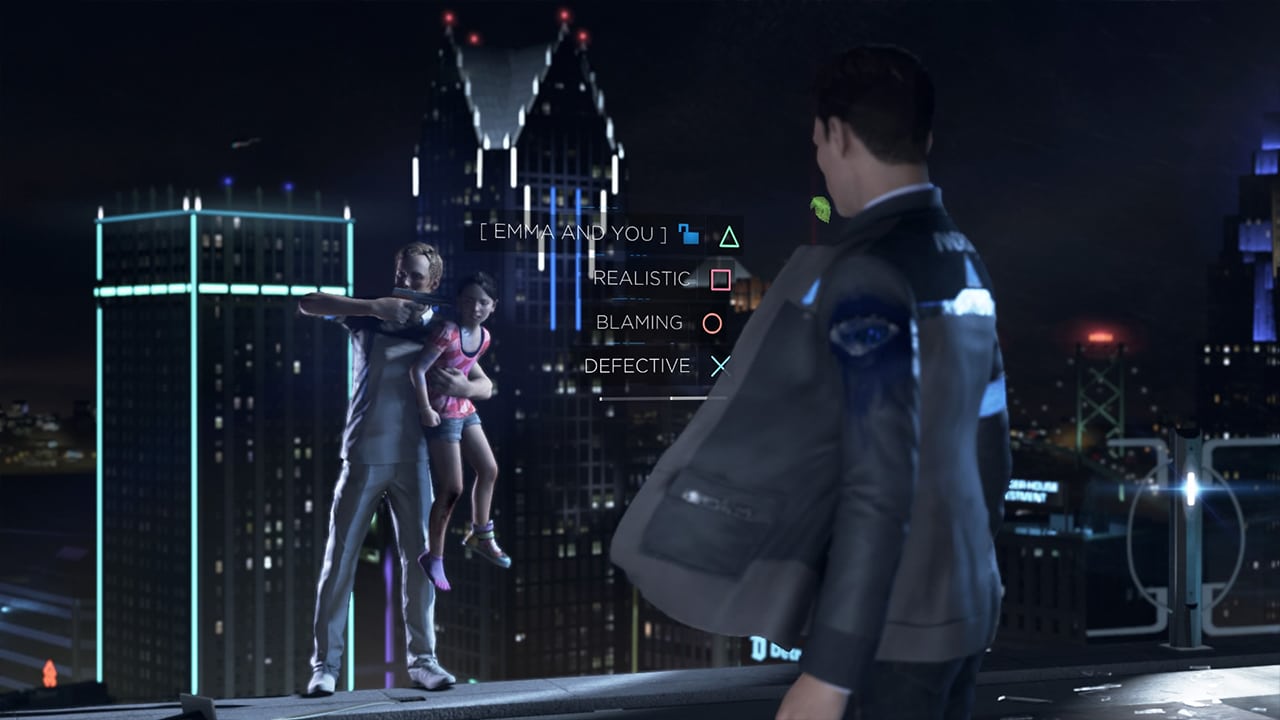
Regardless, with its choice-driven narrative and superb character design, Detroit: Become Human marks a turning point for video games. It opens the industry as a medium for cinematic but interactive storytelling.
Despite its flaws, Detroit: Become Human is still a loving homage to the choose-your-own-adventures and point-and-click games of before.
SEE ALSO: Step into androids’ shoes in Detroit: Become Human








There are a few titles that an overwheling majority of gamers consider as an absolute must-play for other gamers. One of those titles is The Legend of Zelda: Ocarina of Time. Originally launched for the Nintendo 64, it’s not easy to play the iconic game today. But, later this year, the game is about to get much more accessible. Nintendo has officially announced a remake of Ocarina of Time.
Modern gamers might not realize the effect of the original Ocarina of Time on the RPG genre. Besides adding a third dimension to the then-fledgling Legend of Zelda series, the 1998 game also revolutionized the gaming world by popularizing targeting systems. That, and the refining of the formula in Majora’s Mask, makes Ocarina an essential in gaming history.
During today’s Nintendo Direct, the company capped off the hour-long presentations by announcing a remake of the game. Though the short, short trailer didn’t reveal any gameplay, it did confirm that the remake will retain the original’s more whimsical art style, as opposed to the realism put forth by the Breath of the Wild duology.
It’s not the first re-release for the game, though. In the past, Nintendo released remastered versions of the game for the GameCube and the 3DS. This is, however, the first official remake of the title for a much more modern system.
We didn’t know when the remake will officially launch, but it’s coming out within this year.


Bandai Namco has confirmed that ACE COMBAT 8: WINGS OF THEVE will launch on October 2, 2026 for PlayStation 5, Xbox Series X|S, and PC via Steam.
The publisher also announced that early access will be available ahead of launch, although specific dates have yet to be revealed.
Alongside the release date announcement, Bandai Namco shared new details on the game’s aircraft roster, gameplay systems, and key characters that players will encounter throughout its campaign.
The latest entry in the long-running flight combat franchise puts players in the role of an ace pilot fighting for the survival of their homeland. The story centers on themes of identity and duty while featuring large-scale aerial battles across a war-torn world.
More than 30 aircraft at launch
ACE COMBAT 8 will feature over 30 aircraft spanning real-world military jets and original fictional designs created specifically for the game.
Aircraft are divided into four categories: fighters, attack aircraft, multi-role aircraft, and electronic warfare aircraft.
Some of the aircraft confirmed so far include the F-14D Super Tomcat fighter jet, the heavily armed A-10C Thunderbolt II attack aircraft, the versatile Mirage 2000-5, and the electronic warfare-focused EA-6B Prowler.
All aircraft come equipped with guided missiles and machine guns as standard weapons. Players can also equip special weapons ranging from multi-target missiles and heavy bombs to advanced laser systems.
A new gameplay feature allows players to bring two types of special weapons into missions, offering more flexibility during combat. However, ammunition remains limited, requiring careful resource management throughout each operation.
Bandai Namco also highlighted a new destruction system where falling wreckage from destroyed enemies can occasionally collide with other targets, triggering chain reactions on the battlefield.

Meet Joker Flight
Players take control of Joker Flight captain Jan Cope, known by the legendary callsign “Wings of Theve.” The campaign follows Joker Flight as its members deepen their bonds amid an escalating conflict.
Key squadron members include Ellington Baxter, Tasha Severskaya, and William “Noise” Coster. Players will also encounter Queen Flight leader Kate Evans, carrier XO Jessica Pike, doctor Adelina Santos, and chief mechanic David Jenkins.
Character designs come from Yusuke Kozaki.
During missions, players can choose squadron compositions and issue commands to wingmen. They can also respond to radio communications using a simple yes-or-no system.
ACE COMBAT Online returns
Bandai Namco also shared new details about ACE COMBAT Online, the game’s multiplayer mode. Players create a mercenary pilot avatar before joining online lobbies. There, they can take part in both cooperative and competitive battles with players worldwide.
More information about ACE COMBAT Online will be revealed at a later date.
ACE COMBAT 8: WINGS OF THEVE launches on October 2, 2026 for PlayStation 5, Xbox Series X|S, and PC via Steam.
Bandai Namco has also confirmed early access ahead of release.

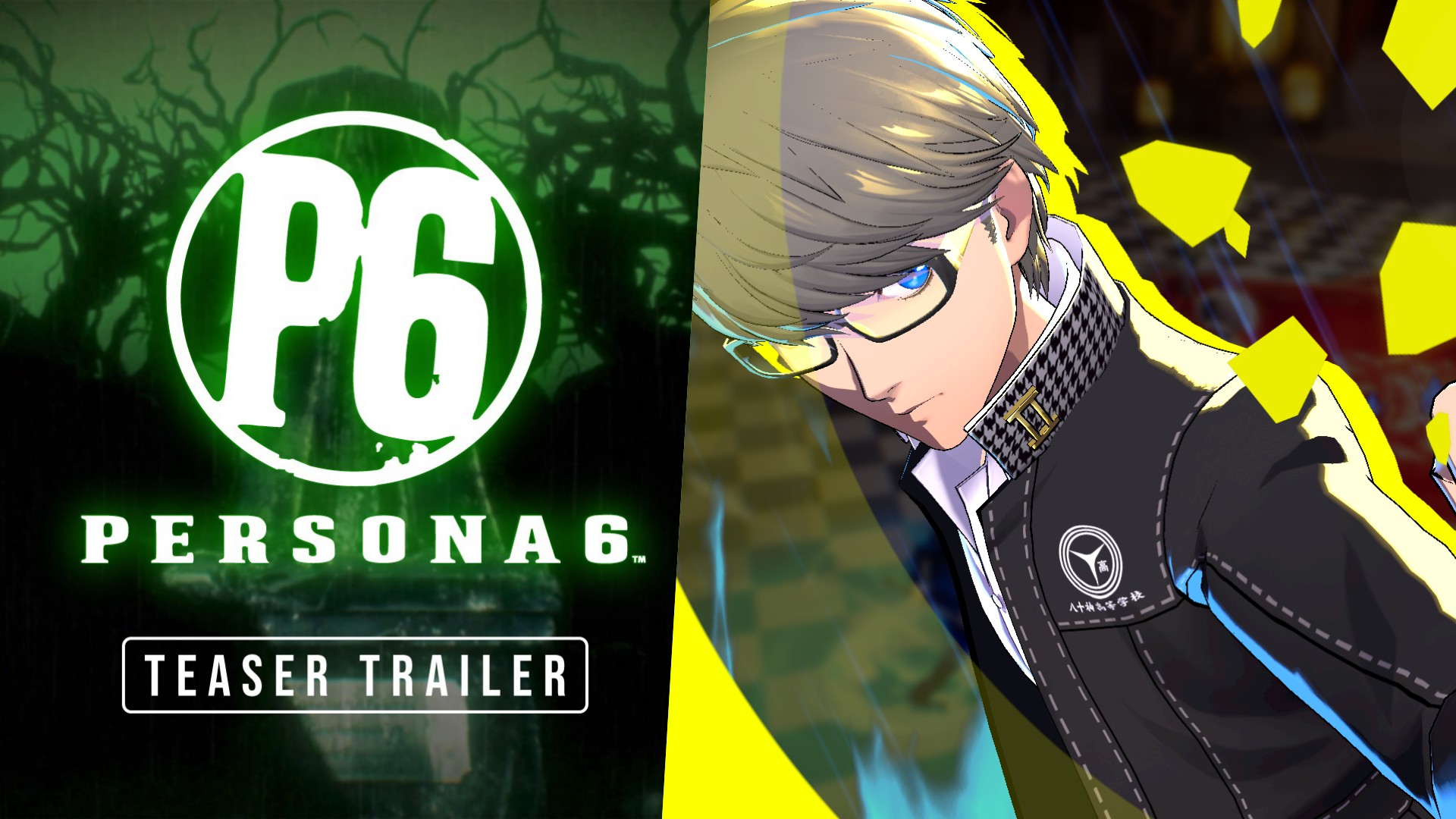
Persona fans have plenty to look forward to. ATLUS has confirmed that Persona 4 Revival will launch on February 18, 2027, while also officially unveiling Persona 6, the next mainline entry in the long-running RPG series.
Both announcements were made during the Xbox Games Showcase. Persona 4 Revival is headed to Xbox Series X|S, Windows, Xbox Game Pass, PlayStation 5, and Steam. Pre-orders are now available through the Microsoft Store. 
Persona 4 Revival is a full remake of Persona 4 Golden. ATLUS says the game features upgraded visuals, a revamped user interface, improved combat systems, enhanced cutscenes, and additional content. The remake aims to serve both returning fans and newcomers experiencing the mystery-filled adventure for the first time.
The story once again takes players to the rural town of Inaba, where a string of murders and disappearances become linked to the mysterious Midnight Channel and a hidden world inside television screens. Players will reunite with familiar characters including the protagonist, Yosuke Hanamura, Chie Satonaka, Yukiko Amagi, and Marie.

ATLUS also revealed several launch DLC packs. This includes Persona-themed costumes, Persona fusion sets based on Persona 3 Reload and Persona 5 Royal, support items, and additional background music packs.

Limited physical editions will also be available. The Persona 4 Revival Limited Box includes a Shigenori Soejima-designed collector’s box, artbook, T-shirt, phone pouch, costume set, and a physical copy of the game. An Izanagi Edition adds a protagonist and Izanagi figure.
Persona 6 officially revealed
Alongside the remake announcement, ATLUS unveiled Persona 6 with a teaser trailer.
While the company stopped short of announcing a release date, it confirmed that the next mainline Persona title will launch on Xbox Series X|S, Windows, Xbox Game Pass, PlayStation 5, and Steam.
According to ATLUS, Persona 6 will feature an all-new story set in a previously unseen location. The publisher promises new characters, fresh encounters, and the signature blend of social simulation and RPG gameplay that helped define the franchise.
Few additional details were shared, suggesting the game remains early in its marketing cycle.
Persona series reaches 30 million sales
The announcements come as ATLUS celebrates a major milestone for the franchise.
SEGA and ATLUS revealed that the Persona series has now surpassed 30 million units sold worldwide. To mark the occasion, character designer Shigenori Soejima released a commemorative illustration celebrating the series’ 30th anniversary.
With Persona 4 Revival arriving in early 2027 and Persona 6 now officially on the horizon, ATLUS is setting up what could be one of the biggest periods in the franchise’s history.


Close without crossing: A Xiaomi 17T Pro photo essay
Distance and closeness are not always opposites.


Spring reset: Growing more at home with Auk Mini
From kitchen counter experiment to everyday habit


UGREEN MagFlow Air review: Airy Yet Mighty
Slim and light power bank with a strong suit and core

Nintendo officially announces Ocarina of Time remake

Apple has essentially confirmed the launch of the iPhone Fold

Apple Intelligence gets smarter across apps

Siri AI can now understand your screen, apps, and personal context

WWDC26: Siri AI, parental controls, and more

HONOR 600 Pro review

The Infinix GT 50 Pro has the most inspired design for a gaming phone

Sony Xperia 1 VIII arrives with AI Camera Assistant, bigger telephoto sensor

vivo X300 FE review: Don’t judge the camera by its cutout
UGREEN MagFlow Air review: Airy Yet Mighty


-
Reviews2 weeks ago
Close without crossing: A Xiaomi 17T Pro photo essay
-

 Accessories2 weeks ago
UGREEN launches FineTrack Series with Apple Find My support
-

 Philippines2 weeks ago
Xiaomi 17T series Philippines price, availability, offers
-
 Gaming2 weeks ago
Acer unveils Predator Atlas 8 handheld with Intel Arc G-Series power
-
 Computex 20261 week ago
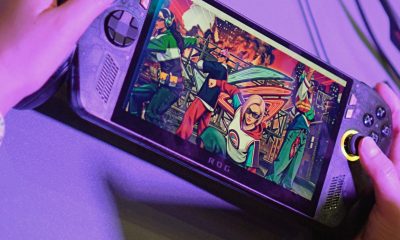
ASUS ROG XBOX Ally X20 debuts at COMPUTEX 2026
-

 Hands-On1 week ago
The Xiaomi Watch S5 proves you don’t have to take it off
-

 Gaming2 weeks ago
Valve just announced a massive price hike for the Steam Deck
-

 Gaming2 weeks ago
Call of Duty: Modern Warfare 4 has been officially announced