


Gaming
ASUS ROG Phone review: A true gaming phone done right?
Undeniably a phone built for mobile gamers

Finally, the ROG Phone from ASUS is out in the market! We first saw the gaming smartphone back in Computex 2018 last June, and we waited a long time (four months to be exact) to take one home.
We received a lot of questions about this phone. Is it the best gaming smartphone today? How is it different from other flagship phones with similar specs? And, how much value are you getting out of it?
To answer all those, here’s my review of the ROG Phone. You know the drill, let’s start with the phone’s physique.
Its AMOLED display measures 6 inches diagonally

With a Full HD+ resolution and 18:9 aspect ratio
It features stereo front-facing speakers

It’s not exactly borderless, but you get great loudspeakers
The physical buttons are on the right side

They are made of metal
The left has the card tray and side-mounted USB-C port

The phone doesn’t support expandable storage via microSD
Another USB-C at the bottom along with a 3.5mm jack

This phone doesn’t sacrifice wired connectivity
The back looks aggressive with the ROG logo

The logo lights up!
The phone is pretty angular with lots of unusual shapes

The ROG persona goes mobile
In case you’re wondering what ROG means…

It’s definitely for gamers
There are two rear cameras and a fingerprint reader

Almost forgot about those!
Obviously designed with gaming in mind
One look at the ROG Phone and it already screams that it’s a gaming smartphone. Unlike other game-centric phones from Honor and Razer which have subtle gaming looks, the ROG Phone belongs with the rest of the ROG laptops and peripherals that are made by ASUS.
When there are a number of phones on the table like in our office, it’s not difficult to differentiate the ROG Phone from the rest. The front of the phone has a distinct copper accent on its front stereo speakers, and the back is uniquely ROG. If you own an ROG laptop or desktop and use ROG-branded peripherals, the ROG Phone should be part of your collection.

Like with other 2018 phones, the ROG Phone has a glass back using Corning’s tough Gorilla Glass. Don’t expect things to be symmetrical here because the dual rear cameras and the LED flash are housed in an unusual shape. Even the fingerprint reader is slightly positioned to the right of the phone, but don’t worry, it’s still reachable using either index fingers.
The ROG Phone’s bold design doesn’t end there. The back also has a futuristic styling using lines and an ROG logo that lights up in virtually any color you want. To top things off, the phone even has an exterior for its cooling system.

Encased in a metal frame, the ROG Phone is premium all around. It certainly feels more well-built than its ZenFone cousins. But of course, the loud design is not everyone’s cup of tea. Some gamers might even find it too much, but ASUS is not following Razer’s design choices.
Apart from the phone’s body, there is also a lot to talk about the phone’s display. The 6-inch display is not just your ordinary AMOLED panel. Apart from producing deep blacks and vibrant colors, the display is capable of a 90Hz refresh rate with 1ms pixel response time. Basically, you can play with the phone in uber-smooth motion. On top of that, it supports HDR and has a wide color gamut that’ll please professionals.
The fastest Android gaming phone today
The ROG Phone is powered by a Snapdragon 845, which is practically found on all high-end Android phones that came out this year. To place this gaming smartphone ahead of them, ASUS threw in an overclocked variant of the already-powerful chip and paired it with lots of memory and speedy flash storage. The result is one of the fastest Android phones available today.
Android Oreo runs the show, but it’s customized by ASUS to make it one of their own. Being an ROG device, it comes with a combative theme. Turning on the “X Mode” will even make everything red, which means that the ROG Phone is performing at its peak.

Like with ROG notebooks and desktops, the phone has a command center where you can closely monitor the phone’s condition. The Game Center is as aggressive-looking as the phone’s body. Here you can check the CPU and GPU speeds, the battery’s temperature and remaining power, the setting for the RGB light customization, and the fan speed control for the external cooler.

The configuration I have for review has 8GB of memory and 128GB of storage. If you find 128GB not enough for all your games and personal files, there’s also a 512GB model. Without a doubt, the ROG Phone is insanely fast. Coupled with a 90Hz display, this will be your smoothest Android experience. The 120Hz display of the Razer Phone 2 is more fluid, but the eyes can already appreciate what the ROG Phone has.

Keep in mind that not all games take advantage of the high refresh rate, but popular titles already do. My all-time favorite, Asphalt 9: Legends, is more enjoyable when it’s rendered in 90fps. Other graphics-intensive titles like Free Fire (which comes pre-installed) is fully supported and PUBG: Mobile is playable in the highest settings without lag, as well.
Also, the AirTriggers, which are ROG’s virtual shoulder buttons, aid in mobile gaming. Basically, the sides of the phone are touch-sensitive. They are kind of gimmicky in a way because they are pretty difficult to reach during gameplay. When you get used to it, you’ll have an edge against other players using regular phones.
It even comes with fun cameras
The ROG Phone is not just fun in gaming, but it’s also a good picture taker. It won’t match the likes of the Pixel 3 and Mate 20 Pro, yet I am impressed with the phone’s cameras. Maybe because I wasn’t expecting it to be this good?
It’s got dual rear shooters. The main one is a 12-megapixel sensor with f/1.8 lens, optical image stabilization, and Dual Pixel autofocus. Of course, the phone’s camera is powered by AI that detects the scenes and adjusts the settings accordingly. Thankfully, there’s no over processing going on like with other AI-enabled shooters.
Here are some photos taken using the main sensor in Auto mode:







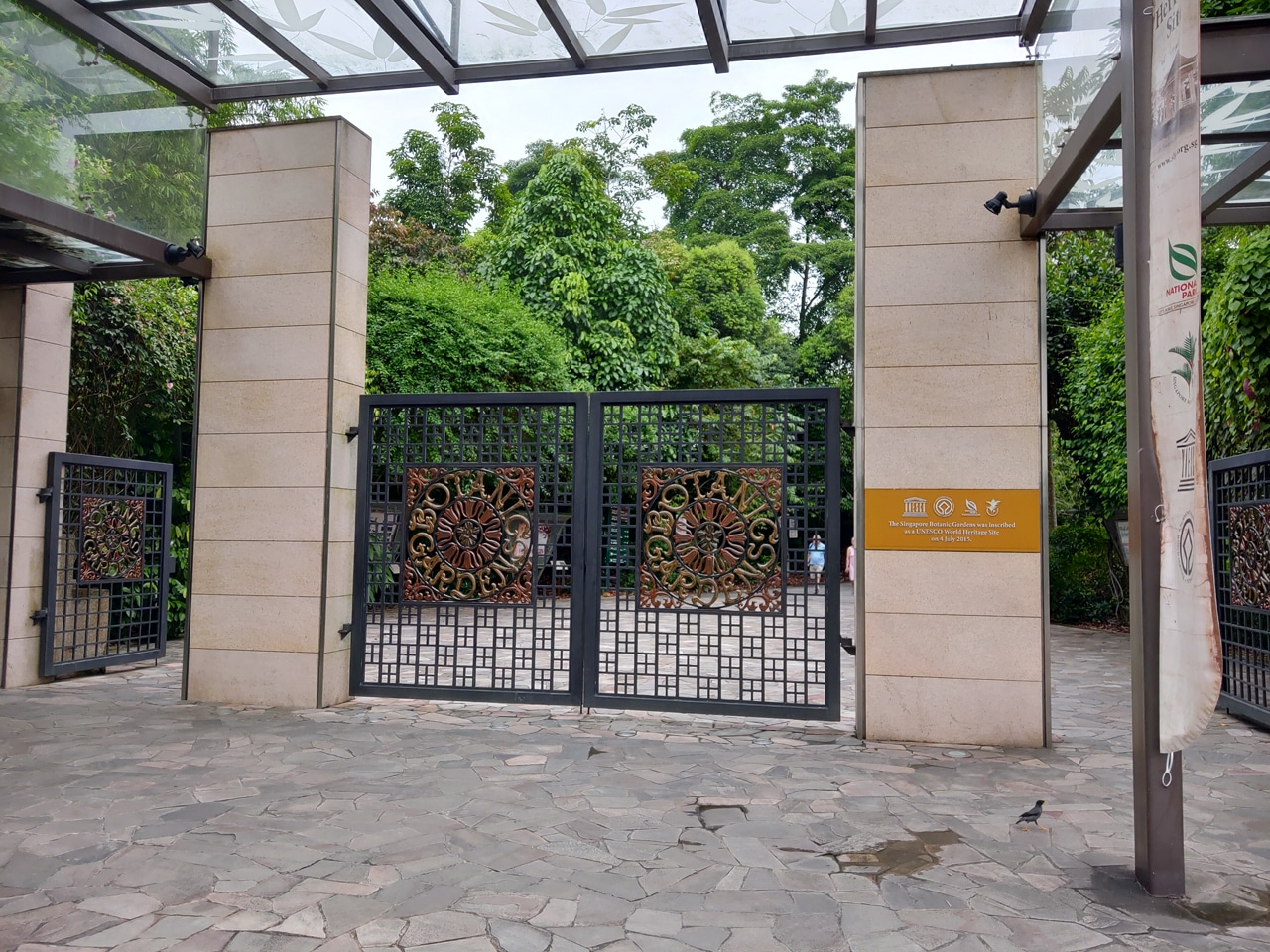
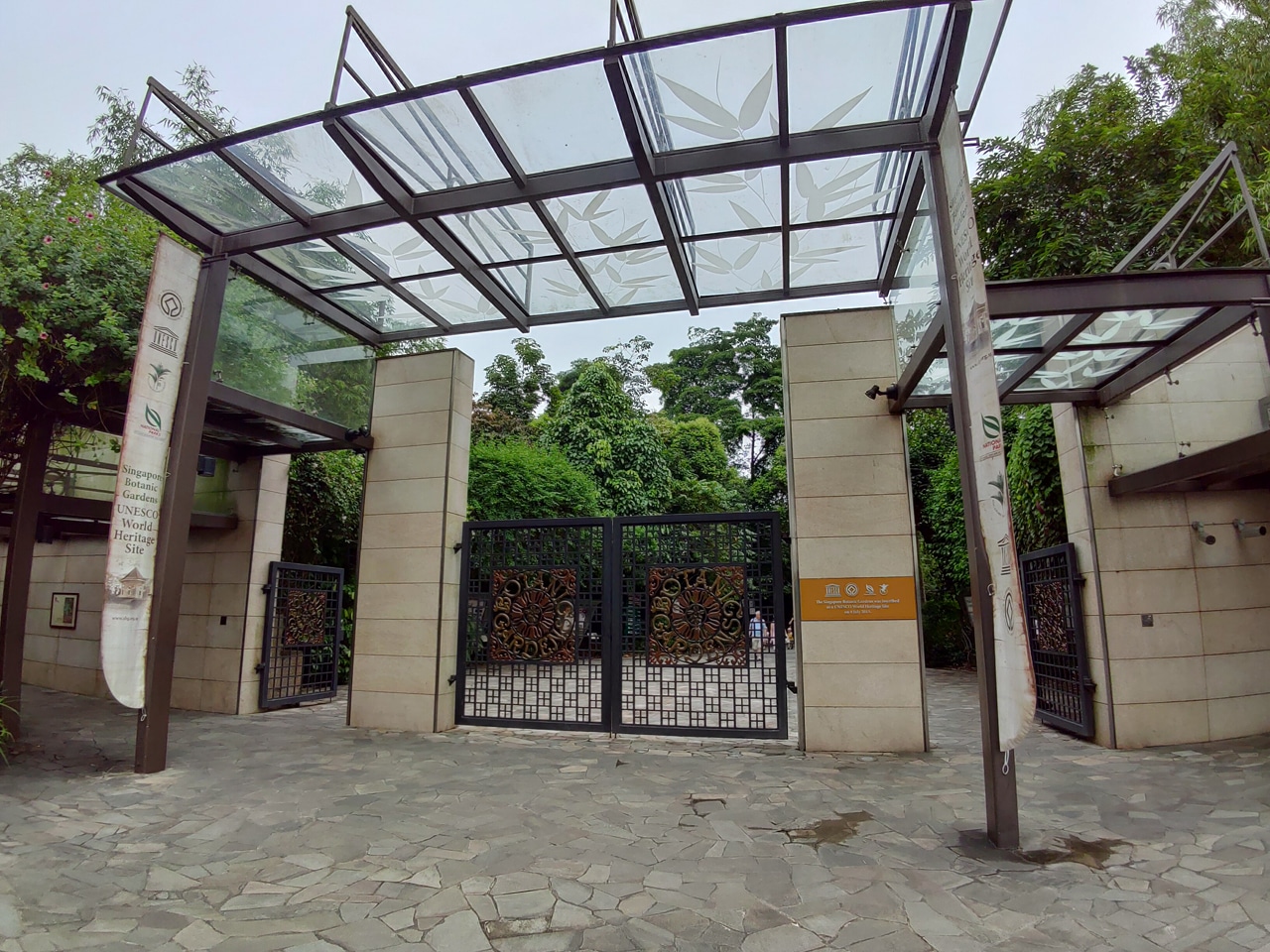
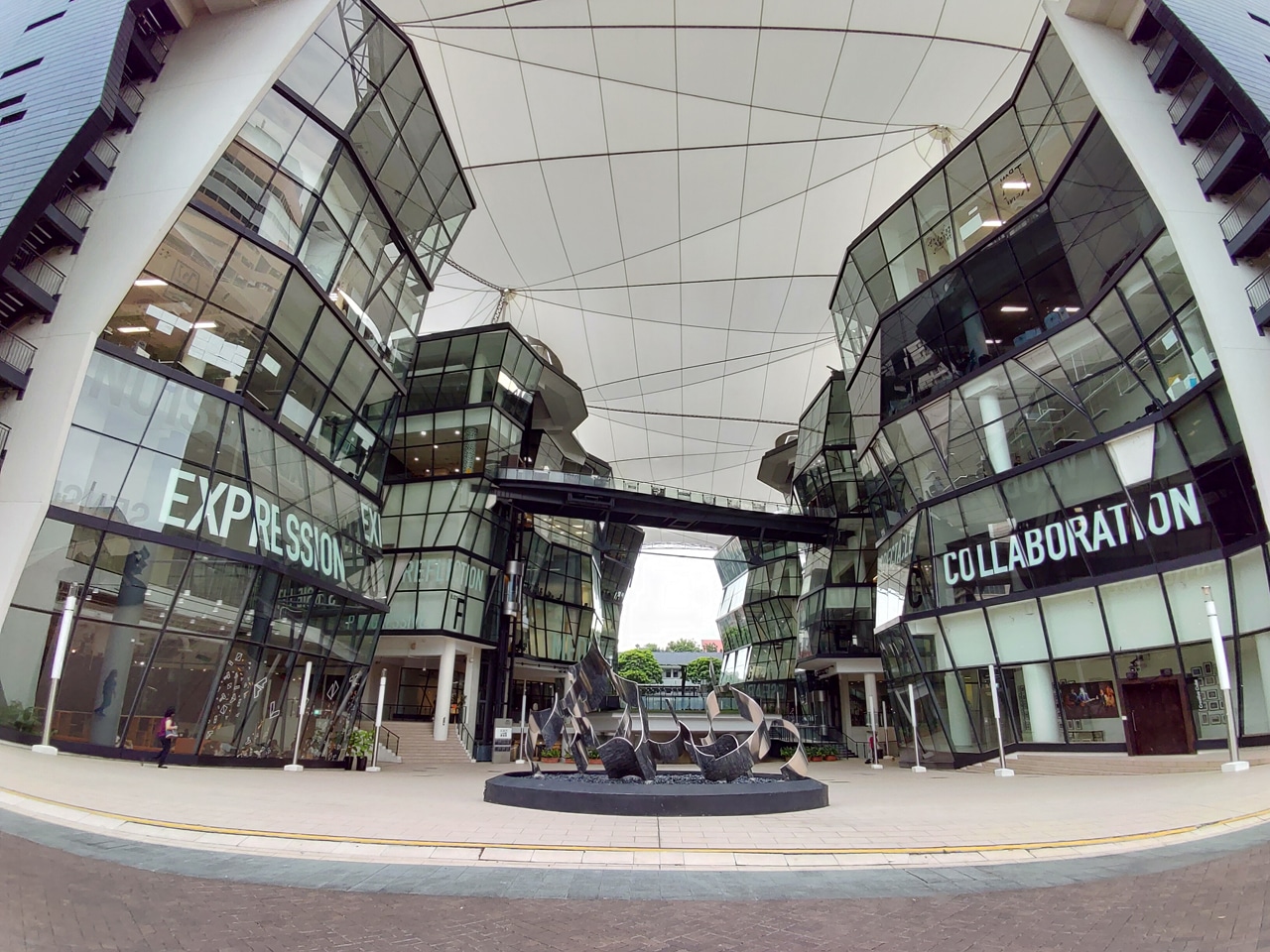
They aren’t bad, right? Although, ASUS didn’t put much attention on the 8-megapixel secondary shooter with an ultra wide-angle lens. I’m a fan of wide-angle secondary cameras, so I enjoyed shooting GoPro-like shots. Too bad it’s got no autofocus and the quality isn’t at the level of the main sensor.
Here are some samples taken using the main sensor and the wide-angle camera for comparison:
-

- Normal
-

- Ultra wide-angle
-

- Normal

-

- Ultra wide-angle

-

- Normal

-

- Ultra wide-angle
-

- Normal

-

- Ultra wide-angle

-

- Normal

-

- Ultra wide-angle

-

- Normal

-

- Ultra wide-angle

Moving to the front, we have another 8-megapixel shooter but it’s just wide enough to take spacious selfies. It comes with an f/2.0 aperture, so low-light shots shouldn’t be a problem — at least on paper. You can also apply bokeh effects to your selfies for added depth.
-

- No effect

-

- With bokeh

-

- With bokeh

-

- Low-light with bokeh

No one is buying the ROG Phone for photography purposes, but those who are interested in it will be able to take great photos. The use of an ultra wide-angle secondary lens is also a good choice by ASUS. Why? Because it’s more fun to take wide shots.
Incredible power takes a toll on battery
With all the features the ROG Phone has, a trusty 4000mAh battery keeps the lights on. But, it is enough? Based on my usage, no. If you wish to enable the phone’s highlighted features such as the 90Hz refresh rate, you should make sure to have a power bank around.
The phone didn’t last a full day as my daily driver. I usually get fewer than three hours of screen-on time. My usage includes typical work duties with the phone constantly connected to either Wi-Fi or LTE, and lots of gaming in X Mode.

When I set the refresh rate back to default (60Hz), I was able to get better battery life. The ROG Phone was my secondary device during my four-day business trip to Singapore and I only had to charge it twice. I mainly used the phone for taking photos, checking out web pages, uploading IG stories, and, of course, for playing mobile games once in a while.
Speaking of charging, the ROG Phone comes with a super-fast charger in the box. In just 15 minutes, I was able to charge the phone from zero to 26 percent. The charging rate slows down when you’re nearing 100 percent, so a full charge takes about an hour and 40 minutes. That is still very impressive, though.
Is this your GadgetMatch?
The ROG Phone is a premium device from ASUS with all the bells and whistles of a gaming smartphone. Some might argue that regular flagship phones are already good at gaming. Yes, that’s true but they are not meant for it. That’s where gaming smartphones, such as the ROG Phone, come in.
It has the fastest available processor, super-smooth refresh rate, loud front speakers, optimized software, and extra hardware features such as shoulder triggers and both passive and active cooling systems.

But, everything comes at a price. When the ZenFone 5Z came out earlier this year, we were in awe at how ASUS is offering a flagship-specced phone at an affordable price. It’s even cheaper than OnePlus in some regions, but not as affordable as a Xiaomi flagship. Things are different with the ROG Phone and ASUS is asking quite a lot of money for it, but at least it’s not your usual Android phone.
The ROG Phone has an official starting price of US$ 899 for the 128GB model. In the Philippines, it goes for PhP 49,995, which is not far from the international pricing. If you want more storage, you can get the 512GB model for US$ 1,099. You can also get the top-tier model for PhP 61,995 in the Philippines, SG$ 1,598 in Singapore, and NT$ 31,990 in Taiwan where it’s the cheapest.
If you wish to complete the set, the ROG Phone is being sold along with all of its accessories but the asking price puts it in the league of gaming laptops, so you might want to think carefully before purchasing any of them.







Tides of Annihilation will make its public playable debut at Gamescom 2026.
Developer Eclipse Glow Games announced that attendees can try an extended demo of the upcoming action-adventure game during the event in Cologne, Germany. Players can find the demo at Hall 6, Booth B-050 inside Koelnmesse.
The studio will also reveal a new trailer during Gamescom Opening Night Live on August 25, before the show floor opens.
Demo offers more exploration and combat
The Gamescom demo gives players a longer look at Tides of Annihilation. It features branching paths that lead to different exploration routes and combat encounters. Players can also explore key locations and experience several of the game’s biggest set pieces.
“Gamescom will be an incredibly important moment for our team since this will be our first global playtest and we’re excited to see how first-time players experience our game,” said Ary Chen, Game Director and Co-CEO of Eclipse Glow Games.
“The team has poured heart, soul, and maybe even a few tears into developing the game over the last few years, and it’s finally our opportunity to share it with players. We’re looking forward to seeing their reaction.”
Members of the press and content creators can also schedule private hands-on sessions with the development team during the event.
Arthurian-inspired adventure
Tides of Annihilation blends fast-paced action with a Neo-Medieval vision of modern London. The story follows Gwendolyn after an Outworld invasion leaves the city in ruins.
Driven by a mission to save her sister, she travels between a shattered London and the mythical realm of Avalon. Along the way, she uncovers the mystery behind her newfound powers. She must also decide the fate of reality itself.
Eclipse Glow Games is developing Tides of Annihilation for PC via Steam and the Epic Games Store, Xbox Series X|S, and PlayStation 5.
Gaming
Street Fighter 6 adds first Filipino fighter Yasmine to its roster
Eskrima fighter joins battle


Street Fighter 6 has officially welcomed Yasmine, making history as the first Filipino martial artist to join the franchise’s playable roster. The new character is now available across PlayStation 5, PlayStation 4, Xbox Series X|S, PC, and Nintendo Switch 2 as part of the game’s Year 4 content.
Yasmine practices Eskrima, having learned the Filipino martial art alongside her older brother under their grandfather’s guidance. She wields Karambit knives in battle and embarks on a journey to find her missing brother.
Players can access Yasmine by purchasing the Year 4 Character Pass or Year 4 Ultimate Pass. Her default outfit features traditional Eskrima-inspired combat attire, while a school uniform serves as her second costume. In combat, she specializes in fast, aggressive attacks that build toward an enhanced Bayani Mode.
Yasmine is the first of four Year 4 fighters, followed by Arjun, Tifa from the Final Fantasy VII Remake series, and Bosch. Her release also arrives alongside battle balance adjustments affecting the entire roster.
Onimusha crossover arrives this week
Capcom also announced a limited-time collaboration between Street Fighter 6 and Onimusha. Running from August 7 to August 31, 2026, the event introduces Oni EX character colors, themed Battle Hub decorations, avatar items, and additional rewards for players who log in during the event.
The update also adds new Avatar Arcade courses, additional ending scenes, a Frame Meter option for Avatar Random Match, and refreshed Master ACT rewards.
Philippine launch event set for August 9
Capcom will celebrate Yasmine’s debut with an official Philippine community launch event on Sunday, August 9, at Salud! by Primera Bar & Restaurant in Palanan, Makati. The event runs from 2:00 PM to 9:00 PM and features a double-elimination tournament, gameplay showcases, giveaways, and community activities.
Attendees can also receive limited-edition Yasmine merchandise, including event T-shirts, lanyards, and collectible keychains while supplies last. Special guests and cosplayers are also scheduled to appear. Admission will be on a first-come, first-served basis and is subject to venue capacity.
Gaming
Gangstar Mirage City launches on August 20 with SEA localization
Join a faction now for a chance to win rewards


Gangstar Mirage City is set for a full regional launch on August 20, with localization for the Southeast Asia region.
Published by Level Infinite, the free-to-play multiplayer, urban, open-world action game is available for download on iOS and Android.
The full regional release features an expanded open world, a new PvP Arena mode, and local languages.
In Gangstar Mirage City, players can team up for up to 4-man co-op heists, drive powerful vehicles, customize their arsenal, build an empire, and fight for control of Rooklyn City.
Players can register on gangstarmiragecity.com for in-game rewards.
In Southeast Asia, players can also register as a member of their respective local faction and get an exclusive in-game Avatar to represent their loyalty:
- Philippines: Manila Brigade
- Indonesia: War Kanda
- Malaysia: Taiko Tedung
- Thailand: SIAM APEX
Factions will be ranked based on how many players join and support them. The winning faction will enable all members to get 300 Diamonds, sent directly to their accounts.
Meanwhile, all players, including those who already began their journey in Rooklyn City with the soft launch last July, are invited to join the Global Vault Heist.
Reaching the final Registration Milestone will unlock the Full Tilt Vehicle Pack. These are the rewards up for grabs per milestone:
- 5 million players: 100 Diamonds
- 10 million players: 200 Diamonds
- 20 million players: Vehicle Upgrade Vouchers x5
- 30 million players: Full Tilt Vehicle Pack
All Global Vault Heist and Faction rewards can be claimed via the in-game mail system on August 20.


realme C100: Enduring and durable in spite of entry-level realities
Enough power but needs more agility


The ASUS ExpertBook Ultra wins you over
The laptop sneaks up on you


Nexal Watch Sport review: A rugged watch for small budgets
I couldn't believe that watches this good could come for this cheap.

Apple Watch, AirPods get exclusive offers via Beyond the Box

Canva teams up with SB19 to turn A’TIN’s passion into creativity

SQUARE ENIX STORE Plus expands presence in Asia, Oceania

Maya: Convert purchases to 0% interest Mini Payment plans

Netflix: Kris Aquino makes on-screen comeback with fictional role


-

 Automotive5 days ago
VinFast debuts two-wheeler models, opens 21 e-motorcycle showrooms
-
 Computers1 week ago
AMD launches Radeon RX 9050 graphics card
-

 Computers2 weeks ago
AORUS MASTER 16 Gen 2 2026 AI gaming laptop launches
-

 Gaming2 weeks ago
God of War Laufey finally confirms its highly anticipated launch date
-

 Automotive1 week ago
Xiaomi debuts SkyNomad Series featuring new Kunlun platform
-

 News4 days ago
OnePlus officially leaves the United States and Canada
-

 Gaming2 weeks ago
NBA 2K27 gameplay trailer showcases new dunk mechanics, Rucker Park, and more
-

 Gaming7 days ago
Call of Duty: Modern Warfare 4 clip shows Losing Ground 1st look