


The brand new Nike React Infinity Run just went on sale globally earlier this month, and Nike sent us a pair to check out! Nike is pitching this as their solution to help prevent running injuries and you know what? I think it’s actually true.
If you’re a seasoned runner you’ve probably had an injury or two pop up every so often because of a bad landing while you run or numerous other reasons. Nike’s aim with the Infinity Run was to reduce these overuse injuries, and they worked with the British Columbia Sports Medicine Research Foundation to do so.
They had over 226 runners test this shoe against the Nike Structure 22, which is a more traditional motion control shoe, and they found that the runners using the Nike React Infinity Run reduced running injuries by a huge 52% compared to the Structure. Which if you believe the marketing, is a pretty huge deal.

Nike has already made a name for themselves in the running scene with the vaporfly running sneakers. You know those sneakers that were so good that athletes wearing them started breaking records, so the competition tried to get them banned? Thankfully they didn’t get banned and Nike can go on pushing boundaries with their sneakers.
As such the React Infinity Run really stands out in Nike’s lineup of training shoes. First, because of the generous amount of React cushioning, but also because of the entire shape of the shoe, along with a lot of improvements.
There’s a wide midsole, and a shape that helps with its grounded feel. All that comes together to create a performance-minded running sneaker that allows the miles to just fly by.
Look and feel fly
Buying an everyday running shoe can be really stressful. You need something that’s comfortable, yet durable, and able to last intense training cycles and long runs. It turns out, the Nike React Infinity Run is great at all of that.
I was a huge fan of the Epic React Flyknit from 2019., I even bought a pair to check out, so I had high hopes for the React Infinity Run.
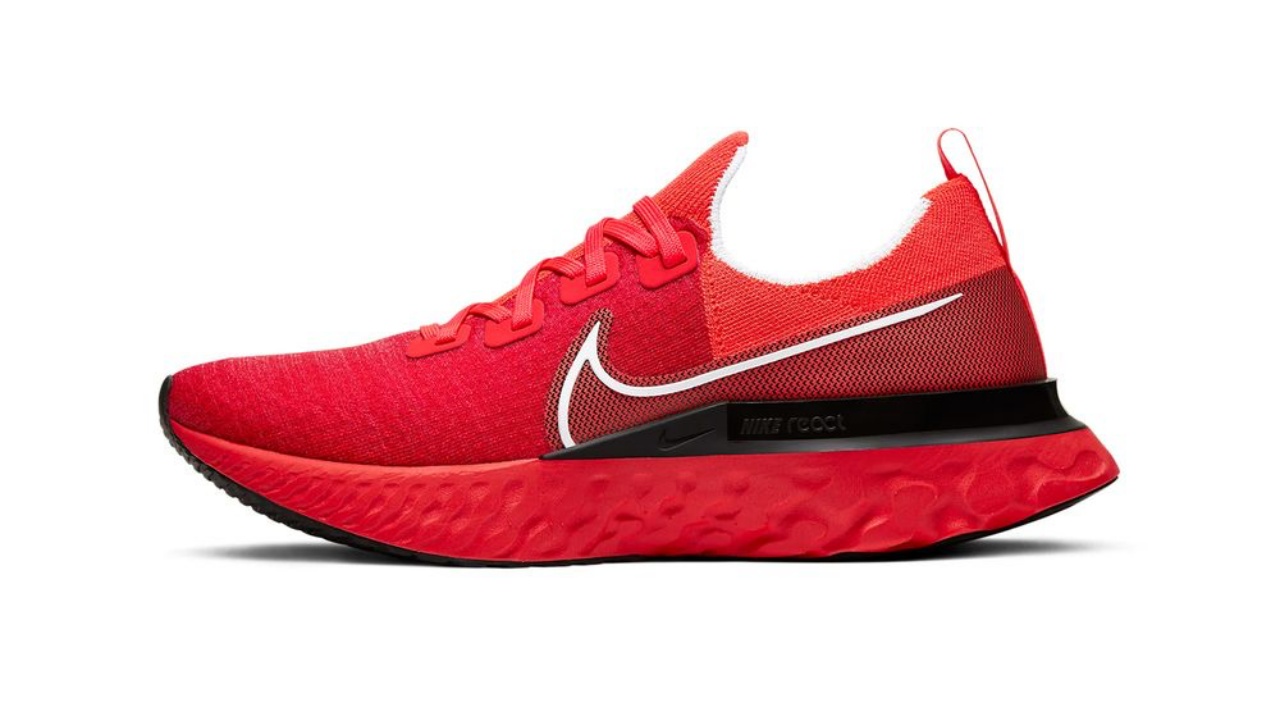
You can see I got the really hot Bright Crimson colorway to check out — it’s really hard to photograph and color correct, so here is what Nike’s press photo of the sneaker looks like to give you a better idea.
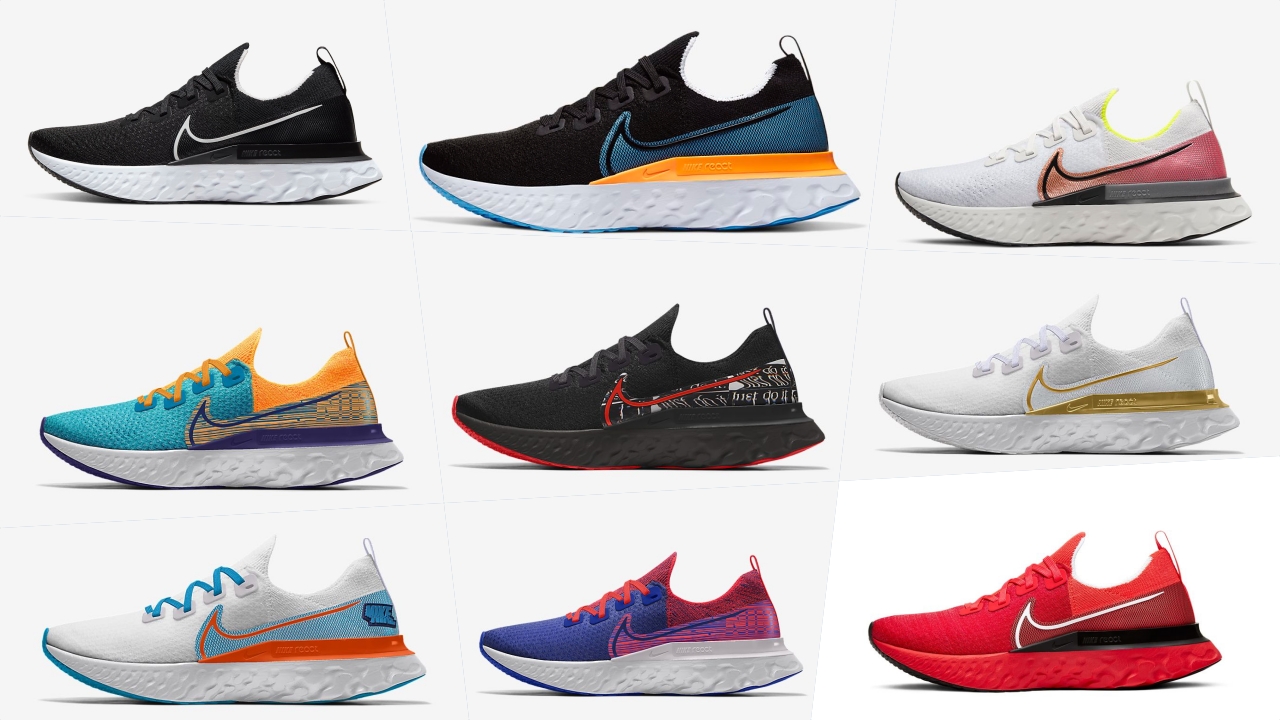
But the Infinity Run also comes in a bunch of other colorways as you’d expect, including an all black version. Though, the standard white and pink version is my favorite.
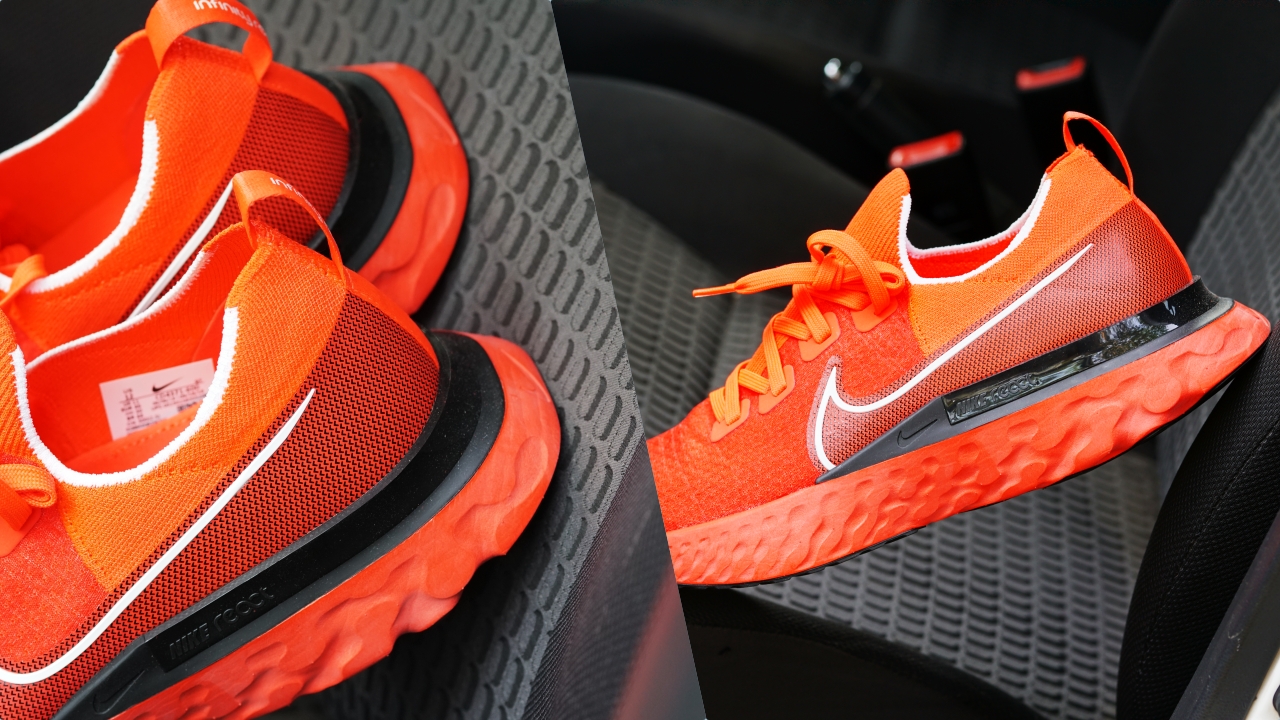
Coming to the shoe itself, the big deal about this running shoe, is the midsole. There’s 24 percent more Nike React foam here vs last year’s Nike Epic React Flyknit 2, and it’s also much wider.
This makes a huge difference in midsole cushioning, with the stack height measuring 30.5 mm in the heel and 21.5 mm in the forefoot. The extra wide base also helps avoid any side-to-side wobbling when you’re running in this shoe.
But the main highlight is the React foam which cushions your every step, and springs back into shape, just like we’ve seen in other React midsole sneakers.
It’s quite different from Adidas Boost, somehow being more cushiony but still having a good amount of energy return — different but similar. I’ll talk more about this in the performance section later on.
Light with great fit
Moving on to the upper, there’s a single-layer Flyknit upper which gives the shoe a really sleek, streamlined look and fit. The Flyknit material used here is slightly stretchy in the forefoot area and has tiny little micro perforation dots for more breathability.
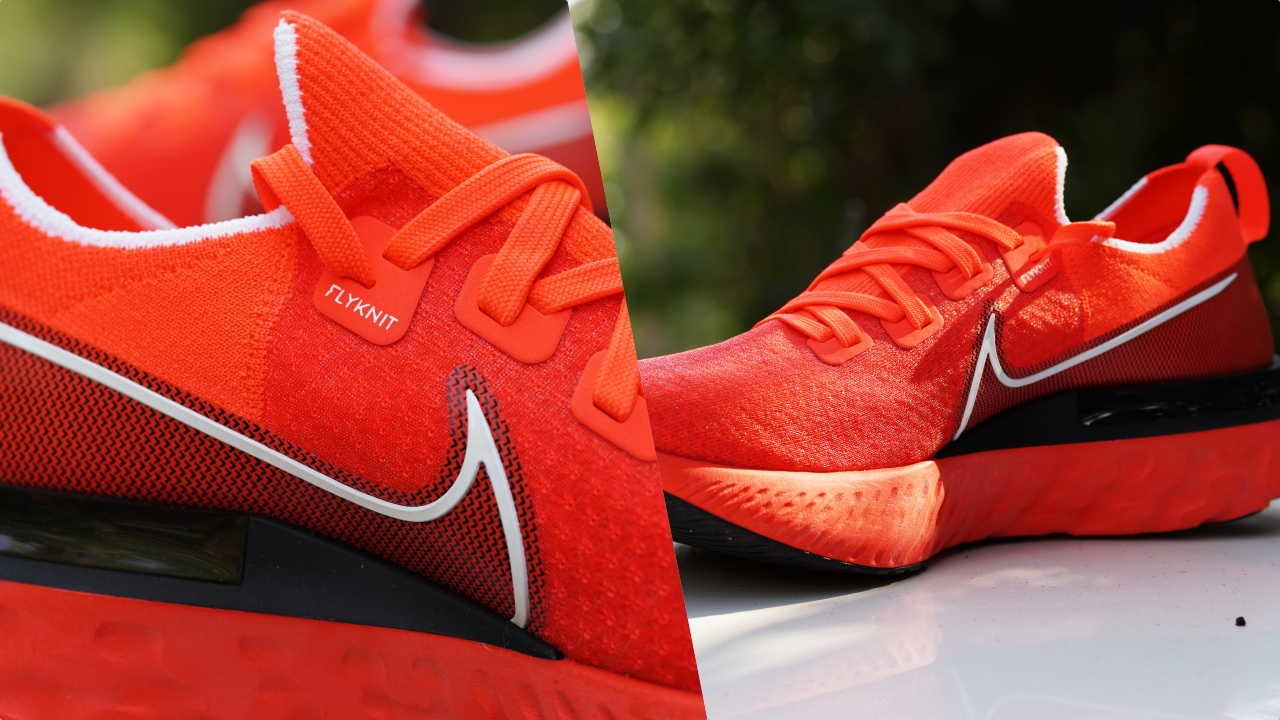
But the best part about the upper for me is the integrated tongue that allows the shoe to have a sock-like feel. Instead of a usual shoe tongue, Nike chose to seamlessly knit stretchy, soft fabric and the elasticity maintains the one-piece construction of the shoe, giving it a really clean silhouette.
At the same time, the material is stretchy enough to accommodate even wide feet so you can go true-to-size. Sometimes running shoes can be too narrow for your forefoot, but here, there’s plenty of room and enough stretch so that it is an appropriate level of snug.
There’s also the secure, minimal lacing system up top to help ensure a nice fit via four eyelets up the center of the shoe.
Coming to the back, Nike wrapped an extra overlay around the back which gives some extra structure in the mid foot area, with a thin heel counter that helps secure your foot.

That being said, there is no extra padding in the ankle collar, which you’ll either love or hate. Instead Nike finished the collar with contrasting stitching. If you wear regular socks this will feel really comfortable, but if you wear no-show socks the sensation of the fabric against your skin might annoy you slightly — so just wear higher socks.
Lastly at the back, there’s a pull tab that helps slip your foot into the shoe, which is much appreciated.
Built for an infinite ride
As we mentioned earlier, the main attraction with the Infinity Run is the React foam midsole which really helps ensure an energetic ride. However, the shape of the shoe itself also plays a major role in how it performs.
Nike created a midsole that is in a rocker shape, similar to the curved shape of the midsole and carbon-fiber plate of the first Nike Vaporfly 4% marathon shoe. This rocker shape means the wearer has an ever so slight forward lean.
Nike says this is to move your natural footstrike to the midfoot or forefoot area, which in theory will create a natural feeling of propulsion as you walk in them. As such it helps move your foot through a really fluid foot strike, and you won’t notice any weirdness as you transition from heel to toe during your runs.
This rocker shape is becoming more and more common in running shoes so it definitely has a bit of performance benefits, especially so on the Infinity Run.
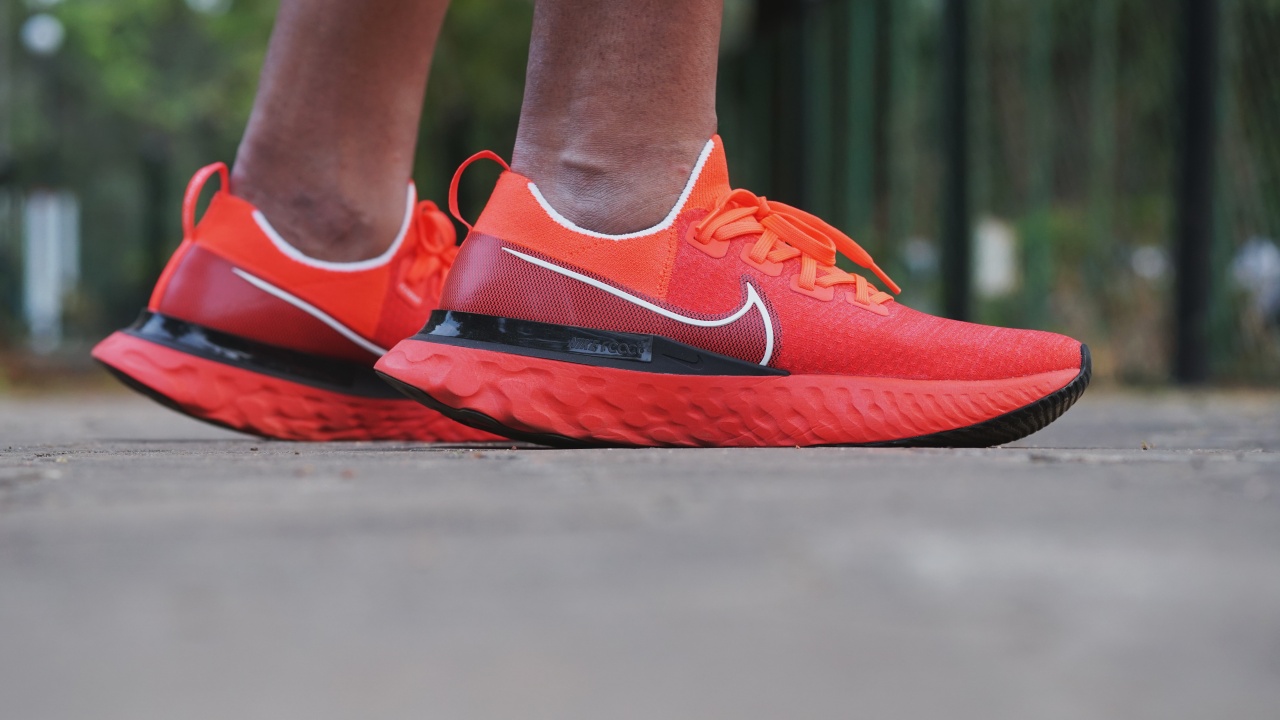
As you take a stride, the shoe rolls smoothly through the transition, with a relatively quick turnover. In addition to all of this, the shoe is also quite lightweight even with all that foam, so it’s surprisingly quite nimble to use.
Plenty of React
The other unique aspect about the midsole here is the width. It’s an interesting shape for sure, especially when you look at the shoe from up top. The midsole flares out from the heel and forefoot area. This creates a foundation that is wider at the bottom and that wide base gives the shoe a lot of stability.
With narrow shoes you sometimes feel like you might accidentally roll your ankle in, but you never have to worry about that in the Infinity Run because the wider base keeps your foot closer to the ground to help with stability.
It’s something that you feel right away when you start walking in these shoes.
The entire midsole is made from the React foam, and it performs just as you’d expect. According to Nike, their React foam is a combination of thermoplastic elastomer (TPE) and ethylene vinyl acetate (EVA), which are common polymers you’d find in most running shoe cushioning midsoles. And this all makes for a midsole that is springy, yet durable, with a nice soft foam cushioning.
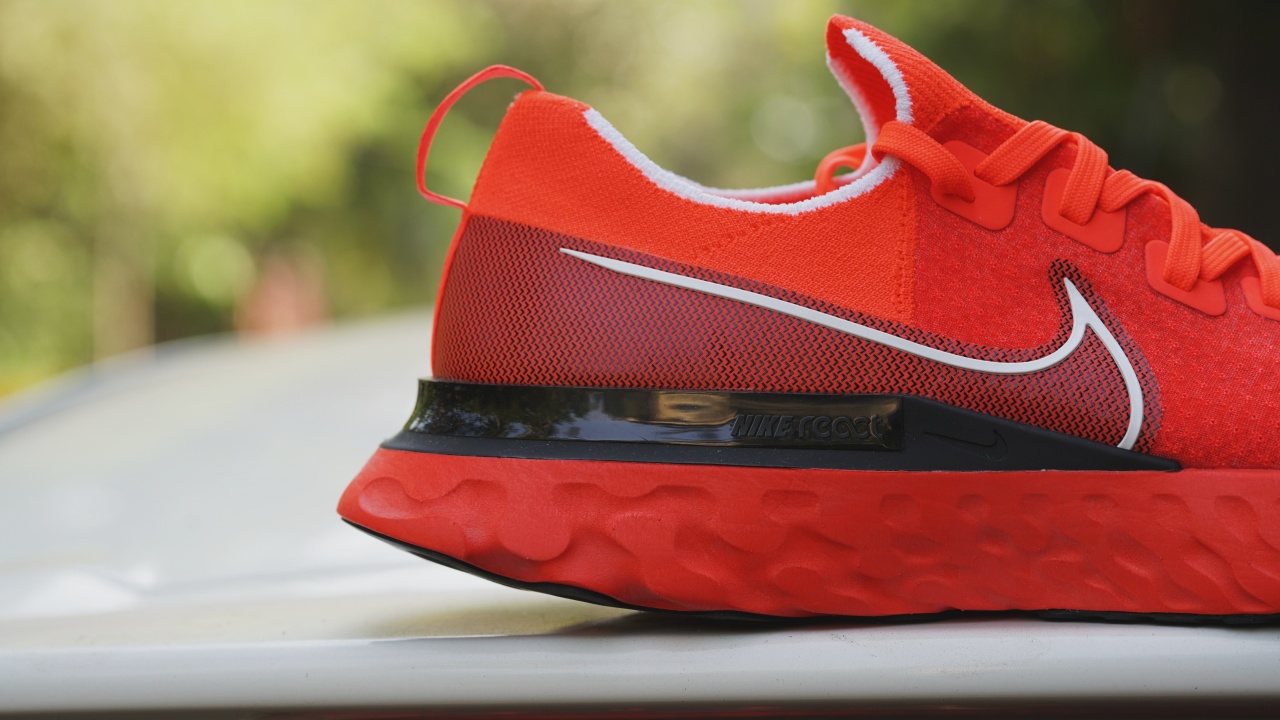
Because of everything that midsole has to offer, coupled with the rocker shape, the Nike React Infinity Run is actually perfect for runs — be it your daily jog in the mornings, an evening run after a long work day, or even if you’re only just starting out. This is one of the best running shoes I’ve tried in a while.
I should point out though that these aren’t really meant for long marathon runs. Nike says the Infinity Run works best with variable training where you vary your training instead of running the same amount of distance at the same pace at the same path every day.
Another thing I should point out is that if you tend to overpronate while running, the Infinity Run really helps keep you neutral and allow that toe-off to be right down the middle. If you’re a neutral runner, it’ll still help control the foot while on a run.
At the end of the day, Nike’s claim about this shoe helping with preventing running injuries seems to be true. If you’re tired of overuse injuries or you’re worried about starting out with running — these are the shoes for you.
Is the Nike React Infinity Run your SneakerMatch?
The Nike React Infinity Run is a shoe that I love for its clean styling and premium level of performance. But honestly, my favorite thing about it is the overall stability.
Nike was spot on with their marketing here. It really is a secure running shoe that’s meant to help prevent injuries and for those of you who are new to running — this might actually help overcome your fear or reluctance towards it.
Nike designed the React Infinity Run for everyday runs, and it definitely excels at that. The rocker shape allows for smooth transitions into and out of each stride, and the stretchy Flyknit upper feels great and can accommodate all types of foot shapes.

The heel-to-toe transition here was just amazing and it makes you feel faster in your runs, and generally makes running feel easier.
And then of course there’s that amazing bouncy React foam on top of a wide base. There’s more React Foam here than on any Nike shoe ever before. It all makes for a shoe that you’ll want to wear not just on every casual run, but maybe even throughout a normal workday as well, because they’re so comfortable.
Of course, if you’re a long-time runner and want something serious, there’s nothing better than the Nike Vaporfly Next%. If you’re looking for a long distance marathon shoe, well there’s the more secure and durable ASICS GEL Nimbus 22 which I still think is a great shoe. And if you’re leaning more towards the Adidas camp, there’s the Ultraboost 20 which is a decent alternative.
But for everything else, I have to admit, the Nike React Infinity Run is definitely recommended. I think Nike has yet another winner on their hands here, and this is easily going to be my most recommended pair of running sneakers this year!





Features
GadgetSnaps: Westminster Abbey
A thousand years of history, unfolded with the Samsung Galaxy Z Fold8 Ultra

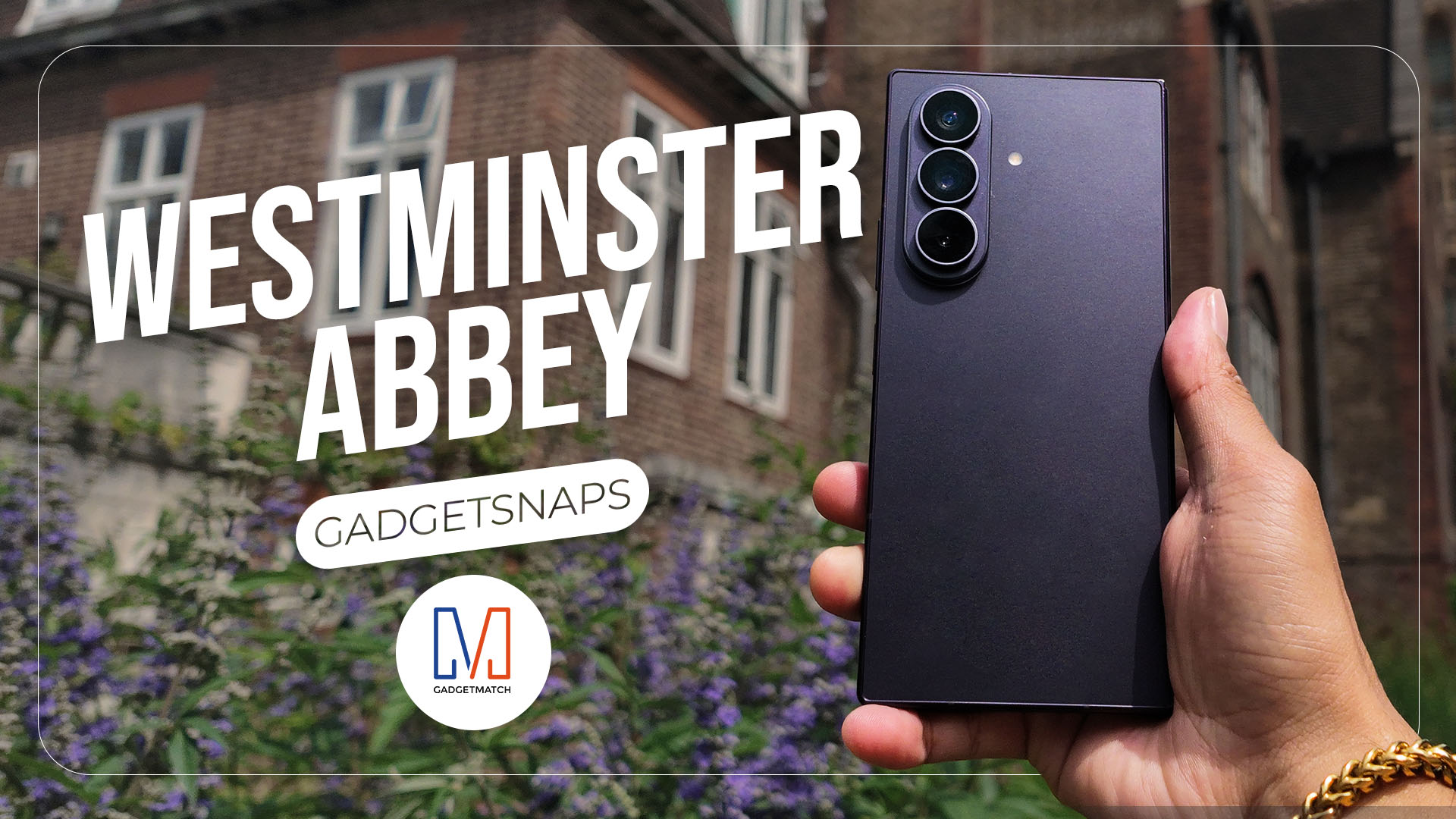
Westminster Abbey isn’t just another stop on the London tourist trail.
It’s the stage for coronations, royal weddings, and burials that span nearly a thousand years, all still playing out under the same vaulted ceilings that have been standing since before most countries had names.
Once you get past the crowds and the audio guides, a quieter version of the abbey starts to show itself: worn stone steps, poets resting a few feet from kings, light that shifts across the nave like it’s in on the performance too.
While losing track of time in Poets’ Corner (yes, me, playing amateur historian for an afternoon), I unfolded the Samsung Galaxy Z Fold8 Ultra and decided the abbey deserved more than a quick tourist snap.




































All photos captured using the Samsung Galaxy Z Fold8 Ultra.
Features
The Death of BMI: Why the world’s most popular health metric is lying to you
Muscle mass, body fat percentage, and visceral fat tell you more about your health than BMI ever could, and your watch can finally measure them.
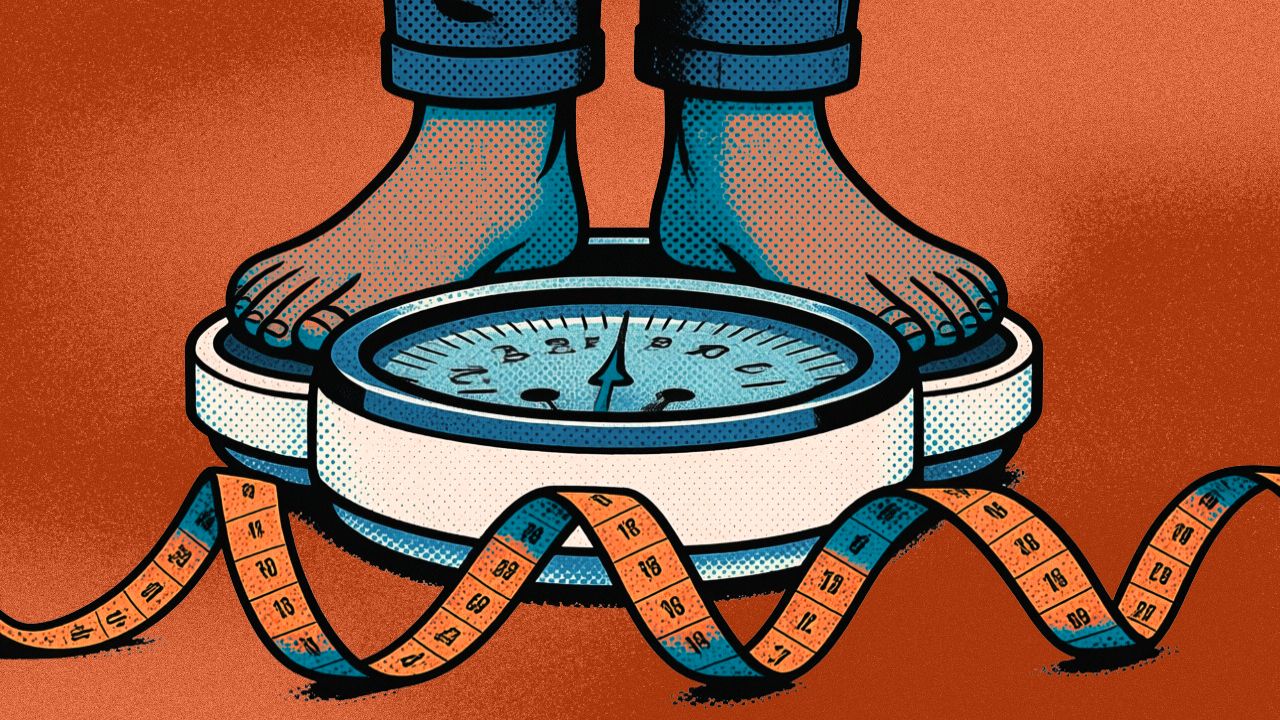
Step on a scale at a doctor’s office and your health usually gets summed up in one number. Weight divided by height squared. That’s your BMI, and it’s been the default health metric for almost 200 years.
It was never built for that job. BMI was invented in the 1830s as a statistical shortcut for studying populations, not for telling an individual person anything meaningful about their body. It can’t tell the difference between a muscular athlete and someone who’s out of shape but happens to weigh the same. It ignores bone density, body water, and where fat actually sits in the body, which matters more than most people realize.
The metrics that actually matter are the ones BMI was never designed to catch: how much of your body is muscle, how much is fat, and where that fat is sitting.
The muscle question BMI can’t answer
Skeletal muscle is the body’s metabolic engine. It’s what keeps your resting metabolic rate up, what protects your joints, and what determines how well you move as you get older. Losing it quietly, without knowing, is one of the bigger blind spots in how people track their own health.
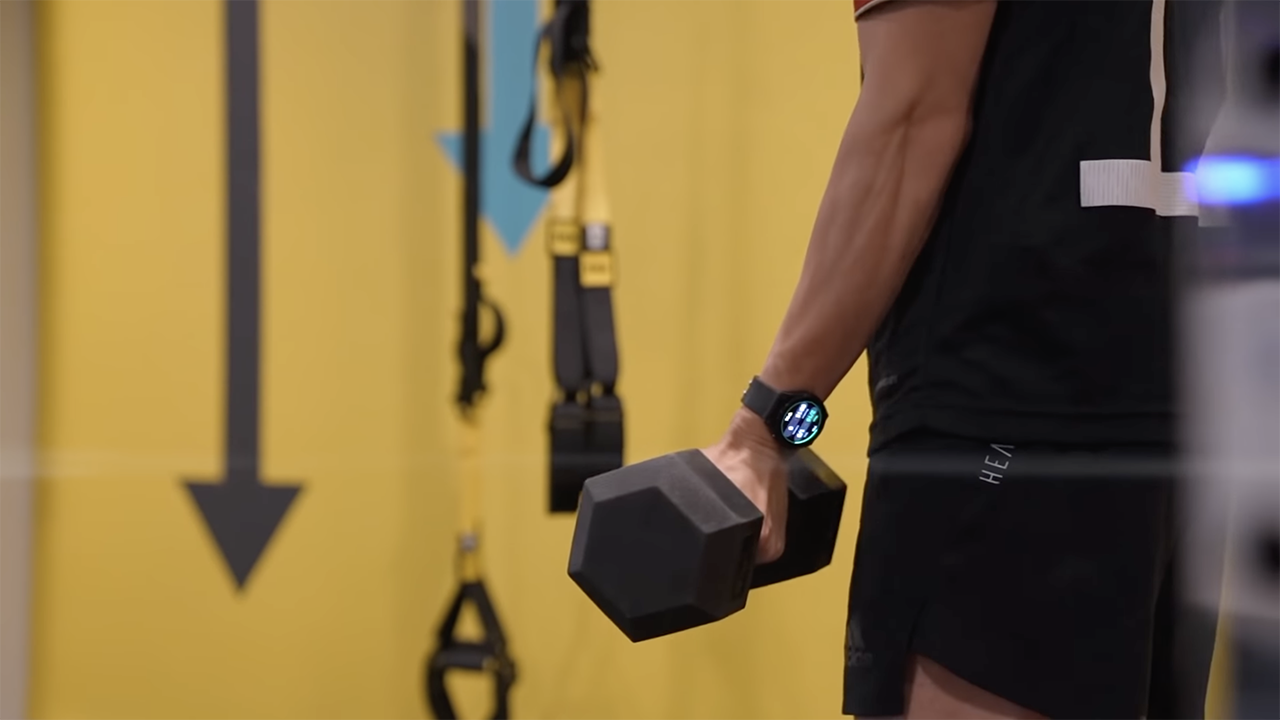
Fat isn’t one thing either. Subcutaneous fat, the kind just under the skin, carries far less risk than visceral fat, which wraps around internal organs and is directly linked to cardiovascular problems. A person can lose weight and still be carrying dangerous levels of visceral fat. BMI has no way of showing that.
This is also why short-term weight drops can be misleading. A lot of what shows up on the scale in the first week or two of any diet is water loss, not real change in body composition. The number moves, but it doesn’t mean much yet.
Why this is showing up in headlines right now?
Part of why this conversation is happening now, rather than five years ago, comes down to the rise of GLP-1 weight-loss drugs like Ozempic, Wegovy, and Zepbound.
GLP-1, or glucagon-like peptide-1, is a natural gut hormone that signals fullness to the brain. These medications mimic it, slowing digestion and dulling appetite, which lets people eat significantly less and lose weight fast.
That speed is exactly what exposed the problem. Rapid weight loss burns fat and muscle together, not just fat. Lose 20 pounds on a GLP-1 drug, and both the scale and a BMI calculator will call it a clean win.
If a meaningful chunk of that was skeletal muscle, metabolic rate drops, joint support weakens, and the risk of physical frailty goes up, none of which shows up in that one number.
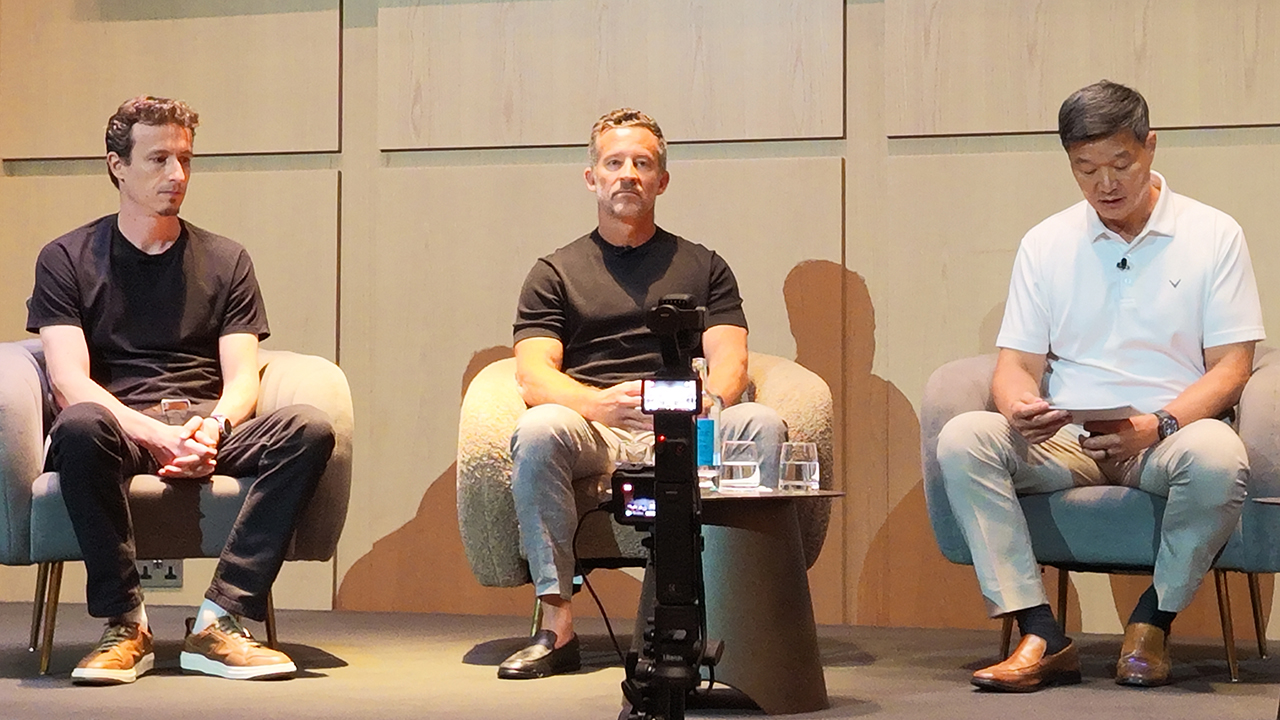
Dr. Hon Pak, Head of Digital Health Globally at Samsung Electronics, has pointed out that with GLP-1 therapies in the picture, raw weight lost can’t be the metric that defines success anymore. The focus has to shift to what kind of weight is being lost.
Kevin Duffy, CEO of iFit, has made a similar point: BMI stuck around because it’s easy to calculate from just height and weight, not because it’s the right thing to track. Muscle mass and body fat percentage matter far more, they’ve just historically been hard to measure outside a lab.
What your watch can measure now
Getting real numbers on muscle mass and visceral fat used to mean an expensive clinical scan. That’s the part that’s changed.
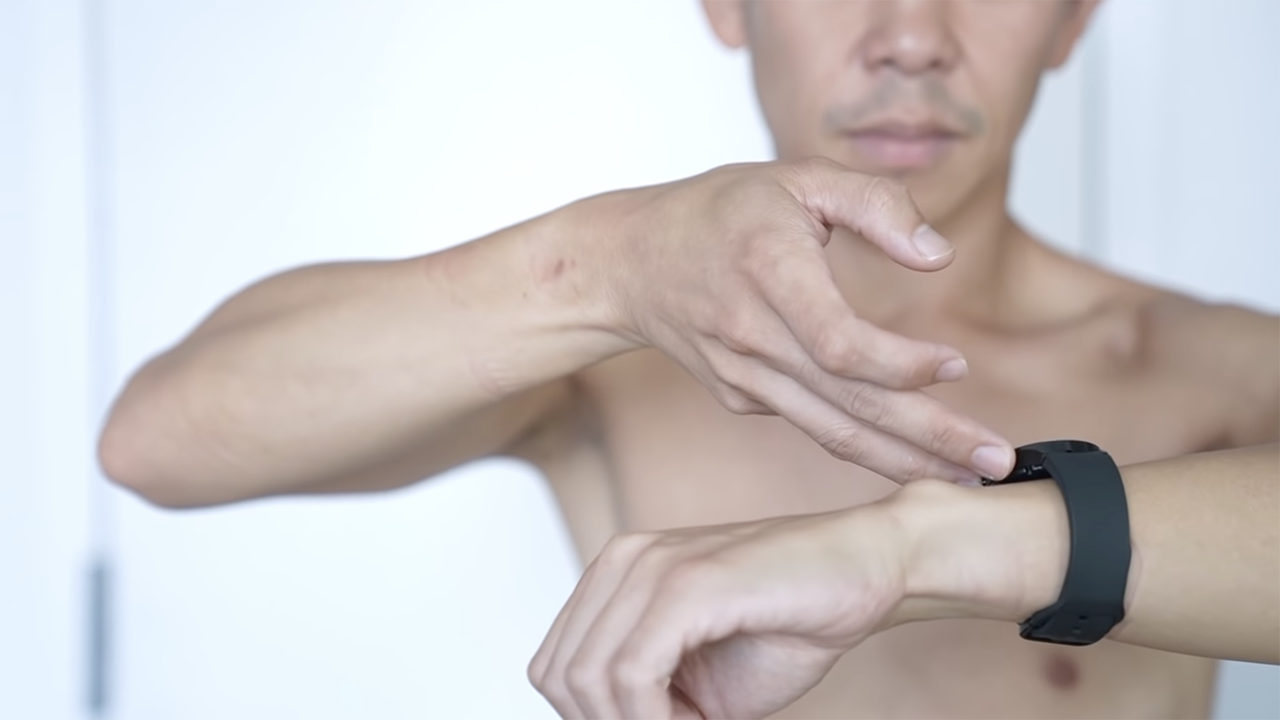
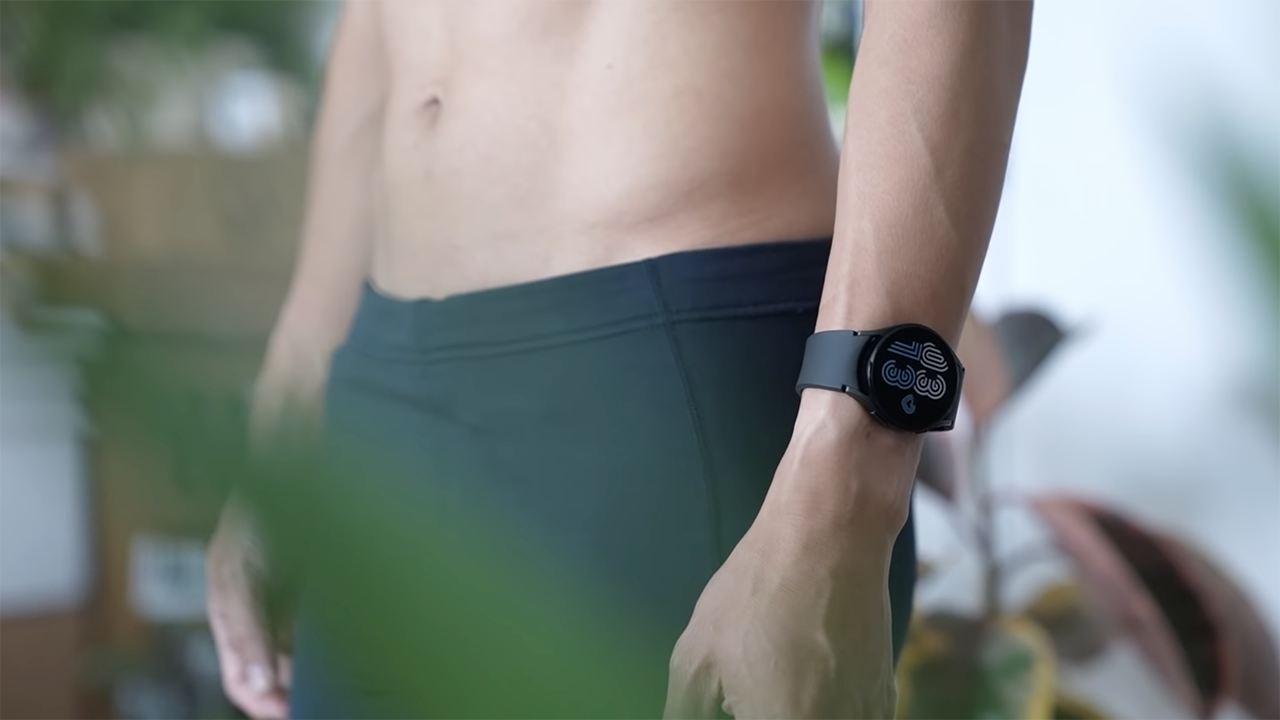
Samsung has built Bioelectrical Impedance Analysis sensors into the Galaxy Watch, sending a low-level microcurrent through the body to estimate skeletal muscle mass, body fat percentage, body water, and basal metabolic rate, all from your wrist.
For anyone losing weight, whether through a GLP-1 medication or a more traditional route, that gives real visibility into whether the weight coming off is fat or muscle.
It’s the kind of feedback that lets someone actually adjust, adding resistance training or upping protein intake, instead of finding out the hard way months later.
Samsung pairs this with Samsung Food, which uses AI to look at what’s actually in someone’s kitchen and suggest protein-forward meals that support muscle retention.
Karthik Poriya, Head of Product at Samsung Food, has noted that people tend to fixate on small day-to-day food decisions when what actually moves the needle is the trend over weeks and months. AI is what makes it possible to zoom out and see that trend instead of getting lost in it.
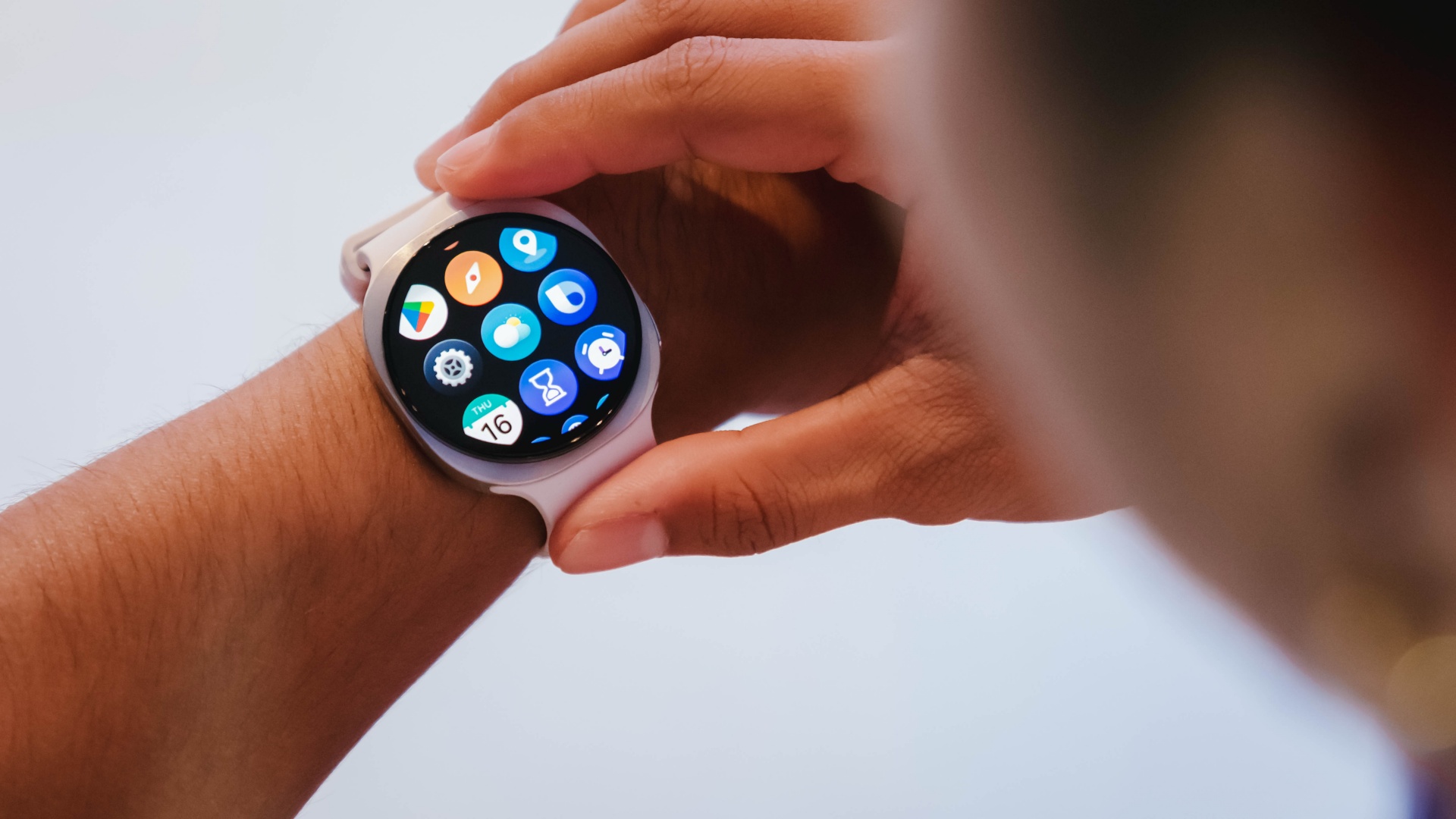
Combine body composition data with sleep tracking, activity monitoring, and a broader Energy Score, and the whole framework shifts. It’s no longer about getting lighter.
It’s about getting stronger, protecting muscle, and extending healthspan rather than chasing a number that was never built to measure any of that in the first place.
Features
Your wearable could warn you about illness before you feel a thing
The next big AI breakthrough isn’t a chatbot. It’s your heartbeat.
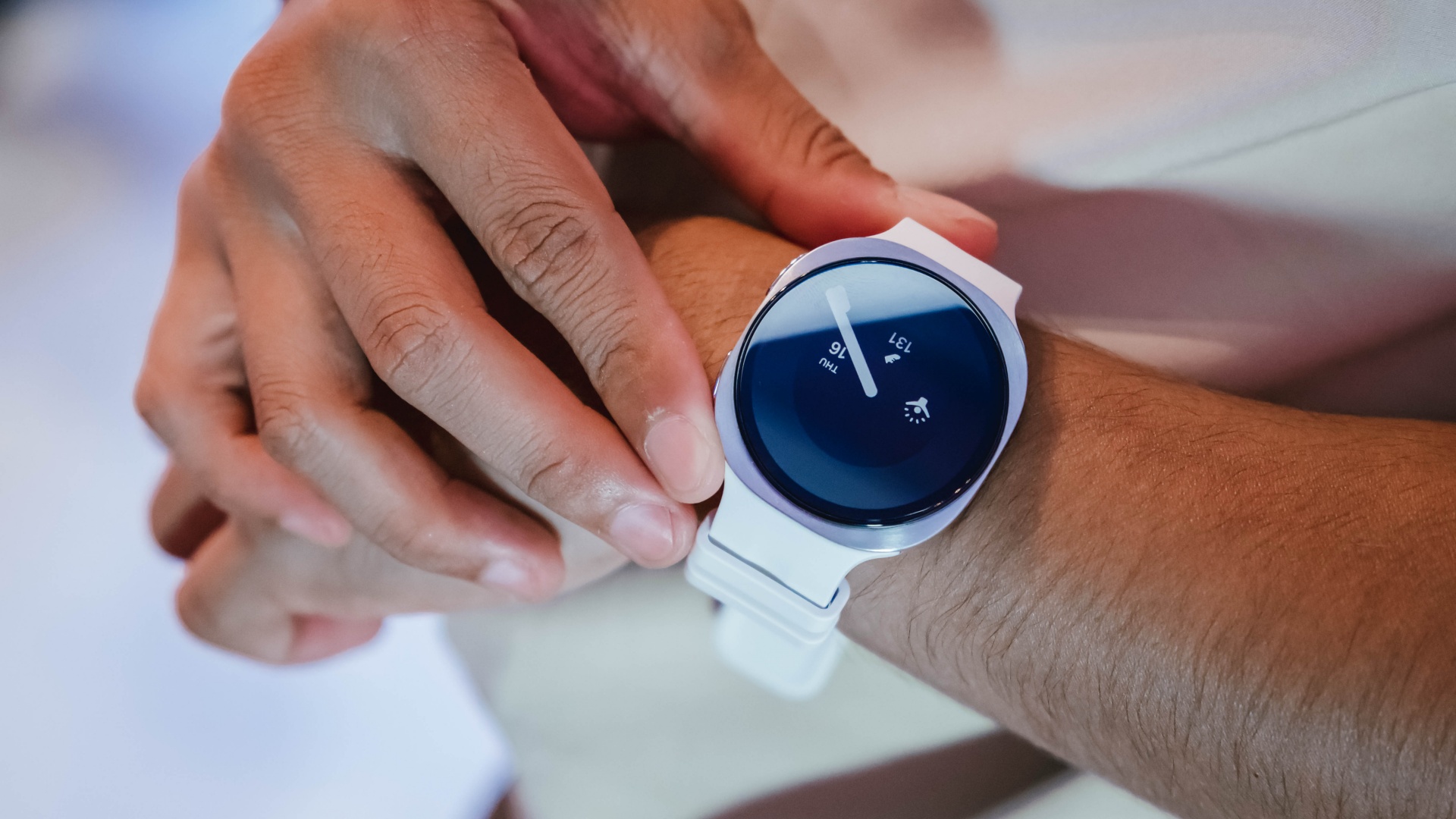
Most of the conversation around artificial intelligence right now revolves around chatbots. Tools that write your emails, summarize long PDFs, or spit out blocks of code in seconds. That is the AI most people interact with daily.
Behind the scenes in health research labs, however, a profound shift is taking place that has nothing to do with words.
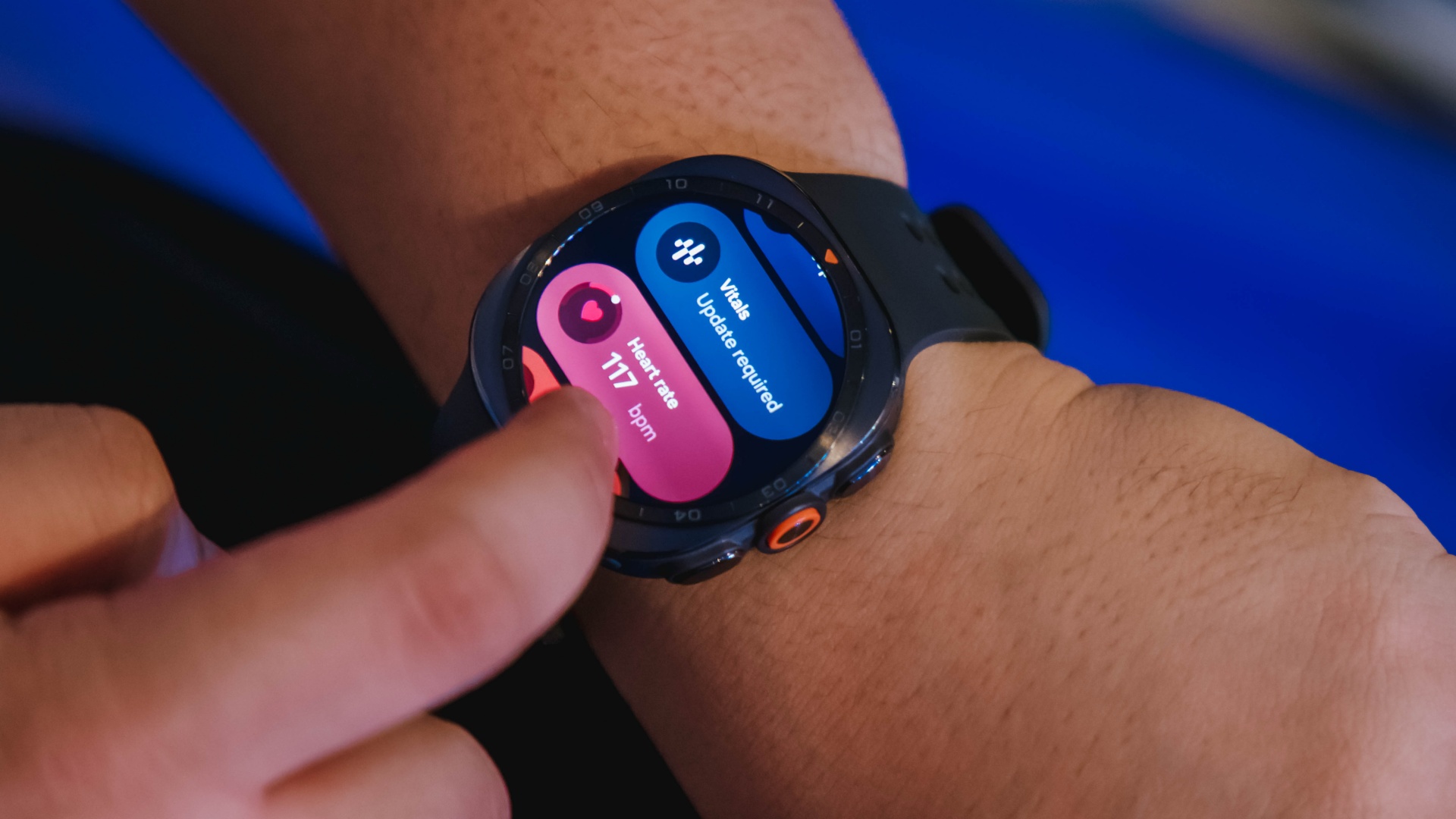
Scientists are training AI models to read raw human biology instead: optical heart rate signals, ECG readings, movement patterns, and sleep data. The goal is teaching AI to understand what is happening inside your body long before you ever feel sick.
During Samsung’s panel discussion on the future of Connected Health at the Pan Pacific London, Otavio Penatti, Samsung’s Head of Health AI R&D, captured this vision simply: “Your body speaks, Samsung Health translates.”
So what makes this different from your average fitness app?
Most health apps you already use run on basic rules. Your heart rate crosses a certain number while you’re resting, so the app sends an alert. That’s about as sophisticated as it gets.
These new models work on a different level entirely. Researchers feed them massive amounts of raw biometric data without labeling any of it first.
No doctor has to sit there and tag every second of heart rate or movement data by hand. The AI figures out the patterns on its own, essentially learning the basic language of how a human body functions.
Once a model has been trained on millions of hours of this kind of data, it can then be fine-tuned for a long list of specific medical uses.
And it’s not just watching for one odd spike in your heart rate. It’s cross-referencing your heart rate variability, skin temperature, movement, and sleep patterns all at once to build a detailed picture of what’s normal for you specifically.
One night of sleep data, over 130 diseases
Here’s where it gets interesting. Researchers at Stanford built a foundation model trained specifically on sleep data, using both raw polysomnography (the kind of detailed sleep study done in a lab) and data from wearables.
When they compared just 24 hours of sleep data against years of longitudinal health records, the model was able to flag onset risk for more than 130 different diseases. From one night of sleep.
Dr. Hon Pak, who leads Digital Health globally at Samsung, described where this is headed: “We are collecting data right now in which we have clear signals of things to come. We just don’t know what it is right now. But through the work that we’re doing, we’ll be able to share these insights early and in the right, meaningful way.”
The missing link: your wearable talking to your medical chart
Right now, your Apple Watch or Galaxy Watch has no idea what your last blood test looked like. Your wearable data and your actual medical records live in two completely separate worlds.
That’s the real opportunity here. If continuous biosignal data from your wearable gets linked with your actual health records, prescription history, and lab results, AI could start catching subtle shifts in your body that even your doctor might miss during a routine checkup.
Not because your doctor isn’t paying attention, but because a once-a-year appointment simply can’t compete with data collected every single day.
Instead of catching a heart attack or a metabolic crisis after it’s already happened, the idea is to catch the early warning signs years before that. It’s a shift from reacting to illness to catching it early enough that it might never become a crisis at all.
It’s worth noting that most of this is still in research stages. How it eventually shows up in the health apps on your phone will depend a lot on how these companies handle the data, and how accurate these predictions actually turn out to be in practice.
But the direction is clear enough: the next major leap in AI might not be about how well it writes. It might be about how well it listens to you.

realme C100: Enduring and durable in spite of entry-level realities
Enough power but needs more agility


The ASUS ExpertBook Ultra wins you over
The laptop sneaks up on you

Nexal Watch Sport review: A rugged watch for small budgets
I couldn't believe that watches this good could come for this cheap.

nubia expands gaming lineup with Neo 5 Max, Neo 5 GT Special Edition

Sony launches FE 100-400mm F5.6-8 OSS telephoto zoom lens

Google will force Android users to use Gemini next month

Tides of Annihilation opens first public demo at Gamescom 2026

Street Fighter 6 adds first Filipino fighter Yasmine to its roster

New York becomes first state to ban smart glasses

Sony launches IER-M500 in-ear monitors

Microsoft dictates that a new Fallout game is coming

HoYo FEST 2026 details announced; tickets on sale from July 16
realme C100: Enduring and durable in spite of entry-level realities


-

 Automotive4 days ago
VinFast debuts two-wheeler models, opens 21 e-motorcycle showrooms
-

 Gaming2 weeks ago
FINAL FANTASY X | X-2 HD Remaster launches on Nintendo Switch 2
-

 Accessories2 weeks ago
CASETiFY revives Spider-Man collection for Brand New Day
-
 Computers2 weeks ago
AORUS MASTER 16 Gen 2 2026 AI gaming laptop launches
-
 Computers1 week ago
AMD launches Radeon RX 9050 graphics card
-

 Gaming2 weeks ago
God of War Laufey finally confirms its highly anticipated launch date
-

 Automotive6 days ago
Xiaomi debuts SkyNomad Series featuring new Kunlun platform
-

 Philippines2 weeks ago
OPPO Reno16 Series 5G is coming soon to the Philippines