


Lifestyle
Agoda Mix and Save helps you find cheaper accommodations
Save up to 50 percent on your bookings

In this age, traveling is no longer a luxury. With the right planning and budgeting, one can travel further than they can imagine. As a traveler fond of budget trips, I always put my experiences first before my accommodation. My motto was “forget luxury and high-end stays, my adventures are far better than any other hotel experience.”
Accommodation was the least of my priority, obviously. I would rather opt for a hostel to save money and be able to afford more local experiences. I don’t like being forced to stay (both in life and in love) when adventures are waiting for me.
But as I’m getting older, traveling slowly shifts from adventures to relaxation. However, I can’t let go of the budget-conscious lifestyle I’ve developed over time which is why Agoda’s newest feature was a godsend for someone like me.
What is Mix and Save?
Mix and Save is Agoda’s newest feature which allows customers to save up to 50 percent in their bookings, by combining the cheapest rooms available within the same hotel.
How does it work?
If you search between two to 14 nights stay at any of Agoda’s two million properties worldwide, Agoda will suggest the Mix and Save feature as an option to split your reservation into multiple bookings to help you maximize savings.

For example, I’m booking at Virginia’s Cave Villas in Santorini on November 17 to 27. It would have been expensive if I opted to take the Executive Villa with Outdoor Hot Tub for 11 days straight, costing PhP 9,453 per night. Agoda then suggests the Superior Cave Villa with Outdoor Hot Tub, a cheaper room that’s only available from November 24 to November 27, which costs PhP 7,136 per night.
It’s definitely going to make my accommodations cheaper, as long as I agree to be flexible and move. It might be an inconvenience to move to a different room, but who cares about inconvenience when you can get a cheaper room with a different style and decoration that would look good on social media.
What does it mean for hoteliers and the traveling landscape?
Agoda is the first major global online travel agent to make these “hack-rates” available. Chief Operating Officer Omri Morgenshtern believes this new feature will help partners optimize inventory and reflect Agoda’s commitment to offering the best possible price to customers.
It’s currently available on desktop, and Agoda is planning to enhance the offering in the future so users can enjoy Mix and Save deals on mobile.
Mix and Save is great news for travelers, but it might be a bit of a hassle for a hotel’s operations. Nonetheless, it’s a new feature and it’s still too early to tell if this is good or bad for the whole travel industry. For now, enjoy and take advantage of the better deals.







Moving into a new space comes with a long list of things to figure out, and lately, I’ve been paying more attention to something that’s easy to overlook: air quality.
After using the LG AeroMini for about a month, it has become a subtle but welcome addition to my space. It helps make the room feel fresher, while its compact and stylish design fits naturally into my setup. Here are the things that stood out to me most after living with it for a month.
360° purification for a fresher space
One of the things I appreciate about the AeroMini is its 360° air purification, designed to bring purified air in every direction.
For me, this is particularly useful in a new space where I’m spending a lot of time working, relaxing, and just settling in.
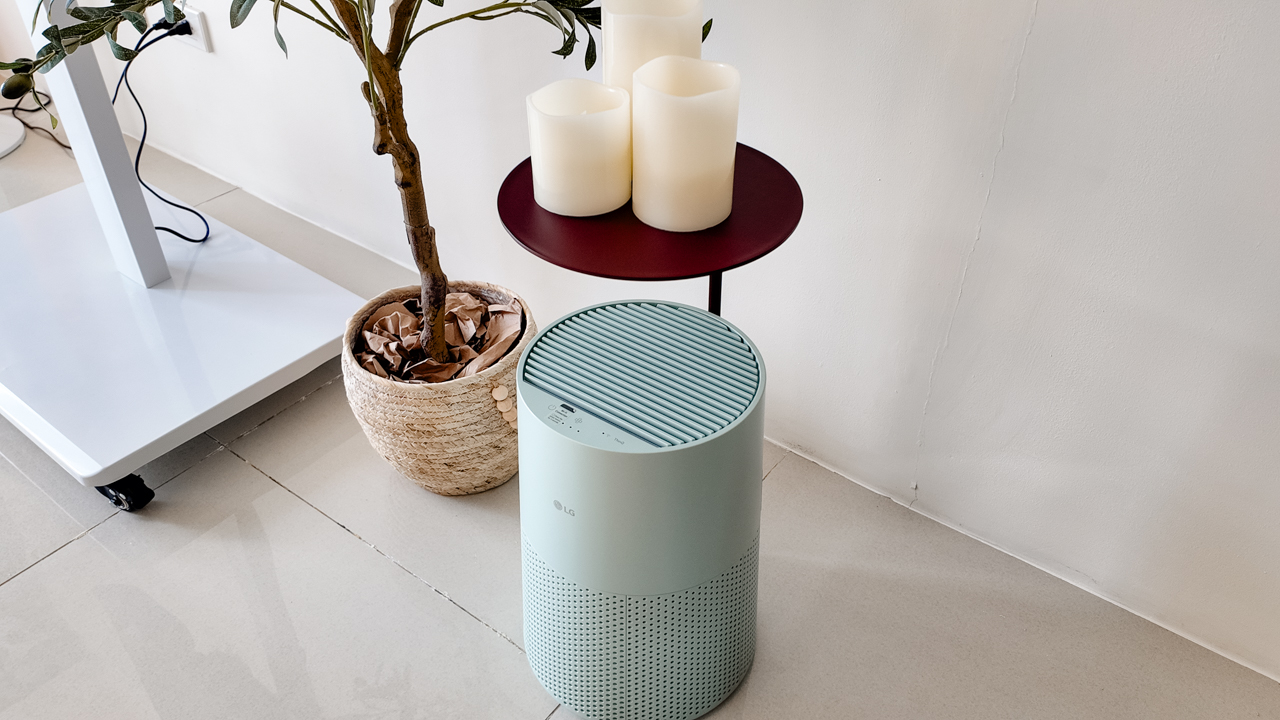
Combined with its True HEPA filter, which is designed to remove 99.999% of 0.01μm fine dust and allergens, it gives me added peace of mind about the air I’m breathing every day.
After a month, I can genuinely say that the space feels fresher with it running.
Surprisingly quiet
This is probably my favorite feature.
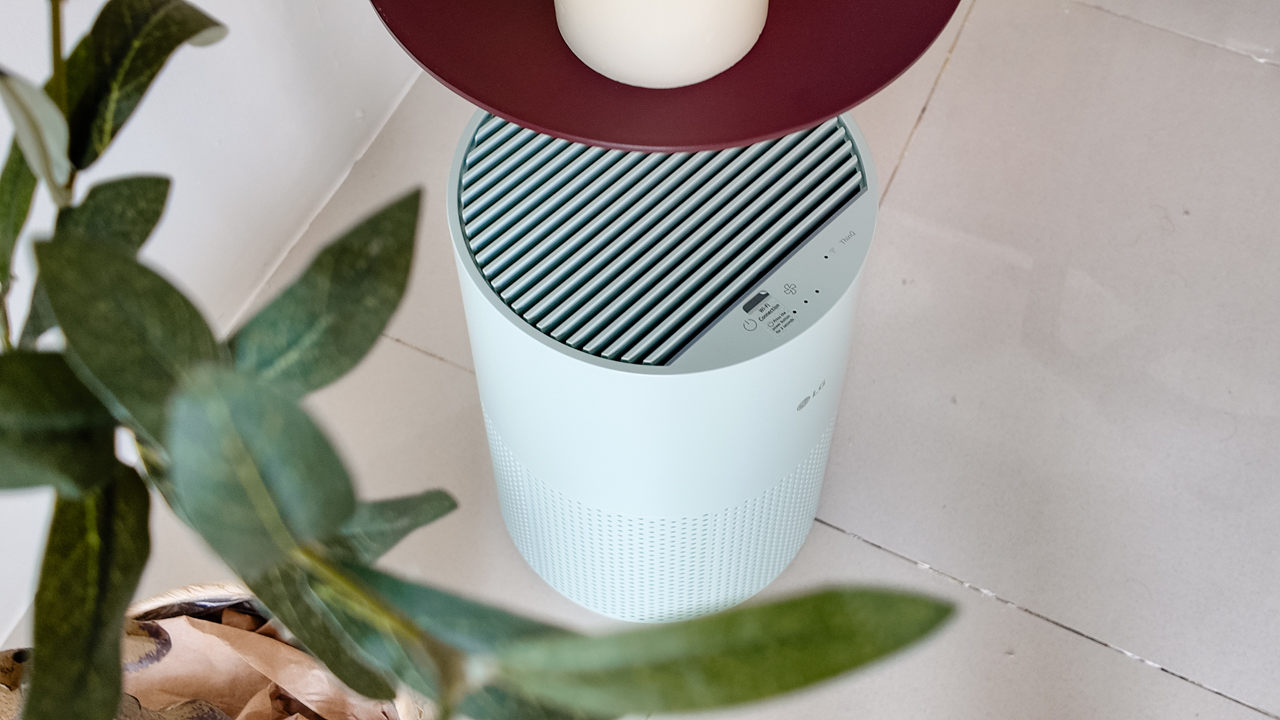
The LG AeroMini operates at just 26dB, and after using it for a month, what stands out is how easy it is to forget that it’s even running.

I can have it running while I’m working or sleeping without the noise becoming a distraction. For an appliance that’s designed to continuously improve the air around you, I think that’s a big deal.
Sometimes, the best feature is the one you barely notice.
Design that fits my space
Since I recently moved, I’ve been pretty conscious about what I bring into the space. I want things to be functional, but I also don’t want appliances that feel like they’re taking over the room.
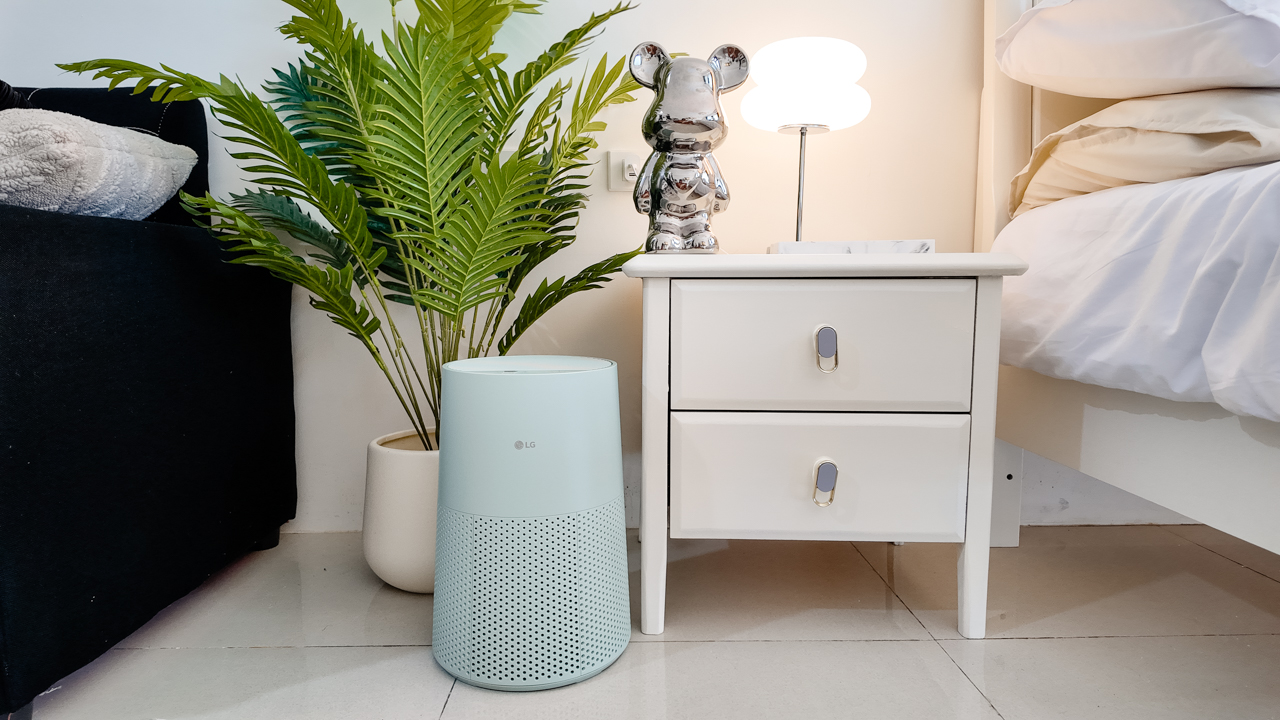
The AeroMini’s slim and compact design makes it easy to incorporate into my setup. It doesn’t feel bulky or industrial, and I like that I can leave it out without feeling like I need to hide it away.
For me, that balance between functionality and aesthetics makes it feel more like part of the space rather than just another appliance.
Air quality at a glance
Another feature I’ve found convenient is its Smart Control. Through the app, I can monitor and control the AeroMini while getting real-time updates on the indoor air quality.
It’s a small convenience, but being able to check the air quality without having to interact with the purifier directly makes it easier to keep track of what’s happening in the room.

Easy to maintain
I also appreciate that the AeroMini is designed with an all-in-one dust and deodorization filter that makes replacement and maintenance easier.
That matters to me because the best home gadgets are the ones that don’t create another complicated chore. I want something I can set up, use regularly, and maintain without too much fuss.

After a month, would I keep it?
Yes, and mainly because it quietly fits into my everyday routine.
The LG AeroMini has helped make my new space feel fresher and more comfortable, while its compact design means it doesn’t compromise the look of the room. But if I had to pick just one thing I appreciate most, it’s still how incredibly quiet it is.

It’s one of those upgrades that doesn’t demand your attention. It simply works in the background.
If you’re also looking to make your home a fresher and more comfortable space for yourself and your family, visit https://www.lg.com/ph/ to learn more about the LG AeroMini and how it can fit into your everyday life.
Features
Nike’s new race-day system, explained
Apex, Alphafly, and Swooshfly are each built around a different goal at the starting line.
Every starting line has a few moods running at once. A runner near the front is thinking about splits, while someone in the middle is calculating whether they trained enough.
Then, someone toward the back is checking their laces for the fourth time and feeling perfectly happy to be there.
Nike’s new race-day system was built around that range, and it also gives you a perfectly good reason to look at new shoes. (Which I’m choosing to treat as research.)
Because if there’s one thing runners understand, it’s that a race is never simply a race. It’s a training plan, a playlist, a breakfast strategy, a weather forecast, and potentially, a completely new pair of shoes.
The big idea
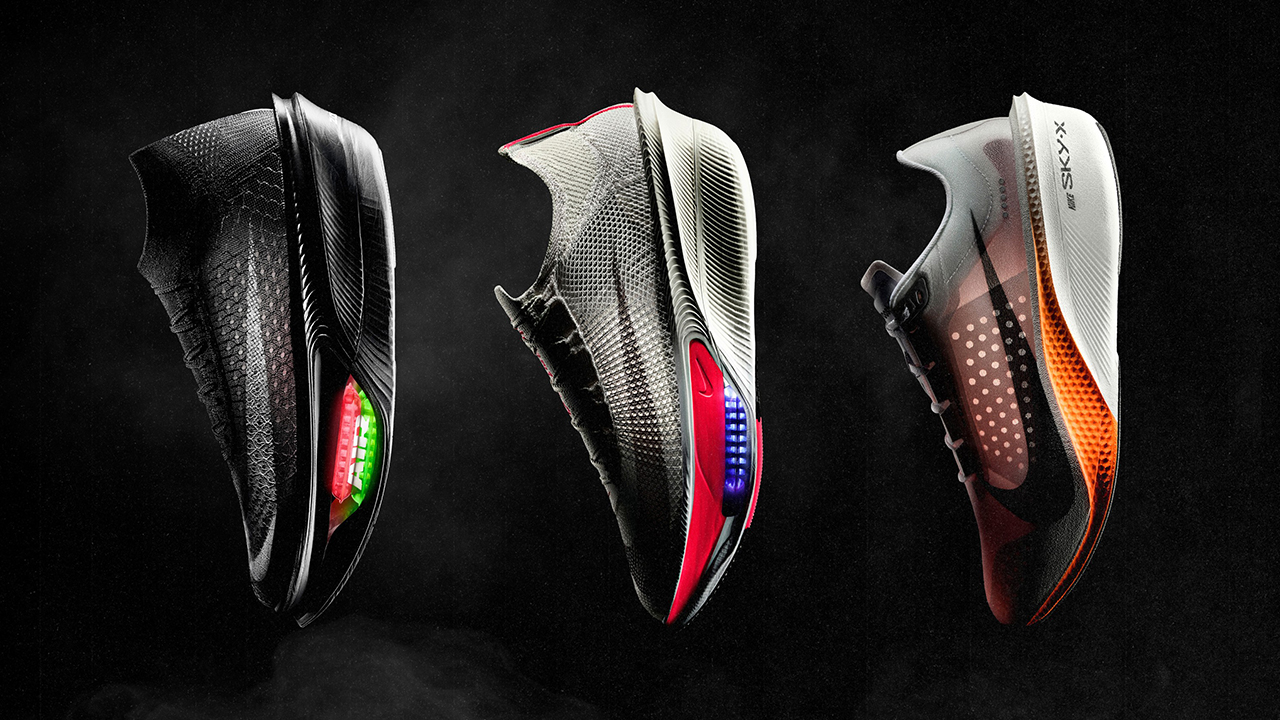
Nike introduced three shoes that work together as one lineup: the Nike Apex, the Alphafly 4, and the Swooshfly.
Nike calls it its most comprehensive race-day offering yet, adding a new structure to the road-running shoes already in its catalog.
The interesting part is how Nike has organized the lineup. Racing footwear is often presented as a hierarchy, with the fastest shoe sitting at the top and everything else somewhere beneath it. That can make the shoe wall feel a little like there is a bouncer deciding whether you have earned the good pair.
Nike’s approach is more welcoming. Each shoe has its own purpose, and runners can choose based on their goals, experience, and the kind of race day they want to have.
It’s an excellent news for anyone who has ever walked into a running store, picked up the most expensive shoe, and immediately started mentally explaining why the purchase was necessary.
Nike Apex
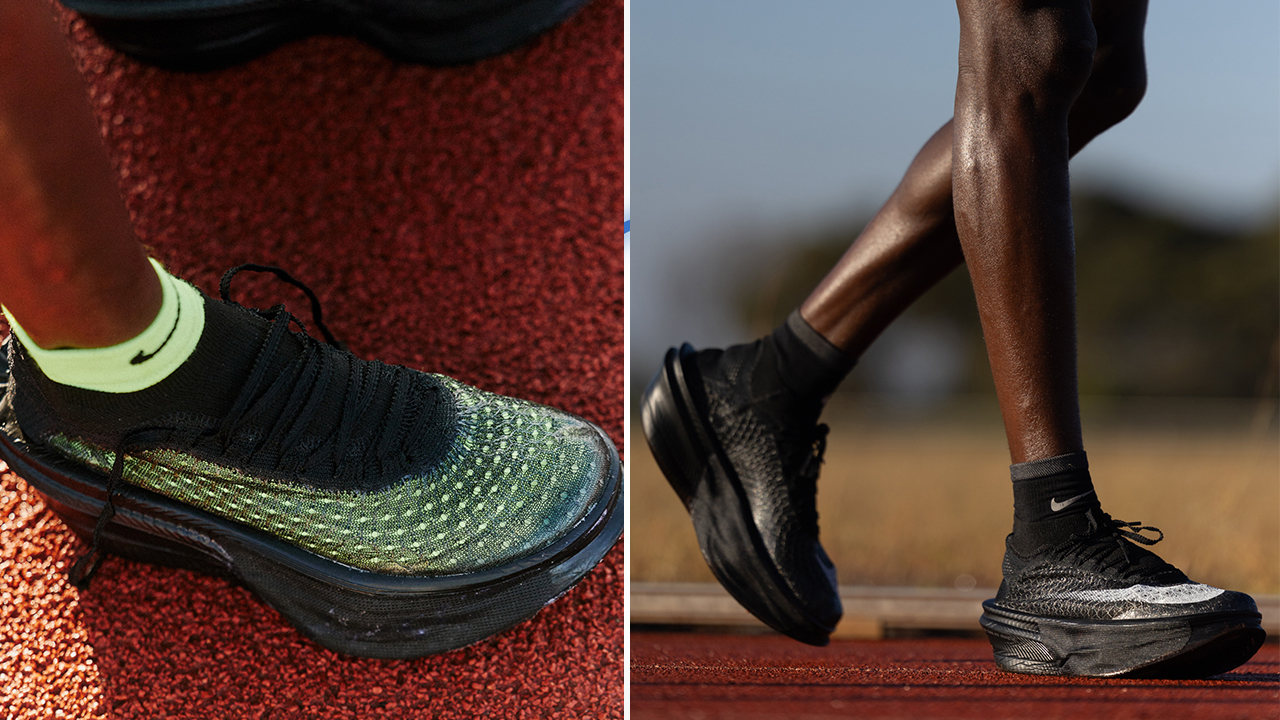
The Apex sits at the top of the range. Nike describes it as its most advanced expression of speed, made for runners chasing the edge of marathon performance.
If you’re training for a breakthrough result and every second counts, this is the shoe Nike is pointing you toward. It’s the serious one; the grown-up one. The shoe that enters the conversation when your race plan contains phrases such as “negative split” and “sub-three.”
It’s also the one most likely to make your current racing shoes suddenly feel very ordinary after you read the spec sheet.
This is how it starts, by the way. You read about the foam. Then, you look at the plate. Then, you watch one review and then, another. Suddenly, you are comparing marathon shoes at 1 o’clock in the morning and explaining to yourself that this is research.
Nike Alphafly 4
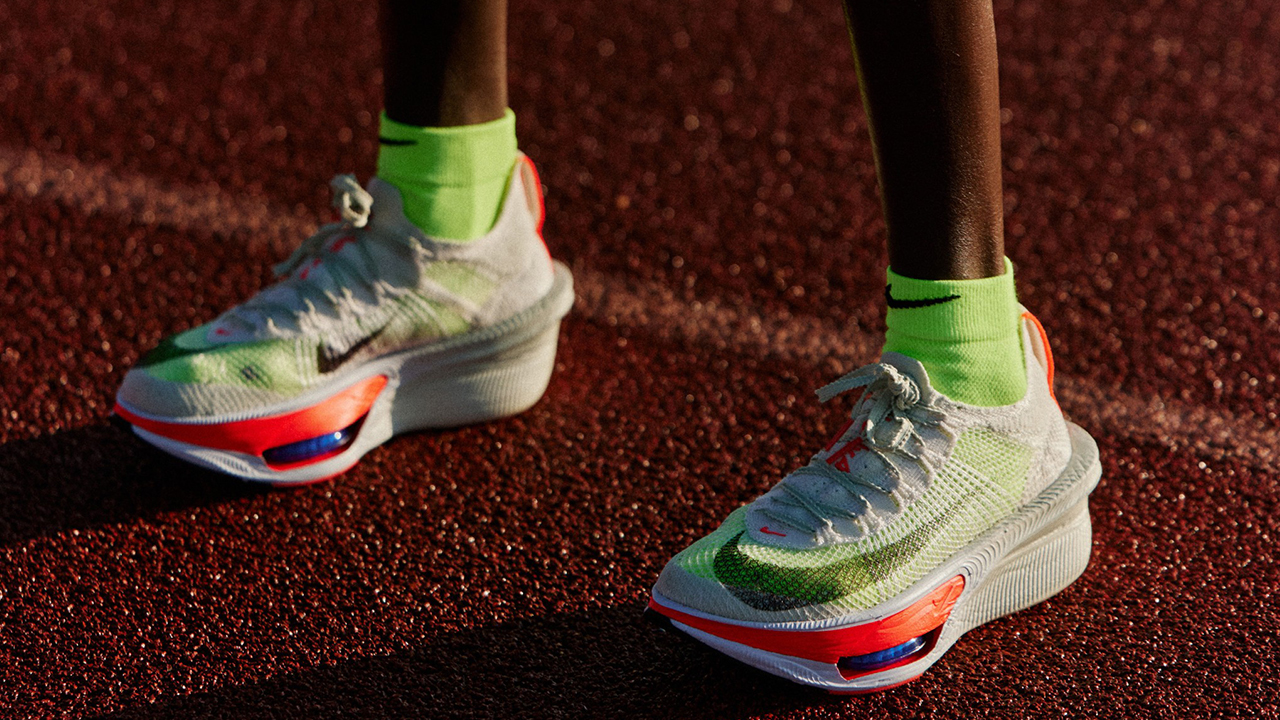
The Alphafly 4 is designed for a wider group of runners. According to Nike, it balances responsiveness, comfort, stability, and efficiency over distance, bringing race-day speed into reach for more athletes.
If you already have a few finish lines behind you and a personal best in your sights, this is where Nike says you fit. It’s the sensible choice, by which I mean the one you can probably explain at checkout without needing a detailed financial presentation afterward.
The beauty of having a race-day system is that you can also stop treating the fastest shoe as the only shoe worth wanting. Your race history, distance, goals, and preferences all get a seat at the table.
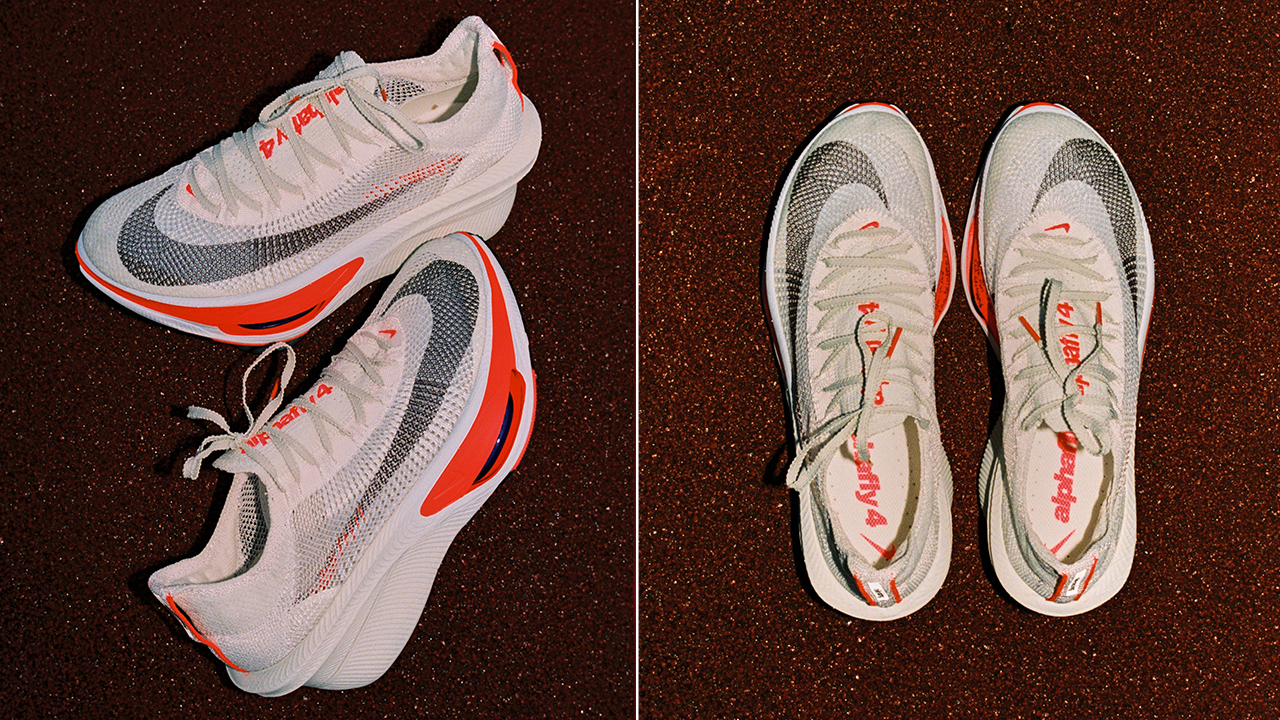
Of course, I still believe every runner deserves at least one shoe that makes them walk around the house for no reason after putting it on.
Nike Swooshfly
The Swooshfly is the entry point to the system. Nike positions it as an invitation to race day, with cushioning designed to help runners feel confident and ready for a distance they have not raced before.
If your first starting line is coming up, this is the shoe Nike made with you in mind. I like that idea because race-day nerves are very real.
You can have the training plan, the race belt, the gels, the carefully selected playlist, and enough screenshots of the course elevation profile to qualify as cartography, and you can still feel nervous when you get to the start line.
A shoe that feels approachable can be part of making that first race feel less intimidating. And once you finish? Well, congratulations. You are now a ~certified~ runner, which means you can begin looking at shoes for your next race.

Where these shoes came from?
Nike says each shoe began with a runner’s problem. That problem was studied at the Nike Sport Research Lab, translated into product design, and tested with athletes before the shoes reached a starting line.
That’s a lot of homework before anything makes it onto a shelf. It also explains why Nike talks about the three shoes as a system rather than three separate products.
The lineup draws from more than 50 years of Nike’s racing history, beginning with co-founder Bill Bowerman’s earliest handcrafted spikes and continuing through the original super shoes that helped reshape modern racing more than a decade ago.
Today, that history comes together through athlete insight, scientific research, and technology designed to improve running economy.
What’s under the hood?
Behind every glamorous race-day photo is an alarming amount of engineering, testing, data, sweat, and people whose job is apparently to figure out how much faster humans can become when you put the right materials under their feet.
Technically, the system brings together Nike’s proprietary Air Zoom platforms, advanced foams, and engineered plates. Nike says each combination has been developed around the needs of its intended runner, with different approaches to comfort, confidence, efficiency, and speed.
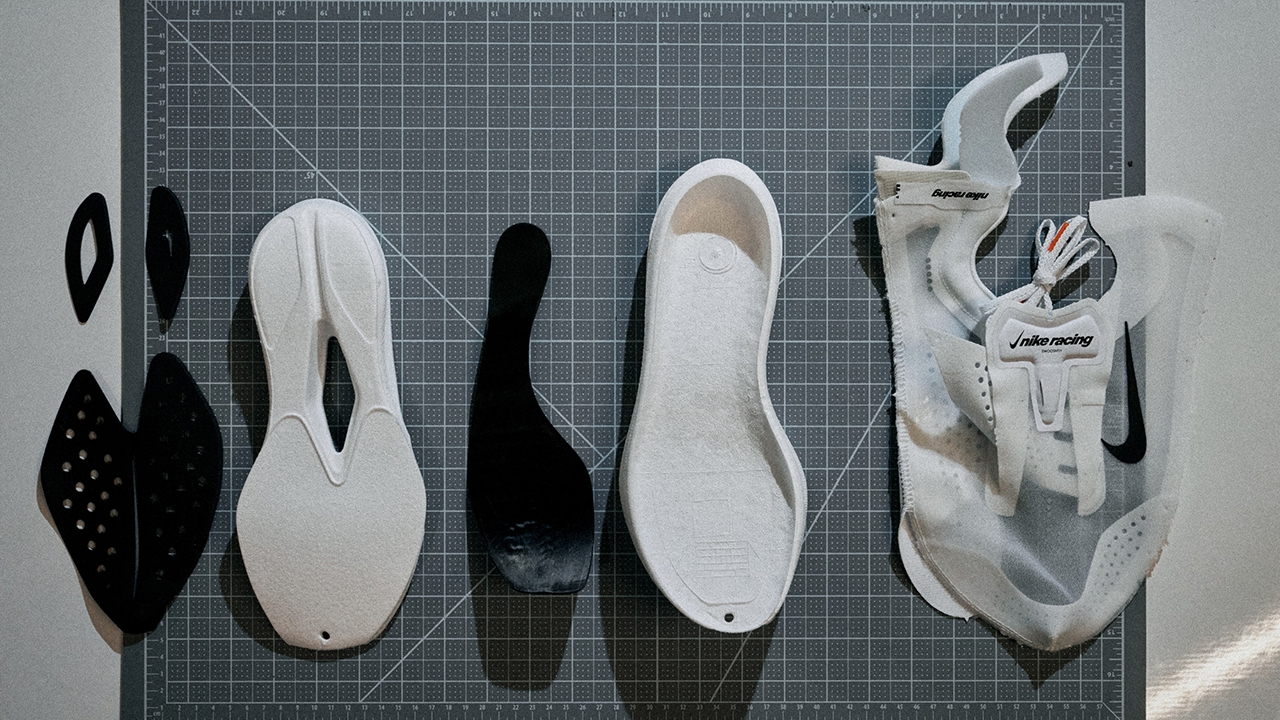
This is where the spreadsheet part of your brain can take over. Foam density. Plate geometry. Cushioning. Responsiveness. Weight. Running economy.
Meanwhile, another part of your brain is saying, “Yes, but does it look good with my race kit?” Both are valid considerations.
The bigger point is that the fastest shoe on paper isn’t automatically the best shoe for every runner. A marathoner chasing a personal record may want something very different from someone standing at their first 10K start line. The event may be the same, but the reason for being there can be completely different.
That’s what makes Nike’s new system interesting. It treats race day as something that belongs to every kind of runner, from the athlete chasing seconds to the person who is still figuring out what racing feels like.
Entertainment
Linkin Park: Unshatter is the band’s kintsugi
Raw, visceral, honest approach on grief, starting again, and moving forward


When Linkin Park understandably went on an immediate hiatus in 2017 following the tragic death of its frontman Chester Bennington, it felt to millions of fans as though an important part of their lives had been taken away.
For the longest time, the one thing the rock band did exceptionally well was to put into their songs all the untold, unexpressed feelings, emotions, and thoughts of several generations.
That deep resonance made the music stick. When 2017 happened, many felt that connection was gone for good.
Linkin Park: Unshatter magnifies what handling grief looks like from the inside out. It starts with the band members themselves and radiates outward to the community that carried them.
It goes without saying that grief has no single roadmap. And for band co-founder and co-lead vocalist Mike Shinoda, moving forward began with a simple and almost accidental question put out into the open: “What if Linkin Park didn’t have to end?”
Starting again

The documentary-concert film opens with a cinematic rush: a sweeping shot of the Allianz Parque (now Nubank Parque) in São Paulo, Brazil, where Linkin Park is set to perform as part of their From Zero World Tour.
A quick montage follows, capturing the concert day feel as it commences. Viewers get thrown straight onto the stage as “Somewhere I Belong” ignites the crowd.
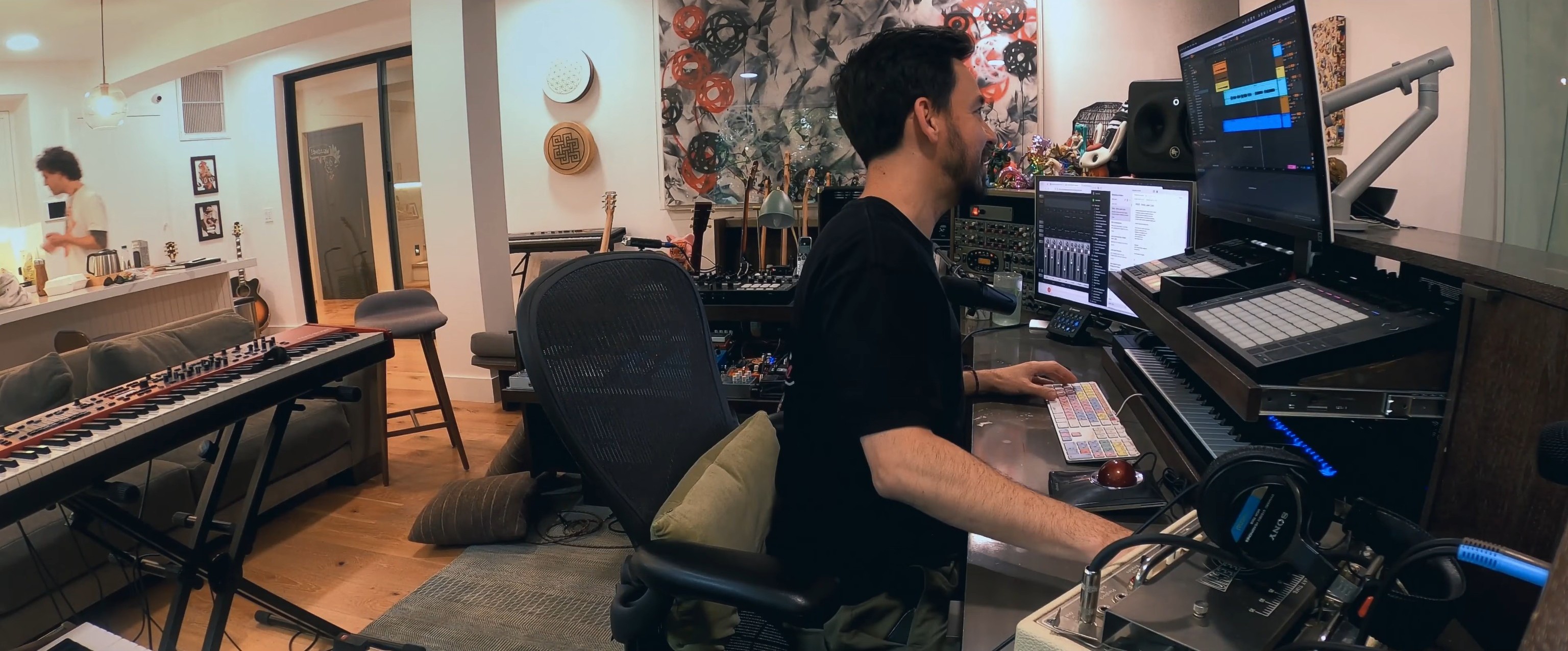
Then, the mood then shifts abruptly, pulling everyone backward to late 2022 inside Shinoda’s studio.

Here, alongside original members Joe Hahn and Dave “Phoenix” Farrell, the cinematic scale melts away into an unscripted, intimate creative slate. This is where the true documentary tone takes over.
If you have been preoccupied with everyday undertakings, Unshatter acts as an essential catch-up material for the behind-the-scenes evolution that transpired from 2022 to 2024.
It delivers a wealth of candid footage rarely seen outside of close circles, offering fans a fresh perspective right in the eye of the storm. It’s been billed as such, and it does not disappoint.
Part of what makes it grounded and emotionally connecting is the chronological storytelling. As with starting again, you don’t know what is about to happen yet.
The progression, which includes moving from Shinoda’s private quarters to EastWest Studios, the rehearsals and promotional photoshoot, and everything in between, takes you to the build-up and makes every step feel real before the 2024 breakthrough.
Raw, visceral, honest

You can feel the complete absence of a script in these early studio sessions. Shinoda spent the latter half of the previous decade performing on his own, and speaks candidly about how exhausting it was to constantly look backward or perform for “tributes.”
There was no sudden lightbulb moment either. Three veterans simply chose to gather and think things through with a level of organic randomness.
This mirrors how processing grief unfolds in the real world. For Shinoda, much like how he would later describe new new vocalist Emily Armstrong’s voice and personality, the core approach was about being raw, visceral, and honest.
All three knew grief was there. It had been enveloping them all these years and they thought moving away from what defined their lives would do good.
At some point, survival meant acknowledging reality first and then carrying on from there.
Triple lenses

The documentary’s narrative spine relies on three distinct lenses: the OG holdovers, the new members and the uniqueness of Brad Delson’s dynamic with this new iteration.
After the opening third of the film heavily focuses on the OG trio, the arrival of Armstrong and Brittain in the middle act expands the horizon.
Brittain, particularly, initially stepped in as a guitarist to complement Shinoda’s structural ideas. He bares his lifelong fandom on camera, and even offers a striking thought which Shinoda mentions towards the end: that the music industry and the world in general is simply better with Linkin Park in it.
Much like newcomers finding their footing in a sports franchise, Emily and Colin quickly worked together often to hasten the integration process.

Later, Delson is introduced as someone initially reluctant to the thought of restarting Linkin Park. Such resistance was acknowledged though he warms up to the idea and rejoins the fold in the latter stages.
His role changes to an anchor, as if a coaching consultant helping run a franchise at the highest level without necessarily being on the sidelines every single night.
Shinoda was open about the tension this could have caused, weighing whether a non-touring lead guitarist might disrupt the momentum and progress of the comeback build-up.
Yet the film consistently highlights how mature, open, and thoughtful those internal conversations were.
Delson’s eventual return made Colin slide into the drummer role. The transition was handled with surprising economy on screen, much like the brief, respectful nod given to former drummer Rob Bourdon’s departure.
Emily rises From Zero
Armstrong shares the middle act with Brittain, but her journey demands its own lens. And the documentary captures this duality of carrying the inherent weight of stepping into the shoes left by an icon and her energetic personality in the studio as she dances, vocalizes, and throws her soul into the process.
Much has been chronicled about Armstrong’s electrifying voice and the shoes she has had to fill, but the documentary chose to present her entry in a more natural manner.

Rather than being angled towards succession, the documentary spends a huge chunk showing her fit with her new bandmates. There is also a side to it where she is driven to prove herself coming from Dead Sara as a relative “unknown” before the 2024 surprise comeback.
A particular solemn moment captures this stripped down feel, as with the movie in general, even further: Emily singing a radically different rendition of “Heavy Is The Crown” with Shinoda playing the piano.
It’s far different from the high energy final version that has been out for years now, showing the fragile baby steps the band took.
Mike asking Emily at one point if she is open to touring also forces you to reflect on how differently the comeback could have unfolded.
This lens tackles the setlist realities. Songs from One More Light were basically untouchable. The meticulous work required to adjust keys and match Armstrong’s skill set were also shown.
Unshatter is the band’s kintsugi

One neat inclusion features blink-182’s Mark Hoppus, listening to a freshly completed mix of “Unshatter.” Having an industry contemporary validate in real-time that something special has clicked adds massive weight to the proceedings.
You can visibly see how genuinely flattered Shinoda gets when Hoppus tells him he got goosebumps.
The moment acts as the emotional bridge to the film’s ultimate metaphor, as expounded on by Delson towards the end: Linkin Park’s comeback is the band’s kintsugi.
This is, of course, the Japanese pottery tradition of putting broken pieces back together using a gold filling.

Though “Unshatter” wasn’t officially released until 2025, it served as the blueprint for the secret work Linkin Park poured years into.
In one of its most artfully executed transition moments, the film cuts right at the chorus of “The Emptiness Machine” from the high-stakes, breathless tension of their 2024 comeback launch event at Warner Studios, throwing viewers right back into the roaring Allianz Parque.
This was preceded of course by one of the final resonant glimpses of unsuspecting long-time fans transported to Warner Studios in anticipation of what was then only billed as a private gathering.
Proper documentary-concert film
Linkin Park: Unshatter strikes a wonderful balance between candid moments and electrifying concert sequence.
The live performance scenes were woven in seamlessly. Cinematography looked sharp: quick cuts, drone shots, sheer fan emotion. Towards the end, Hahn has his own immersive on-stage camera angles of his teammates.
Yet it never stretches too thin. You wouldn’t want to watch just a live concert. Make no mistake, in a large screen format and with accompanying cinematic audio, the energy just reverberates harder.
The film ends with the aftermath of the live performance of “Bleed it Out” as fireworks erupt across the stadium sky, before it fades into a final line to cap the comeback journey.
An old archival clip of Chester and Mike performing “Esaul”, the earlier version of “A Place For My Head” with lyrics still different also plays as a final touch.
That clip encapsulates the beginnings of one of the century’s most successful rock bands. Decades after, a restart happened.
It was about moving forward, acknowledging grief, but realizing you can make something beautiful while carrying that history with you. The only way to “unshatter” was to be raw, visceral, and honest about what’s going on.





Apple sets home-themed event on October 13

ASUS Zenbook 14 lineup expands with new colors and processors

OPPO Find X10 Series launches globally October 21

Amazon launches new Alexa+ tablets with full Google Play access

Psst! You can test drive BYD and DENZA EVs for free this week, but not for long

iPhone 18 Pro series: Price, availability in the Philippines

vivo X500 Series launches with major imaging upgrades

iPhone 18 Pro series: Price, availability in Singapore

OPPO Find X10 Pro Max is the first phone with a triple 200MP camera system

BYD says that way better EV batteries are coming next year


-
 Automotive2 weeks ago
BYD says that way better EV batteries are coming next year
-

 Philippines1 week ago
TECNO CAMON Slim 5G: Price, availability in the Philippines
-

 News2 weeks ago
HONOR Magic9 Pro Max launches in China with ARRI-powered imaging
-
 Reviews1 week ago
TECNO CAMON Slim 5G review: Slim on size, big on surprise
-

 Smartphones2 weeks ago
TECNO CAMON Slim 5G teases an ultra-slim design ahead of launch
-

 Reviews2 weeks ago
TECNO POVA 8 Pro Tonino Lamborghini review
-
 Smartphones2 weeks ago
When TECNO-logy meets Tonino Lamborghini legacy
-

 News1 week ago
Apple wants to release new iPhones more regularly