


Gaming
ASUS ROG Flow X16 review: Great on its own
No additional accessories needed for good performance

ASUS ROG exits 2022 and enters 2023 with a renewed lineup of gaming laptops that will bring the power into the new year. As they continually bring the firepower every year, their ROG Flow series adds another powerful device to the lineup for everyone to experience. With this one, however, it feels like it can stand on its own for what it brings to the table.
The newest addition to the Flow series is the ASUS ROG Flow X16, a 2-in-1 machine rocking powerful hardware and a myriad of possibilities. Essentially, what you have here is an all-rounder of a device fit for the creative professionals and the competitive gamers. It even comes with some nifty accessories, although not the one you usually expect with this series.
So, is the ROG Flow X16 for 2022 something worth bringing into the new year?
Well-built and well-processed
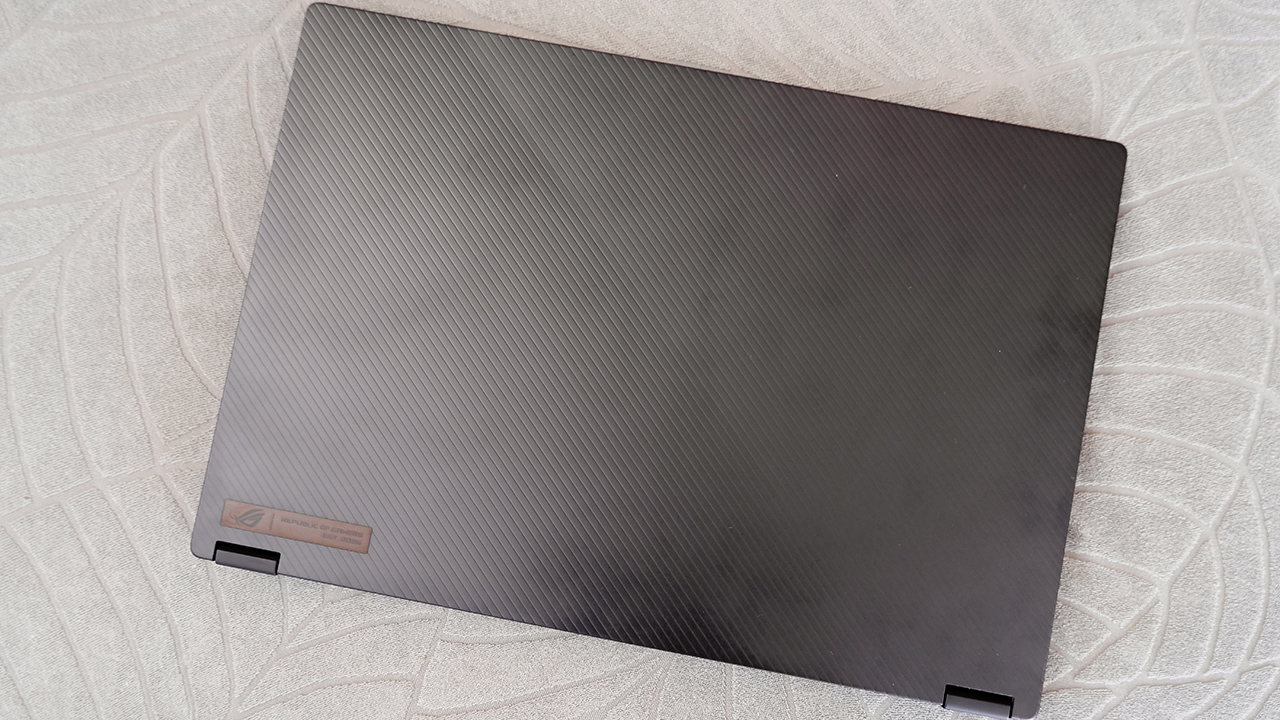
From the inside and out, the ASUS ROG Flow X16 is just built different as a gaming machine. Inside, the device comes with an AMD Ryzen 9 CPU and an RTX 3060 — a decent combination of hardware that produces great performance across the board. Whether it’s for a ton of data analytics or gaming VOD recording and reviews, this machine can handle it all.

What also helps its case is that 16:10 WQHD anti-glare display that helps you house multiple windows on a single screen. In essence, multitasking would be a total breeze, especially when you have reports to finish or gaming streams to watch while you work. Plus, it has a refresh rate of 165Hz which is great for a lot of things, but let’s get into that later on.

Overall, the ROG Flow X16 boasts fantastic hardware fit for both the casual and competitive gamer. Also, if you’re more of a work in the day type of person, this device definitely gives you more than everything you need to get through, on paper.
For the uber competitive ones
It wouldn’t be an ASUS ROG machine if this laptop was not tailor-fit for gaming at a high level. For starters, the RTX 3060 inside the ROG Flow X16 provides great frame rates for most competitive titles out there, especially when under the proper settings. If you want to turn up the detail just a little bit, the GPU can also handle that with ease — no eGPU needed,

As per usual, RTX-powered mobile machines still can’t produce a balance of stellar graphics at stellar frame rates for games that support ray-tracing. Such is the case for the ROG Flow X16, although at least games like Fortnite and Cyberpunk 2077 managed to hit a stable 40 FPS reading. Details were great, and performance was a bit more stable than other GPUs, but again, it’s more for an overall aesthetic look.

Also, going back to the 165Hz refresh rate display, the ROG Flow X16 makes a case for the more ideal on-the-go competitive gaming machine. The 16:10 display gives more screen space to look around in-game, and the 1ms response rate allows you to quickly react to elements in a blink of an eye.
To make beautiful art with
One detail we haven’t mentioned too much yet about the ROG Flow X16 is that, well, it’s also a 2-in-1 device with a touch display. As a staple with all other Flow models, this machine works a ton of wonders for those who like handwritten notes during meetings or doodle as their productive time. Along with a touch display, the ROG Flow X16 comes with a dedicated ASUS Pen for you to do all of these.
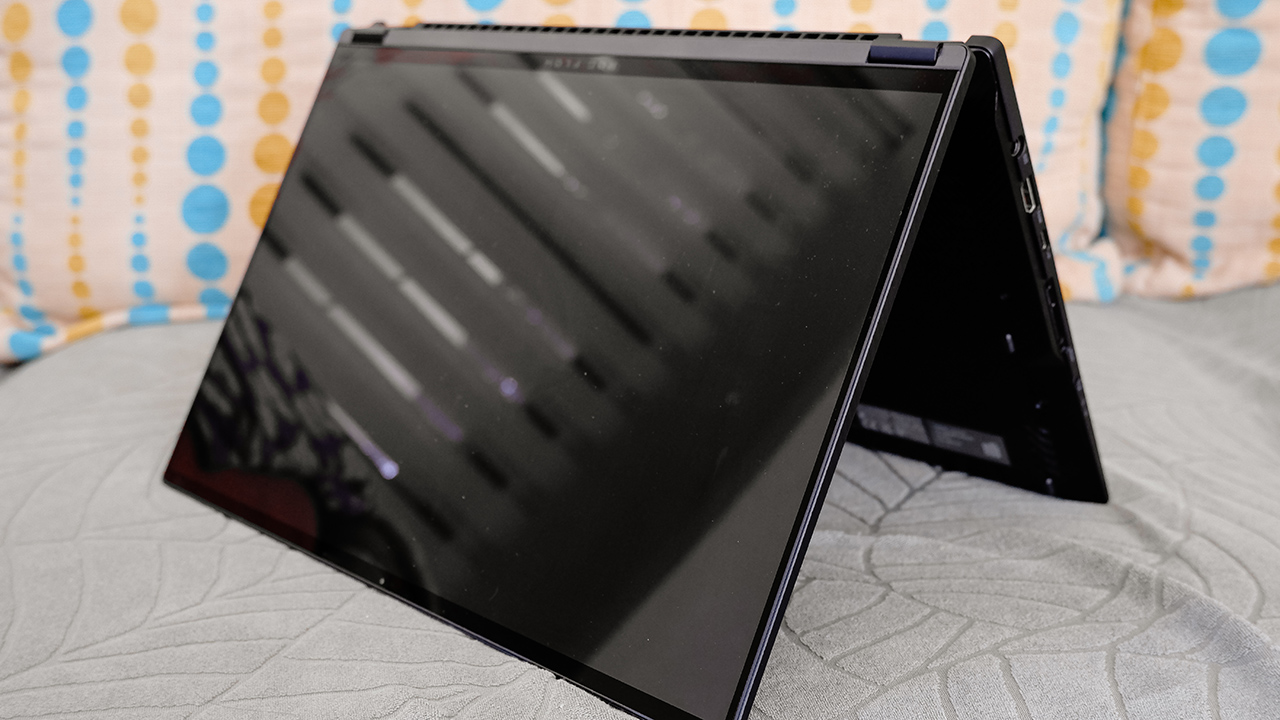
The display doesn’t show any signs of being hypersensitive to unnecessary touches from the wrist, which is good when used with the pen. This way, all your sketches and notes will look relatively organized without any unnecessary strokes in the way. Also, this is even helpful when you’re dabbling with photo and video editing.
With the 165Hz refresh rate for this display, you’ll be able to observe and act on any frames you may have missed out in your editing process. Whether it’s the mouse or ASUS Pen, your choice of input will allow you to be as pixel-perfect as possible when creating your masterpiece.
Just a few hygiene checks in there
Like most gaming laptops, the ROG Flow X16 comes with a decent battery in terms of lifespan and charge time. On average, the device lasts for about 8-9 hours on a single charge with regular use, which is pretty standard. Charging time back to 100 percent with the 280W charging brick takes about two hours at least.
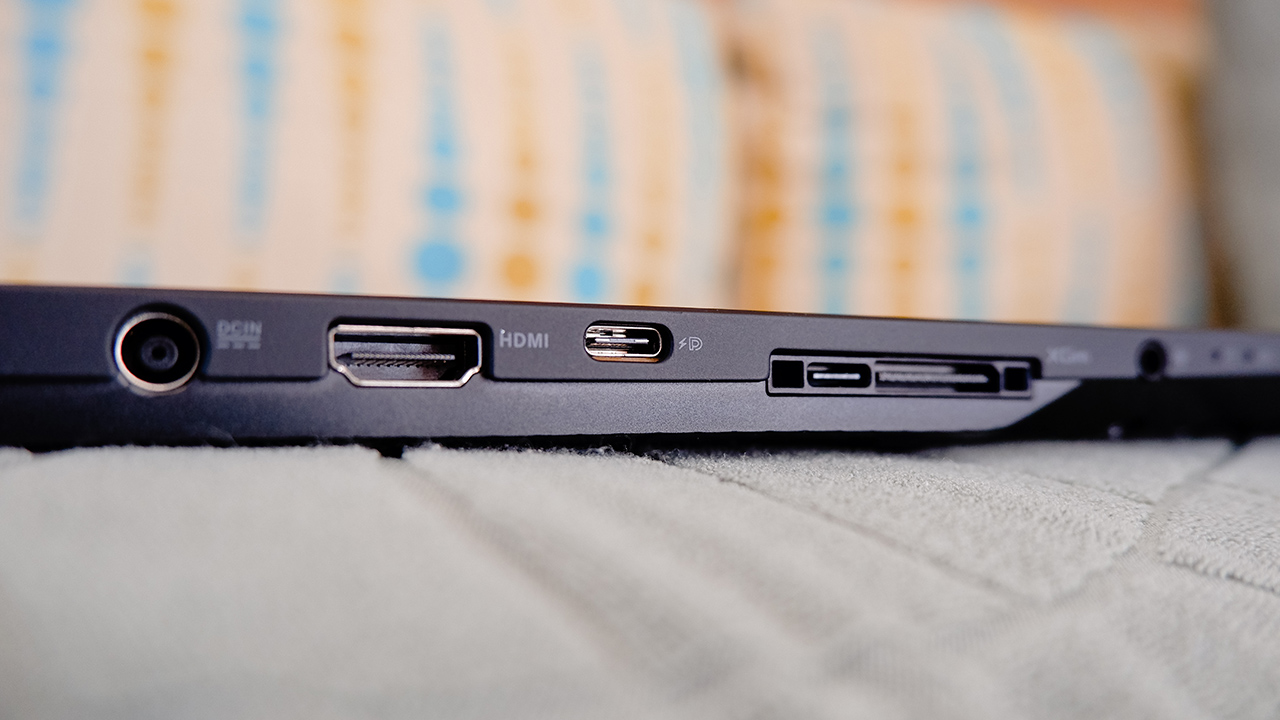
Port selection on this device is great, with the inclusion of the dedicated port for the eGPU but they’re mostly placed on the left hand side. Although it seems like a good substitute over having the ports at the rear, it might not be for everyone. Also, some of the USB Type-A ports are on the right, so you’ll need to adjust your wired peripherals if you play a certain way.

This device also comes with an HD camera nestled at the top of the screen and under the display. In terms of photo and video quality, it’s decent for most video conferences and a bit of a grainy selfie for a wallpaper. If for streaming though, you’re better off getting the ROG Eye with this laptop.
Is the ROG Flow X16 your GadgetMatch?

At PhP 149,995, the ASUS ROG Flow X16 is a great 2-in-1 device that holds its own with nothing extra needed. With powerful hardware embedded inside a relatively slim form factor, it has everything you need for work and play. Whether you’re a competitive gamer or a content creator at heart, you won’t go wrong with this as an option.

Granted, you can upgrade the ROG Flow X16 into a gaming powerhouse with all the extra peripherals ASUS has to offer. From the ROG Eye to their own dedicated eGPU, to achieve the best, you will simply want a lot more added to the table. However, even when these aren’t in your budget, the device performs well enough to not need them anyway.

Even with a hefty price tag, this 2-in-1 laptop only provides the best performance possible with minimal sacrifices. It’s portable and powerful enough for you to work hard and play even harder wherever you go!







SQUARE ENIX has released FINAL FANTASY RESONANCE. It’s a new role-playing game that brings the franchise’s classic pixel-art aesthetic into the HD-2D era.
The game launches on October 22, 2026, for Nintendo Switch 2, Nintendo Switch, PlayStation 5, and Xbox Series X|S. The PC version will be available through Steam and the Microsoft Store on Windows starting October 23.
FINAL FANTASY RESONANCE reimagines the first story arc of the mobile game FINAL FANTASY Brave Exvius as a full-fledged RPG experience. It combines retro-inspired pixel art with 3D models and dynamic camera angles.
Strategic turn-based combat returns
Players will explore a world featuring familiar FINAL FANTASY elements, including crystals, airships, chocobos, espers, and moogles.
Combat revolves around exploiting enemy weaknesses to stagger opponents, break their defenses, and gain extra turns. Players can also unleash powerful Resonance attacks to turn the tide of battle.
The adventure features Visions, representations of familiar FINAL FANTASY characters who join the party with their own skills and abilities. These include Cloud, Tidus, and the Warrior of Light.
Beyond the main story, players can discover optional challenges and rewards, including encounters with the wandering swordmaster Gilgamesh, a monster-filled Colosseum, the Chamber of Arms, and Ultima Weapon.
Editions and platforms
FINAL FANTASY RESONANCE is available as a single-player RPG on Nintendo Switch 2, Nintendo Switch, PlayStation 5, Xbox Series X|S, and PC.
A Digital Deluxe Edition includes the base game and the Magitek & Grimoire Deluxe Pack. The bundle features a Magitek Armor Key for a chocobo, an exclusive Archwitch’s Grimoire, a Mastery Ring, and consumable items.
A Collector’s Edition includes the physical Standard Edition alongside an acrylic block set, a pixel-art book, a 120-track original soundtrack on CD, and an exclusive FINAL FANTASY TRADING CARD GAME promotional card.
Availability and release timing may vary by region. Check local digital storefronts for purchasing details.
Gaming
Next Xbox might cost double the price of an Xbox today
The most expensive Xbox Series X costs $900. The next Xbox’s price might double that.

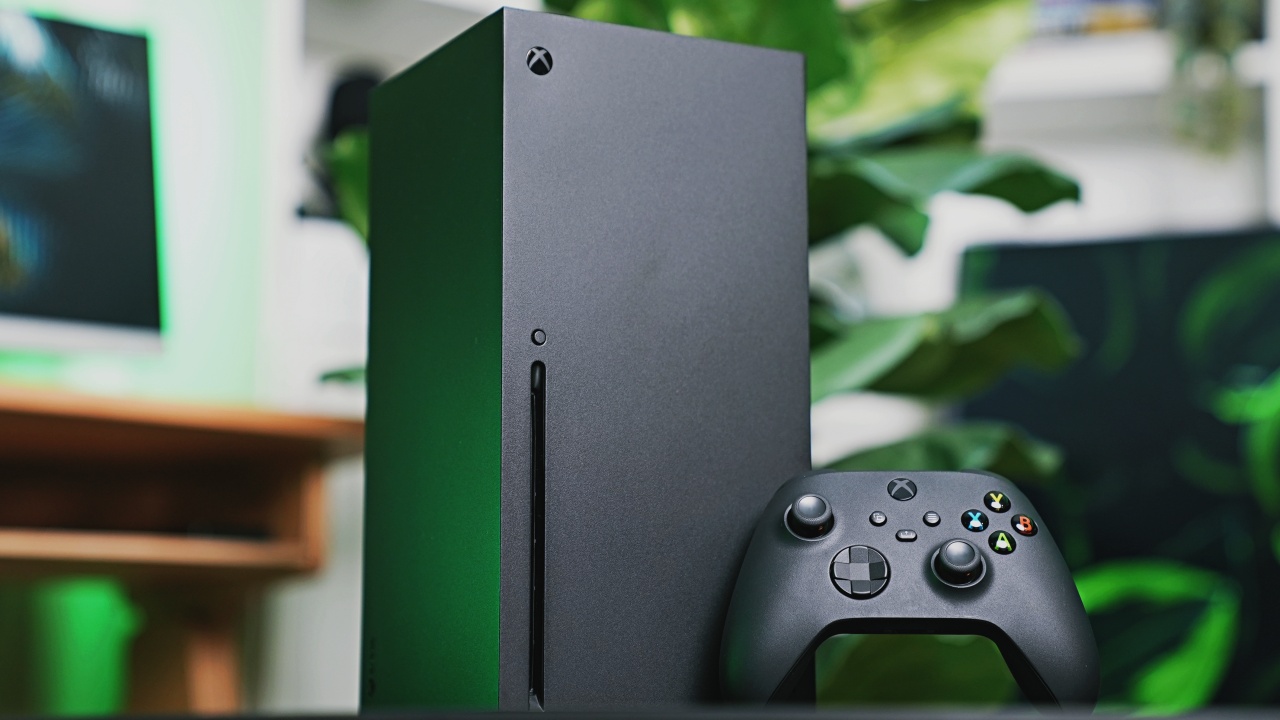
Buying a new gaming setup must be one of the most torturous things you can purchase these days. The rising price of chips has hampered the buying ability of many a consumer today. Sadly, that trend isn’t changing anytime soon. According to new reports, the next Xbox might cost double of what an Xbox costs these days.
The next console is currently codenamed Project Helix. Spearheaded by relatively new Xbox CEO Asha Sherma, Project Helix has hopes of being an all-around gaming machine capable of playing PC games besides console exclusives. Sharma obviously wants the platform to come back as a worthy destination for gamers.
That’s a monumental task, though, especially after the rising prices of chips are constantly threatening the prices of new devices. Now, according to a profile of Sharma published by Fortune, the next Xbox might cost as high as US$ 1,800. For reference, the limited 25th anniversary edition of the Xbox Series X currently costs US$ 899.
Should Fortune’s estimate hold true, a new console in the coming years is double the cost of the most expensive Xbox Series X variant available today. The next generation of gaming might be even more of a luxury than it already is.
Unfortunately, things aren’t getting better across the board. Gaming on PC and on PlayStation aren’t going to be much cheaper as the RAM crisis continues.
SEE ALSO: Xbox might get rid of physical discs too

One of the giants has fallen. After blessing the world with several of the biggest franchises in gaming, BioWare is shutting down for good.
If you were a big gamer in the late 00’s through the early ‘10s, BioWare was a household name for you. The studio is responsible for the Dragon Age and the Mass Effect franchises. Those two franchises defined the modern choice-driven RPG landscape today.
Unfortunately, the landscape is changing. Over a year ago, a conglomeration of entities entered acquisition talks over Electronic Arts, which owns BioWare. As the ink finally dries on the contract, some studios are facing the chopping block. After struggling with the lackluster sales of Anthem and Dragon Age: The Veilguard, BioWare finds itself as the biggest name for a shutdown.
And that’s where we are now. As a result of the shutdown, BioWare’s upcoming project, an untitled Mass Effect title, is also cancelled.
Obviously, Dragon Age and Mass Effect are on top of everyone’s minds. However, the studio’s shutdown also takes away the legacy of Baldur’s Gate (before Larian Studio revamped the series with the award-winning Baldur’s Gate 3) and Star Wars: Knights of the Old Republic.
Likewise, BioWare won’t be the only casualty. Electronic Arts is also looking into altering its entire lineup of studios and upcoming projects.
SEE ALSO: Electronic Arts is getting bought out







Google illegally destroys 250,000 trees for a single AI data center

FINAL FANTASY RESONANCE now available across major platforms

Bose acquires Skullcandy

Next Xbox might cost double the price of an Xbox today

Apple Music is getting a Liquid Glass makeover

TECNO CAMON Slim 5G review: Slim on size, big on surprise

TECNO CAMON Slim 5G: Price, availability in the Philippines

HONOR Magic9 Pro Max launches in China with ARRI-powered imaging

BYD says that way better EV batteries are coming next year

TECNO CAMON Slim 5G teases an ultra-slim design ahead of launch


-

 Wearables2 weeks ago
Garmin Enduro 4 promises up to 320 hours of battery life
-

 Gaming2 weeks ago
Dragon’s Dogma 2: Dark Arisen launches with new Official Pawns
-

 News1 week ago
vivo V80 debuts with ZEISS cameras
-

 Deals2 weeks ago
Score PhP 22,000 in guaranteed freebies when you pre-order the iPhone 18 Pro at Beyond the Box
-

 Philippines7 days ago
TECNO CAMON Slim 5G gets launch discounts, free MagBadge
-

 Wearables2 weeks ago
Garmin Approach S72 brings swing metrics, green reading to your wrist
-

 News7 days ago
Samsung: Galaxy Z Fold8 demand rose because of iPhone Duo
-

 Features1 week ago
I don’t want a phone that unfolds — the Galaxy Z Fold8 gets why