


Automotive
Audi’s Holoride is a VR experience like no other
Back seat car rides will never be the same again

It had been a long day, but I could still barely contain my excitement as a fancy car whizzed me down the interstate to a race track on the outskirts of Las Vegas, one chilly evening before the start of the 2019 Consumer Electronics Show.
While the in-seat back massage made me wish the ride was longer, I also couldn’t wait to get there. Tonight would be my first time in an e-Tron, Audi’s new fully electric SUV, and my first taste of what Audi calls the future of mobility, one with entertainment content at its center.
It’s an interesting proposition, one I’m more than willing to chew on. With self-driving vehicles on the horizon, tonight, instead of getting behind the wheel, I take a back seat, put on a VR headset, and trade my current reality for one that promises to be more exhilarating.
Called “Rocket’s Rescue Run,” it’s the first title in a collaboration between Marvel and Disney and Audi’s new spin off venture Holoride, that aims to make VR entertainment a mainstay in cars of the future.
As the e-tron’s driver steps on the accelerator, in my alternate universe my ship surges through space. I’m joined by my sidekick Rocket Raccoon, and together we team up to help Iron Man take down a mob of Thanos’ space goons.
 I’ve had many VR experiences before, but none like this. As soon as the SUV pulls away, the whole experience makes perfect sense. Every twist, every sharp turn, every bit of acceleration or sudden brake is matched by the same sensation in the game. For the entire 5-minute ride, my body is tricked into believing this reality. Not an easy feat for an utterly nitpicky tech journalist, I can only begin to imagine how big of a technical challenge it was to pull off.
I wield my laser gun like a pro, take down an evil mothership, and celebrate our victory with fireworks. The experience ends, and the e-tron stops. Reluctantly, I take off my headset. It feels like I’ve just been on a theme park ride, but from the privacy of my own car — well, not really, but I wish — and without standing in an hour-long line. I was pleasantly surprised to find out that during my adventure the e-tron reached speeds of up to 90mph. We’ve navigated plenty of sharp turns, too, but I don’t feel so woozy.
 Supposedly matching the car’s movements to the virtual reality experience helps in mitigating nausea. As I get out, I thank my driver, but also can’t help but imagine a world that’s driver-optional.
At CES, we saw Audi’s vision of the future, a concept car called the Aicon, with an interior that resembles more of a lounge than a current automobile. As with Holoride, the development of Aicon represents a shift in the idea of mobility, one that’s ushered in by a focus on passengers instead of drivers. Together, Aicon and Holoride make perfect sense in a future world of fully autonomous vehicles. If no one is driving, what else are we to do?
Anything you want to, apparently. Cars are now seen as multi-purpose spaces, just another room that we occupy as we travel from place to place: be it a relaxation pod, a meeting room, or your own private cinema.
The team behind Holoride is most invested in the latter, creating entertainment experiences that are just long enough to fill the entire duration of your trip. They’re calling it “elastic content,” VR games and adventures that automatically adjust to congestion and shortcuts, so that you’re never left without something to occupy you.
“Together, Aicon and Holoride make perfect sense in a future world of fully autonomous vehicles.”
Soon, Holoride plans to open its technology to more car manufacturers, content creators, and game developers. The goal is for a wide range of immersive experiences, customized to events in the real world like traffic jams or stop lights, and for those experiences to be available in more car brands. Apart from games, like the one I played, the company is also planning movies, interactive features, and educational tours. Indeed, the type of content you could enjoy is limited only by the imagination.
A few minutes later, I find myself getting another back massage inside another chauffeured Audi A8, making our way back into downtown Las Vegas. These days, when I do travel by car, the experience is similar to this, albeit less fancy. I’m bored, maybe antsy or impatient, in the back seat, with only my phone and social media to distract me. I hadn’t given it much thought till today, but in a world where one constantly thirsts for something to capture one’s attention, I can certainly see how “content will be a major driving force for the mobility experience of the future.”
The day is almost over and I am exhausted. I recline my chair, close my eyes, and enjoy the back massage for a few minutes more. I dream I am back in the e-tron, and wonder when this future will arrive, what it would be like if the next Avengers movie was interactive, and most importantly, what it would be like to watch it from the back seat of a fully autonomous Audi.






News
Acer unveils Predator ES Thunder Pro e-Scooter
More power, longer range, better safety features

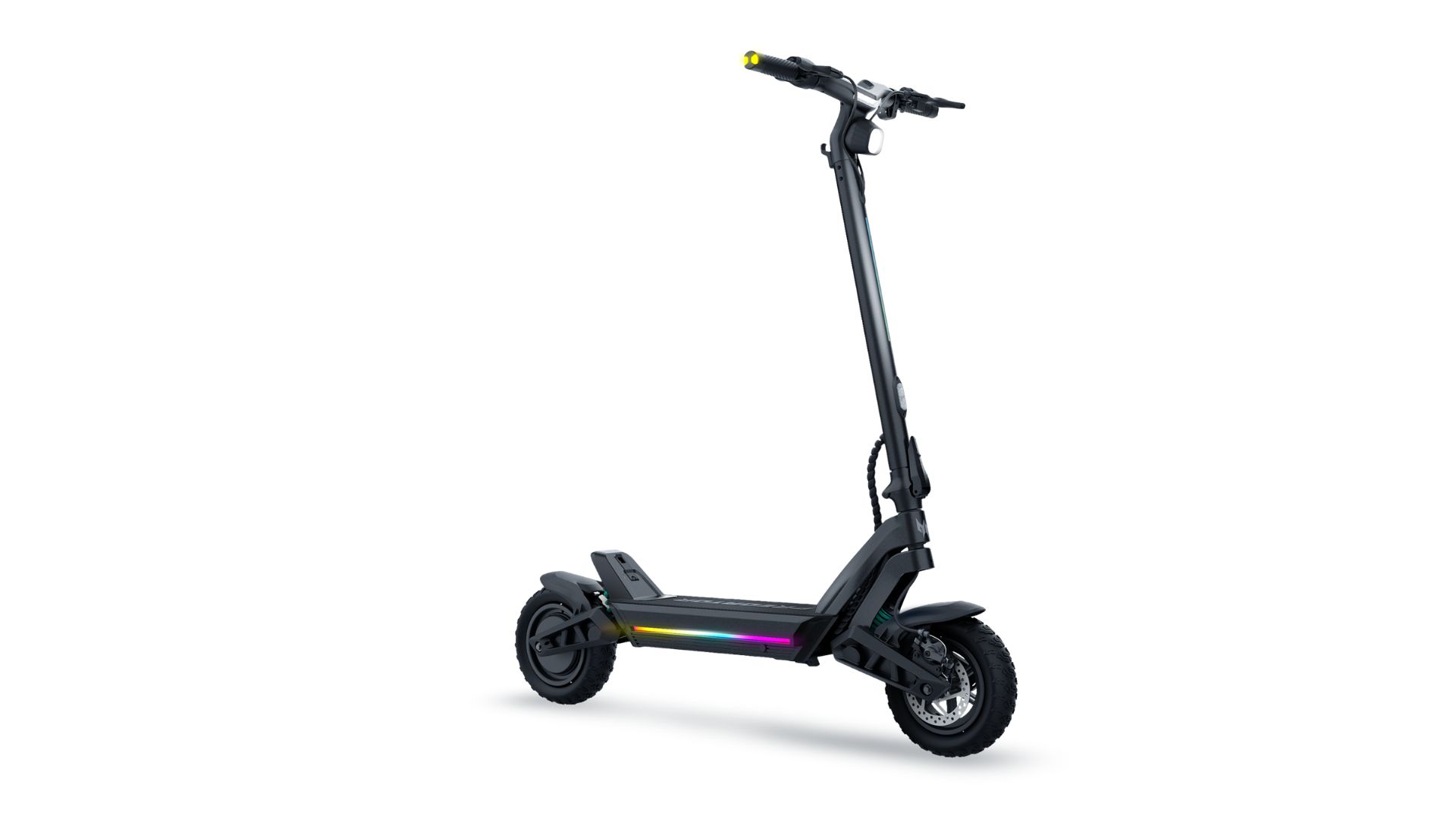
Acer continues to expand its e-scooter portfolio with the launch of the Predator ES Thunder Pro. It is the latest mobility offering from the brand after expanding to the category in 2023.
The all-new e-scooter enhances powertrain performance, enabling confident handling across a wide range of terrains.
It is designed both for everyday mobility and versatile terrain handling, making it well-suited for extended use and longer riding distances.
The most powerful model yet in the Predator e-scooter portfolio, it is equipped with a high-performance 500W rear-wheel-drive DC motor.
This has a peak output power of 1,600W, and a maximum torque of 32Nm. This way, the e-scooter delivers stronger, smoother power output during acceleration and hill-climbing.
In addition, the Predator ES Thunder Pro uses a Traction Control System (TCS) that adjusts power output in real time base on road conditions. This improves tire traction and overall stability on wet or low-grip surfaces.
The e-scooter comes with 10-inch tubeless pneumatic off-road tires and IPX6 water-resistance rating as well.
In front are daytime running lights while on the sides are RGB ambient lighting for better visibility.
In terms of range, the e-scooter can travel up to 70 kilometers on a single charge, effectively reducing charging frequency.
Furthermore, the e-scooter integrates dual-platform location tracking via Find My and Find Hub, paired with the Acer eMobility app with AI voice control.
Pricing, availability
The Acer Predator ES Thunder Pro will be available in Europe early next year, starting at EUR 799.
Automotive
Nissan’s New Kicks e-POWER skips the plug but still drives like an EV
It’s leaning harder into its e-POWER tech than ever!

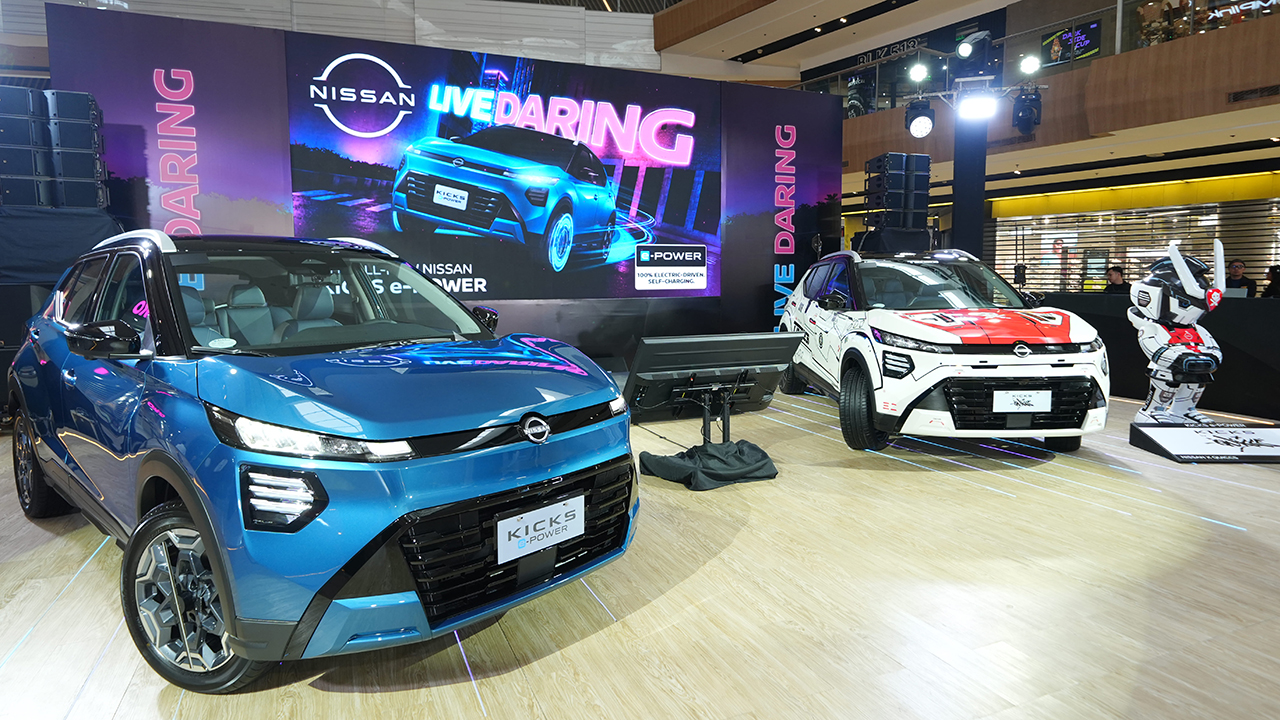
Nissan Philippines has officially launched the next generation of the Kicks, and it comes with a design refresh, more driver-assistance features, and the same e-POWER setup that’s defined the nameplate since 2022.
The Kicks first landed in the Philippines four years ago, and this new version builds on that foundation rather than tossing it out.
Nissan’s kept the e-POWER system that made the original Kicks stand out in the subcompact SUV segment, then layered in updates across the interior, exterior, and safety suite.
Still e-POWER, still 100% electric motor-driven
The core of the Kicks hasn’t changed.
It still runs on Nissan’s e-POWER system, which pairs a 1.2-liter three-cylinder gasoline engine with an electric motor. The engine’s only job is generating electricity to charge the battery.
The motor is what actually drives the wheels, so you get a fully electric driving feel without needing to plug in anywhere. Nissan says the setup puts out 136 PS and 280 Nm of torque.
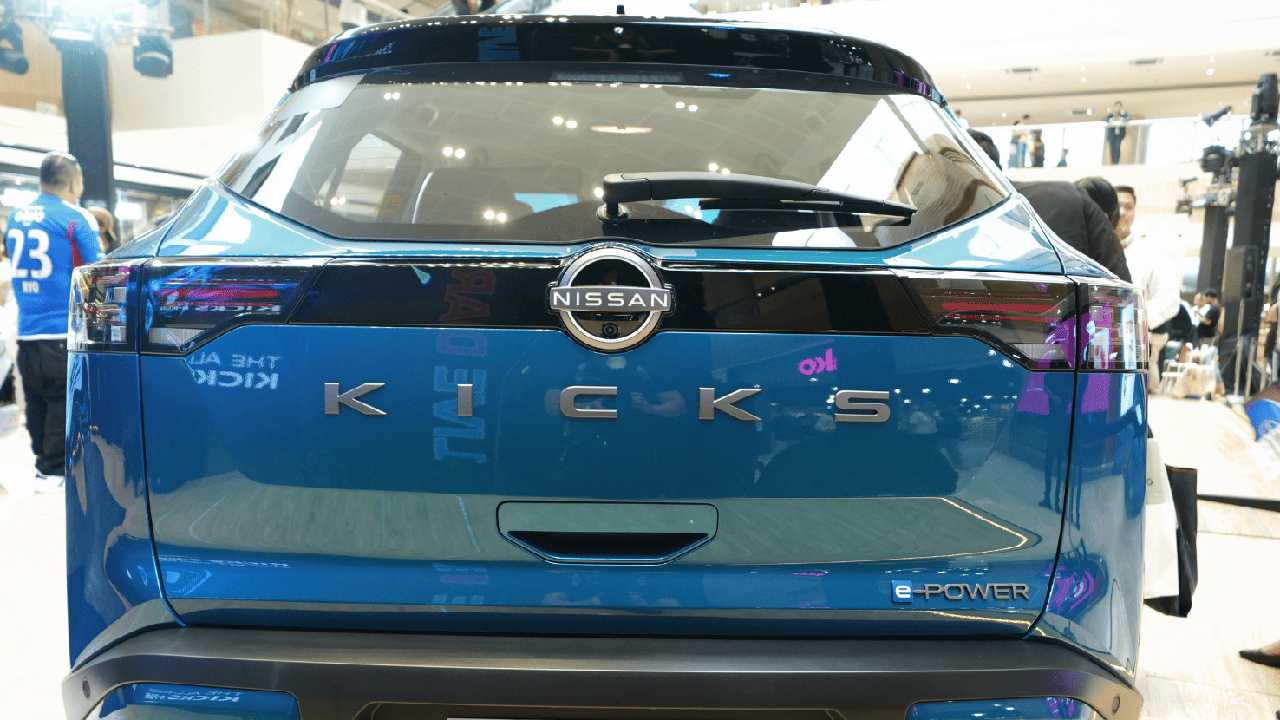
Inside, Nissan’s focused on making longer drives less tiring. The Zero Gravity seats aim to reduce fatigue, and there’s anti-heat leather upholstery for anyone who’s dealt with scorching seats in Metro Manila traffic.
Rear passengers get an optimized seatback angle and a rear armrest, while the driver’s seat is 6-way power-adjustable.
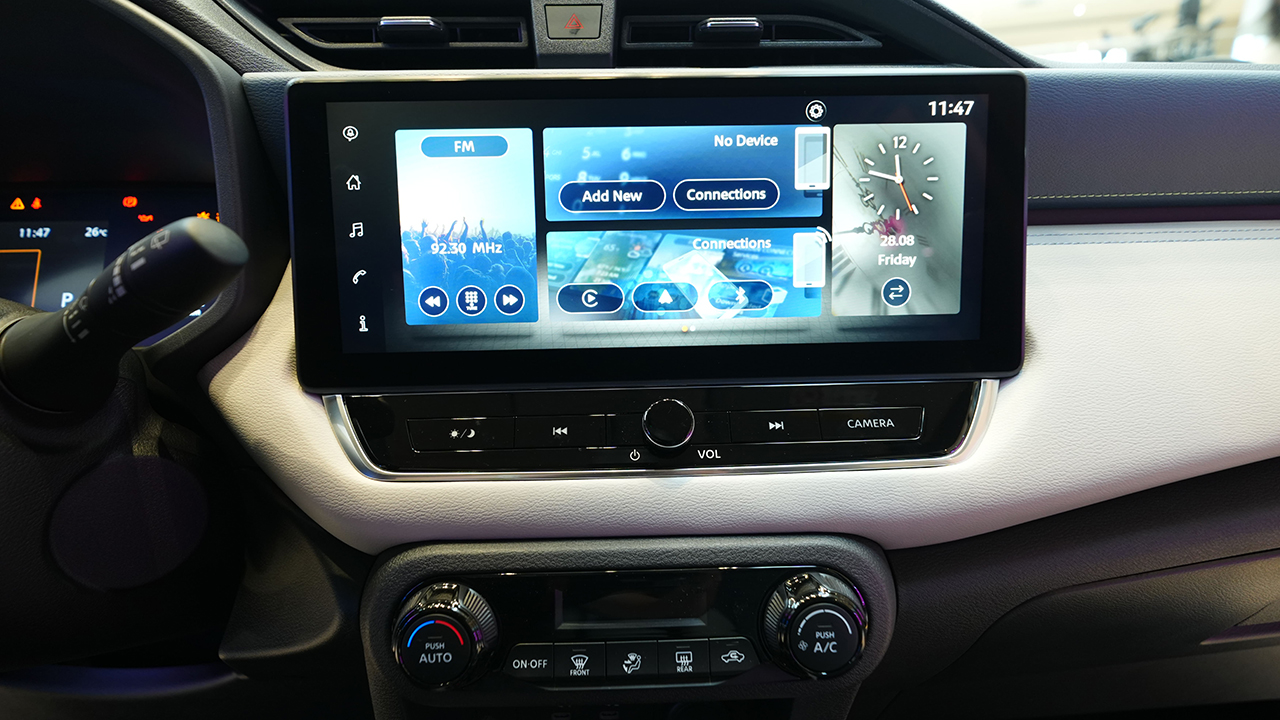
For tech, you’re looking at a 12.3-inch Display Audio system with wireless Apple CarPlay and Android Auto, plus NissanConnect Services bundled in for three years.
Sharper exterior
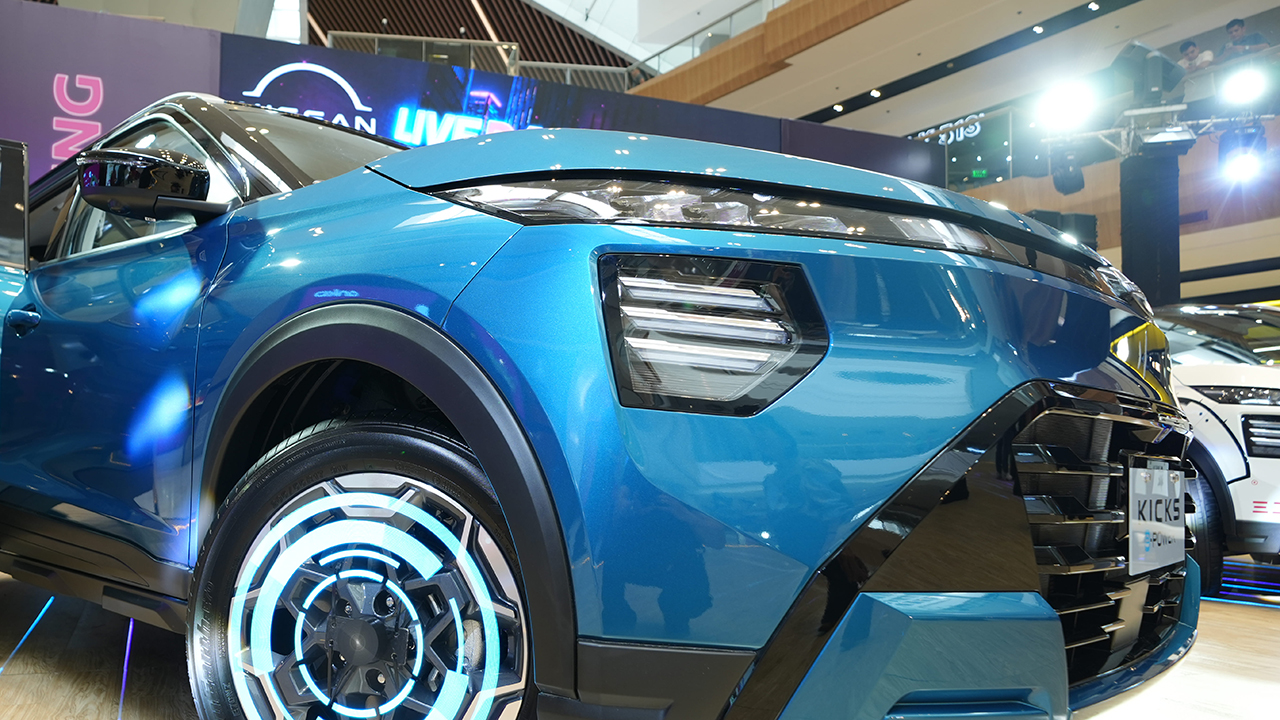
The exterior picks up Nissan’s V-Motion grille with a new lighting signature and triple-arrow daytime running lights up front. At the back, the hexagon-shaped rear lamps carry over as part of Nissan’s design language. Nissan also says the headlights now throw wider and longer illumination for better visibility at night.
You’ll have four color options: Aquamarine Metallic, Gun Metallic, Pearl White, and Moon Pearl Gray. The top LE Plus variant gets an exclusive black roof and a new Moonstone interior, while the VE and VL stick with black interiors.
ProPILOT leads the safety features
The bigger addition here is Nissan ProPILOT, which handles steering, acceleration, and braking assistance together.
It includes Intelligent Lane Keep Assist to help center the vehicle in its lane and Intelligent Cruise Control to maintain speed and following distance.
There’s also Traffic Jam Assist, which can bring the car to a stop and resume driving on its own in stop-and-go traffic.
Beyond ProPILOT, Nissan’s packed in 12 more safety and driver-assistance features, including:
- Leading car departure notification
- Intelligent forward collision warning
- Intelligent forward emergency braking with pedestrian detection
- Blind spot warning with blind spot intervention
- Lane departure warning with lane departure prevention
- Rear automatic emergency braking
- Tire pressure monitoring system
- Rear cross traffic alert
- Intelligent around view monitor with moving object detection
- High beam assist
- Driver attention alert
Price, availability in the Philippines

The All-New Nissan Kicks e-POWER comes in three variants: VE, VL, and LE Plus.
Nissan’s running launch promos on all three until September 30, 2026, and customers who buy in during that window also get a complimentary one-year Nissan Protect+ package, which covers prepaid maintenance, genuine Nissan oil and parts, and servicing for the first year.
The Kicks joins the X-Trail e-POWER as part of Nissan Philippines’ growing electrified lineup, and it’s clear the brand is treating e-POWER as its main pitch for drivers who want an EV-like experience without changing how they refuel.
Automotive
Inchcape Philippines and Changan are parting ways
The two companies won’t renew their distribution deal, with the transition running through Q4 2026.
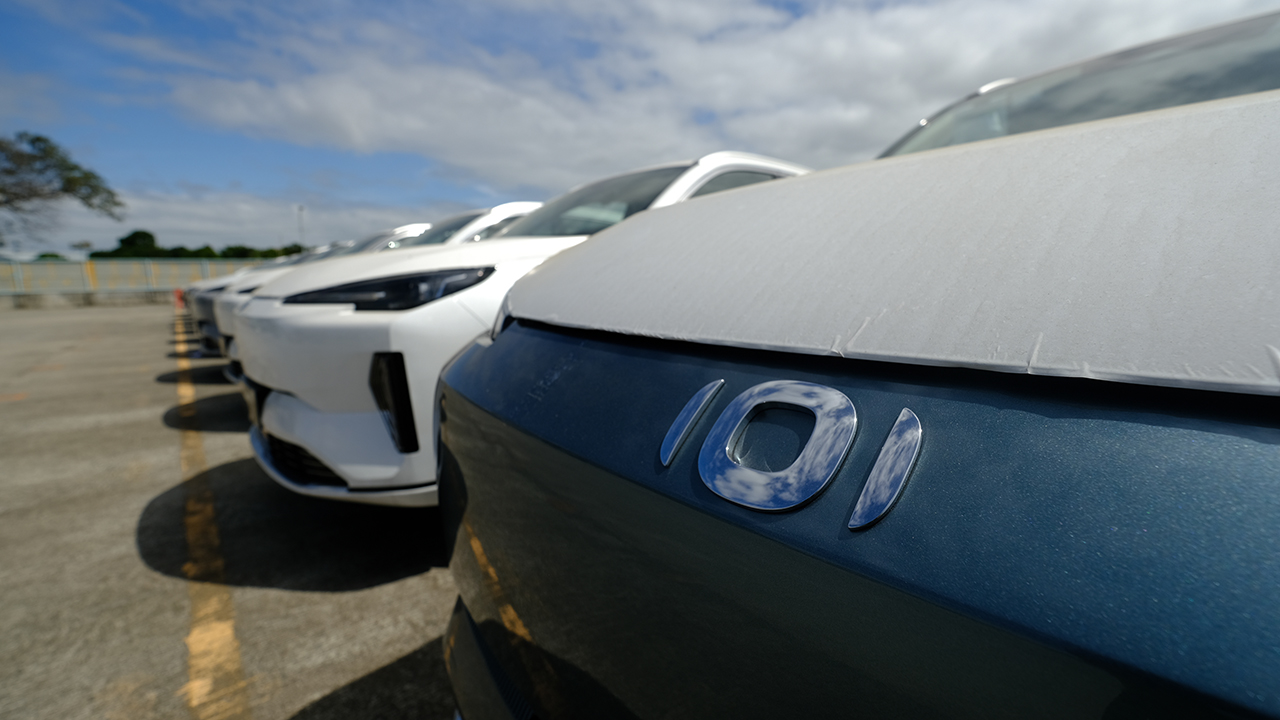
Inchcape Philippines and Changan have mutually agreed not to renew their distribution partnership in the country. The companies announced the decision, citing Changan’s own long-term plans for the Philippine market as the reason.
The partnership enters a transition period that runs through Q4 2026. During this time, existing customer commitments remain in place, including aftersales support, warranty coverage, parts, and service.
Alex Hammett, Inchcape’s Managing Director for South Asia & Pacific, said Inchcape Philippines and Changan have worked together since 2023 to build the Changan brand locally, supported by Inchcape’s distribution network and dealer relationships.
He thanked the Inchcape Philippines team and dealer partners for their role in that effort over the past three years.
Inchcape says the Philippines remains a key market for the company. It continues to distribute Mercedes-Benz passenger cars, trucks, and buses, along with Jaguar Land Rover, and operates the retail business for Harley-Davidson locally. The company’s stated focus going forward is growing its existing portfolio and introducing new products to Filipino customers.
The Philippines also houses Inchcape’s Digital Delivery Centre and Global Business Services teams, which together employ more than 700 people supporting the company’s global operations.
Further details on arrangements after the transition period, including Changan’s next distribution partner, have not yet been announced.





Disney+ is moving to a global app experience

Now Playing: Elden Ring Tarnished Edition

TECNO’s POVA 8 Pro gets a stealthy makeover

The original PlayStation gets the LEGO treatment

NBA 2K’s MyCAREER needs to play the long game

TECNO MEGAPAD 2 review: Eyes on the size

realme 16T 5G with 8000mAh battery, IP69 Pro rating launches in PH

REDMI Note 17 Series focuses on long-term reliability

realme 16T to come with 8,000mAh battery, 7-year battery health guarantee

HUAWEI Pura X View is 2026’s first WIDE slab-type smartphone


-
 Reviews2 weeks ago
TECNO MEGAPAD 2 review: Eyes on the size
-
 News7 days ago
realme 16T 5G with 8000mAh battery, IP69 Pro rating launches in PH
-
 Cameras2 weeks ago
30 days with the DJI Osmo Pocket 4P
-
 Singapore1 week ago
REDMI Note 17 Series: Price, availability in Singapore
-
 News1 week ago
REDMI reveals the refreshed Note 17 and Note 17 Pro series
-
 Cameras1 week ago
Insta360 Luna Ultra review: My new solo coverage camera
-
 Reviews1 week ago
REDMI Note 17 Pro review: What a rollercoaster ride!
-
 News2 weeks ago
HONOR Magic V6: Price, availability in the Philippines